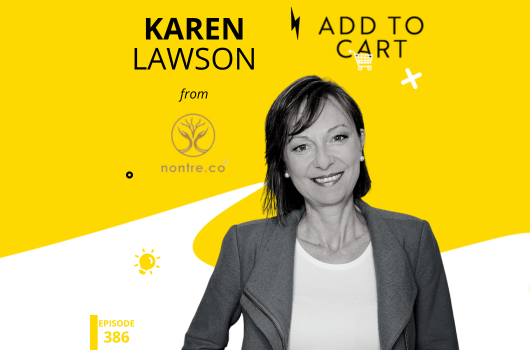
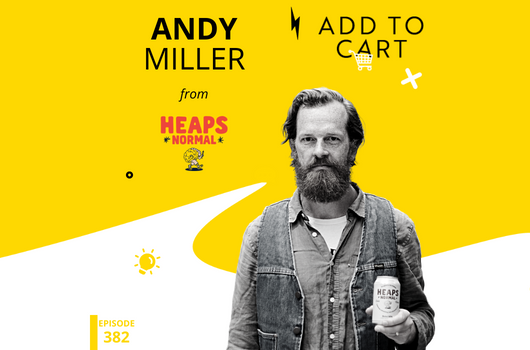
Nathan Bush: Calling all brands looking to dominate search rankings in 2025 Studio Hawk is Australia's largest dedicated SEO agency, working with brands like officeworks, City Beach, Age, Clarks, Petstock and New Balance. And they have an exclusive offer for Add to Cart. Listeners sign up for an ongoing SEO campaign and receive the content Boost package professionally written copy for 40 category pages free of charge. If you want to rank and convert better in 2025, over to studiohawk.com and mention add to Cart when inquiring to claim this offer. Plus receive a free SEO audit of your website I think it's fair to say that right now it's probably not the sexiest time to say that you're a product led e commerce business. A lot of the conversation at the moment is around tech with AI, or it's around content creation, creating funny videos that can sell product. Or it's about customer service, which rightly so, is about retaining and growing your customer base. But if we think about some of the brands that really do well in the long term in E commerce, it's because they consistently have great quality products. They stand the test of time and today I want to use this playbook to dive into the world of product led e commerce businesses. Those that are willing to make brutal decisions that are real. Product first strategy requires I want to break down how world class operators validate quality, protect product integrity and use customer data to guide their roadmap. From a product first perspective, it doesn't mean that they forget marketing, that they forget their customer, but they are obsessed with product because product first growth isn't a philosophy, it's a series of non negotiable behaviors and you'll find that these people are often into the most negative minute level of the detail. I can see the big picture around what's creating a long term sustainable brand. These are brands that validate quality through blind testing, delay launches, that aren't perfect, obsess over customer feedback, they don't forget about the customer and they build a culture where product beats ego, speed and sunk cost. Now this all came to light on a recent episode with acos founder Ringo Chan and I think it's fair to say that Ringo might be the most product obsessed founder that we've had on ADD to CART so far. He treats product quality not as a department but as an operating system for his whole business. And that's why they've been such a long term successful e commerce brand now scaling into physical stores. So I want to throw to a clip with Ringo that shows the obsession with Product quality through a story of a product that they developed a brand new line of a category they hadn't gone into before that took them 15 months to develop that they had to scratch when they got bad customer feedback. This then unravels the conversation into Ringo's product obsession and the operating system that he puts around making sure that they've got quality product. Then I'm going to come back and give you a couple more examples from brands like Heaps Normal, Non Tray and Muscle Republic of founders and leaders who are product obsessed and some of the tips that they have to make sure that you have a product led quality business.
Vic Gigliotti: I think to be very honest, everything can be copied, right? But for us is that the product that are the core of the business, right, because we sell product and customer, yes, they buy the service as well. But product is the most important. Especially our products are mattresses that will stay in your house for the next five, 10 years. So product is the core and on top of that of course is the supply chain, you know, getting to people's house, you know, as fast as possible, as frictionless as possible. But then underneath that is the, the way of how we operate is that we always embrace challenge. So we never stop, we just go like chase, chase, chase for, for better. And I think that makes us different because you know, by the time we stop, people will just, you know, push you and you know, we'll be either be gone or we'll just have to do better.
Nathan Bush: When you're embracing challenge, what challenge are you embracing at the moment?
Vic Gigliotti: Well, we see so many challenges every day. But like from a product level, just a few months ago, it took us 15 months to release a E pack, right, that, that helps you to, to cancel all the noise when you sleep. And you know, from the data point of view, you know, we, we did a lot of lab testing, you know, and it's supposed to be one of the best CAC out there. But when we try to release this product online and give to a limited number of consumer to test out the product, it's just not as good as the database. And then we just have to write off, you know, 15 months of work and also like, you know, something like 10, 15,000 of products just right. We just have to write it off
Nathan Bush: because it just didn't make customer standards. Yeah, yeah, yeah. Wow.
Vic Gigliotti: Yeah. So that's the challenge that we have to decision that we have to make was like, okay, does it mean that we are happy to waste employees 15 months of time, you know, and also wasting also the product cost and everything. And you know, we took the photos, everything, photo shoot, done everything, just ready to release. So yeah, that's challenge on the product level. If you have a good product, then naturally you're getting a good number of review when you ask. Because it's always just a proportion. Like if you sell 10 product, you ask every one of them for review, maybe one of them or five of them, you know, that's the percentage of how many you sell versus how many reviews you get. So you can also monitor how good your product is by how much people are willing to leave a review for you. Plus if you also offer return guarantee, then you can also look at that. But it goes back to what I said about you don't want to sell product to customer that aren't good, you know, so rather than work on chasing for more people giving you review, the root cause is the product. You know, if you're only getting 1 out of 10 review where other products are getting free out of 10 review, when you ask people the other ones are better, just sell the other ones and drop the 1 out of 10 and just don't sell that because it's a shareholder. It's hard.
Nathan Bush: Ringo's entire operational philosophy centers on a single rule. If the customer doesn't love it, it doesn't ship. He doesn't view this as a nice to have, but it's a survival mechanism for his business. When Ecosa's team realized that their new earplug product failed real world testing, they didn't just try and salvage it. They didn't try and spin a story, they didn't launch anyway and optimize. They scrapped the entire run both for the customer and for their business. Product first brands don't focus on conversion rate, they focus on product correctness and long term satisfaction. Conversion is the outcome. Product integrity and quality is the cause of this. So with that in mind, I want to share a few other examples from past episodes of people and founders and leaders who are product obsessed. The first one that I've got for you is about validating quality through blind testing. And this came from Andy Miller from Heaps Normal. It's a non alcoholic beer that has taken the world by storm and has really set the bar in what non alcoholic beer can be. Change perceptions, open up conversations, and on the outside it looks like it's because they've got great marketing, they've got beautiful cans, lovely logos, lovely branding. But at the heart of it, before they did all of that brand design or storytelling, they validated the Only thing that mattered is the product good enough to be complete unlabeled before you put all the fancy stuff over the top of it. Does the non alcoholic beer actually taste good? Andy put their non alcoholic beer through blind taste tests against full strength beers with trained experts. No brand, no bias, just beer versus non alcoholic beer. And it wasn't just experts in the field, it was about the people that mattered to them. So yes, it was people that were in the beer industry, but it was also people in their core demographic, like musicians, who were constantly looking for an alternative when they're on the road to drinking every night. So they put that blind taste test to a bunch of musicians to see if they noticed the difference. And the outcome was that musicians not only couldn't tell the difference between an alcoholic and a non alcoholic beverage, they actually preferred the non alcoholic on many occasions. So Heaps Normal didn't just start with a big bright brand and lots of marketing investment. They understood that their mission was that they couldn't mask mediocrity. They couldn't just launch a slightly less non alcoholic beer and just say that it's never going to be as good, they want it to be as good. So the lesson here is running your own blind taste test. Whether you're up against an existing category and an existing standard like Heaps Normal were, or whether you're just up against your competitors. If you remove your packaging, remove your story, remove your price, does your product stand on its own two feet? If you need the brand narrative to make the product compelling, you probably don't have a scalable product in the long term. The second lesson here is about moving your customers from product like to product joy. Karen Lawson is the CEO of Nontree, and before that she was leading the team at Peloton. And she draws a sharp line between functional satisfaction and emotional resonance. People reorder products they like, but they expand their baskets because of products that give them joy. I often talk about this when it comes to loyalty, is that some people may purchase a product multiple times out of functional necessity. It doesn't necessarily mean they're loyal. As soon as a new alternative or a new use case comes up, they might be gone. What we really want to get to is not product like but product joy. Then they feel confident to try something else in your range. Karen herself said it's finding that product where there isn't just product like but product joy. Then they feel confident to try something else. This is where cross category expansion actually works, especially when you've got a hero or A core product, it's not about the upsell mechanics, it's about the trust. And that trust comes from exceeding expectations on that first touch point. So if you can identify your joy skew sounds a bit dirty than what it is, but identify your joy skew. It's not necessarily your best seller, not necessarily your highest margin skew, but. But it's the skew that your customers rave about without being asked. This then becomes your retention engine, your first touch point, and then gives your customer a great initial product experience that gives them the confidence to try to expand out further in your range. The last example I've got for you is about quality first, launch second. So we had Vic Gigliotti, who is the founder of Muscle Republic, back on episode 483 and his story actually mirrored a lot of Ringo's hard choices around creating products that outperform fast choices. So Vic actually delayed Muscle Republic's entire tights launch, which was four months of revenue because the fabric wasn't at their signature buttery standard. That was the standard that he put out, that it has to be buttery. And he said, we didn't release any new tights for four months. It wasn't our buttery soft fabric. It was hard. But for the customer, it's more important. It's not about a quick sale. In E commerce, we know that inventory is so important. Turning over that inventory is so important for cash flow. We need revenue coming through the door. That would have been a super hard decision, but in doing so, Vic was creating his moat, his moat around his brand at Muscle Republic in a very, very crowded space of athleisure and performance equipment. He needed to make sure that that moat stayed strong and quality was at the core of that. So what I love is that word buttery from Vic and that's something we can all take. We need to define our brand's non negotiable attribute. What is the feel, the flavor, the finish, the durability that we're aiming for, making sure that all of our team knows what that standard or that flavor feeling is that we're aiming for. If a batch fails even marginally, we need to protect that integrity, maybe even delay a release and make sure that everything that we do builds trust through consistency there. So I hope that was a really useful playbook for you product obsessed founders and leaders out there. And if you're not from the product world, I hope it gave you a little bit of an insight about how we can use product to get trust on that first experience, how to make sure that we can create a sustainable long term customer by consistently developing products with high quality. And sometimes the decisions we have to make to create that moat around our business using unique product. That's our playbook for this week. Make sure you subscribe in Spotify, Apple or wherever you're listening and we'll bring you a new playbook every week. Cheers.