Nathan Bush: Look, you probably know this already, but customers aren't just googling products anymore, they're asking AI what to buy. And if AI can't understand your brand, it won't recommend it. That's why Studio Hook, Australia's largest dedicated SEO and AI search agency, is offering Add to Cart listeners a free SEO and AI Search master plan. You'll get an in depth audit of how your brand appears across search and AI platforms, plus a custom roadmap to improve your visibility and to help you get started straight away. You can also download their free E Commerce AI Visibility toolkit. It's packed with prompts, checklists, wireframes and a step by step digital PR framework. Head to studiohawk.com add to cart that's studiohawk.com add to cart to download your exclusive toolkit and request a personalized master plan. We'll put the link in the show notes as well as for most of my career in E commerce, the performance marketing conversation was about audiences, which targeting, which lookalikes, which exclusions. There was a big art to it. The media buying was the strategy and the creative was just the nice thing that made the media work. Now that thinking worked in 2017, but it doesn't hold up today. Meta, Google, TikTok, they've all moved in the same direction. The audience targeting levers that used to separate good media buyers from average ones. They've just been absorbed into the platform. Now the machine finds the right person. What you actually control is what you put in front of your audience when the machine does its work. So that means creative. And the volume of creative is key to your media span working. And the brands that understand this aren't just trying to make better ads, they're building whole content production systems. The question isn't necessarily whether the creative is good. The question is whether the Meta or the Google or the TikTok pipeline has enough material in there to keep working. Justin Babbitt built Chief Nutrition from five grand a month in online sales to over $1 million a month. He walked into food with no category experience and he applied the same build measure learn thinking from three previous tech businesses and the single biggest investment chief made over four years of doubling revenue wasn't in media spend, it was in content production. Creative isn't the thing that supports the growth at Chief, it's the actual mechanism. Let's hear it direct from Justin.
Nathan Bush: I want to come back to the growth story because I think that's really fascinating, especially around E commerce. You mentioned there around you had the agency good mate of yours got to 90k per month and then you had that realization that you needed to go to that next level of growth. I understand that you brought performance marketing in house. What were the key considerations that you had before bringing it back in house? Especially when you've got someone who's taken
Nathan Bush: care of it that you trust and
Nathan Bush: you know, you've got a relationship with. It's a big move to go. Actually, we're going to take care of this.
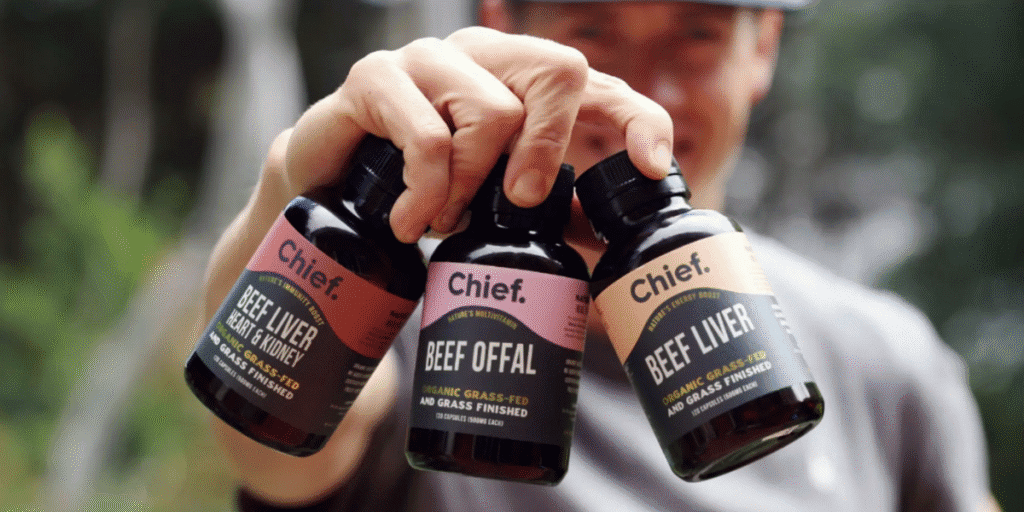
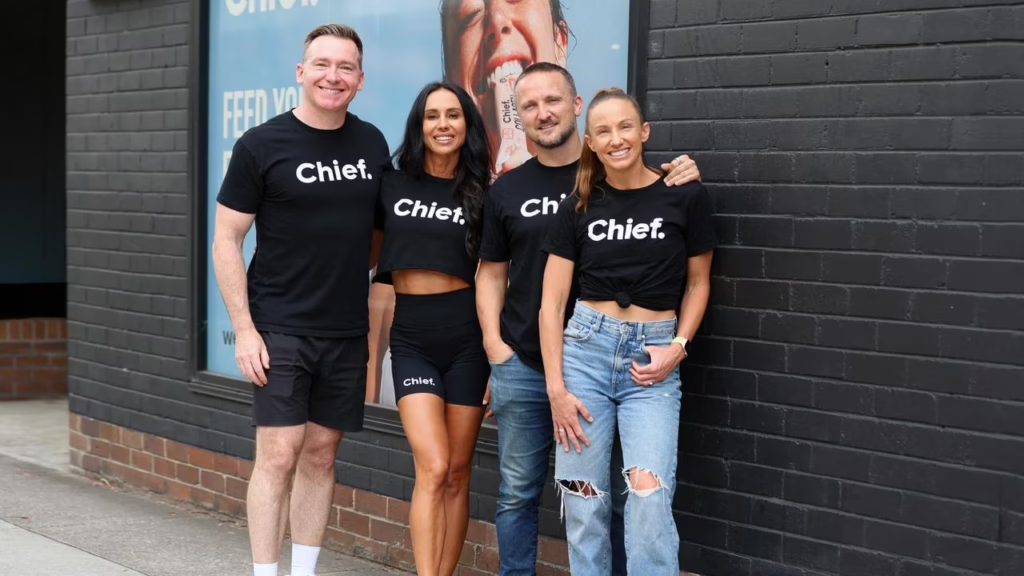
Justin Babbitt: Look, I'll talk probably more generally, but by the way, we got to 200k a month and a little bit beyond before we, we kind of went down that path. The key driver for it was actually doubling down on creative and I really wanted a creative input to be able to make sure that we're really good at that. And so, you know our strategy by the way. We want to run lean. We don't want to bring everything in house. We try and outsource as much as we possibly can. We still outsource a lot of stuff.
Nathan Bush: Yep.
Justin Babbitt: Right. We still get a lot of external advice and we've got a fractional CMO mal shout out to Mal chair. Yep. Yeah, Mel's great. You know, we have email agencies that help us usually do project based stuff. Just like come in, get a whole bunch of work done and then we'll, we'll, you know, we try and avoid. Always on stuff that we do have, always on agencies, you know, SEO, we outsource. So, you know, we're really trying to keep a very lean, flexible team. We've gone through some very rapid growth. You know, we more than doubled every year for the last four years and that the business changes very regularly. And so we just tried to avoid being locked into a particular path. That said, the team has grown significantly over that time. The major investment has just been in content production. Really?
Nathan Bush: Yeah. And you said that you've systemized a lot of that. How are you producing so much content? Are you doing a lot of it in house? Are you using influencers, ugc?
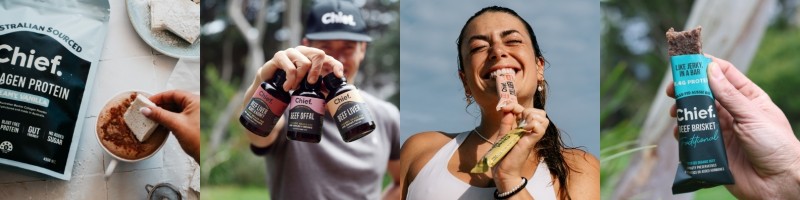
Justin Babbitt: Everything. Yeah, everything. Yeah. I think the right mindset is to systematize it because I think when you, when I look at things that we say we want to do and we don't do it, there's no system, there's a blocker somewhere, somewhere along, you know, whether it's right at the front end with the ideas, production, editing, distribution, like there's a blockage somewhere. So you gotta think of the whole system. I'd say the shortcut again, perhaps for those earlier in the journey, paid collaborations are Working really well for us at the moment. So for the uninitiated, just think of it as you work with an influencer. They'll produce a bit of content that kind of probably doesn't really look like an ad, but is a good ad. And it'll be a collab sort of show up in your ad account and you boost it as an ad.
Nathan Bush: Yeah, nice.
Justin Babbitt: And we're finding that's getting much better roas and we're just doubling down on that. We get a multiple win there. Right. So we get traditional influencer sharing it to their audience. It sits on our feed, so it's good organic content and brand association. And then we're boosting it so we get 10 times the eyeballs on that content and it converts really well. So we just get, you know, it's a lot to like about that model.
Nathan Bush: Yeah, that's a great model. And in terms of the commercial arrangements around that, is it usually that you. Typically you'll pay an influencer and you'll have usage rights over that. You'll pay depends. If they've got an audience and you pay to access their audience, you'll have usage rights over that. Whether that's 90 days, six months, whatever it is. And then when you're boosting it as well, is there a limit on how much money you can put behind that or is it just within that usage rights window?
Justin Babbitt: You can go, yeah, but from a contractual perspective, yeah, it is within that window. We have this kind of debate all the time. Try and avoid windows of content and any sort of royalty kind of place of content.
Nathan Bush: Kind of where I was getting to.
Justin Babbitt: Yeah, content creators, it's like, okay, we will have an agreement up front to say, look, it's unlimited use and royalty free. You know, we could use it for years and there's no limitation. Why? Well, we're kind of paying you for the content. We're not trading off your personal brand. Yeah, right. Your face could be. Anyone could be switched for any other face. And that tends to work for people. I think that's. That's fair and that's fine. It's out of necessity. Like, we have hundreds of content creators. It had been impossible. And we're constantly recycling ads too. So we'll turn them off and we'll turn them on maybe a year later. And it's just impossible to be able to track. Oh, we can't use that person because of this. So we really limit it to our, the influencers that we're working with. And that's fair. I Think that's totally fair because we're trading off their personal brand.
Nathan Bush: Yeah.
Justin Babbitt: And people recognize their face, their audience recognize, you know, recognize them and they've got their own following and that has authority and totally fair. So yeah, we generally split them into two.
Nathan Bush: And are you driving towards for your
Nathan Bush: influencer and ugc, are you driving towards new customers? Is that mainly the goal?
Justin Babbitt: That's the key?
Nathan Bush: Yeah. Okay.
Justin Babbitt: I kind of figured this out more recently. It's like, why aren't we growing? We're kind of stuck. And we had a four month plateau last year where we're just stuck. In fact, we went backwards. We had a massive march and then it was just a little bit less and a little bit less and a little bit less. It's like, this is not good. And it was new customers.
Nathan Bush: Yeah. Okay.
Justin Babbitt: So we just weren't filling the top of that funnel. So there was some structural changes to the account that we made. We just basically simplified it a lot and put a lot more diversity in and that created a big unlock was number one. And with Mel's advice, we really started to focus on more, I guess you call them reach campaigns, lead generation. Think of it as filling the top of the funnel.
Nathan Bush: Yeah, yeah, yeah.
Justin Babbitt: So there's an argument to say, well, you know, just push your brand awareness campaigns out for reach, a very broad brand messaging and then that gets them in the funnel and if they engage with that brand, they can do product specific stuff. And we're certainly trialing that. I think what's working best is actually pushing our product specific ads out to a much wider audience for reach and see if we can get conversion off that anyway.
Nathan Bush: Yeah.
Justin Babbitt: Do you know what I mean? So if we can get a return on that, if we get a decent roas on a new customer, surely that's better. Maybe this is just performance marketing thinking and maybe it's wrong. But my current thinking is that if we can get a conversion on that reach campaign that's better than brand impression, that doesn't get conversion on that reach campaign because we're definitely winning that customer.
Nathan Bush: Yeah.
Justin Babbitt: And that's definitely paying for itself so we can do more of it.
Nathan Bush: I think that's actually changing too, in what I'm saying at least is that meta is kind of saying actually if you want conversions at the end of it.
Nathan Bush: Yes.
Nathan Bush: We get this idea about a funnel and you've got to fill the funnel,
Nathan Bush: but let us take care of it.
Nathan Bush: So just tell us what you want. Do you want awareness and that's where you want it to stop because you might be driving sales in store or whatever it is. That's fine. Do you want traffic to your site? Because then you can get them sign up, do whatever you want. Well, at the end of the day, do you want conversion?
Justin Babbitt: Yeah.
Nathan Bush: And we'll think about the window based on your product and we'll take them through that funnel. But just tell us what you want.
Justin Babbitt: Yeah, yeah, yeah.
Nathan Bush: And I think it's so easy to overcomplicate it sometimes.
Justin Babbitt: Look, I'm not doing the ad buying, but my understanding is what we're doing is taking a product specific, like problem solution kind of ad, not a brand ad. And we're pushing it out. We're using exclusion on our existing audience to push it out to new people. So we're going for reach. But I believe the optimization is towards conversion.
Nathan Bush: Yeah, nice.
Justin Babbitt: Yeah. And that's working. So we're in, you know, the last three months we've doubled our new customer acquisition and our revenue's just take. It's gone from that plateau to, you know, the steep cliff again. It's a steep cliff.
Nathan Bush: Let's hope it's not a steep cliff the other way.
Nathan Bush: Steep trajectory. What Justin described here isn't unique to Chief. I know a lot of brands are really struggling with creating a content operating system. And there are huge gaps opening up between brands who have cracked it and ones who are still struggling to get their head around how to create the volume of content needed. Here's a few lessons to get us there. Lesson one. Creative does the targeting. Now, as we said at the start of the episode, there used to be so much cred in being an amazing paid performance media buyer. Now the creative does that job. Deciding which segment saw your running shoe was a real skill. Now Meta finds the runner for you, and it leaves creative as the lever to signal who that runner is and tell the machine who you're going after. When you put an ad on Meta, the creative itself determines who sees it. The right hook reaches the right person. The right format resonates with the right mindset. You're not making a targeting decision. You're making a creative decision to get the right person interested in your creative. So do a little bit of an audit on your creative that you have in your channels at the moment. Is the creative that you've got there telling the right story to attract the right audience? Who is that creative talking to without any other targeting behind it? Do you think your audience, your intended audience would be drawn into that creative? And then there's the practical question. As an organization, where does more of your attention and budget go right now? Audience strategy or creative production? If it's the former, you're probably running the old version of paid performance marketing. Lesson 2 A content machine is a system. And as retailers or brands, we've now just got to create a content system whether you like it or not. So this often means finding the blocker. Most e commerce teams know that they're under producing creative. The question is why? It's rarely effort. We're all very busy and trying a lot of things all the time. The issue is almost always a blocker somewhere in the pipeline, which is making it hard to get creative up and running quickly. And it gets stuck, whether that be at approvals, whether that be at creation, whether that be at syndication. So the pipeline has four stages. Ideas, production, editing, and distribution. If content isn't getting made, one of those is broken. The fix isn't always more people or more budget. It can often slow things down. It's finding out where the output stops and solving for that. And often it means changing business rules and practices. One of the most structural solutions is to eliminate handoffs entirely. At overa, Alice Williams identified the blocker as the gap between what the person
Nathan Bush: who knew what the algorithm was rewarding
Nathan Bush: and the person making the content. By the time a brief had moved between them, the moment was usually gone. Her solution was to merge the roles together. One person in the ad account running spend and making creative at the same time. No handoff, no brief, no delay. And her take on performance marketing is really pointed. It's not a media buying skill, it's a creative skill. Most performance marketers are not good at creative, but creatives can now be performance marketers for teams where that restructure isn't an option. AI can be a shortcut, but only when you give it proper context. Mike Halligan from Scratch found generic AI output unusable until his creative strategist built a context document covering what good scratch creative looks like, what tone to use, what to avoid. And that investment lifted usable output from about 15% to 80% with AI in the process. When it comes to content, AI doesn't always have to create the content, but it can definitely speed up the process to create that content engine. And lesson 3 volume only works if new creative gets time for a genuine test. Building a content pipeline that runs super fast is one thing, but making sure that creative actually gets tested is another. The trap that a lot fall into is to produce a lot of creative, throw it all into the machine and wait for the algorithm to default to what it already knows works if new Creative is sitting in the same campaign as proven winners. Meta concentrates spend on the familiar new work, gets minimal exposure straight up, and it often underperforms the established creative. And it's easy to write that off as an unsuccessful trial before it even gets time to work. The fix is a dedicated testing campaign for new work at Scratch. Mike keeps new Creative isolated from the proven winners in separate campaigns. Each piece gets its own budget without the algorithm's existing bias towards what it already knows. What it already thinks works when something performs, he then moves it into the main campaign. When it stops working, it gets archived, and a lot of the time it gets resurfaced later because Meta loves that. Meta loves resurfacing old content once it's had a break. 60 to 70% of Scratch's sale now come from creative launched in the last two to three months. And that's exactly what a system designed to keep finding winners actually looks like for teams producing at higher volume. The same logic still applies. Paul and Mitchell's team at Freedom now runs 30 to 50 creative variants per campaign. Using AI to generate variations doesn't always have to be huge variations, but little variations. And that's using the same team with no additional production budget. Her condition for this is to produce reliable data. Equal starting conditions for every variant, equal budget, equal airplay. Her view is that unequal exposure produces misleading signals and bad decisions. You can easily go down rabbit holes based on those bad signals. So volume without structure is actually just noise. And if you're putting all the effort in to create all this content in your machine, you need to make sure that you set up your tests to give it every chance of success. So the practical check is pretty straightforward. Is your new Creative in its own campaign to get it up and running? If it's sitting alongside proven winners, it probably isn't a genuine test. The brand's pulling away on paid social right now. Aren't spending more, they're actually just creating more and testing more. And they're testing more because they've built the infrastructure and the creative system to do it, whether you like it or not. I know we're retailers or brands and we naturally just want to sell stuff. We're now content machines, and a content machine is a system problem before it's even a creative problem. So you've got to build the pipeline. You need to remove the blocker at whichever stage the output stops. You need to separate new creative from the proven winners so that the algorithm actually gives it time to work. And you need to keep feeding it because the window when a piece of creative is fresh to the platform is the window that matters. The content train isn't slowing down anytime soon. This is just going to be a part of business. The brands that get on board and use their creative engine to find new customers to engage their existing customers are the ones that are going to be winning long term.