Jess Hatzis: Founders are the biggest pain in the ass because we bottleneck everything because we don't want to let go of anything. I was postpartum with my second child, and I had a really classic postpartum midlife crisis. Most people suck at developing customers. Hi, I'm Jess Hatsis. I've built over $1 billion worth of consumer brands. And on today's episode of Add to Cart, I talk about the less obvious leaps to growth.
Nathan Bush: Hey, it's Rosa here. And today we're having a deep and good old with brand guru Jess Hatzis of Willow and Blake and Frank Body
Nathan Bush: Ushy here as well. Thanks for introducing me, Rosa. Pleasure to be on my own podcast.
Nathan Bush: Yeah, it's so nice to have you in the background on this one, Bushy. But, yeah, I'm really excited about this one. I didn't realize that Willow and Blake, their copywriting and creative agency, was behind so many different brands.
Jess Hatzis: Did you know that, like, massive fanboy.
Nathan Bush: Massive fanboy. Their campaign last year with boof. We talk about it a bit on this episode. I think they rewrote a lot of rules with that one and caught my attention, as you can see, from my luscious hair.
Nathan Bush: Yeah, I reckon a Boof. Boy, look at that. But, yeah, it's huge. Like, and now to see that they're not just doing it from inception and hearing her take kind of that startup mentality over to Bets as well. So it's going to be a really good conversation and a lot of gold in there for people who like intuitive marketing, but also, like, really need to rely on data for those slim margins.
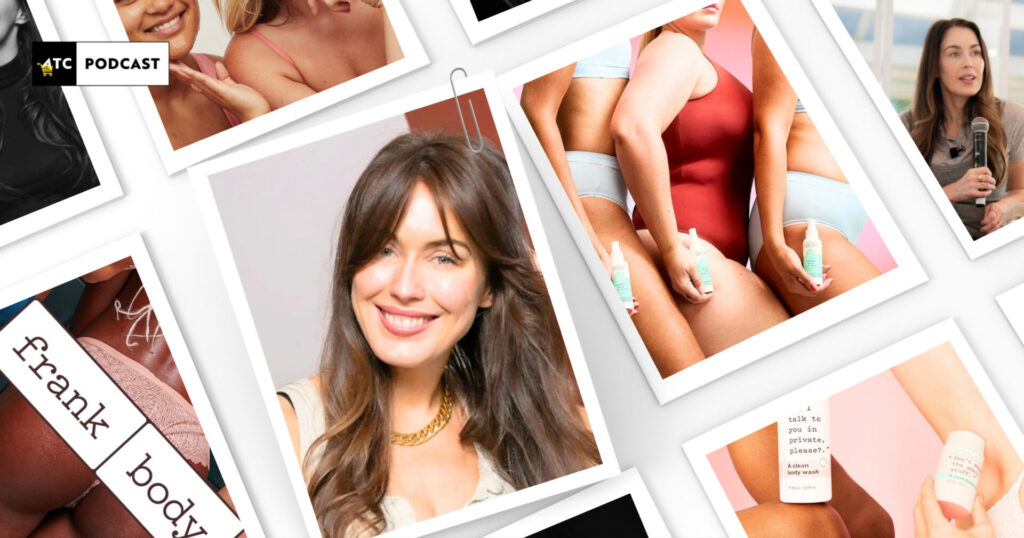
Nathan Bush: So, yeah, most of our listeners will know Jess and her co founder Bri from establishing the brand Frank Body, which was the Coffee Scrub. I can't say that I ever tried it myself, but had some of the most amazing marketing and brand treatment. And I can actually see a lot of correlation to what you've built with CROCT between the two brands. So it's fascinating to have you on this conversation, Rosa, when we're talking all things brand. Should we get into it?
Nathan Bush: Let's get into it.
Nathan Bush: All right. Before we do, let's thank our sponsors. Thank you so much to Shopify, Fi and to Klaviyo for bringing us all these episodes of Add to Cart. To have this free content brought to you by them every week is something that I feel very proud to do, and we're forever grateful for them sponsoring us. Here's Jess. Jess, welcome to ADD to cart.
Jess Hatzis: Oh, thanks, guys. I'm glad to be here.
Nathan Bush: So good to have you here, Rosa. Lovely to have you back.
Nathan Bush: I know I just pop in every now and then.
Nathan Bush: Just lady of leisure. Just popping in whenever you want.
Nathan Bush: The listeners never know when I'm going to be here and when I'm not. But surprise. Good one.
Jess Hatzis: I'm here.
Nathan Bush: I'm excited to have you. You both here for this episode because I can't think of two better people to talk brand and creativity than you both. Jess, we've had the pleasure of sharing a stage a few times and I always love hearing from you. You always kind of challenge my idea of what a good brand looks like and that's evolved so much. But look, big news from you. Over the last year, your baby, your other baby, Frank Body, you. You've stepped away from Frank Body, from what I've read, and you feel like you've got a thousand different things going on. Where's your head at right now? What are you doing?
Jess Hatzis: Constant chaos over here. Yeah. Like I was ready for a new challenge. I'd been at Frank For, God, 13 years by that point or something like that. It's a long time. I don't know many people my age that have been working in the same job or the same business for that long. So like everyone else, even as the founder, you kind of get at your feet and you're ready to go back to the start and build something from scratch again. And at the end of the day, that's what I love doing. My career is in ideas and I love being at the start, you know, and I'm, I'm better at that if I'm honest. There are better people, people who are better suited to do the day to day execution than I am. I get itchy beat. I need to go on and do something else. So focus back on my very first business. Willow and Blake, with my business partner Bri, we launched a business advisory out of there called Prescale, which works with consumer brands, kind of advising them across the full holistic elements of running their business and trying to grow it profitably. And then I took on a fractional CMO at large and shareholder position at BET's Shoes, which has been a whole different set of challenges and really exciting times.
Nathan Bush: And that's quite interesting, right, because they've taken like what you've just said that you prefer to come in at the start. It's like Bets has recognized that they need that fresh perspective again. So it's almost like now you're doing the reverse. But a brand that's been around for like Isn't that like over a hundred years or something?
Jess Hatzis: Yeah, yeah. That's will be 134 years.
Nathan Bush: Holy moly.
Jess Hatzis: This year. So it's one of the oldest consumer brands in Australia. Female founded, fifth generation run. What I liked about that was I've spent a lot of time either building brands from scratch or working with brands that need to reinvigorate but don't necessarily know how or what to do. And I was very specific about the projects that I wanted to take on after Frank. And I loved the heritage element of bets. Most people, I'm 40 who are my age would think about bets and remember it from their childhood. Oh yeah. I feel like I bought school shoes there. And a lot of brands who had to do everything to navigate and survive the last sort of. Especially for bets. Like you think back to GFC and then Covid like they've, you know, retail brands have been. It's going through storm after storm and they acquire all these bolt on elements of the business. And so it was really nice to work really collaboratively with the family and Mike the CEO to develop what the business and brand strategy looked like moving forward and then roll that out over the last 12 months. And they've been so open to change and it was a big swing. Better not fuck this up. Jess can't be the person that comes in and just this 134 year old.
Nathan Bush: This thing's been going for 130 years. It's on your.
Jess Hatzis: I'm very proud to say that we've, you know, the rebrand and the repositioning of the product and all of the changes that we made around the business have been really well received. So yeah, it's been a very exciting and rewarding project.
Nathan Bush: What excited you about that? Because I look at some of the work that you're doing with Will on Blake and it's really cool, it's fun, it's, you know, the boof haircare. Is that how you say it? Boof.
Jess Hatzis: Booth Rach, the founder, York Street Brands is an incredible mind and we worked with her to develop the entire brand. So naming, brand concept, visual directions, campaign, et cetera, brand strategy. And that was incredible. I mean that business launched and did 500k in its first week and credit needs to go to York Street Brands and high pr. Like they were incredible. So yeah, look, I like working at both ends of the spectrum. Like that ability to do something really disruptive in a category is exciting and have no real rules, but so is being very strategic about the creative that builds a Brand and a brand world. And that's what excited me about bets. Working within certain constraints, having to reposition the way people think about something rather than just beginning to start with a clean slate. That's the type of challenge that I, you know, I look for at this stage of my career. So I loved that.
Nathan Bush: So can we just unpack? So you wrapped up with like Frank Body a year ago. Did you just already have all these other projects going or was there a part of you like you have two, three kids as well, Young kids?
Jess Hatzis: Yeah, I've got two kids. So they're five and two.
Nathan Bush: And I just given you another one, by the way.
Nathan Bush: Yeah, exactly.
Jess Hatzis: My husband. About that.
Nathan Bush: Yeah, I want you to take mine babysit.
Jess Hatzis: I was postpartum with my second child and I had a really classic postpartum midlife crisis. You know, I felt ready to move on from Frank. I'll always be so grateful for what we did at Frank and to be able to exit with the founders was really lovely. But I, prior to the exit, I stepped back from my role for about a year. So it's been 2ish years since I was involved in the business in the day to day capacity. I was still sitting on the board of directors for, for a period of time, but I felt ready for a new challenge. That business was so set, you know, everyone knew what it was and there was no redevelopment required. It was very much in roll out and grow mode, which as I said at the start, there are people better suited to do that than me. I get a bit bored and I, I felt like I was at the point in time where I also didn't I say this with all respect, I didn't enjoy the people management side of my role as much anymore. And people deserve a leader that is loving that side of things, like they deserve that. And that wasn't me. I wanted to be more in, in the tools and you know, developing the strategy and doing the ideation and when you become it like, you know, when you're at exec level, you're just firefighting and people managing and budget planning all day. So it forced me to take a step back and I did a bit of a hodgepodge of things throughout that year. While I was on leave, I took a lot more time off work. I didn't rush back like I did with my first child in whatever capacity you can. I mean, you're still breastfeeding on director calls and yeah, you know, still pretty busy, eight hours of meetings a day. So I stepped back and I started Doing some coaching and consulting with businesses and I really loved that. I've always enjoyed helping founders achieve their goals and that next generation of founders coming through. You know, there's 20 and 30 year olds who have these ideas and I can see a lot of my younger self in them and I want to help people avoid the mistakes that I made or that we made within our businesses. So I was doing that in a one on one capacity and if I'm honest, it was the same set of five problems coming up over and over and over again, no matter the business, no matter the founder. And that's where the idea for for scale came from. We'd launched it prior to that under a different name called of course. We launched that in 2020 23. Yes. My business partner Bri and I, that was a series of courses where it could help people focus on brand building, tone of voice, strategy, creative. And what I always wanted to do was add an in person element to that. But I was seven months pregnant when we launched that business. That wasn't the time to launch in person meetups so we had to put a pin in it and we decided to relaunch the in person cohort part when I came back from matlie. So it was nice to kind of dip my toe in, in a one on one capacity and really get a feel for what people needed. So I'd finished doing that and I thought, well, I could do this in a group setting because it's the same issues time and time again and that can allow me to meet with more people. So Bri and I brought on Emma and Kate who are ex Frank Green Cheat Society Nike Rationale. Brilliant, brilliant E comm of performance minds. And that was very complimentary to us because when I'm not the expert in performance marketing, I'm a brand expert. And obviously as we have chatted about prior to hitting record button, performance, the necessary evil of doing business these days.
Nathan Bush: There were a few f words dropped
Nathan Bush: performance and people can we not.
Jess Hatzis: It's, I mean it's so integral to doing business well. But there's a lot of really poor operators out there and I've gotten in the back end of some accounts and not even being the performance expert can see what a shit show it is and a real lack of respect to the art of brand building within the performance ecosystem. And that's what Kate and Emma do so well. So our skill set came together really well. So we've worked together across a few things. They're also the performance team that helped turn around the Titanic size business that is Bets them. And I have worked across quite a few projects. So for scale, they're also the team that helped reposition Bets with me as our performance marketing agency. And really our goal together was to help as many consumer brands as we could. So it was this sort of path that led me into exploring what it looked like to consult for other businesses. And that was how I met Mike, who's the CEO of Bets, at a conference. And everything I was saying was exactly what he was looking for. He knew something needed to shift within the business, had a lot of strong ideas himself about what that should be. Had led to the E Commerce, I guess, really kicking off the E Commerce project in Bets because historically the business had been a little bit behind the eight ball to get to establish E Comm. And we worked together to kind of take it into that next phase. So it was, you know, it was a bit of a journey to get where I am. It kind of happened somewhat organically over the last two years. Got back to my writing roots a lot, which was really nice to kind of.
Nathan Bush: I love your substack.
Jess Hatzis: Oh, thanks. Look, I've been really quiet on there for the last few months because I haven't had capacity to write anything of any substance. But it was nice. I found it was helpful for people and cathartic for myself.
Nathan Bush: Totally.
Nathan Bush: There's always that question. I'm curious to hear what you say to this is. I don't know if it's a bit of a criticism, but around founders who turn to coaching or to education, and you constantly hear it through the industry is like, if you're so good at developing all these brands, why don't you just create more brands and make millions of dollars? Why are you teaching others?
Jess Hatzis: Why do people do it?
Nathan Bush: Yeah.
Jess Hatzis: Then I don't have to deal with the shit show of running and operating a business because it's fucking hard. Really hard. I think there's two camps. I think there are people who have always been motivated by the idea of helping other people. And I've mentored and coached in some capacity throughout my entire 20 years of my career. And it was a way that I felt like I could have that people element without being responsible for their entire day to day. So that's what I loved about it. And my life motto is a rising tide lifts all boats. So for me, it was so intrinsic to who I am. I want to see other founders succeed. I've had, you know, band of meetups, WhatsApp groups with brands that people would see as Competitive. We had a whole skincare WhatsApp group and it was, you know, the founders of all these really well known Australian brands coming together, going, right, are you having this problem? We're having that problem. Let's help each other get through it. Because no one is brand agnostic. I owned the brand for God's sake. And I would buy other skincare brands. Why on earth would I think that my consumers wouldn't? So we can all grow and learn together. But then I think, Nathan, right, like there's a lot of people who go into it for potentially the wrong reasons. They see it as a way to make a lot of money from founders who are stressed and vulnerable. And then I think there's the camp who go, right, I know how operationally challenging this is. It's a 24 hour a day job. I still love consumer brand, but I want to be involved in a different way and I think through down the coaching path. So I think there's all these different reasons and there's different coaches and you know, I think we attract different types of brands too. We find we have a lot of female founders come to us because there aren't that many female coaches out there.
Nathan Bush: No, I'm part of three, I'm part of three communities. I'm in Bushy's community. I've been daily mentor. I'm in E commerce equation now. And yeah, it's so true. I think what you were saying about having 12 years dedicated to Frank Body as well, like there's just, you get so much knowledge that you're like, you must have reached a point of not wanting to pour it all back into Frank, but then you have nowhere else to put it and like the energy that you need to start something again from ground zero, like when you've done it, you then realize, okay, I'm not at that stage of life once you have kids and life just moves on. I'm not at that stage of life where I want to do this myself again. But I do want to help other people. And I think it's really cool that you aren't just like hoarding that knowledge and sitting on it. I'm really interested to hear you say that. Okay. It's the same problems that you keep saying seeing consumer brands having again and again. Like what do you think when it comes to branding or just positioning, what do you think those common problems are? You guys are hoping to jump in and help fast track that people can figure it out in two years rather than 12?
Jess Hatzis: Yeah, look, it's really common across our Willow and Blake clients and for scale clients. Nathan would see this with people you work with too. Lack of understanding about what the true white space is and how to properly differentiate their brand or product. Honest with themselves about the fact that there isn't anything particularly ownable about the product. Therefore, how do we create something ownable with the brand that requires a real level of self awareness, removal of ego from the conversation. And not everybody is ready or willing to have that type of conversation. But when you are, that unlocks a huge amount of growth because you go right, I still love my product. Doesn't mean the product's bad, just means it might be one of four other products that are very similar. How do we create that white space or find that white space? How do we then develop really strong customer Personas off the back of that?
Nathan Bush: And most people suck at developing customers, especially big consultancies.
Jess Hatzis: Oh Jesus Christ. She's 24 to 34. I don't exist in any like consumer boxes anymore. I turned 40 and I fell off a cliff. No one targets me anymore. I have more disposable income than I've ever had in my entire life. Why are you not targeting me?
Nathan Bush: Oh God. You don't want to see the ads that I get on Facebook?
Jess Hatzis: What are they?
Nathan Bush: Tell me honestly. It's all about gut exercises. And I'm like, come on, give me a break. It's not that bad.
Nathan Bush: You're like, it's okay, I'm a talking head. No one sees my gut.
Nathan Bush: It's my film from the chest up. Booty prides itself on making some of the most comfortable underwear on the planet. Soft, breathable, no bothersome seams. But behind the scenes, their marketing stack, well, it was a lot less comfortable. As Booty scaled across Australia, the UK and the us, customer data was scattered across email, tools, on site, forms and paid platforms. Getting clear insights, let alone taking action, was slow, clunky and as pleasant as a wedgie on a hot summer's day. So they simplified everything and unified their channels in Klaviyo. With one view of the customer, Boody could finally understand how people browse, abandon and buy and then trigger personalized messages across email on site, paid and SMS without adding more tools or manual work. The result? An 87 times ROI from Klaviyo year to date, a 10% lift in retention year on year and a 34% increase in high intent customers in just 90 days. Turns out when your marketing platform is as comfortable as your product, growth feels a whole lot better. If your stack is causing friction. Head to klaviyo.com au and see how brands like Boodi are scaling comfortably. But I hear you. Customer Personas. I want to hear about the problems first and we might pick up a few of these to dive into to understand and how you approach them.
Jess Hatzis: Yeah, so look, developing strong customer Personas and then if we want to go into the performance and acquisition space, what are really strong hooks and messages that are actually going to resonate with that customer and how do we carry that journey through from the awareness phase onto side into conversion? Then there's a lot of issues I see around. Team, team structure. Found a structure. So I've worked with businesses that are, you know, one woman or one man operating the entire thing and wearing 800 different hats and really unsure how to prioritize. So we focus very much on prioritization skills. And then on the other side, there's a founder who's grown it to 30 or $50 million worth of revenue, but they still don't have the right team structure around them. They can't take a step back and rebuild the team from scratch. Doesn't mean getting rid of the people. It means re shuffling the way the people come together on the board. And letting go of reins is a big one. Founders are the biggest pain in the ass because we bottleneck everything because we don't want to let go of anything because we're scared that we'll break it or that other people will break it. But then we self sabotage and it's like this self fulfilling prophecy because we can't get out of our own way.
Nathan Bush: But is that also the secret to success is like giving a damn and like being in the detail and driving
Jess Hatzis: that to the point where yes, you have to be across some element of detail, but I think you can still achieve that by having really strong brand culture, onboarding people really well, having very clear KPIs and expectations for a role, what reviewing work looks like, creating a psychologically safe workspace where people can come to you and say, hey, I didn't do this well and I want to understand why that can mean there's 10 of you rather than just one of you bottlenecking everything at the top. And that took me a long time to learn because you get used to doing everything yourself and to let go and trust other people is really scary. It was a big part of why Bets could have such a phenomenal turnaround in such a short period of time. We only launched that rebrand in October, so it's really only been in market for six months. And for a brand to go from basically irrelevant with a particular consumer cohort, say mid-20s to now actual virality across TikTok, that's bananas. And that could only happen because I trusted the team. Like I onboarded them with the vision. I was literally doing everything myself at the time. Same because I didn't have a team around me. I was rebuilding the team with the right people. But then as soon as they were in, I'm like, great, I've onboarded you. You understand this. Come to me with every problem you have, but otherwise you have free reign. Go for it. And you have to trust people to do their job. And they did it really well.
Nathan Bush: Can we run like. Because I love those examples that you gave around common problems and I know we're talking about founders, but I think Bets is a great example too of just applying it to any brand. If you talk about finding your fit in market, finding that white space, defining your Personas, knowing your hooks and your messages, how did you come up with that for Bets? Because obviously with such a rich heritage in that brand, a lot of those would be pretty set. How did you pick that up and move it?
Jess Hatzis: Yeah, it was a big data analysis project. That's the not sexy side of branding. You have to spend your time in the numbers and the numbers will tell you what needs to be to change. That's what I've always considered to be the really big commercial difference at Willow and Lake. Because we've been consumer brand operators, our recommendations are built on insight, not just me going, this looks nice, let's go in that direction. So I spent about two months reviewing every piece of data I could get my hands on. What it showed me was that there was a very price sensitive consumer who wasn't particularly loyal to the brand. Purchase rate was nowhere near where you needed to see it being. Full price trade was really difficult for the brand and because it was all driven by a lack of cohesiveness in the creative that was pushed through only one channel. So every eggy was in one basket. And I don't like all my eggies in one basket. I like eggies in multiple different baskets. So it was really driven by performance marketing and there was a very unholistic view as to what that performance marketing impacted across the board of business. So I could see that if we kept going down that path, we were going to be paying for customers and eventually we were going to run out of customers to pay for. So I needed to take a step back and go right, how do I acquire a stickier customer who has more propensity to purchase from us more than one time, who's going to purchase at full price, who's going to talk to their friends more about the product and create that kind of social virality and word of mouth that we're looking for. And it wasn't in the current customer set that they had and that hadn't filtered through to any of their acquisition strategies yet, nor especially not the creative in the brand. And then it also had a big ripple effect on product. So to bring the entire business along on this journey, I sat down with all the shareholders and took them through my thinking, the analysis, what I'd found, where it led me, who I thought our new customer should be, how we still maintain the older, by older I mean like the legacy customer that wants to be part of the brand, but how we get comfortable with letting go of the customer who isn't adding as much long term value to the business. So that meant removing school shoes, it meant removing men's, it meant halving the SKU count. You know, we had like 700 products in market. We needed to reduce it to say 250, 300 annually. And that was a massive shift for them because this brand was built on school shoes. And now I was sitting there going, kill them.
Nathan Bush: How'd that conversation go down? You're like, I've just rolled in here and I know you've been doing school shoes for 130 years, but we probably shouldn't anymore.
Jess Hatzis: It was fine because it was backed by research and I think that's the key. I don't believe in the sentence I feel, I believe sitting in the boardroom unless it's so relevant to the topic, it should be the numbers show us or the research shows us. Therefore here is the recommendation. And everything was based like the conversation was rooted in that type of insight.
Nathan Bush: Where are you getting your research around prospective customers? Because obviously really easy to analyze existing customers, probably less so in a, in a physical retail environment, but definitely in E commerce, very easy. What about understanding customers who you don't know who they are or what they might be? Where do you get that data from?
Jess Hatzis: Look, a lot of it is acquired data over time because I do this for a living. So I spend all day, every day looking at consumer brand data. So I don't look at things in a silo. I would never only consider what the consumers of competitive shoe brands are doing because she doesn't just walk around naked and wear shoes and not eat any food and not do her hair like,
Nathan Bush: she sounds like you've found your Persona.
Jess Hatzis: Found my Persona. Right. I look at what's going on across every category. I look at how people are responding to certain messages. I spend time. Some of it is very, like, qualitative data points. So you spend time in comment sections across a variety of different brands. And I spend time reading reviews on sites. There's tons of annual reports that I read, which are really helpful. There are research papers around that are really helpful. So I look at a really broad spectrum of information points to help me make decisions. And that's what our team do as well. So I think that's the key. And then as much as I said I don't think that I believe and I should feel, I feel should be part of the conversation, I would be lying if I said there isn't an element of gut instinct in what we do. It just has to be validated by the numbers.
Nathan Bush: Why there's, like, room and a need for people like you at the table. Because there is a huge part of marketing which is intuitive, and it's the intuitive marketers who can pair it with data that then are going to be the ones who are proactive rather than reactive, which bets to this date were probably reactive in their marketing, seeing what was happening in the market and copying peers, and then that's the blind leading the blind and so on. I want to almost talk about, like, because these Personas, these customer Personas, they wouldn't actually be that different to when you had Frank Body and you were going after the Millennial, which is really now like the Gen Z. Same.
Jess Hatzis: Back when we were cool. Back when we were cool.
Nathan Bush: And I want to talk about, like, how the customer Persona can stay the same. Yet what used to work for Frank to be edgy, cool, and super relevant. Why that wouldn't work today? Because just a tiny bit of context. So my brand cropped is in pottery, and we very much looked at Frank. That was a huge inspiration to us, I think in the very early days, I inquired at Willow and Blake, and we just couldn't afford it at the time. But it was that polarizing edginess, that brand that kind of really shocked people in a way, but then still felt playful. But what I've noticed six years in is it's not the same. I can't play with the same brand playbook anymore. It's really hard to maintain an edgy, cheeky brand in today's space unless it's a person behind it, which we were never found a facing. I know you guys weren't founder facing. But to get to those Personas, that kind of Gen Z, younger, millennial maybe audience, what do you think wouldn't work today? That worked for Frank? Like what are you not recommending that maybe you used to.
Jess Hatzis: It's a really good question. I don't think that there is a playbook I wouldn't recommend. I think that it's certain things work for certain businesses at certain periods in time. The reason it worked for Frank, the landscape has shifted around us. So consumer brands back then, well, firstly, like btc, consumer brands didn't even really exist. So we were one of the first beauty brands in that space. And our competitors were Dove, Nivea, the Body Shop, et cetera. Bland, very vanilla, huge corporate entities that never really wanted to take a risk on anything and often played to women's insecurities. For us, it was based on a gut instinct as to what we were looking for in consumer brands. We were very bored by what was happening in the category and all. Also an insight that people were shifting to this way of communicating. So therefore the brands that they're going to interact with will also shift to that way of communicating. It was an element of the right place, right time, but also the way that you use the product, it's sort of. You could connect it to something a little bit more edgy. You were naked in the shower using the product. If there was ever a time for sexual innuendo, that was it. Transferring it to pottery crockery, which is why it doesn't work in certain categories. And that's where you might need to lean into cues that are a bit more refined or about connection and shared experiences that happen around the product. And so we take a really different approach. We don't have a house style at Willow and Blake because if we had a house style, we wouldn't be doing our job well. Every brand that we build is so different. So you've got really polished B2B communications in one brand. Then you've got ultra emotional based around connectivity for a brand like Pure Mama, whose campaign we just launched. Then, you know, on the other hand, you're leaning into nostalgia and trying to conjure up feelings of like family and childhood memories, which we just did for Le Pure's new campaign. Then you have something like Bets where it's going into heritage and it's talking about the richness of something that's old. And what I identify there was not only is it, it felt really obvious like, don't try and be a new modern brand. Like, every brand is trying to fake heritage, and you actually have heritage. So let's lean into that and make it feel really genuine. But Gen Z also have, whether they want to admit it or not, a huge fascination with everything nostalgic. It's just ironic that they weren't alive the first time. So it's not actually nostalgia to them, but, you know, because they're seeking connection. Because so much of their life has been lived through a screen, and so many of their formative years, that opportunity for connection was taken away from them because of things like Covid. So it's not at all a criticism. It's just an observation of a generation that are looking for things that have a bit more meaning in them. And so giving them a brand that they could interact with, that it's like, hey, there is meaning here. This thing's been around for 134 years. Your great great grandmother would have worn these shoes vintage. Vintage, babe.
Nathan Bush: Do you think it's also playing into influencer fatigue? Is there a little bit of, like, I like these heritage brands because they've been around for so long. They've seen some things, they've built this story up. And yes, influencers aren't going away. But instead of this random person who's got 3 million followers telling me what's cool, I actually like to hear it from someone with a bit of expertise or credentials.
Jess Hatzis: I'm really particular with the influencers that we work with. I have never found influencers with, you know, millions of followers to be particularly great at awareness or conversion. So we were very particular with wanting to work with people who had strong fashion credentials, because for us, it was about getting people to see the brand through that light. Not sort of a mass shoe or not the school shoe or not where the mom would go and buy the dad's boot for the season, her shoe and the kids school shoe. It's like, this is a fashion destination. You're going to get trends that are straight off the Runway at the commercially friendly price here. So therefore, we need to partner with people that we can borrow that clout from. And we wanted them to be repeat engagements. It was about bringing all of those influences together. So there was this real sense of community and we could establish strong relationships with people because that hasn't changed. Good influencer marketing has always been about building really strong relationships with influencers. And so that was what we did at Frank, it's what we were doing at Betz. It's what we've done with every brand in between. And not Just throwing money here, there and everywhere, but also having realistic expectations for what influencer marketing does. Every now and then you find a unicorn that immediately translates to sales, but otherwise I think about it as a frequency effect. It's about, you know, the same way as putting billboards up. I wouldn't put one billboard up in one random suburb and expect that it's going to sell all of my product. Influencers are living breathing billboards online and so you need to have multiple engagements. People need to see something half a dozen times before they're actually going to care. It needs to come from half a dozen credible sources, each with their own unique spin on things.
Nathan Bush: The market is shifting, costs are climbing, and the pressure to do more with less is very real. But when resources are tight, you can rely on Shopify, the platform that's consistently first with new capabilities. Shopify invests significantly in R and D and drops more than 150 updates every year. Evolving with you and absorbing complexity so that you can focus on what moves your business forward from AI powered insights to the world's best converting checkout. Shopify is designed for the next year of commerce, helping you sell more, scale faster and future proof your brand build for what is next with Shopify. Visit Shopify for Enterprise to learn more.
Nathan Bush: Can I you2 talk to this point of clout a little bit more? Because I think that's really interesting what you just touched on about your products needing to be seen. Not just this, where we started which was user generated content. I'm going into bets today to buy my hubbies like blah, blah, blah, whatever. But I saw still that you guys are very present. So you and Bri and I guess your house of brands that you help to collaborate with are present in like IRL events and influence events in that way. Is that where the shift is going? And it's more about influences that are like real. They're doing things that give us fomo. Because being at your home and unboxing, it's no longer something like oh, I wish that was me. But seeing people at events and like Coachella style events and so on, like I just want to hear from you, like is that where you're seeing like a shift in working with influencers? Is it moving to in person or. Yeah, is that just in my algorithm
Jess Hatzis: that I'm saying it's a really great pickup. And I think that brands who are wanting to be part of the cultural zeitgeist have been going in that direction for quite a while. We did a lot of eventing at Frank and I always wanted those events to feel really different. So every now and then, you know, a lunch style event, which is beautiful and curated makes sense because you're trying to create an experience that feels refined or reposition something. At Frank, I was like, never do I want to have everyone sitting around a table with a bunch of florals, because that was so off brand for us. So we would instead invite influencers to like the Smash Room where they were breaking beauty standards. They'd be in jumpsuits and they'd be beating the shit out of crockery with baseball bats. It was about rewriting the narrative about what it means to live in the skin that you're in. And then at Willow and Blake, we run a lot of events. So it's really the only type of outward marketing that we do is bringing together tastemakers, decision makers, strategists, all in one room and having thought provoking conversations. So they're often centered around some kind of panel or keynote presentation. The last one that we ran was called How Women shop with Edwina McCann, who's the editor of Vogue, a woman called Michaela, who's head of brand and marketing at afterpay, and myself and Bri. And it was a conversation with all women in the room, all women on the panel about how women shop, what is making them tick. And so it was really quite insightful and really community driven and people came together from all sorts of fashion brands. But we're having conversations like I touched on at the start, you know, the competitive nature was gone. It was just, here's what's working, here's what's not. This is the shit show. This is great. Have you tried that? And that's what I like about the in person element, because you kind of get past the surface level BS that holds people back from growth and it
Nathan Bush: feels like that's the genuine influence again. Like, I look at that and I'm like, that's where the influence is happening. Like you said it perfectly with tastemakers, like from the outside, from a consumer. You look at that and you think like, what are they talking about? What's the trends that are going to come out of this? What direction are these people, like, genuinely influencing? So did you mean to say eventing before? Like marketing? Is that a term?
Jess Hatzis: Yeah, we call it eventing. So interesting.
Nathan Bush: So that's your performance marketing and then there's your eventing.
Jess Hatzis: Not to be confused with venting, which I also do frequently.
Nathan Bush: Yeah, we can do both at the same time.
Jess Hatzis: Wine and wine. That's What I call that.
Nathan Bush: Yeah, yeah, I like that. I've got to ask you though, on that event, I love that topic, was there anything that the rest of us should know around how women shop that you picked up through that event that sure.
Jess Hatzis: Have a whole report I could send you.
Nathan Bush: How convenient.
Jess Hatzis: So I'll flick it your way, cherry pick what you want. Yeah, we're running. We're preparing another one now around Mother's Day and we're running another one for. For scale in maybe four weeks, which is very much like for founders by founders, this kind of founders unfiltered philosophy. Again, if I bring people together, it's because I want them to share real honest stories and I guess there's an element of inspiration but also actual practical takeaways. People go away from this event and implement tomorrow and it maybe make a meaningful change in their business. So I. Yeah, I'm a big fan of it also, if I'm really honest. From a monetary standpoint, if you were a consumer brand looking to engage influencers, typically a lot more cost effective to run an event because each individual influencer, if you're looking to work with anyone of kind of any real standing that's separate from a creator, they're very expensive to engage. You might have to pay fees for some people to come to an event, but often you don't if you have the right creative and the right experience that they're looking to get involved with. So you get a ton of content out of it, you build a real relationship and it usually costs you1 10th that would have to engage each of those people individually so it ticks so many boxes.
Nathan Bush: That's such a hack. I love that. I think that's such a hack because you're also playing to. The influencers need to create content for their own channels anyway and they know they're going to like a visually nice merchandise event and there's going to be other creators there whose clout they can jump on and it's just like one big. Yeah.
Jess Hatzis: One big strappy family. I love it.
Nathan Bush: I feel like that's such a hack for our listeners Bushy to like properly think about events and eventing. Let's make that thing.
Nathan Bush: Is this the part where you plug Croc Studios as a great place to host your events? I see where you're going. It's very transparent.
Nathan Bush: I actually, yeah. Honestly, if our studios weren't so bloody booked all the time, then maybe we'd have more room rents.
Nathan Bush: La dee da. Jess, I'm really keen to pick your brain on something that you picked up about before. And I've heard you talk about the brand strategy being the invisible architecture of a business. When you talk about brand, it can be so wide reaching, like we've talked about everything from finding your market position through to colors, fonts, influences the whole lot. Right. For people who are considering their brand, does it always have to be a big lift and shift or can you
Jess Hatzis: do brand incrementally in an absolute ideal world, it's a big lift and shift, I think because you can have a more meaningful impact on the end consumer, it feels more memorable. But there is also risk involved with that approach. So not just the financial layout that is going to be associated with doing something like that, but if you don't get it right, and this is where coming bringing experts in is so critical, if you don't get it right, you might have a business six months later because you've gone in the wrong direction. You've alienated your core customer whilst failing to acquire a new customer. So working with experts is really key, whether that's agencies or internals. Just if you, if you're not a brand expert as a founder, don't do that alone is probably my biggest piece of advice.
Nathan Bush: And don't use Claude.
Jess Hatzis: Don't use Claude. I'm a big fan for AI integrations in businesses to support you with rollout things, administrative tasks. It can be credible for that. So it can free up your time to do the big strategic thinking. It can't do the big strategic thinking for you and it doesn't offer human insight. Human insight is what makes a brand really strong and ownable and distinctive. So that said, obviously there are a lot of businesses who are very constrained financially now and resource wise. So I would say making any changes in the right direction is still better than doing nothing. And so to do that, what's, you know, there's multiple ways we could tackle it. People gonna say lowest hanging fruit and then just kick myself in the head for saying it. So but it is, you know, what are the things that could make the most meaningful impact for our consumers but also not feel jarring. So we've got to think about the experience that they're having. Could a simple shift be an elevation of the content creation that we have through social, for example, won't always go and advocate for, you know, it's not always first go and change your brand identity because maybe that's something we need to work towards, maybe we don't know where we want to go yet. And so it's about changing things up on platforms like social performance, email, where it's a little bit less permanent.
Nathan Bush: Talk about the like two door, what's a one one way door versus a two way door?
Jess Hatzis: Like exactly.
Nathan Bush: Yeah, if you do it, you need to take it down or you can, it doesn't matter.
Jess Hatzis: Exactly. So I would experiment there first if, if I was in the position where I couldn't change everything all at once and be really honest about how long it's going to change take to change things. Well like Bets was, you know that was a sprint of a project. We didn't start the first phase of visual identity changes until July and we went live in market in October. That is unheard of. Like that would usually be a 12 month project or maybe 6 to 8 month project to roll that out. But that was the strategic analysis would come first. And you know, it was a lot we wanted to get live before cyber because we knew our next opportunity wouldn't be until February, February. And we needed to make that meaningful change in the business sooner than then. But planning out what a timeline for change looks like, whether it be one big swing or incremental changes is really key to getting it right too.
Nathan Bush: And getting the invest in something that's like okay, their expect costs are rising and maybe their customer base isn't growing. Getting them to invest like in new experimentations, new Personas like that sounds like it would have been a very expensive marketing like few campaigns for them over the last year. Like how do you convince a brand to invest in having a go when they don't really have the funds to back it up? Like how did you do that or how did they even get you when I'm assuming that they didn't have that much, I don't know, resources at the time. Like think on a really.
Nathan Bush: Have you still got trauma around not being able to bring Willow and Blake on board for CROC in the early days?
Nathan Bush: Exactly when we needed you the most, we couldn't.
Jess Hatzis: I would love to help every business and we, we've tried really hard to make packages as affordable as they could be. But there is a reality in terms of the time that it takes to do something like this. Well and you know, all you do is then compromise the final product. And so when clients come to us, we've made the mistake before where we've really shaved down the budget to help people and then all we do is there's no profit left in the business on our end, at the end of the day and they're still not necessarily delivered what would work? So, yeah, bets was an expensive exercise. Like, I have to be so honest about that because it was a huge, complete overhaul from every element website, the insole of the shoe, the way socials are run. It was. I brought on a new team, but I kept that team very, very lean and repositioned existing members in the team where I could to best suit their skillset. Because the version of marketing that they were doing before and version of creative was not what I needed from this next version.
Nathan Bush: Is that a big part of the brand shift is working out what you're not going to do anymore?
Jess Hatzis: Absolutely. Yep. Ruthlessly cull. Also a life motto of mine. I'm not your live laugh, love girl.
Nathan Bush: Ruthlessly cut.
Jess Hatzis: I like, you can't do everything. And brands or people that try to do everything just do a pretty average job of all of those things. So hence why, like my substack that we talked about, I don't write it right now because I'd be writing crap. So I'd better just not do it. And then when I can go back to it and do it. Well, we don't. We didn't plan every channel, for example, so we don't do anything on Pinterest. Even TikTok was secondary to Instagram because our primary audience were there. Like, we need to get this right first, get this channel coming. It could be six months down the track that we turn our attention to TikTok. And it was in fact, six months down the track that we started to turn our attention there. Yeah, if you. If you try and do everything, you just. You kind of meets them.
Nathan Bush: So true.
Nathan Bush: It feels like I brought up the booth example to so many people when you launched because I've fricking loved it and I'm not even in your market for it. Right. I just saw it everywhere and I just loved it because it was fresh, it was new, you could tell there was investment in it. That felt like you did everything at once, or is that the perception that it feels like you're everywhere at once, but you're actually not? Like, was that a throw everything at the wall idea?
Jess Hatzis: Well, I can't take credit for the way the internal team rolled that out, because that was very much the York street brand's team. But, yes, they knew that. To break into a very noisy hair category where there were competitors emerging in this hair growth, you know, niche of the hair category. Go big or go home.
Nathan Bush: Yeah.
Jess Hatzis: Partnering with a really key influencer, which I guess we didn't touch on in our influencer chat. Before was keep like instant eyeballs and that credibility that comes with that building on their audiences, building on their other networks of influencers, that amplification was really, really beneficial to Bouf, but also the brand and the identity stood out because that was a time to be edgy and creative. Whereas we've done a lot of hair care brands that feel a bit more refined and really polished and they're beautiful and it was right for their setting. But they sometimes the benefit that something edgy has is that it can make that kind of immediate noise or immediate cut through on a very crowded social platform, which is what book did.
Nathan Bush: Did it so well. Loved it. Loved it.
Jess Hatzis: Thanks. I will pass that feedback onto the team. It was a beautiful project.
Nathan Bush: Jess, you've said that you've got a career in ideas and I love that saying, career in ideas. So how do you. How do you plan the next 12 months for you obviously will on Blake going gangbusters. Bets, you've still got some work to do there and for scale launching as well. How are you positioning yourself from here as a career and ideas?
Jess Hatzis: I go to whoever is screaming the loudest sometimes. That's always been the way I juggle my time. I think I'd get bored if I was just doing one thing. And I've started to really understand that about myself. I'm actually better at my job if I'm busy. It gives me kind of a bit of a momentum and energy and I think that's come with a lot of. I used to be really hard on myself about that. Like, why can't you just focus on one thing? Do it. And then I realized being able to do multiple things and being quick at them is my superpower. So lean into that superpower, spread it across the teams, teach other people how to be like that and or nurture their ability to just focus on one thing. So there's a lot of going between different projects and bouncing around, leading big initiatives and then allowing the people who are better at rolling out the day to day to do their job without me getting in their way and focusing on just taking everything to that next stage of growth, which means challenging ourselves creatively. It'd be really easy to rest on our laurels with Willow and Bets in particular. But now it's okay. Like, there's fire going, burning, like, let's build on this momentum. What do we do next?
Nathan Bush: Love it. And so if we've got brands listening to you, loving what you're talking about and they're interested in for scale, can you tell us a little bit about the ideal archetype of a brand or a business that you like working with there and how people can get involved.
Jess Hatzis: We are for consumer brands in particular. I know that can feel very broad but you know, I don't think we're necessarily best suited to service based businesses and B2B businesses with my expertise is in consumer and it's also for the founder. We've got two cohorts. So accelerator is for founders that are startups, 0 to 500K. And then we've got our growth cohort which is over 500k. And the curriculum is very different. Different really. The ideal person is someone who's ready to learn and someone who's ready to look at their business holistically. There are amazing coaches in niche areas and that might be what some businesses need. You know, there's. You're one of these great amazing econ creators. Like you do this so, so well. I would not be the person to do that. What I can help people with is when they might have some elements of their business under control but they don't know what is wrong in all of these other areas. Helping them holistically step back, learn how to prioritize and grow a healthy long term business with obviously a big focus on brand because that's what I do. So Rosa, it would be, would have been the perfect thing for someone like you coming in years ago if you couldn't necessarily afford Willow and Blake's full brand services. It still gives you a way to kind of tap into our knowledge and we work really directly with our clients. So it's the weekly calls with myself and my co founders. So it's really nice way to get to know consumer brands too and the founders behind them. I love it.
Nathan Bush: So what you're saying is Rosa should get rid of the subscriptions to the other three coaching services and just join yours.
Jess Hatzis: Come to us.
Nathan Bush: Don, you had me at female led because yeah, it is. There are no females really doing it and I think the ones who are just focused on performance marketing and I think we're never getting off that performance drug if we don't start paying as much attention to the rest of like our brand essence and like who we are and building those connections with consumers and.
Jess Hatzis: Yeah, absolutely. And performance is critical. Right. Like I don't knock it. We have acknowledged several times in this conversation how important that is to be able to grow a consumer brand. It's just not the only thing.
Nathan Bush: Agreed.
Jess Hatzis: And really understanding the metrics behind your business and the data points that actually drive change. Having conversations about how, when, or if you should even go into retail. The same thing for international expansion. Reviewing what your product line looks like, what does your organizational structure look like. They're all the types of conversations that we like to have so that people can run their business with a very holistic mindset. Maybe we should.
Nathan Bush: That'd be awesome. I would love that. I would learn so much from you and I've learned so much in this conversation. I didn't imagine we'd spend so long talking about data, but it makes total sense with everything that you've done. And I think that's the fun of having this conversation. We get to understand how your brain works and the mechanisms behind what we see out in the public. Like, I'm always in awe of what you release and what we see out there, but it's so nice to have that opportunity to talk with you around all the hard work work and the analysis and the thinking that goes to making those things look great in the real world.
Jess Hatzis: That's really lovely. I appreciate that feedback so much, and I think it's a good takeaway for people who are looking to build careers in brand building or who have aspirations to be a cmo. If you're looking to build a career in brand or marketing or you want to be the CMO or a founder of a business one day, you have to have a foot in both camps. And for me, I come from a creative background. I am a writer by trade who had to learn the data analysis. And there are people who come from the other direction. You have to have. It's like the dark arts. You have to have an appreciation of both and know how to do both to eventually get that top job and do it really well and that. It's 20 years into my career to get here, but I think it's something I try and talk to all of the creatives that come through our agency. I'm like, I know you hate this now, but you have to learn how to live in a spreadsheet to do the strategic or copy or design part of your job really, really well, and vice versa. So learn to love it, baby.
Nathan Bush: Learn to love it. Such amazing advice. Thank you so much for joining us on Add to Cart, Jeff.
Jess Hatzis: Thank you so much for having me, guys.
Nathan Bush: Yeah, thanks so much, Jess. We're pumped to see where all of this goes. And like, just. Yeah, it's inspiring as well for me to say that you can still have your fingers in so many pies and still be doing them well and Acknowledge that that almost forces you to end your like that you don't need to give your whole self to something. I think that is Bushy and I were talking about that at the very start of this conversation too. We both have so much going on all the time, and it's easy to feel like you're not doing them all well. But I think your point around saying you're better at your job when you're busy, actually, that gives you permission to be like, cool, I can only give a certain percentage of myself to this and that's all it needs and then keep moving. So, yeah, I got so much value out of this as well. So thank you so much for your time.
Jess Hatzis: Thanks. Watching for Rosa. That's a lovely of you to say.
Nathan Bush: What an awesome chat. Rosa. You're going to have to go and get that live Laugh Love tattoo off now.
Nathan Bush: Yeah. And just have ruthlessly cut, which was her actual life motto, which I love.
Nathan Bush: It was so good. I'm really interested in your perspective as someone who has built their own brand from the ground on up. And I know you're so passionate around creativity and around brand and how that leads to commercial outcomes. What did you take out of that conversation with Jess? What was your main thing?
Nathan Bush: There was so much to take away from that conversation. I think even though we didn't dive into it as deep as I would have liked her touching on her playbook and how all of the problems are the same. Like, so her playbook applies to different brands. Like, she's across, you know, baby brands to bets, to, like, edgy hair care and so on. It was really interesting to hear her talk about how, like, you really can't escape Personas and really understanding your customer and thinking about their. Even their daily routine. Like getting dressed, like just thinking about or not getting dressed customer naked in shoes is such a good analogy. Like, they're not just wearing shoes. What else are they wearing? And what does that say about. About them and what can we learn? So, yeah, that was really big one.
Nathan Bush: I love the talk about data and I mentioned it in the outro there. But the level of thinking and analysis that goes into great brands is often overlooked. And that balance between being analytical and creativity is often not right brain or left lane. It's the best. People can integrate both.
Nathan Bush: Did you just say right brain or left leg?
Nathan Bush: Did I?
Nathan Bush: Yeah. I like it though.
Nathan Bush: That's what it is now.
Nathan Bush: That's true. I think we need to. I think we've come up with a whole new terminology in this podcast today.
Nathan Bush: As well as eventing, you've learned a new word.
Nathan Bush: Honestly, that's a massive takeaway for me as well. I think this, like, clout hunting and almost like playing into FOMO for your influencer strategy IRL is going to be so important. And hearing her actually acknowledge that is really, really energizing to me because I never really got behind influencer gifting because it just felt like a waste. And it also just felt like more people to manage in terms of getting the best outcomes. What you wanted, the briefing that goes into it. So hearing about this kind of hack of setting up events where you can curate the look, feel, vibe and then selectively invite who you want, they're like, I think that's a huge hack for our listeners today who have.
Nathan Bush: And I think it's just thinking about how you do those events, because the events aren't really events, they're content studios. Right. So if you're planning events, think about how they turn into content and how they live longer and spread wider than just the event itself. That's just the playground, I suppose.
Nathan Bush: So I guess something that I wasn't expecting, which was really interesting as well, was at the start she sort of talked and joked about not really loving managing people. And it's interesting because you look at someone like Jess, she's got opportunities coming from everywhere. She's across the biggest things that are happening in E commerce and retail in general, I guess. And it was really interesting to then hear her just surrender to the fact that that's who she is and she's always going to be busy and she's never going to give 100% to anything that adds actually, that is what her secret sauce and her X factor is. And it just made me wonder because, you know, you and I are quite similar to that. Like, do you think you can be a founder and be good and have your foot in all of these different things and then, yeah, still be a good leader in a business. Like, what did you take from that?
Nathan Bush: I think it's a different type of people management. I think traditional people management is for a special type of person. I mean, I've done that, done that in corporate roles before. And they try and teach you how to be a manager. I love being a leader. I think I'm a pretty good leader, but I'm not a good manager. I'm horrible manager. And I think there's a big difference between the two. And maybe that's what Jess was alluding to. She's a leader in brand, she's a leader In E commerce, she's a leader in retail. But she doesn't want that day to day people management. I'm not sure if you feel the same there.
Nathan Bush: No, I totally agree. Because to be a leader you got to like let someone lead. Whereas is to manage people. What people need to be managed is like consistency. Like you say what you're gonna do, you deliver it. And I'm just not like that either. I'm like, I tell everyone my crazy ideas and then 1% of them happens but then they follow me up and then they all of a sudden we're emotionally attached to something that I forgot I even mentioned. I feel like, yeah, then it's really hard to stay consistent. So I think that's a founder's curse but also like X factor there. So I think it's going to be cool to see if other people relate to that.
Nathan Bush: For sure. Yeah. And I think what Jess was talking about wasn't necessarily just for founders. It's for anyone in their career knowing where their strengths are and knowing what their weaknesses are as well and trying to go towards their strengths. Because Jess has proven with a brand like Frank, she can build a big team, she can manage a large team, but it's not natural for her. So where do you naturally get your energy? Where do you naturally thrive? And and you know, I love what she said. She wants a career in ideas and that seems to be a great north kind of direction for her. I wish I had that clarity.
Nathan Bush: That was a really great conversation. I think someone listening to this, I hope that they've taken away from it that they really need to think about their Persona as a person, not as a cohort. I hope they take away from it that events and IRL influencer marketing is going to be a really big thing and to help you stay relevant and in the conversation. And then data like make sure that if you are an intuitive marketer that you know where to find the data to back you up or disqualify your
Jess Hatzis: idea before you look like a fool
Nathan Bush: bringing it up at the table.
Nathan Bush: I like that accent. What's the accent?
Nathan Bush: I don't know.
Jess Hatzis: I don't know.
Nathan Bush: I want that to be a permanent fixture of future add to cart episodes. All right. If you enjoyed this episode and you want to know more around branding, around everything founder led, maybe even about bad tattoo choices, come and join the Add to Cart community. We've got over 700 e commerce professionals in there sharing ideas, asking questions every day and brand is a key part of that. So we would love to see you in there. Rosa. Thank you again for being amazing on add to cart.
Nathan Bush: Thanks so much, Bushy. So much fun.