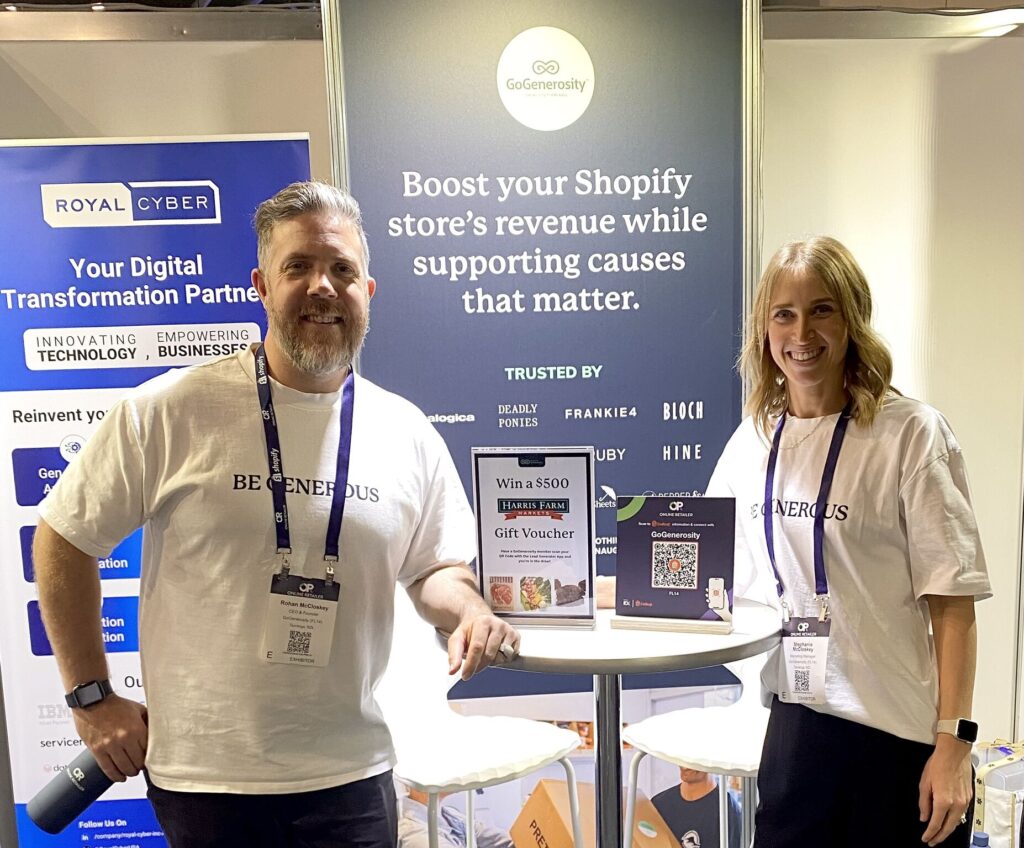
Rowan McCloskey: I had a nervous breakdown, so it took me two years to recover. I nearly lost everything. I couldn't even walk out of the house without having a panic attack. Who cares? No one gives a shit about your dashboards and it doesn't actually cost you anything to do good. Hi, I'm Ron McCloskey. I'm the CEO and founder of Girl Generosity, and on this episode I'm going to share how you can be married, have kids, and have a business at the same time.
Nathan Bush: A quick bit of context before we start today's episode. Rosa and I recorded this episode with Ron McCloskey from Go Generosity a few months ago, but we've held onto it while a lot has been changing for him. Recently, Rohan has announced that Go Generosity has been acquired by a company called Virtue six years after he started building it. But in his own words, it's not a we made it story, as many entrepreneurship stories are like. We see the headlines, we see the good things, but this one is more of a grateful moment, a bit of a reflection. And we thought this episode was still really important to get out there because many entrepreneurial stories aren't we made it stories. They're often we're grateful stories or here's what we learned stories. And Rowan's is definitely that. So even though we filmed this while Rowan was still transitioning from trying to take his startup from a business into a charity and he ended up selling it to virtue, what he achieved is remarkable. Go generosity supported 98 charities in that time. They delivered 159,000 acts of generosity, impacted 77,000 people, and paid forward over a million dollars to people in need. That's $1,000,462 to be precise. Rohan is very open that the last three of those six years were the hardest of his life, and we do hear about them. Today. You'll hear the real challenges of building a giving model into commerce, the founder toll, and what he would do differently. And these lessons they apply whether a business gets acquired or whether they're just struggling.
Rowan McCloskey: We've heard a few of those stories recently.
Nathan Bush: This episode is a testament to to people who are pushing the boundaries and trying to do something new, and a celebration of what Rowan and the Go Generosity team have done in their short time. A big thank you to our partners at Shopify and Klaviyo for making Add to Cart possible. And if you want the cheat sheet from this episode, head on over to add to cart.com and sign up for the newsletter. Here's Rowan McCloskey, founder of Go Generosity Rowan, welcome to Add to Cart.
Rowan McCloskey: Thanks for having me, guys. Good to be here.
Nathan Bush: Awesome to have you here. Look, we do this thing when we send through details on recording and we go, here's some areas we might go into. Is there anything that you'd really like to talk about? And you came back and said, look or go generosity, like, ask me about that. Anything you want. But I really want to talk about
Rowan McCloskey: the fish that I just caught. What's that about?
Nathan Bush: Well, this is.
Rowan McCloskey: This is a pretty big deal because, well, if anyone likes fishing recreationally or maybe you're a little bit into it, like I am, Rose is out there every night fishing. I've been fishing for eight years, so I live here. So first of all, I live in New Zealand. Mount Maunganui, Bay of Plenty. So we. We're right. We're five minutes from a boat ramp. We. We can go out. We've got some of the best fishing across New Zealand. But New Zealanders are known for their kingfish, so kingfish is like the best fish to catch. They can get up to like 40, 50 kilos. Anyway, I caught a 25 kilo kingfish last week on. On like 7 kilo line. It was crazy. It took me 30 minutes. I had my son on the boat with me. He was only 10 years old, so he was just going off his head. We accidentally caught this kingfish. I wasn't even trying to target the kingfisher. And yeah, so that's like pretty incredible. Been fishing for eight years, caught incredible fish. But that's. That's my fish that I've. That's my record fish.
Nathan Bush: What's the practicalities of a 25 kilo fish? Like what, like now what? Like, did you have to like chop it up? Is it in freezer bags, like puree?
Rowan McCloskey: Well, so we actually put the fish back. So it's. It's well respected amongst fishermen that if you catch something of that size and you also like looking at the condition of the fish, we saw that, like, fish of it was about 1.2 meters long. Like, it was a pretty big fish. And so we saw that it had a lot more filling out to do. Like, a fish of that size that length could have easily been a 35, 40 kilo fish. So we were like, hey, let's let it fight another day. But we did catch another kingfish before that in which did then go into the. We call it a chili bin here in New Zealand. It's an esky in Australia. I am Australian, by the way. And so we chop that One up. Yeah. So you have to like bleed them out and you have to do a whole bunch of stuff to them. But they didn't fish.
Nathan Bush: You didn't take that one. You took its children.
Rowan McCloskey: We took its children, yeah.
Nathan Bush: It's like I thought that was going somewhere so like beautiful like. Yeah, we just like catch them, get wish them like an affirmation, put them back in. You're like, it wasn't big enough. We want, we want them chunky.
Rowan McCloskey: That's right. You want them bigger.
Nathan Bush: Well, it's a good segue I think and we don't do good segues here, but this is a good one because your background is in restaurants, right? Like you've got a love of food and your background is in restaurants and you've come into the Shopify app. E Commerce. Yeah, Ecosphere. How does, how did that work?
Rowan McCloskey: Yeah, well that's really interesting. So my background's hospitality. Like ever since the age of leaving school 17 I was just fell into hospitality as part time job. Turns out my dad was very good at hospitality and still is. My dad lives in Sydney so I worked for him for many years. And then when my wife and I moved to New Zealand, which was just about nine years ago, we bought our own restaurant. So I funny story is I was looking at buying a business and I said to the brokers, send me any business in New Zealand apart from hospitality, do not send me hospitality business. Because I won't, I just won't look at it. I was done. I was, I've been in the industry for so long and they funny enough, they sent me a hospitality business and I just, I just, it just got the better of me. I went back into the industry. So I did that for another six years. But go generosity actually got birthed from my time in, in restaurants. So it was, it's a bit of a Covid story where you know, things were shut down. New Zealand was pretty full on. We, we got what we got. We put into level four lockdown which means we couldn't leave our homes. It was pretty full on. Probably similar to Melbourne from what I hear. And so the idea came where I just saw the need was just like there was so much need around. So already charities, help people, facilitate things, give people food and that's when it just really came to the forefront for me. I was like, man, the need was great before COVID the need now has just gone everywhere. I'm like, well we need to do something. So the idea actually came out of my restaurants and then yeah, I can Tell you how we got into E Com, but essentially that's sort of where, where it came from.
Nathan Bush: So do you want to explain in like, as layman terms as possible, what is Go Generosity? So what is it for a consumer? What is it for a business? And I guess what, like what is Pay it forward? What does that mean to a customer?
Rowan McCloskey: Great. So the simplest way to understand Go Generosity is that we're a donation platform that enables consumers to donate money when they shop online. The reason we call it Pay it Forward is because it was trying to like, I suppose, relate with the consumer where it wasn't just about giving money to charity. So the number one difference of Go Generosity versus any donation platform anywhere in the world is that we turn the donations into online gift cards from the brand in which the donation was given. So consumer shops online, they leave a $2 donation, that donation gets pulled together with every other donation, and then the charity gets a gift card in which they can get access to the product. So Pay it Forward meant that, you know, when you, you might be in a supermarket, you'll hear of people paying it forward. It's like, well, hey, I want to pay forward to the person behind me. And so that was sort of the mentality of the thinking behind it. It wasn't just a donation. It was like, I'm paying forward my experience to someone else.
Nathan Bush: So for someone else to shop at the same store that you've shopped at using a gift card that you've partially funded.
Rowan McCloskey: Exactly. Spot on.
Nathan Bush: And was it always sorry?
Rowan McCloskey: Yeah, that's right. So we. So is go generosity has a bulb. So it still is a gift card. That's, that's how it works for that store. But some stores or some businesses may, gift cards may not be relevant. So, you know, even you think of like alcohol industry. Well with, you know, if we're selling to shopify businesses sell alcohol, of course we can't. Charities can't get alcohol for people in need. So. So that's just when a cash donation is directly made to that charity partner. But you might also have businesses that have really high retail product, like really high value retail products during the $300, the $400 range and above. And in that case, then it's maybe not best use. Right. Because you might be able to help and impact one person that month. Whereas if you just gave them money to charity, they can do a lot more with it. So we still do do that and that, that sort of all, we flesh that out with our customers. So as a prospect is interested In Go Generosity, we just understand what it is that they sell, what it is that they're doing. And then we would recommend where they want to pass on the cash or turn it into a gift card.
Nathan Bush: Because I could imagine that would be hard then, especially if luxury brands want to get involved. You know, mentioned alcohol, luxury brands, things that you're like, well, this isn't natural to kind of turn these into gift cards for people in need.
Rowan McCloskey: Well, yeah, that. But that's really interesting because when Go Generosity first started and we started even trialing it with some bricks and mortar businesses, we even had like facial, you know, businesses that are doing facials and like high end sort of services. And some of the, we got some of the best stories out of those businesses because women, for example, who had come from a domestic violence background, unfortunately were at a shelter, got given this, you know, facial. And this one story that I'll never, I'll never forget is this. And it sort of like gets me choked up every time I think about it. But this one lady said to the lady who was giving her the treatment, like, no one has ever laid their hands on me like that ever before in a non physical way that was like hurting me, you know what I mean? Like, so she'd never actually experienced someone touching her face that wasn't domestic violence. And so that then changed my whole philosophy around, well, maybe people in need, they can be recipients of high value products as well. So maybe it's not even about quantity here, but it's about quality and it's actually about giving people an experience. And so that's really like messed with my psyche around generosity. And it's not just for like people off the street or people that are poor. But you know, you could be a really wealthy person, but someone still wants to pay it forward because you've just lost your child or you've just been diagnosed with cancer. And so money, money's not a value system now. It's actually the thought and the gift
Nathan Bush: that, that takes place, not necessarily filling the basic needs. It's very much like thread together, if I understand correctly, in that it's all about the dignity that's involved with this and the humanization of it. You know, they're really strict around the quality of clothes. Everything's got to be brand new. It's got to be stuff that you know, you would buy. Yeah, it can't just be off cuts and straps and you know, it's, it's all about dignity first and then fill in the gaps afterwards.
Rowan McCloskey: So I love that approach. Yeah, it's really cool. It's, it's interesting just seeing how when we have that approach, dignity is the word that I was looking for. And it's something that, that we do. But very similarly to thread together, you know, everyone who is a recipient of say gift card or a voucher via our platform, they're getting access to brand new quality products like nothing secondhand and not there's anything wrong with it. I think people are still, they're still serving in need, those sorts of organizations. It's amazing, but it's pretty cool when you see the stories that come out of people who are like, well I just got access to this, which I would have never normally got access to.
Nathan Bush: So is Go Generosity for profit or are you not for profit or a social enterprise? Like how do you define yourself as a business?
Rowan McCloskey: Yeah, I'd say we're, we're a social enterprise business. So we're, we're definitely not a charity. So we are a registered business here in New Zealand. But Go Generosity, we, we charge businesses. So like shopify businesses using our app, we charge them a fee to be able to use it. So it's just a standard subscription model SaaS fee. So 100, that means 100% of everything that's donated goes either into the gift card or to the charity in the form of cash. We don't clip the ticket on anything. So that's pretty cool being able to say that. Like we don't, you know, we've, we've created a model that is what we feel. We're offering value to the business which means that the consumer money can go, 100% of that can go to where it's needed.
Nathan Bush: One of the things that I've loved about you is that there is a commercial focus underneath all of this and in the conversations we've had and I really want to unpack this with you around you putting the benefits forward that actually this is good for business as well. Like yes, it's great that we're doing amazing things for people in need. But there's also a commercial uptick to generosity in terms of the gift cards that are generated and given. Can you explain, can you explain how you present this commercially and some of the businesses who are on the platform?
Rowan McCloskey: Yeah. Awesome. Yeah. So commercially like the 101, the model of Go generosity where just think of the donations that are turned into gift cards, it's a no brainer for business. Right. So 100%, let's just say $5,000 comes through in the form of donations in any particular month, 100% of that is turned into a full value gift card which is sent to the charity. Charity redeems at full retail value. So we've just. Now we don't try and say that hey, we're going to increase your revenue by 50% or 60%. Like we're really clear that we're a business that is focusing on social impact. But what we're not doing, and this is very different to social impact, is we're not taking away from your margin. We're not touch, affecting or hurting your bottom line. If anything, we're helping increase it because of just simply, hey, we brought an extra $5,000. Like everything we do is completely measurable for the merchant and they're seeing the generosity that comes in. The other thing that's like really important and probably even just started with this first. But the consumer's being generous. So some questions we have been asked is, well, do I have to match the donation dollar for dollar if the consumer's giving this is it. Does it look like we're just passing the buck? You know, like what is it that we have to do? I think one thing that's really important is go generosity. Although we're selling a product to the business, we're selling the product to the business because we see the traffic of the consumer orders and because we know people are going to be generous. There are so many statistics out there now to show that consumers are more likely to shop with a brand that has like a four impact purpose, like all of these things around, environmental things like that. But we know the consumers, we've actually got data to even show now that consumers will be like 15% of consumers will donate every single time they shop online. And there's no friction, there's no fatigue, there's none of that. But one thing that's really important is go generosity is about giving the consumer the opportunity to be generous, first and foremost, almost. And then secondly, we're also enabling the brand, they can partner with the consumer as well. So some brands, it is in their best interest to match dollar for dollar like they, it might be. So some of the larger brands that are on their platform, it's like, hey, it's probably a really positive message if you do match with your customer. And they always got budget for this anyway because they want to do that. Because it, because it might not, you know, it could be, it could just be a risk if you don't, you know, in terms of you want to have that positive in. So yeah, so hopefully that answers like there's the consumer element. Consumers want to be generous. But then the commercial side of it is the fact that it gets turned into the gift cards. And then the other commercial side of it is that we did a whole bunch of mystery shopping work with Humi so you'd know Marila from Humi. And it was actually mind blowing because Marila said, hey, can I do some mystery shopping on go generosity? And just like checked out. Want to see what consumers say about it. And you know how like it's always nerve wracking. Like even back in restaurants, I wouldn't trust her. And back in back when I had restaurants, you know, it's like sometimes you're afraid to ask people, how was your meal? Because I'm like, what if you didn't really like it? I don't want to know the answer. And so when she was like, I want feedback, just the good feedback. That's right.
Nathan Bush: Imagine knowing your customer is thirsty before they even do. Sounds a little bit creepy, but how dare you? Actually, genius Dr. Hydrate, the hydration brand founded by competitive swimmer Cody Simpson and iron man Kane Eckstein, makes supplements that get you drinking more water. But like a lot of fast growing brands, they had loads of awareness but were doing a fair bit of guesswork on the sales side. So they leaned into Klaviyo and its predictive analytics specifically to work out exactly when a customer is likely to run dry and need a hydration top up. Time that reminder right, and you nudge a one off buyer into a loyal subscriber and the results speak for themselves. A 26% jump in revenue from their most loyal segment, Klaviyo, driving 37% of total E commerce revenue. And a little bit ridiculous. 46 times ROI. 46 times. See, no one needs to go thirsty with Klaviyo. Head on over to klaviyo.com au and see how brands like Dr. Hydrate are doing it right.
Rowan McCloskey: So when she said she wants to mystery shop the whole platform and she wants to like go through all of our customers and get her mystery shoppers to do it, I was like, I was, yeah, I was a little bit nervous because I was like, what are people actually going to say? And I read the report. I cried when I read the report because the consumers, the mystery shoppers and what they're saying around how this, you know, going, seeing the donation, seeing that the business actually had a heart, that cared for the community, that they even cared for people in need, seeing how it was so tangible because they could see where the money was going and the difference it was making. Like, statistically they were, what was it like 98% more likely to shop with that brand versus a competing brand that was selling the same products. One of the, one of the biggest questions we get asked from large brands is, do you create friction in the checkout? And then we saw that a hundred percent of mystery shoppers were like, no friction whatsoever. If anything, it made me want to buy the product more than if they didn't have that. And so commercially there's, there's that side of as well. I think that stacks up for merchants.
Nathan Bush: I think. Rowan, I. I want to dive more into the commerciality because from what I was looking at and like seeing it on Trademark's website, I can totally see, like, you've got a complicated marketplace, you've got obviously the donators and you've got the charity, like the charities that are associated. But I would imagine that the customer that's probably the hardest or the one that you have to put the effort into acquiring is the merchant, the retailer themselves. Because when I was looking at on Chat Trademark, it's totally seamless. And also I can see that you can have your own copy, your own language, like, go. Generosity is like very like small. It doesn't feel like you're trying to take up real estate at all. It really feels about just get that donation in, do good. But I want to dive into the commerciality of it and I know that sometimes people can think that this is like talking commerciality in, like charitable areas can feel dirty, but it's actually not. It's a means to an end and like, it's better. The more commercial minded people we have behind charities, the better. So too much context to my question, but as a retailer myself, gift cards are a massive revenue channel. How I see grow generosity has been. It's almost like a blind gift. You're almost like giving, like from a simple retail perspective, people are giving like a blind gift card. If I had people just forgetting about the charity on the other end, if I had customers just buying gift cards with every sale, that's a massive revenue channel for us.
Rowan McCloskey: Yes.
Nathan Bush: Like, is that really as simple as that? Like, do the. Does the merchant really get that revenue and then it's only redeemed when the charity redeems it, just like any other normal gift card.
Nathan Bush: Can. Can I ask another question on top of Rose's question as a continuation without end on top of that, what kind of uptake are you getting? Like, are you able to Give us figures in terms of the percentage of people who actually add on in checkout Go Generosity.
Rowan McCloskey: Yeah. Great. Yep. So short answer, Rosa is 100%. It's that simple. Like it's the. When the merchant sets up Go generosity once they download the app and our team set it up and can talk through that later. And how we do that, it just operates in the background. This is effectively just a little upsell tool that's continually happening. And there's AB testing that can happen as well. Like we see, we'll see a high conversion when a business chooses a certain charity versus another charity. So, so there's things that we can do to try and increase that. But on average we see 1 in 15 consumers will donate about $3 every single time they shop online. And that's continually. Now some of our standout customers, we'll see some of our best customers, they'll get one in six. Like one of our New Zealand customers sells periodware product AWA. They're an amazing customer. They get one in. It's one in six women will donate $5 every single time they shop online. And that's been going on for two years now.
Nathan Bush: And just to clarify, is the charity that the gift card is going to obvious to people in the checkout? Like, is it.
Rowan McCloskey: Yeah.
Nathan Bush: Is it best when there's alignment between the retailer and the cause?
Rowan McCloskey: Yeah, absolutely. So the charity is always mentioned in the, in that copy. And. And so that's just the only thing in which we say like the merchant can change the copy, they can make the language sound like them. Like trademark has a very. It's all in line with their voice and everything that they would say. But yeah, we always have the charity that's documented there and that really. And that's interesting. So when we do test that across multiple different partners, we see like, like there's so many different movements that's happening based on what the business is selling. Does the business have a good reputation as well already? So therefore that even affects the generosity of the consumer. But ultimately the charity has a big say in whether the consumers. More consumers will give or not. One thing that's really interesting, okay, so you get, you get a business like Harris Farm Markets, who's. Who's been on the platform now for two and a half years. It pretty much doesn't matter what charity Harris Farm Markets choose. Their customers are just as generous every month, month on month.
Nathan Bush: I got a lot of Harris Farm customers.
Rowan McCloskey: Yeah, there's one thing, there's that. But when I look at that, I Think of the trust, right? You think of, like, I look at Harris Farm Markets going, it's a trusted Australian brand that's been around for what, since the 70s. They've got a great reputation. And so, like, they've built and earned that trust. So when they say, hey, we're supporting this organization, it's like the consumer doesn't have to think about it, they just go and support it. Whereas some of the customers of ours or some other Shopify merchants who are smaller, we see that the charity that they choose can change the donation amount by 3 to 5% just on who they choose.
Nathan Bush: Totally. I feel, feel like that answer the questions message. Sorry, I feel like that pay it forward message is so clear. Like, just like, if it's aligned to the charity that the customer, like, for example, if it was cropped, giving to like an art therapy charity would make so much sense because you are paying forward and experience for other people to get out of their head and into their hands. Like, I definitely can see, like, why that would make sense. Can I ask then, what was the. Like, if this is really like a revenue channel for businesses, if this is really as simple as, like, finally, customers donating, not just businesses having to donate to charities, why wasn't it being done before? Like, what have you learned about going into this? That you're like, ah, that's why.
Nathan Bush: There it is.
Rowan McCloskey: Yeah, there it is. I think, well, I gotta be careful. I can't give away all my secrets, otherwise we're gonna see these pop up all over the place. But do you know what was interesting? Do you know, when the idea first came to me back in my restaurants, I had so many people tell me, you can't do that. That's not legal. You can't take other people's money and run it through your business and do that. And so. But then I think, so, first of all, what really helped me is as a founder, I own my own businesses. I knew accounting. And this is one thing I take this right back to when I worked for my dad, he said, the number one thing that you need to know as a. If you're going to be in hospitality, whatever industry, understand your accounts, know your numbers, know your books. If your CFO or your head of finance leaves, you need to, like, if you can't go and sit in that seat for a period of time until you get someone else in. Like, in other words, just know your business, right? And so I think for me, I would say that in business, that was once one of the strengths that I had Like, I knew my numbers, I knew how money flowed in and out. I knew my liabilities, I knew what I could and couldn't do. And so when the idea came to me, I just. I was like, oh, well, that. That'll work. There's nothing wrong with that. That's incredibly transparent. That's just money in, money out. It's just the current liability. And as long as we're showing where the money's going and we can report on that, then surely there's nothing wrong with it. And so, you know, so then when we went and checked, and here in New Zealand, we checked with, like, got tax advice and checked with GST advice, and we checked all the different things. Like, no one ever raised an eyelid about it because. And we got complimented. We're like, good on you guys. That's a great business model. Can't believe no one thought of that. And so it was probably one of those things that was like, it wasn't some big, grand idea. It's. It was just such a simple application.
Nathan Bush: But the.
Rowan McCloskey: One of the biggest troubles with GO Generosity is that people still don't understand what we do. I think because it's so simple, people are expecting this big, grand idea of we do this and we do that. We're like, no, no, we just turn the money into this. And this is how it works. And we get. I get. People respond to me all the time, like, potential businesses going, they'll jump on a demo call. And they go, oh, I didn't realize you turned the money into gift cards. I'm like, well, what got you on the call then? Like, you just thought, we're a donation platform. And then. And so we see that time and time again.
Nathan Bush: Like, your LinkedIn profile is like, I've
Rowan McCloskey: got to get on a call with this guy. Well, I need to update it now. Pushy with the. With the.
Nathan Bush: What's the biggest objection, though, when you
Rowan McCloskey: get on that call?
Nathan Bush: So once they understand it, though, and you go, actually, it's pretty simple. This is the way it works. Why haven't you got every retailer in Australia on it?
Rowan McCloskey: Yeah, good question. Well, part of my outbound skills suck. That's one thing, I think. And look, what is it? 70% of customer, 70% of prospects who I meet with sign up. And so we've got a really high conversion rate. Okay, so what are the biggest friction points would be? Okay, great. So the biggest friction points would be, do you affect my site speed? And that's an easy one to talk to because, you know, shopify there's so much criteria now in terms of developing a Shopify app that you're measured based on your site speed. You got like a bandwidth in terms of what you have to fit in with. So that's easy. We can just give them data around that and that always solves that problem. The other thing, the biggest fear would be do you create friction? So keep in mind, and I get this right, as a business owner, you know, I'm trying to sell an online product. I've got the cart and I've got the checkout and that's where my conversions happen. And now all of a sudden you're putting a little something in there that's making the consumer think about something else. And so the cool thing is now over time we can talk to that and because we've done mystery shopping and we've got data to show that if anything it enhances the experience and doesn't create balance and we don't have like hyperlinks or learn mores. And Rosie, you talk to the fact that it's not about go generosity and our branding and there's no redirections to try and like put our brand forward. So, so we can talk to that now. But that would be the biggest friction and the biggest pushback bushy would be do we slow down the checkout experience for the consumer? Which like I said we can talk to now. But yeah, that would be the biggest one. I think the biggest objection that a retailer would have.
Nathan Bush: Yeah, well, I'm curious to dive into that and I think it's a good way into it because you are an app that's available within the Shopify app store. You've got 19 reviews at the time. I did my research, probably up to probably something like 1900 or something now. But when I looked they all had a five star rating. So obviously you've done something right. What have you learned from a technical perspective around getting the idea into a piece of tech that can be easily added into an E commerce experience?
Rowan McCloskey: Yeah, yeah. So coming from a hospital background, I'd say I had no idea what to do. I think for me though, and this is probably why Go Generosity has somewhat been successful in terms of like the adoption and seeing what comes through everything. It just, for me it just, it just couldn't be compl. Like we just had to build a product that was just simple and wasn't over complicated and like even when you look at say our widget that sits on the, on the customer's website, we're like, it has to be in line with their brand. Like, this is about them, not about us. Like, we're just the little tool that powers what they do. We're not the hero story here. Like, the hero is actually the consumer and the brand and the charity. We just sit outside enabling all of this goodness to take place. And so for us, it wasn't about like, at first it was all about was GO generosity built in a way where it was our brand colors and our brand messaging and all of this. And we actually just parked that and just said, no, we don't actually care about any of that. If we can get a little powered by symbol in there, that would be great, which we got in there. But otherwise this is all an extension of the merchant and their brand and the story that they're trying to communicate to their customer. And so we're just a facilitator through the process. And so I think when it came to building something like this, there was a lot of work involved in how do we make that experience really simple. Another thing we did is when it comes to reporting, and now this sounds. I'm sort of embarrassed to say this, but there is not a login. You don't have a GO generosity login. When you sign up to get a reporting metrics of your donations, our support team send them to you every month. Because the great thing about GO generosity is donations have to be passed on to the charity in the form of cash or gift cards. So we're actually in touch with our customers like monthly or bi. Monthly, depending on how many donations come through. Right. And so that's really good as well because it's a good option. Good time for feedback. It's good. Just a lot of tech software platforms, it's sort of like you might sign up, activate it, and then you don't hear from customer support and you sort of like don't know. So we've. Our customer support's very front foot in that. But here's the thing. We thought when we were building a software platform that, oh, we would need like really detailed reporting and customers are going to be logged into our platform all the time. And I think.
Nathan Bush: Cool.
Rowan McCloskey: The cool thing about just putting pause on that stuff is I've realized although I think we've got a great product and a great service, we're only a small part of what the business does. Like there's like 90 to 95% of everything else that that business has to go through and all the other accounting tools and software and they're trying to sell their product. Like we're, we, we're, we're just a fraction or a piece in the puzzle and, and we can't assume that people are going to be logged into our platform trying to look at our stats. And so I think that's somewhat, I see a lot of SaaS companies make a big mistake with like, well, how do I keep people signed in? How do I keep them on my dashboards? How do I keep them doing this? But it's like, but who cares? No one gives a shit about your dashboards. Just do the product. Well, just, just, just do it and make sure it does what it says it can do and then you'll just, you'll keep your customers like in the last two and a half years. So we, we always monitor and manage our churn based on what our ICP is. So because go generosity, you can access, anyone can access it on the App Store. We do get some tie kickers. Like, you know, you get some really small businesses that might only do 20 orders a month. And as much as we'd love to help them, if only 1 in 15 people are giving and you get 20 orders a month, like you're not going to get enough donations to really meet the needs. So we're just like, hey, donate that money to charity. Our subscription fee, like donate and sign up type thing. So we're sort of like, hey, you need to do a minimum of $500 a month to be on the platform.
Nathan Bush: We've all been there, right? Slipping on a great looking pair of shoes, only to regret it a couple of hours later. Who knew that blisters could get blisters? Well, the founders of Frankie Ford did. And that's why they've created a line of stylish podiatrist designed footwear that don't just look good, they actually feel good too. But what began as an online success story quickly stepped into the real world with retail stores opening across the country. And when they moved to the Shopify plus plan and rolled out Shopify pods in store, Franke 4 really hit their stride. Now everything works together, from online browsing to in store buying. It's one smooth, unified commerce experience for both customers and the Franke 4 team. And with the Shopify app store, they're able to test new features quickly to see what works. It's paying off too, with 170% increase in site visits, a 25% drop in return rates, and more happy feet than ever. Streamlined, stable, seriously stylish. That's Frankie 4 on Shopify. To read more Success stories like this. Search Shopify Case studies Online in two
Rowan McCloskey: and a half years, only one customer who's in our ICP has actually turned from the platform. And that was because of financial, like they had some financial troubles, not because the platform, you know, didn't work or was a problem.
Nathan Bush: They had a huge gift card liability on their, on their balance sheet.
Nathan Bush: Yeah, exactly.
Rowan McCloskey: And just on that, just as well, because you guys, I think, alluded to it before. All gift cards get redeemed within two weeks. So we, we have a criteria with our charity partners that you have to redeem the gift cards within two weeks or they get given to someone else.
Nathan Bush: Okay. Okay, so that makes sense. So it's not this, like, it's not a total, like dark horse revenue stack. It's not like you can just add go generosity and then they have all these gift cards where you're getting this like instant cash flow, like you are making sure. Which is obviously great in the moment. Great for cash flow, but bad for liability. Like it does it. You do have like a process whereby it moves through fast.
Rowan McCloskey: Absolutely, yeah. And I think the other thing, Rosa, is like, like I said before, not trying to undersell like our, I suppose, our product in terms of what we do, but like I said, we're one in fit. We're, we're a proportion and we play us apart in the business's journey, but we're not the solution for businesses trying to increase revenue and trying to drive sales and trying to, okay, don't come to go generosity thinking we're going to solve all those problems. Our sole focus is to enable your customers to be generous, to enable, you know, charities be able to meet the need. But from that, the byproduct is, is that it is an uplift in sales and it doesn't actually cost you anything to do good, you know, and you can contribute to it yourself. So that's, I just want to make sure that's really clear as well.
Nathan Bush: Yeah, no, it makes total sense. I think it's awesome what you guys are doing. I'm, I'm super keen to hear more about what Bushy was saying on getting on the App Store as a business. Because, like, you've obviously, you understand customers, you understand like service, you've come from the hospitality world, numbers is your forte. But tech, I haven't heard you say he. I haven't heard you say anything about tech. What's the process of actually building an app that Shopify supports?
Rowan McCloskey: Great. Yeah. Look, so from what I understand. So don't get Me wrong. It's not that I do know, I do know what we're doing and I do know what we're building, but there is other people that are building this. I'm definitely not that founder who went and just like ChatGPT everything and just read a whole bunch of manuals and then self taught coding. Like that's not me. Okay.
Nathan Bush: I still have to tell people that you didn't build it on lovable or something.
Rowan McCloskey: Yeah, that's right. But we've got an incredible developer or developers that have, that have done this and I think like the process in terms of what they had to go through, it's, it's amazing like technically how tight Shopify is to get apps onto the store. And it's a little bit scary as well because you're just like, hey, I've got this idea, I want to get it on here. But what if Shopify don't approve it? I don't want to say it's scary in the fact that to people not to do it. And I think like anything if you're building, if you build it with the right guidelines and you actually follow the information that's been given that Shopify is not going to stop people putting stuff on the App Store. Yeah, but that, that went through a whole bunch of like, I think when the idea first came and then when we knew we wanted on, on the App Store, like, you know, there was a product team involved, there's obviously engineers involved, there was a lot of customer calling. Like we did a lot of customer surveys in terms of how, hey, if we had this on, would this work? This positioning? And so yeah, there was a lot of that type of work before the actual build took place. The building itself, like most developers would say, like to build an app, it's not rocket science these days. Like there's so many tools out there to be able to help piece it together. It's, I think it's the lead up and it's formatting the idea to then get it into what, you know what it is that you want to be displayed on the store.
Nathan Bush: Is working with gift cards tricky? Does it add a tricky element to it? Because everyone's using different gift card platforms and it's not always the same process. Like if you're selling products through Shopify is pretty much, we know that flow, we know how that works, we know
Rowan McCloskey: what data it is.
Nathan Bush: But gift cards could be different retailer to retailer. Is that right?
Rowan McCloskey: Yeah. So not, not with like with Shopify it's fine. So we're we, we're natively on Shopify at the moment.
Nathan Bush: Okay, so you're not going outside of Shopify?
Rowan McCloskey: Not going outside of Shopify at this stage. But because the gift card, though bushy, just gets create in like we're not creating the gift. The gift card's getting. It's universal across all gift card systems because it's, it's the merchant that's creating the gift card and then sending it to the charity partner. So even though, even if as we want to branch out into other platforms, there won't be any issues in terms of restrictions around gift card platforms per se.
Nathan Bush: And what's Shopify like as a like platform to launch an app? Like, how long did it take for you to get the app approved? Does it go through like any kind of crazy reviews? Like, what's it like to actually manage an app on Shopify?
Rowan McCloskey: Yeah, yeah, it was man. Their team, their team were like next level, like the responsiveness from then. So I'm just trying to recall when we actually listed it, it was so hats off to our team. I think we built. The actual building of the app was like a three to four month process. So it wasn't scary, it wasn't like some two to five year type situation in terms of what we're doing. And then I reckon Shopify would have, within weeks would have had it reviewed. The first kind of feedback would have been within the first week of submitting it ours. The complication we faced, which was quite different to I suppose other apps, is because we were in the donations realm. They were pushing us to show like what your charity registration numbers and what so. And so we had to like recommunicate the business model to them over and over again to be like, hey, we're not, we're not the charity, we're just enabling people to be generous on the merchant sites. We're not touching the money, the money goes to the mo and just. And so once we got that really clear with Shopper, then it was just like no problem straight through. So that was sort of like the only holdup we had. But otherwise their responsiveness was really good. We're talking like a couple of week turnaround in terms of getting feedback from then and being able to go ahead
Nathan Bush: and any tricks for any app developers who might be listening in terms of promoting the app and getting it visibility in a store, especially for people who might not have heard of you or had that one on one connection.
Rowan McCloskey: Yeah, look, I think you know how you hear the saying of like build and they will come. I think you can completely disregard that when it comes to building an app on Shopify. You know, like build and do a shit ton of work and call a lot of people and put yourself out there, they will then come. I think that's probably the biggest learn for me. Although I don't think we thought, oh, thousands of people will just download it instantly. But I do think there was that expectation of, oh, it's going on to the App Store, like, this is going in front of like thousands and thousands of merchants. Surely we're going to get all of this organic inbound sign up. But I think what I, what I've now Learned Building a B2B product is like it's trusts, right? Like it's, people still want to know, like they're putting this onto their store. So, like, what does it do? How's it going to work? So yeah, I probably would say to people building, especially if it's a B2B product, like, just don't underestimate the amount of outbound calls and sales that you're still going to need to do. Even though you're building a SaaS product that requires very little work in the form of it operating in the background or your effort's going to go into sales a hundred percent.
Nathan Bush: I'm interested in your journey as an entrepreneur because when we're at online retailer last year in Sydney, you brought your beautiful family with you, you've got three young children and obviously you are a super successful in business previous to this, super switched on in all the conversations I've had. And now you've got a young family and you've thrown yourself into Go Generosity as a startup. But not only a startup, but one that is in social enterprise, which are traditionally a little bit trickier commercially. How are you approaching this? Like, what's your mindset around how you make all of this work together at one time?
Rowan McCloskey: Well, I can say first of all is credit to my wife for just being so incredible and incredibly supportive. I think here's the thing that we did that made a significant difference for us. So we didn't, we didn't know Go Generosity was gonna come. Like, I think being in hospitality taught us a lot. Right. So, you know, obviously Steph and I had met, we're coming up 14 years married and so, you know, we'd met a couple of years before getting married and we lived in Sydney and, and we used to do, I used to do crazy hours. Like we would be doing it 80 hours plus a week. But one thing that I think I, where I earned Steph's trust was I didn't keep doing 80 hours a week. Like there was times and periods in my life where it'd be Christmas time where we had these massive 10,000 people events on and, and we would have to do this work. But then the next week when that finished, I, I'd do 30 or 40 hours and I'd spend time and I was around. And I think for me it was first and foremost with Steph it was always communication. It was about, hey, this is coming up. Like I'm just not going to be home for the next one to two weeks, but then it's going to be a downtime. But then sticking to that. And I see so many times people in relationships where there's this constant never ending of just need to do a bit more or no, next week it'll be different, next would be different. And then they're just never around, they're never present. I feel like you can see like certain relationships buckling under that pressure. So that's that. Steph was always supportive, understood it. And then moving into hospitality when we owned our own restaurants was then just another level of stress in itself. Weekend calls can't go away. Normal holiday times, like I think a lot of people at E Comm would understand as well. Like our busiest times was people's downtimes. And so you know, you're always doing all of that and then. But I think we really like focused on, I don't know, we're just trying to communicate. And then before we had kids, like we always said that Steph wanted to be a stay at home mom. So she's got like huge potential in terms of business, does her own Amazon, Etsy, just about to buy an E Comm business now as well. Like this, like she's phenomenal. But she said I want to be a stay at home mom and I want to put all that aside and commit to our children. And so because of that, that didn't then put extra pressure on us. So then when say Go generosity came along and I was running the three restaurants and starting a startup, I had support and she was incredible and the kids were well looked after. And so a couple of things that I always prioritized and this never came naturally for me because you know, I'm a stat. Like my parents were divorced, my dad left when I was 2 and so I never had anyone to display or show me this. But I always thought as long as I'm there when the kids wake up and as Long as I'm there when the kids go to bed, they will think Dad's all around, Dad's always around, right? And so that's the thing for me, like breakfast was really important or just being present. I'd always see them before school and I was always, I'd always come home for dinner and what the kids didn't see was I'd come home for dinner, we'd have dinner together and have some playtime. They'd go to bed at 6:30 and then I'd be back at work and I'd say goodbye and I'd be back and working to midnight, so. And yeah, so that's sort of like I think how we got it. And now the kids are a bit older, things have changed like since then. We sold the restaurants a couple of years ago. That definitely made a big change in our life where even though go. Generosity has its own stresses. I don't have to be anywhere or be anything for someone like we. I can take my laptop and I can then just go home or I can take the laptop and we can go to the, the family holiday home or we can, we can move around. I didn't have that freedom with restaurants that was. I was pinned down to my location. So yeah, so that's sort of. And then we've just sort of evolved, right. Like kids are now 10, 8 and 6 and. And we're still trying to figure it out. Still trying to like figure out what, what's the best for them. But I think that's sort of what worked for us.
Nathan Bush: It's so refreshing and so interesting to like hear you talk about that. I'm in business with my husband and actually all three of us have kids. There you go, look at us go. Still making this all work, hey? But yeah, it's so important everything you've just said and I think this journey that you've been on, like particularly, I think I read that you did a seed round of raising and like hospitality has its, has its stresses for sure. It's always on. There's a lot of people who say like if you're going to run a business in hospital, just go ham on something else. Like you might, it's so friggin hard. You might as well just have a punt at something massive which it feels like you've done. What has, what was that like raising? Like what would you, are you happy you raised, would you raise money again? Like how did that, like how has that affected your, your mindset and I guess your stress?
Rowan McCloskey: Yeah, yeah. Well, so the end result. Fast forward to the end result after the raise and while still having three restaurants. And by the way, youngest daughter was born just after Covid when we're in lockdown. So like, so I had a nervous breakdown. So I, it took me two years to recover. I nearly lost, I nearly lost everything. I had such a big nervous breakdown that I couldn't even walk out of the house without having a panic attack.
Nathan Bush: Is this after, sorry, is this after Covid? Pre.
Rowan McCloskey: Yeah, so sorry. This is after Covid. So post Covid because you know, we were all shut down with the restaurants for the couple of months period that it was. But I'd just like to say that we, you know, it's such a blessing. We came out of COVID with the restaurants like incredibly well. I feel so blessed that we, we didn't lose anything. Like we actually recovered all of our losses within three weeks. Like we've got like a pretty crazy story in terms of how it all worked out for us. But then the stress of, I suppose managing 40 staff, having three restaurants coming out of COVID and all the restrictions that the governments were putting in place and then the idea of go generosity came and then we went after raising money and I'll talk to you about, I will answer your question. But then there was just so much going on and I was, I was also helping a local church at the time, like doing a lot of stuff and I just didn't know how to switch off. Like I was the typical founder or entrepreneur that I got a kick out of doing more things and I didn't even as I've even looked back and reflected, it wasn't like a. I was trying to prove anything to anyone. I was trying to be anything. I just loved being challenged. I just loved the next thing. Like I didn't, I wasn't scared of working a million hours. Like I just, I actually really enjoyed what I was doing. And it all came crashing down for me. It was, I think of December 2023. I just couldn't get out of bed on Christmas Day and I couldn't stop crying and I just was an emotional wreck and I thought, oh yeah, I'll be okay by tomorrow. And then it just got worse and worse and depression, suicidal thoughts. Like it was crazy. It was a proper, it was a proper crash and it lasted for a while. But to answer your question about raising capital, I think, I think I underestimated how much pressure went into raising capital and how like that was a full time job just in itself, let alone everything else. I was trying to do so do I regret raising capital? I don't regret raising capital because some of the people that are involved in go generosity, we wouldn't have, we wouldn't have made it without them. Like some of the people that are still involved and investors like hats off to these guys, they're incredible. But I would have raised at a different time. And I think I was in my learnings, I was too premature in taking money. I knew nothing about tech, I knew nothing about SaaS. I just thought to you're, you're successful when you raise money. Like that's what I thought. I thought you have to go out and raise money to be successful. I now do not believe that at all. I think some businesses, it's good to raise money, but raising money should be about putting, putting fuel on the fire.
Nathan Bush: Yes.
Rowan McCloskey: Or if you're in like a really high tech industry, like I'm talking like high tech hardware, you know, you'll raise money to form an idea and there's no pressure. It may not even turn into a revenue making product but it's, you know, but investors get behind it because you're trying to uncover some new medicine or. Yeah, totally. It's R and D. Right. So. But for us, in looking back at our journey, I shouldn't have raised money until I had the idea to push it into E comm. And I think that's my biggest regret is that by the time we we were pushing into e comic we had no money in sales. Like it became me just selling. It was like it was a founder journey all over again. It just became me.
Nathan Bush: Is that where the pressure comes from in after you've raised the money in meeting the targets that it's now set? Yeah.
Rowan McCloskey: And I think, and that's absolutely pushing. I think the targets there is this now we did raise money privately. Like we got some pretty significant check sizes though for some private people. But we did have AVC jump in on one of the rounds and, and there was there was just that relentless pressure and there was this pressure of oh, I see the money running out. What do we do? How do we do it? And then for us we were, we were actually using that money in the wrong area. Like we were originally an in store physical product. There was like in store would never touch it ever again in terms of there's so much friction when it comes to the consumer and staff training and donations and like just would not, would not touch that. So that was our story. We actually went, we're going in a direction. We had an idea, we raised money. And then. And the other thing I would just say to people who are raising money or creating a product is do not underestimate. If you're going after an enterprise customer, and that's what we were doing at the time, they will suck you dry or cash. And you think you're going to close something in two months. Well, they've, they've got windows of two to three years. Like, decision making can be fast. And you would know this bush from your experience. Like some enterprise people can make decisions on the fly and you're like, whoa, I didn't realize that was going to happen that quick. And some others you just get kicked down the can. And so that was our story as well. Like, we thought enterprise was our customer at first and then it just drained us of cash. And so when we finally got product market fit, which was in ecom, that's been my only ground. I'm like, oh man, imagine if I had that, all that money now to push into this. We could have grown so much faster. And that probably sort of answers some questions and like, well, why aren't we in every retail and why aren't we in more places? Well, we're, we've been limited, really limited on resource to try and get our message in front of people.
Nathan Bush: And if you didn't raise like it, if you didn't raise, then you probably wouldn't have figured this lesson out this far. So it's almost like you're forced to like fail fast in a way. Like, because you get put on when they say like before you take capital, you're driving a car and then as soon as you take capital, you're on train tracks and they're just like, cool. Their motive is like, they just want to see how fast you can either go or fail so then they can move on. And for you, that is brutal. Especially if you've just come out of this like high stress burnout zone. Like incredible like job to you on resilience and getting through that. And now this like traction and this hope for where go generosity is headed to like how amazing. Well done.
Rowan McCloskey: Yeah, that's right. Hey, and I think, and I don't think nothing's wasted. Hey, like, I think with business, nothing's wasted. Like, no one's a failure. We're all just trying, we're, we're all just trying to, we're all just tweaking new things. We're trying to figure it out. But I, I go back to like the burnout thing and I Remember when I sat with my psychologist and, you know, and he was sort of diagnosing what was going on. He was like, he. I got. I had the best guy, right? He was so cool. He just said, all right, Rowan, this is going to be shit. Like, I'm just being straight up with you in terms of what. What you've gone through and explained it to me in terms of what worked. Like, what happens with burnout in the brain and how you shut down. And it's not just a matter of, like, oh, you'll be right, mate, and suck it up. And, like, your brain needs time to recover because of all the stress that you've put it through. And it can take. It can take a long time. And we don't. Since society, we don't really understand that, hey, like, we break an arm and we go, cool, it needs to be in the cast for six weeks, whatever it is. But when it comes to mental things, we don't realize the damage that's being created and how long it takes repair. But he's. I'll never forget what he said to me. He's like, you're the CEO of Go Generosity. You own three restaurants. And he said, you're married and you have three kids. He's like, you have to get through. You know what I mean? Like, he's like. But he did it in a way that was actually so lovingly. It was like a. It was like even, like a fatherly approach, which was like, you will get through this. But he said, but everything else on your plate has to disappear. Like, it has to be gone. And I remember just, like, I couldn't even plan for it. Like, if my wife, Steph asked, oh, where do you want to go for a holiday? I couldn't even comprehend what that meant. I couldn't even say. I. I would just be, like, brain dead in the form of, like, I had my. My task, I had my focus, and that's all I could do. And it was just in survival. But credit to him, because I think without that advice and without him understanding where I was at, like, he knew I needed to provide for my family. I needed to somehow get through this. And I see too many people actually quit everything and take off a huge amount of time thinking that that's recovery. And I think my recovery was because I stayed in there. I stayed in the game, and it kept me. And I. And don't get me wrong, like, I cut down my diary like you couldn't believe, but I still kept my mind moving. Whereas I think if you go into its place where I just need to have six months off and I need to get better. I've seen people, like, not ever come back to work because they just. They then can't, you know. So, yeah, it sounds like you never
Nathan Bush: lost your purpose throughout all of that.
Rowan McCloskey: Yeah, that's right. Hey, I think. And I think that was the biggest challenge, which is because I was like, man, I thought. I thought I was going to be able to do X, Y, Z. And I. And I had all these goals and aspirations still of what. What I was going to achieve in life. And when that burnout hit me, that was probably the hardest thing to reconcile is, like, there was this balance between, all right, I'm not done, but shit, I know I'm going to get there, like, and. And time is an incredible healer. Hey, like, if you listen to your body exercise, eat well, like, we. We've heard it all before now, but actually have those mental, like those moments where you just mentally stop. Like, I never stopped. I was always on. And I think. I think that just. I think we can't see it coming. And I think that's what I'd say to people. I've. I've now helped a couple of people where, you know, I could just see that they're going down the same path as me. And I've really tried to strongly be like, hey, you need to do. You can't see it now. You think you're invincible. You think you're just going to be able to keep going, but if you keep going at this pace, you're actually going to hit a brick wall.
Nathan Bush: That's tough. Yourself as a solo founder, too?
Rowan McCloskey: Totally.
Nathan Bush: I have never heard any that. That last part of our conversation. We've met a few times, but I've never heard that side of it. So I really appreciate you opening up and being so vulnerable around that. I think a lot of people will take heart to that and find parts of that that resonate with them in their own journey as well. Now, if we look ahead 12 months, Rowan, where do you see go generosity heading into. What's the most exciting things on your horizon for the next 12 months?
Rowan McCloskey: Yeah. So I think expansion across other countries would be really, really exciting for us. So I think. So now we are operating in New Zealand, Australia, the U.S. uK and Canada. So we do have customers in all those areas, but New Zealand's where we started, so that's still our main thing. And then Australia, we're. We're getting some great traction in Australia, so I think for me, seeing the business grow to those other. It's always been a global vision. It's always been, you know, New Zealand was never going to be big enough to fulfill the vision that we have. Like, I would love to see one day 100 million acts of generosity every year and that, like, I feel silly saying that sometimes I'm like, oh, is that even possible? But the point is, we, I think the pathway through tapping into merchants of all sizes, but some of these, like, Shopify, is a massive platform, and some of these merchants doing hundreds of thousands of orders a month. And if. If we can somehow get in there with them and enable generosity, like, it can really have a significant difference that we want to make a difference. So I think that would be first and foremost. We definitely. We've always had the vision to branch out into other platforms. Like, you know, if, like, when I dream, I have moments where I'm like, oh, imagine if we could just tap into, like, any other online platform, like, where. Where there's ticket sales, where there's music sales, where there's this, like, really just going, like, following. Where does the consumer shop? What are those large transaction places? And how do we enable generosity? And, yeah, so I think that's. That's what we'd love to see. But this year is probably all about just expansion and then. And then trying not to be diverted. Like, just stay focused in on Shopify, because I think there's something special about just trying to stay focused. And then it's about, okay, how do we actually tap into some other platforms as well?
Nathan Bush: Rowan, thanks so much for coming on and for being so open and vulnerable with all parts of this, the entire journey. I think it's so amazing to know that our listeners, like, if they're a merchant themselves, have just discovered this new revenue channel and a way for them to actually add a good thing to their brand and help their customers give the way you have. But then also talking about, like, what it takes to get an app on Shopify raising, doing this all with the family, coming from hospitality, like, I think it's been an amazing conversation and just, like, so packed with so much value for our listeners. So really thank you so much. I personally got a lot out of this and, yeah, really enjoyed this conversation and meeting you.
Rowan McCloskey: Thanks, guys. Hey, thanks so much for having me. Love the work that you're doing and, yeah, feel privileged to be part of it.
Nathan Bush: You're an absolute legend, mate. Keep doing what you're doing.
Nathan Bush: All right, Bushy, before we go, I want to know what did you take away from this.
Nathan Bush: All right, so the big one here is I'm really proud of us, Rose. I'm really proud of how we broke down, how this model works, because I've caught up with Rowan a few times, and I feel like I know it, but I've seen him trying to explain go generosity to a few people, and it often, often comes off more complicated than what it really is. And we got to the core of it that it's essentially group funding for gift cards for people in need. And those gift cards are a great com and those gift cards are a great revenue channel for retailers. So I really love that he was able to simplify it for us into a win win win model.
Nathan Bush: Totally agree. Yeah, it's just simple. It's just give customers. Customers the opportunity to buy a gift card as they're checking out, and that gift card then happens to go to the charity in need. Like, so simple. The retailer earns revenue while still doing good, and the customer feels good about something that maybe was a purchase just for themselves. Like, so simple, so smart. And. Yeah, and a really good guy behind it. Like, cool to see how commercially minded he is, but also. Also, like, clearly has a heart, clearly is thinking about people and, like, charitable reasons behind this. So, yeah, really enjoyable convo.
Nathan Bush: What about you as a retailer listening to this? Did it change your mind around integrating. Did it change your mind about integrating more? Sorry. Did it change your mind around integrating more so social giving into what you're doing at Croft?
Nathan Bush: I think I'll just do what trademark does, and if they've done it, I'm going to do it. No, definitely. I think it's made me be like, okay, don't be afraid to with the checkout. Like, you can have a widget there that actually adds trust and revenue right before they check out. And I think just take some more punts in that way. And, yeah, why not do it in something that's still giving back to. I think it's definitely made me rethink. Why am I always optimizing the cart and not the checkout for sure?
Nathan Bush: Well, I could see your mind ticking over, especially because I know that that is something that's important to you. But also, Rowan was really good at being able to speak commercially because we've had a few social giving platforms on before, and they always leave you warm and fuzzy and inspired. But I think when Rohan was explaining the commercials behind was like, well, tick, tick, tick. This all makes sense. And it really resonated to me, especially in the work that I'm doing with the team at Thread Together and other not for profits. It's like you actually can't be afraid of talking about the commercials because if you're. You said it in the podcast. If you are a not for profit or you're a charity and you haven't got a grip on that, you can't make the impact that you want. And also, as you're a retailer, you don't just do it for the warm and fuzzies. You need it to be sustainable, to be adding to your business, not detracting from it.
Nathan Bush: Totally. Like, get the smart people solving, like, good problems. There's nothing dirty about being commercial and charity. Like, that's what they need.
Nathan Bush: Yeah. And I think overall, and you know, I've known Rowan for a little while, but I'd never heard that story around what he went through in the depths that he described around depression, anxiety, burnout, essentially not being able to operate on Christmas Day. Which I just, I'm so appreciative of him sharing that and being so open about it. Because we never know what's happening in the background when everything looks so exciting and peachy on the outside.
Nathan Bush: Exactly. And just how important Community is. Right. Like being able to make sure that we've got. We're sharing this. We're talking to people. Especially if you're out there and you're a, you know, a single founder or even if you're right in the start of the journey or if you're in a big business and you feel like you're the only one leading the team blind. Like just knowing that you've got people around you that could be possibly going through the same thing is so, so important.
Nathan Bush: And don't just get up and leave. It's like you've probably actually got to work through it to work your way out of it. That was a really great insight from Rowan around not just abandoning everything that you've been working for. It's like you just got to find
Rowan McCloskey: your way through it and take your time to do that.
Nathan Bush: All right. If you enjoyed that conversation and you want to explore maybe GO Generosity, I know there are people in our ADD to CART community who are using Go Generosity or you just want to discuss other social giving or anything to do in E Commerce. I really encourage you to come over and join our free ADD to CART community. It's where all the discussions happen from the episodes. But also anything that you want questions about, you want advice on, or you've discovered something really cool that other E Commerce operators should know about. You can join it@addtocart.com we would love to see you in there.
Nathan Bush: And let's keep chatting. We want to know what you thought about this episode and, yeah, what you guys got out of it, I think. Let's keep it going. Doesn't have to end here. Thank you so much for spending your time with us today. And we'll see you next week on Add to Cart.
Nathan Bush: Bye.