What Is Live Shopping in Ecommerce?
Live shopping is a real-time video format where a host or seller presents products to an audience that can buy, chat and react simultaneously. It blends entertainment with commerce, and on platforms like Whatnot, Instagram Live and TikTok, it has become a billion-dollar channel. Most Australian retailers are still treating it as a sales channel, which is exactly why it isn’t working for them. The brands that win at it treat it as a content format first.
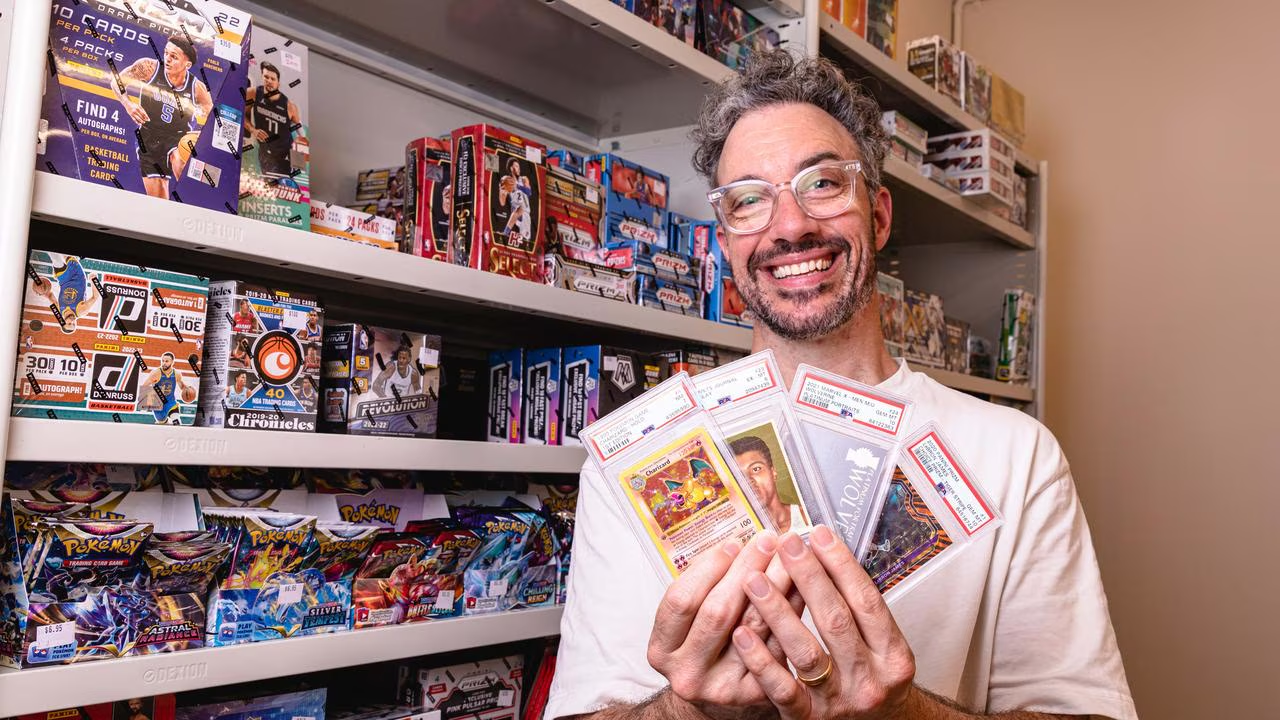
How Cherry Collectables Built a Live Shopping Community That Activated 1,600%
Cherry Collectables is Australia’s biggest trading card retailer, and Grayson White has been running live shopping there since before most operators in this country had heard the term. He started doing “breaks” (the trading card version of live shopping) back in 2008 and 2009, more than fifteen years ago. What Cherry has built since is not a sales channel. It’s a community of hundreds of thousands of collectors who trust the brand enough to move 1,600% more product on a single new release than they ever had before.
That number didn’t come from paid media. It came from fifteen years of showing up on camera, being entertaining, and giving the community something worth watching whether they were buying or not.ed on the surface.

“We’re not just trying to move them widgets for the sake of it. And they’re not going to get another email saying ‘hey, do you want more widgets?’ That’s just not how we operate.”
Live Shopping Works When Buying Is One of Three Reasons People Showed Up
The reason the breaks model caught fire and most live shopping experiments don’t comes down to who the show is built for.
Three distinct audiences turn up to every break. The collectors who want the cards. The people who want the theatre of watching a $1,000 box of cards get opened live on camera. And the people who just want to be in the chat taking the piss with everyone else. One of those three is there to transact. The other two aren’t. Design the show only for the buyers and you lose all three.
Motto Fashions, a 40-year-old Australian women’s fashion brand, proved this when COVID forced its stores to close. Lauren French and her mother started doing 4pm live streams every day, walking in barely three minutes before going live with no script. The brand grew 127% in twelve months. The streams kept running after lockdown ended because the three-audience model had taken hold. Viewers came for Lauren, for the banter, for the styling hacks. Some bought. Most just kept turning up.
The honest question for your next live show: who is turning up to watch, not just who is turning up to buy? If the only person you’re designing for is a customer with purchase intent, the show is structured wrong before it goes live.
Never Come Across as a Catalogue
Most brands approach a live show the way they’d approach a promo email. Here’s the product, here’s the price, here’s the urgency. That structure makes sense in an inbox. On a live show it kills the room. The people watching didn’t turn up for a pitch.
The trust-before-transaction model works because it changes what happens after the show. Natalie Angel, an independent fashion creator, goes live on Instagram every Friday to try on clothes and give honest fit reviews, including when something doesn’t suit a body type. No pitch. No “this looks great on everyone.” Her audience doesn’t just buy. They go back to their own networks and recommend the brands she covers. Shopify’s Hannah Yudena flagged this at the end of 2024 as the live commerce model worth paying closest attention to, because the trust the host builds is the real asset.
Grayson’s version is the same logic. Treat the community as collectors who want to escape the grind of work, focus on entertaining them first, then fold in an offer once you’ve earned the right. When the Select NRL trading cards launched, the community activated because fifteen years of not running a catalogue had earned Cherry that one moment of permission.
The ratio worth checking in your last live show: how much was entertainment versus selling? If it sat above 70% selling, the format isn’t working in your favour.
Every Show Needs an Event, Not Just a Schedule
Even Cherry is still learning the Whatnot rhythm. What separates the shows that convert from the ones that drift is that every session has an event frame, a specific reason for people to show up beyond the calendar.
Getting there requires reps you can’t fake. Oz Hair and Beauty started running live shows long before TikTok Shop arrived in Australia, deliberately, to build operational knowledge ahead of the channel. Their internet blurred mid-stream. They forgot to tell the shopping centre they were trading late, the air conditioning switched off, and their presenters were visibly sweating while trying to sell hair products. Those are the problems you only find by going live. Start before you’re ready, because the alternative is being unready when the channel matters.
When the format works, a live show becomes a content factory. The unscripted moments captured live, a world premiere, a six-figure card pull, a presenter’s honest reaction, are better raw material than anything you could storyboard. Clip them and put them everywhere.
Platform choice matters too. Whatnot works for Cherry because it’s purpose-built for event-driven commerce, with checkout sitting inside the stream itself. Trying to run live shopping on social in Australia still means navigating checkout friction that hasn’t been solved, and that conversion drop is real.
The practical check: what is the event hook for your next live show? If the honest answer is “we’re going live Tuesday at 7pm,” the show doesn’t have a reason to exist yet.
The Takeaway
The brands winning at live commerce right now aren’t standing in front of a camera talking about products. They’ve built a show people want to watch, earned enough trust to fold in an offer when it matters, and structured every session around something worth showing up for. None of that takes a broadcast budget. It takes a different way of thinking about what live commerce is actually for.
If your last live show pulled views but barely any sales, the diagnostic isn’t the discount or the platform. It’s the show itself. So who would turn up to watch yours if there was nothing to buy?
Frequently Asked Questions
Why does live shopping work for some brands and not others? Most live shopping fails because brands treat it as a sales channel rather than a content format. The brands that succeed build a show people want to watch first, then fold in offers once they’ve earned the right. The audience that shows up to a working live show is mixed: some are there to buy, others are there for the theatre or the community chat. If the show only serves the buyer, the other two groups don’t show up and the audience doesn’t grow.
What is Whatnot and why is it different from Instagram or TikTok Live? Whatnot is a purpose-built live shopping platform launched in Australia in 2024 and now operating as a multi-billion-dollar business globally. Unlike Instagram or TikTok Live, Whatnot has checkout built directly into the stream, which removes the conversion friction that has slowed social commerce in Australia. It is particularly strong for collectibles, fashion, sneakers and other category-specific commerce.
How do you structure a live shopping show that actually converts? Three things separate the shows that convert from those that don’t. First, design the show for at least three audiences: buyers, viewers who want entertainment, and the community chat. Second, never come across as a catalogue: focus on entertaining first and fold offers in once trust is earned. Third, give every show a specific event hook so it has a reason to exist beyond the schedule. A “world premiere” or a major drop performs significantly better than a routine weekly slot.
Should Australian ecommerce brands invest in live shopping in 2026? Yes, with the caveat that live shopping rewards reps. The Australian brands pulling ahead started running shows before the channel was proven, accepted operational surprises (internet drops, presenter mistakes, venue issues) as part of the cost of learning, and treated the early sessions as practice rather than revenue. Starting now means being ready when the channel matures, rather than starting from zero when competitors already have audiences.
In this Playbook:
- Live shopping works when buying is one of three reasons people showed up
- Never come across as a catalogue
- Every show needs an event, not just a schedule