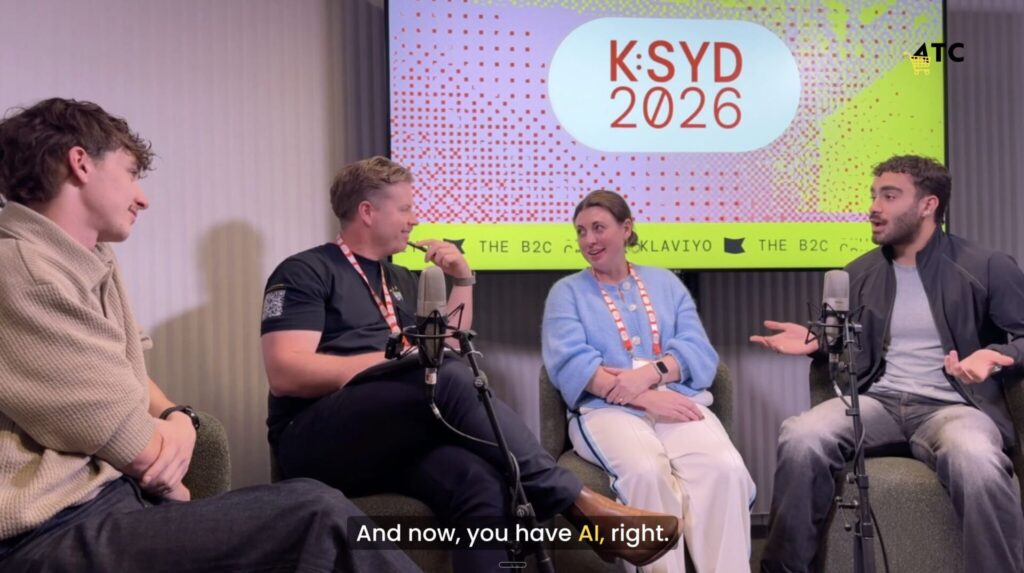
Nathan Bush: Retailers offering fast delivery outperformed their competitors by 4% during Black Friday. Now that's not just another stat thrown out there, it's a growth signal we should be paying attention to. Shipit's Commerce Delivery Report breaks down exactly why speed equals success as well as the other forces that are shaping delivery in 2026 from automation and AI to to fulfillment and inventory. It offers a practical roadmap for the next phase of your retail growth. For more information and to download the report, visit shipit.com CDR2026 that's shipit.com CDR20 26 to get your hands on the report. We'll put a link in the show notes as well. Take a look at where most email teams spend their week. Odds are it's on campaigns, the Tuesday send, the new season launch, the sale that has to be out the door by tomorrow. Campaigns get the deadline, the fresh designs and most of the attention. Your flows are set up, but they probably don't get the love and attention they deserve. And that's the beauty and the drawback of flows all at once. Once they're built, they run autonomously in the background, making you money while you sleep. But that's exactly why they get left alone. They don't get revisited, they don't get optimized. And even a tiny little change to a flow can make a huge difference to your revenue numbers. And that's what I want to unpack today. I got into this with three of the best Klaviyo practitioners in the country, all on one panel at Klaviyo's K Sid event a couple of months ago. Locky Agnew is the head of technology at July, the Melbourne luggage brand, and he's built most of their tech stack himself. Hani Rifai is the Chief digital officer at step one, the ASX listed bamboo underwear brand, chasing $100 million. And Alice Michael runs e commerce and operations across Sportscraft, Saba and Jag at APG Co, three very different businesses. But at July alone, flows drive close to half of all the email revenue. Let's get into it. Loc, you've talked a lot around mastering automated flows.
Locky Agnew: Yeah.
Nathan Bush: Tell me about that journey at July because you've actually been on a journey yourself, from a D2C REIT to having your own stores to having stockists.
Locky Agnew: Yep.
Nathan Bush: How have you thought about flows?
Locky Agnew: It's really interesting. In July flows, they're a big rev driver for us for a couple reasons. The biggest one being there's a there's a long purchase period between wanting and buying for premium luggage. It's at a pretty high price point, especially if you're buying, like I said. So it's almost like a grand and a half. It's expensive and it's okay. It's this commitment because it's lifetime. Like you're really thinking about it. It's a thought about decision that you're making.
Nathan Bush: I have One of the OGs that Ethan brought with me with him when he did the live podcast and it's got add to Cart Monogram. I'm hanging on to that forever.
Locky Agnew: I was like, we'll get you some new ones.
Nathan Bush: No, no, no, I don't need a. It's great. Yeah.
Locky Agnew: That's a relic of that point.
Nathan Bush: Yeah.
Locky Agnew: So there's a long purchasing decision. Right. So we spend like majority of our marketing time. A lot of our creative time is building campaigns because we want, we want these beautiful campaigns. We want to sell the dream of, of travel like this. There's so much that gets put into it, so much time and effort. But because people are going on the website so much, they're not purchasing off the campaign, they're purchasing off the flows. Because they're going on multiple times. We have their email, they're coming on, but the flows is what actually gets them to convert because they're thinking about it for so long and we're getting back. So, like, no matter what, our main rev driver will always be our flows.
Nathan Bush: Gotcha. And how long are you setting up those flows for? How long is a customer in flow state?
Locky Agnew: Hopefully the dream is within a week or two. That's the sweet spot. It can be months. Yeah, it can be months. And they usually end up going through the same place. We're actually doing a big body of work of reimagining because we have such beautiful retail stores. We have such beautiful experiences. We go in there and we've kind of felt recently that because we've elevated so much in the physical retail space that our emails are kind of like bread and butter.
Nathan Bush: Okay.
Locky Agnew: Emails. It's like we'll be like, we're not elevating here. We're not doing those things. We're actually hopefully by July rolling out brand new flows. But there's also a lot of stuff that we want to do around first party data with them. So if you know when someone's traveling. Right. How nice would it be if like a week before you trip you like, we're so excited for your trip in X, Y, Z or your suitcase that you Bought this is kind of. Or this would be a perfect trip or out on packing sales around your actual trip because usually like it's almost like 70, 80% of customers are buying for a trip.
Nathan Bush: Yeah.
Locky Agnew: Like you're not casually buying luggage for maybe one offshore for a few months
Nathan Bush: before you go somewhere.
Locky Agnew: But to have that data and to do all that and really elevate our flows to be much more personal first party data rich is kind of the direction want to go. We want them to be gorgeous look like the retail stores so that, that elevated experience that you're getting when you go and touch the physical product to store. You kind of get on the digital
Nathan Bush: side as well because you're not heavily promotional, are you? You do the odd spend and save.
Locky Agnew: Yeah.
Nathan Bush: But it's not ever like 20% off site wide kind of stuff.
Locky Agnew: No, I mean we have for a few times we have a warehouse sale which does really well. But discounting isn't really in our warehouse
Nathan Bush: unless it's like luxury baby.
Locky Agnew: Yeah. But also like when we do big discounts, not like 20% off flat. It's like buy some stuff, pair up what suitcase you want double drapes too. Yeah. But also it is premium luggage. It's, it is lifetime. It's great value for what you're getting. But it's so easy to fall in this. We had a funny word for it but it's like this discounting hell is this kind of like you to race to the bottom to who can do the biggest discount and all you're doing is killing profits for people that are probably going to purchase anyway.
Hani Rifai: That's right. I think the other thing for your category.
Nathan Bush: Right.
Hani Rifai: Same thing with us is like if you do discount, they buy the Lux luggage. They're not going to come back for a very long time. Right. It's not like. Yeah, like, well, but I mean even for luggage. Right. Even if there isn't a discount. You, you just bought your bags. Yeah. So it's different with something that's like a perishable or it's like a supplement brand. Like you grew it on sale. Yep. You got great order volume. They chew through it and then they have to come back.
Locky Agnew: Yeah.
Hani Rifai: And maybe that's a test and try strategy but like you're essentially cannibalizing future sales.
Locky Agnew: Right.
Hani Rifai: And so you kind of need to build that into fact. It's, it's bad money. It's not good revenue.
Locky Agnew: Most of our marketing is acquisition. Is that because we've got lifetime, we've got lifetime warranty. It's very good. We stand on the shoulder of our products like we stand by them. People don't purchase more than once very often. A lot of the time it's just one single purchase and then second one, maybe some packing sales or some stuff that they like. Bags are a little bit of a dream game. We've gone to that in the past two years. But acquisitions are such a big part of it.
Nathan Bush: And what do you do with your customers then after they bought the ideal kit, they bought their bag, they bought their packing kits. Do you just go, well, it's been
Locky Agnew: nice knowing, you know, this is what we're trying to get really good at in the next four months is if you really look after customers. It's like we're trying to acquisition into more acquisition. Right. If we've got a customer and they're going to purchase again, you can win a word of mouth. It's like if you are the best customer service you've got, good post purchase flows around like we want to be sending you emails around like how to best look after your suitcase. What if it comes back from the airport scratch? How do you do all these things for that particular luggage bought? If you do all this post purchase really premium stuff, you can get word of mouth. Because I was like, hey July, it's not just when you purchase. They're looking after you for the next five years. And then that's acquisition again is like you can get more customers just by looking after your customers.
Nathan Bush: There's probably a bit of gifting in there. I'm thinking back to my situation that we're a July family. My wife's got everything, I've got everything. It's fantastic. And it was my sister in law's 40th birthday. What are we going to get? My wife was the first to say the brand new July luggage set, blah, blah, blah, blah. So she was still buying but it
Hani Rifai: just wasn't for her.
Locky Agnew: Yeah, yeah, yeah, we said a lot. But that's, that's really hard to optimize for.
Nathan Bush: Yes.
Locky Agnew: So it isn't something that we actively do. Like we do stuff like we're working with like wedding registries and places where people produce. But the biggest thing is if you look after your customer, they're going to be, you know, more fan. Yeah. And you see in the airport like if you go see someone July, you're
Nathan Bush: like hey, that's okay.
Locky Agnew: And like you have like really earnest conversations at the airport just because you're part of the same little club.
Nathan Bush: How does it compare to Undies, obviously you can't do that in the airport with undies. Comparing undies. And also a little bit more. I'd say the replenishment might be a
Hani Rifai: little bit more often, potentially. I mean, like, we have a lot of customers that are huge advocates, right? And like people that have been around like OGs forever, you know, and we actually saw there was someone left like a Facebook comment the other day to a link of like a blog that they have about all their. Step one is a guy in the UK and he's literally collected like every single limited edition print, like since the beginning of time, like catalog them. He's like, please, I'm looking for this one print. You guys haven't re released it. Like, I would do anything for this print, right? So we have a lot of brand advocacy and still word of mouth is, is really strong for us. Like, we, we do have a great product, right? We have an excellent product. Like, you won't get the type of 0CAC acquisition and refer a friend stuff if we didn't. So it's, it's really strong. Like in terms of like showing it off. People, people love it. Like, people love to have the waistband and like all the different cool colors and people love to talk about it. But yeah, I mean, it's, it's really interesting to think about repeat purchases and what that looks like. Like, you know, I was just saying before to someone that, like, you know, you might come in and men will come and buy a 7 pack or 15 pack of undies or something. And then it's like, okay, cool, what next? Right? So your exact question, Nathan, is like, what next? And the answer is like, we have a lot of things that now we're working on to really bring them back into that ecosystem. Like, we've started doing complimentary products. We do socks, sleepwear. We just. Our new launch of like athletic compression stuff, which is, which is looking really cool. But even our limited edition prints, right? Like, that's a huge source of incrementality for us. And the way I think about it is literally like, this is like you can come in and you buy your 15 pairs of black and navy and gray that you're going to wear every day. And you're like, okay, cool, I don't need to look at step one ever again.
Nathan Bush: Oh, cool.
Hani Rifai: To have like some cool new print. St. Patrick's Day, Valentine's Day. That's a sick print. I really want that.
Locky Agnew: Yeah, right.
Hani Rifai: And so, you know, that's true incrementality.
Nathan Bush: So it's Giving them what they need, but then a little bit of what they want.
Hani Rifai: 100% like something fun and cool and like we have a really, like we pride ourselves of being a funny company. Like we all have a sense of humor. We love a bit of a gag and a joke and like, you know, we'll, we'll do some really funny cool stuff and do some naughty campaigns and things like that. Like we're, we're a big fan of cut through marketing and people resonate with that. Like they want like an authentic brand that speaks with humor and gets them and it's like can say a swear word and they all be fine. So it really is something.
Nathan Bush: Question about the flow.
Locky Agnew: Yeah.
Nathan Bush: How many flows do you have running?
Locky Agnew: We have the basics. It's like browse abandonment, card abandonment, checkout abandonment, welcome flows. But we're starting to edge into now RFM segments. So like if someone is like a loyal customer and they're moving to at risk, we want to send very direct emails about that. So that's kind of what we're building out at the moment is like RFM switches. So the second that they're switching from different categories of buyers, we're kind of targeting a little bit again, it's a little bit.
Nathan Bush: To those who might not know rfm, can you give us a brief explanation?
Locky Agnew: Yeah. Rfm, I mean I forget what it stands for. It's something great, frequency and monetary, but it kind of is just like an x y axis and depending on how customers are purchasing, the amount of money they're spending, how frequently they're buying, I kind of places them into different keyword groups. So it's kind of like you've got like loyals and champions, which is like your repeat purchases, they're there all the time purchasing from you. You kind of have your pre purchase customers. So like people that I forget the names of them but they're kind of like anyone that is like browsing the site, you know about them. But they, they have a high propensity to buy and then you've got things that are like at risk, churned and like inactive. And a customer will always live in one of these groups. But the really interesting thing is when they switch. So like depending on the events that they're on site for, they're going to switch over the course of them being a customer for you. No matter what, they're going to move across these different categories. But the interesting thing is when, when they trigger across these different categories usually you can get very targeted messaging and that's Kind of like where we're thinking about putting our discounts in is kind of like we don't need to do a blast 20% off the website, but if we've got a customer that purchased one small bag and that particular type of customer has purchased before and they bought package up something, you can get very targeted message when they go from a loyal customer to an at risk customer. And we want to really nail down that. So it's much more targeted on the messages that you. At the time that they need to purchase or the time that. Sorry. That they're likely to purchase or need to purchase.
Nathan Bush: Are you guys using rfm?
Hani Rifai: We are.
Nathan Bush: So we use it's marketing analytics within Klaviyo to, to power the RFM cohorts. We've just enabled it so we haven't quite built flows off it yet. But the idea would have would be that you'd have an abandoned cart, but then you'd have one specific to your champions, you'd have one specific to your at risk group and then you'd have one specific to, I don't know, the inactive for example. And all would have maybe we, we are on the discount drug so we're happy to give a discount. So we'll do this discount or maybe another service that we can try and get them over the line with. But that could be the example of
Locky Agnew: how we're using or planning to use it in future.
Nathan Bush: Makes sense.
Hani Rifai: I think that for us like probably the RFM modeling is not as mature from Klaviyo as I would like. So we've kind of built our own kind of custom modeling of like what those cohorts look like, like who are our champions, who are our loyalists and things like that. Because the modeling's good, but it's not malleable by category. Right. So like what is a look like for someone else is probably not what a champion looks like for me.
Locky Agnew: That's what we're battling.
Hani Rifai: Yeah.
Locky Agnew: Like a bag purchaser versus a luggage buyer. Very different.
Hani Rifai: Yeah. So it's really difficult to kind of use that as a one size fits all. And so what we're finding is like we're just layering and like we're basically doing the same thing but with different segments.
Locky Agnew: Right.
Hani Rifai: And now Klaviyo has added like you know, moves in or out of a segment. You can essentially create the exact same functionality as you would have done with
Locky Agnew: an RFM mic flow.
Hani Rifai: Right.
Locky Agnew: So are you running that through like custom attributes?
Hani Rifai: Yes. Yeah, yeah, yeah. So we run the model, it gets Piped back to the property that becomes a segment and then you're good. We used to do it with just like arbitrary like rules and stuff, but we've just become a little bit more advanced. Like we have all of our data stuff in bigquery now and we can really run some cool models and then pipe that back in.
Nathan Bush: What's fascinating there is that even for a big beautiful brand like July, they are not shying away from automation. They know how important it is to optimize these flows and which actually enhance the brand, not take away from it. So let's hear from a few other add to cart guests who have done exactly that and then pull out three things that you can take back and revisit in your own email flows. So lesson one, find your high value flows, then make them work harder. First start by finding out which of your flows are actually high value because the answer might actually surprise you. Open your platform and split your email revenue two ways. Campaigns versus flows. It's not something that most teams look at that often and that cleanly. And when they do, they often find a handful of automations they built probably months, maybe years ago, and they are out earning the campaigns that take up most of their week. So the job isn't to go and build more flows, it's to find your biggest earners and make them work harder, harder. And the upside there is enormous because a flow fires on every single customer who hits that trigger. So even a small improvement stacks up across thousands of sends. One of the clearest breakdowns of this I've heard on the show came from Jason Anderson at Anzan, one of the world's leading klaviyo and retention agency. Here's Jason on where that money hides and how one small change to a single flow can move the needle. The next thing that we'd look at is abandoned cards. So that's obviously just a huge leaf for almost everybody. It's generally the highest grossing automation that they have. Very low annual fruit. We tackle that quickly as well. Which is funny. I've never met anyone who likes an abandoned card email. But they work. Yeah, yeah, they work. I've seen people with abandoned card flows that net, you know, more than a hundred thousand dollars a month.
Locky Agnew: Yeah, you know, obviously that depends on
Nathan Bush: the size of people that you've got abandoning cards and maybe that leads to
Locky Agnew: you have a conversion from home.
Nathan Bush: But still, if you can get someone onto that base, you know, maybe 90% or more will check out once and never come back. That's one split on one Flow and it moves both conversion and margin at the same time. So pull your Campaign vs Flow report this week. Find your two or your three biggest earners and ask what one change would make each of them work harder. All right, lesson two Build your flows around how your category buys and what your product actually needs. Once you know which flows are carrying the load, stop treating the standard flow library as the finish line. Welcome Browse abandon cart abandoned Post purchase It's probably the E Commerce starter kit that everyone has. The brands that are getting real value out of flows shape them around two things. First, their categories buying rhythm, how often the customer genuinely comes back, and the second, the unique attributes of the product and the way that their customers actually decide to buy it. So the questions worth asking are, does my customer need to be educated before they buy? Do they need peace of mind after the sale so they don't regret it? How long do they sit around and think before they commit? Your flows should not copy other businesses. Your flows should be answering those questions at the exact moment the customer is asking them. The best example of building a categories rhythm I've heard came from Nat Hinza, who runs digital and marketing over at Mr. Poolman, the online pool supplies business that she and her brother grew out of their dad's pool servicing round. She worked out early that when your pool breaks you need a needs based buyer, not a wants based buyer. Here's Nat on how they read their own data to know exactly when a customer would be back. Our post purchase series has been massive for us, so of course you've got your browsing cart abandonments. They're always going to be your best drivers. You've got a great welcome series, really making them feel a part of the family, of course, creating that connection. But then you've got a post purchase and with some basic business insights you can predict that if they come in with a small ticket purchase within 30 days, they're testing the waters. Within 30 days they're going to come back and purchase what they really need from you. So you really should be there ready for when they're ready to come back and make another purchase from you now that they trust you. Okay, they've purchased that. Do they need this in 47 days? They might need it again in 150 days, you know what I mean? Like, don't be afraid to continually stay in touch with them without annoying them. That's the sweet spot. Now that episode was recorded well and truly before AI took hold in E Commerce. So Nat and the team mapped out those journeys by hand from their order history. Today you probably don't have to. The smarter versions of this are baked right into the platforms now and the answers are probably already sitting in there. And if they're not, you've got your friends like Claude to help you do that. So the hard part now isn't the manual mapping anymore. Using your data. It's asking the right question. What are the unique operating and decision making rhythms for your customers? And have you built a unique flow for each one? Lesson 3 Build the Flow Almost nobody builds the first to second purchase. The last one is the flow that I love the most and is this flow that most teams never actually get to. And it might be the most valuable of the lot. Turning a first time buyer into a second time buyer. In most databases the steepest drop off is right there between order one and order two. Get someone to buy a second time and the odds of a third and a fourth jump. So that single moment shapes your whole retention curve. But it's bigger than retention. Every extra order you get from a customer you've already paid to acquire spreads that acquisition cost across more purchases. Win the second order and you've effectively halved your cost of acquisition on that customer when the third and the fourth. And the economics of paid advertising becomes really really strong. One mistake I see a lot of teams make, and it's an easy one when you're flat out is to treat that second order gap as a reason to fire off another discount. The better play is to give before you ask, help the customer get real value out of the thing they just bought and the second purchase becomes a lot more likely if the first one was a great experience. Nobody frames this better than Jen Gilbert who is the head of digital at Nutra Organics, the family owned natural health food brand who has built a huge repeat business off exactly this thinking. Here's Jen on why that first to second jump is so hard and how she thinks about closing it. I think most companies books would have like 70% of their customers would be first time customers because that hurdle from 1 to 2 is really tricky. So I'd always pick the repeat customer. Do you have any tips or tricks to get customers from that first purchase into that second purchase? I do have a couple of little tricks. Any that you want to share? I think the final mile is something that gets overlooked a lot. You've spent so much time and effort in getting a customer to your website. You've created the awareness, you've created the activation, you've converted them and then they get the product? Was that an enjoyable experience when they unopened their box? Was there a magic moment in there? So build one flow with a single job turning a first time buyer into a second time buyer. Lead with help, not a hard sale. Show them how to get the most out of what they just bought. Give them a reason to come back that isn't only money off and save the incentive for when you actually need it. If you don't have that flow today, it's the most valuable one that you can build out straight away. So if you take one thing into your week, don't just go out and make better campaigns. Make it 30 minutes with your flow report open looking at what those automations are actually earning and where a small change could make real money. Campaigns will always shout the loudest and the most urgently. Your flows are steady, repeatable revenue and they reward whoever actually goes back and optimizes them constantly. Now if you want to compare notes on which flows are pulling their weight or how other teams have mapped out their repurchase windows and their first to second purchase play, that's exactly the kind of conversation that we're having over in the Add to Cart community every day. You can join for free over on add to cart.com au that is the playbook for this week. I'll see you next Friday.