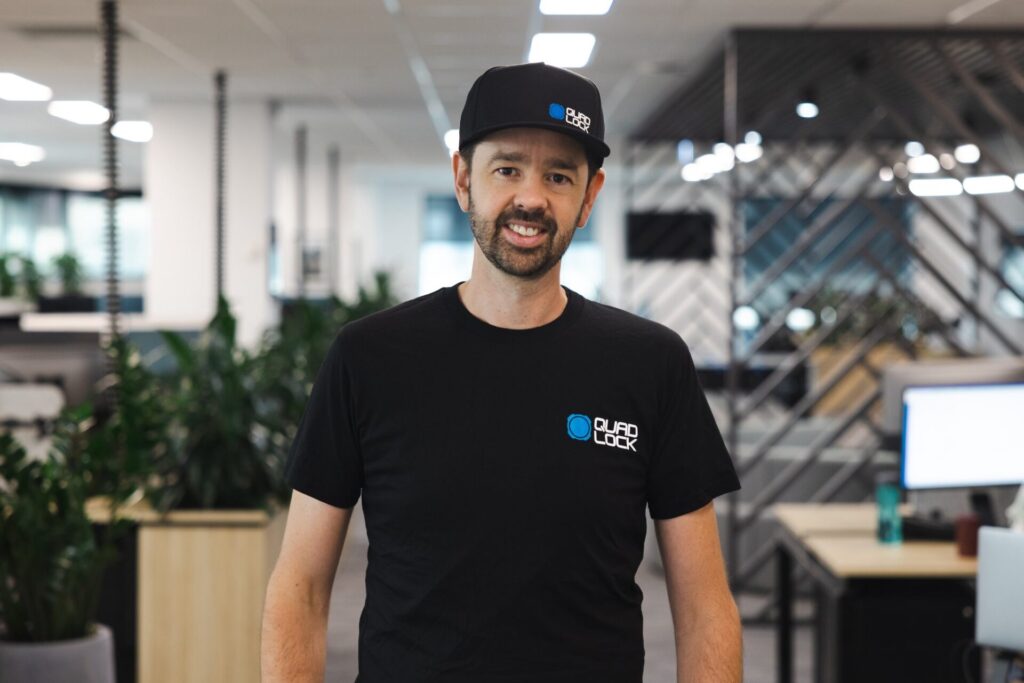
Rob Ward: AI is still just a chatbot that you put something in copy and paste out of. A six month old brand will show up online looking like a multinational billion dollar brand. You can't click your fingers and have 10 years in market doing one thing. Did you say I'm Rob Ward from ADD to Cart hey, I'm Rob Ward, exited founder of Quadlock and on this episode of Add to Cart, I talked to Bushy about all things Life. Post a DTC brand, a D2C playbook that I've been writing and yeah, what some of the things you see common problems within D2C brands the last time
Nathan Bush: Rob Ward joined us, he was sitting in the CEO chair at Quadlock telling us how he and his mate Chris had bootstrapped a novelty bottle opener and turned it into a phone mount business
Nathan Bush: selling in over 100 countries.
Nathan Bush: That was back in 2022. Rob is back today, but at a very different point in the story. Since then, Quad Lock kept growing to more than $200 million in revenue and
Nathan Bush: $50 million in EBITDA.
Nathan Bush: They're entirely bootstrapped before Rob and his co founder sold the business to Swedish outdoor giant thule Group for $500 million. Rob has since stepped away from Quad Lock completely and put everything that he's learned building and selling it into the D2C playbook. Free resource for Other Founders it actually
Nathan Bush: baffles me he's made the whole thing
Nathan Bush: available for nothing, which probably just means that he made way more than enough in the exit. Good for him. But it is one of the most valuable things that you'll find in the
Nathan Bush: e commerce space for free.
Nathan Bush: In this episode, Rob gets pretty blunt around product market fit, telling founders that a product people love at $0 but abandoned at 59 bucks is never actually had fit, it just had politeness. And he explains why he reckons a six month old brand can now look and feel like a billion dollar company online for a fraction of what it used to cost. There's also a pretty honest admission that a chunk of what ended up in his free playbook came from the chats
Nathan Bush: he was already having for nothing, and
Nathan Bush: that therapy probably could have worked out cheaper. Just quickly, before we get into today's episode, I want to say a massive thank you to our partners at Shopify and Klaviyo for for making Add to Cart possible. We really do appreciate their support. And if you want the cheat sheet from this episode, head on over to
Nathan Bush: add to cart.com and sign up for our newsletter.
Nathan Bush: Every time we go live with a Primary episode like this, we send out
Rob Ward: a cheat sheet to give you all
Nathan Bush: the links, all the lessons, all the learnings in one easy email for you to get your head around.
Nathan Bush: So even if you don't have time to listen to the whole episode, you'll always have access to to the information in your inbox. But let's get into it today. Here is co founder Rob Ward from Quadlock rejoining us on Add to Cart.
Nathan Bush: Rob, welcome back to Add to Cart.
Rob Ward: Pushy, thanks for having me, mate.
Nathan Bush: You are looking relaxed, you're looking chilled. What is going on?
Rob Ward: Just working things out, to be honest. Working things out post Quadlife.
Nathan Bush: Well, I hear you're working it out for other people, which is very exciting.
Rob Ward: Oh, little bits, little bits here and there, but mainly, you know, picking kids up, coaching basketball.
Nathan Bush: How's the basketball skills?
Rob Ward: I'm getting very good at shooting with a size five ball on an eight and a half foot ring.
Nathan Bush: I'm loving it at the moment because my son Teddy, he's getting into basketball and he's 12, but he's small and he weighs about 15 kg and at the moment I'm smashing him and it's so good and I'm taking every advantage to beat him in basketball because I know in five years time it's all over.
Rob Ward: Oh yeah, schooling a nine year old is so good for the ego.
Nathan Bush: All right, let's pick it up then because you joined us about five years ago and back then you were co founder of Quad Lock, amazing brand and you're in the CEO seat. At that time you were going, you'd just taken on private equity. Yep. Since then you've taken the big exit. What inspired was that always the plan and what made it feel like the right moment for you to exit?
Rob Ward: Yeah, I think, well, if you wind it back a bit. CP and I, when we, when we were doing a few side hustles and then quality became like the thing we were working on, we used to always talk about building something bigger than ourselves, something that, you know, can go on without us, that kind of thing. So I think it was always, you know, part of the plan. But you can't get too cute with this stuff. You don't know what's like, what's going to happen 10, 15 years later. So it was part of the plan. But I suppose when it comes to big exit, part of the deal is, you know, you take money from private equity, you get them involved and rightly so, like then the clock's ticking. So yeah, that's sort of, it's the game.
Nathan Bush: They like growth, don't they?
Rob Ward: They do like growth, which is great. We like growth. We're growing anyway. But I think for us the thing that was important was, you know, trying to find a good home for quadlock. And when it comes to timing, like, you know, metrics look great. When quadrant bought in, they look good. A year after that, two years after that, they always looked really good. So it was always, you know, gonna be valuable to someone. But for us, actually, as we kept growing, you find that the buying pool actually starts shrinking in.
Nathan Bush: Cause you get too big.
Rob Ward: Yeah. Cause you get too big. But obviously then there's other options like IPO and things like that or maybe bigger pe. But we sort of thought trade would be cool, but then a lot of trade just falls away because you're just too big a chunk. And we were difficult business to sell because we're multi category. It means a lot of trade. You wouldn't fit with them anyway. And they can't buy a business that makes that much revenue from something that's not maybe core to what they do.
Nathan Bush: Yeah. Was it hard to. Because you've essentially created the quad lock ecosystem. So it's not like you can just bolt it onto an existing product set. It always sits by itself. Kind of.
Rob Ward: It does. And the brand got so big that you really have to value the brand to get there on valve. And then the other part to it is that, you know, if you're a full driving brand, you can't really bias when so much comes from motorcycling. If you're a cycling brand, you can't really bias because so much value comes from motorcycling and you know, that makes it hard. They're multi category. Multidiscipline. Yeah.
Nathan Bush: And when did you actually sell?
Rob Ward: End of 2024.
Nathan Bush: Okay.
Rob Ward: But CP and my last day was the Christmas party, 2025. So we hung around for a year after. Yeah.
Nathan Bush: Good Christmas party.
Nathan Bush: Yeah. Great.
Rob Ward: The guys sent us off really, really well.
Nathan Bush: Awesome. In hindsight, do you think that was the optimal time to sell given that it's a bit tough out there at the moment.
Rob Ward: I think if we had had the been the size we were, you know, when the crazy multiples were getting thrown around to do with COVID and things like that?
Nathan Bush: Post Covid. Yeah.
Rob Ward: Yeah, that would have been the time. But we just weren't big enough and the business wasn't ready. As in we were very profitable. We're growing. All of that looked amazing, but we still had a lot of growth left on the Table, which you need to, to be able to sell. Like someone's got to have upside. But, you know, we were super flat back then. We just had a very core team which were performing really, really, really highly. But it was a very flat structure. It's not the kind of structure that would fit into an IPO or fit into a big listed Swedish company or something like that. So we didn't even have board meetings before Quadrant come on.
Nathan Bush: So as soon as the board meetings happen, that's a good time to get out.
Rob Ward: Oh, we did, we did a fair few years of board meetings with them, but that was fine. It's just, I mean, they, they looked after us in the way that I remember when Justin Ryan, when they bought in, Justin said, oh, just don't slow down. But then what they did that we didn't know. You know, we went and got Mark Spencer, ex CFO of Catch of the Day, brought him in. He takes care of the board papers and like, I wasn't going to ever spend that much time on that kind of stuff. Yeah, yeah, yeah, yeah, that worked out well for us. But then when it comes to doing a deal, three, four, whatever it is, years later, you need all that to get there. Like, all the metrics can look good, the growth can look good. Like when you get up to those vals, you gotta have all your, you know, cross the T's, dot the I's
Nathan Bush: to get the gd, the governance becomes important.
Rob Ward: You gotta have ey doing three years of, you know, audited books, all the fun stuff.
Nathan Bush: Oh, goodness me. What was it like? What was that time when you stepped away because quadlock is your baby, Obviously co founded it and, you know, become a bit famous for it. What was it like handing the reins over completely? Especially like you mentioned your team there and I know you've got such a tight team.
Nathan Bush: What was that feeling like stepping away
Nathan Bush: for the last time?
Rob Ward: Yeah, I mean, it's, you know, to do the deal with Quadrant the first time and you go to, to work the next day and nothing has changed. It's just exactly the same. You may have a few more dollars in your bank, but other than that it's just the same. The mission's clear. The mission's the same. You just keep doing what you're doing. But then when you actually sell for good, it's not like ripping the band aid off because you've been backfilling your roles. You've been hiring CEOs, CMOs, Chief Product Officers, you've been hiring all these roles. You've been building the team out. So all of that you've been doing for a little while, a year or two before that. But then it's really that thing of I'm just so used to thinking about this thing all the time. Every, you know, every shower, every night, every time. And then there's all these people that I hang out with every single day and I've done that for, you know, some of them over a decade. And then that's actually what your life is and that changes a lot. And then I don't think you're ever really ready, ready for it, but it's just another adventure, another thing you gotta lean into.
Nathan Bush: And was there a bit of identity, soul searching in the, in the weeks or the months following?
Rob Ward: I think I'm pretty pragmatic and I realized I'd made those decisions like a year or two before that, to be honest. So even though it feels like all at once, it is a process to get there and that sort of slowly builds up and you're getting used to it along the way.
Nathan Bush: Wild.
Rob Ward: Yeah.
Nathan Bush: Well, congratulations anyway.
Rob Ward: Like, it's amazing.
Nathan Bush: I think it's one of the best E commerce success stories that we've had in Australia. I've always been a fan of what you built, but then when you exited for the amount that you exited for, I was like, oh, it's just so good to see those stories pay off. All the hard work.
Rob Ward: Appreciate it.
Nathan Bush: One of the things that you said in our last interview was what you love is finding the win, riding the win, and then engineering the next win after that. And I love that, I love that mantra. When you're thinking about what's next, how are you thinking about engineering the next win?
Rob Ward: I think even like I would have said that in relation to what I was doing at the time and not really thinking too broadly, but I've actually come to learn that I think actually what I like doing and enjoy doing is, you know, not just advising or not just pointing it. This is the thing you should do. It's, you know, coming up with an idea, coming up with some kind of theory, trying to prove it, disprove it, taking it to a team and then working through that, learning along the way, delivering something, getting an outcome, and then you get that kind of dopamine loop. And I think that is actually what keeps me going, which is another version of what you just said. Like I was thinking about that's what you need to do from a business standpoint. But now I've realized it's sort of like A personal thing that. That's what gets me going.
Nathan Bush: Does that go back to your original. Like, you're a toolmaker to start with. So it's like. It's funny that you're doing the coaching and the teaching and the advising and then is there a natural tension there? You're like, actually, I just love being on the tools. I love building. I. Developing.
Nathan Bush: Yeah.
Rob Ward: I love thinking about the problems and then trying to come up with the solutions and then working with whoever to make that happen. So I do. I do love that. And then the ultimate reward in that is the outcome. Good, bad, otherwise you learn something, you adjust and then you can go again. And I think it's kind of addictive, I think. And now if it comes to, like, advising or helping some other brands, the feedback loop isn't the same. I think that's just things I'm working out now, if I'm honest, I think
Nathan Bush: that's a frustration when it comes to coaching on both sides, isn't it? As a coach, sometimes you're like, oh, I wish I could just get in there and fix it. Or I could be in there with the team and like, push things forward in between sessions. And then on the other side, I know retail's like, I'd like a coach, but I can't guarantee that I'll have progress in between sessions. I don't know what's going to happen in my world. Things will go upside down. It's a real hard balance to get right. Yeah.
Rob Ward: You realize that you can be chatting and everyone can be agreeing, but then multiple people have got to walk away and do things in a line again. And I think in my time, you sort of. I think it's different when you found a business, but you probably take some of that for granted that you. It's just quite easy to get everyone in alignment and go, especially when you're the boss. Well, and not just that, it's more to do with, like, you sitting right next to them.
Nathan Bush: True.
Rob Ward: Like, you're going backwards and forwards. It's not, here's a big grand strategy and everyone go do their thing. It's more like you arrive at all this stuff together over time and it's owned broadly. Yeah. So I think a lot of this is me thinking back in hindsight, really.
Nathan Bush: And so you put together the DTC Playbook, which I was really excited about when you released it for the first time, and I put in our newsletter, I said, everyone's got to go download this because I love it.
Rob Ward: I really do love it.
Nathan Bush: That you've translated all this amazing knowledge that you've had from all your years building Quad Lock and you've made it available for free, which blew my mind.
Nathan Bush: Tell me about the decision, one, to make the playbook and then two, to
Nathan Bush: give it away for free.
Rob Ward: Well, one is, if I'm completely honest, I just like building stuff. So that scratches the building stuff itch. I like putting it out there and seeing it, you know, get used and getting the data and stats back. And I didn't have many dashboards to look at, so I had to make a few more dashboards for myself to look at, I think was part of it.
Nathan Bush: My life's not complete without a dashboard in the morning.
Rob Ward: But to be honest, I think I'd be having chats with founders, operators, these kind of people, and that'd be all good. But I was fine that I'd be explaining things out loud. And I'm thinking, I've said this so many times, I should write it down. But also I'm explaining it out loud, thinking, is this the best explanation off the cuff? It's different when you're with a team and you've got a whiteboard and you're working it out and you're explaining it with them. It doesn't have to be a sharp. But in like a half hour call or something, you've got to be a bit sharper. So then I thought maybe there's a way where I can take all these things and put it into like something scalable and just started like I'll just put it all down into a whole heap of context and then. Or maybe I'll make a little product off it and then just escalated from there. And then even then when I first put it out, you know, I had to sign up to get access to it. Then I thought, oh, you know what, I'll just put the whole thing up for free, indexable. People can search it, alarms can crawl it, it doesn't matter. And then if you want to use the tooling and the benchmarking and stuff like that, like the DTC health check that I made, it's like you get, maybe if you're at scale brand, you get a hundred questions, you answer them and it might say, oh, here's some missing points, here's some things that you could go look at. Maybe that's just the part people need to sign up for and that's sort of where we landed. And you know, there's hundreds of people on there. Well, there's hundreds of brands, more people Using it and I think giving me feedback on making it better.
Nathan Bush: Is there any feedback that you've got that you're like, oh, that's interesting, I can't believe I missed that. Or there's counterpoints.
Rob Ward: Oh, well, there's a few things. Sometimes I'm on a call and I'm like, this is not even in there. And then I'm like, I gotta put that in there. And then there's other things that are like, as it's grown, just good feedback I got from someone the other day. They say like, you know, when you're at pre revenue, the early stage stuff doesn't really make sense if you're pre revenue. And I'm like, okay. And I went and looked. I'm like, yeah, you're right, this doesn't make sense. So we, I made a new whole category for that. Awesome. And then there's things like the initial thing, it was like 100,000 words. I tried to. I like really short, concise things myself.
Nathan Bush: So you made 100,000 word playbook?
Rob Ward: No, but it's very bite size on a lot of things. Right.
Nathan Bush: Imagine knowing your customer is thirsty before they even do. Sounds a little bit creepy, but how deep it's actually genius. Dr. Hydrate, the hydration brand founded by competitive swimmer Cody Simpson and Ironman Kane Eckstein make supplements that get you drinking more water. But like a lot of fast growing brands, they had loads of awareness but were doing a fair bit of guesswork on the sales side. So they leaned into Klaviyo and its predictive analytics specifically to work out exactly when a customer is likely to run dry and need a hydration top up. Time that reminder right, and you nudge a one off buyer into a loyal subscriber. And the results speak for themselves. A 26% jump in revenue from their most loyal segment. Klaviyo driving 37% of total E Commerce revenue. And a little bit ridiculous. 46 times ROI. 46 times. See, no one needs to go thirsty with corporations. Klaviyo, head on over to klaviyo.com au and see how brands like Dr. Hydrate are doing it right.
Rob Ward: And so everyone asked for more, more information. And then I thought I've got like it was 170,000 and I made it way too short. And then I went back to the longer one and that has been something that people aren't asking for as much anymore. So yeah, so that was a learning. Like I'm probably ruthlessly short and sharp. That's what I like. I just thought when I was making this, I thought, this is not something you read start to finish. I want to make it that if you're a founder in the thick of it, and you just need to work out why your business isn't working, what the contribution margin, have you got IP or branding sorted or, you know, how do you convey to your team the mission and the vision, all these kinds of things. I just was thinking, like, you don't need to read 170,000 words sometimes to get what you need. If I can just make it in a way that it's searchable, indexable, like, brings up the points that maybe they do need and is useful. And that's what I would have wanted. And I sort of kept writing it thinking, you know, what would have I wanted from a resource? What would have I wanted to have known rather than work out. That was sort of the lens of which I built it through. But it turns out people want more. Most people want more. Yeah.
Nathan Bush: And I always find the more free stuff that you put out there, the more free stuff people want. So I'm interested in unpacking that because you're a very deliberate person and you know how to build a business. And when I saw you put this out for free, I was like, that's interesting. What's the play here? Is it that you're trying to get access to brands that you might want to invest in down the track? Is it that you might want to be building your own profile and become the Scott Galloway of Australia? Is it that this is actually just a recurring revenue source where you can go play basketball and earns money while you're doing that?
Rob Ward: Yeah.
Nathan Bush: Did you have any of that in mind?
Rob Ward: Well, it definitely doesn't make any money. It costs money. Right. So it's not that, but it was twofold. One is like, I talk about this stuff so much that I like doing things that are scalable. Like, what's a scalable way of getting this out there? Because you can't talk to everyone all the time. So I thought a scalable way is, you know, putting it all down. It was pretty therapeutic, actually. So I did that and then the next thing is I'm like, well, there's going to be a lot of good data in this. So I've built like a, an admin section with a. With a good data and trying to understand, like, what are the main problems and what are the areas that brands at different stages, where's the commonality and the issues they all hit and, I mean, it's not Actually rocket science. It's like, you know, brands getting parts to certain size scale. How do they scale? It just comes up over and over again. Right. There's just so many things and then by doing that like there's bits of the playbook that I've built out based on that information. And then the other thing is if I want to invest or get involved, like the DTC health issue is really something of like hours of conversation you can get down to, you know, if someone goes and spends an hour doing it, you can understand that business quite well. Like you don't have a. Yeah, you don't have like a P and L or anything like that, but you can understand what they're thinking and where their blind spots are.
Nathan Bush: I suppose you get into the numbers but you get into the founder's mindset as well.
Rob Ward: Totally. Like I did this with one ASX listed company and they got to the point where they're like the biggest thing here was just getting everyone in alignment and that they all arrived at. Oh, there's just these, there's these whole chunks that haven't even been on the radar and that was what was useful. So I was like, yeah, that can take a long time to get there just by chalking and going around the circles. So it's not like there's some grand master plan really, but there's a few things off the back of it that are nice to have and it's nice to then selfishly what another part is like, it sounds generous but it's also selfish. Another part of it is I can have like a half hour chat to someone and just say check out here, here, here, here, here, here.
Nathan Bush: Yeah, you know, therapy would have been cheaper.
Rob Ward: Yes, probably.
Nathan Bush: But I do love that and I want to unpack some of the concepts that you've got in there because you do such a great job at just nailing really simply some concepts that people kind of float around for ages and have conversations around. So.
Rob Ward: And you have the same combos over and over.
Nathan Bush: Exactly.
Rob Ward: Yeah.
Nathan Bush: So the one that I want to start off with was around team, rather even about product because you built Quad Lock pretty lane and we talked about that last time and you've put a benchmark for a well run brand at $2 million plus revenue per employee.
Rob Ward: Well that's what we did.
Nathan Bush: Yeah, that's what you did. So that was your benchmark of every $2 million in revenue justifies another employee.
Rob Ward: Yeah. So we had in the early days we had some pretty non sophisticated views of the business. But in Hindsight, they set us up quite well. And one of them was like, we always knew we needed super high gross margins, for example, gp. And that's one thing I talk to people and they often haven't even thought about really. They just have it too low and they think it's still going to be okay. But another thing was for us, it was like, so if we knew if we kept our spend, our ad spend within a percentage of revenue, if we had the margins that we had and they held and then we would plus in staff, we would sort of backfill staff. In the early days of the business, we wouldn't sort of hire in advance. But I want to caveat everything here that it's different for every brand and every business model. And we were bootstrapped so you don't actually have too many choices. It sort of puts you in that spot. And C.P. and I were very, very busy when we first started this business. Running around doing a lot of different things, wearing a lot of different hats like all founders. But I do think it's possible. The thing I like doing sometimes is like 2 million is roughly what we did. It wouldn't have been that every single time, but often it was. And if you move that goal out, maybe someone else works out. For me, it's only a million. You're like, okay, but at least you're thinking like that. Yeah, at that point it's making, giving it some form of reference and relevance and that, you know, when you're an early stage brand. And this was the difficult thing about writing the DDC Playbook. I ended up writing it for big businesses, small businesses, medium sized businesses. And I'm thinking about things from, I tried to tell stories from when we were a starter because when we were like, you know, just CP and I in a factory in Oakley to, you know, a hundred plus people in South Yarra, it's very different. And sold in 100.
Nathan Bush: Well, you're multiple different types of businesses along the way, aren't you?
Rob Ward: You are and you have to be. So I tried to tell learnings from all the different points in time because there's a time where you want to hire up in front of where you are and maybe the hires help you get there. But then that's probably not the bet I'd make. When you're, you know, doing 100 sales a day or something, do you reckon
Nathan Bush: your 2 million would look more like 4 million now with all the AI
Rob Ward: capabilities, I say that the very first section of the book of the playbook is you know, I talk about AI because it was so difficult to write the book because you find that you almost had to write about AI in every single section of the book. Now it's just so synonymous with everything that's going on. But truthfully, like those tools weren't really there through the bulk of of Quad Lock is only coming in at the end. Right. So I sort of put a big caveat on that. And it's changing so fast. As soon as you write it, it's going to be different. Yeah. So I just put down that I think there's going to be some very big businesses built with very lean teams. And I actually talk about when we were 10 people doing about $20 million. Like geez, it would have been good to have some of these tools now.
Nathan Bush: Yes, exactly. Yeah. It would be a totally different ball
Rob Ward: game because I think about everything as like a bit of a competition in saying that your peers now have those same tools. I always think if you're more efficient, if you're finding better product market fit, you can spend more on marketing, you can grow faster, you can put more back into production. If you can take some kind of arbitrage on the moment, what's changed? That's what really redid with Quad Lock. You can usually get a better out manufacturer, a better outcome and outcompete the competition in the market. And I'm not just saying like your competition, the person that makes the same widget as you. I mean we're all trying to buy eyeballs. If you can out compete, you can buy more eyeballs, those kind of things, that's sort of more macro. But I do think that with the tools that are around today it would be pretty exciting. And that's the arbitrage moment because a lot of people still I realized last week I can invest in AI and I realized like for a lot of people, you know, I only really landed on this last week. AI is still just a chatbot that you put something in, copy and paste out of. That is still a lot of what for a lot of people AI is, it's not agentic, it doesn't, you know, it's not goal orientated and does the work. I still think there's a fair way to go. And that's an arbitrage moment because the technology is ahead of the implementation and during a moment like that there's always going to be alpha for everyone to, if you can go and leverage it, you can get some kind of alpha there and then therefore compete, you know, bigger and better Than, than the market.
Nathan Bush: Yeah, I think it's a great point. And if I think, and I might butcher this, but if I think about where I see Quad Locks differentiators in market and how you built such a great business, obviously there's a lot more to it, but you had a unique product in market, no one could copy it and it was part of an ecosystem. I bet they tried, but there was the Quad Lock ecosystem and you must have been on the ground finding those problems in person that people had every day. You know, you've gone across multiple communities, you haven't stuck to one and you had a great distribution model. It wasn't just online, but you had distribution globally as well as retailers.
Rob Ward: I also think it's important to say we didn't have all that at once.
Nathan Bush: True. But do you think AI would have helped you in any of those differentiators?
Rob Ward: I've been thinking about this a fair bit. Like I think the way the brand showed up at scale, it looks smart, it like it looked the way our customers wanted it to look and feel. It's not everyone's cup of tea. But if you are a 45 year old male who's going on adventure tour, motorcycle ride, that's what probably wanted. You want to see and it takes you a while to learn all of this. But we were making products for ourselves, which was a handy thing. Right. And then we figured out that enthusiast customers, even in different countries are probably more similar than the generic customer in these different countries. So that was handy. But then if you think about AI when it comes to doing things like localization, I mean we're using AI to do a lot of that at quadlock now. But I just think we could have done a lot of what we did in the end sooner, they would have moved it forward and you can do that with fewer people.
Nathan Bush: Yeah, okay. Yeah, that makes a lot of sense. So I could have made it quicker, could have made it more efficient from a cost base and it sounds like it could have like amplified through like localization and getting into new markets quicker. Yeah, yeah, that makes a lot of sense. So it's not losing your core to AI because to your point, everyone has access pretty much to the same tools. You've still got to find your call.
Rob Ward: The thing I think about with AI is things like, I think like we're not too far away and we're probably already there in some regards that you're going to get like a six month old brand will show up online looking like a multinational billion dollar brand with the assets, with the way they go into market with all of this, it's not going to be like you see in a Nike campaign or Lululemon and then you see the next activewear startup, their stuff's gonna look just as good. Yeah, there's a real chance of that. And I think at that point it's gonna come back to, like, you won't be able to trust what you see, which we're already there in some regards. But people don't realize when you're buying, you're making all these assessments on the brand, the esthetic, the look, the field is this high end, is this low, is it budget is like, where does this sit? And all these little tells are telling you and helping you justify. Actually, this is the kind of brand I want to be involved and I'm willing to pay good money to get that thing because they're like me. And I think that these smaller brands are going to have the opportunity to rock up looking like a Nike with what used to be a $10 million campaign for a fraction of the cost. And then I think it's really going to come back to how do you have trust, how do you out compete? And then these things are going to be like, you know, a lot more in real world stuff, like being at events, having shithot ambassadors, like rocking up at scale, being part of the community. These are all things that we did. But I think that's the kind of moats you're going to have to engineer outside of AI, like real world stuff.
Nathan Bush: It's almost like you've got to prove to people that you're big and reputable
Rob Ward: and real and real and where the. I'm not talking about quality, but you're going to have to prove that, you know, with a brand of scale that you should bother getting involved with, because I just think everyone's going to rock up looking a million bucks.
Nathan Bush: I think that's fascinating because it's so
Nathan Bush: easy for people to fall back and say, look, we'll be protected because we've got a great brand in market. And to your point, that can be copied at least superficially, pretty easily.
Rob Ward: But what is a brand?
Nathan Bush: Well, exactly.
Rob Ward: It's not just how it looks, it's how it feels. It's the stories it tells. It's also the consistency of the way it rocks up because you can't click your fingers and have 10 years in market doing one thing. Yeah, and a good example is like, at Quadlock, we would have these awesome ambassadors and some of them are like big Big, well known people and some of them are like big in their niche. Right? But the thing that really counts is we've rocked up with someone for like five, seven years. They're synonymous with the brand. You can't rock up tomorrow, plug in two Ambassadors and have that. That's got to be manufactured over a long period of time.
Nathan Bush: It's the Jordan Nike effect.
Rob Ward: Exactly. It's authentic.
Nathan Bush: We've all been there, right? Slipping on a great looking pair of shoes only to regret it a couple of hours later. Who knew that blisters could get blisters? Well, the founders of Frankie Ford did. And that's why they've created a line of stylish podiatrist designed footwear that don't just look good, they actually feel good too. But what began as an online success story quickly stepped into the real world with retail stores opening across the country. And when they moved to the Shopify plus plan and rolled out Shopify Pods in store, Cranky four really hit their stride. Now everything works together from online browsing
Nathan Bush: to in store buying.
Nathan Bush: It's one smooth, unified commerce experience for both customers and the Frankie 14. And with the Shopify app store, they're able to test new features quickly to see what works. It's paying off too, with 170% increase in site visits, a 25% drop in return rates, and more happy feet than ever. Streamlined, stable, seriously stylish. That's Franky4 on Shopify. To read more success stories like this, search Shopify case studies online.
Nathan Bush: Yeah, it's all three authentic and it's baked in, baked into the brand. The other part of that that I want to unpack with you, because it's something that you've written about, which I 100% agree with, is that brand gives you permission to charge more and to hold price.
Rob Ward: You can make mistakes.
Nathan Bush: You can make mistakes. Yeah, but we're at online retailer and there are a lot of panels and a lot of panels where people were saying actually AI can do all of this, but it can never replace the customer in interaction that we have, the people to people, the human in the loop, et cetera, et cetera, et cetera. Katrina Wallace, who's an ex Shark tank judge, double PhD in AI and just has been in AI for ages, basically got on stage and just called bullshit and just said, you know, look, there is always going to be a human element. But if we think that retail and E commerce is always going to be human to human, we're kidding ourselves because a lot of it's Going to be bot to bot.
Rob Ward: I think you're going to have an agent that knows what you need and it's going to talk to the agent on the other end that and it will find the best one that suits. Maybe you'll do one click at the end, who knows? But I wouldn't want that just to be your point of differentiation.
Nathan Bush: So you got to pick your moments for those human connections.
Rob Ward: I think so. But I mean there might not even be space in a lot of like that's sort of saying that all transactions are the same. They're just not going to be. There's going to be transactions where people want that and they seek that out because that'll be almost novelty. Like sometimes you want to be sold, sometimes you want to go on that journey and talk about the thing, convince yourself, justify it, do all those, you know, and sometimes you just want the thing to be on your doorstep tomorrow morning and that's fine.
Nathan Bush: I've literally got that example at the moment. I'm such a middle aged man, but I bought solar lights for my garden online and it just got me on Instagram. After a few times I'm like, fuck it, all right, done. And then I just got so much
Nathan Bush: like you could tell, I've crafted such
Nathan Bush: a beautiful, beautiful journey around how to install them, other customers experiences, blah blah, blah, blah blah. It was really personalized and there was a lot of effort going into it, but I'm like, I don't know man, I just wanted solar lights for my garden. Yeah, yeah. It's picking your moments, isn't it?
Rob Ward: It is. And I mean the thing here, like I always like to think about, you're not selling to one customer, you're selling to different cohorts of customers. There's the customer who doesn't give a shit. They just want the thing. There's the customer that wants the whole song and dance. And the thing is you actually need both those customers. You want to both. You don't just want to go after one. I think maybe when you start you go, actually this is our cohort and I might be talking about an issue. I'm talking about like say a quad luck. We'd have the four wheel driver who is busy. Dad has three kids, he's got to go get from school and you know, throw them in the back of the four wheel drive and go camping. He just wants something to hold his phone. He doesn't really want to get too involved. He just wants to like, what's the best thing? Oh, that's the Best thing I could give it. I've got it.
Nathan Bush: Job done.
Rob Ward: Job done. Watching YouTube every night, following you on Instagram socials, understanding, like, why this is the best and they're involved and it's what they do and you know you want both of those. They're both enthusiasts. Four wheel drive customers. One's got more time than the other, one's more invested than the other, one likes the song and dance and the journey. One just wants it the thing. And you don't want to get in the way because that guy, if you get in his way, he'll probably just go buy something that's easier. So you have to pick.
Nathan Bush: Yeah, I love it. And so I'm keen to dig into your methods around new customer acquisition because I know it's something you're very passionate about and that you are a strong measure of new customer cac. But before we do, I'd like to get your thinking around how you approach new customers with that in mind, that new customers can be all different types of customers on different journeys.
Rob Ward: Yeah.
Nathan Bush: And you've got three gates framework around the floor, the payback and the value. Can I put you on the spot and ask you to tell us how you think about that?
Rob Ward: No worries. Yeah, well, I think I'll quickly run through the gates and I'll say why I think they're important. And when you're building something like this, you've got to put some metrics down that are either effectively green, amber or red, but it's less about trying to pass each one with the green, it's more about understanding where the levers are that'll change your situation potentially, or even just understanding where you are in the first place. That's probably the first place. But you hear people talk about things like unit economics, contribution margin, that kind of thing. And this is all important. But I've often found, especially in today's day and age, that that just is like a scorecard. It doesn't actually tell you where to go and fix and it doesn't give you enough levers to fix or potentially just not even fix, just make better impact change, like where the business is. So I thought if we do something that actually elevates the levers and shows how to impact this for the whole business, then that could be something that's very, very usable. And the way I like to think about it is the three gates. The first gate simply is, are you profitable or how far behind are you on first purchase? And the important thing here is you're not using cac you're using ncac and it's just looking at new customers and it's looking at the aov. So understanding that, you know, not your blended aov, the new customer aov, so choo, just going after that new customer. You also have to be thinking at this point in time that you may be using some money to retarget and doing some things to retarget existing customers. But you're almost parking that and going, let's just work it out on the, that first purchase. Right. Then you go to the second gate. And the second gate, obviously, if you were profitable within the first purchase at a contribution margin level, that's the other thing, contribution margin. If you're profitable at contribution margin on the first purchase, then automatically second grade's green. But not every brand, not every category is. So it's like that is the payback. Like, how long does it take for the cash to come back? Yeah, like how long can you get them back? Can you get that customer back? Can you make that customer profitable?
Nathan Bush: So just to clarify there, if you get to that first gate, the floor, if a customer is not profitable on the first one, on the first sale, but you think they've got high propensity to turn into second, third, do you continue through to the second gate?
Rob Ward: Well, this is the thing. You should be observing this.
Nathan Bush: Okay.
Rob Ward: So this is where if you do go through, it actually will ask, is this observed?
Nathan Bush: Okay.
Rob Ward: And so if you can observe that you're negative at the start, but you get them back within say three months and then you end up positive, we'd say that's great, that's green. If it's maybe seven or eight months, you get like an amber. And this all comes back to now, if it's 12 months plus, you might be red. Right, Right. Payback period. Now, this all comes down to when you're building something like this. You have to put something in like some metric. But the thing here is it depends on your business model because you may be a funded startup that knows you've got good contribution margin, but you're building a new market or you, you're spending ahead of where you are. I mean, if your customer economics aren't good, chances are they're not going to fix themselves. I don't think it's happened, but there may be instances where you could move forward, but you're moving forward with risk.
Nathan Bush: Yep.
Rob Ward: I think is the thing. And it's trying to just bring that to the forefront because I had way too many conversations with people where the problem that they have today is something that had been baked into the business for a long time.
Nathan Bush: Yeah, yeah, yeah, okay. So it's acknowledging the risk. It doesn't mean that it's a necessarily stop, but you know what you're dealing with.
Rob Ward: But also it starts pointing you going okay. Cause if you're just looking at say your contribution margin on a unit economics, you might be looking at it and going okay, and this is contribution margin after the cac, after the ncac. Right, okay. But if you're just looking at it simple contribution margin, maybe not with the cac, you're looking at that going, oh, I've either got to sell it for more or buy it for less. And maybe some the variable costs in between. Both of those can be very hard to move. And you move one quality might go down, you move the other volume, you move the price up, volume might go down. But if you bring it into like the customer view, then it's like, okay, actually no, we can go negative because we know we get them back in a month's time and then we're positive and the cash conversion cycle works for our business. We understand that. And then you're like, actually instead of making this brand new product for this brand new category, what if we just make a cross sell product or an upsell product rather that just increases the aov. Now we got a lever that we can pull that's going to maybe make the first purchase or the next one, like get the value back sooner. But if you're looking at contribution margin just in the P and L, you don't see these opportunities the same way as you do with customer unit economics, like unit economics versus like the customer economics. Right. So then we get to the third gate and that's all about the lifetime value of the customer. And this is where I'm saying it's not as simple as everything has to be green. Because if you put quad lock through this model over the years, it would have failed in different parts at different times. For example, when we first launched, we were profitable day one for sale. Obviously important because we're bootstrapped and we had no money. And so like that's why we're still here. But then our lifetime value just wasn't there. We didn't have anything else to to sell. We had to design and make everything we had to sell. So when you're looking at a model like that, you're like, oh, okay, so and on the third gate, actually I should mention that. Have you observed that people come back for 12 months you know, 24 months, like you can put in how long that customer lifecycle is and the retention rate as well. And then you can actually see effectively a break even line. And at what point you break even and also like go forward three years, how much return have you made on that initial investment? And it's sort of in some regards, oversimplifying. But the thing here is I didn't think you should always be paying to repurchase to reacquire the same customer all the time. And I think plenty of good businesses have gone bad doing that exact thing. So that's probably where it lands. But really it goes, you got three gates, you've got your payback periods and then underneath it, probably the most important part is, okay, so each part of this gate, like, where are the levers? Where are the levers that in the business you can go, and we've got that all there and you can go, okay. My problem is that our customer lifetime value sucks. Like, what do we do here? I'm like, we got to innovate, we got to bring in some more things, we got to give them a reason to come back, you know? Yeah. Not always is your scaling problem just your contribution margin and just your cac. You hear people just. I think that oversimplify it.
Nathan Bush: I agree. And it's my bugbear at the moment of people coming out and going, ah, it's not good enough to have revenue. You've gotta be profitable. I'm like, well, no shit, like, but how? And I think that's why I love your framework around linking that first time purchase through to that repeat purchase and into lifetime value. And what are the levers and the decisions and the risk that you're taking on.
Rob Ward: And the good thing is when you put it in this framework, look, you've actually got so much more to work with. There's all these options, you don't even have to do them all, but you'll, you can look at, it's different for different businesses, but you know, maybe it's retention. Maybe all you do is you. And the reason why it's an interactive tool is because then you can get in there and be like, okay, so if I just move our contribution margin by 5 points, if I just increase retention by 5 points, if I reduce CAC by this, if I just add an extra $10 to AOV, you see that everything lights up green maybe. And then it gives you a point where you're like, okay. And then, you know, we're bootstrapped, we're Funded. We've got, you know, actually for some brands, they're like, you know, it doesn't matter we're funded. Even if the money takes a year to come back or 18 months to come back, it doesn't matter because we've observed that people do come back in that time and then we're good and then that's going to keep working. So you're like, you can make the call from there.
Nathan Bush: Yeah, yeah, yeah.
Rob Ward: I love it.
Nathan Bush: Have you seen businesses that you're working with totally re engineer their pipeline?
Rob Ward: What I've seen, because this part I only put up recently and what I've seen is it just broadens the view of what is possible and what you've got to work with. And I think the thing here is that especially as the company gets bigger, like people think about it, I wrote something the other day. People think about this as like, the problem's the CAC and it sits with performance marketing. And I just think, like, it's going to be hard to win, like, yeah, you could. You're always going to be doing everything you can to be performance orientated. But a lot of the time in actuality, just to hold your cac, you've got to be really good at all that.
Nathan Bush: Exactly.
Rob Ward: And so they might be nailing it and they might just be holding the cac, they may not be reducing it.
Nathan Bush: Right.
Rob Ward: But then it's like, hang on, this is the business, this is owned more broadly than just this one one part of the business. Like, what are we doing in product to support the aov? What are we doing product to give the performance marketers a whole new category, a bigger TAM to go after. Like they're spending a fortune on this one part of the market that we've been going after for three years. What if we don't just spend more there? What if we go and build another market that's just to the left or the right of that and then all of a sudden you start getting really good return and then you're back and you're away from scaling pressures. What if the OPS team help us go and open up a brand new market in wherever it is, France or Germany, like some of our great markets, right? And then you're like, all these new markets, all these new people that we can sell the same thing to and we're not just trying to. Because at the end of the day, like you scale your spend at the margins so you get the worst result on the last part of your spend and you get the best result in the first part of your spend. So if you can move your budget to a new market and grow, all these things become doable. Then you've got what's the page look like that you're landing them on? Like, can you move conversion rate by point? Like it's owned so broadly throughout the bit. And then you've got the fees that you pay and then cx, like you should be doing your, your contribution margin net of returns, but if you can come back and go, oh, we're getting 15% returns and we move that to 11, that's materially going to make your numbers better and all of that feeds in. And then once you look at it that way, there's so many options to go and help and make things, you know, make things perform better. It's not just like one or two parts of the business. That's the whole business.
Nathan Bush: I love it. To take your highly intelligent thoughts there and dumb them down in my brain, I was thinking on the weekend, my son was playing goalie. Yeah. At soccer and he let in a couple of goals, so we didn't feed him that night.
Rob Ward: Yep, fair.
Nathan Bush: Yeah. But then he got really upset and I was like, mate, it's fine. It's got to get through, you know, 10 other players before it gets to you. So similar analogy. Don't put your cack in goalie and then blame them for letting the goals in. It's all everything else that goes.
Rob Ward: That view's too simple.
Nathan Bush: Yeah. Rob, there are so many. I've got like a whole list of things that we could have unpacked from your hundreds of thousands of words, but we have run. Run at time. I want to ask you one question to close us out, given you've now written so much and put all your thoughts down on what the great DTC playbook looks like and you've had the chance to test it with hundreds of brands, where would you encourage D2C brands to really pay attention? Where are you seeing the big gaps around, especially Australia's D2C brands that you think we need to be paying more focus to, where would you direct them in the playbook to?
Rob Ward: Well, I think it's different at different scales. So if you're talking about founders at the start of their journey, I think, and we did this, it's really easy to skip over some of, like, the foundations of the business, the vision, the mission. It's all sounds fluffy, but if you do it properly, come up with good values, like, if you do it properly, it actually becomes like a very useful decision. Making tool.
Nathan Bush: Yes. As long as you use it in decisions.
Rob Ward: As long as you use. But if. Then don't have it.
Nathan Bush: Yeah.
Rob Ward: So it's not like a fluffy feel good thing when you have opportunities, when you go, what are we going to do? You should be able to look at that and go, actually, this is who we are, what we do and this is how we're going to move forward. And it also is a good thing to have because then as you start bringing people on, like as a founder, when you're early, the early employees, I think they learn a lot just from osmosis of being around you and understanding the business and then they even contribute and build that culture themselves. Right. But as you get bigger, I think it's good to have some of this stuff written down. And the good thing about writing it down is when you write it down, you challenge it, you challenge it yourself. You think about a day later and you're like, that's shit. And then you go, oh, that doesn't work because we're going to go do this thing. But we said we wouldn't. Well, then one of them's wrong. Right. So I think that's a good part. And then if I.
Nathan Bush: And then you create a Claude skill with them all, once you've refined them and then test every decision, that's it.
Rob Ward: Just run it through and don't make any decisions. But then they are what they are when you put them down. But doesn't mean they have to stay that way forever.
Nathan Bush: Yep.
Rob Ward: And then I think if you look at bigger businesses, bigger growing businesses, I just think this has been a learning for me is that, I mean, people say like scale and they say all these different things. Like lots of people just say like cost of advertising, acquiring customer and stuff like that. But like, I don't think people are ever going to not say that. Right. Yeah, but you don't just get lots of customers for as cheap as you want. This doesn't really happen. But to be honest, when I look at the bigger businesses, I think there's just a lot of energy, a lot of people are very busy and a lot of that doesn't necessarily end up affecting the consumer or the product or the market in any real way. So I just think it's just so important to keep the energy and the focus around like producing an outcome that actually makes a difference within the business. And like a good way to think is like, how does this affect the customer, how does this affect the market? How does this affect, like the outcome that we actually generate? Because it seems as businesses get bigger, it's very easy to be very busy doing a whole things that I don't wanna say don't add any value, but potentially don't add any value.
Nathan Bush: Do you find that a lot of that? Well, I found a lot of that starts at the top and it creates a spiral. Like a CEO or a leader will say something offhand and then all of a sudden it creates a whole series of work that maybe isn't what they actually meant.
Rob Ward: But yeah, I think it's probably easier when you're a smaller brand and everyone in the business is there for something that's functional. It sort of keeps it in alignment. But then as you grow and like this just happens with a lot of businesses you talk to, like, there's more management, there's more layers and things have got to go down and they've got to go across. It's just, it gets harder to keep everyone in alignment. And then a lot of that comes down to if the job can be getting that outcome and you can keep
Nathan Bush: it as close to those.
Rob Ward: Like, management is a function, but it doesn't really affect the end.
Nathan Bush: Yeah.
Rob Ward: Like what comes out the other end. Right. But if you can keep everyone as close to their functions and their output and then they're in alignment, that. Okay, we do this because we're trying to do this thing and we're going to get there. But a good example is like just the example we use for the five gates. Like, you go through that and you realize, oh, the whole business has got to work together to achieve that. But the thing is, the person potentially in one of those roles, some part of the business may not even understand that what they're doing is going to help reduce, like, sell more. They may not even understand that. So if you can make that clear, I think then it's easier to align.
Nathan Bush: I love that.
Rob Ward: Align on those things. I wouldn't say it's easier, but you've got a chance. Yeah.
Nathan Bush: How do we align people's roles not with managing the outcome, but actually creating the outcome. Yes.
Rob Ward: Creating. Yeah. And they're not going through the motions. They're questioning. And at the same time, it's been somewhat explained and understood why this is important and how this affects, you know, the product, the business, the market, the consumer, the customer, all these things. Because there's some jobs where that's easy and there's some jobs where that is harder, but just more work has to be done to try and understand that.
Nathan Bush: Love it. Preach. That is a great way I think to close this out. Rob, thank you so much, mate. We could have kept talking there for hours. We're going to put a link in the show notes and in the blog to the D2C playbook for everyone to go in and get all your wisdom there. What's next?
Nathan Bush: What are you going to do?
Nathan Bush: You're going to go play basketball?
Rob Ward: I don't know. I think I got to get better at golf or something like that.
Nathan Bush: Exiting founder problems. That's what that should be. Your new series. Yeah. Rob, thank you so much for joining us again on Add to Cart.
Rob Ward: No, thanks. Wishing, appreciate it. Awesome. Thanks for having me back.
Nathan Bush: Cheers, mate.
Rob Ward: Cheers.
Nathan Bush: My goodness.
Nathan Bush: Sorry for all the family stories there.
Rob Ward: My son's gonna kill me when he
Nathan Bush: works out one day. Maybe if he ever listens to this back. Of all the insecurities that I've shared
Nathan Bush: about him on this podcast. But so many great lessons in there from Rob. I've picked out three that I think are the most important for us to take away from it in the world of E commerce. I want you to show share them with you here. The first lesson that I took out of that is knowing whether you are hiring ahead of revenue or behind it. There's probably no right answer, but you should at least know which one you are doing on purpose. Quadlock always hired behind revenue backfilling roles once the business had already earned the revenue and they held themselves to a rough benchmark of around $2 million in revenue for every extra person in the team. At one point that was 10 people doing around $20 million, almost bang on the number. Your version of that benchmark will be different and maybe should even be challenged in the new world of AI. But have one and know whether you are hiring before the revenue to be able to get to the revenue or you're hiring after the revenue once you can actually justify and afford the team. The second lesson is Rob's three Gates framework, which might be the best, best breakdown of customer economics we've had on this show. So before you spend a dollar acquiring someone, you run them through the floor. Are you profitable on that first sale? Then the payback. How long before the cash actually comes back? And then the value. What is the customer worth over time? Quadlock passed the first gate from day one because they were bootstrapped and they had no other option. But their lifetime value was weak early on simply because they had a limited product range and had nothing else to sell to that customer. The point of the Gates is not to turn every gate green. It is knowing exactly where you are weak and then looking right across the business, not just at performance marketing for the levers that fix those gates. It's a really great framework. The third lesson that I want to
Nathan Bush: share with you and bring out of
Nathan Bush: that conversation is being blunt with people around what they actually produce in the business. As businesses grow, you end up with more managers, and that's fine. But Rob's point is that even the people managing should be able to tell you exactly what their output is and how it moves the customer or the number at the end of the funnel. If someone in your business cannot answer that, it's worth sorting out before you add another layer above them or below them. That's it from Add to Cart this week. I want to say once again thank you to our partners at Shopify and Klaviyo for making Add to Cart possible. We always appreciate their support in bringing these conversations for free. Now if you got something from this, we would love if you left us a review wherever you're watching or listening and subscribe to our newsletter over on add to cart.com until next time. See you on Add to Cart.