Stacy Head: The CEO of one of Australia's biggest workwear stores, he said, oh, she won't exist. She doesn't know what she's doing. She's a flash in the pants. Nurses and teachers will be loyal to one brand. It is just pegging away and using reviews. Yeah. And like the unisex thing, like, unisex doesn't exist. It's still a men's boot, but what they do is they just use a different size chart that's two sizes down. So I sort of stay away from the word empowerment. But, you know, in education, we're still told that girls are nurses and teachers and boys are tradies and engineers.
Nathan Bush: Hey, it's Nathan Bush or Bushy joining you from the land of the terrible people here in Brisbane, Australia. When Stacy Head started Shewear, she didn't even know how to design a shoe. She just knew that women were being forced to wear men's work boots. And it was actually backed up by data. Nearly every every woman that Stacy surveyed had been given men's PPE or work boots, and not a single man had ever been offered women's boots. How's that for you? Turns out the unisex market is a myth, and Stacy went on a mission to change that. Stacy Head is the founder and managing director of Shewear. For a long time, it was a purely E commerce business, but now they've opened up their first store and are expanding out into more categories as well. As Stacy came up with the idea, as she'll tell you today, by literally stepping on a nail while renovating a house. E commerce isn't her background, and I always love these stories. In 10 years, she's gone from bootstrapped in her garage to a full D2C brand to having a Brisbane boutique, a growing online community of thousands, and now stocked in bunnings, Shewear has become known for women first safety and now lifestyle footwear. Combining biomechanical design and durability with safety. She's now got multiple Design awards, including two Good Design Australia awards in 2025 for the Pace walking shoe that they've just introduced and the she Wear safety range, which they've become known for. Now they're preparing for a UK and European expansion and returning to wholesale with purpose. In this episode, we go so deep into Stacey's story, where we hear that this isn't just a product story, it's a category creation story. It's a real problem solving story. Even when the market tells you very directly sometimes that women don't need this, that this market is a myth. Stacy has taken all that feedback on and you'll hear how resilient she's been in sticking to her lane and knowing what women need over the past 10 years. Today we dive into how they've moved from D2C into retail without losing control of their customer. How to sell durable products that we actually don't want customers buying year after year and still grow a profitable e commerce business. And how to use customer feedback, not a reliance on ads to drive your next innovation. And how to use customer feedback, not necessarily deep data, to drive your next innovation and make your future business decisions. This episode of Add to Cart, as always, is brought to you by our partners at Shopify and Klaviyo. We always appreciate their support for making Add to Cart happen and helping Australian retailers grow smarter and scale sustainably. Now here's my conversation with Stacy Head, founder of Sheware. Stacey, welcome to Add to Cart.
Stacy Head: Thank you for having me, Nathan.
Nathan Bush: So nice to have you here. We've met once before at a little cafe near us, Brisbane based. Both Brisbane based, which is fantastic. And that would have been almost five years ago and you are now a ten year old business. Not bad for a flash in the pan, hey?
Stacy Head: Flush in the pan, one of my favorites.
Nathan Bush: Yeah, I did read someone, someone saying that that'd be a nice little bit of fuel for you.
Stacy Head: Yeah, it does egg me on a little, I will say. But yes, there's been interesting comments over the years, let's put it that way.
Nathan Bush: So tell me, tell me about Shewear. You launched it as a hobby or a side hustle. Where did the original idea come from and what was your vision for it at the start?
Stacy Head: Yeah, I'm possibly a little bit different than a lot of E Com founders. I didn't really start to. I didn't start Shewear to be a big business. It was a side hustle. I gave up a career, went into property development, which I've always had a fascination with design and the creative aspects of property developments and renovations. Anyway, on one of those sites I had a nail go through my foot wearing thongs. I'm a Queensland girl, I can say thongs. I have to be careful when I'm speaking to Americans because they think of thongs being a bit different.
Nathan Bush: So that's a very different type of injury.
Stacy Head: It is a very different type and a very different type of look on a renovation site. And anyway, nail through the foot tried to source a pair of good quality decent women's work boots and I just couldn't believe that they didn't really exist. So they were men's boots. They were some of them labeled unisex, which is something we can talk about. But I ended up importing a pair from the UK on eBay. They were crap. Fell apart within a couple months and I quite naively thought at the time, oh, surely I could do something about this. So that's how the journey started. Yeah.
Nathan Bush: Wow. Creating workwear boots. So what was it that you. And actually the men's boots just will not work for me at all because I don't think a lot of people understand the differences between men's and women's feet. To start with. We had Ida Sports on a couple of years ago and they create football boots for women. Laura's great and they've gone on. Yeah, Laura's amazing. And so similar problem there, but different use case. What was it that you were looking for for women?
Stacy Head: Well, I mean, when you think about women that need work boots, they're on their feet all day, they're, they're standing, they're walking, they're uneven surfaces. So weight was a huge factor because obviously they're heavier and when you're lugging them around. And also just the badly fitting around the ankles. So shoes that are too big are really problematic because injuries happen. So it was the weight. They were also ugly. I mean, I didn't care about the colors per se, but, you know, they were really chunky and I've got a pretty everyday standard foot. I don't have any foot problems. But yeah, they were uncomfortable, they were heavy, they were ill fitting and yeah, they were just made for men. And men and women's feet are anatomically different. So yeah.
Nathan Bush: How did you go around the design process? So going from renovating your own projects into creating workwear for women's feet, that's different. Same industry, but very different process. How do you even start that?
Stacy Head: Like I said, I was pretty naive at the time. Look, shoes are really technical, especially specialized shoe like that. So I have spent a lot of time over the last ten odd years researching what makes healthy shoes, healthy shoes. At the time I was really naive. I had no idea about the level of difference between men and women's feet. What's that saying? I can't remember who said it, but if you're not embarrassed by your first product, you're too slow to market. And my first boot was really basic and I didn't know anything about shoe design. Yes, there were colors, yes, they were slightly lighter, but they weren't remarkably different like they are now. They're completely different. But, yeah, there has been a lot of learnings over the last 10, 11 years.
Nathan Bush: I think that's a bit of a theme around. Well, I know it's a bit of a theme around our guests who have started something from scratch, especially when they've come from other industries or other backgrounds. It's like, we've got the idea we're going to go in and do it. And looking back on it, they think they were naive. Now if you're. It's almost like the more, you know, the less confident you become.
Stacy Head: 100%. 100%, yeah. People quite often say, would you start if you knew now? And probably not, because just even the global specifications and the technical side of it, and I mean, back when I launched, there was no mentors, no grants, no assistants, no one would help. They were basically my competitors, which, as if they were going to talk to me, they still don't. You know, it was just. Was really raw research, really. And, you know, that's. I guess, why our shoes have improved so much over the last 10, 11 years, is because of just that research and feedback.
Nathan Bush: And what was the moment where you were like, I think we've got something here that, you know, you mentioned that it was a side hustle at the start. What was the moment where you're like, actually, no, this is the business.
Stacy Head: You know, probably not that long ago, to be fair. I mean, I don't. This sounds weird when I say this, but I've always taken my product and my customer very seriously. But I always wanted a smaller business. I didn't want this business that consumes your life, which any founder knows, once you take it seriously, it's 24 7. So it was probably not until really Covid that I started having the confidence in myself and the products that, like, this is a global requirement. But in the early days, we had the female contestants on the block wear our boots. And that was about four months after launch. And the website just went ballistic. It just went crazy. And I remember being out having a glass of wine, and back in the days, my phone went cha ching every time an order came through. And all of a sudden all I could hear was this, cha ching, cha ching, cha ching. And it was, what's going on? Because I didn't know the exact date that it was being shown on the block.
Nathan Bush: Right, so you knew it was happening, you just didn't know when.
Stacy Head: Yeah, it was a very loose agreement. I mean, the block is very much an infomercial these days. But back in those days, it wasn't so much. So we weren't an official supplier, so they couldn't actually say our name. So we had people pausing their TVs and zooming in on the. On the logos and, oh, yeah, it was crazy. So I guess at that point it was like, okay, this is a thing. This is needed. So that was quite early on. So I think we moved into. I was at the back of my house in a garage when we launched. So after the block went off and we sold out very, very quickly, we moved into a warehouse. So that was probably the first understanding that there was a real need for safety boots for women.
Nathan Bush: Yeah. And we alluded to it at the start, but you seem to have had your knockers or detractors along the way. How do you put your head down and go, you know, you've seen success. You. You know, there's demand out there. You know, your customers love what you do. How do you block that out to keep going?
Stacy Head: It's been really hard. I'll readily admit. It's been tough. Like, you know, it's hard not to take things personally. And I think any founder, you know, you're passionate about your product. And it got to a point we've been copied multiple times and lots and lots of dramas around, like, IPs, difficult with shoes because we're not creating anything. We're not being innovative, really. So it's been hard in that respect. And I remember I used to just not obsess, but I used to constantly watch what our competitors were doing and we would launch competition, they would launch competition. You know, the flash in the pan comment came from the CEO of one of Australia's biggest workwear stores who said, oh, she won't exist. She doesn't know what she's doing. She's a flash in the pan. So that's where that came from.
Nathan Bush: From where?
Stacy Head: Did he say that?
Nathan Bush: Did he say it publicly, or.
Stacy Head: I believe so. Yeah, I believe so. So a few people have told me that story. We would have sales reps of other brands going into retailers telling them that we were just a fashion brand and weren't certified. We had customers coming to us saying, I'd take my shoes off and show them certification stamp, you know, so there has been a lot. And I, I used to just watch our competitors until it got to a point where it was like, just stick to your own lane. You know, I, I listen to the people that I need to listen to. I. I watch, but I, I'm just, yeah, head down these days. And just really focus on providing good products for our customers rather than who cares what they're doing.
Nathan Bush: I love it. Well, you've obviously been very busy because recently I saw that you have launched a whole range. So you've gone well beyond shoes and even expanded into a physical store. Tell us about that decision to go beyond shoes because it's something you become very well known for. Like you said, you can pick a she wear pair of shoes anywhere and then to expand it out. That would have been a big decision. How'd you come to that realization?
Stacy Head: Yeah, look, we, we predominantly focus on shoes with our product design. So our branded material, branded products are still mainly shoes. And then we do the no brainers, the socks, the laces, the care kits and whatnot. So I mean they're a no brainer from a increasing average order value and bringing customers back. We also sell workwear now, but we don't actually manufacture any of that. And it really, it's more to do with bringing the customer back because you know, our shoes are known for their durability. So even our fashion shoes, which we've now gone down that track, can last years. We still have customers in our work boots from nine years ago.
Nathan Bush: Believe it or not, that's not a great business decision. You've got to make shoes that like self destruct after a few years.
Stacy Head: I know it's this, you know, from an environmental and financial perspective for our customers, you want them to last, but from a business growth perspective, it's not great. So that's kind of why we've morphed into more of a functional footwear brand. But the workwear is really just to be a one stop shop and be a place where women can feel safe to purchase what they need to for work.
Nathan Bush: When you say safe, what does safe look like for your customers?
Stacy Head: You know, I don't want to go through the male versus female thing, but if you go into a workwear store, they're huge, right? They're, they're work, they're warehouses. Effectively they are 99% catering for men. And you know, if women, and I mean we cater for women of all shapes and sizes. If you're walking into a store and you're just told, oh, we don't really have many women's, but you know, what's the difference? Just wearing a pair of men's pants or men's shoes and it just doesn't feel good. And if you're shopping for fashion, you want it to be a delightful experience, you want to feel comfortable. Why shouldn't work be the same? Like, it should be an enjoyable experience because you're at work for a long time.
Nathan Bush: Yeah. And so when you've designed your first store, which. Did you launch that earlier this year?
Stacy Head: Yeah, yeah, we launched February, we opened. Yeah.
Nathan Bush: Okay. And when you designed that, how did you design that differently to create the experience, that safe experience that you want for your customers?
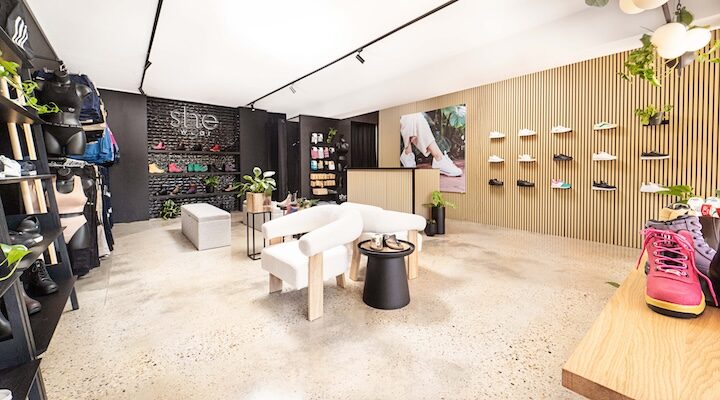
Stacy Head: So it's more of a boutique feel. So it's certainly not a white with fluoro lights and silver racking. So it feels more like a boutique. And because we have fashion and the work and safety, there's kind of different zones in our store. So the safety section, we painted it black. It's a bit more moodier because we do have women that will come in who might be dirty or sweaty from work and they feel a little bit self conscious that they don't want to make things dirty. So, you know, there's been a lot of considered design going to our retail store as well to make them feel comfortable, to feel at home as well.
Nathan Bush: Have you learned a lot about your customer by being able to be. I know you've always done a lot with the community and being face to face, but it's different when you've got people coming through the door every day. Have you learned much about your customer by having that physical presence?
Stacy Head: Yeah, we have actually had a showroom at our warehouse for years, but we just started to see that really grow with organically. So that's kind of why we went down the official bricks and mortar route. But look, it's great feedback. Women will tell us exactly what they do and don't like, that's for sure. Yeah, they're very black and white in our store. So it's great from a brand narrative perspective, but it's great from a feedback perspective. And you can test on your customers that are in store as well. You know, how does this feel? Where does it feel good? Where does it not feel good? So they can be crash test dummies and not even know it now? Store.
Nathan Bush: So come into the store and you'll be an experiment.
Stacy Head: Oh, basically, yeah.
Nathan Bush: Yeah.
Stacy Head: No needles or anything though.
Nathan Bush: How do you prioritize? Because even with the footwear, I saw that you've got still your work boots, but then you've got boots for professionals, so nurses, teachers and the rest. And then lifestyle, for lack of a better word, all very different types of shoes. How do you prioritize where you put your attention?
Stacy Head: Look, a lot of it, again, is from customer feedback. You know, the only reason I went from safety into lifestyle was purely. We all of a sudden started having customers say, oh, I wear your steel caps. But I don't even need steel caps. They're just so comfortable. And because they're designed to be worn all day, they're durable. And then it was like, well, why aren't I designing everyday shoes? This is crazy. So, you know, we even morphed into doing slides and now the new active shoes. So it is hard to prioritize because it'd be nice to do everything I want to do. Heels, comfortable heels. But I also acknowledge that's a big step. Pardon the pun.
Nathan Bush: Tell you what, if you make heels comfortable, then you've. You're on a winner there.
Stacy Head: I'm actually a heels girl.
Nathan Bush: Not speaking from personal experience, by the way.
Stacy Head: And that's okay. Okay. If it would be. That is totally okay.
Nathan Bush: Exactly. No judgment here.
Stacy Head: No judgment. All my friends laugh at me because basically I'm a. I'm a heels girl from way back. You know, I was in corporate back in the days you wore heels from seven in the morning till three at night when you're out on the dance floor. So I am determined one day to make a comfortable heel. But it is hard to prioritize because so many women. Well, every woman needs comfy shoes. So, yeah, it's hard to know where to invest your time and energy.
Nathan Bush: How have you changed your marketing approach? Because I could imagine that as being shewear for safety and workwear. Well, you have a real unique angle, and I know that you've got a lot of PR and a lot of attention that way because you were solving a problem that no one else had solved. As you expand out to being able to serve a broader base of customers, have you had to adjust your marketing strategy for that?
Stacy Head: Yeah. Look, it is a struggle, and it's still a struggle. I'll be readily, readily admit. For example, we've always been sort of more of a Facebook brand than an Instagram brand. We have an older demographic, so that is also a struggle in its own right with the change of landscape of. With meta ads and also just with organic. Organic socials. But it is tough from a perspective that if you want to show an authentic person on site, they're going to be dirty, they're going to be sweaty. It's not attractive. But then if you also want to cater to a nurse, they don't want to see dirt and a construction site. It's very clinical setting. So it is a really hard balance to strike between. We're very authentic in our marketing, we don't do a lot of fluffy kind of marketing and content and I think it's a balance that's always going to be difficult to get right. But getting that message across about healthy shoes is, relates to all of our markets. You know, fashion's given us so much bullshit, I guess, for want of a better word over the years about what is good for you. So just trying to educate around foot health is probably goes across all of our demographics. Yeah.
Nathan Bush: Is there also an empowerment story underneath all this? Without getting too girl power on you, but around like women should just be able to go out there and be on the work site or be in the hospital or be in the classroom or be out and not have to care that their feet aren't comfortable. You know what I mean? It's like just allow you to get out and do what you need to do.
Stacy Head: Yeah. And I mean, you know, I, I obviously have been quite involved with women that work in non traditional trades and championing women to kind of be whatever they want to be. And yes, I sort of stay away from the word empowerment. But you know, in education we're still told that girls are nurses and teachers and boys are tradies and engineers. So, you know, I'm a firm believer that you should be able to do whatever you want to do, but you should be doing it safely and comfortably. And if I ever talk on the topic, you know, I quite often say to an audience of people, how many women in this room have been given men's PPE or men's boots? And you know, 99% of the women will put their hands up and then I say, so the men in the room, how many of you have been offered women's. And like everyone laughs because it's a ridiculous notion, but it's actually not. So why are we still doing it?
Nathan Bush: Yeah, yeah, that makes total sense. And you mentioned there around the change in meta before for a lot of people, you know, you know, you would have seen 10 years, a long time in the world of meta and it has changed a lot from being able to set your targeting and your audience to being very automated. For some people, they love that because it kind of makes it a lot simpler. You just throw a whole bunch of creative at it and see what works. What have been the challenges for you?
Stacy Head: God, I started the business when on organic Facebook was so strong and I mean I actually will thank that for starting the business because it allowed us to gain traction very quickly but very cheaply where now it's impossible, effectively Impossible. So look, the change in the meta ad structure of recent times and obviously the iOS updates and whatnot have really challenged. I know every business. I can kind of see the advantages of not having to target so much and to be more in your creatives, but from also a brand that doesn't do a lot of aesthetic creatives and does very authentic creatives. Some people will say, yeah, that's a fantastic thing. But if it's picking up the interest targeting by your creatives, it's really hard. It's a huge challenge for us at the moment. Really is. Yeah.
Nathan Bush: And for a brand that creates products that are meant to last years and years and years, is your focus purely on new customers or are you trying to re engage people who already love you?
Stacy Head: Both. Both. I mean, I guess not at all. Who doesn't? Right? I guess the reason that we went through to the functional lifestyle shoes was to bring our safety customer back. And you know, we have women that have been wearing our boots for, you know, the 10 years. We have hugely loyal customer base, which I appreciate and I wouldn't have the business I have today without them. So we definitely engage them and listen to their feedback. That's really, really important and I guess that's allowed us to move into the different demographics. But you know, obviously there's a lot more nurses, teachers, fashion wearers out in the world than people that need safety boots. So it's a no brainer to focus on both. Yeah, again, the, you know, the way you talk to an existing and to a new customer is quite different, especially in our shoe market. But yeah, both are equally as important. I love our loyal customers, I really do. We have a great bunch of women who follow us.
Nathan Bush: Amazing. The interesting thing like my mum was a nurse and I saw that there were the same shoes that kind of go around the nursing community and I know we're just picking that out and that's just a subsect of who you're targeting. But how do you break through that with a brand new message? Especially when you've been known for workwear to kind of go, hey nurses, we're for you as well.
Stacy Head: Yeah, it's hard. Yeah. I remember when we actually it was quite timely just pre Covid, the good old Covid days. We brought out our first work shoe and it was only a couple of months before. So it was actually probably really good timing. But Covid was interesting for us being a work based brand. People that wear our shoes were working so it was probably our saving grace and being direct to consumer but it is hard to break into new markets. Especially, as you said, they're very, very loyal. Nurses and teachers will be loyal to one brand. So it is just pegging away and using reviews. We do have great reviews, we get great feedback. So using them because it translates across. If you're comfy on site, you're a horticulturist, tradie, whatever it might be. We can get them comfy, we can get everyone else comfy.
Nathan Bush: I love it. What do you think is the most powerful thing that your community do for you? Like you said, you've got a lot of reviews. You've got people who have loved you from the start. What's the most powerful thing that those who love you do to kind of amplify the shewear message. Where do you get the most traction?
Stacy Head: Probably word of mouth. We do a checkout survey and ask and I mean, to be honest, we haven't actually collected official reviews for any longer than a couple of years. We were very behind the times with officially collecting reviews. So a lot of it has just been feedback and customer comments directly back to us. But we do a checkout survey and we say, you know, how did you hear about us? And we give them options and the word of mouth is just consistently so strong. My colleague, my sister, my mother, whatever it might be. And we are seeing that in the store as well. Someone will walk in, oh, my auntie's a nurse or whatever it might be. So it's really interesting to see them jump between the demographics or my elderly mother's walking and she's suffering from plantar fasciitis. She needs new work shoes, walking shoes. We can sort her out. So the word of mouth part. Yeah. Means a lot to us.
Nathan Bush: Yeah, I could imagine too, you've almost got to let yourself go over to be part of that community rather than try and force it. Because a lot of the conversations would happen in tea rooms or work sites or family barbecues that you're actually not invited into and can't control.
Stacy Head: Yeah, no, you've got to. And I mean your touch points with your customer is so important from, you know, the follow up to, you know, if someone purchased a pair of shoes. Shoes aren't always comfortable from the get go, you know that they're not. Especially the way we design our shoes are very structural, which is a health thing. But you know, it takes a while to get a pair of shoes. So having that after purchase care and having your team who will help people, not having that attitude. Well, they've spent the money, we don't need to look after them. Well, that's when you actually look after them even more because they're the ones that will be your biggest champions.
Nathan Bush: Looking around your website, there were a couple of features that really stood out for me. That virtual fittings from home was really interesting. Is that a Covid baby feature that's survived to here or is it relatively new?
Stacy Head: No, it's relatively new. We re platformed probably three or four years ago and it was around then that we introduced it. We get the comment quite a bit. Oh, I don't buy shoes online. And we get it. I totally get it. And I made a decision. I know I've said this to you before. I made a decision many years ago. We did wholesale for a little bit. I brought it back in as a direct consumer business. And that is a difficult thing to grow a footwear brand when people can't try them on. So the virtual fitting, even though they're not trying it on, they're talking to someone, they're trusting. Trusting someone. It's not just a computer. Especially in this day and age with AI and having an older demographic, I think they sometimes get a little bit concerned that, you know, Harry the robot's telling them something. But the virtual fittings are great because it's just. It's creating trust. But they can also see and we can, you know, pull out the inner soul and. And show them, you know, in a 3D way how it all works. So, yeah, the conversion rate on them is huge. So, yeah.
Nathan Bush: Are you able to give us a hint? Give us a hint. Are we doubling, tripling?
Stacy Head: Oh, I would say nearly every person that does a virtual fitting will buy.
Nathan Bush: Wow, that's insane.
Stacy Head: Yeah, it's huge. So it's definitely worth it for us. You know, it's. There is a fair bit of work in them. There's people that don't turn up. You know, there is a bit of the staffing side, which is expensive, but, you know, it's. It's worth it. Like I said, especially, you know, the older demographic just wants someone to give them a little bit of assurance more than anything. And it's also an opportunity to tell them our barriers of sale, you know, free returns, whatever it might be. So, yeah, it's a good conversation starter, that's for sure.
Nathan Bush: So it works by customers, go onto the site and then booking a. Is it a 15 or a half an hour time slot?
Stacy Head: Yeah, 10. 10 minutes?
Nathan Bush: Yeah, 10 minutes. Great. And then do you staff that from your warehouse so that they've got access to everything to be able to show a customer whatever they might need. Yeah, great. So an extension of your customer service team.
Stacy Head: Yeah, it is. And you know, we give them a bit of a questionnaire before they jump on. So what are you interested in? What size are you, what type of foot or what type of body you are? If they're after work wear, so the team can actually have the products there ready to go that they think that they will like. Yeah, no, it's. It's something I do want to look at. Doing it after hours, I think that would even work better. So. So. But again, it's a staffing cost factor, but I think after hours it'd be great.
Nathan Bush: That'd be fantastic. I could imagine too that that customer data that you get up front when people make their booking would be great as an ongoing reference for you as well.
Stacy Head: Yeah, totally, totally. I love all that feedback. Yeah.
Nathan Bush: One of the things that I did love is that I got to your product pages and being able to filter and one of the unusual filter by feature was you had a section of like certified for work, airport friendly, orthotic friendly, and there's a bunch of others that were really based on use case scenario rather than color or function. It was like, what are you using these for? How did you come up with those options?
Stacy Head: Keywords, feedback, the narrative from customers and just I am still. I'm probably my own worst enemy. I read through all of the feedback. We get the negative, the positive. Thankfully we don't get a lot of negative. But, you know, naturally you can't be everything to everybody. Very unrealistic to think that you can just even, you know, I will say to my team, what's the main question that we're getting at the moment? And orthotics could be a really big one, you know, and every one of our shoes is orthotic friendly. So it's a filter, but it's actually every shoe in there.
Nathan Bush: It doesn't filter anything out, just tells you everything in. There's nothing that's much more personal than undies and lingerie. Right, right. But I mean, you wouldn't just shout at random customers about the types of undies that they want to wear, would you? That's why it was crucial for Nala, one of Australia's fastest growing underwear brands, to speak on a personal level with their customers. No shouting, no shaming. By using Klaviyo's B2C CRM and a masterful fit library that they'd created, they have been able to take a targeted approach to product launches, give back in stock notifications and reactivate dormant customers. With the right offers. They now run 34 live flows, including one that saw a 125% jump in attributed revenue in just 90 days. They've pulled off 109% ROI on the platform and they haven't stopped growing since. You could say that they get pretty intimate with intimates. If you want to turn customers customer data into your biggest growth driver, visit klaviyo.com au to see how brands like Nala are scaling fast.
Stacy Head: But yeah, look, it's, it's keywords, it's just what people are searching. Yeah, you kind of get to know what people are after, I think.
Nathan Bush: Yeah, that makes a lot of sense. It looks like you put a lot of effort into explaining the product features on site. Even that, you know, the conversation that we had earlier around the difference between men's and women's feet. You've got a lot of articles online around that. Have you had to tinker with that much over time to get that messaging right? Because I can imagine that it's not always easy, especially if you've got new customers versus people who are vaguely familiar with you or maybe been there two or three times, providing those next layers of information at the right part of the journey.
Stacy Head: Yeah, look, I think sometimes I feel that our website is a little bit of information overload, but we have a really good returns rate. We don't have a huge amount of customer emails prior to purchase. So I think allowing someone to self serve is a really important part of E Com and backing it up with people that are there to help if they need. So, you know, I'm an older generation but I'm a self server so I think that we cater for everyone that you know and I would love to look at a bit more AI on our website for those that do want to self serve. So there's a lot of work that we're doing around that at the moment. But I think it's really important to give people that information and allow them to make an informed decision. Especially with shoes because it is really, it's a really personal thing. A great example is someone's and I don't want to shoe nerd and shoe nerd out here because I can be really boring around shoes.
Nathan Bush: Please do.
Stacy Head: No, you will regret that for the rest of your life. But we don't talk wits and a lot of people go, well you know, am I triple D width? And it's. And we try to explain why we don't give them that information and back that up with, you know, you can return it if they're not right for you. And I guess I've learned a lot over the last 10, 11 years about feet are so unique. Everyone's feet are different and someone might have a wide toe, but the next person might have a wide forefoot. So, you know, we've learned a lot and we are constantly curating and perfecting that information that we release. And we look at our returns and we look at the data around returns and if everyone's saying, oh yeah, everyone's returning them because they're too big, well, we tweak that. So it's constant playing around with our messaging.
Nathan Bush: Does that make it hard when you are releasing new lines and you're trying to forecast demand or how much to order because feet are unique and that, you know, little changes I could imagine have big impacts. How do you forecast your orders? That's the, that's the scientific, technical answer.
Stacy Head: Yeah, forecasting's hard, I guess, as I've got more comfortable with shoe design because, you know, again, I didn't start this business with any design background in shoes, especially technical shoes, as I've got to know shoes over the years, it allows me to know exactly the kind of customer that it's going to suit. So our latest release was our walking shoes pace. They've been one of our best releases in the last few years because there is such a need for women with fit for purpose walking shoes. So we've actually forecasted that pretty right. So yeah, interestingly, that one's doing quite well from an inventory perspective without sort of sellouts quite evenly across all the bell curve of sizes.
Nathan Bush: I was about to say you've got the bell curve of sizes pretty much down pattern now, have you? Or does that change drastically depending on.
Stacy Head: Yeah, it actually changes even between colors, believe it or not.
Nathan Bush: Wow.
Stacy Head: Yeah, but it's. How so I don't know. I don't know. But if you look at the historical data, some colors will sell in a bigger size and a smaller size. It's just. Yeah. So all of our inventory is based on actual skew, not just a style, so. But feet are getting bigger. No question about it. When I started, we definitely sold more of the smaller sizes and eight was pretty much always the biggest sold size. It's now sort of skewing more towards nine, so. And we sell more out of, we sell out of tens more than any other size. So yeah, it's changing is that feet
Nathan Bush: are getting bigger That's a big statement.
Stacy Head: It is a big statement. And you know what? There's no statistical data backed up on that. She. Where. Maybe you need to delete that part.
Nathan Bush: No, no, I don't think so. Like, that's your data. It's exactly what you're finding. So I'm like, I'm interested to know, like, is that because we've got more women in the workforce coming through, so it's a better actual representation of it? Is it? You know, like, where's that. How's that data skewing? Because I can't imagine we're all eating chicken steroids to make ourselves a shoe size larger in 10 years.
Stacy Head: I don't.
Nathan Bush: But I do something big here.
Stacy Head: One thing that I will previse this by saying is that when we launched and probably for the first five years, most women that came to us probably had smaller feet because they couldn't really go anywhere else where now we're known for comfort and fit just as much for the color and the style. So maybe we should say that that's. That's the reason why feet are getting bigger. It's the she wear customer who. It's interesting because early days, it was the pinks and the really bright colors that were biggest sellers. But we sell a lot of black now, and to me, that's the ultimate compliment because people are coming to us for the fit and the comfort, not just because of the style.
Nathan Bush: Yeah, yeah. It's like, it's the old thing in, you know, are you just releasing a female range to shrink it and pink it, or is it actually solving a problem?
Stacy Head: Yeah, and like, the unisex thing, like, unisex doesn't exist. It's still a men's boot, but what they do is they just use a different size chart that's two sizes down. It doesn't solve the problem of the anatomical differences. So, yeah, unisex just. I mean, to be crude, it just totally pisses me off because it's just marketing BS and it's finest. It really is. And women are confused by it. But, yeah, unisex is men's. It's just another name for it.
Nathan Bush: Great, Great. Really? I want to go back just before we move on. You talked about helping customers find their way through the journey, especially on the website, and talked about what you would love to do with AI and personalization there. If you could lift the lid on the website experience, because I think that's where we're heading at the moment. Like, the website experience is getting totally reimagined. With AI. And if you had green fields in front of you, what would be your ideal AI driven personalized experience on a website for your customers?
Stacy Head: Predominantly around size and fit, I think because, you know, pictures and words you could easily describe or show a shoe. Right. But you can't show comfort or the inside or how it's going to fit on your foot. And there are some technology around fit, some automations around fits, but I still don't think they're great. So to me, I remember years ago being in Las Vegas at a shoe fair and, and I think Samsung had something coming out of their. I don't even know what you would call it, their little factory of new things.
Nathan Bush: And so you mean like being able to use your phone and take photos or video of your feet to be able to find your perfect size?
Stacy Head: Yeah. And they had one that you put your credit card on the floor, take a picture of credit card and put your foot next to it and it all. And like I said, I know that there's some technologies out there, but I just don't think they're great yet.
Nathan Bush: That would be throwing at people's credit card details.
Stacy Head: Yeah, good point, good point. Maybe that's why it didn't come to fruition. That's a very good point. Anyway, I think being able for someone to kind of somehow feel or see their foot in a shoe would be fantastic. But I think we're still a fair way off that it's a little bit like the creatives with AI. I mean I've roared out laughing with trying to get some video on an image of someone in shoes. It just, it's just not there yet. It's getting there, but just not there yet.
Nathan Bush: I could imagine too there'd be that inherent bias in AI even as you're playing around with it, being that if you're going from a construction or that kind of angle, you're asking it to generate things. If you're not very specific around who you want to see in there, it would naturally spit up a lot of your traditional male stereotypes.
Stacy Head: Yeah, yeah. Which generally they females do not look like that on site, let's put it that way. So yes, you do have to be very specific.
Nathan Bush: Yeah. One thing I've noticed is that you've put yourself front and center of the brand and obviously that makes sense in the early days, but you've continued that on now. Are you comfortable being the face of she? Where do you see that as the future where Stacy's out front kind of taking this thing on Socially and, you know, in the press. How's that sit with you?
Stacy Head: Yeah, no, it doesn't sit well with me at all, I don't think. I don't know.
Nathan Bush: I'm doing well.
Stacy Head: Oh, thank you. But I don't think many founders start a business to be front and center. I mean, I'm very much. My career was in operational management. I am definitely the doer. I don't like being front and center. I don't like being. Yeah, it's not my thing. I do it because I know it works for the brand. I think people. I don't know people think I'm believable. I would like to think that they think that, but, you know, there's kind of no heirs or graces with me. I'm pretty straighty 180. So I want people to be given a really good product. But do I want to continue to be the face of it? No, not particularly, but, you know, I do what I have to do.
Nathan Bush: I think there's something really funny about our industry, and I've seen it pick up in the last 18 to 24 months, I think. Is this pressure on founders not just to own and run a business, but to be the marketing face of it as well. It feels like with the TikTok generation pumping more content into meta, there's now this pressure that's coming through of like, well, if you're an owner of a business, you've got to be out there spruking it. It's like we're going backwards a bit rather than creating systems for it. And I understand the reasoning behind it, but it's a lot of pressure when you've got a thousand things to do and now you've got to go, oh, what's my content creation schedule this week?
Stacy Head: Yeah, I know. It's just. It is. It does put a huge amount of pressure, especially, you know, when you're really should be deep down in your P. Ls, not jumping off a ladder in the warehouse to have a laugh. You know, I'm all for it, but, you know, it is really difficult when you have so much pressure on yourself to grow and scale a business. But then, yeah, you do have to show up. And it's not the part of showing up for people I don't like. I mean, I like being there for our customers and for our followers, but it's just that constant pressure of having to be on when there's so many other things to focus on. So, yeah, it is. It's probably one of my biggest challenges. I'll readily admit.
Nathan Bush: Do you get help in generating your ideas and your content or is it all on you?
Stacy Head: My team's great. I have a couple of people that have made it clear they don't really want to be involved, but some of them just love it. So, you know, I will not force anyone to do what they don't want to do. But you know, my team will quite often send me saying, oh, this is really funny or this is a great idea. So. So, you know, we all kind of get involved and have a bit of a laugh at times, but the educational stuff kind of sits with me and that's fair, you know, that's fair. I kind of do know my product pretty well, so that will continue. The funny stuff I think needs to go to someone else. I need to pass the baton on that one.
Nathan Bush: You do funny. You do funny. Well, I like it. But I think too you've got now this 10 years of trust and engagement in that. Yes, the shewear story is really well known but you as the face of it and your passion and your mission behind it is becoming really well known. So, you know, you get that trust straight away. Do you feel like you are making a difference 10 years in to females who are working in male dominated fields? Do you feel like you're cutting through? Expanding into new markets isn't just about selling more, it's about selling smarter. Every region has its own rules, currency and customer preferences. But with Shopify, global expansion is simple. Localize storefronts, tailor experiences and build trust all from one unified platform. Shopify removes complexity so that you can focus on growth and deliver tailored shopping experiences for every market in store and online. Accept over 100 currencies with Shopify payments for fast familiar checkouts and use built in analytics to identify your most profitable markets. One platform built for global adaptability so you can scale without growing pains. Visit Shopify for enterprise to learn more and start selling worldwide.
Stacy Head: Yeah, I do think so. Yeah. Look, the market has changed hugely and there is a lot more product available for women. But there's also people talking about it and I know the UK has just brought out some new charters around corporate supplying proper fit uniforms for their staff. In terms of PPE and that discussion, I mean I remember in the early days people laughed at me, women don't need work boots. And to be honest, I still hear that. But it was a lot more common back then and people would also ridicule. Pink work boots is crazy. RA where I'm a firm believer that women should be offered choice so one size doesn't fit all and it's not about the color, it's about the choice. More women are going into trade, but yeah, it's still a long way to go, but we're getting there, we're getting there.
Nathan Bush: Is there any legislative requirements here around supplying workwear?
Stacy Head: No, no, no, there isn't. I mean, it comes down to oh and s. And how seriously customers or people take it. And we do do corporate, so we, you know, it's one of our revenue streams is that we look after some corporate B2B customers. But it's definitely a hot topic these days and, you know, if we want our staff to do their best work, they've got to do it safely and in their best equipment, so. And there's nothing more equipment more important than personal protective safety. So the messaging's getting across is just really slow. It's frustrating, but it is what it is.
Nathan Bush: Yeah, you're doing an amazing job and I've loved seeing you grow and expand over all these years. I can imagine the next 12 months aren't going to be any slower for you. What are the priorities for yourself and the team?
Stacy Head: Yeah, there's a lot happening so we. I know this will be live by the time this goes to air, so we are going to be stocked in some bunnings around Australia. So I. Yeah, which is exciting. It's very different for us. So we did do wholesale in the early days. I pulled it back into a direct, direct consumer business. But it's now time to, you know, look at our revenue stream. So wholesale's back on the cards. So the first one, I mean, if
Nathan Bush: you're going to go wholesale, bunnings is probably a pretty good one to get started with.
Stacy Head: Yeah, yeah. Look, and the conversation's been good. They came to us after going out to their staff and asking for feedback on the boots that women wanted. So we were on top of the list. So that's always nice to know that you've got those champ in you. So that kicks off over the next few months and then I'm off to Germany to the world's biggest safety trade fair in November. So we are looking to, to enter into the UK and European markets. So lots happening.
Nathan Bush: Okay. And have you avoided the US because of recent events?
Stacy Head: Yeah, it's funny, I did a fair bit of research years ago pre Covid about launching into the States and it didn't feel right. I'm very gut instinct driven. Yeah, I love data, but back then it just, the conversations weren't right. The Price points weren't really appreciated and I made a decision about a year ago about the UK and Europe and I'm very glad I made that decision. Decision. And, you know, the US is definitely on the cards, but I just think I can see the uk. Europe for us is the first point of call.
Nathan Bush: Yeah, I can imagine too, similarities between markets, apart from the weather, would make it a pretty bit easier transition. Yeah, yeah.
Stacy Head: Look, and I think the demographic is similar, the style and, you know, I don't know, we just seem to have very similar tastes. America is slightly different and the UK doesn't really have any female founded workwear companies. The States has a couple, but. Yeah, the UK doesn't seem to have any, but there seems to be a lot of noise in that market. So it'll be really interesting how A plus A goes. Yeah, it's a huge trade fair. It's massive. So it's exciting.
Nathan Bush: Yeah, that's cool. And I understand you just won some design awards too.
Stacy Head: Yes, good design awards. Two of them, which is really exciting. So we won one for Pace, which is our new walking shoe. So that is fantastic to know. A new product has won a design award and our entire safety range has actually won one of the higher awards. So that's awesome. Yeah, it is. Yeah. I don't. I don't sort of put a lot of thought into awards, I will readily admit, but a product award is a really special one.
Nathan Bush: So, yeah, I was about to say, you know when you take that moment to sit back and go, what we were talking about at the start of the episode of 10 years ago, you had an idea, but you'd never designed a shoe before. To have 10 years later to have awards for your design, that's pretty incredible.
Stacy Head: Yeah. What's the saying? Overnight success takes 10, 20 years. Yeah. Look, it is nice to know that all that research and development and talking to people and reading science journals and being a total shoe geek is starting to come across.
Nathan Bush: Love it. Awesome. Stacey, thank you so much for joining us on Add to Cart. It was a really lovely chat and I just am so excited to see your vision expand out and then go international and continue the path that you've been on, which is just phenomenal. So thank you for joining us on Add to Cart.
Stacy Head: Thank you, Nathan. I really appreciate it.
Nathan Bush: I love Stacy's story. Started out as a side project, and even though she's never set out to build the biggest business or conquer the world, it's kind of naturally happening because she has tenacity and she has focus on the problem that she's solving and she stays connected with the customers. I think that's a really good thing because it's not like she went out with these huge big plans and then found ways to to piece it together. She's staying true to a mission and I really love that around what she's building with Shewear. All right, there are three new ideas that I think anyone can take away from that conversation with Stacy. Firstly, her insight around virtual fittings with a near 100% conversion that is absolutely unheard of and I'm sure anyone in e Commerce would take 100% conversion. This is where customers book 10 minute calls with the team to show shoes live if they can't be in person. Now the beauty of this is obviously they do a survey so they get a huge amount of data up front. They know the customers have bought into the process before they get there. And it's a huge trust builder to see someone real on the other end of the line being able to show you shoes, being able to answer your questions in real time. If you had a channel that was offering you 100% conversion, I think you'd be opening that up pretty quickly. Number two, the use case filters on the pdps. This was great. And this is where Shewear calls out airport friendly orthotic friendly. Certified for work categorized by need, not just color, style, size. I think those filters are absolutely genius and can apply to anyone who's solving a problem with their product. If you can make it very easy for your customers to filter by their needs state, whether that be gluten free, sun resistant, whatever that may be, having those use case filters on your PDPS will help take some of the guesswork out for customers and drive to a conversion quicker. And the third thing there was around Stacy's word of mouth, flywheel, we talked about her frustrations with ads, especially on Meta and Google. Even though she's showing up there now, she still knows that through her checkout surveys, referral is her top channel for sales. So she leans into post purchase service to drive word of mouth instead of just a reliance on ads. So the journey isn't over once the customer receives their goods. It's how can you follow that up to ensure that you give yourself the best chance of word of mouth for your customers to to drive maybe not even just one extra sale, but five extra sales from their network. All right, that's it for this week. Thank you again to Shopify and Klaviyo for bringing us that episode with Stacy from Sheware now, if you are into E commerce and you want to join a community where you can throw up your own questions to others who are in this space, whether that be what platforms are you choosing? Hey, has anyone done this before? Or why am I seeing this? Come over and join the Add to Cart community. It's free to join and you can sign up on addtocart.com you'll find over 500 e commerce folk in there sharing ideas, answering each other's questions. I really want to connect you all to make your lives a little bit easier. That's it for this week. Thanks again for tuning in. If you enjoyed what you Heard, subscribe on YouTube, subscribe on Spotify, subscribe on Apple. Wherever you're listening. We'd love to see you again. We can't wait to bring you more e commerce stories.