
Douglas Lowe: E Comm is very scientific. The way that we've approached retail is almost the opposite. It's done off a feeling and we've started to have to bring in more metrics and more hardline understanding about the business. But often it really is just off a gut intuition. We talk to a lot of people and they'll often say, you know, what's your demographic? And they're expecting the typical kind of GA breakup. The age group between this, the interest groups are this. It's not typically how we look at our customers. You could have the best product, the best system, you could have all the gadgets in the world. I think it's people that unlock everything.
[Voiceover]: Welcome to ADD to Cart, Australia's leading e commerce podcast that express delivers all you need to know in the fast moving world of online retail. Every week Nathan Bush from E Suite and an E commerce industry expert will share the news, research and insights that you need to know to keep you at the top of your game and of course keep your customers adding to
Douglas Lowe: cartoon
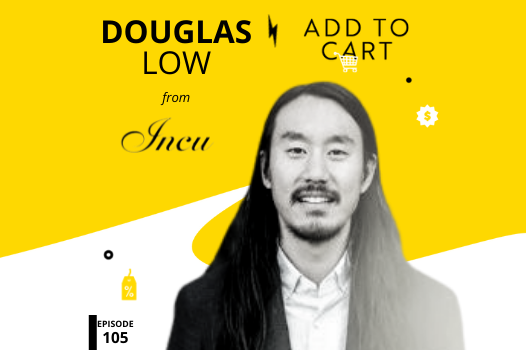
Nathan Bush: hello and welcome to ADD to cart. My name is Nathan Bush, host of Add to Cart and director at E Commerce talent agency E Suite. We're coming to you today from a lockdown here in Brisbane. I'm recording from a half renovated house with two kids going through homeschooling and I've got a cold perfect podcast conditions. We won't let that get in the way. Today's guest started on the shop floor and ended up being being the CEO 17 years later. Joining me is Douglas Lowe, CEO of fashion brand Incoo. Now, when I tell people about Incoo, I normally get one of two reactions. It's either oh my God, I love Incoo or I haven't even heard of them. Now, regardless of which camp you're in, you're actually in for a treat. Today, Incoo have 13 physical stores, a few of them which they actually opened during COVID and they retail high end fashion brands as well as operating brands such as Rag and Bone, APC and Saturday's Doors. In this episode you're going to hear how Covid has accelerated their online business to now account for over 20% of total sales. Also, Doug gives us an insight into how he hires the right kind of people to to deliver the very unique inque experience and how design and beauty lies at the heart of everything that they do. Now, I've probably undersold the episode and it's true. Doug Style. You're gonna love Doug. You're gonna love the INQ story. So thanks to our Partners, Shopify plus and Signet. Here's our conversation with Douglas Lowe, CEO of enq.
Nathan Bush: Doug, welcome to ADD to cart.
Douglas Lowe: Thank you. Thanks for having me.
Nathan Bush: I've been looking forward to this one. You're in lockdown at the moment, I'm sorry to say. We are recording this mid July with half your network in Sydney. How's that treating you right now?
Douglas Lowe: It's been tough. We've had to pivot a little bit. We're just secretly hoping. Well, not secretly, but we're hoping that with the seven cases in Melbourne at the moment, that doesn't go into lockdown as well.
Nathan Bush: Yeah.
Nathan Bush: And this won't come out probably for a couple of weeks. So I guess time will tell how it pans out. Having been through this before and you've got a network of how many stores?
Douglas Lowe: 13 stores at the moment.
Nathan Bush: 13 stores and a really strong online presence as well. Given this is the second major lockdown, how have you responded differently this time?
Douglas Lowe: There's definitely been a lot less scratching our heads and scrambling and working by the seat of our pants. If you look at it this time, just from the leadership team, everyone is so much calmer. It's kind of like we've done this before. We know what to do. Everyone kind of just goes off and does their thing. Versus last time, it was kind of trying to trawl through government subsidies. What are we going to do with inventory? How do we make sure that we're looking after the staff? You know, the multitude of that. The first time there was definitely the fear of the great unknown, but this time you kind of know what's going to play out. It's just trying to predict how long are we going to be in lockdown for?
Nathan Bush: And as CEO, did you kind of come out of the last one thinking, well, this is going to happen again, so we've just got to be ready?
Douglas Lowe: Yeah, 100%. I think even after this, I'm pretty sure it's going to happen again and it's going to pulse in different areas. So, you know, it's just a fact of life until we can get the vaccinations out and then proceed on.
Nathan Bush: Yeah, but what I love about you guys is even in the last lockdown, which was pretty severe, you guys are busier than ever. I read that you opened three new stores since March last year, when apparently physical retail was dead and no one was ever going to go back into a store. What made you, at this time of uncertainty, invest still in physical retail?
Douglas Lowe: I guess it's part of a Mixture of stupidity, ignorance, and also just blind faith that, as one of the directors said, you know what, we can go into a hole, but Covid is eventually, it seems like a long while away, but it eventually is going to finish, and we've got to be able to prepare for that. But also, I think, you know, it's at that time that I'm lucky to be part of in Q because often when people go into defensive strategy, that's when we're kind of pushing to continue to grow and you can get some. There's good opportunities out there.
Nathan Bush: And was that something that you had to learn to do is go on the attack rather than be defensive, or is that just part of the incu nature?
Douglas Lowe: I think it very much stems from the Brian and Vinny who are the founders. For them, there's a sense of optimism about the world and about the business. And so because of that, you know those stores that you talked about, the galleries, Men's one, which was the biggest expansion. We'd been planning that since December, the year before COVID started. Then Covid hit in March and then kind of, I think it was around June, was speaking to a lot of contacts and saying, you know, we're going to go ahead with this. And they were like, you're ridiculous. A, who's going to open stores? B, it's in the middle of the city and if anything, suburban stores are going to spike. But we went ahead with it anyway, and we've been really happy with the progress of it.
Nathan Bush: And can you describe to people what that store is like? Because they're not ordinary stores. Right. And please don't undersell it, because I've seen. I haven't been there myself, but I've seen photos of it. They're beautifully designed stores.
Douglas Lowe: Yeah, we're really, really happy with that one. That's almost in Q fit out 2.0. It's definitely been elevated. It's got custom shopfront, which is. It's got stone that's been custom built for us and custom laid out into it. It's 330 square meters, which is much bigger than all of our other fit outs. But everything has a beautiful flow to it and it allows us to speak the stories of the brands and deliver a really great customer experience.
Nathan Bush: Yeah. How do you measure return? Because I could imagine they're not cheap stores to set up. How do you measure a return on store 2.0 versus 2.1?
Douglas Lowe: We go a little bit off the data, so you can obviously see it from revenues and from traffic, but really parts of it is anecdotal. So I mean, one thing that we've been really pleased at is that if I look at people that I know, I've got one of the dads from my eldest daughter Marlo's mother's group, he doesn't know any brands at all in our business, but he saw the sign and he knew that I worked there. So he walked in and he came out and he talked to me and he said, wow, that store's amazing. And then I've got other friends who are literally on blogs day in, day out. They love fashion, they could probably tell me more about the products than I would know and they get wowed by the store. So I think when you get that kind of feedback, you know you're onto something good. And whether or not you're getting the revenue straight away is you know that it's going to build over time.
Nathan Bush: How much time do you give it before you know, if you put more investment into physical retail and new layouts like that before you start seeing that
Douglas Lowe: return, you can get a pretty good sensation within a couple of months. I think we're kind of lucky as a business. Part of it again is because Brian and Vinnie didn't come from fashion and didn't come from retail. A lot of it is done off feeling. It's almost we're the opposite. And it's interesting learning more about E Comm at the moment because E Com is very scientific. The way that we've approached retail is almost the opposite. It's done off a feeling and we've started to have to bring in more metrics and more hardline understanding about the business. But often it really is just off a gut intuition.
[Ad]: Life is like a box of chocolates. Try not to get squished. This was vitally important for boutique chocolatier Little Coco who were using polystyrene boxes with frozen gel packs to make sure their amazing products arrived in tip top shape. But when Signet introduced them to their own foil insulated mailer, they bounced on over reducing their packaging costs by 50% and maintaining 100% non squashed chocolate customer satisfaction.
Nathan Bush: That's very smooth.
[Ad]: Visit signet.netau to find out more.
Nathan Bush: It's a really nice mix. Having worked with yourself and Brian and Vinny a little bit. It's a nice mix you've got there in terms of you've got founders who are still involved with the business and then you running the business but being involved for a long time. So it feels like there's Really a really strong sense of identity within Incoo. And when researching for our chat, I came across a quote, and it's from a few years ago and it was Brian when he said that we wanted to create a store that people like us could go to where you don't feel that pressure of having to buy something or having to look a certain way. Without putting words into his mouth, what do you think he meant by that and how does that describe the Inkoo style?
Douglas Lowe: Yeah, it pretty much, if you distill it down, it's the reason that I think sets Inkyu apart. You know, even for me, before I worked at inkyou, it's quite intimidating to walk into a fashion store. Once you've been in it for a while, it becomes second nature and you don't think anything of it. And it's just like, hey, this is John or Brian or Vinnie or whatever. But I think from the outset there's always a bit of an intimidation factor. I think what Brian wanted, what he's trying to say within there is that before they opened in Koo, they wanted to set stores up for people like them. Because what they found is that growing up there was, I think about three boutiques in Sydney at the time. But it always felt like you were being eyeballed up and down. It was like, you know, do you fit in here? Do you know the product, all of those kind of things. So what we try and do is we set something up that's very kind of democratic in its approach.
Nathan Bush: Is there a trick to doing that? Because I totally get what he means. Like I get freaked out walking into an espresso store. Is there, is there tricks other than a beautiful layout in terms of design to make people feel welcome and comfortable in a space?
Douglas Lowe: Yeah, 100%. I think you could have the best fit out, you could have the best product, the best system, you could have all the gadgets in the world. I think it's people that unlock everything. So we do mystery shopping. We do it slightly different to other businesses because we just run it ourselves and it's a formula that we've got. And what we do is we reach out to contacts that we either know or we know that shop within our network and we usually send them in. And it's interesting. The people that have got the best results are those things that you just couldn't teach to our staff. So one of them, I remember she came in with her five year old kid. She knew from the onset she was like, this is going to be a horrible experience. But I don't ever go into the city and so I'm in the city. I've got to do it now, otherwise I'm not going to do it for a month. Her kid was in a horrible mood, but she decided to do it anyway. And she walked in and we have a staff member there, Charlie, who is great with kids, and she wasn't motivated by the fact that she was trying to get someone to buy something. She just generally loves interacting with kids. So she ended up playing with her kid while her mum got to shop and because of that, she basically got 100% for the mystery shop. The other one that stands out is that we approached someone to do the mystery shop and we didn't know that he'd been in the store before, but he went into the Galleries men's store. He used to be a manager of ours, but someone called Troy, and as soon as he came in, he basically went, oh, hey, Nathan, how you doing? How's your. You know, how did that thing that we were talking about go? And just from that moment, it's those things that you can't buy, you can't teach. But having that genuine connection, I think sets is what we always try and focus on.
Nathan Bush: How do you get those type of people in your business?
Speaker F: You said there that you can't teach it.
Nathan Bush: How do you bring that together into
Speaker F: a business like Incoo?
Douglas Lowe: Yeah, I think we just try to hire good people. I think when you can mesh with people, I think if they have a good attitude, you can teach them anything. One of the other things that happened, and it's never happened before, but we needed a lot of staff in one of the stores. And so what we did is that we actually had two people trialing at the same time. It's kind of weird, but it was a big store, so, you know, it didn't. It wasn't too competitive. But one of the girls who was trialing for the store came from another retailer. She'd been very well trained in the interview, super well spoken, like, would just, if you look on paper, would blow your socks off. The other person that we had trialing was a friend of a friend. She was an ex Olympian. She was, you know, had worked in retail a little bit, but then had been really focusing on her athletic career. Career, but just needed a bit of income to supplement that. And so we trialled them both. And the girl who had the retail experience, because she hadn't had the training of what to say, when to say it, how to approach a customer, kind of just sank back and didn't know how to approach things. Whereas the other girl who trialed, literally, she just wanted to speak to people, engage with people, solve problems. It didn't matter whether she knew the product, didn't know the product. She was like, you know, even if she know, she would go find out and she was the right fit. She's been with us since and she's a dream to work with.
Nathan Bush: Amazing. Yeah. Now, speaking of great team members and being there for a long time, your journey with Incoo started on the retail floor, right?
Douglas Lowe: Yep.
Nathan Bush: Tell us about when was the moment that you went, this is a brand that I want to be with for a long time.
Douglas Lowe: It probably didn't take that long. You know, I think at that stage it was a lot smaller. We only had one store. There was probably a group of, I'm going to say, about 10 to 12 of us. But you kind of working with Brian and Vinnie, you get a sensation of how they're going to run the business and it's always about long term.
Nathan Bush: And were they in the store at the time?
Douglas Lowe: We were all in the store. So that's been the biggest change to now. Communication is always seems to be on the tip of our tongue as something that we need to keep working at. Whereas back then, you know, you just turn around and you talk to everyone and you pretty much all on the shop floor, you're like, you know, this brand's come in. What do you think about this? You get that personal connection to everything.
Nathan Bush: How many years ago are we talking now?
Douglas Lowe: Coming up to 17 years.
Speaker F: Wow.
Douglas Lowe: Yeah.
Nathan Bush: Right at the start.
Douglas Lowe: Yes.
Speaker F: Yeah.
Nathan Bush: So you've gone from that point all the way through to CEO. Huge growth in between. What's been the biggest moment where you've gone, I can't believe I've come this far.
Douglas Lowe: It's probably actually been within the last six to 12 months. It's been the most exciting time to be with the business because we've always had big ideas to grow and we've never wanted to stop at, you know, one or two boutiques and we've wanted to continue to do innovative things. But the talent that we've got within our business now is amazing. And that is the one thing where hopefully they're learning from us, but we're learning just as much from them and their approach. And I think it is the most exciting time with the business. It's a real, again, there's a real optimism of what we can do and what the future is going to hold.
Nathan Bush: Yeah, I think you've Mentioned that word optimism a couple of times already and I think that shines through in what you do. You are real retail promoters and the other word that comes to mind when speaking about you guys is humble. Like every time that I speak to you, Doug or Brian or Vinnie, you guys are incredibly humble around what you've created, which is really refreshing. But when we talk about pushing the boundaries, what I also love is that it's not just you've got this template for physical stores and roll that out your high level of acceptable design or you take that to the next level. It goes into other things like even your outlet stores or your office where you recently won or was shortlisted on the Australian Interior Design Awards. Is design something that's non negotiable?
Douglas Lowe: It's not something that is consciously non negotiable, but I think it just flows into our lives. It's really interesting, especially from an E commerce perspective. We talk to a lot of people and they'll often say, what's your demographic? And they're expecting the typical kind of GA breakup. The age group between this, the interest groups are this. It's not typically how we look at our customers the way that what we would say, the common thread that ties everything together is that they appreciate good design. And that doesn't matter whether you are a 16 year old kid or whether you're 66 and everything in between. You appreciate those design elements. It's why you go to particular restaurants, it's why you shop with us, it's why you buy particular garments. It's just a common thread through everything. So even the outlet store where we probably could have cut corners, we wanted to make it quite beautiful. The office was something that we invested quite a lot of time in creating and that was, you know, in essence because that's our home. We spend so much time focusing on the stores, but we wanted that to be a reflection. So when we have visitors through, everything should marry up and make sense in entirety.
Nathan Bush: Did you miss the memo that retail headquarters and head offices should be out in the middle of like the fringe suburbs of a capital city next to a warehouse? Did you miss that memo?
Douglas Lowe: So funny story is that. So Brian and Vinnie worked on the office for two years before it was complete and literally the whole thing was built from the walls up for us. Two days after we moved in in late March, we all went home to work from home. So and at that stage we were talking to a lot of our other partners, as I'm sure everyone listening would know, but everyone was talking about okay, well, office spaces are going to be tiny again. We're going to basically co share spaces. We're just going to have big meeting rooms when people need to come in. But I think it's made it quite easy when we've had to go back into the office for everything to work together.
Nathan Bush: Has it? Almost. And I'm wondering whether this is the same for your stores. Almost. The office almost become like a haven or an escape when people can't do a lot of travel or anything like that. The office and the stores almost become a. An escape from reality.
Douglas Lowe: It's funny you actually mentioned that. I'm not sure whether you read that, but that was one of the original intents of Inquew opening. And one of the reasons why they opened in the galleries first was that they wanted an escapism from the city and from the day to day of working. And so back then, I remember them saying that the weekly budget. I can't remember if it was the weekly. It must have been the daily. The daily budget was $500. And they were more excited about people coming in and interacting with people. And whether they were doing a front window or whether they were doing a display or anything like that, it was more to just draw people in and get them talking and to build the community. So it wasn't done with the intent of let's put heaps of product in the window so we can flog it. It's just like the ideal scenario for them is if you walked past and you looked at that window and you were like, what's going on here? What does this mean? Then you walked in and had a chat to the guys. Then they know they'd done a good job.
Nathan Bush: That's awesome. Is there any in the history. Is there any particular window displays that are memorable for you?
Douglas Lowe: There's so many. I think I'm trying to think of. There's been some really good ones with brands. So the big one that stands out is we did one with a designer called Natalie Wood, but she had a ginormous dream catcher in there. So you walked past and everything was just shiny. Yeah, it just spoke volumes. There was also another one where it was before my time, but they used to just come up with ideas about what they wanted them to be about. And it didn't have anything to do with the brand. And one of the ones that I remember seeing was why can't we just get along? And I think it was during. There was a lot of wars going on at the time, and so they worked with an artist to translate that. And what it ended up being was a fruit fight between apples and bananas and things like that. And it was just about that message. And the cool thing back then was that the artists kind of concepted it and drew it and then all the staff members came in and from what they told me, that they were there till 2 o' clock in the night kind of hand painting it and doing all that. And yeah, it just had a lot of meaning to them.
Nathan Bush: That's cool. And I can imagine that whether it's brands or artists or your team, there must be a real excitement when you go, actually, here's a canvas, go use it.
Douglas Lowe: Yeah, definitely. And I think that's. It's been a really interesting one. I think in the last couple of years we've probably focused more on the transactional side of things. At the moment we're trying to bring that back and there's a bit of a push just to do things because we think they're cool. Obviously not everything, but there's a little bit of element there where, especially for all the senior staff, it's just to do things to take a bit of a risk because it might not have immediate results on commercials, but if we find it interesting, hopefully other people find it interesting as well. And that will build up the brand awareness.
Nathan Bush: Yeah, absolutely. So we've talked a lot about physical retail and this is an E commerce podcast, so we should probably talk some E commerce. How do you translate that beautiful in store experience and design into an online experience?
Douglas Lowe: That is the million dollar question at the moment. And it's something that, you know, I've chewed your ear over. We've spoken to so many people about what that is. I think we're slowly getting there. And the team that we've got at the moment, they're working their way through it. The hardest thing for us with brick and mortar is that we've learned just by making mistakes. And it's coming up to 19 years of mistakes and then we get a feel for what we do with digital. One of the things, as I said, that has been the hardest is that it seems to be a much more scientific approach to it, whereas we go off by feel. I think there's going to be a lot of different tests that we're going to implement, but we're really going to use that incub brick and mortar experience and try and translate that over from a personal experience.
Nathan Bush: And you having been in the business for 17 years and being a really strong experimenter and gut feel and creative, do you find yourself sometimes fighting back against the data that you get online that you wouldn't normally have.
Douglas Lowe: No, not necessarily fighting back, but there's just so much data that sometimes it can get confusing because you know, you can always translate data in a million one different ways. So it's just picking the best things. But I think, you know, there is a point with, with digital that the great thing is that if we want to try something, what we're very quickly learning is just try it on one small part of the website. If it works, double down on it. So that is kind of a cool thing, is that it can be a series of lots of small AB tests that will slowly edge towards the format for Enque.
Nathan Bush: You've recently brought a lot of new digital and E commerce people into your team. How do you find their level of risk appetite versus other team members?
Douglas Lowe: That's a really interesting question. I think it's probably similar. I think part of it is that we also need to, and we are working on, encourage them to take risks and knowing that you know what, it's natural to fail. Like everybody's going to fail at some point. We've all done it. That's all the mistakes that we've had to take to learn to work out what the formula is for in Q. But sometimes I think with these new people they want to impress and there's a fear of failure there. So I think it's really my responsibility to help shield them through that and just make it feel like, you know, it's a learning experience. You don't have to hit the nail on the head every time.
Nathan Bush: That's a totally natural response.
Speaker F: Right. Especially when you're new into a brand and you're not in front of customers every day because from a retail perspective you can get a feel straight away, like an emotional or a psychological feel from customers on what's working, what's not. Whereas you do have to rely on data in E commerce, it's a different game.
Douglas Lowe: Yeah, definitely.
Nathan Bush: Now you have again like I said,
Speaker F: you guys are incredibly humble and if anyone's listening to this going sounds like they've got physical nailed. But online's a long way behind and it's actually not the case because you might be embarrassed if I bring this up but you were recently named in the rag Tech Top 20 retailers this year as a retail innovator and disruptor. So congratulations on that.
Douglas Lowe: Thank you.
Speaker F: I saw that during COVID Your sales have just gone off the charts. So you, between yourself and Brian and Vinny, you've said about 20 to 30% of your online sales are now online and you achieve about 300% growth online during so obviously such a huge transition for you. And as a business, what's been the biggest transition challenge to that mix towards online?
Douglas Lowe: I think it's part operational because we weren't really set up for it. So online has been going for about 10 years. It's just been every time we've looked at online versus brick and mortar. We know brick and mortar so well. So when we invest in the business we know how to forecast what the results are. All that kind of stuff. Digital and Covid obviously was terrible for everyone, but there have been some silver linings within there and it's the fact that when people say I think there was a McKinsey article saying that E commerce had been accelerated by it was either five or 10 years. If you look at that for us, it's probably about 10 to 15 years. Just because the appetite for risk within E commerce and the drive to push it was always kind of stymied by the brick and mortar with this. The really great thing is that we can start to see what the true potential of it is. So going through it, I think also because it was Covid, everyone's appetite for risk was so high, it was just like we're going to do whatever it takes to make sure that wheels keep turning in the business. So yeah, in answer to your question, in terms of what's been the challenging things over that period, I think it's operationally, how to run it, but also the expectations. Because as you grow by 300%, there's a lot more people with eyeballs on your business online. So it's how to make sure that there's a consistency between Incu, Brick and Mortar and in Q Digital and people just see it as one Incu experience.
[Ad]: Stationary brand Milligram are the prodigal sons of Shopify. Starting life 10 years ago as a Shopify store before packing their bags for an adventure with another platform. Milligram are back over to Shopify Plus. Milligram now have over 100 employees and four physical stores. So they needed a platform that had integrated content and commerce, reduced technical debt, the ability to have promos live immediately and most of all be reliable in peak season. As an added bonus, they were able to optimize their search bar conversion rate from 4% to almost 8% with Shopify Plus.
Nathan Bush: Now that's something to write home to mum about.
[Ad]: To read more of Milligrams story and to see other Case studies. Visit the customer section on shopify.com auplus
Nathan Bush: was there anything that you did during that transition? I'm assuming the transition's still happening with lockdowns and things like that, that the online growth isn't slowing. What have been some actions that you've implemented that have really either made the operational side of it a lot easier or that has really upped the customer experience online?
Douglas Lowe: Yeah, the single biggest thing we did was that we did ship from store in 11 days.
Nathan Bush: Wow.
Douglas Lowe: So what happened during COVID is that all the stores were closed, and before that we're only shipping out of two stores because we were not able to fulfill customer expectations. So what we did over Covid is we pulled all of the stock back to the warehouse, and that's essentially what enabled us to see part of that big growth. When we realized the stores were going to open, we were a little bit terrified because we didn't know what to do. We obviously had to bring the stock back into the stores. But we engaged a great team from 6R, Leonie and Sarah. I don't know if you know them or if you've worked with them before, but they helped us to ship from store in 11 days, and it was pretty phenomenal. I think we didn't realize how quick that was going to be. But looking back on it and then talking to other people, our current head of digital said they were doing ship four store, I think over the course of two years. So if you look at it like that, it's something that was a really great team effort and we're really proud of it. Obviously took a lot longer than 11 days to nut out all the issues, but the fact that we did it and we're able to maintain sales was amazing.
Nathan Bush: And is it still in place now?
Douglas Lowe: Yes, it still is.
Nathan Bush: Yep. Beautiful. Yeah. Any other innovations that you introduced during that wild, crazy growth period?
Douglas Lowe: Yeah, the other one was Hero. So Hero, for those that don't know, they've actually just been bought out by Klarna.
Nathan Bush: I saw that.
Speaker F: Yeah.
Douglas Lowe: A couple of days ago. But for us, and it's what we talked about before, the staff really give the personality to the brick and mortar space and we wanted to replicate that in a digital way. So we use this program called Hero. So it's a little widget that you have at the bottom of the E Commerce store, and it connects you up with a staff member. With that, you can get styling advice. They're able deliver service with the character that we love in the stores to give people the confidence to buy.
Nathan Bush: That's awesome. So how does it work? So if I'm browsing the website, I can see the option to contact a team member down the bottom part of the website. Will that ping a staff member's mobile?
Douglas Lowe: Yeah, there's a staff member's mobile. We've also got iPads in the store, so they can use that as well. And you can speak to them either via message, video call, whatever you want.
Nathan Bush: Right. And all your team members on the floor and in the stores are equipped to handle that?
Douglas Lowe: Yeah, at various ways it's been. That's one of those things that has been quite hard operationally. And I think if you look at the brick and mortar pre Covid, they weren't doing ship from store, they weren't doing Hero. So you're adding in extra layers to their workload and they all understand why we need to do it, but especially when the stores started to pick up. And I don't know if it's same for a lot of your listeners, but when the Melbourne lockdown ended, it was basically, you know, like people had just had never been shopping before. Like, you know, for us, Melbourne had a bump a month in December. But for them to be able to handle all of those things plus ship from store, plus Hero has been a little bit of a juggle for us.
Nathan Bush: I could imagine that's a lot of responsibility to take on.
Nathan Bush: Do you.
Speaker F: Do you split responsibilities in store? As in, your primary responsibility is fulfillment, yours is online service, yours is in store, or do you just go put your hands where they need to be?
Douglas Lowe: For the bigger stores, we can do that and we can split responsibilities. But for the smaller stores, it's not as economical to have an extra person for ship restore an extra person for Hero just because of the workload.
Nathan Bush: Yeah. Has there been any use cases stand at out for you around customers who have been able to have that FaceTime conversation or Zoom call appointment when they haven't been able to get into store?
Douglas Lowe: The one that has been really awesome is. So we have. We do WeChat and we do WeChat slightly different to a lot of other businesses. So most other people that we know are using WeChat in an official manner and so they've got an official business page and it almost looks like a bit of an online store for us. And it's something that we did pre Covid is that we have a girl called Cassie who works for us, and what she does is that she reshoots product on herself for her network of WeChat customers. Within Melbourne. And the reason why she does that is because we have an accounts girl who works for us, Yali, and she's great. And so she was able to see images of a pair of pants from a brand at the time when the buyers placed the order six months in advance. And she kind of looked at that and she's like, yeah, they're okay. And then when they came in, they got shot on a model who, you know, when she looked at Yali's probably 5 foot, the model's, you know, 10ft tall. And she looked at that and she went, okay, yeah, that's fine. And then when Cassie shot it on herself, and Cassie has a very kind of very similar body shape to Yali, she looked at that and she was like, wow, I need to get those pants. Cassie, can you put a pair aside? I'm going to get them. And so that's the way that Cassie operates is that she's almost like a mini in Q influencer that reshoots product on them and it gives people aspirations as to how they could put outfits together and what they can buy. So when Covid hit, we went really hard on WeChat and Cassie was reposting, you know, so many, like, items and things like that. And we had an amazing response from customers who were locked down, but they wanted to get that little bit of escapism, and they did that through Cassie and the way that she would shoot her product.
Nathan Bush: Right. And I'm no WeChat expert, I've read a lot, but I've never actually used it into a retail business. Can you share what you've witnessed and seen from the power of WeChat for your audience? Like, how is WeChat used differently to technologies like the Facebooks, the Instas, all the ones, the websites that we're used to? Because it's a different beast.
Speaker F: Right?
Douglas Lowe: Yeah. I think we're using, in a very basic way, we're almost using it as a giant, almost WhatsApp. And so when Cassie posts things, she's just got a bunch of people who are invited to almost a private kind of group, and they can see things on there. But she's so successful with it that in the stores that she's based out of in Chadstone and in Melbourne City, she's generating through her network around 20% of revenues.
Nathan Bush: Wow.
Douglas Lowe: So it's really powerful.
Nathan Bush: Is there any desire? Obviously, in the US we've seen a huge uptick in live streaming and livestream shopping. Is that on the radar at all?
Douglas Lowe: Yeah, she actually dabbled in that very recently and it was way more successful than we thought. I can't remember the stats, but I feel like over the course of an hour she had about three or four hundred people watching her.
Nathan Bush: Wow.
Douglas Lowe: And then we've also done, when we've done warehouse sales before, there's a group of live streamers that do it through. I think it's called Little Redbook that have come through and they, you know, speaking to them, I think they've been. There was about a couple of thousand people who would watch over the course of four or five hours.
Nathan Bush: That's cool.
Douglas Lowe: Yeah.
Nathan Bush: And if you take Cassie's example around trying on and showing different outfits on different models and different body shapes, is VR or AR on the radar at all around being able to personalize that for your customers?
Douglas Lowe: I think it's quite far away. It's something to think about. I think for us, we always need to draw back the technology to how it's going to service a customer. And I think at the core of it, it is that for us, the thing that trumps everything is that face to face human character, that if we were both serving in the store, you have your little spin on service and you can talk to people about parts of your life and I have my own take on it. I think we just need to make sure that it always comes back to that and it's about a genuine experience. Those things as technology go, something we've definitely got our eye on. Which would make it easier in terms of size fits especially.
Nathan Bush: Yeah, absolutely. And who inspires you from a retail perspective? Because I'd love to get your take on it, especially from a design and aesthetic perspective. Who do you think that do is doing that really well?
Douglas Lowe: I'm probably going to give you the wrong answer because it's.
Nathan Bush: There is no wrong answer from a
Douglas Lowe: design or esthetic perspective. But the one retailer for me that just nails it is Bunnings. It's just, you know, growing up, we always had a handyman come in. We never had a drill that I know that we had around the house. Like, we never did any of the repairs ourselves. So I'm very, very basic when it comes to fixing things. But when I go to Bunnings, number one, you get a sausage sizzle on the outside. So tick, tick. You kind of go through everyone there. They have a very diverse stuff. They never make you feel silly about anything. So you can ask them about literally anything and they will take through. They're so knowledgeable, they don't try and upsell you to something. Like a lot of times, I remember I went in after we'd moved house and I needed a leaf blower and I could have got the Ryobi one, which was a lot more expensive. But the gentleman said, look, you know, if you're just starting out, why don't you just get the home brand one? It's a lot cheaper. If you want to upgrade later, you can do that. But this is what I. This is what I use at home. And I think it's just such a. A genuine experience that it's hard to knock them. Like, I think when you can take something so complex and make it so simple for someone. And even my kids love going to Bunnings, there's something really special about that and it's very Australian in their outlook.
Nathan Bush: It's so funny because when you say Bunnings, I go, it probably couldn't be a less incoo brand than Bunnings. But when you explain it like that, around the personal service, the feeling of being welcome and everything being accessible and breaking down things that might have previously been seen as off limits or out of your comfort zone and making it accessible, kids coming in, you go, oh, the design isn't actually about the physical design, it's about the experience design.
Douglas Lowe: Definitely. I think the dream scenario for me is that, you know, there's a lot of brands that I don't know. But if, say, for instance, you came in Nathan, and you were trying to buy something for your partner and you just flipped over a price tag and we have some, you know, some of the price points are getting up. We do have, we try and have a blend of more affordable with more aspirational, but we have garments going in, you know, couple thousand dollars. But the goal for me is that if you flip that tag over, yes, there would be a price shock, but someone would be able to explain to you and say, you know what, if you look at the details on how this was made, this is why, and you still might go away and be like, you know, that is phenomenal that that's so expensive and I would never buy that, but there's an appreciation level for it. Or you might talk to someone about it and you wouldn't be just, man, Inkey was just selling. You know, the price points of Inky are crazy. Like, I'm not going to go back in there. It's just. There's an inquisitive nature and you're like, you know what? I can see why someone would want to rock that.
Nathan Bush: Yeah, yeah, yeah. And especially if You've got that personalized customer service with it as well. It's like, I get the appreciation for this whole experience.
Douglas Lowe: Yeah.
Nathan Bush: Now, something you can get me on board with is that I read for your 18th birthday that you partnered with Messina to create new ice cream flavors. That's crazy. That's awesome. What'd you create and what'd you like?
Douglas Lowe: Yeah, so we. It was a really interesting one. It was really a lot of fun for us. And we've worked with Messina before, so for our 10th birthday, we collaborated with them, and we came up with a flavor, and that was a chocolate, and I think it had orange interwoven through it. So we worked off the colors for this one. Being an aggregator, the thing that we thought was going to be the best for us is that we reached out to five of our favorite brands and we gave up and we said to them, you guys choose, and all we're going to do is we're going to curate the specials. And so we had the likes of Patagonia, Rag and Bone, State of Escape, Paloma Wall, amongst others. And they were able to come up with the flavors.
Speaker F: How good.
Douglas Lowe: It was interesting to hear their takes. And, you know, for us, as an aggregator, when we speak to other brands, it inspires us. And, yeah, to see how they understood the brief was something that, you know, everyone did it differently, but for us, it was. It was amazing to watch and be part of.
Nathan Bush: And when you have brand partnerships like
Speaker F: that, obviously you know your brand so well inside out. How do you know who makes a good partner?
Douglas Lowe: I think a lot of it is off gut intuition. I think there's definitely. Especially when you're talking about. If you're talking about suppliers, they need to be set up from a business point of view as well as a creative point of view. From a brand partner, we're really lucky. I would say 90% of our partnerships have happened organically. And it just happens to be someone has shopped in the store and known about us, and then either we've reached out to them or they've reached out to us. So that. Exactly that scenario happened with Messina, and all it was was they used to shop in the store. And at one point we were like, you know what? We'd love to work with Messina. And when we reached out with them, they actually said, we've been thinking about doing the same thing and reaching out to you. And so everything's quite organic. But I think that's just been the genuine approach to how we try and build the business.
Nathan Bush: Good people doing Good things with good people.
Douglas Lowe: Yeah.
Nathan Bush: Love it. So, Doug, fill us in. What's next for yourself and Incu?
Douglas Lowe: Incoo. I think Omni is on the tip of everybody's tongue. I think digital. What we need to do is work out what our digital business model is and what makes Incu unique. As you said, we've hired a lot of talented people, not only in digital, but across the whole business, to help us kind of understand how these things kind of get translated. It is probably, as I said, it's the most exciting time to be part of the business, because all of those things that we've always wanted to do for so long, we've got the people on board who, you know, don't bat an eyelid. They're like, yeah, we can do that. And we have the skill set to execute that. So for us, I think the model going forward in brick and mortar is to build bigger kind of flagship stores, which really represent the brand, and then to loop that back into a digital feel. So, you know, one thing that I've been harping on a lot, and if any of our internal digital team are listening, you know, really simple things for digital. So including a lot more of our store staff in the imagery. So, you know, we can always shoot off models and that, you know, there's an element there where you want the product to look good. But at the end of the day, when I walk into the stores and I see things worn off, you know, people in with regular body shapes and sizes, and I'm not sure if you are across this, but for fashion, generally, you always have to shoot on a small, or we do a small for a female, medium for a male. But people wear things in different sizes because we've got, you know, guys in the store who just wear an extra large, even though they're typically a medium, because that's just how they, you know, that's how they do it. But to interweave a bit more of the realness back into digital that you get when you go into the store,
Nathan Bush: are we going to see you pulling on the clothes and doing a bit of modeling for the website soon?
Douglas Lowe: I think the conversion rate would drop off too much.
Nathan Bush: Come on. If you're going to put your team out there, you've got to do it yourself.
Douglas Lowe: No, we've got much more stylish people than me to be able to help us.
Speaker F: Love it.
Nathan Bush: Doug, if people have listened to this and they want to reach out, whether it be people wanting to join the team, others who have solutions for you, or other Just questions in general. What's the best way to get in touch?
Douglas Lowe: Yeah, probably either through my LinkedIn or even through the contact us page on enque.com beautiful.
Nathan Bush: Doug, thank you so much for the chat. I've loved it. For someone who's in lockdown, it's been really refreshing to hear how optimistic and forward thinking you are about the future of retail. And I love that, love that attitude.
[Ad]: So thank you.
Douglas Lowe: I appreciate that. Thanks for your time as well.
Nathan Bush: Doug mentions multiple times throughout the podcast that they're optimistic retailers at Inky and I love that and I think we all should be optimistic. But I think in true Doug's style, he is underselling it. I think fearless is another word and potentially more accurate way to describe it. Opening stores in a Covid era, experimenting with new customers, customer service channels, investing in design when there's no direct payback, and taking on team members for personality rather than skills. That to me is fearless. Retail in que have a really clear vision of what they are and who they want to be and they're fearless in going after it. A great lesson for all of us. Now here are my three top actionable takeouts from that chat with Doug. Number one, Covid is in for the long haul. I think you know, from the last few weeks, we all know that. But what INQ have done really well is they've documented the processes and procedures. Every time that they lock down and every time that they have to open up, they get quicker and better at doing it. That's a really great lesson. Number two, the Inque team use HERO to connect online customers and in store team members. Now, whether it's Heroin or another app, it's never been easier to connect with real customer service via video, SMS or chat to go to that next level. Technology is not the barrier or the excuse for bad customer service. Number three, shooting your product on different body shapes and sizes seems obvious, but when Doug talks about it and how it allows a simpler cognitive transition from just inspiration to ownership, that effort is really worth it when customers can see product on people like me. A really great tip if you've got customers who want to see your product in different ways. Now, Doug and the team have very kindly given us a $200 INQ voucher to give away to our listeners. So we're going to make this super, super simple. All you have to do is follow us on Instagram. Our handle is add to cart show. Follow us in the next couple of days. We're going to put a post up for you to comment on what your biggest takeaway was from the episode with Doug. The best answer wins the 200 voucher. It's as simple as that. So go follow us at the cart show and we'll have that that going and hopefully you get 200 to go in and spend at Doug's beautiful stores.
[Ad]: To finish up, I have three resources for you. Firstly, if you're a first time listener of ADD to Cart and you want to stay up to date with new episodes, head over to addtocart.com and you can sign up for our weekly newsletter. We'll let you know every time a new episode drops, as well as giving you my three takeaways, ways from each episode, and a link to the transcripts so you can know that this is an episode that you want to dive straight into. Secondly, if you want a weekly roundup of the best e commerce case studies, tools and research, sign up to the High Five Friday newsletter which is delivered to inboxes at 8am every Friday morning. I read all the e commerce news and send you the bits that I think you can take action from. Sign up at 12 high 12h I g h.comau forward/high five and the last thing if you are looking to explore your next e commerce opportunity, head over to esweettalent.com we are a dedicated e commerce talent agency connecting the best e commerce talent with the fastest growing brands. Check it out. Sign up to the Email Email and get in touch with me if you want to discuss your next move. Until next time, thanks for listening and keep those customers adding to cartoon.