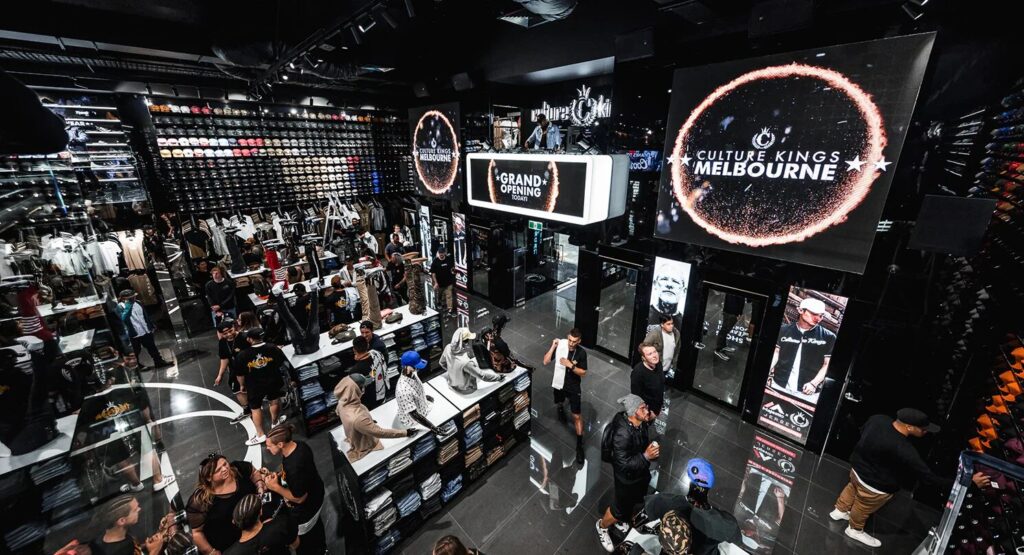
Nathan Bush: Calling all brands looking to dominate search rankings in 2025 Studio Hawk is Australia's largest dedicated SEO agency, working with brands like officeworks, City, Beach, Age, Clarks, Petstock and New Balance. And they have an exclusive offer for Add to Cart. Listeners sign up for an ongoing SEO campaign and receive the content boost package professionally written copy for 40 category pages free of charge. If you want to rank and convert better in 2025, head over to studiohawk.com and mention add to Cart when inquiring to claim this offer. Plus receive a free SEO audit of your website I think culture is one of the most misunderstood words in e commerce. In fact, probably across all business. I don't know anyone who really loves talking about culture because it feels so big and so fluffy. We either treat it like a vibe or or we treat it like HR admin. But when you talk to the brands who have actually grown, and not just grown by adding more products, but grown in terms of developing a team that can scale, they've approached culture not just as a feeling that they have, but as a system that they've implemented to make sure that they can scale and that the team keeps the culture and grows the culture that they're aiming for. Because it's very easy to add layers, locations, channels, new owners to the point where culture becomes so something that is just ingrained into how we work or can easily collapse as it gets out of control. That really clicked for me after this episode of Add to Cart with Emma Grasso, who is the Director of People and Culture at Culture Kings. Can you think of a better fit than Culture at Culture Kings? Culture Kings is actually the textbook example of a brand that should have broken under scale. Originally founder led under Simon Beard, with a cult following, a deep identity tied to music, sport and fashion. They were acquired by a bigger brand and a more legacy brand in AKA Brands and pushed quickly into global growth mode. And instead of losing the magic, they did something smarter. They found a way to operationalize it. So in this playbook, I want to pull together a few lessons that we've learned from past guests who've tackled culture from a very practical angle. Not just as a vibe but but as an operating system. We'll start with Emma and then we'll bring in Jane K from Bird's Nest, Kira McLeod Fink from the Body Shop, and then Ringo Chan from Acosa. Because once you start getting your head around culture as an operational system, you'll stop seeing it as just the soft stuff or the Friday night drinks and realize how much it can actually be a growth lever as you look to scale. What was the biggest challenge for you from a people perspective? Where did you start?
Emma Grasso: I suppose really getting everyone on the journey of change is probably the hardest part. So I think for me, I kind of looked at it and I said I've really got to guarantee the trust of everyone here. Like, I'm sort of probably the face of change right now. I've come from another AKA brand, you know, so I really took a moment to kind of really get to know the team and just say, hey, I know what this moment feels like and it's a bit unsettling and I get everything kind of feels a little upside down. But I've kind of, I've done this before and we're hold hands and get this happening. So I kind of asked, you know, around, like I had moments to just meet up with people in meetings, a lot of the managers and senior managers first, but then hit the ground, you know, and just meet the people on the floors. And I thought, you know, with people and culture you got to do a lot of, I think front you do a lot in the background that people don't know about. Often. Yeah, kind of thought, well, these are the things that we'll have to do is more the front facing stuff. So having a presence, you know, being communicative. So I kind of started up a couple of rituals like you kind of said immediately, which was weekly Slack blasts. We kind of all connect on Slack. I noticed that was the most engaging platform for everyone. And I think what a lot of people were saying is we just, it's a new land. We used to have, you know, an amazing president like Simon, who's such an orator, who gets everyone together every day. So it was like, how do we communicate now in a new land? And I thought kind of true. Like there's so many business updates going on and people stuff. So every week I do, I still do it. It's called the Weekly Slack Blast and it's like a notification. It does shout outs to people. But it was great, you know, hearing people's side hustle stories. Even we got a podcast. Like there's so many that are like prolific, like music side hustle gigs and stuff. So, you know, you kind of, I was mixing like, hey, there's a new person starting. They're going to start in the IT team. This is a bit about them. You know, these are things happening in the office. But did everybody know that so and so's in a rock band and like fully got like, you Know, just a little, well, hey, check out this podcast that you know, so those doing. And I think that started to marinate with everyone. Like, hey, we're in this together. It's made up of individuals and you know, just learning about each other a little bit more. So yeah, first strategy was yeah, connect and communicate. Then second strategy is really taking people on the ride of change. You know, what does a program that's nice and standardized and stabilizing for everything everyone look like? Why processes can be supportive infrastructure as well.
Nathan Bush: I could imagine there's lots of people, a lot of specialists in there, especially under a founder culture. And Simon is just one of those lightning in a bolt founders where he let the good people go and back their ideas and let that happen. And then all of a sudden you're saying, look, we don't have a Simon anymore. We're kind of one team and we're all responsible for it. We're taking this forward and there's a bit more process and there's a, you know, we're coming together on this. I could imagine that there'd be some people like, that's not for me. I'm out. Did you find that those people self identified or was there work to be done as you switch? Because the reason I'm asking is because I think a lot of businesses are going through this, especially online businesses who grew to a certain point and now are going different channels, getting bigger, more diverse teams, maybe international teams and are going through this change. So it's like, do you let people self identify out or do you actually have to manage that change?
Emma Grasso: Yeah, I think it's a mix of both. And natural attrition is always going to happen with change. And I think every business kind of knows, hey, you know, with change management, people will probably stick around for six months. You know, they're kind of like, what's the new normal? And then you probably see once change gets implemented that there's probably a six month time frame where you'll start seeing natural attrition. But the good thing when people self appoint is I always normalize it. Hey, it's a job. And like you have the best resume and we are going to give you a glowing reference because it is so fine to be like, this is my stock, this just isn't for me. And I think you've really got to normalize. That's the natural order. That's a career, is a build a bear, you know, like adventure, like, and I think taking out the pressure of loyalty and you must stay and you Must cookie cutter with us is, yeah, I think you really ought to humanize the chaos and be like, I get
Nathan Bush: it, I love that. How do you define then loyalty from both sides? I guess. And how far does loyalty go in an employer employee relationship?
Emma Grasso: Yeah, I think loyalty is when you're in the team and you're in the game, you're doing your best, you're doing the best to your team members around you, you're doing your best for your career progression, you're doing the best for the business. But I think loyalty remains when you leave like we were talking about in Coup Petal and Pup. They're like forever love those jobs. I didn't leave them because I was unhappy at all. I just, you know, it was a natural end for me as well. Maybe a bigger career opportunity, location change, whatever it is. And I'm still wildly loyal to those guys, you know, like, I'm like all them on the sidelines. So I think loyalty can definitely extend post the life of your employment with a business. And again, I just feel like, yeah, we've got to normalize that, that a business doesn't owe you anything other than like, well, I mean it does, it owes a lot, it owes a lot
Nathan Bush: of comfort while you're there. You're both committed to it. But there is obviously change that's going to happen and that's okay. Every fast growing E commerce brand, especially those with very involved founders, hits this moment. The founder steps back, the structure tightens, more process shows up and suddenly the magic that was that business starts to fade and feel very fragile. Emma's insight to this transition was actually really simple. Before you add process, you have to earn trust. When she joined Culture Kings during the transition out of the founder led era, she knew that she'd become the visible face of change for good or bad. And instead of leading with frameworks, programs like she'd done in the past and had the experience to do, she started by doing something a lot more practical and on the ground. She showed up, she met people face to face, she acknowledged the discomfort and she named the uncertainty rather than pretending it wasn't there. Because when a business is in change mode, people aren't crying out for process, they're crying out to be seen. They're probably in fight or flight mode. We need to address that first. Emma talks about humanizing the chaos and that's a real lesson here because change is always inevitable in E commerce and people are always going to be emotional. As much as they are hard workers, as much as they love you, there's always going to be emotion in what we do. So if you don't slow down long enough to bring the people with you, trust can drain quicker than you realize, even when you spent years building it up. And the part that many leaders get wrong is that some people will opt out. Emma doesn't fight that. She acknowledges it. She normalizes it. That people might not be ready for the next part of the journey. She knows that careers aren't lifetime contracts, they're chapters. And when you remove the pressure to stay loyal at all costs, something interesting happens. People have a choice. The people who remain are the ones who actually recommit to the next chapter of not only their story, but the business story. But it all comes down to one thing, and that's trust. And that needs openness and that needs communication. But it is the prerequisite to scale and to go into that next stage. Before you go in and change the systems, change the processes, you have to slow down. You have to show your people that you are open to listening, that they have a choice, and that you know that there's big emotions attached to what's coming next. And that takes us as a nice segue over to Bird's nest, where the people function is grounded in trust and that framing drives everything in their business. Back in episode 263 with their founder Jane Kay, she introduced me to the marble jar analogy. Every interaction between leadership and staff either puts a marble in the jar or takes one out. When the jar is full, you can make mistakes. When it's empty, even small errors can cause big blow ups. Because trust compounds daily. It's in meetings, it's in decisions, it's in how bad news is delivered. It's how we celebrate big wins. It's about how people feel seen before, feeling managed. And in E commerce, it's critical because we're not always sitting around in a calm state of mind. Often when the pressure's on, with missed targets, delayed stock platform changes, peak sales, you're often not sitting in a stable headspace yourself trying to keep everyone calm. It's easy to lose trust through these micro moments. So culture isn't often this big thing where it's about what benefits do we give our team, how do we do pay rises, how do we do performance reviews. It's often built in those micro moments of those one on one times with our team to show that they're valued and that we appreciate them. And in saying that, yes, we want those micro moments, but also know on the other side that in Those moments of high tension, in those moments of panic and stress that can spread very fast throughout a team and impact you commercially very quickly. Kira MacLeod is the head of D2C at the body Shop. And she learned this during a really crazy time at the Body Shop, where there was a lot of corporate change and a full replatforming happening at the same time. Her job was to help lead this change but remain calm for her team. Kira acted as a heat shield for her team. She absorbed uncertainty so it didn't cascade through the business. And structurally, she removed a lot of friction by merging retail and digital into one unit, which forced alignment around the customer. Instead of internal politics and bickering, she even created a role that sat between HQ and the shop floor, feeding real customer insight back into the system. Throughout all of this, she was thinking, how do I keep my team calm and connected? Because if she wasn't focused on it, it would get out of control very, very quickly. And taking that a step further around the connection between culture and commercial performance was Ringo Chan from acosa. He talked about the correlation between product quality and culture. Ringo famously scrapped a product after 15 months of development because it didn't meet the standard that they had come to set. That decision obviously cost a lot of money, but it also bought belief within the business. After all, you can't expect your teams to care about customers if the business doesn't care about standards. By doing this, Ringo set a clear tone that we will make the hard decisions to stand up for what we believe in, and we are not going to make mediocre products. That means a lot to his team and customers always feel what the team feel. Culture in this context isn't about happiness. It's about setting the right standards. So our team are happy to stand behind the company when they're in front of customers. If the team believes in the product, quality follows, great, customer service follows, and the enthusiasm is very catchy. In this case, culture wasn't about values on a wall. It's about setting the standards of the product that they would go to market with and having the team proud to stand behind that product. I hope these examples have shown you that culture isn't a vibe you protect. It's an operating system that you can design. Emma showed us that culture only scales when it's communicated in ways that people actually engage with and gets their trust straight away. Jane reframed culture as trust accumulation, not just in big moments, but in those micro moments over time. Kira proved that calm can be engineered into how teams operate under pressure and how to make sure that panic doesn't spread like wildfire. And Ringo reminded us that culture can be shown in product quality decisions to create something that your team can be proud of and stand behind. When culture looks real, it is real. When it's put up as sound bites or graphics, it doesn't feel real. That's a pretty easy test. We've seen this in E Commerce time and time again that companies with great founders or great ideas scale quickly, but the real test is when the team needs to pick it up and carry the ball from there. In those moments, you need to be able to address culture and make it a system that will allow you to scale to the heights you're dreaming of.