Danny Holloway: And internally, I just want to cry. I feel like I am barely surviving in both. We have quite a few people that wear our boots on their wedding day. It just helps. Also because we never discount. It just helps you feel more confident going into selling a product.
Nathan Bush: Hey, it's Nathan Bush or Bushy joining you from the land of the terrible
Nathan Bush: people here in Brisbane, Australia.
Nathan Bush: One of the hardest bits about running E commerce right now isn't necessarily selling starting an E commerce business. It's knowing how to grow without losing what made the business work in the first place. That's why I wanted to bring Danny Holloway back to the show. Danny is the founder of Merry People, the Australian brand that turned gumboots into an everyday lifestyle product. Since we last spoke a few years ago, the business has grown significantly, expanding internationally, opening physical retail brands, broadening the product range, all while holding a firm line on some big decisions like never discounting. In this conversation, Dani walks through what has changed in the business and most importantly, what hasn't. She talks about how her thinking on growth has evolved, tells us what she underestimated as the business became more complex, and tells us how she and the team make decisions now that the the stakes and the noise is much higher. If you're responsible for growing an e commerce business or operating one day to day, this is a really practical look at how to scale without drifting from your original mission. A massive thank you to Shopify and Klaviyo for supporting ADD to CART and helping bring these conversations to the E commerce community. Can you believe that Shopify was a sponsor five years ago when we spoke to Danny for the first time? Incredible support. Here's my conversation with Danny Holloway, founder of Merry People. Danny, welcome back to ADD to cart. Oh, it's so good. And it's a bit weird to be honest, because we were talking before, but you were the first person we've had back for a second time because we've got a editorial philosophy and I'm just saying that to sound grown up around having guests on once, but I realized the other, you know, late last year. We've been going for five years and it would be great to catch up with people and their stories and what's happened since because five years, so much can happen in E commerce. So how are you to start with, where are we at? How are you feeling?
Danny Holloway: Well, firstly, I'm honored that I'm your first person that you've had back two times. Yeah, a lot has happened in five years, I think. Yeah, it was 2020 around Covid and I have since had two children and the business has grown a lot. Yeah, I was just mentioning before, 50% of our revenue comes from the US and UK now, so it's been pretty crazy. Yeah, a lot's been happening.
Nathan Bush: I already feel lazy for my last five years compared to what you've just thrown out there. For your. For your last five.
Danny Holloway: Yeah, it's been amazing, but also really challenging at times and just times where I felt at capacity, which running. So it's been a pretty crazy five years, but I'm here. I still feel merry.
Nathan Bush: And you've still got people.
Danny Holloway: Yes, yeah, I've got a bigger team now, so I think around 30. I've got a retail store now as well, so, yeah, a lot's happened.
Nathan Bush: All right. So for anyone who hasn't been listening since, I think it was episode number 30 odd, can you give us a quick catch up on what Mary People is and what you specialize in?
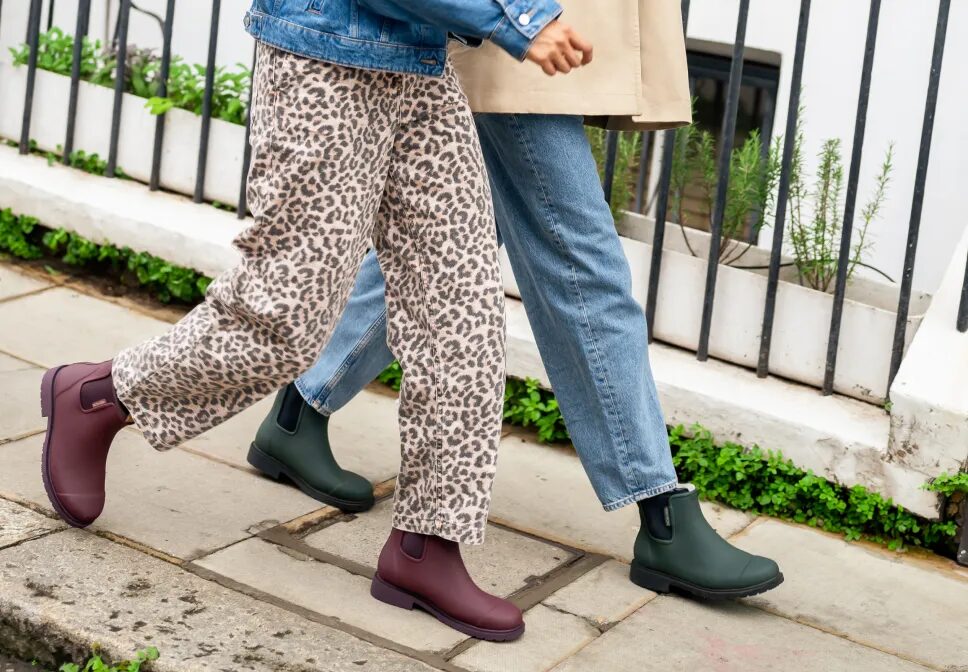
Danny Holloway: So Mary People is a. What's known as a gumboot brand. Colourful gumboots. We now do some other products. We now do sandals and clogs. But, yeah, we make our products mostly with natural rubber and neoprene, but play a lot with color. And for me, it's been around trying to create a really joyful brand and a brand that makes people feel good when they discover the brand, but then also whatever they're doing, whether it's with their animals, with their kids at the playground, getting to work, just embracing the mess of life regardless and being that little spark of joy when they step
Nathan Bush: into their day, I know I've seen that spark firsthand. Sarah bought a pair of your new sandals over Christmas. Absolutely loves them. So I've seen that joy firsthand. Expanding your range out because you're right, you were known. Well, you are known as that gumboot company. Like you can spot a pair of merry people anywhere. I was lucky enough to run into James from your team and he was wearing them and they stand out, especially when you're wearing kind of a suit Y material with some gumboots. Adam@theimpact.com event was up there. Rocking is pink. Merry people. As you expanded out, what was the decision to expand out beyond the gumboots that you were famous for?
Danny Holloway: To be honest, it was pushed from my head of product cast. I wanted us permanently to be. I still do a gumboot business, but, you know, we've got this really engaged customer who loves product and color and the brand and the ethos of how we do business. So it was. Yeah, how can we still have our brand DNA, but then it into some other types of footwear and yeah, just trying to test things out. So I think being a boot brand that sells, you know, most of its sales throughout winter was also to Service Corp help the business in those summer months. So I think that was probably one of the first brand consideration, like making sure it still feels like us and has Tixo's buckets of the functionality, the color materials and all of that.
Nathan Bush: From a sandal perspective, like I could imagine, it's pretty hard to reinvent sandals. How did you approach that from a merry people perspective? How did you go? Actually, there is room in the market for sandals and we can do it differently.
Danny Holloway: Yeah. So for us, we spoke about what do we want from this product. And yeah, there are a lot of sandals out there and we wanted it to be like the bobby boot of sandals. So had to be functional. It had to be something you could wear all day and still in a functional way. So you can still, you know, wear it down the beach. Waterproof, you can wear it on a really long walk that it will washes easily. But then you could also wear it to the pub or to a party or something. It's still got a little bit of that fashion edge. Yeah, for us it was just finding that. I think when we started the design, I was quite heavily pregnant and Cass was. Yeah, coming to my house, which we've often done because we've kind of tag teamed with having kids and postpartum life and maternity leave. And I know Cass feels the same way that we want this to be something that we think is really great. So it often takes us a little bit longer with development because we're quite picky and there's a lot of back and forth. But yeah, I think it just helps also because we never discount. It just helps you feel more confident going into selling a product.
Nathan Bush: Yeah, that makes sense. So it's not just sandals that you've got. You've got other ranges as well that you've introduced alongside the core of the gumboot. When you launch those ranges, do you find that it's like your core gumboot audience coming back to expand their collection into other areas or are you attracting a whole new type of customer in?
Danny Holloway: It's both. But generally when we're doing a new product, whether it's a full new product or a new color, we talk about it and think about who the customer is. We've got Personas for our target customers and names for them, so we'll use them by their names and say, you know, is this selling to Abby or Steph or Pam or is it one of our newer customers? And we've got names for them as well. So, yeah, we definitely think about that. For the sandal, we thought predominantly it was going to be a existing customer, like going for people who have already love colorful footwear and love marry people. So that definitely then leans into the marketing efforts and yeah, because it reminds
Nathan Bush: me of the conversation we had from Stacy with Shewear in that. And we've had a couple of others like that where you put so much effort into producing a quality product and you really take pride in the materials and the build. And I know we talked about this with the gumboots five years ago and I know how much pride you put into creating something that's quality that lasts. Getting that second sale can be really hard when you have a quality product from the get go, right?
Danny Holloway: Yes. No, absolutely. For us, second sale, often it's when the person is wearing it, either they just love color and they're that dopamine dresser, or they wear the product in a more utilitarian way. So they'll be wearing the product daily. So having a variety of colors or. Yeah, it fits within their lifestyle. So for us, we've been able to get that repeat customer, I think, because of how people wear the product. But definitely adding extensions and categories helps, I think, with that as well.
Nathan Bush: You do such an awesome job at building hype for new color drops. And you've got limited releases, don't you, on your colors, like once they're gone, they're gone. Is that right?
Danny Holloway: Sometimes, yeah. We're trying to be a little bit more scientific with things now. So when we think of it, when we have a new color, we think about, okay, how long do we think this is will be in the range for? And then we'll have other colors that we think, okay, this is more speculative and more fashion. We did a kind of a Tully boot last year that was ivy blossom and was kind of green upper and then a pink sole and was quite chunky pink sole. And that was limited edition. Sold out really fast. Yeah, just having fun with some more speculative things. We'll do limited editions and other kind of more core colors that are more commercial that will kind of keep in the range for longer in a couple of years.
Nathan Bush: Great strategy. And I guess that all dovetails into what you mentioned before around never going on sale. It was something that we spoke a lot about five years ago and that was a key philosophy for you, obviously, Retail kind of had a beautiful period during COVID and then things got a bit tough and it's been tough for the last couple of years. Have you been able to hold on to the never going on sale philosophy?
Danny Holloway: Yes, we have. We've never discounted. So it's actually something that I think our customers really respect about business and to the point where I would say it's just probably a key thing that we're known for. Something that I'm really proud that we've been able to keep doing that and something that I hope we do forever.
Nathan Bush: Yeah. Do you have anything in place of a traditional promotions calendar that others might have to try and boost, even like interest or engagement with your audience at key times of the year? Or are you just aiming for a steady year on year increase just from being better year on year?
Danny Holloway: I guess for us, we think in terms of. From E. Comm. We think about, you know, our peak season is like March, April through July. So we're trying to bring people, I guess into the funnel early in the year and that could be through creative marketing things and lots of different things through new product, through being seasonally relevant, whether it's through weather or what have you. So it's more around trying to create great content and when it's coming into our seasonally relevant time. Yeah, I think we're aware that a lot of the retail businesses have a calendar where they discount and we're just aware that that's a more saturated time to be marketing in general and the types of messages that are out there. But generally during those moments will increase the level of ads or messaging we do around never going on sale and why we do that then that actually helps and does performs well for us during those times. So yeah, I think we try to have a product launch or something which is that we think is like how do you drive interest at that time? So we just try and plan it like that.
Nathan Bush: Most retailers would kill to have a peak season where you've got your peak season when ad costs are at their lowest.
Danny Holloway: Yeah, well, I've actually not really thought about it in terms of. Yeah, when they're selling during Black Friday and what have you, the cost of advertising during that time. But for us it's good also it's great with planning. You kind of have a good view of the previous year and yes, we'll look at. Okay, why did that perform the way it did last year? Was it like a weather anomaly or what was it? But you're not getting the spikiness that you would if you were to be using a discount strategy.
Nathan Bush: Yeah. Do you notice that during Black Friday, even though you don't discount, is there a knock on effect of customers having their wallets open, ready to shop that you benefit from like ignoring the fact that it's Christmas but otherwise are people more willing to shop and you get some of that at full margin anyway?
Danny Holloway: Yes, we do. So I think it is just. And whether people have been holding out and thinking, oh, I might get a sale. Oh, they never go on sale. Oh, okay, great. They're newer to the brand and then they just purchase or yes, they're in the mindset of shopping, they're doing all their Christmas shopping and they are just in that mindset. So yeah, we get that knock on effect. But definitely during Black Friday we do still get an increase in sales.
Nathan Bush: You do a really good job though on your site of advertising, the fact that you never go on sale. So I think there's a ticker that goes over the homepage and even on the product page under the images. It's the first thing that you see. There's a little call out saying we never go on sale before you even get to the price. And I guess that must take a lot of the objections away straight away to go. Well, there's no reason to even play around with things like putting things in cart and hoping for an abandoned cart email or like waiting for two weeks and hoping they go on sale. It's like if you're going to get the sale as well, get the sale now.
Danny Holloway: Yeah, that's why we do it. They know that that's the best price that they will get and just I think helping alleviate some of those restraint or like questions that people might be having. Especially. Yeah. When they're new to the brand and you're doing this cold advertising where they might not know that.
Nathan Bush: Yeah. Well done on holding your ground there. Like I love seeing that. I think it's fantastic, especially when you've got an original product and a quality product to be able to hold that. You mentioned their content. I'm keen to get your perspective on how content has changed in the last five years. I feel we've moved a lot from a lot of internal content and I know that you were and I'm not sure if you still are doing a lot of founder content, a lot of team content. Are you finding there's a lot more pressure to go external with content, whether that be partnerships or influences or other ways to get the message out?
Danny Holloway: Yes, we are doing a lot more Partnership and influencer, content creator, ads and content in general. And I think it is just adding to that diversity of content. And yeah, we definitely do still do our stuff internally and founder content and all of that, but I think it just helps the ads library, if you will, or even just our own content have more of that diversity and be talking to lots of different people.
Nathan Bush: When you're aiming for diversity, how big do you think in terms of diversity? Because you said before you've got your Personas and you know your audience very well. After so many years in business, how far do you push your content? Do you often try like people who you're like, I don't think this is our core audience. We might as well give it a go. Like, do you take many risks or experiments?
Danny Holloway: We should more actually we have been pretty say prescriptive, but it's been, you know, this is who we think our target customer is for this particular season, for this particular product. Go find people that we think that is speaking to that person and then we'll have some like a narrative doc that we will give to that content creator slash influencer and they can follow. We might say, you know, this is the type of narrative we want you want you to say this, this is. Or we could just say do whatever you think, like you have a go using that content as well. I think there's probably definitely scope to explore some more outside of the box type content creators to what we typically work with. But yeah, for now that's what we've been doing today.
Nathan Bush: I could imagine though, with gumboots, you know, you must get surprised at all the ways and places that your boots can show up. Like you mentioned it before, it can be on the farm, could be a music festival, could be at a pub, could be at a workplace. From a content perspective, have you been pleasantly surprised by any ways that someone's taken your brand and shown it in a new light? That you're like, oh, I hadn't thought of it that way before.
Danny Holloway: I think what I do, I get really pleasantly surprised when I see all the cross section of the types of people who wear married people and where they wear it in yet so many different user cases all around the world. But I think probably the one thing that will never, like, I always just stop and feel really blown away by is when people wear them on their wedding day. So we have quite a few people that wear our boots on their wedding day and like, whether they're getting married in the country or it just happens to be a really wet day when they're getting married and so they'll have the whole bridal team in our boots. And I just find that like such an honor to people on one of the most special days of their lives that they would wear marry people. Like, I love flicking through tabs like posts and seeing all of that. I think it's insightful for me to have a good grasp on that. But then it's also just a really great feeling to see the amount of people who know of your brand and love it and how they engage with it is. Yeah, it's pretty cool.
Nathan Bush: My head's spinning at the moment thinking about TikTok Shop. It's at the top of my mind at the moment because probably going to land sometime this year in Australia and just the ability to hand over control to your audience to be able to go, hey, if you're wearing a Tagus and you might earn a bit of coin if it goes well, I can imagine for you that's a huge opportunity and a little bit scary as well.
Danny Holloway: Absolutely. But my thing is, yeah, if people love your product enough to post it on their channels and they're going and creating that content, which takes time and all of that, and it's generating a commercial benefit for you, then yeah, I'm okay with that.
Nathan Bush: Yeah, yeah, exactly. Everyone wins.
Nathan Bush: Ever feel like your emails and SMS have been dressed by two different fashion designers with wildly different tastes? That was the problem for Chic, the iconic Aussie fashion label with over 50 stores and a growing e commerce channel. Their emails were powered by Klaviyo, but SMS was stuck on a separate platform. Reporting was inconsistent and they couldn't see the full customer journey. So they brought it all together. By consolidating SMS and email under Klaviyo's roof, sheik got an 81% jump in SMS subscribers, a 51% increase in click to order rates and a huge 113% ROI on the Klaviyo platform. If you're ready to get your email and SMS in order, head to klaviyo.com au to see how brands like Chic are creating consistent messaging.
Nathan Bush: You mentioned earlier 50% of your sales now coming internationally or soon to be international. That is absolutely massive and congratulations for that. What kind of markets are you most prevalent in?
Danny Holloway: So we are in the US and UK and outside of Australia. We're in New Zealand as well. But yeah, we sell globally, all around the world, but anywhere outside of the UK and the US comes from the Australian Free Pl. But yeah, everything else to those Markets go there. So yeah, it's been exciting, scary, daunting I'd say.
Nathan Bush: Last year must have been a nightmare for you with the tariffs.
Danny Holloway: Yeah, yeah, it definitely was. It was actually. Yeah, exactly this time last year and I think in December I actually got a call from a mentor of mine in the US like telling me I think this is going to happen. So we were somewhat, we had some, a little bit of preparation and then we were with a company that did. They were on the border. I don't know if any of your guests have spoken to this, but on the border of Canada and the U.S. the de minimis was $800 or less. So a lot of companies were set up. There were a lot of three PLs actually set up on the border of Canada and shipping into the US under the de minimis of less than $800, which was us. So when that was removed and then the tariffs really increased, it was a lot of stuff, scenario planning and discussions and moments where I never said this out loud but internally because I didn't want to feel knee jerky for the business because you have people where their roles are around us and but internally I also at times was thinking is this a legitimate, is this all getting too hard now? Is this a market that we should move out of? But we're actually doing really well there now and exceeding budget. So yeah, it was just a really turbulent time around the pace of the change which was just unforecasted and unprecedented I should say also and it was just when your commercials are changing so much and you're kind of continually updating the margin sheet so much around tariffs and it was a little bit unsettling but since probably mid year things just like settled down and we actually have two staff over there now. We had one staff member at the time who had just hired and now I've got another staff member there so. So yeah, it's been really great to see that our strategy is coming to fruition and yeah, starting to yield its results I guess.
Nathan Bush: Have you had to change the positioning or the marketing message for the US especially or is it very similar to how you go to market here in Australia?
Danny Holloway: Oh, it's very different. And that's probably one of the big things I've learned from growing an international brand is that you can't look at what you're doing here and think that your product or your messaging or anything really in how you sell and operate in that market that it just translates exactly the same way because it just really doesn't. And over there we brought on a creative agency who have refined our customer positioning because we were, you know, a couple of people. We would go to trade shows over there, go over there for a couple of weeks, come back, would be getting insights and then feeding them into marketing. But then it just wasn't enough to really understand the market and put together a legitimate go to market strategy. So we actually had someone who was a customer of ours who was in a head of marketing position at quite a large outdoor retailer here. She was moved over there for her husband's work and she actually contacted us and said, I'm a customer of yours. I love your product. I really think that I could like, I'd love to work with you and I feel like I could do great things with you in this market. And there's a bit of like, oh, okay. I don't know if we're at this stage yet, but we started in a consulting type position and yeah, now it's kind of led to head of country position. And that has been really pivotal, like the positioning and even like having more credibility with retailers. I think that they've got someone like all on their time zone that they know that isn't going to be just going back to Australia and worrying about Australian things like they're there for the US market and I think it helps that grow as well. But definitely helping with language, how people style boots, all the messaging and just having that as a core focus. Because I would say up until that point a lot of our conversations were Australia centric and it was oh, what are we doing for the US and what are we doing for the UK was So I think having that person who is fighting for the US pnl and we all are, but the one that's like, that's their front of mind. And yeah, having that in your leadership team, I think it's been really helpful.
Nathan Bush: Yeah. And you mentioned their wholesale in the us. Is there a different channel strategy in the us like is it essential to be in wholesale to get your brand name out there into the U.S. given how big it is in the population there. Or do you have to consider Amazon, you know, from a channel strategy, what do you have to do differently there versus here?
Danny Holloway: I and maybe this varies depending on the product or the brand but for us I think that the retail strategy is the most important out of all the three markets in the US to be in retailers and it's that point of discovery and also that way for people to have the credibility in your brand. I think especially as an Australian brand You know, when I was over the end of last year and talking to people about marry people and saying that we're from Australia, there definitely is people's eyes light up and pick up that, oh wow, Australia. I feel like there is a really positive sentiment about Australian brands over there. But I would also say that being in the right retailers that talk to your customer is really important. Well, for us it has been in getting that credibility. Like the US is obviously so big and so many different types of customers and so for us it's been really being so narrow in who we're going after, where do they live and then what is the retailers that talk to those people and going after them and then it's like a trickle effect from there. So yeah, we've been doing trade shows I think at least like two a year or two kind of seasons where we might do a couple together here and a couple towards the end of the year and it's a great way for people to regularly see you and also just get all those insights from retailers as well. So yeah, we're actually going into like a quite a big retailer there for the very first time. We're going into Free People. So it's quite a big retailer which is a little bit scary slash exciting. So yeah, I was at the shoe show and got to. They kind of came up and just started talking to me and had their name badge kind of covered. Weren't showing their name badge of who they were but in my mind I was like I don't know any of these retailers so I was just like talking to em, which I would anyway speak to people in the same way but I feel like we were talking about non work related and then eventually found out she was like, yeah, I'm from Free People. I was like oh my goodness. I actually know your brand and I love your stuff. So that's really exciting. We're just going onto the E Comm site and then which we've done in other life in the uk, where else that we started with a bigger retailer there as well and now we're in 30 of their stores. So I think it is a great way to kind of prove yourself out and see if the product really resonates with their customers. Yeah, we're really excited about that opportunity to get our brand out in front of so many people.
Nathan Bush: I can imagine it's a godsend for the seasonality leveling out as well across different territories.
Danny Holloway: Yes, no, it is. I think there's still definitely times where there's a cash crunch where you're kind of waiting for something to kick in somewhere. But no, definitely. I think it does really help with the seasonality. I think it's just internally sometimes I feel like before the US and UK peak season would finish in Australia and then we kind of like, ah, here
Nathan Bush: we go again then.
Danny Holloway: But it's like, all right, I'm back in. So it's probably more from an operational thing where it just feels like a little bit more hectic internally.
Nathan Bush: Yeah, that makes sense. As you've expanded out globally, have you had any problems with dupes or knockoffs or imitations for Mary people?
Danny Holloway: Yes, we get all the time. We have people copying exactly our colorways, exactly our language on our website. We've had people do that, contact our retailers and tell them they will give us them a better margin than us. And yeah, some things I'm actually just quite shocked from an integrity and I just. Who are these people? Like, how could you do that? I used to get pretty hung up on it. Yeah. And I was started the whole, you know, sending legal letters and things, but then I just got over it and I just said to my team, you know what? This is going to happen and we just have to be better and we just have to have a better product and a brand that people want to purchase from us. And if there's a person in a store or where they're shopping online and they've got product A and product B and like we want them to choose marry people because we're the better offer and they want to wear marry people, not because we're first to market. So I've just kind of continually reiterated that message that we just have to try and be the better offering and try and be the best in what we're doing. Yeah. Because you just have to let go of it. But it is really hard at the start and when you see people directly copying things, you kind of. Yeah, it really hurts, actually. But more it happens, the more I've just realized it's inevitable and I just have to move forward. Otherwise I'm going to be spending just all my time and that's going to take me away from doing what I love and being creative and growing the business. If I'm just spending time and money on that.
Nathan Bush: Sad. But I love your approach. You know what I mean? Like, it's really sad that that is the reality of it, but the focus on that you've given the team on. Look, if we just keep being better and better versions of ourself, that's the best Way for us to compete rather than try and stamp on every fire that's around us.
Danny Holloway: Absolutely.
Nathan Bush: One of the things we talked about when we actually called the episode that you originally did way back five years ago was called Bootstrapped and Brave. That's what we titled it. I'm really curious in your journey as a founder over the last five years and moving forward, you've had some big changes. You've got now got a young family. We interviewed Nick, your husband from Homey, you know, a couple of years after you. How have you evolved and changed as a founder over the last five years as your life has shifted and moved and the chaos and you know, the disruption and everything that happens there and I don't know, I'm putting words in your mouth, but maybe, you know, different focuses as those seasons change. How have you navigated that with like
Danny Holloway: difficulty in true transparency. When Nick and I became parents, I guess I was probably a little bit naive to what that would involve in. Not that because, you know, I was surrounded. My, my sister had kids, I babysat, but probably just that newborn life that I was a little bit naive to. And I thought, you know, I'm going to feed baby, put baby down, work. But then that just wasn't the case. But then I hadn't set my life up to have. I couldn't only had four staff at that point and I was still doing all the design. I was. I just brought on James. I was training him on how to manage cash ordering, like how to run, do payroll, all of that. Like when I was, you know, early days postpartum and I was just like probably every couple of weeks almost like actually having breakdowns of like how do I do this? Yeah, I found it pretty challenging, just a steep learning curve. And it wasn't as if my work at Mary People was linear or that it was the same as it was a year before, even two months before. There was constantly new problems. I think the year I had our son I went from yeah like four employees to 13 employees. So I was doing the hiring, some firing in there as well and creating processes, ways of working, troubleshooting, all the stuff. And it was quite a lonely. Yeah, just a hard time because I think it's particularly for a brand like Mary People and when you are so passionate about what you do and then you just go into that vortex of growth and it was a real, you know, grew 300% that year and your on this just really steep learning curve on both sides and people on the outside are just really celebrating your life and going, oh my goodness, Danny, like this, this, this and wow, you know, Jack's gorgeous and you're a mom. And so I would just say like, yeah, yeah, no, it's all great. And internally, like, I just want to cry. I feel like I am barely surviving in both and felt like inadequate in both. So I think I went through like that journey and kind of. I started to get back into it and then had another baby and yeah, just that in and out where. Yeah, you just feel like you're playing catch up a lot. And I think particularly as a solo founder found it quite isolating because there's only so much that you can share with your team and then you kind of also don't want to burden. You know, you don't talk about a lot of things with your family or your wider or your friends even that are outside your world about what truly is going on internally because it's like probably too much for that conversation. So you just hold a lot internally. So I think I found it quite amazing time in many ways. But then also, yeah, really hard to kind of get through at times.
Nathan Bush: The market is shifting, costs are climbing, and the pressure to do more with less is very real. But when resources are tight, you can rely on Shopify, the platform that's consistently first with new capabilities. Shopify invests significantly in R and D and drops more than 150 updates every year, evolving with you and absorbing complexity so that you can focus on what moves your business forward from AI powered insights to the world's best converting checkout. Shopify is designed for the next era of commerce, helping you sell more, scale faster and future proof your brand, build for what is next with Shopify. Visit Shopify for Enterprise to learn more.
Nathan Bush: You mentioned there around being quite a lonely journey from other founders that you've connected with. Do you think that's a common thing that especially a lot of women go through? I know on our podcast we've had a lot of female founders who have started business when they've had a baby because they've got, you know, time to think. They go, oh, this is great. I've quit my job and I've got all this time to your point that I can actually start this. And then they go, oh, wow, I've like got two lives going on here. Or they've transitioned from being purely focused on the startup into now going, oh, I've got to adjust, I've got this other thing going on now. Are you finding that that's a common feeling, that loneliness of that Experience from a founder's perspective.
Danny Holloway: Yeah, I do. I think when you talk about it more and you just share it and I think that's something that I'm trying to be more intentional about. Particularly when I meet women or people that are thinking about having kids. Just to be like, if you ever want to catch up for a coffee or ever anything or how I set up the business or what I did during those times, I've definitely got a lot of learnings there. I don't know. At the time it was also just so hectic and I don't think I even had the time to even stop. And yeah, it was just like there's always something and you just had to keep going and you know, with young kids, it's just. Yeah, it was what it was and is like I've got a two and a four year old now, it just is. It is still hectic. But I think I'm actually recently turned 40 and I feel like I've had some kind of. There's been a shift around like, okay, new decade, you need to be more intentional and you can't just get swept on this in the machine of married people. Like you're the one that is in control of this and you can say no to things or you can do this how you want to do it and curate your life as well around that. And you don't need to try to please everyone or wherever that is. Like, try to think of myself first and go, what does great look like for me in terms of married people and family and really challenging myself around. Why do you want to grow and why do you want to do this stuff? And yeah, even the international stuff like making sure there's some constraint there as well. So I think that's been great to have those feelings. I'm not sure if you had wines with my girlfriends on my actual 40th and they even said they're like yes, 40 and they're all mums. And yes, it is amazing. Like something happens where you get this new lease on life and you go, yeah, I want to do all of this now. So that's definitely happened for me. And wanting to make sure I have that right level of mariness and joy and spark in my life because I think when that happens that then all the other stuff is great. That's what I'm trying to focus on right now.
Nathan Bush: I love that. And on the merriness and the spark because you've still got a two year old, four year old, thriving business, growing business. I can assume that it's still chaos at certain times. When you are feeling that, where do you go for inspiration or help, like to kind of pull yourself up out of that? Because if you're leading a team like you are and you're building a brand still, you're two young kids, how do you stay inspired? Where do you go to?
Danny Holloway: I exercise a lot, but I probably change. I used to love the high intensity stuff, but used to run a lot when I was younger. But I started like over the last probably five, six months, just slow running again. And I feel like that has been really great for my mental health and just for me to step through things in my head and just see it like wherever my brain will go. And yeah, I know that I definitely get a lot from that and prioritizing that. And so Nick and I both know that exercise is an important part of both our lives. So we make sure we both can fit that in with the kids. And I definitely even think, yeah, with the kids, like just being. When I'm a present mom and I'm not working and I'm not trying to do anything else, I'm just with them, you know, my phone's in the front room. I get a lot of joy and happiness out of that. And just playing the games and living in their world, I think gives me perspective and a lot of happiness. So I think just doing that. I've also been trying to be more spontaneous and just saying yes to more things. Or let's do this now. Like, let's. What about we do this this weekend or finishing work early? Let's go do that. And just trying to do some of the stuff that I'm privileged in my position to be able to do that, like to be like, yeah, I'm going to finish work at 4pm and let's go go get some migrators.
Nathan Bush: Nick, isn't it crazy when you create this business? Like you create this business and you're like, I'm going to do this because I'm going to found it and I'm going to be the master of my own destiny. I'm going to finish at 4:00'. Clock.
Danny Holloway: Like, isn't that great? Do you know what? I did that on Friday and I actually came in and told the team today and it was because where I was working, I was working in a co working space on Friday and the power went off because it was a really hot day in Melbourne and I went home and yeah, we're like, let's go to the pub, got $10 margarita specials. And I felt so guilty. I was at the pub, we just, we got a bottle of chips and I'm like, nick, I feel so bad. Like the team are working and I'm here having a margarita and I came in and told the team. They're like, no, Danny. We were all having drinks in the office at 4pm as well. So I was like, okay. I don't feel it was bad. But yeah, so, no, it is crazy that, yeah, you think we'll start a business and not work as much as what you would, but you actually do end up working, obviously, as you know a lot more, but you just obviously can have the flexibility. So I think when those moments present themselves or you feel it or you're like, actually, I've done heaps of stuff this week and I feel cooked like you should just stop or do something fun or what is it like? I love retail and love looking at shops and fashion and so whether it's I, yeah, go look at a few cool stores, I really like that it near me to get some inspiration, have a chat, those sorts of things. I get a lot from that.
Nathan Bush: That's cool. Well, thank you for sharing your experience, especially the personal experience that you shared there. I mean, most people won't ever go through what you've navigated yourself. You know, you're building a business that's growing international at 300% while building a team, having two young kids, something really unique to you. But I think there's a lot of people who are going out there trying to balance it all, which who will connect to, to what you've done. And to hear that, you know, that it wasn't easy, that what it looked like on the outside wasn't the same as how it felt inside will be really refreshing for them. So thank you for sharing that.
Danny Holloway: No, that's okay. I hope it doesn't discourage anyone because it also is really amazing and there are just times we do have to grind it out more than others and it can just be so worth it. But yeah, it's just having more eyes wide open, I guess, about those things and that it's not always smooth sailing.
Nathan Bush: Yeah. Well, Danny, that was incredible. So nice to catch up with you after five years. What an amazing five years you've had. And the team has had the growth internationally, the product expansion, sticking to your guns around, not discounting, which I especially love. If we look ahead, say, for the next 12 months, what's the priorities for you and the team there?
Danny Holloway: So for me, it's growing, particularly in Australia. It's growing the brand more which is I think we are going to try and pull back on, spend and do more brand activations and more customer events. So that's something we've started doing over the last couple of years and when I've gone to the US and UK that's been quite pivotal in I think creating the strategy. It's doing these customer events where we invite customers and have a really great experience with them. Maybe the same way you might see influencers go to events like we're putting on these events that for our customers and talking to them and learning and
Nathan Bush: sharing amazing plus international plus wholesale. Seems like it's not going to get any quieter anytime soon.
Danny Holloway: Yeah, well I think it's just priorities, strategy and saying no, what, what what do you do and what don't you do and trying to have fun and enjoy it as well because I think that's just the most important part.
Nathan Bush: Yeah, love it. Well Danny, thank you so much for rejoining us on Add to Cart. I hope we can do it again in another five years. I'm sure the story even gets bigger and better from there.
Danny Holloway: Thank you for having me. And congratulations also I've loved watching you and yeah, Add to Cut Row. You've done such a great job and had so many amazing guests. So yeah, I feel really honored to be brought back.
Nathan Bush: I'm very lucky to do what we do and to speak to amazing people like you. So thank you for joining us and we'll hopefully speak again in five years.
Danny Holloway: Sounds good. Thanks Nathan.
Nathan Bush: All right, before we go, here are three practical takeaways from this conversation with Danny that I think are worth sitting with. Post this chat. Firstly, growth only works when you're clear on what the brand will not compromise on. Pricing and positioning. Decisions get harder as you scale, not easier. Secondly, complexity needs to earn its place. New products, channels or markets need to clearly improve the customer experience or the economics of the business. Unless otherwise they quietly slow the business down and take you away from the mission. And thirdly, good e commerce performance comes from decision quality, not constant change. Knowing what not to optimize is often your competitive advantage. If any of those sparked questions or debate for you, the conversation continues inside the Add to Cart community. That's where e commerce operators are unpacking exactly these kind of trade offs together. You can join us for free on addtocart.com au thanks for spending your time with me today. I'll see you next week on Add to Cart.