
Ep 590 · 14 min · Fri 30 Jan 2026

How to Remove Size Anxiety and Unlock Ecommerce Growth

Fit isn’t a returns problem: it’s a confidence problem. Explore how ecom brands are removing size anxiety to lift conversion, AOV, and repeat purchase.

Play episode 590
0:00 14 min

In this episode

Size Anxiety As a Confidence Gap

Fit has a funny reputation in ecommerce.

Everyone knows it matters. Everyone knows it drives returns. And yet most brands still treat sizing as something to clean up after the purchase, rather than a problem that quietly kills conversion before it ever happens.

In today’s playbook, we’re revisitng three recent episodes that all land on the same insight from different angles: fit isn’t a logistics problem, it’s a confidence problem. When customers don’t trust the outcome, they hesitate, bounce, or buy three sizes and hope for the best. And the most expensive part of that behaviour is the bit brands never see: the sale that never happened.

Featuring lessons from Zoltan Csaki (MagicFit), Joe Sharplin (AS Colour), and Pete Ceredig-Evans (Try With Mirra), we’re breaking down how leading operators are reducing size anxiety and turning fit into a genuine growth lever.
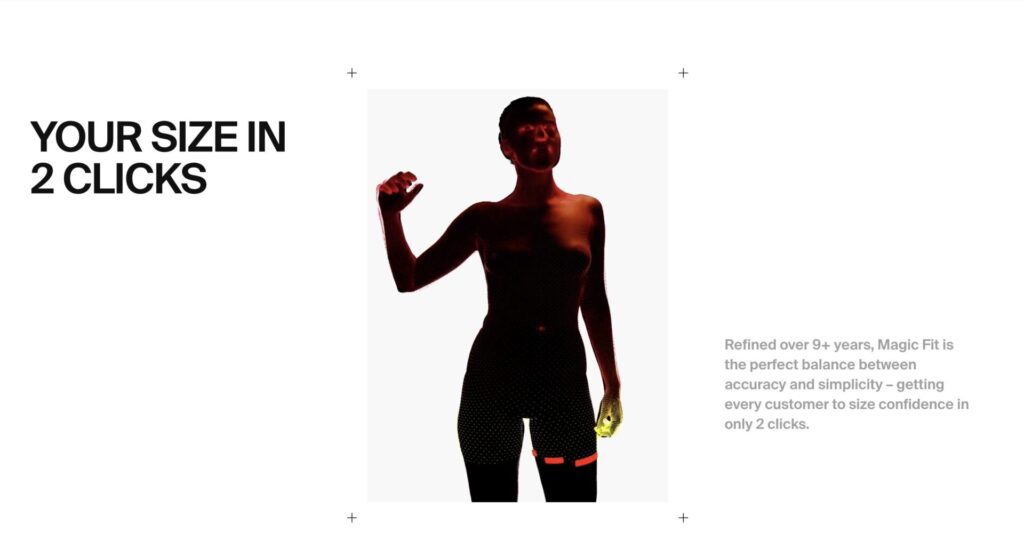
Magic Fit was built to reduce size anxiety and spun out in 2025 so the impact could scale beyond one brand.
Magic Fit was “built to unf*ck the fashion industry” and spun out in 2025 so the impact could scale beyond one brand.

Fit is a pre-purchase emotion

Zoltan Csaki has spent nearly a decade trying to solve the fit problem from inside the fashion industry. As the co-founder of Citizen Wolf and MagicFit, his view is refreshingly blunt: most brands are looking at the wrong metric.

“People who are size confident end up spending more money: conversion went up, AOV went up and returns went down.”

Zoltan reframes fit as something that lives at the decision point, not the returns desk. Customers often like the product and the brand, but don’t trust how it will fit. That uncertainty creates hesitation, and that hesitation rarely shows up in reporting.

MagicFit’s insight is simple but powerful: remove anxiety before checkout and the entire ecommerce engine works better. Returns fall, but more importantly, invisible lost revenue is recovered through higher conversion and spend.

Choices that feel harder than they need to be

AS Colour operates in what looks like a simple category from the outside, but is deceptively complex online: t-shirts.

Joe Sharplin, Head of Ecommerce at AS Colour, explained how overwhelming a t-shirt PLP can become when customers are faced with dozens of near-identical options. To most shoppers, a t-shirt is a t-shirt: until it isn’t.

To solve this, AS Colour introduced hero franchise filters at the top of their PLPs. Rather than forcing customers to compare dozens of SKUs, shoppers start by choosing a franchise based on weight and fit (think Staple, Classic, Oversized, and so on, each clearly explained in plain English).

The second layer was just as important: proper PLP filtering and improved search, allowing customers to narrow by fit or fabric weight.

The result isn’t more choice. It’s less cognitive load. Confusion is replaced with confidence, and confidence is what gets customers to add to cart instead of tapping out.

Yes, your customers are allowed to not know their size

Try With Mirra takes a more radical approach.

Pete Ceredig-Evans argues that if brands want high-value fashion customers, they need to stop fighting a behaviour that already exists (trying multiple items) and instead, design for it.

TWM digitises the fitting room. Customers try before they buy and only pay for what they keep. On paper, it sounds like a CFO’s nightmare. In practice, the data tells a different story.

By removing the financial risk of “getting it wrong”, Try With Mirra sees lower cart abandonment, higher first-time conversion, and, most notably, average order values lifting by up to 48 percent.


The insight is pretty clear: when anxiety disappears, customers buy with confidence. Brands aren’t giving up control: they’re investing in trust.


In this Playbook:

  • Why size anxiety is one of the biggest hidden conversion killers in fashion ecommerce
  • How confidence at the decision point drives higher conversion and AOV
  • Why fit should be treated as a pre-purchase experience, not a post-purchase problem
  • How AS Colour uses hero franchises to reduce PLP overwhelm
  • Why “try before you buy” can outperform traditional checkout models
  • How removing commitment can unlock higher-value customers

Read the full transcript Auto-generated

Nathan Bush: Sure, you can stay up late tinkering with your Shopify store or have your friend's cousin design from a template for you. But what if you're serious about Shopify? The kind of serious where it's responsible for tens of millions of dollars of your business's revenue, both online and offline? You need a serious Shopify partner. That's why we at Add to Cart are so happy to be partnering with Convert Digital. Convert Digital has been named a Shopify Platinum Partner. It's a status that's held by FUE newer than 30 agencies worldwide. That means Convert are the go to for brands like Age, Honeybadette, Chopo and Gander who need to not only optimize Shopify, but innovate with it. So if you are ready to get serious with Shopify, Convert Digital are your Platinum partner team. Visit convertdigital.com and have a chat with their newly crowned Shopify Platinum Partner team. I reckon for most fashion founders, the word fit and sizing is a word that gives them nightmares every single night. It's the part of fashion that can absolutely erode your margins. It's the reason that that return pile is out of control. And it's why your warehouse is full of half open boxes that can't be resold. So often sizing and fit is is treated as a logistical or an inventory issue and often as a bit of a headache. But here's the thing. If you stop looking at fit as a headache and start to look at it as a psychological barrier or even a potential conversion point, everything changes. Because the real opportunity isn't in reducing returns or clearing inventory. It's in the customer who connects with you. Because you have clothes that fit in sizes that represent them. That really clicked with me after a recent chat with Zoltan Sharkey, co founder of Citizen Wolf and Magic Fit. Zoltan spent the better part of the last decade trying to solve the fit problem from inside the fashion industry, which he thinks, in his own words, is just simply fucked. And he is taking a refreshing punt on a new way to do fitment. Zoltan put it simply, people who are size confident spend more money. That's pretty powerful when you start looking at as a conversion opportunity, not a cost saving exercise. So in this playbook, I want to pull together a few really great lessons from recent Add to Cart guests who have used sizing and fit to really power their growth and their conversion, to find new customers to keep the ones that they've got and to create a bit of a moat around their fashion business using size and fit at the core. We'll start with Zoltan's take.

Zoltan Sharkey: When you say the words out loud, it's kind of no surprise because to your point, not even like brand to brand is obviously going to be different. There are no standard sizes in the industry. But then even like within a brand, like LSKD or Koto for example, you can never be sure what size. Like it's just such a minefield. Right. And that's why we know that size is basically the driving factor for I think it's 53% of returns was the stat that I saw, if not more. And I guess it's brand specific. But yeah, the lion's share of returns are fit related.

Nathan Bush: So I could imagine too that it also becomes a little bit of a competitive edge. So as brands are worried about maybe traffic going towards marketplaces or potentially even to ChatGPT to transact in the not too distant future, having that ability to still deliver that experience on site, knowing that they know their product inside out and they've got a tool to help their customers find the right fit the first time. Because a lot of the time it's not so much about the money, it's about the pain in the ass of having to return items when you think you've ticked something off your list. Right, right. So there could be something there emerging for you as well around. Well, we're actually gonna make the website useful for you and give you a point of difference that you can't get on other channels.

Zoltan Sharkey: Yeah, absolutely. I think, you know, the ChatGPT example is it's really salient. Obviously everyone's talking about it at the moment. I do see a world in which, you know, you could have your Magic Fit passport. And irrespective. And like ChatGPT knows this and irrespective of which brand you shop, if they're integrated with Magic Fit then then we can facilitate size within that experience. And I think moving forward that's going to be really important. But you know, one of the key advantages I think that we're ultimately selling to brands is, is fit as a strategic differentiator which is, I think, you know what we're dancing around here and cause the thing that we, we're doing is Magic Feed exists on other brands websites. It's in the pre purchase experience. Right. And so if you're anxious about size, traditionally you've had to interface with a size guide. Now you're looking at me like someone who has looked at a size guide and gone, I Don't fucking. Like what is just tables and numbers and like, is it garment measurements or are these body measurements? How many people actually have a tape measure to handle? But even if you do, Nathan, nobody knows how to use it, right? And that was exactly the starting point for us at Citizen Wolf nine years ago trying to create the magic FIT algorithm was that, you know, rubbish in, rubbish out. If, if we're doing made to measure and somebody tells me their chest is 100cm and then I make them a garment that fits a 100 centimeter chest, but actually they got it wrong and their chest is 103cm, then who's going to be responsible for the garment that doesn't fit? They're not going to own it. They're not going to say, oh yeah, you're right, sorry, that's on me, I measured myself poorly. No, they're going to be like, you suck, Your service sucks, your product sucks, I want a refund. And so our starting point was we had to design out the measuring tape in order to make that experience of made to measure as frictionless as possible, actually. Well though it turns out that that logic holds for standard sizes. And because to your point, even if you've got the tape and most people don't, but even if you do, most people can't use it properly or accurately. And so plus it just like it completely interrupts the process. You know, you're on there, you're on the brand website, you're on the pdp. It's the beating heart of the E comm side. It's beautifully laid out and done and you know, so many, so much blood, sweat and tears has gone into making that page just so. And like that's true of every E commerce site, but like the fashion industry is more service level than most. And so, you know, I think it's safe to say that it's probably a little bit more well argued or whatever. And then you know, you're like, oh, I don't know what size I am. Oh wait, I'm just going to like get up and like route through the bottom drawer to try find this thing. And then like something happens, your phone rings or blah, blah, blah, the Amazon guy shows up and then lo and behold, you abandoned the cart. You know, that's just, that's just reality. And maybe you go back at some point and you might finish that transaction, but you know enough about E. Com to know that if you can get them just by entering, you know, that

Nathan Bush: important in their life that they're going to come back and give you a second, third, fourth visit.

Zoltan Sharkey: Yeah, exactly. So you want to capitalize on the attention you've got. And so I think breaking that experience in any way is just a, is a bad start. So yeah, Magic Fit just makes it extremely seamless. Magic Fit basically eliminates size anxiety for the customer pre purchase. I think the opportunity for us and sort of like the vision I guess for the product is to eliminate any anxiety pre purchase within the fashion vertical. So you know, size is obviously the biggest one but there's anxiety around color, there's anxiety around style, like does this style fit my body shape or suit my body shape I should say. And then you know, even there's ultimately use case based stuff like you know, I'm going to run a marathon in Boston. I've never been there. It's in February next next year. I don't know what the weather's doing, I don't know what I, you know, tell me what I need to wear kind of thing. So I think we have license to extend out from size, keeping that as the foundational kernel really but extend out to allay any anxiety that the customer may feel pre purchase.

Nathan Bush: What I love about Zoltan's perspective is that it cuts straight through the noise. He's not backwards in coming forward and he is adamant that sizing and fit, getting that right is at the core of a great fashion business. Most brands treat fit as a post purchase issue. Zoltan treats it as a pre purchase emotion. He talks a lot about size anxiety, that moment where a customer likes the product, likes the brand but doesn't trust the outcome. So they hesitate or they bracket or they bounce entirely. And the uncomfortable truth is this. You'll never see that in your returns report that lost conversion is invisible. Fit isn't something to clean up after checkout, a problem to be created. It's something to solve at the customer's decision point. How do you create confidence and take away that anxiety? If customers don't trust the outcome that you're not going to solve their problem or make them look spectacular, no amount of performance marketing is going to save you. In a similar vein but with a slightly different business approach was Joe Sharplin at Ascolor. They think about hero franchises in terms of product to make choice feel easy. They specialize in a deceptively hard fashion category, T shirts. While a T shirt might seem pretty basic, we all know as soon as we throw one on whether it's the right fit or not. They pride themselves on creating great fit and great quality T Shirts to give that customer confidence in their sizing and take away that anxiety for the rest of their range. On our podcast, Joe said that when you hit the T shirt PLP and you are scrolling forever because there's so much detail in there, a lot of people just tap out. They get overwhelmed because to a normal person a T shirt is a T shirt. And suddenly they're being asked to choose from 45 versions of what looks like on the screen. The same thing. So as color built a really smart solution into their site, they call them hero franchise filters. And they put them at the top of the PLP. And instead of forcing customers to compare dozens of SKUs, they let customers start with a simple decision. Pick the franchise that you're interested in. Staple, classic, oversized, whatever it is. Each franchise has a consistent weight and fit, like 180gsm versus 220gsm. And as color makes that information super easy to understand right there on the PLP. So the customer isn't thinking, which of these 45t is right? Which ones will fit me? They're thinking, do I want a lighter and softer or heavier and more structured T shirt? That's the decision point there to get them to the right fit. And that's a completely different mental load. Then Joe talked about the second piece that really made it work, bringing proper PLP filtering and better site search into the experience. Things like being able to search by weight or by fit. It's small on paper, but massive in reality. Because what you're really doing is turning confusion into confidence. And confidence is what gets customers to press that add to cart button. So if your product list is big or growing rapidly, don't just give customers more options. They actually don't want more options. Give them clearer starting points. Build a few hero groupings that explain fit to start with to get over those barriers. And in plain English, back it up with filtering and search that lets customers narrow in fit fast. We don't want that fit anxiety hanging around too long because the faster someone can say, yep, that's my kind of tea, the less likely they are to bounce or to buy three sizes and send two back. Another approach was brought to us by Pete Keredig Evans. He's from Try with Mirror, a new solution that lets customers try without commitment. And as a retailer, it kind of sounds scary at first. Pete argues that if you want high value fashion customers, you actually need to encourage the behavior that most brands try to kill upfront. Trying multiple items. We actually don't want them trying multiple items. But Pete's built a solution to help retailers and customers win at the same time. Try with Mirror digitizes the fitting room. Customers try before they buy and they only pay for what they keep, which sounds like a CFO's worst nightmare really. But the actual data goes the other way by removing the financial friction of getting it wrong. That anxiety that we talked about, customers are more likely to complete the purchase in the first place. Cart abandonment drops first time, conversion improves. And the big kicker that Pete talked about is that average order values can lift by 48%. That's what happens when you stop punishing customers for not knowing their size and when you remove the anxiety that comes with Will this be right for me here? You're not giving up control and not necessarily even margin, but you're buying confidence. And buying confidence is something that every fashion retailer should be aiming for in that transaction period. If there's one thing that I hope this playbook makes clear is that don't treat size and fit as a problem that you need to serve after the customer has transacted. Treat it as a conversion opportunity and a way to instill confidence before the customer has transacted. If you leave it to the end, it's way too late. Salt and showed us that when customers trust the outcome, they spend more and they convert faster. We all want that. Joe showed us that you can manufacture confidence just by structuring your range around fit pathways that customers actually understand and simplifies the decision process for them. And Pete proved that by removing commitment at the fitting stage, you can dramatically increase aov. Different tactics, but all the same truth. When customers feel confident around fitment and size, that size anxiety goes away and you're set up to scale.

Tagged

  • Customer Experience and Retention
  • Shopify and eCommerce Tech
  • Marketing and Acquisition
Add To Cart is brought to you by
Gold partners of Australia's ecommerce podcast
Primary episodes · Mondays and Wednesdays

Other episodes you might like

1,116 posts · people posting daily

In the community right now

Free to join. Ask the thing you can't ask your team, and get an answer from someone who's already solved it.

Join the community