Pete Ceredig-Evans: It's just because they're encouraged to try more and then they end up keeping more. As long as we live in the real world and we're not always living in the meta world, we'll still want to be able to try on close. We're not encouraging returns or increasing them, but we are reducing cart abandonment.
[Voiceover]: Welcome to Add to cart, Australia's leading e commerce podcast that Express delivers all you need to know in the fast moving world of online retail.
Pete Ceredig-Evans: Here's your host, Bushy
[Voiceover]: Foreign.
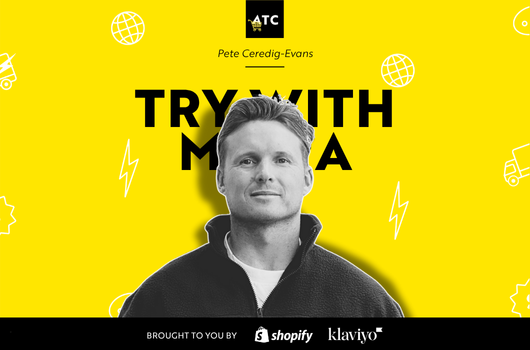
Nathan Bush: Hey, it's Nathan Bush or Bushy joining you from the land of the terrible people here in Brisbane, Australia. And today I have a tricky question to ask you. What if the secret to fewer returns was more returns? It sounds backwards, right? But stick with me Pete Keredig Evans is flipping the e commerce model on its head with Try with Mirror. It's a Shopify app that lets customers try before they buy and surprisingly, it's boosting average order values by up to 48%. And no, that is not a typo. In this episode, Pete lifts the lid on how he built Try with Mirror into a native Shopify app, how merchants are using it to turn browsers into big spenders and how they're tackling returns without tanking your margins. We also dig into the psychology of wardrobe building, influencer strategies and why Just try it on might be just as good advice for e commerce as it
[Voiceover]: is in real life.
Nathan Bush: So if you are looking for a smarter way to boost conversions, lift average order value and turn returns into a revenue play, might be worth your while to keep listening. A quick heads up and no, this is not an ad. If you are enjoying the free content that we share across the Add to Cart community socials and this podcast, we would love your support. Hit subscribe wherever you're listening to help us keep bringing you the best e commerce insights around and keep this thing running smoother than same day fulfillment.
[Voiceover]: Pete, welcome to Add to cart.
Pete Ceredig-Evans: Lovely to be here Nate. Thank you.
[Voiceover]: Great to have you here. No soft entries to this conversation. I'm going to hit you straight up. As soon as I saw your product and what you're doing, this was the question that I wanted to ask you. Most retailers at the moment are trying to actively decrease the number of returns that they've got. You've built a business and an offering for retailers that's actually increasing them. How are you getting traction with that?
Pete Ceredig-Evans: Well, yeah, it's a good way of putting it, but we're actually flipping the e commerce model on its head in terms of how customers purchase online. But we're not encouraging returns or increasing them. But we are reducing cart abandonment and increasing the conversion of first time customers. But let's start on the problem we're actually solving which is when people are going to a store to purchase apparel, footwear, swimwear, you know, anything which requires that sensory experience. The way they shop is they'll pick something up, try on in the fitting room, make sure it feels good and fit and then they'll purchase it. You know, that is a critical part of the buying journey that's just completely lost with online and merchants. Online merchants that aren't using trial Mirror, you know, just have to rely on amazing branding, storytelling, creative, you know, social proofing, great website, great navigation, categorization, product display, page, cart.
[Voiceover]: Check out all those critical few things to get right.
Pete Ceredig-Evans: Yeah. Which are all critical. But it's not solving the customer problem. You know, if they're buying a microwave, it's a microwave. You know, it's, it either works or it doesn't. If it's a dress or a pair of trousers, it's much more subjective and personal. Okay. So all of those things do half the job but ultimately the customer is really going to decide what they want when they get it home. And so we'll try with mirror we are just delaying that purchase decision from the checkout until the customer gets it home. Now it's all secured in terms of we authorize the payments but we don't remove those funds off the customer's card. So they really are feeling like great, I'm not making that decision now. I'm only making that decision with once I've tried it on which is how they want to shop. But going back to is this increasing returns? Look, we didn't know what was going to happen. We just started off building a solution that was about creating a better online shopping experience for the customers. Removing risk, removing hesitation as they're going through that cart journey which causes them to just drop off. But what we're seeing is that they end up keeping more.
[Voiceover]: So I want to talk through the customer journey so everyone fully understands how it works.
Pete Ceredig-Evans: Yeah, great.
[Voiceover]: But before we do, what inspired you to go down this path of.
Nathan Bush: Because it's an age old problem.
Pete Ceredig-Evans: Right.
[Voiceover]: It's not a new problem in E commerce. E commerce has been around a long time and it's always been the thing of people won't buy stuff online because they can't touch and feel it and you know, try it on. What made you go actually I'm Going to go and solve this age old problem.
Pete Ceredig-Evans: Yeah. I mean one of the guys who've done really, really well, Warby Parker, the big eyewear brand in the us you look at their story and their digital success came from really driving home try on. We were looking at this and we could see that they were like just putting eyewear in customers hands because they knew that customers wanted to be able to touch and try them on and then before committing to a purchase. So that's what they did. Okay. And not only it solved that customer problem in terms of, you know, the customer going great, this fits. I love it, it's cool. But it actually drove really strong commercial outcomes for the business. Okay. And if you go on their website today, it's the first thing you see on their navigation. You see Warby Parker just home front. Try five on before you purchase. It's like yeah, great. You know, so that was a really big part of the inspiration and also my background before this was I was working in E commerce and I knew the complexities of building something like this around inventory management, payments, returns finance, order management. And so I thought, okay, Warby Parker would have spent millions building this in house which is very customer specific to their operating model and business processes. But if we can build this as a Shopify native app that drives growth businesses as well as an amazing customer experience. Instead of a business spending millions building ourselves, we can develop ourselves. You know, we're all kind of product and engineering and software guys and girls. We can then enable Shopify brands to offer it to their customers.
[Voiceover]: Because you were you in the IT team for MX Store before this?
Pete Ceredig-Evans: Yeah, yeah, yeah, yeah, yeah.
[Voiceover]: So powerhouse.
Pete Ceredig-Evans: They are an amazing business and still got lots of good friends there. I was a business analyst there. I started as a business analyst in their like projects team. So worked across everything from strategy, supply chain management. Not so much on the front end, but more around the kind of operating model. And then I moved into the tech team where we were really focused on driving operational efficiencies. So you know, they. I'm not sure how many people know much about MX Store, but they are a bunch of guns, you know. Yeah, talking 150 people, $100 million online and they're the kind of guys that aren't at awards evenings. They've just got their head down just doing business and doing it really well. So yeah, I kind of had an amazing. Yeah, that was probably nine years ago now when I first came to Australia.
[Voiceover]: I've done a deep dive on MX Store and I know they're doing a lot of things, especially technically, which you should be proud of in playing a role in that. A lot of the big players in that industry are really struggling to do.
Pete Ceredig-Evans: Yeah, yeah.
[Voiceover]: But they've cracked the code on a
Pete Ceredig-Evans: lot of it, a hundred percent. But also it sounds complex and large, but really when you bring it back it comes down to like simple brand promises around the customer and customer experience. Have a great range of products, have amazing delivery in terms of service and delivery. So one thing we did in terms of ops and technology was measuring like pick velocity and increasing or reducing the risk of anything preventing fulfillments and increasing fulfillment speeds and saying like, you know, if you ordered this before 2:30, you get all of these things that all come back to the customer and solving customer problems. And so yeah, it was a great place to start out.
[Voiceover]: Awesome. And how long ago did you start tribe with Mirror?
Pete Ceredig-Evans: About two and a half years ago.
[Voiceover]: Wow.
Pete Ceredig-Evans: Yeah, started with two friends, three of us, we kind of bootstrapped it. We got built an end to end app and we. Part of my background in software was always knowing that software is expensive when you're building it. Okay. And the one thing you don't want to do is make a load of assumptions on what you think you should be building and, and get your head down and build for two years and not give your software to anyone. So you should do the opposite of that. You should learn from your experience. You should build lean. So focus on the essentials and removing waste and be like cool. What is the. Let's create an end to end working application that we can give to users, I.e. merchants as quickly as possible and learn from their feedback. Use that data to drive any product function, decision making, movement forward. And so that's what we did. We kind of built that in about three months and it was very, no bells and whistles, maybe four months. And then we got approved on Shopify and then we started getting brands and then, yeah, went from there. Now we're a team of 10. We just hired our 10th person who's our US head of sales.
[Voiceover]: Awesome.
Pete Ceredig-Evans: Yeah, yeah. Wild journey.
[Voiceover]: Congratulations, mate. That's, that's a huge move. Do you remember the first version that you got feedback from your first merchant on?
Pete Ceredig-Evans: Yeah, I do. I mean it's funny, all of the functionality inside the app for merchants has come just from feedback and we've always had a vision in terms of where we want to go and if it's in line with that vision and the problems we want to solve in the future, we Just build it. So some of that feedback was a brand was like, hey Pete, I want to. They're a great brand actually. And they were like, hey Pete, we want to just offer this to Australian based customers and have it segmented. We're like, yeah, cool, that's great. Makes total sense. So using geolocation services, we kind of look for IP addresses and then only allow Australian based IP addresses to able to go into the site. We also off the back of that built segmentation. So we could say, look, if you were wanting to roll this out as a loyalty program only or VIP program, we can do that. So we can restrict access via vi, like a URL access or customer tagging. We've got analytics as well. So the brand would be like, hey, we want to see these parts, you know, this data. We want to see this returns information, we want to see this customer lifetime value information. So we'd be building that.
[Voiceover]: And fast forward to today. What kind of brands have you got on? Try with Mirror now.
Pete Ceredig-Evans: Do you know what we got mainly like women's fashion, footwear, swimwear, eyewear. The last brand that just came on board was Mr. Zimmy. We also got, we got some great brands like Silk Laundry, Alexandra Australia, Peach A, you know, women's jeans. We got Gilique Skincare. And that's an interesting one to talk about because I was at first bit like, how on earth are we going to do skincare? Because when someone opens it, they can't use it again.
[Voiceover]: It's done.
Pete Ceredig-Evans: Yeah. And so when I met with the team there, Pam, who's the head of E Comm, who's brilliant, I met with her last year and I said, why don't we just enable. When a customer adds the item to the cart, we can automatically enable the relating sample to be added to the fulfillment. So when the customer receive the item, they have seven days to use a 20 mil sample and they've got the product there unopened. And if they want it, they hit yes. If they don't want it, they hit return. And so it's, it's really just putting product and obviously they have loads of these samples so it's enabling the customer to test it without committing. They've had a 96% purchase rate, you know, so wow.
[Voiceover]: Temptation by proximity.
Pete Ceredig-Evans: So. So more skincare brands are coming on. We've got Bondi Boost going to be launching this month. Yeah. So, yeah, footwear, swimwear, lots of eyewear. There's a great brand down in Sydney called Amiware. They've been using US now for probably almost two years. They've actually just launched it out across Europe as well. So they've got a European headquarters as well. So yeah, it's good fun.
[Voiceover]: So you are integrated with Shopify available on the Shopify app store. Not that it matters to a customer. Talk me through. When a customer at one of those brands that you mentioned, whether it's Pichai Jolique, Mr. Zimmy goes and adds items to the checkout. Can you talk us through the process from a customer perspective from there?
Pete Ceredig-Evans: Yeah, absolutely. So first of all, our button will sit below the add to cart button. It'll say try at home or try before you buy home. Try on. It's up to the brand. It doesn't replace the add to cart journey. So if a customer knows they want something, they can just buy it. That's where they will add a product to the cart. So if they hit try before you buy it adds an item into the cart. The difference, technically what's happening, it's on a selling plan. So at the point of checkout, the funds are going to be authorized, but the funds won't be removed. So it'll say $0 on the checkout.
[Voiceover]: So they go through the normal Shopify standard checkout process.
Pete Ceredig-Evans: Yeah, everything happens through that. Now that order will then land inside and most brands will say, hey, try up to four items. Okay. There'll be a limit. They won't just say try 15 items because it's very unwritten, not realistic that people are going to be buying 15 items. So let's say try up to four items. And so they'll add their items in. Not always up to that limit, whatever.
[Voiceover]: But you can add one if you want.
Pete Ceredig-Evans: They can add one? Yeah, absolutely. They can do mix orders as well, like a buy now order and a trial. Everything stays inside the existing customer journey through the car. At the checkout, it'll say $0, but let's say it's $400. We authorize that on the customer's card so it's secured. It'll be like imagine you go to a hotel and they swipe your card and it's a security hold in case you kind of smash the minibar and just do a runner.
[Voiceover]: So customers still got to have the credit limit available to them for that transaction.
Pete Ceredig-Evans: They do. And so this order, when they hit pay now, this order lands inside the merchant Shopify. It is a Shopify native order. Now we integrate with all the main ERPs fulfillment apps. You know, so whether you're a million dollar business or $100 million business, you know that order will be fulfilled as normal. If you've got 50 people picking and packing in your warehouse and that order comes through, they won't know the difference, it'll just be fulfilled as normal. Now there's a tracking number on that fulfillment. We programmatically take that and put it into our own shipping aggregator so we know where the order is. So once that order is delivered to the customer, that is when the home trial starts. Now most brands, every brand can set however long they want the trial. Skincare brands do maybe seven days or heck might be 21 days. All fashion brands do either three or four days. I don't think we have any fashion brand doing longer than four days. Now come on to why that's great in a moment.
[Voiceover]: And is that three or four days from the delivery? From the time it hits? Okay, It's a doorstep.
Pete Ceredig-Evans: Yeah. That's why we have our own shipping aggregator. To know where that using the tracking number to know where the order is once it's delivered to the customer, we send a SMS and an email saying hey you're julique order with trial mirrors being delivered and we give them a link to a portal and that's where they go in and complete their order. So it's a customer portal which just has, it's all branded, you know, to whichever merchant. So it really looks like an extension of their checkout and it has the product images and they'll just hit, yeah, I want to keep this, keep this. You know, in a couple of clicks they can complete their order if there is a returning item, if they want to keep 3 return 1, we will auto generate a return label. Okay, so it's got its inbuilt returns management system in there. If it's in Australia, for example, we have our own epastel account but we can just use merchants epassel account, you know, use their API credentials, call a label, customer will pull a digital version. Most of the time they do it on their, on their mobile and they return any items. So really simple customer experience. You know, we've got lots of brands with all the demographic and that was a real test to make sure that it, you know, they find it easy and enjoyable and so the feedback's been great. But what's interesting is that 90% of customers are completing their order within 24 hours of it getting delivered. Okay, so once they complete their order they then have three days. Well, the default was three days. Brands can set it to then take any returning item back to the Post office. So most brands might have a 30 day returns window. Okay. So if it's a trial that if there is a returning item, it's coming back to your warehouse to be issued back into stock as a resellable quantity in about a quarter of the time.
[Voiceover]: Yeah, that makes a lot of sense from a. Just to pick up on that last part of the customer journey. So if I need to go and return something, I've got a digital slip, I then have to go to a post office and do that manually because you're shipping it out as it's a normal order. There's no return parcel or anything in the order itself.
Pete Ceredig-Evans: Yeah. So brands often will give a. Have a. Just use the same satchel.
[Voiceover]: Yeah.
Pete Ceredig-Evans: And then they'll take their, take the returning item to the post office. They show the phone the digital label, they don't print it out and the post office scan the QR code and print the label for them.
[Voiceover]: Away you go. Beautiful.
Pete Ceredig-Evans: And. Or they can return and store if they live in a metro area and they want to be like, yeah, cool. They can just hit return and store
[Voiceover]: from the time that a customer says, no, I don't want that. So it's within the three day window. If it's a three day window, how much grace do most retailers give before it lands back on the retailer's doorstep?
Pete Ceredig-Evans: Oh, sorry, that is three days. So once they've completed their order saying, I'm keeping this, they then say to the customer, you've got three days to take your returning item to the post office.
[Voiceover]: Gotcha.
Pete Ceredig-Evans: Now that's our default settings. But merchants can say, I want to allow the customer five days. Most brands will say three days. It's kind of like if you gave them three weeks, that takes three weeks. So yeah, yeah, you know, and we've done, we've obviously we've had like almost 20,000 shoppers now go through Tribemia for various brands. Like you're talking hundreds of merchants, mainly Australia, now US and uk. And all of these settings have been built from data and feedback from the customer, you know, to make it a good experience. So. And there's a tracking number on that return, you know, return slip. So those return events are being tracked too.
[Voiceover]: Okay, all right, lovely. From a data perspective, amazing how much data that you've got access to now.
Pete Ceredig-Evans: Yeah, amazing.
Nathan Bush: Are you finding that most customers are
[Voiceover]: using try with mirror to test, say different sizing of the same style of product or are you finding that they're almost wardrobe building and trying to find the ideal wardrobe yeah, that's a really good point.
Pete Ceredig-Evans: So when you ask about where the customer interacts with it, it actually happens before the product page, before the pdp. It happened because we've got now a marketing manager and lead designer called Olivia who builds out all these kind of go to market activation templates for brands to use throughout the funnel. Because what they're really doing is about saying, look, build your capsule, build your wardrobe, you know, select these items. And so they're encouraging the customers to try different styles. You know, it's not just buying a hat or buying a shirt. It's like, hey, try these jeans, this shirt and this jacket and these shoes. And. And then they get it home and then they have that elevated experience of trying it on and that, you know, our home mix and match it with their wardrobe. And so that they're kind of keeping more. And that's why we're seeing such a big uplift in average order value. You know, it's just because they're encouraged to try more and then they end up keeping more.
[Voiceover]: And so the stat that you shared with me before this was that average order value, you're seeing that it's been boosted by 38% with try with mirror. Tell me about the insights that you've got around that. Why do you think it's so high?
Pete Ceredig-Evans: Yeah, so 38%. We were looking back at historical data from all the brands. We've just ran it from the last 90 days because we brought over the last few months, we're getting more and more busy, which has been great. It's now now closer to 50%.
[Voiceover]: Wow.
Pete Ceredig-Evans: Okay. And when I say what that really means is we are obviously looking at the average order value of a regular order. We compare that across the aggregated so across all our brands with the completed average order value of a trial mirror order. So when I say completed, that's not at the point of checkout. That's once the customer gets the items home and they decide what they are actually buying. That's when we measure it, that number is now 48% greater.
[Voiceover]: Wow.
Pete Ceredig-Evans: And that's been something that we never planned. Vision has always been to create the most impactful online shopping experience that drives growth. We saw that growth coming through converting new customers, reducing cart abandonment. But seems is as you know, you know, you're an E commerce expert, it's all about the unit economics. And if you can improve average order value and keep fixed costs, you can really improve bottom contribution margin. And so, yeah, we're blown away. It is testament to the amazing brands we work with and the amazing products they have, all we're doing is kind of facilitating a better way for customers to connect with them.
[Voiceover]: Amazing. So I love that you've mentioned margin there, aov, that's fantastic. I think all retailers will be like, yep, this is interesting. And then in terms of where it could cost retailers, obviously on the return side in processing that return cost, is that covered by the customer?
Pete Ceredig-Evans: Yeah, I mean I just pulled up some returns data before this call now and I just looked at four, pulled up four brands. One has a trive mirror has 14%, one had 12 and one had 8% in terms of their returns. So it wasn't, they weren't big numbers at all in terms of fashion. Now when the shopper decided they are returning something, the brand can take where the cost of that label or they can charge a customer for that label. Typically what most brands do is they say if you are buying at least one item but you want to return one item as well, we will cover the cost of that return label. But if you're returning everything, let's say you've ordered something, go, do you know what? I'm returning all of this. I don't like it. The customers can be charged their return label fee or they can call it a restocking fee. Again, completely up to the merchant. And there's a balance there, isn't there? About making sure that it's not, you know, because returns are always going to be a part of E commerce. It's not about getting rid of returns. It's about creating a better experience for the customer but also a more cost effective and operationally effective experience for the merchants as well.
[Voiceover]: And I don't think most merchants mind manageable amounts of returns if they can actually still sell the product to your point, around that fast turnaround time. That's a lot better than a 30 day or a 60 day return window.
Pete Ceredig-Evans: If someone's ordering something through TriumphIR and they've got three days, they can't plan it because without bound shipping being as you know, it's not always very consistent. So they've only got it for three days. If they don't complete their order in three days, they're going to get charged the full amount. And we've done lots of surveys of our merchants and their customer service and warehousing team, order management, receiving team around, hey, can you give us some feedback on the quality of products? Have there been issues? And we hear really positive responses and in fact what we're seeing is that because customers have the order for such a short time at home and 90% complete it within 24 hours of receiving. It's not like a throw in the corner. I've got three weeks to keep it here. In return, it's like, okay, I'm trying this on. Yeah, I love this. I love this, you know. Yes, cool. I'm keeping all of it or no, I'm going to keep this and return this. Great. That goes back in the satchel. I'm going to take it on Monday. It's a different, different behavior and I
[Voiceover]: could imagine with the retailers that have that tight turnaround, especially that three day window, it makes it hard. Even if customers wanted to game the system and say, I'm going to do a try with mirror and hope that I get it here for the Saturday night event, wear it out and then return it straight away. Because you'd have to time it with a dispatch and everything like that, wouldn't you?
Pete Ceredig-Evans: Yeah, absolutely. And also, you know, we have our try before you buy terms which we give to merchants which they'll load up onto a page. You know, they'll put a page up in their navigation course called Home. I think Silk Laundry call it a concierge service, which is amazing because like it's not about us. Try a mirror. It's, it's their own is their kind of service. We're just powering it so they kind of use their own time and you know, Romy the brand do the same thing. And inside those terms it will say like if you've worn this item, if you've damaged it, if the labels have been removed, if there are labels, then the customer can be charged for it. So the car details still remain on that order until that items come back. So if they've abused the system, they can get blacklisted and charged.
[Voiceover]: Right. Serious stuff.
Pete Ceredig-Evans: It's a brand's discretion. Of course, you know, we don't get involved in that.
[Voiceover]: Absolutely. One of the things that I was thinking about as you were talking about that home showcasing, essentially, have you seen any examples where customers have almost like that whole mentality and been used social to kind of social shop once they get their haul of goods home to ask for opinions like does it amplify any social commentary at all?
Pete Ceredig-Evans: As in through influences and people?
[Voiceover]: Yeah, as in, yeah, influencers ordering say three, four items and then asking for opinions of followers on which ones they should keep, which ones they should send back.
Pete Ceredig-Evans: We should really ask Liv, our marketing and design guy who kind of manages. I don't Spend enough time on social. Well, we've seen brands use their influencers really well. So we've seen brands go hey, we work with this influencer, she's great, great content. And so they'll say hey look, can you please. Because they can see that the try at home or the tribal for you buy experience is helping convert a much higher percentage of first time customers. So they say to their influencer, hey, we've got this new collection dropping, can you talk about it and can you please remind the following or when you're doing the post to say hey. And also if you're unsure of your size, please use the try at home service, yada, yada yada. And that's having a great impact as well. And sometimes we see influencers that do a drop and then we go, all right, here we go. And then we suddenly see all the orders fight from a brand. Yeah, so that's great. And that comes back to the whole, you know, why, why would they do this? Because ultimately that customer, you know, is, might be, I mean they, they say that one of the biggest reasons why customers will abandon car when they're buying for fashion apparel, dresses, shirts, is unsure of the fit and the size and ultimately if they're going to love it and feel good in there. And so this is just helping solve that problem. And that's why we're seeing a big increase. You know, we've got some brands with 93% of their tribe before you buy orders of first time customers.
[Voiceover]: Wow, that's cool. One of the things that you mentioned in our pre chat that I thought was really interesting was that you've either got it now or you're developing. And if you're developing, we might have to take this beat out of the conversation. The ability for retailers to incentivize customers who might have multiple items, like give them an incentive to keep all four. If they're indicating that they might send one back.
Pete Ceredig-Evans: Yeah. Is that why I can talk about that? Yeah, yeah, yeah. So that was one of the features actually we got back from a brand a year ago. So discounting, and I love talking about this is because discounting is, you know, brands don't discount because they love it. They do it to get conversions but ultimately it hurts margin and brand equity, you know, but you can do it in a really strategic and smart way which doesn't do that. And so what we've done is we've created like a feature in the back end of our app which is like an upsell so you can create a Rule, which is if the customer keeps two items, they're going to get a small saving or if they keep three items, they're going to get a small saving. Or various different rules that you can kind of program into the application, which doesn't obviously have any impact on your web store. You know, there's not going to be any kind of big slash price reduction or anything. It's very much the customer's got the items in their hands, they're trying them on. And now this little incentive is saying, hey, instead of returning this item, you actually keep all of them. We'll give you a little saving and it's enough for them to keep.
[Voiceover]: Speaks to that concierge service, doesn't. It's like, oh, we got a little, little something extra for you if you like everything that you see today.
Pete Ceredig-Evans: Yeah, absolutely. And. But that's an interesting point as well. I think some brands will do that as well. So we've worked with quite a few, like bridesmaids, bridal companies that don't only do use, you know, tribal for you buy as a service to their customers, but they also say, hey, once you've already got it home, you're going to have a call with someone from our team and they're going to talk you. I don't know, they kind of like. So they're kind of really using it. And then building off that experience of just try before you buy order, bringing the fitting room to the customer's door and adding another layer of service in terms of speaking them through and helping them.
[Voiceover]: Because there's a few things going on there, isn't there? From a psychology perspective, it's like, well, I've already got it here with me and I'm kind of in love with it already. I don't want to be inconvenienced by having to go out and drop this off to send it back. Plus, I'm saving money by keeping it because I've got this little discount. You add all those three together and it's a pretty convincing conversion argument on a really high average order value.
Pete Ceredig-Evans: Yeah, nailed it. That's our entire value proposition and our go to market.
[Voiceover]: There you go. Well, I'm glad to accept the position of head of US Sales for you.
Pete Ceredig-Evans: Yeah, global head of sales. You'll have to fight Brian for that one. He's global head, mate. Come on board. Honestly, you nailed it. It is a psychology thing, you know, if I'm speaking with a new brand or like a C suite of a big, you know, kind, they go, you Know what Pete? I cut my teeth in retail for years and we always used to say when customers would come through the door we like just try on, just try it on. And they go. So I immediately resonate with what you're doing at Trium because you're just helping the customer shop, you're putting product in their hands because they know you say when they go to the try the changing room, they tried on the hoodie or they tried on the shirt, they massively increases the chance of conversion. So it is it's move taking the shifting that kind of purchase decision from that point of checkout till the customers got the products, tried it on, fallen in love with it and decided yes, I love this, yes, I can't be bothered to return it.
[Voiceover]: Yeah, that makes a lot of sense.
Nathan Bush: Tocuba's mission is to leave the world more amazing than we found it. So what does that look like? It means prioritizing sustainable practices, empowering amazing people and sending less rubbish emails. With the help of Klaviyo Daqua have been able to do exactly that and achieve 34% growth in revenue from Klaviyo flows. With Klaviyo Dikuba has been able to confidently send more emails knowing that they will be valuable by responding to omnichannel channel behaviors and targeting at risk and high intent shoppers differently and growing lookalike audiences. See the world doesn't need less email, just needs amazing email. To explore how Klaviyo can grow your e commerce business and to see more case studies like this, visit klaviyo.com au
[Voiceover]: let's talk through it from a retailer's perspective. So you mentioned that it's a native Shopify app plugin, is that right?
Pete Ceredig-Evans: Yeah, go to the Shopify app store, you can install it.
[Voiceover]: Any customization needed.
Pete Ceredig-Evans: Multiple currencies. There's a couple other competitors doing what we're doing, but they can't do multiple currencies. So yeah, look, most brands there's a free plan if people want to get going but as soon, you know, really it starts at about 450 and goes from there.
[Voiceover]: 450amonth?
Pete Ceredig-Evans: 450amonth and then we charge percentage on the completed item. So if you're on the kind of entry plan which is 450, it'd be 3% of a completed order and then that percentage comes down as you go up into higher plans and what the reason for that is because brands will often need quite a bit like support. You know, we're half of our team are Engineering, you know, all based here in Australia. And so there might be some, you know, depending on the ERP system or depending on the fulfillment app or the way they like to look at their data. You know, we can be here to manipulate things to make sure that it fits into your systems and processes well. Now in terms of the setup, we will help you to set up, we do the implementation as part of those costs.
[Voiceover]: Okay, and where is it that you and your team normally have to spend the most time to get it right from an operational perspective for a retailer?
Pete Ceredig-Evans: Yeah, that's a great question. So typically what we'll do is after like we've had a demo call and someone goes, yeah, this looks great, we'll hop on like a discovery call with their like tech or someone who is across order management, someone who just knows the systems really well in terms of that order lifecycle and we'll actually just place a test order. So we'll place a test order and now the key difference is that with a trial mirror order the payment status is authorized as opposed to paid. That will flow through. We enable their systems to consume that order and be fulfilled. That will update the page once it is updated the page when the customer gets it. So it depends on how complex that system is and how you know, they might be using a like an Oracle based ERP with like a hectic, you know, Shopify, you know, integrator and, and we have to work with like a third party team and all of that. Otherwise it's pretty straightforward. A couple of weeks ago I met with shop and four hours later they were live and then another two hours they started getting orders. But so there's a very kind of binary technical side of it. But then where our team add a huge amount of value and expertise is really on the go to market. So we have now full time merchant success manager, full time onboarding and full time design marketing manager who takes all the learnings and go to market practices that all these brands use across fashion, apparel, beauty, cosmetics and goes, this is the best way for you to activate and educate customers throughout the funnel, the actual digital funnel in optimizing and improving the numbers. You know, it's a bit like some brands, they have it sitting there, they're paying a subscription and 4% they see a 4% uplift. But it's, you know, it's not very exciting. You know, if you're improving average order value by 50% on 3% of orders, it's nothing that you're going to go awesome. But when brands really Activate customers throughout the funnel through kind of meta and have a page set up and you know, get their influences and communities talking about it and then have a really good kind of nurturing journey on saying, hey, look, we have this service, this is for you. This is like our VIP concierge home trial service. We've seen brands 18, 25, 30% uplifted and new orders with a 40, 45% uplift in average order value and that becomes something very exciting.
[Voiceover]: Yeah, it takes the barrier away a lot for a new customer, doesn't it? Especially who might not be certain of the fit or the quality.
Pete Ceredig-Evans: Yeah, so that's where a lot of our work and I guess value comes in as well. So it's not just like, hey, we set it up for you, but we kind of really work with you, work with your teams, your design teams and collaborate on making sure it's your tone of voice but also giving you the data in the playbook to help you get the best results.
[Voiceover]: Do you find many people you gave that concierge service, I think it was Silk Laundry before. Do you find many people integrating it as a benefit for in their loyalty program or do you find it better when people just offer it to every customer regardless?
Pete Ceredig-Evans: So it's interesting, it is a great thing if you're offering it as a loyalty program, as a part of your rewards and saying VIP only, but you're going to miss out on the impact it can have to converting new first time customers. Most of the time what's happened is a brand especially this happens in Australia where it is more like a cautious or conservative view to implementing maybe some new tech. They'll say, you know, we'll try on our VIPs first. Let's try on their VIPs and then they start to see that, oh yeah, it works well. Oh yeah, cool. There's a high purchase rate. Oh yeah. Increasing average order value and they just go ding. I know, let's use this on now, you know, really to try and acquire new first time customers. Because ultimately if you think about again the customer, if you are a first time customer to a brand, you go, okay, cool. Although they look pretty good and they've got a flashy website and they, you know, quite expensive. But I don't know, am I a medium? Am I large? Do I like that? Do I look good in it? Is that actually that color abandoned car?
[Voiceover]: Yeah.
Pete Ceredig-Evans: So that's where that the tribe before you buy is removing that risk, removing the hesitation. So we always very much encourage them to do that.
[Voiceover]: We're obviously coming up to peak season. I can't believe I'm saying that. As we enter July, do you expect that you'll have brands who disable it during peak? And I know I get your point around new customer acquisition. It's a great way to get customers in and reduce the risk. On the flip side of that, as a retailer, if I'm having a major sale event and I've got key sizes, variants that are in a customer's hands that I don't know whether they're going to keep or not, plus the pressure on returns and processing returns in a timely fashion, do you expect that you'll have any retailers who actually pause that offering during peak or do you expect it to amplify their peak?
Pete Ceredig-Evans: It's difficult to say so at the moment. The way they can manage it, they don't just have to turn it on and it's just on all products inside the settings, they can manage it via collection. Okay, so one of the settings is, hey, cool, do you want to put it, do you want to select products? Or even better, you create a collection, call it try at home or whatever. You then add products in there or set up rules to not have pre orders and not have final sale items. So you can then go, cool, we want to run a final sale thing which is awesome. Great. You're wanting slow moving stock, you want to shift it and you don't allow exchanges of return, so you just don't include them. So then. And that dynamically fires events to our app which says don't put the button below add to cart on these products. So yeah, that's how that's managed.
[Voiceover]: I could imagine that would also apply. I'm thinking more sneakers, I suppose here. New product drops that are likely to sell out really quickly as well. Yeah, you probably want your true customers who know what they want and those high demand products that are likely to sell out, just get them out the door.
Pete Ceredig-Evans: Yeah, absolutely. I mean again, we had people first go, hey, I don't think this would work because if someone's got it at home, then we can't sell it. And I'm like probably more likely to sell it in someone's home than you are sat in the warehouse. And again, that's quite a cocky thing to say. But then when we look back at the data and they've rolled this out, we haven't seen a negative impact on inventory management, but we've built settings so that you can manage it, you can have it restricted and it is fundamentally making Flipping, like I mentioned at the beginning of this call, making fundamental changes to how you sell online and flipping that model in terms of how the customer purchases. So not expecting it, just to everyone go, click bang, here you go. Brands are going to roll it out in different ways and that's great.
[Voiceover]: What strikes me about you from this conversation is that you've built this product based on customer feedback at every stage of the journey. And I think anyone who's building something knows that's a fundamental good thing to do. But as you're building it can often get lost or deprioritized in the effort to get the next thing out to market, to sell, to do all those kind of things. What kind of processes or systems have you got set up to make sure that you're continually getting feedback from your merchants?
Pete Ceredig-Evans: We have very short feedback loops. I think it comes down to the people, our culture. First of all, we've got amazing values at Triumir which keep us completely focused on the customer and really always looking at how we can optimize. I mean we've got three key initiatives across our business at the moment. One of them is user experience. So that's anything to do with internal uses of a merchant using our app to the end consumer like the shopper integrated, interacting with it as well. Another one is merchant success. So again, all about how merchants use our app and get the best amount of value. And we measure everything in terms of like time to value and also response time, all of those processes as well as merchant growth in terms of getting new brands on board. We have systems set up, you know, using kind of Slack and HubSpot and CRM and so on, just so that everything is super visible and you know, everything is going to be, you know, we pride ourselves on having amazing customer support. Like if I wake up on a Saturday and I see a new review on Shopify saying the support team at Trial Mirror are incredible. It was so good. It's like yes. Yeah, it's really working. So I think everything from product, when I say product, I mean the software is the product. Engineering, sales, marketing, support, design, it's all been built around delivering value, solving customer problems and driving business value for us. So yeah, I think it's been a real combination of things, having amazing transparency so we can always observe the data, observe the feedback, listen to what the market's saying, but also what our customers are saying, synthesizing all of those data points from if you are a brand, me having a monthly catch up with you and hearing from, you know, what you need to looking at the numbers at a real macro level and then synthesizing that data and using that information to help us make decisions on what we need to build and most importantly when to build it as well in terms of priority. And then you know, how we hire people as well. Like I always used to think culture eats strategy for breakfast, but then an amazing new mentor of mine said that doesn't happen, Pete. They just sit down for lunch. And that just, it was amazing. And that's really what how we approach things at Trium. So yeah, it's been a combination of all of that.
[Voiceover]: It's really just all about lunch.
Pete Ceredig-Evans: It is actually. Should we go for lunch?
Nathan Bush: Shopify is committed to keeping their merchants at the cutting edge of innovation. And the features released in their Summer 25 edition are no different as they give brands the tools that they need to work smarter today and thrive in the future. For example, Shopify's AI tool Sidekick just got a lot smarter. It's able to synthesize data from multiple sources simultaneously. Moving beyond basic Q and A to solve complex business challenges, they've also made scaling globally even easier. With Shopify Payments, you can now manage various business entities and settle up in multiple currencies from a single store. And for in store POS has been redesigned making the day to day experience for retail staff easier with improved search, intuitive navigation and a more flexible cart. Check out over 150 features that have been released by searching Shopify Summer 2025 Edition.
[Voiceover]: Yeah, let's do it. It would be remiss of me not to ask you with AI and obviously all the try on tools. I call them try on tools but they're virtual try on tools. We saw Google release their ability to search or to try on any items within search results. Essentially it's not something new. It's been in various forms. You know you mentioned Warby Parker, they've had their virtual try ons of glasses and things like that.
Pete Ceredig-Evans: Yeah.
[Voiceover]: Do you ever see the virtual and AI try ons competing with your experience or do you see them as totally separate?
Pete Ceredig-Evans: No, I see us kind of working in a really cohesive way. You know, like virtual try on and you know the new Google virtual try is just going to help the shopping experience. It's just going to help bring that customer closer to purchasing. But look, as long as we live in the real world and we're not always living in the meta world, we'll still want to be able to try on close. Maybe not on micro microwave, but we'll still want to be able to touch something, make sure it fits and feel, you know, and so virtual try can't do that. Virtual try can give you a better sense of something and help you push you in the right direction. But there's still that final part, which we do. So now I see us working asynchronously.
[Voiceover]: Awesome. Did I. Do I read your. You hear, you see that Google are going to buy you for billions. One day.
Pete Ceredig-Evans: One billion. Correct. Yeah.
[Voiceover]: Two years. Final question. I think it's really interesting now that we've fully underst the Try with Mirror journey. If you go back to the Gerlique example around skincare, because it's not the natural place that you go to. If you could name another category and specifically a brand that you'd love to see on Try with Mirror, that's not fashion, that's not skin care. Where would you like to push this thing?
Pete Ceredig-Evans: Oh, God. I mean, thanks for giving me warning. I reckon it's really out there. But something around interiors, you know, like, let's say, or even commercials, like something like tiles. Okay. You could be like, I'm looking at tiles instead of just ordering, you know, I don't know. You do a try before you buy. They ship out four samples. They get. You get them and you put them up and you go, oh, yeah, cool, I'm gonna go and buy this. You know, that's completely not clothing or parallel iOS swimwear, your beauty, but it's kind of same thing, which is like super subjective. Personal preference. The product display page isn't going to do it justice. You realize context in your own home.
Nathan Bush: Yeah.
Pete Ceredig-Evans: So, yeah, if you know a tile company that want to come and have a chat, let's give it a go. All right.
[Voiceover]: Lovely. Pete, next 12 months, obviously we talked about the US expansion briefly there. What's your top priorities for the next 12 months?
Pete Ceredig-Evans: Those key initiatives I mentioned, user experience, merchant success, growth. You know, we've got some massive goals and the US is going to be really big for us. Like I just mentioned, just hired a really experienced sales leader within Europe and UK as well. So going to certainly be looking to hire some people over there as well in the next six to 12 months. But, yeah, basically.
[Voiceover]: You're not moving from the Gold coast, are you?
Pete Ceredig-Evans: I'm not, no. But we. I'll be doing a lot of traveling, so, yeah, I'll be doing a lot of traveling for sure. Just making sure that we are doing things the same that we've been doing here, you know, in terms of that growing and Learning from an empirical standpoint in terms of, you know, learning from experience and making decisions on what we observe. We'll be taking our go to market and what's worked really well, you know, we're not trying to go ecommerce massive. Okay. We want an inch wide, mile deep approach. There's 6 million active stores on Shopify. 650,000 of them are power on beauty. If we get 3,000 of them, which is half a percent, we're doing pretty good. Maybe Google want to buy us, but. And so, yeah, a big emphasis on growth, but also delivering and making sure our product engineering will always stay at kind of 30% probably of our company.
[Voiceover]: That's big for a tech company.
Pete Ceredig-Evans: Yeah, for now. I can see it staying at that.
[Voiceover]: Now if we've got listeners who love what you've been discussing today and sharing, what's the best way for them to learn more about Try with Mirror and potentially get in touch.
Pete Ceredig-Evans: Yeah, awesome. They can just head to our website, book a demo. You'll meet with Brian, who's amazing, he's based in Sydney. Jump on a quick video call. There's lots of information on the website or myself if you're unlucky, the App Store, there's lots of information about us as well. But yeah, we would very much prefer you have a chat with us and then we can say, hey, yep, this is a good fit. Or no, it's not a good fit and really kind of, you know, collaborate on how you might want to implement it. So please, if you want to just have a chat, non committal conversation, we'd love to hear from you. So yeah, all our details are on the website.
[Voiceover]: Love it. And you are very active on LinkedIn as well too, so reach out to you there.
Pete Ceredig-Evans: Yeah, yeah, I'm trying.
[Voiceover]: Do a good job. Love it. All right, Pete, thank you so much for joining us on Add to Cart.
Pete Ceredig-Evans: Thank you so much for having me. Bushy. Been a real pleasure and can't wait to catch up soon.
Nathan Bush: How's that for flipping the funnel? Hey, now Pete's not just solving the returns problem. He's changing how customers shop altogether from just try it on becoming a conversion strategy to building tech that actually listens to merchants. This was one of those chats where you walk away thinking, why aren't we doing this already? If you're in E commerce and you're not rethinking your trial experience, especially if you're in fashion, you might be leaving money on the table, literally. Here is what stood out to me. Number one, returns can actually be a conversion engine. Pete's model delays the decision, but not the delight. By letting shoppers try before they buy, brands are removing friction and lifting average order value without blowing out return rates. Number two Create a full outfit experience. Customers don't just want the right size, they want the right look. Encouraging them to build a capsule or complete an outfit drives bigger baskets and deeper loyalty. And number three, let your merchants shape the product. Every feature that Try with Mirror has today came from a merchant request. Geo restrictions, upsell nudges, analytics. They were all built by listening first, then building fast. A huge thanks to Pete for sharing the journey and huge thanks to our premium sponsors Shopify and Klaviyo for making this podcast possible. Hey, and don't forget, if you want more of the good stuff, come and join me and hundreds of other e commerce legends in the Add to Cart community. We would love to have you in the mix. And while you're here, hit that subscribe button so you don't miss a thing.
[Voiceover]: Catch you soon.
Nathan Bush: Thanks again for listening.
[Voiceover]: And until next time, keep those customers Adding to Cart.