

Size Anxiety As a Confidence Gap
Fit has a funny reputation in ecommerce.
Everyone knows it matters. Everyone knows it drives returns. And yet most brands still treat sizing as something to clean up after the purchase, rather than a problem that quietly kills conversion before it ever happens.
In today’s playbook, we’re revisitng three recent episodes that all land on the same insight from different angles: fit isn’t a logistics problem, it’s a confidence problem. When customers don’t trust the outcome, they hesitate, bounce, or buy three sizes and hope for the best. And the most expensive part of that behaviour is the bit brands never see: the sale that never happened.
Featuring lessons from Zoltan Csaki (MagicFit), Joe Sharplin (AS Colour), and Pete Ceredig-Evans (Try With Mirra), we’re breaking down how leading operators are reducing size anxiety and turning fit into a genuine growth lever.
Fit is a pre-purchase emotion
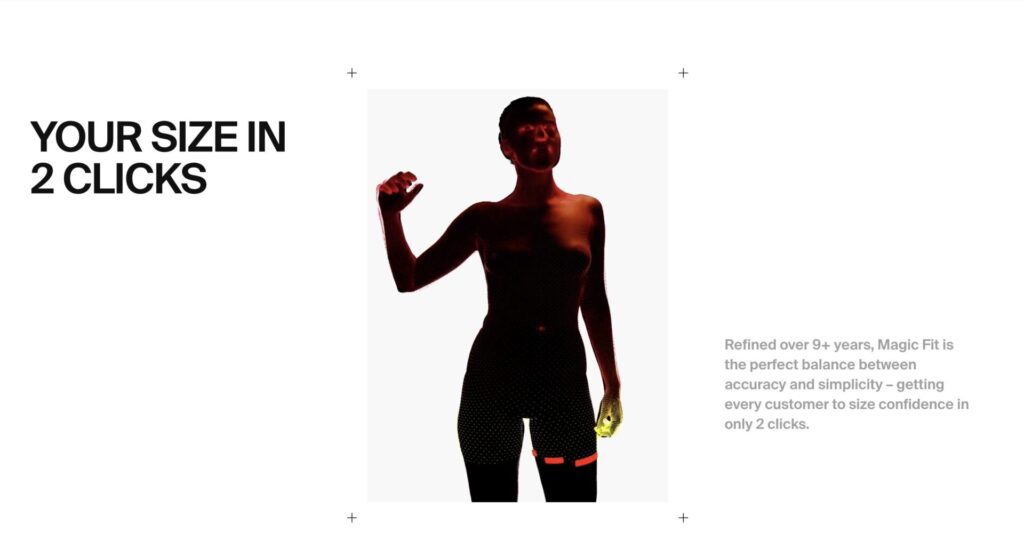
Zoltan Csaki has spent nearly a decade trying to solve the fit problem from inside the fashion industry. As the co-founder of Citizen Wolf and MagicFit, his view is refreshingly blunt: most brands are looking at the wrong metric.
“People who are size confident end up spending more money: conversion went up, AOV went up and returns went down.”
Zoltan reframes fit as something that lives at the decision point, not the returns desk. Customers often like the product and the brand, but don’t trust how it will fit. That uncertainty creates hesitation, and that hesitation rarely shows up in reporting.
MagicFit’s insight is simple but powerful: remove anxiety before checkout and the entire ecommerce engine works better. Returns fall, but more importantly, invisible lost revenue is recovered through higher conversion and spend.
Choices that feel harder than they need to be
AS Colour operates in what looks like a simple category from the outside, but is deceptively complex online: t-shirts.
Joe Sharplin, Head of Ecommerce at AS Colour, explained how overwhelming a t-shirt PLP can become when customers are faced with dozens of near-identical options. To most shoppers, a t-shirt is a t-shirt: until it isn’t.
To solve this, AS Colour introduced hero franchise filters at the top of their PLPs. Rather than forcing customers to compare dozens of SKUs, shoppers start by choosing a franchise based on weight and fit (think Staple, Classic, Oversized, and so on, each clearly explained in plain English).
The second layer was just as important: proper PLP filtering and improved search, allowing customers to narrow by fit or fabric weight.
The result isn’t more choice. It’s less cognitive load. Confusion is replaced with confidence, and confidence is what gets customers to add to cart instead of tapping out.
Yes, your customers are allowed to not know their size
Try With Mirra takes a more radical approach.
Pete Ceredig-Evans argues that if brands want high-value fashion customers, they need to stop fighting a behaviour that already exists (trying multiple items) and instead, design for it.
TWM digitises the fitting room. Customers try before they buy and only pay for what they keep. On paper, it sounds like a CFO’s nightmare. In practice, the data tells a different story.
By removing the financial risk of “getting it wrong”, Try With Mirra sees lower cart abandonment, higher first-time conversion, and, most notably, average order values lifting by up to 48 percent.
The insight is pretty clear: when anxiety disappears, customers buy with confidence. Brands aren’t giving up control: they’re investing in trust.
In this Playbook:
- Why size anxiety is one of the biggest hidden conversion killers in fashion ecommerce
- How confidence at the decision point drives higher conversion and AOV
- Why fit should be treated as a pre-purchase experience, not a post-purchase problem
- How AS Colour uses hero franchises to reduce PLP overwhelm
- Why “try before you buy” can outperform traditional checkout models
- How removing commitment can unlock higher-value customers
Join Us!
Come behind the scenes with Add To Cart Community: Join our crew of ecommerce operators chasing growth, sharing wins, and staying sharp with deep dives, live events and no-BS inspiration.