[Voiceover]: I really think commerce should be anywhere you see. We walk down the street and you see something you like, you should be able to buy it or at least know where it's from. We classify it as multiple different customer Personas. There's the shopping lover, there's the deal hunter and there's the organizer. Go tell 10 people your story, even if you're a bad storyteller like me, and you'll see what sparks their interest. And then pull on that welcome to Add to Cart, Australia's leading e commerce podcast that express delivers all you need to know in the fast moving world of online retail. Here's your host, Bushy.
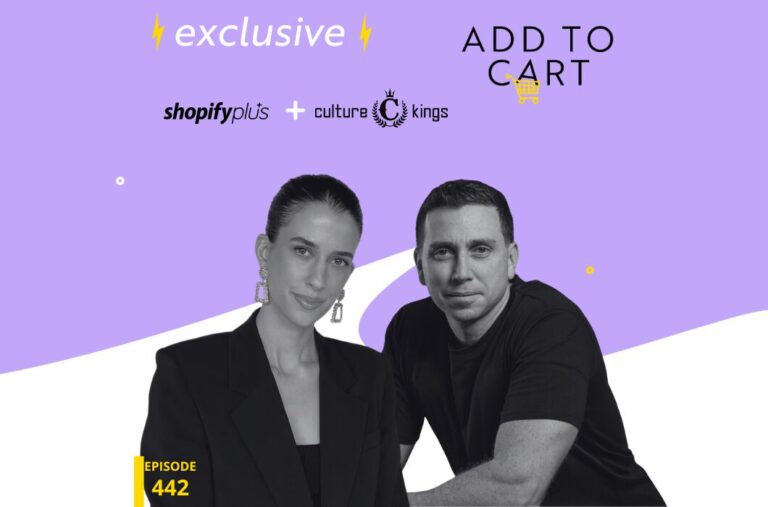
Nathan Bush: Welcome to another episode of Add to Cart. I'm Bushy and I'm joining you from the land of the terrible people, otherwise known as Brisbane, Australia on Add to Cart. We welcome everyone to share and listen to e commerce stories. The more diverse the better. I want to especially welcome the traditional owners and the original storytellers of the land that we are on, our indigenous and Torres Strait Islander listeners to join us in our e commerce conversations and our community. Now, speaking of community, we are excited to have the Add to Cart campus open for access. What's the Add to Cart campus? I hear you say. Put simply, it's a learning community for e commerce professionals and it feels like it's what we've been building at Add to Cart for many years. Free to join kids Campus has lunch and learn webinars, the latest e commerce resources, a job board, and a heap of ways to learn with industry professionals and your peers. Whether you're an e commerce manager, a founder, or simply finding your path to a career in e commerce, we'd love to see you in there. Register to join campus@addtocart.com au campus what kind of shopper are you? A lover? A tastemaker? A deal hunter, an organiser? Kind of put myself down as a lazy shopper, but these are the Persona categories that my guest today uses as part of her mission to make shopping better. Holly Cardew is the founder and CEO of Carted. Carted is an app to help consumers supercharge their shopping game with organization, comparison, collaboration and sales access. Yes, it is an app for shoppers, but I think you're going to really enjoy hearing from Holly how she thinks consumers are actually going to start changing their shopping habits and that journey. Holly's entrepreneurial background saw her selling handbags on ebay at the age of 14 and now several startups and a decade later, Carded is her focus and is drawing the attention and the investment of some of Australia's biggest players, including Blackbird Ventures. In this chat, Holly shares how Carted works with the product API at its core, but a front facing consumer offering using that product API. She also shares how she approaches the pitch process and gives her thoughts on the future of contextual commerce. Holly is one of those people who just thinks about E commerce differently and it was amazing to have this chat with her today. I think you're going to be blown away. Now before we get into today's episode, did you know that online retailer, Australia's largest e commerce conference and expo is back on July 24th and 25th in Sydney? Now I have gone most years I've been there, the last few years been amazing and I will be hosting the Next Gen workshop over the two days, but the place will be buzzing with plenty of free content on the expo floor as well as presentations from industry experts and a chance to catch up and see the best e commerce solutions in the market. So come along, bring the team, bring your friends. We actually have a special discount for Add to Cart listeners. You can use the code cartcart all one word c a r t c u t for 10% off your ticket. Also, if you are in the Add to Cart Campus Learning community, one of our early adopters, we've organized with the Online Retailer team to give us a little sneak preview the week before. We're going to have a little online virtual hangout to connect everyone and do a little bit of pre planning, a pre planning party for those who are going to Online Retailer. So come into campus and we can check that out. But if you haven't got your tickets yet, head over to onlineretailer.com, use the code CARTKART to get 10% off your tickets and we'll go hang out in Sydney for a couple of days. All right now let's get into today's guest. Thanks to our partners Shopify plus and Deliver In Person. Here's our conversation with Holly Cardew, Founder and CEO of carted. Holly, welcome to Add to Cart.
[Voiceover]: Thanks for having me on. Thanks for being here.
Nathan Bush: You said this is your first or what? You've done one podcast in three years which I found hard to believe given how much stuff that you are doing.
[Voiceover]: Yeah, I think it feels like that the last one was a Blackbird podcast which I'll do because there are investors. But other than that, yeah, I have been laying low and very much focused on building out the newer company that I have carded.
Nathan Bush: Beautiful and we are going to jump into Carded and hear some of the exciting things that you're doing there. But before we do, I want to go back a bit because in my research, I found out that you started selling handbags at the age of 14. Do you remember the moment where you caught the e commerce bug?
[Voiceover]: So, I mean, I really did discover ebay early on. And I love the idea that you didn't have to do anything other than you could list an item and sell it. It's a little bit like Facebook Marketplace today. I just, like, get the thrill out of selling something around the house. But I think the. My first memory of E commerce actually was in 1999. It is so clear to me. My mom used to do Woolworths online shopping. On Saturday morning, Friday nights or Thursday nights, she would get the Woolworths list out. It was very, very basic. You would kind of have your one shopping list of bananas, apples, milk, bread, cereal. And because there were three of us, it was like three kids, it was quite hectic for her to go to the supermarket. So she would get order on Woolworths and they would deliver and they would hand deliver and bring it into your kitchen and put the shopping bags on your kitchen bench. So I remember that was definitely my earliest ecom memory. And I know exactly, like, where the computer was in the house where we would sit down and, like, do the ordering. But yeah, that was the earliest.
Nathan Bush: Back in 99.
[Voiceover]: Yeah, 99.
Nathan Bush: Holy moly. It feels like we've kind of had that second wave of, like, people discovering grocery. You can do groceries online, like, in the last couple of years, but it's been going on for such a long time.
[Voiceover]: Agree. When you reached out, I was thinking about that and I was like, wow, that is weird because that was definitely a lull in, like, people didn't do it. And then it became more of a thing.
Nathan Bush: Yeah. And so was the handbag selling. Was that the thing that kind of got you hooked as an entrepreneur?
[Voiceover]: I think I've always been entrepreneurial in terms of I always really wanted to create value for people. I really don't like people being ripped off. And that doesn't. That could be in software. It could be in a service. And I think the handbag piece came from. I saw these handbags, these French Longchamp handbags that were only available overseas or in David Jones. And the David Jones price tag was so high compared to overseas. And so I think it was always for me, in every business I've done, including Pixie, my other business, I've always wanted to do something more cost effective or more affordable for the customer.
Nathan Bush: Okay, that makes sense. So if we skip ahead from handbags selling handbags on ebay to Carter today, I really want to hear about this because I've been following the journey and it's been fascinating to see that you've put out, you know, your vision for e commerce and I think, you know, through your other ventures, Pixie, Vop and now Carted, it's really clear that you're a futuristic in e commerce, you kind of see where it's going. You try and, you know, pick that path rather than just playing to the needs of today. But you pitched Carded as a universal commerce API. It looks a little bit different now, or tell me if I'm wrong, but it seems grounded in that same original philosophy. How do you describe what problem Carded solves today?
[Voiceover]: Yeah, so a little bit of backstory. So there's context here. During the Pandemic Bop, which was the sixth or fifth or sixth app Shopify app that I was building at the time. So under Pixie, I have multiple apps. And then realized that TikTok was taking off during the pandemic and I built a shoppable TikTok feed. So as a merchant, you could have your Instagram feed on your e commerce site, but you couldn't have your TikTok feedback. And so what I wanted to allow was merchants to be able to pull the videos onto their site and tag the products in their videos. Then what happened was TikTok was taking off with influencers as well, and they too wanted to pull in their content onto their blog or their site and have a sort of a TikTok shop page. Because at the time TikTok didn't have TikTok shopping. So a lot of people would ask in TikTok videos and still do. Where is that handbag from? Where is that dress from? Where is that store sofa from? And so it gave them a way that they could redirect their traffic directly to their site and have products linked. So the influencers would link affiliate products or products to brand deals that they had and the brands would, they wouldn't have to answer all the questions. Take Princess Polly for example. They had a large TikTok following. Still do. And they could pull in all their videos. What I really wanted to be able to do was allow people to shop that page and check out so not have to be redirected to, let's say it was an influencer redirected to Bloomingdale's Redirected to Nike, redirected to Urban Outfitters. They could add products from different merchants into the one cart. In order to do that, we really needed to build out a product database. There was absolutely no way we were going to integrate one by one by one merchant. Like every marketplace in the world, everyone knows how long that takes. It is an absolute nightmare. So I guess today the card of vision is very much the same. It's to organize the world's products into a searchable, shoppable database. And we do that by collecting and standardizing the world's products into a single source of truth. So this is actually the cardigan graph that we're building. And then we built an API to access this graph.
Nathan Bush: Got you. Okay, so couple of questions on that, because I know a lot of retailers have trouble organizing their own products into one version that they can use, let alone combining the world's products together. And obviously people like Google are trying to do that with Google Shopping and the rest. What made you go, this is a problem that I think I can solve.
[Voiceover]: I don't think any entrepreneur, I mean, okay, we obviously have some slight, like, weird side of us where we think we can do everything. I mean, I think at the end of the day, not trying to put rockets on Mars. And that's really complex. I know this problem is complex, but I think I'm just so passionate about, like, how do we make commerce better? How do we make shopping better? And I think the biggest thing was that I realized that, and I too have been doing it, is like, we build tools for merchants all the time, and unless we build the tools for the shoppers, the shopping is not going to necessarily get better. It's going to be very merchant. So we've actually built our own shopping application on top of our API so we could solve the shopper problem directly. We really wanted the shopper to be able to benefit from the API sooner rather than later, and then, like, leverage their data and their insights to make our product graph better.
Nathan Bush: So the product graph is the thing that sits behind everything carted. The current version that you see is one version or one form that sits on top of that. But really, I see where we're kind of going is that you could use that product graph for a variety of different things down the track.
[Voiceover]: Absolutely. You got it in one.
Nathan Bush: That's good. I only did 10 hours of research. Tell me, what does it look like from shoppers or a consumer's point of view? You said that you've built carted for their experience. What does that look like for the consumer?
[Voiceover]: Today We've built a iOS app that allows consumer shopper to save any product from any site into lists and be able to track prices so they can share those lists, they can manage those lists and organize them how they want. So that's what we've launched with today.
Nathan Bush: Cool. I was telling someone about it on the weekend and they're like, how do you explain it? And my version of it and tell me if I'm totally wrong is like, it's kind of like Pinterest for E commerce. Am I way off or am I oversimplifying it?
[Voiceover]: You could say that. Definitely. Today's version is similar to that. I think the difference is that we are gathering information and refreshing the product data every single day versus so the data is always changing because if an image changes, if a price changes, if you'll be surprised that I was unaware because I haven't been on the merchant side. Prices fluctuate up often. So we are tracking all of that information for the user. So I guess it's more like variable pins versus stock static pins.
Nathan Bush: Yes. Live pins. Okay. And one of the cool features that I saw is that you alert shoppers. So say you've got a shopper who are creating their different product groups. It could be mum's birthday, my future house, whatever it is, you will alert customers as that price changes. That seems like a pretty good hook to get people to download the app.
[Voiceover]: Yeah. It's interesting you say that we've really focused on the shopping lover so that we classify it as multiple things, different customer Personas. There's the shopping lover, there's the deal hunter, and there's the organizer. The shopping lover is someone who is naturally scrolling the Internet every single day. They have a ton of tabs, they have screenshots, they have links, they're sharing links in chats, they're putting links in their notes app. So we've gone after that person. And although the price alert is definitely a hook or definitely, like, good for them, it's not necessarily the main reason that our shopping lover uses the product today. It's definitely a reason, but it's not the main reason. People love to be organized and have all of their lists.
Nathan Bush: I mean, you know, the shopping lover would be a dream target for a lot of retailers, right?
[Voiceover]: Yes. Yes.
Nathan Bush: Okay. And then the other feature that I saw was the ability for people to share their lists or their products with friends and family and get opinions or feedback on their considered purchases. Is that being used often? Do you see a little bit of social interaction happening.
[Voiceover]: Absolutely. I think the shopping lover number 1 likes to well a lot of them do know what exactly what they want and they'll shop by themselves. Then there's a whole nother bunch of people who definitely like to share it with their family, friends, partners. They may be moving house and they want to get a second opinion. They may be getting creating lists for their wedding and they need opinion from their bridesmaids. So there's definitely that sharing aspect and there's also collaboration aspects. So I think they're two very different things. The other thing is a lot of our shopping lovers are usually tastemakers in the space so there'll be someone in say the beauty industry and all of their friends ask them for recommendations. So it's definitely high on our priority list in terms of making that sharing and collaboration experience even better.
Nathan Bush: As add to cart listeners are high performance athletes. You would be very aware that gains only come when you eat well, exercise regularly and get good rest. You can't just do one. I mean it's obvious for us. So when it comes to your tech stack, why should it be any different? This is what the LSKD team thought as they continued their omnichannel growth and international expansion offering online in the US Shopify plus Open retail stores rapidly use Shopify plus make a scene with pop up experiences. Shopify plus there are no weak links here and the gains speak for themselves. Since migrating to Shopify, the LSKD team have seen a 37% increase in online sales with over 200% year on year growth for US store revenue and a 400% increase in pause revenue. With Shopify plus there's no skipping leg day because they've done it for you. Check out shopify.com auplus and get in touch with the Aussie Shopify plus team to see how Shopify plus can help you unify your tech stack for growth. How do you target or communicate with shopping lovers to find out about carded and then download and try the app for the first time?
[Voiceover]: Great question. Like all startups and apps we're new, we are excited experimenting on absolutely everything on all channels. I think our we did a huge rebrand just a month ago and we really focused on nailing the like marketing messaging and the product messaging for that shopping lover. I think we spent last end of last year doing a lot of beta testing under a different name and we really got close to the customer to really understand understand the best way to get actually marketing messaging is just literally use the words that they give you. So get them to explain. How do they explain Carded to their friends? How do they explain it to their mom? And then use that messaging back in your marketing material. So to be honest, they've done half the work for us.
Nathan Bush: I love that. What was the beta name that you went out under?
[Voiceover]: It was actually Swirl and so it stood for save with URL. But yeah, I just don't think it's strong enough. I think Carded is a fantastic name. We have the social handles. Carded is very much like who we are, who we will be. And I didn't want to have a lot of different products with different names that were not like, really hard to remember. Whereas, like you look at Google, they have Google shopping, Google Drive, Google fonts, Google domains. Well, they've gotten rid of Google domains, but, you know, they. It's very simple. And I think like right now this is the Carded app and then we have the Carded API. So very much focus on building the Carta brand versus trying to build lots of different brands when you're still, you know, new.
Nathan Bush: Yes. And then once customers get onto Carted, do you have any gamification or any UX tricks to keep people coming back? Because I could imagine that the game is constant re engagement to get people to build up those product lists and to build up the sharing as a way to communicate with friends around purchases. How do you kind of encourage that repeat visitation and usage?
[Voiceover]: We've been really, really lucky, to be honest. We haven't put any gamification into the app. We have a very high retention rate. We have really managed to get the shopping lover. You know, early on we were thinking, okay, everyone's technically a shopper, everyone's a consumer. Anyone could use our app. But really the person who already likes to be organized already has lots of lists or tabs open. You don't need to gamify it in any way. They do it naturally. I think what we want to do is really focus and hone in on that person before we try and build the app for everyone. So I would say we haven't had to do much of much gamification, but I know that other apps do do that.
Nathan Bush: Well, it's kind of coming back to what you were saying at the start there around creating value for people. And, you know, there's no point trying to create value through gamification that serves your purposes if you're not kind of solving the problem for the customer straight up.
[Voiceover]: Right? Yeah, just listen to the customer, talk to them often. Find out what problems they have. We constantly hear like, can you add this? Can you add that? So they're like, we hear the same things over and over again. So that's what we're very much focused on. And if you can keep building a better experience, doing quick releases, I think your customer will come back.
Nathan Bush: Yes. And what I love your homepage that you've built. It's a single page website, isn't it? It is beautiful and really clear, really concise for a customer around what card it is and the value that it can add to people's lives. So if you are, you know, building something or even from an e commerce perspective and you finding yourself getting really bogged down in all the details and the, hey, what if they want this? I think the Carter website's a great one to have a look at for simplicity and getting a single message across.
[Voiceover]: Glad you like it. I'll pass the feedback on to our designer.
Nathan Bush: I'd love to go back to the API if you're okay with that, because I'm really interested in, I'm not technical, I'm not a technical guy, but I'm really interested to know how you are getting access to all that product information, pricing, images, you know, and bringing that all together. Is there. There's probably some secrets you can't give away, but what can you share around how you're pulling that world together?
[Voiceover]: Yeah, absolutely. It's definitely part of our secret sauce. I won't dive in too deeply, but we do build, we're building touchless merchant integration. So we. That gives us the scale. As I mentioned, like at the beginning, we can't go one by one and do merchant integrations. It just, we would never get the scale that we need. So we have a lot of products and merchants in our database. But what we need to really understand is what data is important to the shopper and kind of why we built the shopper application. We initially started and we had over a billion products in our database. And in order to refresh that every single day, it's really expensive. And to be able to structure that data and have a machine learning team, it's really expensive. So what we wanted to do was very much focus on getting the shopper to give us the link or the product that they want and focus on that versus having every single product in the database and it be irrelevant.
Nathan Bush: That's interesting. So coming from the shopper's perspective first and bringing them in, are you finding there's any particular categories or types of products that your customer Base is leaning
[Voiceover]: towards I think naturally like any commerce experience there's a lot of fashion and beauty. It's also very much because we focused on the shopping lover who is that sort of, you know, 28 to 40 year old with disposable income. They're typically moving house or have bought their first place. So we see that. But I mean there are so many use cases for this. There's interior stylus even like renovations. Like there is so many use cases for this is just the customer that we've gone after at the moment. So it's very much fashion, beauty, home at the moment.
Nathan Bush: Yeah. Beautiful. And are you finding as you're bringing the new data in, are you finding most E commerce merchants have their data in order or are you finding, you know, when you go to new ones in, are you like oh here's another problem that I wasn't expecting mostly I
[Voiceover]: mean every E commerce page has a title, image and a price. Otherwise well, you could sell a product without a title. You could sell it with just the image and the price. I think what will get really interesting is we are expanding our database so not just image, title, price, it's also variant level information. It's also in stock, out of stock. It's also what is your shipping and returns policy. It's also do you have any sales on the site at the moment that aren't just product related like you know Country Road has their spend and save so it's really gathering more and more data. Not just the basic or you know, what the merchant thinks is important but actually what the consumer thinks is important. So the reviews. But yes, I don't necessarily think that merchants have it all in order. They need to standardize it in for them but they don't need to standardize it for anyone else unless they're selling on other channels which is where it gets complex. I also think it's as a merchant it's a very time consuming thing to do but I think once you get it right it can actually open doors for you. But as I mentioned we're not building for the merchant, we're very much building for the shopper. So we've been focusing on standardizing that for our graph.
Nathan Bush: And coming from that shopper's perspective, is there any data, product data that you think is really important to the shopper that merchants aren't giving enough attention to?
[Voiceover]: It's a really good question. I think for me as a consumer I'm very particular about the materials I wear. I'm very particular about the fit Just because I am actually only 5 foot 2. So I'm pretty small. So things I'm not a standard size. And I think that makes it difficult for shoppers to decide on a purchase. And then also on top of that, if you don't have good returns policy, people don't necessarily want to buy and check out because they don't want to have to buy something not knowing if it's going to fit and then have to send it back. And like it's just complex. I bought some jeans the other day, they didn't fit. I did look up the returns policy and information so that was good to know that I could return it. But I think it's really around like fabric fit because I always try to explain it with Pixi, which is a photo editing app. So that I have. I was like, how do you go into a shop and you in a physical retail store, you pick up a product and you look at it from all angles and you feel it and you touch it and you could try it on. If it's clothing, how do you recreate that experience online? And a lot of merchants don't think about that. They do one image or they just flat lay. They don't do contextual photos. And I think all of that information is important for a shopper to make a decision given that they, you know, have to go through the whole returns policy if it's not right.
Nathan Bush: Absolutely. No, that's really great point. I'm really interested in terms of. We've been talking a lot around coming from the shopper's perspective and I think that's a really great angle. Is there any world where you see carted incorporating merchants? Because I can imagine that there are a lot of merchants listening to this right now going, oh, how do we get in there? Like how do we reach new audiences, especially your shopping lovers? Because I mean, who wouldn't want to reach this audience. Is there any world where you see you integrating with retailers or is it always going to be independent of retailers purely for the shopper?
[Voiceover]: Yeah, I think retailers and brands are obviously a very important part of the eco of the commerce ecosystem. Like if they didn't exist, we wouldn't have products. But for now it's very much like how do we make shopping better? And I think if shopping needs to be better with merchants involved, we'll get merchants involved. But right now it's very much focused on like our relationship with the shopper and building around that. But never say never. I definitely think there's opportunities for partnerships there that hasn't been our focus.
Nathan Bush: And you're absolutely right. You got to build the customer base first. What's the commercial model then, whether that's today or in the future? Is it an affiliate kind of clip of the ticket model?
[Voiceover]: Yeah. So we. Our app is free. We're very much focused on providing a free experience for the shopper. And our future monetization is very much on how do we monetize the graph. So there is obviously a lot of different options there, from partnerships to affiliates to ads. There's so many ways that you can monetize the graph. I guess it's a bit like any big data company, but our focus is very much on giving the experience to shoppers for free at the moment.
Nathan Bush: Great. And are you going down the AI path, obviously, with all that data that you're bringing in? And I can see that you're giving me a smile here because there's something going on. How are you thinking about AI with this huge amount of data that you're collecting and using?
[Voiceover]: Yeah, I use AI internally, like for optimization of efficiencies and helping out with things. I think a lot of companies do. I was actually at a Blackbird off site last week, found to offsite and we sat down and we all had this conversation. You know, what are you doing with AI in your company? Like, how are you using it? And we got split up into groups and, you know, there was another seven founders in the group I was in. And it was just funny because we can all say we're using AI, but there's a lot of if this, then that statement still going on. We have built out a category tree and having categorization of products and how do you do matching of products? You know, we are very small team. We're a lean team. I wouldn't say we have a whole AI team doing that. I think that's something very much at a series a point of view versus now. But I think, you know, we are definitely like making sure that we're thinking about that and how do we bring that, like, how do we structure the data so we can use that data to teach the algorithm on what it needs to do. But it's not. I think a lot of companies say they use AI when it's very much if this, then that.
Nathan Bush: Yeah, yeah, that makes a lot of sense. And I can imagine for you the focus has to be on data integrity and structure to make sure that you're in a position to make use of it down the track. Tell us a little bit about Pixie. We've referred to it a couple of times, but I'm really interested in hearing your tape because Pixie is still running as well. Tell us what Pixie does and the journey of Pixie.
[Voiceover]: Yeah, so Pixie, I have five apps in the Shopify app store that's primarily bootstrapped, so I didn't spend much time on Pixie. I have a team that run that because my focus is very much on carded. So about 10 years ago I was building Shopify stores and I realized that going back to the whole value of adding to customers and not having expensive services was that I could have images edited on demand for merchants and it's scale. So having the background removed, having them resized, having the alt text added to images, et cetera. And what I really wanted to do was automate that. Being non technical, I had to have people on demand do it. So 10 years ago I would literally have a form, people would send their images and I would have designers on demand, a bit like Uber drivers on demand, who would edit images and send them back. We actually now have automated everything, so it's. I mean technology has changed. I guess that's where the AI comes in and you know, machine learning. We have a lot of data, a lot of images. There's over 30,000 merchants who use Pixie, so it's humming along. And yeah, we have a lot of imagery that we've been able to learn from.
Nathan Bush: And how do you approach that? When Shopify themselves come out in the last release and they go, oh, we've got a new feature for you, we can remove backgrounds for you within the platform, does that impact Pixie or do you kind of go, no, we're specialists in what we do. We've got history in it, we can do it better.
[Voiceover]: It's a good question. I haven't been that close to Shopify for a while, to be honest, just because like I'm over here building Carded, which is very separate to the E commerce platforms. But Shopify has notoriously been like, we're going to build something and they build for the 80%. And I don't know if you remember, they actually shut off mailchimp because they're like, we're going to build Shopify email and they're like, we're going to build Shopify. You know, all of these, we're going to build Shopify taxes, we're going to build Shopify this, Shopify that. And it's never Shopify. Shipping was another one because I know they were speaking to A large shipping company and they didn't go with them but they built Shopify shipping but it never really holds up or does what the merch needs. So I think they're trying to get to that mass scale of how do they build for the 80%. And I'm not saying we're focused on the 20% but there is very much merchants who still need images for other things. So you know, do they comply to the Amazon standards, do they comply to the ebay standards, et cetera. So yeah, I mean I think it's important to always stay ahead of what's happening but also to keep going with what you're doing and evolve and listen to the customer.
Nathan Bush: One of the things that I've loved around what you've always talked about is about E commerce isn't necessarily a website and in your thesis, so you actually put out publicly your carded thesis and you say contextual commerce is commerce unbounded and the future of shopping. You kind of touched on that before with how you explained where Pixie's heading and how Pixie adds value beyond just a website. How do you see the future of contextual commerce?
[Voiceover]: I mean I really think commerce should be anywhere you see. We walk down the street and you see something you like, you should be able to buy it or at least know where it's from. I mean you should be able to buy it but the graph doesn't exist to be able to quickly take that product, know where it's from, know that it's in your size, your stock, you know the color you need, the size you want and be able to ship to you. You'll be walking down Paris but they might not send it to Australia, but there was probably some retailer in the world that would send that product to Australia. And then so by like commerce unbounded is like we should be able to embed those shopping opportunities into the fabric of consumers lives and then have them anytime they see a product that they can purchase.
Nathan Bush: How was your last E commerce delivery experience? Did your order arrive on time and undamaged or did it fail to fulfill expectations? If you are a high value brand, just think about the low value experiences in the last mile affecting your reputation. Delivered in full on time or DYFOT if you're in a hurry is a metric that matters for retailers and customers. Why? Because it shows where the deliveries are happening reliably and on time. Many Aussie retailers are settling for 70 to 80% DYFOT scores and dealing with a lot of unhappy BE customers however, after partnering with Deliver in person experience driven brands like Samsonite, the Party People and July see a consistent 99.6% D score. Don't settle for less. Make your last mile experience the first thing that customers remember. Learn more@deliverinperson.com. And are you thinking, God, you're thinking way beyond what I'm thinking. But VR, watches, wearables, all that? Or do you think that kind of stuff is the fad to get us to where contextual really will be?
[Voiceover]: I think it will all happen. I just think it's about when I remember being in SF in, you know, 2016 and VR was the big thing, but we're not there yet from a consumer point of view, you know, to have a heads for all of us to have headsets. I mean not everybody even has a smartwatch. We have phones in our pockets, but we don't have necessarily all the gadgets that the tech companies are building. But I think some people want to shop in VR. Some people want to shop on a watch, some people want to shop on their phone, some people still want their desktop and they want to be able to look at everything on a bigger screen. And I think that's what we really talk about is like how do we surface products where the shopper wants, how the shopper wants versus dictate what they want and how they should shop. So that's what like carded is about. Very much so, yeah.
Nathan Bush: And you can see that, that thread coming through, you know, what you created with VOP as well, allowing people to shop via TikTok and then you take that same, you know, reasoning gaming. There's so many places where we can integrate shopping like shopping as entertainment now is such a thing. And I can imagine for your shopping lovers that would be a huge thing.
[Voiceover]: Absolutely. I think shop like everybody think about the places you share product links, essentially. You share them in Slack, you share them in WhatsApp, you talk about them, you pull them up on your phone, in games, there's all different use cases. So yeah, I think shopping on any
Nathan Bush: digital surface, really, I think it's so exciting. You know, how you see e commerce and you always have, with all your startups and your ventures, you always seem to be on the cutting edge, looking ahead, ahead of what's happening in E commerce rather than solving a problem today. What's been kind of your biggest lesson as you've built out these, these ventures in terms of getting them off the ground and running?
[Voiceover]: Yeah, I think there's, it's not just E commerce, it's like any startup ever. It's like having an open mind, being open to new ideas, getting that feedback from customers. So listening to what the market's saying as well is absolutely crucial. And then being open and adaptable to being able to pivot and change when necessary.
Nathan Bush: And is that an easy thing to get customer feedback? Like, I know everyone says you've got to get customer feedback, but in reality I know myself. Right. Sometimes you build things and you go, oh, I've got this idea, I've got enough validation. I'm just going to have the discipline to stop and go. I need to actually test this, I need to listen. That in itself is a skill, right?
[Voiceover]: Yeah, I think so. I think you don't want to get too far down. Look, I built other sites when I was 18, 20. They all failed because I didn't ask customers. I think there's a part of like asking a customer, listening to what they're saying, they won't necessarily give you the answer. And then trusting your gut, especially if you've been in your industry long enough and understand the pain point. You know, I didn't have customers saying, they might say, I need a graphic designer to edit my product images. They're not saying, I need an app that automates, that pulls in all my images automatically and removes the backgrounds and puts it back to my store. It's just truly understanding what is the process. And then for me it's like, can you make it more efficient and optimized? But I think for not just founders, but even people in businesses, it's like, can you go get coffee with a customer? Can you have a phone call with a customer and just let them talk about the last time they did something, like tell me about the time you did X or the last time you went to upload a product onto your store. How do you do it? And just you'll find patterns.
Nathan Bush: Yes. And do you find that in terms of getting feedback that you can actually use those one on one coffees, phone calls, video calls give you much more usable feedback than say, sending out a mass survey to more people?
[Voiceover]: I think yes, because you have more context and who the person is, like, what were they using it for? You can deep dive into some of the answers. Surveys are a great way to start. Absolutely. But like, if I sent a survey out to 100 people, do I know that they're the shopping lover? I have people giving me feedback, my friends giving me feedback on the product. I'm like, but like, you're not a shopping lover. Like a You know, my mom's like, why would I do this? And I was like, how many tabs do you have open? Like, actually, my mom's sitting on a boat and she's probably going to listen to this podcast. Like, she loves shopping, but she's on a boat. She doesn't have a postal address at the moment. She's sailing around the world, so. But she loves to shop. But she does. Like, I think it's really understanding, like, who is the user that you're speaking to? Because otherwise, if you don't have that context, the feedback's irrelevant in a way.
Nathan Bush: And it can, because everyone's got an opinion, right? And then if you're not going to your core audience, then it actually clouds your thinking because you're getting feedback, conflicting feedback from people who actually might not matter to you and what you're building. Tell us more about the Blackbird relationship, because I think for a lot of founders, we've got founders listening to get investment and partnership with someone like Blackbird, which is commonly held as one of the premier investment partners in Australia. Some really smart folk there. How did you go about forming that relationship with Blackbird?
[Voiceover]: Blackbird have been fantastic. We also have some other investors who are great as well. I think Blackbird led our round and I've actually known some of the Blackbird team for a very long time. Like, I have been in the startup ecosystem for over 10 years, so I think having building rapport with people is really important and they can, like, see your path and see your journey. They also invest in people they've never met before. They're very much about backing Australian and New Zealand Kiwi founders wherever they are in the world. I think the VCs in particular, which is very different funding and investment from other investors, but for VCs, it's about having a very clear vision of what the future is going to be and that future, that showing that you are, you and your team are the right people to build that future, and then making sure that that is solving a very large pain point for customers. And is that pain point big enough in terms of a market size and market opportunity? I think a lot of other investors and smaller VCs can be very much focused on, okay, what are you building now? What is the problem? Okay, it's not big enough. Whereas I'm very much a person who works backwards. Okay, what is the vision and what does the future? Is that future big? And you can see it in some of the big unicorn companies of Australia, changing the world with design or Changing the way developers manage their projects and then working backwards from there and having the tools to do so.
Nathan Bush: And how do you tell the story of that vision? Because I know a lot of founders might be thinking, looking at that, going, yeah, that all makes sense. But I would have no idea how to put my vision into a really succinct way so that when I'm having a conversation with someone that it all makes sense or that it's compelling. Are you a storyteller? Are you a numbers person? Are you a case study kind of person? How do you get your vision across in a compelling way? Because a lot of the time you don't have a huge amount of time, right?
[Voiceover]: Yeah, I don't have a single answer for you. I don't think I'm a very good source storyteller. I don't think I'm a very good numbers person. I think I'm authentically me in terms of I really do see the world how it can be. And I guess my backstory of like, the things I've done are true to get there. Now, there's been other companies who definitely don't have a vision. I think Loom is one of them. They kind of were mucking around with all these tools. They raised money for one thing. They turned out to build in a feature, which was the video recording feature. And then the founders, pretty sure that the founders then had to go and be like, okay, well how can this be big? How can this be a billion dollar company? And they were acquired by Atlassian, but it doesn't always work out that way. But I would say majority of founders look at like they are authentic to them. They do see a future a certain way. And so it's like, how do you say, okay, this is what it's going to be about? I think it's a lot of practice, It's a lot about what resonates with someone when you speak to them. Go tell 10 people your story, even if you're a bad storyteller like me, and you'll see what sparks their interest and then pull on that thread. That's how I found that it works. I think the other big thing, and for me is don't spend time trying to convince people there are billions of people in the world, there are other people with the same thesis and same belief as you. Like that shopping is terrible. You have to open up lots of tabs. You still can't find the product you're looking for. Even if you know what you're looking for, you know your Size, you know, where you live, where it needs to be shipped to. So how do you go and find people who believe in that same future as you versus trying to pitch all of these people and convince someone that the future is going to be like this?
Nathan Bush: There you go. Well, for the record, I think you're a fantastic storyteller. You've got me very excited about the future of E commerce. So you do do that well. What's next for yourself and the team at Carded? What's on your radar for the next 12 months?
[Voiceover]: Yeah, I think everything. There's like so much work to be done. It's a constant prioritization of the work and seeing what we can do to give value to the shoppers and then, of course, building towards our vision.
Nathan Bush: Beautiful. And then if people want to know more about Cartid and potentially get in touch with you, what's the best way to do that?
[Voiceover]: If you're a shopping lover, I'd love you to download the app. So one of those people has lots of tabs open, but otherwise there's more information on Carter.com and then we're also carted on all of the social handles and then I am personally available on LinkedIn.
Nathan Bush: Beautiful. Holly, thank you so much for joining us on Add to Cart.
[Voiceover]: Thanks for having me. It was really great chatting.
Nathan Bush: That was fascinating for me, especially like I have been watching what Holly has been doing over the last decade with such admiration and interest because I think she genuinely looks at e commerce differently. So it was brilliant to be able to sit down and have that conversation with her and fully understand what she's working on, both with this version of Carded and the underlying infrastructure behind it. For a long time I didn't understand it, but I think Holly has such a clear vision of how e commerce is going to be in her role and how Carded will play a role in that. Okay, here are the three lessons that I took from this chat with Holly that we can all use in our e commerce businesses. Number one, the beauty of the single page site. I know this sounds like a pipe dream for many of you, especially those with kind of 100,000 products, but I think it's a good challenge, especially for those complicated concepts such as loyalty programs or subscriptions. Can you explain it simply and easily in one page? These dedicated landing pages, even if it's not your whole site, just the landing page, these dedicated landing pages can be really impactful. Check out cartids@cartid.com as a great example of how to make a new or difficult concept Easy. All right. Number two Democratizing your product data. No doubt you are already creating and prioritizing product data based on what you need. But make sure you take a step back and think about the product data that external partners such as marketplaces, TikTok or even carted might need to put your products in the spotlight. It could be different to how you're using your data. Are your products ready to be promoted with external feeds? Number three get it in mom language. I love that tip that Holly had about asking your customers how they explain your product to their mum. Or just asking them how they understand your product and how they use your product. Then use that messaging in their exact words in your marketing messages. Use their language, not yours, to connect with your customers. Before you go, we'd love to invite you to join our free e commerce learning platform Add to CART Campus. Meet other professionals and learn from e commerce experts to take your business and your e commerce career to the next level. Register to join Campus at add to cart.com au campus now. If you enjoyed today's episode, make sure you share it with a friend or a colleague. Or even better, leave us a review of on Spotify or Apple. It really makes a difference.