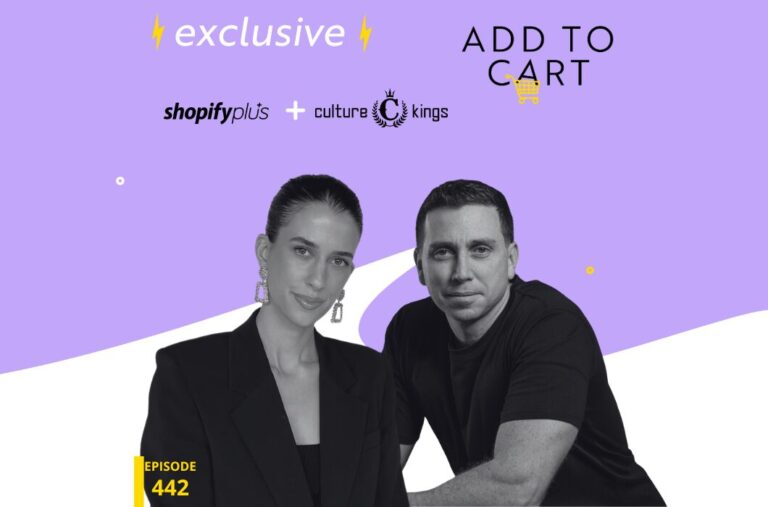
[Voiceover]: Oh my God. Like return on ad spend tripled almost overnight and I slowly moved almost everything I was doing. You could love fashion, but if you don't care about the click through rates of emails, you're not going to be right for the role. We don't want to acquire on a cash back. We want someone to find us, fall in love and come that way. Welcome to Add to Cart, Australia's leading e commerce podcast that express delivers all you need to know in the fast moving world of online retail. Here's your host, Bushy Foreign
Nathan Bush: welcome to another episode of Add to Cart. I'm Bushi and I'm joining you from the land of the terrible people otherwise known as Brisbane, Australia on Add to Cart. We welcome everyone to share and listen to e commerce stories. The more diverse the better. I want to especially welcome the traditional owners and the original storytellers of the land that we are on, our indigenous and Torres Strait Islander listeners to join us in our e commerce conversations and our community. Now, speaking of community, we are excited to have the Add to Cart campus open for access. What's the Add to Cart campus? I hear you say. Put simply, it's a learning community for e commerce professionals and it feels like it's what we've been building at Add to Cart for many years. Free to Join Campus has lunch and Learn webinars, the latest e commerce resources, a job board, and a heap of ways to learn with industry professionals and your peers. Whether you're an e commerce manager, a founder, or simply finding your path to a career in e commerce, we'd love
Nathan Bush: to see you in there.
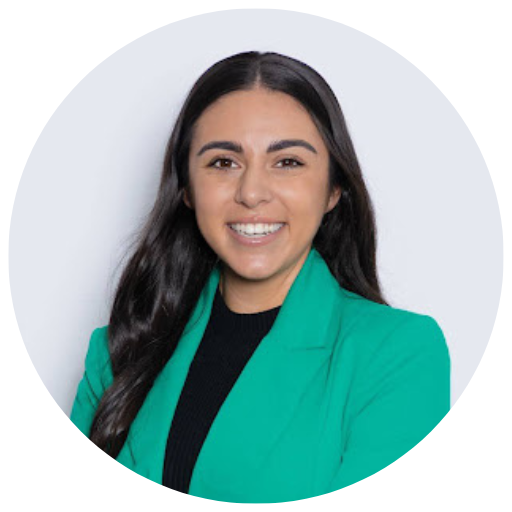
Nathan Bush: Register to join campus@addtocart.com Aucampus We've had some great conversations with guests in the fashion industry over the years. Thinking back, Danny and Alex from Kulani Kinis, James Bartel from Outland Denim, Sarah Sarah from Beginning Boutique, Jane from Bird's Nest. They're just some of them. But lately I feel like we've had a bit of a fashion drought and I'm really keen to reconnect with what's happening in the fashion world. So when our e commerce social in Brisbane went ahead and we were lucky enough to have a guest from a fashion label on our TikTok panel, I made sure to get her on the hook for a proper chat. I'm talking about Bianca Romano Smith, e Commerce and Digital Manager at Verge Girl,
Nathan Bush: who joins us today.
Nathan Bush: Verge Girl started as a retail store in the Brisbane Arcade almost 17 years ago and has grown alongside its sibling founders after moving online. Verge Girl has more recently shifted from a multi brand online retail model to a dedicated in house label. They continue to expand all over the world. In this chat, Bianca shares her practical TikTok tips. I mean, I could not ask her about TikTok after our panel. She shares how her team are using Meta with a particular focus on Advantage plus and gives her take on abandoned
Nathan Bush: carts and how to deal with them.
Nathan Bush: Plus, she makes me look like a
Nathan Bush: right fool with one of the recent
Nathan Bush: Verge Girl executions that I fell badly for. So, thanks to our partners Shopify plus and Deliver in Person, here's our conversation with Bianca Romano Smith, E Commerce and Digital Manager at vergegirl. Bianca, welcome to ADD to Cart.
[Voiceover]: Thank you for having me.
Nathan Bush: It's a pleasure, so great to have you here because we were lucky enough to have you join us at the E Commerce Social in Brisbane where we had a panel around TikTok and you're on that panel. And we got off that and I was like, bianca, we need to have an Add to Cart episode on this.
[Voiceover]: Thank you.
Nathan Bush: Well, thank you for coming along. It was really awesome because you were there representing Verge Girl and as we heard in the intro, you've got experience with a lot more brands than Verge Girl. Relatively new at Verge Girl, but what struck me was that you didn't just show up yourself. It felt like the tribe, the army of the Verge Girl team came in with you, including the founders, felt pretty special. What's the team like?
[Voiceover]: Yeah, pretty crazy. That was like my second month or not even at Verge Girl. And it was overwhelming. I was absolutely shocked that literally everyone on the team decided to come out and support and yeah, the founder as well. And it just, honestly, it just felt like it. In that moment I was like, I found my tribe. Like I have found the place I want to be and it has, it hasn't stopped. They're just so welcoming, collaborative, exciting, creative, and I'm honestly just so grateful that I feel like I found my place.
Nathan Bush: That's amazing. And did you feel that from the start? Like, what made you go, actually I need to move over. I need to take this opportunity at Verge Girl.
[Voiceover]: Well, the Verge opportunity was an interesting one. It really came about because I just kept struggling to find a cohesive E Com Digital team. I'd worked in lots of different size businesses, but I'd always found that E Comm and digital just sat so separately. And I had leaders that were really strong in digital or really strong in marketing or E Comm, but not the two. And I was really passionate about them being they had to be together and I wanted to grow in and become a leader that could lead a team with knowledge of the two. So when this role, this was a new role, it came about and it just seemed perfect. It seemed like the perfect opportunity for me to take the leap into that role and then shape a team under me that's going to be an E Com digital powerhouse. So really exciting. And also I love fashion, so good fit.
Nathan Bush: How many in your team at the moment?
[Voiceover]: God, we, we're growing, so currently about six or seven. I also oversee the customer service team and they're growing as well. So it's yeah, really exciting. I've got digital specialists, E Com people, CRM. Yeah, it's great.
Nathan Bush: That's cool.
Nathan Bush: Now one of the things that I
Nathan Bush: think often gets confused is because your title is E Commerce and Digital Manager, a lot of people will lump E Commerce and digital into the same bucket. What's your definition of how you divide E Commerce and how you divide digital?
[Voiceover]: Okay, so I think E Commerce is really the. The website and how we utilize that tool to drive conversions and revenue and then digital is more holistic. So I think digital also encompasses E Commerce. Digital is then all the marketing channels that we utilize to drive people to that website. So that's why they work hand in hand. Right. We've got one person really trying to drive people to the website, another team member optimizing that experience. They should be working hand in hand.
Nathan Bush: That makes a lot of sense. So that covers a big remit, right between both those worlds. Do you think that's sustainable?
[Voiceover]: Look, we are a. I know I said seven, but honestly it's a small team at Verge and I feel like that's why they're so successful, because they've been able to keep things small, keep things tight knit and have a team that's really loyal and passionate. I am loving overseeing it all because it really just feels like it's the right fit if it's sustainable. Look, ask me in six months. I'm loving it now because it's. Yeah, it's exciting.
Nathan Bush: That's awesome. Okay, so tell us about Verge Girl. So for people who may not have experienced the Verge Girl experience, what do you stand for? How is it different in market? Tell us about that.
[Voiceover]: So Verge Girl, our mission is to inspire creativity and confidence through style. So you may, some people may be aware that Verge Girl's gone through quite an impressive transformation over the past maybe 12 months. So Verge started out, you know, in the Brisbane Arcade and the city as a store that Sold, you know, stocked other brands by our two founders, their sisters.
Nathan Bush: And it was literally Verge, as in V E R G e then, wasn't it?
[Voiceover]: Yeah. So look, even when I was in high school, I would shop at the Verge Girls store. And, you know, there were other stores in the Brisbane Arcade, like Princess Polly. There was another one. I forget. But look, all of those kind of brands were bricks and mortar back in the day, selling other brands. So stocking what everyone was really stocking. But throughout the years, Verge Girl and the founders have realized that they're just so creative that they almost wanted to do it themselves. And what was happening was they were designing things in house with designers, and those pieces kept selling out again and again. Their own unique designs were selling out. So they decided to just go completely in house, hire a team and design unique pieces. It just feels more them.
Nathan Bush: How long ago was that?
[Voiceover]: Look, I think that's probably when they started to make that transition. Maybe two, three years ago, but fully in house, maybe 12 months.
Nathan Bush: Okay. So really recent. Really?
[Voiceover]: Yeah, yeah. And look, that decision also came off the back of just wanting to make pieces with more considered fabrics. So really wanting to make sure that every fabric we were using was considered more sustainable and more ethical and improve the quality for the customer, really. So, yeah, that's what they've done. And I'm lucky. I've come in kind of at the perfect time where they've done that really solid groundwork, and we're at a really great place.
Nathan Bush: That's great. So all the work's done, so you
[Voiceover]: just cruise so good.
Nathan Bush: But I understand that you're expanding. You're doing a lot of expansion work at the moment. Feels like the foundations have been set and now it's that growth time, especially into international markets.
[Voiceover]: Yeah, I was really impressed because when they did the transition, they weren't scared to just take a step back and do it properly. And so what they did is they did pull back a little bit. They weren't over buying. They were really trying to, like, make sure they were creating the right thing, getting the market fit correct, getting all the branding correct. And then I stepped in right when they're ready to, like, let's take off now. So last year, they were just consistently selling out, which was tough for customers because we definitely landed in a place where we were always sold out, which is not a great experience. And then it was, okay, well, how much can we now grow and how much can we now sell if we keep selling out? And it just seems that, yeah, the demand is there for the product. The product is. The quality is so much better now and they're loving it, the customers.
Nathan Bush: That's cool.
Nathan Bush: And what international markets are you currently in?
[Voiceover]: Well, the biggest is definitely the us. The brand has always been successful in the us so now with just better stock, we're able to continue growing in that area.
Nathan Bush: Kids, they grow up so fast, don't they? And what do we want for them? We want them to be stable, interactive and always expanding their horizons. And so it was with babywear brand Snuggle Honey. You may remember Snuggle Honey's owner Julie Mathers from episode 121. When the Snuggle Honey website refused to get out of bed for major sales, Julie turned to Shopify plus and and since replatforming to Shopify plus, using Shopify Markets for international expansion and Shopify launchpad for promotions, Snuggle Honey is blooming. The brand is now experiencing 30% year on year DTC growth and expanded their international sales from 5 to 15% of total sales. Oh, and they beat their previous best sales day by 75%. That's a big best in show kind of baby there. Don't stick with a platform that gives you tantrums. Check out shopify.com au and get in touch with the Aussie Shopify plus team to see how Shopify plus can grow your E commerce business.
Nathan Bush: Really interesting there that you mentioned, market fit. It's something that I've always struggled with because I'm not deep in the fashion world. I've been across it and worked on a couple of fashion brands, but not deep in it. And I always think, especially with emerging fashion brands, how do you stand out in that market? How do you just not get absorbed into all the other fashion brands that are out there and seem to be popping up so quickly?
[Voiceover]: Yeah, look, that's a really tricky question. I think I've been really lucky to work with some super established brands with really strong brands. So for example, Universal Store, very known in the market selling brands that everyone loves. And then working for Black Milk, which just had the most unique selling proposition that the market fit was right there. We really had no competitors then moving to more of a standard fashion brand. I was nervous to see what's it going to be like when I have a trillion competitors. But honestly, it's not as scary as I thought it would be because as long as you just know who you are and don't look at your competitors and run your own race, it seems to just work. Stick to who you are. Don't look to the side and just keep going. People can sense that, that you're not copying, you're not trying to be someone, you are just being yourself. I think that's how a fashion brand can win.
Nathan Bush: And from a brand perspective is a lot of what a brand says in fashion down to actually the design of the product.
[Voiceover]: I still think brand sits higher than that at just brand purpose. I always think like no matter if you're fashion or your fast moving goods or selling cars, you just have to have a purpose and stay true to that. So consistency I think is key. I see a lot of brands that you know across touch points, they're not necessarily who they are all the time. And I think, look, that's really hard when you're moving so fast and you're trying to grow. But you have to focus on that consistency of brand. Stay true to who you are, your values and your purpose and then the rest will come.
Nathan Bush: So what's Verge girl's purpose and how do you bring that to life?
[Voiceover]: So the purpose is really that creativity and confidence. We want our clothes to be able to elicit from our customers that that sense of creativity and being a little bit different. And then we're are really purpose driven in sense of community and giving back. We donate 10% of our profits back every year to foundations of the choosing of our founders. So. And they've been doing that since the day. They've been doing that donation. Yeah. So look, really when it comes to that creativity, I think we're really blessed to have such incredible founders that are creative because that then trickles down. But it's hiring talent that's creative and passionate. It's just. Yeah, living. Living the values. I don't know, maybe I'm making it sound too easy, but when you have, I don't know, we're lucky to have creative founders and I think it just oozes in everything we do, in my opinion.
Nathan Bush: I agree. I think if you look at your TikTok especially, and I'd love to kind of unpack TikTok with you again because I enjoyed that conversation a lot. But if you look at that, it feels like you're taking that barrier down between customers and the team. Even like you really do give behind the scenes candid access to the team who are living their values and put in front of the customer.
[Voiceover]: Yeah. And look, that's particular to TikTok because I think I've seen many brands that can get scared of TikTok potentially if they're trying to elevate or be, you know, a really serious brand or something they feel doesn't align with TikTok. But I think no matter who you're trying to be, there's still a place for TikTok, and that's what the team has done. They've gone, okay, well, how do we succeed on this channel? How do we use this channel particularly? And then they've just leaned into that. We were definitely really focusing off the back of, you know, the panel with you. And then I was fortunate enough to attend the TikTok Incubator event in Noosa
Nathan Bush: this year, but not if that was an event that was more of a work perk.
[Voiceover]: It was absolutely. We got very spoiled, but I think, like, getting to talk to other people in the industry and just hear that they were all having the same challenges. And yes, we did wine and dine as well, but yeah, it was awesome. We. It definitely sparked a fire. And I went back to the team and they're all super excited to just keep. Keep pushing and, and doing more stuff. So very cool.
Nathan Bush: What did you learn at the Noosa TikTok event? Because I saw some of the photos and I saw some of the brands there, some exceptional brands from all around Australia. What did you take away from that?
[Voiceover]: Well, look, I learned that I actually do love oysters, but that's another. That's another conversation. No, look, I think it really, for me, it just reiterated what we already know and it really just solidified that we're doing the right things and the areas that we kind of need to focus more on. There was a few key takeaways. I think the first one was to really make sure your content is educating and entertaining. I think they coined it edutainment or something along those lines. And that's just making sure that you're giving the user a reason to watch. Unlike Meta, they say that on TikTok, it's about 75% the creative that's going to drive performance. So really, like, I know we know to fixate on creative, but really fixate on creative. So fixate on those hooks that are going to, you know, real people in and yet think about creative. And then there was a few other things. There was serialized content. I think I talked about this a bit on the panel. This is like, don't bog yourself down in trying to reinvent the wheel constantly and think about new creative ideas. If something works, just lean into it. That was a big one that they reiterated and I was proud of the team because that's something we've Been able to do well, they were doing before I even got there, was working out what works and continuing doing that and then every now and then spend a bit of time jumping on trends, but don't fixate on that.
Nathan Bush: Yes. So if you've got the mindset of TikTok is the thing that you get on and dance on, then you've got got the wrong idea straight.
[Voiceover]: Exactly. Yeah, yeah.
Nathan Bush: Really interesting that you brought up fixate on content because a lot of brands will come out and say, look, yes, it's great to have your fancy photo shoots and your professional video sessions, but actually what works is organic, even sometimes a bit rough content. When you talk about fixating on content, is it more the hooks and the storylines rather than the actual production process of that content?
[Voiceover]: Yeah, definitely. I think in production process you still need to think about the story and, and what you're educating in the video. But as we know, you don't need to be Highly produced on TikTok. Get a phone and just shoot it. But definitely think about how you're going to capture the attention because it's all about watch time. If you have higher watch time, you'll be served to more people and you'll get better performance. So, yeah, definitely. Really trying to think about the TikTok I have seen and you know, even at the incubator they showed us some brands that have chopped up their TVC's or their shoot content and had it work, but it's just about rejigging it still to be TikTok. So what I'm trying to say is you can put hi fi content on TikTok and make it work, but still think about those hooks from that angle,
Nathan Bush: you know, because it's a totally different user behavior.
[Voiceover]: Right, totally. And look, I have to say, since going to the incubator, I've now become obsessed with TikTok. I tried to. They say it's something like 90 minutes a day and I rolled my eyes at that, but now catch me on there two hours a day. It's actually, it's crazy. But it's cool because I feel like I'm just learning so much more now being on the platform myself and yeah, that makes me a better marketer, I think.
Nathan Bush: I'll say that TikTok are partners of
Nathan Bush: the show and they'll probably hate me saying this, but I've actually put on my phone, I've put the 15 minute limit, so I've gone to TikTok and I've like 15 minutes because what I'll do is I'll like step away for lunch and while I'm having my lunch, I'll like just open my feed and let it go because I just find it entertaining and brain.
[Voiceover]: Yeah, yeah.
Nathan Bush: But I did, before I did that,
Nathan Bush: I was like finding myself sitting there for half an hour, 45 minutes. My. Oh, Jesus. I didn't know how long I was being.
[Voiceover]: Yeah, I've definitely, I've definitely been scrolling too much, but honestly, I don't. I come away. I know you say mind numbing, but I actually come away, like learning. Like, you know, I'll learn a tip or a trick of makeup or I'll learn how to style something cool. Which, you know, being in the fashion industry, it's cool to see how other people are styling. Like, I actually feel like I'm leaving there more educated than when I'm leaving other platforms maybe feeling like, yeah, not as, like I've learned as much. Does that make sense?
Nathan Bush: Yeah. Oh, I'm, I'm obsessed with Christian Petrarcha's recipes at the moment.
[Voiceover]: Oh, love. I haven't really got into the food talk yet. I'm trying to trick my algorithm into giving me more, more food. It's less makeup. I don't care about that anymore.
Nathan Bush: You get a whole bunch of oyster recipes now.
[Voiceover]: I will.
Nathan Bush: When you're talking about creating that content, because you do create a lot of content around the office. Does everyone kind of have a license to capture content that could be good for TikTok or do you kind of have someone who's specifically there to be capturing that content?
[Voiceover]: That was actually something they said at the Incubator event. They said if you, you should be able to let any employee create content because you should be so clear on what your brand is and how to shoot for your brand that, that anyone can do it, if that makes sense. So look, for us, we definitely have someone who, you know, lives and breathes that world and is responsible for kind of leading that direction. But we all bring ideas, we bring, you know, trends. We've seen. We're not afraid to jump behind the camera and have a bit of fun and. Yeah, that's very cool.
Nathan Bush: And so at the Incubator, we pressed
Nathan Bush: Ben on this on our panel because Ben was there from TikTok. He's now moved over to the UK. Did you get any further hints around when TikTok shop is going to drop?
[Voiceover]: Look, if I did, I wouldn't be able to tell you, but no, not NDAs.
Nathan Bush: They're just guidelines. They're not.
[Voiceover]: No, they didn't and I think we did discuss TikTok shop in the US and we had some people chatting us through their experiences. And look, all in all they weren't afraid to say that it is a challenge to get onto TikTok shop, but then once you're on it, the reward is there. Everyone has seen extreme success, so in terms of that, I'm just waiting for the go ahead. I really don't think it's going to be tomorrow. I think we're still a while away, so I'm not fixating too much on that. I'm just, when it happens, we will cross that bridge.
Nathan Bush: Are you doing anything to get ready for it or is it just kind of serve the. Serve the viewers that are there, do great organic content and then when it comes we'll work out how to use it.
[Voiceover]: Yeah, I think logistically it's a big thing. From my understanding of the U.S. tikTok shop, you know, you have to be, you have to have the operational side really firing to succeed. So it seems quite daunting and therefore, no, I'm not prepared. We have bigger fish to fry at the moment. But I am excited for it and I think once it's here it's going to do amazing things. For E Comm in Australia.
Nathan Bush: There's definitely going to be a first mover advantage for brands who get it right.
[Voiceover]: Definitely we'll jump, we're agile, we'll get on it. But I don't want to stress about it just yet.
Nathan Bush: Yeah, fantastic. So you cover all parts marketing or digital marketing for Verge Girl. What else are you seeing that's really returning ROI for you at the moment? I mean, we keep hearing that meta is getting more and more difficult to get results on. We've got emerging channels, Reddit, Pinterest, etc. We know Google might be struggling. I saw some figures the other day around that their page views are actually dropping pretty significantly most recently. What's standing out for you from a channel perspective?
[Voiceover]: Yeah, look, that doesn't shock me about Google particularly. Hate to harp on about TikTok, but with the rise of TikTok search and knowing how that younger generation literally doesn't know what Google is, I'm worried about Google and be interesting to see how they deal with that. For me, I still believe strongly in meta. I think it's one of those foundational things where if you have a well structured account and solid creative, it is going to be the powerhouse of your e commerce business. So I hate that we're so bought into meta and it's so good. But it is what it is from
Nathan Bush: a meta perspective without giving it away any state secrets, you've got a younger audience. Are you still finding Facebook as relevant or is it mostly Instagram?
[Voiceover]: Look, I'm a big advocate for and I wasn't back in the day, but machine learning and AI and just letting the machine do its thing. So as much as you might feel like you want to restrict placements or only show on Instagram, I always feel like, and from the tests I've run, I always feel like that actually your performance will decline if you tell the machine what to do. It doesn't like to be told what to do. If you give it more freedom, with that freedom will come better results. So honestly, yes, we probably do see Instagram outperform, but that we don't restrict anything, we let the machine do its thing. Particularly you know, with ASC now you can't really determine placements anyway and every brand should be doing ASC if they're not. So. So yeah, that's for those who may
Nathan Bush: not have heard about it. Can you explain asc?
[Voiceover]: So ASC is Advantage plus, which is pretty much Meta's newest machine learning AI driven campaign type. And it look, to be honest, it took me a few months to go to move over to ASC maybe a year and a half ago now because I was just like, no, I need some control. Like you can't take my job away from me. But literally. But oh my God, like return on ad spend tripled almost overnight and I slowly moved almost everything I was doing in that business business to Advantage plus campaigns. And I was really, really impressed. I started thinking, is it just, are they over inflating the numbers? Are they just saying it's good to get everyone moving to this account. Sorry to these campaigns but I was seeing it in the back end, you know, I was seeing a lot more new customers, better mer and it was really successful. So I think Meta is continuing to improve and I think it's actually TikTok that needs to be watching their back, ensuring that they're also developing their machine learning and AI to keep up.
Nathan Bush: And so when you're buying, are you buying ads on TikTok as well?
[Voiceover]: Yeah.
Nathan Bush: And is that much more manual for you?
[Voiceover]: It's definitely more manual. It's not as technical and that's why I think creative does the heavy lifting and TikTok's not afraid to say that. Like I spoke with people at the incubator from TikTok and they know that their, their value Proposition is their ability to find new customers through the creative. They're just not there with the campaign technical elements. But they'll get there, they're investing.
Nathan Bush: Yeah, I'm sure they will. Really interested in your transition, your personal journey there around your ad buying, especially on Meta, because I think it's a topic that a lot of people are struggling with at the moment. That transition from manual placements to the automatic Advantage plus placements with that transition, has that meant any changes to any agency structures that you might use or consider using? Because for a lot of times it was really picky work. Right. Trying to pick audiences and all that sort of stuff and we'd outsource to agencies. And my second question is, does it free you up to put more time and effort into the creative that goes into Meta? We might start with the agency question if that's all right with you.
[Voiceover]: Well, see I've actually always worked in in house teams myself and then moving into more leadership roles. I've always brought performance in house. So obviously I'm a proponent for having it in house where you can. And I think that that is becoming easier now because of Advantage Plus. But what I think that it's a tricky one because I was going to say perhaps then we need to look for performance marketers that are more creative whereas in the past, you know, you have to be really data driven, really analytical, really able to think strategically, look for patterns, whereas now you definitely need some of that, but you really need to be a creative and I'm not. And so I'm really lucky now to have teams that are super creative coming up with cool ideas and then I'm teaching them more of that strategic how to not even media buy anymore, but at least look at the numbers and understand the creatives performance and get the business outcome. Yeah, I think it's going to be an interesting one for agencies that they will probably have to shift. But I would say that the next cohort of marketers will be the right fit for the change, if that makes sense. So agencies will pivot and they'll have the new blood coming through that hopefully and will be creative because of TikTok and how they've grown up.
Nathan Bush: I think it's a really good thing.
Nathan Bush: Right. It's a good thing that there's not this secret formula to making ads work and we can just get on with creating good content. That's interesting.
[Voiceover]: It is however, and the performance nerd in me and I'm sure there's performance nerds out there, they just loved cracking the code and being able to, you know, make little moves and see big results. So that part of me cries a little bit, but oh well, we've got to move, move on I guess.
Nathan Bush: I think it's the same as SEO nerds at the moment. They're crying the same cry, right?
[Voiceover]: Exactly.
Nathan Bush: So tell me about the creative process. How has that freed you up? Because obviously now we're seeing with Advantage plus as well the ability for Meta to take all different assets, whether that be a photo library, video library, and actually create the creative yourself and sometimes even personalize that creative to the audience. So again, it kind of goes well. Is it now done with coming for the algorithm nerds? And now it's like actually we can do your creative job as well.
[Voiceover]: Oh, okay, look, I'm not sure about that one just yet. Only because like I said, we have to be really careful about our brands and keeping consistent to them. And so I think, look, who knows where the next few years will take us. But right now the AI is not there with creating really high quality ads that are on brand. It hasn't learned that. So to be honest, as much as I said let the AI do its thing, we still turn off a few of the creative optimizations because Meta will throw on some rogue song that is so off brand or put some weird CTA that you would not never say. So I don't think it's coming for creatives jobs just yet. They're safe for the time being.
Nathan Bush: Okay, well that's good to know. You created Breathing Easy. You mentioned there around your concern for Google. I'm sure it doesn't keep you up at night. Tell me about what you see about the future of search. You already mentioned there that your audience are definitely turning to TikTok for discovery. Where do you think search will be play a role for brands, especially fashion brands in the future?
[Voiceover]: Yeah, I think interesting that you said fashion brands because so back when I worked for, you know, let's call them a wholesaler brand that was selling other brands. Search was the powerhouse. Right. Because people would be searching for those name brands and that's how we would win the auction. So back then Google was the fuel in that businesses engine. And I just thought being a performance marketer, you know, with Google experience, that Google would just work like that for every brand. So then I very cocky went into the next business thought oh I can scale your Google, easy peasy. And I quickly realized that that's not the case if you are your own brand selling your own goods, particularly in fashion. And that's why I think that's where Meta and Pinterest and TikTok have been able to be so successful for fashion. So in terms of Google, I think it's one of those things where you need to play in the space, you need to make sure you're present when people are searching. But for fashion, in my opinion, I haven't seen it necessarily work. And that's what I've heard from colleagues as well. It's not the place you're going to scale. And then on top of that, knowing where TikTok's going and knowing what the next generation is doing on search, that's where my concern comes for Google. And I'm just really curious about how they're going to continue making money.
Nathan Bush: Yeah, yeah, yeah, I can imagine that especially for fashion, discovery is probably more important than brand in terms of, in terms of getting that sale. Right. It's like getting the new stuff in front because you're constantly releasing new products. Whereas obviously if you've got customers searching Verge girl, whether it is to find the website, find locations, new releases, whatever, you want the branded terms to shop in Google, but you're actually not that concerned with showing up for the different styles.
[Voiceover]: Exactly. And I think the other thing as well is, you know, people go to Google shopping when they know what they want and they want something simple. So like pair of black pants or red shoes. Right. And what I've noticed is then you'll start to serve for your really generic product and you're not necessarily going to be surface your more exciting creative styles, which all of ours are exciting and creative. So what can happen? And I've seen this happen for other brands I've worked with, you start to sell, your first purchase starts to be your most plain, basic, most competitive price offering product and then you're not acquiring the right type of customer and that can then actually have a really bad runoff effect. So I think that's something that people should be careful of looking at. What, what is Google actually selling and what type of customer are they bringing in? And then what's that customer lifetime value from that channel? Because yeah, it might be doing the wrong thing for the business.
Nathan Bush: Yeah, that's a really good point. And I think too the way you framed it around Google doing a different job in that they're likely your customers already or soon to be customers already rather than new customers. And that work might have been done up front by the more discovery channels, in social especially, are you using any affiliate channels or partnership kind of channels because it feels like there's a real momentum with them at the moment, whether that be cashback sites, whether that be loyalty partners. Is there any kind of partnerships there that you're working with that has really excited you?
[Voiceover]: No, honestly. And to be honest, in my experience, I've never gotten overly excited about affiliates. I think it just depends on the priorities of the business and the type of scale they want and then the type of acquisition they want. Like, are you focusing on lifetime value, Are you focusing on quick acquisition hits, etc? Currently, no, we're not using any affiliates and I think that's more from a branding perspective. Like we don't want to acquire on a cash back. We want someone to find us, fall in love and come that way. We don't even offer sign up incentives or anything for first purchases and we've noticed that that hasn't decreased our conversion rate in any way, shape or form. So I think as much as affiliates might spruik that you're going to, you know, boost your audience and gain all this, all these customers, I don't know. In my opinion, it's not necessary. It's not where I focused on and seen any reward in the past.
Nathan Bush: I think too, because you've got unique product, it's like if people really want that, you've got to be there.
[Voiceover]: Exactly. So if you are a super, you're in an industry where 10 other brands are selling that same style, then yes, you probably have to be a lot more aggressive. We have the luxury that, yes, if you want that dress, you literally can't get it anywhere else and we probably only have a very limited number. So you're going to buy the dress.
Nathan Bush: Tell me about loyalty because I'm really keen. I know you've got a loyalty program at Verge Girl, but in your experience, what has been some of the best triggers or tactics that you've used to try and get that second, third, fourth purchase and to keep your most loyal customers engaged rather than chase the ones who are on the verge of converting. You know what I mean? Like, let's not offer like that first sign up. Let's look after our customers who are likely to keep coming back and shopping with us. How do we keep engaging with them?
[Voiceover]: Yeah, I think you've nailed it on the head there on focusing on that retention piece. I've always, personally, I've always struggled in business because a lot of leaders can want a bit of both and both all the time. So they're like, okay, let's acquire heaps of people and also work on our retention. And what I always try to say is we can do both in tandem, but we need to pick one to focus on at a time and go hard in that. So in terms of loyalty, where I've seen reward is even not a loyalty program, but just making sure you're communicating to those 2, 3, 4 plus purchases in a one to one way and making sure that those comms are personalized. So ensuring that you're hitting them with the right content across email at the right time in their journey with the right product that they might want, which nowadays is not too hard to do with the right tech and really seeing if you can move the dial. So what I would do is just find out what that that frequency between purchases is and hit them just a little bit before, see if that converts. Also hit them a little bit after with just comms, no incentive first see what works and then you could go down that path and then try and incentivize that to see if you can move the dial. Yeah.
Nathan Bush: And when you're talking comms, are you talking, hey, just in case you missed it, new range, is that kind of where you're landing?
[Voiceover]: I think you should start probably soft first. Just reintroduce them in case they've missed it. I don't think you need to throw a discount down their throat straight away. We also don't want to train customers that every six months they're going to get a discount because they elapsed. Really. We just want to tell them that we remember them, that we know what they like, that hey, we've still got stuff you like, new stuff you like and then you can kind of split the flow into all right, do we need to get more aggressive with potentially a discount? But like I said, I think we can be a bit more strategic as marketers rather than always relying. It's so easy to use a coupon and get that revenue hit and feel really good about it. But I think you need to be careful what that's doing to the brand and then also the lifetime value.
Nathan Bush: How was your last E Commerce delivery experience? Did your order arrive on time and undamaged or did it fail to fulfill expectations? If you are a high value brand, just think about the low value experiences in the last mile affecting your reputation. Delivered in full, on time or die fot if you're in a hurry is a metric that matters for retailers and customers. Why? Because it shows whether deliveries are happening reliably and on time. Many Aussie retailers are settling for 70 to 80% DYFOT scores and dealing with a lot of unhappy customers. However, after partnering with Deliver in person experience driven brands like Samsonite, the Party People and July see a consistent, consistent 99.6% die FOT score. Don't settle for less. Make your last mile experience the first thing that customers remember. Learn more@deliverinperson.com.
Nathan Bush: I love your point around setting up that one to one communication based on where the customer's at in their life cycle journey. There's two camps of people here. There's two, there's one camp that will go oh yeah, that's easy to do. There's a whole bunch of like automations that we can set up and there's others that go I've got no idea where to start for you. Do you come at it from a more simplistic let's get the basics right, let's set up some key automations there to make sure that the right customers are re engaged.
[Voiceover]: Yes, definitely. I would just start with basics. So start with literally pulling your cohort of two timers and doing some comms around that, seeing how they resonate, looking at the performance and then iterating from there. I don't think you need to do go too crazy to just start and then learn from that to keep iterating. Yeah. Does that make sense?
Nathan Bush: And like there's plenty of playbooks out there right on what those flows to start with should really be, you know your abandoned carts, your, your next purchase, all that sort of stuff which can be done especially to your point without discounts. It doesn't necessarily mean you can't have a discount, you know, abandoned car, it doesn't always have to be a discount especially in your. It could be, you know this, we've got limited stock of this. It will sell out and if it sells out won't be available or lean
[Voiceover]: into your CVP's in that abandoned car because odds are they saw an ad, they quickly abandoned cart, they didn't learn anything about the brand. So educate the customer on why. I think too quickly we, we use abandoned cards as like oh my God, we have to get the purchase whereas maybe look at it more of a welcome flow or because nowadays people are signing up before they're even purchasing. So I think you can look at that abandoned cart a bit differently and not just give them the discount straight away.
Nathan Bush: And I could imagine that a lot of your customers would even be using the cart as almost like a wish list.
[Voiceover]: Definitely. Yeah absolutely. As a wish list. As a. I'm going to add to Cart now and come back later. Absolutely. And so you should be utilizing that data which you have to then learn more about them and then communicate to them.
Nathan Bush: Yeah, that's amazing. One of the little bit embarrassing on my side, but when we were talking about what we might talk through, I sent through some questions and I said, look, you know, all these digital channels are great, but I've been loving your international real world activations. You've got this amazing video on your site of this giant pillow in the middle of Central park in New York which just kind of inflates and then deflates again. It's got Verge girl written on it. There's this one in Paris where you've got this billboard that comes to life and spreads over a really busy intersection. I was like, these are really cool. How do you go out and how do you measure this compared to your digital spend? And you're like, you're an idiot. They are actually computer generated.
[Voiceover]: Well, I didn't say you're an idiot. I said how cool that you thought they were real. Like props to the team and the creators.
Nathan Bush: They were cool because they didn't look
Nathan Bush: like too crazy that they couldn't be real.
[Voiceover]: I love that. Yeah, I think, I mean CGI has definitely had its moment. And to be honest, you know, some brands might feel like they're too late to the party, but I think how you experience that content of ours proves that you're never too late to leverage a trend. And look, that was in the works for a while and it was something that they rolled out just as I was starting. And I was gobsmacked. I was so impressed. I was like, this team is just the coolest team I've ever, I've ever worked with. And the reason why is because they're not scared to just like they saw something cool and they're like, let's do it. And I just think that's the way that, you know, it's not something they would have had to deprioritize. Maybe something else, you know, shift budgets. It's not like they had, you know, I had one ex colleague say, oh, you must have huge budgets. But that's not the case. It's around prioritizing innovation and creativity. And I think the way how you felt about that content, I'm glad. I feel like it works.
Nathan Bush: Yeah, it did, it did. I haven't converted for you yet, but you know, give me time, give me time. Are you doing any real world activations? So obviously your world is digital and E Com. Are you Finding now that you need to expand into real world activations or presence at all to bring the brands to life, especially in those international markets.
[Voiceover]: Yeah, I think you, you can probably see that a lot of brands are shifting to that more real world experience. I think that we, we for so long thought that E commerce was just going to be E commerce but we've gone almost back to basics where there needs to be that tactile experience where people can meet the brand and meet the product. So yes, I think I'd say every brand should be doing that and Virgil is definitely playing in that space. We've had gifting suites in the U.S. activations in the U.S. we have plenty of things planned in Australia as well, I think. Not really like there's a brand team that looks after that but it plays so heavily and impacts E comm and digital so much. When we see, you know, we've seen a lot of U S success off the back of those activations. So yeah, really important to be investing in that sort of thing.
Nathan Bush: Yeah, no, it's definitely a trend at the moment whether people are investing in setting up their own physical stores and a lot of the time that is a marketing play as much as it is distribution play. But even just things like putting posters up, we've kind of gone back to that.
[Voiceover]: Yeah, we've got some posters up at the moment, We've got posters in la, posters in New York and it's really exciting to almost go Back to Marketing 101, go, go a bit stone age, but it's cool and it's cool for the young generation who we forget that they're so young that posters are new to them.
Nathan Bush: Well, that brings me to my question because you've mentioned the team a lot and given a lot of credit to the team throughout this and I think that says a lot about you as a manager and your style. But you know, it stands out that the team do have a lot of autonomy and input into all elements of what you're doing here. What you're doing isn't necessarily taught in university. Right. So if you've got young team, and I'll put an age on, say they're 21, 22, 23 coming in, they may not have had a huge amount of retail experience, but before perhaps fresh out of uni or maybe had a couple of jobs that aren't at the scale of Verge girl, How do you teach them the skills and onboard that team so that you can get their natural ability coming through, but in a business context?
[Voiceover]: Yeah, I love this question because I think what's the right way to hire and who's the right candidate and is always a good discussion to have. And I think in my opinion it truly just comes down to attitude in E Comm. It comes down to attitude, passion and willingness to learn. I really think that all the technical can be taught if you're willing. So, you know, I've been told probably one too many times that I'm too passionate, but I don't think there's such thing like if you're passionate, it means you care, it means you want to grow. And that's what I feel like I give to a team and that's what I think a team can give to me. So in terms of young talent, you can just tell when, when someone's eager and when someone wants to learn and that's exciting. Like I love nurturing talent, I love growing a team. And yeah, I don't think you need to know the ins and outs. I didn't even have Shopify experience before this role. I had been only on Magento for years, bless my heart. And I think, you know, I mean, I stayed in E Comm, so that's a big, that's a big thing. But you know, Verge girl were able to take a chance on me knowing that it was my attitude, not my tech ability in Shopify that got me the role. And I think I try to give that to, to all my new hires as well and to my team.
Nathan Bush: So talk me through the interview process then. So I think it's really easy to be passionate for two or three hour long interviews. It's very easy to put on that face. What are the tells or the, the personality traits that you're looking for to go? No, this person has an energy and a passion that will stick and will be able to kind of integrate into this team long term.
[Voiceover]: Yeah, good question. I don't think anyone has the silver bullet on how do you see past the interview phase. I think for me there's, it's twofold because you can get a lot of candidates that are passionate about the brand, but you also, in my opinion, need to be passionate about the industry and the role. It needs to be hand in hand because you could love fashion, but if you don't care about the click through rates of emails, you're not going to be right for the role. So I think it's being able to make sure you're seeing a mixture of both in the interview process and yeah, I don't know, I feel like you do get A sense of character, particularly. I think it's just the questions people ask, the way they answer questions. I don't know. I feel like I can tell if they. If they've got what it takes. I've only really been in the space of hiring more junior roles, so I haven't gotten to that stage of hiring more executive levels. I'm sure that brings a whole other kettle of fish, but with those young guns, you can just tell when they're keen. And then I guess it's about coming in, integrating seamlessly to the team. You need to go through that process to see if they're the right fit. And I think it's really important to make sure that you are working out quickly if someone's the right fit, because they can easily be wrong for the team as well.
Nathan Bush: What you said there was so spot on around finding the passion for all parts of the job, because it's so easy to find fanboys or fan girls, especially when you've got a brand like Verge Girl with loyal customers and a strong mission, but then having people to be interested around the discipline, whether that's E commerce, marketing, supply chain, tech, whatever it is the team, like, who else am I working with? Who will I be mentored by? You know, what's my responsibility in here? And then also the industry, whether that be fashion, homewares, whatever. Having a general curiosity about all of that, I think is such a good tip.
[Voiceover]: And look, it's not easy. It's not easy to find people that are passionate in all aspects. So I think it's having people that have a mix of it. It doesn't have to be, you know, high degrees on every pillar, but really like someone that cares, someone that cares about the success of the business, that cares about what they're, you know, putting out into the world is first and foremost, and then everything else, honestly is teachable. If you're willing to teach.
Nathan Bush: Love it. Bianca, talking about what else you're putting out into the world, question for you is, what's next for you and the
[Voiceover]: team at Verge Girl, so, so, so much. I am very excited and grateful to be on this journey with Verge. I'm not going to share any secrets, but keep your eyes peeled because we're going to be around in the next six to 12 months.
Nathan Bush: That's very cryptic. Will it involve any CGI that's going to trick me?
[Voiceover]: You never know. It could.
Nathan Bush: All right, all right, we'll keep our eyes peeled. So if people have heard this, they either want to check out Vertical and the cool things you're doing or get in touch with yourself. What's the best way for them to go about that?
[Voiceover]: Well, definitely check out Verge Girl at vrggrl. It's new gear dropping every week, almost new arrivals. And then to check me out, just come to LinkedIn and hit me up and we can connect.
Nathan Bush: Beautiful. And bring oysters if you got them.
[Voiceover]: I don't know if I'm there yet, but if you've got champagne as well, you're gonna get.
Nathan Bush: You're gonna get tech partners, agency suppliers, just like sending.
[Voiceover]: Oh no, I should have said something else like burgers or something. That would have been way more my style.
Nathan Bush: It sounded very classy. Bianca, thanks for joining us on Add to cart.
[Voiceover]: Thank you. My pleasure.
Nathan Bush: It was brilliant to have that time to go deeper with Bianca. Personally, I loved that it was really hard for her to take credit for anything even though she'd been in the
Nathan Bush: role for a short amount of time. It didn't matter whether we were talking
Nathan Bush: about Verge Girl or the roles that she had before that, she never took
Nathan Bush: credit for anything herself.
Nathan Bush: Plus she showed that she could change her mind on a few things over time. Both of those are absolutely brilliant attributes of a leader. Here are some other takeaways that I took from our chat. Number one Know the Google role for Fashion Bianca made a great point around the role of Google in a customer's fashion journey. People go to Google generally when they know what they want or they've got
Nathan Bush: a specific problem to solve.
Nathan Bush: But what if they don't know what they want? What if you need to inspire them? Google may not be your natural or competitive environment for acquiring that fashion led customer.
Nathan Bush: Know its role and how influential it
Nathan Bush: can be in the customer's fashion journey. Number two don't give up on Meta. I was expecting Bianca to be much more TikTok Central given their success there. However, she emphasized to ensure that Meta is still in the mix, especially if you are using automated Advantage plus features. And don't let your pride as an experienced audience finder get in the way of the machine doing a better job for you. And number three, hire for industry and role passion. Fan girls and fanboys are not useful unless they swoon over the tasks and the responsibilities of the job as well as the environment and type of business. Passion is great, but make sure it is well rounded. Passion to the brand, to the industry, to the team and to the opportunity that is a good test for culture fit. Before you go, we'd love to invite you to join our free e Commerce learning platform. Add Descartes Campus. Meet other professionals and learn from e commerce experts to take your business and your e commerce career to the next level. Register to join campus@addtocart.com au campus now. If you enjoyed today's episode, make sure you share it with a friend or a colleague. Or even better, leave us a review on Spotify or Apple.
Nathan Bush: It really makes a difference.