Hannah Yudena: Content, content, content. There has never been more of an opportunity to reach more people in this day and age and to sell on more platforms.
Simon Beard: I feel sad for some people that just run ads and they try and control everything because that's just not the case anymore that you just, you're just going to get frustrated.
Gay Leroy: Educating yourself and getting a knowledge base is really important for everybody in the beginning because if you're bringing an employee in and you're building an internal team or you're hiring an agen, you need to know enough to be dangerous, right? You need to know enough to know if somebody's bullshitting or they don't know their stuff and to understand these platforms, the limitations and their metrics.
[Voiceover]: Welcome to ADD to cart, Australia's leading e commerce podcast that Express delivers all you need to know in the fast moving world of online retail.
Gay Leroy: Here's your host, Bushy.
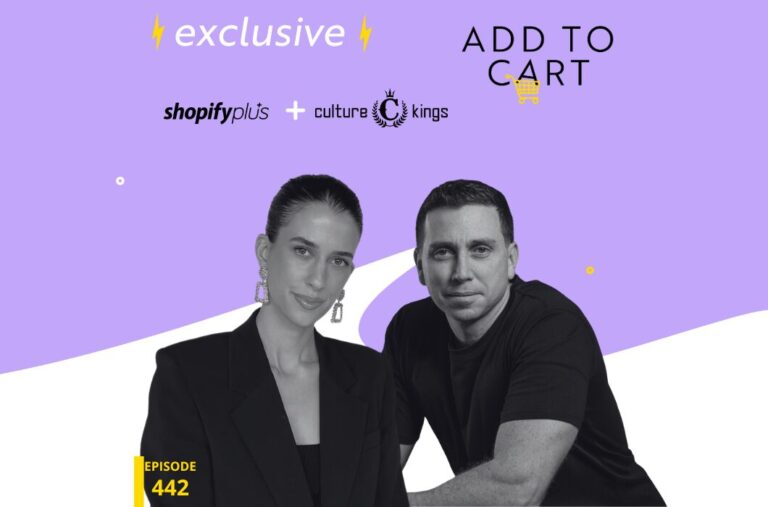
[Voiceover]: Welcome to ADD to cart, where we unpack the strategies, stories and ideas that are shaping the fast moving world of online retail. My name is Nathan Bush, otherwise known as Bushy, and I'm your host. Joining you from the land of the terrible people here in Brisbane, Australia. Today, very special episode. We are celebrating the most listened to episodes of Add to cart in 2024. That's right. We are doing a little bit of a countdown of the top five most listened to episodes by you. These are the conversations that sparked the most excitement, offered the most golden nuggets of wisdom and kept our community buzzing. Before we dive in, I want to say a huge thank you to all our guests who brought their A game to every conversation, to our sponsors, especially Shopify and Deliver in person who supported us throughout the year and of course to you, our listeners. Your feedback, engagement and enthusiasm has made this year truly incredible. I love hearing from you and I feel very lucky to be able to do this podcast on a weekly basis. Now let's get into it. Let's kick off our conversation with number five of the year. This episode saw the return of Simon Beard, co founder of Culture Kings, and Hannah Yudena, who is the head of partnerships in Australia and New Zealand for Shopify. They returned for another exclusive to talk about Shopify's retail report and shone the spotlight on what it takes to stay ahead of e commerce. In this episode, Simon revealed his secrets to leveraging content creation as a competitive edge, while Hannah shared cutting edge tools from Shopify that are helping brands stay lean and innovative. From using YouTube to create authentic customer connections to maximizing the power of TikTok Shop, they shared the Highs and the challenges of managing content at scale. Simon's advice on content as a key differentiator challenges us to rethink our approach to brand storytelling. He always comes with a new angle. That's what we love about him. While his unique approach to using stores as content hubs reminded us that sometimes the unscalable tactics are the ones that actually unlock growth. Let's hear what they had to say.
Hannah Yudena: I think my personal philosophy is that the best innovation comes out of burning platforms. And I really do think there have been a lot of different types of burning platforms that we can go into over the last year in particular that have popped up. So reinforcing what Simon said, it has never been more important to know your numbers and know exactly what you're doing from a business level. But I think broader than that there's also a lot of opportunity and there's a lot of exciting things that you can accomplish by being more lean. I know Simon, you're probably going to talk about this, but content, content, content, there has never been more of an opportunity to reach more people in this day and age and to sell on more platforms. And I think as we, you know, yes, we can talk about the doom and gloom, yes, we can talk about all of the tough things, but let's look at them as burning platforms and how we can utilize that pressure to change for better. And so, you know, we were Talking about before YouTube as a great platform in long and short form content, how you sell more through that. Like Shopify has just launched an integration to YouTube to be able to do that more easily now than ever and actually thinking more broadly around social commerce and being able to sell on multiple platforms, that is what Shopify is going to continue to enable. I think that is huge, hugely exciting for, you know, brands that are well established but also those 18 year old Simons who want to start a business and grow really quickly. So there's a lot to be excited about. Honestly, I love that.
[Voiceover]: Are you going to jump on the YouTube integration straight away, Simon?
Simon Beard: Oh, when I saw that video from Harley I was like this is huge because I got so excited because obviously seeing the results on TikTok Shop, but TikTok show anyone that's it is so hard and so complicated, so clunky and you know, it just turns off for no reason. It's very in its infancy and how to get it but straight away the YouTube looks very simple to integrate. But the other thing that I really like is that long form content is so much better for the actual Sale to be built for because TikTok's so, you know, it's the fire hose of content. You've just got no attention span. It's. And already what you're seeing on TikTok shop, things that work are very in the gray area of marketing, right? Supplements, promising, you know, stupid stuff and that's where sort of always starts that. But YouTube, I really love this because, you know I've been, you know, a big part of AK Brands and seeing where with Princess Polly build that flywheel they did the YouTube halls. You know that was a huge part of building a 300 million US business was YouTube halls, girls doing them and, and these are like 15 minutes, you know, and it's like girls were watching. But that was an engaged shopper and that's where I was like with the YouTube integrate with this click shop shop pay button. Two clicks while you're doing it. My eyes lit up. I was like, I believe this is as much as TikTok shop is sort of revolution but I do think it's in a bit of a weird place in America maybe because it's going to get banned. Like in America you're hearing people hit 50% of their feed is TikTok shop like every second post. And maybe they're just trying to make as much money as possible in case it gets banned and leveraging it. But YouTube, I really like this idea of long form storytelling, engaging content where you're weaving in overcoming those objections like why would someone not buy? And you bringing that through all the content and you're just stacking and say I'm a salesman at heart. Like I know that sales is just transferring that certainty to someone but you know, building that up over time with the right way. I think creators will come up with it. And just to have that bang bang shop pay 2 clicks. I can just see this being an absolute home run. So that's what I'm really excited about.
[Voiceover]: I love it. And I'll just mention TikTok, great sponsor of the show, we love them to bits, is going to explode here in Australia.
Simon Beard: I'm sure it will. I can't wait for the day of. I've been sort of bracing for it
[Voiceover]: feels like everyone's just got their strategies ready to go. But what I love about what you're saying there with YouTube is that it's shifting the way we're thinking about content again because we've been taught to kind of come back to that short form, real format, instant attention, lock it in, you've got One key selling message, straight up hook out sell. Tell us about and I'd love your thoughts on this, Hannah, as well. As we're expanding out now into long form content as a selling mechanism, surely let's spitball some ideas here. What are you thinking beyond unboxing videos?
Hannah Yudena: Oh, look, I'm. I use my mother as a litmus test for everything, right. My mother absolutely loves buying from a woman by the name of Natalie Angel. It's. Let me try before you buy now, every Friday she has a live where she goes and stands in front of an Instagram feed or whatever it is and literally just tries on clothes and, and gives those lifetime reviews of the fit on this one isn't quite right. If you're, you know, a certain size or a certain height, this isn't going to be a good one for you. She's built such an amazing community off of quite literally just doing that and having really honest, real raw reviews of garments. I think that is the future of what long form content is going to eventually. It's already morphed into right now. Natalie angel could tell my mum to buy anything and she would. And the thing is, is that my mom doesn't just buy it. She will then go back onto a community and say, I loved this recommendation because of xyz like everyone else, get on board. And that's the power of it. You know, that's where I'd kind of see that and like there could be so many different variations and versions of that. But at this, the very simplest of forms is building a community where people get to speak to other people around common problems and pain points.
[Voiceover]: There's a bit of authenticity in that too, right? Because it's like, actually, I don't need to clip this into 20 seconds, 60 seconds. I've actually got a bit more time and space to be the true me. There's no doubt that content creation has been a driving force in E commerce this year. And Simon and Hannah's insights highlight the importance of meeting customers and where they are on the platforms that they love. And there are some question marks going into next year, especially around TikTok and some of the other channels around where customers will be in 2025. The brands that are agile and lead into authentic storytelling and invest in creative strategies will definitely reap the rewards of deeper connections and stronger communities based on content that really connects. How was your last E Commerce delivery experience? Did your order arrive on time and undamaged or did it fail to fulfill expectations? If you are a high value brand Just think about the low value experiences in the last mile affecting your reputation. Delivered in full on time or DYFOT if you're in a hurry is a metric that matters for retailers and customers. Why? Because because it shows where the deliveries are happening reliably and on time. Many Aussie retailers are settling for 70 to 80% DYFOT scores and dealing with a lot of unhappy customers. However, after partnering with Deliver in Person, experience driven brands like Samsonite, the Party People and July see a consistent 99.6% DYFOT score. Don't settle for less. Make your last mile experience the first thing that customers remember. Learn more@deliverinperson.com. All right, Coming in at number four in our countdown is episode 444, how fitting. It features Gay Leroy, the CEO of IAB Australia. In one of the year's most insightful episodes where we covered so many topics, Gay unpacked the key findings from the Australian E Commerce report that the IAB put out every year. It is one of the best reports of the year. One of the key things in there was unpacking how the cost of living pressures are shaping customer habits. Gay's data backed insights on balancing customer demand for value while maintaining profit margins is a must here for E commerce professionals navigating the rising economic pressures which look to to be with us still for 2025. From the rise of loyalty programs to shifting priorities around convenience and value, Gay challenged us to think about profitability beyond discounts. She also offered a number of practical strategies for retailers who are looking to adapt and stay competitive while meeting the evolving customer and regulatory expectations. So with customers obviously chasing value and convenience but retailers being up against it, not necessarily having a lot of margin to give away, how do you think retailers are best to approach the current economy to balance what customers want and what they can legitimately do for customers?
Gay Leroy: Yeah, it's a really tricky one and I thought cost of living was a strong theme through last year's report and this year it's gone up to another level. A couple of things. So I think trying to explain value so you know retailers with a deeper connection with their own customer base, it's easy to do that. You've got more time, they've got a knowledge of you. But understanding if there's something beyond just a discount, what you can offer, I think partnering is really interesting. We might talk about that more. So you know, if you have a relationship with another retailer, what's that sort of combined benefit and you know, just keeping loyal, you know Showing the loyalty. The other thing that's really important is. And again, this will be easier for those with a deep relationship. Ensuring data security. So data, data privacy is top of mind. Look, price is still number one, but making sure those other factors can shine to give you every chance of success. And then there's more tactical things and we might talk about distribution later, but you know, you have to turn up everywhere, like it or not, just, you know, making sure that you're got that, you know. You know, we talk about share of voice a lot in media, but you know, that share of attention, share real estate, easy to find.
[Voiceover]: You've got no silver bullet for us, do you?
Gay Leroy: I'm sorry? You got to spend a lot of time and effort and go through a lot of data, but if you do it and your competitor doesn't, you've got that advantage.
[Voiceover]: Spot on. All right, well, you've given us so many points to jump off there. We might start with loyalty because I think when people are thinking loyalty at the moment, they're immediately thinking structured loyalty programs. And your research showed how popular they are.
Gay Leroy: I think it was some.
[Voiceover]: There was a stat in there that 92% of Australia, Australians are a member of a loyalty program. I'll have to check if I've got that figured exactly.
Gay Leroy: And then, yeah, a huge amount that are part of multiple loyalty programs. So that continues to grow. People are definitely looking for a discount there, but they're also wanting to understand why retailers collecting data. The one stat I did love in the report, and I can't remember the exact number, but people, you know, what data are they willing to give away and they're willing to give date of birth if you give them something for their birthday. So it's really translating that, you know, individual piece of data, why I'm giving it to you and what's in it for me. So, you know, don't be afraid of, you know, helping to connect the dots on why, why that data is useful for a retailer.
[Voiceover]: Yeah. And it wasn't to your point around value. It wasn't just giving discounts or accumulating points to get X dollars off. I saw free shipping was up there as one of the key things. And you know, as a retailer, that's one of the incentives that we love playing with because we can actually play with that to put certain limits on it. And it's not just discounting our products. So I think that comes back to your law, to your value conversation.
Hannah Yudena: Right.
Gay Leroy: Yeah. And also you're seeing people that are paying for loyalty programs. So again, you know, if, if there's enough convenience, enough value, if it's going to save me a car trip, you know, I might be willing to pay $10 a month or whatever it might be to be part of a program.
[Voiceover]: And Woolworth's loyalty program and flybys came out well and truly on top as the most popular. Were there any others in there, any others that come top of mind for you that you think they're really doing loyalty? Well,
Gay Leroy: look, I think it really, I think the breadth of different ones just you know, show that you know, whatever your, you know, makes your heart sing. The, the area that's really jumped up over the last year are sort of the, the cashback shop back pieces as well and how they play into the ecosystem. But they've definitely as a non user and my members who are in that area will now be sending me that I have to sign up. But that has surprised me how quickly which it shouldn't because it's an immediate financial benefit for consumers. But that place and that data ownership in the ecosystem is quite significant.
[Voiceover]: Yeah, that third party loyalty is really interesting. Even last weekend I, I was at a barbecue and was telling people about cash rewards because we had Anthony on a few months ago and explaining the concept of you can buy what you normally buy at the prices that you normally buy, but if you visit cash rewards first click through, you'll get X percent of your money back. And people are dubious of it. Like it's like where's the scam? Where's the catch? It's a hard concept to explain, but it is growing in popularity so quickly there's no getting away from it. Navigating economic challenges has been central to many of the conversations this year, and Gaze insights were a great reminder of how retailers can adapt. By understanding what customers value most. Whether it's time saved or dollars stretched or real connections made, brands can build strategies that thrive even in uncertain times. I think we've had a lot of examples of those brands this year. All right, number three, it is featuring Justin Bausch, who from RideAware and Thomas Harris from Amasis. In this episode, Justin and Thomas delivered an absolute masterclass in personalization, showcasing how AI and behavioral data can transform customer engagement. They revealed strategies for boosting campaign revenue by 30% with product recommendation modules in email marketing. And they explored the power of advanced segmentation to create meaningful customer connections. Testing, learning and iterating prove to be their secret weapons for maximizing engagement. As you'll hear in this clip, I
Speaker G: think people knew or thought they knew that data was a currency years ago, but, but now it's fact. Right. And so a lot of the decisions they're making, a lot of the segmentation, a lot of the augmentation around, around who to target, when to target, how to target, is now so data based. So, so yeah, I'm, I'm seeing, I'm seeing a massive shift and it's really the consumers that are forcing that change. You know, when we did, we do these, we do these big pieces of work where we get customers, like the customers of our customers to provide insights to us in order to open the eyes of, of our customers on what to do, how to do it, when to do it. And one of the, one of the stats that was, you know, that was just jumping out to me was the, the percentage of customers that would not engage with a brand if the communications wasn't personalized and that's now up to 18% where they would be. Like if the, if the message is generic, if it doesn't feel that it's right for me, I'm not going to engage. And that percentage is climbing up year over year. Consumers are demanding that that message is timely, relevant, personalized, contains things that they're looking at to Justin's point around products, you know, are they the right products for that consumer? You know, are they actually going to resonate with, is that customer actually going to, going to love them? And if it's not, you know, if you're sending, you know, if your segmentation's off or your data's off, you're sending male products to a female audience or, or you're sending a price point to a wrong price point. You know, you're going for a last season stock, but you actually, your customer is someone that's constantly buying the latest stuff. You're not going to resonate, you know, and you're actually going to end up risking that customer's engagement.
[Voiceover]: Yeah. And I love what you're saying there around giving those different examples of personalization from a content perspective. Because personalization obviously isn't the dear first name anymore. It's the product, it's the timing, it's the content, it's everything. And it can get pretty complicated. Right, Justin, from you mentioned there, you know, identifying your most profitable segments or profitable target, like I think it's probably not even right to call them segments anymore, but profitable points in that customer journey to be able to send that triggered communication, what times or what points are you finding to be most profitable
Speaker H: for right away in terms of like when we should be sending out an email to someone.
[Voiceover]: Yeah. What kind of communications are getting the best bang for buck for you? Yeah.
Speaker H: So I think, you know, there's a really handy AI segmentation that Amasses provides and that's you know, likely to convert. And you know, I use that to not only think about maybe if we're sending an email out with percentages off and vouchers and stuff, you know, we can avoid that segment because you know, they're there. We can reward them in other ways, loyalty points and stuff like that. But you know, sending comms out to these types of people and using the product, the product finders, the product AIs in the emails itself, the recommenders and stuff like that, I find the most profitable for us is actually, you know, there's a lot of emails, a lot of companies that I see where a new collection drop will be the whole email. Then at the bottom it will be products we might think you like just at the bottom, right. And we, every brand treats it like the ugly sister. Like it's just, oh, we'll just put it in there and we recycle it every sing paying.
Gay Leroy: Right.
Speaker H: People don't realize that that is the most profitable part of the email because their products that that person is resonating with that they're browsing on the, on the, you know, they, it looks at purchase behavior, browsing behavior, interest based targeting, everything like that on your website, it feeds it to that. And that's the form of, of, of AI and product recommendations that Amasses uses. And when I actually put that at the top and I make that the hero piece, not, you know, this new drop that we've collabed with this person out in the Himalayas and you know, they're this monk person and talk about the whole story about that. No one cares about that. If I put that module up at the top, that has increased revenue by at least 30% in every single campaign that I do. Then at the bottom and if I guarantee if you look at all these other emails, that module sits at the bottom of companies email. So for me stuff like that is the most profitable.
[Voiceover]: If you're putting that module at the top of your communication and you might be sending, I'm putting words in your mouth, you tell me what it is. But two, three emails a week, whatever it is, how do you make sure that that stays fresh and relevant? That it's not serving up the same product over and over again?
Gay Leroy: Yeah.
Speaker H: So you can set rules to make sure that it's not the same. But then also I can change up the creative. So it might be a 3x3 block module and then it might be like I just pepper in a product with a two by two. So it'll be a collection drop. And then on the right side it'd be like, you know, you might like this like next to it. So it kind of looks like it complements it. So it's not always going to be the recycled look of it. But I always have different kind of like playbooks in me. Just drawing it out of that and be like, yep, I'll chuck it in this one, this one. And then I'll just make sure I just kind of always change it up like that.
[Voiceover]: No, that makes a lot of sense. I once worked with a CEO who of a large retailer who. They didn't ever want that for you. Carousel near the top of the homepage. Because every time they logged in or logged onto the site, it showed them toilet brushes. We don't want our customers seeing our toilet brushes all the time.
Speaker G: But that's what they're buying.
[Voiceover]: Well, that's what she was looking at.
Gay Leroy: It's like, no seeing that. So there is. Susan wants her toilet brushes.
Speaker H: Don't ignore that segment.
Simon Beard: I understand.
[Voiceover]: Especially when you've got a curated beautiful brand as well. Sometimes you want a little bit more control. So there is that change management piece to be able to show those results of what the personalized content or personalized product selection gives rather than just going on a brand brand hunch. Tom, what are you seeing from. If we, if we've got people listening who are like, well, what are those triggers that I need to implement in my business based on customer journey points rather than segments that can. That are really important times in that customer journey to hit them with personalized messaging.
Speaker G: Yeah, If I go for. I'll go for kind of two campaigns for kind of two different types of businesses. I guess in retail the first one is like very treatment led. So I would say things like back in stock are fantastic for driving really profitable and high levels of engagement. Right. So customers on the website, they're looking at products, you know, they've got dwell. You know, there might be a certain amount of dwell time where they've been on a specific product, then they've abandoned it or they've even gone that step further, they've added it to a wish list or their basket. You know, then you can do the abandoned basket campaign. But the one that I like, if it's out of stock, is that Back in stock campaign.
[Voiceover]: Beautiful.
Speaker G: Super high levels of engagement, super high levels of, of conversion.
[Voiceover]: And not relying on discount.
Speaker G: And not relying on discount. Exactly. It's pure treatment, 100% treatment. And you know that is one of the out of the box capabilities of images. Straight away you can get that, that, that, that up and running. And then the other one maybe for more of a discounting LED retailer, a business that, a retailer or an E commerce business that's more comfortable with discounting, you've got price drop and price drop is also fantastic. So you know that regular sync of data coming into the platform and then you know, again customers, you know, for whatever reason they haven't converted, they haven't purchased the, that product but then something changes. You know, the, the, the merchandising or the buying team get it for a better price or the business is prepared to make an offer on incentive and sacrifice some margin on it. That price drops and instantly that triggers to the customer and drives that engagement. And that's Omnichannel can go out and a push notification, a text message, an email on the website and these things drive a lot of engagement and that's, that's behavioral. That's triggered, it's not, it's not a campaign, you know.
[Voiceover]: Yeah, and I love that distinction between price driven communication and intent driven. Justin, you mentioned before around not sending unnecessary discounts to your most engaged customers. How do you do that? How do you manage that? The people that you know that are going to buy at full price don't get discounts that they don't necessarily need to convert.
Speaker H: Yeah, well the thing is though, like, I do hate doing that sometimes. I'm like, you know, I had the whole idea of, you know, you're a Telstra customer and you've been a Telstra customer for all these years and yet they gave you a better bloody deal with like new customers. You're like, where the fuck's the loyalty? Sorry, part of my French.
Gay Leroy: But we love French.
Speaker H: Yeah, we, we look at that. But we definitely reward them in other ways. You know, we provide them, you know, exclusive kind of products. We offer them, you know, exclusive kind of deals around that and you know, we definitely offer them, you know, really good rewards points. You know, they're, they're definitely a higher tier so we kind of treat them in those ways as well. So you know, we don't completely exclude them all the time in terms of like, you know, those discounts. But you know, they'll be the first to know when a sale goes live, you know, really high engaging products and stuff like that. So you know that they will still get their discounts. But you know, we also have that option to, to say, hey look, we don't really, we think they're not going to defect, so let's not put them in that defecting basket as well.
[Voiceover]: As AI continues to sink its teeth into the world and especially the world of E commerce, personalization has emerged as one of the most powerful battlegrounds for driving growth and customer loyalty. Justin and Tom's advice showed us how harnessing data and behavioral insights can unlock huge value of what you've already got there. It's enabling businesses to deliver tailored experiences that resonate with their audience. Personally, I think staying close to your customers needs is the ultimate competitive advantage. Making the best use of the data and the tools that you have, especially when they incorporate AI within them, is something that we all need to be leveraging as we move into 2025. All right, our runner up number two for the 2024 Countdown is episode from E commerce consultant and my good friend Ian Calvert. Ian brought the focus back to resilience and profitability. Introducing his 503020 framework for managing expenses and margins, Ian emphasized the importance of diversifying marketing channels to reduce reliance on any single platform and mitigate risks. And in uncertain times, Ian's call for founders to monitor marketing efficiency ratios weekly was a real standout for me. Have you ever played tennis where there are two balls on the court at the same time? It is mayhem. That's what it felt like for the team at Elite 11 when they had separate systems running for online sales and in store sales. Inventory was out of whack, customer data was all over the shop and they just couldn't get into the flow of the game. During COVID the Elite 11 brand quickly launched into physical storefronts. The problem was that their postech wasn't ready to scale with them. Since stopping to re platform to Shopify POS, they are now acing the competition with 80% revenue growth including 240% year on year POS growth. Better still, the unified view over customer and inventory has allowed Elite 11 to set up personalized cross channel communication, enable ship to customer orders from stores and continue to grow their store network effortlessly. Game Set match check out shopify.com auplus and get in touch with the Aussie Shopify team to see how the dynamic duo of Shopify plus and Shopify POS can help you unify your tech stack for growth.
Simon Beard: I acknowledge my bias that I'm always optimistic and having been through the retail cycle many, many times, because I'm 43 now, so I really started sort of like when I was like, 23. So we're going on like, 20 years. Is that you see, like, you see it go up and down with the economy. Right? That's the way our economy is designed. It's like there's peaks and troughs and we're essentially consumer spending. And so we're at the forefront of that, basically. So I think there's a lot more optimism out there. And it's interesting. I'm seeing some really good stuff come through because we've got all those issues with Facebook, with iOS 14.5, and it was that, like, May 2021. There's advantage for shopping campaigns. They're great. They're like, they're brilliant. It's just like, really, really good. Got some really good clients running PMAX campaigns. Sort of like in Google, we're just running sort of like PMAX campaigns and, you know, starting to get some results. Like ad costs are sort of, like, up.
[Voiceover]: I was having a conversation with someone the other day around PMAX and Advantage Plus.
Simon Beard: Yeah.
[Voiceover]: And is there a risk? So if you want to be the optimist, I'll be the pessimist in this conversation. Is there any risk that we all get comfortable that it seems to be common, that, yes, they're performing for everyone really well and better than almost managing it yourself? For a lot of people, Is there a risk that we turn them on, leave them on, and then Google and Facebook adjust the numbers and over time we just get a bit complacent and they just don't perform as well?
Simon Beard: Wow. Well, that's a very good question and really kind of brings us to our topic of conversation about profitability. Right. Because. And I think that that's where a load of people have got caught short before. So there were so many ecom businesses just based on Facebook and Instagram ads, because you could sell a $50 top for like, five bucks, as in a conversion cost, Right. So you're like, just keep turning up, off you go. And what I have seen throughout my career is that every now and again, three to five years, something major comes along that really shakes stuff up. And if you're relying on one channel, then that causes you a problem. So it's like a good investment portfolio. You want it fairly diversified. Like, you don't just want Shopify shares, right. Because they went gangbusters, but then they come down, Right? So if you've got multiple channels firing, and if you are Genuinely across your numbers on a weekly basis. And I do believe unless you are like a hundred million, $300 million business every week is enough because it gives you enough of a pattern that you will spot it. Because essentially there's a really good metric called marketing efficiency ratio mer percentage of your net revenue that you spend on advertising. If it's higher it means your ads are less efficient and if it's lower it means you going well and you probably want to spend a little bit more. So you would see those numbers. And this is the way I manage all the accounts from 500 grand site to like a $25 million site. We see those numbers going up and down, we start making adjustments so you can stay on top of it that way. And I think that is the, that's the way to, to manage them very well. It's like automation is great, machines are there to design, are designed to help us do things, but you question it every now and again. So for example, like I set up a meta campaign the other day and it was running and I said hey, this is what I want. Essentially sort of like sales. And for some reason it picked one ad. The click through rate was low and, but it was making sal. Now the problem with that is that in meta you're getting charged for your impressions so you want a high click through rate. So it's basically going I've done a good enough job. Right. But then you go and turn that ad off and it finds other ones that get high click through rates and then it improves your performance and that's the two sort of like working together. And I think that for me is certainly the foreseeable future. I don't think you want to just completely push it over. But also I, I feel sad for some people that just run ads and they try and control everything because that's just not the case anymore that you just, you're just going to get frustrated. It's like so a really specific example. The risk of getting really nerdy is that so within Google Ads you always used to want to get to sort of like a one key per keyword per ad group so you could really control it. And it was exact sort of like match and broad keywords were the scourge of the devil. It was like these things are awful. And you long tail, long tile, long. Yeah, right, all that.
Gay Leroy: Yeah.
Simon Beard: And, and admittedly when you broad, broad targeting first came out, it was terrible. It was awful.
[Voiceover]: Right.
Simon Beard: But they've made so many improvements to it and actually my Google rep convinced me to Try it. And I was like, look, because of the, the client you introduced me to in school of thought, there's critical thinking. You've got to be open minded to these things. So I was like, I will try this again and also get. And it went gangbusters. It was great. I'm massively sort of like on board with it and I think it allows us to do more with less people. And I think if anybody's listening to this and they're sort of on the fence, whether they want to admit it to themselves or not, is that, that's the trend that is Google and Meta are going down, right? You're not going to be able to sort of fight that. You can bitch and moan about it as much as you want or you can focus on other areas of the business that you can have impact on, like learn other channels. Then klaviyo learn, learn about the finances of business, learn about shipping, all of these other sort of like bits and pieces and you're adapting and you will always be employable or always sort of like get, get clients.
[Voiceover]: You know the most amazing part of that story, you've got a Google rep that you can talk to.
Simon Beard: Oh, got lucky. Look, if you want to get into it, Meta, my God, I have never spent so much money with the business and got such poor service. Google, it depends who you get. This, this account spends like a million dollars a year. So they kind of like love us and, and they're good and the person's ex agency and they kind of like understand. Yeah, but again it's, it's like to
[Voiceover]: be fair, to be fair, I am, I am throwing stones. But it is just something all founders want, more access to the people they spend their money with and there's just not, not that many boots on the ground to get that kind of first hand advice.
Simon Beard: No, that's right. And, but the thing is, is that I think you have to always understand somebody's incentives, right? So if you understand their incentives, you can understand the way that they're going to behave when push comes to shove. So for example, if you're paying somebody a percentage of what they're spending on ads, it doesn't matter what good person they are, how well intentioned they are when push comes to shove, if their boss says hey, we've got to get this ad account or we've got to make more money sort of like from this, the choice is always going to be to turn stuff up, right? So Google are genuinely helpful, they're genuinely a very good data company. They have a huge amount of data and some of the reports that they've been able to show me have correlated with stuff that only we can see. And you're like, okay, so I now trust this. But there's an underlying spend a bit more, spend a bit more.
Gay Leroy: Right.
Simon Beard: And so you just have to take that recommendation each time and go, come back to your numbers and go, well, if we do spend more, we're not going to be profitable and how long do we spend more? Because we then want to sort of get more growth and you just have to just be sensible about it, basically.
[Voiceover]: Yeah. And to your point, take things on and trial things and be willing to challenge your own predetermined thought of what works and what doesn't.
Simon Beard: It's almost like worse, the longer you do it, you get these priors and then you decide not to do it. I'm really mindful of that. It's like with the keyword stuff within sort of like Google, like, no, no, no.
[Voiceover]: As we know and as we come to expect, this year has been a year of constant change. Obviously shifting economic conditions, evolving consumer behaviors and tech that is just exploding. It's one that kept us E commerce managers on our toes. Ian's advice on agility and financial discipline resonates deeply and his profitability framework was something that's really stuck with me. Whether you are a founder or whether you are managing e commerce in a larger business, e commerce managers who are navigating the unpredictable can find stability in frameworks like these, gaining confidence to pivot quickly and seize new opportunities, even if you don't consider yourself a financial whiz. Great advice there from Ian. All right, now the moment you have all been waiting for. The most downloaded episode of 2024 on Add to Cart is episode featuring Sabri Suby, Shark Tank investor and founder of King Kong. Sabri's high energy, little sweary, no nonsense approach to performance, marketing and storytelling captivated our listeners. He was actually the first one off the rank in 2024 and he offered a fresh perspective on how to connect with customers and scale e commerce businesses. His insights on crafting narratives that sell is a game changer whether you're in E commerce or whether you're selling in E commerce. And he challenged us all to move beyond campaigns and embrace storytelling. See a theme as a way to foster deeper customer loyalty. Tell us about King Kong, what you guys do.
Gay Leroy: Sure. We're really like an end to end digital agency. We focus on solving the number one problem that businesses face, which is how to get more customers. And we started off, I started the business just as like literally a very local digital agency just selling SEO to people that were running Google Ads. And we've expanded from there and we used to be like channel agnostic where we didn't matter what the channel is. We're now product and service agnostic. I've got books, courses, programs done for you agency as well. I'm really just obsessed about solving that problem of like, how do I get more customers? And I can see what a transformative exercise it can be for an individual who runs a business when they finally crack the code of customer acquisition at scale.
[Voiceover]: I think that's one of the things we're seeing more and more at the moment is founders who are like, when is the right time to bring an agency on? And should I just be upskilling myself in performance especially? What are your recommendations? Do you put any kind of barriers or recommendations around? This is when I would train myself up and do it versus when I would use an agency to manage it for me.
Gay Leroy: Yeah, it's a great question. I think it comes down to also like, where your competitive advantage lies and where your skill set lies. Because in, in the beginning it's like if you're passionate about sales and marketing and that's the thing that you really want to do and it's not a hugely overly complex business to run other than getting the sales and the marketing dialed in. I think that like educating yourself and getting a knowledge base is really important for everybody in the beginning. Because if you're bringing an employee in and you're building an internal team or you're hiring an agency, you need to know enough to be dangerous, right? You need to know enough to know if somebody's bullshitting or they don't know their stuff and to understand these platforms, the limitations and their metrics. Because if you really look at it, there's nothing more important than you can be doing like as, as a business owner than attaching you yourself to that kind of sales function. And even when it comes to building teams and building businesses or agencies, you still need to know enough to be able to speak to those people. Right? So I think that as a very bare understanding, you, you want to look at yourself as like a T shaped individual and understand a little bit about email, a little bit about paid traffic, a little bit about SEO, a little bit about conversion rate optimization and then go deep in one. And because even like these massive brands have some of the best marketers in the world and they have so much money they have endless money to build internal teams. These people still hire agencies because they understand that it's not like either or like it's both. Like the game is won by getting the most talented people. And the reality of it is most of the really talented people do not want to work client side because they get bored quickly. Right. Or they hop around really quickly. So like some of the best talent in the world still lives in agencies. That's why the model is thrived for so many years and will continue to thrive is because people that are typically very switched on, sharp marketers, they want to be doing lots of things. They want to be working in lots of industries for lots of clients and putting lots of little feathers in their cap, I think. So in the beginning, to come back to your question, you want to learn one, channel yourself and get like good at it and run it. And then it's going to come to a point where there's like a medium ground where you're like, I can't afford a full time salary to someone internal and I need someone that can run like maybe two traffic channels for me. And then it's like trying to find somebody that knows Facebook ads and Google Ads really well and copywriting, conversion rate optimization and all of these different things. It's like you're looking for a unicorn and you're not going to get them at the salary that you can afford in the beginning. So then working with an agency makes a lot of sense. And even if you get the salary
[Voiceover]: you want, they won't last long because they'll be offered more by someone else.
Gay Leroy: Yeah, exactly. And that's the problem that everybody faces. That's not unique to just one type of business either. And then you get to a point where an agency makes a hell of a lot of sense until you get to I'd probably say like 3 million in revenue. And then around the $3 million mark, you kind of get to these crossroads where you're like, do I build an internal team or do I keep paying my agency? And then any agency that's good is going to have a performance fee. And then that performance fee gets bigger and bigger as you start to scale up, as it should, because there's a lot more work that's required. But then a lot of people make the trade off of they're like, hang on, I'm spending 20 grand a month with this agency. I could hire somebody for maybe like, you know, 10 grand a month. And then I would make an extra $10,000 in profit and then I would Be all good, right? And it's easy to look at the, like the first order consequences of that and going, yeah, I'm going to net 120 grand a year. That's an amazing exercise. And then in theory, it can work both ways. Then you can hire somebody internally and it can do incredible, right? And it can, it can maybe even get a bump in performance. Maybe you go down in performance, it can go both ways. But then you realize, oh, but then people leave and then I have to train everyone again and then all of the intellectual problems, property runs out the door. Or what happens when that person then goes away on annual leave? Who looks after the ad accounts, right? What happens then? Like, and so like, like anything, there's the pros and cons of any situation that, that you look at. And that's why I think that it's like, you know, everyone's so quick to jump to like, oh, you want to just hire agencies or you just want to build internally. It's like, just look at what the biggest brands in the world doing. What do they do? They all have internal teams and then they hire multiple agencies because they just want to get the best amount of talent looking at their stuff makes.
[Voiceover]: If you were starting a business today and you were subscribing to the T vertical and you went, well, I've got to double down and I've got to get deep in one thing.
Gay Leroy: Where would you get deep in copywriting and storytelling?
[Voiceover]: Tell me about that.
Hannah Yudena: Why?
Gay Leroy: Unquestionably, it's not even a close race. It is completely one sided. So the reason that I would only double down on that is because if I was starting from zero, you took all my money, you took all of my connection contacts. You said, you have to start. Here is the product go. Right. Basically what I would do is I would start immediately, I jump onto TikTok and I would start making five to ten reels a day and uploading them and I'd be testing different hooks and whatnot to get organic traffic. You know, you can go from zero to hero on these platforms. TikTok has just leveled the playing field. Once upon a time in the day that I started with digital marketing, you had organic and you had paid, right? Organic was this slow burn. You plant the seed, you eat the fruit. In a year's time, you're optimizing product pages, category pages, spamming it with SEO content, doing link building link exchanges and just praying that you get some results in the next six to 12 months. Then there's the paid game where it's like immediately start but you need lots of money and it's expensive. Now TikTok has come about and you can do the organic and you can get paid results very quickly if you're good, right? It just comes down to your ability to come up with really good hooks, good storytelling, lure people in. And there's countless stories. I just saw one recently where there was a Gen Z chick that her mother owns a lighting store in Singapore and the business was like multi generational old. They've got all these old lights. The mom was on the verge of going bankrupt because you've had all these upstart lighting companies with really nice fit outs, modern lighting. And here her mom was with these old style things and she's like, okay, I'm going to help you. I'm going to go on TikTok and I start making videos about your lighting shop. And the first video she uploaded got 1.6 million views. And now there is like, you know, the business. It's like a line around the block. It's going absolutely nuts. And that's the power of story. That is the power of telling story and using that.
[Voiceover]: There we go. Sabri Suby number one on add to cart this year. You cannot say that that was not an entertaining chat. I really enjoyed hearing Sabri break down the differences between campaigns and narratives and how storytelling drives a deeper connection and how to decide when it makes sense to DIY performance marketing and when it's worth investing in an agency. That is definitely a hot topic last year that will carry on into the next year. Sabri's episode encapsulates some of the biggest themes of 2024. The power of storytelling, the importance of authenticity, and the enduring need to stay strategic and profitable. It's real food for thought as we amp ourselves up to be bold and creative in 2025. All right, that is a wrap on the top five episodes of 2024. Each episode in the countdown had something super valuable that we should take with us into 2025, whether that is content innovation. With Simon and Hannah who showed us how to lean into content, whether through YouTube or TikTok Shop to create authentic customer connections and spark loyalty. They remind us that physical stores can double as content hubs and that was a standout for me. Or it could be that we're navigating consumer shifts again. Gay Leroy talk how cost of living pressures are reshaping customer behavior, reminding us that loyalty comes from delivering consistent value, not just discounts or loyalty programs. Or it could be a focus on personalized engagement. Justin and Tom showed us how AI powered tools are transforming customer interactions, proving that personalization isn't just a buzzword but is a critical driver of growth. Make sure you are looking out for how AI can help you make sense of your data and connect with your customers. Or it could be disciplined profitability. How good is that word? Ian's 503020 framework and the emphasis on tracking marketing efficiency taught us to keep a close eye on the numbers at a weekly level to help businesses thrive even in challenging times. And and number one, of course, Sabri Subie's no nonsense approach to performance marketing and storytelling was a masterclass in standing out. His advice on building narratives instead of campaigns offers a timeless lesson for any business looking to connect more deeply with their audience. I mean, all that in one year and they were just the highlights. The Top five Thank you to all of our guests this year for sharing their knowledge. I am constantly blown away at how much leaders in our industry give away and just looking back on some of those episodes throughout the year, it's just a treasure trove of insights and lessons from those who have been there and done it. Fantastic to see, so I'm really appreciative of that. Of course, thank you to our listeners who have stayed with us throughout the journey that are giving us feedback all the time. I love hearing from you. Please don't stop sharing. Sharing your ideas, thoughts, opinions. Please do that. And of course thank you to our sponsors who have been there with us all through 2025. Big thanks to our Gold Sponsors, Shopify and Deliver in person. And thank you to our Silver partners who have joined us throughout the year. Convert Digital, Amassis, Farsight, Impact.com and TikTok. If you've missed any of the these episodes and you want to go back and check out the catalog from this year, head back on over to add to cart.com we have blog posts up there summarizing each of the episodes so you can pick and choose what you want to listen to over the holidays. And of course if you want to get in touch, don't hesitate to reach out to me on LinkedIn. That's the best way to get in touch or via our community add tocard.com campus. We'd love to see you in there. Come and meet some other ADD to CART listeners and stay on top of what is happening in E commerce in Australia. We've got some amazing checkout episodes coming your way over the next couple of weeks from 2024 and then we will be back in your ears in mid January with our very, very first episode of 2025. Look forward to seeing you then. Before you go, we'd love to invite you to join our free e commerce learning platform, Add to CART Campus, meet other professionals and learn from e commerce experts to take your business and your e commerce career to the next level. Register to join campus@addtocart.com now. If you enjoyed today's episode, make sure you share it with a friend or a colleague. Or even better, leave us a review on Spotify or Apple. It really makes a difference.