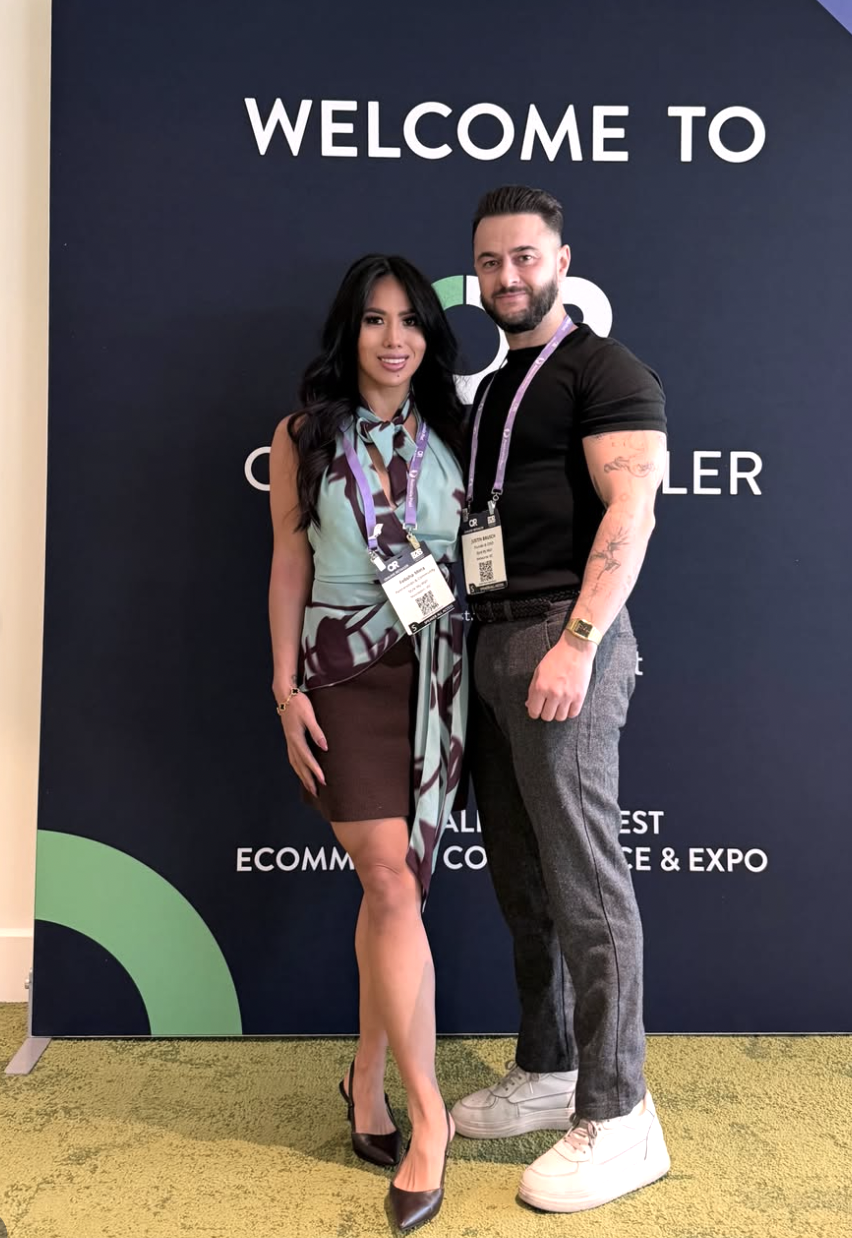
Justin Bausch: And within two years that one staff member turned into 22. Now I'll be honest, I don't think a small business needs to pay for a paid media buyer. I'm not just some random AI guru from his basement pretending like he's amazing SaaS provider. I'm not a SaaS company. I'm not a SaaS guy. I'm Justin. And I'm Felicia and we're from Style My War, an in House digital agency.
Felicia Meena: We are here presenting with Add to
Justin Bausch: Cart with Nathan Bush and we grew our business to seven figures in our first year using AI at the heart of the core of the business.
Felicia Meena: Be sure to listen to the episode and take notes because this is going to be a really good one.
Nathan Bush: The last time that Justin Bausch joined us, he was the CRM manager at RideAware and we were talking personalization and AI. Now that was back in May 2024. Justin is back today, but at a very different point in the story and this time he's brought in his partner in life and in business, Felicia Meena. Justin left RideAware to go all in on Style My Wall which was his side hustle selling artwork that he was running out of his own home. Two years on that one person operation is now a seven figure business running out of two warehouses in Melbourne. And Felicia, who spent close to a decade training E commerce brands all across Australia, is his co founder across both Style My Wall and In House digital agency. Justin didn't just stop at building stylemywall. He found a new way to build an E commerce business with AI at the core. And he built an AI tool that checks his true daily profit scales. His Meta and Google Ads on Autopilot, runs his customer service replies and even scans his own warehouse inventory. Now he's taking that tool that he built for himself and opening it up for other small business owners to use. Now this isn't a plug for Justin's AI tool, but I thought it was a fascinating story to dive into to talk about and explore what it looks like when you build an e commerce business with AI at the core. Now just quickly before we get into today's episode, I want to say a big, big thank you and a big shout out to Shopify and to Klaviyo for making Add to Cart possible. We really do appreciate their support. Now if you want the cheat sheet from this episode, head on over to add to cart.com au and sign up for the newsletter. It's free and we send it out on the day that we go Live with every episode so that you get all the good bits and all the learning, even if you don't get to listen to the whole thing. Now let's get into it. Here's founder and CEO Justin Bausch and co founder Felicia Mina from Style My Wall and In House digital agency. Justin and Felicia, welcome to ADD to cart.
Justin Bausch: Thanks for having us.
Nathan Bush: Pleasure. Thank you for being here. We've got such a big agenda to cover today because lots to catch up on since you were last on the show. Justin, you were here in May 2024 and I had a look at the title of that episode that we went live with and we called it the Power of Personalization and AI. And I think it might have been one of the first to actually have an AI focus at that point, at least in our episodes. I'm not sure we knew exactly what was coming with AI. Has it surprised you in how fast it's got here?
Justin Bausch: It really has, because I think last time we spoke about it, I think the AI we were talking about was just like product recommendations and just the basic bare bones of that combined with personalization. And now AI has evolved to the point where businesses can now implement it to a point where, where it just elevates any small business owner to a point where they can squeeze out so much more than what they thought they initially could. And it's growing by the day and keeps evolving and it's pretty exciting.
Nathan Bush: And you, we've spoken about this a lot in our pre conversations around the system that you've created since leaving Riderwear to create your own business, but also to help other businesses implement AI. And so we're going to unpack a lot of that. So that's where I see a lot of the value in our conversation today. But I think it's really important that we take people on the journey. So, Felicia, you're here as well. Tell us guys, how you work together. What does this look like?
Felicia Meena: Well, funnily enough, Nath, I know that we crossed paths many, many years ago, but prior to what I'm doing now with In House and doing all the digital and creative side, I was actually training a lot of E Com brands for the last almost 10 years. So Mi Academy, very well known training academy, ECOM brands all around Australia, which you'd be very familiar with. So when Justin and I merged forces last year, obviously with him and his CRM background with Rider and all these amazing brands that we've worked for, my experience in training brands and my creative side, that's how we Merge together.
Nathan Bush: Cool.
Justin Bausch: Professionally and romantically as well.
Nathan Bush: You are brave people. Multiple businesses and together in life, you guys are in the thick of it. So we've got a few things going on here. So we've got Style My Wall, which I want to talk about, which was your venture that you took up on after RideAware. Because last time you joined us on the podcast, you were at RideAware. What was the move to go from working at RideAware under a founder's direction, focusing on CRM to going actually Style My Wall is the thing.
Justin Bausch: Yeah. So I think what the major thing was because I was doing Style My Wall just as a small thing on the side during. Right away.
Nathan Bush: I know, I remember when we were filming you had like pictures like just in the corners of the shot. And I'm like, what's going on there? It's my little side business.
Justin Bausch: Yeah. So I guess what the major turning point for me was the fact that I was just constantly busy selling artwork myself, just purely on Facebook Marketplace. And I was like, you know what? I can turn this into a business. I know CRM, I know paid ads, I know everything about E Comm. So I took a pun. I bought my own professional printer. I opened up a little studio where I was just selling purely E Com. Created a Shopify website. I did all that whilst I was at. Right away. I didn't want to throw all the eggs in one basket. And it got to the point, you know, my first ever employee that I hired was my nephew. He's 21 years old. So I saved him from being a dishwasher. He came and learned everything about E Com for me. He did all the printing and framing with me. And within two years that one staff member turned into 22 now. And yeah, seven figures in our first year. We've now got two massive warehouses in Melbourne. Yeah. And I guess the point of transition was realizing that I am now looking after a full time business. Yeah. And that was the change.
Nathan Bush: And what's made Style My Wall so successful in such a short amount of time? Because I don't think there's any shortage of people who have tried to revolutionize the art world and make it more accessible to people. What has been your key to success there and being able to grow so quickly?
Justin Bausch: It's a combination of, I mean, selling artwork online. There aren't a lot of competitors that do that. I don't think there's one major competitor in that space. You're not competing with the Kmarts and, you know, freedom and stuff like that, you know, there's no major player in that industry. But at the same time, my background in E comm and marketing, I was able to keep everything in house and double down on my ad spend and not having to outsource those that money to other people. So I was able to do everything myself. And for a small business owner, I think that's make or break in their first year, you know, you'd be spending almost a grand a month paying someone else to run your ads and learn that stuff. Whereas because I was blessed with knowing how to do that myself, I was able to save that, put that towards ad spend and just scale quite aggressively, but also profitably as well. And having a print on demand and fulfillment business, I didn't need to hold a lot of stock. You know, the only stock I need to hold of the frames, I can create a new SKU just like that. I can find an artist, list the product and then we print and frame it when the order comes in. So that is probably what separates me from someone that has a retail store or having to buy a lot of stock as well.
Nathan Bush: And I can imagine that setup's not cheap though, especially as a small business. Buying that first printer must have been pretty daunting.
Justin Bausch: It was daunting. But knowing how much many orders I was getting on Marketplace, I just knew that this was going to pay off very quickly.
Nathan Bush: So you launched on Facebook Marketplace first?
Justin Bausch: I did, yeah. And that's where I was testing the waters and I was just getting heaps of sales locally in Melbourne. So I'm like, if it's working here and all I'm doing is advertising for free organically on Marketplace, surely I can double down and make a proper website branding. Yeah. So that's what the timeline was.
Nathan Bush: And now you've got a collaboration. I saw with Mattel, like, that's big time.
Justin Bausch: It is, yeah. And funnily enough, they reached out to us and it was because of, yeah, Felicia really helped me out with this because being an ecom, tech, CRM, AI guru, I didn't really care much about branding, personal branding, all the coloring in fun stuff that I like to put on the back burner. But Felicia has come in and turned that black and white into color. Did a lot of personal branding, content owner led content, getting myself out there. And yeah, Mattel saw me on LinkedIn, reached out as a result of that and that turned into a big conversation. So, yeah, now we license their prints that we can, we can sell.
Felicia Meena: And I think that's actually a really interesting backstory because prior to Mattel reaching out, Justin had completely revamped his LinkedIn page. Like we did like this photo shoot and we like updated it and he had started obviously becoming more active there and updated all, you know, the buyers and everything. And I think that combined with the activity that we were doing on social media had brought in that Mattel conversation because have there not been a level of frequency and obviously Justin's face popping up on LinkedIn in that kind of way, then that conversation probably wouldn't have taken place.
Nathan Bush: So it was a real intentful move then at the start to do that founder led content. Rather than scale. This business where you guys can sit behind the scenes, you're putting yourselves out there first.
Justin Bausch: And I think that's what elevates our brand as well, is like if you think the art industry, you just, you don't know who you're buying it from. We wanted to put a face to the name. You know, my dad works for me now full time, my niece, my nephew. So I talk about that family orientation behind it. You know, the staff love working there. So we're always putting organic content and you don't really see that from an artwork industry. You think art, you think high end museum, a bit dull, a bit boring. We've kind of changed that up a bit and we're putting a bit of flair onto the art industry. That's what's helped us stand out as well.
Nathan Bush: How aggressive do you have to be like to stand out? Do you have to like be we're anti into the old school world of art or can you kind of do it more subtly?
Justin Bausch: The two best performing ads that I've run are the ones where I say the art industry is outdated. You know, I've wanted to take the industry and break through it. You don't have to compromise on affordability and quality anymore. Most places, you know, the reason why artwork is so expensive is because they can put any price that they want. No one knows how much to pay for art. We care about affordability. You know, a lot of people care about the quality of art, but some people just want something that is good quality but also is affordable. You know, rent's expensive, groceries are expensive and I say that in my ads. So that's the appeal that has allowed us to stand out for those customers.
Nathan Bush: And Felicia as Justin's kind of, if I've got the landscape right, Justin's doing a lot of the system work and you're doing a lot of the brand and identity pieces on top of that. As well, as the marketing pieces, what's important for you as Justin's, like, pulling the levers on ads and things like that. And then for you to, like. Actually, we've got to have an identity on top of all of this. We can't just rely on beating the algorithm every time.
Felicia Meena: Absolutely. I think content volume is a very important one and a really big one for us. And I think a lot of brands these days is really harnessing on collaborations. You know, we are very fortunate in our industry because we have artists who have their own brands, so we try and leverage those people as much as possible because those are our advocacy pieces. So really getting that volume, creating that community. We do a lot of partnership work as well with schools and stuff, like, so we're part of the curriculum for some schools in Victoria and that's going to expand. So how do you get.
Nathan Bush: As part of the curriculum? How does that work?
Felicia Meena: Great question. I'm glad you asked.
Justin Bausch: This is all Felicia's idea as well.
Felicia Meena: So, you know, it was very convenient because I went to an art school myself, like I went to lci and, you know, a lot of the artwork that we bring on are from established artists. But I said, what about we create a brief for universities whereby we present them a brief to create a set of prints for us that goes towards their mark as part of the curriculum. But also let's select the three top ones to actually bring on the site so that they can receive the commissions coming from that project. And you know what it's like when you're sitting in uni and you're doing all these pieces. You're investing time, money, your folio, and it goes to nothing. This is actually coming back to them commercially. So it's a beautiful brief. It's the only one of its kind, to my knowledge, in Australia. At some point. We're very excited in expanding, expanding. So those partnerships are obviously very special. And also we're starting a couple of things with some NDIS organizations. And I guess the other one that we look after as well as wholesale, which is a separate conversation, but I'm obviously looking after those wholesale partnerships as well.
Justin Bausch: Yeah.
Felicia Meena: So for me, it's very important that when I need systems in place to run those initiatives, it's very important for me to go to Justin, be like, hey, I need this built on the AI platform. Hey, can you do this? Tweak that someone's having shitty experience over here. Fix that. So that's when he's really quick on jumping on all the AI stuff, which I'm sure we'll touch on later.
Nathan Bush: We will. Before we get to that, Justin, I'm keen to understand the move from activewear and fitness into art from an E commerce perspective. What's the hardest part in the new business that you weren't expecting?
Justin Bausch: I gotta be honest with you, the hardest part I wasn't expecting is the type of customer that we get from an art perspective versus activewear. I would say it's probably more of the older. It's a big demographic mix. But you know, a lot of people that are a bit hesitant in buying online, especially artwork as well. So, you know, the customer service and the questions and everything we get. The volume is a lot higher because a lot of the people buying artwork are familiar with E Comm. I think a lot of people don't know what they're used to in terms of timeframes from print and frame on demand. So our dispatch time can take a lot longer because we're not taking things off the shelf, you know? Yeah. Even though we over communicate, if they don't get their order in a week, they bought our work online. Is this a scam? Where's my money? Blah, blah, blah. Like why is my artwork not arrived yet? So balancing customer expectations with a print on demand company and fulfillment within the industry that is not as, I guess, fun and popular as activewear. It was probably the hardest part to juggle.
Nathan Bush: Is there a limitation around print on demand in being able to scale quickly?
Justin Bausch: It's a great question. The hardest part is probably getting the quality right and getting the frames perfect. And also you got to be really good at getting every single order correct. You know, it's so easy to make mistakes. So I think when we had a such a huge volume on Black Friday and I was getting all my staff all hands on deck, printing, framing, they just want to get the orders out. And sometimes they can get the wrong color frame or get the wrong print size. So all of a sudden your errors can multiply exponentially because again, you're not picking off leggings off the shelf that's in this color. You know, you have to look at the invoice twice. Is this the right size, the right color frame? Have they got a white border around the print? Is this the right print? Heaps of potential errors that can occur. So that's probably the biggest thing is balancing accuracy with scaling aggressively.
Felicia Meena: Back to that scaling question as well. I think the very obvious one is because we're not quilling stuff off the shelves, obviously the speed to delivery is a lot different. So what we'd be able to get out in a day would be a lot less than obviously a brand that has just has mountains of stock sitting there that they can brush out. So that's something to factor in as well.
Justin Bausch: Yeah, we did a 70k order, 70k day and you just imagine the line queuing up and then when we got to it, the dispatch was blown out by about four weeks. Our customers were taking four to five weeks to get their order and I was like, I can't have this. So I put in a lot of systems in place with AI to help that dispatch and process in time. So that's another thing that, that I did.
Nathan Bush: Lorna Jane built a whole brand on the idea that movement is medicine. And it turns out their customers took that literally because they do not stand still. They'll discover the brand in a store, shop online a few days later, then tap through the app sometimes. All of this happening in the space of a couple of days that is beautiful for loyalty, but a nightmare to keep up with, especially when like Lornajane, your email and SMS are stuck in two completely different systems. So they brought it all together with Klaviyo. One platform, one customer profile and a shift from blasting campaigns to nurturing proper lifecycle journey. Post purchase upsells alone now drive three to four times the order rates. And across the last year they've pulled an 84 times ROI on email and SMS. 84 times. For a brand that swears that movement is medicine, that is a very healthy result. Head to klaviyo.com au and see how brands like Lorna Jane are doing it right. Well, I think that's a great segue because let's talk about, about how you've engineered this from an AI perspective. I'm especially keen to understand because you've seen RideAware and you've seen that almost D2C brand and the evolution of that. And I know they're a bit broader than D2C now, but that seems to be the business that was there with dtc and now we're moving into a new style of businesses that are being founded with AI at the core. And it feels like you're in this sweet spot where you're developing with AI at the core. When you were looking at how you do this from building style my wall into something that is scalable, using AI, where did you start?
Justin Bausch: I think I started because I wanted, I wanted one tool that could tell me all my data from a profitability level across my ads in one spot. And I speak to a lot of other business owners and I say, hey, what's your LTV to cac? What's your AOV to cac? What's your blended mer? Like all these metrics that a lot of people even in marketing don't understand, A, what that means and B, how that is affected by them scaling their ads profitably, right? So I realized you have to pay a lot of different tools, a lot of different softwares, or you need a business coach to help you identify those metrics. What if I can just speak to my Shopify, speak to my ads, create an app that refreshes my orders every 30 minutes so it's always updated. And then at the end of every night, it analyzes trends, it goes back 120 days and it spits out all those metrics and numbers that I want there. And then it created dashboard. But then from that dashboard, I was like, okay, now I know Google Ads well, I know meta Ads well, but I want to scale profitably based on all those metrics I've identified. You know, it's one thing to go into Google Ads and see your roas and go, okay, I might increase budget. There's. But Google Ads doesn't know how much you made the day before, like your net profit after staff wages, after everything. So I was like, okay, I'll integrate zero and all my wages and expenses in my app. So after every day, my app knows how profitable I am, right? It knows my AOV to cac, my lifetime customer value to cac, what it costs to acquire a customer, how much they pay back. And then that evolved into the next thing, which was a system where it tells me how I should scale my ads for my business numbers. And that didn't exist before. So then I built that and then it was just a domino effect after that.
Nathan Bush: It's really interesting that you started there because obviously when we last spoke it was all about CRM. So the other side of it, like you're obviously starting with acquisition there with ads. When we spoke, it was about CRM, about retention and activating existing customers. Is that a symptom of the life stage, that style My wall is in, or do you think that's where all founders should start?
Justin Bausch: I think all founders should start in the acquisition piece at the start. But then like the CRM is definitely important for my brand with Starmohorn artwork doesn't have the highest retention and repeat purchase rate. So I knew I had to focus on the acquisition piece. And my market is very, very broad. You know, Moms can buy for their kids, babies with artwork in the nursery, all the way up to 60, 70 year olds wanting to buy your classic Van Gogh so called money. So I'm fortunate then. My target market is huge so I can focus. But you know, I am doing my strong CRM piece like having the reactivation flows. And my app as an example plugs into Klaviyo. It identifies all my segments, all my flows, it looks at all the offers that I'm giving away my product margins and gives me recommendations on what offers I should give to my segments. So it can identify someone that has purchased four plus times or three plus times. It knows my product margins on this is like 80%. It knows I give away 15% on my abandoned cart flow. So it says, hey Justin, for this group you can afford to give away $40 off at a min, spend 150 or something like that. So that's another thing that my tool can do, that reactivation piece as well.
Nathan Bush: And I'm keen to understand because obviously there's a lot of tools out there that do AI analytics and reporting. There's lots out there where we were talking was around a system that can then go and help execute and make decisions. How do you then automate some of the tasks or the activities in a business like yours using what you've built that you actually don't have to employ people for?
Justin Bausch: Yeah, it's a great question. So as an example, because it looks at my daily profitability, so a lot of business owners, they don't look at their profitability daily, it looks at it every single day. So it knows yesterday how much money I made net profit. When it plugs into my Google Ads or my meta ads, it can understand identify after three or four weeks that it's learned enough about your business that it can turn it on autopilot. And during those three or four weeks it gives recommendations every day where you should scale, where you should cut back to the point where now the decisions it was giving me, it was identifying areas that I couldn't identify just purely because it looks at it all the time, like I don't have the time to do that. Right. And all those metrics that I spoke to you about before, it knows that the numbers that it's recommending and suggesting it's scaling for your business profitably. And I probably couldn't identify that as accurate as that. And it's cross checking your net profit every day. And I was so confident with the recommendations it was giving. You can toggle on autopilot it pings me in Slack, sends me an email and goes, justin, just letting you know I increased budget on this campaign because in the last 14 days it's achieved the ROAS of this. Your AOV to CAC stands up. You're paying this customer X but you're getting y back in return after one year. I've put in an extra $40 here because you have profit Headroom. Just let me know if you want me to revert it and I can just leave it or just say revert and it will revert it so it can execute from the platform, pause ads from the platform, just with a touch of button. So I don't even have to go into my Google Ads anymore. I just log into my platform, let it run. So yeah, if I was a small business owner, I didn't know anything about Google Ads or Facebook ads. You know, like there's that meme where someone jumps into the meta Ads business manager and it looks like a cockpit and a plane. You know, like everything is just so confusing. I don't have to go into that anymore. I just let my autopilot run. It tells me what it's done and the results are there for me because my profitability has never been better since I've implemented for myself and for other businesses as well.
Nathan Bush: And Felicia, I'm keen to understand from your education background as well, were you able to help set rules and guidelines in here? Because not every business will be the same, right? Because what works for style, my wall in the art category might be different for other businesses. How have you set this up so that it can work across different businesses?
Felicia Meena: So it's really dependent on who we speak to. Right? So for example, you know, we might have spoken to like a wellness provider who wants to integrate some of this stuff in. And obviously when you are trying to integrate the system and platform for wellness instead of E comm, that requires a whole different sphere of metrics. So I guess for me it's just about conversing with those people and obviously with my background in some of those other industries and going, hey, that's not going to work for here, but like, let's tweak this for this. So I think with that it's very much client led and it's very organic and it's very much customer led because it's about asking people those questions and going, hang on a second, like let's fix that and let's make it better over here. But for that specific purpose and on
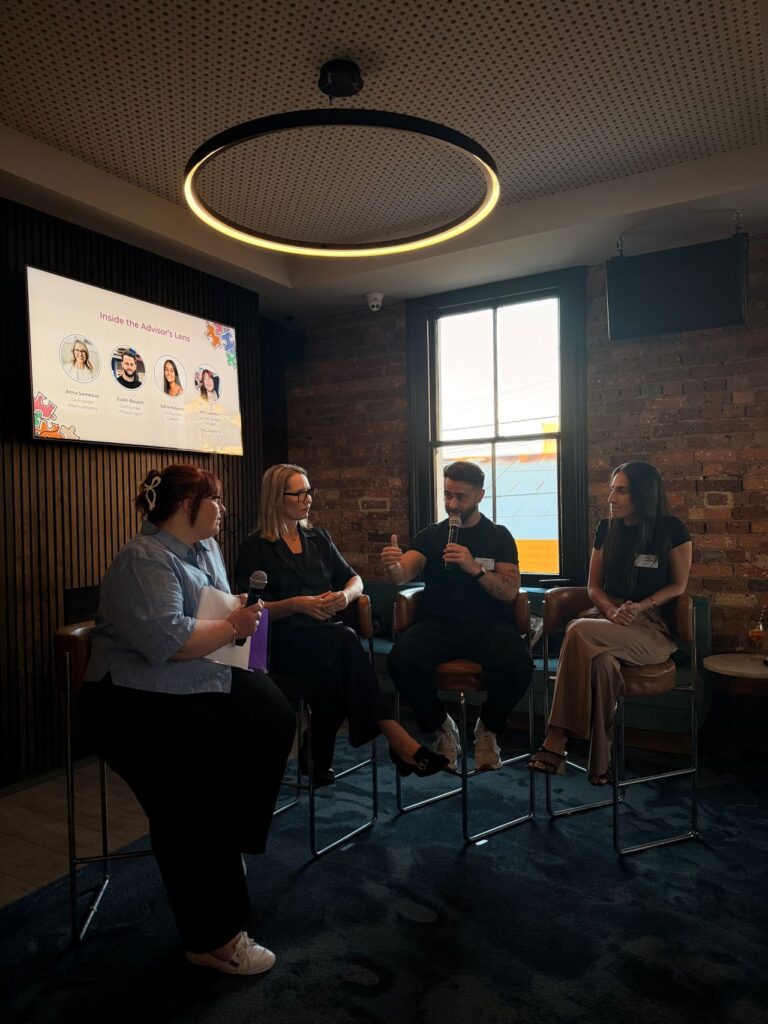
Justin Bausch: that point, when I do integrate it because, for example, when I was speaking at Online retailer and I mentioned about my app, I had a couple of businesses approach me and, you know, they were, they're only spending 50 a day on ads, like I'm spending five, six grand dollars a day. But when I integrate their account with the platform, it reads historically what they've done, where the gaps are, and it will adjust its recommendations purely based on their volume, their budget and everything like that. So, you know, it looks at its history and it can understand it from a business owner when it plugs into Xero, when it plugs into their margins, it recommends, understands and will provide that guidance based on that business as well.
Felicia Meena: And I think a really key thing is that we understand it, you know, as part of training. Different brands and business owners are at different levels. Right. So as someone who's just entering the market, they look at all this stuff, a lot of them are going to go, ah, that's way too complex for me. Can you dial this back? Can we just like how this. And I think that's a beautiful thing about the platform that Justin's built because it's very easy to toggle which features each separate client has. So we can really make it tailored. If we obviously know what's important, we'll educate you on those key metrics. But if some of it's too complex, it's very easy to kind of adapt to that as well. And, and obviously the other side of what we do is that training and education side. So if there are obviously some really key metrics, it's not like, oh, you're left in the dark. It's like, all right, like, let's actually help answer those questions. So there is that service element of it as well.
Nathan Bush: Makes sense. How does it go against In House, which is your agency, which is. The whole premise is that you go into other businesses to help them with their marketing and their ecom. Are you doing yourself out of a job?
Felicia Meena: Absolutely not. So In House is actually made up into three components. So there's the creative arm, which is obviously like the photos, the videos, social media brand. Then there's the training arm, which is just in pace, which is very ads and CRM focused. And then the third piece then is the app. So what happens is when brands come in and integrate with us, it's like, you know, we provide that education, but then we give them the tools and ongoing piece so that they can use that ongoing.
Justin Bausch: And I think the beautiful thing is, look, Felicia and I are very busy as well. Like, I've got Style my wall. Felicia has a lot of brands that she works for. We love seeing small businesses come for help. But at the same time, I want to maximize your budget as much as possible so you can reinvest that in ads. And if you want to be trained for a couple of hours, I can teach you Google Ads. But then the app will then serve as that daily mentor for them. You know, they pay a subscription fee to use the app and then the amount that they're paying for versus what they pay an agency or someone like me to look after them monthly, the comparison is crazy. And they can reinvest that money into ads and the app will just tell them every day what they're doing. Well, what they're doing, not what they can recommend. So it's like I don't want to retain you as a client. I just want you to use the app and empower you as a business owner so you can do it yourself.
Nathan Bush: That makes sense. And I think in the last six months I've seen more people coming out with dashboards and analytics platforms than ever before. They are everywhere. But is that the play here do you think overall, is that there won't be one winner, but the way that businesses operate will be totally different. And you mentioned there the agency perspective. What do you see as the role of especially performance buying agencies over time, especially in small business?
Justin Bausch: I think performance paid agencies for small businesses, like I'll be honest, I don't think a small business needs to pay for a paid media buyer. If you're spending less than four grand a day, I don't think it's needed. And a lot of them will attest to that. When I was at online retail and I said that the panel of that was an agency owner and she completely agreed, you know, so I think that's where that gap in the market is for us is okay if you don't need it, but they still need help. What is an affordable solution to that? And that's something like, like this. There will always be paid media experts for larger businesses when they've got a huge skus a lot of different creative and creative volume and helping them get that creative volume as well. Absolutely. For a small business that is spending less than that a day and they want to understand their business from a profitability level. A pay me expert isn't going to know how to run a business profitably. They're going to want to show how much roas they can get out of your account. That's the difference. They're never going to Know your margins, your net profit, your AOV to cac those numbers that are small business owner knows they will never understand. So that's where that distinct difference is, I feel.
Nathan Bush: And so for this to work, do you need to be running on a specific tech stack? Like you've mentioned Xero, you've mentioned Slack, obviously Meta, Google, Shopify, do you have to be on a very specific stack?
Justin Bausch: No. So the beauty about this is I sit down with you and go show me everything that you have for your business and I will integrate it for you. So if they are using a QuickBooks or something like that, I'll integrate that. It's got an API, plugged it in, boom, it's done in 30 minutes. So we've got about five clients using it now. It's set up in five different ways. But for their business, you know, one of them runs their daily profitability sheet from a Google sheet doc that they update daily, it reads it off that, another one uses zero, it reads it off that. So I can configure it based on how that individual runs their business. Even if they put it in a Word document and they upload it to a Google Drive or an FTP, I can point it to that. And that's the beauty of it. It's very flexible, it's very custom. I would say it's just like a down to earth humble app. But I'm not trying to bleed you dry financially. I use it for myself. It's helped me scale this business to seven figures in my first year. I don't care if you use it or not, I'm using it for my business. And when people approach me with an appetite for this, I actually said, you know what, this is actually a good opportunity to help other small businesses with it as well.
Nathan Bush: Why didn't you keep it a secret and just launch three or four more businesses?
Justin Bausch: The idea of a subscription based model as a business is pretty juicy and not going to lie. And look, coming up with a company where I have to manage 22 people and a business, I don't really have a lot of time to start a lot of other different ventures. And I think just having this app and then having people just plug and play is probably the best use of of my time as well.
Nathan Bush: And it all sounds very ideal and very smooth and simple. I think anyone who's played around with Claude code knows that it's not always as simple as it seems. How are you creating this? If we can get a little bit nerdy and whatever you can give us Here would be interesting. Is it through openclaw? Are you doing it through Claude code? Are you doing through something else?
Justin Bausch: It's Claude code, but what I've done is it's connected to like a railway which is a server base. It refreshes every 30 minutes. I've got everything from Shopify integration, Klaviyo, Mailchimp and what it does is it just analyzes a lot of data constantly for that business and that workspace and updates it every 30 minutes. So it's always live. So I'm paying quite a bit from a server based point of view because it's storing all your data historically. And just to give you an idea, every subscription tool that I've paid for, I've gotten Claude code to rip it apart, reinvest that the learnings and knowledge of all tools that I've used into my app and thoroughly tested the results of said subscription versus mine and made sure that it was on par. And it's not just random data. So I've hard tested it. It's taken me close to 10, 11 months to perfect it now. And also a lot of training from myself because I know when to scale an ad for Google Ads, when to hold off with meta, because someone can just go meta to Claude code, speak to my meta ads and give you some recommendations, but Claude won't know straight away, hey, okay, it spent 200 here in two days. It might recommend you to pause or turn off the ad, but any media buyer would say no. It's in learning phase, you know, and training it over time has gotten to the point where it is a pay me the expert. You know, what it was recommending 11 months ago is completely different. What it's recommending the stuff now. So yeah, it's a combination of techie knowledge and the tools that I've created. It's not just from a E. Com overview point of view. You know, I wanted an inventory scanner, I was paying for an inventory scanner. I built my own one in the app and now every staff member has their own login. They scan the frame. When they actually assemble the frame, it minuses one from my stock count, but at the same time it adds what they've done and logged as a report. So every week I can see how my staff are going from a fulfillment point of view. And it sends a report card based on gives them a grade. So then I can do a leaderboard on who's doing well, who's framing quickly, who's dropping off. So you can imagine the app just does so Many different things as well as just recommending from an ecom point of view as well.
Nathan Bush: The market is shifting, costs are climbing and the pressure to do more with less is very real. But when resources are tight, you can rely on Shopify, the platform that's consistently first with new capabilities. Shopify invests significantly in R and D and drops more than 150 updates every year. Evolving with you and absorbing complexity so that you can focus on what moves your business forward from AI powered insights to the world's best converting checkout. Shopify is designed for the next year of commerce, helping you sell more, scale faster and future proof your brand build for what is next with Shopify. Visit Shopify for Enterprise to learn more. It's almost functioning as your ERP for small business.
Justin Bausch: Absolutely, yeah. And I'm tailoring it like I had another business that says, hey Justin, I want my courier performance rates. I want you to integrate with how that's tracking and have it provide recommendations. What am I paying too much for? Where can I? And I did it. You know, at the moment it's doing customer automation for customer service. It's going into all my tickets integrated with Gorgeous and it's replying to customers where it knows it can reply. So that's another beautiful thing about it. Before, if a customer had a frame that was damaged before, they would have to take a photo, send it to my customer service team. They would have to reply and say when are you free for us to pick up the damage return when can do a resend. And now that handles it all by itself. It will analyze the image of the broken frame. It will understand that we can't repair it. So we say, you know, it will recommend just throw it out or if we can repair it, it'll say, yep, here's a portal for you to click for returns from a courier by the label. They pick in the time and date. It will publish that, that will create a draft new order in Shopify. Tag my dispatch team to say Janet from blah blah blah, got this frame, it was broken. Please resend it or it does it all automatically, you know, so the, the possibilities are just endless.
Nathan Bush: That's where it gets interesting I think when you start putting into the process chain when it's not just one off executions or one off activities, but it's actually part of a process.
Justin Bausch: Yeah, yeah. And to be honest, there was teething issues, but it's gotten very, very confident now that it does it accurately.
Nathan Bush: I mean, yeah, you couldn't push it to the level that it's at without teething issues. What's been the biggest mistake? Let us in on on where it's gone rogue.
Justin Bausch: Probably it identified customers getting the complete wrong order and sending out emails where it was identifying they were getting unframed. Like an unframed rolled up poster versus a framed. It just had something to do with identifying the variant titles and it just spit back, oh, you actually didn't buy frame, you just bought a poster. And all these customers that spend five times more than a poster, they're just like, what the hell is this a scam? Blah, blah, blah. So I turned off that autopilot and then I got my customer service team, hey, let me know. It will create then draft responses instead of confirmed ones. So then my customer service team, after a couple of weeks they said, yep, I'm confident now that it's replying accurately. Let's now turn it back on. So that was a good.
Nathan Bush: And that big pain point that you had around the print on demand. And when you go through those peak periods like Black Friday and being able to keep up with customer service and customer communication, how have you used your platform with that? Because that is a problem that is probably fairly unique to your business a hundred percent.
Justin Bausch: And this is a great question. It's the best case study that I've done with my app because we were in Bali and this is during a big sale that we had and I was being hounded every day by customers with updates and I'm like, what can I do to fix this? So I got my app to look at a rolling day 7 average of when a customer places the order and then when it is marked as delivered to their door. So then I'm flagged every single day. If that window is increased by one day or decreases by one day, if it starts blowing out over a threshold, it pings. Me and my operations manager, we need more staff for overtime and we need weekend work to catch up. So immediately you identify that. On top of that, if it understands that it's blown out the dispatch window, it'll then go into my Shopify update at checkout the shipping date window. Instead of saying 8 to 12 business days, it'll automatically say 8 to 15 business days. It will then go into klaviyo when I made that change and the email that a customer is sent after they place an order, it will update that in the flow. Hey, just letting you know, this is the update window. And then I got the app to build a tracking portal and then that tracking portal estimated window will notify that Customer, it's now actually gone out to 8 to 15 business days, not 8 to 12. And then the progress bar in that thingy will slightly lengthen and it will just let customers know so they are updated at every single possible stage before, during, after. And look, to be honest, we still get complaints, people still don't read. It's unfortunate, but that's a big example of what I did to turn that around because we need to over communicate and that's something now that the app does and I don't have to look at it anymore. It just does it automatically for me.
Nathan Bush: Yeah. If small business owners are saying, justin, Felicia, this looks amazing and you know, we'd love it for our business, there's a hell of a lot of trust that goes into it because you're dealing with all of their data and all of their customers and essentially being responsible for their customer experience. That's very different for doing it for your own business. How do you ensure as you move into that, essentially being a software provider, all the security, all the support is put in place so that if one day you are in Bali and uncontactable and the AI goes rogue or something breaks, API changes, that it doesn't all just fall over for them?
Justin Bausch: Yeah, it's a great question. And look, I think every software based industry is always going to have issues. A platform is going to go down, you know, your email service provider goes down for a bit, suddenly you can't send out an important campaign. There's always going to be issues from a security point of view. I have made sure that once you integrate with the platform, it is completely secure. Because I know if I wanted to monetize this, that's the number one thing is, is my data secure? Secondly, in terms of things going rogue, I think because I've tested it out so much of myself, I want to be confident to then let another business owner use it. Unless I've gone through all those teething issues as well. And I think being a small business owner myself, with the volume that we do, I trust that other small business owners can also trust me and going, hey, if I've done this for my business, it'll work for you. You know, I'm not just some random AI guru from his basement pretending like he's, you know, an amazing SaaS provider. I'm not a SaaS company, I'm not a SaaS guy. I've created a tool that works for me and like I said, like a humble tool that I know work for your business. And if there's any issues if you need to get something changed or fixed. I'm always on the phone as well. So. Yeah, and I think because there's, there's no risk in it at all. Like I'll never enable autopilot at the start. If they want customer service AI, I will never allow it to be on autopilot at the start. It will draft out those recommendations so then the proof will be in the pudding for the owner to go. You know what, these answers that it's drafting is very accurate, Justin. I'm confident. Let's turn on the autopilot. So there's probably those stages in the actual implementation that they will follow.
Nathan Bush: And Felicia, from a change management perspective, what do you see from the businesses that you're working with as they're transitioning more over to an AI way of working either with the tool or without the tool? Like some of the, you know, the tools that we've mentioned, Shopify, Klaviyo have all got amazing AI tools built in within them that you can still leverage even if you don't have the underlying AI integrated platform. Where are you seeing from a change management perspective that you're having to educate or help people make this part of their everyday process and habits?
Felicia Meena: Well, obviously I think speed's a very obvious one. So like I'll just use like content for an example. Like when we are adopting AI, obviously you're using that to draw your captions and just speed edit and to do all that stuff. Obviously I'm seeing that. But I think one thing that I really harp on about is I really encourage business owners choose AI and think of it as more of a creative tool as well. I think people are overriding, you know, all the textbook theory that is when I was marketing is like one project that I'm working on is branching out a wholesale piece, right? So we wanted to grow this wholesale on of the business and we didn't have any leads to work with. We didn't have any leads, didn't have any contacts. And I said to Jaz, I was like, you know what, using AI, I was like, I want you to go into Klaviyo, export the entire list and give me just the potential accounts that are business owners. And so from that list I'm able to then extract that, put it in my Klaviyo list, have my own marketing strategies reach out to them. And we've now grown our wholesale list by around 20, which is going to feed back in our bottom line. Purely because I asked that really simple question. Of hang on a second, like let's ask AI the right questions so that we can do some really like basic segmentation stuff. So speed obviously finding solutions like that and yeah, just obviously getting a better grasp of our customers.
Nathan Bush: Yeah. And one of the things that fascinates me is that you've repeatedly talked about having 22 employees, including some family members, which is fantastic. I would dare say as business owners you're on the cutting edge of AI here in terms of developing your own tools that you're making available for others. How do they feel around your investment and your knowledge in AI? Are they kind of like this is cool because we're part of like a new age business or is it like oh shit, could I be next?
Justin Bausch: No, I mean, I guess the beauty about my business is we'll need people to print our products, frame it and you know, we have a very strong, close knit team. So I think, you know, I don't hire any marketers or anything like that. So there's no one that is worried about their jobs. But what they're excited about is all the stuff that I've built has helped each and every single person from processing orders from my customer service team not having to be annoyed by the, you know, Janet's and Susans of the world, asking where their prints are. You know, it sends them those automated updates. My dispatch warehouse manager, it lets him know how far we are behind if you need more staff. So he doesn't have to ask me, you know, how much staff we need. It's alerted to him every day when a customer needs a resend do a returns. You know, they've got the portal now so he doesn't have to call up and organize everything like that. So it's made their lives so much easier. And you know, I'm not here to look to replace people. The main thing is just to make things easier for a lot of people. And that's what I've done as a small business owner. And what I see is the value of this tool is it's made my life incredibly easier and my staff and I want to make other people's lives easier as well.
Felicia Meena: I think the beautiful thing as well is that obviously we both kind of have the advantage that we come from marketing and we come from like we come from CRM, we come from that landscape. So when it comes to hiring people like you know, some brands might start their business and they'll be like hiring a creative director or brand manager this and that. But like, you know, not saying that those roles are not important. But we obviously know which roles are really essential and which roles have that return on investment that we really need because we can cover a lot of that ourselves.
Nathan Bush: It feels like you're positioning it very much towards that 0 to 2 mil kind of found. Is that correct? Like, is that where you think it adds the most value?
Justin Bausch: Yeah, I think so. Someone that actually is across their numbers and looking at scaling their business, this helps them scale the business and definitely is that target market. You know, someone that doesn't have a head of brand ahead of marketing, head of this. Small business owners that want to learn more about marketing and help build their brand and keep their money in their pockets to reinvest in ads to help scale the business. That is the number one advice as a business owner to grow your business is try and do everything in house, hence the name in house, and reinvest that back into your ads and grow your business.
Nathan Bush: Yeah, I think it's a really nice way too. If you're a founder and you haven't used Meta or you haven't used Google Ads before to actually learn the platforms in a safe way, the best way to learn them is by doing them. But to your point, when you're in the dashboard, Meta will give you a thousand recommendations of which most of them are in Meta's favor, not yours. And then how do you actually have some, you know, you guys on the shoulder to give some guardrails around that.
Justin Bausch: That's what we do. We sit down with them and I'll go, I'm going to teach you Google Ads and Meta ads in five hours. So I teach them everything they need to know. I hold their hand, show them the dashboard, show them what they need to be looking at. In the platform of Google Ads and Facebook ads. This is how you create a campaign. Ignore all this bullshit, ignore your branded roas. Like only focus on this and this. Like, I have small businesses that were paying agencies and they set up campaigns and they're paying for branded search terms on Google Ads. And this is someone that doesn't need to protect their brand. No one is there bidding on their. And I'm like, it's just a shame seeing that they're paying all this money and it's going out the window like that, you know, so it's me stripping that back, actually teaching them. No, your eyes looks great, but look at all the people that you've been paying for. The people that have already are looking for your brand like it's, it's pointless. So then we strip that back, we create a proper campaign. We then jump into the platform that I built and then they don't have to jump back into the, into Google Ads or Met ads if they don't want to. They can just stick in the platform. It understands what we've built and it will just tell you every day what you need to do based on your product margin. So it's a beautiful kind of piece that they learn but at the same time they grow as well.
Felicia Meena: And it's very, very, very personalized. You know, it's like it's really tailored to those needs and those metrics and whatever level a founder or a business owner is at.
Nathan Bush: Yeah, and you keep calling it the platform. Has it got a name yet?
Justin Bausch: It is, it's got what our agency is in house. So I n H a u s Beautiful.
Nathan Bush: Tell me about the next 12 months. So you've kind of got two very. No, not different tracks but two very different businesses. You've got StyleMyWall, On Demand Printing, E Com business and then you've got in house, both as the agency or consultancy as well as the software. Where are you going to put your priorities? How are you going to grow both at the same time?
Justin Bausch: I think the more Stylemoar has advanced and built, I now have taken a step back from the daily operations. Like I've got a very, very good team. They know more about the business than what I do. From a fulfillment point of view. Right. It's running like a well oiled machine so I can focus on the marketing side but with the help of my app, like I don't need to be in the numbers of Meta and Google as much as what I used to be. Right. So that's scaling all my ads on autopilot. Felicia is now looking after the whole wholesale piece for Style My wall. So I built like a wholesale lead finder for her. She can just type in, I want a interior Designer within the 20km of this postcode and it will just send her all the emails, phone numbers she gets on the phone. Do you want to buy some artwork and be a wholesale partner? So there's that. We're growing that piece but it's also freed up our time to then help these small businesses as well that wants to get on the app. So Felicia still has a creative arm that she does. She's awesome at branding, social media, a lot of video editing. So she's the razzle dazzle of making a brand look spectacular like she has with, with mine. And that's a testament to how we've grown so quickly. So there's that creative piece that she still does and that's her main job. Star My wall is obviously going to be a big part of what I do every day, but there is that room capacity for me to help businesses as well as Felicia to use the app. And then, yeah, the hard part is just onboarding them couple hours investment time for us, but then they're on their way with the app. So that's where we see it growing over the next 12 months. Star My Wall is going to keep growing. You know, we're only just getting started, but we want to start building this app and the in house agency as well together as well.
Nathan Bush: So have you extended your AI to be able to help founders who are in a relationship together and an AI app that can solve arguments without getting too heated or emotional.
Justin Bausch: It's a great question. I've actually got stage. Yeah, I've got. There's the agent that you can speak to about your business so you can go in and say, how's my business going? Do I need to be worried about any numbers or metrics? I need a relationship consulting advice tab or something like that.
Nathan Bush: Argon Felicia might have to build that one.
Felicia Meena: I think so in my favor. Right.
Nathan Bush: Awesome, guys. Well, it's fascinating. I think it's such an amazing time to do a conversation like this because if we have this conversation again in 12 months, it's going to look different again and you guys will be in totally different stage. AI will be in a totally different stage. But I love that you're part of the cohort of founders that are leading with AI at the core of everything you're doing. And not only that, you're helping other business owners implement that into their businesses as well. So congratulations on one style my wall that you've got that just pumping very quickly after our last conversation with riderware and then that you've set this system up that you're helping others with. So I'm fascinated to see where it goes. If people want to get in touch, what's the best place to learn more and get in contact?
Felicia Meena: Follow us on Instagram and we'll direct you from there. InHouseDigital Au and that's house H A
Nathan Bush: U S We'll have all the links and everything in the show. Notes. Justin and Felicia, thank you so much for joining us on Add to cart.
Felicia Meena: Thank you so much, Nathan. You're a legend.
Justin Bausch: Thank you.
Nathan Bush: Tell you what, one of the most fascinating and potentially scary things, things about doing this podcast at the moment is watching what used to take 10 years now happen in one or two years. You only have to look at where Justin was when he joined us back in May 2024 versus where he and Felicia are right now and what they've built since. Everything is moving super fast and success is really speeding up. Three lessons that I took away from that conversation. The first lesson is that AI stops just being a party trick the moment you stop asking it to do single tasks and start building it into the whole process. Justin's customer service AI doesn't just draft a reply when a damaged frame comes in. It reads the photo, decides whether it can be repaired, generates a returns portal, books the courier, raises the new new order in Shopify, and tags his dispatch team, all without anyone touching it. That's the difference between AI that answers a question and AI that runs the process end to end. Look at the repetitive processes in your own business, not just the repetitive questions, and ask what would it take to hand over every step and test it with AI, you might be surprised by what it can actually do. The second lesson is don't. Don't hand automation the keys until it's proven itself in draft mode, Justin never let his customer service AI reply to a customer live and never let his ad spend run on autopilot until weeks of drafted recommendations had been checked and approved by a human first. Only once the accuracy was there did he flip it over to running itself. That staged rollout recommendations, then draft, then autopilot is the difference between automation that you can trust and automation that costs you a lot of customers and a hell of a lot of work time when it all goes wrong. The third lesson is when something breaks over, communicate before the customer has to ask. This goes for whether you're using AI or not. That Bali dispatch blowout is what pushed Justin to build a system that tracks the real gap between between an order going in and the order landing on someone's doorstep. And the second that that gap grows, it updates the shipping estimate on the website, the email flow, and the tracking page automatically. I thought that was very cool. Customers will still complain sometimes, as Justin's found out, but they'll complain far less because they're being told the truth before they go looking for it. Any business under pressure, and we're coming up to Black Friday, can build that same habit into how they communicate. Whether they have an AI tool or they don't have an AI tool, Sometimes the fundamentals of e commerce just do not change. A big thank you to our partners at Shopify and at Klaviyo for making Add to Cart possible. We always appreciate their support and giving us the ability to bring you these conversations. If you got something from this episode, please do subscribe or leave us a review wherever you are watching or wherever you are listening. Until next time, I'll see you on Add to Cart.