Craig Meldenhall: We made the decision to move to Shopify and we did it in four months. It made millions just off one email. Just simple insights like that gut feel can still be a science. I'm Craig Meldenhall from Kathmandu and in this episode of Add to Cart, I talk about our Shopify migration and how it's enabled us to connect in stronger with customers and build some exceptional experiences to get customers outdoors.
Nathan Bush: A quick one before we get into today's episode, let's you've heard me bang on about it, but if you haven't
Nathan Bush: already downloaded it, go get Your Hands on ShipIt's 2026 State of Shipping report.
Nathan Bush: We've got the link for you in the Show Notes. It is the best report when it
Nathan Bush: comes to everything, freight logistics and delivery and the benchmarks that you should be hitting.
Nathan Bush: Hello and welcome back to Add to Cart. My name is Nathan Bush, otherwise known as Bushy. Now a quick one before we get into today's episode.
Nathan Bush: If you like having a cheat sheet
Nathan Bush: to go with your listening, we create one for every episode and we drop it in the Add to Cart newsletter. It's free and it drops on the day that the episode does. The link to sign up to the
Nathan Bush: newsletter is in the Show Notes.
Nathan Bush: Now the outdoor retail category is one that I think is fascinating. I spent years at Super Retail group across macpac and bcf so I went into this conversation with a lot of my own questions and Craig Mildenhall has been at Kathmandu for two years as the GM of Digital and before that he was at Adidas and Loyalty New Zealand. So his thinking on brand e commerce and the intersection of loyalty and shopping is sharper than most people you'll hear from. Kathmandu is a 150 plus store retailer across Australia and New Zealand. They are part of KMD Brands which also holds Rip Curl and and one year ago they completed a full migration
Nathan Bush: to Shopify plus in four months and
Nathan Bush: in the middle of a flash sale. We're going to hear all about it in this episode. As always, a big thank you to Shopify and Klaviyo for supporting Add to Cart. We really appreciate their help in bringing you these interviews. Now here's Craig Mildenhall GM of Digital at Kathmandu. Craig, welcome to Add to Cart.
Craig Meldenhall: Awesome to be here, Nathan.
Nathan Bush: Mate, mate, it is great to have you here. You're joining us from the Kathmandu office in New Zealand. I was expecting you to be out in the trail dialing us in or out in the ocean somewhere. Somewhere adventurous.
Craig Meldenhall: It's cold out there, mate. You know, I'VE got a bunker in sometimes, you know, away from the elements.
Nathan Bush: Fair now.
Nathan Bush: Great.
Nathan Bush: I'm really excited to jump into this because I think the outdoor space is such an interesting one at the moment in retail generally. And obviously I've got a bit of a background having spent many years at Super Retail Group, which has macpac and BCF as well. So it's a space that I really passionate about. Can you kick us off? Just. You're the GM of digital at Kathmandu, and obviously Kathmandu is part of a group including Rip Curl. Tell us about your role. What is a GM of digital? What do you do?
Craig Meldenhall: Yeah, GM of digital here. I've been here for two years now and my responsibility is to really engage across the business and drive that sort of digital first mentality. And that largely comes from a digital storefront. So how we show up from a.comconz.comau how we kind of provide our presence into that portal as well. We work across our digital marketing, our digital content. We work very closely with our stores, which have a big presence across the two markets. So my role is really to drive that adoption and making sure that we're growing digital in the right way across all of our digital channels, basically, which is super exciting. Such a super exciting space to be in as well.
Nathan Bush: 170 stores.
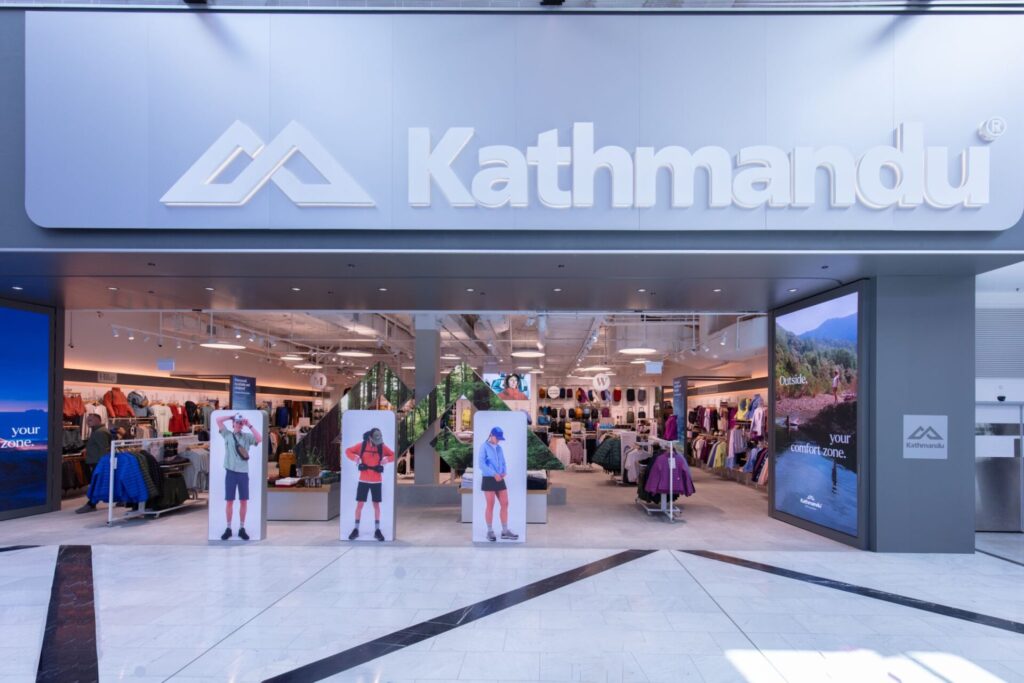
Craig Meldenhall: About 150. 150 plus. So you're epic. We just opened our new store of the future, the latest one, Little Collins street today, which is opening today, which is epic as well. Yeah, really exciting. It's just that elevated sort of experience that we're building in store and obviously online as well. So, yeah, super exciting for the team today that are launching that in Little Collins.
Nathan Bush: Congrats. What does a store of the future look like?
Craig Meldenhall: It's a much more elevated experience than what you probably like coming from the outdoor. You know, most outdoor stores are very cluttered. There's like, you walk in there, it's just a sea of, like, stuff. Well, we want to create that moment of breathe and space. So we use a lot of light and a lot of way to elevate that product and that product storytelling as you come into the store. There's a few nice little features with digital mannequins and that sort of impact as you walk into store as well. So, yeah, really elevated experience and using a lot of light, natural materials to bring that to life for a customer, but really to elevate the product and that product storytelling to bring to life and into store, which is. Which is so good. So, yeah, great to see the next, the latest one.
Nathan Bush: They're fun projects. I used to love the stores of the future. They're always fun and you'd always come up with the big crazy ideas. But I think too in your category, you've got to be so careful, don't you, around going too crazy with digital experiences or technology in those physical stores. Cause you're trying to replicate the natural environment. You're trying to get people to imagine themselves in a natural environment.
Craig Meldenhall: Oh, 100%, you know, and our job is to get people outdoors and experience the outdoors. And that's where people feel best when they're outdoors. And how do you create that? But not just in store, but even online. When we went through our full redesign last year and building the new site, it's. It's this constant challenge of how do you create that not just in a retail footprint, but on a, in a digital environment as well to make people feel that sense of, yeah, I can wear that outside, I can wear that at the bottom or the top of a trail. And how do you provide that inspiration? And a big thing that we use when we're going through the site redesign is like, how do we create that moment of feeling outdoors online as well? And it's a really hard thing to do but you know, it's a constant thing that the team is trying to kind of work towards as well. Which is, which is super exciting because
Nathan Bush: you recently migrated recently, as in what, a couple of years ago or a year ago migrated to Shopify plus one year yesterday, mate.
Craig Meldenhall: It was our one year birthday. So thanks to Shopify who sent us this epic cake that needed like three people to carry it up the stairs in the office here. It was so massive. That's awesome. It was like, couldn't believe it's been one year. So our migration journey started one year and four months ago we decided that, you know, it was time for us to kind of relook at our platforms both from a front end and back end. And we'd been on Magento for a while now, but it just wasn't. We were working against the system and tools versus working with us. So we went through a bit of a process with rip curl as well and understanding what does that look like and what does a foundation kind of need to be to help us accelerate at pace but also connect with consumers in a lot more of a regular up to date manner. So we made the decision to move to Shopify and we did it in four months. So that included a full front end redesign, back end, which was Yeah, a pretty crazy time. Lucky. We had really, really strong partners that we work with from Dot Collective to Shopify to Search, Spring to Y. All kind of bringing together to kind of achieve this goal within a four month period. The time frame was dictated because we wanted it to be in before winter sale, before our winter period, basically. So that was really crucial for us. And then we launched right in the middle of a flash sale at the time, which is pretty, which is pretty crazy. You're talking to the dock crew, they were like, I've never seen that done before. And it went like super smoothly and successful as well. So yeah, really great team, obviously worked on it. But yeah, really exciting project to get that, that pace and also to that level. And then we've just constantly iterated and built on it from there.
Nathan Bush: So yeah, there's always bugs when you go live and I can imagine a sale period as well. Whether it's an SEO drop off or it's a little gremlin at cart or promotions. Not working as expected. Anything major?
Craig Meldenhall: Nothing major. I think, you know, like anything when you look back, the whole, we've got quite a big loyalty base. So our account structure and getting, when you're trying to get that many people to migrate across to a different platform comes with some challenges. And look, there were a few little bugs and things here and there, but nothing fundamental. You know, we switched over sales, kept tracking really well. We saw some really good growth post that launch as well. So yeah, I can't say anything drastic, but just a few little things. SEO is obviously a big one. You naturally see that. But we've started to see that lift up quite dramatically since then. So yeah, I think nothing.
Nathan Bush: Oh my. Congrats. Four months. That's epic.
Craig Meldenhall: Yeah, no, it was good. It was a lot of fun. You know, we had this big bell that we would like ring every single time.
Nathan Bush: Come on, you got to show us the bell. You pulled it over for us before.
Craig Meldenhall: There's the bell, there's the Shopify bell. How epic does that look? Hey mate, it's kind of modeled on the rip curl bell's beach.
Nathan Bush: Can you give us a ring?
Craig Meldenhall: Will it, will it turn up or
Nathan Bush: is it sacrilegious to ring it if you haven't.
Craig Meldenhall: No, no, no. Everyone's looking in the office.
Nathan Bush: Sorry.
Nathan Bush: If you're in the car and we've just rung a bell in your ears.
Craig Meldenhall: I think finance were like sitting next to us at the time and then became an exc of the project because every time we had achieve a milestone so near the end of it, we were ringing that thing like anything. And you can imagine the day of launch, it rang pretty hard, mate.
Nathan Bush: So that's so good to create a
Craig Meldenhall: bit of energy and excitement through that piece of work, which is huge undertaking as well.
Nathan Bush: Those little signals are so important. Exactly like you said, like an energy perspective. When you are going through four months of pain, it's exciting for everyone's excited, but they're running on adrenaline and there are tricks. Yeah, peaks and troughs the whole way through. So I love those little mechanisms. When you said front end and back end were obviously Shopify plus at the front end, what were the major changes at the back end that you integrated at the same time?
Craig Meldenhall: So we were on D365 as our kind of core ERP system. We didn't change that. I think the big piece was that we ripped out our old kind of system, which was a magenta Adobe that just kind of had served a time. We needed a change. And so we pulled that out and put Shopify in at the back end. We redesigned the front end so it had a full, full front end redesign of the whole site and how you experience the site. We changed from Salesforce Marketing Cloud to Clavio as well at the same time. So kind of changed our whole CRM kind of cadence and what that meant as well. And then as you go through that, you know, it's like moving house, which I've done a lot. You know, you start to figure out we don't need that. We can restrict out that because a big part of what we wanted to do is just streamline our operations like any econ, good econ play wants to do. You know, you don't want to create friction. It's unnecessary. So for us, a lot of that unnecessary tools were just built like a complicated system over time that needed to be stripped down. And now Shopify is just, you know, and as an evolution for the team as well, because some of these guys have been working on Magento for 10 plus years. So going through that and how you bring a team on board of that is super important. So that was also, also fun. As part of that experience.
Nathan Bush: I was about to say it's a big change management exercise, especially for a public company. Like when we're in our world of E Comm and digital, when you say, oh, we're moving from Magento to Shopify, like we go, yeah, of course. Like that makes total sense. We probably don't even have to justify it. Did you have to do a lot of Justifying to boards and leadership teams.
Craig Meldenhall: Yeah, there's a bit of a process you go through because it's not just us, there's Ripkill, Oboz as well as part of the KMD group. So we had to really work as a group to kind of understand is this going to help solve it? What is the benefits, not just from an experience, but a cost. And all of that kind of went through that process with, with it. So yeah, that part took a period of time. But then once we decided to go, then it was all go and then, you know, then we ran at paces as our project lead Rachel would say. It just. Yeah, then it got fun and then we just really got. Got into the weeds and started to, to really build on it, which was, which was epic.
Nathan Bush: I feel your pain there doing that. In corporate, I spent three times as long in convincing and doing business cases than we did in building replatforming. So it is a process, it's important to do, but it can be frustrating once you get into building. That's the fun stuff.
Craig Meldenhall: Yeah, exactly. But once you, once you put it all on paper and you kind of showcase the benefits and what we were moving to, it became a no brainer in the end.
Nathan Bush: And it sounds like you were able to still make changes as you went. Like it wasn't like, here's the plan, we got to stick to the plan. You said you were discovering little bits and pieces that you could move or change as you went. When you're doing a project as major, is that how do you balance sticking to the plan versus taking advantage of changing the plumbing while you're in the build?
Craig Meldenhall: Yeah, that was because the way we did it, we split the team into two. So we had our Shopify crew that were just purely focused on that rebuild and then we had our trade crew which made sure the business because we were still running the business at the same time, it's not like, yeah, everything just stops and you know, so we've basically split the team into two. And obviously there's a lot of combination and collaboration between the two, but that gave a real clear direction for each team. And then within the Shopify crew, yeah, we were very strong with our cliche but MVP of what we wanted to launch with. And because we started the front end redesign a little bit before the Shopify piece because we didn't want to be restricted by what platform. So we had to kind of be a little bit more kind of rigorous in terms of. Okay, that will come later. That will come later. What are the core Elements that the customer needs to. How's your PLP looking? Pdp? You know, the core parts of any great website that we needed to make sure were there. Obviously, as you get through this, we can do that, we can do this. And then something else will come in and be like, oh, didn't expect that. You know, the whole our loyalty system is a huge beast. And making sure that integrated well was. Was a fun experience as well. Because, you know, the company we use is based in Europe. So all of that was a real fun exercise. But we had a date and we just stuck to it, you know, and I think. And with that, trade offs have to be made. But we were pretty close to where we kind of started, from our MVP to what we launched with, and now then it's accelerated in terms of what we've been able to do in the last year since we've moved as well.
Nathan Bush: Yeah.
Craig Meldenhall: And a big part of it was bringing. Our development is all done with Dot Collective. So we brought them over and sat in the office for a few weeks and just was like, immerse us as part of a team. Because, as you know, partnerships are so crucial in these. So for them to be in the business and sit here with the team that built that camaraderie early on. So when we're in the depths of like, that didn't work or that we didn't see that coming, you know, you've already built that strongness so you can pivot pretty quickly as well throughout it.
Nathan Bush: It makes such a big difference to have those teams together because there's nothing more frustrating. When you're at the pointy end of a project and you're working with a development agency who might be amazing, but every little thing that comes up, it's like, oh, can you raise a ticket for that? Or put it into JIRA or whatever it is and say, oh, this is slowing down. If we can just get together and talk this through, we'll be done this morning.
Craig Meldenhall: Yeah. 100%. So, yeah. Jordan and Georgia, who are the key. The key points on the project. Yeah, they got really close to the team over that period. So now it was a lot of fun. I think it's a great team here. So, yeah. Also helped.
Nathan Bush: Obviously, yours is a little bit more complicated because you're thinking about obviously, designing the perfect experience for your Kathmandu customers, but creating the infrastructure that Rip curl can jump on as well. And also that you're designing for Australia and New Zealand. What were some of the biggest considerations that you had to make to make sure that this was reusable beyond Kathmandu.
Craig Meldenhall: Yeah. So we were very conscious around a framework that we were building. Like the beauty of working with the different brands is that we collaborate really strongly across that framework as well. So if you, if you go to ripkeel site, if you go to Oboz, which is also part of the KMD brands network, in our site, they've got a similar sort of framework that we kind of ensure and that gives us the ability that the scalability, if they do something great that we can want to kind of lean into, we can then kind of put that into our site, vice versa. So the beauty of this, called the framework, gives us that ability to do that as well. So that was a huge, big undertaking in terms of that. Because that rollout, we went first, we were the first brand to roll it out. Then RIP Curl went and then Oboz went. So Rip Curl launched end of last year as well. So it was more of a staggered approach. But fundamentally we've got the same systems, the same frameworks, the same agencies that all kind of work together to ensure that scalability, but also the efficiency. So we're learning off each other as well, which is super important.
Nathan Bush: Very cool. And did you have to think about from a omnichannel perspective, were there any special considerations there? Because obviously I could imagine that you're not just measured on digital sales or online sales, it's how much traffic you're generating in store. How are we serving our customers across all channels? What did you have to think about differently?
Craig Meldenhall: Yeah, and as mentioned before, we've got a huge retail footprint which is a huge asset for us. We've got amazing store staff, amazing stores that kind of connect with consumers and naturally a lot of consumers still prefer to go into store. We've got very technical product gear that people like to try on. Most people will start their journey online first and a lot do within our network. So it's really important that how we ensure that connectivity between us and what we're showing from a pdp, the technical capabilities, because that's what a customer. Every time I've been into a Kathmandu store, I've always seen someone on their phone showing a store staff like, I saw this online. Is it breathable? Is it waterproof? Because they looking at the different, you know, technical information around the product. So for us it's a really big advantage and our ability from a click and collect perspective is a huge part of our business, which, you know, we've, since we've launched Shopify, we've, we've opened up that network in terms of people being able to see the product across and where it sits within the different parts, which has been a huge, huge unlock for us in terms of how we find that connectivity between our retail team and us as well. But as you mentioned, digital, you know, you've got the traditional like old school way of measuring performance across the different channels. But for us, digital as part of our next level strategy, digital first provides that window into, into your brand. And it's the first point of call people find us in either paid Google on site, how we connect with that customer, how we build the different content pieces to constantly. We've just seen that perform really well over the last few months. And that's also been helping, you know, the traffic and people coming into store and vice versa from online as well. So people are fluid, you know, in terms of where they shop and how we connect that. And you know, if you look at our site, go into a store, the future, you'll see a lot of alignment in terms of those colors and that kind of way that the products show up, which is, which is really cool.
Nathan Bush: Chic has always believed that style is how you show who you are without even saying a word. Which is why it's a problem when your email and SMS are saying different things on different platforms with different results. I mean, we've all got that friend who's a bit chaotic. We don't want it to be us. For Chic, email lived in Klaviyo, SMS lived somewhere else. And when it came to attribution, nothing lined up. One platform said one thing, Google Analytics said another. And making confident decisions just became guesswork. So they brought email and SMS together in Klaviyo's B2C CRM. Once everything lived in one place, the picture became much clearer. Attribution finally made sense. Investment decisions became obvious and SMS quickly proved its value, especially during key sales moments. The results are 113 times ROI on the Klaviyo platform, 20 times ROI from SMS alone, and an 81% year on year increase in SMS subscribers. Turns out when your messaging and your data are dressed for the same occasion, performance looks a whole lot better. If you want clearer attribution and more confident growth, head to klaviyo.com au and see how brands like Chic are doing it. Well,
Nathan Bush: you do such an amazing job with your products, especially your PDPs. I spent a fair bit of time going through them. They were really cool because it doesn't even look like a Shopify template, to be honest. You put Your own spin on it.
Craig Meldenhall: Yeah.
Nathan Bush: I'm keen to understand from you. I want to dive into a couple of features of the site because I did a bit of playing. But when you said that you wanted to design the website in terms of helping people get into the outdoors and doing that inspiration piece, what were the key non negotiables for you from a customer experience perspective when designing the new site?
Craig Meldenhall: A lot of it was down to we. You've mentioned content a lot. Content is such a big differentiator between what we do and a lot of the other sites. Like technically, anyone can build a Shopify site, you know, you mean you could probably build one tonight, but it's then how do you build a few? Yeah, you build a few. Build a few, mate. It's how do you then surface? I'm glad you like the PDPs because we did a lot of work in terms of, you know, where's that real estate and where's that impact you get from when you see the product? And a lot of it's then how do we elevate those PDP images that are traditional in their sense in terms of showcasing the product, but how do we constantly enhance that? The way that it sits on a model, the models that we use, the different type of trying to put it into the realities of outdoor as well. So we're looking to do that a lot more in terms of bringing those through. So you create a much stronger feeling of that product when you see it on the model and its element as well. So a lot of experimentation within that. So a lot more coming in that regard. And that was a big part of it. Also the clear icons around, is it waterproof? How will it work with me in the environments? Because our products are very technical and our products are great. So how do you display those features? Is it waterproof? Will it hold up when I'm hiking up, you know, Mount Ngarahoe or going on a hike trail around the local tracks as well. So you've got differences of consumers.
Nathan Bush: Or eating a sausage roll at the
Craig Meldenhall: front or eating a sausage roll at the football. Putting on your winterburn puffer jacket. People love them in Australia, you know, those big long line puffer jackets and sitting on the. And just keeping you warm from the elements as well. We have like puffer finders online as well, where people can navigate, find their perfect puffer depending on the elements that they're looking for. So all of these sort of calls and elevations that we're looking to provide on the site help customers find that But a big part is the imagery, I think that connectivity and that feeling. When we launched the site, we used a lot of locals, so motion sickness. When we did the campaign, we actually used real people from Great Barrier island to model our products and they went really well because they connected from a realism perspective as well. Then trying to use these manufactured ecom models, which, you know, you still need to do in some areas. But we're just trying to find that balance and create that authentic feeling when someone does land on the site and connect with us as well.
Nathan Bush: Yeah, you can see that the photography is beautiful. I mean, you can tell you've put a lot of effort into that. Especially some of those product pages where you've got the first image on the. On the product is either a GIF or a video as well. Yeah, it really brings it to life. Do you separate out your products because you've got a big catalog now. Do you separate into products that are evergreen versus ones that might be seasonal and put less effort into seasonal photography and content?
Craig Meldenhall: No, we don't. Probably like for most customers, they come in for like, you've got your clear path to purchase, which is, I just want my puffer jacket come in, get my puffer and I'm done. Then those that probably are a little bit more detailed in terms of the journey are looking for activity based, whether they're going on a hike, whether they're going on an adventure hike. And so how do we kind of navigate that? I wouldn't say we have a different approach from our evergreen to our product launch. We're doing a lot of work around how do we elevate those product launches and really bring that excitement and hype that, you know, I got so entrenched at Adidas in, you know, so how do you build that and that differentiation and some of those real technical products versus what you would consider our evergreen. But we're constantly kind of building some amazing products and I think every product needs to have some elevation to it. We're just trying to find that differentiation in terms of a bigger launch versus those what you call an evergreen product as well.
Nathan Bush: That makes sense. And I suppose having all of that product data in place right from the get go is the thing that allows you to do the cool things on site, like the quizzes that you've got or the find my perfect puffer because that's a really cool experience. I really enjoyed that as well as your merchandising. Are you thinking about product data as well from an LLM perspective, being able to kind of connect it with consumer outcomes and how they're searching differently. As in, I don't need a fleece puffer jacket anymore. I need something that will keep me warm in the south of New Zealand while I'm there on holidays with my family.
Craig Meldenhall: Yeah, a hundred percent. I think, you know, a lot of the LLMs and a lot of those that are using those tools, fundamentally it's your product and data that kind of enables that if you don't have that in a good space, then you can't do all that cool front end AI search and that conversational piece as well. So, you know, we're probably in the early stage stages of that to make sure that our product data is enriched in the right way. You know, most customers will come via our search as a kind of first entry into it through our search spring console and that's where we get the most engagement. So for us it's a big elevation of how do we start to engage that from a LLM and more of a conversational piece as opposed to that static which most sites are built with. I come to women, I come to puffers or I come to men, you know, but changing that because even before LLMs and AI, people still fundamentally go to search because that's how you start. It's like when you're in store. Can I help you today, sir? Yeah, sure. I'm looking for this. So how do we replicate that in the right way? But we want to make sure that we've got so much rich product data from the materials to everything that makes it up. So we have to make sure that's in a really good space before you know, because then otherwise if you, if you launch an experience that a customer doesn't love, then it's a hard one to pull back from as well.
Nathan Bush: Yeah, that's right. And you can spend so much money getting customer there and then if they're not finding what they're they're looking for, then it's a big waste of money on that. From a merchandising perspective, are you doing any personalization in terms of what you're showing to customers from the product range?
Craig Meldenhall: Yeah, a little bit. I think there's again, there's so much more we can still do in that and we have a huge range of different products and different colors and it's just that balance of you're going to service that customer that wants to come in for their black puffer. But how do you find that right merchandising to, to kind of elevate the different colors and the different styles. We've got color blocks, we've got all different types of products that help someone navigate that. And that's probably like we obviously powered by searchpring or Ethos Commerce. And it's. It's literally the most important part of your site, I believe, in terms of when someone learns and a PLP comes through search, how do you service that Right piece up. And it's that fine balance of, you know, when a customer is looking for a travel gear, travel bag, you know how we've got so many, from our feather flights to our hybrid trolleys and trying to make sure that we balance what we want to push, where we feel there's elevation from a technical and what a customer thinks they need versus where we can surprise and delight them with some really great products that we have within our. In our cadence as well. So yeah, it's. Don't that answers your question fully. But yeah, it does. We use it quite aggressively every day. The team are always in it as well. And then the merchandising, how that differs between Australia and New Zealand, because different customers and we do a lot of work around our customers and our Personas and who they are. And how do you service those up as well, even down to finding the right gift for your mother and making sure that that's in the right level of merch as well.
Nathan Bush: So, yeah, I think one of the things that you do really well on your product pages is it would be very tempting when you've got such rich product data and so much you can talk about, just to have a page of information you do really well at showing the benefits without the overwhelm. And I think that's one of the things is that most retailers need a huge amount of product data in their PIM or in Shopify, wherever they're storing it. But then it's choosing what's important to the customer and not showing everything.
Craig Meldenhall: Yeah. Because we have so much. And I think when we first launched the site, we had them all open or the accordions and it just overwhelmed the customer. So that was probably a good learning of how you kind of. If someone wants to go deep into how thick or waterproof that jacket is or where I could use it versus just giving those really clear signals. It's waterproof, it's breathable, cool. I want it. I'm out, you know, so how you structure that is really, really important. And yeah, we feel we're finding a good balance within that versus the inspiration versus the product details, what to wear it with our reviews. Yeah.
Nathan Bush: What's left on the list? Obviously there's. There's always a list after you migrate sites.
Craig Meldenhall: Yeah, well, the list never ends. I think now, now our ability is that we can just launch and do stuff quicker and faster and at pace, which is great. Think when I first came in, I was just surprised at how slow it took from how what we'd built. And now we're releasing most days, almost every second day in terms of that, just that constant refinement in terms of how we can build with the customer as well. And how do we create those moments of excitement as well like on site. This morning we launched Puffer Time, which is a whole kind of concept around when the weather changes at a certain time. It's puffer time. You know, when you're standing on the side of the. On the side of your kids football game and the weather drops. Puffer time to try to create this feeling that. And, and that's the beauty of when you're working with Shopify and Klaviyo. You can do these things super fast and super quick. So it's getting the team to experiment that and we use our customer data a lot to kind of inform that. And I'm glad you like the Puffer Finder because we sent the guys into store for a few days just to talk to customers and bring customers start having a go with it. And the biggest thing that they learned was when we first built it was real complicated. You'd ask all these different questions, but customers like I just want to just give me the. I want a simplified version. So we've kind of really built it and built it down and down and down to. To really get to those like key questions that a customer wants. But that's the beauty of our retail network. We just sent the guys into store and just started testing with a few customers. A bit old school, you know, But
Nathan Bush: I love that though because it's so easy, especially for digital teams to go. We've got all the data. We'll just hide behind the data and we'll do what the data tells us. But your best insight skills come directly from the customers and you can shortcut your way through it. Because I was wondering about that because when you're going through that, it's pretty simple. I think there's three questions and one of the questions is what color do you like? I'm like, it's not a technical question at all, but it's so important to the customer that I can go through all the technical stuff. And if you serve me up a purple puffer, I'm probably not there anyway, 100%.
Craig Meldenhall: And I think it's your point. It's good for the teams because yes, we have a lot of data and we have a lot of insights, but when you just kind of sit down with a customer, we did it through the site redesign as well. We brought customers in, we do customers online just to it creates this realism because that they'll tell it to you straight and you know, they'll call out any BS that you're trying to build or create. So it's a real good experience for the guys to get close to customers, but also build that right experience as well. And yeah, the color thing is always a big one. Even when I was at Adidas, I put the whole team in a store for a day and you know, one of the key insights was like, most people just come in, I want a white sneaker, a black sneaker. So we replicated that into a campaign and it made millions just off one email. Just be just simple insights like that can have such a flow on effect in terms of how you turn up from a digital experience perspective as well.
Nathan Bush: That's such a great tip. Some of the best feedback I ever got was from super cheap customers. Because when you talk about not holding back super cheap auto customers, they are very direct. They know what they want.
Craig Meldenhall: Yeah, exactly. So it's part of our remit here is the team is just constantly doing that with anything that we're launching in a new feature. It's how, okay, have you tested it on a customer and how do they interact with it as well?
Nathan Bush: That's cool. Now you've got a big loyalty background and loyalty is a key part. We've already alluded to it here. Tell me about how Kathmandu approaches loyalty. And you've got an official loyalty program. How do you design a loyalty program that doesn't just fall into the spend
Craig Meldenhall: X get Y. Yeah, it's a challenge for a lot of brands. And yeah, I cut my teeth in loyalty many, many years ago in terms of, in terms of that. And it's been that that constant battle and when we went from Summit club to out there rewards, that that move and shift was to kind of get away from that kind of constant discount as that mechanism
Nathan Bush: expanding into new markets isn't just about selling more, it's about selling smarter. Every region has its own rules, currencies and customer preferences. But with Shopify, global expansion is simple. Localized storefronts tailor experiences and build trust all from one unified Platform Shopify removes complexity so that you can focus on growth and deliver tailored shopping experiences for every market in store and online. Accept over 100 currencies with Shopify payments for fast familiar checkouts and use built in analytics to identify your most profitable markets. One platform built for global adaptability so you can scale without growing pains. Visit Shopify for enterprise to learn more and start selling worldwide.
Craig Meldenhall: To be fair, though, fundamentally like loyalty programs need a commercial return. At the end of the day, you know that's. We're in the business for that. But you need to find that proper balance and not be led by that discount and that piece all the time. And out there Rewards was designed to provide that balance. Fundamentally our role is to get. Get customers out outside to experience nature. We provide great products to do that. How do you facilitate that? Through a program of engagement that does that. So we've done a lot of experimentation around people could take a photo to get points in terms of showcasing themselves in nature. We do a lot of early access in terms of giving them first dibs on a key technical product that they might help get them outdoors as well. Discounts and that are always part of a business. I think it's how you find that balance of doing them right. Most people. I remember when we first redesigned the site, we all sat down as a team and it was like, what are your first memories of Kathmandu? And the stories that came out were so just amazing. No one's come and said, oh, I bought something at 30% off. No, it was all enriched in these. Like one story was this. This guy who has a backpack and it's been handed down to his kids and they use patches or something, badges on the bag and it's. That's a kind of memory time box in terms of how it's been handed through the different generations. Which is. Which is super cool.
Nathan Bush: Yeah.
Craig Meldenhall: That for us is how do you translate that into the stories that our communities have when we've done in store presentations or talks with our community throughout their rewards. So it's just broadening out that what Summit Club was which was very heavily just discounted to a much more broader sense of how you connect with your consumers from engagement from a points and discounts are still a part of it, but you just don't want that to make that the hero of it every single time. So that's the challenge with loyalty and ongoing.
Nathan Bush: Such a beautiful concept, isn't it? Is that we're selling you something that is going to take you on so many adventures and create so Many memories. When you buy from us, it's just a start. That's. That's the blank canvas and then you go and create what you want from it.
Craig Meldenhall: Yeah, exactly. And everyone had a story which was, which was fantastic to hear, you know, and we tell a lot of my team. It's a privilege to work for a brand like Kathmandu because it's so entrenched in people's histories of stories of their travels. My first experience was buying my Kathmandu pack when I went on my OE and I found it at my parents place a few weeks ago. And like, then the memories start coming back, you know, and it's. Yeah, it's emotional, mate. It's emotional. That's awesome.
Nathan Bush: I love it. I was interested around the decision on your loyalty is that you can sign up to Loyalty for free and that gives all your loyalty customers free shipping on every order, is that right?
Craig Meldenhall: That is correct, yes.
Nathan Bush: I can imagine there was a lot of discussion around that decision.
Craig Meldenhall: There is and still ongoing discussion obviously with everything that's going on in the environment at the moment. You know, I think we take a lot of pride from our loyalty program and we want to create value for those customers as they come in as well. But yeah, it's, it's an ongoing discussion with balancing that versus the costs that we incur as well. So for now, yeah, it's still there for members to enjoy and to shop online as well and then to be able to do click and collect for free and pick up in store. So yeah, our role is to really make sure we get the product to the customer. We want to reduce that friction as best as we can. So yeah, free shipping for members at the moment still, for the moment.
Nathan Bush: Are you finding though without giving any, any state secrets away, are you finding that your loyalty members are still holding a high AOV even with that free shipping taken away?
Craig Meldenhall: Yeah, they're our most engaged customers and they're the ones that have got the highest lifetime value and there's a lot of rich stories in there and so we really want to make sure we look after them from, from that perspective as well. So fundamentally it's super important part of our business and you know, loyalty is never finished like anything digital and it's just how do you kind of keep improving it over time?
Nathan Bush: Yeah, that's great. Do you structure your experiments and testing and learning internally? Do you have a structured approach to that or are you still in the phase of, let's just keep throwing things out there and seeing what works?
Craig Meldenhall: But of both, mate, you Know, I think, you know, like you can over test stuff. We, we integrate with a tool called AB Tasty, which is epic, which the term used to do all their testing, which is great, Great crew there. Like I tell my team, like testing is important so we can test different things. But sometimes the magic comes from this moment where you're like, should we just give it a go? You know, and that's where puffer time came from. It wasn't like we didn't a B test, it was just like built on this inside of a data and that's where sometimes the magic comes from. Yes, fundamentally we want to be testing. We'll test different badges on a PDP and how we structure that. But then I also want to give my team the guidance to say let's go for it, let's give it a go as well and see what can come of it as well. So because that's where the magic I
Nathan Bush: feel comes from, there's still a fair bit of gut feel in it, isn't there?
Craig Meldenhall: Yeah, and gut feel can still be a science. You know, it's all built on your experience in terms of what you tested in the past to be fair. And so we just find that balance of what is it worth an A B test or is it something, let's just, just go for it and see how, how it turns out as well. So it's our experimentation council, as we call it, that go through the A B testing kind of framework to make sure we've got the right ones in play and not doing too many. But then sometimes it's, you know, like puffer time, it's just cool, let's go for it and create puffer time.
Nathan Bush: And you mentioned there obviously the move
Nathan Bush: to Klaviyo from Salesforce when it comes to insights, especially customer insights, it can get pretty murky, especially around attribution. When you're dealing with in store as well as online, it's not a linear journey always. What data are you using most or kind of putting more focus on from what you've got in a first party data perspective to draw those insights out or create those segments of consumers that you can market to.
Craig Meldenhall: Yeah, first party data is super important, like understanding our customers. And Klaviyo has given us a lot more flexibility and ownership and being able to cater to those customers as well. So we do a lot of work and like I learned that from my loyalty days and the power of data and the power of knowing your customers, it hasn't changed over 20 years. It's just now the ability to service that and to connect with those customers is a lot easier than back in the day at flybys when I would have to like when we do personalization we'd print out like hundreds of these old school flyers that you would have to manually check. Like I'm showing my age now. Vers. Now we've got our, our key consumers and Personas of then how do we connect with them and build those experiences for them as well. And to your point, the attribution. Yeah it's, it's an interesting one. Like I think gone are the days where you know, so focused on roas and that kind of single metric that fundamentally our customers are so linear they move across the different channels like a digital paid ad and Meta would, would have a role in providing that connectivity with retail and connecting with that customer. So for our kind of understanding of how we connect those dots is really understanding the, the movement that we're making across kind of our brand health metrics or via our in store retail traffic numbers, our own digital environment as well. And it's just how do we ensure that. And I think a lot of brands are struggling with that and I think for a long time that attribution piece is always been a fuzzy one. Like you've got a few kind of players out there like triple wow that are looking to kind of simplify that for customers. But for us we see it as like this, what Google would say, the messy middle, full funnel approach. How do we deploy the content in the right way? How do we understand our key Personas and customers that we're trying to build content and connectivity for and just keep going for it. And if the top line metrics and moving in the right way, yes you can by paralysis, by analysis of driving down to every little bit of detail. But I think that's the balance that we really try to drive here. Yeah. As well.
Nathan Bush: Do you look after the marketing side of the business as well in terms of budgets for paid media and things like that?
Craig Meldenhall: So all the digital marketing sits within for my remit as well. So not the whole marketing function. What sits within digital is our content and our digital marketing kind of piece. And we work with Reload Media which is in your town, Brisbane.
Nathan Bush: Oh yeah.
Craig Meldenhall: Who are an epic partner of ours that kind of help us drive that growth for us as well.
Nathan Bush: How are you finding the world of Meta at the moment? It's on the lips of everybody. I feel like we almost got off the Meta drug at one point but it's become more important than ever to reach consumers. I'm interested in your perspective from an omnichannel retailer and someone also who's a well established brand in the market. You're not trying to cut through with new messaging. It's like you've got the trust, you've got the brand recognition. And it's also like you don't need to go out with the big stunts or the crazy content because you've got a brand to maintain. How do you approach Meta and the need of content for the machine?
Craig Meldenhall: It's always on top of my mind. I love it. Like, content has become the new targeting engine for me in so many different ways and it kind of becomes a super important part and we've done a lot of work around that content. I still feel meta and Insta, especially for us and our customers are still like an important part, part of our makeup and where we go after and find those customers, you know, we, we still find a new customers, believe it or not. You know, it's still a big part of us, our customer acquisition goals and lifetime value. But content has become a such a big pillar as part of that and we're seeing such good outcomes from it. We've had a real focus on bringing right content creators into our world, partnering with some really, really strong creatives to really build this kind of machine of assets that we can kind of deploy. And a lot of them are talking to the product specifics. You know, we've got a real range of content that we look to deploy into Meta and across our emails and across all the different channels. But I'd say Meta is hungry for content and we just try to keep true to what we are from an authentic brand. Find our brand stories, find our product stories, connect with those consumers and find those nuggets and just constantly refine it as well. AI is in there making it a lot more efficient in terms of how we produce that content. But yeah, it's a. I feel in my personal view is that it's a real important part of how we show up. So we're just trying to make sure that we fuel it in the right way, which is exciting as well.
Nathan Bush: You said there that AI is helping you produce the content. Are you using AI to actually create the content or is it more in the process to get to the content that you want?
Craig Meldenhall: Yeah, it's more the process like we've got to stay true as an authentic outdoor brand. You know, we're never going to manufacture an outdoor scene that, you know, doesn't hold true to who we are as a brand. So where we see it is more from a process and scalability perspective and where we're kind of experimenting and testing with it. I think it's fascinating space. I think from the, the front end, from our search and merch and how what we talked about before, I think there's some really great opportunities in that in terms of making sure that our product data is enriched in the right way that can service that up. But from a content, yeah, I'm excited in terms of just the scalability and, you know, you don't need a team of 100 now. You know, you can run on a, like, smaller crew, still have really authentic shoots and content that we do, but then it's. How do we then scale that content and produce different variations and find those different customers or put it in a different light or something like that. But we're very careful around it in terms of how it's used, in terms of our journey as well.
Nathan Bush: That makes sense. It kind of got me thinking when you were talking about data and insights there, it prompted me on a recent experience that I was working with a large company and we were reshaping what their teams might look like. And one of the people that they put up was like, we need a data scientist in the team. We've got all this great data, we need a data scientist. And I did push back and I challenged, I said, well, if we've got all these AI tools, is there any reason we can't distribute the responsibility of everyone being responsible for insights? Obviously not to the level of a data scientist. And you've got to be very careful about making sure that the data is right. But it almost feels like there is no one job title that is all insights, same as creative. It's not like there's one creative director who has all the ideas now, like the roles are merging and breaking down. As you have capability as these tools to sit alongside that everyone can do a little bit of everything. How does that shape your team? Like you said, you know, there's always new people that you need. How are you shaping your team, knowing the skills that you need and the uncertainty of where AI will play the biggest roles?
Craig Meldenhall: Great question. Right. I think it's the way that we've set up our team and evolved our team is purely what you're saying. It's actually not. Like too often, you'll see traditional econ players, you'll silo, you'll create your performance team, your content team, your maybe operations merch team. We take a slightly different Approach in terms of we're kind of looking at the, trying to keep problems that we're trying to solve and then build skill sets around that. So we've moved to a, I guess what you'd call the traditional agile kind of model where we kind of mobilize people around skills, put them into kind of key squads, kind of key business problems that we're trying to solve and making sure that those skill sets kind of conflict and move between the different squads per se as well. So we try to hire for mindset and skill as opposed to. We've seen that with some of the team members. One of my team members who started when I was here, she was a paid social expert. That was her own like single role that she would do here. Now she kind of leads our full end to end campaign capabilities across what we call our trade squad. She has her skill sets in the scenario like paid. But then how do you connect that across our merch buy and to bring that kind of to light? So we hire for certain skill sets but we focus more around kind of the outcomes for the business and the customer and then mobilizing people around that, which is big because we also did that at the same time when we relaunched Shopify. So it was crazy time for the team to change our ways of working but also change our platforms. But yeah, it keeps the fluidity there, but it also keeps it exciting because you'll kind of got this distributed leadership model where people are kind of owning certain elements of the business, but they'll be working with their squad to deliver that goal, which is very common in the tech industry. We're just kind of trying to adopt it to a retail, outdoor kind of digital environment, which is, which has been super exciting as well.
Nathan Bush: What's been the biggest challenge of moving to that model?
Craig Meldenhall: I think some of the challenges early on was this feeling of lack of control that some would feel because you've got your team, I'm the leader of that team. Well now you're a leader of an area of influence such as customer experience, experience or development. But your team is then distributed across multiple different squads that will have different squad leaders per se that help drive their outcomes. So you have to be thinking more holistically around what we're trying to drive than, as opposed to your, your core pillar in terms of your team. So that change of mindset was, was really, really kind of interesting and how people like fluidly work between the different squads as well. So how do we ensure that our CX or operations team have a consistent way of doing things. But then when they're individually kind of split across the squads, they kind of uphold those standards as well. So, yeah, I think it's been a bit of a journey for some of the guys, but fully embraced now and yeah, going really well across.
Nathan Bush: I can imagine there's a little bit less ass covering going on.
Craig Meldenhall: Well, everyone's accountable, responsible at the end of the day. And a lot of it is that we want to empower the teams to make decisions when they see an opportunity, as the All Blacks would say, go for the gap. You know, when you see something like, like don't come through me or someone else to kind of get that decision, you see it, you go for it and you make that call. And that's what we enable those squads to do with, with strong guidance and kind of everyone knows where we're trying to achieve and go. But then within that framework, they've got the ability to make the call, you know, on the field of what they need to do. So my team gets sick of me with my sports analogies, but I was waiting for you to drop an All
Nathan Bush: Black's reference in there. It had to happen, didn't it?
Craig Meldenhall: Yeah, got it right in there at the end.
Nathan Bush: Last question on team there.
Nathan Bush: In terms of mindset, when you sit
Nathan Bush: down with someone for an interview, what does a Kathmandu mindset look like for you?
Craig Meldenhall: So very curious. I think is really important in terms of them, you know, we're not here to just kind of turn up, do our job, go home. There's a curiosity mindset with it. They obviously have to love the products that we make and the outdoors and have a natural affinity with that. It's super important for us. And then when it comes to that, then lay it down from a skill set and execution perspective. Since this change of model, where I talk to a lot of people is understanding their. Their flexibility in terms of how they think and work is really, really important because as I mentioned before, a lot of people will get stuck in a certain mindset in a certain way or this certain area. As I said, we hire for a certain skill set that they have to have an expertise, but then they have to be able to learn to adapt and, and it helps them grow as well because then they get to understand different parts of the business and walk down to the product team, which is the floor below, and, and talk about the product and understand how that flow works through as well. So for me, that mindset of curiosity and exploration, which is part of what Kathmandu was built on, is super Important for what we hire for as well.
Nathan Bush: And I guess, too, with the size of the company and the different brands and the different regions, if you do have that curious mindset and you do push yourself beyond your immediate responsibilities, there is the reward there in terms of being able to develop and explore new opportunities.
Craig Meldenhall: 100%, you know. Yeah. And that's the beauty of it.
Nathan Bush: Craig, this is awesome chat.
Nathan Bush: Thank you so much. What's the next 12 months hold for you and the team? What are your main priorities?
Craig Meldenhall: Yeah, Year two for Shopify. So, you know, I think more cake. Come on, Shopify. Like, what are we expecting for year two? A year two birthday? Look, you know, we've. The beauty of our space, as you know, is that it's, as I said to my team, we never, never finished. You know, I think it's. It's constantly just trying to look to push and evolve. And I mentioned puffer time, but how do we find ways to constantly excite and engage? But still really rooted in terms of our products and what we deploy, and connecting with that type of consumer is really, really important and having that range. So, look, I can't get into the specifics, but it's just continuously pushing, continuously evolving our way of working model and just really elevating that to a whole new world. We operate between, you know, Christchurch and Melbourne, so it's fundamentally how do we kind of shift and move between those two regions as well? So, yeah, just pushing the team, getting that excitement level going. You know, we want to see things that kind of make customers feel like, wow, that's exciting. You know, something that's really pushing the boundaries but still rooted in what we're trying to achieve and connecting people to the outdoors. But, you know, in a year's time, you maybe had me back and you'll be like, wow, did you guys deploy that over the last year? That's amazing. Yeah, yeah, yeah.
Nathan Bush: I'll hear your bell ringing from here. In Brisbane, I'm like ringing hardy. Kathmandu team again. They just keep rol stuff out.
Craig Meldenhall: Yeah.
Nathan Bush: Craig, thank you so much for joining us on ADD to cart.
Craig Meldenhall: Pleasure, mate.
Nathan Bush: That was Craig Mildenhall from Kathmandu. And honestly, the bell got me. Of all things, the bell, the one that was modeled on rip curl bells, beach rung. Every time the team hit a migration milestone, reckon there'd be a few headaches in that office. But I love those kind of rituals. When you're in the depths of building something as a team, those little things are the things that will stick in minds for a long time. All Right. Three things I want you to take away from this episode. Number one Send your digital team into your stores to test new features with real customers before you dive deep into the data. Craig's team built a puffer finder as a complicated multi question experience. A customer told them face to face that it was just too hard, so they rebuilt it. It's only three questions now. The data would have got there eventually, but a store visit got there in 20 minutes. If you're launching anything new on site, get someone in front of a real customer first. You might shortcut your way there. Secondly, check your PDP accordions. Craig mentioned that when Kathmandu first launched the site, they had had all the product detail sections open by default and it overwhelmed customers so they closed them. Now the page leads with clear, simple signals such as waterproof, breathable and customers choose to go deeper if they want. If your product pages are defaulting to showing everything all at once, try the opposite. Give people the clean answer first and then and then allow them to expand. The third thing if you're heading into a major platform migration or any big build project, consider splitting your team in two. Craig ran a dedicated Shopify build crew and a separate trade crew whose only job was keeping the business running. Oftentimes they don't mix well. One always takes over the other. This separation was a big reason on why they hit the four month build deadline while trading continued at full pace. One team builds, the other team keeps the money coming in. Don't try and do both with the same people now. If today got you thinking about your own operation, the Add to Cart newsletter puts out a free cheat sheet on every episode. It's the kind of thing worth forwarding to your team on a Monday morning. If the episode hits for you, sign up for free via the link in the show Notes.
Nathan Bush: Thank you so much to Craig for
Nathan Bush: being so open today, especially with the detail on the migration and his loyalty thinking. If you're not already subscribed to Add to cart, hit that button now. We are here every week with more amazing guests and great conversations to help you moving forward in e commerce. I'll see you next week.