Rob Hango-Zada: Do you need to be faster or do you just need to be better? I think if you can be better and faster, you're probably going to win. May as well just burn the forests while you're at it. So not only are you giving away the ability to return, but you're also foregoing future sales of that same product. The majority of retailers are stuck in planning cycles that are just replicating what they did last year.
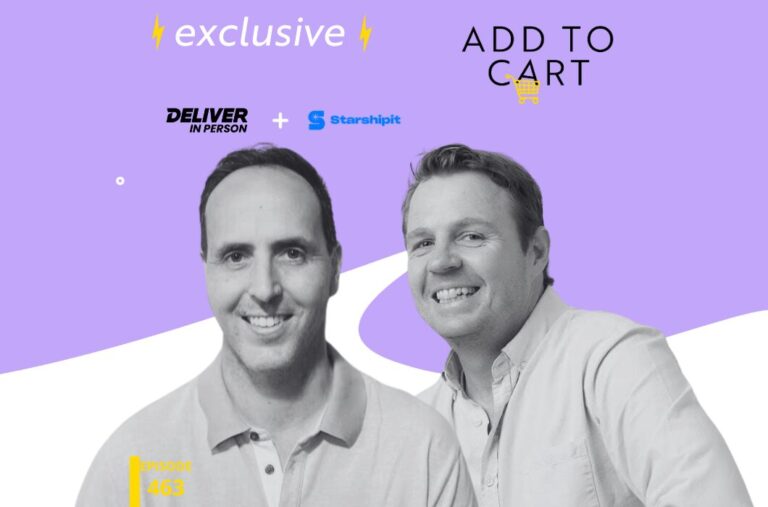
[Voiceover]: Welcome to ADD to Cart Australia's leading e commerce podcast that express delivers all you need to know in the fast moving world of online retail Tale. Here's your host, Bushy. Welcome back to ADD to Cart Australia's leading e commerce podcast for e commerce professionals who never stop learning. My name is Nathan Bush or Bushy joining you from the land of the torable people here in Brisbane. What does it take to ship smarter in today's e commerce game? To find out, we brought back a true friend of add to cart, Rob Hangozard, co founder and co CEO of Shipit. Now, not only is Shipit celebrating 10 years in business, which is an eternity in e commerce years, let alone shipping years, and they've just released their annual State of Shipping report and trust me, it is not just another industry white paper. This report is my go to for benchmarking what is happening in the world of delivery returns and more. It's one of the most practical, data rich insights that you will find on delivery speed, cost benchmarks, returns, behaviour and fulfilment trends across Australian retail. Rob is joining us today to help unpack some of the biggest shifts that they saw this year in shipping. You wouldn't think a lot changes, but it actually does in 12 months. In this episode we discuss the rise of same day delivery to the dramatic drop of free returns. If you're a retailer, you've got to see what those benchmarks are, especially around those two numbers. Rob shares what top retailers are doing to win on fulfilment, how delivery models are changing, especially in metro areas, and why cutting your neighbor's lawn might just be the secret to shipping success. Yep, there's an analogy in there somewhere. So if you've ever wondered how to turn your delivery into a loyalty driver and get your orders out faster without breaking the bank, this one's for you. If you're the kind of person who likes to read along as we go, make sure you download the shipit report@shipit.com au or also the link is in the show notes so you can download that and read along as we discuss some of the best findings out of this year's state of shipping report from shipit. Big thanks to Shibit for backing today's episode and helping us keep ADD to CART rolling. All right, let's dive straight into my chat with Rob Hangozada. Rob, welcome to ADD to cart.
Rob Hango-Zada: Hey, thanks for having me again. Bushi, good to see you.
[Voiceover]: Welcome back. You are a true friend of the show now.
Rob Hango-Zada: Yeah, I can't say long time listener, first time caller anymore. It's getting fun.
[Voiceover]: You're almost a regular. I love it.
Rob Hango-Zada: No, it's good. Glad to have my loyalty card stamped.
[Voiceover]: That's what we do, loyalty cards. I love it. That's the future of retail. Well, you are here because you've brought us something pretty, pretty special. It is the ship. It's annual state of shipping report. It is a report that I look forward to every year. And I'm not only saying that because you're in the room, but I actually put it into. Someone asked us in our community the other day, it's like, what are the reports that you look at every year regardless of what's going on? And the ship state of shipping report was one of them because I think you do such a tremendous job with it.
Rob Hango-Zada: Look, thank you very much. I can't take any credit for it personally. The team are just absolute weapons at this stuff and honestly, I use it a lot in my day to day now as well.
[Voiceover]: I was literally, I got the sneak preview of it a couple of weeks beforehand, which I kept quiet. But I might have quietly pulled up in a couple of meetings to share a few stats. And you know, the stats in there are so practical and specific for retailers to know where they're sitting and I think it just adds tremendous value. So we're going to dive into that today. Hey, yeah.
Rob Hango-Zada: Yeah, let's do it.
[Voiceover]: So how many years have we been going for now?
Rob Hango-Zada: So ship it turned 10 on Mother's Day this year. So it was so good, Nath, that, you know, my business partner forgot our anniversary and tell you what, I was the upset partner.
[Voiceover]: Yeah, fair. Did you get them something nice? What'd you get, Will?
Rob Hango-Zada: I want to talk about it. We had a nice team culture engagement survey to review that morning. Just felt very, you know, just very timely.
[Voiceover]: You pretty much got the whole team a vacuum in a microwave. Well done.
Rob Hango-Zada: Pretty much, yeah. So look, you know, some people kind of sit there and they, you know, we're always a bit, we're just a bit paranoid. We always want to be a bit better than we are. And all that sort of stuff. And I think sometimes you just got to take a step back and go, hey, we've survived a decade. Like for Will and I, it's a quarter of our lives and we haven't killed each other yet. The business is still alive and doing well and I think that's caused a celebration.
[Voiceover]: So, yeah, absolutely. And with that, in the 10 years where you've worked with so many retailers and had visibility over so many deliveries and fulfillment, and I just love that you bring that data forward for us. So after 10 years, Rob, was there anything out of this report from this year that surprised you?
Rob Hango-Zada: You know, to be honest with you, the speed of delivery is on fire. Like, if you think about when we started the business, I think five to eight business days for a Metro delivery was pretty much the norm. And the iconic was blitzing it with, you know, four hour delivery or three hour delivery in Sydney and Melbourne. That was it.
[Voiceover]: Yeah.
Rob Hango-Zada: So the speed of delivery, I think the last sort of year has been what, 1.7 business days has been the speed of delivery from a carrier collecting to delivering to your household. That's in aggregate and that's just average
[Voiceover]: delivery over everyone, over standard and Express.
Rob Hango-Zada: Standard Express, on demand, just weighted average across our total retail base. That really stood out to me. It's like, Jesus, the whole industry's lifted around this. But I don't know if we feel it as consumers or we're just a bit like, oh yeah, it's not as quick as Uber eats, you know.
[Voiceover]: Yeah, where does that speed come from? Has it come from processes at a retailer's end or has it come from carriers lifting the game?
Rob Hango-Zada: Look, it's a good question that you ask because when you're in retail, you're just thinking about carrier die fot. You're looking at your carrier SLAs and you're thinking, hey, how quick is the delivery getting to my customer? Once the carrier picks it up, it's seldom that a retailer will kind of look end to end, at what time did the customer place the order? To what time do they get it delivered? And looking at that elapsed time, it's quite stark. So the number I quoted about 1.7 days is from the time a courier collects it from the retailer and delivers it to the end customer.
[Voiceover]: Gotcha.
Rob Hango-Zada: It's across anyone who's shipping Australia to Australia, whether it's standard, express or on demand.
[Voiceover]: Okay, okay. And do you have any stats in there around average dispatch times at all or gut feel on what good looks
Rob Hango-Zada: like it's hard to say because you know, the way that, the way that we kind of look at it is when an order gets created. So how orders are born into the ship world and then how they turn into a delivery, everyone's a little bit different with how they do that. Some might not tell us about an order until they're ready to ship it out. Others will tell us the moment the customer places the order. And I think when we've looked at it in the past, Australian retailers on Average take around 24 hours to dispatch an order. It's gotten slightly faster and you're seeing this real separation of those retailers that actually have it and those that don't really care about that metric and they care about a whole bunch of different metrics that you know, historically we've never looked at first time delivery rates and the like. But I was speaking to a couple of retailers now. Good news is Shipit retailers tend to be more all over this stuff than non ship it retailers. And when we've spoken to a few fairly large, you know, sort of fashion brands, one of them stood out to me which was that they have a five day promise to customer. Two days is what they commit from a delivery perspective and three business days is what they commit from a store fulfillment perspective.
[Voiceover]: That's a lot of fat.
Rob Hango-Zada: And one of our customers who's quite a prominent retailer shipping from you know, hundreds of store locations, they've gotten it down to five minutes. So you really got to look at the quick and the fast on this and there's a big argument do you need to be faster or do you just need to be better? I think if you can be better and faster you're probably going to win.
[Voiceover]: Yeah, I don't think retailers will like hearing that.
Rob Hango-Zada: Easy for me to sit here and say I don't have to deal with all the other stuff but it is complex, it's not easy.
[Voiceover]: The five minute retailer, that is phenomenal. What are they doing differently to kind of break the speed barrier?
Rob Hango-Zada: Look, try to dig into this and there are a couple of retailers who have really nailed it I think. You know, back in the day when I was working with Shane over at Q, I think they got it down to 13 minutes at store. Technology is only part of the battle, right? Comes down to culture and it comes down to incentives and it comes down to I guess ultimately what goal you're orientating toward. Is it a customer experience outcome? Do you take pride in it? And I think the differentiator comes down to culture.
[Voiceover]: Yeah.
Rob Hango-Zada: When we spoke to the business that does it in five minutes. The team are right behind it. They don't get an order in a store and go, oh, this is a distraction. We don't want to have to fulfill this. We want to do other stuff. It's game on. The orders come through, let's get this thing out of here so our customers get it as quickly as possible. So it's incentives, alignment, it's culture, engagement, and then it's process and technology.
[Voiceover]: Yeah, that makes a lot of sense. And there's also that balance, isn't there, between speed and quality? There's no point getting it down to five minutes if you're sending out rubbish.
Rob Hango-Zada: Totally agree. Yeah.
[Voiceover]: The interesting thing that I picked up on was the speed because we spent a lot of time last year talking about that difference between the speed and the actual promise and the opportunity that lies between. But what also I picked up on was the costs. So we have this rhetoric that's happening at the moment. I think around, you know, prices are going up, which they are across most industries and you know, shipping's getting more expensive, blah, blah, blah, blah, blah. But your report was really interesting because it showed that the price of standard shipping went from $10.26 average to $10.39. So slight increase, but nothing crazy. If I was a percentage guy, I'd work out that percentage in my head right now.
Rob Hango-Zada: But you and I both say it's some percent.
[Voiceover]: Just a bit of feedback for the next survey. Can you put the percentages in there as well?
Rob Hango-Zada: Easier to quote it than it is. I get it, I get it, that's true.
[Voiceover]: But so not, not a increase. But the interesting thing was that same day delivery costs actually decreased from $18.26 to $17.39. So that's really interesting because it feels like on the outside there's all this pressure around the price of shipping, but your research is actually saying, actually it's kind of coming all together a little bit more, it's becoming more economical. Is that fair?
Rob Hango-Zada: You've hit the nail on the head and take your mind back. So you quoted Last year's at $18.26. You take your mind right back to 2018, it was 31 bucks.
[Voiceover]: Wow.
Rob Hango-Zada: Now how's the world changed and why has this happened? It's not because of the goodness of the hearts of the carriers that they're giving away delivery. Right. I think, you know, when we were starting out, you talk about the 10 year ago sort of view. There was a model which was Point to point. Think of it like a taxi pick up from location A, drop off to location B, one parcel per vehicle, away you go.
[Voiceover]: Right.
Rob Hango-Zada: May as well just burn the forests while you're at it. The other view, and that was primarily for like rush document delivery. That was really what got reburied. Think about the mail call business and how that pivoted to support fashion. And ultimately we've seen new delivery models come to light in the gig economy. Sherpa drive, yellow Uber doordash. You've got a lot more optionality. You've got this blurring of the lines between what's an on demand delivery, what's a hub and spoke delivery. And the same rules don't apply anymore. So it all comes down to one important thing, and that's density. Last year I got up and confused a bunch of people when I talked about drop density. The easiest way to kind of frame it is if Nathan, you know, you love gardens, so.
[Voiceover]: I love gardens. Yeah.
Rob Hango-Zada: You love gardens.
[Voiceover]: I'm in my garden era.
Rob Hango-Zada: You would be. I reckon you tip a mean lawn. I reckon that's.
[Voiceover]: I've got a great lawn, but I've got a veggie garden that is struggling.
Rob Hango-Zada: Well, there's, there's probably something for that. I can't help you, but had you have run your own lawn mowing business, you probably want to make sure that all your clients are right next door to each other because you can get more, more lawns cut and therefore more money and it becomes a bit cheaper. But if you've got to mow one lawn in your neighborhood, drive all the way across town to do the next lawn, you're probably going to charge a bit more for each of those lawns.
[Voiceover]: Yeah.
Rob Hango-Zada: And so as we start to see this tightening of demand into certain poc, I think I sort of did some analysis with the team and we kind of projected out by the year 2027, the City of Parramatta will have so much density in terms of online demand that it will be cheaper to deliver via on demand than it would standard post.
[Voiceover]: Wow.
Rob Hango-Zada: And that's simply because you've got a whole row of houses in the same street that are getting deliveries. And you just got to cast your mind back to, you know, what's probably the most commoditized product that every household buys. It's milk.
[Voiceover]: Yeah.
Rob Hango-Zada: Go back to the days of the milkman. That was sustainable unit economics for the milkman. So. And that's because every household bought milk. So we're getting back to that era with online penetration. And it's reaching a bit of an inflection point.
[Voiceover]: So what you're saying is you want to cut your neighbor's grass and get visits by the milkman.
Rob Hango-Zada: Say it. That really is it. You want to make sure that everyone's buying from the same retailers or at least using the same delivery networks and the cost of delivery will continue to come down and the speed of delivery will go up. And that's effectively where we're going to get to, particularly in these metro areas over the next couple of years.
[Voiceover]: Yeah. And so in the report, you differentiate between Standard, Express and then Same Day and you give some great benchmarks over how that pricing's changed. Standard and Express gone up slightly, but nothing crazy. Like we said, Same Day has come down. From a retailer's perspective, if you're looking at the mix of shipping, and you mentioned the metro areas, especially for that same day, what kind of strategy are you looking at or what kind of model are you looking at to work out which of those shipping options you should be offering in your business?
Rob Hango-Zada: So there's. It's a really interesting question. Right, let me take you on a walk down different path for a little while. So let's think about Amazon. They do an outstanding job at delivering reliably quickly. And if you're a prime member for free and they're actually getting faster, I think 40 odd percent of their deliveries are now same day deliveries for prime members. Right now, doesn't matter whether you're buying a pack of playing cards for $3.80 or you're buying a coffee machine for a thousand bucks. Same delivery experience. You've got to think about two factors that become critically important. Amazon has a really broad range, so therefore the chances of you buying from them again and again and again for different use cases is quite high. And what Amazon is trying to do is they're trying to build a habit with you. Because if they know that Nathan now relies on Amazon for every single product that he wants to buy, then you've got a more reliable delivery experience because they can funnel more towards you and then they get greater density and they can geographically target their consumer base in that way. Now, let's say you're a retailer that sells washing machines and maybe you sell microwaves, maybe you sell dryers.
[Voiceover]: Literally got a dishwasher delivered yesterday.
Rob Hango-Zada: Very good. How long did you buy your last dishwasher?
[Voiceover]: Oh, goodness.
Rob Hango-Zada: Ten years, I'd say.
[Voiceover]: Yep.
Rob Hango-Zada: Did you pay for that delivery?
[Voiceover]: No. Appliances online, they're amazing.
Rob Hango-Zada: But anytime you need an appliance you're going to appliances online.
[Voiceover]: Spot on. Because I'll take the old one too.
Rob Hango-Zada: Now, if you're a retailer that seldomly sells a product so your frequency is quite drawn out and low, you should probably charge for that delivery. So it comes back to two things. How frequently is the customer going to be buying from you and how far away is the customer from your point of origin. So if you're delivering from grocery, let's say, you know, the whole milk run sort of philosophy back in the day when the frothy markets were here and everybody had free money, still exists, doesn't it? It does. You got to pay for delivery and a service fee, but you're building a habit because of the lifetime value and it depends on the margin structures. But effectively frequency and distance are the two main things. High frequency, low distance, give it away for free. Long distance, low frequency, recover cost as much as you can at the checkout. So that's economy that you've got to play with.
[Voiceover]: I really like that. That's a really interesting way of looking at it. Like it makes a lot of sense and it's a simple way of looking at it, but it can get really complex in your head when you start thinking about postcodes and regions and different rates and different size products and bulky items. Like it can get really complicated really quickly. But that's a nice simple way to think about it. As a starting point, you mentioned in the report and I thought this was interesting, I wasn't expecting to see this around how to tie fulfillment into loyalty. And I think you were touching on it there right around Amazon and that loyalty piece building over time that if you want, you know, becomes reliable, that I know that I can get it quickly. So I'm going to keep coming back and keep coming back because you've now got me addicted to. That's the level that I expect and I know that I'm going to get it. How do you see the best retailers tying in their fulfillment proposition to loyalty?
Rob Hango-Zada: So you've got to look at fulfillment and delivery as one proposition to the end customer. I think oftentimes retailers divorce those two things. So I think it's what we talked about a little bit before, you know, the SLA to dispatch an item ultimately impacts the time to customer. And so in the report, what we found was the average delivery promise from the desktop research we did across 3,000 websites was about 5.2 days. So when you place that order in the checkout, the average experience is your expectation is set at 5.2 days. The delivery experience we talked about was 1.7 days. That means the majority of the time that order is sitting in a store location somewhere waiting to be picked and packed and handed over to the carry on. Now the proposition of immediacy starts to take away the wandering eye. Historically it would be how do we reduce cart abandonment? We give different delivery options. Customers are seeking greater certainty and speed than ever before. And what we do see is, you know, click and collect as a favorable delivery option comes down, the more reliable and the faster delivery gets. So customers have always craved certainty and now they're going to find that certainty becomes the standard across everyone and the differentiator becomes speed. So speed of fulfillment and delivery, I think, you know, the recent case study we did with Pep Barn, I think they grew customer spend by 3.5x. You know, loyalty in terms of the kind of or that was spend per transaction. And then loyalty went up by about 2.4x.
[Voiceover]: Wow.
Rob Hango-Zada: And that's really just because you know you're going to get it exactly when you need it. And that immediacy really trains the behavior
[Voiceover]: and I guess knowing what's important to your customers.
Rob Hango-Zada: Right.
[Voiceover]: Because if you're after dog food, there's a very good chance that you've left it to the last minute and you can't just not feed your dog.
Rob Hango-Zada: Spot on. Now look, in the case of your washing machine or dishwasher, if you got that immediately, it'd be great. But you're not gonna, you know, if it got there tomorrow, you're probably going to be as happy as you were. If it got there within 30 minutes, you're probably like, oh, I'm not ready to receive this thing in 30 minutes.
[Voiceover]: Actually, I would have preferred if they put it off a little bit more because I wouldn't have had to install it straight away like at 9 o' clock last night. I would have been happy for a bit of a delay.
Rob Hango-Zada: Exactly. So just leave it when it suits me. Right. But yeah, that's that model playing out.
[Voiceover]: That loyalty observation I think is really interesting, especially when you put it in perspective of what you guys found around free shipping and free returns. There were some stats in there that had shifted so dramatically over the last 12 months that I'm really keen to get your view on it. So to give everyone a little bit of an overview, you found that two in three retailers now offer free delivery, which I think off memory was down a little bit, but nothing drastic. At an average threshold of $123 to get that free shipping. Yeah. But it was the returns that really blew me away. With now only 14% of retailers offering free returns, which I think was down from off memory about 40 high 40%
Rob Hango-Zada: last year, well 49% in 2018, 2024, 2018, it had sort of come down quite a bit. But it's no surprise really when you think about it that now the true cost of things is coming to light. So we've seen, I think it's really underreported and we only see the big brands that go into administration. But every single day there's a small business or a mid market sort of sized pure play retailer that's struggling to make the unit economics of line work. You're looking at the squeeze from A capital markets have dried up, B, interest rates are higher, C you've got more global competition that's you know, buying up all the adwords. So your source of traffic is becoming mixed marketplaces, Google, ad spend, social, all of these things are starting to warp. The cost of acquisition has gone up. Then the fundamental unit economics of a delivery, particularly when you start to think about okay, are we selling on deal or off deal, how deep do we go, et cetera. You know, we had some retailers in the peak of 2021, so the frothiest ecom market in lockdown would be shipping a product that was probably sold for 40 bucks and they were giving away delivery for free and it would cost them $126 to deliver that item across states. Right today that retailer just stopped offering it as a delivered product. It's a click and collect product now because the unit economics are much more sustainable for them. They don't have to chase the top line sales. You've got to balance it. And I think nothing has been beaten up more than free returns the days of 100 day or 365 day returns. So not only are you giving away the ability to return, but you're also foregoing future sales of that same product where people are wardrobeing and keeping stock out that then ages as it comes back. That whole piece has been tightened up. So the returns process must be more sustainable for a retailer and they're going to try and reduce that as much as possible. And then on the shipping side of things, it's been no surprise that the free shipping threshold has gone up and those offering the blanket free shipping capability is almost non existent. It comes back to sustainable unit economics and what I'm getting really excited about is the hyper personalization of those offers. Historically it was one size fits all for the market, but like we just talked about, around distance of customer and frequency of purchase, you can start unlocking these things as loyalty drivers.
[Voiceover]: Are you finding that many retailers, because obviously that's a key part of your platform is allowing retailers to do those personalized offers based on carrier selection, distance, et cetera. Are you finding that most retailers are optimizing that?
Rob Hango-Zada: I would say on the whole you've got some of the market leaders who are really embracing it and sort of, they're using our platform in all of its Lego bricks that they can sort of compose the way that they want. Everyone talks about headless, I talk about composable shipping. And really it's about materializing that shipping experience when and where you need it. So whether it be on a product page, at the checkout, inside the point of sale, for endless aisle, wherever you need it, you need to have a consistency to that experience. Some retailers definitely obsess over it and they kind of offer a differentiated experience to VIPs. And let's be honest, it's not too dissimilar to the way prime does it with Amazon or Amazon do it with prime because they're differentiating a delivery offer for a select cohort of customers and then reserving a basic experience for everyone else. On the returns front. I don't think I've seen a hell of a lot of customization, but we are starting to hear about more VIP style programs providing them with different perks and benefits. And I think that's the way to go because you can still compete, but then you're actually asking for customer loyalty in exchange of that. And I think that makes a lot more sense because you become a destination shop for that customer.
[Voiceover]: And I suppose from a loyalty perspective, if you're putting it in the terms of unit economics, you want loyalty not just to be part of the free loyalty program because really all you've got is an email address. But they need to be proven to be part of that top tier of customer to be profitable in the long term.
Rob Hango-Zada: It just makes sense. It's a fair exchange of value, which doesn't make you look like a tight ass. So I reckon if you got to sort of, you got to give and get, but you've got to be consistent with your offering and very transparent with where you want to take it.
[Voiceover]: I can just see an E commerce manager going into their next board presentation and what's our strategy for this year? It's a fair representation of value without being a tight ass.
Rob Hango-Zada: You can tell I used to be marketing me.
[Voiceover]: I think it Works. So with returns and the returns model being thrown on its head, what does normal look like now if only 14% are offering free returns? And I'd love your view on fashion versus the rest of the world because I think fashion is slightly different when it comes to returns. Are you seeing that? Obviously there's the piece around faulty goods and accc goods that you have to facilitate that. If it's your fault, then you're liable for that. But then if it's just change of mind, then you put that onto the customer and they just pay whatever the postage rate is going back. Is that what you're seeing most retailers turn to as the standard offering on returns?
Rob Hango-Zada: Yeah, most retailers are like they're not tightening up. Whether you. I mean, it's not a carte blanche rule. I think certain brands are saying change of mind. They're probably getting a bit tighter around that. So they're just like, right, regulatory. We have to give you a return capability. But if it's change of mind, I'm going to push you into store credit mode. And I think what do they call? They don't want to see ecosystem leakage anymore. They were quite comfortable historically to kind of give you an instant refund even before the items hit the warehouse. But now it's about how do you build an incentive to continue to buy again so you don't actually lose that revenue anymore.
[Voiceover]: Yeah, that makes sense. I like that. Leakage out of the ecosystem. You are bringing them all out today. That's really, really smart. I love it. You mentioned click and collect there before. I'm really interested in were there any trends or any observations that you saw, especially for omnichannel retailers, around how fulfillment for them is changing to their customers? Any new options? Any new trends?
Rob Hango-Zada: Look, I think, you know, you probably pioneered the speedy click and collect back in your day at srg, but I think that's still probably the style of experience that we kind of see. But, you know, a lot will tell. There's more deliveries going to parcel lockers. There's more deliveries going to more convenient collection locations. I think that's fair because there's a greater push and incentive from carriers to deliver to those locations. The secret behind that is you're turning a B2C delivery into a B2B delivery.
[Voiceover]: Yeah.
Rob Hango-Zada: You don't have to deal with a dodgy human who moves around and gets emotional with you. You're delivering it to an endpoint that's a lot easier and more sustainable for a carrier to deliver to. Right click and collect itself saw modest growth last 12 months, about five and a half percent. But if you compare 2018 to 2024, it was a rocketing growth of 309%. It's come off the boil a bit. And that's because of what I said about the speed of delivery experience.
[Voiceover]: Yes. So that's how that makes a lot of sense. On the parcel locker piece, Australia Post have spun up their new. What are they calling it? Their Post office of the future. I think they've called it something. Or the next generation Post Office. You've seen that?
Rob Hango-Zada: Yeah, I did, I did. I saw it on LinkedIn. I haven't actually dug into it yet, but it looks like what the banks did to bank branches. It's a lot more convenient. You have to talk to a human anymore.
[Voiceover]: Yeah, yeah, yeah. And I haven't been into one yet, but I did a little bit of digging and it is interesting, right, because they've. They've still got an office with people there during business hours. But being able to have a place that you can go to and collect your parcels and you can use the Australia Post app to open the door to the Post Office essentially and collect your parcel at any hour makes a lot of sense. It means that a lot of other rubbish within the Australia Post store gets cleaned out and it's very much just for parcels.
Rob Hango-Zada: Where are you going to get your foot spa from next time you go and get a passport?
[Voiceover]: Exactly. And where am I going to wait for an hour and a half to get a passport photo?
Rob Hango-Zada: Yes, it is convenient and, well, it follows a bit of a trend that we see in Europe. Right. Like, I think that that's a predominant mode. If you read anything that DHL puts out, any of the analysis that comes out of Europe, it's quite a favorable way to interact. But the way that people live in Europe is very different to the way that people live in Australia. And I think what is often not seen is probably more around the trends in China, which are going the complete opposite direction around, you know, robots delivering things to your doorstep. You know, being able to get a delivery whilst on a bullet train from one part of the country to the next part of the country to your specific seat in your specific aisle at the specific station that you're about to arrive at. I mean, that is the ultimate level of delivery experience. Cost of labor aside, that's what we're seeing abroad. But locally we're seeing sort of more of a shift to what is more sustainable for the market to hold, not necessarily what consumers really really want.
[Voiceover]: Yes. And that was interesting. When I was at NRF in Singapore, I went over with these expectations that we're going to see all this amazing new technology in E commerce and be blown away by how fast the delivery is and everything else. And I was lucky enough to meet a bunch of retailers from all different nations, including Hong Kong, Thailand, China. And the theme that I got was that retail is still so important to them and E commerce for a lot of those nations, not all wasn't as important as we put on it because of the density that you brought up earlier in the episode in that their lifestyles are centered around going through shops on a daily basis. Right. So if you've got to take the subway, if you've got to take the train, it's built into a shopping center. So if I want something, why am I going to wait a couple of days to go get it when I'll walk past it on my way home? So to me, that was fascinating. And it kind of comes back to your story that you were talking about cutting your neighbor's grass before. In terms of the density, as we become denser and those populations and online shopping becomes normal, then that speed of delivery is enabled. So I think some really interesting points that the way the Australian demographics is changing impacts the options that we'll have available to us. Yeah.
Rob Hango-Zada: And we're also quite a geographically spread nation. Right. So the way that you're going to experience delivery in Toowoomba is going to be very different to the way you experience delivery in too Racing. Right. Like these are, these are two different worlds. And I think you've got to draw from the relative kind of experiences in different markets. So Sydney and Melbourne might replicate more of your Singapore style of infrastructure, whereas, you know, your regional towns will replicate some more geographically sparse delivery models like you see in South Africa, potentially.
[Voiceover]: I saw in your stats there, supply chain optimization was the number one area of investment. That was for the group that you surveyed, of retail leaders that you surveyed. Where do you see most of that investment happening for supply chain? What kind of projects?
Rob Hango-Zada: We've seen a massive amount of investment into automation, into, you know, centralized distribution centers. You know, we've all seen kind of what shipper is doing in the market. We've all, you know, heard about the great capacity capabilities that were built by the catch boys back in the day that now is benefiting the Kmart operation. I mean, that it's become a bit of a dichotomy in the haves and the have nots. Right. So if you're well capitalized, you've got deep pockets around the boardroom table. You can invest in these big facilities. I think I'm going to get this really wrong, but I'm just going to go with it.
[Voiceover]: That's all right. If you say it confidently, we'll all believe it.
Rob Hango-Zada: 80% of the time. I make up 20% of the things that I say anyway. So yeah, Walmart opened a distribution center, one of the most highly automated distribution centers in the US I think it was three levels and it cost them over a billion dollars to build. Right. Maybe I'm low balling it. And you got to think how many retailers can build that level of infrastructure that's going to feed the market. So you're going to see this consolidation of capability and it's good timing that you see three PLs getting into the game of automation, et cetera. But then large omnichannel retailers need to really consider where the distribution centers lie because some of these projects can take years. Think about the capex, think about, you know, scouting out the locations, building these things. We don't have speed on our side when it comes to getting these things built, let alone set up, let alone actually producing the results that we want. And you've just got to look at Amazon's Australia based investments in a lot of their RDCs around Australia and gives you a bit of an idea as to the footprint that they're building. So I think that's one area. Second area is, you know, it is not a case like there's also a stat around ship from store and whether to centralize or not centralize. The truth of the matter is you've got to find the right balance because stores are probably the key to unlocking speed and customer delight versus everything sitting in a centralized dc so we're seeing a more hybridized approach to fulfillment. Now that coordination takes a lot of good tech, takes a lot of good inventory planning, takes a lot of good culture and organization to bring to life. And probably the more problematic concern that I have is as a lot of retailers are locked in this battle for survival, they're trying to manage the bottom line and they're trying to deliver results within a 12 month period. You're finding other retailers that have deepened their investment curve. So they're going into the red knowingly and seeing what a last mile strategy can do to unlock future growth. And I think we'll find over the next three years which brands have sufficiently invested in that, which boards and shareholders have been supportive of that versus those Companies that haven't.
[Voiceover]: Do you think retailers need to be innovative in their supply chain and their warehousing, or is it more important to be just efficient and let partners do the innovation?
Rob Hango-Zada: I think to be honest, the learning has been you can lean on your partners to get a much better solution and you can bring that to market faster than you can in finding new partners. Unless you're not partnering with Shipit, of course. That is like a no brainer.
[Voiceover]: Yeah, that makes sense.
Rob Hango-Zada: Yeah, yeah, no, but in all honesty, if you've got a resemblance of that capability around the table, bring your partners in as if they're an extension of your team and don't think that your solution exists in a different product that you don't have yet. You know, I think that was a really good lesson that we learned, you know, and again, I'll give Shane a plug from Q because that was his big belief. You got to lean on your partners to build new capabilities. And he pushed us a lot in the early days. And it's quite interesting what you can accomplish just by being innovative with how you approach solutioning. But it all stems from forcing a more efficient way of delivering a good customer experience. So I think it's not a simple answer of one or the other. It's trying to balance how you navigate through it. But don't spend ridiculous amounts of money for no reason. The other risk, you go and spend the money, you invest in the change. It takes you a long time to take that to market and then you actually sit there and go, oh, we've only got an extra 10%, efficiency doesn't pay out.
[Voiceover]: And then it doesn't probably if it works for you, if you crack the code, it's probably not going to remain a competitive advantage for long because a partner will build it into theirs and then offer it to everyone.
Rob Hango-Zada: Spot on. And the other thing I heard was like, you know, the cost of maintenance. So some retailers had invested in such high tech automation that to make even the slightest change, they'll beholden to a supplier to be able to make those tweaks and then that compounds over time because I don't know. Did you ever get into home automation before Google and Alexa were a thing in the home?
[Voiceover]: Oh, not before that.
Rob Hango-Zada: Right. Well, I used to hear about these things because I had mates who were sparkies. They were installing these massive C bus systems and had to rewire entire houses, put $30,000 control units in and there's this state of the art shit, five years later you've got an iPad Strapped to a wall and a dongle you've picked up from ebay and you've gone away with, you know, 500 bucks of home automation for the same outcome.
[Voiceover]: Yeah.
Rob Hango-Zada: So I think it's also watching your investment cycles and making sure you're not too ahead of the curve, but not too high in the curve.
[Voiceover]: Yeah. Oh, that.
Rob Hango-Zada: You.
[Voiceover]: You've triggered me there. And this is. We're off on tangents here, but have you noticed. Are you. Are you a Google home person?
Rob Hango-Zada: I dabble. I dabble.
[Voiceover]: Oh.
Rob Hango-Zada: It's just.
[Voiceover]: I reckon they are deliberately making it shitter to degrade the devices and they're phasing them out because my home is a lot dumber than what it was three years ago.
Rob Hango-Zada: I'm feeling it. I'm feeling it. That's. And to be honest with you, it was doing all sorts of funky things. I've kind of gone back to old school. Using a light switch.
[Voiceover]: Yeah. We're dinosaurs. I think that's really interesting. I wanted to ask you just to go back. Chiparoo. I know that's Gabby's involved in that and got a lot of press. I haven't been there yet. Gabby tagged me on something on LinkedIn a couple of weeks ago, going, when you're next around, we've got to go do a tour and I really want to. Do you feel like that's doing something different in market? Have you had a chance to do a little bit of a tour?
Rob Hango-Zada: I haven't yet. Haven't been invited. So. Gabby, shout out. Next time Nathan goes down, I'll join.
[Voiceover]: We'll have a plus one.
Rob Hango-Zada: A plus one. I'll be your date. Look, I think they're doing good things, but we're seeing it from a few others. Like there's Ship Bob in the market as well. You've got east or Logistics. You've got a bunch of next three PL. So you've got a lot of three PLs that are in the market. And Skewtopia, I think, is the other one. They're all trying to provide an infrastructure layer that retailers can't build on their own if they're subscale is my interpretation of it. So we find that often business will start out small on shippers. They'll graduate to a certain scale, then they've got a crossroad decision ahead of them. It's do I invest in my own infrastructure or do I go and put it into a 3 PL? That's typically where we see retailers transition. Then they'll come back once they get bigger. But that sort of middle layer has been missing for quite some time and it's quite exciting to see that come to light because that means a mid market retailer can now start offering the same experiences as Amazon could.
[Voiceover]: Yeah.
Rob Hango-Zada: And I think more prevalence in that approach. And our job as a platform is to connect into these things over time.
[Voiceover]: Yeah. So you're like just slow down. Stop rolling them out so quickly. Like one at a time, please line up in a neat, orderly manner. Yeah.
Rob Hango-Zada: Oh, but it's. I could not imagine like the capital intensity that's required to roll these things out. You know, the number of them that are probably required. Required eventually and where I'm not convinced yet. I don't know. If you project out the future near the crystal ball, do we end up with more big brands that run their own marketplaces? And you find that your run of the mill retailers who maybe used to trade off buying stuff in from China and just rebadging it and rebranding it, selling it out, it really becomes the source of traffic that you're going to go after and then the source of capital to build the infrastructure layer. So we might find in 20 years from now maybe the vast majority of the market is buying from six big marketplaces and the only brands that are really doing well outside of that are those that have a very strong niche. Think about your frank greens of the world.
[Voiceover]: Yeah.
Rob Hango-Zada: And that's pretty much it.
[Voiceover]: That's depressing, isn't it? You've really made me sad, Rob.
Rob Hango-Zada: Tell you get back into law. Well that's if AI doesn't take over and cause mutual mutually assured destruction for the globe by that time. So let's have fun.
[Voiceover]: In the meantime, I think AI is just coming for podcasters. The rest of you will be fine.
Rob Hango-Zada: We're training the model well today and I've.
[Voiceover]: I wrote about this in my newsletter a couple of weeks ago and it was an experience that I had around changing my energy supplier and stick with us if you're listening. It's not as boring as it sounds but I've been putting it off for years and years because I'm like that's going to be the worst experience ever. Like it's going to take so long to change. It's going to be complicated. I have to do a lot of maths and et cetera. Started the process, found a government website. It basically had every supplier comparable like for like upload your own last bill. It'll tell you which one's the best for you. Based on Price. And as a consumer I was like, that's fantastic. But then I was like, oh my God, there would be nothing more depressing than being trying to sell energy in retail because you actually have no levers. And it made me just realize how good it is to be in our industry to be able to have so many levers at your disposal in terms of, in energy. It's all coming through the same pipe, it's the same product. You're essentially competing on price. Who can shave, you know, so many dot points off a kilowatt hour? I think it is, that's how much I know. But for us, like all the things that you've talked about today around integrating into loyalty, around your free shipping, where do you put it? When do you offer express? What do you offer around returns? We have so many levers at our disposal. Do you feel like most retailers are really leveraging that to create something that's unique for them?
Rob Hango-Zada: I don't. Look, I think like the short answer is I think there is so much potential and that's where the magic lies in retail. It's physical, it's digital, it's experiential, it's functional. But the majority of retailers are stuck in planning cycles that are just replicating what they did last year. They might go to an expo, they might see a new marketing tool and then they bolt on a new way to send emails, but now they're sending SMS's instead and it's like sliding into your DMs every two seconds. I think it's more around how does it feel to shop with that brand? Do you feel like that is something that you can really identify with and how do you find your thing? Right. So I think there's a certain, there's a certain cohort of retailers where it feels exactly the same when you shop on their websites. And the delivery experience that you get, then there are other brands where you buy from. You go, holy shit, that was a great experience.
[Voiceover]: Yeah.
Rob Hango-Zada: And I don't think it's the majority, unfortunately, but it needs to be that level of personalization and thought needs to go into a last mile strategy now.
[Voiceover]: And I was about to say that level of that feeling, and I'm not just saying that because you're here, because this is something I've always said, you screw up that moment when a parcel arrives at the door because it's the most heightened emotional state it's anticipated. That's the moment of truth. So if it turns up late, if it turns up broken, if it is Just a dodgy experience. The number of, you know, I've made big purchases or things that I've splashed out on and it turns up in the dodgy, you know, plastic bag that it was shipped in. You know what I mean? Like there's been no effort or no care or no love in it. It really says so much about the brand. Despite all the fancy Instagram advertising and everything else that goes around, it doesn't
Rob Hango-Zada: live up to the experience, does it? Yeah.
[Voiceover]: No. Okay.
Rob Hango-Zada: Yeah.
[Voiceover]: So as we come up to bfcm, what are we. We are about. Oh gosh, we're still four months away, but planning will really hit very soon. In the next month or so, most people will get very serious about their planning. From the report, the State of Shipping 2025, what are two or three things that you think retailers should think about as they refine their offering for customers during Black Friday?
Rob Hango-Zada: Look, it's the ultimate time of year to sell in retail. Let's think about state of the consumer psyche this year. Do we have stability yet? I don't know.
[Voiceover]: No, I don't think so.
Rob Hango-Zada: I think we've still got a hell of a lot of uncertainty around us. I think people are going to be looking for really good deals. They're going to be looking for a level of certainty in some experience that they're going to get. But I think it's also an opportunity to introduce your brand to a brand new consumer. And I think often when a lot of retailers think about Black Friday, Cyber Monday, it's just, I will just participate. It's be mindful of which categories you want to participate in. Be mindful of what types of customers you want to draw in, but also be mindful of how that delivery experience is going to impact the lifetime loyalty of that customer. So if that's the time of the year where you're going to introduce your brand to a brand new set of customers, you want to give them an experience that is far greater than what you would normally give. Which sounds counterintuitive. We're giving away product at lower margin. We're going to invest more in delivery. How does that make any sense? Comes back to the stats in your business case around what a great delivery experience and speed of delivery does to your loyalty. So the lock in implies you need to be thinking about express by default. You need to be thinking about on demand if you don't have it already because that also gives you the last squeeze of the cherry or last bite. I mix up my analogies all the time. Gives you that Extra oomph in your proposition. And if you think about that even challenging your operations, I think if you haven't started planning for those things yet, it's probably a 2026 problem. Yeah, but that, that would be it really in a nutshell. So I love it. Faster delivery, you know, and think about what you really want to be competing against.
[Voiceover]: And I think there's so much there going back to what you said right at the start to bring it together around understanding your unit economics. Because if you understand the unit economics and where you have room to pinch, it might not be discounting the product. Like as you saw in that report, there was only what, two or three dollars between difference in price between express and same day delivery. So if you're in those regions, maybe that's your promotion for a little while. We're going to upgrade you to same day and that might be enough. And you can not discount as heavily and then add that on in what you said. Customers are valuing fast delivery. Totally.
Rob Hango-Zada: And you know, we've seen it happen before where the simplicity of being on the ShipIt platform, it literally is a toggle switch. You go toggle on, toggle off. If you want to turn it on in Shopify another toggle, you're done. Yeah, you just got to get your back house ready. But your tech is ready to roll. And I think that's the brilliance of having the flexibility of something like our products to enable that in your store environment or your warehouse environment. I mean it really is, it's taking the mess out of it. But you've just got to focus on the operating procedure. So I think that's the one area to focus on.
[Voiceover]: I love it. You're giving everyone more levers. We need more levers.
Rob Hango-Zada: More levers.
[Voiceover]: We've got analogies galore in here. We should do a little dictionary of them. So we are going to put a link to the state of ship it report in the show notes if anyone wants to go download it. And I highly recommend you do because it's not only the stats that we talked about. You've got some really great commentary in there by experts in the industry as well as some great case studies from both your customers and others in the industry. So go have a look at that. It might change how you're thinking about your offering around fulfillment. Rob, next 12 months, what's on the radar for you? What's got you excited and how can people get in touch?
Rob Hango-Zada: What's on the radar for us? Well, the first part's really easy. Get in touch with me on LinkedIn or come visit our website shipit.com with two Ps what's got me really excited. I mean, I'm not that excited really. Just generally I put on a really good veneer here. But I think what excites me and it equally petrifies me, the pace of innovation is really keeping us up at night. We're doing a lot, and this is cliche as all hell, but let's go with it. We're doing a lot in the AI space. We've built a really great data platform that allows us to do some creative things. So what you'll see from us at the start of the year, the next financial year, is we're going to lead with greater accuracy and delivery promises at checkout. So I think that's been the number one sort of ask that we've heard from the customer and the retailer on this.
[Voiceover]: Awesome.
Rob Hango-Zada: So that's number one. And the predictability comes from a great data set that we've got. The second piece is we're doing a lot more in enabling that local delivery experience. So local commerce and being able to flip between on demand, standard, express, you know, these things pale in comparison to how you want to orchestrate deliveries. So there's a lot more that you'll see from us there. And then finally, I think even one of the findings, which is really basic, it's just being able to obsess about your delivery experience by numbers. So having access to data and insight, being able to optimize your experience on the fly. Gone are the days of just chucking all your volume in with one carrier. This is really about differentiating that experience and using data to lead the way. So that's what excites.
[Voiceover]: I love that because we didn't talk about it. We're not going into it because we run out of time. But one of the stats in there was that two in three retailers rarely or never use delivery data. That petrified me. So I think if you can solve that problem for us, that would be fantastic.
Rob Hango-Zada: Yep, solved. Just consider it solved. Solved. It's there. We've already got it.
[Voiceover]: Exactly. Let's use it. Yeah. Rob, thank you so much for your continued support of ADD to Cart and for joining us today and sharing everything from. Well, not everything. Like, it felt like we covered a tiny fraction of what's in the state of shipping report. A brilliant report. It should be on everyone's reading list if you're in E commerce. And thank you so much for giving us your view over all the numbers that we saw. Appreciate it.
Rob Hango-Zada: Hey thank you very much for having me and I'm really looking forward to your lawn mowing business kick off. So if you've got an idea for a name Bushies by Bush Bush by Bushies just put it in the put it in the link as well. I will be visiting robthemilkman.com thanks very much mate.
[Voiceover]: Who knew shipping could be this fascinating? Well I did. I always find shipping fascinating, but what I didn't realize was how quickly the world of shipping can change in just 12 months. The ones that are winning are thinking beyond just SLAs and are now thinking about how to use fulfillment as part of culture, customer lifetime value and use supply chain as a loyalty engine. Here are the three biggest lessons that I'm taking from that chat. Number one speed is the new baseline. This year retailers have leveled up on delivery time. What used to be 5 day metro waits are now 1.7 days on average. But Rob reminded us customers customers don't notice averages, they notice when you're late. That's the important thing. Winning brands aren't just fast, they are culturally wired for urgency and also consistency. Whether it's a five minute fulfillment window or a dispatch team that treats your orders like a mission, it's your internal alignment and your discipline to the process that moves the needle over time. Number two, free is no longer the future. Good news, right? Once a default expectation, free returns are on the Decline with just 14% of retailers offering them. Meanwhile, free shipping is holding steady but creeping up in the thresholds that customers have to spend to activate it. As margins tighten, the smartest retailers are linking shipping perks to loyalty tiers, driving retention and sustainability in the same breath. Free isn't dead, but it now has to earn its keep. And number three, not all delivery is created equal. This report also revealed a very surprising trend. Same day delivery is getting cheaper thanks to improved density in metro areas. That means more houses on a single route, better economics and more options for retailers. The takeaway is that you don't necessarily need to be Amazon to offer fast, affordable fulfillment. You just have to be a little bit smart about it. You need to know your product, mix your frequency and your customer's postcode and then use the right tools to make sure that you're giving those customers the right offer based on where they're at. Big thanks again to Rob and the Shipit crew for another year of stellar insights. Like I said, if you haven't got that report, head on over to shipit.com or download the report from the link in our show notes here. Remember, if you want to connect with hundreds of retail leaders and keep the chat going, there's lots in here that we could chat and ask other retailers what they're doing. Head on over to the Add to Cart community through the link in this episode's description. I hope you took away a couple of pieces from that episode that helps you with your shipping strategy. Go forth and deliver that milk. Thanks again for listening. And until next time, keep those customers adding to cart.