Rob Hango-Zada: I always say Suzy doesn't care about your cost recovery strategy. She just wants the best possible price and the fastest possible time window looking
William On: at each other eye to eye and it was love at first sight as some people say.
Rob Hango-Zada: The average parcel in Australia will travel 722 km from origin to doorstep. However, 15% of all deliveries actually get delivered to within 15 km of the origin. So if you think about that, there's a massive inefficiency that exists in the market.
[Voiceover]: Welcome to Add to Cart, Australia's leading e commerce podcast that express delivers all
Rob Hango-Zada: you need to know in the fast
[Voiceover]: moving world of online retail. Here's your host, Bushy. Welcome to another episode of Add to Cart. I'm Bushy and I'm joining you from the land of the terrible people, otherwise known as Brisbane, Australia on Add to Cart. We welcome everyone to share and listen
Nathan Bush: to e commerce stories.
[Voiceover]: The more diverse the better. I want to especially welcome the traditional owners and the original storytellers of the land that we are on, our indigenous and Torres Strait Islander listeners to join us in our e commerce conversations and our community. Despite all the technology advancements in e commerce, there is one part of the e commerce journey that remains a challenge for most retailers and that is shipping and logistics. Transporting physical goods from warehouse to customer and everyone from fashion to furniture brands have to deal with that. So I am so excited to introduce
Nathan Bush: two people who have been on the
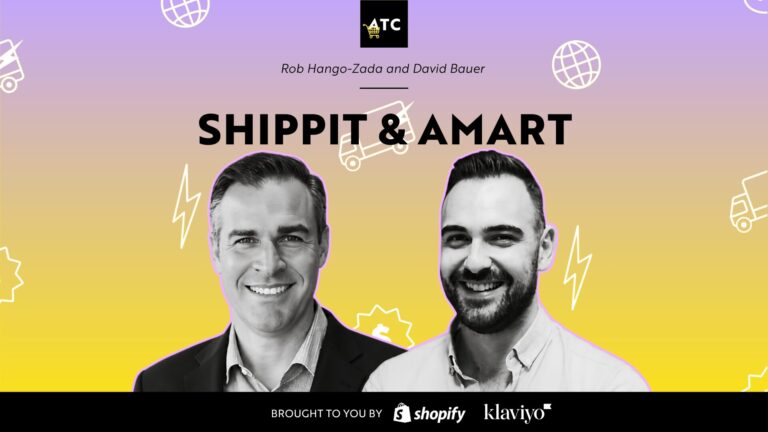
[Voiceover]: forefront of this journey for almost 10 years now, delivering a solution that not only is taken on by clients such as Super Retail Group, Cotton On, Big W, Harvey Norman and more, but now scaling overseas and that is William on and Rob Hangosada. They are the co founders and co CEOs of ShipIt, a multi carrier shipping software specifically for e commerce. Just don't call them an aggregator as you'll find out today. After seeing eye to eye at Uni, quite literally as you'll find out, and watching their Atlassian mates do pretty well, the friends decided to get in on the action and launch their own logistics solution. Now millions of packages are sent with the help of ShipIt every month and the company has expanded beyond Australia and New Zealand to Singapore and Malaysia with revenue of more than $66 million. In this chat, Will and Rob share how they use data to optimize delivery performance. They tell us about the pros and cons of brands owning their own fleets and a surprising shipping paradox which has led to the pioneering codeshare solution that
Nathan Bush: they have in development.
[Voiceover]: This chat with Will and Rob has been on my radar for some time and I'm so glad that we got to have it. You can hear from both Will and Rob how passionate and excited they are about this space and I really, really enjoyed this chat. Before we get into it, if you are in Sydney, we have the Add to CART E Commerce social coming up on the 23rd of May. We are holding it at the Rawson at the Rocks. We'd love you to come along to. Tickets are available@addtocart.com $20 each with $10 of that ticket going to our friends at Thread together. Come along, few drinks, we're going to have a panel on AI, how retailers are actually using it. None of this BS around what we'd like to do with AI. How are retailers actually using it today? Great panel on that. So come and join us 23rd May at the Rawson in Sydney. All right, thanks to our partners Shopify plus and Deliver in person. Here's our conversation with William on and Rob Hangozada, co founders of Shipit. Will and Rob, welcome to ADD to Cart.
Rob Hango-Zada: Thank you for having us, Nathan.
Nathan Bush: Great to have you both here. Will, in our little pre chat there we were reflecting on nine years of Shipit and you had gone to the trouble of looking through your inbox to an email that I sent you in 2016 when I was at Super Retail Group when you're really on the sales hustle, obviously starting out, still are, still are and I was a bit rude to you.
William On: Oh, you weren't that rude. It was 2016 I think we went to Rob and I hustled our way into the Retail Internet conference of some sort and I obviously do my follow up and I said hey Nathan, I'm from Ship it. We had a great chat. I think your response was sorry mate, we signed a two year deal with Tamando and we'll talk to you in two years time. I think that was the response.
Nathan Bush: Sorry, well it's been what, eight years and we're talking but I've got nothing to buy from you. I'm sorry but I'm looking forward to a great conversation guys, nine years in the business and like you mentioned to Mando there, obviously you've had competitors come and go in that time but you've gone from strength to strength as founders. How do you describe those nine years?
Rob Hango-Zada: Look, in a word, I guess we call it chaotic but in other regards pretty rewarding to be honest.
Nathan Bush: Yeah. Will, it's going to be awkward if you say something opposite.
William On: It's a roller coaster.
Nathan Bush: Right.
William On: So I'm Based up here in Singapore. Now I'm a zero to one guy, so I'm heading up the go to market here in Southeast Asia, which is what I was doing in Australia nine years ago when I was talking to you, Nathan. And really is a roller coaster of just trying to get market awareness, knowing who we are. It feels like I'm back on that journey all over again. But it's been exciting, to say the least.
Nathan Bush: I want to get into that. And obviously the roller coaster of COVID you guys probably rode that more than anyone else. And we're probably still riding it to a certain extent. Before we do that, I haven't heard this backstory. So I'm really interested to know how you guys met. How did ship it start?
William On: So Robert and I met actually in 2002 during the interview process for scholarships at UTS and UNSW University of New South Wales. We were both going for business IT degree scholarships. And I remember meeting Rob at uts and Rob was talking up his game and he got accepted into both and I only got accepted into one. But myself and Rob met first day of uni officially in 2003 at UNSW. And being both 6 foot 2, he
Rob Hango-Zada: was the tallest Asian guy I've ever met.
William On: Looking at each other eye to eye, and it was love at first sight, as some people say. And it was like, to be honest, we hit it off straight away. Two guys who grew up in not so privileged circumstances during our youth. I was from. I grew up in Western Sydney. Rob grew up in the south in Illawong, which is very different to the other candidates that were a part of the small cohort that we now degree as well. So that was. I think it was February or March 2003 when we first met.
Nathan Bush: And apart from the height, love at first sight, was there a love of shipping?
[Voiceover]: A shared love of shipping straight away?
Rob Hango-Zada: God, no. There's actually a funny story around that. So as part of his scholarship degree, we had to do some work placements and, you know, the whole thing was we'd wear a suit. We look like we were wearing our dad's suits at the time. And, you know, we'd go and rock up to work in, you know, I'd take a backpack or a briefcase and have nothing but, you know, papers and a banana in it. And we go and do these work experience placements and it was all in it. And I absolutely hated it. Will, on the other hand, was like, yeah, I can do it. It's a skill that I have. And, you know, no one else wants to do it anymore, so I'm happy to get into it. And we had a divergent path. When we finished up at uni, Will was like super keen to get into tech and went and joined Deloitte as a tech consultant, kind of helping them set up the capabilities there. And I went totally the other way and I went into consumer goods. We had no idea about logistics. We were never passionate about it. And the funny story is there are a couple of guys who are a few years ahead of us in our degree. Their names are Mike and Scott and they ran a little business at the time called Atlassian and they were offering all of our mates internships over at Atlassian or jobs straight out of uni. Will and I turned to each other. Why don't you go join a startup? We want to go and learn some corporate skills and we're going to go join a bank and we're going to go join these big companies. And then when all of our mates kind of started posting all these pictures of amazing things they bought after the ipo, Will and I kind of kicked ourselves a bit and said maybe we should go start our own thing.
Nathan Bush: Are you still mates with them? Do you just like freeload off them?
Rob Hango-Zada: Pretty much. More for Intel? Never the cash unfortunately.
[Voiceover]: When you think of your last E commerce experience that went wrong.
William On: How did it go wrong?
[Voiceover]: Was it because there wasn't enough product images? Was it an out of whack mobile experience? Was it that one rogue negative review?
Nathan Bush: I doubt it.
[Voiceover]: I bet it was because of your last mile experience and whether your product turned up on time and undamaged. That's what we remember. Delivered in full on time or dye fot for the sexy shortened version is a key metric for retailers and customers.
Nathan Bush: Why?
[Voiceover]: Because it's a critical indicator of reliable on time delivery and the post purchase customer experience. However, many Australian retailers are settling for 70 to 80% delivered every in full on time results. That's a lot of unhappy customers. That's why brands such as July, Samsonite and the Party People turn to deliver in person. With an average DYOT score of 99.6%. You are delivering experiences to remember. Do not settle for less. Find out more@deliverinperson.com and so what kicked
Nathan Bush: off the shipping focus for you guys? So I understand that you started as a three hour delivery provider before morphing into what you are today. But what got you from where you were in those consumer goods and at Deloitte into actually going, I think I can offer three hour delivery.
William On: Yeah. So in 2015, I was, I bought something online and had a really bad like, experience. And Rob was looking at selling something as well, like an expensive coffee table. And he couldn't sell to anyone who was further than 2km because they had
Rob Hango-Zada: to pick it up.
William On: And we got together one Easter and we spent five days together thinking, well, let's just try and build like a marketplace for furniture. And we're looking at this company in the US called One Kings Lane and there's one in Australia now called Temple of Webster, which is absolutely on a tear. But the more we looked at that, we were like, you know what, like, the real problem that exists is logistics. Right. And in 2015 you had Shopify and Magento crushing it from a merchandising perspective. Payments was being sold by a stripe, Braintree Adyen. And the final frontier was logistics. And we did a ton of research over that Easter holiday. And there was a few plays in the US that we looked up to and thought they were doing a great job. And Australia had to mando at the time. And we're like, you know what? High value goods, three hour delivery scheduled at checkout. Who wouldn't want to get that type of service? And Uber was really. And go catch. We're really starting to come up in eminence at the time in 2015. So what we decided to do was build this three hour delivery service. But when we implemented our first product with the first few customers, we were getting donuts for adoption. And there was one custom on merchant. She was with us like up until she closed down about a year ago. And it was called the Minimalist in Surry Hills. And we installed our app on their Shopify instance and we even did free shipping when we first started and there was zero adoption and we couldn't figure out why. And when we went there, we realized that people who wanted to buy the products and get them delivered in three hours would by and large just go to the store. And so that was a penny drop moment for us where we couldn't just be a three hour option, but we needed to be every single option at checkout. And so I remember our early board meeting with Rob, like, hey, we just need to like become every option, not just one option. And so that's a bit of the started how we pivoted. But we were also fortunate enough to get tickets to an event held by Luke Condon from memory. It was like a toll e commerce event.
Rob Hango-Zada: It was a retail fulfillment summit.
William On: Yeah. And Gary Woolhouse was there. Rob, you can talk through your Story of how you hustled your way in there.
Rob Hango-Zada: So I chucked a sickie from my day job, went down. Actually getting the ticket from Luke was a bit of a godsend for us because we got a seat at the dance and we didn't have really much of a business at that point, if I'm honest. So I packed my bag, went down to Melbourne for the day, set at the table, handed out business cards which I docked it up the night before to kind of legitimize the business. And I happened across Gary wheelhouse talking super passionately about how he's converted stores into micro dcs. And I had this penny drop moment which was, well, if you could combine stores that are fulfilling orders with a three hour delivery network that's nationwide, Harvey Norman could probably become the first retailer in Australia to offer nationwide three hour delivery. And so why should the iconic have all the fun in Sydney and Melbourne? And so over the networking beers, just before I was about to catch my flight, I'd beeline straight up to Gary and had a chat, showed him some mock ups on my phone and said, hey, this is the latest and greatest thing that you guys have to try out. He referred me on to Gordon Nugent and I basically said to Gordon, hey Gord, Gary's told us we've got to get together in a meeting next week, let's go from there. And one thing led to the other and they became our first enterprise customer on the platform and they really pushed us into building a multi carrier platform
Nathan Bush: at that time because I could imagine that wouldn't be an easy brand to build for given the expectations. But also the retail model being franchise model regional sounds like a nightmare.
Rob Hango-Zada: That's where Will comes in.
William On: So I'm a management consultant by trade and we went out to their Homebush head office and we architected the solution together. At the time, Australia Post key supplier for them, but all of the orders were coming out of their paws and then staff manually inputting it into the Epastle portal. And so we automated that process for them. That was step one because the three hour thing was great to have to drive conversions, but operational efficiency inside the store was also something that was high on the agenda for them, especially as they started to see their volumes ramp. And then as you mentioned, like the franchise model added a bit more complexity because you've got agreements that are within agreements as well, like each of the different departments, their own franchisees. So that was just. I remember going there to sign the master services agreement and they had all these pages Set up on the table and Rob and I had to sit there signing them all. With all of the different franchisees. Yeah, it was.
Nathan Bush: And then you were bulky as well.
Rob Hango-Zada: Yeah. Oh, it was a real challenge. But. But I guess like, in hindsight it was. We. We never do things in half measures, Nath. So what happened was building in that complexity early became a real benefit to us later on because it meant we could work in a ship from store environment and then we could work in a marketplace environment. It meant we could work across multiple carriers and we had all the permutations covered from almost day one. But it was funny, it made me remember we were so mature as a business. I think Gord had asked me to send over the commercials and so I said, yeah, no problem. So I just punched it into an email and said, yep, this is the price. So sent it over. He just wrote back, mate, I'm looking for the commercials. Where are they? I called Will, like, mate, what's he talking about? Because I think he needs an agreement. Like, what's that? So we then had to figure that out.
William On: And there was no chatgpt at the time, so.
Nathan Bush: And Will, are you still coding at that point?
William On: No, no, not at all. I'm not a coder by any means. I'm more of a solution guy.
Nathan Bush: So architect, the person who puts it all together.
William On: Yeah, yeah, exactly.
Rob Hango-Zada: But he will pull out his uni transcript and share his marks in software development from 2001 if you need him to.
Nathan Bush: So that makes you a coder, mate, hang on to it. So tell us about the platform today from. From where you started there with Harvey Norman. As you know, your first major retailer with that transformation from a 3 hour into the all options. Where is Shipit today? What's the main problem that you're solving?
Rob Hango-Zada: So we always bang on about our mission statements. I think the outsider's view of what shipit is, it's just a labeling platform or it's just an aggregator. And actually aggregator is a dirty word in our business. And if you talk to one of our commercial guys in particular, they'll actually call you around the years and have a long conversation with you about not being an aggregator.
Nathan Bush: Was it a dirty word? Why is it.
Rob Hango-Zada: Was it so bad? Well, aggregators don't typically add a whole lot of value. They tend to just aggregate demand and try and make an arbitrage out of that model.
William On: And it's a race to the bottom for the suppliers as well.
Rob Hango-Zada: Yeah.
Nathan Bush: So it's a lack of value there as an aggregator.
Rob Hango-Zada: Spot on. So I think the way that we look at ourselves and our mission statement is really around bringing people and goods together in the leanest way possible and more recently doing a lot of soul searching around what is our brand promise and what do we actually want to stand for. And I think in today's market, reliability is paramount for building customer loyalty. And so we've acknowledged that our role is that brands make promises, but our job is to help them fulfill those promises. And so if we look at where we are Today, we've got 4,000 odd merchants on the platform, we now have 240 odd staff across Australia and Southeast Asia. We've acquired two businesses in the last 24 months, one in the driver tech space, one in kind of more the logistics service provider space across Asia. And we're kind of servicing volumes of around 100 million deliveries a year now, which gives us great levels of insight and detail into what customers are buying, where it's going to, which carriers are performing, which carriers aren't performing, what are the hot destinations, all those sorts of things. And having that full end to end spectrum of data now, from the checkout experience right the way down to the driver level and across carriers and networks, we're now able to actually bring people and goods together in the latest way possible by helping form new delivery networks and new delivery capabilities for carriers and retailers. So that's the exciting part of where we are today, from where we started.
Nathan Bush: That's amazing. And what kind of retailers are you working with?
Rob Hango-Zada: So retailers that we work with, sometimes I look at our brand wall, we've got a nice brand wall in the office now and sometimes I kind of get a bit humbled by looking at it. We're working with Myer, Kmart, Target, you know, then we work across sort of Harvey, Norman, Temple and Webster to the likes of General Pants and INQ, to Sephora, to, you know, the real long tail of online businesses. But we're seeing a lot of traction amongst what we call the emerging mid market and sort of upper mid market space we don't like. Whilst we do work with pure play retailers, we've found that more of the omnichannel retailers have a greater demand for what we do because of the value that we're adding to their operations. And so we're really leaning into complexity in a big way and helping solve that problem.
William On: Yeah, our ideal customers are highly complex retailers who've got multi store footprint, who ship everything of all shapes and sizes. So the SRG one as an example,
Rob Hango-Zada: forgot to mention they're A customer now,
William On: they're a customer now.
Nathan Bush: Idiot left. Who was there before.
Rob Hango-Zada: Once he got out of the way, it was home. And home.
William On: I think there was like a realization that shipping a fishing rod was for BCF was more expensive in shipping fees than the actual cost of the good. And so what our business aims to do is help optimize that last mile carrier set and help provide the most efficient delivery route and pricing and performance as possible for a retailer. Gotcha.
Nathan Bush: So you plug directly into e commerce platforms typically, is that the way it works?
William On: Yeah, we've got close to 50 integrations with most demand side channels. So that's point of sales, warehouse management systems, e commerce platforms, ERPs, etc. And then we connect into close to 200 suppliers across Southeast Asia and Australia, New Zealand.
Nathan Bush: Okay, so as a retailer then I can then add shipit, engage with shipit and then say look, here's the products that we sell, here's our type of customer, here's the experience that we're promising to our customers. Is that the way you open up the conversation to go? What are our options here? How do we do this? Or is it more of a self service? Go in, put your data in and it'll tell you the most efficient way to meet that promise.
Rob Hango-Zada: There is quite a lot of consultative sort of solutioning that we do. Logistics is such a black box for a lot of people. Some are masters of that domain, but there is a lot of heavily entrenched sort of relationship based sort of nuances in the kind of retail to logistics sort of landscape. And I think for us data plays a very imperative role. So what we often do is say, okay, tell us about your pain points. Usually they manifest as, you know what. I just keep, you know, keep getting complaints from customers, where's my order? I feel like we're being rinsed on our, on our sort of delivery costs. How do we optimize them? I kind of want to do ship from store. I'm not quite sure how to do that. Am I shipping from too many locations? Too little. So we go in and we basically do a bit of a consultancy on the problem space and then we kind of work on what the right solution is and if that involves, you know, working directly with the carriers to try and bring them into the conversation if it's about re architecting where they're fulfilling orders from. So as much as our sort of VC backers want us to be this product led growth business that's just really easy to just flick a switch on and off when it comes to the domain that we're operating in, it does require a little bit of that solutioning and there's a lot of disparate systems that are around. Do you integrate, you know, the capabilities in at a POS level or at an E comm level or an OMS level or a WMS level and how should that flow? And I think that's kind of where we come in to say, well this is the real best value you're going to get out of the platform by integrating in these areas.
William On: And I think on what Rob just said, the key thing here is we're not just software in the sense that you can just turn it on and go like there's a box that needs to be moved. Number one and two, there's an operational impact as well. So like if you're for, like if you're big W and you're moving a trampoline and also moving bath towels, you've got a very different setup and so you kind of need that consultative experience that we provide.
Nathan Bush: But is the way in usually from a cost saving perspective? Because I have seen that you have said that even enabling a multi carrier model as a starting Point can save 20% of shipping costs straight up. And that's without all the other things that you were talking about around fulfillment options. Is that usually the way in coming from a cost saving perspective for most retailers?
Rob Hango-Zada: Yeah, I think that's the number one topic. Cost of doing business has gotten sky high. You know, how do you economize, how do you look at return on freight cost and a bunch of other things and that's often the easiest way to sell into a new customer or that's the biggest thing that someone's looking for. But you know that sometimes it could be short sighted in terms of, well, you know, what are the other things that actually contribute to higher costs. So when we look at that sort of number, you quoted around 20% just through multi carrier. That's simply leveraging the fact that different carriers have strengths in different areas. In the logistics industry it's quite interesting where you've got typically a lower price for a delivery, it's a faster delivery experience and it's a better delivery experience. So if you can work across carrier networks, you can then find that one carries a really good network in regional Queensland, one carries a really good network in sort of Metro Melbourne, but they're two different carriers and if you can leverage both networks, you're automatically going to save on your cost base. And actually the carriers benefit because they're getting the volume that they want.
Nathan Bush: Yes. And what they're set up for. Do you let your carriers know how they're tracking with the data that you're collecting to go, oh guys, what's going on here? This is looking a bit shoddy. Or do you let them in?
Rob Hango-Zada: Well, look, yeah, absolutely. You know, they're partners and without them, you know, E commerce would cease to exist. Right. And I think sometimes I always sort of. We always take the side of the carrier because shipping is the one area no one wants to pay for. But everyone wants to be perfect. Right. So customers don't want to pay for it, businesses don't want to pay for it, carriers have to pay their drivers somehow and they've got to make a crust as they do it. So our job is to help them become really successful. So we've actually like and I've taken a leaf out of my days in FMCG where we would be meeting with the Woolies and Coles of the world and you'd constantly go in and you're interrogating your data around performance and joint business planning and all those sorts of things. And that's what we do with our carrier partners. We kind of sit down on a regular basis, review the data, suggest here's the long tail of areas that you're missing SLA on, here's where you're doing well, here's how you compare to other carriers in the market and those sorts of things and try and help lift the industry that way.
Nathan Bush: Yeah, that makes sense.
William On: And therein lies the differentiation with pure aggregator play versus platform and partnership. Because when we first came into the business there was aggregators out there or in the industry, sorry where you punch in a from location to location and you get all the prices and you just choose the cheapest. And that wasn't working for the carriers. And so I guess our USP is around benefiting the merchant by giving them as many options as possible. Benefiting the carriers so that they're getting the freight that they want and benefiting the receiver who's receiving the product by having all the notifications, SMS's, all that like experience stuff which is important for the modern day consumer. So we always put our lens on those three parties and this three sided marketplace is actually what makes it super complex. And that's why our commercial people say we ain't no aggregator. This is a partnership play.
Nathan Bush: I've got a feeling that you don't
[Voiceover]: mind the complexity will suck up a punishment.
William On: I am a sucker for punishment but I'M a simplification guy. Like I like to keep it simple and I guess it's our job to create, create simplicity in the market. Like as I, as I mentioned earlier, people don't go into E Commerce wanting to do logistics. They go into E commerce wanting to sell a product, market it and get it into customers hands. That third part around getting into customers hands has a very deep tie in with the logistics or supply chain piece. And that's where we come into like help, like we effectively want to help become the outsourced chief logistics officer for a retailer, for lack of a better term.
Nathan Bush: Yeah, I think a lot of retailers would love to outsource that role too. I love that you're putting couriers and shipping partners up on a pedestal too because I think they play such an important role in our ecosystem. Are there any, and I'll preface this by saying deliver in person are one of our key partners on ADD to CART and we love them dearly. Are there any service providers out there that you think are good doing that last mile fulfillment a little bit different or a little bit better at the moment? I know it's like picking a favorite child when you've got 200 of them on your book. But anything that's really standing out for you at the moment that you'd like to call out as doing a great job.
William On: I think Rob touched upon it there, which is not every carrier is experts at everything. And so if you're a retailer like a Temple and Webster who is shipping non homogeneous goods in a marketplace model, you need different carriers to do different things. And so light bulb to Couch is kind of how we think about it. And so you've got really like white glove services from the likes of New Way or a TNT which do a great job. Or you might have like on demand deliveries from Uber or Doordash or a delivery in person or you've got regional deliveries with someone else. And so this is herein lies the challenge or the complexity in the marketplace. And so that is also like transposes itself to Southeast Asia, which is where I'm based as well. You've got five different countries all with three main carriers and you've got a long tail of others. The permutations just multiply. And so I wouldn't like to pick any single carrier for the soup to nuts everything. It's more around choosing the right carrier for the right delivery. And that's kind of where the allocation algorithm that we've got comes into play.
Rob Hango-Zada: Yeah, look, the other thing I'll probably add Nath is like, you know, I think gone are the days of a carrier trying to own everything. I think what at least Amazon has proven is you need a patchwork quilt of carriers that are going to do the job effectively. There is one burden for retailers today and that is. Okay, great. Love what I'm hearing. I want to use all these different carriers in all these different areas, but God damn it, the operational complexity of doing that is just going to frighten my op staff. We can't have six different vans rocking up at the back dock every day. I don't want an Uber driver randomly rocking up to my back dock. How are you going to solve for that? And that's really where we're challenging the industry around collaboration rather than competing. And that's a hard one. It's a long sort of change management cycle, I think, because that really is where the market unlock will come from, in our view.
[Voiceover]: Do you want to know the best travel tip that I ever received? Eat where the locals eat. Unless it's their own home, that's just creepy following them there. But the same goes in e commerce. The trailblazing retailers hold the clues to where you should be playing. And when you think of trailblazers in Australia, who comes to mind? Jb, hi Fi, Patagonia, July Age Culture kings. I'd be pretty happy following any of them. What a coincidence then, that they're all on Shopify Plus.
Rob Hango-Zada: Why?
[Voiceover]: Well, if customizability, B2B capabilities and international storefronts aren't enough enough, it might come down to the fact that the Shopify checkout converts 36% better than other platforms. That's some tasty, tasty sashimi right there. Pull up a chair with the trailblazers. Check out shopify.com auplus and get in touch with the Aussie Shopify plus team to see how Shopify plus can help you serve up delicious e commerce experiences for your customers.
Nathan Bush: What do you mean by collaboration? What's the opportunity that you see there?
Rob Hango-Zada: So we often talk about sustainability and we get a lot of pressure internally from our teams. They're like, are we really being sustainable? What are we doing about it? You know? And I think the honest realities of logistics is you have fleets with 5 to 10 year life cycles, right? And a lot of fleets have come in recently and they're diesel engines and all those sorts of things. And, you know, carriers need to find a return. So there's a commercial blocker to that. But I think what we've stumbled across is there is this parcel Paradox in Australia through the data that we've got on platform. I always get the numbers a little bit wrong, but they're a little bit right. So go with me. The average parcel in Australia will travel 722 km from origin to doorstep. However, 15% of all deliveries actually get delivered to within 15 km of the origin. So if you think about that, there's a massive inefficiency that exists in the market. Why does that happen? You have carriers who are doing an exceptional job in their traditional networks which might require them to hub and spoke in different areas. They're always going out west, in Sydney or in Melbourne or wherever it is, hubbing, then sending it back out. And you've got a lot of point to point carriers who are doing shortest distance. But the economics are a bit different. And we've been pioneering a bit of a model which we call like the code share for the logistics industry. We call it smart routing. And what smart routing does is it offers an opportunity to carriers to play a role as a node in a bigger network. So if you think about a leg rather than an end to end delivery, you can really optimize the distance between point A and point B and make sure everybody wins in that equation. But it's such a new model that there's a lot of fear in the industry to say, well, oh well, I don't really want to hand over a delivery to a competitor because I want to own the whole customer experience journey. So that is kind of what I'm talking about around collaboration. And we call it coopetition, which is you can compete but you can also collaborate to really economize. And that's what we see in the telco industry playing out and has been playing out for the last 15 years.
William On: And the airline industry, and the airline industry as well, where you've got code share amongst players. And the challenge is exacerbated when it's cross border intra Asia where you've got the carrier solution is let's put more planes in the air, let's build more warehouses, let's put more trucks out. But the reality is there's capacity in the network. And so as Rob talked about sustainability, like in Southeast Asia it's how do we stitch together a cost effective cross border product because in cross border it's either end to end and it's super expensive next day guarantee or it's postal and it's untracked. And so our smart routing international product here in Asia is what we call premium economy, where it's a Little bit cheaper, a little bit slower, but fully tracked. And so we can do that because we're building that patchwork network of a delivery for our merchants here in Asia.
Nathan Bush: I feel it comes back to what you've been saying about allowing everyone to do what they're best at rather than trying to do everything. And I love that because we, it does feel like we're at a bit of a mature stage of shipping or a maturing stage of shipping where we've gone through a lot of phases. We've gone through kind of the free shipping phase where customers expected shipping on all E commerce to be free. Why isn't it free to things like deliver on demand? You know, everyone rushing to do that, going, oh, actually do we need to do that? Is that, is that something we actually need to have? And then we obviously had the COVID surge of clean collect but also curbside collection. What are you seeing that's coming down the line both here in Australia, Rob, and in Southeast Asia? Will that retailers really need to plan for around the offering that they're putting to customers?
Rob Hango-Zada: So I think, you know, you kind of mentioned the free shipping era has sort of come and a little bit gone. And I think there's a bit of whiplash in the market. Right. And it's hard to talk about E commerce without talking about what Amazon is doing in the market. We always talk about this. The old adage of the last best experience you had is now the default you expect. And I think we're seeing that across multiple industries. So like, I can, and I always go back to Uber Eats, you know, I can go from geez, I'm starving to stuffing your face with a BURGER in under 18 minutes today, you know, but you can't go, oh, I need that pair of shoes and get it in 18 minutes. And that's that on demand craze. But you kind of then have that expectation about everything. Sometimes it sort of bewilders me the amount of feedback that we indirectly get because some consumers in the market think we're a courier company and they absolutely smash you on Google. Like, this is an abysmal tracking experience is the worst driver I've ever seen. Like, everyone gets so angry and it's really hard to overcome. But the reality is like, customers expect things to be fast, reliable and free. That's the base expectation in the market. So, you know, I always say, Suzy doesn't care about your cost recovery strategy. She just wants the best possible price and the fastest possible time window. And I think that's the Real challenge, particularly as Amazon is now creating a de facto standard for the industry. You know, you might be playing paying your prime membership, but I order kids toothpaste on Amazon and it's a $1.75 tube of toothpaste that gets delivered the next morning free of charge. Yet when I go and spend a couple of grand on a pool cleaner, it takes a week to get to me and I gotta pay 60 bucks for it. Right. So I think that becomes the real challenge for us to get our heads around. How do we solve for reliability in terms of what we're estimating so we can close a sale? How can we give a countdown timer on our product page to say, if you place this order in three hours, you're gonna get it tomorrow morning, guaranteed? I think that's the next challenge for the industry.
[Voiceover]: Yeah.
Nathan Bush: And what about you, Will? What are you seeing?
William On: I obvious you can't go past what Amazon's doing in the market with their delivery promise. And what I also love seeing, and I've seen this happen over the last couple years as well in Australia, like winning appliances, like appliances online, that's incredible. Scheduled delivery, remove your old stuff. And it's also next day for white goods like that. Absolutely blows my mind in terms of how exceptional that experience is. So hats off to the team at winning appliances in Southeast Asia. This is what we're seeing here is actually the bellwether for Australia. I think marketplaces dominate here. So 90% of E commerce is shopping. Lazada TikTok Shop, which just filed for a trademark more recently to launch in Australia as well. What we're going to see here is these marketplaces are going to continue to grow in preeminence and they end up moving their building their own supply chain using the Amazon like model, where it's a mix of their own network or so third party networks. And this is kind of the catalyst for why we made the acquisition 18 months ago of the driver technology as well. Because we want to empower merchants who've got the need for using their own fleet and third party fleets to have a control tower. And so you can now allocate across your existing drivers or into third party networks. We're there for that as well. So that's where I see a bit of the future going. Because there's a benefit when you hit certain economics to put your own driver on the road as well. That's what we're seeing.
[Voiceover]: So is that something that you see
Nathan Bush: a lot of retailers doing at the moment is employing their own Fleets.
Rob Hango-Zada: It's come to a point in time where you said it before, E Commerce has kind of become mainstream and there's enough volume now for retailers to really look in their own backyard. But we've been doing so many analyses around our own fleet product and saying like, where's the opportunity to attach this product? Like who needs this? And you're finding like businesses which would otherwise be known as like a mid market business. If you just looked at the freight volume that they're shipping within Sydney Metro, for example, if you've got a Sydney based warehouse, it actually makes more sense for them to buy a van, pay a driver full time and run their own fleet for those deliveries than it does to just pay to put it in the old postal network. And it really comes down to the appetite and how deeply the businesses think of themselves as logistics business that happened to be selling a certain type of product. The bigger guys who have the scale, we're seeing a lot more adoption and uptake in those spaces. I think, you know, Woolies and Coles have shown us how owned fleets can work for delivering things online. Now the challenge is vastly different when you're buying groceries online to when you're buying, you know, sort of products where you can get better densities and stuff. There's a massive opportunity. It just comes back to retailer willingness and the overcoming that inertia of well, we're not really a freight business, we're a business that sells things.
William On: But the natural evolution that we see, Nathan, is one, I'm going to use third party networks then. Oh, I do a lot of deliveries in Sydney. I should just like stick a truck in Sydney and then it gets bigger where it's like, oh, I do a lot of deliveries nationally. I might talk to a carrier and get a dedicated network, dedicated drivers and then it moves to the, oh, maybe I can get drivers everywhere. So that's kind of where we see the evolution going across some of the retailers that we've got.
[Voiceover]: It's a big mindset shift, isn't it?
Nathan Bush: And I know you've been touching on this the whole way through. It's about, you know, most retailers, they don't start to be fulfillment companies. So I love what you're saying there. We have run very close to time. So I want to know if we've got retailers listening who are like, oh yeah, I have kind of got let fulfillment go for a bit and I know there's probably some gold hidden in there. And this sounds interesting. Can you share a little bit more around the ship IT commercial model, how does it work commercially?
William On: Yeah, commercially we're a software company who charges a monthly subscription fee and we also charge a transaction fee. So not too similar from a stripe, for example. Now that transaction fee is a platform fee that gives you A access to the carriers, B also gives you the notifications that will customer experience engine which is SMS's email notifications, et cetera. And then obviously we also look after customer support for some of the transactions which are leveraging shipit's contracts. And so really what we've done, we've done a lot of work around what the cost is for a retailer to maintain their own integrations and also bring new integrations on. And obviously like our model far like exceeds in terms of the reliability, the return on investment, etc. So we generally compete with internal IT teams who are like, hey, I can integrate that carrier way faster. But I think what they fail to remember is there's a maintenance cost in there as well when APIs change and all that stuff.
Nathan Bush: And do retailers still have to sign individual contracts with carriers?
William On: We've got a mixed model. So you can use your own contracts if you like with or you can leverage shipit's contracts if you also want to be able to mix and match and turn on carriers quickly, experiment with them, et cetera.
Rob Hango-Zada: Gotcha.
Nathan Bush: And in terms of the main tech platforms such as the Shopify, is it kind of an app store integration?
William On: Yeah. So you can get up and running Shopify to ship it, five minute installation, you can get Uber to pick up in 10 minutes thereafter. So it is super seamless. We say that we can get up and running in seven minutes through our pre built apps.
Rob Hango-Zada: Wow.
Nathan Bush: Seven minutes to change your fulfillment model. It's pretty exciting for sure. It brings us to an interesting point when we're talking about all the changes in the expectations for shipping, especially by customers. When it comes to retailers, have you found that they've got more mature in how they've thought about shipping and how it connects into their commercial model model. Is your view that retailers should be pricing shipping into their pricing? Is it an additional flat cost? Is it a variable cost for the customer? Is there a best practice?
Rob Hango-Zada: I really love that question, Nate. It's fascinating, right? So we talked about cost recovery and this whole piece around, oh well, free shipping thresholds and kind of a number of other things to kind of recover cost of freight. The reality is we're in an age of E commerce where it is all about ltv. Most people have bought something online before, you know it is now just about the lock in. And that lock in comes from doing what you say you'll do. So I'm pretty sure we're there on the product front. Pack shots are great, descriptions are great, size and fit is great. But we're still lagging on that logistics experience. And it's a bit like such a stage of maturity now where it's like walking into a store. I used to use this example and they charge you for a bag. They do now. But no, it's like charging you for the electricity. You know, the staff member that's handing you the goods, you know, the checkout, all these fees, they're a cost of doing business. And shipping really needs to be looked at over the lifetime of a customer. I talked about Amazon as an example. That tuba toothpaste is not the only product I'm buying from Amazon. So they took a bath on that order cost on that one item. But the next time I bought the pool cleaner that's coming with Amazon and there's a massive amount of margin to bury a cost in. So we really need to start challenging the norm here around how you price shipping in. But a big component of that is reducing the cost of your shipping. So those two things come together to a superpower.
Nathan Bush: Love it.
Rob Hango-Zada: Yep, yep.
Nathan Bush: I can imagine that you don't sit still. We know you love a bit of complexity. We know you move at pace what's next for yourselves and ship it. What's the focus area for the next 12 months? I'm going to ask you both to answer individually because you're in different parts of the world.
William On: So I've been living in Singapore for the last 18 months. The market is considerably different. As I mentioned, marketplaces are 90% of the volume. We actually don't get access to those marketplaces. We can't serve them because they've got their own logistics networks. And so through an acquisition that we made two years ago, Logistic is joined our portfolio. And really they're a carrier platform for carriers. So what the carriers want to do is they want to increase their networks as well. So for example, we're working with the likes of Maersk, Post Malaysia, Toll and these carriers have a domestic network but don't have an international network. And so the software that they use is logistic to be able to extend the network. And so what we're what I've been focused on here in terms of go to market. As I mentioned, I'm a zero to one guy. I like building stuff from the ground up. What I've been focused on is working with these logistics service providers to help extend their networks. And so we also recently hired chief commercial officer based out here in Southeast Asia as well. He's also a fellow Aussie that spent 6 years building Flexport in Singapore. And I'm excited about onboarding him and getting him to be the tip of the spear in Southeast Asia whilst I make a journey back to Australia over the next couple months.
Nathan Bush: Okay.
[Voiceover]: Okay.
Nathan Bush: And is there anything on the plans to do cross border connection with continents or are you kind of dealing one continent at a time?
William On: Yeah. So ASEAN is a growing, fast growing market. It's got a population twice the size of the US growing middle market in terms of disposable income. If you look at the World Bank, GDP growth is far exceeds most other countries around the world. And so we just want to be Asian number one logistics technology company. And I think there's a big enough market here for us to, to be that and still grow quite considerably over the next few years. When we look at the US and Europe, highly competitive markets, cost to access is really high, super competitive. So like, we will ship to those locations, but we probably won't have a domestic solution anytime soon. We're really focused on making sure that we can help Anz and Asian companies expand and grow really quickly as well.
Nathan Bush: I like how you just said we just want to be number one in Asian. That's all we want. Just number one. Like that's, that's it.
Rob Hango-Zada: It's not hard.
William On: You settle for that.
[Voiceover]: Yeah.
Nathan Bush: Rob, what about.
Rob Hango-Zada: So look, it's, I think for us like here in Australia, like we just got to keep showing up. Like, I think, you know, we've learned that the best thing that you can do is be super, super reliable. You know, build trust with your customer base and your carrier partners and continue to expand the business to do great things and influence an industry. So there's a big piece around that and how we, we better sort of partner to bring better products to life in the local market that makes retail better. We're also launching officially in New Zealand. So, you know, that is kind of a next step. We've always had, you know, connection into New Zealand, but as Will talked about, like operating within the domestic market, we sort of broke ground there and we're officially launching imminently, if not already by the time this podcast goes to air.
Nathan Bush: So facing the double island problem.
Rob Hango-Zada: That's right. Yeah. You know, it's the seventh state or the eighth state, whatever they call it. I'm sure that, you know, Kiwis love that. So we'll learn, we'll learn our way through that. But other than that, I think for us it is all about survival and being a really critical piece of the tech stack. We've got a big job to do to educate the longer tail of merchants who. Who haven't known what a shipping platform is. It's not as common as a payments platform. You've still got to justify your cost. You've got to really show up and educate a lot more. So our job is to really educate the market on what logistics really needs to be solved for a retailer.
Nathan Bush: Yeah, great. So if retailers are listening and they want to educate themselves, they really want to, you know, go a step further, find out more about ShipIt and what you guys offer. What's the best way for them to do that?
Rob Hango-Zada: We tend to make a lot of noise on LinkedIn, so the first step is to add me or will on LinkedIn and follow shipit. The other way is to obviously hit shipit.com it's shipitwithtope's.com and submit a contact us form or feel free to ping will on WhatsApp. He's a big fan of that these days, but I won't give out his number here.
Nathan Bush: We'll put in the show notes. Will and Rob, thank you so much. It's taken us nine years to get here, but I've thoroughly loved our chat and I'm really excited for what the next nine years are going to be. You might still be waiting for my response to your original. I'm so glad we got to have this conversation. Thanks for joining us on Add to Cart.
Rob Hango-Zada: Thanks for having us, Dave.
William On: Thanks for having us.
[Voiceover]: That was such an amazing story of pro problem solving and perseverance. Like I said, almost 10 years into the journey and you can see how far they've come and the caliber of the retailers that they have on board. Using the ShipIt solution is to be in mind. I'm really excited to watch Shipit, Will and Rob continue their journey. All right, here are the three things that I took out of that episode as takeaways. Number one, Fast, reliable and free. You know that triangle where they say you can have it cheap, fast and good, but you can't have all three? Well, ship it. They're saying you actually have to. It's an old record, but it remains true. Customer expectations in the shipping area are sky high, but when some brands manage it, it sets the bar for everyone. You are not just competing against the expectations set by your competitors. You are competing against the shipping experiences delivered by the lead leaders in E commerce. That's what your customers are expecting. Fast, reliable and free. Number two Build it or Buy it Will mentioned their main competition, IT teams that believe they can integrate a carrier faster. Now if this is your IT team, it is well worth having a look at what is now available. It's a good place to start if you need to rethink your shipping. You heard some of those stats around the savings the CAT can be made based on multi carrier integrations. If you are hitting roadblocks based on your internal development skills, these kind of solutions, now 10 years old, are mature enough to take a good look at and see how they can be customized for your business. Number three, let the data tell you the delivery experiences that are important to your customers. As you heard from Will and Rob, there is a trend towards retailers owning their own fleet. Maybe when they have majority of their deliveries going out to a small location, it might make sense for you to start having your own fleet. I know that will send shivers up the spines of many retailers. However, it might also say that you might need specialized services. Whether most of your goods are bulky or you might be a premium goods service that needs that delivery experience that is above and beyond what you'll find with most couriers. So that's where partners like deliver in person come in to help you deliver that elevated experience. Have a look at what your data is telling you because that will tell you what options that you need to be offering to your customers when it comes to that last mile delivery experience. Thanks for joining us today on Add to Cart to listen to all our e commerce conversations now in the hundreds. You can head on over to to addtocart.com there you can also join up to our free private Slack community to share e commerce ideas, tips and questions with other listeners.
Nathan Bush: You can also subscribe to the Add
[Voiceover]: to Cart weekly newsletter and browse some of the video highlights from our chats. There is a lot there that's add to cart.com and if I can ask you one thing before you go. If you enjoyed today's episode, make sure you share it with a friend or a colleague who could benefit or leave us a review. It really makes a difference. Thanks again for listening and until next time, keep those customers adding to cartoon.