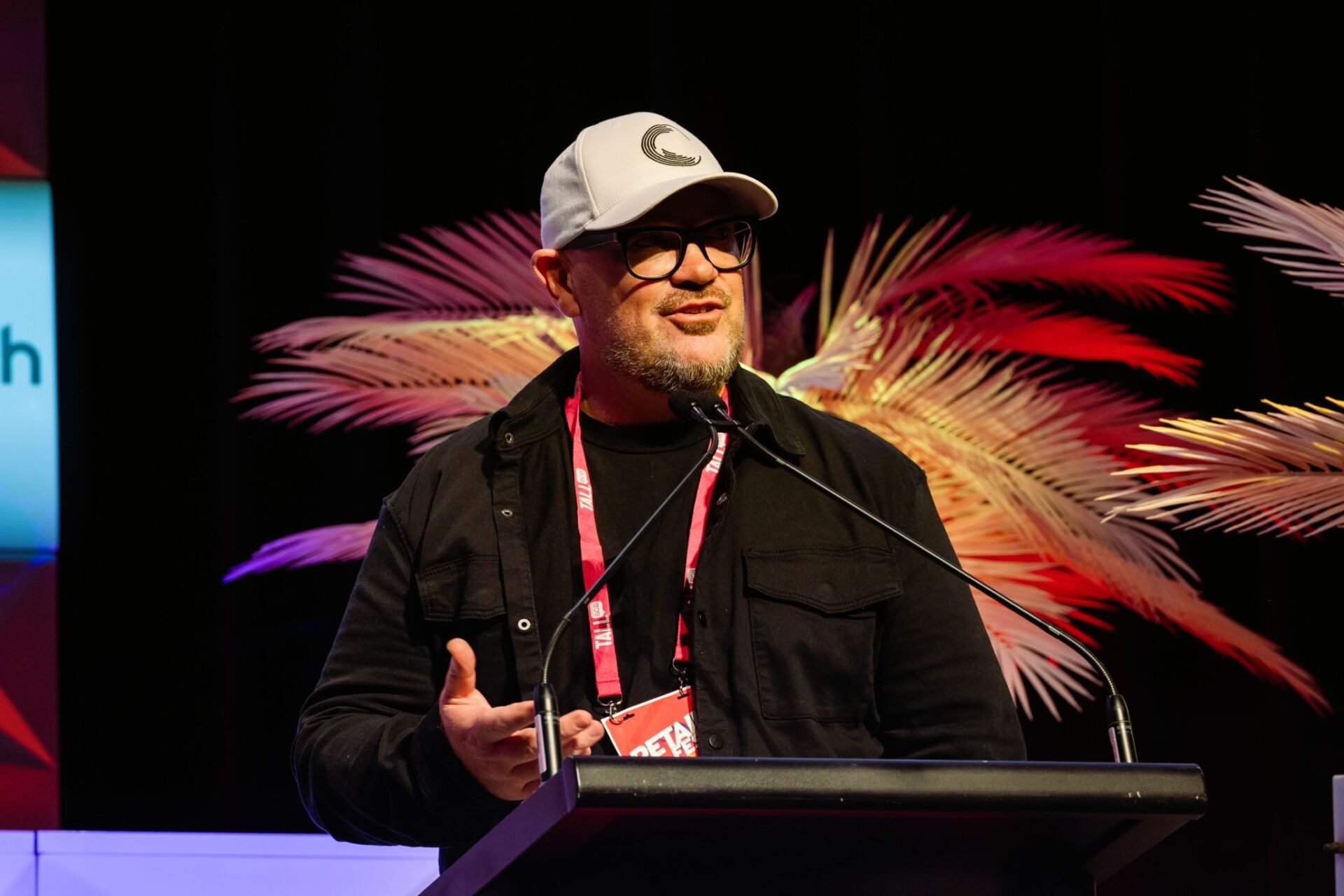
Justin Irvine: This feels like a slightly different vibe where we actually change founders lives. Like people that we're going to lose their house. People that are growing so fast they don't know what to do. But no carrier or service provider on the planet is going to tell you how to spend less money with them. There's a massive fallacy in Australia that everyone's on dead weight contracts. There isn't a single person in Australia today that is on a dead weight contract.
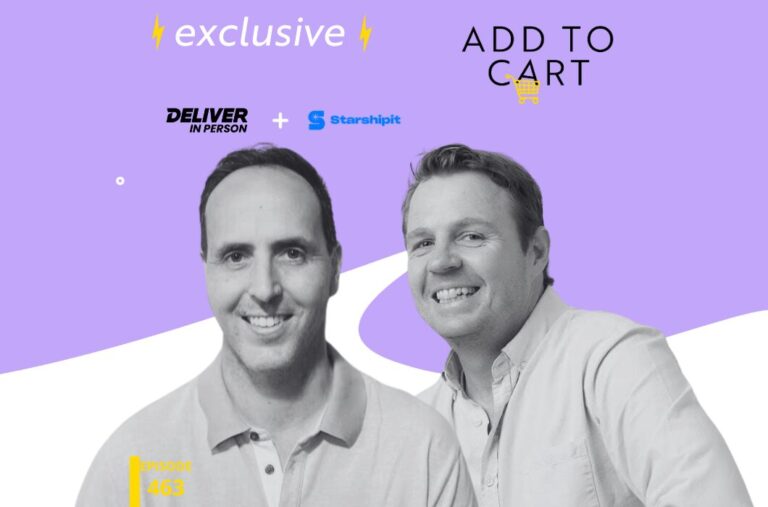
[Voiceover]: Welcome to add to Cart Australia's leading e commerce podcast that express delivers all you need to know in the fast moving world of online retail. Here's your host, Bushy. Welcome to add to Cart, Australia's leading e commerce podcast for e commerce professionals who never stop learning. That's you. My name is Nathan Bush or Bushy joining you from the land of the terrible people here in Brisbane, Australia. Now picture this. You're a fast growing e commerce brand. Your socials are pumping, your sales are spiking and your warehouse is kind of just holding on. Your carrier contracts are a mystery, returns are just chewing into your margin and the confusion and the panic around tariffs are doing your head in. It's not an unusual situation. And that's where this week's guest comes in. Justin Irvine is the co founder and partner at the Aggregate Co, a specialist operations consultancy who are quietly finessing the operations and logistics of some of Australia's biggest e commerce success stories including Meshke, Shopo, Ozhair and Beauty and culture kings. With deep experience in logistics, including his time building SECO Logistics into a high growth juggernaut, Justin knows how to turn complex fulfillment, freight and post purchase experiences into clear scalable systems. And he's doing it without the fluff or overcomplicating it. Just smart structure, some really sharp insights that you'll hear today and a deep care for the brands that he works with. This was a special chat that we recorded in a secret room at Retail Fest on the Gold coast where we dive into why operations are becoming a real brand differentiator in 2025. You'll hear how Justin and his team are building loyalty programs based on experience instead of discounts, why he's bullish on cubic weight contracts and what that actually means and what Australian brands need to know before they ship another box into the us. There's even a bit of TikTok shade, a cameo from Ron Burgundy and a hell of a lot of logistics love. But before we dive into that, I want to give you a quick heads up. This is the last time you'll Hear it if you are worried that your meta ads are tanking or that you're flying blind with your meta account, whether you're doing it yourself or you're using an agency. We are running a meta bootcamp for four weeks with myself and performance marketing expert Ian Calvert, which is starting today, June 23rd. But there is still time to sign up. We've just released the first week of materials and our first live tutorial will be on Thursday. It's four weeks super practical, all online. We'll help you reset your meta strategy and help you take control of one of your biggest marketing line Items. Head to add to cart.com to find the link to grab your spot in the bootcamp. All right, let's get into today's episode. A massive thanks as always to our partners Shopify and Klaviyo for making this episode and our podcast possible. Let's get into it with the very clever, very grounded and very generous with his knowledge, Justin Irvine, co founder and partner at the aggregate company.
Nathan Bush: Justin, welcome to add to cart.
Justin Irvine: Thanks Bushy.
Nathan Bush: How good to be doing it live. It is at Retail Fest.
Justin Irvine: Retail Fest, the home of E commerce.
Nathan Bush: Ash will love you for saying that.
Justin Irvine: Ash, you know, owe me for that one, mate.
Nathan Bush: What's exciting about Retail Fest so far? We're only on day one.
Justin Irvine: We're on day one. We've done our workshop today on ops. The least sexy thing in E commerce, but probably the most important thing.
Nathan Bush: Well done on getting them on day one while they're fresh. Yeah, yeah.
Justin Irvine: Day three. Several hangovers deep. It's just not working.
Nathan Bush: Right.
Justin Irvine: So yeah, it was, I mean we've been involved in this since going back to like PISA days, you know, when this was the old ebay conference. Right. With Phil. And you know, for us this is a really exciting retail fest. We're launching our scholarship program in conjunction with Retail Global. So we're going to be putting together about a quarter of a million dollars in support for an up and coming brand, free of charge. That's going to be an annual. So this is the inaugural investment in that. But for Kai and I, we really feel like this is the extension of our desire to see the industry continue to grow and be successful. And you know, having that, I guess, executive level input from Kai, myself, a few others in the industry, suppliers coming in, all the best practice post purchase stuff and just taking them immediately to best practice across the board will just enable that brand to realize their dreams. So would you envision you drop this
Nathan Bush: on me big time because this was not in our show notes.
Justin Irvine: Yeah, sorry.
Nathan Bush: It's really interesting though. What do you envision a brand spending 250k on?
Justin Irvine: So basically it's us in the business every week, hands on, making changes, working with them to develop out their operational delivery both from a digital and a physical operational sense. And then basically wrapping that around with a few core best practice partners. Guys at Starship Loop, we'll bring in a couple others around CRMs and things like that. Basically everything that you would need to go from fast growth, high velocity business without burning cash for the next 24 months.
Nathan Bush: That's nice.
Justin Irvine: Yeah, yeah, we've done that, Kai, Jeff and I have many times. Burnt cash, big hole, gas, lit it on fire.
Nathan Bush: And that's just your weekend.
Justin Irvine: Yeah, yeah, exactly.
Nathan Bush: Yeah.
Justin Irvine: But we certainly like have learned a lot of lessons through our previous lives and so yeah, Kai and I, rolling into this business really wanted to give back more to the industry than, you know, just setting up an advisory consultancy business. So yeah, for us it's really a realization of that part of what we wanted to give back. We've done really well as the industry over the years. So yeah, for us it felt like something we should be doing and we're excited after working through a few different iterations that we've landed on something with the guys here at Retail Global.
Nathan Bush: Awesome.
Justin Irvine: Yeah, so good to hear. Yeah. Which is, you know, a big part of where we started as well in the industry.
Nathan Bush: So what were you hearing this morning in those workshops from brands? What's the overall sentiment when it comes to ops and fulfillment?
Justin Irvine: Yeah, it's a really interesting one because there's two, two different aspects to it. One is we don't understand it and also what am I not doing that I should be. So those are like the two key drivers brands that have, you know, go back to Jane Chopa, you know, straight out of the garage and into it. You know, we were early days with Jane through her journey and that was incredible to be a part of. And there's numerous brands like that, but we're seeing brands come out without really understanding what or how to navigate operations because it's not like the cool stuff that's on TikTok and if it is on TikTok, it's the worst advice on the planet.
Nathan Bush: So your advice is to ignore TikTok advice?
Justin Irvine: Yeah. What, what's TikTok about?
Nathan Bush: But it is so true what you're talking about because I don't think I've ever met one founder. I met a lot of e commerce founders who Started because they're like, I can nail this business because I know ops inside out.
Justin Irvine: Yeah. Because it's like the least fun thing to do.
Nathan Bush: Yeah. Yeah.
Justin Irvine: I mean, I don't know any different. Right. Kai's the same. We were just like straight out of high school, made some bad decisions, ended up in frank logistics. And then the cool part was transitioning into E commerce. I certainly wouldn't want to be moving containers around the world, but E commerce is a totally different scenario and it's constantly evolving and innovating and being part of that is so cool. And you know, when people start it's like top of funnel, like product socials, all of that stuff. And now all the sexy stuff. And now with AI coming into it, immediate kamikaze shots. Referring to AI early in the podcast is that like all of that is like teaching people that they can like set up a website, they can like literally do anything. And then the tricky part comes from the fact that they'll go to ChatGPT and ask it, what should I do for this? This and this. And the voice of ECOM logistics expert. And it'll get them like 70% of the way there. But really understanding the levers and cost opportunities within the business and more importantly, where can you position yourself above everybody else in the brand in your vertical? And that for us is really being the understated part. So there's that. I don't know, don't understand. Then there is what am I not doing today that can position me above everybody else?
Nathan Bush: So as a competitive advantage.
Justin Irvine: As a competitive advantage. And so our big things at the moment are working with brands that are reinventing themselves or are really looking to take a whole new view to light the loyalty programs. Loyalty. We're driving these incredible loyalty programs for your top curators. Like whether that's like a platinum thing, like a three tiered structure where it becomes around operational perks and benefits as opposed to giving them 20, 30% off or points that they get free stuff for. Like your cost of retention through operational benefits and loyalty programs is so much better. Look at Amazon Prime. Yeah.
Nathan Bush: What are some of the most interesting perks that you've seen retailers use from an operational perspective?
Justin Irvine: Yeah, we're actually right in the middle of implementing a number. So there's things like same city curators. So let's say you're based in Sydney, giving them free same day delivery, literally four to five dollars more than giving them standard shipping. If you've got your contracts. Right.
Nathan Bush: Yep.
Justin Irvine: What are we talking about? People that are spending 10, 20, 30 grand a year with you spend five bucks, give them same day shipping as standard in the same state for next day shipping Australia wide. There are definitely options there that achieve this. Again what are we talking about? 2, $3 more than your normal express shipping.
Nathan Bush: But is it the cost or is it the complication in house to be able to know Correct.
Justin Irvine: This is the thing. And then I guess that's why we have a job is like, you know, you've got your loyalty program, you've got your tags in Shopify, feeding those through into your transport management and warehouse systems or your 3PL to be able to action that I guess strategy. But yeah, I think people are wanting that more experience. You see at top of funnel you see a lot of founder based social feedback right now this is becoming a more authentic way in which you are engaging with your clients as far as the post purchase experience. So that things like Peter try with mirror, put that in for your curators, give them this incredible experience. Other thing that we're seeing super cool is some higher end fashion labels organizing with things like reserve and showroom which is like reserve and store functions. Basically the guys like browse or even just the native Shopify function and what they're doing for their curators, getting uber black to turn up, pick them up, bring them in at the specific time, give them like a full showroom, sizing the whole experience. They go on socials. Yeah, they're ticker talking the whole way through. Right? Ticky talking. It's a thing. Yeah, it is.
Nathan Bush: I love that because I didn't imagine that we would be going down the loyalty path together in this conversation, but it makes total sense in how you can use operations as a competitive edge. Before we explore that further, I'd love to go back and ask you because you mentioned Kai there before.
Justin Irvine: Yeah.
Nathan Bush: Tell us about how you and Kai came together and how you formed the
Justin Irvine: aggregate co. Yeah, well I guess like Kai and I and the maniac that is Jeff Rowan who we all know and love all came together as part of our previous life at SECO. So we got introduced about 2010, 2011. So Kai's been having to put up with me since then and he should have known better.
Nathan Bush: Right? It's his fault really.
Justin Irvine: Basically his fault. Yeah. But yeah, after we exited our sale to SECO Corporate Private equity with with SECO Australia, I decided to take a bit of a break. I think about six or seven months into that. Did some like advisory work for Ellen at Somewhere Co who reached out incredible brand and, and she's fantastic. And that got us, like, Kai. Got Kai thinking more so than me. I was just happy doing the consultancy. Kai was like, hey, I think there's actually something in that, because I've heard through, you know, people kind of struggling in this space, and we were, like, massive fans of the movie Moneyball, because in our time when we owned seco, it was all about us creating something in the aggregate, like carriers, airlines, final mile delivery partners, and delivering a product that superseded everything else in the market at a better rate. And so we were like, it was a very easy. Like, we're calling it aggregate co. Yeah. And who can't agree with Brad Pitt delivering that line? Right.
Nathan Bush: Are you comparing yourself to Brad Pitt?
Justin Irvine: You know, he's trying to get there,
Nathan Bush: but, you know, one day.
Justin Irvine: One day he can hope, maybe if
Nathan Bush: he puts his cap on.
Justin Irvine: Yeah, it's a good piece of merch.
Nathan Bush: Yeah.
Justin Irvine: It'll definitely pick up his chances. Right.
Nathan Bush: Well, the problem is you've also given me a beer cooler here that says 60% of the time, we work every time.
Justin Irvine: Correct.
Nathan Bush: So you're probably more Ron Burgundy than you are
Justin Irvine: like a mix. It's this beautiful gelling of two great talents. Yeah. So, you know, as far as, like, Kai sort of came to me, and we sort of, like, blended out this concept around. You know, basically, the easiest way of explaining it is that we are like an operational digital agency. Like, the way that we've structured everything is like, people are used to dealing with digital agencies or design firms or performance marketing businesses, like agencies in general. So we, from an advisory consultancy perspective, wanted to build out the same sort of concept and structure commercially so that people like, okay, all right. I kind of like. I deal with one of those now, I understand. You come in. We have a weekly wip. You come in, and you fix things, and, you know, we all move forward with whatever the plan is. So we kind of, like, gelled that together, tested on a few companies. Natalie and Shadi and Damo at Mishke were one of our early clients as well. And, you know, we've taken them to the States, we'll take them to the uk like, these are enormous projects with fantastic brands. And so far, you know, we've helped companies like Budgie and Ausshair and Beauty and. Yeah, just numerous. Numerous brands. I think in. We turned two next month, and we've helped 33 Australian brands in that time. It's been epically rewarding, by far the most rewarding job I've ever had in my life by a country Mile and I loved my time growing up at seco. Yeah, we were lunatics. Yeah.
Nathan Bush: Yeah.
Justin Irvine: There wasn't anything we wouldn't do. Yeah. And there were plenty of six figure mistakes we made but we learned from them, we adapt, we grew and all the rest of it. This feels like a slightly different vibe where we're actually like tangibly seeing it change founders lives. Like people that were gonna lose their house, we come in as part of a team that then changes that. People that are growing so fast they don't know what to do. And we've got so many brands that are like that or you know the typical growth phase where you kind of hit this and you just need to break through the next growth phase and so just rebuilding some stuff. And generally there's not a lot of stuff. There's very few brands we walk into and the whole house is on fire.
Nathan Bush: So I want to ask you about that because aggregate co in my mind I get where you're at operations, but it seems to me that you can pull a thread and it can go everywhere. Right. It's so interconnected.
Justin Irvine: There's a lot of digital crossover.
Nathan Bush: Yeah. I can imagine when you are going into a new client for the first time, where are you looking? Can you kind of name three places that your eyes immediately go?
Justin Irvine: Yeah. So immediately it goes to a very tactical place which is like what carriers are you working with, what are your contracts, what are you shipping? And then we get into like, you know, our BI tool basically pulls that apart. We figure it all out and you know, generally speaking we find something in there 99 times out of 100 in
Nathan Bush: terms of cost saving process.
Justin Irvine: Okay. So process over price is generally where we see it land. There are definitely scenarios we walk in and like you're just paying too much. Like that's just it.
Nathan Bush: Couriers must love you.
Justin Irvine: It's been a really interesting, we'll get into that later. But it's been a, it's a really interesting phase of like we will give some careers a hard time and then the same career we'll sign multi year contracts with. It's whatever's the best for the client. And if they were already doing the job that we do now, we wouldn't have a job. But no carrier or service provider on the planet is going to tell you how to spend less money with them. True, I know because I didn't.
Nathan Bush: Right.
Justin Irvine: And so our job is to like improve processes to make P and L difference. That's it. Hands down. So carriers first, then typically there's some Fundamentals around back of house stuff in relation to digital aspects of post purchase. They're not utilizing or they've not quite got set up right. And then operationally either at their 3 PL or warehouse functions or you know, kind of even just people management and the way they measure things. So yeah, that generally is like the flow. It's always process.
Nathan Bush: Okay, what are the non negotiables for you around those areas? So if you walked into somewhere and you were like, they've got standard shipping, fashion label for example. Standard shipping, but no Express.
Justin Irvine: Yeah, it's usually the other way around, so.
Nathan Bush: Really?
Justin Irvine: Yeah, totally. So we walk in and a higher portion of people will not have two service levels internationally or returns. They'll just have like a DHL Express or a UPS or a FedEx and they'll just do Express in Australia, no standard. And we get that more than the other way around. Wow. But we have lots of projects where we do things where we a B test the cart with other options. There's a whole host of really important elements around that testing and the structure of that. So yeah, we definitely get involved with that kind of concept quite a lot. And it's amazing, you know, you can generally 30, 40, 50% of parcels moving off Express onto Standard is just massively material.
[Voiceover]: Anyone who's had a personal trainer knows that whatever targets you set, they're going to raise them. So when Nutrition Warehouse looked to engage Klaviyo, it wasn't just about sending emails effectively. They tasked them with increasing revenue, driving awareness and building customer lifetime value.
Justin Irvine: That's a spicy set.
[Voiceover]: But Klaviyo were up for the challenge. By creating the right email flows triggered by customer actions, using geotargeting for their 110 stores and using predictive analytics to target high value customers with personalized offers, they proved that they were up to the challenge. Smashed it in fact. With a 47% year on year increase in placed order rate on email flows and a Klaviyo Roi of 50 times, Nutrition Warehouse remain ahead of the pack. To explore how Klaviyo can grow your E commerce business and to see more case studies like this, visit klaviyo.com au
Nathan Bush: where do you save your clients the most money?
Justin Irvine: That's one of them. The other thing is a lot of people don't understand the cost levers that exist within what they do as it relates to their carrier contracts. And there's a massive fallacy in Australia that everyone's on deadweight contracts. There isn't a single person in Australia today That is on a deadweight contract.
Nathan Bush: What do you mean by a dead weight contract?
Justin Irvine: So what they do is you get your cubic, like footprint factored against what you physically product your weighs and then that is applied to your rate card.
Nathan Bush: Right.
Justin Irvine: So you think, right, I'm sending this hat that weighs 200 grams, so I'm getting paid X. The problem is that most people are shipping that cap in a box this big. That's what they calculate your actual cost on. But then they, as a factor, drill it down to your gross weight. So what you would typically pay is a line haul rate between say, brizzy and sitting, say $1.50 all up. They're taking the factor of what you're shipping it in and then they basically times that by that factor. So if you like, if you. That was a bad example. But like, that was a great example. Two and a half times generally is the volume versus the weight that we see in most of our clients and that's in their contracts. So instead of $1.50 paying more like $4. And that's the bit where people are like, yeah, but I'm paying dead weight. It's like, no, you're not paying dead weight. You're paying a factor. And every single person in Australia is on a cubic contract. Now, if you're on a gross weight contract, you cannot improve your cubic, like that factor and immediately impact your P and L because that only gets reviewed every 12 months. If you move to a cubic, the factor gets adjusted out and as soon as you make an improvement, it's immediately on your P and L. And this is the concept that people get. The other thing that people freak out about with moving to qubic contracts is 5% of what I send is like big, bulky, ugly, cool. That's 5%. The other 95% you've just saved 40% on.
Nathan Bush: Yeah.
Justin Irvine: Because you've been able to shrink everything down that fundamentally understanding those levers. But it's, it's a very much a case of you don't know what you don't know. Like, we know where all the bodies are buried. From a pricing structure perspective, we know how everything's structured because we ran a parcel business for over a decade and before that we've been moving freight around for years. So to think that people who started an E commerce business in their garage that moved to a bigger warehouse employed a whole heap of people and killing it, which is awesome. To expect that team to then understand the nuances of how this comes together is so rough. It's like Someone that you know. There's a whole reason these businesses like E Comm Equation and you know, E Com Nation and all of the digital agencies that are out there, it's because they're experts at that. You can't like. I do not come to me for performance marketing advice. Not tickety talk. Not tickety talk. I'm not your tickety talk guy. But what I am is like an absolute expert at moving parcels from A to B at the lowest cost. And it's not just that, it's just that whole supply chain piece what's stopping
Nathan Bush: people, because I know, I think most founders and most GMs would know that you've got to get parcels to the right size to reduce costs. Pretty fundamental concept.
Justin Irvine: Yeah, yeah, it's fundamental, but it's not. Again, a lot of the GMs have come out of product or E Com digital stuff as opposed to operational stuff. Yeah. And it's so unfair to have a GM in a position to have KPIs on them to understand this when it's like again, ChatGPT, please do tell me in the voice of a logistics expert. Da da da da. But you know, I'll just train mine
Nathan Bush: to say pretend you're Justin Irvine.
Justin Irvine: I'd love. I haven't done that yet. I should totally do that. And the voice of this idiot. Can you please tell me now that
Nathan Bush: we've got this, I'm just going to feed that shit and create my Justin bot.
[Voiceover]: Tell me about.
Nathan Bush: You mentioned contracts there and I think that's a really interesting piece. If we've got listeners coming up to renewing carrier contracts, what are the top two or three questions that you'd ask to try and find those skeletons that you talked about?
Justin Irvine: Yeah, I mean it's a bit of our ip but I can definitely give like some, some generic stuff that would definitely help. So what we see especially with high growth brands is that carriers look at the previous 12 months and what they don't do proactively unless you have a really good account manager, is that they don't go through a forecasting plan and share the different tariff improvements that can be made at different functions and tariff structures. So what most people in Australia know in the early days is that there's a whole different range of tariff structures even within Australia Post. And so pulling all of that together is quite important. But showing legitimate growth, showing legitimate planning and forecasting around volumes enables you to get through different facets of each carrier in different negotiation phases. So showing where you're going is A huge thing. If you're going backwards, that's always going to be a punish. There is no silver bullet for that. You just need to try and get a low 2, 3% increase. If you do that, just keep quiet and carry on and then go and try and push on with growth. But if you're on a high growth thing, that's our key thing is like you got to get the carrier looking forward, not looking backwards and support it with actual data, which they'll have. But then if you fold that into what's happening in the next financial year, that's a big thing and right now that's happening. So try and get them to cost
Nathan Bush: on what it will be in 12 months time, not what it is today.
Justin Irvine: Correct. And if you don't hit it, sure there'll be some retribution the following year's negotiations, but you're putting yourself in the best case to give your yourself the opportunity to scale off a bit of cost structure. Just again, look at what you're sending like honestly that's. And investigate cubic contracts, investigate alternate carriers. There's this real sweet spot between 50 and 100,000 parcels, 120,000 parcels a year where there is like no clear improvement on cost with certain carriers. And so you can multi carrier in that space get up to like 150 plus thousand parcels a year.
Nathan Bush: What are you talking there? You're Talking like a $10 million business, is that.
Justin Irvine: Yeah, it's getting pretty close to that. Yeah. Well done Bushy.
Nathan Bush: That's pretty smart. Look at you go. There we go. I can do maths. Yeah, yeah.
Justin Irvine: So in that gap you can play in the multi carrier space you might like have a dedicated express provider or you know, you're not necessarily playing carriers off against each other, you're just like picking the best. You'll probably have enough freight that you'll be able to put together a decent rate structure for both. So yeah, from that side of it there's a slight little window before that. Stick with one carrier, get the best rates you can over that you're leveraging your volume. Gotcha. And one, maybe two carriers is probably the smart thing to do to carriers.
Nathan Bush: Can you play carriers off against each other or do they kind of play their own game? They've got their own rate card anyway.
Justin Irvine: Yeah, it's a hard one because there's no like two hardcore. It's not like FedEx and UPS.
Nathan Bush: Yeah, yeah, yeah, right.
Justin Irvine: In Australia there's post and then you have carriers around post or you know, if I look at service structure You've got Aramax couriers, please parcelrite, some of the big and bulky guys. Then post kind of carry like 80 odd percent of the traffic. And then TGE have really sort of come in with their priority products which is like not epastel Express. It's like a whole other service level over the top of Epastel Express. And so you now have this like smattering of different service levels that you can't really compare against each other. It's not comparing apples with apples that's the hard part.
Nathan Bush: So you gotta work out who fits your business first.
Justin Irvine: Correct? Yeah. What is like are you going to. Are you a higher price point and you just want maybe this, you just want to go standard?
[Voiceover]: Yep.
Justin Irvine: Oh sorry Express because you have a price point to facilitate it. Typically though we try and get those kind of higher end price point product to have standard as just free your free option. It's better absorbing that than absorbing Express.
Nathan Bush: Yeah. Post are non negotiable.
Justin Irvine: Look, Post are the workhorse of Australian E commerce. There is absolutely zero doubt in my mind that you need to have them in the mix whether they're your sole carrier, whether they're carrying the bulk of your freight, maybe they're carrying half of your freight. They need to be in the mix hands down.
Nathan Bush: And when you get to the point where you do have multiple carriers on board or you want to test multiple carriers, are you a fan of technologies that help keep that dynamic carrier selection in place?
Justin Irvine: Yeah, I'm a big fan of transit least cost routing. So for this postcode we have these three carriers delivering you the same thing. This is the cheapest rate out of those carriers. It is a US thing that happens every single day across tens of thousands of 3 PLs in the states they have 7 to 10 carriers, multiple service levels and they just choose the cheapest carrier that fits within their service promise to their customer. And that's what it comes down to. I definitely like again if you're in that sort of 50 to 150,000 parcels you have the ability to kind of have enough volume. You can kind of shuffle it around and do that stuff. Australia's not really built for that. Where it comes into play more so is things like Sydney to Sydney for nine months of the year. On Express you can just use standard epassel because it delivers next day for nine months of the year. Like there's just little hacks like that. But Australia's not built like the states. Right. We don't have that population density. It's huge. Like you Know everyone lives around the water, that's great. But it's still like it's not the same. And so we just don't have that density of carriers to kind of do that. Less cost routing and the volumes are, you know, aren't as big as the states. So for me, if you've got two, maybe three at the most, a same day, an Express and then a Post or similar carrying the bulkier standard, that's a healthy mix. But every business is different and I've signed multi year deals with Post because they were the best thing for that. And then there's been plenty of times where we've gone down another route because they're a more express orientated business.
Nathan Bush: That makes sense.
Justin Irvine: Yeah.
Nathan Bush: So you don't spend like you keep the rules fairly simple by the sound of it.
Justin Irvine: Simple. I'm like, I just care about my client. I want them to have a leg up against everybody else in the industry. How do we do that? Like what is aligning with their customer engagement strategy, their customer journey? What is it that they want? There's tons of people that operate same day, next day and that's it. Because they're like 4, 5, $600 aovs.
Nathan Bush: Yep.
Justin Irvine: So quite frankly, for an extra $4, I don't care. Just make it the best.
Nathan Bush: Yeah, yeah, yeah. You mentioned the T word before tariffs. Your phone must have been going off the hook for the past couple of months.
Justin Irvine: Yeah, yeah, 2025's been reasonably hectic.
Nathan Bush: What's your take on the current scenario? So we are recording this in late May where probably what are we in 10 days of the 90 day pause?
Justin Irvine: Yeah, that's the thing, right. It's like woke up this morning, rattled, the old Trump 8 ball. What have we got? Oh no, we're still good for the pause. We're still good for the pause. I mean, you know, within the EO there is a set, you know, to go from 10 to 34 at the end of that 90 days. But something could change, right? We don't know what's going on right now. There was a whole lot of us trying to get our clients to hold back, sending product to the States because when you around that de minimis window, try and hold back as much as you can, just get what you need into the country. But don't dump like whole season stuff in there. We do a lot of wholesale stuff as well. So a lot of brands that are Omnichannel have DTC sell wholesale in the States. And we were trying to like drag out April and May drops as much as we possibly could, restructuring the way in which we were delivering wholesale. A lot of our clients are selling into Nordstrom's and Bloomingdale's and Saks, and we were just trying to get them to just hold back. And to be fair, the retailers were reasonably good about it because it was in their best interest as well. But, yeah, it was expected. I think it came out about a week later than what we thought it would when we hit pause. But, yeah, for us now it's a case of trying to get as much product as we can in there without bankrupting companies and running out of cash for the people that are there. For everybody else, it's a case of getting the business to a point of growth. To understand, is the US Really a point where we feel comfortable moving to the States and putting stock on the ground? There are like, definitely some halfway house stuff where, you know, you can send from Australia under like a B2B2C. So selling from your Australian entity to your US entity. And that US entity owns a relationship with the consumer. But there is a bit of, like, faffing around. You've got to set up a U.S. entity. You're liable for income tax at that point because that's the other bit that people aren't telling you. If you're importing at this level and selling it domestically at that level, IRS is going to want their coin. So just structuring that really well. And yeah, thinking that you can bring all the money back under management invoicing is. IRS will pick up on that as well.
Nathan Bush: I heard some pretty crazy scenarios, especially around fashion brands who move very quickly before the pause and everything from exactly doing that, setting up new company structures to setting up drop zones in Mexico that move very fast. And now that that's been paused, it's like, oh, did we do that for nothing? And it's actually doing something challenged our business.
Justin Irvine: Yeah, it's a little bit like that. It's a real hard one because I didn't feel like there was any right or particularly wrong way of attacking it. We're all in the same boat. It was like Covid 2.0. Yeah. We didn't know what we were in for. Everything was super fluid. And so I feel if people were nimble enough to make those changes, they're nimble enough to unplug it.
Nathan Bush: Yes.
Justin Irvine: And our biggest thing is the only way to entirely de risk your business is to have inventory on the ground that you've paid tariffs on your cost price. That's it. You can get clever working through Canada, through, you know, Mexico as well, but mainly Canada Bonded facilities in the states where you only pay tariffs when it leaves the bonded part of the warehouse to go into the non bonded part. Like these are all things like from a cash flow management perspective, definitely there. From my perspective, boots on the ground and actually taking hold of the opportunity that gives you. People are forgetting that having your stock on the ground means you're delivering next day. Today like two to three days. And next day, all of the clients that we've taken to the states, we will see an organic move through buying behavior in the states that you go from like 20, 30% express to 60% express because they can engage you at that level. And that's. You just grow. You're like, that's as simple as it is. You're localizing everything. That is your biggest market for a lot of people. Right.
[Voiceover]: And do you need one warehouse in
Justin Irvine: the States for most businesses? Yes. There's some exceptions where we have non apparel companies with low SKU counts able to carry larger quantities of stock. And generally speaking, that means as long as we've put the right inventory in the right place and three PL partners in the states, if you work with the right ones, actually help you out with this means that you don't have like freight tick tocking across the US from different, like from the wrong place. Cause that's the issue with having two or three warehouses is that you don't have the right inventory in the right location, split orders, all that kind of fun stuff. So typically toes in the water, let's get set up with one warehouse in the right place that also delivers you the best output if you do go to two nodes.
Nathan Bush: I was just speaking to a founder last night who set up a warehouse in Colorado and I said, why? He's like, I just like being there.
Justin Irvine: Yeah, well, I don't know, maybe he's doing like snowboarding stuff.
Nathan Bush: Geographically. Geographically. Where's the most central place that you find?
Justin Irvine: Somewhere between Texas and Kentucky. Like if to be fair, like between Texas and Pennsylvania, there's like just in that diagonal there, there's like Atlanta's pretty good. Chicago probably not so much. But when you come down into like Indy, Kentucky, that sort of area, you can't really go too wrong.
Nathan Bush: Yeah, okay.
Justin Irvine: And then I do like Texas barbecue. You don't get a performance athlete body like this from not liking.
Nathan Bush: Gotta get your protein.
Justin Irvine: It's very protein based.
Nathan Bush: Yes, I love it.
[Voiceover]: Elite 11's activewear range was created to move seamlessly from the gym to the street. But keeping up with rapid growth and a loyal customer base takes more than just great products. Since adopting Shopify point of sale, Elite 11 now manage their online and in person sales all from one powerful unified commerce platform. And the results speak for themselves. They experienced a massive 240% year on year growth in retail POS sales. But Shopify isn't just about simplifying operations. It's about giving brands like Elite 11 the tools to scale up, stand out and deliver personalized experiences that customers keep coming back for. To read more success stories, visit shopify.comk case studies and gear up for your next big move.
Nathan Bush: So I just want to take a step back there just for clarity. So if we've got listeners who are manufacturing most of their products in China still.
Justin Irvine: Yep.
Nathan Bush: Would your recommendation then be have those products manufactured in China, have them shipped to the US still having them come in at cost price over there and then distributing out rather than trying to get tricky with it?
Justin Irvine: It depends on how talented and mature your finance and lead execs are. Yeah, that's a big caveat.
Nathan Bush: Yeah.
Justin Irvine: Because I have some companies that have absolute powerhouses running their businesses like Danny at Shona Joy. She is an absolute machine. She is running that business so well and she has a great team around her. We can do that kind of stuff where we can buy time to get the business in a place where it can transition in its own time to the States, which will happen. They're killing it. It's just natural progression for other companies where there isn't potentially that stronger skill set internally then if they however, have the ability to lean on technology and lean on some key staff to get their buying and demand planning right, they have the capital to support a little bit more inventory in the US because remembering you're buying the same amount of stock, you would have been shipping that to the States anyway. But you just need a little bit more like stock in transit. So there's a little bit. It's not like doubling your stock effectively, but if you have the skill sets to be able to deal with that, we'll get you the rest of the way. And that is de risking your business 100%.
Nathan Bush: When you're working with brands that have gone from operating in Australia and maybe taking international orders, but shipping from Australia to setting up in other countries, what are the top things that you think catch them by surprise?
Justin Irvine: Paying duty on duty is my favorite.
Nathan Bush: Paying duty on duty?
Justin Irvine: Yes. So people factor in duty into their price, but when they submit the value to the carriers, they forget to take the duty off. So let's say they've got a $100 product. We'll just use round numbers.
Nathan Bush: That works for me. Yeah, yeah.
Justin Irvine: We haven't had beer yet, so it's like 100 bucks. Let's say there's $30 in duties and tariffs and they roll it up on the cart so it includes duties and taxes. They then take $130 and sends that data to the carrier. What they haven't done is taken the $30 off. So they're now paying 30% tariff. Well, I just say, Judy, and VAT, for example, they're now paying that on 130, not on 100.
Nathan Bush: Wow.
Justin Irvine: So they've collected $30 or factored in $30. So effectively they've collected it, but then they don't remove it again before they send it out.
Nathan Bush: You can see how it happens.
Justin Irvine: Oh, all the time. Canada, uk, eu, hands down, happens all the time.
Nathan Bush: And do you need special software to do that or.
Justin Irvine: Not really. Most of the warehouse management systems these days allow you to have a value for duty and then whatever the sales price is. Sure, yeah. That's an absolute killer. People not being aware of IoSS for Europe, EORI for the UK, there's just like registration things and then understanding that they have to file for vat. So there's a whole lot of fintech companies that have come in and made that life easy for everybody. What's the other thing that I see? People not thinking about? Just how they package products and then they get these huge bills from DHL, Express, UPS, FedEx or even just the standard carriers. They've got no concept of what they're doing internationally. Small problems here equal big problems. When you send it to the other side of the world and then returns, people don't understand that it's actually a profit. With all the technology that's available now, it's now a profit center. If returns is not a profit center for you, there's money on the table, it doesn't mean you've messed up, just means there's money on the table.
Nathan Bush: What do you mean?
Justin Irvine: Well, I mean there's functions within a lot of the platforms now to like basically shop and, you know, you have instant exchanges and you're able to shop during the returns process. And basically all we're trying to do is create a revenue stream through your returns flow and things like making sure you're charging your handling fees. The amount of people that are doing free returns now is very low. You should be Capturing something. So between the revenue you're capturing on X amount of returns on exchanges, keeping them on the hamster wheel, as well as the freight recovery for the handling fee that you deduct out when you that I'm not seeing big conversion drops, I'm not seeing card abandonment because of that returns piece. And that should at least net out if you're burning cash on returns. There's money on the table and it should be seen as a retention tool. That's where I don't think people make the most of it.
Nathan Bush: And that's a real point of tension, especially in fashion, isn't it? Because there is this competitive pace at the moment where free returns is almost
Justin Irvine: leave it for your platinums. You go back to the loyalty program. Give it to them. Give it to the people that are doing that.
Nathan Bush: Who are your best customers who are
Justin Irvine: less likely to return?
Nathan Bush: Yeah, yeah, yeah.
Justin Irvine: I mean there's plenty of data now and there's some like really good fraud functions within the top portals to really be able to understand is my top customer actually my worst customer. Like that data is available. You can like literally it's a dropdown tool. You can see everybody. So make the most of it.
Nathan Bush: Speaking of KPIs, what are the from an operational perspective? If I was to say Justin, three KPIs that you would keep an eye on to know if the operational health of a business.
Justin Irvine: That's a good one. I would like. There's different components, right? So my big thing is unit economics. If I hear another person talk about percentage against revenue, it's going to be a kamikaze shot for them. Like the biggest thing is know your actual cost to serve. So you know, we've built out a BI that we have for our clients where they can see standard and express for every country in the world and they can track it month on month, ups and downs and that they can actually understand what the unit economics are. You know, I'm okay with percentage being used as a benchmark, but never use it as a financial metric.
Nathan Bush: By unit economics you mean understanding everything that goes into that price, that product like your cogs.
Justin Irvine: So how much did it cost me to warehouse that product? How much did it cost me to deliver that product? Express and standard? How much are my returns costing me? These are all like core metrics, processing
Nathan Bush: fees, the whole lot.
Justin Irvine: Like everything built out your P and L and you're like you talked about Kelly Partners. These guys, Kelly Partners are phenomenal at this is helping E comm businesses build their P and L. So that you can literally line up the number of units and orders that you've had in your inbound and you can literally track at unit level, how am I performing month on month. Those are the key KPIs that I'm wanting to see. Then when you get into the weeds of, okay, so how do I make it better then? That's why I have a job. Right. So that's why the AGCO was born. So, yeah, for me, those are the core KPI's key elements as far as, like, getting your suppliers delivering on time, meeting their performance levels, improving a big KPI that we have on carriers and suppliers for our clients. Every month, you need to come to the table with at least one thing that you've picked out of what's transacted in the previous month and tell us, here's an opportunity. It doesn't mean that they're gonna go and follow that down, but it shows that you've looked at the data, looked at the pricing, looked at everything. That's our KPIs on carriers and three cars.
Nathan Bush: You're asking them to come back and go, hey, how can we make this experience better? Cost less, Anything.
Justin Irvine: Anything that is going to get the boat to go faster. Okay, anything that makes the boat go faster.
Nathan Bush: And they're responsive to that?
Justin Irvine: Not really. I know I wasn't, but no, I mean, it's like a. Not a big thing. All I'm doing is the asking the account managers to think, to have a look and understand the business and then come and show us that you as a supplier, who we spend millions of dollars worth taking a vested interest in them growing more profitably. Because if they grow in a more profitable sense sense, then they're going to invest more, which means they get more freight. It's the circle of life. I love it.
[Voiceover]: Yeah.
Nathan Bush: Very Simba.
Justin Irvine: I'm like, I am the ape. Holding up.
Nathan Bush: You're covering all the movies today.
Justin Irvine: I know.
Nathan Bush: We're going to call this the movie episode Moneyball.
Justin Irvine: Oh, we haven't even got to the ambassador of Kwan, Kai Lincoln.
Nathan Bush: I love it. We've talked a lot around hygiene factors today. What's exciting you about operations? Their new tech, new new software, new processes that you think are gonna change the game.
Justin Irvine: Yeah, I mean, geez, how long have we got for this podcast, man?
Nathan Bush: It's like, well, we can kind of pause it. Go get some beer.
Justin Irvine: I mean, that was the greatest idea ever. But from my perspective, it's the way that technology's enabling operations to become mainstream options. You Know like again Pete at try with mirror. Really good example there. I think all of the things that enabling online offline, I think if you've got retail stores you are by far hands down going to have the biggest chance of growth, profitable growth across any facet of E commerce. Driving people into your stores, creating foot traffic through combining online and offline. You know, reserve in store, create incredible retail experiences. Started on the website.
Nathan Bush: Yep.
Justin Irvine: Yeah. So we're.
Nathan Bush: Are you a fan of fulfill from store? Huge. Yeah.
Justin Irvine: Yeah. It's about getting it right. It's a narrative change within businesses. Just started working with Michael at Betz Footwear and it's the single most exciting project that we've been involved with outside of Guy Aus here. So we worked with them to kind of pull together their operational strategy to do ship to and ship from store.
Nathan Bush: Ofe, you told me that you're the reason that he got number one in E commerce.
Justin Irvine: Stitch up of the year goes to Bushy. Yeah, I mean we'd like to think that we're a big reason behind that. Sure. Not sure we get away with that but we'll let Guy come back and refute that through his years of hard work. But yeah, for us that was a very similar project that we're now seeing just incredible results come out of. And this project that we've just started with Michael is a complete reinvention of an absolute legendary Australian brand. And so for us, super exciting. Michael at the helm as CEO is just making some phenomenal and just incredible growth based decisions. Very smart. And the key driver is around the technology stacks that are available to enable that engagement with store and online. Yeah, like just never having them off the hamster wheel, just constantly driving them into the retail stores, ship from store. Like these are all the process things that I talked about earlier. I don't have to go and beat up anybody for rates. It's just process. You know, once we get to a certain volume point, sure we'll have a conversation but ultimately there's a very big difference. Delivering a parcel from Perth Metro To Perth Metro vs Melbourne to Perth Metro and like everything game changer.
Nathan Bush: It's all very sensible and will save businesses lots of money. What about the crazy shit?
Justin Irvine: What about robotics? Yeah, I mean we're like involved with a lot of robotics firms in relation to fulfillment. One of the partners we work with in the States, Nimble, they've got autonomous delivery trucks with robot arms, like giving parcels out to people. That was pretty cool.
Nathan Bush: That's cool.
Justin Irvine: It's super cool. There is a Ton of cool stuff going on all over the shop. But yeah, robotics in certain facets of E commerce are an absolute game changer. Do I think that robotics fit everything for everyone? Not yet.
Nathan Bush: Yes.
Justin Irvine: Will we get there eventually? Absolutely.
Nathan Bush: Do you feel there's a lot more housekeeping to be done before we even start talking about that? For most brands, yeah.
Justin Irvine: Yeah, definitely, yeah. I mean, there's oddball stuff. I mean, even footwear brands, a lot of footwear companies don't fit within the automated totes. Like you've got to create larger totes but you go to places like for example, the Huck Group up in the uk. We've been dealing with Tom and the team there since Jesus, when we started SECO, like 2011, I think. And they've now got 2 million square feet at Manchester Airport that is entirely automated with robotics.
Nathan Bush: It is epic.
Justin Irvine: And they have a 1am cut off for same day delivery in the UK for like five bucks Australian. Oh, like you can't.
Nathan Bush: Yeah.
Justin Irvine: You know, UK is a small country, but that is just humming.
[Voiceover]: Yeah.
Justin Irvine: And that's some of the stuff we see in it. I think the things that I want to see in Australia, like I've seen plenty of people start to look at setting up these micro fulfillment hubs in separate states. The denser population density is what's killing that. But I have huge amounts of respect for those people that are taking all the punches for everyone where in two or three years time that's exactly where we'll be. Because that's the one thing that will protect Australian brands over Amazon. Temu Sheng, who all by the way are setting up warehouses in Australia, is that you will directly compete against them service for service at unit economic level as much as you possibly can. And yeah, if you've got a store, you're already ahead of the game. You've already got those micro fulfillment DCs. So how do we do that? You know, there's some challenges around the volume of stock in stores for sure. But all the tech's there now. Yeah, yeah, for sure.
Nathan Bush: Beautiful.
[Voiceover]: Covered a lot.
Nathan Bush: Have what's next for yourself and the team over the next 12 months.
Justin Irvine: So we just cranked up the US office, so we have Beth Thorson working for us in the States, which is a huge step forward and we'll backfill Beth with support up there. But you know, the bulk of the team will still be Australia based. We'll have a UK presence in the next couple of months. And yeah, just building out the team, building out the bi, just trying to work more in the industry and stuff, really making sure that we're engaging with as many suppliers, providers, technology partners. So when who's in our client success management is moving to partnership. So we'll have a dedicated resource working with the industry and that's all about just making sure that when we bring in a new client or we have an existing client that's looking to go a new channel, we have those partners to plug and play in for best practice. And again, it's all independent. I was about to say, is it
Nathan Bush: designed to be agnostic?
Justin Irvine: 100% agnostic. We have to be independent. So sure, there are providers where we give like a lot of business towards, but it's done because they're the best option for that particular client. It's not done from. You know, I would love to just have two US three PL partners and
Nathan Bush: just clip off the ticket, just shovel
Justin Irvine: them down that channel. But you know, we've probably done like 13, 14 RFQs now in the states for 3 PLs and I think we've ended up at like 8 different companies just because those 8 separate companies were the best part. Certainly makes our life a little bit busier, but it's the best thing for those retailers.
Nathan Bush: But again, that's your ip, right? That's where you get the view across all the different.
Justin Irvine: That's why we have to go to Shop Talk and go to Vegas, you know, that's why.
Nathan Bush: That's why.
Justin Irvine: That's why.
Nathan Bush: God, you're not trying to convince me here. Sounds like you need to convince someone. Justin, if people have heard this and they want to get in touch, whether they are a retailer who are struggling with with their operations of fulfillment or whether they just want to learn more about what you do, what's the best way to do that?
Justin Irvine: Yeah, just hit up the website, echo theaggregateco.com and just drop us a note off that you can hit me up on LinkedIn. You hit up Kai on LinkedIn, get him doing some work. I mean, he's in Europe right now sunning himself. Let's get him doing some work. I agree.
Nathan Bush: Everyone just spam his inbox.
Justin Irvine: Just right now you're doing nothing.
Nathan Bush: What's Kai's last name?
Justin Irvine: Lincoln.
Nathan Bush: Yeah, Kai Lincoln. Just go spam him. If he doesn't reply within 24 hours, put an official complainant on the website.
Justin Irvine: Yeah, absolutely, yeah. Go to the accc.
Nathan Bush: On that note, I hope the Agrohu co is still going then after this episode, but thank you very much, mate, you were very generous. In your knowledge and I know you were giving away some of your IP there, so I appreciate you sharing that with our listeners.
Justin Irvine: Oh mate, more than happy. More than happy.
[Voiceover]: Look, if you're at Retail Fest, you would understand and appreciate how hard it was was to pull together all the nonsense that was going on over that week into a very focused and at times deep chat around logistics and operations. But I'm so glad that we did it because I'm no expert when it comes to fulfillment and logistics. It's one of my blind spots, I suppose, when it comes to retail and it can often get confusing and overwhelming. But the way that Justin explains it with such clarity and common sense made me feel a lot better. So I can only imagine if you're sitting there drowning in logistics and operations that that would help you tremendously. Here are three big lessons that I'm walking away with. Number one Know your real cost to serve. It's wild how many E commerce businesses still run blind on the actual costs of fulfilling an order. Justin made it crystal clear. Percentages are a rough compass, but if you want to drive profit, you need need to zoom all the way in. What's your cost to warehouse? What's your cost to ship? Your cost to return? It all matters and it needs to be measured by skew, not gut feeling. It's not sexy, but cost to serve is the foundation for smart decisions across marketing, merchandising and finance. It's a real unlock if you get it right. Number two, Operation led loyalty is a largely untapped opportunity. We usually think about loyalty as points, perks or discounts and that drives me a little bit insane at times. But Justin's flipping that script and I love it. He's helping brands use operations and experience as a loyalty engine. Think same day shopping for top tier customers, showroom appointments, post purchase perks that actually feel like status, not freebies. It's such a smart way to differentiate, especially when when everyone else feels like they're just throwing around 10% off codes to everyone. And number three, your carrier contract is probably costing you even if you think you're a good negotiator. The way Justin broke down freight pricing, I reckon half the country's E commerce GMs just started getting a little sweat going on. The gap between what you think you're paying and what you're actually being charged due to cubic volume, minimum charges or missed incentives can be massive. And when you multiply that across thousands of parcels, it's not just inefficiency, it's pure margin that's walking out the door. Knowing how to read and renegotiate with your carrier could be the most valuable skill set on your team this year. Justin gave some great tips there. Now if this episode saved you even $1 in your operations or logistics or gave you a new way to think about loyalty, I'd love for you to share it with someone else that you think would get something from it. Send it to your ops lead, your co founder, your mate that's drowning in parcel and logistics chaos. And while you're at it, leave us a review on Spotify or Apple podcast because that goes a long way to helping us grow. A big thanks again to Shopify and Klaviyo for supporting our Descartes, and to Justin for pulling back the curtain on what real operational excellence looks like even in the haze of Retail Fest. Catch you next time. Thanks again for listening. And until next time, keep those customers adding Descartes.