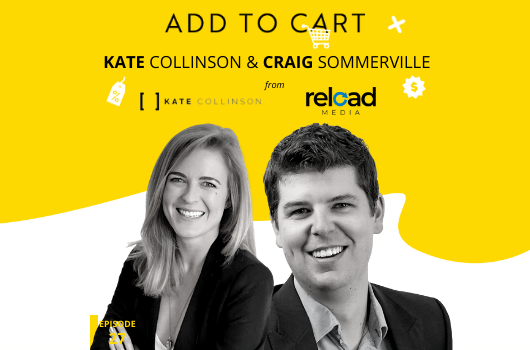
Kate Collinson: Hang in there, be kind. We're all in this together because there's
Craig Somervell: going to be a hell of a lot of really educated consumers coming out of their homes in about three or six months time and brands have kind of got to be ready for that. So in nine days they went from peak bottom to, you know, a new high.
[Voiceover]: Welcome to Add to Cart, the podcast that Express delivers all you need to know in the fast moving world of e commerce. Every month, Nathan Bush from 12 High and an E commerce industry expert will share the news, research and insights that you need to know to keep you at the top of game and of course, keep your customers Adding to Cart
Nathan Bush: hello there and welcome to a very special episode of Add to Cart. My name is Nathan Bush, host of Add to Cart and strategist at e Commerce consultancy 12 High. We are living in strange and uncharted times. No one has seen anything like we are living through now. In the early stages of COVID 19, many retailers are being forced to make immediate decisions around their sales, their teams and their future as the world combats this health, economic and psychological impact of this crisis. And we're only a couple of weeks in here in Australia, there's a long road ahead. When this really started to take hold, I racked my brain to understand how we can help retailers find their way through it. How can I help retailers without just adding to the noise? There's already plenty of opinion out there and no one truly has all of the answers. What I do know is that we'll all have to find our own way to navigate this according to our own situations. There will be no two situations that are the same. However, while no one has all of the answers, we can learn from each other and we can learn collectively. As a starting point, I've pulled together two of the best e commerce marketers in Australia, Kate Collinson from Kate Collinson Digital Consulting and Craig Somervell, Managing Director of Reload Media. I've asked them to come onto Add to Cart to share with us what they are seeing with their clients and to share the advice that they are giving to a much broader audience. Both Kate and Craig were incredibly generous in sharing the trends from their clients so far, tactics they are recommending and their outlook on what is coming. Listen until the end and you can hear them answer some very specific questions from our listeners who posted in our social channels. Like I said, no one has all of the answers. But with a few heads together that have a view over a variety of e commerce businesses, hopefully we are in a position to see the trends better than most. On a lighter note, this episode was filmed with everyone working remotely. We had microphone issues, tradies on roofs and crying babies all within 45 minutes of recording. Isn't it nice to know we're all in this together now? Thanks to our partners at Shopify plus, let's get into our special episode with Kate Collinson and Craig Somerville to explore the initial impacts of COVID 19 for Australian retailers.
Nathan Bush: Kate and Craig, welcome to the Add to Cart podcast. Thank you very much for joining us at the last minute.
Craig Somervell: Yeah, pleasure to be here.
Nathan Bush: Pleasure. This is the first try conversation we've had with Add to Cart. So let's see how we go along with babies and workmen and everything else that could happen.
Craig Somervell: So we're trying to talk over each other.
Nathan Bush: All right. We are here to discuss everything COVID 19, the impact on retailers, especially e commerce retailers. Before we get into that, Kate and Craig, can I just get a quick background from you guys in where you come from in the world, what do you specialize in and what you are seeing from your clients perspective? Kate, I might start with yourself.
Kate Collinson: Sure. So I'm an e commerce consultant and growth marketer and I specialize in Shopify and Shopify plus platforms. I sort of manage clients data and analytics, their digital strategy, their paid media and customer lifecycle marketing as well as re platforming projects. And I work with predominantly lifestyle and fashion clients including Nimble Activewear, the daily edited Stuff, Diehl and Libby Bell skin care. And I'm definitely seeing clients freaking out as of this week. We were just joking that Nathan, I last week were talking about this and I feel like almost half of our conversation is like now irrelevant because the news has just been running, just moving so quickly and clients are definitely, I'm speaking to clients every day at the moment and I think the effects are very industry dependent but and many of my clients saw, you know, an uptick in in revenue in the initial stages when people were working from home, but now the economy suffering. They're definitely seeing some impact of this. So yes, definitely feeling it.
Nathan Bush: And I think that's an important point that we make here Kate, is that we'll be recording this on Tuesday 24th March. So this is our perspective of the world as of Tuesday 24th March. But that's a good background. Thank you very much, Craig.
Craig Somervell: I'm the managing director of digital marketing agency called Reload Media. We've got offices right across the world. So one here based in Brisbane where I'm Currently working from home as well as one in London and one in Manila as well. So we work with a few hundred clients of all different shapes and sizes right across the world. And that's pretty much across the whole range of traffic driving activities that you sort of get on a digital marketing channel, so to speak. So search, social, obviously programmatic video, you know, the whole kit and caboodle kind of thing. So, yeah, obviously quite a diverse spread of countries and quite a diverse spread of industries that we work with. And so as a result, seeing quite a range of different responses, as Kate sort of alluded to, certain industries are doing really, really well. Certain industries are feeling it massively. Obviously tourism, travel, hospitality almost dropped to zero. And then there's a hole in the middle where it's not so much a positive or a negative, it's just causing a massive amount of pivoting and a real shift from the way that consumers are buying. And a lot of our brands have just had to change really quickly. So I think we're sort of in the first week or as you say, in terms of where we're at right now in the recording. And I don't think there's a single client of ours who hasn't changed something, whether that's ad messaging, whether that's directing more to online versus in store, whether that's just changing how they're communicating and their tone. But I don't think there's a single client of ours that would be still doing what they were doing, say two weeks ago.
Nathan Bush: Have there been any clients or categories that have really surprised you guys in the ones that you didn't expect to go as well during a crisis like this that have actually outperformed, unfortunately not.
Kate Collinson: Not really for me. I think if you're in home entertainment, health and beauty, pet food, and any kind of daily necessity in the type of industry, you're definitely likely more likely to see an uplift than. Than most. I think it's kind of, it's to me less surprising what's been successful, which retailers are seeing a lift in revenue and which ones are sort of seeing a drop. So, yeah, definitely not on my end. Any surprises?
Craig Somervell: Yeah, I think we actually have had a few surprises. I mean, there's the obvious ones like you sort of health and beauty and those sort of brands that have done well. But the one that's really stood out for me, that has been a surprise category doing well, has actually been some luxury purchases. In particular, the kind of luxury purchases that people can do at home. And so it's almost like there's some substitute spending going on in terms of that people can't go out and spend money on fancy dinners and outings and that sort of stuff. And they're substituting that for other forms of luxury. So we're seeing all sorts of things, from homewares to home appliances, from a new set of sheets to a whole range of different things, luxury sleepwear and loungewear, those sorts of purchases. I probably didn't expect to see rise when there was sort of uncertainty in the economy. But I think it goes to show that even when there's a lot of negativity in the world, people still like to treat themselves in some way, shape or form. And we're possibly seeing a bit of a substitution effect there.
Nathan Bush: Yep. I didn't know where you were going with that, Craig, but I was speaking to another agency owner this morning and he had a client who sells adult products and he said they are going absolutely gangbusters at the moment. That's the. It's the best couple of weeks.
Craig Somervell: That wouldn't surprise me at all. I mean, there's a whole range of categories like that that are sort of just coming out of the woodwork, so to speak, and it's doing a lot better than what they previously have.
Kate Collinson: Interesting ways to pass the time.
Nathan Bush: That's right. And I'm not sure if it's related to the uptake in alcohol sales as well. So a lot of these things might
Craig Somervell: go hand in hand because in line with the alcohol stuff, we're also seeing the home gyms and, you know, home fitness equipment and that sort of stuff. So people buying more beer and wine, but they're also then sort of substituting that with the home fitness equipment.
Nathan Bush: Cool. And as in hand to hand.
Craig Somervell: That's right. It's a touch free zone in terms of the whole. The whole market at the moment.
Nathan Bush: All right, so let's talk a little bit about the impacts that you're seeing for your clients at the moment. Let's dig a little bit deeper. We've talked about that kind of panic and fear, that initial shock of this where. And from my perspective, I'm seeing clients that are generally cash positive see it as an opportunity and they kind of haven't changed too much. They might have shifted tactics in terms of messaging or media spending, but then those that have a real tight cash flow before this hit are really reacting in response to this and kind of cutting everything off pretty quickly. Is that what you're saying as well?
Kate Collinson: Yeah, I'm definitely seeing that clients who are seeing the spike or the drop faster are definitely the ones who are starting to make the changes faster and panic faster for sure. And I think that particularly this week, because this is when the layoffs have started with regards to food and beverage industry, I think that and the way the Aussie dollar fell so sharply last week, that's really affecting some of my clients margins as well for product. So there's a whole bunch of different factors I suppose that are impacting their choices right now. Some of them are looking at considering hitting pause on bigger projects that they maybe are able to get out of that or you know, even negotiating with some vendors for discounts, you know. And it's been really great to see, I think everyone working together understanding the impact of that the virus can have on small and large. So for my clients it's really impacted them very quickly this week. But then, you know, certain other clients, like one's an activewear brand and they're seeing a spike in revenue because of, I guess people spending more time at home in leggings or. And they're, you know, they're adapting the. Their content.
Craig Somervell: Yeah, I think from our side we're probably seeing. It comes back to two factors I think at the moment. And one was the exactly as you alluded to, Nathan, that if they were strong businesses going into this crisis, then they'll probably be strong businesses going out of it. And as a result they're using this opportunity to pivot. So some clients are actually bringing forward their big digital projects because they kind of realize that there's potentially quite a seismic customer behavior shift going on. A lot of people buying online for perhaps the first time. And there's I suppose a good chance that that sticks around. Beyond the other factor that we're seeing really comes back to the experience of the marketing managers and the experiences of the brands themselves having been through multiple crises before. So I think there's a noticeable difference in the brands and the marketing managers we work with who might have been through SARS, might have been through GFC, might have been through 911 have seen the ups and downs and kind of know the playbook when it comes to a downturn and what you should do with your marketing and what you should do with your branding and your messaging versus perhaps maybe those who have been in the industry a little bit less. This is their first real crisis and maybe don't necessarily know the playbook. And I think for those types of brands and those types of marketers, we're having to have a very different type of conversation. I was saying before, I think it's almost like a counseling conversation for some of those guys in terms of this is what the evidence is showing, this is what the data is showing, and this is what you guys should be doing to make sure that however long this situation lasts, you're in good shape coming out the other side.
Nathan Bush: Yeah, that's a great point. So let's talk about that data. What do we know right now? So we are talking Tuesday the 24th. What do we know right now? We know that E Commerce is generally up. I saw some research the other day that E Commerce is up about 9% in the states over the last two weeks. Obviously in store is down significantly. Foot traffic is down about 10% in the states. What else do we know for sure
Craig Somervell: is happening right now? From an evidence perspective, we're seeing an awful lot. So as you alluded to, E Commerce is the big winner at the moment. Some of the stats coming out of China that are obviously a little bit further ahead of us in the crisis at the moment are showing multiple hundreds of percentages increases in certain categories. So Jingdong to home was coming out at something like 470% up year on year, which is kind of their home grocery, that sort of stuff. Things like food delivery are in the 6 or 700% increases in the Chinese market. So it's an uneven growth rate. But across the board E commerce is definitely up and we're seeing that current figures out of Australia are hard to get a handle on at the moment. I would say from search demand across sort of a diverse portfolio of our clients. I would say that E commerce activity is up somewhere around 100%. So we're sort of about a doubling and that's based on search demands at the moment. But that's not yet translating to a doubling of revenues at a broad level anyway. But we are seeing certainly some clients who are having absolute record months and then others who are obviously considerably down.
Nathan Bush: So it's a real case of the have and the have nots at the moment, isn't there? There's a huge divide. There's not much in the middle that I'm seeing.
Kate Collinson: Yeah, absolutely. I think that some people are also. I read a report that while some traffic is particularly I'm seeing across my clients on mobile in particular because of increased social media usage and people just at home or on the couch, but they're taking longer to make purchase decisions because they don't really know what the future holds for their. For their job essentially. So people are definitely I think that's where sort of retargeting is important to spend your money when it comes to media because it's about a longer customer experience.
Craig Somervell: Yeah, I would agree massively with that. We're seeing in product categories where there is typically a long purchase cycle, it's really elongating. So your things like your property, your automotive, the stuff that is dependent both on a lot of research but also general economic and market conditions and as you say, job security and those sorts of things. So those sorts of product categories, they're typically longer purchase cycles already and they're just going to blow out massively. And so what we've been recommending is doing a lot more of the content marketing, getting more articles in play, finding ways to get to capture these, researching consumers. Because at some point when things start to turn around, brands kind of need to be ready to communicate more proactively on the actual purchase side of things because there's going to be a hell of a lot of really educated consumers coming out of their homes in about three or six months time who have done more research on a product category than they've ever done in their life. And brands have kind of got to be ready for that.
Nathan Bush: That's a really good point around that long lead time because one, we've got more time and plus and we're more concerned around the economic stability for ourselves is there on the flip side as well is that there, is there a more task focused mindset for some customers in that, you know, we saw it with the toilet paper rush. It's just I need to get this, I need it now, online's the way for me to do it. And it's just a task focus rather than a considered purchase.
Kate Collinson: Right. I mean we were talking even about, you know, the way we imagine that officeworks would probably have seen a huge spike in sales purely because of the immediate necessity right now. But query whether that's necessarily going to last after these initial two months. And you know, I have maced the work at Woolworths and they've seen, you know, huge spikes in sales obviously in home and beauty. But will they see that over the long term or are they going to see a downturn?
Nathan Bush: That's a really good point. So if you haven't got that task orientated or that kind of pantry loading behavior now, you may have missed the boat on that. And it'd be best to kind of focus on those considered, more considered purchases potentially.
Kate Collinson: It's so hard to know at this stage. Everything's just so uncertain and it's changing from day to day, week to week.
Nathan Bush: What about in terms of spend? So what we've seen as well some research coming out that roas on ad spend is actually holding fairly steady. It's a little bit down like 0.14% but CPM is down about 30%. That's out of the states based on initial data. What are you guys seeing around ad spend and efficiency at the moment?
Kate Collinson: I definitely noticed about two weeks ago a drop in in auction competition, particularly on social ads because I think there are a lot of large brands that were pulling or reducing their spend. So for a lot of my clients I was scaling where I was seeing row as increases and we, and for many we actually did see an initial row as increase which has since sort of dropped off this week as more brands start to go on sal sale to in the panic mode I suppose. But yeah, I did. I've also noticed a bit of a drop in click through rates for ads on social ads and Google as well. Just in terms of I guess, customers dropping, consumer confidence and a desire to probably avoid ads to some extent.
Craig Somervell: Yeah, same sort of trends. I think there's a couple of different factors at play for us on this. The first one is, as you say, there's more people online at the moment. So that's part of the reason why CPMs are actually dropping because we're just getting. There's a massive spike in the actual amount of time that people are spending online. And we're seeing this across social media, we're seeing this across YouTube, we're seeing this across a lot of platforms. And then as you sort of said that click through rates are dropping a little bit. Part of that is because so many people are going to social media at the moment for the latest news or to see what particular authorities might be posting. They're maybe not so much in the mindset of being open to influence from an advertising perspective, but yeah, same sort of thing got some advertisers pulling out of the auctions which frees up more space for others. And that's part of the reason why, particularly with our recommendations at the moment, we're trying to encourage people to make the most of that reduced auction competition because all the research comes, that is, and this is not just on social but more broadly across advertising shows that market share is actually at its easiest to pick up during a downturn. And that's basically because so many advertisers start to reduce their spend and reduce their competition and consumer behaviors are changing so rapidly at the same time. And so those two factors mean that your opportunity to gain market share during a recession is actually easier than it is in the good times.
Nathan Bush: Yeah, as long as you got the cash there.
Kate Collinson: So we're sort of seeing a bit of a bear market in the media landscape.
Nathan Bush: So with that in mind, that's a really good wrap up of what we're seeing. And like we said, this is still early like evolving daily. What kind of tactical advice are you giving to your clients at the moment in terms of how they should respond?
Kate Collinson: I've definitely warned clients away from messaging in relation to the coronavirus, unless it's specifically relevant to the operations of a brand, like obviously travel brands and anyone who might experience shipping delays or any impact from the crisis should definitely be messaging their customers. But a jewelry brand or a fashion brand sending communications about about it is just is kind of insensitive. So I've definitely pushed brands away from appearing at all to capitalize on the situation. And then, you know, I guess, I think live chat implementing new features where to pick up where the, you know, store closures might be dropping the ball. So implementing live chat on site so that you can reassure customers around shipping times and maybe updating your shipping page to ensure that you're reassuring customers that delivery times are still accurate. I think there's a lot of confusion at the moment around how the virus is impact affecting the economy in general. And you know, I think that would cause a lot of card abandonment from customers if, if they're, if they're seeing, they're not seeing some kind of reassurance with regards to delivery times.
Nathan Bush: Yeah, it's a really good point. I actually placed an officeworks order last week and it was for some, some headphones because my wife and I were both going to be working from home. So we both wanted, you know, soundproof headphones so we couldn't hear each other in our work mode because no one likes seeing their partner in work mode. But it was funny actually ordering on the site because I was comparing them to JB hi Fi and I could end up going with officeworks because I could get both in the one basket, the one same delivery because one was Jabra, one was Apple. But officeworks everywhere throughout the site said be warned, be warned, be warned that this delivery could be late in that we don't know exactly when it's going to arrive. Even though it was kind of one to two days, I think on the checkout it was very clear that they were kind of saying getting ahead of the curve and Being proactive, everything that we'd normally tell them to do, but the I placed the order, I kind of thought about it, almost went over to jb, but place the order, but they arrived the next day better than the actual promise. So I think there's also the thing of don't be overly proactive in the case of if you are a bit worried, but don't overplay the risk to customers because you could lose some sales if you are actually holding up.
Craig Somervell: I think the other thing that we're certainly advising is it really depends on the brand itself or in terms of how to adapt. So for some of our bigger sort of more national brands, so to speak, I'm a big believer in the power of marketing for kind of good. And I think that there is a real role that big brands can play here in terms of supportive messaging. Like, there's a lot of people going through a lot of tough circumstances out there at the moment. And we've already seen that over the last couple of days with Coke and McDonald's and Nike come out and do those sorts of messages that are, you know, we're all in this together, guys. And I think there is a big role for brands to play in that. So for some of our bigger brands, that's what we're pushing and certainly what we're encouraging is that to take a bit more of a human angle and to show that we're kind of all in this together, that's a bit different for some of our smaller guys. So some of our more smaller brands who are more week to week, month to month, they're trying to make sure that they can keep their sales coming in. One of the biggest and most successful messaging that we're finding at the moment is, hey, we're still open. There is a lot of consumers out there that are kind of checking your website, checking your ad messaging, checking your social channels, and if you haven't said anything, they're almost just kind of assuming that you're closed and actually just putting out simple messaging that is, hey, we're still open for business. We're still taking orders. As Kate said, you know, there might need to be a little bit of an asterisk there to say some of our stuff is a bit slower than normal or otherwise. But even the little things that indicate to consumers is, hey, we're still going, we're still open for business, and we really appreciate your support. We're actually finding those messages rather are working really, really well.
Nathan Bush: That's a really good point. Something that we don't think about often because we're so in the business. Right. We know what's going on.
Kate Collinson: Yeah, absolutely.
Nathan Bush: I really like your point. Craig around, we're all in this together and I really, I just want to explore a little bit about brand because I was speaking recently to a friend of mine, Sally Prosser, who's a voice coach now, but she's an ex TV news journalist and one of the stories she was telling me, she was like, nice. Do you know why the weather? Regardless of what's going on, any slight change in the weather is always the leading story in a bulletin. It's because we're all experiencing the same thing. There could be a shooting in a suburb that's three suburbs over, but that's only relevant really for those people in that suburb. Whereas we all experience the weather and we can all relate to the weather. And I think Craig, what you said there around and we're all in this together, this is a conversation that you can have with everyone because everyone is going through this at the same time. But how, how can you do that tactfully as a brand? You mentioned Coke before and I love what Coke are doing around. Their billboard that they put up around New York Times actually separated out all their letters in their logo and it said something like for us to get social distance. Yeah, yeah, exactly. It was like something around staying apart in the best way to get ahead or something along those lines. But actually in the Philippines as well, Coke put up a social post and they said, we've actually stopped all our branding advertising in the Philippines and we're directing that money ToWards help for COVID 19 victims and response, which in itself is a form of marketing.
Craig Somervell: Right.
Nathan Bush: But a really smart move.
Nathan Bush: Shopify wants to let business owners know that they are with you. Business owners are at the heart of Shopify as such. They have announced the first wave of support, including introducing local delivery and sidewalk pickup options. Gift cards to be available across all plans and customers, extending 14 day trials to 90 day trials. Community support via the COVID19 forum and live weekly webinars to help guide you. This is just the first wave of support and Shopify will continue to monitor and update merchants as new developments are announced. Visit shopify.com covid19 to stay up to date with how Shopify is helping you, their merchants.
Nathan Bush: What are you guys, what's your take on how to send brand messages out to your community and your customers in a way that's really tactful?
Kate Collinson: I think for most it's about providing value to the customer that's like real and tangible and it's really relevant to the brand. So for example, one of my clients is Nimble Activewear and they're actually engaging influencers to create at home workout videos so that people can still be active at home. So whilst that's not a direct kind of sales message, it is sort of providing value to their community in this time of need. So I think that as long as brands can keep whatever sort of brand marketing or relevant activity on brand and relevant to their specific community, then it's definitely going to create value for them.
Craig Somervell: I think for us, certainly what I like to recommend is it's got to be authentic. I think the consumers are so good at spotting when a brand is jumping on a bandwagon or just trying to ride a wave and it doesn't just feel, it doesn't feel right. Nike has a history of activism on behalf of certain causes and those sort of things. So when a brand like that decides to put out a message around the coronavirus crisis, it kind of has something behind it. It's not like a flash in the pan, it's not something that they've just decided now because this is the issue. It's something that they've done for a long period of time and I think therefore it comes across as a much more authentic play. And I think the, that the brands who are going to do that and put out those messages on a more public setting have got to be the ones that have got a good history of doing so and that it just doesn't feel like it's a shameless publicity grab.
Nathan Bush: Yeah, here's one for you that I'm really conflicted on. Right. So Dettol, Dettol have actually made a TikTok campaign with a dance around how to wash your hands trying to get TikTok users to replicate the dance. Now, obviously Dettol isn't a brand that we're thinking about often before this, but bloody hell, we're thinking about them a lot now. How do you feel about this kind of activity from a brand perspective?
Kate Collinson: I think at a time like this, any, any piece of content that gets us to laugh is a, is a good piece of content. I mean, I've been watching, I'm, you know, not the target market, but TikTok I downloaded for the first time a couple weeks ago and I'm actually finding it really entertaining, helpful I guess, to kind of stay light hearted about all this and to stay sane. So I think that if brands are putting out content that's resonating with communities and is getting shares, then as long as it's not offending anyone, I think it's fine.
Craig Somervell: To be honest, I think having stuff out there that gives people a laugh and has some humor attached to it is good in these times. I don't think we've got a mental health component of everyone being locked in their homes and potentially for months ahead. So I think, I think that sort of stuff is good. But I think as well, the message makes sense on Deathtol because they're kind of in that category. Whereas if someone like Nike put out a video that was like a washing your hands video, I'd be kind of going, hang on, this doesn't really fit you guys. This doesn't really fit what your brand is. So I think the brand has to match the message and it has to be on tone and just hit the right notes for that match. Otherwise it just feels very, very disjointed. So I'm okay with the Dettol one. I think that one's all right, but I think there's a few others that, you know, probably have not got that balance quite right.
Nathan Bush: And I like what you were saying there, Kate. Around the Dettol one, it's clear that that is out for a bit of fun. It doesn't kind of try and go between the two because Dettol still has
Craig Somervell: a serious role to play in all this. Right?
Kate Collinson: Yeah. And I don't think they're having a problem with sales right now.
Nathan Bush: Exactly, exactly. All right, so if we kind of switch back to E commerce, just quickly and wrap up any tactics that you guys are recommending to clients, are there any other kind of short term wins or recommendations that you're making for clients at this time?
Kate Collinson: Look, I mean, for clients, I'm. I guess we're just playing it day to day because it just feels like we're getting, you know, a week's worth of news in a day and a month's worth of news in a week. So I'm basically just speaking to clients every day and we're, and we're just monitoring, I guess, our ad spend as a percentage of total revenue and seeing whether that's, if that escalates to a point where we can, where we need to reduce things. But you know, I think where everyone's sort of preparing for a bit of a downturn, but depending on your industry. So many of my clients are now reforecasting every week based on the previous week's performance and they're adjusting their buying for the next few months as well, in case they need to scale things back. I'm sure that larger retailers are maybe feeling it less and certainly those who are in more of the essential items category, but certainly for smaller retailers are really feeling it. The other thing that I guess that they're doing and I'm working with clients a lot on, is remote working policies and processes. I think that what this virus is going to do for remote working is. Is going to be huge for the, for the industry, for the economy. But. And I think it's something that we take for granted working in E commerce and online. But a lot of industries are really, are really having to get their heads around very quickly remote working policies and tools to use. So I think that the smaller, more nimble retailers actually are thriving in this environment of the work from home where they're a little bit more familia with work from home.
Craig Somervell: Yeah. So from our side, on the tactical front, the biggest thing we're trying to do is to get people ready for what's going to come tomorrow. And obviously, as Kate said, that's really hard to predict. But we do have the advantage in, say, the Australian market that we're about seven days behind where the UK is, we're about eight weeks behind where China is, we're about six weeks behind where Korea is. And so what we're doing is using the evidence from those markets, the evidence from our clients in those markets to sort of show where what to expect in terms of the changes in behavior of consumers at various stages around that. It's obviously not a perfect science at this point in time because different countries are reacting at different paces and doing different things. But it means that at least when certain things happen, like we get more serious lockdowns or a new government announcement, we can look at what has happened in other markets and try and guide our clients around how to respond based on that news. So it's just trying to be. You can't be much more than about 24 hours ahead at the moment, but at least trying to be that far ahead and trying to have a plan for how we're going to adapt campaigns and messaging and those sort of things. That's the main one. And then I think the other bit is just from a tactical standpoint is they've got to be really willing to change things quickly. You've only got to look at some of the major brands who are actually sharing their results on Twitter and on social media and that sort of stuff. Stuff. And I saw today that one of the big Razor companies globally was talking about how the last weekend they've just had was their biggest weekend of all time, but nine days ago was their lowest day of all time. So in nine days they went from peak bottom to a new high. And what that means is that marketers got to just keep responding, they got to keep changing. What works today doesn't necessarily work tomorrow and vice versa. And so what we're really trying to instill into our clients at the moment is not to lose hope when there's one bad day or two bad days, but kind of change your messaging, change your approach, look to see what you need to do, try a different offer, try a different message. Because there's not really a lot of predictability at the moment in terms of what's working and what's not. You've kind of just got to be willing to keep changing it up.
Kate Collinson: Yeah, absolutely. And I think as well with those longer purchase cycles that we're going to see that returns on ad spend, for example, are not necessarily going to be seen, you know, beyond a seven to 30 day window. So ads, I think brands need to be careful when they're looking at daily revenue too closely. It's. And then really focus more on the week to week as well as the month to month and just prepare for the worst. But not necessarily expensive.
Craig Somervell: And that's opening up a whole new conversation on attribution models in the time of a major recession. And I don't think we've got time for that. Or that's a whole new podcast in itself.
Kate Collinson: Probably not.
Nathan Bush: That's a whole new podcast. We don't have enough supplies to get through that one at the moment. What about, and I know this is a horrible question to ask you guys, but if we put forward a month, what are the major changes that we're going to see in a month that we are now, like for me, the one that I look at and I go, we haven't even seen the tip of what this is going to do economically.
Craig Somervell: Right.
Nathan Bush: Because at the moment we're in a kind of a fear base. We know there's job losses, we know there's going to be an impact, but I don't think we quite know. And especially, you know, if we're Average Joe, we don't know exactly how this whole thing's going to play out and impact us. So we're holding off our spending. So the economic impact hasn't been seen yet and even the health impact hasn't been seen yet. We're all in the very proactive stage still. We're right.
Craig Somervell: Yeah. Look, I think there's a couple of things there. Obviously, like yourself, Nathan, I'm not a health expert, I'm not an economist. I think, you know, there are, there are much more serious, bigger term factors than marketing at this point in time. There's a health crisis first and foremost and then there's an economic crisis that's going to follow. And those two things are going to have to be dealt with before the sort of the marketing comes through. From the bit that I am like, I suppose across, which obviously is the marketing and consumer behavior side of things, I think the biggest thing we're going to see is a continual shift towards digital purchasing, online purchasing, researching online, more time spent on mobile devices, more time spent on tablets. Those trends were already happening before any of this started. I think in Australia we start the year at something like 12% of retail is online. We're potentially going into a period where for the next three or six months, 80 or 90% of retail could be online because people may not be allowed to go to the shops and able to go out and the only brands are going to get, get footfall. Retail sales are going to be groceries and pharmacies and petrol stations and everybody else is going to have to be 100% online. So we could be looking at this as a major consumer behavior shift. And I think there's a lot of brands in Australia who have probably put their head in the sand a little bit about online sales and have said, oh, it's still in the single digits, it's only just gone past 10% of retail sales. And they could turn around at Christmas and find that 40 to 50 to 60% of the sales that have occurred in 2020 are online. And trying to predict that is almost impossible. But I, but one thing is for sure, which is it's going to be higher than what it is now. And I think that's probably for the crystal ball, that's probably the one that I put forward.
Nathan Bush: Cool.
Kate Collinson: Yeah, absolutely. I'm hearing a lot that this is the biggest challenge the world is facing since World War II. And it's interesting because during World War II, women being forced to go back to work was instrumental in driving women's rights. And I think that a crisis like this is actually going to see leaps and bounds in certain cultural behaviors like E commerce and remote working culture, because the growth of E commerce is a preferred way to shop. And those who would previously have preferred to go in store to purchase certain items or be more comfortable purchasing offline will be forced online and then I wouldn't be surprised if that behavior trend continues after the this is over. So yeah, so that's I think for me that's the biggest change I'm expecting to see in the E commerce land. But that balanced out with the drop in consumer spending and consumer confidence. It's going to be interesting to see how that's going to impact small and large retailers, but can't predict it.
Nathan Bush: And it is interesting what you're saying there around impacting different people because some research that came out from First Insight in the US and obviously it's really early research, but the most impacted demographic from what they were seeing was millennials, so 54% saying that they're going to alter their purchase decisions based on the uncertainty. And I think they're really interesting demographic at the moment because basically the millennials, when they were coming out of university looking for a job, they got hit by the 2008 crisis. Now they're probably at a point where they're having families buying houses and they get this. So so they're going through a really interesting time I think at the moment. And whereas the group that had the highest propensity to spend was actually the baby boomers. But obviously the baby boomers and online didn't always go together so well. So with a rise in E commerce, a bit more confidence in that demographic, it'll be interesting to see how it shakes out for everyone.
Kate Collinson: Definitely.
Nathan Bush: All right, let's get into some questions from people who have left us comments on LinkedIn. We may have covered some of it, so if we have, we'll skip over and assume we've answered answered it. But I'm going to go straight to Renzo, who comes from Essential Beauty. So anyone who doesn't know Essential Beauty, they are a beauty kind of salon service. So obviously one of those services that are going to suffer because they're very much one to one. And Renzo reached out and he his question for us was how do you find and capitalize on new types of search queries? So obviously the traffic that he's getting getting now is reduced, but it's also very different to the types of queries that he was getting previously.
Craig Somervell: What would your advice keep from a search intent perspective? We're talking about two different things here. We've got an opportunity with SEO and with the organic side of things. And then we've also got the paid stuff. Obviously from an organic perspective. Google is trying to match search intent. So in other words, the intent behind the User's search, not the actual keyword, matches itself. So right now what Google's trying to work out is, and because consumer behavior is changing so much, it's probably having a degree of difficulty doing so. But when someone is searching right now for beauty services, is that someone actually trying to book beauty services or is that someone trying to work out whether beauty services are still available to be booked and are they affected by coronavirus and those sorts of things? And so the same keyword a month apart may have a very different search intent. And so from an SEO perspective you actually kind of have to, it's a lot of consumer psychology to try and work out where that consumer is trying to get to with their search query and then have content and web pages and that around that. So that's what you're trying to get to. How you do that is essentially about trying to follow those consumer behaviors as best you can. Look at things like Google trends, look at things like the breakout search terms, start to have a look at what the news cycle around various industries are, are posting about. And that gives you a bit of an indication. But yeah, particularly with SEO, it's a bit of a moving beast. Obviously with paid a little bit easier, you can just start to throw those keywords into your campaign, have a bit of a landing page around that and then capture them that way. So a little bit easier to respond in a changing market, shall we say, from a PPC perspective than what it is from an SEO one.
Nathan Bush: Is it worth putting a lot of time into SEO tactical changes in response, given how quickly this is going to be?
Craig Somervell: It depends if you think that change is going to stick. So there are certain consumer behaviors, as we've just talked about, that we think are going to stick around long beyond this immediate crisis. So if you're investing in content that you think is going to be helpful for you over that long period of time, absolutely. But if it's something that is you're trying to get ranking on the current state of any particular coronavirus lockdown in any one particular country, that's probably going to move too quickly for you to really get any sort of traction out it. So it's sort of picking and choosing what's the smart stuff to invest in on that front?
Kate Collinson: Yeah, definitely. I'd back that up with like PPC for short term SEO more for long term or short term games you're relatively confident in achieving. I think this could be a great time for brands to put their heads down and look at their SEO over the long term, over this quieter period because it's something that some brands neglect, to be honest. I mean a lot of my brands certainly do and I think that. Yes, yeah, Google Trends, Google keyword research. There's a whole bunch of different tools out there that you can, that you can access to get that information around the keyword data.
Nathan Bush: Yep. Awesome. Kate, I might throw the next one at you. This is from Sean at Swanky Agency. So Sean asks, what, what with somewhat unknown lead times, what should retailers do from a marketing perspective with dwindling stock and no fixed time frames on incoming inventory? So I'm really interested in your perspective from a fashion perspective.
Kate Collinson: Yeah, I'm definitely, yeah, definitely seeing this across, across a lot of clients at the moment is that whilst China is coming back to life production wise, that because buying is so, so many months out, that they're, that brands are aware that they're going to see a stock problem in a couple of months time. So a lot of, a lot of my recommendations to brands have been to extend your content as long as possible. So try and back up as much content as possible knowing that newness might be a little bit slower in the fashion market side of things. I think as well knowing that lead times are longer. It's all about retargeting. So if consumer decision making is going to take longer, then make sure that you're maximizing your retargeting, obviously not to a level of spam, but making sure that across social ads, across Google, whichever other retargeting platforms you're using, that you are, that you are dedicating spend there because not only is that going to be your, I guess your easiest audience to convert, but they are taking longer to make decisions in this market. And it definitely means that retargeting will have to, will have to widen a little bit in terms of both the amount of budget you have to dedicate to it and the amount of, I guess the window of retargeting you choose in terms of audience targeting. So yeah, so in terms of the stock, the stock is a really tough one at the moment because with the falling Aussie dollar, stocks not only in lower supply but it's becoming more expensive. So that means you also have to get a really good handle on your return on ad spend. So any, I guess a lot of brands are really dedicating most of their budgets at the moment to platforms where they can measure that on a day to day basis or a week to week basis. So understand what cost per purchase you can justify as a business alongside your margins and really get a good grasp of that because if you know what your limit is, then you'll know when you're able to scale certain campaigns, when you see performance.
Nathan Bush: That's great. Thank you.
Craig Somervell: Yeah. I was going to say from a tactical perspective on dealing with the out of stocks, I think one of the clever ones I've seen is that for sites or for stores that are having issues getting stock in, because as you say, supply chains are backed up, they're starting to come back to life, but we've got a bit of a lag time on that, just doing simple things like offering 10% off if someone buys an out of stock item. And there's a couple of different factors here because we're seeing this across the board. You know, consumers are wanting to support businesses they like, so they're going down to their local cafes and they're buying gift cards or they're, you know, making sure they get an extra takeaway coffee. They're trying to support businesses who they know are doing it tough. So if you're one of these retailers and you can sort of offer discounts for people to purchase now, it means that you're getting the cash flow, but the consumer is getting a little bit of a discount. And if they have to wait 6 weeks or 12 weeks or something for that product, it's kind of everyone's still getting something out of it and the wheels keep moving from an economic standpoint. So little things like that I think can have a big play. And if you're a brand that is struggling, I actually don't think it's a terrible idea to be communicating that with your customers because I think that there's a lot of people, if they are loyal customers and if they really do like the products and services that you're providing, they're kind of willing to help out little bit during these tough times. And there is a marketing angle there to use if that's legitimately what the situation you face.
Nathan Bush: Yeah, good call.
Kate Collinson: I think in this climate as well, when we're seeing so many retailers start to collapse, big ones that we don't even necessarily expect to like. Kiki K. I think Tiger Lily collapsed yesterday. I think consumers actually want to know this. They want to be able to support the retailers that they care about. So I second that. I think that transparency is actually really important in this time and transparency with your, with your customers is going to be appreciated.
Nathan Bush: I saw a really cool example out of New York and what they've created there is a consortium of restaurants who have basically Come together for what they've called dining bonds. So you can buy just as bonds would work, you could buy a hundred dollars to use at one of the restaurants, but you probably won't use it till September, October, November. And if you buy a hundred dollars now, it's worth 120 by that time that rolls around that we can all go out and spend at restaurants. And I thought that was a really nice way because people are buying into that, right? People are going, yeah, I can give, I can understand that cash flow is key for you guys and I will use it later. So everyone wins.
Kate Collinson: Yeah, super smart.
Nathan Bush: All right, last question from Lloyd Shanks. So Lloyd asks us, given the heightened anxiety and a shift to online, what should we be doing to boosting customer service? I know we mentioned live chat earlier. Is there any other tactics that you guys are seeing to help reduce that anxiety for customers? Customers?
Kate Collinson: I think it's about communicating effectively with your customers across all channels. So that transparency and authenticity of messaging across social media and email, making sure that you're addressing concerns that customers are likely to have at each step of the purchase cycle. So that could even be looking at your flows in email flow, automation flows and checking that that content is relevant in this, in this season. I mean, a lot of people sort of set those a set and forget type of type of communications that we often forget about. So definitely worth worth considering that. But other than that, I think it's about live chat. It's about picking up where stores, if your retailer previously had stores, where customers would go in and touch and feel the product, is it a matter of, you know, is it a matter of providing other opportunities for customers to have that in store experience online? So installing video and maybe producing some video or even even just, you know, very, very simple slap bang videos that you put on social media to help customers access that in store experience that might be lacking now in the online environment?
Nathan Bush: Yeah, yeah, we still got to create an environment, don't we? We still got to talk brand. We can't just give it all.
Craig Somervell: I think the other thing to add to from a customer service perspective is to just be very empathetic about it. And we've seen that. I think some of the banks have done a really good job of that. You know, we don't normally give the banks credit for that sort of stuff, but they've been very quick to update customer service approaches, the messaging they're putting out, the way that they're responding through the call centers and emails and the live chat because they're overwhelmed in terms of the numbers of people who are now trying to sort out things. The same with the airlines. But I think that a lot of the responses have actually been quite good in terms of the empathy that they're bringing across in that sort of stuff. And I think it's important, depending on where your brand fits in all the, of that ecosystem, but I think it's really important and amongst all that, there are a lot of people who are going through some really tough times at the moment. And as I said earlier, I think brands have got a role to play in that and customer service is one of those angles where you can have a really big direct impact on the consumer just in the way that you engage with that person in a particular interaction.
Nathan Bush: Yep, brilliant. I think that's a great point to wrap up. You guys have been so gentle, generous with the knowledge that you're sharing to your clients and I know you're so busy at the moment, so appreciate your time. As we wrap up, what is the one final thought or one final tip you want to leave listeners with?
Kate Collinson: I think, I think on my end it's just, yeah, hang in there. I think be kind. We're all in this together and, and take it week to week. It's, it's very hard to see where this is going to end up in a, in even a month's times. So I think we all just need
Craig Somervell: to treat each other with sentiments massively. I think, you know, support each other in terms of this. We've got, we've got a long way to go from a, from a health perspective and from an economic perspective. And we're going to have to, you know, work together, I think as a, as a, as a society to get through that piece of it. But then for the business owners out there and the E Commerce brand managers and the marketing people out there, it's to not lose hope. Consumer behavior is going to go all over the place and we've kind of got to stay positive and keep looking for where the, you know, the, where the opportunity is coming from because it will eventually end. You know, however bad and however long this goes, at some point it's going to be over. And it's sort of like maintaining that hope, I think, and positivity for, for that moment.
Nathan Bush: Great points. And just to back all that up, I think we're in uncharted waters, right? So we can sit here and we can say what we're seeing, we can say what we think, think, but none of us have been through this, at least to this extent before. So every business I think has to make their own decisions, but you have to make them quickly and speed to the response is quick. But the underlying basics of retail and e commerce don't change. Essentially customer behavior, customer mindsets will. But keep focused on those underlying retail and e commerce fundamentals and keep them strong. All right, Kate and Craig, thank you very much. Where can people find you if they want to to chat further? Kate, I might start with yourself.
Kate Collinson: You can find me at my website,
Craig Somervell: Kate collinson.com and for me, obviously you can get us on the agency through reload media.com to you or you can get me personally on LinkedIn or Twitter.
Nathan Bush: Beautiful. Thank you very much guys. Appreciate it. Good luck out there.
Craig Somervell: Thank you. Thanks Nathan.
Kate Collinson: Thank you.
Nathan Bush: I have two hopes for this episode. The first is that it is still relevant for you by the time it goes to air. The second is that the there are at least one or two practical tips that you can take and immediately apply to your business. The key takeouts for me were the insights around longer purchasing lead times for our customers, lower auction rates for social and search ads, and overall reiterating that the spike in ecommerce conversion and revenue is the same that I'm seeing across many categories. It's not all roses, but we are fortunate to be in an industry industry, the e commerce game where opportunities will present themselves if we go looking. I dare say that this won't be the last COVID 19 related episode that we do. If you would like us to explore the impact from another angle, please let us know via social or email hellodecart.com and we will see what we can do to explore it further. This is not going to be an easy a year. Reiterating my advice at the end of the episode, make quick decisions, do the retail fundamentals well and don't stop looking for new opportunities. But most importantly, stay healthy, look after yourself and look out for each other. Know that we're all in this together and don't hesitate to reach out to this wonderful Australian e commerce community. If you need help, I'm happy to connect you or just join your for a virtual beer. Until next time, keep your hands washed and keep adding to card.