Carla Penkahn: And we said, hey, waving the white flag. I know we haven't been the most friendly of competitors over the years, but we're ready, you're welcome to take us before Black Friday and see all that sales uplift.
Dan Ferguson: It is a relationship, right? And so we have to win that first purchase and that's by being relevant and by being meaningful to them in a moment where they're probably lower in the funnel.
[Voiceover]: There is absolutely no success that can't be explained. Okay, so that's the first thing. There's no magic when it comes to ecom or business success. Welcome to ADD to cart, Australia's leading e commerce podcast that express delivers all you need to know in the fast
Carla Penkahn: moving world of online retail.
[Voiceover]: Here's your host, Bushi.
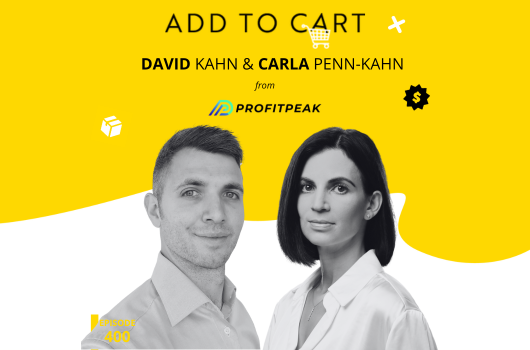
Nathan Bush: Welcome to ADD to Cart, Australia's leading e commerce podcast where we unpack the strategies, stories and ideas that are shaping the fast moving world of online retail. My name is Nathan Bush, otherwise known as Bushy, and I'm your host, joining you from the land of the terrible people here in Brisbane, Australia. And today we are doing something a little bit differently. I hope you are listening to this on your holidays. And I thought, how can I help you? I thought, let's take a look back at some of my favorite conversations from 2024, because it has been jam packed with some of the most inspiring chats, tips and insights that we've had in the five years of doing ADD to cart. So in this episode, we're revisiting five of my standout moments from the past year that I have handpicked. These are conversations that have sparked new ideas for me, maybe shook up the status quo or got me lots of feedback from listeners saying how much they enjoyed these speakers and some of the insights that they gave. Now, before I share with you snippets of these five conversations, I. I want to take a moment to say thank you to all the incredible guests who have shared their stories over the past years, and especially to you, our listeners who have tuned in, sent feedback and helped us grow what has turned into an incredible community, not just a podcast. It really has been an amazing year and we could not do this without you. So thank you. Please keep sending us your feedback and your ideas and your tips and what resonates and what doesn't, don't. This really helps us shape the content that we can bring you throughout the year. All right, let's get into it. Kicking us off is Carla Penkahn and David Kahn from episode 400. This duo gave us some amazing insights into Real Time profitability and resource efficiencies as the brains behind Profit Peak, a software that helps retailers maximize profit and visibility across their channels. I can't think of anyone better than Carla and David to talk about the challenges of navigating tight margins, fluctuating ad costs and unpredictable demand. But not only this, they have been in the business of E commerce, running a number of very successful E commerce businesses that have been bought out before turning their attention to helping other retailers with Profit Peak. In this clip, they reveal how they used real time profitability tracking to turn their own business around, unlocking a 20% uplift in gross profit over four months.
Carla Penkahn: January 2023. We sat down with our development team, so we had three in house developers and we said, how do we feel like we can get back in that control space? So what do we need to feel like we're in control and what do we need to show green arrows or red declining arrows to Dave, who was running the digital marketing to say, we know we're in the right direction and we know what's happening in our business. And so that's when Profit Peak was really born. And so we launched it internally in June 2023 and we just started making incredible gains. And we saw a 20% gross profit uplift between June and October when we sold, which was massive. That's gross profit that feeds into the bottom line of our business. And that was purely by really understanding what was happening in real time and on a profit level rather than a revenue level. And we shared some of the results with friends in E commerce and even other founders that we knew but never had close relationships with. And they said, how do we get access? And when we realized that, we went, we built this for Magento. We now need to build for Shopify because everyone who wants access is on Shopify. And so that's when we approached our competitor, which was Kitchen Warehouse, who had expressed interest in buying us over the years. And we said, hey, waving the white flag. I know we haven't been the most friendly of competitors over the years, but we're ready, you're welcome to take us before Black Friday and see all that sales uplift.
Nathan Bush: And did it happen that quickly?
Carla Penkahn: Yeah, it did. It took us about six weeks to close the deal.
Nathan Bush: That's incredible.
Dan Ferguson: I think one of the key themes
Nathan Bush: that we found was that when we started speaking to other people about it, the common theme was that everyone felt like they were flying blind and everyone
Dan Ferguson: was facing this post Covid uplift in
Nathan Bush: the cost of acquisition of customers and
Dan Ferguson: so once we showed them what we had built internally, immediately they were just
Nathan Bush: completely like, this is the answer we've been looking for. And when you're briefing your developers on that, what are you briefing to them? To create something that doesn't exist already. Why doesn't this already exist in the market?
Carla Penkahn: I think it doesn't exist already in the market because a lot of people solve other people's problems when they're building software. We actually took the approach of we're not looking to solve a marketing problem, we're not looking to solve an inventory problem, we're actually looking to solve a business problem. And so marketing, inventory and customer all forms part of that problem solve. So we mapped out not just marketing data points or inventory data points or customer data points, we mapped out the entire ecosystem of our business and how each of those touch points get us to an understanding of unit economics. And that was ultimately what we needed to know in real time to be confident to keep scaling and investing.
Nathan Bush: And so the idea is built around giving E Commerce business owners full visibility of their profitability at a certain point in time.
Carla Penkahn: At a certain point in time. So the data is updated hourly. So you can go crazy updating your screen every hour to see what's happening in real time. But the key is it's not just showing you the data on an advertising level, it's getting it all the way down to a product level. So you can clearly see on a product level what you have invested to advertise this product, what you have invested to get this product into your customer's hands. So physically shipping the goods to them and then make decisions about. Is this a product that we want to continue investing in and reinventing every season? Or is this a product that perhaps we need to consider exiting and becoming more capital efficient and investing in other products?
Nathan Bush: There is absolutely no doubt that profitability has been a huge theme across e Commerce in 2024. And it's no surprise to us, right? With economic pressures continuing, brands are continuing to double down on tools like Profit Peak to ensure that every dollar counts. Honestly, I can't see it being any different in 2025 as AI powered solutions become more accessible. Next year I imagine we'll see even more brands leveraging this kind of real time tracking to uncover hidden opportunities that they can act on immediately. All right, our next spotlight is on Dan Ferguson, who is the Chief Marketing Officer at Adore Beauty. He joined us on episode 390 this year. What I loved about Dan is that Dan isn't just about marketing products. He's all about understanding people. With a background in psychology, he brings us a unique approach to E commerce that focuses on building connections rather than simple transactions. How was your last E Commerce delivery experience? Did your order arrive on time and undamaged or did it fail to fulfill expectations? If you are a high value brand, just think about the low value experiences in the last mile affecting your reputation. Delivered in full on time or DYFOT if you're in a hurry is a metric that matters for retailers and customers.
Dan Ferguson: Why?
Nathan Bush: Because it shows where the deliveries are happening reliably and on time. Many Aussie retailers are settling for 70 to 80% DYFOT scores and dealing with a lot of unhappy customers. However, after partnering with Deliver in person Experience driven brands like Samsonite, the Party People and July see a consistent 99.6% DYFOT score. Don't settle for less. Make your last mile experience the first thing that customers remember. Learn more@deliverinperson.com. As we all know, adore beauty has become a household name and a big part of that success comes down to Dan's ability to blend behavioral insights with really innovative marketing strategy that resonates with customers on a deeper level. In this part of the chat, Dan shares how he uses dual funnels, one for those quick no fuss transactions and another that builds loyalty over time through content experiences and value driven touch points. Today's Adore Beauty how do you deliver value for your customers? What do you say your differentiator in market is?
Dan Ferguson: Yeah, look, I think we've talked about this notion of beauty done better. I think it's worth distinguishing that it's beauty done better for you, for you, the customer. It's not really a competitive we do beauty better than the rest of them kind of thing. I think it's about helping customers more. It's coming at beauty from their perspective. It's trying to enhance how the beauty experience in retail in Australia is done. It's about accessibility and value and beauty that is right for you. And that might be incredibly individual. I think practically though I have to sum it up because it's important for you Nathan. Like I can hedge my bets and say all sorts of things. An unparalleled beauty range and that concept of beauty is expansive. We deliver expert service industry leading content and I'm really proud of that. It helps our customers buy beauty that is right for them and it's all delivered super fast with extra values and gifts along the way. We tick every box and deliver an incredible kind of total Value proposition.
Nathan Bush: I love that term beauty done better for you. We talked straight off the bat around how beauty and skincare has become so diverse. We talked about us using beauty and skincare products, but you've obviously got all different skin tones and all different types of people using those products. Now has that made your job harder in trying to deliver something for everyone?
Dan Ferguson: Look, I think that innately a lot of audiences are very diverse and beauty is no different as a industry because everyone's got a range of things that they need, but then also whole bunch of different preferences and things that they love and want. So my job is to, I think succinctly communicate the value that adore beauty offers and then also make us really, really salient and really, really accessible. You know, and when they experience us, make that experience so good every time that we can sustain industry leading levels of repeat. The metrics we share around our repeat, we're really proud of. But we're winning that visit, we're winning that transaction each time by being great, by trying to be a better experience and by offering a range that goes everywhere from Dior, Armani, La Roche, Posay, Burt's Bees. It has to cater to a lot of different tastes. When people find the beauty that's right for them with us, they'll keep coming back.
Nathan Bush: What do you mean by salient and accessible? What kind of performance metrics or customer experience do you put on top of that to go we are salient and accessible?
Dan Ferguson: Well, I think brand being top of mind, right, that is probably a larger challenge than accessibility. Accessibility, as you and probably a lot of people that might be listening to this would know, is E commerce is just. You have a plethora of channels, you have all sorts of tools and tricks and tactics to use like remarketing and, and how you identify that customer, reidentify that customer and segment and tailor and then cajole and advocate and so on. You know, there's lots of ways to be accessible. I think salient is to be present in their mind to win more than your fair share of attention beyond salience, a growing affection and relationship to a brand and I kind of look at it like that. It is a relationship, right? And so we have to win that first purchase and that's by being relevant and by being meaningful to them in a moment where they're probably lower in the funnel. We have to then secure a repeat purchase. And as that goes along, we want them to sign up for stuff, we want them to install and download apps, we want them to then start perhaps Attending masterclasses or spending their time reading content or listening to our podcast. And that is just a sign of a deepening relationship. And so there's just these ongoing proof points and moments where you need to win and secure and show value and exchange value with your customer. I hope that's not too airy.
Nathan Bush: No, it makes sense. And I love that you brought the funnel out early because talking about acquiring a customer, retaining a customer is great, but then when you talk about depths of relationships through all the other things that you do, adds a new goal, adds a new level to that customer relationship.
Dan Ferguson: Well, I think so. And there's two kinds of funnels, right? There is the transactional funnel, where, hey, I go, oh, geez, I'm running out of my hyaluronic acid. I really need to buy something. But, you know, probably a month away. So I start vaguely thinking about it, then my tube is pretty much done and I'm starting to squeeze it like a toothpaste thing. And so I go onto a site or a search in Google, and so I'm going down the funnel. That's one funnel. The other funnel is this deepening relationship. You see, when customers come to us and then when those customers have been with us for five years, it's a completely different relationship. There's just a growing amount of trust and a growing amount of channels and a growing amount of connections they have with our brand. And both funnels are important, I think, to keep an eye on and manage and, and encourage. I love that.
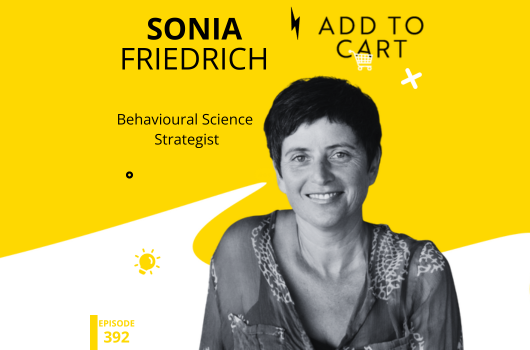
Nathan Bush: I, I think most marketers are like, oh, you've given me another funnel now. I've been lucky enough to have a number of chats with Dan over my time, both on the mic and off the mic. And I really loved in this conversation how Dan's approach aligns with the exploding trend of AI driven personalization that we've had this year. Combining behavioral insights with personalized marketing not only builds stronger relationships, but delivers the seamless customer experience that adore beauty has become known for Tools like conversational commerce and social shopping will likely make this even more dynamic in the year ahead. All right, next up for number three is Sonja Friedrich from episode 392. Sonia specializes in in behavioral economics. That's the why behind the decisions we make when we shop. And it's often the stuff that can't be unlocked easily, doesn't come from spreadsheets or Google Analytics. Sonia has worked with some of the biggest brands out there, including News Corp, Volvo and Nespresso, by helping them understand what really drives Customer decisions. Sonia's an expert at using subtle nudges, encouraging customers in the right direction, using small changes that encourage positive actions like spending more or completing a purchase and avoiding the sludges, those pushy tactics that turn customers away or break their trust. In this clip, in this part of the conversation that we've chosen, Sonja explains how small, clever changes like tweaking how products are displayed or making the checkout process feel effortless can have a massive impact on both sales and customer satisfaction. You're in the heads of customers.
Sonja Friedrich: Yes, well, yeah, and I think we know so much more about the brain. I think we've always had psychology and researchers who are playing in this space and finding out a lot for brands specifically, and now we just know a lot at a deeper level and more importantly, understanding that 95% of human decision making is unconscious, which is sort of a bit of a mind blowing, when you really go, do I only make conscious choices? 5% in my life, and I can honestly say over the last 12 years I've started observing myself, n equals 1 and gone, oh my God, did I just do that? You realize how unconsciously you do so many things and then you start to go, what am I doing in my business then?
Nathan Bush: Yeah, well, give us an example of that to bring it to life. Where do we see behavioural economics in play, especially in retail?
Sonja Friedrich: Oh, sure. I think we see it everywhere, both online and online and online. It's very, very simple across subscription models. And there's three choices and we know the brain takes the path of least effort and 36% more often will choose the one in the middle simply because it's the one in the middle. And every day we might do that with just how we buy a cup of coffee. You know, when we get a takeaway, that order effects and what's anchored are really, really key. So next time you go and buy a coffee and you see the coffee cups and have a look at what order they're in, if there's a larger one at the front and then, you know, the smaller ones, you're likely to spend more money just because you've been anchored to something that's bigger versus even if that cafe flips those coffee cups around and does their own experiment, they might see an actual change in their revenue simply from that. And so to me, I think that's something that we can all relate to every day when we buy our takeaway coffee and you start going, what did I really choose the one I wanted? And how much coffee did I really want to drink and none of us really make that choice. And if you added in another coffee cup size the next day when I went back to do it, I'd probably choose a different one. Even if every day I've been choosing one saying that's how much coffee I like to drink. So when you start observing it in your day to day, you start going, oh, okay, I, I think something happened there and for me still it often the aha moments happen after I've walked away. However, shopping today is a very different experience for me because I have my mobile phone and I'm taking photos of all the nudges I see. So it's fun.
Nathan Bush: I saw you got sucked in by some bamboo straws the other day.
Sonja Friedrich: I did, I did. I put this post on LinkedIn, as you rightly mentioned, and I make these banana smoothies which I love, and, and reuse the straws, the plastic ones that we've had from McDonald's that are about a year old and they go in the dishwasher all the time and I thought it's going to be time for some new ones. And I was, I live in Byron, as you know, and down at the beach cafe and they had a jar there with, there were only seven bamboo straws left in there and I went, oh my gosh, I should try one of these. So obviously the availability of that in my mind was still there. And, and then what kicked in though was I chose one and I thought I better buy three because there's only seven here. And whether it works for me or not, I don't know. I did try it yesterday actually and I went, well, I've just spent $12. Cause they were $4 each and I came down to buy a coffee, you know, so I get nudged and we post rationalise our purchases basically all the time.
Nathan Bush: That makes sense. And you say that 95% of our decision making is unconscious when it comes to ret. Do you find that there is much thought given to how customers make decisions? The behavioural economics behind why customers choose what they choose.
Sonja Friedrich: Look, I think there's different businesses doing it different ways and I think a classic example is one of the most important reasons or the most powerful reasons that determines how much money a customer spends in your shop is based on the dynamic of anchoring, which has got nothing to do with your price or your product. So if I walk into a retail space and there's a $3,000 item as the first thing that I see, or $2,999 and then everything else is, you know, 150, $250. I am more likely to add more money in my basket because something has anchored a figure in my head and that's very easy to play around with this in store. I do know too like this powerful technology which is tracking the behavior of how people move around in stores, you know, and that's used, you know, vcount they do this work in Australia and I certainly know for particularly in say the sale of engagement rings, they're placed in a certain way in a store to bring someone in and how they actually go around the store the same in the supermarket.
Nathan Bush: How does that work with engagement rings?
Sonja Friedrich: Well, because they sell more engagement rings than anything else, then they will understand the like you can actually track, you don't physically see me, but you see an outline of me and you can tell if I'm male, female, my age. And so you can actually track who I am and where I go in the shop. Now you can change the layout of a shop that then physically defaults a direction based on just how your cabinets are set up and actually takes me on a journey. And you know, the big supermarkets do this all the time. You know, we know what's at eye level and what pack design. And in retail space specifically, I think in behavioral science behind the scenes we're seeing implicit response testing used always now in pac design which is to measure unconscious behavior under that 400 millisecond period of time. So I'm making a choice. I don't quite know why, but I can measure that today.
Nathan Bush: And is that the average decision length time, 400 milliseconds.
Sonja Friedrich: The decision time varies based on whether it's a visual, a sound, a smell or a sight. But for the brain to engage with a word, 13 times more energy I think it is to engage with a word than a picture. Which is why you, you want a picture first and then the words and let the picture tell the story, as they say.
Nathan Bush: We got so much amazing feedback after Sonia's episode and it's not a surprise, right? Sonia's focus on ethical nudges and avoiding trust breaking sludges. I don't think it could have been any more timely. With data security and privacy taking center stage in 2024, customers are demanding increasing transparency and respect from brands. And at the same time, brands are really trying to understand how customers think, especially in a cost of living crisis. What does value actually mean to them and how do we actually influence decisions when a lot of it is coming down to price. As we move into 2025 building trust through thoughtful strategies like these. And a little left of center thinking this will be key to reducing friction and driving conversions. All right, next cab off the rank is Adam Boris who joined us on episode 450. Adam is the co founder of who is Elijah? The Australian fragrance brand that is making serious waves both here and overseas. Adam and his wife Raquel definitely don't shy away from bold moves. And in this chat Adam talks through one of his biggest yet. He how they made the decision this year to cut 700 wholesale accounts to focus exclusively on high profile partnerships with retailers like David Jones and Sephora. It's a strategy that's helped who is Elijah take control of their brand while paving the way for international expansion into markets like Germany and the Middle East. In this part of the conversation, Adam shares how they're balancing their direct to consumer growth with a strong brick and mortar presence.
Speaker F: When we first started we were like all wholesale. And then we, we came to be 70% wholesale, 30% online. Covid happened and then we went sort of 50, 50 after Covid when we were back to normal. And last year we had some really big wholesale moments that probably weren't the smartest moves for us like Priceline taking the brand on and a few other bigger decisions like that. But now today we had about 800 wholesale accounts around the world up until about two months ago. Two months ago we cut them all except for the majors. So like David Jones, Sephora, the airports and as we go into new countries, it's our strategy to launch into a new country is with the best retailers. So what we were finding was wholesale was like we can't control the supply of the product and everyone's going through tough times, especially wholesalers, small wholesalers. So they're discounting the brand and they're doing things that we are out of our control. Right. So we had to make a decision to remove them all. And so that clean slate it, what
Nathan Bush: was their response to that? What was the market response? Because you built up such a beautiful brand and high demand with your customers. I can imagine some of those wholesalers will be like, are you serious?
Speaker F: Yeah, look, some of them said, look, we saw this was going to come eventually because they could all see what was happening online and how big it was growing. And look, some of them were a bit, you know, upset and I think that, you know, we just have to in those moments thank them for everything they've helped us do and then try to make it a soft landing for them and move on as best we can, but you know, it's part of it. But when we, yeah, once we did it, it felt like a bit of a relief from us as well because all the internal workings required to manage all that and just turn it all off, like just button it's off. So obviously the revenue comes off with it. But we had to be confident that our online pick up and last year I took on all the advertising myself and really gained that control of Meta and the platforms and TikTok and all the, all the media buying. So it gave us confidence that we could actually sell the product online at scale. So with the confidence of that then we removed the, remove the wholesale accounts. Now we're 75% online revenue and 25% retail revenue.
Nathan Bush: Do you feel that's the right balance?
Speaker F: I feel it's the right balance for the next six months. And it was more of like a cleansing moment for us just to like regroup and like where we're heading with retail is like big global retail. So we're just about to launch into Boots into the uk, that big pharmacy there. We've got distributor meetings, distributor partners in Germany, distributor partners in the Middle east, distributor partners in Asia all locked in. So that's our play is to get into big Sephora, like retail in these new markets, get brand credibility there and then come through with our online, you know, our online plan.
Nathan Bush: So in the new markets, if you're launching with the major retailers, you're obviously getting the foot traffic and the eyeballs and the experience and are you holding back a certain range or certain products to funnel those people towards D2C?
Speaker F: We sort of look at it more like the retailers done all this work to build brand credibility in these places and we want people to like experience the product to its fullest in a new place because we don't like turning on, as you would know, turning on Meta, brand new first day in Germany is. There's not going to be an easy, it's not going to be an easy do, right? So we're all about give, give these guys, showcase them everything and then once we start to find the foot traffic and we start to capture that repeat customer online, It'll be a 6 to 12 month process where we start to build that up. Once we bring in new products, we'll then decide whether we give exclusivity to this retailer or we hold it ourself. And yeah, it's really about just going guns blazing, getting these retailers on board, making them happy, don't be caught in a big contract with them. Try and keep it month to month because eventually then pull back and get the 75% online and 25% retail.
Nathan Bush: I have so much respect for entrepreneurs like Adam and Raquel who take big decisions when times aren't necessarily the easiest. We know 2024 wasn't easy, but by making those big decisions when the market isn't in the best spot, we'll set them up for when it rebounds and really takes off. Their balance between online growth and brick and mortar presence is now set up for the future. While D2C is still growing rapidly, we've seen this year consumers still value the in store experience, especially for products like fragrances where sampling and exposure is key. His story is a great example of how brands can leverage both channels to stay visible and to expand into international markets, which is really really exciting to see. Finally, the last one that I have hand picked from our episodes. This year we are jumping back into episode four, 441 where we hear from Anita Saka, co founder of Hero Packaging and a go to expert in E commerce scaling. One of my favorites, Anita has an amazing ability to take what feels overwhelming like retention strategies or community building and make it really practical, clear and dare I say it, no bullshit. In this clip, Anita breaks down the retention strategies including Tofu, Mofou and bofu that build loyal communities that that not only keep customers coming back but also turn them into advocates for your brand. From winning the block to establishing a leading personal care brand during COVID it's fair to say that the Alive Body team can do anything that they put their mind to. But as the business grew rapidly, third party applications didn't speak to each other. Managing two separate sites for DTC and wholesale got costly and budgets were blowing out. Sounds like the typical Renault really. But as we know, the Alive Body team don't settle for standard Renault. That's why they upgraded to Shopify plus, combining D2C and wholesale stores with a unified backend, creating country specific stores and optimizing the customer experience with Shopify function. They've now got an award winning online home and it's paying off. With three times more customer acquisitions and a 47% increase in conversion rate, it's enough to put a smile on any skeptical judge's face. Check out shopify.com auplus and get in touch with the Aussie Shopify plus team to see how Shopify plus can help you get your technical foundations in order. In this clip she explains the magic bucket concept and the importance of loyalty programs that connect with customers on an Emotional level, you go through stages of tofu, mofu, bofu retention, magic bucket. What's the overarching line through that?
[Voiceover]: So the overarching line is the fact that there is absolutely no success that can't be explained. Okay, so that's the first thing. There's no magic when it comes to E Comm or business success. Everything comes down to a limited amount of strategies that businesses use to grow. And so I've documented every single one of those strategies that I know to be true in the book. But the way that I've categorized it is in top of Funnel, mid Funnel, and bottom of Funnel. And for all of us nerds, we know what that is, right? So we know that top of Funnel is essentially people who are in our target market, never heard of us before, middle of funnel, people who are, like, quite close, they've visited our website, but haven't actually added to cart, and then bottom of funnel, added to cart but not actually purchase. So that's the funnel. It's pretty simple. The two parts that I think we need to focus on customer retention, which I think people do okay at. And then also the last part, which is the Magic Bucket. And the Magic Bucket is essentially how do you get people to keep coming back over and over again? And how do. How do you make them fall in love with your business so much that they talk about it to other people when you're not in the room? No one is 100% loyal to any brand, and I'm fully aware of that. But how do you make them feel like. How do you make them feel guilty for not coming back over and over again? How do you make them feel like they're missing out on something? That's kind of the whole premise of the book. And each strategy is kind of built into that. And then also, you know, I've interviewed some incredible people, like Brittany Saunders from Fate the Label, like Mark Boris, like lskd, like a lot of brands that I think are so successful in this particular area, and we've kind of broken down, like, what they've done to get there.
Nathan Bush: Too. Beautiful. I was about to ask you that was going to be. My next question is what Australian retailers do you think are doing the Magic Bucket really well? You mentioned lskd there.
[Voiceover]: LSKD is, I think, really gold standard. It's very hard to emulate what lskd have done. They've done everything that I want in a brand and more. But I would say that Fate, the label is one of those brands which is a newer brand but is absolutely taking over the world. And there is no brand that isn't watching Britney Saunders and her content and going, I want to do that. They're like, everyone wants to do that. And I can see everyone trying to emulate and copy what she's doing. So I think, you know, the way that she does retention and loyalty and keeping people so excited about her brand through content, which is absolutely free, is such a cool thing. She's kind of like the new age of E Com.
Nathan Bush: Is there any specific types of content or activations that she does? Because I put myself in the lskd shoes. I know Jace fairly well, I think, and even at my gym this morning, it was amazing to look around and go, all the people who used to be wearing Under Armour 12 months ago are now wearing lskd like they've taken over the world. And it's through their mystery boxes, it's through their Tesla giveaways. It's all these little bits of magic around their brand that they've done above and beyond the basics of E commerce that you just have to do. Is there anything that Brittany's done that you like that is just really special at execution?
[Voiceover]: Yeah. So, for example, she'll do content around warehousing. So when she's packing orders, we all do like packing order content, but she'll make it so exciting. She'll jump on trends. And then she, like, once had her a new car and she just put fate, the label, all over it. And when they did that, they did a Grease Lightning video around it as well and got everyone in the warehouse to do a video. It sounds like almost trivial when I say it like that, but the amount of reach she gets, millions of people seeing her stuff all the time, people are talking about her, people are inquiring about, what is this Faith label? If you look at Semrush, which I do all the time, for every brand that I know, I can see the sky spike. How many? The organic search traffic because of her organic content. I think that when you can incorporate what you do every day and make it fun, or if even if your brand personality isn't fun, say, for example, it's like, old and wise, how can you incorporate that into just what you're doing every day? Can you show up? Can you educate? Can you be relatable, can you be funny? You know, how are you showing up every day? And I think that one of the most successful things that brands do that have done really well for themselves is show up everywhere, all the time. So they're always in your face, and I think that is honestly key to people remembering you and buying from you.
Nathan Bush: Anita's emphasis on retention ties in perfectly with the rise of subscription commerce in 2024 and how important it is to keep those acquisition costs under control. Customers now expect tailored experiences that adapt to their preferences over time. Her magic bucket approach is a really great way to create meaningful long term connections with customers that drive growth beyond that first purchase. I'd like to say this is a highlight for Anita throughout the year, but she also released her brilliant book how to Sell Anything Online. Make sure you go grab a copy of that if you haven't already. Now, something that has stood out to me this year is that success isn't about doing everything. It's about doing the right things with focus and intention and whether you've been forced to do this in response to the market or whether you've chosen to be more focused in your approach. Each of our guests have shared a unique piece of this puzzle that can help you on that journey, which will no doubt continue into 2025. Here's some key things from those conversations to keep keep in mind for next year. If you're looking for more focus and intention, I think each make up a great piece of that puzzle. Number one Profitability. First, Carla and David showed us the power of real time data. By tracking profitability at the skew level, they prove that smart resource allocation can transform your bottom line and unlock growth. Dual Funnels Dan broke down the magic of dual funnels. Quick transactions might win the day, especially during those times such as Black Friday, but long term loyalty is where the real growth happens. It's about knowing which is which and balancing both. Number three Behavioral nudges. Sonja highlighted the power of behavioral nudges and the harm of sludges, showing how small tweaks those 1 percenters, like repositioning products or simplifying checkout, can boost sales and satisfaction while avoiding tax tactics that erode trust. And number four, strategic cuts. Adam taught us the art of simplifying to scale, even if it means making those big hard decisions. By cutting hundreds of wholesale accounts and focusing on high value partnerships, he proved that less can truly be more, strengthening control and positioning brands for global success. And number five, a retention focus. Anita reminded us that lawyer loyalty is built, not bought. It's not about flashy programs or gimmicks. It's about delivering consistent value and creating authentic connections with your customers. Thank you so much for joining us on ADD to CART this year. I hope you are having a brilliant holiday. A bit of time out if any of these clips caught your fancy, make sure you head back over to add to cart.com and check out the full episodes on our website. And don't forget to subscribe to our newsletter for even more insights which will be coming to you weekly when we come back in late January and they will help you build and grow your business in 2025. You can subscribe for free over at add to cart.com au forward slash subscribe. We'll be back next week with our most listened to episodes of 2025 where we will count down from the stats who the top 55 episodes were. Make sure you tune in for that. But for now I hope you enjoyed my top five picks. Enjoy your holidays. Before you go, we'd love to invite you to join our free e commerce learning platform Add to Cart Campus. Meet other professionals and learn from e commerce experts to take your business and your e commerce career to the next level. Register to join Campus and add to cart.com
Dan Ferguson: now.
Nathan Bush: If you enjoyed today's episode, make sure you share it with a friend or a colleague. Or even better, leave us a review on Spotify or Apple. It really makes a difference.