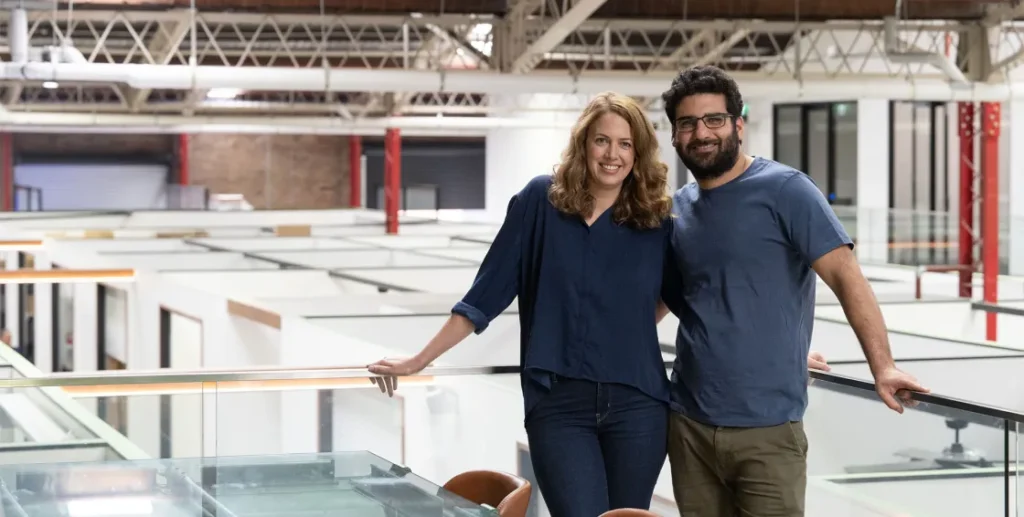
Talea Bader: We're in discussions with a $700 million business that moved from a massive loss making business to making tens of millions in profit purely through better inventory management. If you can serve say 90% of your customers within same day delivery, you should have a substantially higher conversion rate. If you are starting today, do your own pick and pack first. Feel the pain and be as close as possible to your customer. The bigger you are, the slower you.
Nathan Bush: Hello there and welcome back to ADD to cart. My name is Nathan Bush joining you from the land of the Turrble people right here in Brisbane, Australia. Now picture this. It's a warehouse that doesn't wait to
Nathan Bush: be told what to do.
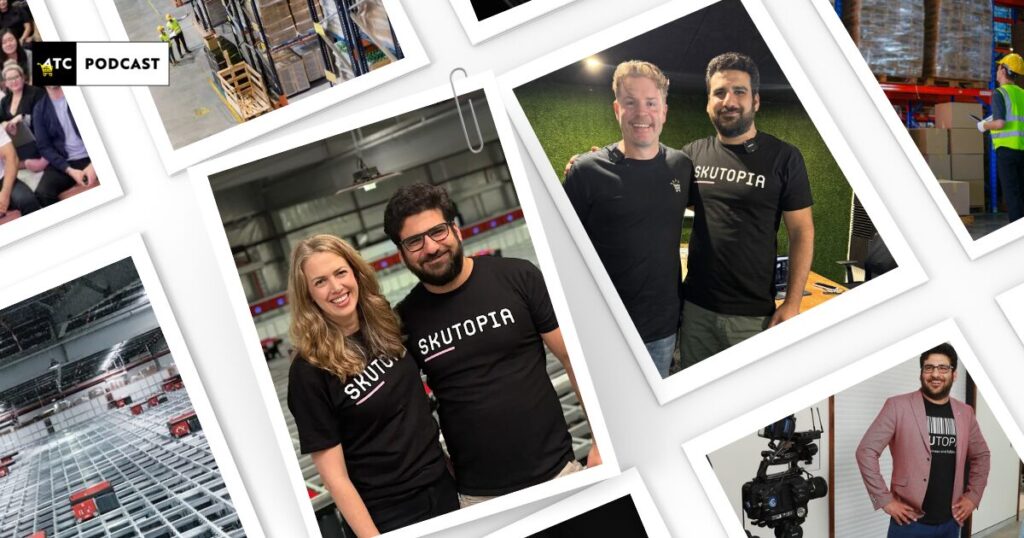
Nathan Bush: It's one that already knows where every Skew is sitting, which carrier will get it to your door faster and cheaper, and whether you've already got too much of something before you even think about reordering. And what if that warehouse could bypass your storefront entirely? Talking directly to the AI agent that's about to buy something on your behalf. That's not a pitch for Amazon. That's what Talia Beta is building right now with right here in Australia. Talia is the co founder and MD of Workspaces, the E Commerce Co working network that's had 150e commerce brands, that's had 350 brands under its roof, is now leading Skewtopia, a fulfillment operation that's been building its own AI and robotics
Nathan Bush: IP for eight years.
Nathan Bush: Not licensing it, building it. At the heart of what they are building is called the Robotic Brain, a proprietary system that gives them 100% control over every robot in their facilities and they have six different types of robots
Nathan Bush: that they work with.
Nathan Bush: We've never had this conversation before. For this episode we are sitting down in the Skewtopia offices to have this chat and I think after this one you're going to come away with a serious realization of where fulfillment is actually heading. Specifically what it means when agentic AI starts bypassing the shopping cart altogether. We also hear from Thalia why the most sophisticated businesses often have the messiest inventory data and how it holds them back. And Talia tells us what he calls the golden triangle of fulfillment that every operator should be measuring against. Thanks again as always to our friends at Shopify and Klaviyo for bringing these episodes to you on Add to cart. We genuinely couldn't keep bringing you these conversations without their support.
Nathan Bush: We are super grateful to to have them on board.
Nathan Bush: Here's Talia Bader, co founder of Skewtopia.
Nathan Bush: Talia, welcome to add to cart.
Talea Bader: Thanks for having me.
Nathan Bush: So good to be in your offices and the offices of so many e commerce brands here at Workspace.
Talea Bader: Thanks for visiting us. Very, very happy to have you here.
Nathan Bush: Well, we've got to be honest with our audience. We recorded how was this two years ago, three years ago. It was a long time ago, very long time ago and we had technical troubles. I think there was a slight emergency going on somewhere in the building because you had team coming in and out and we said let's rerecord and come back to it. So I'm glad we've got to do it in person in your spaces. So we're going to talk about Skewtopia and we're going to talk about WorkIt but firstly I just want to talk about WorkIt because we're in the office, it's a co working space and just walking around. We just had Justin from chief in here as well. He's got an office in here. How do the two play together? Give me the overview on Skewtopia and Work it and how they come together in the same space.
Talea Bader: So give you the background maybe when we started Warkit, before starting Warkit we thought about. Emily and I come from a consulting background, so strategy and commercial finance background. We work for large multinational businesses and we said we want to use our skills to help SMBs rather than large corporates. So we came up with the walkit idea through looking into WeWork. We liked the WeWork model from having many businesses under one roof.
Nathan Bush: Is this during the up and up and up of WeWork?
Talea Bader: Yeah, that's before the WeWork downhill journey. When we started looking at the financial model of WeWork through the research phase, they were renting spaces in the CBD areas. 500 bucks a square meter, capex of 8,000 bucks a square meter. Amazing offices and they would charge Our customer about 1000 something dollars per membership fee a month. When you put that in a spreadsheet, it just doesn't work. So we said we like the business but we can maybe do it better financially in a way where we go out of the CBD to a place like Alexandria, sell very close proximity to the cbd, we take a very large warehouse and we convert it into, you know, not 8,000 bucks a square meter capex but maybe a thousand or less. 10% of WeWork's capex and still make nice offices and a great environment for people to work from and pass on the savings to our member. 500 bucks a membership fee rather than a Thousand dollar membership fee per month worked really well on the spreadsheet. We launched the first hub and that went super well. We filled up in a few months.
Nathan Bush: Where was that one?
Talea Bader: Alexandria as well. So Power Avenue Alexandria. So that worked really well. And through that hub we learned that the warehouse component had a massive interest from E commerce businesses. So we started diving deeper into E commerce and we figured out that there's about 80, 90,000 back then in 2018, about 80, 90,000 e commerce businesses in Australia today there's more than 250,000. So we saw there's an opportunity here and then we started the first E commerce co working hub. So we dedicated the second hub to be purely E comm hub and that worked out super well as well. And that was around the corner in Mandible Street. And then we continued and launched this, our third hub. So at some point we had about 350 e com businesses sitting under our roofs, which is awesome. Emily and I were very at the early stages, were very, very involved in the sales, marketing process and even community management and so on. So very, very heavily involved with our customers. Pretty much the majority of our merchants.
Nathan Bush: I bet you saw some crazy success stories out of those 350 merchants, especially over that time period. From 2018 onwards, coming through Covid and
Talea Bader: the explosion, the first scary bit of COVID and then the explosion from week four, five and onwards. Yes, absolutely. That was a very, very challenging and insightful period at the same time. Yeah, we have amazing businesses still operating from our hubs and we've seen a lot of growth. But through these hubs and through the interaction with our members, that's where everyone said that the biggest pain point was fulfillment, specifically when they reach 50 to 100 orders a day. Initially we didn't want to start a Skootopia fulfillment business. So we said we'll go out and help you find the best supplier. So yeah, so that's the beginning of Scootopia, if you like.
Nathan Bush: Gotcha.
Talea Bader: So work.
Nathan Bush: It led us to Skewtopia and now Skewtopia. We were chatting beforehand. Skutopia is where you're spending the majority of your time and it's been described as the brain of future logistics. It's a big statement. What does that mean?
Talea Bader: When we went out to. I'll continue the story. Maybe that gives a good idea of what that means. When we went out to look for a partner for our customers to do their fulfillment, before we decided that we want to start Skootopia, we did a lot of Tours in many warehouses. We basically started with Multinational players, Tier 1 if you like, toured their facilities and then we went down to mid tier, local players, all the way down to the warehouse and a man on a truck type operation. That's very insightful at this point.
Nathan Bush: Are you passionate about warehouses at this point?
Talea Bader: I started to get. I started to formulate a vision and the reason why. My background is commercial finance and strategy, but I ran digital and tech teams for large global businesses. So I had very good understanding about what software can bring to an industry about and what specifically an intelligent software can bring to an industry. And what I saw in the warehouses was very, very different. Specifically back then the multinationals didn't have any automations and didn't have any intelligent software. You're talking about the warehouse racks and a lot of them running on a tier 1 WMS. And this tier 1 WMS doesn't have any intelligence. It's functional but there's no smarts to it. And then you go down to the tier two and tier three, it's even a lot less sophisticated. And the whole business model wasn't that sophisticated either. The whole business model haven't evolved throughout the years.
Nathan Bush: And when you're talking intelligence from a warehouse perspective, what are the. And we'll continue the story, but I think it's just important when you're looking at an intelligent warehouse, what are we thinking? Is it pick pack times, is it stock locations, inventory counts? What makes a warehouse intelligent?
Talea Bader: How do you measure an operation? A warehouse operation, a fulfillment operation, we call it the golden triangle. So the speed super important then quality. If you buy SKU number one am I giving you SKU number one and how often at what probability I going to get you SKU number one and then price, at what value do I give it to my customers? So speed, quality and price, these are the main things to measure a fulfillment operation on. Now the intelligence. And you can achieve that with a very manual warehouse or an automated warehouse. And intelligence. What intelligence got us at Scootopia is actually hitting the golden triangle across the three pieces. Typically if you want high speed or high quality, it comes at a higher price. And introducing automation and introducing intelligence that controlled automation, what it did to us, it's basically gave us super high speed at super high quality. And when we talk about our quality rates, we want to go into the five nines. 99.999% and from a price perspective we offer that to our merchants, SMBs, mid tier or enterprise at a super cost effective price and scalable so for us intelligence, basically we give our merchants a product that is substantially better than Amazon infrastructure from a robotic infrastructure and also software at a price per order rather than having to go and deploy your own infrastructure. That's the whole vision and mission of our business and we achieve that through intelligence.
Nathan Bush: What do you mean price per order?
Talea Bader: So if you are a large enterprise business, you have an option to go and go build it yourself. And today if you're going to build it yourself, you need to do it with automation, right? And automation, the hardest bit of automation is not buying the robots and someone installing these robots for you. The hardest bit of automation is actually the software that runs it. And an intelligent software gets your automation to sweat a lot more and to achieve a lot more with the same number of robots, if you like. Now if you're an enterprise business, you can go and try to do it yourself and spend hundreds of millions trying to do that. Or you come to an operator like us that have already a network of fulfillment network across many, many cities and instead of paying any CapEx, you basically will get you that at a price from $3.95 an order. So you don't need to spend any capex. You can come into a network that is super intelligent and that is growing at a price per order rather than and going and deploying a massive capex and waiting for your own facility to come up.
Nathan Bush: So is there a sweet spot for you when you're speaking to e commerce businesses around warehousing and fulfillment for them? Is there a sweet spot that you look at?
Talea Bader: So when we started our business, we started with purely SMBs and that was very intentional. We even initially we started with SMBs from our network, from Orkit, because we were testing our product, right? So it's first customers. One of our biggest values is being customer obsessed, saying it in a political way, don't fuck with the customer. If I can give you, if I
Nathan Bush: should put that on the wall instead, that would cut through.
Talea Bader: I know if we can make your operation substantially better than what you're doing it today, we don't, we're not going to sell you our product. And that drives a lot of our decision making across the business. So initially we started with first of all virtual testing of our software and of our robots and made sure virtually things work. And we could do that because we had access to the latest technology and we built the latest tech. In fact, to do this testing once we did it virtually we onboarded SMBs from our network, from the WorkIt network and we were very, very honest about where we at and that we testing this product and we were in touch with them daily. Then we onboarded other SMBs externally. Once we had a quite substantial number of SMBs, we started onboarding mid tier which is like 50 to $100 million businesses. And now we're talking to the billion dollar plus businesses. So from size perspective we cater from SMB all the way to enterprise. Specifically with the introduction of our Melbourne facility, we're talking about a facility that substantial in size and capacity and capabilities on a global level, not only just from an Australian point of view.
Nathan Bush: So Melbourne will be your most advanced one.
Talea Bader: Melbourne will be the most advanced, largest and Melbourne facility will be able to do 500,000 orders a day. So I would like someone to an enterprise business to come say that's not enough for us. I'd love to hear that. To be able to do both B2B and B2C. We already do B2B and B2C across Sydney as well. But also from a storage capacity perspective, we can cater for many large merchants that are fast growing merchants and have a lot more automations as well. So we already developed the software, it's been tested here in the Sydney facility. It acts as an intelligent network as well, which is a. There aren't many companies around the world that have true network. Amazon is one of them and we are one of them. And there aren't many more companies around the world that can tell you that we operate a true intelligent network.
Nathan Bush: And so by true intelligent network are you talking that you've got multiple warehouses and you have the intelligent data and systems underneath to connect them as well as your carrier partners?
Talea Bader: Correct. And also to give you an example, we just did a QBR recently with quarterly Business Review with Kat from Autodrop. That's someone that you interviewed a few months ago or a year ago maybe?
Nathan Bush: A few years ago. She's got too big.
Talea Bader: She's amazing for us now. She's amazing. I'm sure she'll be happy to spend more time with you.
Nathan Bush: If I twist her arm over a glass of wine, we'll be fine. Yeah.
Talea Bader: So we just had a QBR with her. She's one of our merchants. Started with us from very early on when she started Waterdrop here in Australia and been growing with us quite substantially year on year. And we love having her as a merchant. Part of the quarterly business review. We were going through the data analytics of the benefit of Hare going into a network of warehousing rather than purely staying in our Sydney facility. And for someone like hare that send 40% of hare orders to Victoria, Tasmania, South Australia, which is from last mile perspective you start thinking about local, near state, distant state and so on the numbers basically she would be saving instead of being in one facility, she will be across both facilities. And what that means to her is $3 cheaper per order for 40% of her orders. And time to delivery goes down from 4.3 days to 1.3 days for these specific states from click to delivery but substantially more cost effective and a lot faster for the end consumer. So you're delighting your customers at a cheaper price. And even from a storage perspective the fulfillment big pack storage pricing would be a lot more cost effective for there by having access to a network of facilities. So basically if you think about the model, why, why do you go to Amazon and buy from Amazon and why do all of us pretty much we all do that, right? You go to Amazon and buy from Amazon because you have a very wide breadth of SKUs. But you also know that when you hit that button you're going to get it today or tomorrow. So by getting into an intelligent network we enable you to do to give Amazon like services to your customers. And they now know if they best in New South Wales or Victoria or Tasmania or South Australia by hitting that button they're most likely going to get it by tomorrow.
Nathan Bush: Yeah, what I like about this is that we obviously saw the shipit state of shipping report this year and it's the same thing that came through from last year is that people are actually shipping okay speeds on average. But averages can lie. So for example average two day shipping is what they found. But we're still promising five days. So if we're promising five days, we're losing sales of customers we don't know. So it's that reliability knowing that not an average of two days, but the majority of orders are that time period. So we can actually make those promises to customers confidently 100%.
Talea Bader: So if you can serve say 90% of your customers within same day delivery. So at the moment if someone is best in our network, Greater Sydney and Greater Melbourne, we offer same same day delivery at an I believe $11.50 for same day delivery for Greater Sydney and Greater Melbourne, which is super cost effective. The second we launch our Brisbane facility and our Perth facility, that's pretty much 90% of Australians available to you within same day delivery. What that means to you is a lot higher conversion rate because if you go to that shopping cart you put your address and our intelligent system knows that because we have this inventory in these different facilities based on your address and we know what's the capability of our warehouse today, can we get this order out and send the delivery? So when we promise you something, there's a very high chance, five nines, 99.99% that we're going to deliver on that promise, then you can, you should have a substantially higher conversion rate. And that's how we help many businesses grow from 50 million to 100 million or from 100 million to 200 million. Obviously, the product needs to be amazing and you need to have an amazing.
Nathan Bush: All the success.
Talea Bader: The product needs to be amazing and you need to have a good marketing and branding capabilities. But we make it the way logistics. Actually we're not a supplier. Skitopia is not a supplier. We are a growth partner. So we will never be your bottleneck and with our growing capabilities, we should be your accelerator.
Nathan Bush: So I'm going to be a bit of a protagonist here. We've obviously done the Amazon comparison. I think that's a fair comparison. Obviously a very lofty standard to go after because they're on a global scale. I know that you've raised some money, I understand about $38 million, which is huge.
Nathan Bush: But why?
Nathan Bush: It's obviously a very capital intensive exercise. Yeah, the iroll says it all. What has convinced you that you can do this better than say someone like Atoll or an Australia Post who have all the capital in the world behind them? What's going to be your difference to them?
Talea Bader: I guess if we go back to the early days when we went out to these large global fulfillment providers and local, very large fulfillment providers and we saw the way they operate and the way they work and specifically having my background in digital and tech, but not only that, having my background working for very large multinational companies, very, very well versed with sea level and with how boards operate, that gave me a great insight of what you can achieve by being nimble and by being driven by vision and innovation and very fast execution without being bugged by the politics and by different agendas of different board members and different investors. So basically, the bigger you are, the slower you are. And that's a big part of why Emily and I have this vision to always own the majority of this business. And the raise we involved both equity and debt. And one of the main reasons for that is, you know, this is the business of our lives. We're not here building something to flip. We're very, very passionate about what we're doing and we want to make sure that we build fast, we're execution driven. So that's one piece and then the second piece. Working in digital and tech and large businesses, you start understanding that code is actually debt, right? So when you have legacy systems and when you have very large business that's already operating on a legacy system, it's a lot harder to actually go and build something from scratch or to renew that system and refresh that system. So building from having a startup and building from scratch, you actually have a lot better chance, specifically if you base your architecture and base your whole technology in the latest and greatest from day one. To give you an example, we started developing AI eight years ago, not only in the hype today. So the back end of the whole Scootopia model is a very large statistical model, machine learning model where we start, pretty much we start picking an order before you even click buy on the shopping cart. So basically, I'll explain.
Nathan Bush: Underwear brand Nala celebrates difference. Different bodies, different lifestyles, different personalities. That's exactly why they offer more than 80 products across a huge range of sizes, shapes, fabrics and fits. But celebrating difference creates a challenge because you can't talk to everyone the same way and expect it to land. Personalization isn't optional at nala. It is core to their mission. From day one, NALA built their growth engine on Klaviyo. By using rich customer data from their online fit library, purchase history and loyalty program, NALA can segment properly launch products to the right people and notify high intent customers. The moment something comes back in stock, the results, they speak for themselves. Six consecutive quarters of revenue growth 109 times ROI from Klaviyo. And in Q1 last year, 24% of total revenue revenue was attributed to Klaviyo. When your brand celebrates difference, your marketing should too. If you want to turn personalization into a serious growth lever, head to klaviyo.com au and see how brands like NALA are scaling smart.
Talea Bader: Basically, the main thing is a forecast. So we forecast how much of this specific SKU gonna sell, where. And based on this forecast, we start surfacing things to the top of the sku. Now, if we get our forecast right, perfect. We started the picking process a lot earlier, a lot quicker. And when you click buy, we pick super quick because it's already near the robots at the top. The robots just take it and pass it through, right? And it's a massive think about a very large high cube. To give you an example, the QBR with Kat from Motordrop. Again, she was. I was watching your system and an order would come through. Someone clicked by within 30 minutes, it's picked, packed, ready for dispatch and she can follow the process through our system. She's like, I was talking to my team, I think, is this real?
Nathan Bush: So is this just, just so I summarize it, right? So if I'm Kat from Waterdrop, I've got a forecast that I'm going to sell. I'm going to make up numbers here. 150 pink water bottles, it looks like they will shift today. Most of the orders come through. In the morning we'll get 150 bottles ready to go that are surface ready for the bots.
Talea Bader: So CAT doesn't know about our forecast and our system forecast and how our system operates. Based on our experience with cat, based on the data and based on our experience with merchants and based on the weather, based on many different factors, about 20 different factors, we create a forecast internally of what is going to be sold today across all of our merchants and we surface these up the picking line. So that's how we start the day. And then when order start coming through or orders through the night that came through, we start picking. But also based on this forecast, we decide if water drop is sending me now a container. Which SKUs do I put first? Because I know my system knows exactly how many items at the SKU level I have in every location, how many going to be sold today, how many are going to be sold tomorrow, you know, days on hand and that structures as well my receiving and put away process and structure, basically the whole thing, but also structure. What SLA do I offer at the shopping cart? Do I allow to offer same day delivery or do we turn off same delivery to same day delivery today because she doesn't have these SKUs and so on. So that's when it goes back to the intelligence level and building this very large statistical model in the back end, that's all of that. That's pretty much where the money was spent. The money is not buying the robots. Buying the robot is cheap and easy. It's not cheap, but it's the easy bit.
Nathan Bush: I love buying the robot.
Talea Bader: It's easy. Yeah, it's the easy bit. Like going shopping, right? You're looking at. But then it's the intelligence that moves the robots tells the robot to accelerate, decelerate, move left, move right. How do you move many different types of robots and get them to do the receiving? Put away, pick back, dispatch.
Nathan Bush: Yes, okay, storage. And you mentioned there that you started with AI built into the system eight years ago. Obviously, a lot has changed since then.
Talea Bader: Every day.
Nathan Bush: Every day.
Talea Bader: A lot is changing daily at the moment. Yeah, absolutely.
Nathan Bush: Exactly. So how do you do this from a system perspective and updating the platform and knowing what you take on? Because I can imagine that you've got a million ideas of how you can keep improving the system, but it's a big complex chain. How do you have some discipline around your AI approach?
Talea Bader: We have a very clear vision of what we're building and we know where we are and we know where we need to be. So our biggest. We have three main IPs in our system. One is the robotics brain. We call it the robotics brain is basically a piece of software that we built where we can plug in any type of robots and we give this intelligence to the robots. We get them to work together to do a specific function. So the Melbourne, the Sydney facility has four different types of robots. Melbourne facility will have at least six different types of robots. Now, the robotic brain is one of our biggest IPs, and that gives us 100% control on our robots, which is very, very different to any other operator globally other than Amazon. So we're pretty much one of the only global players that have 100% control on our robots. If you think about logistics, 10 years from now, it's probably going to be done fully by robots. The question that we need to ask ourselves as a nation, who controls these robots? Who can press that button to stop most robots in our nation? And that's where the sovereignty comes in play, and that's. Skootopia is a sovereign, critical infrastructure player which is very, very important to us. And we own the end to end and we operate it fully in Australia. 100% of our engineers are based here in Australia.
Nathan Bush: Have you given your robot brain a name like Grok or Ford?
Talea Bader: We're currently working on naming. At the moment. There are numbers, but there is some campaign, I believe, from our marketing team that's working on naming the robots.
Nathan Bush: No one's named one Bushy yet, so
Talea Bader: I'm just saying maybe that's one of the names.
Nathan Bush: Bushy.
Talea Bader: Here you go.
Nathan Bush: All right, that's one of the.
Talea Bader: So One of our IPs is the robotic brain. So today it takes us about six to eight weeks to integrate the new robots into the system. We're using AI to make that a day. So that's one of the targets for my, the team, the specific team that runs that specific ip. Then you target to improve the system, to make integrating new robot a day rather than six to eight Weeks. The second IP that we have is our network domain, fulfillment network domain. And that's what I was talking about earlier about having an intelligent network that runs like a network, it's not separate facilities. So this is how you decide where to put stock, how to replenish and so on. The third one is the large statistical model that sits in the back end and control the whole thing.
Nathan Bush: Easy.
Talea Bader: Our roadmap is basically continuing. Going back to your question, our vision is to continue building on these IPs and continue improving these IPs and making things faster. But we do have very, very clear roadmap about what everyone is doing for the coming 12 months. And it could change if we onboard. If we sign up a merchant that has different needs that we don't have today, that means that we can cater for that and change the roadmap to cater for these needs.
Nathan Bush: Yeah. And is that where you see the majority of the skewtopia value or the valuation is in those three IP areas?
Talea Bader: Yeah. That's why our business has been valued the way it was and today it should be quite a few times higher just because of the improvement in these IPs and also the growth of the business. 100%.
Nathan Bush: Yeah. Brilliant. Now, you mentioned there six different types of robots in Melbourne. I think most of us in E commerce will be very familiar with the bots that we see in all the Amazon videos and other logistics videos of the big round ones that go underneath pallets, lift them up and move them around. Are they like the simpletons of the robot world?
Talea Bader: So if you think about a warehouse, you need to receive products, you need to sort products, you need to put away, you need to store, you need to retrieve, you need to pick, you need to pack, you need to dispatch. So we trying to automate a lot of the pieces of this journey using many different robots to work together, controlled by our data system and controlled by our robotic brain to work together to achieve these steps that I just mentioned. So we're introducing over here in Sydney, we resolved a few of these and in Melbourne we're going even deeper and resolving more of these steps to use more robots. At the same time, we're hiring a lot more people as well. So using robot doesn't mean as a business, AI and robotics is accelerating for us, specifically as a business is accelerating employment, but also making us reskill and upskill our teams. So very soon we will be introducing more roles into servicing these robots and so upskilling our teams to start to be more technical, if you like. To service these robots, to make sure these robots are doing what they're supposed to do. We haven't came up with the name of the role yet, but it's a technical role that you can upscale a lot of warehouse operator to these type of roles, which is very exciting.
Nathan Bush: Of those six robots, you surely must have a favorite child. Is there a robot in there that most of us wouldn't even know is doing a job in warehousing fulfillment?
Talea Bader: I'm not going to name brands over here, but we do have a really good storage and retrieval robotics. We tested an amazing picking robot that did a great job as well. I don't have a favorite child. I always tell my kids I love you equally.
Nathan Bush: Depending on what dad is. Tell me about the future of robotics in pick and packing. Do you think we'll get to a point where they're picking out individual items? You know, it's really autonomous. Or do you think the humans will always play a role in that pick pack process?
Talea Bader: Can I talk about the future of E commerce at all completely together with the robotics? Because I think, well, based on the new technologies that are coming today and the improvement in AI, no one knows really where things are going to get. We all trying to guess. And as a business, we're taking, we're making bets. We think it's gonna go there. So we're making the bets that enables us to continue operating as a business and thrive if it does go there. To give you an example from a shopping cart perspective, from even how do you buy? We believe the future of buying online will be moving faster towards agentic.
Nathan Bush: Yep.
Talea Bader: So you'll be using systems like OpenClo until OpenClo buy me a black T shirt for my Saturday party. And OpenClo already has your size. OpenClo already knows Claude or Gemini or OpenAI. They already know a lot about you and about your personality and they know the deadline for the party and they have your credit card details and they can go and buy that product for you from either a marketplace or they're creating their own marketplaces within their products. Right. So what does that mean to us as a fulfillment partner? What I love about our business is there's no conflict of interest ever between me and my customers, my merchants. I promise never to own a share in an E. Com business or in a retail business. Not directly, nor via a fund or a trust or whatever, any other structure. Because I never want to have conflict of interest. If I'm giving you advice, we want it to be a pure advice.
Nathan Bush: I thought it was because there's not enough money in E commerce business.
Talea Bader: No, there's a lot. It's very hard to be honest. We see a lot of successful and we know when we see something good.
Nathan Bush: I like that. No conflict.
Talea Bader: Yeah. So we don't want that conflict of interest. So basically what that means, every business we have, we want them to grow because as Qtopia, that's our biggest part of growth. Right. Growing with our merchants. So what that means to us as a fulfillment operation, how do we enable this growth if there's a transition to this agentix space? So basically we started building, we have a product catalog that would be serving into directly into Gemini, into OpenAI. So basically by connecting, by being a Skootopia merchant, by being a Skootopia customer, we take your product catalog from Shopify, from WooCommerce, Magento, whatever that is, and we will be serving it into these agentic players. And we're creating already this relationship with these agents by saying if we promise that we're going to deliver by Saturday, it's a five nines that we're going to deliver by Saturday.
Nathan Bush: So you're putting your hand up to the agents to say, hey, we've got all this product, you can skip the storefront totally because we've got it right
Talea Bader: here ready to go 100% and it's a 59 is going to be the right Skus delivered at the right time for when you need it.
Nathan Bush: That's a big idea.
Talea Bader: Hopefully that's again we're betting over here because if it doesn't transition into agenting and people continue doing what they're doing and you're only hitting the half a percent of volume through agentic, then we're wasting our time there.
Nathan Bush: But you still need that storefront, whether it's Shopify or whatever for the product catalog.
Talea Bader: Yeah. Well, we now dealing with a lot of enterprise merchants and what we're learning about enterprise, actually they need the most help because they're actually running on antiquated systems and they don't have a lot of information about their product catalog. So our product catalog is dual sync, so it can sync up to Shopify or down from Shopify and so on. So for what we're seeing, which has been a bit surprising, enterprise actually need a lot more help. But it's, if you think about it, it's logical as well. They didn't have Shopify 20 years ago. Right. And they didn't have any other modern sales channel back then. So they had to build everything from scratch.
Nathan Bush: That's really interesting. I love that idea of being able to say exactly what we've got in the warehouse and when it can be delivered to your exact doorstep. So on the other side of that you mentioned there no conflict of interest with your merchants and that's an area you never want to play with. In terms of fulfillment partners, I could bet that there must have been times where you attempted to do your own fulfillment.
Talea Bader: What do you mean?
Nathan Bush: Sorry.
Talea Bader: As in be a carrier ourselves doing the last mile? Yeah, yeah, we tried that and we didn't like it. So I think what we learned from that journey was that rather create the rules and set the SLAs and making sure our courier partners do their job in the right way. So we have more than 35 delivery partners active on our platform for different SLAs. If it's same day delivery, next day, guarantee, standard delivery, whatever that is. And we make sure our data analytics basically creates this recommendations for our merchants to make sure we actually rewarding the best ones that give you the best service at the best price. For example, because we have all the data about from when they pick the item till when it was delivered and that's from timeframe but also cost and so on. We can tell our merchants, you know, if you use just giving an example, if you use couriers please to deliver to the Northern Beaches it will be delivered a lot faster than Outpost and it's actually a dollar cheaper because the franchisee of the Northern Beaches is amazing for curious police where in other areas you need to use RMX or no you need to use Kurs please or you need to use ospos. So having this smart recommendation engine and giving that decision making capability to our merchants to actually optimize their last mile route is quite important. So we're doing a lot of, a lot of this work on. We are releasing very soon a new merchant analytics platform that will hopefully with the objective of making running and retail business a lot easier for merchants. Hopefully that will make their life a lot a lot easier. It's quite super intelligent and gives you a lot of data specifically about inventory management. You'd be shocked. One of the hardest thing for people and for retailers is managing the understanding their inventory. And a lot of the time they don't even understand that this is one of the most important things for their cash flow. So we're doing a lot of work and we are about to release something for our merchants to actually help them. What is the golden standard of inventory management and to automate the Whole flow of inventory management. We're very, very excited about that space.
Nathan Bush: I love that because we hear it all the time from the conversations you're having. Where are you seeing people will go wrong with inventory management?
Talea Bader: I think basically people don't understand the impact of inventory in their P and L and they don't understand that this is one of the most important things where you can actually make a change business from being loss making to a profitable business. So we're in discussions with a $700 million business that moved from a massive loss making business to making substantial, I can't say numbers obviously, but many millions, tens of millions in profit purely through better inventory management and moving into having weeks on hand in inventory rather than months. So we built basically through our experience working with many different retailers, both B2B, B2C, omnichannel retailers and so on. We figured out what is the golden standard of inventory management and now we systemized that and we're basically about to offer that to everyone to have this as the guideline. So basically don't order too much inventory. If you have already 10 weeks of inventory of a specific item, you shouldn't be ordering more. Or what is the specific level of inventory for your industry, for your category that you need to be holding in your warehouses and how do you distribute that and where does this inventory sit in a long term storage into a big phase. How do we make sure that you're not paying too much storage for this inventory as well and so on.
Nathan Bush: And are you finding that inventory reordering process? Are many brands doing it in an automated way or is it still very manual?
Talea Bader: Super manual spreadsheet based and driven by buyers and driven by ego and never by science. So that's basically what we are about to release to change this.
Nathan Bush: And would that be automated?
Talea Bader: 100% automated? Well, a buyer still need to do the buying but you can't ignore it anymore. If I'm telling you you have X number of dollars dead cash and this is the number and everyone we're democratizing access to the data as well. If the founders or the manage of this business want democratized access to the data, we can give access to data at a user level. If it's an administrator or finance or whatever that is across our business. For example, we release this product for our team internally and for our business and we have full democracy on the data. Anyone can view anything at any time.
Nathan Bush: So in our community we've got all sorts of operators for exactly what you said before from smas, all the way through to enterprise. Talking about E Comm and we had a great example. Pauly, who's just started up his own party supply store for the first time.
Talea Bader: Yay.
Nathan Bush: Literally posted into the community his setup in the garage. Two racks from Super Cheap Auto, putting it in there ready to go. And then we've got all the way up to your enterprise merchants getting information there from your experience. I'm really just keen to unpack your experience when it comes to setting up Peak Pack and fulfillment. What are your top tips for merchants who might be listening to Think where are the common improvements that I should have? Like if you're, if you're going into a client for the first time, where are you looking for the improvements that they can be making?
Nathan Bush: Ever dreamed of turning a weekend passion into a thriving business? Girls with Gems did exactly that. What started as a mother daughter duo hosting jewelry parties at home is now a bustling boutique and a booming online store. They've helped hundreds of women feel confident, stylish and part of the sisterhood to become, as they like to say, one of the girls. And with Shopify, things are moving faster than ever. In 2024, their online sales revenue grew by a jaw, dropping 107%. But it's not just about the sales. Things feel smoother behind the scenes too. Efficiencies have soared. Huge sales events are now prepped and scheduled ahead of time. And integrated automations mean that VIP customers are spotted instantly, triggering exclusive offers without anyone lifting a finger. Just smart tools, stylish growth and one sparkling success story. To read more case studies like this, visit Shopify Case Studies Online.
Talea Bader: I think if you are starting today brand new business, I truly believe you should do your own pick and pack first. Don't go to A3PL. My sales and marketing team might not like that, but I would say feel the pain first. Feel the pain and be as close as possible to your customer. So one thing, try not to order a lot of inventory under the vision that you're gonna sell out very quickly. Basically test the market and do your own pick and pack. And yes, buy, you know, racks from Bunnings or super cheap auto or whatever that and make it as cost effective as possible from day one and be very conservative about how much you order. That's where we see things go wrong and they don't understand how much that impacts their business. And do it from a systems perspective as simple as possible. Don't go pay for software subscriptions and start with something like Shopify and do it as simple as possible. And that should be your only software to start with. Plus and an accounting software connected directly with a Xero or myob or whatever that is. And focus on customer service, purely focus on customers and purely try to understand are you bringing a product that's actually in need and how are they interacting with your products? I think that's the most important simplicity and being conservative about how much money you're spending across every line item in your business. If it's software subscription or if it's buying products. I think when you go all the way to the other end to the enterprise, it's a very, very, very different story. What we're seeing from our experience today, if you are a CEO or a CEO joining an enterprise business today, I would say in my view the first step would be, is try to understand that business. So data deep dive into the data and understand, you know, from profitability all the way to inventory all the way to data tells the truth always. And you'll be able to understand that story from the data. The story of your business.
Nathan Bush: Had enough, You've got clean data to work with.
Talea Bader: That's exactly what we're encountering. So if you don't have clean data, start cleaning the data and try to go to the, to get to the truth, go to your warehouses. Understand if you have, you know, tens of thousands of pallets, no business, even if you are a billion dollar business, you should not have tens of thousands of pallets. So start diving into the data and trying to uncover a bit by bit and then, you know, once you have a strong view in your business, then start making decisions to improve that.
Nathan Bush: Great advice. Where are your priorities lay? I can imagine there's so much on your plate at the moment. What are the big things that are going to move the needle for Skewtopia over the next 12 months?
Talea Bader: There's a lot of work in the next 12 months. Very exciting. To be honest. I'm super excited about our future. We have an amazing team and I love what I do. So I'm super excited about the coming 12 months. But it's going to be hard work, you know, as per the last eight years, I would say international expansion. So a lot of our merchants, Australian merchants that we're shipping, you know, thousands of orders to the us, UK or any other country globally from here are asking us for more facilities globally. So international expansion to the US on the card in the coming 12 months. We have also American merchants that use us here as a launchpad for them to no need for staff or facilities that just Sell same day delivery by using US as a launchpad, same as UK merchants and European merchants. So basically expanding with current volume into these new destinations. That's why. And two, continue building our local network as well. The second bit is continuing into our software journey and the intelligence journey of providing a lot more intelligence to our merchants and making it easier for them to run their businesses. And that's about it, I would say
Nathan Bush: at the moment that's just it. We're just building robot brains over here.
Talea Bader: A lot of work. There's a lot of hard work, but a lot of fun, I'd say.
Nathan Bush: Oh, Talia, amazing. I love the chat. Thank you so much for sharing the vision of what you're doing at Scootopia. I think it's really exciting from an E commerce perspective in Australia to hear someone with the vision that you've got, but not just the vision, the actually implementing and talking us through some of that ip, especially those three pieces of data and AI ip. Really interesting to get ahead around where commerce is heading as a whole, let alone what Scootopia is doing. That idea of a warehouse and a fulfillment center being able to put their hand up to bots to go. We've got all this stuff come and get us. It's actually really exciting too. I think. So. Thank you for giving us that insight. I'm going to go out to the workspaces and pat some more dogs. You got too many dogs. We're distracted.
Talea Bader: I love it. Yeah, we are certainly pet friendly across both Worketer and Skitopia. Awesome.
Nathan Bush: Talia, thank you for joining me on Add to Cart.
Talea Bader: Thank you. Thanks for having me.
Nathan Bush: That was an awesome conversation to just nerd out on fulfillment and robotics. We've never been able to talk about robotics on Add to Cart before, so I love that. And I mean, how often do you get to talk to someone who's building robot brains? That was pretty cool. I love that. Could have talked a lot more about robots. And I'm just a little bit disappointed if I'm honest, that I never got to see all six robots while I was there at Scootopia on that day. Now, three things that I think that you, you can take away from this episode. Number one, if you are a merchant, start thinking right now about whether your product catalog is set up to be discoverable by AI agents. I know we're all saying it, we're all saying it with the agentic checkouts, but I think this has taken it
Nathan Bush: to a new level.
Nathan Bush: Skewtopia is already feeding Merchant catalogs directly into Gemini and OpenAI so that when someone tells an AI agent to go buy a black T shirt for their Saturday party, their products are in the mix. Not from a storefront perspective, but what's in the warehouse near them. The brands that aren't visible when agentic commerce lands will miss the sale before it even starts. Secondly, if you're early in your e commerce journey, like Pauly, who we mentioned in this episode, do your own pick and pack before you hand it off to A3PL. Talia was very honest about that. Buy your racks from Bunnings. Keep the software simple. Stay close to your customer. Talia's seen too many businesses outsource before they've understood their own operations. Feel the pain. It's a rite of passage. It'll make you a much better operator when you do eventually scale.
Nathan Bush: Very honest advice there from Talia.
Nathan Bush: And thirdly, inventory is your biggest P and L lever, and most operators are flying blind on it. Talia shared the example of a $700 million business that moved from serious losses to tens of millions of dollars in profit purely by getting weeks of inventory on hand rather than months of inventory. The fix isn't complicated, but you actually have to look at the data first and understand your data. Now. If today's conversation has got you thinking about your own fulfilment setup, your inventory position, or what robot brains you want to create together for e commerce, bring it into the Add to Cart community. Those are great topics. There are over 600 e commerce operators in there having exactly these kinds of conversations. Not so much about robots yet, but we'll get there. Jump in free at Add to cart.com we would love to see you in that community. Thanks again to Talia for his time and for opening up the Skewtopia offices to us. If you haven't already hit subscribe wherever you are listening to get your podcast. We're coming to you every week with
Nathan Bush: more e commerce stories and inspiration.
Nathan Bush: There's plenty more to come.
Nathan Bush: We'll see you next time.