Melanie Nolan: I invested that 150,000 and I started off with two products. What I thought would sell in two years sold in three months. We didn't run any paid ads for the first two years because I'm really strong on the opinion that if you are reliant on ads, you don't have a business. My biggest learnings were you have to have systems and processes in place for all the bad things to happen. I'm Melanie Nolan from Nocturnal Vitamins, and in this episode of ADD to Cart, I talk about how I was so passionate about women's health that I decided to launch my own product business to support moms in every season of their life.
Nathan Bush: Hello and welcome back to ADD to Cart, the podcast about the brands and the strategies that are really making E commerce work in Australia right now. My name is Nathan Bush, otherwise known as Bushy, and as always, I'm coming to you from Meangin, Brisbane. Recorded on the land of the terrible people. Now, the supplement industry, like a lot of industries, often gets looked at pretty skeptically and that's probably fair enough. But the brands that take quality seriously, that go harder on ingredient grade clinical outcomes and genuine customer results, they're building something that the skeptics can't touch and they are disrupting an entire industry because when a product actually works and it's proven and people feel results, people come back and they tell people, that's what we always aim for in E commerce, right? Today's guest is Melanie Nolan, founder of Natural Vitamins. Mel is a qualified naturopath who spent years in clinics watching women struggle with iron deficiency and postpartum depletion. And she couldn't find a single supplement on the market that she herself as a naturopath felt great prescribing. So she did something about it. She sold her House, put 150k on the line and launched two products in 2022. She thought her first batch would take two years to sell. It sold in three months. Four years in, she's running an $8 million a year business, still direct to consumer and still TGA listed across her entire range. In this conversation, we get into how she's built a 7% conversion rate on the back of education first marketing rather than hard selling. How she thinks about TGA compliance not as a handbrake, but as a filter that actually forces better content and better results for her customers. This one is really valuable for anyone building a product business.
Speaker C: What it actually looks like to go
Nathan Bush: through a product recall. From the 11pm Friday email to refunding 300k in a single month. And Mel tells us what she put in place on the other side of that. A huge thank you to Shopify and Klaviyo for backing Add to Cart. This show would not happen without them and I'm grateful for them in every episode that we can bring to you. Here is Melanie Nolan, founder of Nocturnal Vitamins. Mel, thanks for joining me on Add to Cart.
Melanie Nolan: Oh, thank you, Nathan. I was saying before, I truly love this podcast, like listen to it every week, so I can't believe I'm actually on it.
Nathan Bush: Oh, you're too kind. Thank you for listening. Firstly, I love that we've got founders like yourself because when I was researching I was like holy moly. What you've created here is phenomenal. So to know that you're listening as well is like a little, little sweet spot for me.
Melanie Nolan: Oh, that's so nice. I feel like quite an imposter being on here, but I'm excited to give it a go.
Nathan Bush: Definitely not. I was stalking your Instagram before we jumped on for the call and I was going through your stories and beautiful stories, like the way you can tell you've got a real care for your community and the mothers in your community. Just the way you answ questions and a real knowledge behind what you're selling, which is fantastic. We're going to get into that. But you also mentioned you shared a little personal update around your lack of sleep at the moment with your four month old Sadie. So thank you for joining us.
Melanie Nolan: Well, I hope I answer well and I don't jumble my words because I am a little bit sleep deprived at the moment.
Nathan Bush: So good times, good times. Well, tell me about it. So background as a naturopath and then you've made the move over to establishing your brand now. So tell me about that move where you realize that actually I'm going to make the move from naturopath to an E commerce founder. What triggered that moment?
Melanie Nolan: So yeah, I was service based for years and I had a really busy, successful naturopath clinic online and we serviced women and predominantly women in the postpartum phase. And that was such a passion of mine just based on my own personal experiences. I have an 11 year old. Her postpartum was really horrific. Like my health was struggling massively in that recovery kind of postpartum six months. I've got twins that are seven and so I am so passionate about supporting women in that really, really hard season of life. And I just found myself when I was seeing clients over and over again. It was Just the same recurring issues where I felt as though I was prescribing a prenatal but then I was adding on top other things. So it was like to get the one, you know, it's sort of like I wanted one supplement to give them but there just wasn't any on the market. So I was like adding choline and I was adding dha. And with iron, iron deficiency is the number deficiency in the world and it's mostly experienced by women. And it was just constant issues where people would start taking iron and they would have side effects and then they would stop and they would be really constipated and then their absorption would be limited and we'd look at blood tests and I'm like, why is this just not shifting? Like your ferritin isn't coming up. And iron deficiency, if you've ever experienced it, it's so debilitating. It truly is just this constant exhaustion deep in your bones and at that
Nathan Bush: stage of life too.
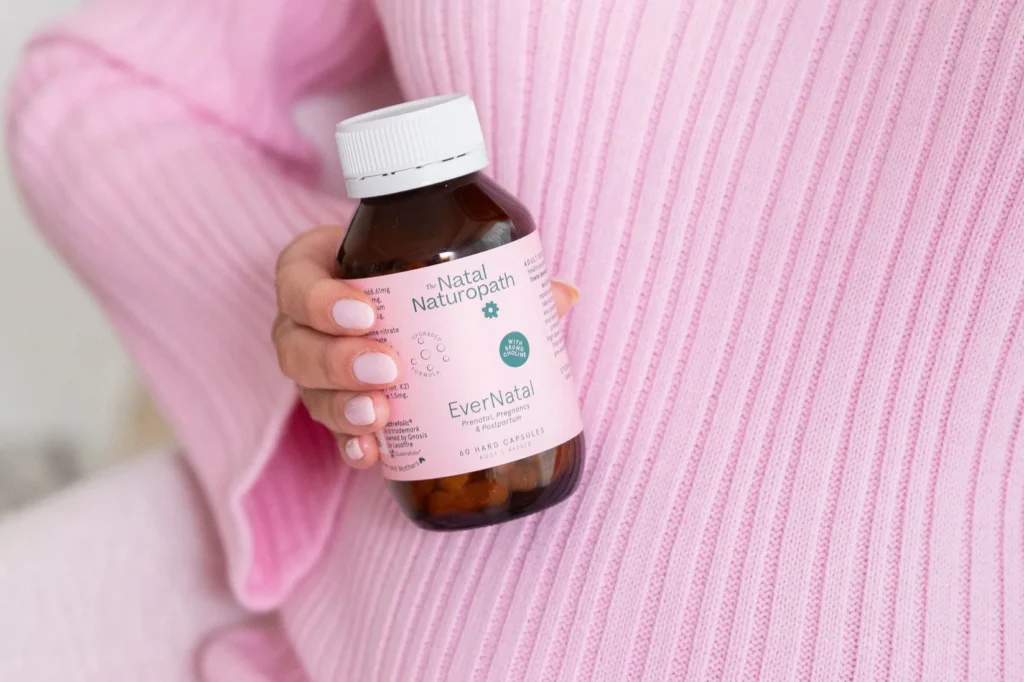
Melanie Nolan: Oh, it's like you don't want to be tired on top of tired, you're already, already sleep deprived. So to then to have that physical exhaustion because you literally don't have enough hemoglobin and iron to carry around oxygen and energy. And so I thought to myself, gosh, you know, I'd love to be able to give someone an iron supplement that just absorbs without constipation. They don't have side effects and it just works. And I can see it working. Anyway, my brain started whirring around and I thought, wow, I would love to make my own supplements. I don't know how you do that. How do we do that? And so I did a little bit of research and I was shocked to see like the minimum ordering quantities, so 5,000 units at a minimum for any vitamin. And that was looking like easily over $100,000 to start with. And I was like, oh, that is such a risk. I have a small young family. Like, I don't think I can do it. I'll just stick with my service based business. So it just was at the back of my mind for so long. And then I ended up selling my house and I had $150,000. And I said to my husband, could I use this? Like, I have an idea. And he was so supportive. I think if it was reversed I actually would have been like, that's a terrible idea. But he was like, give it a go. You know, what's the worst that will happen? They have a two year expiry. If you can sell those units in two years, we're flying. So I invested that 150,000 and I started off with two products. So it was the prenatal called Evernadal and my iron supplement, Iron Biotic. And what I thought would sell in two years sold in three months.
Nathan Bush: Holy moly. How did you shift those initial. That initial batch?
Melanie Nolan: Well, I think what worked so well was because I was service based previously I had an audience of such engaged and trusting clients, customers and followers on Instagram. So then when I said, like, this is what I've got and I'm. And I'm really excited about it and here's how it's different to everything in Australia right now. I already had customers that really trusted what I had to say and they, I guess, believed in me. So it was just selling to that original audience. Yeah.
Nathan Bush: Were you nervous about the first bits of feedback from your customers?
Melanie Nolan: Yeah, because it's like, it's such a personal thing, like you're taking something in your body. So I was like, oh my gosh, what if there's side effects? What if this doesn't work? Blah, blah, blah. But I was pretty confident in the formula and I had a really good product developer and he helped immensely in really fine tuning.
Nathan Bush: How do you even find a supplement product developer?
Melanie Nolan: A lot of Googling.
Nathan Bush: But was there a thought going through your head of like, I'm having this problem as a naturopath, surely this is a common problem. And when you've got giants out there like Blackmores or Swiss, and you're like, well, why haven't they done it yet? If there's a commercial opportunity here?
Melanie Nolan: Yeah.
Nathan Bush: Did that go through your head?
Melanie Nolan: It did a little bit. But then I thought, everyone has their own niches and everyone is sort of, you know, each company kind of has their values and the way they formulate or what they're doing. I suppose. So I sort of thought also, as research and education goes on, things change. So the big giants have their core range and I thought I could tweak this, I could do something differently. I found my product developer. Yeah. By a lot of Googling. But also I was in Naturopath Facebook groups and so I, you know, I wrote in there, like, has anyone, how do I do this? Like, I know I need TGA approval. How do I get that? And so I found my product developer and he did so much of the. Between me, the brand and the tga.
Nathan Bush: Awesome, awesome. And tell me about the first bit of feedback that you got from either one of your patients or one of your customers that you're like, we're on a winner here.
Melanie Nolan: Oh, I think my favorite piece of feedback initially was someone showing me blood test results of like, I've been taking iron for years, Mel, and it just barely creeps up. And look at my results after taking iron biotic. And I was like, oh, my God, we're onto a winner. Like, I knew it logically, but it was really cool to see other people show me actual, tangible results and tell
Nathan Bush: me about the market. So obviously mums. Mum to be postnatal mums. Is that the core of the market? Is that where you're sitting and staying?
Melanie Nolan: It definitely was initially, so. Because I only had the two SKUs. Well, Evernatal's definitely for pregnancy and postpartum. Iron biotic and iron in general can be for any life stage. So women can be iron efficient at any stage, but definitely around that again, pregnancy stage. But as the range grew, we have expanded into more general women's health. So not just niching down into that pregnancy space just because I saw the need, like women need magnesium, not just when they're pregnant. So, you know, we kind of launched other products that serviced other areas of, you know, women's physiology.
Nathan Bush: Okay, that makes a lot of sense. And are you selling through other practitioners as well?
Melanie Nolan: So we have retailers that are either practitioners that own their own clinics or health food stores or chemists, but no one big. Like, they're all, you know, small businesses. Yeah.
Nathan Bush: Well, that's amazing. So you told me before we jumped on that you've gone from that initial 5,000 order where you've sold your house to pay for it. Now I understand you're doing 8 mil a year. Is that right?
Melanie Nolan: Yeah, yeah, yeah.
Nathan Bush: In how long?
Melanie Nolan: This is our fourth year.
Nathan Bush: Wow, that's incredible. Well done.
Melanie Nolan: Oh, thank you. It is a bit. It is a bit. When I sit back and I go, I can't believe I was worried about selling those first few batches. I'm like, now I. Now I. My stress is like, I can't get it in quick enough.
Nathan Bush: Yeah. And from engaging your customers. So obviously you had a great personal profile to start with and people trusted you. As you've scaled that business out, what's been the biggest lever from a marketing and awareness perspective to broaden that reach to hit that $8 million mark.
Melanie Nolan: So we didn't run any paid ads for the first two years because I'm really strong on the opinion that if you are relying on ads, you don't have a business because, you know, if they if something happens, they switch off, you know. So I ensured that I could really grow organically first, which was kind of easy because I had that audience. Education marketing is our biggest form of marketing and we currently run paid marketing now, which I think was a big, a big step between where we were and scaling. Like I think you can get away with organic marketing. But then once we hit that kind of like one and a half million, two million revenue, then we soared from paid marketing because we could just reach a bigger audience.
Nathan Bush: And you mainly talking meta there.
Melanie Nolan: Yeah, Google's done really well for us and I do think that's because it's a supplement brand. So people, I mean, I don't want to speak to everyone, but I, if I'm looking for something that I'm ingesting, I'm not finding it on TikTok personally. I know there are people that do that, but it's more of a Google, like, what's the best prenatal in Australia? What do I need to take when I'm breastfeeding? So Google's done really well, but yeah, meta definitely. And we're just going to start TikTok ads next month. We haven't done that before, so we'll see how they go with TikTok.
Nathan Bush: Are you taking a different strategy to Insta? Will it be totally different content?
Melanie Nolan: I think it'll be a bit more that raw short form, like kind of not ugly, but it's not, it's not very polished. I think we'll see how that goes. And I know the content that does best is when I'm in it, so I'm educating and I know that because I'm the health practitioner behind the brand. So when I'm educating in that content that performs extremely well. So I have to get on camera more, I think.
Nathan Bush: How does that go for you? Because one of the things that I noticed about you and you wrote to me and you said, look, one of the things I'm really cautious of is only doing high leverage work, especially with, you know, four girls, a husband business to run and you only want to work within the, you know, work hours so you can be there for the family. Obviously filming content as well as running a business is a lot. How do you kind of prioritize that if it's all going to rely on you?
Melanie Nolan: I think I have definitely stepped back on video content, like for me recently, especially since I had Sadie in October. But my marketing manager said like, hey, that's the content that performs best. You have to do it like. And she's so helpful. Like I hired her last year and that was integral in supporting me while I've been on maternity leave. Like my team's incredible. It's more about, okay, these are the topics that people are asking, like, let's film based on those. It's hard. I find that's my biggest probably pain point with my business is content. It's not me necessarily. Like I was a naturopath. I don't know, I enjoy that part of things. I enjoy educating. But I think filming content, yeah, it's just a beast. You've just got to keep feeding and I don't love it.
Nathan Bush: You're so natural at it though.
Melanie Nolan: Oh, I don't know. It's easy when you're talking to no one. Like I sort of think there's no one, but yeah, I just pretend there's no one behind the camera. But if you put me up on a stage then I would be absolutely freaking out.
Nathan Bush: But there's some people who really struggle with that because like speaking to no one when you've got a camera there, people are like performative. But yours is actually feels like you're having consultation with you. Like you're actually just talking, you know, that's not an easy skill. That's good.
Melanie Nolan: Really. Okay, that's good. That makes me feel good then. But yeah, I think just because I only want to work well. Especially before I had my last baby, I was only working 9:30 till 3 every day. And so it was like, you know that saying where you give someone a set amount of hours, that's how long the task will take. I don't know that law. I think that actually really is really working for me because it's like you only have until three, so you need to only do the things that are actually going to move the needle and not doing those like tasks just for the sake of fluffing around.
Nathan Bush: Do you find it hard to switch off when it gets to three?
Melanie Nolan: Yeah, yeah, absolutely. And especially when I still want to get things done. So that's really difficult. I'm finding it even more so difficult at the moment with my baby because it's like I'm working in a nap to times. So work is even more limited and it's like you want to finish something and you get interrupted. Every parent would understand that. Yeah, it's hard.
Nathan Bush: It's that state of flow too, isn't it, when you're in the moment? Like I get so frustrated too sometimes seeing others going, you've just got to work when your energy goes and like when you're in flow, just let it be in flow. I'm like, yeah, that just doesn't happen once you got kids.
Melanie Nolan: No, it doesn't at all. It's like I have to work at night when I least feel like wanting to work. But that's just how it is with young children, isn't it?
Nathan Bush: Yeah.
Speaker C: Expanding into new markets isn't just about selling more, it's about selling smarter. Every region has its own rules, currencies and customer preferences. But with Shopify, global expansion is simple. Localize storefronts, tailor experiences and build trust all from one unified platform. Shopify removes complexity so that you can focus on growth and deliver tailored shopping experiences for every market in store and online. Accept over 100 currencies with Shopify payments for fast familiar checkouts and use built in analytics to identify your most profitable markets. One platform built for global adaptability so you can scale without growing pains. Visit Shopify for enterprise to learn more and start selling worldwide.
Nathan Bush: Tell me about your lens on educational marketing because I think that's really interesting to your point is that there is a lot of reliance in E commerce at the moment on meta and especially that bottom of the funnel. Sell, sell, sell. Advertising and creator content. How do you approach marketing from an educational first perspective?
Melanie Nolan: So we've always focused on what are the problems that our customers are facing and what do they need to know more about about their health and really going in on that. So I think people aren't buying supplements, they're buying an answer or a result and trying to explain how to get that answer and why our supplement will get that answer is key. Just if I focus on iron, you know, when you go to your gp, your GP will be the first person normally to say you need to go take iron. So the person will leave the doctor's clinic, go to the chemist, have a look, have no idea which one's best, just grab any potentially or you know, maybe they've been recommended one and there's not a lot of guidance around, well, how long should I take it? What dose should I be taking for my blood test result and what am I looking for? Like how do I know it's working? And so that's where we've come in. Especially because the tga, our restrictions with what we can and can't say. What I focus on is really that education around the different forms of iron, for example, so you've got poor quality forms, high quality forms, about constipation, about absorption, about taking it every second day, not daily there's just a lot to taking iron and I try to focus on that part and then that kind of naturally leads people to want to buy my products because they feel so confident in the education I've given. It's like, oh, they really must know their stuff. And when someone has guidance around, okay, this is the product, this is how long I should take it for and this is the measure that I'm looking for. It just takes all of that noise out of the way. I think it's just helpful. I would have needed that if I was a customer.
Nathan Bush: Yeah. And it's high trust because you're at the front giving that advice and you've got the background and training as a naturopath as well.
Melanie Nolan: That really helps. Definitely. Because I have that. Exactly that education and the trust already and the authority in the space. So that's kind of. Yeah, that's easy in that way.
Nathan Bush: I think there might be people listening to this go, that's great. Like it's one thing to educate customers, but we need to also sell product. But the beautiful thing about what I've learned about your business, you've actually got an amazing conversion rate of 7% as well. So even though you go onto your site and it doesn't feel salesy, it feels educational. It feels like I can get all the information that I want over multiple visits if I need it. You've still got a massive conversion rate. How do you do that? How do you balance the two?
Melanie Nolan: Yeah, I think that I, I just thought conversion rates were normal, like I thought ours was just standard. But then when I spoke to a few others I was like, oh, ours is actually really, I think from our website point of view that the education part, like I think you're told often that, you know, everyone has a shortest attention span, like dot point this and you know, like quick snap information. I feel like we balance between that and long form education because it is needed but if it's too content heavy then you know you're going to lose them as well. So I think we've hit a right balance between the education and then the benefits of the product. Don't tend to focus so much on the benefits of the product. It's more around the education again because it's hard with the TGA with what you can say and a lot of just testing on our website. So just making it really, really easy so that people can understand exactly what they need. Because when you're looking at a supplement, just say you have low energy, you're not sure sometimes what you need. And so you go on the website and there's a quiz which has been really helpful for people to narrow down what they need to take. And then it's sort of, we have a good menu where someone goes on the menu. We don't have many skus. And there's quick little snapshots of like, this is for energy, this is for low iron, this is for that. And so then they can go onto that product page and then get that more education heavy information. Plus we have a huge blog which then leads people back to the product page after they've done a bit of education reading.
Nathan Bush: Are you finding blogs still attracting traffic?
Melanie Nolan: Yes, definitely. Especially in our space because again, you can talk about research, you can talk about science, and we link that through our EDM. So our EDMs have a good click rate when we link to a blog.
Nathan Bush: Okay, are you finding the LLMs picking up your blog content or are you going to have to kind of reformat it to be more AI friendly?
Melanie Nolan: That's something I want to explore a little bit more about whether we're being recommended or not. I know a few customers have said like, hey, when I typed in what's the best prenatal in Australia? Yours came up in a list and I was like, oh, okay, that's amazing. I don't know how that happened. So I do want to explore a little bit more about that. I did make sure that our Shopify store, the coding was set up correctly. You know how you have to do those things?
Nathan Bush: Yeah.
Melanie Nolan: To make sure that like the, the bots can pick you up. The knowledge center, I don't know if it's called that. I just, I just googled that and I did step by step what, what they said to do to make sure like Tord and Chat GTP can pick you up. But something I really want to explore is the quiz that we have currently on the website. I would love to see if we can build that out on like lovable dev. Therefore I'm saving hundreds and hundreds of dollars a month because I don't need an app. But also when I had a play around, I was really excited about the way it can. Like, it's just, you know, it's insane what it can. The recommendations and like people can put in information about their blood tests, which I would love. So someone saying like, hey, my ferritin's 12, my magnesium's this, my hemoglobin's this, and then this AI just like generates exactly the plan.
Nathan Bush: That's cool.
Melanie Nolan: But then there would need to be guardrails because it's medical stuff of. But I'm like, oh, I really want to explore that.
Nathan Bush: Especially if you can interlace it with first party video or content from yourself as well along the way. True. So it doesn't just feel like you're extracting information along the way, you're kind of taking them on an educational, personalized education journey.
Melanie Nolan: Yes, that would be actually. Thank you. That's a good idea. Like a little snippet about, you know, did you know this about iron.
Nathan Bush: That's very cool. But on that I always do a little try and do a little bit of research on Reddit too around the brands that I'm talking to because I find that it's a good.
Melanie Nolan: I love Reddit.
Nathan Bush: You've got great reviews on there. I struggled to find.
Melanie Nolan: Yeah, I haven't actually googled myself on Reddit or what do you say? Reddited myself on Reddit.
Nathan Bush: So it's, you know, that's half the battle there. I think on that I'm really interested in your customer segment because obviously customers can move through those stages pretty quickly. Trying to fall pregnant, being pregnant postnatal, and then that continual women's health journey. Do you try and segment your customers so that you can target your educational content to them or is it moving kind of too fast that you don't even do that?
Melanie Nolan: Oh, we want to and we try something that we like I made the mistake of was on our website, the pop up was so generic. Like, you know, here's a discount, put your email in. And so then from the get go, we weren't able to capture what people who were interested in. So we've changed that. Where someone can say like this is the topic that they're interested in or like this is the life stage they're in just so we can get those segments set from the get go. It's something we need to get better at. It would make so much sense because you know someone who's for example, in their maybe late 40s looking at metabolic, health and energy, they don't want to be getting an email about preconception. And that's something we need to get good at because that's tricky. Like especially because we, you know, recently changed email platforms. So it's just really that's something on the cards for this year is getting really good at targeting the right people that are actually interested in that message.
Nathan Bush: Yeah. What email platform did you move between?
Melanie Nolan: We went from yotpo, who kicked us off.
Nathan Bush: You were caught up in the YoTPO gate.
Melanie Nolan: I was so two weeks in, we spent so much time and effort, like going over to yotpo, we had everything set up and then I got an email saying we're closing. And I was like, oh, my gosh, I would have enjoyed knowing that prior. So we've gone to instant and it's really cool. We're loving it at the moment. There's a lot of AI that's doing a lot of the hard work that we used to have to do. Okay.
Nathan Bush: And sending all your emails, obviously, except for transactional.
Melanie Nolan: Yeah. So we started with campaigns and then we moved flows over and the segmenting wasn't there at the start, but they're adding new, new technologies, new parts to their platform every week. And so it's really getting good now and I'm loving it. We've got really great revenue coming through from each edm, the click rate. So, yeah, I'm happy. Great.
Nathan Bush: All right, that's good. I am keen to explore the TGA side of it because I think this is fascinating because as a naturopath, I know it's even harder when it comes to TGA around what you can and can't say. Can you give our listeners a little bit of an overview on what TGA is if they haven't come across it and some of the regulations or restrictions that you have in place around growing your brand?
Melanie Nolan: Yeah. So in Australia, it's the therapeutic goods administration. And so when you design a supplement, you can either have it TJ listed or food grade. And so with vitamins, it must be done with tga. However, for example, we're launching Creatine next month. That can be done TGA or food grade. I am such a. I always would do TGA every time because it gives a lot more trust and there is a lot more stringent testing, stability trials. It's just stricter overall. Food grade is just that little bit more. It's just there's not as much controls over it. So I think if someone's ingesting something and they want a clinical outcome, it really should be done via the tga. And so we have to stick to a certain document that the TGA initially approves for our product. So we go to the TGA and say, this is what we want to put in our vitamin. These are the ingredients at these particular doses. We want to say that it's safe for pregnancy and breastfeeding. They'll come back. Yep, yep, yep. All good. This is what you can say. So just say that might be 25 claims 40 claims, 10 claims and you cannot say anything outside of those. I know it is really difficult and people like, oh God, tg, I don't want to touch it. However, I actually think that it's helpful in our content and what we can say because it puts really good boundaries on. It forces us to go to education based marketing so we can't make outlandish claims. We can't do all this stuff that you see and like the hype stuff on marketing. But it's kind of good because it makes us get really clever around the type of marketing which we can do. We can talk about the ingredients, we can talk about, you know, why did we pick this ingredient over another and why is it in this dose? We just can't go ahead and say like this is going to cure your such and such, you know.
Nathan Bush: Yes. And that claims thing is really difficult and. But to your point is that it makes you really focused because I'm curious, how do you handle your influencers and UGC or do you have any influences or UGC or uit? Because it's hard to brief them because you have to be really careful with what they say or promise. Even down to the point of I don't think most of them can say, I take this to no, have this.
Melanie Nolan: Yeah. So, gosh, it'd be so much easier to be a beauty brand. We have not used influencers or creators until this week. Like literally this week my marketing manager engaged with three UGC creators just because again, like me making all the content, it's getting tiresome and it's getting hard. What we did is we just wrote a really good document and more so encouraged the creators to just show the products in their lifestyle and their routine and just that visual element of them chatting about their day but then also taking their product alongside it. It's so hard. You know, the revision process was like, well, we can't, definitely cannot say that, you know, you can't imply this. So it's more about just sticking to it, being a part of the day to day routine. Yeah.
Nathan Bush: Yeah. It's almost like differentiating between you doing the educational and them doing the lifestyle content. Almost.
Melanie Nolan: Yeah. Yep. Absolutely. That's so true.
Nathan Bush: Yeah. And I understand that you seem to take TGA so seriously, which you should, and it's fantastic. And the way that you frame it, because I know a lot of people do kind of go, oh, TGI is holding me back. Or it's like kind of the handcuffs on the business. But it feels like you embrace it as a way to ensure that products are safe and performative.
Melanie Nolan: I think at the start I found it really hard, but now that we're in the groove of it and I'm used to it, I think it's really the customers want to see it. And like, you know, recently the TGA actually blocked any Australians from accessing certain websites overseas. Kourtney Kardashian, she has Lemme Live, you know, that Lemme gummy brand. You can't access it in Australia anymore. The TGA's put a huge block on her website because it's not TGA approved. And so I do know of some brands in Australia that are not TJ registered. However, they're selling them in capsule form and I am nervous for them because I think the TJ is going to start blocking all of those ones that are like, like we're food grade. But you're not really food grade, are you? Because you're using ingredients that technically aren't a food, you're trying to make claims. And I think that I'm just like, I'm relieved we're never gonna have that problem because we're just sticking to what they say.
Speaker C: Chic has always believed that style is how you show who you are without even saying a word. Which is why it's a problem when your email address and SMS are saying
Nathan Bush: different things on different platforms with different results.
Speaker C: I mean, we've all got that friend who's a bit chaotic. We don't want it to be us. For Chic, email lived in Klaviyo, SMS lived somewhere else. And when it came to attribution, nothing lined up. One platform said one thing, Google Analytics said another, and making confident decisions just became guesswork. So they brought email and SMS together in Klaviyo's B2C CRM. Once everything lived in one place, the picture became much clearer. Attribution finally made sense, investment decisions became obvious and SMS quickly proved its value, especially during key sales moments. The results a 113 times ROI on the Klaviyo platform, 20 times ROI, ROI from SMS alone, and an 81% year
Nathan Bush: on year increase in SMS subscribers.
Speaker C: Turns out when your messaging and your data are dressed for the same occasion, performance looks a whole lot better. If you want clearer attribution and more
Nathan Bush: confident growth, head to klaviyo.com au and
Speaker C: see how brands like Chic are doing it.
Nathan Bush: Well, yeah, and I know there are certain some Australian brands trying to get around TGA by shipping out of the US and running US ads here as well.
Melanie Nolan: Yeah, yeah, it's a big. That's risky. I. I think it'll catch up. It'll catch up. It's just they might be getting away with it now. And so that maybe they're like, well, we'll just go for it while we can. But the TGA is really is cracking down on all of that. And, like, you know, look at what happened with melatonin on iherb.
Nathan Bush: We were about to go to a trip. Trip to Europe, and it's so funny what melatonin's done. Like, our kids, we're, like, so excited because we're, like, going for a trip and that's canceled now because we were flying through the Middle east, so we're not doing that anymore. But I think the kids were most
Speaker C: excited because I said, guys, we'll go
Nathan Bush: to the doctor and we'll get some melatonin. They're like, oh, melatonin. They were, like, pumped for it. It's not the right attitude.
Melanie Nolan: That's so funny.
Nathan Bush: I was pumped for a quiet plane ride.
Melanie Nolan: Oh, can you imagine? So helpful.
Nathan Bush: Yeah. But anyway, side note, TGA for what you've been through, because you had your own experience a couple of years ago around a product recall. Can you tell us about that and the impact that that had on you in the business?
Melanie Nolan: So that was April last year. I got a email from my product developer at 11 o' clock at night on a Friday, and he said, hey, Melanie, I'm just letting you know I just got off a call with your manufacturer for Evernadal, and they had some concerns about the iodine dosing in each capsule. I don't know how big this is gonna be, but I just want you to, you know, be aware of it. And I like, okay, what does that mean? I didn't understand the gravity of it. And by Monday, yeah, we were in meetings with the tga, so we had to voluntarily recall our whole Evernadal batch, which was, like 15,000 units we'd sold. So what happened was the manufacturer just made an R and D error. So some capsules had more iodine, some didn't have any, and some had a great amount. And because we didn't know which ones were fine, which ones weren't, we had to recall the whole batch. It was a huge, huge, huge nightmare logistically. Obviously, my heart went out to customers that weren't sure which ones they got. Did I get too much iodine? Did I not get enough? So that was horrific. Trying to deal with the customer comms. But my biggest learnings were, you have to have Systems and processes in place for all the bad things to happen. Like, I was just like, oh, that'll never happen to us. And, you know, I don't need any of these things. Like, we're going so well and then, you know, all of a sudden it's like, oh, God. Then you turn to catch your own tail. If we had have had everything in place because the TGA makes you contact each customer, get them to fill you out a form, the customer needs to send it back. You then need to process a refund or a replacement. We couldn't do replacements because we're out of stock because we didn't have any unaffected batch.
Nathan Bush: What kind of like, replenishment times are you talking? If you to restock that.
Melanie Nolan: Four months for every batch. Thankfully, we had a batch already getting made, so we were only out of stock for maybe six weeks, but we had to contact, yeah, thousands and thousands of customers. Customers. And then the TGA requires you to contact them three times. So if they don't respond the first time, you have to try a different method. So email, call, you know, text, letter, it was really difficult to keep track and you need to, you know, keep track of exactly where the customer is. Have they responded? How many bottles did they use, how many did they return, and did they destroy any? It was huge. So I think just if I had have had everything in place, I know bigger brands have recall teams, they have recall kind of practice runs, which I didn't even know was a thing which.
Nathan Bush: Like a fire alarm.
Melanie Nolan: Yeah, literally. Which would be a benefit to have done previously because it just felt like I was thrown in this really stressful situation and customers were angry and it was. It was horrid. And the news picked up the story. Like pregnant women, you know, I don't know if I use the word poisoned, but it was, it was very alarmist. It was me and a few other brands. So, yeah, there was. It was on the news. Yes.
Nathan Bush: And you mentioned there that customers were angry. Was that the majority of your customers or what did most understand? Cause I could imagine that you communicated in a pretty upfront way.
Melanie Nolan: Yeah, I did, definitely. And I think that's key. Like, we didn't try to hide behind anything. I got on my Instagram stories straight away. I wrote an email from me, I explained exactly what happened. I think, like, if someone's a bit frightened about, like, oh, have I taken something that's potentially unsafe or not good enough, you know, they want to know exactly what happened, how it happened and what are you doing about it. So I think that really helped build trust again. And most people understood. I would say 95% of my customers were so gracious about it, there was 5% that weren't. That's to be expected. But yeah, most people were really like, oh my gosh, we know you didn't want this to happen. It's not your fault. You, you. I didn't put the iodine in myself.
Nathan Bush: Yeah, yeah, yeah, that makes sense. And tell me you mentioned there around some of the systems and the backups that you would have loved to have had in place. And I think there's a really good lesson for everyone, whether it's TGA or not, because anyone can get a product recall at any time.
Melanie Nolan: True, I forget that. Yes, you can.
Nathan Bush: What did you change in your business to make sure that if it does happen again that you're a little bit more protected and prepared?
Melanie Nolan: So what I have now is we have a dedicated email that is like recalls at Nocturnal vitamins. And within that system it's like, okay, this is the documents we would send out. So they're already, you know, in a Google Drive. We've got all the documents ready to go. Because we were kind of scrambling like to make the right communications out to customers. So I guess I'd be editing that if God forbid, anything ever happened. So they're ready to go. Also the ability to track customers. So really ensuring we know exactly what customers get what batch. Because on Shopify, until this happened, it was kind of like, okay, so everyone from this date we think got the product. So we had to communicate with a lot of customers that it was like over a two day window. I was like, which batch did you get? You know, I wasn't asking them that, but we just had to let them know, hey, could you please check your batch number? Because on Shopify it doesn't track batches. And so you. Yeah, if you're halfway through one batch and you're starting another on one day, it's like, which customer at 11:00am Got which bottle? So that is definitely firmed up now. And just spreadsheets that are able to track and allow people to fill out documents. Because there was issues where we were sending documents to customers saying, hey, can you fill this out? And they were like, well, I don't have a printer. And it was like, cause they needed to send it back. And you know, so just trying to like make it super easy so we can send out a fillable document to each person and just having the manpower to be able to receive back, you know, 6,000 forms and reading each one, just setting it all up so that it's as easy as something really difficult can be.
Nathan Bush: That's a lot of work.
Melanie Nolan: Oh, it was huge. Huge. I've never experienced that amount of work before. Hours and hours of just receiving forms, you know, reassuring people, trying to communicate what was going on. Yeah, I'm glad that's over.
Nathan Bush: Did you still grow last year, even with that in the middle of it all? Did you know, did it impact the long term trajectory?
Melanie Nolan: So April was obviously our worst month we've ever had because we refunded nearly $300,000 worth of orders. But once we got over that, we grew, which I was nervous about because I thought we're losing trust where that's what my brand's been built on and I've lost the trust of everyone. But thankfully, people still do believe in us, trust us. And again, I think that was because I communicated really, really transparently about what was going on. My other tip is just having business insurances for every scenario. I only had just got recall insurance four months prior. Oh, yeah, how lucky. I got a business insurance broker, which I hadn't had before. And he was like, okay, These are the 11 types of insurances you need for this scenario. This scenario, this scenario. And I was like, oh, I didn't even know that was a type of insurance. And I hadn't even considered recall insurance because I'm like, oh, that, you know, come on. Like, really? So I'm so glad for him because there's so many different ones, like business interruption insurance, you know.
Nathan Bush: Good on you for taking them up though, because every time I see those lists of insurances, I'm like, they're just making up insurances now.
Melanie Nolan: Yes, well, I felt the same, but I was like, oh, there's that. That anxious mind, like if you don't, you know. And so our insurances is about $22,000 a year for certain insurances, but well worth it when I consider, like, how much we got back from the recall.
Nathan Bush: Yeah. Well done to you. That's amazing. Tell me about your view, because I'm interested both as a business owner but also a naturopath. And you mentioned there that you are expanding beyond mothers into just women's health in general and helping women more broadly. Do you feel like there's enough understanding and education out there for women? Women and health?
Melanie Nolan: It's getting better. It's better every year. Like there's so much more research going into women, but I mean, it wasn't so long ago where studies were done on men and then, you know, taken over and transferred that finding to women. And it's just like, we are so different. So thankfully, that's not happening anymore. But even around creatine, like, last year, I heard about creatine, and I was like, isn't that a men's gym supplement? And I'd heard about it for women's cognition and offsetting the problems with sleep deprivation. And I was so exhausted, exhausted when I was pregnant, and I was like, I'm gonna give creatine a go. And I felt amazing from it. And I really. I really thought it was great. And my husband's like, why don't you launch creatine? And I was like, oh, no, that's not what we do, though. We. We do more specific to pregnancy, postpartum vitamin capsules, not so much like a powder that mostly everyone has as a food supplement. And he's like, yeah, but if it's helping you, it'll help others. And then you can educate women to learn that creatine's for you too. And here's why. So I think we are starting to branch out more just because the hardest season, in my opinion, is pregnancy and postpartum for a woman's life if they choose to go ahead and become a mother. But then there are other hard seasons too, like perimenopause or just being run out, run down, burnt out, you know, just that general busyness. You need support. So we are branching out into types of products that I didn't initially foresee for the brand, but I want to be able to support my customers once they've finished with. If they've stop taking Evernadal, but they still want support in other ways. So I want to be able to offer that as well, especially for returning customer rate, you know, and encouraging that.
Nathan Bush: I can imagine you've. You've built that trust and you've educated and taken people through what's probably the most significant moment in their life and risky from a health perspective. And there's a lot, lot of change, a lot going on. If you've helped them navigate that, then you've got a lot of, as I say to my kids, a lot of water in the bucket or coins in the bucket in trust that you can then, you know, help them further through life as well as well. So you've got a great foundation.
Melanie Nolan: Yeah, that's true. Yeah. Because especially if they take one product and they see a benefit, and again, that's product first. Like, it has to work. Like, there's no. There's no option for it to not be felt. They have to know that it's working. And so once they know that from one product there is that trust to go, okay, like the brand knows what it's doing. I'm going to give it a go. I'm going to. I've never taken creatine before. I thought it was for men or I've never taken DHA for brain health before but I'm going to, I'm going to give it a go.
Nathan Bush: Yeah, question for you. You might not know the answer to it, but creatine, I've always. Because I'm on the creatine wagon as well.
Melanie Nolan: Oh cool.
Nathan Bush: I've always wondered. I know there are some creatine pills but there's not many. It's mostly powders. What makes something really good as a powder verse in a pill?
Melanie Nolan: Well, it does depend on your dose. So some things have to be a powder because you can't literally fit it in a capsule.
Nathan Bush: Makes sense.
Melanie Nolan: You could if you like, you know. So for example, the dose for our creatine is 5 grams a day. To fit that in capsules you might be telling someone that they need to take six to eight a day. And it's kind of like that's the compliance of that is risky. And it dissolves so beautifully in water. So it's like if something tastes like shit and it doesn't dissolve, well, you have no choice. You gotta do capsule or tablet. Most people don't take powders well. And so from my education marketing now, it's about how do we add this powder into your day to day without it being burdens. Is that the word? Like it can go in anything, it's tasteless, it dissolves. Sometimes flavored powders, people are like, oh, I'd just rather have a tablet. But yeah, it comes down to where it can fit and absorption as well. What absorbs better.
Nathan Bush: I do laugh it. I've been doing a lot of research in this space and there's a lot of more influencer brands that are, you know, creating cocktails out of supplements and powders and I'm like, oh my gosh, wow. Non alcoholic cocktails usually.
Melanie Nolan: Yeah, I hope.
Nathan Bush: I'm like, oh my God. I struggle to take a teaspoon of creatine, let alone make a cocktail out of it. Who are these people who have all this to time to turn their supplements?
Melanie Nolan: Don't have children.
Nathan Bush: Oh, very good about that.
Melanie Nolan: Yeah. But I, I, you know, I'm all for putting things in forms that help people so, yeah, some people are really adverse to, like, gummies. But I think if the gummy is like, it doesn't have any yucky ingredients, it's not full of sugar and it helps your child or you take the product, then I'm all for that as well.
Nathan Bush: Yeah, it's amazing. We had Justin from chief on as well, and they're making protein bars and out of, you know, everything about them is there no nasties in there. So everything in there is natural. But, you know, because it came about because they couldn't find anything that was packeted that was natural, everything came with something. But I just love that there's people like you, like Justin out there who have real world experience, real world education going. Actually, there's no reason I can't make this product.
Melanie Nolan: Yeah, that's right. Thank God for innovators. Hey.
Nathan Bush: Yeah. So good. So talking of innovation, the next, next 12 months, Mel, what's on your radar? What are the most important things for you and the team?
Melanie Nolan: I think continuing to fill out the product range because currently, at the moment, because we only have so many SKUs. I'm going to say six. I should have counted. I'm tired. I think it's six. Fair six or seven that we need to be able to offer people products so that they're taking all of us, like, as in they're not going, oh, okay, I need that, but I have to get it from another brand. But I love you overnight. So that's why we made vitamin D, liquid vitamin D, because it's just. There's nothing cool about it. Vitamin D is vitamin D. We, we couldn't really innovate that it's the same as everyone else's vitamin D, but ensuring that someone's taking our vitamin D and not someone else's, so really trying to just fill in little gaps there. I really love being at the forefront of new research. There's cool stuff about, you know, we hear about prebiotics, but postbiotics as well. So there's like, you know, overseas is always ahead of Australia, unfortunately. So just keeping my finger on the pulse on, like, what's over. Women's metabolic health is really skyrocketing and like really supporting women around cognition, brain health, perimenopause. I'd love to do a probiotic that's really on the radar, like, really around. There's not many great particular, like niche ones. So, like, there's good general probiotics, but, like, if someone's pregnant and they want a particular one, like to prevent their baby from getting eczema, for example. I really want to be that product where it's like, yep, great, that's exactly what I'm after. Yeah. Just continuously building out the skew range. Yeah.
Nathan Bush: And a bit more sleep.
Melanie Nolan: Yeah. I don't know what work's gonna look like this year. I'm so grateful I can work from home. I was just saying on my Instagram yesterday, my work is all one handed. Like I literally just type with my right hand in the quiet, dark room so she doesn't wake up. But hopefully I get a little bit more separation so I can just like do at least two hours of work.
Nathan Bush: Well, if you can do what you are doing one handed, imagine what happens when you get both hands of that laptop, that lookout world.
Melanie Nolan: Hey, those fingers are going to be wearing.
Nathan Bush: Mel. Well, thank you so much for joining me on Add to Car. It's so nice having you. What, what really stood out to me is how genuine you are that you come from a real source of authority and knowledge and you're using that knowledge to impart education on your customers so they can make informed choices with quality goods and not worrying about that bottom of the funnel and knowing that if you do the right things at the top, it'll take care of itself.
Melanie Nolan: Yeah, they come back.
Nathan Bush: Yeah. So thank you so much for sharing your story. So nice to meet you and good luck with everything.
Melanie Nolan: Gosh, thank you so much for having me. I cannot wait to tell my kids that I've been on my favourite podcast. It'll mean nothing to them, but at least I can tell someone like, guys, Mum's been on her favourite podcast.
Nathan Bush: That's amazing. Thanks Mel. So good.
Melanie Nolan: Thank you.
Nathan Bush: What I loved about this conversation with Mel is how much she's built on genuine authority and care. She's not performing expertise. She came out of years in clinic watching the same problems repeat themselves and understanding the customers behind the problems and then went and solved them. That combination of a clinical background, face to face interactions with her future customers and that real operator grid is pretty rare. Three things that I want to leave with you today. First, education, marketing and conversion aren't intention. Mel's site doesn't feel like a sales machine. She's not doing pop ups all over the place. She's not urgency messaging, but she's sitting at a 7% conversion rate. She's built a quiz, a deep blog, product pages that lead with science and it works precisely because people arrive already trusting her. If your content is genuinely useful and helps your customers solve a problem, it can do the selling for you without the hard sales tactics. Secondly, if you're in a product business, get your recall preparations sorted now, not after you need it. Mel found out the hard way that Shopify doesn't natively track which customer receives which batch, that the TGA requires you to contact affected customers three times across multiple channels, and that the paperwork alone is a full time job. She's got templates now, a dedicated recalls inbox and batch tracking locked in place in case it should ever happen again. She also got recall insurance too, and luckily enough she had it just four months before she needed it. Plenty that we can all learn around being prepared for a recall. And third, Mel is really passionate about running this business on a 9:30 to 3pm day. By design, her take is essentially Parkinson's Law in practice and you don't have to be a founder to take this in.
Speaker C: Our work expands to fill the time
Nathan Bush: that you give it. So if you shrink the window and suddenly you're only doing the things that actually matter, are you any worse off? It's definitely worth thinking about whatever your version of that constraint looks like. How do we make sure that we're working on the stuff that matters now?
Speaker C: If this episode got you thinking about
Nathan Bush: how you are building trust with your customers, come and continue that conversation in the Add to Cart community.
Speaker C: There are over 600 e commerce professionals
Nathan Bush: in there having conversations and questions and
Speaker C: advice all day every day.
Nathan Bush: Join us for free over on add to cart.com thank you so much to Mel for joining us and for being so open, especially about of those harder moments that you heard today.
Speaker C: If you're not already subscribed to Add
Nathan Bush: to Cart, please do hit that subscribe button wherever you are listening on YouTube, Spotify or Apple Podcasts. I'll see you next week.