
Martin Filz: What we are seeing through the research is a lot of consumers are keen for loyalty programs but they want more. They want more than just collecting points. They want an experience.
Anastasia Lloyd-Wallis: A high percentage, I think something like 77% of loyalty schemes actually fail and they fail because the audience is disengaged. It's over complicated, it's ignoring tech opportunities. It's not relevant.
Martin Filz: In a dinner time conversation you ask your friends to name the brand that they they love. It's not going to be because of the loyalty program. It's going to be because of the brand.
[Voiceover]: Welcome to ADD to cart, Australia's leading e commerce podcast that express delivers all
Martin Filz: you need to know in the fast moving world of online retail. Here's your host, Bushy.
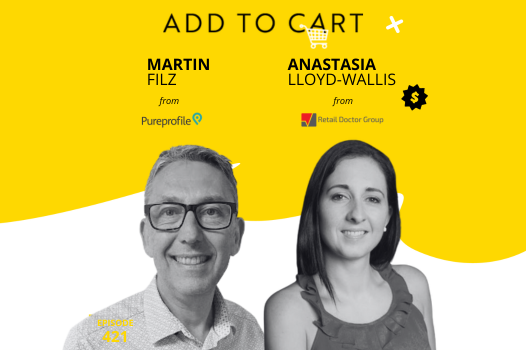
[Voiceover]: Welcome to another episode of Add to Cart. I'm Bushie and I'm joining you from the land of the terrible people otherwise known as Brisbane, Australia on ADD to Cart. We welcome everyone to share and listen to e commerce stories. The more diverse the better. I want to especially welcome the traditional owners and the original storytellers of the land that we are on, our indigenous and Torres Strait Islander listeners to join us in our E commerce conversations and our community. When the going gets tough, you want someone next to you bunkering down that is true to you and will look after you in good times, bad and in bad. No, you haven't accidentally landed on a relationship podcast, although I'm open to it if anyone wants a spin off. But today we are unpacking retail loyalty and how to achieve it in E Commerce. Obviously in the current economic climate everyone has less money to spend and the cost of living is going up. Loyalty matters more than ever for both consumers and for retailers. I know it's front of mind for a lot of brands on how to do it well and that's why my guest today could got together to produce a report which explores the best way to cultivate loyalty in customers. Martin Phils is the CEO of Pure Profile and Anastasia Lloyd Wallace is the Chief Operating Officer and Head of Insights at Retail Doctor Group. And today they join us to share the collected data from a thousand people across all demographics with their how to Grow Consumer Loyalty report. They join me today to share the findings from that and it is fascinating. In this chat Martin and Anastasia share what customers want from a loyalty program and we dive well into whether that should be a structured or a more organic program. We also discuss the attention economy and what that means for having loyalty and keeping loyalty. And we talk about the Gen Z customer and the critical issues of Safety and privacy. Plus, today we also get insights into the surprising thing that happens to loyalty as consumers get older. We get a bit floozy as we get older, so thanks to our partners, Shopify plus and Deliver in Person, here's our conversation with Martin Phils from Pure Profile and Anastasia Lloyd Wallace from Retail Doctor Group. Martin Anastasia, welcome to ADD to cart.

Martin Filz: Good morning, Nathan.
Anastasia Lloyd-Wallis: Hi, Nathan, thanks for having us.
[Voiceover]: Thank you for being here. I'm excited to talk all things loyalty with you. Today we've had Pure Profile in the Retail Doctor Group team up to release a report called how to Grow Loyalty, which I've had a read through and I have a bunch of questions for you. And I'm sure our listeners will be very keen to hear about loyalty, especially in the environment that we're in right now in retail and E commerce. So I'm going to cut straight to the chase here. In tough economic times like we have at the moment, is there anything such as true loyalty for customers when times get tough like this, or are we kidding ourselves in retail?
Martin Filz: I think one of the things we've actually seen is customers are more loyal right now. And so all of the research that we've been doing has gradually shown this. Loyalty's built because customers value their cash. So when they actually do come to spend it, they want to know they're going to get what they want, when they want, how they want it. So rather than actually trial a retailer or a brand that they might not have heard of before or they go into that safe and trusted retailers and brands that they know. So. So we've actually seen the shift go in reverse to what as you would naturally expect.
[Voiceover]: So there's less risk taking about trying new things because being price driven and more moving towards the safety and the comfort of what they know and what they trust.
Martin Filz: Exactly. Yeah. The number one factor to influence reseller choice at the moment seems to be trust. So consumers are saying it's trust that is what's going to get me to try a retailer or to spend my money.
Anastasia Lloyd-Wallis: And also to add Nathan, to that point, it's incredibly important during this time actually to develop that loyalty because you're going to be winning client share. And anytime a retailer needs to understand a customer's needs, their wants and to meet those needs and wants, guess what? You have customer loyalty. And all of the time, the constant through all of this is quality. Clearly do what you say you're going to do, do what it says on the tin. What you tend then to see during an economic cycle that we have at the moment is actually value for money comes in. Now, that doesn't mean you have to discount and it can mean the opposite. But again, it's really having an attention to detail. And if during that time you're showing a true value for money, you'll increase your loyalty. You're going to win market share from competitors.
[Voiceover]: Brilliant. Okay, that's really good context to put over all of this conversation that we're going to dive into. Before we do, we're going to put a link in the comments in the show, not notes on how to access this report because it is freely available when people sign up to get it. So you can go straight out there and get this and maybe come back to the conversation if you want to read it first. That's more than happy. Press pause, then come back in. But while people are doing that, can you tell us how did you team up to do this research? And can you tell us a little bit of the process on how you pulled this data together?
Martin Filz: Yeah, so this stemmed off the back of some research that we conducted last year with actually retailers this time. So rather than consumers and retailers said that their number One priority for 2024 was building customer loyal. I mean, we all know that it can cost up to 10 times more to actually get a new customer than it can to retain an existing. So when we were talking to all of our clients and working with Pure Profile, it was building customer loyalty was that focus. So we then said, well, if we want to understand that we actually need to talk to the customers, we've got to talk to the customers and talk to them about what are they using, what are they not using, what do they look for? And as you mentioned, we started this research at a time when it was starting to get tough out there and it was sort of consumer confidence was declining and it was all the expenditure of a sort of that Christmas New Year, summer holidays period that consumers were then going, oh, okay, maybe I need to rethink this. So it was almost a combination of perfect timing that we said, okay, this is what we need to dig into. But it's actually, there's a few turning points in consumer behavior right now as well.
[Voiceover]: Okay. And Martin, how do you collect this data for us?
Anastasia Lloyd-Wallis: It's great to work with a company like the Retail Doctor Group who are absolutely leading a thought leader for organizations on how they can become close to their consumers. So we're really pleased to tie up with the brand for us. We've got the largest audience of consumers across Australia. So we Conduct millions of interviews every year on a wide range of Topics, can cover B2B as well as consumers. And so this fits completely in our wheelhouse for organizations needing to speak to consumers. And I mean, actually we do this across the world and here specifically in Australia.
[Voiceover]: Brilliant. Okay, so how many consumers did you research for this piece of research?
Martin Filz: So we went out to a sample of 1,000 for this research. So I'm going to use my little nerdy thing and you want nice likes a nice fact. A statistically representative sample of Australia for a 95% confidence is around the 388 mark. But what we wanted to do was we wanted to make sure. Sorry, I can't help it. I've got. Oh, I love that.
[Voiceover]: It's the first question people ask is how many people were sampled, is it reliable? Because there's so much stuff that's thrown out there as PR fodder at the moment. So it's really important to set that base.
Martin Filz: Exactly. This is it. And you're right, you've got to have a robust sample. So one of the things that working with Pure Profile here was really great is we made sure that it was representative across all age brackets, all different demographics within the Australian market, but also that it was a sample size that we could dissect if we wanted to and still have a robust, a robust number. So we were talking to consumers right from 18 through to 80 just to make sure we really got a representative of everyone in Australia.
[Voiceover]: Fantastic. Okay. And so one of the key findings as a headline finding, is that you found that 83% of customers are loyal to a company that is mainly driven by brand. So loyalty and brand, I think we're all going to be very familiar with them at a high level, but they are loose concepts. Right. So I'd be really interested to know how you tie loyalty and brand to together. How do you qualify this link?
Martin Filz: We talk a lot about customer emotions and understanding the personality of customers because I think what's so key in the current climate, current customers, is they are individuals. They're not numbers anymore. We can't just treat them as a group. So when we then talk brand and loyalty, this concept actually kind of comes to life a little bit more as people. As humans. Customers are naturally loyal. You know, it's in our nature to be naturally loyal. But we're also humans, so we want to engage. We're driven by emotions. Again, another nerdy stat. Up to 95% of all decisions that consumers make in regards to retail and purchase is driven by their emotions. So this concept of loyalty is actually based on how they connect emotionally with somebody or something. So you're loyal to your friends because you've got an emotional connection with them. It works in the same way with brands. So what the research actually highlighted was that customers are very much loyal to the brand. But the question then, as we would naturally ask when we were working together, went well, but why? Why the brand? What is it? And it's this natural urge to connect with something emotional and to have this human connection with a brand. And that's what this research really did put together. So when we talk brand, it was almost the humanization of the brand.
[Voiceover]: Kids, they grow up so fast, don't they? And what do we want for them? We want them to be stable, interactive and always expanding their horizons. And so it was with babywear brand Snuggle Snuggle Honey. You may remember Snuggle Honey's owner Julie Mathers from episode 121. When the Snuggle Honey website refused to get out of bed for major sales, Julie turned to Shopify plus. And since replatforming to Shopify plus, using Shopify Markets for international expansion and Shopify launchpad for promotions, Snuggle Honey is blooming. The brand is now experiencing 30% unless year on year D2C growth and expanded their international sales from 5 to 15% of total sales. Oh, and they beat their previous best sales day by 75%. That's a best in show kind of baby there. Don't stick with a platform that gives you tantrums. Check out shopify.com auplus and get in touch with the Aussie Shopify plus team to see how Shopify Plus plus can grow your e commerce business. And Martin, is that hard to dive into from a research perspective when you're talking about things like emotions and connection, which is less tangible than other metrics?
Anastasia Lloyd-Wallis: It's a very valid question. And what we do is, as I said earlier, we conduct lots of research. We also have access to 400,000 Australians and their daily expenditure on credit card and bank accounts. And that gives us a great control element. So we're able to look at work, previous work that maybe looked at top brands in Australia and as this study shows, top loyalty schemes in Australia. And then we can cross reference that with where we see frequency of spending to those brands versus frequency of spending to other brands. And what we found in this study is it absolutely correlates with a strong brand and a strong loyalty. So that high level of again, the brand isn't necessarily something that I'm going to see on more advertising, tv, whatever it actually is that connection with the consumers and whatever it is that product that consumers are looking for that's very trusted. And so that 83% of customers are loyal to a company. Absolutely. We see it represented in multiple spends and high level, high frequency of spend.
[Voiceover]: So does that mean that you don't need a structured loyalty program to generate true loyalty?
Martin Filz: Great question. This piece of research kind of shows it's twofold. A loyalty program definitely can help build your loyalty. And I think this research and all of the research, you know, we've been doing together over the years with Pure Profile shows quite clearly that, you know, a loyalty program does influence, you know, about two thirds of consumers say they are influenced by the loyalty program. But if you can get that emotional connection with the brand right, then yes, that does become very, very strong. I mean, in a dinnertime conversation you ask, you know, your friends to name the brand that they love. It's not going to be because of the loyalty program. It's going to be because of the brand. Look at Nike. They've created such a great connection with their consumers. I always joke that one of my favorites is chic. I can't tell you why. I can't tell you why I love that fashion brand. I just do. They don't have a loyalty program or if they do, I'm not aware of it. So it's very much a connection that makes me say I'm always going to go back to them. However, if I've got three or four brands to choose from and I know that I'm a member of one loyalty program, it's going to influence me more
[Voiceover]: to go to that and so then does loyalty. And I'll throw this to you Martin, based on what you said before around customers really choosing value is a structured loyalty program, then one of the tenets of value that brands can offer above and beyond that emotional connection.
Anastasia Lloyd-Wallis: Companies don't start with a loyalty program. They start with a product that they then win customers. And then they say, okay, how can we get more recruit customers? Or how can we cross sell into to other areas? And so if you think about the loyalty scheme is about engaging and keeping customers versus winning that initial brand, then an organization needs to first think about how they projecting themselves to the market. To Anastasia's point, Apple is a great example. Apple doesn't have a loyalty scheme and yet I don't hear anybody talking about them not using Apple because it doesn't have a scheme. That gives it a reward et cetera versus okay, I'm deciding to fly down to Melbourne from Sydney and who do I have a loyalty scheme with? Because any airline is going to well they all at the moment are going to be late and they're going to be delayed and maybe cancelled. So I'm going to look at actually where can I what am I going to earn the points on that is then going to give me something in the longer term. So for me it is an add on on top of what the organization already offers and as I said I think Apple's a brilliant example of that. Anastasia just mentioned she Another one brand that I always turn to for electronic goods is JB hi Fi. They never offered me a loyalty scheme, I've never looked for one. I don't know if they have one but what do I look at there? What's my connection? Is the product going to work? Well it's not down to them really. So then the second thing is what are the returns like? Are they going to swap it out? Is there a branch near my house example, et cetera. So that's more important than a loyalty scheme because they don't have one. What we're also seeing a little bit is a layer on top of brands which is cashbacks. So you've got another layer which is organizations actually saying well we'll leverage off of other people's strong product offering or service to a customer by actually offering something on mass to people. So Cashback is a sort of catch all loyalty type offering and there's an example of a company that literally it begins because you know, cash rewards or whatever it begins with a loyalty offering and has no products at all.
[Voiceover]: Yeah, that's a really good point. I hadn't thought of Cashback to be put alongside loyalty programs but it makes sense when you explain it that way from what you were saying then around your comparisons I really like that when you're choosing airlines, Qantas versus Virgin, when you're choosing supermarkets, Coles versus Woolies and then you get put through JB as an example and I put kind of Bunnings in that space as well who don't have a loyalty program. Is a loyalty program a structured one a sign that a brand or a retailer is more of a commodity in a competitive space do you not need one if you've got a unique product and you're trading your own path?
Anastasia Lloyd-Wallis: Well again I'll use Apple as an example. So Apple would somebody somewhere would be sitting there saying well hang on a second, this is going to hit our margins. What's the point? Because we believe in the brand so much. So that's very valid. Actually Bunnings does have a loyalty scheme because being part of Wesfarmers, they've just been included in the Flybys offering. So again, the loyalty scheme works in two ways. When you look at flybys, the first one is saying, well, I'm a Coles customer and therefore I'll go to Coles and it's got to be relevant. So what's my relevant offering going to Coles? I'm going to get cash back on future grocery shopping, et cetera. Works brilliantly. Now within the chain I can have one loyalty offering that says, oh by the way, if you go to Officeworks, if you go to Bunnings, then actually you and Target, I think it is, yes, you can also receive Flybys points which you can use either in that store or in other stores that you want to. So I think that yeah, worst deals can hit margin if you're an Apple, but if you're a Westbound, it says actually can I get loyalty in other stores and get some cross brand usage.
Martin Filz: I think what's key here as well is retailers that treat a loyalty program as transactional, as a commodity. This is what we're kind of seeing is not fading out, but is less important in the eyes of the consumer. If it's the classic collect points, get discount, it's less relevant now and you do put yourself in that transactional commodity space. What we are seeing through the research is a lot of consumers are keen for loyalty programs but they want more. They want more than just collecting points. They want an experience. And the smart retailers are actually creating loyalty programs that are building on the brand experience. So yes, we have the transactional loyalty points. So Flybuys is a great example of a transactional loyalty and that works really well. And that will make you choose calls over bullies. So it pulls you one way. When you look at for example fashion or fast food, that's when it actually a smart loyalty program becomes an extension of your brand. And we're starting to see retailers go, well, what else can we offer customers that is not necessarily dollar related, it's what else do we need for them to create a community, create a community that pulls people towards my brand. And I think that's the trend that we're starting to see brands and retailers move towards.
[Voiceover]: Before we unpack that, I want to move back to what you said there around customers and brands are moving away from that points for Discounts, loyalty structure. What are the common loyalty structures that you see in your research but also in your consulting that are actually working for retailers at the moment?
Martin Filz: That's such an open question. Nathan, I'm going to come back to you with a point on that one, just to be sort of devil's advocate. And I think this research showed it quite well. There's not a one size fits all for consumers. So it actually depends who your target market is. So in the example of if you're very transactional and you're trying to do a play for every single customer, then a transactional loyalty scheme is great. And that's working really well. I mean, Amazon prime, look at it, in America right now it's around, what, 60% of the market? Even in Australia, 20% of Australians, I think 25% are now members of Amazon Prime. But if on the other side, you know, you really are trying to build a brand and create a brand, what We've seen some great examples of people creating communities with their loyalty programs. So for example, I don't know whether you've seen the Barbecues Galore loyalty program. Now you buy a barbecue once every seven years. So it's the average person, well, why have they got a loyalty program? Because by the time I'm thinking about buying a barbecue, I'm not collecting points. Discounts mean nothing. But their loyalty program actually engages with their customers to help them barbecue better, to teach them how to cook on the barbecue, to help them upscale to celebrity chefs and really cool grill masters. Obviously I'm not their target customer, but
[Voiceover]: you explained it so well.
Martin Filz: But yes, but it's a great example of a loyalty program that's kind of looked at it differently and said, okay, how do we keep our customers with us? What do they actually want from us and what's going to make them go, hey, barbecue's galore. They're talking to their friends over the barbecue. They're about to buy a new barbecue, they're going to rave about it because they've told them how to cook them best stake.
[Voiceover]: So thinking about it, more from a product usage and role in people's lives than a purchase opportunity.
Martin Filz: Yeah, yeah.
[Voiceover]: Kind of say run clubs is a similar thing, right?
Martin Filz: Exactly. Yeah. Nike was going to be my next example. So you took the words out my mouth there.
[Voiceover]: No, you've got better examples than I do.
Anastasia Lloyd-Wallis: The theme across those is relevance. So I think in those two examples, if you look at Shopback, which is the generic cash rewards, cashback type offering, they're actually, again, they don't have a product, but it's about talking to their key audience and their key audience seeing benefits in what they're delivering. The relevance of that audience, its style, its fashion, its latest trends. And so creating that community without having a core product and shopback do that phenomenally well. Then separately, looking at the relevance, if you look at what people are cashing in for is important. So 90%, some that 90% of airline points are cashed in for airline flights. They're not cashed in for headphones or watches or whatever else you can get rewards for. Therefore, back to Anastasia's point, think about the reward offering. People who want to understand about airlines, they want to understand about tips and tricks for traveling, for going on holiday, et cetera. So your reward scheme or your loyalty scheme is actually going to focus on those deep dive elements that becomes then a destination place. Again, much of the reason for loyalty schemes is to improve engagement, increase engagement with their audience. So with all of the loyalty schemes, I want a reason that it becomes a destiny destination site. It can be, as we said, tips and tricks on cooking and on recipes, etc. And suddenly barbecue's galore becomes a destination site. When I think, oh, I'm cooking steak tonight, how long should it be on for medium rare or whatever it is, and then I say, oh, they've got an offer for some tongs. Bang, thank you very much. Did I become a repeat customer? So it's relevant all the way down the line. Relevance of offer and relevance of community engagement as well.
[Voiceover]: Tell you what, you're making me hungry. We're recording this at lunch and all we're talking about is barbecues. So follow up question for you there is that I've seen it enough in companies that I've worked for, is that when creating a loyalty offering for the first time, whether it is structured or not, it's easy enough to kind of go, yes, great, we can do discounts for this levels. We can even do exclusive product first release access because it's within the core of what we do anyway.
Anastasia Lloyd-Wallis: Right.
[Voiceover]: When you start talking about member exclusives, whether that be through community events, access to content, connection with other members, that stuff's actually really hard to execute, especially if you don't have a strong brand to begin with. Do you find that there is a big leap that brands have to make to be able to legitimately play in that space beyond product and price, I might throw to you, Anastasia.
Martin Filz: Yeah, I think what's really core is it's exactly that. If you haven't got that strong brand to begin with and you don't know who your target customers are. You know, you're trying to be all things to all people. Then when you put a loyalty program out there you are just again trying to be all things to all people and you, you can't execute it. And when we work with sort of our clients, it's amazing. They'll start off going okay, well what can we do? Okay, we can do all these things so let's just do them all. And you think well transactionally one, you've confused the customer, you've made it so difficult for them to engage. They don't really know what you're offering them and also it doesn't actually speak to them personally. And so from starting from what can we logistically do rather than who are we as a brand, what do we stand for, which customers are we trying to talk to? And again I talk personalities, not just we're trying to talk to Gen Z because I mean as much as we see the Gen Z's on TikTok, we still have Gen Zs that are very traditional and they've got very family values or we've got Gen Zs that are very much data driven and looking for functionality and that aspect. So I think we've got to be really understanding who we are as a brand and who our customers are as people to then be able to build off that. Otherwise it's just ticking boxes.
[Voiceover]: When you're working with clients on this, do you tend to towards offer less first up and then expand rather than try and launch with a big bang and then go oh shit, that didn't work because it's hard to claw it back once it's out there, right?
Martin Filz: Exactly. Yeah, that's the one thing I always say, it's hard to claw it back and we're working on one at the moment and that's exactly it. We said let's keep it simple. One of the other things which you know, I touched on Gen Z and this would be no surprise, you know, the attention economy time is a currency consumers even just in the last two years have become so driven by the need for simplicity. Make it easy, make it quick. The other reason is if you launch with a loyalty program that's got 10 different things and your customer doesn't really understand it and you can get your status tier by doing this and doing that and buying this, they're not on board, they don't understand and their ability to actually engage and listen is even less than it was two Years ago. So we've got to keep it simple, easy, straightforward, doesn't need to have all the bells and whistles.
[Voiceover]: Yeah. It's almost like you've got to think around how much headspace do you think your brand actually occupies in a person's day and then divided by 100 because you're really not that important to anyone.
Anastasia Lloyd-Wallis: Also bear in mind that your loyalty scheme can actually create disloyalty. So a lot of, back to Anastasia's point, a lot of a high percentage, I think something like 77% of loyalty schemes actually fail and they fail because the audience is disengaged. It's over complicated, it's ignoring tech opportunities, it's not relevant. And guess what happens if I've turned away from a loyalty scheme, I might actually turn towards another brand, full stop. And so you've got to be really, really cautious about. Yeah, don't run before you can walk test the water. Do you have the bandwidth to do it? Is it truly adding value or is it just a cost to my business? Because if it's cost to my business, you're not going to get buy in from the wider business. So it's going to fail.
[Voiceover]: Yeah, so the execution is just as important as the offer when it comes to those loyalty programs. Interesting that you brought up the Gen Zs. Anastasia. One of the interesting pieces from your research that I found was that actually our loyalty decreases as we get older. Martin, have I got that right? Can you give us more context on why and how that happens?
Anastasia Lloyd-Wallis: Yes, it absolutely does. Your loyalty does slow down as you get older because people then are actually. Well, it's depending on relevance but it's then measuring how often am I going back to different brands, how often am I buying into brands and actually you're decreasing your scope, your sphere of actually brands that you're going to. Therefore you don't consider you're actually being loyal at that older age point. You just are doing what is becoming a habit versus being loyal to any one brand or any new brand. I'm just not interested in trying anything out that's any different. I don't conceive that I'm being loyal and there's a lot to be said about this. Why Insurance, bank accounts, bank companies work so hard at younger audiences because they know once they've captured somebody at a young age actually there are certain areas of banking is one of those that I don't change banks as I move forward but I don't think of myself, don't perceive as being loyal it's just I have no interest in changing it and doing anything different.
[Voiceover]: That is fascinating that those customers don't see themselves as loyal. They're just stuck in a habit. Do you see the difference from a business perspective? Do you see that there's any major difference between those customers that are stuck in a habit and not considering change and those that are actually considering themselves as loyalists? Anastasia, my throw to you. I can see you nodding.
Martin Filz: Yeah, this is a huge one. And I think this is probably why we see it more. More loyalty with the, like, Gen Z and Millennials. And I would almost say it's how these different age brackets have kind of got different behaviors as well, how they've been digital natives, how they've been brought up. So I think one of the things that we see is that, you know, Gen Z, they want to be influencers. They want to be brand ambassadors. They are actually seeking more of connections than customers ever have before. So therefore, they are more loyal. If it's the right brand and retailer that creates those connections, they want to
[Voiceover]: be recognized as part of it and
Martin Filz: being recognized as part of it. And then the difference between I use that retailer because I always have, and I am really loyal to that brand is I am then going to become a brand ambassador. I am then going to talk to everybody about that brand. And the other sort of research that we've done, word of mouth has increased drastically as an influence over the last two years. It comes back to trust that we talked about at the beginning. You're going to trust that your, your mom, your friend, your, your cousin has said to you, hey, I've used these. They're great. So if you're more of a brand ambassador and you really loyal to that brand because you love it, because you think they're great, I've got this connection.
[Voiceover]: You're actually passionate about it.
Martin Filz: You're passionate. Yeah. You're going to be telling people, hey, I just bought, I just bought that pair of trousers from Chic. They were great. You should go and see what they've got in stock. And so from a brand perspective, if you can build that loyalty, that goes beyond, oh, well, they were just right place, right time, and they saved me some money. It's a loyalty that is great. And I'm passionate. And I think that brand's awesome. I mean, we've worked with Chartime now Bubble Tea. They were fantastic for creating a brand that customers were like, I love this. This is great. I want to be part of it. Their word of mouth was off the charts. Their loyalty program saw their customers collecting the points but not spending them because they didn't want the discounts. They wanted to prove to their friends that they had the most loyalty points, therefore they were the most loyal chart time customer it was quite an interesting concept. It's, you know that redeeming the points was of less importance because they just were shouting from the rooftops, hey, I love this brand. This is cool, I want to be part of it.
[Voiceover]: It's a really interesting point and I love that that you both touched on because even if we looked at the data, we might see a customer that looks loyal because they haven't changed or they haven't moved from us and their regular customers. But they might not be telling anyone about it. They might not be proud or passionate around what you do, which is very different to other customers who see themselves as loyalists and supporters of the brand.
Anastasia Lloyd-Wallis: In the top three decision making of using a brand using a product is going out to friends family for input. So that's why again, you want the passionate loyal customer. As Emmy Stage said shouting from rooftops
[Voiceover]: how was your last E Commerce delivery experience? Did your order arrive on time and undamaged or did it fail to fulfill expectations? If you are a high value brand, just think about the low value experiences in the last mile affecting your reputation. Delivered in full on time or D if you're in a hurry is a metric that matters for retailers and customers. Why? Because it shows whether deliveries are happening reliably and on time. Many Aussie retailers are settling for 70 to 80% DYFOT scores and dealing with a lot of unhappy customers. However, after partnering with deliver in person experience driven brands like Samsonite, the Party People and July see a consistent 99.6% die FOT stock score. Don't settle for less. Make your last mile experience the first thing that customers remember. Learn more@deliverinperson.com. Martin in the research you break it down by categories retail categories of loyalty, which categories are most likely to drive the most loyalty. And now you know I love that lens over the top of it, people shouting about it, being passionate about it as opposed to just repeat buyers. Which categories are most likely to have loyal customers?
Anastasia Lloyd-Wallis: Yeah so grocery is the absolute category with the highest loyalty driven by many parameters. One of the and there is broadly geopoly in Australia but the grocery which is again I've got price, I've got freshness, I've got just the quality and this is where it really does play. If I've got a strong loyalty scheme that Works well. So it's again, walking into a store, I mean, that's really important. You've seen the. If you take grocery, if you look at Harris Farm versus a Woolworths Metro, then actually the difference is in the environment, the type of person that's going there is having affinity to that brand. The, the look and feel, et cetera. So we see the ways that loyalty is used within what is really a transactional type product. You know, you gotta get apples, but actually I'm going to have some shaped apples. That makes me feel good that there isn't wastage. It's really supple, really clever.
[Voiceover]: I think we've all got that family member who's the Aldi advocate in the family. But I think what your point there is also interesting because we can all talk about groceries, right. It's a common experience, whether you're picking up the kids from school, running into other parents, like, yep, we can talk about groceries. Whether family barbecue can talk about groceries. So it's a category where everyone's got a shared experience as well.
Anastasia Lloyd-Wallis: Yes. And it's different things in different areas. So you've got grocery which says, hey, that's a big part of being member of a loyalty scheme. I've bought into it, I follow it. The second big one is takeaway food. So within takeaway food, it's. I like the look and feel of the brand and obviously the food that I'm getting, but it's the look and feel of the brand, it's the quality I'm getting within the brand. Number three is fashion. Fashion and homewares are closed. And what we see within fashion, homewares and actually takeaway beverages is the look and feel of the brand is all very, very important. But then when we come into the cheapest, obviously in fashion, it's not a driver for me. The driver for me in fashion is going to be in store experience. But if I'm looking at takeaway food and if I'm looking at takeaway beverages, cheapest comes in. So again, thinking about those individual brands and they know this really well, what are they pushing to their consumers as to the reason you should go into those. But across grocery, fashion, homewares, takeaway and takeaway beverages, those are the five biggest loyalty areas that we see. But each has different drivers for their consumers.
[Voiceover]: And Martin, I might be asking you to give away a little bit of IP here. You share what's relevant for you. But we've got brands who are like, where? What do my customers value when they're Trying to reach out to their customers to go tell us what you're interested in. Is it price? Is it in store experience, Is it product? Do you have any tips for brands who might be listening on what questions they can ask or processes they can run to find out what their customers actually value?
Anastasia Lloyd-Wallis: Yeah, so fundamentally it's talk to your customers is the first thing. And because it changes, it can change season to season, economic cycle to economic cycle. We just had Covid, obviously it's a few years ago now, but that changed overnight. Consumers overnight changed everything about their shopping, their belief system, their social system. And brands really quickly had to hook into consumers to see what, what was important to them. So if we take at the moment where we've got a challenging economic cycle in Australia, every brand wants to avoid being flash. Every brand wants to avoid being it can be a premium product without it actually pushing premium. As I said, flash is a good word. I'm wandering around saying, hey, I'm really proud to spend a lot of money doing XYZ when there are other people saying, wait a second, I can't pay my electricity bill. So we see it changing all of the time. Also, I think one of the challenges that brands have is they start to think that they represent the customer. And you said earlier, Nathan, you said I actually got multiple loyalty cards or I work in multiple shops or brands. And so actually I chop and change perhaps, or I'm loyal to different brands for different things. So what equally brands have to be really careful about is saying we represent our consumers. And we've seen a number of times recently where brands have actually got involved with politics or brands have got involved with social issues, etc. And consumers saying, hang on a second, I go to other places for that. I have my own views, I'm coming to you for misshapen apples or a pair of headphones. And so brands need to be, really need to fully understand their consumers, keep understanding their consumers and then responding as they need to. But don't get carried away that you're more than actually an airline or a grocery shopper or a fashion brand that
[Voiceover]: I go to makes a lot of sense.
Martin Filz: I think one of the things that a lot of retailers do when they're talking to their customers and you know, one of the key sort of things that they do do is that they say, oh, I'm targeting these 18 to 25 year old girls and that's who their customer is. And then they go and ask 18 to 25 year old girls a heap of questions. You really need to understand who those emotions are of the customers and those personality segments. Because anyone that's got kids knows that not 18 year olds are the same. Or even if you think about yourself, you're not the same as your best friend, not the same as your neighbor. You may live in the same suburb, you may be same age, same gender, but you haven't got the same, as Martin says, beliefs, you haven't got the same drivers. And I think one of the key aspects that a lot of brands kind of miss when they do research is they don't ask the personal questions. You know, they don't get to understand their customers on an emotional level, on a personality level. They don't build out. And we see a lot of Personas that are built, but they're still built based on demographics. So it's still saying that as a female of a certain age, you're going to want exactly the same things as every other female of a certain age. And that's not how people are. Everyone is very individual. And so one of the things we use is we use a personality profiling segmentation called limbic insights. So that delves into the neuroscience behind it to understand, well, actually you can group consumers together, but it's based on those personality traits.
Anastasia Lloyd-Wallis: An interesting one just to add to that because it's so good that retail doctor group do this. Ozzy Osbourne and Prince Charles are the same age,
[Voiceover]: same people.
Martin Filz: Right.
[Voiceover]: But I do love that point too because I think I have optimism and I have hope that marketing is changing to move out of those psychographics, especially as you know, machine learning. Good or bad, we're not buying based on demographics anymore. If we think about Facebook Advantage plus, we're not buying based on that. We're buying on belief systems and values and interests rather than the traditional demographics. So it'll be interesting where it all ends up and where marketing headspace shift. We've flown through almost an hour of conversation here, but I want to ask you, Anastasia, what are you excited for in loyalty? You work with such a diverse range of retail clients and through a number of programs, both structured and unstructured, where do you think the innovation is going to come from with loyalty?
Martin Filz: I think that's a really great question. And what we're seeing retailers do now is actually almost go back to the drawing board because they've realized the loyalty programs are costing them a lot of money. They're giving away a lot of money, whether it's members, prices, discounts, points. It's causing issues on balance sheets and on the bottom line, it's actually causing retailers to kind of almost go back to the drawing board and go, okay, what does it need to be? And the ideas that some are coming up with are absolutely fantastic. You know, by talking to those customers and seeing what they want. The gamification that's coming about through loyalty is phenomenal. Some of the apps that are coming up where as a customer, you know, you can engage on the app. I saw one coming out of Europe that was. It was a fashion brand and I can't remember the name of it, but the loyalty, you could collect loyalty by checking in on social, by taking pictures in store, by a whole heap of different engagements. And it became a game. And it became a game that you collected points and every time you engaged with that brand across a variety of platforms, you got points. And it was aimed at a Gen Z consumer, obviously, but it was also aimed at this consumer that's really driven by fun, excitement, different and winning. They want you to win. And therefore it was who can collect the most points. And I think that concept, if that is your target segment, that are really driven by gamification, excitement and winning status as an issue to them. I think some of the concepts we're seeing come out are just fantastic.
[Voiceover]: Is that almost loyalty without it being loyalty, like, it's almost like customers are choosing to participate in that without the knowledge that, oh, this is a loyalty play.
Martin Filz: Yep, exactly.
[Voiceover]: What are you, Martin, where do you see the innovation coming in? Loyalty.
Anastasia Lloyd-Wallis: Yeah, it's interesting to your point that you talked about earlier, which is about relevance and about contacting social media privacy is actually playing in. Privacy laws are actually playing into the hands of loyalty schemes. So what's ironic is I think it's 90% of the world's data was created in the last two years. So we're living in this world where more and more data is being built on consumers and on us. However, privacy is making it darker than ever. It's not making it available to brands. So brands are shooting ever more in the dark about understanding their consumers. So primary research and loyalty schemes are a fantastic way of gathering data, gathering information, So I can be more relevant to my audience depending on who it is. Ozzy Osborne and Prince Charles again. So as Anastasia talked about, you've got to think differently because the competition is huge and it's not necessarily competition going on that product, it's competition on time. And you talked about that earlier, Nathan. I've got many other things that I need to do, many other pressures in my life. So how can I actually keep that brand front of mind?
[Voiceover]: I love that. Martin, you mentioned Apple valuing safety and privacy as a key tenant. And I think that brings us back to where we started with loyalty being about brand and that Apple saying core of our brand is safety and privacy. So I think that's what it all comes back to. As much as we want to talk about loyalty programs, if you don't have the core brand there, it doesn't matter what you do on top of that. So we are going to put a link to the research in the show Notes available for you to download at any time. But before we leave, I'm just going to ask both of you, what's next? What are we going to focus on now that we've done that research? What's next for Retail Doctor Group and Pure Profile? Anastasia, I'll start with you.
Martin Filz: Yeah. So, I mean, looking into the future, there's some great sort of conundrums and questions in retail. And I think one of the things that, you know, Retail Doctor Group and Pure Profile have been talking about is how do we delve further into that consumer's mindset. We know that the economic climate is making things difficult and consumers may be behaving in a slightly different way to normal. So we really want to understand, well, what does 2025 hold? And even further beyond that, you know, one of the great stats is Gen Z's and Millennials are going to be the largest spending demographic by 2030. So our next step is to really see, well, how do we understand that Gen Z just a little bit more, how do we delve into that? So we're looking at how do we understand loyalty on a level deeper, how do we segment it slightly further? And that's going to be one of our challenges for the rest of 2024.
[Voiceover]: Good luck with that.
Anastasia Lloyd-Wallis: Yeah. Just to add to that, Anastasia, we've got trends, we've got trends that we're going to come out of this economic cycle. So understanding how people are going to see spending differently if they're going to stay perhaps adverse to some spending, worried slightly more about the future. I think privacy is a really important, important element. How do brands communicate with their audiences? Loyalty schemes, we talked on that. The importance of those, of how do we engage with the audience and make the experience a destination type experience. We're going to see more consolidation possibly across brands and cooperation across brands. So how do brands work together to engage with a wider group of, of audiences? The beauty of this space is it's continually evolving and it never stays the same. So it's fantastically exciting.
[Voiceover]: Brilliant. I love it and I'm excited to hear more research from you. Martin Anastasia, thank you so much for giving us a deep dive onto that loyalty research. We're excited to see what you've got coming up next. Thank you very much.
Martin Filz: Thanks, Nathan.
Anastasia Lloyd-Wallis: Yeah, thank you very much indeed, Nathan.
[Voiceover]: There you go. I hope that unpacked a few thoughts around what makes us loyal as customers and what we can do as retailers to really give our customers value and keep them coming back. But not just keep them coming back, but making them raving fans of ours. I was a bit thrown I must admit by that stat around we get less loyal as we get older. I would not have thought that was the case. Also that we are very loyal. Loyal to some of those sectors such as grocery, which I thought would be much more price driven. All right, here are three things that I took away from that conversation. Number one, a loyalty program alone won't save you. If you haven't nailed the customer experience, that is how your customers feel when they're with you, then a structured loyalty program won't save you. Get the basics right first. A loyalty program program is the icing on the cake. Number two, habits and loyalty are not the same thing. I think this was a fascinating point. On a spreadsheet your customer might look incredibly loyal. They buy often, they buy high value, they buy over a long period of time, which is great as a retailer, but they're not telling others about you. They're merely in a habit. While that's not a bad thing, we'll take take the transactions as they come through. We are aspiring to loyalists who shop regularly and shout about the experience with friends and family to bring more of similar minded people through. And number three, Prince Charles and Ozzy Osbourne are not the same person. Be careful with segmentation. Not all 18 to 25 year olds are the same. Not everyone from the Gold coast wears white shoes. Don't rely or stereotype based on demographics. You need to connect with your customers on common values. Firstly, you need to know what your values are and then two, you need to go out and find your customer groups. Might be across ages, might be across demographics that actually connect with those values. Before you go, we'd love to invite you to join our free e commerce learning platform. Add to CART Camp, meet other professionals and learn from e commerce experts to take your business and your e commerce career to the next level. Register to join campus@addtocart.com now. If you enjoyed today's episode. Make sure you share it with a friend or a colleague. Or even better, leave us a review on Spotify or Apple. It really makes a difference.