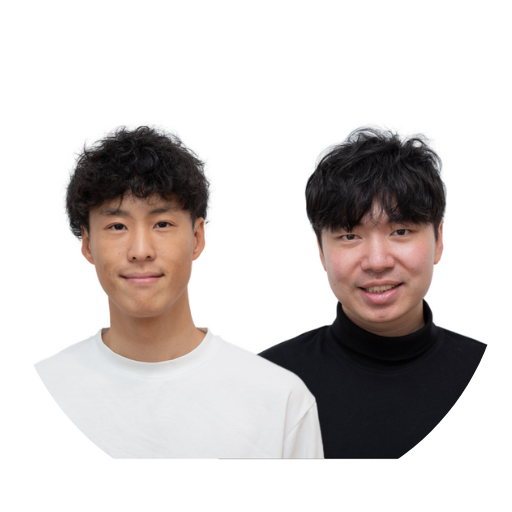
Nathan Yun: Rex, he's the extrovert. He just came right to my face and just said hey Nathan, your hair is so curly it looks like a manga character. Have you ever read this manga? And I'm like who is this guy?
Rex Zhang: Turns out no one is questioning and trying to adjust the socks knitting machine just because the machine has been set at a 120 degree angle forever.
Nathan Yun: What we do is we find smart ways to link the data in Shopify backend to the front end. How do we present them? How do we design the rules to show certain type of data on the front end?
[Voiceover]: Welcome to Add to Cart, Australia's leading e commerce podcast that express delivers all you need to know in the fast moving world of online retail. Here's your host, Bushy.
Nathan Bush: Welcome to another episode of Add to Cart. I'm Bushi and I'm joining you from the land of the Turrbal people, otherwise known as Brisbane, Australia on Add to Cart. We welcome everyone to share and listen to e commerce stories. The more diverse the better. I want to especially welcome the traditional owners and the original storytellers of the land that we are on, our indigenous and Torres Strait Islander listeners to join us in our e commerce conversations and our community. One of the best things about hosting Add to Cart is the education that I receive in the process. I've learned about work, life, balance from Anthony Zachariah at linktree, values from Julie Mathers at Flora and Fauna, and timing from Gabby Leibovich of Catch. I've even got a recipe for homemade bread from Adam Lindsay at co. What a crew to learn from. Today's episode has more than its fair share of revelations from me. To build on top of those I learned today everything from textile weaving, machinery settings. I've never been down that path before. To what it's like to work for one of Hollywood's most famous martial arts stuntmen. You will definitely know who I'm talking about. More on that later. My guests today are Nathan Yun and Rex Zhang, old friends and co founders of Pair P A I R E. Don't forget the E. It's a sock brand that's all about comfort and sustainability. The boys set about reinventing sock functionality to address frustrating experiences with smelly, sweaty, slippery foot underwear. Stay with me here. And the results have bagged them five star reviews, angel investment and revenue. That's doubling year on year. Their range has now expanded to include T shirts, towels and loungewear. In this chat, Nathan and Rex give us a fascinating window into the world of fabric technology. Advice on how a shopify site can be anything but standard. And some sobering insights from their lived experience as Asian Australian founders. And quickly, before we get into today's episode, if you are a tech provider, a service provider or an agency in E commerce and you want to jump and sponsor add to cart in 2024, we now have our sponsorship packages open. We are limiting the 2024 sponsorship opportunities to two gold partners and five silver partners. If you want to know what those sponsorship packages look like, reach out to me directly. Nathandecart.com so let's get into it. Thanks to our partners, Shopify plus and Signet. Here's our conversation with Nathan Yun and Rex Zhang Ku, co founders of pear.
[Voiceover]: Nathan, Rex, welcome to ADD to cart.
Nathan Yun: Hi Nathan, thanks for having us.
[Voiceover]: And Nathan, thank you for joining.
Nathan Bush: Guys, we have you in two different
[Voiceover]: locations at the moment. Where are you joining us from?
Nathan Yun: I'm joining from home in Melbourne. Yeah, we're in Melbourne.
Rex Zhang: Yes, yes, me too actually, the office where we start a pair actually. So we start from this semi home office.
Nathan Yun: Yeah.
[Voiceover]: So Rex, are you more of the office one and Nathan, you're the work from home one?
Nathan Yun: Oh, exactly. You got that right.
[Voiceover]: Yeah.
Nathan Yun: I don't know how you get it, but yeah.
[Voiceover]: Now guys, we briefly met, it would have been about 18 months ago now, I think maybe not even that long, maybe 12 months ago. I remember you told me about the PEAR mission, which was really, really incredible. And the way you framed it was something along the lines of, you want to solve the problem of smelly holy hot slippery socks. And I was like, geez, that's a big problem. It's been around a while. I mean, we've been wearing socks for a long time now as human beings. What made you think that you could solve the smelly, holy hot slippery sock problem?
Nathan Yun: I'll start with this one. So it was the start of the pandemic 2020. I was walking around the block doing the, you know, the one hour work
[Voiceover]: that you only get the time out allowed outside of the house.
Nathan Yun: Yep. And I always wanted to start a business and you know, me and Rex has been long term business partners. So I've been thinking about business ideas for as long as I could remember. And during those walks, my sock just kept slipping off because I was wearing ankle socks or no show socks. And I personally hike and surf and do a lot of running and stuff. I'm really active person. So at the end of the day my socks will always smell or overheat when I run a marathon. So it just kind of Came naturally to me one day when my socks just slipped off again. And I was like, I'm having enough of this. What if we could just make one perfect sock that solves all these problems?
[Voiceover]: So while everyone is locked down in their homes, worried about COVID worried about toilet paper, worried about staying healthy, you're worried about. About your socks.
Nathan Yun: Yeah, exactly. It was just so annoying during the work. So I'm usually the kind of person that would notice these little problems, and I just come up with a problem and a question. So I went to my friend Rex. I said, we are business partners. And I just asked him, is there a possibility that we can just solve all these problems in one product and we just make one perfect sock? Does that sound like a legitimate business idea? And that's how we came up with the idea, really? And then, you know, I'll let Rex take over the rest because he's usually the problem solver. I just ask him questions.
[Voiceover]: So you lobbed up the big problem and you went, rex, you got an idea on how we solved that?
Nathan Yun: Exactly. Yeah.
Rex Zhang: That's what happened. I was like, give me a perfect socks. I think socks is really not good enough. On the other side, I always say myself as a product person, I always get fascinated by, like, beautiful craft goods and love digging into problems and solving them. So I saw that interesting topic, and we dig into the issues and we find that's why the reason why the socks are smelly is probably two things
[Voiceover]: before we get into that. Rex, are you as passionate about socks as Nathan is at this stage?
Rex Zhang: Not really. Not the socks. I mean, textile goods. Yes, but not particular socks. Because my. My family background, so I was interested in mostly clothing, a lot of things. I was passionate about. T shirt, though.
[Voiceover]: Yeah, we'll get to that. We'll get to that.
Rex Zhang: Yeah, yeah.
[Voiceover]: So two reasons.
Rex Zhang: Yeah, two. So two reasons why your feet is smelly, probably. One is because your feet is sweating and there are bacteria growing. So to solve these problems basically in a sustainable way is basically actually combining wool and cotton. So wool is antibacterial, and cotton is moisture waiting. It sounds like a very simple and easy solution. But the reason why other brands are not doing it is because when cotton, they're very different fibers. So to combine them at a young level and getting the yarn thin enough to knit into socks is extremely difficult.
[Voiceover]: So I know nothing about fibers. So wool is, I'm assuming, pretty thick and a bit more fragile than cotton.
Rex Zhang: Wool is animal fiber, and cotton is a foam plant. So when you're dyeing that two fibers, it's applying very, very different method. And also they have different length. So cotton has the fiber has one length and the merino wool has a different length. So if you want to combine it to fiber together, you have to find a matching length. So that's why it's very hard. Okay. Yeah. And another interesting find was like the reason why mason socks are slippery is simply because most of the socks are knitted at a 120 degree angle. But your feet is 90 degree, right? Yes. So and turns out no one is questioning and trying to adjust the socks knitting machine just because the machine has been set at a 120 degree angle forever.
[Voiceover]: So what why 120 degrees? Is that just a thing that is just industry wide?
Rex Zhang: When the socks machine first came out, which is like old, old generation of the socks, that's the easy way to operate. And also when you need the socks at 120°, the top and the bottom is aligned together so you can flat lay your socks and looks decent, but looks good, but doesn't feel good when you put them on. So when we developing pair socks, we actually requested the factory to actually adjust the machine to different settings so it's capable to knit a 90 degree socks. And also you need the new kind of stabilizing method to make the socks 90 degree as well.
[Voiceover]: Had anyone asked them to do that before you?
Rex Zhang: I don't know. But the factory was like okay, that's a weird request. Like we never have it but luckily they good enough to helping us to develop the right product. So then and when the first patch of pair of socks came out, I love them, everyone just loving them.
[Voiceover]: Okay. So it's a combination of the cotton and wool together as well as the way that they are knitted together using that 90 degree angle rather than 120 degree. Any other design features that you've incorporated to solve that?
Rex Zhang: A lot, A lot. For example, seamless toe. So you know it's an annoying seam on the top of the toe, right? Yeah. Again it is because the most socks machine are designed to knit. The socks at home came out at one. It's a very most efficient way, cost efficient way. But if you want to remove the theme, you actually have to get the socks into two parts and kind of have someone hand sewing two parts together.
Nathan Bush: Wow.
Rex Zhang: Yeah. So that costs more time and it's a bit more expensive way to do it. But it does adding a little bit extra comfort to your feet. And also the height of the cushion, like how high the cushion goes. You can Also adjust that to like a perfect length.
[Voiceover]: Okay.
Rex Zhang: So your feet have got enough cushioning but to not. Not too annoying as well.
[Voiceover]: Who knew there was so much to socks?
Rex Zhang: Yeah, I didn't know. So thanks for Nathan to bring up the question and tell me about the
[Voiceover]: first lot of socks that came through from the factory with those initial requests to where you are today. Has the design changed much since then?
Rex Zhang: I think we updated. I see our socks like, you know, kind of apple products. So we actually, we don't tell the customer. We actually, we upgrade in the socks time by time, try to refine the yarn. Refine the. Because the yarn we developed is quite unique and no one done it before. So we try to using a better material, better cotton, better wool, better method. And also we starting to touch up in the small things. For example, reduce the packaging and also adding a bit like a small size logo on the back of your heel. So that's like a. Through customer request, people starting getting like 20 pairs for the whole family and mixing them up in the washing machine. So we're like, okay, let's put a size look test tag on it.
Nathan Yun: Yeah, yeah, yeah, yeah.
[Voiceover]: I love it. And you mentioned before that you were longtime business partners. What's your history together before Pearl?
Nathan Yun: So we were actually friends since uni. We've been on the same debating team. That's how we met. First time we met Rex, he's the extrovert. He just came right to my face and just said, hey, Nathan, your hair is so curly. Looks like a manga character. Have you ever read this manga? And I'm like, who is this guy?
Rex Zhang: Yeah, I didn't know your name. I just go, hey, hey, dude, you're here.
Nathan Yun: Yeah. That was our first ever interaction.
Rex Zhang: Yeah.
Nathan Yun: But yeah, we became friends ever since.
[Voiceover]: And your hair's still curly.
Nathan Yun: Yeah, it's a natural curl. But yeah, I mean, we've been business partners since we graduated as well. We started different businesses before and we also went on with our own career. You know, we had different jobs on the way and eventually, because we have really different skill set and we have almost very opposite personalities that we felt that we could just work together really, really well. And that's how we decided to just keep doing businesses together.
[Voiceover]: Yeah, great. And Rex, I can see that you're passionate about the operation and the product side of the business. Nathan, what do you take care of?
Nathan Yun: So I take after most of the branding, marketing, tech, creative. How we differentiate our job is kind of like I look after all the intangible things and Rex look after all the tangible things.
[Voiceover]: Yeah, great.
Nathan Yun: My background comes from creative and branding.
[Voiceover]: I heard in your background as I was doing a bit of research and I want to know if this is a fur fee or not, that you are actually working with Jackie Chan.
Nathan Yun: Yes, that is true.
[Voiceover]: Really? I feel like that's the kind of thing that you would have thrown into an interview. Just because you were bored in an interview and you're like, I'll throw this in and see if they pick up on it.
Nathan Yun: Honestly, I got asked about Jackie Chan so many times in my life, it just kind of became not a big deal for me.
Nathan Bush: Good guy.
Nathan Yun: Yeah, Yeah. I mean, he's all right.
[Voiceover]: Don't worry. I don't think he listens to this, so you might be all right.
Nathan Yun: Okay. I hope he doesn't. But yeah, he's a very serious person. In reality, very, very serious boss. Like almost a bit scary at times.
Nathan Bush: While the big supermarket chains dragged their feet to get rid of plastic bags and packaging, online grocery startup Good Groceries is leading the way by eliminating 100% of plastic packaging from all their fulfillment processes. But it doesn't stop there. They are one of the few retailers to achieve climate active certification as a carbon neutral operation. Each order is sent in Signet's shipping cartons. Craft paper and water activated tape. No dodgy long life plastic bags here. If you're serious about sustainability, visit signet.net au to browse the range and contact the team to find out how their packaging solutions can help your e commerce business.
Nathan Yun: I was his assistant for a year. We traveled around together. I've been in investment meetings with him. Funding for movies, script meetings, production sets, Cannes Film Festival, Holy moly. Everything. Yeah, I've been his assistant on a lot of occasions. It was, it was a pretty good ride. Fun ride.
[Voiceover]: Have you sent him any socks?
Nathan Yun: Nah, nah, we're not that close.
Rex Zhang: We're trying to get him a pair.
Nathan Yun: Yeah, I love it. Yeah.
[Voiceover]: So obviously the business is called Pear and I think the name makes sense. P A I R E. So a little bit fancy. Not just your standard pair, put an
Nathan Bush: E on the end.
[Voiceover]: That sounds more international. You've now expanded though, beyond socks into shirts, towels, underwear. And I can imagine that there's more on the cards there. You've been really known for socks and your whole brand, your whole business name is Pair for Socks. Is it hard for you to keep that differentiation in market and to be known for something when you start expanding the product range so fast?
Nathan Yun: So we did start with socks because we thought it was a good product to break into the market. There are so many problems to be solved. There's not one good sock brand. So we thought, we'll bring one good product to the market and see if our business model work. But in reality, our business model is actually developing our own unique materials and solve very specific problems with garments. And the mission of Pear has always been solving fashion problems with more sustainable, more comfortable and just better products. We're selling products that are not just sustainable, it's something that people actually want. We're really strong in functionality, really strong in comfort. And when we had the name pair, it also stands for a pair of underwear, it's a pair of pants, a pair of PJs, it could be your perfect pair of wardrobe, the perfect pair of you and the earth, et cetera. So when we had the brand in mind, we weren't tight on just socks. We always wanted to expand. We always wanted to use racks, knowledge and technology to develop products that are just good in general, good for the earth and good for yourself. So we weren't that worried about losing our identity. We did a survey probably one year into launching Pear, and we asked our customers, what do you want us to launch next as a product? Interestingly enough, actually quite a lot of customers said, whatever you launch, we'll buy. At the time, we only launched socks, but I guess that's how good the socks are. And people were like, I just trust you with your material and your design. You will do anything well. So that gave us a lot of confidence. So we went on and launched on these T shirts, towels, hoodies, sweatpants, loungewear, et cetera. So I guess that kind of answers, and for me, I just manage kind of the brand identity where we're heading. But Rax is the real know how, so he really champions the textile development and material science. And that's how we go into the strategy here.
[Voiceover]: And Rex is, does that come with a pressure then? Because I could imagine that, you know, you talked through the complexity of combining wool and cotton together, but there are a whole range of materials that are becoming more popular. You know, we talked about bamboo. There's lots of other materials that are hitting the market that are talking to some of those same things around comfort, solving those old issues. Is combining wool and cotton enough of a differentiated to keep you relevant, or do you need to keep pushing forward in the innovation?
Rex Zhang: Actually, textile industry is developing a lot every year. It's moving fast, but the reactor owner market is not improving fast enough. After decades, we still see most of our T shirts are cotton T shirts, right? So yes, there is pressure, but it's also interest me that what can we do better? So Pez mentioned, as Nathan said from day one was to balance the performance, comfort and sustainability, right? So if you're looking at these three angles, you can actually always find something to improve. So for example, our T shirt, right. Most T shirt, as I say that out there, is either cotton for the softness or poly for the performance. And cotton T shirt has been here for decades and I'm sure we have a better choice somewhere. So when we develop the new fabric we developed for our own T shirt wrench, which is breeze blend, we actually use the merino wool and eucalypt tree fiber to achieve even softer, more functional outcome. And at the same time it's assembled. So yeah, it is not easy to make. But after we develop the fabric, it actually turns out really, really good and everyone just loving our T shirt. Another example can be our underwear. So we find out that premium underwear does contain silk for the gusset, but what we use is called regenerative silk fiber, which is regenerative from silk cocoon. So when you take away the silk, the cocoon is wasted and it actually have very similar functionality as silk. Smooth, breathable and antibacterial. So what we do is, okay, let's improving the part, take the cocoon back, make that into a new fiber, new fabric and make into our gusset. So, you know, I think it's a better way for sustainability. Luckily we have very strong consulting group to supporting us. They are experts in different areas in textile industry and also engineers in probably top factories, frontline engineers. So they have the knowledge how to turn in 10 different fiber, how to make different fiber work together and what should be the best outcome for certain product.
Nathan Bush: Gotcha. Because that was going to be my
[Voiceover]: next question is how do you stay on top of it and how do you test all these different combinations? But you partner with specialists in the field who might know you and what you're trying to achieve and bring you some options for you to have a look through and have a play with. Is that right?
Rex Zhang: Yes. So my family background is always textile. So my dad has been in textile for over 30 years. You know, textile technology is our table talks. And it's all what he and his friends talk about every day, daily since I was a kid. So this is new things came out, this new treatment of the wool. You know, there's a, there's a new type of nylons coming out, really exciting. And what we do Is normally. So we have experts in different areas. So there's a lot of different area in textile, wool, silk, cotton, synthetic fibers, knitting, dining, that's all different area, right. So we get consulting from each area and when we decide we want to launch a certain product, we will list all the issue that we have for that particular product and bring to the experts, say okay, let's say we want a perfect socks. What should we use? What should we do? And if we're getting very similar answer from all experts saying okay Rex, tell you what, if you can combine wool and cotton, that's the perfect fabric for the socks. Because abc, then the second question will be, can we make it? Is it possible? Sometimes yeah, it's possible, but probably not reasonable price point and sometimes we can try it. So I think those group of people are kind of underestimated somehow. So because their daily work is to produce cotton T shirts, right? Cotton fabric. But they are not trained to do that. They're trying to develop more advanced fabrics and to update what's out there in the market. So every time when I talk to them I can see like they are very passionate about trying new things because they want this opportunity as well to create something new and let peer to test in the market and see if that works or not. So I think that's how we do development.
[Voiceover]: Right. That makes a lot of sense. I saw that you've raised $2 million of angel investing, including from one of the friends on our show, Ethan Didiscaloo from July Luggage. Tell me about that process. Because you're still a relatively young brand, how do you go about raising that level of angel investing in the early stages?
Nathan Yun: So it took us a while to get to 2 million. Personally, I've known Richard, who is from July as well, I've known him as a friend for years. So we always had our catch ups and stuff over the last couple of years. And when I had this idea, I also spoke to Richard and he was really interested. So he spoke to Ethan and we had a few rounds of discussions and me and Rex, we really pitched the idea. We pitched the mission. We told him that there's this opportunity that we can just make garments and fashion better. It's not just another sustainable brand, it's also more functional and more comfortable. And we have all this knowledge of all the specialists in the textile world. They're quite intrigued. So they also introduced us to some of the other independent investors. So we started step by step. It wasn't like all at once, but we took our time, we Spoke to different people. There was actually one very interesting story. One of the investors we had actually came in after we launched the brand and we launched our product. Rex can give you more context because we were doing our delivery rounds in the first year. Me and Rex would actually go out and deliver stuff. But that was Rex's delivery. Rex, would you like to tell the story?
[Voiceover]: Yeah.
Rex Zhang: Yes. I think that's Christmas. Christmas delivery, remember? And so we delivered to a parcel and this gentleman opens the door. I was like, hey, I'm Rex. One pair. Like Merry Christmas. It's a pair of socks. He wear a very well dressed, good looking guy and took the parcel. Say, you don't look like a delivery person. So yeah, I was like, oh yeah, I'm actually the co founder. Then we start the conversation. We had like a 15 minutes chat about the product, what is pear, why we do this sort of thing. And after a couple of days we got a call from him saying, orex, that's the best stocks ever. Do you need investment?
[Voiceover]: Wow.
Rex Zhang: So yeah.
Nathan Bush: And did you have any idea who
[Voiceover]: that person was before you delivered?
Rex Zhang: No idea.
Nathan Yun: No, no, I think.
Rex Zhang: No idea.
Nathan Yun: I don't think we had any idea.
Rex Zhang: But yeah, it was just become our.
Nathan Yun: But you know, apparently he really loved our product. He was wearing them every day. He loved it. He loved the concept of the brand as well.
[Voiceover]: Yeah.
Nathan Yun: So, yeah.
[Voiceover]: And what's the idea of angel investing for you guys and how do you differ it to a series A round? Why did you go down the angel investing path rather than a more structured approach?
Nathan Yun: I think we wanted to prove the concept first. We wanted to prove that there is a product market first. To be very honest, we probably weren't confident enough at the very start of this business. It just sucks, right? Who knew? Who knew people would buy $24 socks and go crazy about them? Right?
Rex Zhang: Yeah.
Nathan Yun: So we started off small, as you know, we took a really step by step approach, as I said. And we just needed money to kind of get the project started to do some initial rounds of marketing. And we do a lot of testing as well. Once we're ready, I guess when we're ready to scale even faster, we will definitely look into a series a round.
[Voiceover]: Gotcha. So $24 for a pair of socks? They're not cheap socks, but you've told us the science and the differentiators in the lead up to this. What's the strategy then for new customer acquisition? What are the kind of messages that you lead with to have people justify spending $24 on a pair of socks from a brand they've never worn before.
Nathan Yun: Over the last three years, we've tested, I think, every possible angle about a pair of socks. The ones we love, starting with the most first is obviously the smelly socks. We were covered by A Current Affair last year and we had a master of wine to smell our socks. So we had one group of runners, they will put one foot wearing Pear socks and the other foot wearing their regular whatever running socks they wear. And at the end of a 5k run, the master of wine will come in and smell every single sock and rank the smelliness.
[Voiceover]: Rank is the right word, ranking them.
Nathan Yun: And apparently pear socks were 80% less smellier than any other regular sock.
[Voiceover]: How nervous were you when you was going around sniffing the socks?
Nathan Yun: We were so nervous, we were like, yes, what if? Yeah, yeah.
Rex Zhang: We were like, what if, what if?
Nathan Yun: We were like, what if someone had a really, really smelly feet and it just ruins everything? Right. But in the end result was good and that went viral for us. So smelly has always been one big angle on the Internet. On the meta ads side, I think anti slip has always been a good angle for us because our socks were designed at a 90 degree angle so they don't slip like any other ankle socks. I think the softness of it as well. We have a cloud cushion. So a lot of people who have feet pain, a lot of athletes, they got this condition called plantar fasciitis. Our socks actually help with that condition a lot. And we had a lot of positive reviews saying that it helped with the pain, helped with the plantar fasciitis. So, you know, we have very different angles that we can approach because our socks actually solve so many different problems in one tiny product. And that's our go to market strategy.
[Voiceover]: And is that your biggest issue is converting customers for the first time? Because I could imagine that once customers have the product, see the value, see the longevity and the solution, then it becomes fairly easy. As you said before, people saying, got your socks, what else can you make? We'll support you.
Nathan Yun: Yeah, definitely, definitely. I think the first acquisition has always been the hardest for Pear, probably because of the price point.
[Voiceover]: Have you had those conversations about dropping the price point to get new customers?
Nathan Yun: We definitely had, but a lot of reasons behind why we didn't do it. The biggest reason being the materials are just so expensive. I think our margin is already way, way lower than any other sock brand out there. If you look at Kathmandu, Icebreaker or any other hiking brands who also sell merino wool socks, and their wolf composition is around 60, 50% as well. Same as us. They will sell their socks at $40, $50, even $60, and we're only selling at 24. So if you compare apples to apples, we are extremely cheap. But it has been a bit hard to educate customers that why can't you wear this every day and you spend $24? Because customers have bonds in mind. But in reality, the material is probably worth $60.
[Voiceover]: And is wool hard to scale? So as you get more and more customers and more and more orders, is it easy to get your hands on more wool?
Rex Zhang: You mean getting the wool?
[Voiceover]: Yeah, getting the wool.
Rex Zhang: No, we got enough sheep.
[Voiceover]: This is just me being a dumb material guy.
Rex Zhang: It depends on, like we're making socks. So one nice sheep can produce, I think a lot of socks for us already.
[Voiceover]: So wool's just expensive because it's fiddlier to make with.
Rex Zhang: No, let's say putting it that way. I think wool and wool can be very, very, very different.
[Voiceover]: Okay.
Rex Zhang: Even merino wool and the microlens is very, very different. And so, so to knitting into our socks, you need certain length. You need to be long enough. Otherwise as I mentioned, like you have to be matching the cotton length. Right. So to get that part of the wool is not cheap. It's not cheap. But yeah, in terms of quantity, I think we're still small brands. There's definitely other brands. Let's say with the wool we use is normally making very premium coats or something like that. But like one maximum race public can make hundreds of pep stocks. I would say gotcha.
[Voiceover]: So we don't have a wool problem. It's more that you use a specific part or type of wool and the length that's required that makes it expensive. Tell me about the website, because you do have a beautiful website. It is so well designed, I think. And it doesn't look like when I look at it. I know you're a Shopify E commerce store, but it doesn't look like a templated Shopify store. You've obviously put a lot of effort into design and creating something that is unique. Tell me about the design process that you've taken on there and how much of it is custom versus kind of off the shelf templates.
Nathan Yun: It's pretty much completely custom. To answer, in short, we did approach the design of the website with a lot of effort. We worked with a local brand agency called Love and Money. They're pretty established, I guess, in the design world and we worked on the branding with them. They had the initial round of design for the website, but I worked on it after that and added a lot of bunch of things. We did a lot of AB tests, we do a lot of crow tests internally. And I've been trying to balance the, I guess, functionality conversion rate performance of the website with aesthetics on the other side. And we work with a tech agency at the same time to build out the very custom codes and templates ourselves. We don't really use any off the shelf templates with our Shopify theme.
[Voiceover]: Amazing. It's a big call for a relatively young brand. Was there any non negotiables for you as you're briefing in your agency that you went, the design has to have this because I'm sick of seeing the same old on every other website. I want this.
Nathan Yun: There definitely was, I think the first version of our website, we had a really unique homepage which we don't use anymore now. But that was a non negotiable design that we really wanted because as you said, the main reason of going fully custom is because we don't want to look like any other Shopify store anymore. And anyone who works in the industry like you, they will tell us like, hey, how did you build your website? It doesn't look like a Shopify store. And I'll tell them it's actually Shopify. They'll always be shocked. But you know, we find ways to get around it and we manage our site speed with very, I would say, detailed work in the codes. We try to find smart ways to get around it. But at the end of the day it's still Shopify because Shopify still gives us the most flexibility with different apps. But it's a balance between tech efficiency and what you want to achieve as a website.
[Voiceover]: Does it create many unexpected issues when there are so many new features dropping or updates dropping regularly from Shopify, from Shopify or maybe some of your app partners or integration partners?
Nathan Yun: Sometimes it does, but that's the benefit of staying Shopify native, I'll say. Which is even though it's a fully custom theme, but it's only the front end part, a lot of the core functions are still coming from Shopify itself, like the checkout and, you know, the product backend and stuff. What we do is we find smart ways to link the data in Shopify backend to the front end. How do we present them, how do we design the rules to show certain type of data on the front end? So whenever Shopify makes an update, we already have a dynamic logic that can kind of present it properly on the front end as well, so it doesn't really break anything. The tricky part always comes in the integration. When we first want to integrate something, we need to do a quick custom built in, but that doesn't take much time.
[Voiceover]: Yeah, okay. You just got to build that into your process.
Nathan Yun: Yeah, it's been pretty standard for us anyways. It's not going to take a full day.
[Voiceover]: I noticed that you've got Shopify one page checkout enabled. It's a relatively new feature from Shopify. Have you noticed anything at all in terms of the change between the old checkout and the new checkout?
Nathan Yun: To be honest, very honest. We haven't really noticed any uptick in the checkout to conversion rate. Yeah, I looked at the numbers as well. Didn't really make strong impact.
[Voiceover]: I've heard that from a couple of retailers lately is that they're happy enough with it. Like happy it's there, but it hasn't had huge impacts to conversion rates.
Nathan Yun: Yeah, unfortunately.
[Voiceover]: I mean, you could imagine that there's a huge amount of science and data that's gone into designing that. I, you know, I always say to retailers is you're gonna have to have a very bloody good reason why you choose to have a custom checkout when Shopify are using all the data from all those retailers to create what they think is the best checkout experience for a customer to increase conversion rate. So you can imagine there's a lot of science that's going into the back of it, but it doesn't seem to have shifted a lot of customer behavior yet.
Nathan Yun: Yeah, not yet. Not yet. It's fairly new as well. Maybe we'll need to give it a bit more time.
Nathan Bush: It's the calm before the storm and unlike George Clooney in the Perfect Storm, spoiler alert. Shopify wants retailers to come out not just alive, but thriving. Because. Because it's a big deal, especially here in Australia. Last year, Australian merchants ranked third globally in Black Friday Cyber Monday sales volume. What an opportunity. So if you want to maximize your share of the peak sales this year, use this time before the storm to download and read Shopify's peak season playbook. They've got 10 experts, including me, to share their tips on how to maximize sales at this time. So put on your life jacket and get your hands on Shopify's free peak season playbook. Download it at shopify.com/forward/guides forward/peaksalesseason2023 or just follow the links in the episode show notes from the device.
[Voiceover]: You are on land Ahoy. Can we talk about your product photography?
Nathan Bush: Because it is extraordinary.
[Voiceover]: I mean, you are photography. You talked about how hard it is to take photos of socks before when we were talking about materials and the angles of the 120 degree angles. You've got some pretty random images in there. We're talking like socks with apples on tops, with knives through the apples, socks in wine glasses, books open with fruit in them. What is going on with your product?
Nathan Yun: Photography inspired by Jackie Chan. What was that? Inspired by Jackie Chan? That was a joke.
[Voiceover]: Nah, nah, don't come for royalties, Jackie.
Nathan Yun: As you know, like, sock is such a basic and boring product, I have to say, it's been so hard finding creative ways and different ways to present them. And as you know, we don't want to be perceived as just another sock brand using a Shopify theme. We had to look different, we had to look unique. And as you know, I come from a creative background myself. Coming from the film industry and branding, I really enjoy working with different creatives and creators myself. So I love working with people I already admire, like super talented people in Melbourne, in Collingwood, Fitzroy. We know a lot of friends and I always love to work with them and just give them complete freedom. So I will go to one of the creators in Melbourne and I say, I'll give you complete freedom. Just do whatever you want, do whatever you think. It's cool, fancy, do your own style and we'll put it on our website. I guess that's why some of the images will be a bit random. But obviously we do give a general brand guideline. We don't want anything too crazy. But overall, we love giving creators complete freedom and just do their thing because working with local people is the best. You get to talk face to face and everything comes from Melbourne. It's just so much fun doing all these projects.
[Voiceover]: And is it mainly through your own creative network rather than using creator marketplaces or influencers to bring on board?
Nathan Yun: We do a mix of different things. So we definitely do use creator marketplaces and we also work with influencers and we work with established photographers and stylists through our network or just people we see. Some of the people I work with, I just always admire their work because we're both in Melbourne and I've been following their work for years and I would just send them a DM and say, hey, we have this brand, would you like to work on it?
[Voiceover]: Yeah, yeah. Great. Now, you mentioned before around that you do have a loyal customer base and that once people get to experience the product for the first time, it becomes a bit easier to get them to repeat order. The second, third, fourth time. I noticed there that you've got a loyalty program which is a points based loyalty program which isn't just based on purchases but also behaviors. So such as you could earn points by sharing on Facebook, leaving a review, following you on Instagram, referring a friend. Have you done any analysis on how people earn points in that loyalty program and what kind of behaviors are really easy to help encourage or incentivize using that system?
Nathan Yun: Yeah, totally. The highest engaged action I think was follow Instagram. A lot of people who recently signed up to the loyalty program will just follow Instagram right away and gain a few more points. I mean, second one is follow Facebook. I guess these are really simple actions that doesn't really break anything for them.
[Voiceover]: Yep. And then do you find people are redeeming a lot of those points? Are they? Is the point based system working for you?
Nathan Yun: Yeah, it definitely is. So we've put the loyalty program into our email flow, post purchase email flow. So we encourage them to go and sign up for the loyalty program and it does consistently bring us a stream of revenue through the loyalty program. It's been pretty helpful, I would say.
[Voiceover]: Yeah. Great.
Nathan Bush: Yeah.
[Voiceover]: A bit of a personal question if you don't mind and tell me to fod off if you don't want to answer it, but I was this week speaking to a couple of young Asian founders here in Brisbane who run a very successful E commerce and wholesale operation in a very blokey industry. And we got talking about how they felt that within that industry they didn't get taken very seriously or treated like other, let's say traditional white males in that industry. Do you, you guys are young, you guys Asian background. Do you come across any of that kind of not getting taken the same as other people or not getting taken seriously?
Nathan Yun: That's a very interesting question. Thanks for asking it by the way, Nathan. Really appreciate it because I think that's definitely true. Unfortunately, again, I think both Rex and I felt that there's a constant need to work harder as Asian founders to get approval from other business parties or collaborators or industry people. They tend to not take you as serious as a non Asian founder. Let's say there's a lot of small examples like I guess it's a very unconscious bias or subtle racism, I guess that goes on. Sometimes we'll go to conferences and it's a lot harder for us to break ice. It's a lot harder to really have a Conversation with people, they tend to just gather in their own group and you know, comfort zone rather than talking to us. I'll say they might pronounce your names wrong, they might just forget about you, etc. It's a lot harder to pitch as well, I'll say. I think a lot of small little things builds up to this general feeling when we want to talk to, I guess other businesses to collaborate or to work with trade parties. I feel like business numbers speak a lot more than who we are. You know, we have to prove that our business numbers. So for example, you know, some other brands out there, they might have fifth of our revenue but people will take them a lot more serious. But we need to kind of deliver five times the revenue to say like, hey, we're actually a legit business. We're not just three agent guys coming out trying to, you know, I mean Rex will probably have more experience to share because he works on the wholesale side.
[Voiceover]: Gotcha.
Rex Zhang: Yeah, yeah, I'm working on the wholesale side actually. I consider myself as a pretty good salesman, but probably not many people know. But before Pear, I was number one sales consult, BMW sales consulting in Australia. Yeah, I sold a lot of cars before that. Yeah. So I was always confident in selling stuff. But when we start wholesale, knock on the doors, it's quite hard. Got more no's than I expected. I would say. Yeah, I don't want to think that's probably a race thing, but then we changed them, different person in a different face to approach probably very similar stores or things like that, but. And immediately it improved the result just skill wise. I don't think I can lose any salesman but it's actually happened. So yeah, I think as Nathan said, we have to show doubling the number to get probably the similar result, a similar attention. So that's the reality. So well, we just need to work harder.
[Voiceover]: I think that must be exhausting.
Rex Zhang: A little bit, A little bit. But no, it's a, it's a fact and we have to deal with it. Right. And we starting a business here, we just. Then if they need to sing doubling the number, then let's just triple the number and show them.
Nathan Yun: And it's a reality. Sometimes it is a bit discouraging. Like Rex is Australian citizen, I was born here and at heart we are Australians. But still sometimes the industry doesn't see us like that. We're probably not as Australian as they think. But another interesting thing we also notice is a lot of ethical brands and sustainable brands they like to post about their relationship with Their Chinese factories. It's a very, very good thing they do. I love the transparent approach to it. They go and have dinners with the makers, they bond with the makers, but because they have, let's say, a white face, it's somehow a lot more legit. It looks more legit, but when we saw Rax having dinners with the makers, it just looks like a family dinner. And people will just think, oh, you are one of the Chinese makers. They would think Rags is just one of the Chinese factories coming direct to Australian market. So we can't really use that transparent approach in that sense because people will actually comment under our post and say, oh, this is another low quality made in China products. This is get out of Australia, et cetera. We will actually get these comments on Facebook and Instagram, which is very, very sad to see. And at a point we can't use this transparent approach which other ethical brands are doing. It's very, very sad. We try to do it a lot of times. Yeah.
Rex Zhang: But on the other hand, the fact is I probably know more about the supply chain, more what right way to do things. What's wrong? Because I just know that maybe better. Sadly, it's like that.
[Voiceover]: I'm really thankful that you brought that perspective and were so open with that. So thank you for that. I didn't realize the impact that it had from just being included in industry through to the impact on sales through to the messages that you can put out there. So thank you for bringing that. Tell me about the future. We were talking before. I know that you've got some international expansion on the cards and some retail happening. What are you most excited about in the next 12 months?
Nathan Yun: So the biggest project that we're most excited about is the QV Pop up in Melbourne. So we're launching a QV Pop up store in November this year, 2023. So please pop in if you're in Melbourne.
[Voiceover]: There's a few other things that happen in November in Free commerce. Is there a reason you put it all into there?
Nathan Yun: We really want to catch the Black Friday and the Boxing Day traffic.
[Voiceover]: Add a little bit more workload into that busy time.
Nathan Yun: Exactly, exactly. We're running sales, but we always wanted that retail touchpoint, I have to say, because as you can imagine, our materials are so unique that people almost have to touch it to be converted as a long term loyal customer. So that retail piece has been always missing. We actually have office in South Melbourne and sometimes customers walk in because they see the sign of peril outside, they're walking and the Word we hear the most in that walk in office is wow. Every customer who touched the material for the first time will say, wow, wow, wow. We just hear that every day and that's how different our materials are. And that also gave us the confidence to say, hey, let's launch an offline retail store. Let's give the opportunity to all customers around Melbourne to have their hands on our materials and to really experience that.
Nathan Bush: I could imagine that you guys too
[Voiceover]: wouldn't settle for the standard retail experience. Where have you spent most of your time to try and reimagine how that retail experience would work?
Nathan Yun: Yeah, I actually did a lot of research on this one. I went around Paris, pretty much went into every retail store and kind of noted down the experience I had. Because we don't want to. I mean, I was on a work trip anyway.
[Voiceover]: All I'm hearing is tax write off.
Nathan Yun: And I feel like Australian retail industry is so far behind our retail. Our stores is very conversion driven. It's not really experience driven. So we kind of wanted to change that. The Pear store will have a very different tactile experience. Everything you touch, everything you feel, you would actually be really drawn into the space. What we really want to create is a social space that you would actually want to hang out in. You can meet your friends here, you can stay around, touch a few materials, touch of fabrics, feel good about it and, you know, it's just a good space to hang out in rather than trying to sell products to in your face. It's going to be a pretty chilled environment, just like Pear, you know, very comfortable.
[Voiceover]: I was going to say, have you had some good conversations and got some good tips from your friends Richard and Ethan over at July after they've rolled out their stores?
Nathan Yun: Yeah, definitely. They introduce us to their builders as well. So we're pretty confident that we'll have the same level of quality as their store. And you know, our store is not far off from them anyway. It's in qv. It's between July ESOP and off white.
[Voiceover]: So what a dangerous to spend some money.
Rex Zhang: Yeah, yeah. What's the other advice they give us is opening more. Open more.
[Voiceover]: Just.
Nathan Yun: Yeah, okay.
[Voiceover]: It's funny. Who was I commenting on the other day? I think LSKD just posted their eighth store and it feels like they're only opening their first one a few months ago. Oz Hair and Beauty now up to four or five and I know that's been relatively new for them, so it can happen very fast. Right?
Nathan Yun: Yeah. Everything at Parrot, we always start with the test, we have a very growth hacking mindset. That's why we start with the pop up in the next four months. If it works, if we show the roi, then we'll definitely keep rolling out new stores, we'll do permanent stores, et cetera.
[Voiceover]: Great. And US and the UK plans to expand there.
Nathan Yun: Yeah, we're definitely planning to expand US UK over the next 12 months, but we'll probably go online first, starting with meta ads and we'll manage the dispatch from Melbourne first. DHL Express, just to test it out first. Everything starts from a test.
[Voiceover]: Yeah. Great, guys. Thank you for sharing everything that you've shared today. We've covered a lot of ground. I learned a lot about materials. Thanks, Rex. Your experiences, plans for the future. If people want to learn more or get their hands on one of these 24 pairs of socks, which, with all the benefits, what's the best way for them to go about it?
Nathan Yun: Please check out our website, pear.com au it's P A I R E or. Or follow us on Instagram @Paire P A I R E as well. Or, you know, find us at QV in the next four months in Melbourne.
[Voiceover]: How good?
Nathan Yun: Yeah, drop by.
[Voiceover]: I'll be dropping by.
Nathan Bush: Rex, Nathan, thank you for joining us on Add to Cart.
Nathan Yun: Thanks, Nathan.
Rex Zhang: Thanks for having us.
Nathan Bush: When I was originally chatting to the boys about coming on to Add to Cart, I said, what do you really want to talk about about? And they're like, I really think our manufacturing process and our fabric technology is really interesting. And I was like, yeah, I think it'd be worth a couple of questions. But I was drawn in so much into how they're doing in terms of even down to what angle they are creating their socks when they are stitching them together.
[Voiceover]: I learned a lot.
Nathan Bush: I think it was fascinating. So thank you to them both for sharing their journey so far. Here are three lessons that I took from that chat with Rex and Nathan. Number one, don't be afraid to let experts do their job. That's why you've employed them. After all, Pears unique product photography is a result of photographers being allowed the creative freedom to shine and do their thing. And as you can see on the website, it creates so much energy and interest by allowing those different personalities and creative styles to show shine through. Number two, just because something has always been done a certain way doesn't mean that's the best way to do it. Questioning the status quo can lead to breakthroughs and in Pear's case, led to a machine changing its settings and socks that didn't slip. Who knew that by changing the angle of how it stitched together could revolutionize socks? And number three, Pear isn't a standard brand, but they do have a Shopify website. But they have shown that you don't have to have a templated Shopify store. They've put a lot of effort into creating an experience that stands out and really brings their brand to life. Just because you're a Shopify store and there are some beautiful templates available and you can often spot them straight away when you come across them doesn't mean you have to settle for that. Work out what's important to you and if it is really important that you see stand out and you have something that's totally unique for you, you can still do that. Thanks for joining us today on Add to Cart to listen to all our
[Voiceover]: e commerce conversations now in the hundreds.
Nathan Bush: You can head on over to add to cart.com there. You can also join up to our free private Slack community to share e commerce ideas, tips and questions with other listeners.
[Voiceover]: You can also subscribe to the Add
Nathan Bush: to Cart weekly newsletter and browse some of the video highlights from our chats. There is a lot there that's add to cart.com and if I can ask you one thing before you go. If you enjoyed today's episode, make sure you share it with a friend or a colleague who could benefit or leave us a review. It really makes a difference. Thanks again for listening and until next time, keep those customers Adding to Cart.