

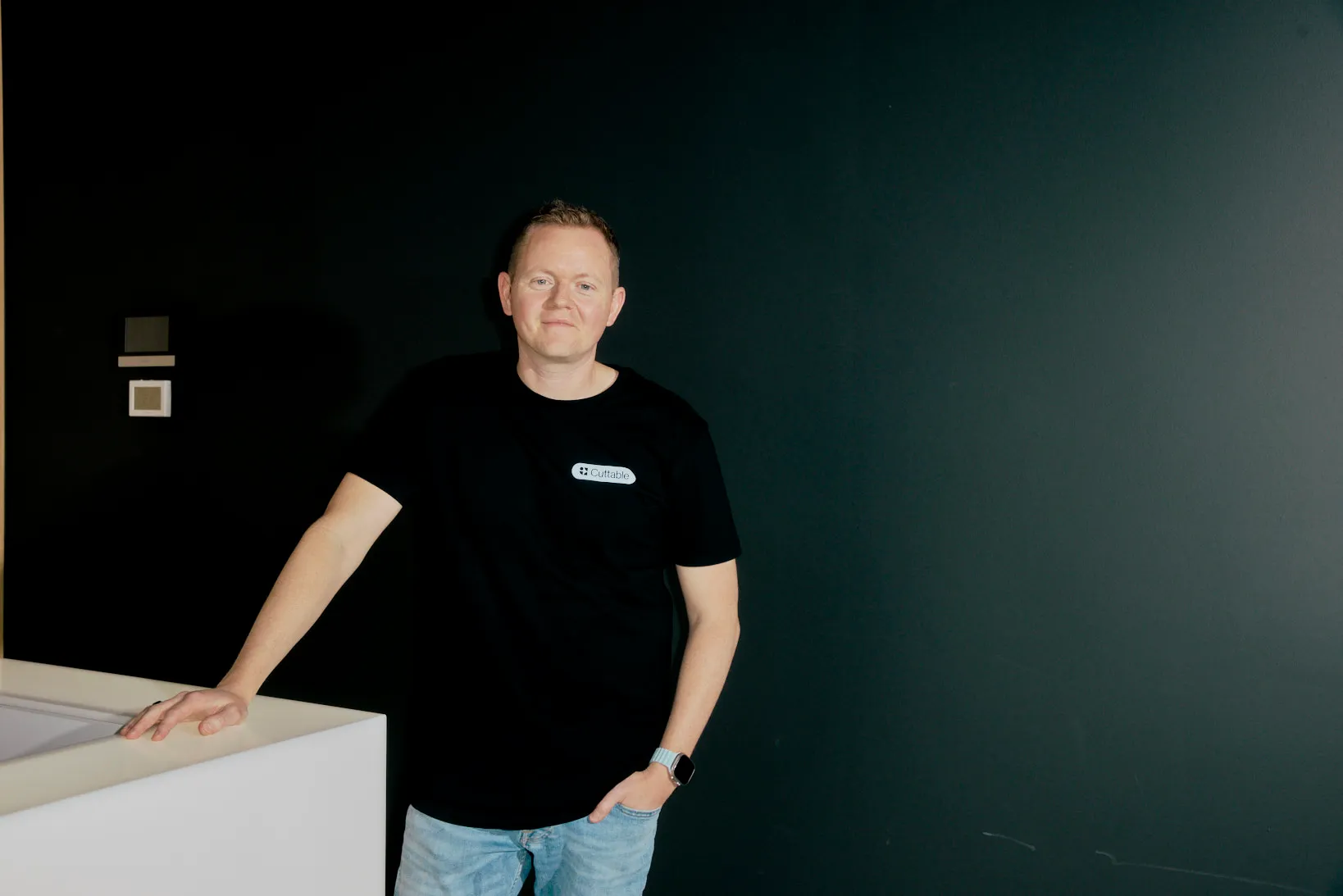
Sam Kroonenburg has spent his career on the cutting edge of whatever’s next. He’s a self-described massive nerd who’s been building and selling software since he was 13, walking cheques from America into the Commonwealth Bank as a schoolkid. He worked at Microsoft, came home to Australia, and in 2015 co-founded A Cloud Guru with his brother Ryan, teaching engineers to work in the cloud right as the cloud was taking off. Six and a half years later they’d scaled it to 600 staff and sold it to Pluralsight for just over $2 billion, one of the biggest exits in Australian history.
Then he did it again, this time with AI. His current company, Cuttable, is an AI ad-creative platform for ecommerce brands, and Nathan’s been using it for months on a client account. This is the behind-the-scenes on how it works, and the counterintuitive truth about winning on Meta.
Here’s what we took from it.
Only Build What Couldn’t Have Existed Two Years Ago
After A Cloud Guru, Sam took a year off with the family, then got the itch again. He knew he wanted back in, mostly because he didn’t want to sit out AI, and he set himself a single, ruthless test for what to build.
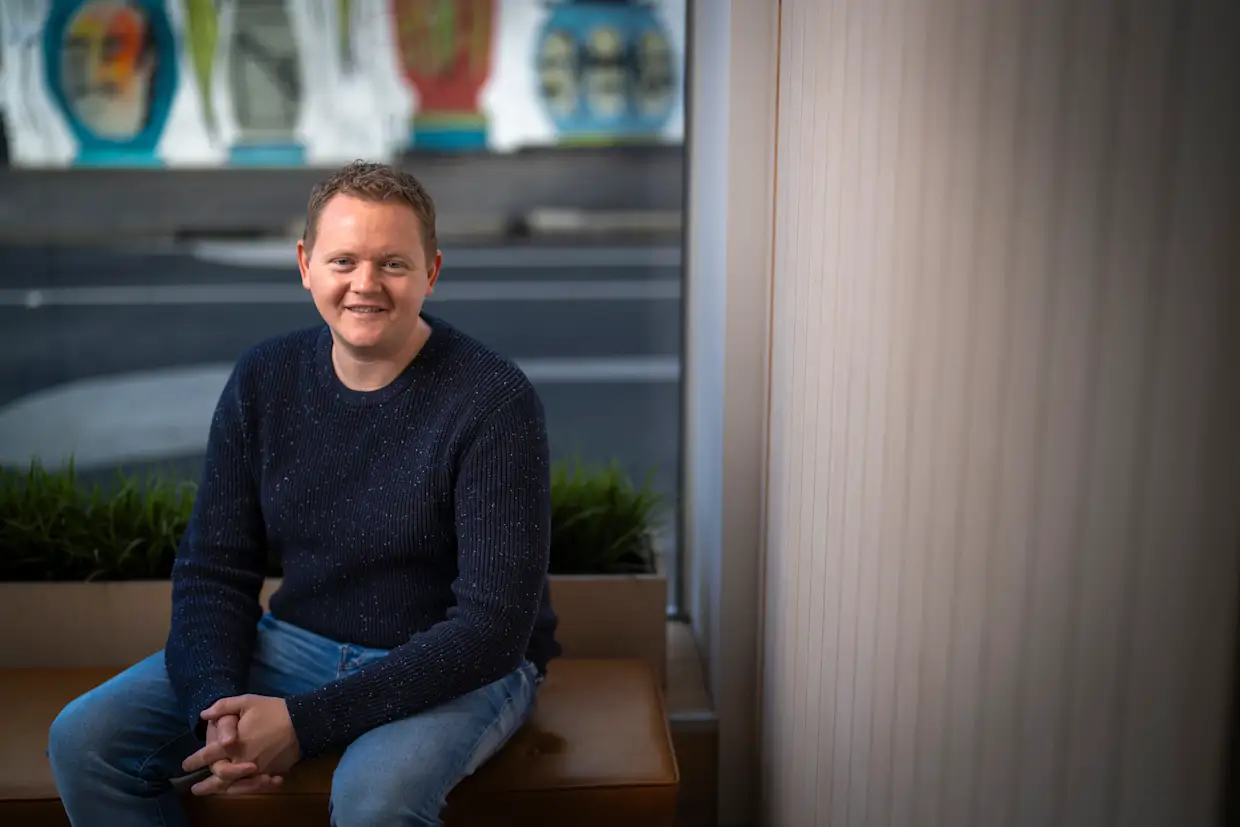
My one criteria was I want to build a company that couldn’t have been built two years ago. That’s how I’ll know if it’s truly AI native and truly something new.
- Sam Kroonenburg, Co-founder and CEO, Cuttable
He met his co-founders Ed and Jack around the same time. Jack came from advertising, having built the Melbourne agency Sunday Gravy, and he’d watched clients demand more and more social cut-downs, with humans taking weeks to turn them around. Sam had been deep in LLMs, image and video generation, building a storybook app for his kids. He saw the intersection: a huge industry work problem, and a brand-new technology that could finally solve it. The same pattern as A Cloud Guru, where the world moved to the cloud and online delivery was the new way to teach at scale.
Winning Meta Is a Volume Game, Not a Craft
This is the idea that reframes everything, and it’s the one Sam most wanted operators to hear. Winning on Meta follows a power law. You cannot pick the winner up front, and neither can Meta. The only lever you actually control is how many shots on goal you take.
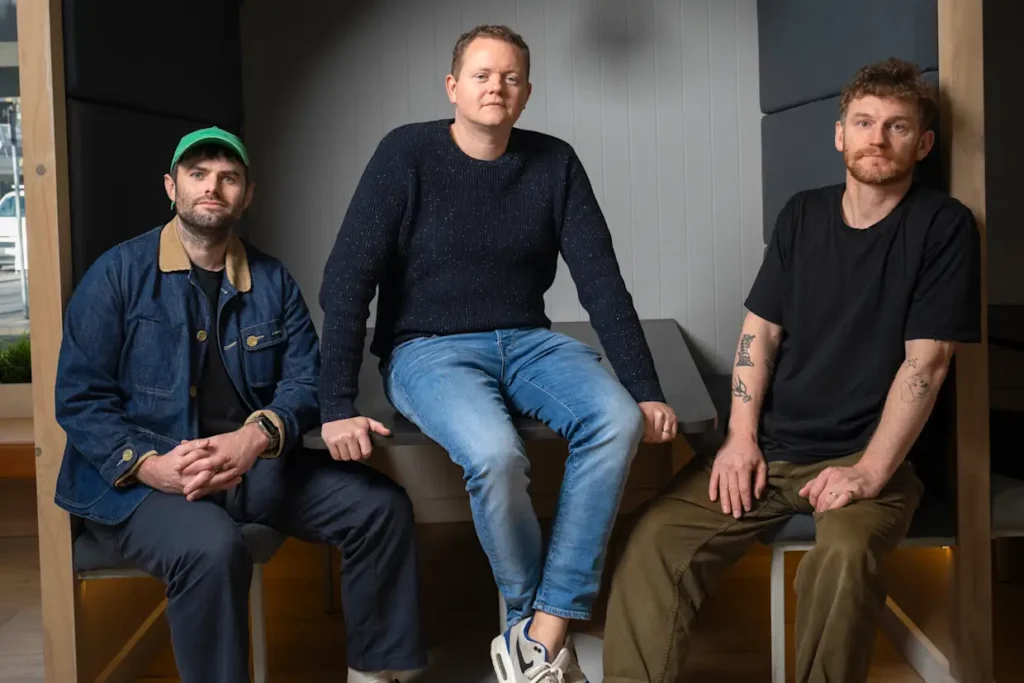
More than half the ads you publish will never perform. One in four ads will return three to five X ROAS, and one in 11 will return more than 10x ROAS.
- Sam Kroonenburg, Co-founder and CEO, Cuttable
So the maths is brutal and freeing at once. If you’ve only got a one-in-eleven shot at a winner, the answer isn’t a better ad, it’s more ads. Sam tells every brand that starts with Cuttable to publish 20 ads in their first 30 days, because 20 dramatically lifts your odds of finding a winner. Publish 50 in a week and your chance of a winner is around 83%. The catch is that companies have never been able to afford to make that many by hand, which is the whole reason Cuttable exists. Some of its customers publish 200 to 300 ads a week.
The winners themselves are humbling. Sam has seen ads hit 40x, even 180x ROAS, that nobody would have picked out of a grid of 20. It’s never obvious in advance, and you can only reverse-engineer why it worked after the fact. It might be the hook, the copy, the colours, the imagery, or a unique combination of product, market and design that just resonates. That’s why you need a system that tests every factor, not a person betting on one.
Give People Control, or You Just Make Slop
The number-one thing Sam hears from new customers is that they’ve tried AI tools and got slop. His answer is a technical bet the team made three years ago, and it’s the reason the output doesn’t fall apart the moment you touch it.
Most tools use AI to render the final pixels, so every time you want to change one thing, it goes back through a neural net and changes other things too. You can never deterministically move just the logo. Cuttable built its own video rendering system from scratch, controlled by AI but not rendered by it. The AI builds a schema of what should go in the ad, then a custom, non-AI system renders it in editable layers. Think of it as the AI driving After Effects.
What’s valuable to our customer is not a generated ad. It’s an ad they’re willing to publish.
- Sam Kroonenburg, Co-founder and CEO, Cuttable
That framing drives everything. The more control Cuttable gives people, the more they publish, often after one tiny edit, nudging a logo or tweaking a colour. And it means a creative team can actually use it, because they can put their name to what comes out. Trust is the product, and you build trust by showing results and handing over control.
Make It Look Like It Isn’t an Ad
Sam learned an expensive lesson early. Cuttable spent its first six months making beautiful, slick, polished ads, and the number-one piece of feedback was: can you just give us an ugly ad? Customers wanted lo-fi, native-looking content, the trending formats, the comparison ads, the “people texting each other” ads. The moment something looks like an ad, people skip it.
So Cuttable leans on data rather than taste. It holds ad-by-ad data on over $320 million of Meta spend, including the creative, and a team pulls apart what’s trending in each DTC category, fashion versus skincare and so on, because the winning formats change every week. Inside the platform you can see that a given design is high-ROAS and trending right now, and try it. For Nathan, an old-school brand-campaign guy, the designs are genuinely hard to love, but they work, and that’s the point. This isn’t the hero brand campaign. It’s performance.
Where Agencies and Humans Still Fit
Sam is careful here, and it matters for anyone worried AI is coming for the whole industry. Cuttable is a performance marketing system, not a replacement for the big creative idea. Creative agencies still own strategy and taste, the hero campaign, the brand foundations, and his own co-founder Jack is back at Sunday Gravy doing exactly that. Media and digital agencies actually buy Cuttable, because for them creative volume is the enabler of performance, not their differentiator.
And the designers don’t mourn the lost work. As Sam puts it, nobody got into design to make a four-by-five version of a one-by-one, or to re-export the same ad in every format. Cuttable doesn’t define a brand’s aesthetic, it learns it, the fonts, the colours, the brand kit, then cuts it up every which way. If you don’t have strong brand foundations, no tool will save you.
Looking ten years out, Sam thinks the human job becomes almost entirely about brand: how you want it to feel, how people relate to it emotionally, what it is and isn’t. The algorithms will make the incremental, increasingly one-to-one decisions about which creative to show which person. A marketer can’t be in the loop on a billion personalised calls, so the value moves to defining the bounds of the brand and setting up the system to execute at scale.
The Australian Playbook: Incubate Here, Scale There
Sam is a genuine believer in building global businesses from Australia, and he’s now done it twice. He never moved to the US for A Cloud Guru despite two-thirds of the company being in Austin, and he’s running the same play with Cuttable: build and engineer the product in Australia, prove it in the local market, then unlock the US.
The logic is practical. Australia has excellent, and cheaper, product and engineering talent that doesn’t want to move overseas, and US venture capitalists actively hunt for Australian companies that have found product-market fit at home, ready to scale into a market that’s never heard of them. Cuttable now has a New York team in the Flatiron District, is opening in San Francisco, and gets around half its inbound demand from the US, but the product and engineering stay here, close to a go-to-market team that feeds customer feedback back fast. Sam’s team will change the product within hours of good feedback, which he sees as the real engine of building something great.
The Takeaway
The through-line across both of Sam’s companies is the same: pick something you’re certain will be true in ten years, then build what needs to exist now to get there. For DTC, his ten-year certainty is blunt. AI algorithms already decide advertising performance, so the creative that feeds them has to be made by software too, because you can’t feed an algorithm running at software speed with ads made at human speed. The brands still crafting ads one by one are bringing a butter knife to a volume game. Take more shots, keep a human on the approve button, and spend your own energy on the one thing the machine can’t fake: what your brand actually stands for.
Frequently Asked Questions
What is Cuttable? Cuttable is an AI ad-creative platform for ecommerce brands, co-founded in 2023 by Sam Kroonenburg with Jack White and Ed Ring. It connects to a brand’s Shopify catalogue and Meta account, learns the brand’s assets and what’s worked historically, and generates large volumes of editable, on-brand ads that publish directly into Meta Ads Manager, with performance data feeding the next round.
Why is winning on Meta a “volume game”? Because ad performance follows a power law and nobody, not even Meta, can reliably pick the winner in advance. More than half of published ads never perform, roughly one in four returns 3 to 5x ROAS, and about one in eleven returns over 10x. The way to improve your odds is to publish far more ads: around 50 in a week gives roughly an 83% chance of finding a winner.
How is Cuttable different from tools like Midjourney or ChatGPT? Those tools use AI to render the final pixels, so changing one element sends it back through a neural net and alters other things unpredictably. Cuttable’s AI builds a schema of the ad, then a custom, non-AI system renders it in editable layers, so every element can be changed deterministically. This gives creative teams the control to publish work they’ll put their name to.
Does Cuttable replace creative agencies? Not the strategic, big-idea work. Creative agencies keep the hero campaign, brand strategy and taste, while Cuttable handles performance-marketing volume. Media and digital agencies often use Cuttable themselves, because creative volume enables the performance results they sell rather than being their differentiator.
Why did Sam Kroonenburg build Cuttable in Australia? Because Australia has strong, more affordable product and engineering talent that wants to stay local, and US investors actively look for Australian companies that have proven product-market fit at home. His approach, used with both A Cloud Guru and Cuttable, is to incubate and engineer the product in Australia, prove it locally, then scale into the much larger US market.
Based on Episode 660 of the Add To Cart podcast with Sam Kroonenburg, Co-founder and CEO of Cuttable. Join the Add To Cart community for free.
Join us!
Come behind the scenes with Add To Cart Community: Join our crew of ecommerce operators chasing growth, sharing wins, and staying sharp with deep dives, live events and no-BS inspiration.