One of the most underrated skills in ecommerce is ordering the right amount of product. That one skill can make or break a business, and after all these years there’s still no magic formula for it. There’s history you can look at and a forecast you can make, but nobody tells you exactly how much stock you’ll be stuck with, or how quickly you’ll sell out. In the end, the whole success of the business rests on the stock you’ve got to sell.
The useful part is that there are really only three levers. How much you commit up front, how fast you find out whether it’s working, and what you do with the answer once you have it. Get those three right and you’re not guessing any less, you’re just guessing with a lot less of the company’s money on the table. Because what costs you isn’t only the write-down at the end. It’s the cash tied up in stock going nowhere, instead of stock that could be moving, and in ecommerce, that’s usually your problem to fix.
The Brand That Sells Out On Purpose
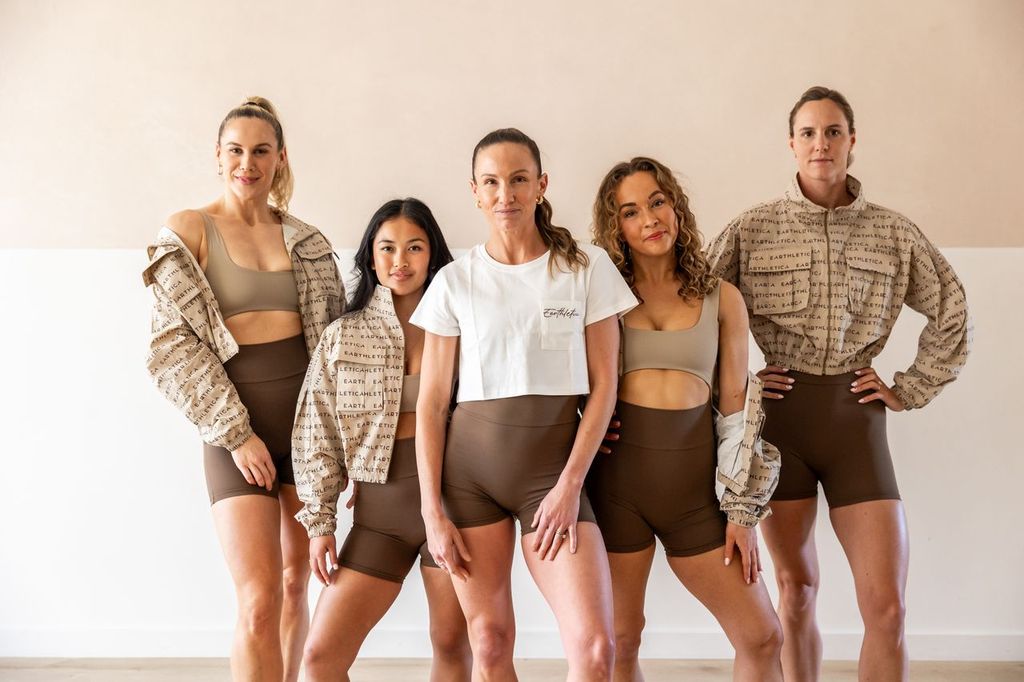
Bronte Campbell built Earthletica while she was still swimming for Australia, four Olympics and three gold medals, which isn’t the standard route into activewear. What got our attention is that half her range showing as sold out isn’t a supply problem. It was the plan.
That was designed from the start. We started out testing product by selling in drops, doing limited drops, scarcity by design, and seeing how long it would take for those to sell out. The idea behind that is keeping our inventory really small.
For Bronte it’s a testing method with a marketing side effect. She sells a limited drop, builds a wait list, watches how fast it clears, then uses that data to develop the range properly, without over-ordering and without burning cash a startup doesn’t have. It ties back to sustainability too, since roughly 30% of all clothes are thrown into landfill without ever being sold. The proof it’s working is a 50% repeat rate from her early customers over six months. She ran the same play on media spend, testing Meta ads at $10 a day before raising, hitting a 3.1 ROAS, and buying that information before committing real budget.
Lesson One: Make the First Buy Small Enough That Being Wrong Is Survivable
Start by thinking of the first order on a new line not as a commitment to the product, but as the price of finding out whether it works. That flips the question. You stop asking how many will we sell, and start asking how much you’re willing to pay for the answer.
Run the numbers. A new line lands at $60 a unit. A 3,000-unit first buy puts $180,000 of company cash into a product nobody has bought yet. The same line at 500 units is $30,000. If the 500 miss, you clear them at cost and you’re out twelve grand. If the 3,000 miss, you carry that stock through two seasons, discount it out, and explain the margin every month until it’s gone. And the minimum order quantity is more negotiable than it looks, especially with a supplier you’ve bought from for years. Rebecca Williams, CEO at Seed & Sprout, walked into a turnaround that couldn’t afford to test the expensive way.
I knew full well we did not have the luxury of buying 10,000 units and doing the test and learn. We had the benefit of some really long standing supplier relationships. My counsel to the team was go and ask the question. We would like to put these products up largely on pre-order to get a bend of what the SKU mix was going to look like, and then commit to the larger volumes.
When something misses, and something will, the small run turns it into a learning opportunity instead of a business problem. Seed & Sprout convinced themselves they needed a wine cooler, mostly because it looked good on a shoot. Customers weren’t interested. Small run, giftable, move on.
Lesson Two: Read the Speed of the Drop, Not Just the Sell-Out
The next thing is what you measure once it’s live. A limited run with a wait list hands you a number you can act on: sell-through rate, units sold divided by units received. It’s the most useful number in merchandising and the one most likely to live in someone’s head rather than a report.
But read the speed, not just the total. Two drops, 400 units each, both sold out. One cleared in nine days, the other took eleven weeks. Same revenue, very different instruction. Nine days says buy deeper and buy it now. Eleven weeks says the product works but demand is thin, so hold your depth and fix the marketing first. And a fast sell-out isn’t always a win, it can mean you didn’t buy enough and left money on the table. Sometimes, though, selling out inside a window is the strategy itself. Jason Daniel, founder and CEO of LSKD, has built a lot of the brand on exactly that.
We do a lot of hype drops with limited runs that might only be a hundred units and sell out. If your supplier can look after you, you can do little hype jobs. Which means not everyone can get it, and create that really cool hype piece that creates that word of mouth marketing.
So measuring sell-through speed does two jobs. It tells you whether a product is working, and it can be the whole demand tactic in itself. Just know that if you don’t sell through, that tactic can blow up publicly, a wait list you built and a product still sitting there in week eleven is a very public way to find out.
Lesson Three: Go In Wanting the Data to Surprise You
The last one can undo all the smarts above. All of this only pays if you let the answer change the decision, and the mindset that makes that possible is wanting to be surprised. Go into the read hoping the numbers prove you right and you’ll end up defending a product that didn’t perform. Go in wanting the data to tell you something you didn’t already know, and the same numbers start doing work for you.
So when they land, rank the range by contribution per unit rather than revenue, and sort it into heroes, core and tail. The heroes get the depth and the marketing. The core keeps the range coherent. The tail gets one honest question: does it earn its place by selling, by bringing in a customer, or by making the rest of the range make sense? None of those three, and it’s costing you cash to keep. Adam Bouris co-founded Who Is Elijah, and they had a product the whole business treated as the hero, right up until they looked properly.bout as plainly as it gets.
We found a segment of customer buying full size products without the Discovery Set, and these guys had the best lifetime value. The person that bought the Discovery Set was the least likely to come back. We used to think this was our hero product. We put it back to full price, and now gross profit went right off and everything was fixed.
Four years of data was telling them, and it still took a deliberate look to see it. Your version of the Discovery Set is probably already sitting in your reporting.
The Takeaway
There’s no magic formula for getting that initial order quantity right. It’s a mix of data and intuition you have to balance. What matters is putting the safeguards and the measurement in place, so that once you have the data, you’re making an informed decision. Keep the first buy small enough that a miss is survivable, read how fast a drop clears rather than just that it did, and go in genuinely hoping to be surprised. That’s how you stop guessing with the company’s money and start proving demand before you commit to the stock.
Frequently Asked Questions
How do you decide how much stock to order for a new product? Treat the first order as the price of finding out whether the product works, not a commitment to it. Keep the initial buy small enough that being wrong is survivable, prove demand through a limited run or pre-order, then commit to larger volumes once you have a real read on sell-through. There’s no formula; it’s a balance of data and intuition with safeguards in place.
Can you negotiate minimum order quantities with suppliers? Often yes, especially with long-standing supplier relationships. Seed & Sprout’s approach was to be transparent, articulate the mutual benefit of growing together, and ask to run certain products largely on pre-order to read the SKU mix before committing to larger volumes. It’s a conversation worth having rather than accepting the stated MOQ.
What is sell-through rate and why does it matter? Sell-through rate is units sold divided by units received, and it’s the most useful number in merchandising. But the speed matters as much as the total: two drops that both sell out tell you completely different things if one cleared in nine days and the other took eleven weeks. Fast clearance says buy deeper now; slow clearance says the product works but demand is thin.
Should products sell out fast? It depends on your goal. A deliberate limited-run drop that sells out fast creates scarcity and word-of-mouth, making the sell-out both the marketing and the measurement. But an unintended fast sell-out can mean you under-bought and left demand uncaptured. And if a hyped drop doesn’t sell through, an unsold product against a public wait list is a costly, visible miss.
In this Playbook we cover three things ecommerce operators can take into their business:
Make the first buy small enough that being wrong is survivable
Read the speed of the drop, not just whether it sold out
Go into the read wanting the data to surprise you
Read the full transcriptAuto-generated
Adam Boris: Foreign.
Nathan Bush: Skills in E Commerce is ordering the right amount of product. That one skill alone can make or break an E Commerce business. And after all of these years, there is still no magic formula for it. The there is a history that you can look at and there's a forecast that you can make. But nobody tells you exactly how much stock that you're going to be stuck with or how quickly you will sell out. In the end, the whole success of the business rests on the stock that you have to sell. Intimidating much. The useful part here is that there are three levers that you can use to try and order the right amount of stock. Especially when you're ordering for the first time. How much you commit upfront, how fast you find out whether it is working or not, and what you do with the answer once you have it. Get those three levers right and you are not guessing any less, you are just guessing with a lot less of the company's money on the table. What costs you is not only the write down at the end if your stock doesn't sell, it is the cash that gets tied up in stock that is going nowhere instead of going into stock that could be moving. And if you are running E Commerce, that problem, even if it's sitting in a warehouse, will probably end up being your problem because you are the one who has to shift stock that is going nowhere fast. So today we are going to explore how to prove demand before you buy the stock and avoid the problem altogether. Bronte Campbell built, built Earthletica while she was still swimming for Australia. Four Olympics, three gold medals, which is probably not the standard route into founding an activewear brand. But what got my attention is that half her range is now showing. Even though she's in the early stages, it's showing a sold out but it's not a supply problem. It was the plan. Let's hear it from Bronte. And obviously customers are resonating with it because just looking through your website, a lot of your range is already sold out. Is that out of demand or is that out of you being able to keep up the supply chain?
Bronte Campbell: Yeah, so that was designed from the start and we're kind of, we're. You'll see that things are sold out because we're like in a bit of a transition at the moment where we started out testing product by selling in drops, so doing limited drops, selling them one time, scarcity by design and seeing how long it would take for those to sell out. We're now like taking our data from that and our bestsellers from that and properly developing out like a more traditional E comm where you have like your quirky highlight, you know, the brand, product architecture, all of that. So we're kind of in the middle of a transitional phase but most of the stuff you'll see on there, that's, that's sold out. That's all, that's all by design. It was like here's your one off drop. We had people signing up to the wait list for it and then like here it is, our best everyone, which maybe you never know might be brought back. It sold out in 10 days. So that's, that was, that was our idea. Behind, behind that is keeping our inventory really small again when we go Back to sustainability, 30% of all clothes are thrown into landfill without even being sold. That's from businesses just being like, oh well we over ordered on this, let's just get rid of it. It's just easier. And I know our friends at Thread together look to solve a lot of this problem, but we could build it into our business design and also learn along the way and also not burn cash along the way. Which let's be honest, as a startup you don't have a lot. So.
Nathan Bush: And speaking of that, it sounds like you've well and truly proven the concept now you've got a customer base. Did I read that 50% repeat rate at the moment from your initial customers? That's a pretty good sign.
Bronte Campbell: Yeah, that's a very strong core community who we, we love so much and we're actually hosting a lot more events this year for, for them and growing that community because we can, we're on the ground, that's, that's our advantage and people want to be part of a community that's out there and moving and all the other benefits that you get, like activewear enables you to go these things. It's not just about putting it on. And then you don't just like stay at home and look in the mirror, you go out and you like meet other people and you have connection, you move your body and you change how you feel and bringing more of that to our community. But really the core community have been such a key part of why we still exist. Because they were the first people to try it, the first people to give us feedback and they love it and they keep coming back and if they didn't, we, we would have had to change something. We would have had to change something in product. We would've had to change how we were talking about it. We would have known that something was was not right there. So it was, it was a really good indicator for us that we were on the right track. And that was over like a six month period. And like I was doing, I was running some ad tests through Meta before we raised just to check like if we advertise will this actually work. And I was running them at really low budget, putting them through and testing and so we were getting really good returns on them. Some of them were like 3.1 ROAS which was like for a $10 a day spends. But it's such a small, small thing to be testing. It's such a small volume to be testing the like. Now as you scale it becomes a little bit of a different game. And I really love digging into the, the metrics there and seeing we see a, a really interesting pattern of as we're a new brand, there's like this a high volume of add to carts, like really, really high. And then I focus on those people like how, how can I convert these people?
Nathan Bush: What Bronte is describing is not a scarcity tactic that happened to work out. It's a testing method with a marketing side effect. And she's buying that information before she commits the cash. So let's go back into the archive because there's plenty of others who have found their own ways to prove demand before committing to the stock. Lesson one is to make the first buy small enough that being wrong is survivable. So where do you start? Have a think about the first order on a new line. Not as a commitment to the product long term, but as a price to find out whether it actually works. That makes you rethink the way that you think about that initial order. You stop asking how many of this will we sell? And start asking how much you're willing to pay for the answer of whether this is a long term product for you. So run the numbers. A new line lands at $60 a unit. A 3000 unit first buy puts 180k of company cash into a product that hasn't been proven yet. That Same product at 500 units is 30k. If the 500 miss you clear them at cost and you're probably out 12 grand. If the 3000 miss, you carry that stock through two seasons, discount it out, explain the margin every month until it is gone and it becomes a real business problem. And what most don't know is that the minimum order quantity is more negotiable than it looks, especially with a supplier you have bought from for years. Rebecca Williams is CEO at Seed and Sprout and she walked into a business that needed turning around and could not afford to test the expensive way. Here's how she got that conversation around minimum order, quantity to land.
Adam Boris: I knew full well that we did not have the luxury of buying 10,000 units and doing a test and learn. It just wasn't going to work for us. So I also knew that we had the benefit of some really long standing supplier relationships that are still to this day. And they were back then very, very strong. And so my counsel to the team was go and ask the question, talk about the fact that we've been a long standing supplier and talk about articulate what the benefits are on both sides of the table. We want to grow, we have an ambition to move really fast. But in order for us to test and learn, we would like to put these particular products up largely on pre order to get a bit of a bend of what the SKU mix was going to look like, what the colors, etc. And then once we know what that initial read is, we'll commit to the larger volumes. We are still doing that to this day and it has been so successful for us.
Nathan Bush: I really like that example because when something misses and something will not, all products work. The small run is what turns it into a learning opportunity instead of a massive business problem. Seed and Sprout convinced themselves they needed a wine cooler, mostly because it looked good on shoot customers. They weren't that interested. However, as Beck said, they did a small run, they made it giftable and they moved on. The business wasn't hugely impacted. Get your minimum order quantities right and they're more negotiable than you think. Lesson 2 Read the speed of the drop, not just the sellout. The next thing is what you measure once that product is live. A limited run with a wait list hands you a number that you can act on straight away. And that number is sell through rate you. That's units sold divided by the number of units received. It's one of the most useful numbers in merchandising and one that most of the team will be sweating on to know whether a product is working or not. But read the speed, not just the total sell through rate. Two drops at 400 units each can both sell out. However, if one is cleared in nine days and the other took 11 months, it's the same revenue but very different results. Nine Days says that you actually need to buy deeper and you need to buy it now. 11 months says that the product had a bit of demand, but that demand is thin and it probably spent a Lot of time taking up valuable warehouse space and effort that you could have been using elsewhere. So that sell through rate and that sell through time is really, really important. However, be warned that a fast sellout is not always a signal of success. It can actually mean that you didn't buy enough to capture all of the demand that's out there and you've left some money on the table. So although sometimes selling out inside a window is the strategy itself, not just, but most of the time selling out. But most of the time selling out is a great result and is the strategy that you are chasing. And sometimes selling out within a defined window is the actual strategy and the marketing tactic. A product that sells out fast sends a message to customers that this is in high demand. You can pick a window, hit it through the marketing team and measure that it sells out quickly and that creates scarcity and demand from your customers. Jason Daniel is the founder and the CEO of lskd, which I've got no doubt you've heard about, and he has built a lot of that brand on selling out in defined windows.
Adam Boris: It's a completely different model where E commerce is you can order whatever you want essentially if you have the minimum quantities, or you can do hype drops and we do a lot of hype drops with limited runs that you might only be 100 units and sell out this many. Not everything is bulk units. If your supplier can look after you, you can do little hype jobs, which means it's not, not everyone can get it which you want to do and create that really cool hype piece that you know creates that word of mouth marketing.
Nathan Bush: So measuring sell through speed is doing two jobs. It tells you whether a product is working and it can be the whole demand tactic in itself. Just know that you do not just know that if you do not sell through, that tactic can blow up in your face pretty quickly. A wait list you build and a product still sitting there weeks, months after that defined period can be a very public way to show that you haven't moved what you thought you would move. And lesson three go in wanting the data to surprise you. I know it sounds silly, but it's one of the biggest mistakes that we make. We can do all this and we can bring all the smarts, but it all comes undone if we don't actually take action from data that contradicts or doesn't follow our gut feeling. All of this only pays if you let the answer change your decisions. And the mindset that makes this possible is actually wanting to be surprised Go into ordering those products, especially those first products, hoping that the numbers prove you right, not trying to defend a product that does not perform. Go in wanting the data to tell you something that you didn't already know and be open to what comes out. So one of the ways to do this is that when your products land, rank the range by contribution per unit rather than total revenue. Sort it into your heroes, your core and your tail. The heroes get the depth and the marketing. The core keeps the range coherent and stable. And the tail should always be questioned whether it earns its place by selling, by bringing in new customers or making the rest of the range make sense, potentially even driving up the price of other core ranges. If you have products that don't serve a purpose at any of these stages, you really need to question what they're costing you to keep. Adam Boris co founded who is Elijah? And they had a product the whole business treated as the hero, right until they had some data which made them question everything.
Adam Boris: So we did a deep dive into the customers over the last 18 months and we found that there was a segment of customer buying full size products without samples, without discovery set. And these guys had the best lifetime value. And we realized over four years of DARA that the person that bought the Discovery set was the least likely to come back and spend more money on fragrance. They would just keep coming back to Discovery set, Discovery set, Discovery set. So we used to think this was our hero product. And then about three or four months ago again we just, we stopped talking about it as much as we used to. We put it back to full price and now we go off. Now we're, we're, we're seeing the value in these higher value customers that are just, they're going straight to the a hundred mil where they're going straight to a 50 mil. And now like gross profit went like right up and everything was fixed.
Nathan Bush: Who is Elijah had four years of data telling them and it still took a very deliberate exercise to go and find that data. To make the action that they needed to take your version. Your version of the Discovery set at who is Elijah Is probably already sitting in your reporting somewhere. As you can see, there is no magic formula for getting that initial order quantity right. It's a mixture of data and intuition that you have to balance. That's always going to be the case. But what matters is that you put the safeguards and the measurement in place so that once you have the data, you're making an informed decision and not putting the business at risk. We cover inventory and stock in module 5 of the E Commerce Foundations course, which very excitingly we are just about to release. And it brings together lessons from over 600 interviews that I've had with Australia's best E Commerce leaders. Keep an eye out for that one. It will be dropping very soon and if you are working out how to have the minimum order quantity conversation with a supplier or how to go deep on reorder after a drop clears the tests, that's exactly what we're discussing in the Add to Cart community every day. You can join for free. Join over on add to cart.com au that's the playbook for this week. Go have a look at some of those initial numbers for your new products and how quickly they are clearing. Make some decisions and then hopefully you get the confidence that you can continue innovating and bringing new product into market to keep growing your brand. I'll see you next Friday. Did you know that retailers who are offering fast delivery outperform their competitors by 4% during Black Friday? And that's not just a stat, that's a signal for where growth is going to come from. Shipit's Commerce Delivery Report Breaks, Breaks down why Speed Equals Success as well as the other forces shaping delivery in 2026. From automation and AI to fulfillment and inventory, this report offers a really practical roadmap for the next phase of retail growth. If you want all the stats and the directions for what is coming in fulfillment, make sure you download this report@shipit.com CDR2026 that's shipit.com CDR2026.