Dave Hack: This content's so disposable, like ad fatigue is when everyone that you can target has been seen it already and they're no longer responding to the ad. So you just need to keep refreshing the view and the voice of whatever the message is you're communicating. It's always important to remember that video is not a strategy, it's just a tool. B2B advertising is just so boring and has the biggest opportunity for disruption and for creativity I think. And, and really probably LinkedIn video is probably the next like frontier I think.
[Voiceover]: Welcome to Add to Cart, Australia's leading e commerce podcast that Express delivers all you need to know in the fast moving world of online retail.
Dave Hack: Here's your host, Bushy.
[Voiceover]: Welcome to another episode of Add to Cart. I'm Bushie and I'm joining you from the land of the terrible people, otherwise known as Bris Australia on Add to Cart. We welcome everyone to share and listen to e commerce stories. The more diverse the better. I want to especially welcome the traditional owners and the original storytellers of the land that we are on, our indigenous and Torres Strait Islander listeners to join us in our E commerce conversations and our community. Hello and welcome to our very last
Nathan Bush: episode for the year.
[Voiceover]: Over the summer we are going to have a couple of very special episodes where we recap the best chats that we think we've had, but also the most popular as told by the numbers. But this will be the very last regular chat and what a year it's been. We've had some amazing guests and today is no different. Are you someone who really struggles with bringing video to life? No matter how good the intention is,
Nathan Bush: no matter how well it's scripted, you
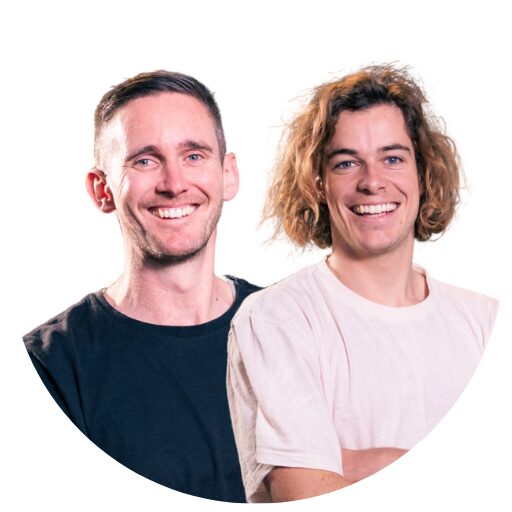
[Voiceover]: just cannot get in front of the camera and be the spokesperson for your brand or make video that you think will really resonate for your customers. Well, today we have a duo who are aiming to fill this problem but also actually provide a pathway for content creators that may not necessarily want to be influencers. Dave Hack and George Brown are co founders of Creator Flow. It's a platform that connects brands with UGC style ad creators. The guys found a gap between between those who have a need for social media ad content to be made and those with the talent, experience and availability to make it. They've filled their books with high quality Australian creators and are working with some pretty impressive clients such as Shark Ninja, who Gives a Crap and the Oodie. Today, Dave and George get into the detail of exactly what UGC is and how it differs from influencer content. They share wisdom from both sides of the equation from how to produce great content and the must haves when briefing for ugc. We also get their predictions on where we're going to see the most future disruption in this space. Now, if you are keen to try Creator Flow, listen up at the end for a special sign up offer. So thanks to our partners Shopify plus and Signet. Here's our conversation with Dave Hack and George Brown, co founders of Creator Flow.
Nathan Bush: Dave, George, welcome to ADD to cart.
Dave Hack: Thanks Nathan.
George Brown: Thanks Nathan. Great to be here.
Nathan Bush: Great to have you here.
[Voiceover]: You're joining us from Perth, I believe.
George Brown: Yep. Correct.
Nathan Bush: Beautiful. All right, we are here to talk all about Creator Flow, what you guys have created. Let's get straight into it because I hadn't heard of Creator Flow until I was steered that way and was really impressed by some of the retailers that you had on board using it, but also the model itself. So I'm really keen to dive into it. So let's kick off just giving our listeners a bit of an overview. What is Creator Flow?
George Brown: Sure, yeah. So CreatorFlow is basically a platform that allows brands, predominantly E commerce brands, but also service based businesses, to get access to really talented Australian content creators that can make this new style of content called user generated content. And so yeah, we found a lot of problems with the industry and how to actually acquire this content. And so that's when we came up with this idea just to make it a whole lot easier for brands to get their hands on it.
Nathan Bush: Was there a particular moment or a particular problem that you saw that went, shit, we've just got to start this?
George Brown: Yeah, absolutely, yeah. Actually the idea came about when I was running my business, Wash Block, which was a sustainable personal care product based business and I needed a lot of this content, but I found it a real challenge to get it. There were agencies that promised they could deliver this, but it was way out of my price budget and then just acquiring it myself was a massive headache. Communicating across all sorts of different channels, emails, text messages, instant DMs and everything. The quality was all over the place. And then also usage rights is a real headache. So yeah, that was sort of the light bulb moment when I thought, hey, surely there's other brands that are having the same problem and we can make it a whole lot easier for them and also more affordable.
Nathan Bush: And so obviously you've got the agency side there that you can go to where you'll have professional designers on hand. You'd also assume would have explored the option of going down the upwork or the fiver track. Did you go down that path as
Dave Hack: well or when you had wash block?
George Brown: Oh, when I did wash block, yeah, sure, Yes. I looked into working with the agencies for sure, but I just couldn't afford them, so really steered away from that. Decided to sort of manage the whole process of vetting creators and working with them myself. But yeah, as I mentioned, it was quite time consuming. Yeah, it was fraught with lots of different issues.
Nathan Bush: Yeah, fair. And then how did you guys get together?
Dave Hack: So we're part of like a venture studio. I was kind of looking for, like, basically a co founder to tackle a problem worth solving. That's kind of when I met and connected with George and thought, yep, he's the kind of guy I wouldn't mind getting stuck in an airport with. Internal test. Loved what he built with washcloth and thought he had, I guess, the talent and the five we needed to do something great.
Nathan Bush: Fantastic.
George Brown: Yeah, it's been great so far. I'm stoked to be working with Dave and we seem to be getting some great momentum now, so it's exciting times.
Nathan Bush: Well, let's talk about that momentum. Some of the retailers or the D2C brands that you've got on board so far include the Ooty Shark Ninja, Orbitkey, who gives a crap? There's some pretty big names in the D2C space in Australia, brands that a lot of retailers and founders will be looking up to. Which brand did you get on board that you went, oh, shit, I think we've got something?
Dave Hack: Yeah, obviously those guys are the OGs of UGC. When they found us and kind of got underway and, and then booked a chat with us to suss out where we legit and meeting with the content team there, that was really in that conversation. Yeah, we're definitely solving a problem they have, like, you know, they're working with between 30 and 40 creators at any one time to keep up with the content that they need. Because I think everyone knows that this kind of content is disposable, so you need to have a key, keep refreshing your creative for all of the ads. And so when they describe the challenges of, like, all the different platforms and messages are coming in, trying to vet creators, are these guys actually going to be able to deliver the content we need? Are they going to stick to the brief and also the time that they were losing just trying to reach out to potential creators, we're like, oh, yeah, I think we're onto something. And they've kind of been great coming back and keep placing orders, particularly I think we've had a great cohort of mail creators which are kind of like the unicorns of ugc.
Nathan Bush: Why mail creators so hard to find?
George Brown: Yeah, I don't know. I guess it just seems to be in the industry that women are much more happy to jump on film themselves talking about a product and males just aren't so comfortable really.
Nathan Bush: It seems great opportunity for any male listeners out there who are keen to jump in front of a camera.
George Brown: Yeah, we've got a handful that are cleaning up on the platform currently.
Nathan Bush: I'm only good for voice. Yeah. Face for radio. Exactly. So tell me about how the OODI uses you. So you said that they had 30 to 40, 40 people that they were going direct with. So now I'm imagining that creative flow is the middle person without giving it too much of a stigma attached to that. But you do the work of selecting, negotiating, pulling that content through for the Oodie for multiple creators, is that right?
Dave Hack: I guess the way that we work is we're just trying to be a platform that makes it really easy for brands to connect with great creators. So to get ads that work and then also for the creators to get work from ads. And they basically use us to like when they've got a new, they've got a brief or something they know kind of works, or a script they're looking for, or maybe they're looking for a new idea or a new angle, they'll post it on our platform, choose some creators they want to work with and commission them to make the job. Then. It is very similar to some of those kind of freelance platforms like Fiverr or upwork. But I guess that in terms of the job management and just how that all works. But I think what kind of makes us a little bit unique is it's how focused on UGC it is. But also we're able to provide quality creators in our market, which some of those kind of more global platforms. It's a bit too spread, a bit too diverse, not tailored to Australia.
Nathan Bush: You've got to wade through a lot to get to the quality on those bigger platforms.
Dave Hack: That's right, absolutely.
George Brown: Yeah.
Nathan Bush: You mentioned the new style of UGC that you guys specialize in. What is the typical format of content that you find yourself connecting with most often?
Dave Hack: I guess what we mean by that is we're describing it as creator made ugc. So as opposed to the previous version, which would be influencer made ugc and then the very first type of UGC where the name comes from like user generated content. Act true customers. When UGC first was dreamt of, it was really around the hope that real customers would make great content that we can use as a brand. And, you know, obviously that stuff's the best, it's the rawest, the most, you know, true. But most customers aren't creators. So to actually get content that is usable and reliable when you need it is too hard. So then brands were like, hey, let's try influencers. They're great at making content. But the problem with a lot of influencers, that they believe they're famous, so they want to charge rates and use like a legal framework, you know, usage rights to kind of earn more from the process. And most brands were finding it too costly. But also this content's so disposable. Like ad fatigue is when everyone that you can target has been seen it already and they're no longer responding to the ad. So you just need to keep refreshing the view and the voice of whatever the message is you're communicating. And so that's, that's kind of where the thought to make just creator made content, which gives, you know, 100% control to the brand of the brief, of the creative, of the distribution because they're putting out through their brand ad accounts. And then it also gives like full usage rights. Our creators are effectively like freelance creatives as opposed to trying to be famous influencers. They're not trying to look after their audience or anything like that. They're not conflicted in their briefs, not worried about distribution. Yeah, yeah, we're not solving a distribution problem. And as everyone has seen on all the social media platforms, like distribution, particularly from those organic influencer accounts, is not what it was. Everyone knows it's kind of pay to play. So best way to do it right now is have 100% control of a message, tweaking it to make sure those hooks are landing. The problem that you're communicating, that you're solving is resonating. Solution is kind of there and there's a call to action that works. So yeah, I guess the format we're seeing the most of us with that classic kind of ad narrative.
George Brown: Do you want to talk about that? Yeah, sure. Yes, definitely. Dave's swell on the money is sort of the ads that start with a strong hook that sort of grabs the attention of the viewer and then goes into the problems and solution and features and benefits and then ends with again with a strong like a call to action, asking them to go and do something like visit the website or swipe up or whatever it may be. So yeah, that seems to be sort of the sweet spot and the most popular on our platform and rightly so, because it does seem to work really well.
[Voiceover]: While the big supermarket chains dragged their feet to get rid of plastic bags and packaging, online grocery startup Good Groceries is leading the way by eliminating 100% of plastic packaging from all their fulfillment processes. But it doesn't stop there. They are one of the few retailers to achieve climate active certification as a carbon neutral operation. Each order is sent in Signet's shipping cartons, kraft paper and water activated tape. No dodgy long life plastic bags here. If you're serious about sustainability, visit signet.net au to browse the range and contact the team to find out how their packaging solutions can help your e commerce business.
Nathan Bush: And are you mainly talking about ads in the format of short form video for TikTok, Instagram, et cetera?
George Brown: Correct. Yeah. So basically what we provide is vertical video content. That's what the brands are ordering. And it's really sort of organic looking and authentic. And then these brands are going on to use it either organically just across their social media, or they use it for like paid ads on Facebook or TikTok or the likes.
Nathan Bush: Gotcha. Makes a lot of sense. Cause I know a lot of brands struggle with that. They want to get onto TikTok, they want to expand their video content, but founders might not be comfortable in front of camera or they just may not have time to do it well. So. So that makes sense to connect in. And I love the differentiation you made between influencers and creators. I think that's really important to stress in how it's different when you are working out or trying to bring together creators on your platform. Do you have a set of criteria that you look for to allow them onto the platform?
George Brown: Yeah, absolutely. Yeah. So we're pretty stringent with what creators we allow on and what we like to see and what we don't. So we ask for all creators to upload at least two or three video examples of UGC videos that they've actually made for clients previously. And on top of that an introduction video. You know, clients can really get to know the creator and everything. But with those UGC showcases we review each one and we rank it against production quality criteria. And then David?
Dave Hack: Yeah, also I'm just using the Google ABCD kind of video framework as well. And then we're also looking for kind of ad narrative. So all the creators on our platform have to demonstrate they understand ad narrative before they get through. To date, we've had probably about 1500 creator applications started of which you've only let 220 creators through. And it's because this is not just organic content. This is just not like, oh, I went to a restaurant. That was fun. Here's a hook that's really compelling. Here is a great message that wants me, like, wants me to buy this product. The hardest thing about reviewing all the videos that do get uploaded is often I'm like, then clicking on the ad, trying to find the company that it was about. Like, this is an amazing product. I want to buy this thing. So I've had to like catch myself a few times being like, oh no,
Nathan Bush: no, no, you've got 30 ooties in your wardrobe.
Dave Hack: I guess that's the level of creators that we're looking for and hoping to kind of curate and just make really easy to access.
Nathan Bush: You mentioned the production quality criteria. Can you give us an idea of what's in that? Even if we've got people at home who are listening going, oh no, I really want to improve my own videos. Whether it's them shooting it themselves. What is that criteria that you think they should be looking at?
Dave Hack: Yeah, look, we definitely recommend just like looking up the Google ABCD framework, which is just a really helpful guide to some of the fundamentals of what makes a video wanting to watch. But on the production side, it's probably around things like audio. Can you actually clearly hear what's going on? Some creators will have this like background music way too loud. You can't even hear the message. Sometimes there'll be a massive audio jump difference from to camera compared to what they then do a voiceover section in. Also framing. One of the fundamental rules of framing is just about rule of thirds. If your face is in the bottom of the screen, that's probably not gonna look great. But you wouldn't be amazed how much like content out there that's just doesn't look good lighting. So having a little bit of basic front lighting is good. Or backlighting if you're trying to make something look cool. It's those kind of fundamentals.
George Brown: We all know that attention spans are shrinking rapidly. So just making sure that editing is really quick and snappy is also really important. So that's also what we're looking for.
Nathan Bush: Yeah, I think that's what I struggle with the most. Even like putting out the clips from Add to Cart is knowing that I should be editing this so that you're changing frames and changing angles and putting music. And I'm like, I just can't do it. Like it's just not in my DNA to do it. It takes a special kind of person, I think, to be able to do it.
George Brown: And then, yeah, it's definitely, it's an
Dave Hack: art or a special AI platform, you know, spot on.
Nathan Bush: Spot on. And obviously irony behind it that we spent the first 10 minutes of this video call trying to set up our own backgrounds and lighting and sound.
George Brown: Yeah, it's best to leave it to the price. That's right, exactly.
Nathan Bush: And so tell me, what does the commercial model look like for brands who might be looking to engage creative flow to connect in with content creators? What does that look like? Yes.
Dave Hack: So you can pay as you go, which is a little bit unusual in our space. That was a huge feedback we got from the market, from all the brands we connected to, is that they didn't necessarily want to have to commit to a retainer when they're not sure if this is going to work for them or. So we've made it really accessible in that you can just buy one video to test out, test us out, test out the creator. I guess the next step up from that is to kind of buy kind of bulk pre purchase, kind of an amount to get a discount on getting your viewers through. And then we also increase that discount if you want to then turn that into a monthly subscription model in terms of the, the credits you can use on our site. Yeah, so it's, it's really easy to kick off. You just. Most brand managers or content managers have got access to some kind of credit card. So it's just kind of prepaid purchase. Makes it way easier for everyone. No one's chasing up invoices and, and particularly on the side of, for brands that are dealing with lots of creators, we're making sure the creator side's handled. So, you know, they have to have an abn, they have to be, have a legit business structure. But for a brand we just become a single invoicer, which makes everyone's accountants happy and you know, everyone knows how important it is to keep your accountants happy. So working with creatorflow just makes it way easier for brands.
Nathan Bush: And do the creators set their own price and you mark that up or how does it work?
George Brown: Yeah, so currently we've got basically fixed pricing across the board, but what we do allow creators to do is to set their minimum price that they will take. So that basically means when the brands are going through and creating their order, if the price falls below what the creators will take, they're basically just filtered out so that's how we get around that. But across the board it's just fixed pricing and it's up to the creators to either accept or decline the job. Pretty much nine times out of ten, the creators take the job. They're really happy to have the work, which is great.
Nathan Bush: And when you're filtering through, searching for creators, what are some of the most common filters used? Because I could imagine that a lot of brands would be very particular around the types of people that they would want in front of camera potentially, you know, in the right target market, passionate about the product. What tools do brands have to filter out and find the right talent?
Dave Hack: Yeah, the main tool is just like the age demographic because that's typically the main thing that brands are looking for or trying to connect with. A certain age range. A huge one is also just the family side of things as well, like family related products, kids, baby products. So they can filter around, you know, if they can show kids and at what age categories. They can also kind of filter if you need a partner involved in a shot or you can come specify that in your brief. That's kind of the main ones. The good thing to understand and the freedom that is created by using creator made UGC is that they're more like paid actors than they are influences or personalities. So as long as the creator personally feels some kind of resonance with what they're able to present and they can present it authentically, that's kind of all that matters. It's not about necessarily what their audience engages with or how that resonates. So it actually reduces the level of filtering that's required. Compared to traditional kind of influencer marketing. There's less kind of background checks and stuff that needs to happen. That's what we're finding out. Our clients are not as fast because they know they're just getting a creative person to make a really engaging piece of content. It's not coming with essentially all of that other stuff attached. We do give them the option to do a deep dive if they really want to, in that all our creators have all their social profiles on their profile on creator flow. But the idea is to speed it up, not slow it down.
Nathan Bush: Yeah, yeah, makes sense. And in terms of when your brands are briefing in their creators, how detailed are the briefs? Because like you said with influencers, it's almost like, here's a product, go create what you want to create, tell your audience what you think. This seems more like advertising, having paid talent to represent your product. Are you finding that brands want to script something really in detail or are they letting them fly a bit loose?
Dave Hack: Yeah, it's a great, great question, Nathan. I think it really depends on the maturity of the brand as to what data they've got that they know is working. And I think that's the big opportunity for this type of low cost creative for this whole UGC space is it gives you the ability to lean on really talented creators to come up with a voicing of a script that is going to resonate and that also comes across super organic. So when a brand is at the early stage of that journey, we're always encouraging them to give the creator as much kind of creative license to come up with their own script and experiment with that and then get a bunch of different versions of an idea or an angle made and then test that to work out what messages are resonating with the target audience that you're trying to reach. And then as you go down that process and as each round comes back, you have the kind of the ability to make really informed decisions about what particular lines or messages as you build an ad narrative script are working and you need to hang onto and keep. And we see that without like more advanced brands. So, you know, the oodies and all the shark ninjas or people that have kind of had a few runs on the board using this content, like the further they get into that process, the more detailed and specific they are to the creators. We think the biggest mistake that a lot of clients make is that in their very first go they're just trying to jam all of these kind of advertising messages into something that's meant to get past people's ad filters. And that's the other opportunity of UGC is the whole point is to trick people in some ways to be like, is this someone I know? And by the time they work out, nah, this is just a random. They've already been given a great message about the product that it's all been hooked in with some kind of story visually or you know, in terms of the script that's going on. So. So yeah, we're always recommending to lean on the creativity of these, you know, talented creators to communicate for you.
Nathan Bush: There's lots of research out there around how well organic looking video performs in paid social spots versus the slick studio produced content. And I think there's plenty out there for people to see. Have you had any feedback from your clients around the performance of creator led content versus even influencer versus studio or agency led content?
George Brown: Sure, yeah, we've had one client called Complete Home Filtration and they tried us out, I think about two months ago. And yeah, they just came back to us after two weeks saying, this is incredible, guys. We've halved our customer acquisition cost. And so they were absolutely wrapped. That was one great result.
Dave Hack: Definitely. Yeah, we're seeing that pretty consistently that where people transitioning from like a more traditional style ad, that they're just getting way better engagement and then therefore they're getting a lower cac. Yeah, and that's, that's really the opportunity, particularly for stuff that's really top of funnel. If you're trying to introduce people to your brand and then maybe down the track, you know, through retargeting or even bottom of funnel, giving them a more traditional ad, that, that then instills like trust in the brand, then that's great. But in terms of the social proof, you just can't beat like that UGC organic style ad, particularly when it's allowed, when you allow the creator to voice it.
[Voiceover]: Is there any part of your model
Nathan Bush: that's considering moving into helping brands distribute the content as well? Because I could imagine that sometimes you can have the best content, but if you have a really shit paid strategy behind it, or you're targeting the wrong audience or not trialing the right channels, all of that great content can go to waste.
George Brown: Yeah, that's a great question. We're finding more and more when we're talking to our customers that have used us, we're saying, how do you like the content? They're going, we loved it, it's so great. And how did it perform on paid ads and everything? And they go, oh, well, we actually haven't launched this ad, this content is ads yet. And so we're kind of scratching our heads. Dave and I are going, I wonder how we can help them actually implement that and put them on ads. So, yeah, we don't have any solutions yet, but still we're exploring.
Nathan Bush: Do you partner with agencies? So say paid performance agencies?
George Brown: Yeah.
Nathan Bush: Because you both got gaps there, right?
Dave Hack: Yeah, absolutely, yeah. And huge majority of our agency clients are performance agencies because we're solving a massive issue for them. They have great clients, they're doing a great job of running the ads, but they need really high quality and fresh content to keep doing a great job of the ads. We're working with a lot of great performance agencies. So if our clients are struggling, we're generally referring to those kind of agencies that we've seen just do great stuff. We would trust to do that. I think in terms of the distribution question, we have been really surprised how little the clients have brought up the distribution issue in that we've only had a handful of requests for creators to also whitelist or run Spark ads. So that's on TikTok or Instagram where you can basically get the creator to post it through their account and then it can connect back to your ad account and then you can boost that post or spend increases the reach of that post as an ad. And we've only had a handful of requests for it, so I mean it's definitely something. If those requests go up, we would work out how to incorporate. But yeah, we're actually surprised that there hasn't been that much market demand for it around that distribution side.
Nathan Bush: I mean, you are dealing with some of the most progressive D2C retailers in Australia there. So it'll be interesting to see as it gets bigger and broader how that pans out, right? Yeah, totally.
George Brown: I also think the hardest part in this equation is definitely getting the creative content and then the media buying. I mean, Facebook and Google and Instagram and TikTok, they make it so easy now and their algorithms are so incredible that you don't need to be an expert anymore. You basically just need to leave it up to them. And it's all basically reliant on the quality of the content that you're pushing out there.
Nathan Bush: Yeah. So with your content creator community, you've created a great community there. You said you've got what, over 200 creators on the platform?
George Brown: Yeah.
Nathan Bush: Do you have a favorite?
George Brown: We've got a few favorites. The favorites tend to be the ones that deliver on time and exceed the customer's expectations.
Nathan Bush: Tell us about someone that comes to mind. They may not be your favorite, but tell us about someone that comes to mind. Give us a bit of a description of a content creator out there that you think is doing some standout work.
George Brown: Yeah, sure. So there's one creator that comes to mind called Mitch Harris. He's from wa, but he's just moved over to Gold Coast. Super talented guy. He's had a handful of different jobs over the years, but recently he's just found his real niche in this style of content and delivering quality and value for brands. And yeah, this is a good little earner for him. He takes it a bit more seriously than some of our newer creators, which is great. And that's what we're really finding. The creators that are wanting to push into this and make it their full time thing, just delivering some exceptional content for brands.
[Voiceover]: Is he full time now or getting
Nathan Bush: close to Full time?
George Brown: Yeah, pretty much full time. Yeah. Yeah. There's another creator called Tilia Jasmine.
Dave Hack: She's similar.
George Brown: They just produce.
Dave Hack: Awesome.
Nathan Bush: Yeah.
Dave Hack: What I love about Tilia's story is she basically decided that this is the kind of stuff that she wanted to do just eight months ago.
Nathan Bush: Yeah.
Dave Hack: And from eight months to a go to now, she's now full time just creating content. And yeah, she's doing a great job. Just. Yeah, she's one of the kind of stars on our platform for sure.
[Voiceover]: It's the calm before the storm. And unlike George Clooney in the Perfect Storm, spoiler alert. Shopify wants retailers to come out not just alive, but thriving because it's a big deal. Especially here in Australia. Last year, Australian merchants ranked third globally in Black Friday Cyber Monday cycle sales volume. What an opportunity. So if you want to maximize your share of the peak sales this year, use this time before the storm to download and read Shopify's peak season playbook. They've got 10 experts, including me, to share their tips on how to maximize sales at this time. So put on your life jacket and get your hands on Shopify's free peak season playbook. Download it at shopify.com/guides forward/peaksalesseason2023 or just follow the links in the episode show notes from the device you are on.
Nathan Bush: Land ahoy. On the reversal of that. Have you had situations where content creators have delivered content? Might have been on brief, but clients have turned around and said, no, this isn't what we wanted. I've worked in advertising before. Some clients don't know what they want until they see it. Have you had that scenario? How do you deal with it?
George Brown: Yeah, yeah, we definitely have that scenario.
Dave Hack: Look, anything creative, you're always gonna have those kind of situations where someone. I think the challenge is where people are new to UGC and they're still expecting a traditional ad and they don't quite understand, well, why didn't you say the five things I needed them to say in 20 seconds? Because no one would watch that video. That's why.
Nathan Bush: Yeah.
Dave Hack: And so that client education piece is. Is a challenge that we have. And trying to mediate that and take them on the journey is a challenge. That's why we really love working with creative agencies that just want to use us to increase their capabilities to do content because that, you know, they're better suited at working with clients on that side of things. But typically we just try and do our best to come up with a great resolution for everyone. So usually it just Comes down to miscommunication or misunderstanding. And we feel like we've had a pretty good track record of working that out. For example, a client might ask for a reshoot, but really what they mean is a re edit. And so the creator says reshoot. It's like, no, well, I've already done this video of whatever the set was, I can't redo it. And really what that client was actually asking for was I just need you to change this visual to this visual or edit something else. So we typically can just jump in there and kind of mediate a great result where it really goes belly up. And it does happen. Our policy is like a 100 kind of money back guarantee. So we'll either find another creator for the client to then fulfill the video to whatever there is they're looking for, or yeah, just refund them. So it's kind of how it works. And fortunately we haven't had to do that too many times.
Nathan Bush: So far, no makes sense. And I could imagine your point there around agencies for agencies who might be banging their head against the wall with some clients who are like, if only we had the opportunity to put the content in there that we want. Could even be a great proof of concept for some agencies at a low cost, low investment cost to be able to trial some new content on behalf of a client. Right? Obviously with their permission.
Dave Hack: Absolutely. And we're even seeing agencies use us to generate content to form a pitch to a new client because it's relatively cost effective. They'll actually like rather than waiting for the client's permission, they just get some videos made that actually go into a pitch and we're seeing them win some great jobs with that. So like really proactive agencies can use this to, you know, because our creators deliver content within 72 hours of getting everything they need to make a video. So yeah, we definitely recommend that.
Nathan Bush: So tips for anyone who is out there creating short form video UGC so whether using creator flow or not to brief in, what would you say are the must haves to include on a brief when you're briefing out to your
Dave Hack: creators even before you start the brief, Our key tips would just be have a really good strategy. It's always important to remember that video is not a strategy, just a tool. So have a great strategy. Who are you trying to reach? What stage on their journey? Are they like whereabouts in your funnel or however you describe it? Is this piece of content going to be then also have a great understanding of once you actually have this content, what you're going to do with it before you make it. So having a loop to some kind of performance data is really essential to having success with your ugc. And then I guess when it does come to having your brief, we always would recommend just having one clear message that you're trying to communicate per video. What's the one thing you want to highlight? And then if you can go in with that, if you had some ideas around different angles or different hooks and stuff to try, we'd recommend that. And then the last thing would be that when you do brief a creator, you ask them to do a few extra hooks for you. So alternate intros and different variations you can try. Just last week we were making our own founder UGC just to try out some ads for ourselves and I found I had one video where I just went straight into what we were offering which was like a free UGC script generator that we've developed and if I introduced myself and said hi, I'm Dave from Creator Flow, I'd get a 1% better click through rate by just introducing myself as opposed to going straight into my script. So like experimentation of that intro of that first three to five seconds, which is called the hook, is just so, so critical.
Nathan Bush: I'm surprised you didn't try and find some lookalikes on the platform.
Dave Hack: We have, we have, we've tried.
George Brown: We'll closely monitor the results on Facebook ads and if we don't come up to scratch, we might palm it off.
Nathan Bush: And what about video length when it comes to ad content across Instagram TikTok? Any recommendations there?
George Brown: It really depends. It doesn't seem that Facebook penalizes depending on length. It's just really about how engaging the content is. We're finding that 30 seconds is enough to get a few key messages across and yeah, educate the viewer and I'd probably advise like any longer than that unless it's really engaging. Yeah, it's probably too much.
Nathan Bush: And Obviously platforms like TikTok are created to keep you in the vortex of TikTok, not to allow you to click out. What kind of calls to action are you seeing really resonate in that platform especially?
Dave Hack: Yeah, look, TikTok's a challenging one for call to action as I'm sure most of your listeners would know or had experience with like a strong CTA is just not, they're not just not letting you get through. Remember that blink in lio trend from you know, a few years back because they wouldn't let you do link in bio so that there's still struggle. But there is some creative ways around it and we think it's just more about coming up with an authentic storytelling approach to a call to action. So for example, it might be it's the way that you would personally recommend someone to do something as opposed to how a brand is telling you to do something. So if you can like frame it as in get something more like personal friend recommendation, that's a great way to kind of get around that. But also you have to understand that you're probably using TikTok at this stage as more top of funnel part of your strat or step in your strategy first comment video is. Seems to be the most effective right now if you needed a stronger call to action. But the TikTok platform is constantly evolving and changing and you know, there is a little bit of rumors that TikTok shop is coming to Australia next year. So I think that's going to see a whole lot of change. So yeah, in the short term, yeah, just keep experimenting and see what you get through.
Nathan Bush: Yeah, it's interesting. They've cut off access to some of the feeds for other types of shops and I think you're right is that they'll consolidate it and bring all products through TikTok and finally deliver that social shopping experience that's been promised for years. Right?
Dave Hack: Yeah, that's it. Well, I mean it's amazing the traction is getting in Indonesia, some of the Southeast Asian markets. It's really disrupting things. So I think that same disruption is going to happen here too in terms
Nathan Bush: of this UGC or disposable content. Do you see any other platforms or channels really emerging that you think brands should stay on top of?
Dave Hack: Yeah, I mean the data on YouTube shorts is pretty unreal, but we haven't really seen any of our clients really kind of go hard on it yet. But we're definitely seeing from, I guess we're hearing from particularly our clients who are more like growth hackers and people are really on the cutting edge. They're starting to experiment with that and seeing some really good, I guess cost CPMs are quite low on there at the moment just because no one else is on there. So yeah, that, that seems like a good opportunity. It also gives you the opportunity to do stuff that's a little bit different. So like the loopable videos seem to work really well on YouTube shorts. That's the whole own kind of briefing technique.
George Brown: There's also platforms like Pinterest that often people forget about and I'm seeing some of our UGC ads popping up on there now. But yeah, it's great platform. People that use it, use it religiously and there definitely seems to be like a lot less competition there.
Dave Hack: So yeah, great tip. And probably the biggest one we think is Slept on is actually LinkedIn for B2B and obviously you have to be creative in the way that you brief it, but B2B advertising is just so boring and has the biggest opportunity for disruption and for creativity, I think. And really probably LinkedIn video is probably the next frontier, I think.
Nathan Bush: Heaven help us. You're at Digital Marketers Australia. What kind of feedback are you getting as you go and tell people about the product?
George Brown: Yeah, so we presented it that in front of 300, between 300 and 400 people. And after the session we were just swarmed by Digital marketers both on agency side and brand side, just wanted to talk to us and figure out how it could work for their brand and everything. So yeah, there's definitely so much buzz around UGC at the moment and fascination and how they can best implement it. So it was really great. It was fantastic.
Nathan Bush: Awesome. It must feel good to be getting to the point where you can be out there talking about and just trying to get that scale happening right. You've got some beautiful case studies, you've got a great creator base now. Now it's ready to really go. You mentioned at the start there, Dave, around Creator Flow being backed by Better Labs. Better Labs, they're a vc, are they?
Dave Hack: Yes, a venture fund and yeah, startup studio as well. So yeah, we do kind of internal startups and really the whole thing about Better Labs comes from our, I guess our mothership, which is RACWA and ROC is like the biggest insurer in Western Australia. Kind of slogan is for the better. And so the whole point of Better Labs is to find problems worth solving just to make everyone's life better. This is kind of, I guess, driving the mission behind Creator Flow as well and that we just want to make it way better for brands and also for creators and clients just to work together and make it much easier to get the content they need to sell the products they need and for creators to have a full time work schedule of being creative.
Nathan Bush: Awesome. And George, did you ever imagine that your two years with Wash Block would have led you to this venture?
George Brown: No, absolutely not. But yeah, wouldn't be here without Wash Block and that experience. So yeah, I'm very grateful for that for sure.
Nathan Bush: Awesome. So what's next on the cards, guys? 12 months. What are we doing over the next 12 months? Where are we focusing?
Dave Hack: Yeah, great question. I think kind of what you spoke on before, Nathan, just about hitting that scale. We feel like we've got the core of our product kind of working in terms of the ability to make it easy for brands and creators to connect and work together. But yet there's huge opportunity for us to capitalize on by just getting out there and letting people know that there's a much easier way to do this. And so that's really going to be. The focus is just kind of growing both our client side, but also the creator side and just improving our the tools and the features just to make everyone's kind of working relationships even better.
Nathan Bush: What's high on the tools and features list for you?
George Brown: Where do we start though?
Dave Hack: Always. I saw a T shirt I probably need to have which is like it's on the roadmap, you know.
Nathan Bush: Are you led by your clients in terms of what their requests are to build that roadmap out or do you kind of already have a vision of where it needs to go?
Dave Hack: Bit of both. I think the clients really, we allow them to really change the priorities for sure.
George Brown: Absolutely.
Dave Hack: I mean, just last week, I mean, you basically called up every single client.
George Brown: Yeah, we're really big on getting the feedback from our customers and seeing what problems they're having and also on the creator side. And that's basically how we built this product from the start, just listening and iterating and. Yeah, so we'll continue to do that. And I guess one other thing, Nathan, to answer your question is me personally and also Dave, we would love to go international at one point. So yeah, that's big picture.
Dave Hack: Goals, awesome.
Nathan Bush: Why not? Why not? All right, so if we have either brands listening to this, wanting to get started with or create more UGC content, potentially agencies coming on board to help up the game for their clients or content creators even who are going, well, I can actually do this, I can help out. What's the best way for them to get in touch and learn more?
Dave Hack: Yeah, just head to our website creatorflow.com as a creator, apply to join, show us your best videos. If you're an agency, we'd love to chat about partnering with you to just to help improve outcomes for all of your clients. And then, yeah, if you're a brand, also love to chat. I think that's a huge part of particularly our story is just understanding the challenges that brands face. So yeah, we really want to partner with great brands all around Australia and the world, jump to our website, book a call up the chat or just go in and make an order,
Nathan Bush: preferably the last one.
[Voiceover]: Dave, George, thanks for joining us on Add to Cart.
George Brown: Thanks for having us, Max. It was great.
[Voiceover]: I really love the idea of having a third party create content. Those who are really experienced and natural at creating content, but aren't necessarily influencers. So we're buying the skills, but not necessarily the audience. All right, here are the three things that I got out of that episode. Number one, if you are an aspiring ad creator, get the basics right. You might have amazing things to say and do, but the technical details, especially for video creation, are really important. We're talking things like clear all audio, thoughtful framing, good lighting. Get the basics right and you'll look a million dollars. And number two, and this one is for the brands. Video is a tool, not a strategy. If you're a brand who wants to engage creators to make UGC plan the strategy behind it first, what kind of customer are you trying to reach? What messages are we getting across? What's the tone of voice that we're going to use? This is all really helpful stuff so that when you get content back, you don't just have to kind of hide it away in some folders that no one will ever find. You can actually go out and use it. So that brief and that strategy is so important. And lastly, something that the guys said that I really picked up on is the B2B video content opportunity. If our version of B2B marketing is pamphlets or LinkedIn posts or all of the usual, then I think there's a really great opportunity. Opportunity to disrupt with some video that captures our attention. After all, B2B buyers are still people and people want to buy from other people. Make sure you make it personable and video is a great way, which is often overlooked, to make connections in B2B. All right, if you want to try Creator Flow, sign up with the code add to cart or one word and you'll get 100 credits courtesy of Dave and George. There'll be a link in the show Notes. Thanks for joining us today on Add to Cart to listen to all our e commerce conversations now in the hundreds. You can head on over to add to cart.com there.
Dave Hack: You can also join up to our
[Voiceover]: free private Slack community to share e commerce ideas, tips and questions with other listeners. You can also subscribe to the Add to Cart weekly newsletter and browse some of the video highlights from our chats. There is a lot there. That's addtocart.com and if I can ask you one thing before you go, if you enjoyed today's episode, make sure you share it with a friend or a colleague who could benefit or leave us a review. It really makes a difference. Thanks again for listening. And until next time, keep those customers adding to cart.