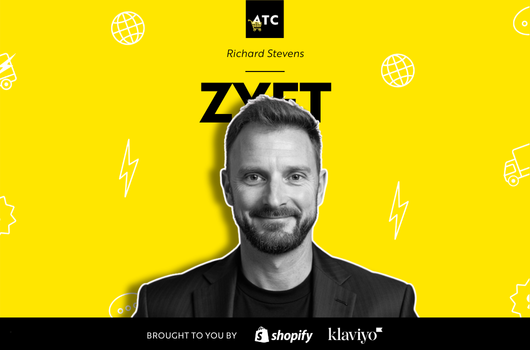
Nathan Bush: Calling all brands looking to dominate search rankings in 2025 Studio Hawk is Australia's largest dedicated SEO agency, working with brands like officeworks, City, Beach, Age, Clarks, Petstock and New Balance. And they have an exclusive offer for Add to Cart. Listeners sign up for an ongoing SEO campaign and receive the content Boost package, professionally written copy for 40 category pages free of charge. If you want to rank and convert better in 2025, head on over to studiohawk.com and mention add to Cart when inquiring to claim this offer. Plus receive a free SEO audit of your website as we come up to peak season, I think we all know that pricing is and always has been one of the most powerful levers in retail. Change it too often and you run the risk of devaluing or making it too unpredictable for customers to put a value on what you're selling. Change it too slowly and you're probably giving up margin and might become invisible. Managing pricing, especially real time pricing, is a real art and I want to get into this today and take you on a little bit of a journey around some of the tips from our guests around how they manage pricing. Because we know we're in a world now where customers are comparing price and it's easier to do than ever. One time you had to go and open a thousand tabs on Google to try and compare it. Now. Now you can see them all in Google Shopping or better still, you can get your favorite GPT to run a search for you and bring you back the best options straight away. It's never been easier to compare pricing and to work out where the best value is. Now that goes the next level when we're in a scenario where customers are really hypersensitive to inflation. I don't think inflation has been talked about anywhere near as often as in my time in retail as it has in the last 12 to 24 months. Customers are hypersensitive to value. Discount fatigue is setting in and I think with that comes a little bit of distrust if you are seen to be discounting or price gouging. And marketplaces are helping reshape how customers decide what's fair and opens up all the options available to customers beyond what's available in our local area. So with all of this, you need to have a really good grip on your pricing and how that's distributed and shown to your customers across channels because they've got an eagle eye on it and it will be what you're judged on. I want to throw us back to a conversation that we had With Richard Stevens, who is the founder of Zift. And he knows about pricing better than anyone. Zift is a platform that indexes over 130,000 product searches every day, pulling real time pricing and stock data directly from retailers and even feeding that intelligence back into the retailer's system. That means that every time a customer searches, the machine learns what's happening in the market and the retailer gets instant visibility on how they stack up. But Richard takes it a step further in this conversation and he talks about price not just as a competitive lever, but as a price truth. Almost showing up as a brand asset, showing up with accurate, trustworthy and up to date data so that the customer can make a confident choice. Let's hear how he describes it.
Richard Stevens: An empowered, confident consumer is a great thing, right? You're shortening that decision funnel. Sometimes they're important decisions that you should be making. Today. Consumers are using tools nowadays. I mean, I think there's, in the last year alone, I think the use of AI in the shopping experience has increased in Australia by 45%. So it's happening. So it's then about as a retailer, what do you do to leverage that? And if you embrace it and lean forward and say, well actually if the consumer is more confident, it may actually mitigate some of that procrastination or that tendency of leaving things till tomorrow. If I am in store and know that if there's a product I want to buy and it's actually priced competitive and it's right in front of me, a transaction could be happening there and then because of that knowledge and confidence, rather than it be left for another day and that customer just walks out the door no matter what the salesperson may trial or hope to do. So I think it's about accepting what consumers are looking to do. How can you use that as a retailer to your advantage?
Nathan Bush: So I think that's a really smart take. Not just thinking of price as the last step or the last verification before a cut customer makes a decision, but as an indicator of brand trust and brand value. If customers are seeing different prices for the same product all over the web, or if they're seeing you price really high one day and then really low the next, what does that do to your brand? Richard's take on pricing is a massive reality check for us in E commerce, especially at this peak time of year. Your customers will compare you. No matter what, no matter how good your brand is, no matter how good your story is, they're going to look at price whether you like it or not the question is whether you're in control of the price that they see or not. I went back through our archives to get a little bit of advice from our past guests on how they handle price to make sure that customers see it in the best value possible. One of the most common themes and most overlooked practices in E commerce is making sure that we're turning pricing into a daily habit. Pricing shouldn't be a set and forget Aaron Cowper from Shop Grok back on episode 374 put it perfectly. Pricing is one of the most powerful levers that retailers have, but most are too scared to touch it. His team helps brands benchmark their pricing against competitors every single day and multiple times during peak events such as Black Friday or Boxing Day. If you're only reviewing your pricing one time per year, you're not optimizing. You're probably leaving margin on the table and you're guessing. Aaron talks about automating your pricing, making sure that you use tools that are available for you or even some simple monitoring through GPT agents to stay within 5% of the market and to let data handle the heavy lifting. There are so many tools out there, you can actually make your own now to be able to monitor what's going on in the world of pricing, especially when you sell the same product as other people, and to make sure you remain competitive without necessarily always having to match. But of course we know that pricing isn't as simple as just whacking a shelf label up. In E Commerce we have much more intelligence and automation available to us and we really need to consider that for the customer and what stage they're in. There is no rule that says that one product has to have one price for everyone. There are definitely ways that you can take the hints from your customer and understand what they value and to give them a price that's relevant for them. James Taylor from Particular Audience way back on episode 154 told us about that system. Instead of blanket discounts, he finds that retailers are using particular audience to spot customers who are about to abandon cart, usually because they've seen a better deal somewhere else or they've had that cart for a long time and are waiting till they've got the right funds for it and then gives them a tailored incentive on the spot. Not before he told us about one case where that doubled conversion rates for under 2% margin cost. There are so many of those moments available. Think about member pricing coupons for first time purchases, referral discounts, surprise and delight coupons in parcels. There are so many ways that you can give customers their own special price. Rather than tinkering always with the RRP that all customers will see on the front end. Think about who it is that you need to appeal to and maybe adjust that pricing for and put it behind a wall. Doesn't always have to be up front. And lastly, we know that in a world where it's not just a website anymore, we might have an app, we might be on Amazon, we might have other marketplaces we might have in store. Pricing isn't easy. We're not saying that it is, but you need to have systems that make sure that there is. What Sean Walsh from Patterns says Channel Hygiene Aligning your pricing, your stock and your messaging across every touch point doesn't necessarily mean that every channel's gotta be the same price. But you need to have visibility on what it is and have that channel hygiene have that price in place because we don't want customers finding prices that we haven't strategically put there. As we said at the start, pricing isn't just about getting that conversion. Pricing says a lot about your brand and your organization and the perceived value for your customers. If your pricing is all over the shop and out of control, that's a sure sign that the rest of your business might be as well. So that's the big lesson I took from Richard. Consistency builds trust. Discrepancy kills it. Make sure you've got a clear strategy around your pricing. Don't make it a once in every six months activity to review it. It should be part of your daily activities. Real time pricing isn't about a race to the bottom. It's about keeping your data, your strategy and your customer promise in sync. If you enjoyed this playbook, make sure you hit subscribe on YouTube, Spotify or Apple, wherever you're listening from and we will bring you more interviews and more playbooks for your e commerce business in the coming weeks. Now also, if you really want to discuss real time pricing, if you have questions that come out of this episode, if you want to discuss different tactics, head on into the Add to Cart community. It's free to join and you can find the link to sign up on addtocart.com we have over 500 e commerce professionals in there ready to share tips, give advice and help each other out. We know the real time pricing is not easy. If it was, we'd all be doing it. Go in there and you'll have some great minds to bounce ideas off there. See you next time.