Jonathan Burt: And literally it felt like within a week, 80% of our revenue just dried up. It turns out it was just being smuggled into all of the music festivals.
Jesse Leeworthy: AI is not going to steal our jobs. It's the people that are able to maximize their skills with AI who's going to get the jobs. Maybe we've only got one shot at this, so we're going to make sure that the first experience that they have with the product is on point.
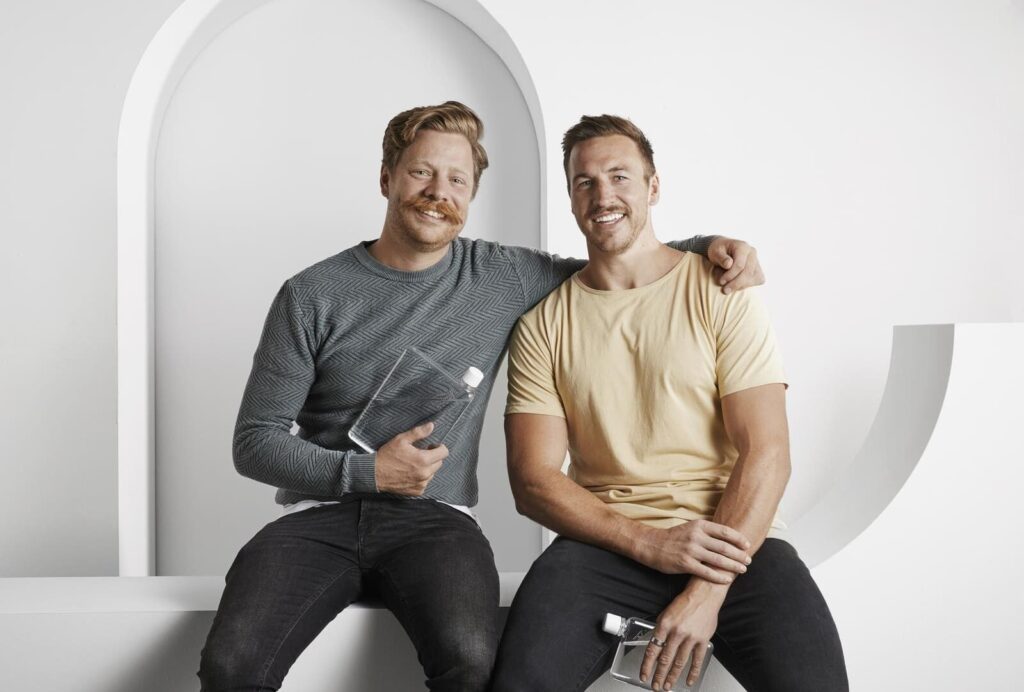
[Voiceover]: Welcome to ADD to cart, Australia's leading e commerce podcast that Express delivers all you need to know in the fast moving world of online retail. Here's your host, Bushy. Hey, it's Nathan Bush or Bushy joining you from the land of the terrible people here in Brisbane, Australia. Take a look at the water bottle that is sitting right in front of you right now on your desk or in the holder of your bike while you're at the gym or maybe in the car. What is that bottle saying about you? Because one thing that we've come to know, that water bottles actually represent us. And in today's episode we talk about the emotional connection that you have with your water bottle. Seems bizarre, right? But it's true. In today's episode I am chatting with Jonathan Burt and Jesse Leeworthy who are the co founders of Memo Bottle. It's the brand behind the world's first flat, paper sized reusable water bottle. You've definitely seen it. It fits perfectly into bags. It looks like it belongs in an art gallery and well, today we find out it actually does and has been called a design icon by fans and retailers around the world. We talked today about how Memo Bottle balances premium positioning with wide distribution, how they've created a magnetic brand with low repeat products, and why they've turned their marketing team into a mini internal agency. So if you've ever wondered how to go from art gallery shelves to airport gates to without getting knocked off by Temu, this one's for you. A big thanks to our partners Shopify and Klaviyo for bringing this episode to you. Now here's our chat with Jonathan and Jesse, co founders of Memo Bottle. Jono. Jesse, welcome to ADD to cart.
Jonathan Burt: Thanks for having me.
Jesse Leeworthy: Good to be here.
Jonathan Burt: Great to be here.
[Voiceover]: Great to meet you too. The Memo Bottle, you've got one of those products that has just lodged in everyone's mind, I reckon, because even if you don't have a Memo Bottle, you say, I told a few people that we were having this chat and they're like, oh, Memo Bottle, that's The one that like fits into your bag or into your suitcase and people get it straight away. You've done a phenomenal job in getting the word out there and having something unique in market. Did you always think it was going to hold such a place in people's heads?
Jesse Leeworthy: Yeah, it's a tough one. I don't know if we did, like, the frustration was there and that's. I mean, it all stemmed from that frustration of not being able to fit like a big cylindrical water bottle in our bag. So we're at university, trying to stuff it in. Just couldn't do. Everything else in our bag was flat, you know, books and laptops. So it just made sense.
[Voiceover]: You use books in university.
Jonathan Burt: Remember those days? Yeah. We're really showing our age now. We're 11. We're 11 this year. Memo bottles.
[Voiceover]: I know.
Jonathan Burt: Well done.
[Voiceover]: 11 years of business. That's. That's phenomenal.
Jonathan Burt: And we were using books. Yeah, it's crazy, isn't it?
Jesse Leeworthy: There wasn't a bottle out there. And so, yeah, we thought like, you know, we've got to do something. And then it just resonated with people. I think that, yeah, people have just found this. It fits in so many different places, like in your airline seat pocket or in a golf bag and all these different places where a traditional water bottle can't. So, yeah, it does resonate.
Jonathan Burt: But I think, to answer your question, there's no way 11 years ago we would have thought that we would be where we are today based on the little idea that we had for Kickstarter. It's amazing how the brand and the product range and the use cases for our products have evolved over the years.
[Voiceover]: Yeah. And I think most of us in E commerce, we have ideas along the way, but the trick or where success comes from is in the execution and actually having the chutzpah to actually go ahead and invest and put time and effort and money into it. What convinced you that this idea for a different shaped water bottle that could fit into bags and all those different places actually had a decent business model behind it?
Jesse Leeworthy: Well, to be completely honest, we weren't really thinking about making a business out of this when we started it. We saw the idea, like, we designed the idea, we thought it was. It was good, and we thought, all right, let's make a few bottles. And so, like, we launched on Kickstarter when we did it, and that was kind of like market research at its finest. And that's how we put it out there. We had no idea how it's going to Go, you know, and we ended up selling like 14,000 bottles on that. And that was when we realized, okay, I think we're going to make a business out of this now.
[Voiceover]: So what was your Kickstarter target?
Jonathan Burt: Initially it was 15,000 we set as our target. So if we hit 15,000 then we had to go to production and fulfill all these orders. And so we set 15 and the 30 day campaign we got 260 odd thousand, which hindsight, we didn't spend a dollar on advertising. It was all organic through Kickstarter and PR and everything at the time. Again, organic PR, none of it, we organized ourselves. So it was, we were really fortunate at the time. I think we were at a point where Kickstarter was just up. We're just coming up and about. It was obviously we'd sort of hit this perfect space of product market fit. We just worked really well and all these things just came together for us. That just worked at the time.
[Voiceover]: Yeah. And it's not, it's a time and place, but there's also, I feel from the outside an element of love and design that goes into it. It's even researching what you guys are doing. Before coming in here, I came across an article that called your water bottles a work of art. Which if we think about it, I've never heard a water bottle be called a work of art. Like, it might seem normal to you guys now, but back then water bottles are water bottles. Right. What's the design process? Because I can imagine there's a big piece in you guys having to retain a competitive edge through design. Is that fair?
Jesse Leeworthy: Yeah, I think it is fair. Like my background, before starting Memo Bottle, I was a product design engineer. I've always been a design geek and I think when this came about it was all about minimalism and minimalist design. And so having the idea for a flat water bottle but then being able to strip everything back from the product itself was really important. And then we tried to bring that through into our branding and that sort of thing to take us, take us forward from there.
[Voiceover]: Yeah.
Jonathan Burt: And I think like obviously the, the design is amazing. There's nothing else out there like it. So I can't attach myself to the design. It's purely. Jesse, I'll take the credit wherever I can, but none of it is, none of it was me, but I think just that and attaching that, that really unique design to the problem solution scenario. So at the time launched the Kickstarter, we were, you know, it was the Simon Sinek Know your why and people don't buy what you're doing, they buy why you're doing it. And just being able to attach raise the problem that the frustrations were for us. And then therefore, this is the solution in this incredible aesthetic design. It turned a lot of heads.
Jesse Leeworthy: And also because, you know, the bottles themselves have like the A5 and A6, like their paper sizes. So we found a lot of graphic designers, architects would really geek out over it. And it just sort of like initially it really pushed us down that path and we ended up stocking in a whole lot of like art galleries around the world. And it was positioned as a really, like a premium, almost like a. Yeah, like you say an icon, which is really cool. And then since then, it's got so many different uses and it's resonated outside of that demographic.
[Voiceover]: It's pretty cool though, to start with a bullseye demographic, isn't it? Like someone who's really passionate about your products. This cohort where design and functionality and bit of community all come together because it's such a. Even if you think about Frank Green, not sure if you want me to say their name, but it's like there's a status symbol attached to it. Right. So if you found that community around graphic designers, artists who value design and they can, you know, have that symbol of that wherever they go, that's pretty powerful.
Jonathan Burt: Yeah, yeah, for sure. It's that thousand true fans Kevin Kelly sort of article, isn't it?
[Voiceover]: Yeah, yeah, absolutely. You mentioned there, around art galleries, where's the weirdest place that you've seen a memo bottle pop up?
Jesse Leeworthy: The best one is at MoMA in the States was amazing. I mean, there was one of our retailers, but that was a goal, so that was pretty cool. I don't know about the weirdest.
[Voiceover]: Weirdest.
Jonathan Burt: I don't know. I mean, we're 11 years in. Like I was saying, it's still just so crazy just seeing our products out in the wild daily now, which is crazy. But, yeah, there's all sorts of places. I can't even think of any off top of my head now.
[Voiceover]: And I know you guys have been on a journey over those 11 years. I'm keen to hear around some of the ups and downs of that journey along the way. But you've transformed from a D2C brand into a brand that has multiple touch points now. Tell us about that transition. When was the moment that you went, actually, we've got to go further than just D2C.
Jonathan Burt: Yeah, there were a few transitions before even that, actually. So when we first launched before we'd even shipped out our products, all of our Kickstarter. Back in 2014, we received a PO from Urban Outfitters without, like, sight unseen, hadn't even seen our product. They pitched us and just put this PO down. And we had no intentions of really going into that B2B landscape or retail landscape. We loved Triangle swimwear. This is 2014, 2015.
Jesse Leeworthy: Yeah. To give context to that, it's like that was a time when not many brands were, like, purely D2C. There was, like, there were, you know, D2C and B2B. And Triangle Swimwear was one that, you know, did only on online. And we're like, that is a very tasty business model. Let's. This makes a lot of sense. Let's go down that we'll go really good margins. We can protect our own brand. Let's try that.
Jonathan Burt: So that was the goal. And then we got this Urban Outfitters PO and we're like, okay, well, that's Urban Outfitters. You can't say no to that. Let's go down that path. And it took us down this journey of like, what Jesse just said. I guess we just parked that D2C model for a little while, and we went very deep down a B2B path for four or five years. And we're stocked in thousands of stores around the world. And B2B was 80% of our revenue. That was our key focus. We were traveling all around the world and just pitching. Yeah, pitching to all these amazing stores. But then Covid happened. Prior to that, we raised money. We did a equity raise to really double down on this B2B model that we're operating.
Jesse Leeworthy: And it was working so well for us, so we just wanted to really double down on it. And we were setting up to do a whole lot of trade shows as well. And that's what we're raising for.
Jonathan Burt: Yeah.
Jesse Leeworthy: And the raise went well.
Jonathan Burt: The raise went really well. We shot off overseas and went to do a trade show tour around the world. And this is sort of late 2019 into 2020, if those numbers ring a bell.
Jesse Leeworthy: Yeah,
[Voiceover]: I think I know what's coming here.
Jonathan Burt: This was great times. But what goes up, you know, like.
Jesse Leeworthy: Yeah, we landed in Paris and we had, like, such an incredible trade show. So many orders. Well, we're high fiving each other. We're like, you know, you raise money and then we're actually doing what we said. We're executing, executing. And it was going well. And then the next week, we went to New York and we did Another trade show. And then that was our best we'd ever done. And things were just, like, incredible.
[Voiceover]: What kind of feedback are you getting at those trade shows? What are people saying that are seeing it for the first time?
Jonathan Burt: You know, feedback that we get a lot of the time is that. How has no one thought of this? This is genius. Like, it makes so much sense. So we're getting a lot of that, and a lot of the buyers that we're speaking to were telling us that we're the next big thing, especially in the US and so incredible feedback.
[Voiceover]: So you're flying after these two trade shows.
Jonathan Burt: We felt like things were going in the right direction. And then we went to Frankfurt, which was the last trade show of the tour. And this was early February 2020. We're hearing rumblings of a. Yeah.
Jesse Leeworthy: Of a little virus. So this trade show we landed, and this was only a couple of days later.
Jonathan Burt: Yeah.
Jesse Leeworthy: Had 30% attendance. And we're just like, okay, what's this virus thing? And, yeah, it was. It was crazy. And shortly after that, we went home and, you know, 80% of our revenue was coming from B2B at this time.
[Voiceover]: And most of that international?
Jesse Leeworthy: Yeah, most of it was international.
Jonathan Burt: Probably 70%.
Jesse Leeworthy: Yeah. And we got home just before, you know, Australia locked down completely, and we got a phone call from our Italian rep agent and basically said that all of the orders that we have Italy canceled. And we were like, yeah, okay, this is. This is pretty serious. And then country after country, they just all started canceling. And basically every order that we got from those trade shows, we couldn't fulfill because they were cancelled.
[Voiceover]: And are you holding that stock at that time?
Jonathan Burt: Yeah, we're holding stock. And obviously you're taking these orders at the shows, but they don't mean anything until they're paid for. So they were notional orders that were all canceled. And hundreds and hundreds of new stores that we thought were going to be stocking us over the coming months, that all fell through. And obviously we're back in Australia at this point and all the news is starting to come out. All of our Australian retailers are closing down. And literally, it felt like within a week, 80% of our revenue had just dried up. So all the stores had closed, the lockdowns were coming into force. So it was a pretty heavy time.
Jesse Leeworthy: We were to the point where we had seven team members at the time, all pretty much to the point where we had a discussion that we were going to have to leave, let everyone go, basically. And then Jobkeeper came in the next Day and sort of, you know, kept the lights on. And we basically from then it was just. We were just doing sales one after the other. We were selling sanitizer.
[Voiceover]: You got on the sanitizer wagon as well.
Jesse Leeworthy: We did, yeah.
Jonathan Burt: We were proud to say that we're one of the first.
Jesse Leeworthy: But yeah, it was just a wild time. And for quite a few months there we were just doing any. We were just scrambling. We almost went under like multiple times there. Yeah.
Jonathan Burt: So that, that sort of. So B2B closed and that led us into the D2C e. Com game. That was sort of the new path for us. We'd always been selling on E Comm but just not at to that point. We pretty much hadn't ever done ad spend paid ads.
[Voiceover]: Okay.
Jonathan Burt: We're six years in the business, you
[Voiceover]: know, which is because that's very different to most paths, isn't it? Because especially those who start on Kickstarter, the natural is to do D2C straight away if you've already got the Kickstarter exposure. So it's interesting that you went Kickstarter B2B and then were forced to come back into D2C. What did you do to establish the brand in D2C? Especially at that time, like, obviously it was a ripe time for D2C. We had some very good years there as online businesses. What worked for you to reestablish yourself as a D2C brand?
Jesse Leeworthy: I feel like when we first started, we're probably, you know, we're right up there with being present in the social. And then when this happened, we sort of got left behind. You know, video had come in on platforms and we weren't doing that. There was just a whole lot of things in terms of content that we needed to catch up on. We were still posting only still photos on our Instagram and so just like, you know, trying to get video going. But I think the main thing was actually paid ads, which was the thing that sort of really started to kickstart our DTC growth.
Jonathan Burt: Paid ads was a big one. And we also realized that, I mean, obviously you're paying for impressions with Meta, but we realized that we needed to try to get impressions elsewhere. So we try to. Partnerships was a big one that we leaned into partnerships with the Australian Open and the F1 Grand Prix and things like that. I mean, it was a good time for that because everything was going so cheap because the foot traffic was down and no one was willing to commit to those sort of things.
Jesse Leeworthy: So having that as brand alignment with the F1 or with the AUS Open was incredible for us, especially for online. Just sort of started to push us into the light a bit more, which is really great.
[Voiceover]: That's really interesting. We just had Jared from Before youe Speak Coffee who's done his F1 partnership with Alpine and Jack Doan and previously we've had Cat from Waterdrop as well with the Australian Open partnership as well. So really interesting that there's a few threads of those kind of partnerships coming together, especially for both brands who might not be big legacy brands. Because we often put those kind of partnerships around the Rolex, you know, the big. The Rolexes, exactly.
Jesse Leeworthy: Yeah.
[Voiceover]: Any secrets to securing those kind of partnerships when you're still an emerging brand?
Jonathan Burt: I wouldn't say those secrets. I mean technically we're not allowed to refer to as a partnership either. It was, it was us. It was us taking a retail space, a retail footprint and just putting a megaphone on it to make it look and feel like a partnership to everyone external. So, you know, perceptions, reality, with a lot of that kind of stuff. But we, yeah, I mean it was an opportune time because everything was a lot cheaper back then. But we used that and then tried to turn that retail space into a really engaging activation. So we had everyone, we had a competition going there daily and we had all of our, all of our products displayed on this really colorful wall to try to make it very head turning. And there were 300,000 people going through the gates. So it was just really good for an exposure point of view.
[Voiceover]: And I suppose too, if you've got foot traffic, you've got an eye catching product. Right. So there's that confidence in that the product itself will do the work. If you just get the eyeballs to it.
Jonathan Burt: Yeah, that definitely helps.
Jesse Leeworthy: And I think one of the challenges for us was trying to bring across what we had done on the B2B front and like the growth of our business and trying to portray that visually to people online. And so doing this for a partnership is great because we had photos and videos of having like 50 people crowded around our store, like we're handing out bottles. There was a lot of hype there. And trying to show that on idioms and on the socials. I think people started to say like, oh, okay, I've heard of this brand before or you know, and it started
[Voiceover]: we're real, we're real people with a real brand.
Jonathan Burt: That's right, yeah. So we're doing a lot of these things. We're doing the sanitizer play all this and we're starting to pump into meta and paid ads and Google, but we weren't really doing it all that well and it was a slow burn and we were struggling because we had to recover so much money just to be funding our overheads. And it just put us into this pattern where we were just having to go too hard on ads without really knowing what we were doing. So we didn't have that learning phase of how to do it optimally. And ultimately it put us into a really bad spot. So that sort of pushed us into our almost second failure of COVID I guess because we were just going too hard on E Comm without really understanding the metrics.
Jesse Leeworthy: There was a moment there where we thought we were going quite well.
Jonathan Burt: Yeah.
Jesse Leeworthy: Because, you know, our revenue had four times. But we just sort of got into the scale mentality where, you know, scale enough we can go over our overheads and then we had just pushed it just a little bit too far and we didn't realize at that time and we let that go for a little bit too long.
[Voiceover]: And are you managing ads in house at that point?
Jonathan Burt: No, we had an agency running it for us and that was a big mistake at the time. Something that we've learned a lot from is outsourcing before you know exactly how to do it yourself. We certainly don't do that anymore. We've become experts before we outsource. But we made that mistake at the time and we were just giving budget decisions without really understanding the performance.
[Voiceover]: Yeah.
Jonathan Burt: So that all. I mean, that's just a whole story in itself that all came crashing down. Jesse was on his honeymoon and I had to make the unfortunate call to Jesse, basically in tears saying, well, hope you enjoy that last cocktail, mate, because when you come home, there's not going to be any more.
Jesse Leeworthy: Yeah, I remember getting the call for Jono and he was like he was beside himself. And you know, I sat down and we went through the numbers with him and just sort of. And he was right. We were pretty screwed.
[Voiceover]: What was the moment? Was it when you went to order more stock and you realized that the cash wasn't there?
Jonathan Burt: Yeah, it wasn't a moment. It was me just seeing things get slowly, progressively worse over a number of weeks, just seeing it. We took out an Amex Platinum to make all this happen. And just seeing that rise, our debt levels rise, inventory levels going down, not being able to hit overheads and foreseeing overheads being outta. Not be paid over the next couple of weeks, you could see what was rolling out. And I Could see that we. Like, I'm a chartered accountant, so I should be all over this. But it was just. It was all new to me, this, this ecom game and really understanding those metrics so we could see what was ahead and it wasn't good. And we could sort of see that we only had a very small Runway to be able to turn it around. So, yeah, I mean, we had to go into action stations pretty quickly. We had been working on an idea for a long time and we'd been receiving a lot of demand since we first started for stainless steel bottles because, you know, there was a bit of an undercurrent against plastic at the time and a lot of demand for us to bring out a range.
[Voiceover]: Yeah.
Jesse Leeworthy: And so the plan was while. While I was still, well, in my honeymoon.
[Voiceover]: Trying to enjoy your honeymoon.
Jesse Leeworthy: Yeah, yeah, exactly. We came up with two things. We ran some sales, you know, just to try and help us get out of the shit initially, but the. To do a Kickstarter for. So pre order for this stainless steel bottle. And we. We had to turn it around in four weeks. And to give context, that was.
Jonathan Burt: That was our Runway that we thought we had left.
[Voiceover]: Wow.
Jonathan Burt: Business.
Jesse Leeworthy: And we had like the. The first one took us nine months to put together, so we had to speed it up. So I got home from the honeymoon and like, at that point the team were all, you know, they were all worded up that we need to get this done in four weeks. And it was so impressive that everyone just pulled together and we were able to pull together this Kickstarter, which was, in my opinion, incredible. I think that. Which. I don't usually say that about our own work, but it was really good.
[Voiceover]: And what made it incredible?
Jesse Leeworthy: Well, this, the. The video, the just the imagery, everything about it that we had just meticulously put together, different gifts, showing the product, and we're just able to really communicate the value of the product.
[Voiceover]: Okay.
Jesse Leeworthy: And. Yeah, which is. Which is great. And we basically did a million dollars in. In pre sales.
[Voiceover]: Holy moly.
Jonathan Burt: It was just the biggest weight off the shoulders. And so not only did that bring us back, it gave us cash, it brought us back to life. It invigorated the brand as well. It just created this hype around the brand that we just. We needed, I think, at that time. But I think more importantly for us, it gave us breathing room to sit back, reflect, analyze what had gone wrong and what we need to do and where the business needs to be over the next few years. And I. I guess back to your Your question? Initially, that is where we realized that we need to be an omnichannel business. Like we can't survive on single revenue channels. And we identified that there were four key channels for us to really lean into. So we just got to work and really dived into those personally to make sure that we became masters of each of those. And then over time we've, we've grown them and outsourced them where needed.
[Voiceover]: So what are your four channels now?
Jesse Leeworthy: We've got DTC, we've got B2B, Amazon and corporate or co branding.
[Voiceover]: Okay, gotcha. And in that order, are they weighted in that order of importance for you?
Jesse Leeworthy: Not necessarily important. I mean they all have their place. Yeah, but you know, we've identified a few of those channels which we know that we can get growth out of and then other ones that it's slow growth. So. And like we definitely like divvy up our resources based on those channels.
Jonathan Burt: Yeah, they all have their reasons. So our fastest growing channels, I guess the E Comm and co branding, we can go into each of those as to what those levers are. But B2B because we know it so well has been, is an ever present channel for us. It, it allows entry into markets because we now our model is also quite different for B2B because we work almost exclusively with distributors in each of the regions. We found that we were very good at onboarding new stores from our previous life in this B2B world. Very good at onboarding stores, but we're a bit of a leaky bucket. We didn't spend enough time on retention so they'd come on board, didn't know how to sell our products effectively display them in stores. There was cultural language differences in a lot of these, in a lot of these areas. So we're now very much marketing led internally at Memo and we're just empowering our distributors to use all of everything that we're providing them to sell Memo bottle to their best ability to their customers.
[Voiceover]: Anyone who's had a personal trainer knows that whatever targets you set, they're going to raise them. So when Nutrition Warehouse looked to engage Klaviyo, it wasn't just about sending emails effectively. They tasked them with increasing revenue, driving awareness and building customer lifetime value. That's a spicy set. But Klaviyo were up for the challenge. By creating the right email flows triggered by customer actions, using geotargeting for their 110 stores and using predictive analytics to target high value customers with personalized offers, they proved that they Were up to the challenge. Smashed it in fact with a 47% year on year increase in placed order rate on email flows and a Klaviyo Roi of 50 Times Nutrition Warehouse remain ahead of the pack. To explore how Klaviyo can grow your e commerce business and to see more case studies like this, visit klaviyo.com au so how does just on that. Because we haven't spoken about distributors much on add to cart before. How does a distributor model work? So do you just sell the license based on each territory and then they go out and they procure retailers on your behalf and then take a cut?
Jonathan Burt: Well, there's different ways of going about it. Yeah, there's no real black and white. And the way that we, we manage it generally we sell to our distributors, generally they're exclusive for their region. They'll purchase off us at distributor prices. We then brief them on what's acceptable and what's not acceptable for where our products are to be stocked and where very tight on that. And then they go out to work. Basically based on that, on that thesis.
[Voiceover]: Yeah, yeah.
Jesse Leeworthy: And it just, it helps a lot. I mean we had 2,000 stores at one point and for us to actually be able to speak to them and know about, you know, their local market, it's just like it's kind of impossible. And so having a distributor that intimately knows their region and you know everything that's going on there, that helps so much.
[Voiceover]: What are the non negotiables for you when you are talking to your distributors around how your product is represented physically? Because you're at a decent price point for a water bottle and you'd want to hold that and how you are represented in person would be a big part of justifying that price point. What are the instructions there?
Jesse Leeworthy: To be completely honest, at the end of the day you don't have a lot of control I would say. But you need to inspire as much as possible. So in terms of visual merchandising, we do a lot of like POS display systems and so it just means that you know there is a place for your bottle and you put that on the table and then when the products run out, the person in the store realizes and they know to reorder is a really key point and that it just makes it so that the bottles are displayed really, really nicely. The other thing is like packaging. We do do two different types of packaging. We've got one for DTC which is like really robust and then we've got another one for B2B which has like an open window basically so that people can like visually see the product. And that's one thing with our product is you really need to get it, you need to understand it and you need to see it visually. And so being able to see that through the packaging is really key.
Jonathan Burt: There's also a halo effect for each of the regions that you launch into as well. So when we bring on a new distributor, we will look into what is the goal here. Like who do we want to be stocked in? Because if you can land them, then there's a halo effect down for the rest of the region that will open up new accounts for you and you don't want to be starting at the bottom and then trying to work your way up in quality. So.
[Voiceover]: So you want to start with your ideal retailers and then work backwards.
Jonathan Burt: That's the goal. Yeah, yeah. So in the U.S. for example, it was, it was MoMA, like if we can land MoMA and then maybe one of the more premium department stores then, and Urban Outfitters I guess was our initial halo effect there in the U.S. it just, it created this domino effect of other retailers wanting to stock us because we were there.
[Voiceover]: Do you find there's also a halo effect when you go into a market from a retailer perspective, do you find that also amplifies your E Commerce sales or your Amazon sales in that territory?
Jesse Leeworthy: Yeah, definitely. I mean, if you think about it, that a individual B2B store comes on board, they've got a new exciting product, they put it on their Instagram as this new exciting product. So, you know, they may only have 10,000 followers or something on their Instagram, but it's just this continual exposure into a market where like we will not get through our ads or through our own marketing.
Jonathan Burt: Yeah. And I think that's how we survived for those. It's how we functioned for the first four or five years initially. Because all of these B2B stores were almost indirect marketing for us in all of their own regions and we weren't running any paid ads. And this indirect marketing did flow into our E Comm sales as well. So it's just a bit of a pass on from all of those stores.
[Voiceover]: When you've got four channels. What have you learned around understanding the customer? Because I can imagine during COVID if you've got one channel and DTCs flying, you're kind of, you're getting the data and the understanding of every customer that comes through the door, all of a sudden you've got distributors going into all different Countries in what do you say, over 2,000 retailers. How do you keep track of who your customer is and retaining them for follow up purchases?
Jesse Leeworthy: That's a good one.
[Voiceover]: Don't worry. I don't think anyone's. No one has nailed this.
Jesse Leeworthy: It's a good question. And like for us we kind of have different customers in a way that our distributor is a customer for us and and then also the B2B store is a customer in a way.
Jonathan Burt: So multiple levels, isn't there?
Jesse Leeworthy: Yeah, Donna mentioned before we've become really marketing focused from our team. So we've got 17 employees now, more than half of them are in marketing. And so we've sort of set up almost like an agency in a way. But we will be sending out marketing material to, you know, to the distributor as a customer to make sure that they understand, you know, what products are coming up and that sort of thing. And then also educational videos that go all the way to the end to like the retail store or stuff that they can use for, you know, their Instagram as well. I don't know if I've actually answered your question.
Jonathan Burt: No, I think, I think it has answered it quite well because they do, they do feed each other. So we can tell by, by the success of our B2B stores, like what stores are selling very, very well, who are the customers going into them. We'll feed that back into our E Com and vice versa. So our E Comm performance, like Jesse said before, we know that architects and designers and really into our products and that will allow us to sort of identify what potential B2B stores we could be going into there. Also from a co branding point of view, what companies and employees of those companies would be interested in receiving our products as gifts come Christmas. Yeah, there is a certain feedback loop there which is helpful but we could always go a lot deeper.
Jesse Leeworthy: Yeah. And I mean and then there's the traditional like getting data from our ads and data C that we always feeding back in and you know, you've got your ideal customer versus who's actually purchasing from you. And that's always a fun game to play is how you change your marketing or stay strong.
[Voiceover]: And I suppose it's a little bit different in retention for you because if you are marketing as a quality product and a long lasting, well built product, you're not necessarily wanting people to buy five of the same bottle. Right. So it's a slightly different journey for you. You want people to be proud of it. You want them to like you said, be able to gift it or perhaps buy it in different sizes or buy accessories. So it's not necessarily that one for one repeat purchase.
Jesse Leeworthy: Yeah, absolutely. I mean, I think also we only like, maybe we've only got one shot at this. Like, you know, with a, with a high repeat company, like you might be able to get the back and you've got more time potentially in an email flow, et cetera, to sort of massage that relationship. But we've got to hit it the first time. So we're going to make sure that, that the first experience that they have with the product, with the packaging, with our website is on point. And I feel like that's one of the really key things for like a low repeat business.
[Voiceover]: Do you feel your customers get emotionally attached to their memo bottles?
Jesse Leeworthy: Some do. I remember because we do some design markets sometimes and we had a lady came in and her memo bottle got stolen out of her car and she was pretty upset about that.
[Voiceover]: I loved on your website where I was looking at it and I hadn't even thought of this before, seen it anywhere else, is that you've actually got as an accessory a stand for people to put on their desk to put their like bottle on. And I'm like, if that's not someone putting design and a brand front and center of what they do all day, every day, you can't buy better real estate than that, right?
Jonathan Burt: Literally putting your product on a podium, isn't it?
[Voiceover]: Yeah, that's right.
Jesse Leeworthy: Yeah, totally. And the funny thing about that is that, I mean, I guess our product is very thin and that's the idea is that we've made it as thin as possible to fit in the bag, but it means that it doesn't stand up, you know, as well as a traditional water bottle. And so. But the way when that stand came around, the reason wasn't as a D2C thing to put on your desk, as a podium is actually for B2B. We set it up as a point of sale display, just to be able to display an individual product and we had to order 2,000 of them. So we're just like, all right, well maybe we'll just put them on the website and see how they go. And they're our best selling accessory.
Jonathan Burt: Like people love them.
Jesse Leeworthy: So yeah, it's amazing.
[Voiceover]: Isn't it awesome? You create a product that has a fault, for example, doesn't stand up by design, but then you sell an accessory to solve that problem.
Jonathan Burt: We'd love to say that that was all part of the plan, but it
[Voiceover]: was all engineered right there's.
Jesse Leeworthy: An amazing business model in there somewhere.
[Voiceover]: I really liked your comment there before Jesse around. Our marketing team is set up as an agency and I'd love to hear more about that because I think that's a unique approach. But first we've talked a lot about content. So water bottles, they're beautiful and you've got different colors and different materials and they're visually aesthetic. But as you move into creating more and more content through all your channels, how do you keep water bottles interesting from a content perspective?
Jesse Leeworthy: Yeah, it's always a challenge. I think the main thing is authenticity and it's about storytelling essentially. It's like whether it be brand storytelling or you know, employee content behind the scenes side of things, like you really need to, you know, go deeper into the brand. But like we try not to, you know, push the bottle down people's throat. Like, yeah, the product. And so you need to really just think about like what you stand for as a brand, what are the peripherals and then bring that into your marketing as well. But I guess like the different types of content that we do, like, like creative matrix are a big one. So just making sure that, you know, we're hitting it from a whole lot of different creative points to come across to different people and always like just remain interesting.
[Voiceover]: What do you mean by creative Matrix?
Jesse Leeworthy: So just making sure that we have different things like founder content. We have. Help me out here, Jonna.
Jonathan Burt: Yeah, so founder content, we've got like graphic design look. If you're trying to hit, you're trying to portray the USPS and create an emotional connection with our products across different mediums. So it might be lo fi vids, it might be product shots or in situ, it might be user generated reviews or content of others using the bottles and how it's changed their life. We want to try to get across those things in five to six ways and we'll load those into the ads account or across our socials and just continually monitor what, what is cutting through across each of those different mediums. And you mentioned this before, the emotional connection is, is a big one for us. Like when we first launched the Kickstarter, it was all about that like really trying to connect the frustration. Which is interesting because I don't think people don't think of water bottles as really like other than just hydrating yourself. It's not really solving a life frustration, whereas our products are the inability to fit and take it with you wherever you're going. And so we lean into that a lot. And over the years there's so many use cases that we hadn't even thought of that our customers tell us about. So what's the weirdest one? Oh, what's the. God, it's not weird. So Jesse's mum is incredible. Fly. Official woman.
[Voiceover]: Fly. Fly. Did you say fly fishing? Yeah.
Jonathan Burt: Like Australian team gun.
Jesse Leeworthy: Yeah.
[Voiceover]: Wow.
Jesse Leeworthy: Captain of the Australian team. Yeah. She's 68 years old, so.
Jonathan Burt: But you can explore.
[Voiceover]: How cool is that?
Jesse Leeworthy: Yeah. Basically they. She wears waders like when you're in deep water and that sort of thing. And they've got a pocket that goes across here and she can just fit the A6 memo bottle like straight in the pocket there and have enough water to be out on the river for a few hours. Whereas like, if you imagine like carrying a bulky water bottle around. So there's just all these like really unique.
Jonathan Burt: Yeah, yeah. They're very niche. So in that situation you wouldn't be having a water bottle out with you in the middle of the river. But in our case it can slot right there.
[Voiceover]: So I reckon you guys could be the sponsors of the Australia fly fishing team.
Jonathan Burt: Maybe it's just little things like that. We hear really unique niche use cases every day which, like wouldn't be enough to really lean into with all your marketing, but just as a little ad, you know, directed to that particular customer works really well. So we're always trying to identify those and I think that's a little bit of a competitive advantage that we have.
[Voiceover]: Shopify is committed to keeping their merchants at the cutting edge of innovation. And the features released in their Summer 25 edition are no different as they give brands the tools that they need to work smarter today and thrive in the future. For example, Shopify's AI tool Sidekick just got a lot smarter. It's able to synthesize data from multiple sources simultaneously. Moving beyond basic Q and A to solve complex business challenges, they've also made sense scaling globally even easier. With Shopify payments. You can now manage various business entities and settle up in multiple currencies from a single store. And for instore POS has been redesigned making the day to day experience for retail staff easier with improved search, intuitive navigation and a more flexible card. Check out over 150 features that have been released by searching Shopify Summer 2025 Edition. Are you using external creators to kind of create those stories as well outside of your team?
Jesse Leeworthy: We pretty much do everything ourselves apart from UGC coming through.
[Voiceover]: Okay.
Jesse Leeworthy: And I think just like just to double down on what Jono was saying, I think one of the key points is it's just like making sure you're not marketing for what the product is, but what it allows you to do.
Jonathan Burt: Yeah. Is it doesn't make you feel. Yeah, yeah.
Jesse Leeworthy: Like, does this bottle allow you to have water on top of a mountain basically where you might not have water? And just like trying to tell those stories is something that's really changed the game for us.
[Voiceover]: I mean, we've been very wholesome here and we've talked a lot about carrying water in a water bottle, which makes sense. But I'm sure there's plenty of festival smuggling stories that you get with your water bottles.
Jonathan Burt: Yeah. It's funny, our little A7 is 180mils and we weren't really entirely sure there was a market for it when we were about to launch. But it's like come summer in Australia and the us the sales start to a point where Last year Little A7 was our biggest seller over summer. Well, what is going on here? It turns out it was just being smuggled into all the music festivals. However you're doing it, we're here to solve a convenience issue.
[Voiceover]: Tell me about. I want to go back to what you were saying around the big shift that you had when you realized that you didn't have enough cash and you made your big play in your second Kickstarter and you rolled the dice with the stainless steel bottle, came up trumps and it was great. What have you implemented into your business operationally from then to make sure that that doesn't happen again?
Jonathan Burt: So I think the four, the sales channel, the multi or omnichannel strategy has been a big one just for diversified revenue at all times. So not only are we now we're not solely reliant on any particular channel, but we aren't solely relying on any particular geographic region as well as those channels. And we see it all the time. The one channel will start to decline, but then we've got the other ones to pick up the slack. So that's been a really big one. I think like we spoke about. I think the fact now that we are just so marketing led in storytelling and content that really just drives each of the channels and enables each of them to operate to their full extent.
[Voiceover]: Yeah.
Jesse Leeworthy: And they seem to really support each other. So, you know, the stuff that we do in our marketing for DTC really supports co branding for, for instance. So a lot of the jobs that are coming in for our corporate clients are actually a DTC customer. And so which is really great.
Jonathan Burt: I mean there's so many things like operationally, just little things like supply negotiations, payment terms, all of these things have come into it as well. We spoke a bit about it before, but just the fact that we, we needed to make sure as founders that we completely understood processes and did them ourselves before setting others up and setting systems up around it or before outsourcing to agents. It's really important that we know that that' how it is to be operating before we do it on that.
[Voiceover]: Is there another wave of that coming now? Obviously we're going through the AI revolution and that will challenge your business model, especially from a marketing perspective and the way that you do things. Are you deep in testing internally and trying to master some of those changes yourself before kind of scaling out with more AI operational content with the team?
Jesse Leeworthy: We are like, we're very AI focused at the moment, especially John and I, we're always testing different things, which is good fun, but we're trying to empower our staff to get into AI and that sort of thing. So just so that they can build their skills, but also 100 times their output as well, which if they're able to do that from them, that's an asset to them in the future. If they end up leaving memo bottle at some point, then that's a skill. They say that it's not AI is not going to steal our jobs, it's the people that are able to maximize their skills with AI who's going to get the jobs.
Jonathan Burt: But yeah, I think being able to utilize AI as much as possible whilst maintaining your authenticity, I think is like a real, real challenge. I think you see a lot of, you know, impersonal brands and content being pushed out. It's so obvious and just stinks of AI. And I think that a lot of, a lot of people that will just immediately force a drop off from that emotional connection with the customer. So that's a big one for us as well. Just to make sure that we are remaining authentic whilst adapting AI to improve our efficiencies.
[Voiceover]: Do you ever see that AI and emotion can play together or do you think that that also becomes a differentiator if you don't use AI and everything is curated and crafted by humans, that will help you stand out in the future?
Jesse Leeworthy: I think so. I think there's different customers that resonate with different things. So there's always going to be people that will go for the craft style thing and they want, you know, the handwritten note and that's what they resonate with. And then there's other people that are, you know, already purchasing on Amazon, for instance. So that's. That they don't care so much about getting a really good brand experience. That's very transactional. They just want the product at a good price. So that style of customer, I think, is probably going to be fairly unfazed with, you know, what that. That extreme extent of AI might bring.
[Voiceover]: Yeah, I love that too. Is that you craft for the channel. And even though you do have this beautiful brand, beautiful product, different customers want different things and they'll value different things and the weighting will be different. I want to just briefly talk about your partnerships. Cause I was having a look on the website and your Insta before this, and you had a beautiful partnership up with Carla Zampati. Is that how you say name?
Jonathan Burt: Yep, yep.
[Voiceover]: Yeah, I've got it right. You can tell Brisbane Bogan here, and it just looks stunning. What's been your favorite partnership to date?
Jesse Leeworthy: That one? Yeah, that was a really exciting one. You know, just partnering with a fashion brand, which is, like, so inherent in, like, Australian culture, I think. Yeah, that was really exciting. We sent some of our team up there to be there when they open Fashion Week, and to be a part of that was really exciting. From design fashion point of view, I
[Voiceover]: could imagine you have some big corporate clients knocking on your doors to use memo bottle of swag. That stands out too. Yeah.
Jonathan Burt: There's so many different types of partnerships that we're sort of working on. And we spoke about Carla. There's activations and things like that, and it's a big focus this year, I think, the partnership side. But the corporate channel, I guess, is an extension of that. Like where we've worked with so many amazing companies from Spotify to, you know, Meta and Bentley as it's. Again, it's that halo effect, I guess, of. Of us appearing next to all of those. There's also a lot of companies that are a little bit unsafe that we don't want to work with. And that's a whole story for itself. Like in terms of how you said
[Voiceover]: no to a few.
Jonathan Burt: Oh, yeah. Every day we have to. Yeah, yeah. And that's.
[Voiceover]: It's.
Jesse Leeworthy: It's kind of the true test, I think, when it comes to, you know, the morals and the. The. The vision behind your brand from sustainability point of view. Yeah. You know, when there's money to be had there and just to say no to it, it's, you know, like you got to stay true to who you are.
[Voiceover]: Because on those corporate bottles, they're still memo bottle branded Aren't they? So they're dual branded.
Jonathan Burt: Dual branded, yeah. So it reflects as a partnership to anyone that sees it. So, yeah, I mean, we've had, we've had some very, very big companies that we don't want to be associated with throw offers at us, which could have been potentially life changing. But we, it doesn't reflect our ethos.
[Voiceover]: And yeah, the memo bottle remains distinctive. Eleven years on, you know, you see it in the wild and you go, that's a memo bottle. How have you protected that from a world where TEMU and Shein have come in and tried to rip everyone off as well as everyone else? We can call local retailers as well on it. Kmart have been done by it. How have you protected that image and that design so that you've maintained ownership of it over those 11 years?
Jesse Leeworthy: There's a few different ways here. And like, we do have some imitations that have come out over the years. No, like solid brands, they're sort of like, they have been the Temu style products, but they've been produced in a different way, in a really poor quality, if I like to say so myself. But the biggest thing I think for us is that's helped protect us is that the bottle is actually extremely difficult to produce the way that we've done it. And it took us nine months to even produce the first type of bottles. And then doing the stainless steel bottles was even harder. And that's because it's not really a standardized manufacturing process that you'd get with a cylindrical bottle. And so like, to produce our bottles is a lot more expensive than a cylindrical bottle, for instance. And a lot of people just won't go down that route because it's too hard, it's too much of an investment and they can go and rip someone else off in an easier way.
Jonathan Burt: No one's dumb enough to do what we've done.
[Voiceover]: There's your moat, your competitive moat. Do something dumb that no one else will do.
Jonathan Burt: It keeps the really cheap imitations away unless they're produced in an inferior method.
Jesse Leeworthy: Yeah, and then the other thing is like we have, you know, when we first found one of those imitations, we got our lawyers to go after them and sunk a bit of money into it. We've got IP and it was just, it was like whack a mole in a way. They were just like, you get one down and another one will come up. And in the end we just realized that we needed to win on brand and also speed. So we needed to just make sure that we Were, you know, bringing out more products, making sure that we weren't just a single product brand. We needed to make sure that we had a full suite of products that, you know, was incredibly difficult to copy from, you know, someone else.
[Voiceover]: You essentially create an ecosystem.
Jonathan Burt: Yeah, that's been the journey over the last 18 months or so, just bringing out that. Expanding that product range to evolve the brand into a reusable lifestyle brand, not just the water bottle brand that we were sort of known for for the first seven or eight years.
[Voiceover]: I love it and great advice there around ip, because last week we talked to Marianne from Legal Light and she talked a lot about IP and the importance of it. And you guys are living proof of how important that is. When you've got something unique now to wrap up next 12 months, is it going to be as eventful as the last 11 years? What's on the cards for the next 12 months? Where are your priorities?
Jesse Leeworthy: Hopefully not as many lows as what we've told in this story, but a lot more high.
[Voiceover]: We've got the highs as well. We haven't just gone lows.
Jonathan Burt: It's going to be a bit of a. It feels like we're on a bit of a rocket ship at the moment. It's fun. We've got a really amazing team. The team's grown quite a lot over the last 12 months as well. And the product range is set to expand a lot over the next 12 months or so.
Jesse Leeworthy: Yeah, we've really been transforming from a water bottle brand into a reasonable lifestyle brand. So we've recently. We've got a memo bento, so like a lunchbox where bring out a bag range and we've got a few more coming and some exciting products. So that's been a really exciting challenge to sort of reinvent the way that people look at us as well. So we'll continue on that journey. But, yeah, we're seeing like some incredible growth over the last two years and we're just going to keep doubling down on that and trying to provide a really good customer experience.
[Voiceover]: I love it. I love your work. I love the uniqueness of the product. I love the design thought that's gone into it. I love the quality angle and the sustainability side of it. But I also. I think what you shared today around diversification of channels is so important. I think especially we've seen. It's been a tough two or three years for retail. Right. Especially if you've got one channel that's really tanky. You don't have a lot of options there. So setting yourself up across multiple channels where you have more levers to pull is really smart. So thank you for taking us through that journey. Amazing to hear how you got there. If people want to learn more about Memo Bottle or get in touch with either of you, what's the best way to do that?
Jesse Leeworthy: Yeah, you can hear us up on our socials. It's at Memo Bottle or if you want to follow our personal journeys, we try and do a bit of behind the scenes stuff. Then you can go at Jonathan Underscore Burt and or at Jesse Underscore Leeworthy.
[Voiceover]: Love it.
Jonathan Burt: Obviously we've got just memobottle.com you'll find us all around the globe.
[Voiceover]: Everywhere.
Jonathan Burt: Everywhere, everywhere.
Jesse Leeworthy: You.
[Voiceover]: Yeah, just go to an art gallery, go to the best art galleries in the world and you'll find us. Jesse, Jono, thank you so much for joining us on Add to cart.
Jonathan Burt: Thanks Bushy. It's been fun.
Jesse Leeworthy: Really appreciate it.
[Voiceover]: All right. Hey. Well, that was a pretty honest recount of the 11 years at MEMO Bottle. We all know that building a brand isn't easy, but when you break it down into stages like that, you see how close they came. From one bad decision to going out of business to where they are today. Pretty phenomenal. From Kickstarter to co branded swag with Spotify and back again, Jonathan and Jesse have built something truly unique. It's not just a product, but it's a brand that people recognize, respect, carry with pride and maybe, yeah, have an emotional attachment to it. Here are the three lessons that E commerce operators can take from the Memo Bottle journey. Number one, One channel is not enough. Memobottle's near collapse during COVID was a huge wake up call for Jesse and Jono. When 80% of your revenue disappears in a week from a single channel, you quickly learn the value of diversification. Today they operate across four distinct channels. D2C, B2B. Amazon and co branding. Each has its own strategy, team and growth lever. If you're stuck in one channel with everything banking on it, think about what happens in the next Covid number two product is the brand. From packaging to poz to stainless steel upgrades, every touch point for Memo Bottle reinforces the same minimal design language. What you see with the product is what you see in every every other aspect of what you touch with this brand. Even accessories like that podium worthy stand come from solving tiny functional issues. They love design. It's a reminder that brand building isn't just about content. It's baked into product decisions as well. And that often your product can lead your brand. Number three, Let retailers do your marketing. Memo Bottles early retail stockers think Urban Output Outfitters and moma pretty good. Hey. To start with they did more than drive sales, they acted as built in marketing engines. I love that Jesse and Jono when they expanded internationally, they had their ideal retailers they were going for because they knew if they would land them, the rest would follow. It's a really smart strategy. By associating with them, each one brought social proof, local reach and a reason for new audiences to trust the brand and more retailers that want to jump on board. Thanks again to Jonathan and Jesse from Memo Bottle. And don't forget, if you want more of the good stuff, come and join me and hundreds of other recom legends in the Add to Cart community. We'd love to have you in the mix while you're here. Hit that subscribe button so you don't miss a thing. We don't want you to miss out on any e commerce learning from future episodes. We'll catch you soon. Thanks again for listening. And until next time, keep those customers adding to Cart.