Dr. Clinton Schultz: I just didn't want my kids to grow up thinking that you have to consume alcohol to be able to engage with other human beings and to be able to enjoy yourself. For us, it's not about marketing. We walk everything that we talk with 3% of the population, 97% of the population is actually determining the outcome of this thing. So the reliance on 3% to do the work, the heavy lifting and the work for the 97 again is pretty unfair, you know.
[Voiceover]: Welcome to Add to Cart, Australia's latest leading e commerce podcast that express delivers
Dr. Clinton Schultz: all you need to know in the
[Voiceover]: fast moving world of online retail.
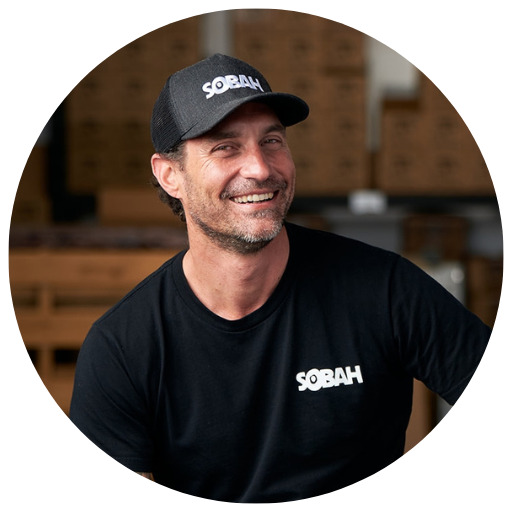
Nathan Bush: Here's your host, Bushy. Welcome to another special episode of ADD to cart. I'm Bushi and I'm joining you from the land of the terrible people. I acknowledge and respect the traditional owners of the lands that we work and we share stories on and and I invite everyone, including our indigenous and Torres Strait Islander listeners, to join us in our e commerce conversations and community on ADD to cart. We always try and feature a diverse range of guests and experiences. I think it's really important that we showcase all the different backgrounds and it keeps it interesting for all of us if we're hearing a wide variety of voices. By now you may have noticed that in the weeks leading up to the referendum we we are featuring indigenous e commerce business owners and leaders. I feel it's really important that we hear from those with lived experiences on the issues that we're discussing as a nation. It doesn't mean that they're experts or they represent all indigenous people. They have firsthand experience as both part of the indigenous and the e commerce communities now. Slightly clumsy segue. I've been off the beers since February with the exception of a couple of beach breaks where I couldn't resist the sneaky afternoon schooner off the tap. And I must say it's been pretty good. I've been running again, lost a few creepy dad bod kilos and retained most of my mates along the way. And I've actually been having fun sampling the huge range of non alco beers that are out there right now compared to five years ago. There is so much choice and interesting non alco brews. And one of the most interesting of those non alcoholic brewing companies in Australia is today's guest, Clinton Schultz. Or should I say Dr. Clinton Schultz, founder of Sober Beverages, a gumillaret man, a psychologist, former chef and co founder of sober beverages. In 2017, after two years on the non drinking wagon, Clinton was frustrated at the lack of adult drink options that weren't alcoholic and launched Soba in response. A pioneer in the non alco space, the business was also on a mission to champion Aboriginal and Torres Strait Islander culture, native foods and well being. And through their unique range of brews helped to reduce the stigma around socialising.
[Voiceover]: Sober.
Nathan Bush: From producing limited edition drinks in collaboration with musicians like Peking Duck to opening Australia's first first dedicated non alcoholic brewery, sober is growing fast, just like the category. In this chat, Clinton shares his tips on how to be a better listener. He also shares what businesses can do to move away from just ticking boxes when it comes to supporting first nations people and provide some valuable insights on the upcoming voice referendum. So, thanks to our partners Shopify plus and Signet, here's our conversation with Dr. Clinton Schultz, founder and director of Soba Beverages.
[Voiceover]: Clinton, welcome to Add to Cart.
Dr. Clinton Schultz: Thanks for having us, Nathan.
[Voiceover]: Great to have you here especially. We're recording this on 31st July, end of dry July. Is that a peak season for you?
Dr. Clinton Schultz: Yeah, Dry July is always busier. It actually over the last few years it's probably faded off a little bit. To be honest. There's so many special months now that I think that people's interest in dry July is probably fade away. Now we've got Fab February, dry July, October, dry January. So it seems like every second or third month is a dry month now. So it's kind of spread more across the year, which is actually better for business than just having this one big peak and then things falling away again.
[Voiceover]: I can imagine it feels like it's not so much of a, a big thing to have one month sober. It feels like it's become more into part of the consciousness, especially of younger generations.
Dr. Clinton Schultz: Yeah, definitely. We've seen over probably the last two years particularly that there's been more and more people in that sort of 18 to 30 year old age bracket that are choosing not to consume alcohol as regularly. And there's definitely more people who are choosing not to consume alcohol at all. Definitely more than my generation, that's for sure.
[Voiceover]: Yeah, so you were ahead of the curve. Can we go back to the start of the story? Because you're a trained psychologist and I'd love to get into that shortly as well. But let's go back to the start of the sober story. For anyone who hasn't heard about sober, can you describe who you are, what you do?
Dr. Clinton Schultz: Yeah, sure. So Sober's a non alcoholic craft beer company or broader beverage company these days. We started back in 2017. We were actually the first non alcoholic craft beer company to launch in Australia. So we were well ahead of the, I guess the fad that it became. It really was just an extension of my living story. So I stopped drinking about eight and a half years ago. Back then there wasn't anything decent for people who were choosing not to drink to get. And so I started sort of making drinks for myself. At the same time. We had a small food truck doing all native foods and being non alcoholic, it was something pretty cool that we could sell directly at the food truck and didn't have to worry about licensing and stuff like that. So that's really how it started as something on tap in the food truck. And then more and more there was growing interest in soba and there was more people coming to get beer than food at times. And so that made us start thinking that there was an opportunity to grow this into something of its own.
[Voiceover]: Yeah, and what's caught my eye with Sober is that it's not just your regular beer flavors. You've really incorporated a lot of native ingredients. So when you said that you were brewing those beers yourself in the early days, I could imagine that brewing non alcoholic beer that tastes good isn't an easy feat in itself, let alone some of the more adventurous flavors that you're experimenting with.
Dr. Clinton Schultz: Yeah, I guess it's quite fortunate for me. I've got a chefing background as well. So before I was a psychologist, I was a chef. So food mapping, food science, it's nothing new for me. And then I'm an academic, I'm a researcher. So once you know how to research one thing, you can research anything at the end of the day. So kind of pulling all those traits together made it, I guess, more easy for me than it may have been for other people to go down that path of not only just making non alcoholic crafts beer, but doing it in ways that really push the boundaries on what good quality non alcohol beverages could be.
[Voiceover]: Yeah, gotcha. What's your favorite flavor, mate?
Dr. Clinton Schultz: Generally, whatever we're brewing at the time. You know, I drink so much of the stuff that I really just like to charge into whatever's new and fresh and, and that we're working on. So we're quite fortunate. At the moment we're about to open the new brewery and so we're just about to fire up the new test kit and get into some new stuff. But I've definitely been drinking a lot of the, the collab beer that we did with Peking Duck over the last few months, which, you know, it was a lager that we infused with lion's mane mushrooms so it's good for my brain as well as my body.
[Voiceover]: What do the mushrooms do? What are the benefits of the mushrooms?
Dr. Clinton Schultz: Lion's mane mushroom are just good for relaxation really at the end of the day. So there's a lot of research out there showing quite a lot of benefits they can do for good brain health. We don't use it in huge amounts, but there's enough in there to make you aware that you are drinking something that is a better choice than a big brand soft drink, that's for sure.
[Voiceover]: Yeah. And Peking duck. How'd the collaboration come about?
Dr. Clinton Schultz: Yeah, it was something that my wife organized to be honest. She got in contact with their management over some stuff that was running through another site and they were looking at making a beer and so we just said, hey, we can make beer. And they really wanted to make a non out beer to focus on, on I guess some of the health challenges that exist within the music industry and the pressure people, performers feel at times having to consume alcohol all the time. And so they wanted to do something to raise awareness to the possibilities of making some healthier choices while on tour and while producing and while making music, et cetera. So that was right in line with what we're all about here at Sober, which is being better choice and helping people to have the opportunity for choice and empowering carry people through that. So yeah, we were happy to jump on board.
[Voiceover]: That's cool. Isn't it amazing to have that balance of conversation when you've got brands like Jack Daniels who are very much into the music scene, trying to present that music and alcohol go hand in hand and then you've kind of got this counterweave coming through now.
Dr. Clinton Schultz: It's been interesting to watch. You know, I kind of sit back sometimes and I've watched it both in the, I guess the entertainment industry, but also the sport industry, probably more so in Australia. Like we're sort of heavily influenced within sports through advertisement and when I was a kid everything was sponsored by cigarette companies and we kind of seen that wash out and then everything was sponsored by alcohol companies and now that's been replaced by big gambling.
[Voiceover]: Gambling?
Dr. Clinton Schultz: Yeah, online gambling. So I'm hoping that we continue to see a transition and that we'll weed out some of these big money sponsors that, you know, really don't do anything for people's well being and that there'll be more support for better choices to be advertised. Because it's really how our kids all get influenced is through watching their heroes in sport and modern times. So when they're bombarded with particular advertisements non stop. It's very interesting that as a society we then sit back and go, why do we have these problems? It's literally brainwashed. Feeds us in for a young age.
[Voiceover]: Yeah, it's fascinating. I've. I've actually given up the grog from February at the start of this year. So that's six months now. It's nothing on your eight and a half years. But that has been my hardest disconnection is the sporting events and the connotation with sporting and relaxing. So sitting down on a Saturday afternoon watching a game of footy without a beer, it's like, oh, this feels weird. But after a while it just becomes normal.
Dr. Clinton Schultz: That's what not our beers for umbrella.
Nathan Bush: Exactly.
[Voiceover]: I bought at Christmas I brought a big outdoor fridge to have beer in and it is hundred. It is all replaced now with non elk beer. So my friends come over now, they just go, what a waste. But I love it. It's fantastic.
Dr. Clinton Schultz: But they wake up with the hangover every Sunday morning and you've probably got extra six hours of the weekend that you get to enjoy. So exactly.
[Voiceover]: Was that your motivation at the start to give up?
Dr. Clinton Schultz: I just wanted my kids to have an opportunity to learn something different to the Aussie normal. You know, drinking has become so entrenched with socialization and sport as we talk about, but also just general socialization in Australia that I just didn't want my kids to grow up thinking that you have to consume alcohol to be able to engage with other human beings and to be able to enjoy yourself.
[Voiceover]: Yeah.
Dr. Clinton Schultz: So I figured if I wanted them to learn something different, I had to showcase that myself.
[Voiceover]: Yeah, makes total sense. Foreign.
Nathan Bush: It's the calm before the storm. And unlike George Clooney in the Perfect Storm, spoiler alert. Shopify wants retailers to come out not just alive, but thriving because it's a big deal, especially here in Australia. Last year, Australian merchants ranked third globally in Black Friday. So Cyber Monday sales volume, what an opportunity. So if you want to maximize your share of the peak sales this year, use this time before the storm to download and read Shopify's peak season playbook. They've got 10 experts, including me, to share their tips on how to maximize sales at this time. So put on your life jacket and get your hands on Shopify's free Peak Season Plus Playbook. Download it at shopify.com/guides forward/peak sales season 2023or just follow the links in the episode show Notes from the device. You are on land ahoy.
[Voiceover]: Now, speaking of changing the industry, you mentioned it before your Non Elk brewery and cafe and as it just opened, we soft launch.
Dr. Clinton Schultz: Yeah, A couple of days ago, we soft launch just to allow people to start coming in, seeing what we're about, but more to allow our staff to get used to everything. Everything's brand new here, every system, every kettle, everything that we've got here is new. So we know there's going to be bugs, but we want our consumers and our customers to have the best possible experience when they come and visit us and we really value all our customers. So, you know, we just wanted to do this soft launch, allow us to get people through, iron out any of them bugs and we'll have a big grand opening in a month's time or so.
[Voiceover]: How good? Based in Burley. Is it the first non alk brewery in Australia?
Dr. Clinton Schultz: Absolutely. We're the first dedicated non alcoholic brewery in Australia. So we were first to market in terms of non alk craft beer and now we're first to market in terms of a dedicated non alcoholic brewery.
[Voiceover]: So when you're designing a Non Elk brewery, what do you have to have in mind to make it as vibrant, as fun as, you know, as a regular brewery? Is there anything you need to change?
Dr. Clinton Schultz: Yeah, we've kind of stepped away from, I guess, the traditional brew pub model and we've gone with brew cafe. So we're actually focusing on breakfast and lunch here. So we've got a full native foods cafe set up downstairs where people have opportunity to come and try a whole range of foods that they may never have had the opportunity to, to delve into before. And they'll get opportunity to pair those beautifully with one of our fresh beers. We're not, you know, having this brewery is about us to guarantee that we'll have the freshest non outcraft beer available in the country as well. We can brew what we need when we need it. We can brew cool, funky stuff constantly, which is the fun side of the industry at the end of the day. So, yeah, hopefully it creates a real experience for people and that's what will keep people wanting to come back.
[Voiceover]: Chuck a bit of a Peking duck, DJ set over breakfast and away you go.
Dr. Clinton Schultz: I'm working on it.
[Voiceover]: And then from an E commerce perspective, how does that work into your overall business model?
Dr. Clinton Schultz: Yeah, so E commerce has always been a fairly large part of our business model, so probably 25 to 30%, depending on the time of year of our monthly revenue actually comes through e Commerce and that'll continue, if not actually increase. And I guess with the new brewery and our ability to constantly adapt and make new and funky beverages, we can do that in quite a small batch. So what we'll be doing at the moment is really driving any of those new products that we do directly through E commerce. We won't necessarily be producing them in amounts that we can get out to all the retailers. So it's something cool for our e commerce consumers and customers to be able to engage with and keep them involved with the brand and the team platform. So that's our plan at the moment, is to make some really cool shit and give people the opportunity to try it first through our e commerce.
[Voiceover]: That's awesome. And do you have like a subscription available or do you just find that people just come back regularly order when they need it?
Dr. Clinton Schultz: We've got subscription models, but we also do find that people come back and engage with the website quite frequently, particularly when we are small batch brewing and doing new stuff. Because people are the same as me, they want to try something new constantly. So if I've got a new product that's coming out and it's only available on our E commerce site, then we find there's a lot of people that are coming back just to try those. Whereas they may go to their local bottle shop or retailer to get one of our mainstream sort of products.
[Voiceover]: Yeah, it's really smart. And that's one of the things that I missed out on those first couple of months of not drinking was that sense of discovery especially, you know, I was a bit of a craft brew wanker. So it was, you know, being able to discover all these crazy flavors and you're doing that with non elk. So when people say that non elk is boring, it's just like, well, if you're picking up the stuff off the, off the shelves of Woolies, then yeah, probably it's going to be boring and watery. But if you look beyond that, the options are definitely opening up.
Dr. Clinton Schultz: Yeah, sure. You know, we'd like to pride ourselves on thinking that we make some of the most unique non elk crafties in the world, not just here in Australia. Through the way that we infuse our products, the majority of our products with different natives and other infusions. There's no normal here.
[Voiceover]: I can imagine that you would have some pretty intense interest from overseas given that you've done such an amazing job of branding it. I mean, from the artwork on the cans all the way through to the native ingredients. Have you had much interest from overseas.
Dr. Clinton Schultz: We have had interest from overseas, but it's difficult when you're a small producer to get into those markets. And with the increase in cost, particularly shipping at the moment, it's been difficult for us to be able to really invest in those overseas markets. US and UK predominantly is where we've had most interest come through. So what we're doing at the moment is trying to work with a couple of small distributors over there just to get a bit of an appetite in those markets for our products with the intent over time to probably shift to contract in those countries as a mechanism to escape some of the shipping costs every business has been impacted on.
[Voiceover]: Yeah, that makes sense. How are you going with distribution through some of the bigger retailers in Australia? Your Dans of the world, your bwss, one and the same really non alk category has grown and got bigger and more of the big players are producing their own 0%, 0.5 percenters. Is it actually harder to get distribution through those outlets or has it become easier?
Dr. Clinton Schultz: It hasn't necessarily shifted either direction. I think it's, you know, they've got their own strict measures that they use to decide or to determine whether or not they should put you into more stores or to prefer the support, et cetera. The biggest issue really has been our ability to brew our expectation, and that's because we're contract wood. So now that we've got full control again back in our brewery here, it'll open up a whole bunch of opportunities for us to get into server of Endeavor Group and the other large chains which we're really looking forward to. Endeavor's actually always been really supportive of our products in terms of their E Commerce, their marketplace. So quite often when we've had a new product that we've wanted to get into, Dan Murphy's or bws, they've allowed us to first sort of pile it on their marketplace and see a good uptake from that. Then they'll sort of shift it through the store. So E Commerce has again been really integral in terms of us growing those opportunities.
[Voiceover]: Yeah. Fantastic. Now you're a proud Camilla man. And you mentioned that you do things differently at sober. How have you taken some of the principles of your culture, your people, and incorporated them into the business world?
Dr. Clinton Schultz: Yeah, we do things a little bit different. You know, we'd like to think that we are here for our consumers and our staff first and foremost. Profit's not the first thing on our agenda. Profit is a necessity when we're in the business world and we need to Ensure that the business is running sustainably and profitably because it allows us to then go to the necessities, do the social endeavors that we like to invite ourselves in, and that we really structure the company around us as a social enterprise. But that's really about understanding connections and the importance of connections and maintaining those connections. So we really want to ensure that our consumers, that our staff and also our stakeholders actually feel connected to the brand and more than just attack phrase or feeling connected, but actually feel included and that they have the opportunity for, say that they feel supported in their growth. So we don't try and keep people here. You know, we're really about trying to grow people and then getting to move on into the spaces in the world that they really want to excel in. I'm not here to try and hold anybody back. We try and support people who have struggled to get into employment opportunities and actually help them to gain the stability and skills that they'll need to get go off and do what they want to do in the future. And that's been a really, I guess, personally beneficial part of the business for myself and Lois is just to see those people that we've been able to help grow move out the door. Yeah, most businesses reflect on that and go to bad business practice because there's all these skills and there's all your time and all your energy that you've put in warped and you've got to start all again. But that's what we want to see.
[Voiceover]: Have you noticed any parts of the business that are better in you being able to open up those opportunities or areas that are ripe that you think other businesses should just go, well, look, these are areas where you can give opportunities to more people.
Dr. Clinton Schultz: I think all business can do a better job at giving back to people or to place. I unfortunately think that the whole notion of, you know, social responsibility and social enterprise even is kind of used as a bit of a catchphrase now. Rather than a lot of entities actually putting their mouth, putting their feet where their mouth is and getting out there and doing the hard yards and being part of community and supporting grassroots, which has been difficult to sort of to see, is when different businesses start using social responsibility as a marketing boy, rather than necessarily being first and foremost about doing something good for us, you know, it's not about marketing. We walk everything that we talk, you know, so we're really out there trying to ensure that we're giving back wherever possible. And yeah, at times that probably costs the business, but I think it also is what Attracts a lot of people to our business is that they can see the legitimacy in our story and in what we do and they know that we're not just trying to tackle onto them.
[Voiceover]: When you talk about giving back what causes or communities are close to your heart.
Dr. Clinton Schultz: They had anything to do with the overall holistic sort of well being of people in place. Particularly if it's interrelated with culture. We want a true believer that law and culture is the strongest protective mechanism that we've got as first nations peoples from our social emotional well being and for us to be stronger, deadly into the future. But there's been a lot of things over history that have heavily impacted on us being able to maintain those connections that allow us to have that strong and stable sense of being. So whatever we can sort of support in that space to help people have those experiences and either rebuild, reshape, maintain the connections that are important to them is what we want to do. We do things like we support the Wayne Weaver foundation which is a really small foundation that helps Aboriginal and Torres Strait Islander prisoners be able to actually get prison released to attend funerals and sorry business. Whereas most Australians be like well who gives a fuck? They're prisoners. Like why should we be supporting them on something. But they don't recognise the impact that there is on people when they're not able to actually go and see all their loved ones in the time of passing and the slow on impacts that that can actually have on whole families and whole communities. So that's something we're really proud of. We support the Half Cut foundation which is all about protecting the daintree from further logging, trying to buy back and gift back land to cookieolongy people, the traditional owners of that area so that they can actually use it in ways that prosper and social emotional well being of their own people. So yeah it's those small endeavors that we will cherish.
[Voiceover]: It feels like these connection initiatives, activities support would never be found by a traditional HR or social committee at a large organization. Right. How do you. If we've got businesses who are genuinely, genuinely wanting to implement more connection support for first nations people within their organization. How would you suggest that they go about doing this in an authentic way
Dr. Clinton Schultz: to be authentic about it? They first have to step back and understand how they play a part in some of the destruction we don't try and shy away from. We're a manufacturing company like at some level we're causing harm and without us having the boldness to be able to take that on board and really reflect on it. You're not going to get to a space that allows you to understand the role and responsibilities you actually hold for that. And once you go through that process, then you can start looking at what opportunities and resources do I have in my business that may allow me to give back and to do something about that, that harm that I'm essentially causing by just existing as an entity, as a business. So I think we need to start looking beyond just how do we recycle, how do we reuse and get to a point where we're really engaging at a level of consciousness with what is the impact that we have as entity and what's more responsive than that? It's a whole nother viewpoint that not many businesses in Australia, I think, would be willing to even reflect on. Because profit comes first, unfortunately for many, rather than none of us would be profiting if Mother Earth under our feet drops dead. Yeah, she's got a really good history of when things aren't going right for her, getting rid of things that are not working. I think we're high on that agenda at present.
[Voiceover]: Yeah.
Dr. Clinton Schultz: To be honest.
[Voiceover]: Yeah. And I love how you frame it around connection, that everything's interrelated. Right. And obviously part of your principle there is that, you know, and then I'm. What I'm also hearing is that we're not going to do this as business as usual. So we actually need people in our organizations who are already connected to bring these stories forward, these opportunities forward, and shed the light on where we're causing damage. But I guess that then also comes with the other side of that is how do you do that in an organization and not ostracize yourself? Because, you know, politics in any organization play a part and it's. It could be a lonely road if you put your hand up and try and do that internally.
Dr. Clinton Schultz: Yeah, absolutely. You know, I can go out, I can talk all I want to. As many businesses. I've run a consultancy company for over a decade. Most of my psychology work is in space of organisational management. I go around telling businesses how to look after their employees and how to ensure that they don't have natural violence and workplace bullying, all these things all the time, I can do that all day long. But if people in positions of privilege and power within those organizations don't actually listen, which is different process, hearing, listening actually requires you to. To swallow the information that you've heard and to consider it before then acting and hopefully acting in a more positive way. If people won't go through that process of listening to people who are trying to offer assistance in how we can all move together in a more positive way on this planet, particularly a business, then we won't actually make much movement. So that's the piece that I think is listening. There's a lot of people ticking boxes at the moment in terms of getting people to come in and have yarns. There's a lot of people in positions of power that I don't think actually are listening to the things that are being said, digesting that information, really consciously considering it, and then putting actions in place to work in different ways.
[Voiceover]: What do you look for to recognize if people are actually listening or just hearing?
Dr. Clinton Schultz: Yeah, it's pretty. I guess I've become pretty attuned to it over the years. So I can kind of. You can tell because you can tell by the bodily reaction get from someone. But people just hearing is what I do. When my kids are saying, dad, I want this, that I want that. Like I literally, you know, it goes in one ear and it goes in the other. I don't respond as such. Whereas when people are listening, there's going to be a response that will either be a response or it's going to be a vocalized response. So you'll get some deeper questioning, attack questions that you can hear some thoughts being put into before it's just been blurted out of her mouth. You'll see people might be sort of just staring off into the distance. You can see they're contemplating what's being positioned through them. So there is some telltale signs there that would be a Mississippi rather than just be a faster.
[Voiceover]: Any tips for anyone listening to go. I wonder if I'm a good listener or not. That you could just put in place to go. Just stop yourself here for a second.
Dr. Clinton Schultz: Yeah, mate. Number one is you can. It is literally impossible to listen and talk at the same time. And that includes internal talk. So if you're talking away about what you're going to do at lunch in your own head or who you're going to catch up with on the weekend or you know, what project you've got due at 4pm on Friday afternoon while somebody is sharing knowledge with you, then you're not freaking listening. So people have to become okay with being silent. And that's really difficult in the western world when everybody wants to just run their mouth all day every day. So I think the more people allow themselves to become okay with being silent, they're more likely to be able to listen at a deeper level.
[Voiceover]: Love that. Great tips. Speaking of listening and talking and noise, we've obviously got the voice referendum on the horizon sometime soon. How are you feeling personally around how the shape of the discussion is forming in Australia right now?
Dr. Clinton Schultz: Yeah, to be honest, I think the whole narrative around it, the whole dialogue, particularly from I guess parliamentary perspective or the government perspective and also from media, has been really disrespectful. I don't think that it's held what should be at its core and that's actually the social, emotional well being of those that it's about and that's us as first nations peoples. I think it's very much become about legacy for people on all sides of the debate and that as soon as that ego side comes into it and it becomes about legacy rather than it does about human being, then I worry we're seeing a lot of increased psychological distress experienced by first nations peoples all around the country at the moment. Because we are literally the non stop, the non stop object of everybody's discussion. And that's toll, it really does take its toll. If you don't have really thick skin and really strong supportive systems, then yeah, it's an impact on your well being. And I'm not sure that there's many people in Australia that are actually stopping and considering that there's a lot of people who are expecting first nations people to be the expert on this, it's out of our hands. It's actually got nothing to do with us now. It's actually in the hands of lobbyists and politicians and lawyers, everybody else. And we have the same information available to us as first nations peoples as actually every other Australian does. So the expectation that we should be experts, the expectation that we should constantly have to educate everybody else about the process and what it's about and what potentials may come out of that, I think is really unfair on first nations people. But I don't think many people are considering that.
[Voiceover]: Yeah, it's a really good point and one I'm really conscious of as I speak to First Nation people, especially on the podcast use. I don't expect you to know more than me and I don't expect, you know, we've all got the same information and the same duty of care to investigate this ourselves and that you don't have to speak on behalf of all first nations people. Right. That's not your job. I heard Tony Armstrong, ABC say something similar. He's like, I'm just one person, like I can't speak for everyone.
Dr. Clinton Schultz: And we've got to recognise that there's Aboriginal and Torres Strait Islander peoples on all sides of this debate. And in the middle, you know, there's people that support yes, there's people that support no. And there's a whole bunch of people in the middle who are undetermined or so confused as there is many other Australians. And we need to allow that space because at the end of the day, whatever happens is going to happen. But we all have to be able to move together, particularly as Aboriginal and Torres Strait Olympians. We're the ones that have to actually reconcile this before anybody else and be able to move forward together and maintain our wellbeing as more in Australia, living in Australia. So there's so many more considerations that are there for us as Aboriginal and Torres Strait Islander peoples that the majority of Australians don't even have to consider. And this is all over something that actually isn't even in our hands. 3% of the population, 97% of the population is actually determining the outcome of this thing. So the reliance on the 3% to do the work, the heavy lifting and the work for the 97 again is pretty unfair. You wouldn't do that in any other business. I'm not going to ask 3% of my employees to be doing the work for 97% of the employees. I just don't think we put some practical sense into these sense of time and allow ourselves to actually look at it from a sympathetic, never mind empathy position, which means that we don't have much compassion because without true sympathy and empathy there is no compassion. And I think that's something that's really been lost throughout. This is the compassion for the impact that this is actually going to have on the wellbeing of Aboriginal and Torres Strait Islander peoples during and post despite whatever decision comes.
Nathan Bush: Do you know why 99 bikes is called 99 bikes? Is it because a it takes 99 minutes to put the average bike together, B, they originally stocked 99 bikes or C they've recently eliminated 99% of their plastic packaging with the help of Signet. Well, B is the answer, but C is also true. Not only have 99 bikes eliminated 99% of their plastic packaging packaging, they reduce their packaging cost by 60% and packing time by 50%. That's plenty more time to swear at those spanners while you put those bikes together. Visit cygnet.net au to browse the range and contact the team to find out how they can help take your packaging solutions to the next level.
[Voiceover]: Do you think the original intention and not to get political so we don't even have to mention sides or people. But do you think the initial intention behind the voice, the question itself is actually good or. And it's turned into a political exercise and like you said, turned into now politicians and lawyers and everything else in terms of turning into a referendum. Do you think the intent was good or do you think the intent was always misplaced?
Dr. Clinton Schultz: I think the earlier statement of the heart which was full stemmed from was a beautiful thing. It really was a wonderful thing to see so many Aboriginal and Torres Strait Islander people come together from all around the country and position what they felt would be in the best interests of our well being moving forward for our families, for our communities, for us individually. I don't necessarily think that what was posed then is being predicted now. So I think that's going to be very challenging for many people who were involved in those discussions, who weren't involved in those discussions and therefore may have concerns as well. I do worry that the confusion left by the whole process is going to lead us into a situation that is not going to be positive for us as First Nation students.
[Voiceover]: Yeah. Because the Uluru statement of the heart is actually a much broader statement and the amount of research, discussion, communities that came together to form that was significant and it went over many years, didn't it, to bring that together to.
Dr. Clinton Schultz: Yeah, this hasn't been an overnight consideration. There was literally years of discussion that occurred behind whether we're staying with the heart and to be honest it's been years of work behind getting to the point. We are now with the whole voice in the referendum and many, many well intended people within those discussions. Political process can be a abuse of a thing at times and I think legal process excludes human being. Now we've seen all this during the marriage equality debate and the plebside processes was that the human being at the center of those were largely forgotten and we've seen how disgusting and at times violent the, the discussion actually became and how that literally impacted on the well being of those in those communities. And I think we're doing the same thing. Again, we had an opportunity to learn. We haven't done that and I think we're going to see the same thing now for Aboriginal and Torres Strait.
[Voiceover]: You mentioned some of the distress, serious distress that you've seen first nations people go through with in terms of this, this referendum and I know that you do some work with Black Dog Institute as well around suicide prevention. What are your tips for being able to have constructive, safe conversations with those around us, whether it includes First Nations People or not. Right. Because it can get very emotive. How do people have these conversations with relatives, with colleagues, and actually talk about this in an open forum without it getting personal?
Dr. Clinton Schultz: I think the most important ingredient is to remove emotion. We all become emotional about the sides of whatever conflict, debate, discussion we're having at different times in our lives. And as soon as we attach emotion, we lose sight of the action topic itself. It becomes more about, I want to win over you. It becomes a power struggle. And I think whenever we allow those power struggles to come in place, there becomes a power imbalance. Be that between partners, be that with other members of your family, be that in the workplace, be that between black fellows, white fellows. I think we always are in these power struggles because we are allowing emotions to drive discussion and rather than being able to take far more objective points of view on particular topics as such. And as I said earlier, you know, often human being is lost out of that through those processes. Yeah. Egos take over, Human beings at the center get forgotten, and things tend to get inflamed pretty quick. So I think the more we can try and have discussions in a respectful way that is detached from our personal emotions with the topic, the more likely we are to be able to get the information we want to across in a way that doesn't come across as if I'm trying to attack the other person. Yep. And if I don't come across as if I'm trying to attack you, you're more likely to allow yourself to listen and consider the information that we're presenting.
Nathan Bush: I love that.
[Voiceover]: And I think it ties back to what you were talking about before, was around listening, around actually being open to listening, not just hearing and tolerating until you get your chance to speak, and then also not relying on someone else to educate you. Like, there is so much information out there. Go educate yourself. We've all got a responsibility for that.
Dr. Clinton Schultz: Yeah. We don't need that extra cultural load at the moment. We're all in jobs and we're all running our families same as everybody else. Having to do the extra work of. Of educating Australia can be overwhelming.
[Voiceover]: I hear. I hear. Clinton, thank you so much for sharing your views and your experiences on that, finishing off here sober. Where to next? What's the next level for you guys? Obviously, the brewery opening up to the public very soon. What's on your radar for the next 12 months?
Dr. Clinton Schultz: Yeah, first and foremost is to get local saturation. You know, we're in a funny situation. You start, we were on the Gold coast this is the last place where non elk was ever going to sort of take off. So the polar opposite to most, I guess, business plans in terms of start local and grow out. We started as far as possible away from the Gold coast and grew back home. So while we've had awesome uptake in the major cities and as far away as Perth and Frito, the Gold coast has always been a really difficult market for us. So now attitudes have started to shift here a little bit on the Gold Coast. So I wouldn't say they've completely shifted but they've started to shift here a little bit. So I think it's an opportunity moment for us to now refocus back on our local market and to get saturation here at our home, particularly with the venue that people can come in and be a part of. We want to continue to drive our retail markets in those capital cities but we need to re look at I guess how we might be distributing through those and make sure that it's actually occurring in a way that is more cost effective for the business. And in terms of E commerce we, as I said earlier, we want to make sure that we just driving people through our E commerce by keeping them connected to the cool products that we want to be pumping out of here constantly and making them feel part of the Sofa family. Beyond that, it's to get into those US and those UK markets and to start to establish a bit of a presence and a follow up in those markets.
[Voiceover]: Awesome. Keep pumping out those interesting brews.
Dr. Clinton Schultz: Yeah, yeah. It's as I said, it's the fun part of the business. So anytime we get to fire up the kettle and we're going to throw something new in and we don't really know how it's going to turn out, I get excited.
[Voiceover]: Just chuck a few more mushies in there, see how you go. Ever trade notes with Mick Fanning?
Dr. Clinton Schultz: No, no, no. He'd be a busy man I reckon.
[Voiceover]: Nice little partnership there. All right, so if people want to find out more about what you're up to do with Sober, maybe even call into the brewery. Won't it opens, what's the best way for them to get in touch and have a look?
Dr. Clinton Schultz: Yeah, go to our website sober.com, you'll find us there. And your address here is at 314 Burley Connection right at Burleigh Heads right central to the Gold coast and we look forward to having everybody through.
[Voiceover]: Beautiful. Clinton, thanks for joining us on Add to Cart.
Dr. Clinton Schultz: My absolute pleasure.
Nathan Bush: I actually feel like we should leave the episode right there so we can stop and reflect on Clinton's advice and challenges. But in the interest of consistency and you not thinking I'm just copping out of some work and opinions, here are the three biggest takeaways I took from our chat. Number one we need to be better listeners. Whether we're talking about national issues such as the upcoming referendum in our e commerce businesses or even in our personal lives, the number one, number one message and takeaway I got from Clinton is that we have to be better listeners, leave our emotions at the door, don't try and get across our viewpoints, and most importantly, keep our mouths shut. Sometimes almost become detached from the conversation in order to listen, be comfortable in the silence and reflect before returning serve. I've tried that recently and really, really, really does open up conversations. Number two Backyard Experiments I know Clinton has an amazing background as a psychologist, but I didn't know about his chefing background. I love that he's been able to poke around the Australian backyard to find interesting ingredients such as mushrooms to make flavors that help soba stand out and it also makes them more appealing to international markets. We have sober so many unique opportunities here in Australia. Whether that be through ingredients or where we source products from that can help us stand out on the world stage, let's utilize them. Number three Genuine connections. Clinton stressed the importance of establishing connections for his team, customers and the indigenous community. It's about understanding what is important to those around you and owning up to where you play a role. Or you could play a role in making those connections. Whether this be a connection to a new opportunity, to finances, to family, to time, to earth, or to otherwise, little moments of facilitating connection can make big long term impacts. To get the highlights of today's episode, head on over to add to cart.com and sign up for our free newsletter each Tuesday. We will send Monday's episode summary links and discount codes for you to go next level on. And if you're looking to explore your next e commerce opportunity, come and Visit us at eSweet. We're a dedicated e commerce talent agency connecting the best e commerce talent with the fastest growing brands in Australia. Head on over to esweettalent.com where you can download the free e Commerce Salary guide and sign up to our weekly e commerce job emails. Thanks for listening and until next time,
[Voiceover]: keep those customers adding to cartoon.