James Johnson: So this is, I think a really pivotal moment in agentic commerce and commerce overall. It's really as simple as this being another channel to sell and engage with consumers. There are checkout intricacies, there's fulfillment logic, there's trust that needs to be built through all these pieces. Hi everyone, I'm James Johnson, enterprise leader at Shopify. Today on ADD to cart. Really excited to share all the ins and outs of getting ready for agentic commerce.
Nathan Bush: Hey, it's Nathan Bush or Bushy joining you once again from the land of the terrible people here in Brisbane, Australia. Now before we get into today's episode and it is an absolute cracker, I've got a quick one for anyone who is grappling to get some great benchmarks around delivery and customer experience. It's that time of year where one of my favorite reports is out Ship its commerce delivery report. And the findings, as per normal, are mind blowing. Did you know that retailers offering fast delivery outperform their competitors by 4% over Black Friday? And that's just one interesting stat that's come from that report. Shipit's commerce delivery report digs into exactly why speed now equals success and what it means looking ahead into 2026. It covers everything from automation and AI through to fulfillment, inventory and operational decisions that actually move the needle for your business. If delivery is part of your growth equation, it is the report that you can't miss. You can check out the full report@shipit.com CDR2026. We'll put the link in the show notes. All right, let's get into today's episode. Welcome to add to cart once again. Welcome Rosa.
James Johnson: Thanks.
Rosa: Thanks Bushy. I'm joining from the land of the Garragal people here in Sydney.
Nathan Bush: Lovely to have you here. We have a very, very, very special episode hot off the press coming up
Rosa: today we do we have James Johnson, the enterprise lead at Shopify, who is hot off the plane straight from the NRF New York City conference. Oh yeah, he's very cold. He's freezing. But his intel is piping hot. But yeah, he's joining us to talk all things agentic commerce.
Nathan Bush: Lovely. So there was the big announcement over in nrf, in case you missed it, around the UCP protocol which is a collaboration between Google and Shopify and involved some really significant retailers such as Walmart in creating, as James says it, one pipeline for agentic commerce for the future. I think it's going to be one of the most massive changes in E commerce that we've seen in Some time. So as soon as it happened, I put a call out to our friends at Shopify and I said, hey, can we get a little bit of a download on exactly what this, this thing is and how it will impact retailers, especially those in Australia. And we were lucky enough to get JJ on again.
Rosa: Yeah. And it was so good. Everything he talks about is just so easy. Like, we come away with like simple to do lists and it really does feel exciting again. Like, I feel like E Commerce probably for the last seven years has actually felt quite like stagnant. Like, we talk about the same things, we're all trying to game the same channels, but it's like actually UCP Agentic commerce is like a whole new channel. So yeah, it's, it's going to be a great one.
Nathan Bush: It is a great one. And in this conversation, I love that we obviously future gaze and we want to unpack what this is, but there are so many tips in here that you can get started on straight away. So it's not like a, I'll learn this and then I'll store it for future. It's actually like, no, I'll learn this and I can get started straight away. So James breaks that down really well. We talk about everything, UCP and agentic commerce, what it is, how it works a lot around getting data right, especially writing for both bots and humans. And we talk about some of the AI tools that are available right now in the Shopify ecosystem to get your hands on straight away. But what I also love is that this isn't necessarily a Shopify conversation.
Rosa: I agree. I thought that was a really interesting announcement as part of this release was. Yeah. That they have an agentic plan. They can almost see. Like they're not just holding strong to their bread and butter. Like, it is really cool to see that they've created a product that basically any business, no matter like what platform you're on, is that okay, cool. You're going to need to be connected to these conversations that are happening with AI. Like, we've got the solution. Here's how you do it. So, yeah.
Nathan Bush: And we learn a lot about your data daddy. In the meantime.
Rosa: I want a data daddy.
Nathan Bush: If you want to hear about Rose's data daddy or you're interested in agentic commerce, make sure you stay for the rest of this episode. Here's James Johnson, Enterprise lead for Shopify. James Johnson, welcome back to ADD to cart. What a delight.
James Johnson: Great to be here. Thanks, Bushy.
Nathan Bush: Hello, Rosa.
Rosa: Hi. Thanks for having me back. And yeah, welcome, James.
James Johnson: Thank you so much. Great to connect.
Nathan Bush: On our pre call, Rosa, you said, James, lovely to meet you. Really great. And James, like we've chatted before. Great way to start.
Rosa: You're my child's godmother. Oh, damn it.
James Johnson: Maybe not that intense.
Nathan Bush: But then I don't feel bad for James at all because the first thing he said when I introduced you, Rosa is joining us as a co host. He said, well, it's good. It's about time you levelled up.
James Johnson: And I think we can all accept that that is the case.
Nathan Bush: Nathan, the proof is in the pudding. All right, let's get into it. Today we are talking all things agentic commerce. This is a very special episode of ADD to cart because over in New York City during NRF there was a big announcement that came out from Shopify and Google together around ucp. And I think it has the opportunity to change everything we know about e commerce. And that's when I reached out to our friends at Shopify, said, can we please get on the blower and have a good in depth conversation about what this actually is and how it could impact retailers? And that's why we're here today. Are we ready to get nerdy?
James Johnson: Let's do it.
Rosa: I'm so ready. Yeah, let's do it.
Nathan Bush: All right, kick us off. Jj, for those who don't know anything about UCP and what UCP is, can you give us the background on where it's come from and what it is?
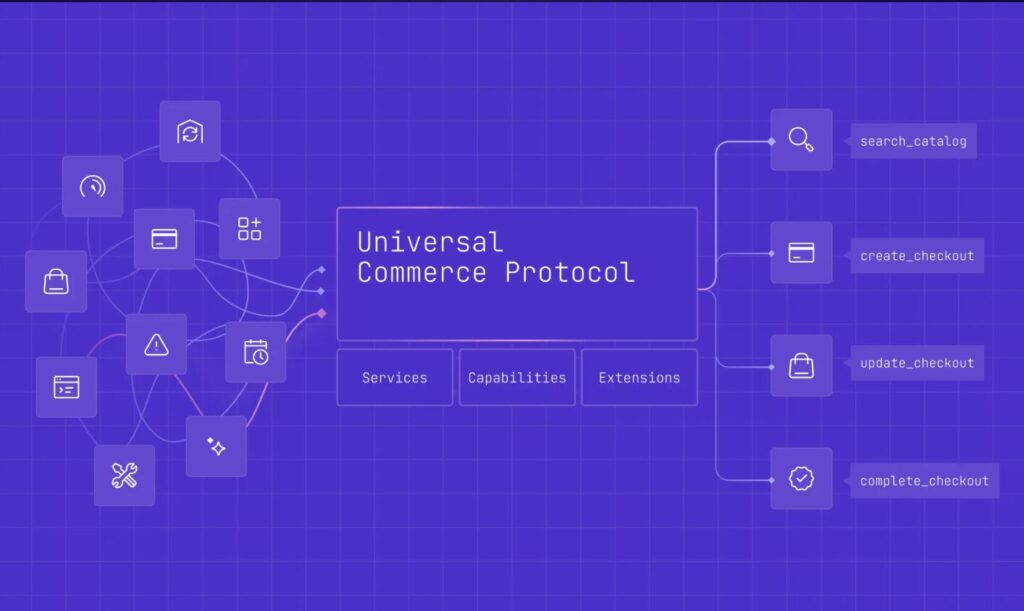
James Johnson: Absolutely. UCP is the Universal Commerce Protocol. Great name, as you called out, was announced by Google CEO Sundar Pichai in his keynote address at NRF earlier this year. I had the great pleasure and great fortune of being in New York to be there at the time and honestly the energy and discussion that flowed from that was fantastic. So this is, I think a really pivotal moment in agentic commerce and commerce overall. To your very specific question, what is ucp?
Nathan Bush: By the way, I was so jealous that I wasn't in NYC at that time of the announcement because of all the conferences you never get big announcements and this one was like smack bang.
James Johnson: It was pretty cool and filled with TLA's three letter acronyms, NRF in NYC with UCP. So WTF?
Rosa: Let's get into it.
James Johnson: Exactly. I love it. Breaking it down. So UCP was co developed with Google and Shopify. It is a new open standard for AI agents to connect and transact with any merchant. So at Shopify we're all about making it so that you can sell everywhere that commerce happens. Increasingly we Know that AI is a huge shift in commerce and every day millions of people are turning to AI to do things like product discovery or browsing and increasingly buying. And so UCP is about us making sure that our merchants have the latest innovations to reach their customer. Importantly, as we said, co developed with Google, but it's already supported by 20 plus retailers and platforms and basically it's a protocol. So in some respects, not to underplay it, but you should think about it as the plumbing that really facilitates a lot of these agentic and agent based discussions and transactions. And it's designed to make every integration fast and flexible because we know that every retailer's needs are unique. And so retailers have different discounting requirements or loyalty requirements or logistics around pickup points and picking things like delivery dates. So we know no one version of checkout meets all those requirements. And UCP has been built with that in mind to really drive the right outcome. I think very importantly, UCP is also an open standard. So it's not a walled garden. We are really building the infrastructure using the experience that we have from millions of checkouts and billions of interactions, which is honestly a pretty exciting place to be.
Rosa: Huge. That's just like so huge. So can you just explain just in case people don't understand what agentic commerce is like? Let's just go even back one step just in super simple lay men, lay woman terms. Lay them terms.
James Johnson: Yeah, gentec commerce. So AgentIQ is really transforming retail in many respects to make it as simple as possible. I think about it as an umbrella term of agents interacting with agents to buy something. We know and we've seen from Shopify data and broader market data that AI is fundamentally changing how we shop. So moving from search to conversation, and that's really moving into this world where shoppers describe what they want with a conversational agent and those agents are servicing the right products. So in those simple terms for lay people, it's really as simple as this being another channel to sell and engage with consumers. So historically we've had things like social commerce. We've had a whole variety of ways to sell as retailers and as merchants. The AI agent shopping is really the newest channel to grow and is increasingly relevant. So as I mentioned, Shopify is all about building the infrastructure so that retailers and merchants can jump directly into those AI conversations and making it possible so that you can transact directly in chat and have that really relevant experience. The important aspect as it relates to UCP and agentic, again, think UCP is the plumbing. We've built this Open standard so that others can build on top of it. As a consumer, you will be using ucp, but you won't be interacting with it in a discernible way. You'll be interacting with an agent that will allow you to purchase. And so those agents are ones that we know like Google in AI mode or Gemini, Microsoft Copilot, ChatGPT. They will be the agents that consumers will interact with. And fundamentally this is about Shopify syndicating your products into all of those AI channels accurately in real time.
Rosa: Okay. So Shopify UCP is making sure that your products as a retailer are there when anybody's in their private chat with ChatGPT, Claude, wherever they are, they're in there. And Shopify is like giving you the ability to like present your products like where and when this customer needs them. So it's not just, it's not an agent, like some people might think, like how people are paying for bots to go and shop and do their tasks for them. Andrew is doing that. My husband outsourced everything to our bot. Bingo. It's actually just everyday people shopping, just. But on like a floating product, a floating catalog that now no longer just exists on your website, right?
James Johnson: Correct. And I think the important aspect there is that merchants and retailers are in control. So you're choosing where you sell, you're choosing where you show up in those AI channels. From a checkout perspective, you remain that merchant of record. So you still have views over customer data. You still have responsibilities to ship the right product to the right customer. The easiest way to think about it is this is a new channel to grow or to think more broadly from a distribution perspective.
Nathan Bush: And do you think UCP is about getting ahead of the game? Because obviously AI is evolving so quickly. Right. And we're still learning around even advertising. What's going to be possible in different channels, like where can you place your ads, what will the ads look like? Is the idea that this gets ahead of the game, especially with the partnership between Google and Shopify to go no matter where you're going to sell. We want one way for retailers to set up their data to make sure they're not doing it multiple times for multiple agents.
James Johnson: Yeah, the multiple times for multiple agents is the challenge. Right. So if we think about, take a step back and think about the partnership, I think the really exciting thing is that Google is an expert in search and discovery. They've done that for a significant period of time. Shopify are the experts in commerce. We've been doing this for two decades now. And so it makes sense to partner to co develop the protocol around those strengths. And so we have bought a wealth of expertise in terms of all of the challenges and quirks of checkout and commerce because it is so broad and we've seen it so, so broadly over time. So I think that's important from a relationship perspective in terms of as we think about setting up those merchants and those discussions. Powering commerce is really hard at that scale. It means you need to have that structured product data that you mentioned. There are checkout intricacies, there's fulfillment logic, there's trust that needs to be built through all these pieces. So one, that's, that's a particular reason why we partner with Google around this. And part of the power of Shopify, particularly as it relates to having that information once from a product catalog and then sharing it to the right places, is a benefit for retailers and merchants. Because the other way is you're building your own customer integration with all of these platforms. And just thinking purely from the innovation and the scale perspective, we have thousands of engineers that wake up every day and build for commerce. From a retailer perspective, that's a challenge to then go. I now want to move on to whatever the next tool is from an AI perspective. So really part of the proposition here is have all your products there, make sure they're enriched, make sure they're communicating the right information, but then syndicate that to Google, to ChatGPT, to the shop app, to all those aspects of where your consumers are going to interact and transact with you.
Nathan Bush: I could imagine when UCP was announced, because you've got such a strong partner network, especially in that app space, heads would have gone into overdrive into how to not only update their offering, but also new ideas in what might be available in agentic commerce. How are you handling that for. For partners there who might have all these ideas but not all the details are there on UCP yet. How are you going to manage that?
James Johnson: Yeah, well, the UCP as a protocol is standardized and published. So it's available, people can tap into it. Anyone can go and look at that in terms of the schema and the tech specs. That's one. What really excited me was we had a partner that literally the day of actually produced a landing page about agentic readiness. And this talks to your point, Rosa, about I've got all these things to do. Is my site ready? Am I going to be, Am I going to be found? Am I going to be discovered in the right way? And so they actually did some Work to say is your product information structured in the right way? Are you UCP ready effectively? And so one, that it was interesting in terms of okay, it's an interesting service offering to help merchants do the things we spoke about to get ready. And then two, the speed they're able to do that is pretty phenomenal as well. So I think that's the real exciting piece here to figure out. Well, how do we think about different services to help merchants and retailers in this context? And this will also unlock new ways of shopping which the partner community are amazing at building. So I think that's where it gets really exciting.
Nathan Bush: It's gold rush time. Rosa, I know that Andrew especially is very AI forward in your business. Obviously co founder as well in croc. Is he playing around? Are you playing around in terms of getting visibility through agents yet or are you waiting to see how it all folds out?
Rosa: Yeah, I think he's just like forgotten about crocs altogether. Let's be honest. I think he's just like gone. But yeah, look, it's crazy. I think even the way Andrew like watching how he consumes now like and what he's doing and how he's using agents and, and how he's like he's yeah, he basically has like built a little bot in our house that's now like able to like literally do work for him. Starting to look at like putting our kids name down at different schools and like all this kind of stuff. Like it's like a full on thing. So it' I think he's almost forgotten about that middle step. Like he's almost thinking, oh we're going to have these agents who are going to be doing all this stuff for us. I think he's forgotten what a loser about like the market. That's actually where we are already which is asking like our AI agents like what we need and where to get things and so on. So he actually when we were talking about this conversation that we're going to have today, he was like damn. I actually haven't thought about that about like yeah, he's like I already went too far to like basically having bought slaves. But yeah, this is like just so fascinating. I think it makes us feel like so excited about oh my God, finally the game is changing again. The rules are resetting. The playing field is like going back to zero for like retailers. And if you are tech forward, like have fun and if you're not like damn.
James Johnson: I think it's such a good call out though in terms of being, you know, someone Like Andrew, who's clearly on the leading edge of some of this thinking, you know, what we're seeing is that the normies, and I mean that in the most loving way possible, normal people are increasingly, even like Nathan, are increasingly using this technology.
Nathan Bush: You're going to call me a laggard?
Rosa: Yeah, we call him laggy laggy.
James Johnson: But it's not just technologists. So we see that in terms of the numbers overall and to give you a quantification point, since January last year we've seen a 9 times increase in AI to merchant storefronts and a 14 times increase in orders originating from AI searches. So admittedly of a small base, you know, this is not every single person, but the growth there is phenomenal. And so as the capabilities are developing, consumers are turning to this more and more and it's up to retailers to be able to be where your consumer is. Right? Yeah. Not every single brand is going to need to have to be full on into this as a Strategy and have 90% of traffic coming from agents. That's unlikely to happen in the next little while. But depending on where those brands are, depending on that retailer's digital strategy, I think this is going to be a really important distribution channel on an increasing basis.
Nathan Bush: And I think that's interesting right now in terms of where traffic's coming from. But where we are going with Agentic is obviously being able to take the customer on the whole journey through to checkout, even maybe loyalty re engagement through bots. So it's really disrupting not just retail business models, but in reality it really should disrupt the Shopify business model.
James Johnson: Right.
Nathan Bush: Because you build websites but when you announced this, the actual share price went crazy. And I feel like it's a big move, it's a big bold move by Shopify to not abandon its core product. It's still, obviously still building websites. But to go actually we believe the future is over here and almost leapfrogging your core product. How does that feel internally from a culture perspective?
James Johnson: It's interesting, you know, one, we don't follow the share price all that closely. So I'm glad you've got that observation. I certainly didn't. But what's important is to bring that back to what we think about from our mission. And our mission is to make commerce better for everyone. And honestly that's why I get out of bed in the morning and it's exciting because everyone is a large and diverse group. You note, the mission's not we build a website for those retailers and so, you know, We've seen the data and growth and expectations that this will be a key sales channel for merchants in the future. But that doesn't mean that everything changes overnight. That doesn't mean that websites and storefronts are no longer relevant and they disappear tomorrow. And I think about it in a store context. Nathan, you and I have been around for a little while in E Comm land and we, you know, we used to, there was big, bold claims, right, in terms of what does the future of retail look like in an online sense. And online is going to eat the world, et cetera, et cetera. Hey, newsflash, stores still exist. You know, they have a functional need. The role of stores have changed. It's more experience based, it's more, more engaging with the brand. But it absolutely provides another option for consumers. And I think that's gonna be the case here. Consumers, again, depending on the brand, depending on the model, are gonna have a storefront and a website interaction. For some aspects. They're gonna have something physical where that makes sense. They're gonna have something that's probably convenience or value based, which is just order me that thing please, because that's what I need. And an unbalanced view of all those elements together. It's gonna morph over time, but I think it's gonna be a mix of everything is the short answer.
Rosa: So basically we're talking like how it exists now. So pre UCP making its like moves in Australia and New Zealand is right now like, yes, you're seeing that agents are driving traffic, which traffic then drives sales. That's great. Except with the introduction of ucp, what is going to happen is that it won't actually be a channel for traffic, it's going to be a channel for conversions. So as retailers like traffic, we're no longer going to be living in our data in terms of like sessions or you know, looking at our like conversion rate. Like, do you foresee how are we going to be able to measure like our positioning or if our product is hitting like, what do you see as the future there? Like, where are these like metrics going to shift to and what should we start to like care about?
James Johnson: Such a great question, and I do not profess to know the answer to it. I think what we can see is absolutely those data points that I mentioned where we're seeing growth overall in terms of transactions, but also searches and discovery and that'll still be relevant, right? Not everyone is going to complete a transaction in the context of an agentix storefront. They may do research and then complete a purchase in store or complete a purchase in an online channel as well. So I think that'll still be important. And so all those data points you mentioned will still be relevant from that digital context, but now we'll have additional data points in terms of what's happening from a discovery in these agents. And how do I get visibility around that? But honestly, that's a question for all the builders of those agents, because that's their data, that's their insight in terms of how things are getting ranked and prioritized and what you see. But I think it means we'll have more metrics around that and new metrics around that in terms of discovery and then conversion across channels.
Rosa: So will the merchant, will the retailer still own their customer? Like, will I get that customer's details or does that stay with the agent?
James Johnson: No, it's absolutely a very, very important point. And so from a merchant, you are still the merchant of record. You still have your customer information. You are, they are still completing a transaction. You'll still see that in your admin, from a Shopify perspective, in the same way that you have multiple sales channels now in a Shopify admin and you see all the orders come through in your admin. So really important that that is the case.
Nathan Bush: You might not have the answer to this yet, but obviously Shopify does such a great job at a seamless transaction with checkout. Obviously a lot of effort to gone into that side of the experience. Is there anything in place from a security and protection of that experience once you start handing it over to bots? Like, obviously we're comfortable with OpenAI to a certain extent. Gemini, we go kind of know what you're getting, but this could go in any direction. How do we know that we're not going to be opening up our checkout to crazy bots that are specializing in some serious business?
James Johnson: Yeah, so I think it's a great question and again, part of why UCP exists. So a key input to that from our perspective, was the two decades of experience we have in terms of looking at how complex commerce is. And so the inputs to that are billions of transactions, millions of merchants. And so if you think about that is things like payment options and rules that make my head hurt or differ based on the properties of cart and buyer and market. That's things like discounts and discount rules and stacking and combinations that are super complex. That's really complex fulfillment options with lots of permutations. That's things like loyalty that we mentioned before. And I think Importantly, that complexity is not a bug. It's the emergent property of diverse retail. And that's what we should be celebrating. You know, all these retailers have different needs and expectations, as do their consumers. And so part of us designing the integration and designing UCP was to account for those individual retailers needs. And so if you have a loyalty thing or a pickup point or picking a delivery date or a unique discount quirk that doesn't fit into a standardized checkout, you know, historically, too bad, you know, we'd have a simplified checkout and that's it. But now with UCP and others, there's what we call an escape hatch. But basically you can have the formal, the technical. Sounds fun, I like the escape hatch.
Rosa: Can I have more?
James Johnson: Sure, you can have an escape hatch, but it's technically called the embedded checkout protocol, which is probably slightly more formal. The idea is really having this escalation that is bi directional messaging between agent and merchant. So putting that in simple language, that means that the checkout is embedded on the agent surface with secure credentials and context flowing both ways. So that kind of addresses the security point you made, Nathan.
Nathan Bush: So can retailers choose where their checkout can show up?
James Johnson: Yeah, again they're having choice in terms of which channels they're going to be turning onto in terms of gentic storefronts. So yes, but what that escalation or why that escalation is important is you go through a normal checkout process and then can pop up a human in the loop version of hey, type in your loyalty information for me now please. Or hey, I need to pick a date and I can't do that yet as an agent. Therefore pop up a browser so you can interact in that way to complete a transaction. So that's really important because it means that as a retailer you're capturing the information that you need to complete a real transaction. And there's things that agents can't yet do and maybe they'll do that over time, but that's a really important step to make sure that we've thought about and built for all of that complexity.
Nathan Bush: Booty prides itself on making some of the most comfortable underwear on the planet. Soft, breathable, no bothersome seams. But behind the scenes, their marketing stack, well, it was a lot less comfortable as Booty scaled across Australia, the UK and the us Customer data was scattered across email tools on site forms and paid platforms. Getting clear insights, let alone taking action, was slow, clunky and as pleasant as a wedgie on a hot summer's day. So they simplified everything and unified their channels in Klaviyo. With one view of the customer Booty could finally understand how how people browse, abandon and buy and then trigger personalized messages across email, on site, paid and SMS without adding more tools or manual work. The result? An 87 times ROI from Klaviyo year to date, a 10% lift in retention year on year and a 34% increase in high intent customers in just 90 days. Turns out when your marketing platform is as comfortable as your product growth feels a whole lot better. If your stack is causing friction, head to klaviyo.com au and see how brands like Boodi are scaling comfortably.
Rosa: My brain is just like exploding. Like I just have so many questions like and a lot of them are for Google. Like let's get Google on the call. Like they need to answer some stuff. So many questions. I think that other like merchants are going to be feeling okay. Do we get those conversational insights like we used to be able to see from Shopify? Like if you had a search bar we can see what sort of things people are looking for. Are we going to lose that is like the agents going to end up just like working against all of us where it's like hang on, we know that they have a an abandoned cart discount code. Why don't you just like hang on a little bit? I mean whatever. Like this is the future and that's going to happen and it's just going to be who like knows how to play in the gray area and deliver an amazing customer experience and the bots
Nathan Bush: make my pottery for me.
Rosa: What is the point in pottery?
James Johnson: No, I think the customer experience is the right lens to think through and a partial answer for that. So for anyone that is on Shopify and hasn't installed the knowledge base app, make sure that is your to do list. Install that. That is really important to part of your point Rosa around capturing your store policies, things like brand voice FAQs and that feeds that to agents in the right construct so that when people are asking about you know what is my sizing fit, what are the return conditions that that information is being surfaced in the right way. So that's easy win. You install a first party knowledge base app from Shopify and that will give you some guidance. So some of that information you're after in terms of what are people searching for, what are those trends will come from that. It won't be the full product richness in terms of step by step but it'll absolutely give you a flavor in terms of how we're showing up as a brand and should give you some good ideas in terms of do we need content or information that answers those
Rosa: particular questions and so does that have weight? Now the knowledge base app, like rather than like, is that already. If you've got that and you've got it tip top, then that's already helping you show up.
James Johnson: Yes, you can do that right now for all the Australian retailers and that will help you in terms of those channels. And it's worthwhile just being really clear because I know we've got a large Australian audience here though in terms of timing and availability for these various things. So ucp, the Universal Commerce Protocol is a global protocol. It's available around the world. Now Agentix Storefronts, which is Shopify's capability to help brands on Shopify get discovered in AI platforms is currently US only and right now you need to be US entity in the US to take advantage of that.
Nathan Bush: Why do you have to do that to us?
James Johnson: Jj yeah, everyone wants to go super quick and that's exciting. Not everyone can go all at once, unfortunately. So stand by, we'll let all the Aussies know as soon as possible for those and we, we have a really diverse range of retailers. So if you're a Australian retailer with a US entity, you probably can apply for some access if you get in the right way there. From an Agentix storefront perspective, it's a
Nathan Bush: dodgy look right now.
James Johnson: Raise his eyebrow and secret hats again. So that can be a way to think about again looking at using that as a distribution mechanism for us based on stores. There's still a process to follow through that everyone wants to go fast, which is awesome, but it takes time to do these things.
Rosa: Well, it's okay. The US can be our like burnt toast, the guinea pigs. We'll get it when it's good.
James Johnson: I hear guinea pigs haven't heard burnt toast all that often. That's a nice way to think about it, but I think to your broader question, Rosa. So yes, knowledge base, like super important. That's something that everyone can do right now and is a good way to think about structuring your non product data. What I would also just call out because many of the discussions I have with retailers now is well, how do we get prepared for this agentic future? And I think this is honestly where we are an advantage as Australian New Zealand retailers because we don't yet have the storefront piece. We can get our data set up in a really effective way that not everyone has the opportunity to do data's not boring. Bushy. What's going on here, mate? This is.
Nathan Bush: Honestly, if we want the storefront, let us go, James.
James Johnson: Honestly, the most important bit is making sure you get your data cleaned up and in a really sensible and structured way. So the good news is Shopify Catalog does an awful lot of work here in terms of making sure your information's presented the right way to agents. So that's a win. And we've put a lot of effort from a product perspective to make that happen. But importantly, you want to make sure you've got really good titles and descriptions and images and variants and attributes. The better that information is, the more context that the AI agents have and they're going to surface your products in a more complete way. So that's important for product feed. But also think about, you know, philosophically writing product descriptions for humans and the bots. And so think about. I know your mind has been blown there, Nathan. That's what you need to do. You need to balance. But it's, it's about what's the material composition.
Nathan Bush: But are we getting the bots to write for the humans and the humans to rot for the bots?
James Johnson: Oh, maybe. This is where it gets really interesting. We're in a, a big vicious loop. Who knows?
Rosa: Everybody come together was so bad.
James Johnson: That's cheesy.
Nathan Bush: We don't do cheesy around here.
Rosa: But yeah, okay, so right, make sure that you're including like your keyword stuffing but like in a natural way of like fabrics and stuff. That makes sense. I'm deep in couch words, so can we use a couch example?
James Johnson: Oh, I literally just bought a couch on the weekend, so let's use that.
Nathan Bush: But did you buy roses? Because Rosa just stole a couch that she hates.
James Johnson: Maybe I did.
Rosa: I bought it for too winning.
James Johnson: So I think back to the how do I get ready? Yeah, it's about having product descriptions that make sense for humans because by doing that they will make sense for bots. And so to your point, material composition, like use case or usage scenarios, sizing and fit guidance, care instructions, why this product is great or what makes it different. You know, all of that context is super important because people are asking these things things in natural language. If you don't have that information, if it's just three seater blue couch, like no one, where's your differentiation? So if you're designing and building that now in terms of your content and your, your data structure, you're going to be in a much better place going forward. Coming back to your Couch point. So I literally. This is a normie. Or maybe I'm not a normie. I'm probably not a normie. Literally, the Johnsons need a new couch. So I went couch shopping on the weekend and it was uploading a photo and then having context around it. So I wasn't searching for the three seater blue couch. It was, here's a photo of my lounge room. I have three boys and they're likely to destroy this thing. So please make sure it's robust. Looking for some random mustard color. So let's give that a go and give me some feedback. And so got some product recommendations off the back of that, which is, you know, more tailored to me and my use case to the point.
Nathan Bush: And when you talk about writing descriptions for the bots and writing descriptions for the humans, in practical terms, are we putting them. We're not creating like different product groups or anything like that. It's all under the one product description. But having both sets of consumers for lack of a better word or end users in mind when we're writing it. So we're incorporating both in the same item description, for example.
James Johnson: Yeah. So I again, back in the days we would do interesting things from an SEO perspective and you might have hidden SEO texts and you keyword stuff and do all those things. Yeah, and so that's not what we're talking about here. What we're talking about is being using all the data structure that exists in your platform or in Shopify with titles, descriptions, all the product data, and as part of that, making sure that you're actually answering human questions and challenges as part of that description. So that's what I mean by, you know, the fit guidance, the use cases. Why is this product different or better from something else? Having that as part of your product description is what you need to do to make sure that that sort of information is being communicated. The other quick tips just for Shopify
Nathan Bush: folks, is just not for anyone else, everyone else.
James Johnson: Closure is this is a very specific setup for your products in Shopify. What you can now do is you can have a draft or an unlisted product in your product catalog in Shopify. And so that if it's draft or unlisted, it's not going to AI.
Nathan Bush: Okay, when would you use that?
Rosa: Yeah, hang on, that makes sense. If it's not listed, it shouldn't go anywhere.
James Johnson: Thanks.
Rosa: Shopify.
James Johnson: Correct. Well, it's a new thing that we've just added. So it used to be some other workarounds to kind of make sure that those products don't show up. This is an easier way now where you can unlist things easily to say, okay, I don't want this to show up in a particular channel. And so you can now have that flexibility.
Rosa: Okay, right, that makes sense. So it used to be the whole like follow unfollow links and like all of that sort of stuff. Yeah. Okay.
James Johnson: Trying to make it easy.
Rosa: Love that. Thanks.
Nathan Bush: Rose is stuck in 2004, but that's
Rosa: okay when we talk about the power of backlinks.
Nathan Bush: Jj, in your conversations with retailers, are you finding any tools or ways that they're unearthing new queries around what their products might be? So when you talk about like writing descriptions or Benefits or even FAQs, is there any, anything that you've come across in your travels that are giving people
James Johnson: real insights in terms of them adding to their product catalog or thinking about new things to sell, thinking about different
Nathan Bush: ways customers are going to be searching for products and talking about products? Because obviously the 2 to 3 search term is dying in the as we write essays to our GPTs to find our, you know, what is it? Our camel colored couch.
James Johnson: Mustard. Mustard. Thanks.
Nathan Bush: Bushy mustard. Mustard. Sorry. Colourblind. It's a disability. Thank you. Leave it there. Same thing for me. Doesn't make any difference. But I will appreciate your couch when I see it. I'm sure jj but obviously the terms that people are searching for are so different and the way that we're talking about what we're searching for is different. Is there any, any tools out there that you can find? Like obviously we normally go to a Semrush or something like that. But there's something better.
James Johnson: Great question that I don't have an awesome answer for other than the existing tools will give you a good guidance. Those use cases though are really important and again you can see, you can see some of that from knowledge base. Again, that's more about the process rather than the product. But we'll give you an idea of the random things that people are searching for because they are so broad. So I think knowing those use cases is really key. I'm just talking to a few retailers last week, particularly around how they were using their reviews information. So these are obviously people that have purchased but using a lot of that, their keywords, a lot of their language and getting a lot of the sentiment from that to then figure out, well, how do we capture the goodness from those real customer testimonies and use cases and then put that into product information as well.
Nathan Bush: Okay. One of the most interesting Things that I saw was the Agentic plan. So I know that, you know, we talked about if you're a Shopify customer or something, but this is really interesting. I think around giving retailers who aren't on Shopify, maybe not even thinking about ever going to shopify the ability to be on the action. How does that work?
James Johnson: Yeah, so the agent plan's new again, us only for now. We're going to stop the convo about it now. But the idea behind it is if you are not a Shopify business yet, then you can use the AgentIQ plan to add your products to syndicate them to every AI platform and through the Shop app in the same way that we do for Agentic storefront integration. Again, if you are a Shopify customer, you can use the Agentic storefront integration to say put this into Google or ChatGPT or Copilot with Agentic plan. That'll mean if you're not yet a Shopify customer, you can absolutely do that in the same way. So the idea is take your products, put them in the catalog, syndicate where you choose to syndicate and then also we use a lot of the Shopify smarts about structuring and enriching that product information that we just spoke about so that as your shoppers ask, your products appear and they can buy it in chat.
Nathan Bush: That's pretty cool. I don't envy anyone trying to clean up magento data, but good luck to them.
Rosa: Yeah, exactly.
James Johnson: We can help.
Nathan Bush: Wow.
Rosa: So it's like is there a race then? Like is there a race between say like Shopify and Amazon? Like is this like. I think we're talking about this off line as well. Like who's going to get there first? Because once your data is all in one place, you're going to keep it all in one place. I think even to just rewind a little bit. We even now have a totally different sync with of our catalog with Google so that we can do all of that and like punch in for our Google shopping and our pmax. Like all like the different search terms that everyone's looking for and I hate it, it's so annoying. And then we've got a different one on Meta as well. So like, like this idea of there being like one beautiful agentic like place where everything is is huge. But like are we gonna end up with like we have like agentic. We're also gonna end up with like Rufus or whatever Amazon's like dorky name is. Like what's it gonna be like, is there a race or not?
James Johnson: I think you know, part of ucp, so part of the idea there again is it's open, it's standardized, and so it gives us a really good baseline to have that level of connectivity. So what we're solving for for merchants and retailers is to make it so that it's as easy as possible for them to be able to have their product information in one place, turn it on, and be in control of where their products are going to show up. So that's what we're working towards. I can comment on that. I can't comment more broadly, but I think, I think again, I'd come back to the fundamental point that this will be an important sales channel for many businesses. But there's still commerce in other places. There's still commerce that's happening in stores, there is still commerce that's happening online that is not going to disappear tomorrow. And so this should be an. And strategy from my perspective, it should be absolutely, let's get our data in the right way so that we can distribute to these new channels and appear where our consumers are spending time. But also what are we doing in store? What are we doing online? How are we tweaking those experiences for those, those consumers?
Rosa: Can I ask then? So my brain is going this like full. When we started this conversation, I'm like, death of the storefront. It's going to disappear. It's not going to be relevant anymore, like stop putting money into it. And now I'm like, like, whoa. It's probably gonna just like completely change and like, like we're seeing with all of these different like substack and long form content. Maybe it's gonna be like the return of the blog and then it's gonna be like advertorial is how we're gonna shop.
Nathan Bush: Are you gonna start a Tumblr account now?
Rosa: I'm ready. I'm getting off a podcast. This is dead.
James Johnson: Yeah.
Rosa: Is that like, does Shopify have or are you privy to any of these like, predictions of like, if this isn't the death of the storefront, as in the E commerce storefront, where do you feel like it's going to go? Like, what's going to matter to a consumer if it's not about just having this like well organized, filterable catalog site anymore? Because if we can have that in a conversation, what does the future website look like?
James Johnson: Yeah, I think fundamentally I see this as an additional channel. So agentic commerce is an additional channel. It is not a replacement for everything else yet. Yes, correct. And maybe, maybe it will change over time. But I think the important thing is it's going to differ by brand and by retailer. And so our goal is to help merchants to show up wherever their customers are shopping, whether that's online, in store, social or now AI conversations. And again we work with millions of merchants and they typically have different mixes of those channels. That depends on their strategy. So for some online is really important, in store is really important and they want to blend that together. Social not so for others it's how do we do social commerce? And let's run after that for more. It will be absolutely, let's go do AI. And that is the channel we'll win our new customers. I think the answer is going to be a blend and that's going to differ depending on the brand, the retailer and the consumer.
Nathan Bush: Because if we think about it, social commerce and agentic commerce is probably going to come together at some point, right?
James Johnson: I think in some way, shape or form. The way I think about this specifically, and I was, I was reflecting on this earlier today, it reminds me of the Mark Twain quote. Reports of my death have been greatly exaggerated and I think it's probably very similar in terms of storefronts. Right.
Nathan Bush: And he's alive and kicking today, isn't he?
James Johnson: He is, yeah. He's doing really well. I think in all seriousness, I think to your point, Rosa, it's how does the storefront, how does a website change in terms of, of what it needs to do for customers? And same way stores have changed, it's less about just the transaction now, it's more about that experience or that that branded environment. Will websites be going a similar trajectory? Possibly. And I think the important bit is it's somewhere you can control your brand story and can control more of that than you can in other channels. I think we've even saw that when marketplaces were a thing and they, they still are a thing for many businesses. But it was suddenly, well, why would I have an online store? Because I'll just go and sell via all the marketplaces. That's a strategy for some businesses. Works really well for them. For many though, it is an and strategy. Yeah. Or maybe, but it's an and strategy. Right. So it's yes, I want to have a controlled experience for my consumers and in the elements that I can control of what that looks like. And I think that'll be an important play.
Speaker D: We've all been there, right, Slipping on a great looking pair of shoes, only
Nathan Bush: to regret it it a couple of hours later.
Speaker D: Who knew that blisters could get blisters well, the founders of Frankie Ford did. And that's why they've created a line of stylish podiatrist designed footwear that don't just look good, they actually feel good too. But what began as an online success story quickly stepped into the real world with retail stores opening across the country. And when they moved to the Shopify plus plan and rolled out Shopify in store, Franke 4 really hit their stride. Now everything works together from online browsing to in store buying. It's one smooth, unified commerce experience for both customers and the Franke 4 team. And with the Shopify app store, they're able to test new features quickly to see what works. It's paying off too, with 170% increase in site visits, a 25% drop in return rates, and more more happy feet than ever. Streamlined, stable, seriously stylish. That's Frankie 4 on Shopify. To read more success stories like this, search Shopify Case Studies online.
Nathan Bush: If we've got people here who are in their e commerce career at the moment, whether they're a founder or whether they are managing an e commerce store at the moment, what do you think are kind of two or three things that they could do right now to improve their AI literacy or experience so that they're ready for when it actually takes off properly?
James Johnson: Amazing. What a great question. I think importantly, get hands on. And that's something that we do internally at Shopify and something I'm really passionate about as well. And so we call that staying curious internally. So my, my overwhelming response would be stay curious and that'll differ from different folks. If that's jumping into the tools, getting hands on yourself, awesome. If it's doing some competitive research and understanding who's doing this better than others, great. Go away and figure that out. If it's looking at practical steps to update your product data that we spoke about, awesome. That's a real win. Go and do that. So it's a bit of a wishy washy answer other than stay curious and get hands on, I think is the right way to win.
Nathan Bush: Well, I feel like there's, especially if you're on Shopify already, there's already those tools to get in there and get your hands dirty. We talked about knowledge base before, but
Rosa: even sidekick, like I love sidekick, I want to next born child is being called sidekick.
Nathan Bush: Love it, but it's all there, ready
James Johnson: to play with 100%. And I'm glad you both raised that. I was about to, so thank you. You know we've spoken A lot about agentic commerce and as a new distribution option. Right. And so that's super powerful. But I think about this in two lenses. So number one being, how do I enhance the customer experience? And we've spoken a lot about agentic commerce in that context. So how do you show the right product to the right person at the right time? And so search and discovery is key. But the second bit that, honestly, everyone that's listening today can take advantage of is how do I be more intelligent with my commerce operations? And so how do I make my team's life better and make them more productive and so they can get more done? And so I think Sidekick is a really great unlock there. And for those that aren't familiar with it, you know, Sidekick knows your store because it's got your store context. It's plugged directly into Shopify's backend. It's powered by a really advanced commerce language model. And you can ask questions around data insights, creating customer segments, creating content discounts, does things independently. I'd love to understand how you're using Arosa, but before that, to give a bit of context. So we now have a hundred million conversations, or there's been more than 100 million conversations with Sidekick to give you an idea of the scale and the insights that Sidekick's kind of dealing with. And about 1 in 10 of our larger customers are using Sidekick every week. So to me, that's great, but it means there's even more, Even more opportunity as psych.
Rosa: And what is more, I'm using it on the daily.
James Johnson: There we go. It's all we like to see. And ultimately it's about how do we get people having more experiments, getting to faster campaigns and faster insights and faster
Rosa: decisions, and also never having to do a new theme ever again because it's all there with Sidekick.
James Johnson: Like, absolutely.
Rosa: Yeah. I think Sidekick's been like one of the biggest game changers. And like, equal parts like, I'm like, oh, how incredible. This is, like, unlocked so much opportunity, like you said, to just like test and scale so much faster. And then equal parts, like, annoyed at everybody, starting at all our competitors starting like today that they just, they don't have to spend the money like the wasted money on all this. Yeah, crap. But anyway, yeah, we love it. I think, I think I would agree with you. Like, if you're not already using Sidekick, then don't even think about hiring a data daddy for your products. Sweet.
James Johnson: Don't hire a data daddy for your baby sidekick. Maybe don't hire a dad daddy. Period. And then we move on.
Nathan Bush: JJ's did say that this podcast has gone to a new level with you, Rosa. I'm just not sure whether it's up or down.
Rosa: Yeah, I think it's down. Sideways.
James Johnson: So how else are you using Sidekick, Rosa? I'd love to understand. So you're using it for sort of content production and building some. Some front end.
Rosa: Yeah, exactly. Yep. So just like just straight up getting it to code and just. I'm just like brain dumping into it, which I love. I don't even have to. Bushy got me onto Whisper, so I don't even type anymore. I just like, talk to Sidekick and then it is like producing what I want. But then in Black Friday, how I found it super useful was we ran a massive gift card campaign this year, which we've never done before, and gift cards can be really confusing, showing up in your reporting and your sales. So it was just like, even as simple as. Just like asking Sidekick to like, give me a breakdown of what I actually cared about every day in Black Friday. Including, like, like, what is this including gift cards? What's not including gift cards? Like, what products specifically? And just like all of that sort of stuff I. I love. Because Sidekick kind of came out, right? Well, maybe I'm the laggy, my. The laggard, but it sort of came out after the new reporting dashboards, which I know Andrew loved and that really appealed to him. But I'm not so much as like a graphs person, so I love that there's this like, like qualitative little sidekick. It reminds me of the clipart, the pin that used like, pop up on your Clippy.
James Johnson: I don't know if we can compare Sidekick to Clippy, but I'll take that.
Rosa: Clippy was the OG Sidekick. But yeah, that's how I use it mostly is just like, I don't want to read a report, I don't want to look at a graph. I just want to talk to Sidekick forever.
James Johnson: Amazing. And we're hearing that more and more, particularly around the data insights. Right. So I just want to answer this thing and then to action. So, hey, I learned a thing. Help me build a customer segment around it or what should I do next? That's where the world is.
Rosa: I didn't even think of that. I didn't even think of that. I'm going to do that.
James Johnson: There you go.
Nathan Bush: Amazing. Jj, I'm keen to push the boundaries with you here. UCP was developed with Walmart and some other, like, really leading retailers who, you know, I love what Walmart are doing, I read about them every week. They're releasing something every week. I think them and Target actually doing some really cool stuff. What did you hear in the States around some of the ideas of, of how big retailers are going to push this further in their vision for what this could turn into?
James Johnson: Lots of interesting discussions just overall were around many discussions we're having here, which is what does it mean? What do we do with it? How can I be at the front edge of these innovations? And so not for the brand specifically that you mentioned, but overall there's still, are we trying to be a leader or are we trying to be a fast follower? And how do we think culturally about these pieces? And that's an interesting non tech, non solution frame to actually think about strategically. How do we want to adopt and adapt to these pieces? All the examples you called out there I think are great retailers and have really unique use cases. Which leads back to the point that I made before that none of these checkouts are simple. And so that's why UCP exists, because you need that flexibility because they keep adding onto their commerce operations and consumer facing propositions.
Nathan Bush: Well, differentiation will never be more important. Right.
James Johnson: 100%. And so that's why it's important to have something that is scalable and flexible and all those sort of things. And you need to be able to move at the speed of your customer and what they expect.
Nathan Bush: Yeah. Are you thinking, did you see any demonstrations over in nrf, even if it's got nothing to do with ucp, around different surfaces, different environments, different ways of shopping that we haven't even kind of talked about or thought about.
James Johnson: Unsurprisingly, agentic and AI was a hot topic. And so I think if I looked at all the booths, which I did a big booth walk, I think I did 25,000 steps in a day checking everything out. You know, everyone had a sprinkling of AI and a sprinkling of agentic.
Nathan Bush: I heard it would take only 25,000 steps to get around the Shopify booth alone.
James Johnson: Probably very fair. We had quite a few people hanging out with us, so there's definitely a lot of discussion around that. What I would do is come back to those two lenses that I mentioned. You know, is this going to improve my customer experience? Is it going to make my team life easier and kind of do something else? And so I look at many of those innovations quite critically to say, okay, is this kind of real or does it have a real use case or is it an amazing piece of tech? Not Actually solving a problem. So all that to say that I saw plenty of stuff that probably didn't clear those two hurdles and went like, okay, that's interesting, but is it going to solve a real problem? But definitely some surfaces, some interesting things happening across social. Interesting things continuing to happen across all the agentic aspects that we mentioned here. I think the key bit for me is really how do we improve those commerce operations? So how to make it easier for my team to do the things. Because we don't all need the next shiny thing until we've built the scaffolding for all the stuff that actually sits underneath it. That means we can do it effectively.
Nathan Bush: Very wise words. I like it.
Rosa: Love it. All I'm hearing is like, data cleanup. Like, fix everything data manual, data entry. But then like, just do it. Just do it once, do it right. And then like, yeah, make sure it makes sense to what your customer's actually looking for. And you know what? But it is really cool because we went from like a bit of a website, like blindness, I don't have a better term for it. But we stopped even looking at our descriptions for ages because we were like, our customers, they're not looking, they're not scrolling, they're not diving in. So then we just started like literally giving up and like not updating our descriptions. And like our. We added like a huge conversion uplift for us when we added annotations on the actual image itself. But it is interesting now to know that, okay, the way people are shopping is shifting. Like, you can't just ignore your product descriptions anymore. Like, you can't ignore the specifications. Like, we need to build for both. Like, how do we make thumb stopping, scroll stopping content? But then also, how are you making sure that you're gonna show up when the agents are crawling?
Nathan Bush: No, it's a great time to be in E commerce because you've got to create double the content. It's fantastic. JJ, next 12 months. So if you're a retailer right now planning out 12 months, I love your point around. There is absolutely a decision to be made around. You can sit and do nothing and you can observe for 12 months. That's an option. Or you can go and be an Andrew and try and get ahead of the ball and try and skip everything. Or you can kind of follow along with what the roadmap is. Where do you see most retailers playing in the next 12 months?
James Johnson: I think there'll be an element of experimentation, as we kind of called out. You should have a business strategy first and part of your Business strategy should be what is our digital or our agentic or our go to market strategy which will help inform all the stuff we've spoken about. So if you don't have a business strategy, you've got a bigger issue, honestly, than do I turn on this agentic commerce thing or not. And so I think having that and having clarity about where your consumers are and where they're going to be is really important one. But I would absolutely be figuring out how I can experiment easily in this space to see what people are really doing. How can I be nimble enough and build capability in my team to go out and do these things? And importantly, how can I get my data and my product information structure in the right way that puts me, me in the best position to be successful here?
Rosa: Great.
Nathan Bush: Sounds simple.
James Johnson: Let's go do it.
Nathan Bush: Let's go do it.
Rosa: So good. Thanks so much for your time, James. Or can I call you jj? Are we JJ basis now?
James Johnson: Go on, let's do it, Rosa.
Nathan Bush: Depends if you remember if you've spoken to him next time we meet.
Rosa: I remember. Yeah, I remember. No, but seriously, thank you so much for your time. I think this has been such an exciting conversation and honestly, not a scary conversation with people to listen to because it does feel like you're kind of sharing what you know in real life, real time with us. So I don't think any retailer should listen to this and feel behind. Like, if anything, if they're listening to this conversation, then they're right where they need to be. And for me personally, I've written down so many things I need to focus on and yeah, I just think, yeah, thanks so much for, for bringing us on the journey. And yeah, how good is, how good is Shopify? Happened to one of our sponsors as well. That's crazy.
Nathan Bush: Jj, you're a legend as always. Can never think of a better person to have on the show and always love our chat. So thank you for joining us on ADD to cart.
James Johnson: Thank you both. Appreciate the opportunity.
Rosa: So what a fun conversation. That was so good. I feel like we could just like have a whole nother hour just debriefing on that.
Nathan Bush: But can you imagine when we listen back to that in like 10 years time?
Rosa: Oh, my God. Yeah, I know. And we're going to be like, Gosh, can't believe datadaddy.com became business. All thanks to that.
James Johnson: Can't believe you've got a kid called
Rosa: sidekick all grown up now. But yeah, I'm so keen to hear your brain was ticking during that. As well, like, where did it go? What did you think?
Nathan Bush: Wild. I only caught up with JJ in December before he went over to nrf and I had no idea any of this was on the cards. And I just find it fascinating how far fast everything's moving at the moment. For one and two, just that partnership like Google and Shopify coming together to announce this together. I don't think you can underplay how big that is in terms of the market share they've got. And I'm a huge Google fan at the moment. I will put my hand up in that. For a while there, probably 12 months ago, I was like, oh, they are falling well behind in AI and I'm worried that they won't. But what they've released in the last 12 months is phenomenal. So to see both, both of them coming together and agreeing on what this protocol is so significant. And I think also the people that aren't involved, Amazon, TikTok raises even more questions around how this is going to work.
Rosa: Totally. I feel like it would be so interesting to be a fly on the wall at Amazon right now and just say, like, okay, we're not hearing from them because they're doing something else completely different. Or are they hanging out with Bing?
Nathan Bush: Well, we've come from this, like, time. It was only 12 months ago. We were so worried about all these walled gardens. If you think about what was happening with cookies and everything around. Apple putting up their walled gardens, Google doing that meta. And we're like, oh, this is going to become hard because no one wants to play with each other.
Rosa: Yeah, no one's talking to each other. Totally.
Nathan Bush: And all of a sudden they're like, actually, here's the protocol. Everyone come join in.
Rosa: Yeah. And it makes sense. Right? Like, it feels cool to hear James talk about, like, yeah, we're kind of just staying in our lane. Like, we know commerce better than anybody. Google knows search and, like, customer inquiry better than any anyone. And obviously they've built a huge, like, incredible Google AI and Gemini and Nano Banana, which I live on now. But it just feels really cool. Rather than everybody racing to be the answer to everybody, it's like, okay, the big guys actually come coming together and then that's where us, like, retailers and customers are going to actually see some massive innovation.
Nathan Bush: Absolutely. And you mentioned Rosa at the end of that. I'm really interested from a retailer's perspective. You said you had a long list of notes and actions that you were taking away from it. What was the standout for you?
Rosa: Yeah, I feel like a Lot of this we kind of joked about, oh, it's in the US first, it's not here yet. And then it was a big, like, ah, moment when he said, well, well, Knowledge Base is here. Like, have you downloaded it? Have you installed it? Actually, no, I haven't. And, and I feel like for me, that's my immediate, you know, get out of this, going to download Knowledge Base. So I feel like that's my immediate action. But also just, I think it allows you to start being imaginative about your customer. And everyone always knows word of mouth is so important, but that's happening in these conversations. Like, people are so intimately connected with their AI agents now. So I think thinking about your product descriptions and detail and FAQs is going to be massive. So, like, you would ask your friend, yeah, okay, but how is Mecca different to Sephora? But you're not going to go on Mecca's website and ask that or expect to see that in an faq. But it's really interesting to think that actually you can still feed that data to AI and then that is the type of question that they're going to be asked. So I feel like, yeah, I think it's a really exciting time to get a bit ruthless about your product differentiators again and just like, not just have to get the visual impulse all the time, just be part of that conversation. So that's got me really excited on this conversation.
Nathan Bush: Are you going to jump in straight away and have a look at your descriptions on your top products and kind of rewrite them for the bots and the humans?
Rosa: Oh, we had to do that literally, because Andrew came in with a foul swoop and did like a massive AI sweep of everything. And it was so bad, like, you could tell it was written by a, you know, late 30s bot. And it was like, oh, our customers are like mostly female. So it was like, oh, this is so bad. And then our paid ads was using that and as like the benchmark. Our tone of voice went all over the shop. So, yes, I feel like it's a good excuse to get back in there and add a bit of personality and punch in those keywords, which he said not to do, but I feel like he was secretly saying to do it.
Nathan Bush: All right, keywords and backlinks, it's the future of E commerce. But I think that's the thing too, isn't it? J.J. made a really strong point around how important it is to have strategy because. Because yes, you could have a long list of things that you want to do. You've actually got to be focused in what you can do and what you choose to do because there are going to be so many AI things that you can do. But a lot of it is the boring stuff. It's the data, it's the copywriting, it's all the foundations of E commerce that we've always done, but just at a new level. Did your opinion change around croc's AI strategy at all?
Rosa: Definitely. I think as a business we're still probably using it reactively, but I think it's time to really, like, it's not hard to imagine where this goes now and maybe a year ago it was, but by the end of 2025, like you can see where things are moving and there's kind of no excuse to not have a go to market strategy for all things AI commerce if you'd like. So yeah, I do. That resonates. His last point there was basically like, yeah, have a go to market strategy. Like if you don't know where you're going, then you will still have all these like apps and plug and play and you'll innovate with AI for AI's sake. But like get smart about it as a channel now.
Nathan Bush: Love it, love it. And choosing not to go down the AI rabbit hole is still a strategy and I think that's really important for people to know. Not somewhere I'd go, but it is still a choice. Rosa, that was delightful. Thank you for joining me.
Rosa: So much fun. Thanks. Bushy, our resident laggy.
James Johnson: I can't believe I.
Nathan Bush: How did I get called a laggy? What's going on here?
James Johnson: Oh, wow.
Nathan Bush: Well, I hope you find your data daddy and live a happily ever after with sidekick.
Rosa: Ciao.
Nathan Bush: Bye.