Chloe De Winter: I mean, we're always shadowbanned. If you want to find us on Instagram, you have to type in our handle. Exactly. Otherwise we won't come up. I don't care what choices you make with your body or what your body is, if you go onto our website and go to Fit Guide, you'll be presented now with images of 100 bare naked chests and breasts. So just a lot of boobs. I'm Chloe De Winter from NALA and in this episode of Add to Cart, I share how we've grown an inclusive underwear brand and also create a great products to make the booby dreams come true for everyone around Australia and hopefully the world.
Nathan Bush: Hey, it's Nathan Bush or Bushy joining from the land of the terrible people in Brisbane, Australia. Now there are some e commerce brands that look really bold on the surface. I think we've all seen our fair share of brands who come out and make a splash with big bold statements and get all the PR and quickly collapse or disappear overnight. There are others where they are big and bold because they know their mission, but underneath is some serious commercial discipline behind the scenes to make the most of that noise that they're making. Today's guest Nala is very much the second kind. Chloe De Winter is the co founder of Nala, the Australian underwear brand that's built a huge following by being unapologetically inclusive. There's no hiding the fact that they operate in one of the most complex categories in E commerce, with dozens of sizes per product and and very real operational constraints. In this conversation, Chloe takes us inside how NALA actually works from the Fit Guide that is probably the best fit guide I've ever seen to navigating meta restrictions, managing inventory complexity and making brand decisions that really hold up under commercial pressure that aren't just noise for noise sake. If you're responsible for running or scaling an E commerce business in a category that is a bit tricky or a bit unconventional, where the rules aren't always friendly, that sometimes it feels like it's all stacked together against you, there's a lot of practical thinking in this one. And if you are a big fan of someone who has a really clear mission and is unapologetic about going after that mission, Chloe's going to be someone that you get along with really well for over the next 50 minutes. Thank you again to Shopify and to Klaviyo for supporting Add to Cart and helping us bring stories like nala's to the E commerce community. Here's my conversation with Chloe De Winter, co founder of Nala Chloe, welcome to add to Cart.
Chloe De Winter: Thanks so much.
Nathan Bush: I'm so excited for our conversation. Honestly, you were one of the most fascinating and interesting brands to spend time researching. So I've got a thousand questions, but let's go back to the start. To kick us off, I'm really keen to understand the inspiration behind Nala. So I saw that you've got a long career in Pilates and I think Even on your LinkedIn profile, you still introduce yourself as from the Pilates perspective. Tell me, around Nala, what was the inspiration behind Nala? Because you've jumped straight into what is a pretty competitive category in underwear. What was the inspiration behind launching Nala?
Chloe De Winter: Well, first off, I think I should just add on my to do list, update my LinkedIn profile.
Nathan Bush: You've got better things to do than that.
Chloe De Winter: But, yeah, that's a good reminder. Yeah, I mean, I'm a physiotherapist and a Pilates instructor. I still have my online Pilates business, so that's still running in the background. But Nala has very much taken over, I'd say 95% of my time when it comes to work. But if we rewind back to where it all began, now, going back four years is when we thought about the idea for Nala. It came from a personal quest for some underwear that I was personally looking for. It was like Covid. It was. I didn't have much with me because we were living in New York and I didn't have everything back from New York. We didn't know where we were going to be. It was all a hot mess, like a lot of people were experiencing at that time. But I just wanted some bras and underwear that were cool, that fit me well, that were affordable, that were sustainable, that were all these things. And there really wasn't anything like that in Australia. I at the time.
Nathan Bush: Did you go out and try everything before you came to that conclusion or were you like, I'm just. I've just fed up, had enough.
Chloe De Winter: Yeah, I was looking. I mean, when it came to department stores, I knew what was in there. It were things that have been there for a long time and everything felt a bit the same. It felt beige, it felt a bit boring. And when I looked online, which is where I do, I'd say 95% of my shopping, there really wasn't anything that spoke to me in online. There really wasn't. And at the time, Phil, my husband, who is my co founder, he wasn't sure what he was going to do. With work, he'd sort of left his previous role and was working out what his next move was. And we saw this gap in the market and I know people say that a lot, it's like a buzz phrase, like, I saw a gap in the market and I created this. But for us it was. It wasn't even just a gap, it was like a gaping hole in the market. So if you look at the underwear industry and the lingerie industry in Australia, it's a lot of these legacy brands who do a great job and fit a need for a certain customer. But there wasn't really anything out there that was out there that was bold and strong and sexy and cool, that were designed for real bodies, not just one straight size body, small body, and that were coming in at an affordable price. There were these beautiful, chic products that I could find, but they were really expensive and it wasn't within my budget at the time. And so that is sort of where the idea came from. And then from there we conceived the idea of Nala and went from there. We worked on it for a year before it was actually born.
Nathan Bush: What does NALA stand for?
Chloe De Winter: So Nala is all about high quality, beautifully made bras and underwear made for inclusive sizes at a really affordable price. And at the end of the day, Nala products are just designed to make you feel good. And that has really carried us through. So through our product design, through our marketing and everything, we just want people to interact with the brand and the product and feel good about themselves.
Nathan Bush: Yeah. Now you answered that question absolutely correctly and I phrased it wrong. The actual name, Nala.
Chloe De Winter: Oh, actually the name Nala.
Nathan Bush: Yeah. No, you were absolutely correct in that.
Chloe De Winter: Oh my God. For anyone who's gone through the process of naming a brand, you would know how hard it is. We actually called the brand something else. Initially we called the brand Jungle because we just thought it was a cool name. And I still love the name Jungle for a brand new. But we did all of our branding and then we like paid this agency to do all our visual and verbal identity, which was really expensive. And then when we came to trademark the name, we ran into an issue because there was another brand called Jungles. Jungles. Really cool brand as well. But the lawyers were like, you can't do it, don't do it. And it was devastating to us. We love the name and so it launched into this two week process of trying to find a new name and it was hell. Anyway, we landed on Nala because we really like Nala and it also Connected with the jungle theme. Lion King, she's the queen of the jungle. We love that. And now I love Nala. I couldn't think of Nala as anything else, but at the time, it was. It was what we just landed on and we liked the most. But it was. Yeah, it was tough.
Nathan Bush: So it's all here because of lawyers. Thank you very much.
Chloe De Winter: Yeah, thanks. Lawyers. Exactly.
Nathan Bush: And in the research that I alluded to, definitely can see that. What's your approach in being vocal around that clear mission that you've got? Tell me around, is it a deliberate tactic for you to go out and try and create controversy or create headlines based on your mission?
Chloe De Winter: Look, we don't seek controversy. Definitely not part of the strategy. But I think we don't shy away from it when an opportunity presents itself. It's really hard to stand out these days as a brand. There are so many brands out there and so many brands out there doing amazing things that have beautiful products. So when there's an opportunity to get that kind of cut through, we definitely lean into it. An example of that I'll give you, is when we did our breastfeeding campaign. So we launched maternity bras. Now, like I want to say 18 months ago, we launched maternity bras and we did a campaign centered around public breastfeeding and the stigma that comes with public breastfeeding. And we shot a model breastfeeding in all these iconic places around Melbourne, and we put images of her breastfeeding. Our model Simone holds Nagel. She was amazing on billboards with the tagline that said, sorry to offend you, to sort of as a cheeky nod to those people.
Nathan Bush: Was this in response to the controversy at the time? I think it was a virgin.
Chloe De Winter: No, this was pre virgin, which I'll get to. Yeah, yeah. So this was before that. So we put these billboards out there and it was. Yeah, so it was against the stigma that comes with that. And we knew that because people were just a bit critical at the time I was breastfeeding, so I had experienced those disapproving glares and kind of wanted to say, hey, stop it.
Nathan Bush: Breastfeeding is hard enough, but I can buy billboards.
Chloe De Winter: Exactly, yeah. And when we went out with the campaign, it was really successful. But one of the posts we put on Instagram was actually taken down by Instagram because they cited that it was sexually explicit content. Now, this was just proving our point, basically, that. That so many people and the bots behind Meta would flag this sort of thing as. As sexual content when it was just A mother breastfeeding her baby. But the, I guess, business side of me was licking my lips because I was like, okay, this is exactly our point and this is kind of gold when it comes to content. So we just screenshot that and then we posted that meta had flagged it, and then that post itself went off and we got all this press off the back of it. I was interviewed on a radio station for it at 7am Talking about it, and yeah, it just went off. So that was a perfect example, that kind of, I guess, controversy that we could lean into. But it was all for the right reasons, the right messaging, and at the same time brings people to our website and hopefully to buy our maternity bras.
Nathan Bush: I was about to say, did it help the launch of the maternity bras? Did it translate into sales?
Chloe De Winter: Yeah, a hundred percent. It really did. Our maternity campaign really did so well. Like one of our most successful launches.
Nathan Bush: That's awesome. And the idea for that, did that come naturally? Obviously you've got that lived experience, so you knew how that felt and how ridiculous it is when you decided to go big and go. Actually, no, we're going to go billboards. We're going to go out of home, like, because that's not a small step. Was that a big planned campaign or did it happen pretty quickly?
Chloe De Winter: This one was planned. This one was planned. And some are planned and some you have to act quicker. That's just the way it works. This one was planned. It was like an idea that then we discussed with the team and then it sort of grew and grew and then we knew we wanted to go big with it and we knew that there was a really strong message behind it that a lot of people would resonate with. And they're the best campaigns when people see it and they're like, oh, yes, like you said, this thing that I've been thinking all this time and you're getting it out there and people, like, jump on it and get into it. And 95% of the feedback was good, but there was also like 5% of people that actually had something to say about it, that didn't agree with it, that thought we were sexualizing breastfeeding, but that almost sparked more conversation, which was even better.
Nathan Bush: Well, I suppose that's pretty easy too, isn't it? Because you've got a very clear target market of mum breastfeeding. That's all you care about in terms of this. And then everyone else who has to say, you're like, cool white man, you can have a say on your radio show. That's fine. You're not going to buy a maternity bra anyway.
Chloe De Winter: Exactly. And that's when the community really comes and fights your battles. Like we, we just sit back and watch. Like you just look at the comments section, it goes off and that's exactly what it is.
Nathan Bush: And then because Nala is set up to be a really inclusive brand in terms of both body, lifestyle, disability, like you've got a really great representation over all parts of the community as you are trying to work out what messages you put out there. I think the breastfeeding one is great because breastfeeding equals maternity bras. That's a really direct correlation. How do you work out what groups you feature and kind of put up on the pedestal so you don't isolate your larger audience?
Chloe De Winter: Yeah, it's a really good point. I mean, you can't please everyone. Firstly, we will always try and platform our customers and the people we're actually creating products for. So we create great marketing where we try and platform different communities, different types of people. We try and really highlight that. Right. But then we also create products for different people as well, for different needs. And so it goes both ways. We'll always do both. And it feels quite easy for us to be honest because we've had a lot of success creating products for different types of people. So we'll always endeavor to platform all these different types of people. And scrolling through our Instagram feed is a good example and we're very intentional with that as well. We want to make sure we have representation of different types of people always. And it just works for us. We'll continue to do it.
Nathan Bush: You do a really good job of it. I think your fitment guide is the best fitment guide that I've ever seen. I probably, as a white 40 year old male, probably couldn't have it up on screen in an office.
Chloe De Winter: We've heard stories, we've heard great stories
Nathan Bush: about that actually tell our audience. I'd love for you to recap how you came up with that because I know fitment and size charts are the bane of most retailers existence. You have taken it a thousand steps further.
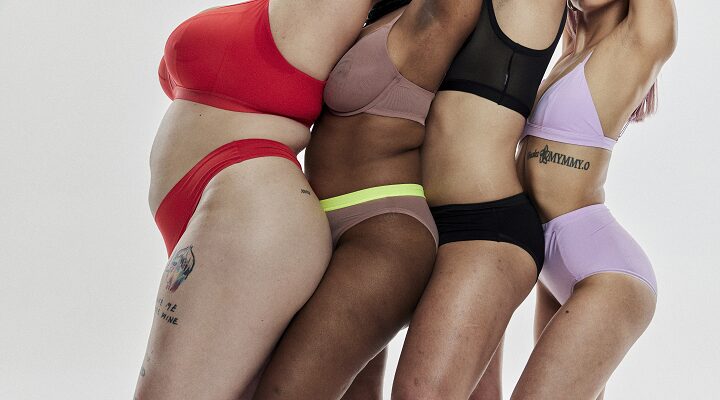
Chloe De Winter: Yeah, we have. So before we launched, we knew the biggest challenge for us was doing an ecom brand where we sell bras and underwear online. Because so many people would never buy a bra online. They have no idea what size they are. Firstly. And all their boobs have changed size, they've changed, they've gained weight, they've lost weight, they don't know what size they are anymore. They've had a baby, they got sick. Whatever it is, no one really knows. We knew that would be our biggest barrier. And we wanted to try and come up with a creative way for people to understand what their size was to. To then convert them into sales, really. So we came up with this idea of our fit guide, our online fit guide. And if you go onto our website and go to fit Guide, you'll be presented now with images of 100 bare naked chests and breasts. So just a lot of boobs, all different sizes, shapes, types, experiences. And what you can do is you can find a body that looks like your own. You can click on that body and then you see that person into Nala products that will suit that person's body. So we just wanted this to be. And to break down another barrier to entry to buying online. And it's been really, it was really cool. I mean, we redid it last year as well, middle of the year, because at first we only had about 30 bodies, but we shot that before we even launched. So finding 30 people to essentially pose, dude, for a brand that doesn't exist was quite a challenge. I really felt strongly that we didn't have enough representation of people. So we reshot it with 100 people last year, which was a huge logistical challenge, but we got it.
Nathan Bush: How do you get a hundred people to go, hey, we want to show your boobs online. Can you come and be part of our boob guide?
Chloe De Winter: I know, I know, it's funny. We. I think it's harder before you're a brand. Like, kudos to the 30 initial volunteers who put their hand up. But then I think people, our customer really connects with the brand now. They love the brand, they love what we're about. So when we put the call out out there, we just put it out to our customers and said, hey, who wants to be part of this? And we just, yeah, we just recruited people based on our existing network and customer base, which was really cool.
Nathan Bush: It's incredible. It's because you do have such a big representation of different body types, different people. You've got old, you've got young, you've got black, white people who've had mastectomies. LGBTQI community. Like, you've, you know, a really great range there. Have you had any feedback from people who might've felt not represented previously?
Chloe De Winter: Yeah, we did. We did initially when we did the fit guide, and we only had about 30. I think it was 33 million bodies on there. We got that feedback a lot. We had people, we had customers reaching out to be like, hey, I love the idea here, but I don't see my body. So when we redid it, we were really strategic about making sure we had representation of all different. Not just body sizes, body shapes, but also things like. Exactly what you said. So women who have had mastectomies, who had had reconstructions, but also women who had had mastectomies but hadn't had reconstructions, breastfeeding, mom's pregnancy, all different types of bodies. And since that, we've had amazing feedback. I've got to say, it's been very heartwarming, even just recently. A few weeks ago, I saw someone who has had a double mastectomy because she has the BRCA gene, and she said that she had never before seen boobs like hers online represented and how much she appreciated and felt seen by seeing a body like hers online, which is really cool.
Nathan Bush: That's very cool.
Chloe De Winter: Yeah.
Nathan Bush: And from a commercial perspective, that's all nice and would obviously make you feel very good and the people are represented. Do you notice that since the evolution of your fitment guide, has it impacted conversion rate?
Chloe De Winter: That is something I should definitely look into. Look, I think it would help us in terms of the data that we collect about our customers. So if I know that you're on there and you're a certain size, I know that certain products are going to be better for you. So it means that we can collect. I mean, we collect the data when someone clicks on certain sizes and what they buy. It means that we can then build out funnels that recommend different products to them. We know if they're looking solely at breastfeeding maternity bras on the fit guide, we know that we can recommend those products to them. It also means, like, we can potentially make a prediction that in a certain amount of time, maybe they're not breastfeeding anymore. We could ask them that question and then recommend new products to them as well. So it just helps us get more data on our customers, really, and personalize our approach then to our sales down the track.
Nathan Bush: How do you personalize that online experience? Are you using a tool to collect and personalize that data online or are you doing that natively?
Chloe De Winter: I'm not the website, the data collection expert, but I'm pretty sure we just do it through Klaviyo.
Nathan Bush: Yeah. Great. So that's that journey that's set up then to help take people on that journey via email, correct?
Chloe De Winter: Yeah, it's all done through email. Exactly. Yeah. It just puts them into a new funnel and they just go through A new funnel.
Nathan Bush: Awesome. How do you know when people are out of, say, stages like breastfeeding, or is it kind of just. You put a time limit on it?
Chloe De Winter: We put a time limit on it and we ask in the email because it's also sensitive information. We don't know. Someone could. Someone could breastfeed for a day. Someone could never breastfeed. Someone could breastfeed for three years. We're not here to judge. We just want to help people move through whatever stage they're in. So, yeah, that was a tricky. It's funny you asked that, because that was one of the more recent funnels we built up, and we wanted to try be sensitive to whatever stage someone's at, but just ask the question. And people are really responsive with emails. So that's nice.
Nathan Bush: That's awesome. Okay, while we're talking about email, I'm really interested who is writing your copy, because you have some of the best copy going around, both on your emails and your website. There is nothing boring about it, like, even things. There are a couple of lines that I pulled out. Boobs are weird. Our bras. Get it. And then the one that you said before, Sorry to offend you. Like, it's so simple, but it's pointed and it's on your mission. It's on your brand. How do you approach copywriting?
Chloe De Winter: Copywriting is a huge part of nala. I think people really connect with our copy and our tone of voice. It was set up initially. I want to say sort of what the journey was. I'll just take you through it. But initially we did our branding with a business called Universal Favorite, who are based in Sydney, and they sort of set up our tone of voice from there. We. I mean, we've taken it further, but that's really. It set the groundwork for what our tone of voice is, and it's very cheeky, it's funny, and it's fun to write in. So a lot of the website copy and our bigger campaigns I take care of. And when we have a new campaign, like, that's honestly one of my favorite parts of my role now is sitting down and just writing the copy, because I love embodying the NALA tone of voice. It's just fun. And then we work with an agency who does our emails and our team. I mean, people on our team who are writing Instagram captions and taglines for campaigns, everyone really just has fun embodying it. It's a team effort, I'd say. But we all just. Yeah, have fun with it. I Guess we just do it.
Nathan Bush: We just write this copy. It just comes naturally to us.
Chloe De Winter: It's fun. It really is. I mean, I don't talk like that in my day to day life, but when I put on the Nala hat, yeah, I have a ball.
Nathan Bush: I love that you obviously had an agency helping you define that early on, but you've taken it further because a lot of the times you see agencies come out with big brand ideas and they're in beautiful brand kits and directions and then over time they get watered down. It feels like you've amped it up from that initial direction. Where does that confidence come from?
Chloe De Winter: Yeah, I think for us when it comes to the industry as a whole, there was opportunity for a big, bold brand to come in and be cheeky, be naughty, be all those things, because the industry felt quite dulled down. Also it works for us. People just resonated with it. And also our business has grown. That's the reality. It's worked from a sales point of view as well. So we definitely don't want to dull it down at all. I mean, you hear as well stories of like, of businesses who grow and I guess there's more politics involved in it, but I mean, it's still us in the business every day, it's just us. So if anything, we are like, nah, like, let's make this more fun.
Nathan Bush: That's a pretty good remit for the team. You mentioned before that you had the trouble with meta around the breastfeeding post. Is that a constant thing in your world that you're constantly fighting this battle back and forth around censorship?
Chloe De Winter: Yeah, from day one it's been a constant thing and we've gotten better at it and we've learned how to navigate it more. But anyone who's in this industry or there are lots of adjacent industries that have the same challenges. Like for us, it's boobs get censored, bodies get censored all the time. So meta as a whole has actually been pretty good. I feel like they're probably one of the more progressive of the bunch. But yeah, I mean, we're always shadow banned. If you want to find us on Instagram, you have to type in our handle. Exactly. Otherwise we won't come up. So that's one thing. We also go through an approval process now with our ads so that they get approved before they're actually put in our ads account. But some of the other platforms, how does that work?
Nathan Bush: I've never heard of that before.
Chloe De Winter: I think when you get to a certain size, you're lucky enough to get connections, you have someone that works at Meta that you work with. And because we'd had issues in the past with different ads being flagged and they actually were just rejected by the ads account, we now go through an approval process where things are manually approved before they actually go into the ads account account. Because things were just getting rejected and it was just a waste of everyone's time. So we do that, but we also do certain things like we'll never have like a front on nipple in an ad, things like that. We do things on other platforms where we build custom landing pages, where on our Mesh products we blur out the nipples so that when a landing page is clicked on, it's not flagged as pornographic, which has happened before, just things like that. Certain platforms we have to blur more. We have to be careful with things like showing too much of a bum because it's in a G string. We can't do that on certain platforms. We're just more careful. We're just more.
Nathan Bush: Are we talking certain platforms? Are we talking TikTok?
Chloe De Winter: Yeah, TikTok. TikTok's super conservative. The other thing which we were told once, I won't name names on specific platforms, but what we realized is that we could have the same product on two different models of different sizes, and the same products on a bigger body with bigger boobs and more cleavage would get flagged, but the same product on a smaller body with smaller boobs wouldn't get flagged. And so that was. I mean, it's terrible. It makes me feel sick that that kind of discrimination exists, but unfortunately it's inbuilt in some of these platforms, which is terrible.
Nathan Bush: And do you think that's systematic or do you think that's an inbuilt discretion on whoever the moderator is at that point?
Chloe De Winter: Yeah, it's a good question. I think a lot of it's done by AI now as well.
Nathan Bush: Yeah.
Chloe De Winter: So it's not like a. It's not like a human that's sitting there being like, I'll approve that and I'll disapprove that. But when you just look at what actually goes through, what's approved and what's rejected. That's the reality.
Nathan Bush: You, you mentioned there around blurring nipples and creating different landing pages. At what point do you go, yeah, I get it, I'll play the game and I'll censor this a little bit to please you, even though I don't agree with it. And at what point do you just go, look, it's commercial decision. We've just got to do this.
Chloe De Winter: Yeah, you have to play the game. The problem is if we fought everything, then we probably wouldn't have much content out there. So yeah, we fight certain battles, but yeah, at the end of the day we're a business and we need to make those commercial decisions as well. Yeah, for sure.
Nathan Bush: And is Meta your biggest new customer acquisition channel?
Chloe De Winter: Yes.
Nathan Bush: Yeah. So you do have to play that a lot.
Chloe De Winter: Yeah.
Nathan Bush: Chic has always believed that style is how you show who you are without even saying a word. Which is why it's a problem when your email and SMS are saying different things on different platforms with different results. I mean, we've all got that friend who's a bit chaotic. We don't want it to be us. For Chic, email lived in Klaviyo, SMS lived somewhere else. And when to comes it came to attribution, nothing lined up. One platform said one thing, Google Analytics said another and making confident decisions just became guesswork. So they brought email and SMS together in Klaviyo's B2C CRM. Once everything lived in one place, the picture became much clearer. Attribution finally made sense. Investment decisions became obvious and SMS quickly, quickly proved its value, especially during key sales moments. The results are 113 times ROI on the Klaviyo platform, 20 times ROI from SMS alone, and an 81% year on year increase in SMS subscribers. Turns out when your messaging and your data are dressed for the same occasion, performance looks a whole lot better. If you want clearer attribution and more, more confident growth, head to klaviyo.com au and see how brands like Chic are doing it. Well, how do you introduce the brand to new customers? Because what I'm picking up on is that as people discover you and understand your mission and buy the first time, they're like, oh yeah, I'm part of this like Nala tribe now. What is the message that lands for people the first time, especially if you're trying to disrupt them from patterns? Because I think a lot of us are, I buy this kind of underwear and I have for the last five, 10 years. How do you disrupt that?
Chloe De Winter: I think where we've had the biggest cut through for new customers is our sizing our products and our price. So where we're able to get the most cut through is ads where we showcase bras like our wire free bras designed for bigger bus and then we really highlight the price as well because a lot of these customers in those bigger cup sizes or bigger Band sizes are used to paying upwards of 100, $150 for a bra. So we'll put the price in the caption of the ad to get that cut through and then potentially like a ugc of that bra looking amazing on a model of the bigger cup size. That's where we get the most cut through for sure.
Nathan Bush: Okay, so I love this because what I'm picking up is that, yes, you've got this massive mission and you're unapologetic about the mission, but there's this, we can't rely on it from a customer conversion perspective. You still need to be really practical and commercial around it. So from a pricing perspective, it's one of the values that you bring up constantly on your website. Like you're not backwards around. It's like, we're going to try and make these as affordable as we can for you over the last couple of years. Drop the inflation word. It's getting really hard to run a business and costs are going through the roof. How have you managed that promise with your customers while staying profitable?
Chloe De Winter: Yeah, look, there's definitely been times over the past couple of years where I've been like, did we make a mistake without pricing initially?
Nathan Bush: Let's double it.
Chloe De Winter: Because we came in, I know, Seriously, we came in exactly what you said. Like affordability was like one of our pillars going into this and we knew that we would get cut through with affordability because there really wasn't, there weren't brands out there who were doing products like ours, like really high quality, well made products for these certain cup sizes at an affordable price. It was like a huge strategy. But now that we have proven out that our product is great and we got a proven customer base that's growing, I'm like, oh, should we have gone a little bit higher? But I will say yes, inflation, all of these things impact us. But the other thing that's helped is the fact that now we have proven concepts with our product is we can increase our order quantity, which does help as well because we can bring the price down with that as well with those larger orders.
Nathan Bush: And are you manufacturing overseas?
Chloe De Winter: Yes. Yeah, we manufacture overseas. All overseas. If we did it in Australia, that was also another thing that we deliberated a lot initially. If we did it in Australia, the price would be way higher. And the other thing is the factories that we work with have incredible expertise creating really high quality, well made bras. And bra construction is incredibly technical, like way more technical than I ever imagined. And you want to work with people who are really experienced at understanding understand that. And the factories that we work with are amazing at doing and executing that as well. So, yeah, I trust them 100%.
Nathan Bush: How did you go about that first bra design then? Like, given how complex and technical they are and your background obviously not coming from designing bras previously. How did you get that first one to go? I know there's so much to be disrupted here. This is where we're going to go. Oh, shit, we've got to make the product now.
Chloe De Winter: Yeah, yeah. I mean, we didn't rely on me, trust me. The strategy that we took is finding bra designers who are technical wizards in this area. So these people are lingerie designers who are experts in the construction of bras, but also in the pattern making and also the sizing and scale of these bras. Because you could make an amazing bra, say designed for a 12 standard 12B size, which is usually what like the standard size is. The first sample will come in. But you need that 12B to fit a 12B perfectly. But you also need it to fit as well as a 16J or K, which we also create. So you need to find someone who's technically amazing at that and has the experience, has the knowledge, has the training. So we, yeah, we partner with, with bra designers to do that.
Nathan Bush: Amazing. I'm learning a lot about bras and boobs.
Chloe De Winter: Welcome to my world, also my husband's world. He's like, yeah, I didn't think this, that my world would be like bras and boobs.
Nathan Bush: With the pricing piece then if that's your commitment to keep underwear affordable, how have you then tried to quantities? Have you gone down the path of bundling or subscription or anything like that to try and increase that AOV once people find you?
Chloe De Winter: Yeah, we have. And to be honest, it's an area that I think we could still improve on a lot, especially when it comes to underwear, I think, like for briefs as opposed to bras. But it's where, yeah, we're exploring more bundle options for bras as well. It's on our list of things that we want to do this year, try and increase that aova. I mean, that's what every Ecom brand is trying to do, increase that aova. So we do that. We also do things like we create products for great gifts with purchase which come with certain minimum order value for customers. And that's worked really well for us as well and something that we're going to continue to do this year.
Nathan Bush: Does it mean that you don't go on sale?
Chloe De Winter: No, it doesn't mean that. I think a lot of people can relate. A lot of brands will relate with this. But when we launched, we really didn't want to go on sale. And if you look at some of our messaging from those really early days, we would say things like, we never go on sale.
Nathan Bush: And then we were so naive back then.
Chloe De Winter: Yeah. I think with time we realized that that wasn't going to be a sustainable option for us as a business. When you're sitting on lots of stock, you need to clear stock. You need to have a good turnaround of stock. Otherwise, I mean, it's just not good for business. So we realized that we needed to go on sale sometimes and we try and clear some. Like when we have a few sizes left of certain styles, we'll definitely go on sale to try and clear those styles. And then the last couple of years we've done a Black Friday offer. Look, we'll. We'll continue to do that for sure. We don't want to be one of those brands that's always on sale. There's definitely some brands that people would know in the industry that customers would only buy 40% off. And pre Nala, I was one of those customers. I would just wait for the 40% off sale. Cause I knew I would have to wait a max of two weeks before it would come around. And we're not a brand like that and we never will be. And we also come in at a price where we hope people aren't waiting for a sale as well, because we are a affordable compared to a lot of other brands. So that's definitely part of the strategy.
Nathan Bush: As you've scaled and grown, has managing inventory and forecasting been really difficult? Because I could imagine in a business like yours where you are inclusive and you're trying to represent all sizes and you've got multiple ranges and new collections launching constantly, that could get pretty complex pretty quickly.
Chloe De Winter: Yes, very.
Nathan Bush: Was that a scared laugh?
Chloe De Winter: Yeah. No. It's huge. It's huge. It's huge. We have so many skus because we have like one of our bras comes in now. We've just increased it now it's 75 sizes. That's just sizes alone. And about. I think it's about eight colors. I need to have a look on our website. That's just one style. So with that many skus, warehousing is a huge challenge. It's not like we're a brand that just sells water bottles. And we have two types of water bottles and they come in three colors and you pop Them in the warehouse. Like this is managing that is a huge. Yeah, it's a huge challenge for the business. And also planning is a huge challenge for the business. Like we work with a planner now. We have a planner on our team because you need someone who specializes in that. It's hard, it's complex. Also with our product and the lead times it takes to actually create the bras, you can't just say, oh, we're running low on this size, like pop an order in. It's from the time we order it to the time it's actually in the warehouse can be about five months. So it's a long lead time. So you're constantly having to predict what's going to happen. Like new releases, new campaigns, sale time. You're always planning ahead. It's a huge, huge part of the business. I'd say like the most important part of the business.
Nathan Bush: What are some of the major lessons or changes that you've made to help that inventory flow smoother and to make sure that you're in a good cashflow position?
Chloe De Winter: I think just having a good planner on board has been a huge part of it. I think there hasn't been any major overhauls. I think just as the business has grown, we've just, just put more resources in place to manage those sides of the business. I think the biggest changes we've made have been, and you mentioned before, like sale time, Black Friday, when we went on sale, I mean, we did 30% off site wide, which was. It did really well, I've got to say. But we were planning for that six months before, at least in terms of stock. So ordering enough stock because you don't want to go and sell and then three days later you're sold out of all your best sellers because. Cause if your customers are waiting for that, they're going to be pissed off. That's just not a good experience for anyone. That's one thing. Warehouse staff, because you don't want your customers waiting a month before their order is actually sent out. So making sure you've got enough staff there to actually get those orders to the customers as quickly as possible. And also customer support, because with that influx of new orders, you're going to get a lot more customer support queries. And we get a lot of customer support queries with our kind of product because people have questions about sizing and fit. It also returns.
Nathan Bush: Have you been able to automate any of that? Because it's hard, isn't it? Given that you are appealing to different bodies, different people Trying to be really personal to people. Have you been able to automate a lot of that customer service as it
Chloe De Winter: scaled, you know what? Some. But no, no, we haven't. I think it's one of the goals for this year is to work with an AI, some sort of AI software where we're able to automate more of it. We've investigated it before, but to be honest, nothing's been good enough for us yet. Good enough and good enough price as well. We have, I mean, of course have certain answers that like we work with software that that inputs certain information about someone's order and things like that to make it easier. We have templates for answers, things like that. But in terms of having it fully automated, no, we don't. We have a person actually answering.
Nathan Bush: I think that's a good position though, right. Is to know what's available and the quality of it out there and to know your standards of what you expect and go, well, we've tried. It's not quite there yet, but we'll keep an eye on it.
Chloe De Winter: Yeah, exactly. Definitely something like, I mean with the AI world, I know there's so much opportunity for us to optimize that area and that would be amaz. So yeah, stay tuned.
Nathan Bush: The market is shifting, costs are climbing and the pressure to do more with less is very real. But when resources are tight, you can rely on Shopify, the platform that's consistently first with new capabilities. Shopify invests significantly in R and D and drops more than 150 updates every year. Evolving with you, you and absorbing complexity so that you can focus on what moves your business forward from AI powered insights to the world's best converting checkout. Shopify is designed for the next year of commerce, helping you sell more, scale faster and future proof your brand, build for what is next with Shopify. Visit Shopify for enterprise to learn more, just to add a little bit more complexity. I saw that you entered David Jones recently. Was that your first physical presence?
Chloe De Winter: Yeah, we were stocked in a few independent retailers, like small independent retailers, like, but nothing to the scale of David Jones. So yeah.
Nathan Bush: And have you had to come up against any decisions or values? Probably not that serious, but anything, any decisions that you're like, oh, we've built this business on E commerce in the way that we always want to do things and now we're partnering with this big retail brand in Australia. Were there any compromises you had to
Chloe De Winter: make when we went in? We didn't want to compromise because we had exactly what you said we had worked so Hard on building a strong brand. And we'd seen other brands go into department stores here and overseas and you just look at them and you feel like they've kind of lost that brand integrity. We really didn't want to do that. So that was really important for us going in and we worked really hard. David Jones has been an amazing partner from the start and really worked with us on that, on maintaining that brand integrity and I think we've succeeded. I think when you're putting your product, your babies into, into something like David Jones, there's always going to be things that are out of your control for sure. But as a whole we've, yeah, we've been ecstatic. There's one thing I'd say for us going in our like we've spoken a lot about our sizing. David Jones products in the lingerie department don't go up to really inclusive sizes. So that was a big thing for us going in as well for our to make sure that they don't stock 100% of our size curve. But I'd say they probably stock 80% of our size curve, which is really great. Especially now some of our better selling products. So that's been awesome to offer to
Nathan Bush: customers because I could imagine that would have been very important to you to represent that size curve. Because if people are having that NALA experience, that's part of your mission. Right. To be able to serve everyone.
Chloe De Winter: Exactly right. And we've had great success with it as well in store.
Nathan Bush: Yeah. Has it opened the door for more physical retail or do you want to
Chloe De Winter: focus more on acom potentially at the moment like we're really happy with our presence in David Jones. We launched as well. When we launched with David Jones it was into five stores plus online. That was in February last year. So now about a year ago and then in July we actually launched into further eight stores. So we now have a presence in more David Jones stores and like all of the major cities around the country and also in New Zealand. So yeah, that's been awesome.
Nathan Bush: That's brilliant. Because underwear too, I suppose it's like it's great to have this brand who can be represented on E Commerce and you are in full control. You can stock exactly what you want and be inclusive. But then also underwear is sometimes that thing you go, I just need it today or I need it tomorrow.
Chloe De Winter: I think a lot of women would resonate with that. Things like, oh, I've got this event tonight, I need a strapless bra and I need to get in and get it now also, I know we tried to solve the problem of buying bras online through our fit guide, but that doesn't solve the problem for 100% of customers. Some people just want to go in and try on a bra and see what size they are. So, yeah, that's been great. Also, that customer is potentially, once they go in and have that great experience in store and they know their size, they can then go online and buy so that person and like, we can continue that sales journey online.
Nathan Bush: It's an acquisition channel.
Chloe De Winter: Exactly.
Nathan Bush: One of the things that I love and I'm very grateful for what you've done, is you donated 1800 bras to Thread Together, which is a charity very close to my heart. What inspired that connection?
Chloe De Winter: Yeah, each year around Christmas, we try and do a campaign where we give back. I mean, we have regular charity partners as well, but this is just, I guess, an additional thing. In the past, we've partnered with Share the Dignity, which is. Is an amazing organization. They donate period products to women in communities in need and we donated underwear to them a certain amount. So with each order we donate a pair of underwear to a person in need. We also wanted to donate bras, but they didn't take bras. So honestly, we were just looking for other organizations that we really connected with and we discovered Thread Together. And yeah, I mean, I'm so proud that we were able to partner with them and it's a relationship will definitely continue.
Nathan Bush: Makes a huge impact. Obviously I know Anthony very well there and. And just having basics and underwear is a key part of what they're looking for. So, you know, the impact that you would have made there is absolutely huge.
Chloe De Winter: Yeah, thanks.
Nathan Bush: I'm keen to get your thoughts on where we go with body positivity. I read an article on the weekend. It was a really interesting article around obviously the rising of zempic and those kind of drugs where feels like five years ago, body positivity, you could be out there and a bit bigger and we were celebrating and all that kind of stuff and. And feels like we've taken a swing back to the 90s where if you're rich enough and connected enough, you know, there are easy ways to get skinny now. And people who were once really body positive are now showing up very skinny and that message kind of dropped. Do you still think from a customer perspective, long term it's going to have the same impact that it will today?
Chloe De Winter: So interesting. It's. Yeah, it is. I feel like the last couple of years has been. Yeah, you're exactly right. A huge shift, I think, for us, us as a business. We've always, as I mentioned earlier on, we're always about making our customer feel good. We're not going to judge someone for their body size. We're just going to meet someone wherever that body size is, and it's working for us. And we'll keep leaning into it. We've built our whole brand, our whole product on people feeling good at any size. We'll keep doing that. I mean, it'll be interesting to see where the next few years go for sure. But. But, yeah, for us, we'll just continue meeting people where they are. I think an interesting point around that is, yeah, we built this brand on body positivity. We did a partnership, like a paid partnership with Tammy Hembro, who's been vocal about. She's had breast implants, and we did a campaign with her. She looked amazing in our products. And we got a lot of backlash for that partnership, for people saying, like, she doesn't have real boobs, like, and you're. You're partnering with her, like, really looking down on us. And it gave us an opportunity to come out and say, actually, we don't care. I don't care what choices you make with your body or what your body is, but we will create products for your body, whatever that is, and I think we'll continue to do that. It works for us as a brand, as a business.
Nathan Bush: I love that your body is your body. Whatever you've chosen to do, whatever's happened to you, however it looks, how it feels, it's like it's yours. Like, we'll.
Chloe De Winter: We'll try and we'll make you feel good about it. Yeah, exactly.
Nathan Bush: Right. All right. For the next 12 months, what's on your radar for yourself and the team at nala? What are the pros? Priorities?
Chloe De Winter: I mean, I'm having a baby this year, so that's big.
Nathan Bush: Let's go.
Chloe De Winter: So hopefully a little bit of time off.
Nathan Bush: You think you'll get it?
Chloe De Winter: Yeah, so. So this is my second. And yeah, it's really hard. I mean, Phil and I, my husband and I have the business together. So it's definitely a challenge navigating a business and a baby, but we've definitely learned a bit since baby number one. That'll be big. I think I'll get. Yes, I will get time off. I think time off for me looks different to maybe time off for someone in a 9 to 5 where they're an. An employee is. Is the reality of a founder.
Nathan Bush: Are you excited about that time, like, have you done things differently from your first child? Have you got different processes in place, like, different team in place to kind of pick up for you?
Chloe De Winter: Yeah. When we had our first baby, the business was at a different point, so there was a lot more pressure for me to come back earlier because there were certain parts of the business that had been completely neglected because we didn't have the employees to really come take hold of those things. So now the team has grown since then, so hopefully there'll be a little bit less pressure on me to come back and I'll have that time. I really want that time.
Nathan Bush: Yeah.
Chloe De Winter: Yeah, I really do. So hopefully.
Nathan Bush: Congratulations. That's so exciting.
Chloe De Winter: Thank you. But, yeah, for Nala, we've got big plans. I mean, we always have big plans and we're always planning really far ahead because with product development, we're planning about 12 to 18 months in advance anyway. So we are looking forward to forward very far. We've got sports bras coming out soon this week, which is our big.
Nathan Bush: That's exciting.
Chloe De Winter: Really big launch for us. We worked on this for 18 months, the product. So, yeah, I'm pumped for that.
Nathan Bush: And did that mean, like, a whole bunch of new influences and things like that as well? Did it?
Chloe De Winter: Yeah, it's really different for us because we've never. Yeah, it's a new category, so I'm excited for that, hopefully. Yeah, honestly, it's great. I'm really proud of the range and I think our customers are really going to love it. So, so super excited. And then we're kind of assessing what our next big move is. We want to do an international launch, but not sure exactly what that looks like. It takes a lot of planning as well. So, yeah, we're not quite ready for it yet, but, yeah.
Nathan Bush: You mentioned at the start you were originally in New York. Do you have ties there? Like, is that somewhere you could easily go back to?
Chloe De Winter: Like, maybe. But now I'm thinking now it'll be two kids.
Nathan Bush: Yeah. Yeah, yeah. That's not fun New York, is it?
Chloe De Winter: No, it's not quite the New York we lived in as. Yeah, yeah. Freeze a bird. It was. Yeah. I don't know about doing New York winter with two little kids.
Nathan Bush: Nah.
Chloe De Winter: So I want to say probably no, but. No, we'd love to launch in America, but, yeah, we're not quite ready for it yet.
Nathan Bush: How good? Well, Chloe, thank you so much for joining us on Add to Cart and sharing everything around Nala's journey so far. The thing that really strikes me is that I was expecting to talk a lot around the mission and the way you market in, you know, being unapologetic, being strong, being bold. But I didn't expect to to have it so tied to the commercial outcome. And I love that you've been able to pull the two together because a lot of people will look at it and go, oh, it's nice to have a mission, but you've got to make money. You're like, actually you can do both. Exactly. So I really, I really liked hearing that. Thank you for sharing with us.
Chloe De Winter: Yeah, of course.
Nathan Bush: Tell you what, after that conversation makes me want to go out and fight for the breastfeeding mums everywhere. To be able to breastfeed in public. Actually probably not a great idea coming from me, better coming from someone like Chloe. But I love her mission and just think it's fantastic that she is out there putting it out there unapologetically even as they're scaling. But has the commercial now behind it to know the impact and the payoff that being so vocal around that mission is doing for their business. Here's three practical takeaways that I took from that episode. First one is the boldness the of this only works when it's solving a real customer problem. Nala's inclusivity lands because it directly improves fit, confidence and buying decisions. It doesn't just create more noise, more awareness, it is directly linked to the problem they're solving. Secondly, there's nothing wrong with complexity in your business model as long as you design for it, not try and work around it, managing over 70 sizes with long lead times, complex product design and limited returns. It only works with disciplined systems and planning and we can hear that Chloe and the team have put that in place. Nothing wrong with complexity. If you have a system designed for it, it actually becomes a great moat. And thirdly, platform rules such as Meta's censorship over the NALA ads are annoying, but are a commercial constraint, not always a moral battle. While it would have been easy to push back and really fight the fight, Clubby knows realistically NALA needs Meta to grow their business. So they've come up with ways to play nicely with Meta while showing their mission and their values everywhere else. If this episode sparked ideas or questions for you, that is exactly the kind of thinking that keeps getting unpacked in the add to cart community, especially by operators that are dealing with dealing with trade offs within their business or have really strong missions that they want to get out into the world. You can join us for free@addtocart.com au we would love to see you in there. Thank you again for spending your time with me today. I'll see you next week on add to Cart.