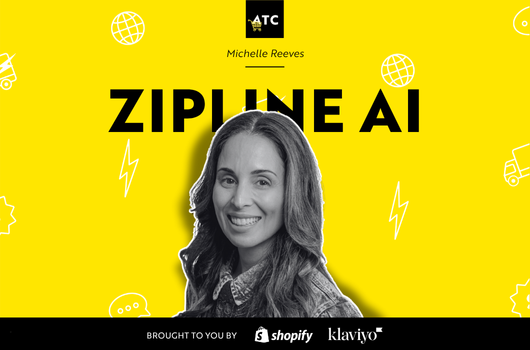
Nathan Bush: Furniture and shipping as a competitive advantage. They rarely go together. Bulky, costly, fragile. But it can be done. Just ask Freedom furniture. Partnering with Shipit, they've saved a massive 20% on freight costs across Australia. And that's just the start. With ShipIt's API integration, freedom is easily managing multiple locations and saving big while doing it. They've automated fulfillment for over 50 stores and 100 dispatch points and they've streamlined their operations. They've added expanded carrier options across Australia and New Zealand. And it's no wonder they've reduced cancellations and improved customer satisfaction. If you want to optimize your fulfillment and delivery operations, visit shipit.com to find out more and turn delivery into your competitive advantage. I think one of the biggest challenges in E commerce that is being faced by brands today is is that balance behind optimization using new technologies such as AI and maintaining a brand personality or some personality in their brand which differentiates them to others. Because the age old question. Well, not the age old, it's actually a new question. But the question is if everyone's using AI, what are you doing differently? How do you scale personalization and connection with AI without stripping away that human touch? Because sure, we all want the smarts, the data led recommendations, the really engaging content that we can get through AI, but at the end of the day we've got to also think what do customers want? Do customers want to be interacting with AI all the time or do they want to know that there's real people behind this and not only behind this, but there's a real community of people around that also are into what they're into? Because we know as humans connection is so important. We are drawn to things because we think that it might connect us with others. At the core of it, that's a basic human need. This really stood out to me and was a great example of how to integrate AI with creativity and personalization when I spoke to Michelle Reeves, who's the co founder and CEO of Zipline AI. Michelle's technology allows customers to get involved with their favorite brands. We're talking Gucci, we're talking Disney. And create products using the AI technology that reflect their personality. So think about shoes that might have your favorite characters from inside out represented on them, but designed by you. And then being able to not only take those and enjoy the creation process, but share it with with the community all around them. It talks to how to use AI to not only see what shoppers are creating, but also in how customers connect with others around their creations. It's A very different lens on AI for E commerce. And it's about collaboration and creativity, not just efficiency. Let's hear it from Michelle.
Michelle Reeves: We're basically an analytics tool disguised as a creative playground. So while all that fun is happening over there, in the Disney example, what we talked about them that they would like to do with this in the future is unlock rewards for people. So every time you come in and you create something, whether it's a shoe or whatever the challenge is, it's, hey, Nathan, thanks so much for creating this. We love what you've done. You've just unlocked 15% off to shop our current collection valid in the next 24 hours. Here you go. Or personalize even more. Nathan. We see that every time you are designing, you've always got lime green and navy stripes. Here's a curated collection of our current collection that's navy and green. We think you'll love it. And we'll give you free shipping for the next 48 hours. So it just gives brands now a really hyper personalized way to convert a sale with data that's so relevant for that user that you're more likely to see it actually pay off than a general email. Hey, everyone, it's summer. Here's 10% off to shop our collection.
Nathan Bush: What are the other ways that you're taking some of those creations and socializing them to kind of keep building the hype and reward people for their creation?
Michelle Reeves: Customers or brands who are looking at doing that socially validating what people are creating to almost guarantee the next bestseller. And so we don't do that part of the relationship in terms of, like talking to their customers. We give the brands the tool for people to create and all the back intel of, you know, what prompts people are using, what was created in those images. But we definitely help the brands think about, okay, what next? How can we do it? And the idea of having social validation where they will put that out onto their social feeds or have influencers maybe vote every week on, hey, we've been seeing what you guys are submitting. You know, I love this and this one. That kind of recognition, we know, actually pays off really well. You know, if somebody that I admire as an influencer or a content creator called out, Michelle, I love your design. You submitted last week. Super cool. Oh, I got tagged. I got noticed. You. You see me? Yes, you see me. You know, that feels good in that relationship. So we really try to give some guidelines for how they can best use these tools and maximize the social content, get some social voting, and maybe if You're a company that's set up for it, put a top design in production. You know, nothing says we see you quite like, hey, we're going to put the top 10 T shirts or bags into our next collection.
Nathan Bush: And is it hard for you to pick where AI will be at in 2027, 2028, or are you, have you got a rough idea?
Michelle Reeves: Yeah, I think it'll be extraordinary. I think the outputs and the quality will continue to just become phenomenal. I think I've learned enough to know that you don't know because I go back to the social media days and when we had, you know, our top athletes connecting with brands and doing collaborations in Facebook, I remember there was a brand who said, okay, we're going to do this with Roger Federer, that it's just for three months. We just want to test it for three months and then you're going to shut it off. We're very, you know, conservative. Let's just put some very tight rails on this thing. I'm like, that's fine, three months. Great summer campaign, It'll be fine. And at the end of the three months, wouldn't you know it, they're like, wait, we started a conversation with all of these people on Facebook. We can't close the door on them, we can't shut it off. What do we do now? And I think that's kind of where we're seeing like we're going to open a door to something and we're going to invite people in. And I think what we need to do is just continue to be great hosts, read the room, understand how people can best interact in the space that we're creating here for brands and customers, and just keep making sure that we're delivering best in class, whatever that interaction is. I go back to what our core mission is, to zipline. It's not to be an AI company, it's not to be a co creating company. It's to uplift consumers and then unleash commerce.
Nathan Bush: Does that scare brands? When you start giving customers a say and start going, okay, cool over to you, what do you want to see? And then there is that implied pressure of, well, maybe what we're giving them isn't good enough. When I look at what they're actually
Michelle Reeves: creating, I think that savvy brands are going to have to let them in and it doesn't mean that they're all going to let them in in the same way. You know, I think there's different rules of engagement. You know, designer brands, they're not going to make things that I create on their website, but for me to feel like they see me, that might be enough. Or for them to maybe give me exclusive access to shopper collection before anybody else, that might be enough for a customer versus you know, brands like a Uniqlo or H and M, you know, they're used to being, you know, pumping out product constantly. They're going to have to engage their community in a very different way. You know, local community collections or recognition or gaming skins. You know, I think that's going to be a different way that they have to engage. I don't think you can avoid it. If you want to stay relevant, you have to let them in.
Nathan Bush: And the brands that you're talking to, when you give them that stat around 11 minutes engagement on site, are they getting excited by it because they see engagement as a pathway to conversion for that customer or are they truly understanding that engagement means that it's like a lifetime value and a brand investment play that over time. Your 10 year old son, my 10 year old son, maybe when they're 30, when they're 40, they can afford what they're actually falling into. Now do they see it as a long term play or are they hoping that it converts in the next visit?
Michelle Reeves: So one it's actually requires a little bit of untraining because all of the current marketing teams and ecom teams have had to train their financial models to rely on influencers and content creators. So most sales happen outside of their ecosystem and they don't get any data from that. They're not getting any insight other than just basic conversion. Okay, if we, you know, send a sweater to this person, we'll get, you know, 10,000 views, which converts to, you know, 300, add to carts which then gives us five sales, you know, so they've really got to think about now hang on, what if we owned the experience experience now from start to finish because they haven't been owning the experience. And that I think can be, you know, a little unknown for younger marketing teams for older, more established legacy brands. I think they're really excited. They're like, yes, bring them back to us. We want to own everything. And now it's just, you know, discussing how, what's the best way to do it.
Nathan Bush: What's interesting there is that Michelle's use of AI to create stronger connections and engagement with customers actually does end up driving a hell of a lot of data that they can use in their business for efficiencies and sales. But it doesn't lead with that, there are a couple of other examples that have come up in Add to cart that are similar. One that stands out to me was Pet Circle. When we spoke to John from Pet Circle about this and he gave the example of a customer who contacted them because they had surplus food because their dog was on a diet. Hey, it happens. But their strategy was a semi automated response where they offered a discount on the next order and suggested donation options for that excess food. Which makes a lot of sense, right? Thoughtful customer service, even though it's semi automated, was really smart because it was able to go into that specific scenario at a very emotional and personal level to show deep customer understanding that goes beyond that immediate transaction. We spoke about that recently with Decider, the software that gives agents tasks to perform that drive a specific outcome but don't necessarily tell it how to get there. Pet Circle, that's a great example of being able to respond to customers using AI, but in context of their particular situation. Additionally, good pair days they spoke about their custom AI recommendation engine that acts like a Spotify song recommendation engine for wine. And we all know that we love it when Spotify recommends a playlist or recommends a song for us because we feel like it knows us and knows our tastes. Good pandas have just gone and done that and attached it to wine to allow you to explore more, to feel involved and to really drive that engagement. Of course, along the way here they're gathering so much information about you and your preferences, similar to what we see with zipline AI, but they don't lead with that. They lead with an engagement tool to create that data, to create that connection and then drive preferences and knowledge about the customer, to drive efficiencies and to drive sales. So there's a bit of a path there to lead towards sales. But rather than using AI to cut straight to the chase of efficiencies and sales, taking customers on a journey and using it to engage them will often lead to a much stronger result overall. So next time you're thinking about how do I use AI in my business to don't jump immediately to efficiencies, reducing teams, streamlining customer service. Think about it. Flip the script and think about how can I use AI in my e commerce business to engage and connect with my customers? Better guarantee that if you brainstorm this with your team, you will find so many ways to unlock engagement and connection that you hadn't even thought about and in the long term will lead to the data and the efficiencies and the sales that you're looking for. You're just gonna be a bit creative around how you do it. Thanks for tuning into the Add to Cart playbook. Until next time, keep your customers creating, connecting, and of course adding to cart. If you wanna throw around more ideas around where AI could work for your business, make sure you jump on over to the Add to Cart community. It's free to join and there's over 500 e commerce professionals in there. You can join@addtocart.com au it's a safe space. We'd love to see you in there. Add to cart.com come join the community. See you next time.