Kirsten Hunter: One very powerful, influential, highly opinionated VC investor can actually be a lot more difficult to manage than a thousand small retail investors. 2% of venture capital funding or VC and angels went to all women founder teams. 15% went to mixed gender teams, which means that 85% went to all male teams. The more you've got that kind of like pull that product market fit feeling in the market, the more likely it's going to be that you'll be able to mobilise the community to back you and to invest behind your idea.
Nathan Bush: Hey, it's Nathan Bush or Bushy joining you from the land of the terrible people here in Brisbane, Australia. What if you could not have to beg your bank for more money or maybe not pay stupid interest rates to access capital or have to pitch to VCs who just don't get e commerce? What if they there was another path to raising funds for your e commerce business? What if you could raise capital on your own terms, build momentum and even use your huge database of passionate customers to help you raise money to help your business grow? That's what we're going to talk about today. Today we are joined by Kirsten Hunter, who is the CEO of Virtual Australia's leading equity crowdfunding platform. Before Virtual, Kirsten co founded Future super, ran techstars in Sydney and built a career that zigzags from medicine to law to consulting startups and venture. I've known Kirsten for a long time and her career just blows my mind. Virtual has now powered over 300 crowdsourced funding campaigns and raised more than $200 million backing E Commerce brands, some of which you've known and who have been on the show before talking about virtual speaking, such as Outland Denim, Sneaker Laundry and Xeroco. If you have ever thought about raising capital for your business or are thinking about it in the future, this is a great episode to get insight on another path that is less taken. Today we are going to talk about how to know when your brand is ready for crowdfunding and how the virtual model might differ from other models such as Kickstarter or VC backing. We talk about the secret to creating and keeping momentum in in a crowdsourced funding campaign. And we talk about something that Kirsten is so passionate about. Are we ever going to get to equality when it comes to who investment funding goes to in the Australian startup ecosystem? That is a fascinating chat. So without any further ado, thank you to our partners Shopify and Klaviyo. Here's our conversation with Kirsten Hunter, CEO Of Virtual Kirsten, welcome to Add to Cart.
Kirsten Hunter: Thanks for having me.
Nathan Bush: Well, this is going to be a bit of a different episode I think because there is a little bit of a history here that our listeners might not know about. We actually went to school together and one of my fondest memories is that you were the one that had a car before everyone else and used to give me a lift to school every day in year 12. And here we are today. There you go.
Kirsten Hunter: I know, crazy. Yeah. And I mean for your listeners as well. Probably don't know. We actually went to a really small school. It's not like we were at some massive city private school and everyone knows everybody. Like our school was little. We were the fourth lot of year 12s to finish. It is a big coincidence that we have crossed paths again.
Nathan Bush: It is. You saved me from riding a bike up some massive hills so thank you for that all these years later.
Kirsten Hunter: Yeah, they're not as big as you remember but they are still there in my mind.
Nathan Bush: They're still massive. So excited to have our conversation today. We've obviously stayed connected through your amazing roles and you've had just this career that I look at and I go, it's just fascinating where you've been and how you've structured your career because from studying medicine and law to being involved in student politics all the way through to co founding a superannuation company, being involved in consulting legal firms and tech startups and now CEO of Virtual. It's quite a journey.
Kirsten Hunter: Yeah, it is quite a journey. I have kind of a Gen Z career but before, before it became cool, I think to move around a lot.
Nathan Bush: So you were cool before everyone else was cool?
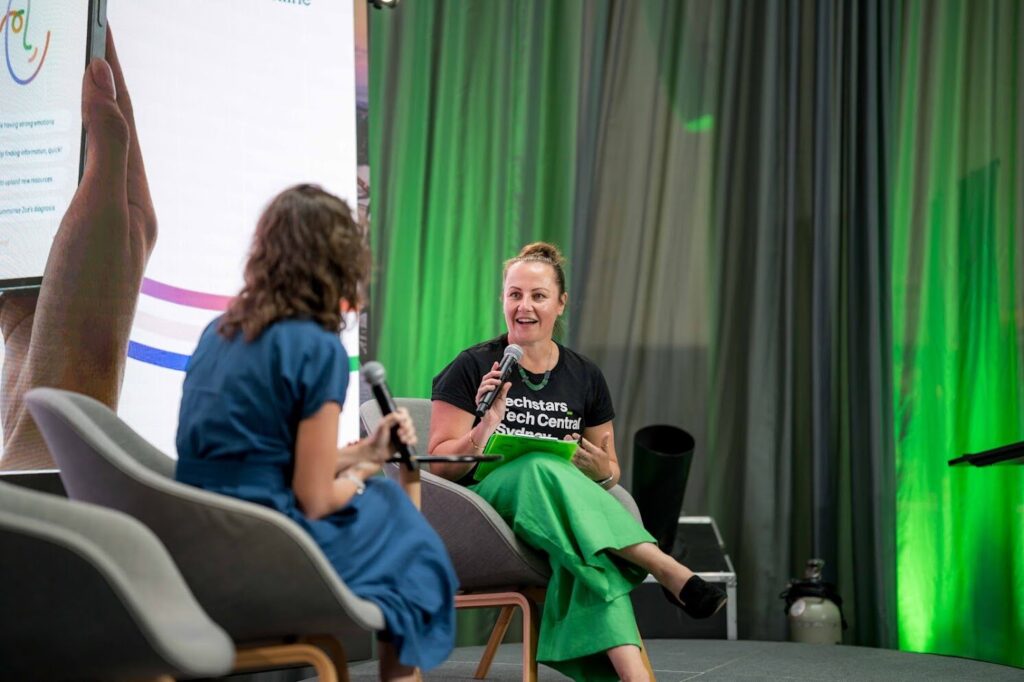
Kirsten Hunter: I don't know. But yeah, I mean I think when you look backwards at all of the different things I've done, you know, as you said, studied medicine for a few years, then went across to law, worked as a lawyer, worked as a management consultant. So I spent 10 years all up in professional services before coming across to the startup space as one of the co founders at Future super, which is Australia's first ethical and fossil fuel free superannuation fund. Since that time I've done a couple of other different roles in the startup ecosystem. Most recently before my current role I've been the managing director of techstars in Sydney. So running the global accelerator in the Sydney program and then more recently taking on the CEO at Virtual. But I think all of these kind of career changes and decisions that I've made I've kind of been following, like following my energy, I think following what feels right to me in the moment and each one of those career pivots, I move away from things that I don't like about my old job and more towards things that I do like. So it's really cool because it feels like each one of these roles is more and more me than the one I left before. The current where I am now at Virtual, I think really brings together a bunch of these different things that I've done before. So at Future super, it was all about creating wealth creation opportunities for retail investors and helping retail investors understand that superannuation really gives you the opportunity to combine people power with financial power and to get this influence in the market that we couldn't have if we were just acting independently. And I think crowdfunding really is the same thing. Like it gives retail investors the opportunity to decide which ideas get funding, which founders deserve funding, and really get to shape the economy around them. So I love that piece of what we do at Virtual. And then the flip side of crowdfunding as well is where does the money go to? And again, I feel like that really builds on the work that I've done in the last couple of years at techstars, particularly around access to capital for diverse founders and people with ideas that are super interesting and have a heap of potential, but don't necessarily match the very narrow archetype of what gets funding from VCs in Australia.
Nathan Bush: I really want to go into that in this conversation because you're such a great example of someone standing up for diverse funding and giving a range of founders a go. And we have a lot of that in E Commerce. I mean, I always look at our guest lists and our covers to make sure that we're as diverse as possible. And we're still not as diverse as our I'd like it to be, but I think we're getting there. Tell me though, I want to go back to your decision about following your energy at Virtual. So Virtual has been referenced a number of times on the podcast. We've had Outland Denim, we've had Sneaker Laundry, Zero Co, to name a few, who have all raised money as E commerce businesses through Birch. And I understand now that there's been over 300 campaigns and over $200 million raised through the platform. Can you explain to our listeners, especially from an E commerce perspective, how virtual works?
Kirsten Hunter: Yeah, absolutely. So Virtual is Australia's largest crowdsourced equity funding platform. And so what does that mean, breaking it down? Crowdsource funding is basically you collect a large amount of money from a large number of people. So lots and lots of small checks as opposed to trying to negotiate either with a bank or a venture capital player that can give you one large check and give you all of your capital needs. It's kind of like Kickstarter or those kind of rewards based campaigns, except instead of getting a reward in the form of a product, your reward is shares in the company. So you can do rewards as well using product, but basically what you get is shares. And so it provides founders, business owners, the opportunity to convert their passionate and loyal customer base into passionate and loyal shareholders who then literally and figuratively invested in the success of your business. So you really kind of have the opportunity to activate that customer network, turn it into shareholders and help them become really, really incentivized to help you grow your business.
Nathan Bush: And do you find that it's better for those consumer led brands because they have that database that following that recognition in market? Because you're essentially a two sided marketplace here, aren't you?
Kirsten Hunter: Yeah, that's right. So we are both sort of trying to find, attract and serve founders and business owners and connect them with capital, but we're also doing the same thing on the investor side, trying to connect them with investment opportunities, wealth creation opportunities, so that they can, you know, like use their money and try and build a better future for themselves and their families. So we, we definitely do kind of have similarities to a two sided marketplace for sure. In terms of your question around, does it only work? You didn't say does it only, but like a lot of people do, does it only work for consumer facing brands? I think it doesn't only work for consumer facing brands, but it does work very well for consumer facing brands. So what we talk about is in crowdsource funding, crowdsource equity, having passionate supporters is kind of the key to success here. They can be passionate supporters in the form of customers. They could also be though passionate supporters who just really believe in this product and really want to see it come to life. Cbin is probably a really good example of a big campaign that's happened on Virtual where it was supported by thousands of individual investors because they loved the idea of this product that could take pollution out of the harbor without harming wildlife. But they weren't actually customers of that product. So the passionate supporters is what matters, whether or not they are actually customers. And I think it can work just as well for, you know, B2B businesses or other types of businesses that don't have that direct to consumer element. But instead of Thinking about it in terms of your shareholders as customers, your shareholders as employees in potential customers. So I think it, yeah, it does work really, really well for consumer businesses and it's a bit more of a kind of easy to understand relationship between the crowdsource funding campaign, the customer base that you have and converting those into shareholders. But we certainly have seen a lot of examples where it works for other types of businesses as well.
Nathan Bush: I love it. I love browsing through your site and seeing just from an ideas perspective, what people are coming up with their businesses in there that I hadn't heard of. Like the one that caught my eye was the air taxi company that's on your home page of the.
Kirsten Hunter: Yeah, yeah.
Nathan Bush: That's really cool. Like someone out there going, we're going to need a place for all these drones or helicopters. I didn't, you know, just to land and for people to board or add things to it. Like, I'm like, oh, that's a really good idea.
Kirsten Hunter: Yeah. And it's a super interesting one as well because Clem, the founder at skyports, he's actually come back for his fourth crowdsource funding campaign recently. So, you know, it sort of shows the fact that crowdsource funding can be used as an ongoing source of capital, not just a one off. But what's really interesting for him is a lot of the things he has to get over the line in order to bring his business to life is council approvals and government approvals and planning and all this kind of stuff and being able to go to these planning organizations and say, I've got however many thousand individual shareholders who love this idea and want it to come to life. It shows that community appeal that's really persuasive when it comes to government to be able to say this is something that people want and therefore it's something you should give approval to.
Nathan Bush: Yeah, it's like a petition on steroids. It's like it's not just people putting a signature down. It's like, I'll throw some money at you as well.
Kirsten Hunter: Yeah, exactly. It's a petition backed up by money, which is very influential in government.
Nathan Bush: That's awesome. So if we're positioning this for E commerce businesses, obviously you mentioned Kickstarter there and there are a lot of E commerce businesses, probably less so. Now it feels like it's dropped off a little bit, who may start out on Kickstarter, raise initial funds on Kickstarter, and then we've got the other end of the spectrum of people who are raising money or even Borrowing money through some of those lending companies. For E commerce, where do you see the sweet spot for virtual in terms of a need state for accessing capital for E commerce businesses?
Kirsten Hunter: Yeah, I think crowdsourced funding, crowdsourced equity in particular can be a really, really great source of capital for E commerce businesses. It sits nicely in the middle of kind of the pros and cons of other sources of capital. I think rewards based crowdsourced campaigns like Kickstarter can be really awesome. But I've heard from a lot of founders a lot of the challenges of then having this fulfillment. You've got all of these customers and timelines and delays and all these kinds of things that can create massive, massive headach. Whereas crowdsourced equity doesn't give you so much of a headache because there isn't a timeline that your shareholders are kind of locked into for, for the results to. To be arriving at their home address, I suppose. And so it can have that really nice balance where you get the benefit of that large community outpouring of support. You get the indicator that your idea has traction, but you don't end up getting locked into a production and delivery timeline in the same way. Compared to sort of like loans or bank financing, I think it's really good as well because I mean one, a lot of business loans you'll be required to hit certain metrics can be difficult for E commerce businesses because revenues often aren't recurring, they're kind of transactional or one off or cyclical. And so that can make it difficult to meet the thresholds that banks have on loans, particularly in the early stages when you're growing and your revenues might not be as predictable as they will be down the line often as well. In those cases, founders are asked to put personal security down on the loans. And so that means that you are personally at risk to be able to repay this money if something goes wrong. Venture capital, on the other hand, the risk all sits with the vc. So they put the money in, they buy equity. If your company goes under, they lose their money. You're not on the hook for having to pay it back in the way that you are with banking. But venture capital is very, very difficult to get funding, especially for anything. That's not a very narrow archetype of founder building a B2B SaaS AI product,
Nathan Bush: I. E. If you're not a bro.
Kirsten Hunter: Yeah, exactly. If you're not a tech bro, you know, if you don't already have access to capital to able to get your product to a certain level where it's already got customers and it's already showing traction. VC can be very, very difficult to actually get funding for anything outside of that. And so crowdsource funding sits really nicely in the middle. It's equity based and so the risk sits with your investor. You obviously share that risk because you are the main shareholder in your business outside of those investors, but you're not going to be personally having to pay them back if the business goes under. They understand that risk and they're putting their money in to back you anyway. You can get access to the capital really quickly on a timeline similar to what you might be able to with the bank, but without the kind of need for predictable revenues. And yeah, as I said before, you don't have the kind of locked in delivery fulfillment timelines like you do rewards based crowdsource funding campaign.
Nathan Bush: So not trying to raise money and build a product at the same time.
Kirsten Hunter: Exactly. Yeah. I love it because I think it gives you all of the flexibility of all of the different options with a predictable timeline and it gives you that benefit as well, the strategic benefit of having your community of customers or followers who are activated as shareholders.
Nathan Bush: Is there a challenge with the model in that you have so many investors who can, from my understanding, can be anywhere from a few hundred dollars all the way up to whatever they want to put in. Is that a challenge when you've got so many people putting in money?
Kirsten Hunter: Look, it can be. I sort of laugh about this a lot though, because I think anyone who's had venture capital investors, particularly a lot of people who've had bad experience with venture capital investors, will know that one very powerful, influential, highly opinionated VC investor can actually be a lot more difficult to manage than a thousand small retail investors. So there's that. I do think there's kind of two pieces here. There's like the administrative component and then there's the kind of like engagement component. Admin wise it's not that difficult. Like generally once you do a crowdsource funding raise, you'll engage some kind of registry provider so they will take care of all of the admin for you. The engagement piece I think is a little bit more interesting. And again, I think this is something that's similar for crowdsource funding as it is for any other type of startup business. When I was at techstars, I would coach founders around how to engage their mentors, their investors to kind of build this community around them even before you ask them for money. Having that engagement makes it easier to ask for money. And what I would say to them is like, this doesn't have to be this massive ordeal like a monthly or quarterly email with your highlights, your lowlights, your ask for your community. That's really all it takes. And if that is a high quality, punchy email that people enjoy reading, they'll open it whenever it arrives in their inbox. They'll look at your ask, they'll go and do that thing. And so you really get the strategic benefits. What I think doesn't work as well is people who go through crowdsource funding, they take their investor database, they add it to their EDM list, and they never communicate with them again outside of the marketing emails. So I do think you need to come to a crowdsource funding campaign prepared to treat those investors like investors. But you're not going to have a thousand different opinions coming to you on what you should do with your business. And there is a way to channel it into like a real strategic powerhouse to help you grow.
Nathan Bush: It's really interesting to hear you explain that model and that, that approach because I've invested in a couple of virtual businesses and it's more out of curiosity than anything because I'm like, I love getting inside of businesses and understanding the mechanics and what they're up to. So to be able to have skin in the game and to have access to that information and that insight's been great. I have noticed on especially one of them starting off so strong on the communications was like, this is what we're doing, this is our next plans. Here's a special insider discount for you, like really engaging. And then after kind of 12 to 18 months started dropping off and now you don't hear from them. Is that a challenge for a lot of businesses once the money's in the bank and the excitement's worn off to keep up that momentum with investors because like you said, some might come back for a second, third or fourth round of funding.
Kirsten Hunter: Yeah, definitely. Yeah, I think it is a challenge and I mean, this is a challenge for me as well. As CEO of Virtual, we do monthly updates for our investors and it is tough sometimes, especially if you might not have good news to share. You know, it's easy when things are going well. It's harder when things are a little bit more challenging. But I also think that's when it's more important to keep your shareholders up to date so that they can jump in and help you as well. We definitely, definitely see a correlation in the data of companies that are better at that post transaction communication with shareholders. Have a Higher rate of shareholder follow on in subsequent raises. And so that can be, you know, probably up to, I think the highest that I've seen recently is around 40%. So 40% of shareholders from your previous raise reinvesting in your future raise, that can be a huge boost and make your subsequent raise really, really quick and easy to get off the ground. Whereas if your first round of investors haven't heard from you or only hear from you when things are good and then are left guessing when things are bad, they're probably going to be less likely to put money in again because it feel like this is high risk. You've treated me as a source of money. You haven't given me that engagement and that connection community that I was really seeking in this investment in the first place.
Nathan Bush: Yeah. And I can imagine that's a risk that you've got to manage as well as virtual, the brand overseeing a lot of these. The example that comes to mind is Zeroco. So we've had Mike on the show, friend of the show, loved his vision and what he was setting out to do. And obviously the virtual community did too, because I think they raised $3 million in like 47 minutes or something and ended up raising 5 million when they first launched.
Kirsten Hunter: Yeah, exactly. They're one of, I think, three campaigns that's maxed out the $5 million maximum that you can raise on virtual. So is that the max? Huge. Yeah, yeah. $5 million a year. Yeah. So huge outpouring of community support and for great reason. It was an awesome brand, awesome product. I was a customer. I was just as gutted as everyone else was when they announced that they were closing their doors again, though I think it is an example of what good looks like when it comes to shareholder communication because they've had a Facebook group of shareholders, you know, since the first raise, they've kept that group informed as they've been going through the wind up. I've heard from shareholders in Xeroco that they're super supportive of the decision, even though it means that they're getting back cents in the dollar that they invested. But they still feel like this was worth it to give this a shot. We can see the impact that Xeroco has had in terms of other, you know, cleaning products, packaging, environmentally friendly standards, all that kind of stuff. Like, it feels like that investment has had impact even though it isn't ending in the way that any of us wanted it to. So, yeah, it's really sad for us because they were such a great example of the power of Crowdsource funding to bring really great ideas to and to connect that sort of customer base with the shareholder base. But I do think even in winding up, they've done a great job of being able to manage that group of shareholders really effectively all the way through.
Nathan Bush: It's funny what you're saying there around investors understanding because it's almost the opposite of the lynch mobs that you find at ASX investor meetings when things are going south. We had James from Outland Denim really early on and he was talking and it was pretty fresh off their virtual raising. And they did some research and they said that 83% of their investors via virtual invested for social impact, like for the idea of social impact alone. So it goes to show how important connecting on not just a business level, but an emotional level is when you're crowdsourcing.
Kirsten Hunter: Yeah, I think so too. And that's why that kind of post raise communication piece is so important. We see a lot investors come in and they love the product or they love the founder or they want this idea to exist and they come in with this real sense of like, yes, I'm backing this, I'm part of this movement. And then if they feel like once I handed my money over, everything stopped, it's going to feel really raw to them. It's going to feel like I showed up with all this energy and I had nowhere to put it. And so, yeah, like they are a force to be mobilized down the line. And I think you said this earlier, like this is a challenge for us at virtual because if investors aren't getting the information that they want from the company that they've invested in, they then bring that complaint to us. And so then we sort of have to try and reach back out to the companies, wrangle them to get back to their shareholders. It creates a really interesting challenge, I think could imagine.
Nathan Bush: What's the secret to getting people activated? Because if you're going out with an offer, I assume you want some of those headlines around, oh, we've just hit the 100 grand mark, we've hit the 200 grand mark. You want to look like it's raising momentum because you've got a limited time period to raise that money. What have you learned around the secrets to kind of creating a bit of marketing splash to get people excited about investing?
Kirsten Hunter: Yeah, I mean there's a little bit of strategy and then there's a little bit of have a great business, a great product and all of a sudden the crowdsource campaign gets a whole lot easier.
Nathan Bush: You Mean, marketing won't just fix all the cracks in a business.
Kirsten Hunter: Exactly. It won't just fix all the cracks. It can fix some of them, though. But no, I think when you have that, when you have a great product, a great idea, a mobilized community that's already backing you, that community can sort of jump in and be the, like initial, be the first dollars into the campaign. I suppose crowdsource funding, like a lot of marketing campaigns, is all about momentum. And so there's a couple of pieces that we have to play with. The amount that you set the minimum target at, the amount that you set the maximum target at, and then how you kind of advertise and communicate during the campaign itself. The minimum, you want it to be high enough that you know that it actually is going to move the needle for you in the business, but you also want it to be low enough that you can kind of bust through it pretty quickly and be able to go back out to your expression of interest group and say, hey, we've already reached our minimum. The offer is live. It's going to go ahead, like create that real kind of buzz and momentum. Giving updates as the campaign proceeds really helps. Might sort of seem like when it comes to setting the maximum, just set it as high as you can. Why would anyone set it less than 5 million bucks if that's the maximum you can achieve? But again, there's strategy around creating sense of scarcity in the shares. So having the maximum at a level that feels just a little bit out of reach, but also enough within reach that you can kind of use it to mobilize people who might have been on the fence to jump in before the shares run out can be a really great way of making sure you get to the maximum amount.
Nathan Bush: And you might not be ready to give up that much ownership.
Kirsten Hunter: Exactly, exactly. That's a factor as well.
Nathan Bush: So from a retail perspective, I know it's a little bit different to buying shares. For example, retail investors, how do they typically get their returns or money back?
Kirsten Hunter: Yeah, so when it comes to buying shares through a company like Virtual, it's not that different in terms of how you make the money. Compared to buying shares from the asx, it just is less liquid, so it's more difficult to sell those shares. You can't just, you know, sell them on the public market. You have to wait until there's some kind of liquidity event that the company facilitates that might look like the company being acquired by someone else. It might look like them listing on the asx. It might look like Them doing a secondary share sale round. But generally the company will be involved. You can't just kind of decide to go and sell the shares yourself. And so you can make money in the same sort of ways as you can with shares on the asx either. The shares itself become more valuable. And so you buy them at this level, you sell them at this level, and then that gap is kind of what you made on those shares. The other way is the company itself gets to a point where it becomes profitable, and then they start distributing some of those profits through dividends. So, yeah, that's. That's kind of how it works when it comes to making money at the end of the investment.
Nathan Bush: Awesome. And from a business perspective, when they are working with virtual to do the raise, how. How does the virtual commercial model work?
Kirsten Hunter: So we charge fees in two different ways. So we have a fixed fee, which is effectively covers our cost of getting the campaign to market. So all of the compliance, legals, background checking, all that kind of stuff, and then we have a success fee. So basically, we are incentivized with the people raising on the platform to do everything we can to help them be as successful as they can be, because the more money they make in their campaign, the more money we make on success fees. So our fees have just recently changed. So our fixed fee component at the moment is $7,000 across the two components of the campaign. So 2,000 for the EOI campaign, expression of interest campaign, and then 5,000 to put the offer live, and then the success fees kind of step down in percentage based on the raise amount. So for smaller raises under half a million dollars, our success fees 8%. Between half a million and 1 million. At 6% and over 1 million, it goes down to 5%. And so again, like, what that kind of says is the work that we do is kind of a lot of the time it's fairly consistent regardless of whether a company raises $300,000 or $3 million. And so for us, kind of weighting the fees so that the larger raises pay a lower percentage means that we can make sure that those founders get to keep more of the benefit of the work they do and also make sure that the larger campaigns aren't subsidizing the smaller campaigns, which I think puts a bit of an unfair burden on the companies that are able to really bring in large amounts of investment.
Nathan Bush: That makes sense. Don't kill me for saying this, but it's almost a real estate model kind of.
Kirsten Hunter: Yeah.
Nathan Bush: Tell me about how virtual also adds value in terms of helping Those businesses within your ecosystem. I know that you're obviously very well connected.
Kirsten Hunter: We are Australia's largest crowdsourced funding platform. And what that sort of brings benefit to people raising on the platform in a couple of different ways. I think the first and probably most obvious is we have the biggest database of investors in Australia. And So we have 12 and a half thousand wholesale or sophisticated investors, high net worth people that meet the threshold for sophisticated investment. And we have around 80,000 retail investors. Those retail investors are allowed to invest anywhere up to $10,000 in any campaign before they have to kind of prove that they cross over into that sophisticated investor threshold. So huge, huge, huge reach of potential investors which can also give you a huge reach in terms of potential customers as well, even if they don't choose to invest. So we have that sort of exposure with the platform. The second way I think that it really benefits is just that real experience of seeing, you know, so many different reps of crowdsource funding campaigns. Being able to spot the patterns around when a campaign is picking up in momentum, when it's stagnating, be able to connect founders with the right kind of advisors and supporters who can help them kind of get their campaign together. Being able to provide advice around how they're phrasing their sort of description of their company and their offer documents so that it comes across really clearly and compellingly to those investors. Like we, we have that huge depth of talent in our team and huge depth of experience across all of these different campaigns that can really be leveraged to help drive the campaigns to a really great outcome.
Nathan Bush: Really interesting what you said there, especially around the marketing and driving consumer demand. I get a lot of press releases in the consumer space for the pod, which is also great. And a lot are coming because you've reached certain milestones on virtual or you've just launched on virtual and it becomes a campaign in itself, whether you're an investor or not. But it puts the brand up in spotlights and you're kind of like, oh, they must be doing interesting things if they're raising money. Do you find that there's often a correlation, especially for those consumer brands, between launching a crowdsourced funding campaign but also real world sales because the brand is now more in the public conscience?
Kirsten Hunter: Yeah, definitely. I mean, what we sort of tend to see on any given campaign is usually around sort of 15 to 20% of the raise will come from a small number of large checks. Often they're known to the founders. They're people who, you know, they might Be suppliers or people who they interact with through the business, or they might be friends and family who want to support them. But then the bulk of the raise will come from a very, very large number of quite small checks. The minimum that you can Invest is around $250. So if you're raising a few million bucks and you've got, you know, a couple hundred thousand coming from big checks, but then the bulk of it coming from a small, large number of small checks, then it's a huge amount of kind of, you know, like, people investing their support who might not otherwise have heard of you. I have heard some really awesome side effects, I guess, of crowdsource funding as well. So I think the customer side, the brand awareness, the, oh, my gosh, this product exists, like, I had no idea until I saw this virtual raise. Like, that piece is really interesting, but some of the things that people might not realize is things like employer brand. So I was speaking to someone the other day who works for a company that did a crowdsource funding raise on virtual last year, and she said to me, I had never even heard of this company or even this industry before I saw this crowdsource funding raise. And after I saw it, I reached out to the company and said, hey, I want to come and work for you. And so, like, it really can build the kind of the brand, in all senses of the word, not just customers, but employer brand. And that kind of awareness, I think on the national scale of this is a company that's doing interesting things in this space, and we know that they're kind of more likely to be successful because they've got money in the bank off the back of this crowd raise.
Nathan Bush: Yeah. And I could imagine it almost forces a lot of founders to be really clear with their ambition and selling what the goal is. Especially, you know, that's how investors are going to get their money back is by reaching those certain milestones of actually we've turned enough profit to start paying dividends or we've gone public or whatever it is. But you actually have to probably be able to articulate that really clearly for the first time, which I could imagine not only brings in investors, but like you said, brings attention in from future talent or even I could imagine it also would enthuse and invigorate the team as well, to see that out in public and that ambition in public.
Kirsten Hunter: Yeah, totally. And, you know, like, crowdsource funding, it's super exciting. Like, when you're working for a company raising and you cross over that minimum and you're like oh my gosh, this is really happening. And then like the bigger amounts that come through, the more and more exciting it gets for our team as well. Like our offers always close on a Thursday night. Generally everyone's online on Thursday night. People are messaging on the group chat about like oh, this campaign's just passed this number. Like yeah, way to go founder. You know, like everyone's really pumped and excited about it. So it has a really fun kind of rhythm to the business.
Nathan Bush: That's awesome. When was the last time that your email strategy was as smooth as your morning coffin? That was the question for Pablo and Rusty's a purpose led Sydney roaster with a booming subscription base. But with mailchimp they couldn't connect opens with actual purchases they were sending blind. Enter Klaviyo with segmentation cohort analysis and Shopify with recharge integrations. Pablo and Rusty's gained real visibility into customer journeys 2024 have ever you delivered them a 61 times ROI, drove 30% of e commerce revenue and lifted loyal and recent customer segments by 11% quarter on quarter. Now their emails don't just sound good, they build real value with every cent. That's a real smooth cup of joe. See how Klaviyo turned data into dollars? Visit klaviyo.com au. Now I want to talk about a stat that I saw that you have shared a few times, which is a bit alarming and I'd love to unpack it a little bit more. You have said publicly a few times and I know it comes from research, but I'm not sure exactly where that 2% of funding actually goes to female founded businesses and only is it 15% of funding goes to mixed gender team mixed gender funding. The rest goes to all male funded businesses. Where does that come from? And can you give us a little bit more context on this world because we're E commerce nerds, we're not necessarily investment nerds. I'd love to unpack that a little bit more.
Kirsten Hunter: Yeah, for sure. So those numbers come from the State of Australian funding report which is produced by Cut Through Ventures. They have quarterly reports that give the snapshot for that quarter and then they do an annual report as well. So those particular numbers are from the 2024 full year report. So 2% of venture capital funding or BC and Angels went to all women founder teams, 15% went to mixed gender teams, which means that 85% went to all male teams, which is, you know, really quite bleak when you look at the diversity of who is actually running and standing up businesses. In Australia, it's not just 85% men who are starting businesses and running businesses. There is a lot more diversity out there, but for a myriad of different reason that much smarter people than I have analysed. They're just not making it through to those final rounds of decision for VC funding.
Nathan Bush: What's the balance there? So if 85% of funding is going to male founded businesses, what percentage of businesses, and you may not have the answer to this, would be actually started up by all male founders? How far off are we?
Kirsten Hunter: Yeah, I mean, I don't know. I actually was reading something this morning that was suggesting that sort of 25 to 30% of startups, so this is kind of like within the technology space, are women led or sort of partly women led? You know, so roughly 30%. I would imagine that mixed gender proportion would be higher than that. So, you know, 2 and 15, we're still a long way off. Even if 30% is kind of the lower edge of the representation of women in business demographically, maybe that's what it refers to. Maybe it's sort of 30% of startup founders are women and so 70% are mentioned. And so if we think about, you know, of that group of women, probably a chunk of them are in mixed gender founder teams. Just because that tends to be the way it has shaken out. I was in a mixed gender founder team and then a smaller subset will be either sole founders or in women only founder teams. Okay, yeah. Regardless of what the correct number is, we're still a long way short of that when it comes to venture capital investing.
Nathan Bush: And obviously gender isn't the only diverse factor that we're lacking. Where else are you seeing groups underrepresented in terms of funding?
Kirsten Hunter: Yeah, I mean, so gender is definitely not the only source of diversity. However, it is the only one in Australia that we track. So LGBTQIA people, migrant founders, founders of colour, founders with disability, these are all kind of added layers of, you know, accessibility and sort of, you know, intersectional bias, I think. But we don't have the numbers to be able to speak to it. There has been some studies in the us, not in Australia, as far as I know, of looking at the intersection between race and gender. So looking at the proportion of funding that goes to women of color founders, it is so low to almost be a rounding error on zero. But again, in Australia we don't track anything beyond gender. And even getting the data on gender is like pulling teeth sometimes. So I've always found in my role as an Investor at techstars. The all of the kind of commentary around diverse teams perform better has really come through very strongly. I think diverse teams have a greater access to talent and experience which makes them better prepared to solve really interesting, different problems. I think a lot of the time they are building more interesting companies. Like I don't need to see another kind of instantaneous grocery delivery thing, but like a new product that solves a problem for people that, that haven't been able to solve this problem before. Like, I think that is way more interesting and fun to get behind as an investor. We have been sort of trying to increase the dialogue around diversity and funding for at least the last 10 years that I've been in the ecosystem. The numbers are very stubborn and they don't tend to move very quickly. But I think what I've kind of gotten to at this stage of my career is that's fine. Venture capital can invest in a very narrow archetype of companies and founders, but that creates opportunity for the rest of us. So how can we build something that enables the rest of us who are looking for things much more interesting and diverse to put our money behind? How can we create the platform that people can back the ideas that they want to see exist around them, back the founders who they think deserve that funding and create much more kind of richness and diversity in the economy that we all kind of live in.
Nathan Bush: But what's going wrong? What's not sinking in around that message? Because that diversity message that teams that are more diverse, founders that are more diverse solving new problems, are actually more usually more efficient, get better returns. I mean, I've read a fair bit recently around female founded businesses are outperforming male founded businesses. What's not sinking in in the investment community to move that percentage quicker?
Kirsten Hunter: Lots of things, again, like I'm sort of like, what's the high level answer versus what's the. Kirsten goes on a big long rant answer that, that you'll have to edit out later. But I think there's bias at all stages of the funnel. You know, there's kind of, there's a lot of barriers I think that women and diverse founders face before they can even get to the point of starting a business. So again, I'll, I'll just speak to gender because it's kind of the area of diversity that I'm more familiar with. But women tend to take a greater role of looking after children, of domestic duties, of caring for elderly relatives. That makes it harder for them to take a big bet Go on risk and found a company where they might have to work without a salary for a while. They might have to put their kind of families wealth on the line to create this business. Women tend to have a lower risk threshold for things like that because they have a higher level of responsibility around them that they are putting at risk with the business. So, you know, that is one piece of it. Another piece of it is around all of the kind of perceptions around what confidence looks like in women versus what confidence looks like in men. And an example of that is, you know, women tend to get penalized when they negotiate for salary increases within businesses, whereas men get rewarded. And so that same kind of perception is seen when it comes to pitching for funding. If you're a woman founder and you're super ambitious about what are the targets of this business, we're going to build a world changing thing that's going to shoot the lights out. VCs will be more like, show me the proof, you know, whereas a male founder will go in and pitch that same vision and will be like, bravo, you know, what a visionary. So women kind of get given this burden of proof that they have to meet in these pitching conversations, whereas men get the opportunity to prove themselves. Again, I'm speaking very, very high level stereotypes that kind of flows all the way through the investment funnel. And so the end result is 15% to mixed gender teams and 2% going to all women teams.
Nathan Bush: Is that also because of the investors that they're pitching to? Do we have the bucket of money essentially? Is it held by older white men and is that changing over time as we have more female founders coming in and looking to invest in other businesses? Do you see that evolving over time? That the people actually making the investment decisions that mix and that diversity will change, which will then change where the money goes?
Kirsten Hunter: I have to believe it will change, but I'm not seeing a lot of evidence of it changing at the moment. I think that's definitely a huge part of it, especially when it comes to early stage business funding as well. Because as much as we like to talk about kind of the metrics and the indicators of business success and the total addressable market and all of these kind of factors that investors will look at at the end of the day, it's partly a logic and partly an emotion driven decision. There was one VC investor who very famously said that she feels it biologically when she's in the presence of a really great founder. So, you know, like it is literally my gut feel tells me that this person is Going to be awesome. And generally speaking, again, lots of studies by people smarter than me. But that kind of gut feel, immediate connection tends to come with people who look like you or remind you of yourself. And so when we have a very narrow subset of investors making these decisions, very homogenous group of predominantly white, predominantly male, predominantly privileged decision makers, then they are going to be matching more likely with people who also match that archetype. The numbers that I've seen at sort of around 12% of private equity partners and around 16% I think, of VC partners, it obviously changes a little bit are women. And so the flip side of that is men really, really dominating the decision making process. What I see in VC firms as well is a lot of them have done awesome work in the last few years to bring more women's voices into the conversation. But it still tends to be the kind of older men who are the big dogs in the fund and the women come in as analysts. And so if you're kind of pitching an idea on behalf of a founder to your investment committee, but the people making the decisions at the investment committee are still predominantly older, whiter men, pale, stale, male, then you're still sort of stuck in the same patterns. And what we've been seeing in the last couple of years I think is like really a big exodus from venture capital of those kind of more diverse voices. And so yeah, who gets to make the decision of where the money goes is a big part of it as well. Again, I think that's a real benefit of crowdsource funding because you don't have to have access to billions of dollars of other people's money. All you have to have is 250 bucks of your own money to be able to kind of stand up, put your money behind an idea and contribute to bringing that idea to life. As you sort of said before, there is hope, especially with, you know, canvas just on a massive round of secondaries. I think early employees were allowed to cash in up to $3 million worth of shares. So you know, like life changing amount of money for most people being able to tap into $3 million. But again, I think there's kind of this like darker side of the risk here, which is that that because mostly men get the funding in startups, early stage startup teams where the really big shares of equity are given away tend to be male dominated because they're people who can afford to offer less salary or they're friends of the person who's got the funding. There is also quite a large sort of cultural and harassment, bullying and harassment problem within a lot of startups that I've been doing some work with a bunch of volunteers called the Grapevine where we're using stories to try and shed light on these conversations. But basically you can get these really toxic environments in early stage startups that are particularly detrimental to people who don't match the dominant culture. And so again like what you start to see there is women come in later so they get a smaller stake of the equity. They experience harassment or poor culture so they leave before their equity is fully vested. They move around a lot of different jobs so they have a bunch of small ESOPs that are spread across a bunch of different businesses. They never kind of get to that point where they get to have this, this multi million dollar exit opportunity. So absolutely there will be a bunch of new millionaires that have come out of this most recent secondaries. A lot of them will go on either to invest in startups or to found their own businesses. But also I haven't seen any numbers that looks at the diversity of who's been able to cash in, but I would hazard a guess that it's probably mostly going to be going to men and younger men who will probably then go on and perpetuate the cycle. Prove me wrong.
Nathan Bush: We leave on that upstanding note. Expanding into new markets isn't just about selling more, it's about selling smarter. Every region has its own rules, currencies and customer preferences. But with Shopify, global expansion is simple. Localize storefronts, tailor experiences and build trust all from one unified platform. Shopify removes complexity so that you can focus on growth and deliver tailored shopping experiences for every market in store and online. Accept over 100 currencies with Shopify payments for fast familiar checkouts and use built in analytics to identify your most profitable markets. One platform built for global adaptability so you can scale without growing pains. Visit Shopify for enterprise to get learn more and start selling worldwide. But I think you deserve a lot of credit because you've done this for a long time and you've continually pointed out inequality, especially in tech and investment which are male dominated industries. How have you found that? And I'm just asking as someone, you know, you don't shy away from it and I can imagine that you get challenged on it a lot, whether publicly or privately. And now you know you are, you know, whether you're co founding a significant superannuation firm or CEO of the biggest crowdsourced funding companies in Australia, significant positions. How do you feel that you being outspoken around these issues, has it been overall net positive for you or overall more challenge and adding onto the burden of what you do?
Kirsten Hunter: Good question. Look, I think it's been an overall net positive for sure. Like being outspoken and being willing to say the hard things and say things that other people, you know, like shy away from saying. I think has allowed me to build this incredible network of like minded people who are just such a big source of energy and strength and you know, like enjoyment when you're kind of feeling like you're just shouting into the void and talking to the data again and no one's listening. Has it been financially lucrative? For me, absolutely not. But you know, that's kind of not the most important thing. I think a lot of the times, I mean, for me, like as I said, I've been on a real journey in this space over the last 10 years that I've been in the startup ecosystem. When I first arrived, and actually with my co founders at Future super, we had a super easy time raising capital. Like it was 2018 and it was pre tech bust and all this kind of thing, but we walked into a room, we made our first pitch, we closed the round in the first meeting and I was like, this is so easy, you know, and then I came out the other side and I realized what an anomaly that that was that we were able to do that. You know, we had an incredible business, it was profitable, we had a really diverse founder team, we had a great story, we had pull in the market, all of the things that you need. And we were right place at right time with the right investors. And so the more I kind of move through it, the more you see these numbers and you're like, this is an injustice, you know, like this is crazy that these numbers exist. There's all of this data showing diverse teams perform better and yet they're not getting investment. Surely fund managers are investing to make money. And so if you see this and you go through this thing of like, if people just knew they would fix it. And so that was a lot of my early advocacy was like, I just need to get this word out there because when people see these numbers they will change their behavior. And then you kind of realize people know the numbers and they're still not changing their behavior. And it's sort of this real like, okay, where do I go from here?
Nathan Bush: You mean people aren't always rational?
Kirsten Hunter: People aren't always rational? Exactly. Sadly. And so, you know, like my kind of advocacy has taken a couple of different directions over the years, sort of from initially working within companies and advocating to try and get funding to becoming more of a sort of like ecosystem thought leader I suppose when it comes to gender diversity and investing. I was running a monthly column with Preeti Mohan called Funding the Balance where we were looking at who are the, you know, what's the leaderboard across VCs, who's putting the most into diverse teams. But we basically had to stop it because they were all so bad that we felt that we were just empowering their badness by showing them how bad
Nathan Bush: everyone else was making it normal.
Kirsten Hunter: Yeah, normalizing the fact that no one actually is investing in mixed gender or women only teams. And so you know, like you try these different things and then you kind of end up in these other, other sort of avenues. So really what I found myself doing at techstars was for half of the year when I was going through the process of investing and running the accelerator, that was my set the benchmark of what good looks like period. And then for the other half of year when I was between program was like now let's advocate to sort of help move the rest of the market to where I was. So I think it's on the one hand demonstrating what's possible, showing what good looks like building in public so that other people can follow and then advocating to make it uncomfortable for them to stay where they are. So those kind of combination of things. And so again like that's what I'm so excited about at virtual is well, VC is not moving but actually we don't need them to because all of us together who see great businesses, great founders, great opportunities outside of that kind of narrow lens, we can band together and we can decide which ideas get funded. You know, they can sort of keep their investment committees and their narrow decision making process. Those of us out here that are willing to be creative and flexible and to invest behind really great ideas will get the rewards when those ideas are successful.
Nathan Bush: It's a really interesting perspective just to see your journey through that around trying to convince people who are being in the same patterns for a long time and institutionalised, for lack of a better word to then realizing actually we just find our people and we give them the mechanisms to make the change that they already believe in is actually more powerful.
Kirsten Hunter: Let's go building ourselves.
Nathan Bush: Yeah, yeah. So tell me from a virtual perspective, I know you haven't been in the seat for years and years, but looking at the opportunities that virtual has provided to founders, are there any stories that you can leave us with to show how crowdfunding can help, especially for those founders that might traditionally not find those paths to VC that might be underrepresented. Any that stand out for you?
Kirsten Hunter: Oh, look, there are so many. We've done 320, 324, I think is the most recent number. Campaigns across all of that time, you know, and what we sort of see time and again is just that it's really like the flywheel of crowdsource funding. So. So going out to the community, mobilizing the community to invest, seeing the benefit of those investors going out there and like helping you build your product and sort of that circle completing itself is so powerful where it works. We're still relatively young in crowdsource funding in Australia, so we don't have any of those really big exit stories. But maybe the story that I'll leave you as an example of what's possible is Revolut over in the uk. So they raised their first round of funding through crowdsource funding in I think it was 2016. So before crowdsource funding was even a thing in Australia, 433 investors investing an average of around 2,000 pounds. Earlier this year, Revolut hit a valuation of $60 billion. And so that 2,000 pound original investment is worth over a million pounds today. Even all of the dilution and rounds factored in. So you could potentially have 433 new millionaires off that campaign. I looked actually just yesterday because I was pouring together this example for a different reason and the valuation's gone up to 75 billion dol, so another 25% increase in the last kind of four months. And there's a lot that's been said in that Revolut example that the crowdfunding campaign actually has really fueled that growth. So they're a Neo bank kind of, you know, digital sort of banking solution. And the fact that they had all of these kind of early invested customers helped create the viral growth, helped them expand their reach and really helped them get to a point where they could then go on and build this hugely successful company that's been valued at £75 billion. So sounds pretty good.
Nathan Bush: I'd be in on that.
Kirsten Hunter: Yeah, exactly. I'd be in on that too. Exactly. That's my dream is like 430 new millionaires from an Australian based crowdsource funding campaign. Maybe a thousand. We'll just lift it a little higher. Just lift it.
Nathan Bush: Just keep going. So to wrap up, if we've got founders listening to this, especially in the E Commerce space, and they're like, well, I Hadn't really considered this as an option before. I didn't really know how crowdsource funding works, especially through virtual. What's a tip that you would leave them to know if they might be ready to embark on this type of activity?
Kirsten Hunter: Yeah, great question. I think the biggest thing for me is, you know, we talk a lot about product market fit, but product market fit is a feeling more than it is a number. So if you're getting that feeling that your business, your product is pulling away from you, that there's something out there that gives you evidence that there's more to this than just a good idea in your mind, that I think is a great time to start chatting to us about crowdsource funding, because the more you've got that kind of, like, pull that product market fit feeling in the market, the more likely it's going to be that you'll be able to mobilize the community to back you and to invest behind your idea. But even if you're before that, we're always happy to have a chat. So virtual.com, there's an eligibility form on there that you can fill out, that'll come through to our team. We'll be able to come back to you and let you know if you're at a point where crowdsource funding is a good option for you, and if not, what that might look like. And worst case scenario, happy to jump on the phone and have a chat. How good.
Nathan Bush: Kirsten, thank you so much for joining us on ADD to cart. I learned a lot and I love your passion for the industry, but also making sure everyone has access. And there is a more, even though you didn't give me a lot of confidence, more equal playing field. And I'm sure with leaders like you out there banging the drum, that it will get there.
Kirsten Hunter: We've got to believe it. Right?
Nathan Bush: Got to believe it. But keep up the great work and thank you for giving us the inside view on virtual.
Kirsten Hunter: Thanks for having me.
Nathan Bush: I don't know about you, but I was so inspired by Kirsten. In fact, I'm inspired every time that I speak to her. A lot has changed since we've been driving around tweed herds in her little Corolla in the late 90s, and I'm so proud of where she is and, and the change that she's leading in both the tech and the startup space. I think she's just one of those leaders that we're so lucky to have speaking out on issues that are important to making sure that founders are supported and that we get a good representation across the board of all the amazing ideas that can come out of tech and E commerce. All right, here are three things that I took away from this conversation with Kirsten that could apply to anyone in E Commerce, eCommerce. Number one, systemize your updates. We heard there from Kirsten that a lot rides on the emotional connection between investors and the company. And I've had that experience myself. It is so easy to invest and you get all these updates and then all of a sudden they drop off as the momentum runs out of the campaign. It's really important that if you have stakeholders, whether they are investors, whether they are managers, whether they are partners, that you systemize your updates, that you don't just do it when you have spare time, that you actually make sure that at this point, every month, every week, I'm going to give you this short, sharp update just to know that you are staying in the loop and that this thing doesn't run on momentum alone. Make sure you systemize your updates whether you're an investment, whether you're just in E commerce. Number two, crowdfunding's hidden upsides. I loved hearing about that. Obviously we want a crowdfund so we can raise money to grow, grow and do all the things that we have big plans on. But it was fascinating to hear the insight on all those additional benefits, whether that be an increase in product sales because all of a sudden we're getting PR and the brand is looking bigger and brighter and better than ever, or we're having talent come to us who are buying into the vision of where we're going. Or there's just an excitement within the team because we've set a goal, we've set a target, and we can see in real time the interest and the excitement that's out in market. All those impacts are really awesome benefits of the crowdfunding model, which I think brings a whole bunch of people on the journey, not just that small pocket of people with money. And number three, find your people. Kirsten does not shy away from what she thinks is right and is backed up with facts. And I can imagine that that becomes really hard to when you're in senior positions with a large number of stakeholders. However, what we learned from Kirsten there is to find your people. Don't necessarily dial down your passions and what you think is right. Continue speaking up, but don't try and convince people who are unconvincable. Instead, use that as your secret power to find people who really resonate with your beliefs and your values. Rather than getting hushed or pressured by people who may not agree, don't go out and argue with the fools. Use that to connect with others who are aligned with your mission and want to help you make some change. Kirsten is a great example of that. Now, if you enjoyed this episode and you want to connect with other e commerce professionals who want to either discuss crowdsource funding or want to connect on anything in e commerce and help each other out, make sure you come on over and join the app. Add to cart community. It's a free community that we host on addtocart.com head on over. Join up and join over 500 e commerce professionals who are sharing tips and tricks daily to help you in your e commerce career. Until next time. And one last reminder, if you haven't already, whether you're watching on YouTube, whether you're listening on Spotify or through Apple, make sure you hit that subscribe button so that we can keep bringing you great stories and great inspiration to help you in your e commerce career. I'll see you next time.