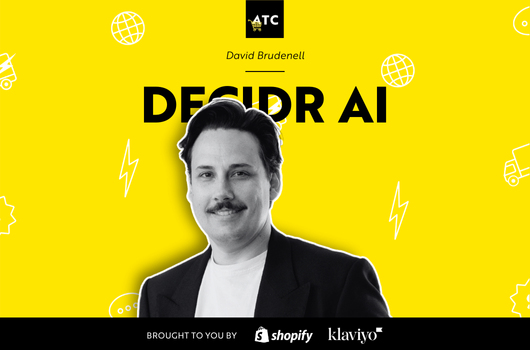
Nathan Bush: Calling all brands looking to dominate search rankings in 2025 Studio Hawk is Australia's largest dedicated SEO agency, working with brands like officeworks, City Beach, Age, Clarks, Petstock and New Balance. And they have an exclusive offer for Add to Cart. Listeners sign up for an ongoing SEO campaign and receive the Content Boost package, professionally written copy for 40 category pages free of charge. If you want to rank and convert better in 2025, head over to studiohawk.com and mention add to cart when inquiring to claim this offer. Plus receive a free SEO audit of your website. Welcome back for another Playbook. This time we are going to dive into the world of AI agents for E Commerce. Now I think we are all very familiar with agents, especially when it comes to things like helping customers with customer service. Most e commerce teams have gone that way to allow agents to take care of those main inquiries that are repetitive and pretty simple to solve. We've also seen it in our workflows. We all use agents in our workflows, especially in our creation tools and our data tools. We're especially seeing it in e commerce around our tools like Shopify with Sidekick, Gorgeous Klaviyo. Even Google is now introducing agents to sit into Google Analytics and the Google Ads platform to help you take care of the advertising and the insights within them. And so agents are going to be a part of everything. But it was a recent conversation that we had with David Brudenell from Decider AI which made me think more about agents in terms of not just doing a task that we set them up for, but achieving an outcome. And that changed my whole thinking around agents. What if we didn't tell them what to do? What if we told them what we want to achieve? So I wanted to explore this a little bit further with you today to throw back to David to hear how he set up the problem and then come back and think about as e commerce businesses, how are we setting our agents up for success so that yes, tomorrow we might not be going to that model where we give them outcomes and they find a way to get there, but that we're putting the right processes, data and capabilities in place so that we can move towards that model when it's ready for us. So here's a little Flashback to episode 555 where we talk to David Brudnall, the CEO of Decider, and we get his thoughts around how AI isn't just another shiny automation or an order taker, that it can actually be a decision system that starts with your goals and works backwards.
David Brudenell: Today Most of the chatbots or what's called AI agents that exist on websites, they're principally task based so they have to follow an orchestration flow, right, which a human has to put together and there's these big trees of like branching. Ours is not that because it sits on the agentic database. What we're about is goal engineering. So there's no prompting or engineering with our apps. What they just are is you give them a goal. So one app for an e comm company, we said we want it to grow revenue by 20% over 12 months time. That's the only goal, that's the only thing we told this thing and because it can see across the entire horizontal stack and that's three pl, that's Klaviyo, that's Google Ads, that's Meta, you know the E commerce e comm stack. Within eight weeks it grew incremental revenue by 5% and after 12 weeks it's nearly 10%. Like the Agentix sales app converts at 10 times higher than the website. It knows the products better than any human. It knows the ingredients in the products. It knows every competitor, all of their ingredients, all of their products. It has nuance like because it has you know, the company's marketing documents and their vision documents and it has, has nuance. It has all the LLMs ability and grasp of language. It knows stock levels from the 3 PL right. It knows if a customer, a prospect who's on site looks like another prospect who is more likely to convert or less likely to convert. So it knows those are all the, the really cool technical things but the other non technical things are it's available 24 hours a day, you can transact within the chat, right. It speaks 36 languages, it remembers you. So there's just some basic stuff. I mean I think we've all been on a, some sort of support call telco and you know the telcos, they're throwing it out in the world that they have domestic humans who are managing those, those support queries and I feel sorry for those people. They're like handling 10 concurrent chats. You asked them about like your router which you got five years ago and what's wrong with it? And you can tell that they're just like I don't want to, that's a painful, I'd rather just talk to this thing that's read all the manuals for my router and will happy to tell me the answer.
Nathan Bush: So this is a big mindset shift. Instead of telling your systems what to do, tell them what to ATT achieve. We're not hardwired to think that way. We generally want the machines to come in and take some of the dumb stuff that we've been doing and replace it. But what if the machines are actually smarter than us and can think of new ways and new avenues to solve problems that we've been hanging onto for a long time? I think that is really exciting. Now for most e commerce businesses, they're probably still a little bit away from this. Based on research that I'm seeing and conversations that I'm having. We're still in the dabbling experimenting phase, especially agentic AI in the core of our business. However, it doesn't mean that we can't start building towards this vision. Now here are three ideas that I want to leave you with based on our past guests as well, that can help us build AI agents that can scale towards our outcomes, not just doing the tasks. The first one is let the behavior, not the outcome, decide what the customer does next. A lot of times we think of e commerce as this funnel where it's a really straightforward process. Customer becomes aware, customer makes a decision, customer converts, customer receives item, they're loyal. We know in reality it doesn't work this way. And we all know this because we're shoppers ourselves. We know that we're all over the place, we're scattered, we're picking it up, putting it down, having a look on social, getting an email. There is no clear path often to what makes a decision. And Sonja Friedrich mentioned this on a previous episode where if we think about it in that mentality, she called it a hard coded approach that kills conversion because it ignores the dynamic nature of customer behavior. And we have this opportunity now with agentic AI where we don't have to force customers down one path, we can actually listen to them and respond in a way that we help them get to the next best action. And that's what we want to get them to, next best action. We don't necessarily want to force them down a path that they're not ready for, but we want to help accelerate them along that journey. So whether that be that a customer needs help solving a problem so that they might come back next time, whether it's they can't find the stock that they're after, whether it's that they just want to know where your stores are, AI agents can help your customers quickly get to that next best action. So if you're setting up your agents now with really defined roles such as find my order or managing Tickets, you're probably missing the point. You need to set up agents that are listing agents as well as response agents and finding the next best action based on your customer and their behavior at that point. The second piece is that we want to optimize agents just like we would our salespeople in our team. We want to optimize for profit, not just tasks. So when we're setting up agents, we need to actually train them into what our products are, how much they cost, where they're available, what stock we have, but also what the margins are on them, what are our most valuable products. Because our agents need to act like our best salespeople in being able to prioritize products and steer customers towards products that have better margins. For us, that might be individual products, but it might also be thinking about it from a life value. So that might be even something like subscriptions, as in, hey, we've noticed you've bought this a couple of Times now, or 35% of people who bought this actually have it on subscription. Those little nudges, those little prompts, if built into our AI agents can increase our lifetime value over time. So instead of just training up bots to answer the question in front of them, we want them to think like a salesperson. How can we get more value out out of each sale and each interaction? And the last thought that I want to leave you with around how we can amplify agents for the business outcomes is to think about how we can use them to amplify and share insights, not just tick off admin. So, yes, everyone wants to use agents to answer those easy customer inquiries or update CSV files or make sense of the analytics that we've got at a task level, maybe even create that old report for you. If I cast my mind back to the conversation that we had with Mike Rhodes, who I feel is one of the very earliest in AI in Australia, especially how he's using it for E commerce. He's flipping the script. So he's creating a whole bunch of scripts for AI around pmax that do a lot of the grunt work and create reports and create campaigns and find those insights. But his whole goal isn't to hand it over to the machines, it's how to turn this data into insight faster. He calls his agents the early warning canary, the ones that spot wasted ad spend before it drains your budget. And if we think about what we want to implement with AI agents in the future around giving them business tasks to perform, we want them to be on the forefront and alerting us and alerting our team on where the potential pain points are. If we are putting them in charge of conversations with our customers, maybe ordering stock, maybe placing ads, they should be bringing those insights, those out of stocks, those new opportunities back into our team in real time. So if we're thinking about setting up agents for goals, let's not set them up just to work in their channel. Let's think about how we then take the insights that they're getting and the conversations that they're having and bring them back in our teams. So that could be as simple as having an agent that goes into the team, maybe integrated into a Slack channel, email alerts if you want that. But how do you actually get those insights and those early warning canaries that are out there in the world doing the work, coming back into your team so you can make those big business decisions and do the big plays while the agents take care of business? I know this feels like it is future world stuff, but it's going to be here before we know it. So I think taking the time to think about David Brudnall's challenge around how do we use AI agents to achieve business outcomes, not just replace business tasks, is a really important one and one that we need to be thinking about for the future of our e commerce businesses. Because the ones who nail it will have a crazy cost competitive advantage over everyone else as well as have the insights that no one else has. So don't automate for efficiency, automate for impact. If you want that full conversation with David that we covered so so much more than that, head on over to add to cart episode 555 link in the show notes now if you want more conversations like this, make sure that you hit that subscribe button whether you are listening on YouTube, Spotify, Apple and last thing I've got for you. If you love nerding out on Ecom, come and join us in the add to cart community. It's free to join. We have over 500 e commerce professionals in there talking about all things, especially AI and agents all the time. Come in, ask your questions, find some great experts in there and our goal is to help you on your ecommerce journey. Until next time, see you then.