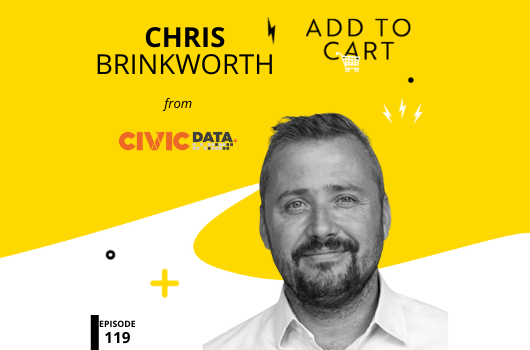
Carolyn Breeze: 57% of consumers don't want to own things anymore. I picture a world where I'll walk into a boardroom at work or I'll walk into a hotel and every device in that room will light up. I love it. I love that you say this. Have you been digging around on my LinkedIn? You have, haven't you?
[Voiceover]: Welcome to Add to Cart, the podcast that Express delivers all you need to know in the fast moving world of e commerce. Every month, Nathan Bush from 12 High and an E commerce industry exper share the news, research and insights that you need to know to keep you at the top of your game and of course, keep your customers Adding to Cart.
Nathan Bush: Hello there and welcome to Add to Cart. My name is Nathan Bush, host of the Add to Cart podcast and strategist at e commerce consultancy 12High. Subscription models. They are all the rage at the moment and why not? For customers, they offer convenience and certainty. Just ask those lucky buggers who have who gives a crap subscriptions during the great toilet paper debacle of COVID 19. For businesses, they can offer guaranteed cash flow and increased customer lifetime value, but they are not always as straightforward as they seem. In this episode with Carolyn Breeze from GoCardless, we explore what makes a great subscription model, how to get started, and where it can all come unstuck. Now make sure you stay tuned in until the end to hear Carolyn's version of what a life full of subscription micropayments could look like. It'll change your view on how you structure your subscription plans moving forward. It blew my mind. Now, thanks to our partners at Shopify plus and Klarna, let's take a deep dive into retail subscription models with Carolyn Breeze from GoCardless.
Nathan Bush: Carolyn Breeze, welcome to Add to Cart.
Carolyn Breeze: Hey, thanks for having me.
Nathan Bush: My pleasure. Now Carolyn, we've known each other for many years from your time back at ebay Braintree and now you're at GoCardless. Give us a little bit of your background and a little bit about what you're doing at GoCardless now.
Carolyn Breeze: Sure. So yeah, you and I met back at back at ebay days. Ebay was my launch into e commerce and digital payments. It's a great place to learn about the power of e commerce and also how something like a marketplace can democratize a vertical or an industry. One of the things I loved about ebay, which has kind of defined the types of roles I go for now, technologies that create inclusion and diversity by making technology accessible and giving choice. And one of the things I loved about ebay Was that one day I'd be meeting with a seller in their garage, sitting on a crate, having a cup of tea and the next day I'd be sitting in a boardroom pitching to a large retailer about why ebay is a great channel as part of their multi channel strategy. Just to be able to see those two very diverse types of businesses in size and flavor, be able to compete against each other in a global platform was really inspiring. And so as I've progressed through my career and now moved into payments, I have looked for organizations that are democratizing payments in some way and making it accessible. Braintree was great in the fact that they took technology that Uber and Airbnb and others built who were Braintree customers and said these types of frictionless payment experiences should be available to everybody. And they democratize that for the industry. And now go Cardless. Go Cardless is a six year old startups. Startup feels like the wrong word. You know, with 450 people globally, we've got boots on the ground now in Australia, New Zealand, the US and Canada, Germany, France and UK where we were founded. And we've gocardless have pulled together and built a global bank direct debit platform that really rivals, you know, Visa and MasterCard and the schemes who have had a stronghold in that area. And they've made bank direct debit, which is a pull payment mechanism accessible to small business. Whereas historically in Australia as an example, in order for a small business like an accountant or a cleaner or a bookkeeper, or anyone that's providing an ongoing service or product to a customer and has a recurring invoicing relationship with them, traditionally they would have had to invoice they payment terms with their customer 7, 14, 30 days and they spend a lot of their money chasing those payments. And banks made it incredibly hard for people to have access to that pool technology you normally need to put your house on the line or some kind of reserve in place and then in both the enterprise space right through to the SMB space, the heavy lifting and the onus was on the merchant or the retailer to collect the payment information, securely, store it securely, put it in a CSV file every day for the bank and send it through and hope there's no errors. And you know, there was no real automation or technology built around that. And it's a really interesting space because customer preference and just accessibility to bank direct debit as a payment mechanic globally is, you know, the highest, but technology just hadn't been built in that area. We've seen, you know, wallets emerge. We've seen take now, pay later type options emerge and all sorts of FX products come about. But no one had really focused on that payment mechanic, which we believe and from all our studies show us that it's the most reliable and preferred payment method for a recurring relationship. So I'm really excited to be part of the team that GoCardless chose to expand into the Australian and New Zealand environment. And you know, we haven't had a hard launch yet, but we're getting a lot of traction and I think that's because we are really solving a problem for small business and we are helping companies like Xero and Salesforce and Zora automate the market, build on the subscription economy. But also the biggest thing is helping manage cash flow. Last year at any given point in time there was $7 billion owed to small business in Australia in late payments. So, you know, anything we can do to help small business in Australia and large enterprise manage cash flow and reduce churn then, then that's my jam.
Nathan Bush: I love it. Love it.
Nathan Bush: And I think we'll, we'll get a
Nathan Bush: lot out of your holistic retail experience coming from both the customer side, but also a merchant side as well. It was interesting when you said there about GoCardless being a startup of 450 people. I was speaking to, I was speaking to a financial tech provider who recently, who have, who referred to them as self as a startup and we're talking about this startup, startup, startup worked out that they actually had 3,000 people employed around the globe and they've been operating for 15 years. So I was like, it's more about a mentality, right? About responding fast to customers, need needs, being able to change and all that sort of stuff rather than actually starting in your garage a year ago.
Carolyn Breeze: Agree, Agree.
Nathan Bush: Awesome. So we're here to talk about subscription models and we heard a little bit about how GoCardless enable them but on a broader sense around subscription. From everything that you've seen around the evolution from ebay all the way through, where are you seeing subscription models at the moment for retail? It feels like they are becoming more popular and that every retailer is trying to find some way to have a subscription model. What are you seeing?
Carolyn Breeze: Yeah, absolutely. I mean we've seen that trend evolving over the last 10 years. We did a survey across 13 countries recently and 57, sorry, 57% of consumers don't want to own things anymore. So there's this idea around usership versus ownership or consumption versus ownership and we've seen that play out a lot in B2B. So when you think about different SAS models and how business model businesses run and use platforms to run their business, homes are becoming exactly the same. So, you know, if I think back to myself 10 years ago and the subscriptions I had, I had a. I had Foxtel and maybe a newspaper delivered, but now, you know, I still get
Nathan Bush: three newspapers delivered on a weekend.
Carolyn Breeze: I'm like.
Nathan Bush: I'm like this digital guy who's a dinosaur on the weekend.
Carolyn Breeze: Are you the only person. There's this poor kid on a bike that has to ride out to your house to chuck one paper over a fence. Keep that industry alive, Keep it alive. But, you know, now if you look at my phone, I subscribe to all sorts of things, like obviously a lot of health and fitness and wellness apps. I subscribe to a lot of the grocery things that I get. Like, you know, who gives a crap for toilet paper is pretty topical at the moment. I subscribe to platforms for my children to keep their phones safe Grammarly because I'm a hopeless speller. You know, there's all sorts of assisted living apps and different subscription models that kind of keep Carolyn running efficiently. And then if I think about that in a business context, you know, we use DocuSign, we've got culture amp, Atlassian, Canva. These are all subscription models. And there's some really creative and innovative stuff hitting the market. I'll give you a couple of examples. But Carbar and hello, cars are a good one. So rather than owning a car and all the costs associated with that, you can subscribe to a car and everything's covered basically by your petrol and your etags. But things like insurance and maintenance and all those ongoing costs and they're just things that you don't have to worry about. And you can change that car out. So when it comes to winter, you can get your full drive with your roof racks and snow. Summer's coming, I'll subscribe out of that one and I'll jump into a convertible to head down the beach with the kids. And so part of it is being driven strongly by consumer behavior and the preference not to own. But the other thing is this whole idea around assisted living and automation. We're busier these days, We've got lots going on. We're multitasking constantly. What can you take off my plate and automate and deliver to me to make my life easier?
Nathan Bush: Yeah, makes total sense. And I think what you're talking to there is really interesting because a lot of retailers think about subscription models and they Immediately go, well, how can I deliver you something every month, month on month on month. But you've got to think a bit broader than that, right? It can be about how do you add services into that could be products, could be efficiency, could be flexibility. There's a, there's a whole range of things there. So from your point of view, what makes a good subscription service? What are the basic barriers to entry for a good subscription service?
Carolyn Breeze: If we go back to, I guess what are the benefits for retailers? They think about when people think about subscription, a lot of people think it's an every month fee that I pay where I'm delivering the same service or product and level of service. And that's not what we're seeing. As this evolves, we're seeing more flexible platforms that are based on consumption. And so the subscription models that I've seen that are really successful are around putting that flexibility and control back into the consumer. So being able to create a platform where they can add different services and products, where you're telling them what they've been consuming and you've got that relationship with them, where you can pull that out of their account and you're adding value to them and it gives you a closer, more intimate relationship with your customer that's value driven. It also allows retailers to have like a forecast of revenue and more predictability around. It could be a physical product that they're doing so stock that they need like a Bella box or a book, a buy are great subscription examples in that where it gives them that foresight of revenue that's coming in and allows them to build on their business and then to provide those customers with more value. The ones that I've seen work really well are around a frictionless experience upfront to increase conversion every time throughout a relationship with your customer, subscription or not, Whenever you ask them to add payment details or choose a new preference and you don't bring that automation to them, you're giving them a reason to reevaluate their relationship with you. So anything you can do to automate that and to give them that flexibility I've seen as being really successful. I think there are some barriers to entry. I think if you're a traditional retailer or product or service provider, there is a bit of a mentality switch around the way subscribers want to subscribe to a product or to your brand or to your service. And there's a lot of trust that comes with that. And I think a lot of it has to do with that first interaction and that first conversion piece that you have with that customer, how easy you make that, you know, how frictionless you make that experience in general. And then, you know, don't bombard them with information moving forward. They know what they've subscribed to, but it's giving them making sure that you're adding value along the way.
Nathan Bush: Our partners, Klarna, only recently landed here in Australia and they are already shaking up the payment space. As the largest global buy now, pay later solution, Klarna makes online shopping seamless. In fact, 85% of their users say Klarna is a better shopping experience than other checkouts. This can only lead to more frequent sales and loyal customers. Right. As well as this, Klarna offers buyer protection for all purchases. And the onboarding and purchase process for your customers is a simple, smooth, safe and friction free as it gets. If you aren't offering a buy now, pay later option or are paying too much for your current solution, Klarna is definitely worth a look. To find out more, visit klarna.com aubusiness or reach out to me directly if you'd like an introduction to their team.
Nathan Bush: From a customer's perspective, there's many different reasons, right, that you could subscribe to something. It could be actually just make my life easier, make it a little bit, make it a little bit cheaper for me, give me access to product that I wouldn't normally get or I would be able to access first before anyone else, or is there additional services or information that I need? So there's not kind of one way to run a subscription service because you need to understand your customer first.
Carolyn Breeze: Exactly right. And I've never met a business that, a subscription business that operates the same as another because their customers are unique, their value proposition is unique, their products and services are unique. So it's really understanding what drives value to that consumer and what they're after from you as a product and really listening to what they need. But the subscription piece gives both the customer and the retailer that certainty around the continued value, that certainty around the cadence and that automation. But the value that you can build on that, the relationship that you can build on that is unlike any other ad hoc interaction you may have with a consumer.
Nathan Bush: Have you come across any techniques in being able to find what the one hook is that will actually really resonate for your customers? Say you've been a traditional retail business for a long time, list of products, however long, and you go, we want to introduce subscription, but we don't know what the hook is. Is it convenience, is it cost? Is it exclusivity. How do people get to that hook for their customers?
Carolyn Breeze: I think it's more about convenience. Like I've seen subscription models that are more expensive slightly than if you were just to ad hoc go and pay. I really think what's driving it is the automation piece and convenience. And if, if you're a retailer today, and we've seen a lot of this happening obviously over the last couple of months with COVID a lot of businesses are moving to subscription model to try and automate for their customers. And I think that you look at your customer base and anyone who you have a recurring relationship with, who's a loyal customer, who comes back to you over time, they're a great candidate for a subscription model because they already get you, they believe in your product and service, they're already doing business with you on a regular basis. And so all you're doing is automating that process for them, which gives them convenience and ultimately is the value that you're driving. And that doesn't have to be a monthly cadence either. That can be based on their consumption and you can help them learn and monitor that. It could be based on. It could be weekly, it could be bi weekly, could be quarterly, could be annually. And I think that's where retailers fall into a trap. They kind of look at their current inventory or the way they provide products and service to a market. And I think, I don't know if I could do that on a monthly basis. But it's not that they need to pull themselves out of that and think, you know, 70% of my customers are loyal, returning customers. And they come to me for these reasons and the value I can offer them is X, Y, Z. I can automate that for them, which gives them convenience and makes them stickier and more loyal to me, but also gives me forecast revenue and an opportunity to add additional products and service that customer in a different way.
Nathan Bush: That's a really nice way to start. Like to look at the data that you've already got, look at your high frequency customers, look at the types of products that they're purchasing, how often they're purchasing, and then just go, how do I actually make that easier for those existing customers? Rather than trying to crack a whole new innovative idea or a whole new market, just start with what you've got and streamline that process and then move forward from there.
Carolyn Breeze: Yeah, that's exactly it. Like another example that's on the rise at the moment is pet products. Like pet food. We all have to buy pet food. If You've got an animal, they usually consume the same amount, unlike children. And so, you know, pet companies and producers have an opportunity to look at their base and go, right, there's a set of customers here that consume regularly enough from us that we can automate this process for them. And we're seeing that across a few different verticals. But that's another kind of great example of something that can be automated. I mean, anything convenient that you can do to take off my plate as a parent, as a work, as a working parent, as a busy person, anything you can automate for me, then, then I'm down for that.
Nathan Bush: Awesome. So say you got that right. So say you went, great, we've got that down pat. We're looking after our current customers, our most valuable customers. It's really easy to subscribe with us. We're making your life easier. And then you go, we've seen all this cool stuff out there, Right. So we've seen some great stuff from Nike, who have launched a kids shoe club called the Nike Adventure Club, which love it. Yep. Which means you don't have to take your kids into a shoe store and let them try and choose which shoes that they want. It all comes to your door. We've seen Coca Cola Pilot, a subscription service which basically gives Coke addicts, for a lack of a better term, the brand new products delivered to their door for a subscription fee before anyone else gets it. And then we've seen really basic stuff like Amazon and Kohl's doing the subscription service, which means that people don't have to pay for delivery if they commit to shopping with them regularly. Like that, to me, is beyond your regular customers.
Carolyn Breeze: That's it. There's another one, actually you just reminded me of, falls into that sweet spot, which is Glam Corner. So they're an Australian subscription model where you can subscribe and basically every couple of weeks they send you a new wardrobe. When you've worn those items, you send them back and they replace them every. Every couple of weeks. And, you know, for all the women that I know out there, and I'm sure they'll be looking at expanding their product set soon, it's really convenient. It's a really convenient way to make sure that you're, you know, wearing the latest and the greatest, but you're also not just owning and consuming for the sake of it. And there's this real trend that we're seeing, particularly in the millennial space, where they're really aware of their consumption, they're really aware of the effects on the environment. They're also moving away from that ownership piece and credit and that they're just wanting to kind of consume and use as needed and not be wasteful. And so there are a lot of subscription companies that are capitalizing on that as well. And I think that's really smart.
Nathan Bush: Yeah, it makes sense. And I think, yeah, if you're thinking about it as how do I solve a customer's problem? Rather than how do I shift my stock, it opens up a whole bunch of new opportunities, Right?
Carolyn Breeze: Yeah. And I think you were about to go into something before around, like when we talk about retailers putting forward a proposition. So, you know, one part is to look at the customer base, who is a recurring customer, what are they buying from you? What's the kind of frequency? But then trying not to put people into a box. So not, not going out and saying, well, I'm going to launch a subscription model and here's the three boxes that I'm going to make available, and these are the prices and here's what's in them. Like, there are ways, there are platform out there for subscription that make it really easy for you to put forward a very flexible model that allows the consumer to have the control around how much, when and how. And so my advice would be to try and make it as flexible as possible, particularly as you're launching, so that you can see what really resonates and really listen to your customer base and get feedback on what's resonating rather than trying to fit them into a box.
Nathan Bush: Yeah.
Nathan Bush: So when we talk about that kind of flexibility, are we talking pricing, are we talking frequency, talking product? Because all that can become pretty complicated, right?
Carolyn Breeze: It can. So it can in the beginning. And we are talking all of those things. So it could be that for Glam Corner, for example, I might want something every month as opposed to every two weeks or every week. It may be that I want more in that box and I'm prepared to pay more for that, or I want something different. And that that can be hard when first starting out as a retailer, because you do want to create these kind of more predictable packages. But I think in addition to that, there are some platforms that do a really good job of allowing people to kind of change the level of consumption. So as a SaaS example, I have is deputy. I don't know if you're familiar with the Deputy SaaS platform. They're a workforce platform and they basically have it as seats, like an amount per month that you pay per seat for the people that you have within your company that are on the Deputy platform. But then there are bolt on and add on products that you can have to enhance the experience or to use the product in a different way. And when you choose those, they automatically go into your monthly subscription and you're charged for them, but you're in control. And you can suspend things and, you know, pause certain seats and then, you know, add a whole bucket and go from there. And it can feel daunting when you're a retailer of a service or product to think about things in that way. But there are a lot of platforms out there like Zora, chargebee, Chargify, Recurley Billing platform and Salesforce that help you automate that and help you give control back to that customer in a really easy, effective tech way.
Nathan Bush: And it may be jarring originally, right? Because you go, oh, if I give people all these options, then I might not. I'd rather charge people the premium product every month and make sure that I get this in, rather than give them the option to scale back a bit. But we're living through like COVID 19 at the moment, right? So if cash flow is going to become tight for customers, we'd rather them scale back a package. Especially in the B2B context where workforce is going up and down, work remotely, all that sort of stuff. We'd rather scale back than lose that subscription.
Carolyn Breeze: That's exactly right. And I've had a lot of that feedback from some of the clients that we work with that are in the subscription space is that they've had feedback from their customers around, you know, you need to work with me through this time. I need to be able to scale this back and if not, I'm going to have to turn this off. And I value your product. I want it in my business. I'm just not using it to the capacity that I was before. And so having the flexibility and the platform that allows you to do that is critical. And conversely, it's been the same for businesses that have been really needed throughout these times. So thinking about who gives a crap and businesses like that, grocery delivery, wine delivery, we've seen some really crazy, yeah, wine delivery, I think that was me on my own. But we've seen some really big uptakes as well in, in the way people want to consume and they want to be able to consume more and be charged more, and they're happy for you to pull that from their account or credit card and be charged more, but they want the flexibility to bring that down at a later date. So you Know, I get that for a lot of businesses they need to kind of go out with set kind of packages and give guidance. And if you are looking, if you do want to move your customer base into more of a premium kind of package where you've got opt options to sell. My, my advice would be to let them test some of that stuff first. Maybe send them a gift if it's a physical good. And you can always preference those premium products and show the value on the site to get that adoption. But don't, you know, push it down their throats like be flexible.
Nathan Bush: Yeah, yeah. And also I think you got to think of it as not just how do you price this accordingly, it's what other value are you giving people. So some of the best examples I've seen is where product is combined with service or content. So we, we recently launched with Stone and Wood Beer Club and it's basically for their, their pointy end beer drink as they talk about. And these are all there. They've got, they've got a counterculture beer which is like its own brand, but it's touched with stone and wood and it's got some crazy beers. Right. So there's these dark, really dark stouts that are made in the old traditional brewing methods. And then most recently they released one which was like an electrolyte beer. So you never know.
Carolyn Breeze: The morning after beer, the morning after
Nathan Bush: beer, it's the best beer. After you've mowed the lawn because you feel like an athlete, but you're drinking beer.
Carolyn Breeze: You know, there's another company out there that reminds me of another great subscription company I came across not long ago called Whiskey Loot. And this is for real hardcore, you know, whiskey connoisseurs. But you can decide on the frequency and you can decide on the premium level of package. But they will neatly bottle up some tasting bottles of some really amazing whiskey and get it out to you. And if you think about it, you know, you're not going to go out and buy three, you know, $400 bottles of whiskey, but you're happy to have a couple of nips delivered to you every month so you can have a taste. And you know there's business out there doing some really cool stuff.
Nathan Bush: Yeah. And I think some of the value that comes with that, it's not just the product, it's not just getting toucans or the whiskey delivered to your door and going, oh, that was fun, that was good. But what comes with it is you actually get this stuff before it's available to the public. So the biggest beer reviewing community called Untapped, you're getting this and there's actually no one else reviewing yet because it's the first in your hands. And also the day before you get it, the head brewer actually shoots a video explaining how that was made.
Carolyn Breeze: Oh, that's amazing.
Nathan Bush: Yeah. So, like, this whole thing is not just about the product. So how do you package up your service or your product that it's not just a tangible. Well, I can buy this from you for subscription for $15 or I can get in the bottle for $15. It's the same when it's really a totally different experience.
Carolyn Breeze: Yeah, that's absolutely brilliant. I love that.
Nathan Bush: If you're not selling direct to consumer, you run the risk of leaving your brand's future in the hands of your retail distribution partners. D2C is a hot topic with some of the benefits, including the ability to build your own brand, own the customer relationship and leverage data to create a unique and lucrative customer experience. And there's no one that knows more about selling direct to consumer than our partner, Shopify Plus. Luckily, they've put together a free direct to consumer guide which teaches you how to start selling direct and even take on Amazon. Visit shopifyplus.online forward/dtc to download your copy today.
Nathan Bush: From your point of view.
Carolyn Breeze: Yeah.
Nathan Bush: What are some of the things that can go wrong if businesses jump into a subscription model early? Without thinking too much, I mean, we've talked about finding out what drives your customer rather than trying to find what drives your business. Where else are the downfalls in a subscription model compared to a traditional retail model?
Carolyn Breeze: Interestingly, I find it really hard to not fall straight to kind of conversion and payments. So I'll touch on that for a little bit and then we'll see what else kind of surfaces out of that. But when companies go to market with a subscription model, usually payments and the way people want to pay them and interact with them is kind of an afterthought. They go out with the product in mind and the service and they think about the branding for that and how they're going to reach markets and potentially how they're going to advertise that. But they. They usually leave the checkout experience and the payment piece as an afterthought. And payments and the way you make checkout accessible to your market, whether it be domestic or international, can really assist in conversion, acquisition, and then ultimately customer churn. So if you think about your own buying experiences, when you go to a checkout, you want them to be offering you a payment method that's convenient to you. So it might be that it's credit card that's convenient to you, or it might be Bank Direct Debit and it might be PayPal that you want to use. And those options need to be shown to you side by side in the same digital manner. And they want to be. You don't want paper forms for Bank Direct debit, for example, and a page that redirects for credit card and old PayPal integration that asks you to log in every time. And so really thinking about what you're offering in that conversion piece in checkout can really help with your customer acquisition and conversion at that point, making it as frictionless as possible, then not having to ask for their payment information again. So making sure that you're working with a payments partner that tokenizes that and automates that and is integrated into your billing platform so that everything is happening automated, end to end, and you don't have to worry about that again. The other thing is, if you're looking at expanding into international markets, it's making sure that you choose a payment mechanic. So a mechanic is like credit card or bank debit or PayPal mechanic, and also that you're partnering with someone that can make it accessible for those markets. So one of the reasons why Bank Direct debit, even though it's the most preferred way to pay for recurring business models globally, has been hard and not really offered in global subscription models, is that in order to do that previously, you would have had to have a local entity in those countries and you would have had to have a local banking relationship in order to set up Bank Direct debit, which is why credit cards and things have been so prevalent. That's also why credit cards and wallets can charge a premium, like scheme fees and interchange for those types of services. Right? But now that's been removed as a barrier. So you can, through GoCardless, you can set up an offer Bank Direct debit in those countries and accept payment and have it settle into your Australian bank account without having to have those local entities and banking relationships. And we've seen some customers so for example, SiteMinder. SiteMinder. Or a SaaS platform for the hotel and hospitality and travel industry. They went live with us in January and they came to us originally because they had huge customer demand for Bank Direct debit. So In Australia alone, 56% of businesses prefer using Bank Direct debit than any other payment method to pay for their subscriptions in the consumer space. That's 52% in Australia. It's even higher in the UK and it's quite prevalent in the other countries as well. So Siteminder was getting a lot of customer feedback that their businesses wanted to use bank direct debit. So after launching us in January, 70% of their European market moved straight over to direct debit and it's been almost 50% in their Australian market since launching. And there's a few reasons for this. Obviously it's a more reliable mechanic. People don't want to use credit where they don't have to. You know, the whole frequent flyer point schemes with the capped interchange has kind of changed the landscape there a little bit. And you know, credit cards and some of the other payment methods are expensive for retailers to process, so they often surcharge. Whereas bank direct debit is a much more cost effective mechanic to use overall. It's also really accessible. So if you think about PayPal, which is very prevalent in Australia, I think over 7 million people in Australia have PayPal. I think it's over 300 million globally, might even be more than that. I should probably check my stats have PayPal, but you know, that's across 230 countries. So when you break that down on a country by country basis, the penetration can be quite low in some of the markets that you're going after. So you really have to think about customer preference. So how do they want to pay me? And then the other one is accessibility. Is this an easy payment mechanic for them to use to pay me? You know, if you're offering PayPal in a country where it has low market share and your user may have to go and open a PayPal account in order to do that, then that's not an accessible payment mechanic and you're going to lose conversion at that time. So that would be the first thing is when you're going to market, don't make your payment strategy one of the last things you think about. Make it something that helps you define your entry into certain markets in particular as part of your go to market strategy.
Nathan Bush: Because a lot of the subscription services for online that come out of the box or come as plugins to some of the leading platforms, it is just credit card because that's the simplest way for them to integrate. Right. And so a lot of it is just enabled credit card by default. But what we're seeing even in the, I know you mentioned a lot about the B2B space and those figures around customers preference around direct debit as well is huge, 52%. But if we think about what the buy now Pay later services are offering, especially to those millennial kind of customers. Millennials are wanting visibility over there over what's going on, where their money's going. They're kind of steering away from credit cards a little bit because we don't know how that is calculated.
Carolyn Breeze: So they are, they are moving away from credit. You know, we're also seeing that reflected in, in home ownership. In that age, BR don't necessarily feel the same need that our parents did or we do in owning their own property and having that Australian dream. They're happy to rent. Same goes with car ownership and so on. And so they're reluctant for credit. You know, many millennials that I know that work with me or work with me in the past, they're happy to use bank direct debit. They're also happy to use the Buy now pay later options. And they're happy to have credit debit cards, like bank debit cards that are disguised as credit cards so that they can get access, because a lot of retailers don't offer bank direct debit as a payment mechanic. So to give you an idea that when we do our global studies, like I've told you, that, you know, 56% in Australia is the preference. It's more like 60% in the UK and so on. But globally, when we survey 13 countries, 30% of people across business and consumer would prefer to pay for things with bank direct debit than they would other mechanics. Yet of the top 144 subscription country companies in the world, only one of them today offer bank direct debit. And it's Audible, which is part of Amazon and it's only in Germany. So, you know, and this is, it's, it's partly because it hasn't been accessible, but people are kind of looking and moving towards it now. And one of the big issues for subscription businesses is when you build up this loyal base and you're building the value and you've become so automated and ingrained in the day to day that a lot of the churn that subscription companies see is what we call involuntary churn, where something's gone wrong in the background and they've been disconnected from that service and they don't even realize. So then you've got to reach out to them and try and get them back on board. And every time you have to interact with them in that kind of nature, you're asking them to reevaluate whether or not they need your service moving forward. And what we know of the involuntary churn is that 30% of that is directly related to payment failures. And yeah, so if you think about credit card expiry or changing credit card information or, you know, fraud and things like that. So if you look across the markets that we operate in, on average, companies see 10 to 20% failures with credit cards for the reasons that I just mentioned. And on average with bank direct debit, we see 2.5%. And then if you layer something like smart retry over the top of that, which is a technology where we can go back in automatically for you based on what we know about that customer and their historical spend and bank detail, we can go in and try and get that payment back for you over the course of that period, then we can see that reduced by a further 15%. So when you're thinking about the customer preference and the mechanics in the market that you're operating in, both domestically and or globally, you need to also think about the payment mechanic you're choosing and how it can really affect the relationship you've got with the customer and churn ongoing. So, you know, we spoke a little bit about the adoption of direct debit for Siteminder. We also had a docusign join us globally in the last few months and they saw an increase in 12% conversion in their checkout just by adding bank direct debit as a payment mechanic digitally side by side against credit card and PayPal, which is. Which is quite amazing.
Nathan Bush: That's huge.
Carolyn Breeze: Yeah, it is huge. We also work with the Guardian and the Institute of Photography in the UK and what we also see is that that retention piece and renewal is much higher. So renewal for bank direct debit is around 90% and credit card is usually around 60%. So again, it's having a think about the payment mechanic that makes the most sense for your customers.
Nathan Bush: Are there any other benefits of bank transfer? Such as the one that's on top of my mind is more around micropayments. It feels like no one's cracked micropayments as a subscription.
Carolyn Breeze: I love it. I love that you say this. Have you been digging around on my LinkedIn? You have, haven't you?
Nathan Bush: No, I haven't. I haven't, Doug. I'm not that professional. I'm not that professional, Carolyn. You know that.
Carolyn Breeze: Oh, gosh, we could. We could spend another hour on this one of them. So you know how I spoke in the start about why I love working for particular tech companies or why I choose roles? I choose roles where they are democratizing something and making it more inclusive and available to everybody, kind of. Even the playing Field. The other one is that I have a vision of what the landscape looks like in five to 10 years time, particularly in payments. And it is moving to this consumption piece. And I often tell this. I tell two stories that are really interesting. The first one is I usually have a dorky photo of myself and my daughter at the same age at age 11 up on the screen behind me. When I tell this one that, I give the experience of both of us being introduced to the Reebok pump. Have you heard me do this before? Yeah. So, okay, well, we'll share it. Is it funny enough to share or am I going to be embarrassing myself? So, you know when I was in both. Yeah, yeah. Oh, great, great. So when I was in year five, there was a boy at school that got a pair of Reebok pumps and everyone thought they were the coolest thing ever. And we all got to have a go. And, you know, I got home and I asked Mum about them and, you know, she came back about a week later after asking around at the shops and found out how expensive they were. She put me on a bit of a home budget where I had to do chores to raise the money to buy my Reebok pumps. By the time I'd raised enough money for my Reebok pumps, we went to the stores to try and buy them and of course they'd all sold out, so the store had to order it for me. It took six weeks for the Reebok pumps to come in and it was like one of the most exciting times of my life. And a couple of years ago I broke my ankle and I was wearing one of those boots that had like a Reebok pump on the top of it to let the. To increase and reduce the pressure of my ankle boot. And my husband and I were cracking up in the kitchen because it reminded me so much of a Reebok pump. And my daughter was sitting at the kitchen bench on her phone, she's 11 at the time, and she said, what's a Reebok pump? And I started explaining it to her. And by the time I had finished, she found a Reebok pump in her size in Australia stock now and had put it in her shopping cart to buy and was asking me for my payment details. And then she was really upset because it couldn't be delivered within three hours. And so, you know, consumerism has just changed so much. And I, you know, this whole macro payments piece, it's so amazing to me and so exciting. So one of the things I love about my job is I get to deal with all sorts of different retailers and what we call merchants. So I talk to insurance companies and energy providers, water companies, SaaS platforms, education, universities, you name it, we get to talk to them. And I have this picture in my mind. In five to 10 years time, I'm getting out of the house and I'm jumping into my self driving car. My daughter hops in the car with me because I'm dropping her to school on the way. The car starts up and it starts moving. At that point I start paying for the self driving car based on the miles that I'm doing when I get to, you know, my daughter's in the car. So based on body mass, they know it's her, they know it's I, that we're getting insurance taken out in micropayments based on the journey, the trip that the car takes and who's in the car. My daughter gets out of the school, insurance drops back down again. I then start heading on my way into work. You know, there's two cars entering the highway at the same time. Only one can go on safely, the other one needs to take a different route. I'm the one that gets on, you know, my insurance drops slightly, their insurance goes up a little bit. I get to work, my coffee's delivered to my desk, they feel they know I'm in the building. You know, in the same way now that we can using the cloud, jump into any device, whether it be a laptop or a phone and log in and all of our photos and all of our favorite apps and all of our subscriptions and everything's there. I picture a world where I'll walk into a boardroom at work or I'll walk into a hotel and every device in that room will light up. It'll know that it's me or my information will be there and I'll be charged accordingly based on my consumption. The only way a world like that exists, an assisted living world like that exists, is if in the background payment information is being shared and stored securely. And this is one of the beautiful things about open banking and where we're headed as a society around sharing, securely sharing transaction information. The open banking is there to assist us in financial services and assist our living, but the innovation that will come out from that and the other products and services that will be available like it's mind blowing. It's mind blowing, yeah.
Nathan Bush: And you've basically taken everything that we've talked about in subscriptions today and just turned it on its head and gone, forget about what it is today, because in the future, it's going to be totally different.
Carolyn Breeze: But that is the evolution of subscription. You know, the insurance company that innovates and that does what I'm asking around my daughter hopping in and out of the car and the miles I'm doing, they're the ones I'm going to adopt and I'm going to trust them, and I'm not going to want to think about it. I'm going to know they've got me, they've got my back, and I'm going to know when they put a product in front of me, that's the right thing for me, because they know me as a customer. And that is subscription. That is the ultimate subscription economy.
Nathan Bush: And customers probably won't even be thinking about it as subscription by that point.
Carolyn Breeze: Exactly.
Nathan Bush: It'll just part of their life.
Carolyn Breeze: It'll just be part of it. You know, it's funny when people go, oh, I don't know about, you know, not owning my own car and subscribing and blah, blah, blah, I say, have you ever owned your own electricity? Have you ever owned your own water? Have you ever rented a property? You know, do you Airbnb like it? It's. We're doing it now. It's just taking it to the next level. And there are some really cool companies out there, really traditional companies that are already catching on, that are doing some of these even in that utility space. There's a company in the Sunshine coast called Unity Water, and if you think about the Sunshine coast, and I can say this because my dad has retired there, there's a retired population there, they're quite an elderly population. And Unity Water released something very early in the market called smooth payments, where instead of getting a quarterly water bill, you can get that fortnightly or weekly or monthly. And they're smoothing those payments out and making it, you know, you can pay with credit card or bank direct debit and making it really easy for people. And. And the adoption was really high, as was their adoption to email statements as opposed to paper statements. If you think about their demographic, they've done really well to push that, but it's because that's what people want. They want to smooth out. Yeah, they want to smooth out their payments. They want it based on consumption. They want to be in control. They want that predictability. And at the end of the day, that's all subscription is.
Nathan Bush: And essentially, they're delivering the same service or the same product, but just changing how customers access and pay for it gives them A whole new competitive advantage over others who could deliver exactly the same product or service.
Carolyn Breeze: Absolutely. Absolutely.
Nathan Bush: We could talk for hours. I'm not sure everyone will listen for hours. We might wrap up there, but you've blown our minds. I think you've given us a really great view on how to get started because we've got this great vision for the future of subscriptions and what that looks like in integrating into people's lives. But it's very basic. You've got current customers who are ordering with you and ordering frequently. How do you just make their lives easier to start with and then evolve from? There is a really great.
Carolyn Breeze: Exactly. That's exactly it. That's exactly where you start.
Nathan Bush: All right, so thank you so much, Carolyn, for coming on and sharing everything you have today. It's been really valuable. Where can people find out more about GoCardless and contact yourself?
Carolyn Breeze: Hey, jump on LinkedIn. I'm not good on Twitter. If anyone wants to give me a Twitter lesson over a wine, I'd be happy to have that LinkedIn. But you can also go to GoCardless.com awesome.
Nathan Bush: Thank you very much.
Carolyn Breeze: Thank you so much for having me.
Nathan Bush: Wild, right? I reckon Carolyn could write a children's book around how micropayments grow and take over the world. But seriously, I really do love her view for a future where subscriptions just become part of our life and are not actually viewed as subscription models. They're just the way we pay for things. It would also help me get over my addiction to physical newspapers if I could just pay by the article. I know, weird. A guy in e commerce addicted to physical newspapers. But going back to our subscription basics, Carolyn's advice to make life easier for your most frequent customers is a great way to get started. Make an export of customers who have shopped with you at least three times over the last 12 months. Might be higher, might be lower depending on your product. But understand the frequency and the types of products that your most common customers are buying now. How can you create a service to automate this purchase for them? Even better if you can tie this subscription purchase to added value such as an exclusive range, first release product or additional content. Try to do anything but steer away from discounting at the beginning. There is value in automating this process for your customers alone. This is a great starting point to test subscription. If you liked what you heard today and want to stay in the loop for future episodes, sign up to our mailing list@addtocart.com and if you're feeling especially kind. Leave us a review in the itunes store. We really appreciate it. Until next time, stay safe and keep adding to cartoon.