Daniel Kitay: Before that time, I don't think there was an influencer that had put up confectionery on their social media before. Moving to them was a critical step to capture those customers that were very impatient. New brand, new person, new format, new price point. There's quite a lot of risk.
[Voiceover]: Welcome to ADD to cart, Australia's leading e commerce podcast that Express delivers all you need to know in the fast moving world of online retail. Every week Nathan Bush catches up with Australian e commerce leaders to get all the insights, tips and lessons to keep you at the top of the e commerce game and of course, keep your customers adding to cart. Here's your host Bushy.
Nathan Bush: Red Frogs, snakes, Gummy Bears Part of the menu of my youth, especially after a hard fought win at Saturday Soccer where you can pick up that mixed
Nathan Bush: bag from the canteen, get rid of
Nathan Bush: all the pineapples and go after the gummy teeth.
Nathan Bush: Wasn't that the pinnacle of life Now?
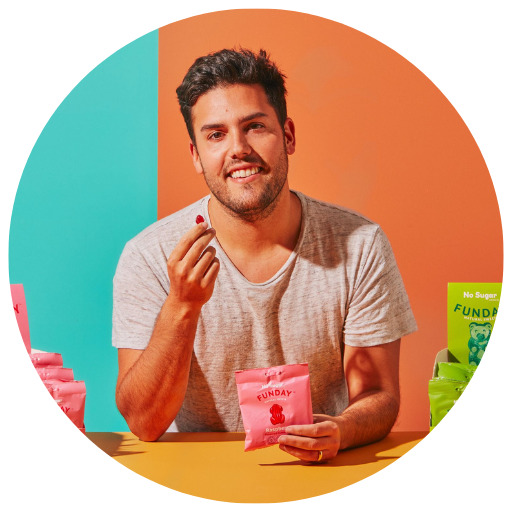
Nathan Bush: I'm still prone to a little lolly feast now and again, but it always comes with a side order of guilt. My guest today is all about taking that away and putting the fun back in lollies. Daniel Katay is the founder of Fun Day Natural Sweets and a confectionary brand making lollies with no sugar or sugar alcohol added. Daniel's own weight loss journey left him missing out on the joy of one of his favorite treats and inspired him to create a replacement. Funday's unique formula maximizes taste and eliminates
Nathan Bush: the frequent trips to the loo that
Nathan Bush: many healthier lollies can bring. Interesting concept that one Funday have a five star health rating, contain around 100 calories per pack and can be found in Chemist, Warehouse and Woolies. Daniel shares how a unique influencer box helped Funday achieve liftoff, the journey to having a profitable Amazon presence and how a brand crush set the tone for his mission to make lollies cool. We also hear how Funday managed to entirely recoup its startup costs through profit in in less than 12 months. We also have a fun day 10% off code, which I'll give to you at the end of the chat. That's if you're good and you deserve your lollies. All right, so thanks to our partners Shopify plus and Paclio, here's our conversation with Daniel Katay, founder of Funday Natural Sweets. Daniel, welcome to ADD to cart.
Daniel Kitay: Thanks. Thanks for having me.
Nathan Bush: I understand that you've had a busy morning trying to clear up Daily Mail headlines.
Daniel Kitay: Yeah, not quite the morning that I anticip When I woke up this morning at 6 o', clock, I was just about getting ready to jump on the peloton and someone sent me an article that Daily Mail had put up of me saying angry boss or greedy boss or something like that in relation to one of our TikToks. Yeah. So the morning was spent after my ride trying to clean up some mess.
Nathan Bush: What was the actual headline that you're trying to fix up?
Daniel Kitay: I think the initial one was sort of implying that I was greedy and mean and all this sort of stuff. And then it sort of pivoted to more around that people were slamming me and it was also a bit divisive what people thought, whose side they were taking, whether it was mine or a content creator. So, look, the intention of the TikTok was to get people talking more around having Gen Z people working in the office and Gen Y was born in late 80s and the differences of just the way we do stuff and. But I did not anticipate that it would get this far. To the Daily Mail, did you say?
Nathan Bush: And that video itself had over a million views.
Daniel Kitay: I think it's pushing 2 million at this stage in less than a week. So clearly either the algorithm likes it or. I don't know, I don't really understand TikTok, which is why I got someone that did understand it. But yeah, it's pushing, pushing some serious views.
Nathan Bush: Unbelievable. It's one of my questions actually, for later in the episode around TikTok, and I love it because I spent a bit of time researching each guest, but I spent a stupid amount of time on your TikTok watching the videos from Kate because she is freaking hilarious.
Daniel Kitay: Yeah, she is good and she brings a unique, like, incredibly unique perspective to the business. And to be honest, like working in a business is even for a lolly brand, it's. It's stressful, it's tough. You got to deal with supply chain and packaging and all this sort of stuff. And to have someone that's in the office whose job is purely to have fun. Yeah. Means that everyone internally is always laughing or joking or thinking about something funny actually is a really good balance to have. She's like a party starter, really. And it's great. It's. It's good having another perspective.
Nathan Bush: Does it make it hard sometimes?
Nathan Bush: Because you've got this brilliant TikTok community and vibe happening. Like it's almost like a whole new world of fun day suites. When you go into the TikTok and then you go onto the website and even your other social Channels and. And it's very different messaging, very different tone. So make it hard when you've got those two worlds happening, especially when the TikTok one is going bananas and influencing things like the daily.
Daniel Kitay: No, totally. I think you're 100% right. Does it make it hard? I think the point is that we have a huge addressable market, whether it's young kids, teenagers, people in trades or at uni and then mums and grandparents. Like we just as a lolly option, that's a healthier lolli option, we just extend to this huge market and that means that we need to communicate on all these different platforms and you can't have one message fits all because everyone's different, everyone responds to different messages. So we do put a lot of focus. Say like for TikTok example, I was never going to run, I do a lot of marketing, but I just couldn't run that account because I can't communicate as effectively as someone who's in Gen Z, who's the biggest user of TikTok, for example. So I think my job as the owner, founder of the business is to try get people into the business that can manage those sorts of channels for us, provide the sorts of content that people find amusing or interesting or captivating. But it really, at the end of the day, it's more of an investment than being difficult. Like if we want to play in that channel, we had to bring someone on internally, have them in the office, understand the business and, you know, I let them, in most cases take the lead because my job is to try and get people that are better and smarter than me to run the functions that I don't know.
Nathan Bush: And then you just put out the daily mail files.
Daniel Kitay: Yeah, and then I get slammed on national news. Yeah.
Nathan Bush: Is Kate full time on TikTok?
Daniel Kitay: No, she is a couple days a week now in the office. Her job is really a content creator and she works for us in another swimwear brand as well. You know, we've only bought Kate in in the last couple of months. We were using an agency for TikTok and I think it's interesting because when I first heard about TikTok maybe a year ago, it was like, anything goes, you'll get views, everyone's getting a million likes and views and it was just this amazing platform to go viral and we just didn't really have the capacity or anyone internal to produce the sorts of content that we needed. So we went to an agency who were using for performance marketing and they sort of had a division of TikTok or content creation. We started using them for that and there was very, you know, trending videos and you know, they're trying to be as up to date as possible, but we just found the results weren't really there from an organic perspective. And every time we were having to try get more views or more engagement, we're having to pay for it, I think. I don't know if it was just our business and I've spoken to a few that are doing well from TikTok instead of actually converting, but we were just not really converting that well when we were using an agency to do it for us. And I think what I sort of learned over that maybe six month period is TikTok is not really about the standard average communication of this is my product, this is the benefits. You know, it's an awareness, there's consideration, a conversion thing. It's just not like that. And the more that I looked at other people's TikToks and businesses and understood the algorithm a bit more and it was all about emotional connection. It was all about how does someone on TikTok buy into what is currently happening in this business? And that meant that we couldn't just continue using an agency to create content because you weren't really learning anything about us as a business, about the people, what we really thought or believed in. And we sort of had to make a call to sort of say, all right, well this is not working. But we do need someone internal who can capture all these moments and try to create that connection between the brand and the customer. And that's so unique because that doesn't really exist in many other marketing channels.
Nathan Bush: And when you talk about emotion and connection, what emotions do you aim to convey from Fun Day suites?
Daniel Kitay: I think as a brand, you know, the brand is called Fun Day. We believe in providing moments to people of joy without the guilt. And you know, even on our packaging or our E commerce boxes we have specific sort of taglines. And it's delivering the LS and LS is it's lollies, but it's also just laugh out loud moments. It's like we want to create the sense of joy and fun and say to someone, you've had like a really shitty day, like you've been at work 8 to 5 or whatever it is, you've got to go to exercise, then you've got to go to the supermarket, then you've got kids and it's like everyone's just so busy. Our job as a brand is to basically say, have A pack of lollies. They're super tasty, they're super delicious, just like you remember as a kid. But they're not going to give you that sense of guilt because they're made with much better ingredients. And that's our brand message, whether it's on TikTok, to say, hey, like you're probably scrolling because you're bored or it's tough, whatever, just take two minutes and just laugh. Like there's going to be something that's kind of funny that's going to come your way. And so that's sort of how we see that connection being built through product, but also through different marketing channels.
Nathan Bush: Brilliant. And it sounds like that not only goes with the connection for your customers, but what you were saying before about the office around connecting with your team as well, making sure everyone's having a laugh and, like, getting along and it's a place that you want to work.
Daniel Kitay: Absolutely. And I think, you know, as a fairly young founder and boss, like, you need to ensure that you are providing that sort of realm or that sort of interest for your staff. And it's not just coming into work and saying, all right, nine to five, let's smash it out. It's saying, well, I actually want to come into work. I can be myself, I can be authentic, I can stuff up and it's not the end of the world. I can jump on a TikTok video and just be stupid for five minutes. And I think it's been a really good thing having Kate in the office just to liven up the spirits when, you know, we're dealing with a really shitty day of deliveries that haven't gone right or something like that. Yeah. So it's just been really important and I think super beneficial.
Nathan Bush: Ready to go back and flip burgers for a living?
Nathan Bush: Nah, me neither.
Nathan Bush: But one of the most surprising results that came out of Shopify's recent global survey was that despite the cost of living pressures on customers, 2/3 of customers are still open to splurging on themselves, at least monthly. The most common splurge?
Nathan Bush: Takeaway food.
Nathan Bush: But even if you aren't in the grease game, it is promising. Because no matter how price orientated the market is, customers will find opportunities to treat themselves. You've just got to find the right moment to wave the smell of that
Nathan Bush: juicy burger under their noses.
Nathan Bush: Something to think about as you're planning 2023 to view more resources to help with your 2023 planning and see how Shopify can take your e commerce business to the next level, visit shopify.com au today.
Nathan Bush: I'm really fascinated in how you've taken the guilt out of lollies. When researching Fun Day, I was amazed to see that a lot of your products actually have a five star health rating on them. And you know, you've taken up to 89% less sugar than traditional sweets. What inspired you to go down this path?
Daniel Kitay: Yeah, well, I mean the, the origin story of Funday was that I was always a big kid growing up like I was ever since I can remember boys being overweight to some extent. I did lose a lot of weight after school I think because I realized that I needed to go out and go to clubs and there were girls and you know, why weren't they paying
Nathan Bush: interest to me and pretty good motivator sometimes when you're that age.
Daniel Kitay: Yeah, it was really a motivator. And I lost maybe 20, 25 kilos in a fairly short amount of time eating well and exercising the fundamentals of, you know, weight loss. But the thing that always stood out was that in order to lose that way, I removed pretty much every aspect of sugar from my diet. So I used to love eating chocolates, I used to love eating lollies. And then all of a sudden it was just like, no, you can't have any of it. And that's not sustainable because a couple years later you start indulging in that stuff and you put on more weight and then you're in this cycle. And for me it was like I just couldn't. As I went to uni and I studied commerce and law and I got into tech companies and vitamin supplement companies after that. But still I would always try indulge in confectionery and just always feel really bad after it. There'd always be huge amount of regret and you know, I could never stick to the serving sizes, all that sort of problem. And I just. As I became more professionally aware of my surroundings and what was happening, I also had this incredible desire to start my own business. And I was walking the supermarket one day and I was like, you can get full sugar confectionery, that's typically really bad for you. It's about 90% plus of just sugar or the sugar free options in the market. Who will replace the sugar for things called sugar alcohols? And you know, everyone sort of, they might not know what sugar alcohol is, but they probably have seen a warning label that says excess consumption may cause, may have a laxative effect. And that's because the sugar alcohol is in a high enough concentration in that particular product where that can actually happen. And for me, when I used to eat those sugar free lollies, that's, I used to just feel awful and run to the bathroom really quickly and I started searching online, you know, what sort of the options were or what people thought about sugar free. It wasn't just me that was having this reaction to it, it was a huge amount of people. And I was working at the time at a company called Biohealth, the largest vitamin supplement company. And on a weekend I took a flight to LA and the UK. I reckon I was away for about 72 hours or maybe just a bit more. And I just spent enough time in LA going to the Whole Foods and the Kroger's and the cvs, like all their different stores. And I did the same thing in the uk, bought a, another suitcase on the way and just stocked up with things that I thought were healthy that could maybe solve this problem. And I found a product in the US that was doing incredibly well. Started by, I think at the time she was early 20s. After three years she'd done $100 million in sales. Two years later she sold it to TPG Private Equity for about 400 million. Less about the financial stuff, the point is that it was possible that someone could develop a lolly that was better for you and you didn't need to have full sugar or sugar free. And I came back within like two days. I quit my job and I was like, what the hell do I do now? Like, I know that I need to focus on this, but I'm a lawyer by background with commercial background and no food experience really whatsoever. And that sort of just started the journey of working with food scientists, product developers, doing work at home on benchtops and coming up with a formulation that got rid of all the sugar, got rid of all the sugar, alcohols, put in prebiotic fibers and other plant based materials and took out all that sugar basically. And what I realized is that we could develop a lolly that was, you know, up to 90 more sugar, it still tasted as good. We could do vegan, we could do gluten free. All these things where these big brands just weren't delving into that market probably because they're just not invested in changing and life is good as it is because they've got huge market share and they don't need to innovate. So I just, I did the innovating and we're super quick to get everything done and yeah, I guess the rest is history.
Nathan Bush: As I say, what convinced you as a lawyer that what gave you such confidence that you could quit your job in two days and that you could crack the sugar free recipe that hadn't really been done in Australia before. Obviously you've got your examples there.
Daniel Kitay: Yeah.
Nathan Bush: Internationally. What gave you the confidence that you could come in and design this product that hadn't been done in Australia yet?
Daniel Kitay: Well, seeing the product in the US and seeing how well it was doing gave me the confidence that it was possible. So that's the first thing. If I was. Had this idea, sort of imaginary idea in my head of this incredible concept, but I didn't know that anyone had done it previously, would have been much more difficult to make that switch out of a job. The other thing is, at the time when I was working for this company, it was really challenging. It was a Chinese company that had bought a number of Australian companies. There was a huge amount of cultural integration problems. My boss was based in China. We needed a translator. Like work was good, it was fulfilling to an extent, the money was excellent. But there was a lot of, I guess maybe anxiety or some stress in terms of how I even communicate with my boss. Like, it's really, really difficult. And I just, every day I'd sort of go in and be like, I like the work that I'm doing, I like this retail stuff, but I'm not happy really in my job and I want to, I feel like I could do things better. Like, why can't they just listen to me? I feel I have a better approach to it. And it was just constantly saying basically I should start my business, start my business. But I was always waiting for an idea. And I spoke to a number of people in the weeks prior saying like, I want to create my own business. But I don't know, they're like, just don't force it. Like that's the worst thing you can do. Just wait, something will come. And I think it was. So in answer to your question, it's really a combination of knowing it was possible and desperately wanting to create my own business. And then obviously once it all sort of came to fruition, I was like, I have no option. You know, I'm. Because there's a big, I wouldn't say it's big division in terms of thought, in terms of whether you should have a side hustle while you currently work or whether you should go all in. 100%. For me, 100% all in was the best thing I ever did because I was like, oh my God, I've got a mortgage. I better get this thing right. Like, I don't know what's going to happen if this doesn't work. I have no choice but to make this a success. Whereas someone who's working in a business, they're getting paid really well at NAB or wherever it might be on 150 grand a year or something. Like, if it doesn't work out, so be it, because they got a stable job and life is. But for me, I did not have that luxury.
Nathan Bush: How much Runway did you give yourself?
Daniel Kitay: Like three months, four months. But you know, the benefit was that my wife had just started working. She'd been studying for like 10 years to become a doctor and their salaries are really average to start and we just made it work. Like, I guess we were fortunate as well at the time that Covid had kicked in. You know, there weren't many places to go out or spend your money and that made it a bit easier in terms of the financial stuff. I actually set up a business as well in that time consulting around the work that I'd previously done. So vitamin supplements and ended up doing these big consulting assignments for Bain Co. And McKinsey and stuff like that out of Germany and France and all these places. And they would pay like 5, 10 grand at a time. So that sort of helped me like fund part of the business and, you know, thanks to my wife and the support, was able to sort of make it work until we started generating our first orders, which were around a year later.
Nathan Bush: Yeah, okay. And I read that you've entirely recouped your startup costs already through profit in less than 12 months. So it's pretty remarkable.
Daniel Kitay: Yeah. Quite rare. I guess the benefit from having an excellent product and innovative product is you can go to a number of retailers and it's typically not as difficult to get in a product that they want that they know consumers will be keen for. So we were very lucky. That Chemist Warehouse was our first customer and they put it into about 450 stores nationally from beginning. So. And then six months later we're in Woolies. So we sort of had two really significant customers and we actually, we did make a bit of money, but it wasn't much. We spent a ton of money AIRF rating stock from Switzerland where it's made to Australia because we put product on the shelf in Chemist warehouse and then it sell out like four weeks later. It do really well. And I was like, oh my God, like we've got stuck on a ship, but it's going to be here in two months time. They're going to kick me off, so I better spend. I think we spent somewhere between 100, 150,000 on putting stock in an airplane.
Nathan Bush: Wow.
Daniel Kitay: To come to Australia so we wouldn't get kicked off the shelf. And also to show that we're very serious about this product and this brand. And then, yeah, I guess we. So we would have made a lot more if, you know, we didn't have those sort of issues. But that's, that's just business.
Nathan Bush: Did you go straight into wholesale or did you start online Direct to customer?
Daniel Kitay: Online Direct to customers. Our first channel for about two months.
Nathan Bush: Okay, that's not long.
Daniel Kitay: No, it wasn't long. I think by the time we had the product made and by the time Chemist Warehouse wanted it to launch, really wasn't that long. And in that time we'd been, prior to even that we were setting up the website, we were setting up Shopify as an example and we'll just do some like sneaky stuff. We'd go into competitors websites that we're doing interesting things and you know, right click inspect and see all the apps that they were using and the themes that they were using and all that sort of stuff. And you know, between myself and our graphic designer who was working two days a week at that time, who was our first hire, we built the website. So the website you see today is built by me and our graphic designer and we use Shopify because it was the simplest thing and integrated with everything and I knew what would happen. Designing a website, you can go really hard, get developers and then things change and then you're always going back to developers and it's really challenging. So we'd seen what another brand was doing in the States and they were using a. Essentially like a page builder called Shogun. And we integrated Shogun and even though we're making no sales, a couple of hundred bucks a month to use this thing. But I knew that if we built it well from the beginning and we could control it, we didn't need to go and spend thousands of dollars every month on developers every time we wanted to do a sale, every time wanted a new product. So we developed it using like, I guess all the technology at our fingertips that allowed a graphic designer, who had just finished uni, by the way, and myself, to develop a pretty decent website. And it's sort of just people still comment how nice the website is and it's very much V1 and we are developing a V2 right now, but it's got us to the point of doing 10 orders in the first month to thousands of orders. Now even on our current website, it costs us a couple of hundred bucks in ad fees.
Nathan Bush: Amazing. What gave Chemist Warehouse the confidence in you to stock you because relatively new brand up and running for two months, brand new category for them. I'm assuming that there wouldn't be a huge, huge range there already. So they're taking a risk on a couple of fronts there. What convinced them that you were a brand that they could stock reliably?
Daniel Kitay: It's a good question. We had some pretty tough conversations in the early days because they liked the product, they liked the way it tasted, but certain aspects in terms of packaging, format and price, they did not believe that it would do well and it would succeed purely because no one else had ever gone into a 50 gram packet, increased the price purely because of the ingredients that we were using, but they hadn't been tried and tested. So I would, I was just so annoying. Like I would just constantly go to their office and drop off new samples and I would send them emails all the time about silly little things about what we were doing to improve things or to justify why. And part of that was to say, well, it's done super well overseas. We're always years behind, like now we're ready, this is what we're doing, you have to back it. And like, I wish it was that simple because I had to sign a contract that said, you know, if we don't hit the required hurdle of run rates, we have to buy back all the stock or if we didn't hit it, we'd have to fund more promotions to go on clearance. And there was a couple other sort of provisions in there that were pretty tough to say. Well, they covered themselves and I had no coverage if things didn't work well. So, you know, in the end it came down to just belief in the product and the brand and backing myself that this is going to do really well. And now we sort of laugh at those hurdle rates. Like that's now done, that six month period's finished. Now we're just, you know, we are growing their confectionery space and super thankful for the people that were involved that actually eventually just took that punt on us because essentially that's what they were doing, you know. Yeah, new brand, new person, new new format, new price point. Like there's quite a lot of risk.
Nathan Bush: Yeah, yeah. But I'm getting a theme coming through that you're kind of all in or nothing in most of the things that
Daniel Kitay: you do that that would be fair.
Nathan Bush: And then what do you put the
Nathan Bush: success of those initial stock flying off the shelf at Chemist's Warehouse? Do you put it down to position packaging a promotion that you did? Was there anything in particular you went that was that really nailed it.
Daniel Kitay: Yeah, a couple of things. One is, you know, the way that I viewed Funday and I still do view it, is a lifestyle brand. So I always looked at Remedy Kombucha as a brand that sort of came into the market with this random drink called Kombucha and they, their branding was just so excellent. Like people would walk down the street holding a bottle of Remedy Kombucha and they would feel a sense of some connection or something to the brand. They would feel cool. It'd be a bit of a statement. And I always sort of had that in the back of my head. There weren't many brands like Food and Beverage that I thought of in the same way as Remedy. And what we ended up doing is designing packaging, like not just the way it looked, but also the texture, the materials that we use to make you feel like you belonged, like it was a lifestyle brand. It felt cool walking down the street with a bag of lollies, because in the history of confectionery in Australia, don't think anyone has felt awesome walking down a high street with a bag of frogs or box of like some chocolate or something like that. There's always been that inclination to hide it rather than show it. And for me, I was like, no, this is the game changing moment, this is the remedy moment where we're going to make the packaging awesome, make people feel cool. It's not a weight loss product, although there are lots of benefits to it being reduced calorie and high in fiber. The idea is for people to feel good and joy and not feel like I'm picking up a diet lolly product. So we steered completely away from that intentionally. And so I guess that's from the product look and feel, then, you know, you can get that right? I can sit on the shelf and then no one knows about it. And so what I had done as well, probably sneaky too, is I'd sent a couple LinkedIn messages to current brand managers at Remedy, because I was like, you know, they get it. Like they get this whole branding thing and they've done incredibly well. And one of the girls that I ended up speaking to, she. I think it was during COVID and there's sort of been. I forgot the term, but it was sort of made redundant, essentially, or still down, I think was the official term. And she said, but I think I'm going back. But there's someone who was the ex brand manager that started their own business who might be interested in doing some stuff for you. And fortunately for me, I ended up working with her and her business partner and they helped me set up a lot about the branding and our marketing strategy and what we were going to do. So I was guided by people that had done amazing jobs before. People her business partner worked at lion, they've worked on all the yogurts and all these amazing different products. And part of the strategy was very much going to be without very limited marketing budgets, reaching out to influencers. And at the time there was just me, there was a graphic designer two days a week and these consultants sitting on the side. So I would literally go and spend all day on Instagram reaching out to people that I thought were part of the target group, saying, hey, this is what we're doing. Can we send you some lollies? Can we do something? And the launch of it, I think we end up. I ended up getting about 150, 200 influencers on board. So it was pretty successful. But there's no guarantee that they're going to post and say all this sort of stuff. So my thinking was that they're getting sent stuff all the time and typically I saw as just product in a box. I was like, we need to do something sick. So they like get this thing and they like, this brand is cool. I get it. And I'm have this commitment to post even though I don't have to. And we ended up getting these beautiful eye masks and printed and this amazing box and this whole incredible sort of send out, sent it out to the influencers with a card that basically said it's now a chemist warehouse. And that was it. And our goal was to sell out at Chemist Warehouse. It was not to do online, it was purely to make a wave in Chemist Warehouse. And once we said that, it just went crazy. Like everyone was like, I love these products. So the product had to be good and it delivered. The branding was good. And obviously they liked the contents of the influencer box. And from that point on, it sort of just kept propelling itself. Before that time, I don't think there was an influencer that had put up confectionery on their social media before. Like, why would you put up your snakes that you're eating? Like, it's not that newsworthy. But when Funday came around, it was like, back to the branding piece. I feel cool, Like, I feel awesome. Eating this, I feel proud to eat a lolly, not ashamed. And that just started fueling us reaching out to more and more and more to the point now where we get like hundreds reach out to us saying, can we collaborate with you? But the early days, it was tough, but we knew the product was good enough that once they got it, they would be happy to help us out. And that's sort of what led to the numbers at Chemistry House, which led to the growth in all the other markets.
Nathan Bush: Yeah, it's cool. It's almost like influencers content machines anyway. And they're always looking for new content. So if you can deliver them something new and first and interesting, because there is that almost like a difference of, you know, I'm this health influencer fitness. All of a sudden you see me eat lollies. Like, that's interesting, right? It's like it's that jarring moment of what's this about?
Daniel Kitay: Yeah, well, I totally agree. I think it was newsworthy, it was interesting, it tasted good. They genuinely felt like when they posted they weren't just doing it for some sort of sponsorship or some money. Because I made a determination from day one is that we only want to work with people that like our product and happy to support us. And we still maintain that same sort of mentality. The only time we veer from that is we come to affiliates. And we've now kicked off an affiliate program where customers will receive a small discount, but the affiliate for their work, they will also get remunerated for that from us. And I think that took a long time for us to sort of get the systems right and thinking about that. But we did reach a point where people were asking for codes, like they were proactively saying, like, how can I benefit from promoting your brand? And my mentality was like 100%. Like, if you can help us out by generating new sales, you should be rewarded for that. Because it doesn't make sense for us to be spending thousands and tens of thousands of digital marketing on Facebook for the Facebook machine to try push it. But someone genuinely pushing story or a post and they're not getting any sort of benefit. So that's now, you know, it's really only gone live in the last couple of weeks. But for us, it was a big pivot to saying no, we really back the people that have helped us grow.
Nathan Bush: You've refreshed your website. The new range is about to drop. You've never had more customer service options. Hey, but take a look over there at that boring pile of Packaging boxes.
Nathan Bush: Ugh. Ugly.
Nathan Bush: Time to give that some love. Luckily Paclio is here to bring some joy to your customers delivery and unboxing experience. It's been ignored for for way too long. With vibrant colors, cool designs and eco friendly credentials, there are no more excuses for boring boxes. Even better, Paclio is Australian owned and operated with same day dispatch and 14 day returns. There's nothing boring about that. Check out the Paclio range of E commerce packaging options@paclio.com that's Paclio P A C K L e o pacla cleo.com
Nathan Bush: have you had any interesting insights or unexpected results from those partners and affiliates in those first few weeks? Audiences that you're like, oh, I wouldn't have thought that, but they're actually really responsive.
Daniel Kitay: It's a bit too new to sort of comment on it. Yeah, we've really just sort of rolled it out the last two weeks. I think a lot of it just comes down to just going out to their followers and putting it out there. And we've seen maybe an increase in maybe 5 or 10% of sales since that's happened. So it's been good. We don't really know much detail about where they're coming from at this stage.
Nathan Bush: Early days.
Daniel Kitay: Yeah.
Nathan Bush: So we talked about the chemist warehouse launch and how pivotal that was for setting up Funday. Since then you've got distribution, I understand, into Woolworths, Ampole, Harris Farms, heaps more. Feels like wholesale is a bit easy for you. Now you're also selling through Amazon.
Daniel Kitay: Yep.
Nathan Bush: What's the secret to having a profitable Amazon presence?
Daniel Kitay: It's very interesting actually because Amazon reached out to me in the early days through LinkedIn saying, you know, we should set you up and you'd be a great brand for us, which we did. I didn't know anything about Amazon except that I was a customer and I'd be buying a lot. You know, two years ago I was probably a fairly early adopter. I was always also hesitant about Amazon because while there's potentially a sales channel, they own the customer, you don't. And for me that was potential issue because you were spending money to provide them a commission for every sale. But it was the same customer coming back time and time again where if they were on your Shopify customer portal, like you'd be emailing them, you would be paying that, that fee. So I think for us we've never, to be honest, we've never really actively promoted that we're available on Amazon. I had a gut feel two years ago that Australians would be using Amazon far more than they were previously because you just need to look at the states to realize how much they rely on it. And I was a customer and I really liked it. And the other thing, why I like our notes, sort of not coming down to the profitability but the reason why it's important is, you know, we ran our own direct to consumer, we still do, but it can take a day or two to dispatch a product depending on how busy you are. The idea of going fulfilled by Amazon and saying you take control of it customers, you know, it's happening more and more. So their expectations for delivery are just shortening and that's purely because of Amazon. And if you've got an impulse product like confectionery or chocolate or some sort of, I don't know, some other impulse item, you want it now. Like you buy it now, you want it now, you don't want to wait four days that we were taking. So moving to them was a critical step to capture those customers that were very impatient. And there's something interesting about Amazon where you go on there, you just like to add products. There's something really convenient about that. And I just think the cross promotion across sell between other products and fund aid made a lot of sense. It's, you know, we're selling in boxes of 12. It's really convenient in terms of the profitability side of it. I didn't spend anything on digital marketing through Amazon in the early days. It probably we also didn't do that well. So there's a clear linear between spend and performance. But now even, and in the last, probably even 12 months, we are very conscious about the keywords that we're searching for and doing a lot of AB testing and, and you know, we see how a lot of the brands, particularly in America because they're excellent at it, formatting their product pages, what images they're putting up, whether they've got A plus content, whether they're running promotions and we're sort of taking the learnings from the Americans more so how to actually create it because you can bid for the keywords but you're not going to show up if or not as much if you don't have your own branded page, which you'd need a trademark for to have or if you've got A plus content, you'll do better. So we're investing in more of their marketing sort of activities so that our like pay per click and CPI is a much lower. And you know, I think their commissions are fairly reasonable. I think for food and beverage, it's maybe 12% or something like that. And their shipping is typically lower than you're going to get yourself. I think they're at $9 or something like that. So the issue with Amazon is really around pack sizes and formats. They definitely cater for businesses that have products that are more expensive because you've got to take out the flat fees for shipping and all this sort of stuff. But so, for example, selling one product, one bag of 50 grams doesn't make any sense. So if you are geared up for it, like We've got a 12 pack, Amazon makes a lot of sense and there's no reason why you should not be making any money from it. It's a straightforward sort of platform. We were lucky in the early days that Amazon signed us up and did a whole PR piece and us as one of their startup businesses and that sort of got some traction as well and sort of. We still tick along with it. It's not the biggest platform for us, but the way I like to see it, it's really adjacent to our ecom and it captures customers that we probably wouldn't be getting anyway because they're loving shopping on Amazon and they love the convenience, both of which we struggle to offer. As nearly as good as Amazon.
Nathan Bush: I was about to say with. With Amazon and Chemist Warehouse, both giants within their respective industries, are you that worried about profitability in there? If you're shifting a fair chunk of units through there because it's building your brand dominance within a relatively new category
Daniel Kitay: that's up for grabs, I think having the products in store is definitely a great point for customers to become aware of the products and then create traffic back to us online or through Amazon. So it's a great discovery piece. So the more places you're in, definitely you're just going to grow in all channels. But I do think someone was saying, I saw something the other day, it sort of said retail is like it's now a luxury if you're a retail brand to be in an offline environment that's, you know, initially was you have to be online. We'll have a 100% pure play DTC website, we'll invest all of our money in it and we'll kill it because we don't have the overheads and no marketing funds and there's no person in the middle. The problem is that that's great if your marketing costs are super cheap and your addressable market is massive. But in most cases now, particularly like meta marketing is up 20, 30% it's not as cheap as it was before. You still have to pay for your 3 PL or some sort of place to send it out onto market like a particular point. And also you can't always reach everyone. Not everyone's on the Internet, not everyone's searching for you or not everyone's going to get hit with an ad. So actually having the omnichannel approach is in my opinion the best way you can run CPG business or like most other consumer based businesses because they feed into each other. You might see us online or you might get hit with an ad but then you'll be lining up at Woolies or a chemist warehouse and you'll take a packet because you've seen it before. As we know this, you know you need seven touch points typically to buy a product. They're just creating touch points for the brand whether it's online or offline.
Nathan Bush: Yeah, beautiful. When you are talking online I notice you've got the subscription up and running online to capture that repeat purchase. How important is subscription to you in the overall channel mix?
Daniel Kitay: Well, I have to thank my old boss, Adam Schwab, who's CEO of Luxury Escapes on.
Nathan Bush: He's great.
Daniel Kitay: Yeah, so he, he's a. Probably wouldn't say it but he's a bit of a mentor for me because I worked for him for nearly four or five years or something like that and gave me these incredible opportunities to run businesses and do stuff that I wasn't think I was capable of and ended up doing a pretty good job. But I was having lunch with Adam pretty much at the start of the business and just talking with through what I was doing and how things were going. And his view because he's in tech was like how do you convert a simple lolly business? Essentially it's just a lolly business into something greater like maybe a tech lolly business or you know, travel business. You're just selling holidays but you're doing it through tech platforms and you've got a lot of tech behind it. So they'd be considered to a lot of people as a tech business. So they hold high valuations when it comes to sale. It's typically just a better place to be. And one of his suggestions was offer a subscription. And at the time I was like it sounds like a great idea but why would people necessarily want to subscribe to lollies that's never been done before? And like how would it work? Like how would I even go about creating a subscription program for our customers? And turns out that's not that hard to create it because Shopify is a wonderful thing and there's wonderful amount of apps that integrate and setting it up takes you a day. And all of a sudden you now offer a subscription. So, you know, it's interesting when you start a business in 2021, 2022, the options you have for these things. You know, 10 years ago, you 100% needed five developers to be working on. It cost you 50 grand, and hopefully you got a sale out of it. But now there's no cost. You pay a percentage of whatever the recurring orders comes through. And it's become a pretty decent part of our online business. Like, we have, you know, we have not thousands. We've got hundreds of people in our subscription program ranging between 14 and 60 days. We offer an incentive pricing incentive, typically around 10%. And a lot of what else we offer is terms of like being able to. We sort of had to put ourselves in their shoes and say, well, if I'm getting 10%, like, and you run a sale at 20%, what's going to happen? So, you know, you build in some of those processes and say, all right, well, they can stack a discount and they can get 30% when that happens. Or a lot of people have told us they love free product or they love to receive merchandise that we use for our influencers, typically. So we treat the subscription customers as like the elite bunch of people and they will get merchandise every couple of orders or they'll get a free packet here and there.
Nathan Bush: That's cool.
Daniel Kitay: And even before, you know, a launch of a new product, we will send all the subscribers and typically, or what we consider VIPs as well. So people might have ordered with us 20 times, but not subscribed for a number of reasons. We send them a little care pack. Say you can be the first people to try a new product. You have stuck with us the most. You definitely deserve to be rewarded for this and this, you know, and that is so well received. And there's not many brands that do that. It costs money to do it, but it's essentially retention marketing and it's valuing the people that are already existing and ordering and your biggest advocates for your brand and taking like some of that focus of new marketing and new spend away and actually reverting it back internally. And the subscribers will become a bigger part of our business as we grow, whether it's through incentivizing them, through providing greater benefits, through a loyalty program that we're thinking about running or other things to create a sense of loyalty with our brand if they're a subscriber. And you know, there's nothing better than guaranteed monthly income for a business. And subscriptions are a fantastic way to do it. And I'm shocked that people do it for lollies. But we interview and speak to all of them, plus all of our customers and ask them why they do it. And, and primarily it's around convenience. And the second thing for us is we are not in every shop. And being able to just reliably set and forget, get your product that you want is great because if they walk to chemist's warehouse and the new cola product is sold out, that sucks. Like, they at least know they've got some consistency and reliability in, in all of this.
Nathan Bush: But I love what you're saying there, is that you don't obviously see it as a set and forget channel. You see it as your highest tier of loyalty. And I think that's a really refreshing way to look at subscriptions because a lot of people do look at it as set and forget. It's like they're locked in, they're done. That's going to be my recurring revenue, actually. No. They're our most important customers. Let's keep surprising them. Let's keep delighting them and keeping them engaged.
Daniel Kitay: There's no point having subscriptions and subscribers and then they're churning the next month. Like makes no sense. It costs to acquire them. They're your biggest advocates. They're consuming the most. The more they get, the more they eat, the more frequently they buy. And, you know, you have to factor that in and treat them way better than anyone else. That's not to say you don't treat other customers well, but there's definitely distinction in benefits that we offer them that we wouldn't offer anyone else.
Nathan Bush: I can't let you go on this topic without asking, what subscription app did you end up using?
Daniel Kitay: Recharge.
Nathan Bush: Okay.
Daniel Kitay: But you know, there are multiple apps now, like we're chatting to Yotpo around a whole range of stuff when it comes to loyalty. Sms, they've got a subscription program, you know, and I think part of the challenge is even for this, like, do you focus as a business owner? You want to diversify risk. And so recharge primarily focuses on a subscription app. All the staff work on maximizing the performance of a subscription app. Or do you go to a really fantastic company like Yotpo and say, all right, well, you're dividing your time between loyalty, SMS reviews, UGC and subscriptions. You've only Got so many developers that can do this stuff. What do you do? And I think those are the sort of discussions that. The pragmatic discussions that we have in terms of A, who's got the best program, but B, who's actually going to invest the most time and effort and money into making sure that this software is the best it's going to be, it's up to date, there's no bugs, all this sort of stuff. But the companies do a very good and convincing job at pulling business away from each other and making it difficult for the business because they'll say, you know, you won't notice anything and the customers won't notice anything. We'll just export and import. But, you know, these are the realities of running a business that's online. And I think that example can be said for heaps of different plugins as well.
Nathan Bush: Absolutely. All right, Daniel, we've covered so much there and thank you for so much that you've shared today. What's next for yourself and Funday? What does the next 12 months look like for you?
Daniel Kitay: The next 12 months is going to be a very interesting time. We've just launched into close to all of the woolies now with an additional two products and launching into Coles Express in a couple of weeks, another 700 stores. So we're really gearing up with our existing product portfolio and going into much wider distribution. For us now, there's a couple of things we're going after. One is definitely new product development. So we're trying new flavors, new formats, typically all within confectionery category as a whole, whether that includes chocolate, just sort of gummy and other formats as well. Hard candy, soft chewy candy, things like that. And then it's really about increasing our distribution points to make our product accessible for more people. And I guess further than that, we are doing a huge revamp and refocus on our online business to make sure that, you know, the V1 that was created nearly two and a half years ago or so is keeping up to standards of where we want it to be from a user experience perspective. We're actually just about to launch an app in the next couple of weeks. So, you know, there's a big focus on that digital play. Definitely the distribution point offline, which is an interesting balance product, I guess, product mix and product portfolio. And also growing into other international markets as well. We've got distributors in the Middle east, we're looking at stuff in Europe as well. So there's a lot, you know, there's really A lot. With a fairly small team. Yeah.
Nathan Bush: Sounds like a lot.
Daniel Kitay: Yeah.
Nathan Bush: If we've got people going, this is great.
Nathan Bush: I want to get out. I'm going to load up my first basket of Fun Day. What is the one item that you would recommend your personal favorite for them to get started with?
Daniel Kitay: I wish it was so simple. I think typically everyone likes the raspberry frogs or the snakes because they're just the most iconic and nostalgic. The reality is that my favorite is is a sour vegan bear, which is a lot chewier, takes a long time to get through, but the flavour is just incredible. So what we find is people start things that they are familiar with and sort of navigate towards this product. So I would say if you haven't tried it before, go a frog or a snake. But it will take you a couple of weeks until you've converted over to all the products, including the ones that you're probably not as familiar with from a texture point of view. So the sour bears, probably. I'm a number one beautiful.
Nathan Bush: All right, well, I've got some shopping to do. Daniel, thank you so much for joining
Nathan Bush: us on Add to Cart.
Daniel Kitay: Thank you. Thanks for having me.
Nathan Bush: Now, for the kids who sat down and were quiet during that podcast and they want to get their hands on Fun Day, Daniel is offering add to cart listeners 10 off with the code. ATC10. ATC10. So head on over to to fundaysweets.com and have some guilt free fun. Here are the three lessons that I took from my conversation with Daniel. Number one, the social media party starter. We took a little bit of a left turn at the start of the conversation where I got distracted by the Daily Mail article and went straight down the social media rabbit hole. But I was fascinated with how Daniel engaged Kate to go rogue on TikTok, representing Fun Day. And it has paid dividends.
Nathan Bush: Well.
Nathan Bush: Apart from the article that he had to put the fire out on, Daniel's approach has been to trust those who know best and don't get too precious about social. It's fun after all. Which is why he described Kate as the party starter. Does your social team bring the party energy? Number two, unashamed copying. Daniel was not hiding what he knew and what he didn't know when starting Fun Day. And even today he's pretty open about it. The story of him right clicking and inspecting a competitor's Shopify site and theme was a good one. There is so much intelligence available, there's no need to start from scratch every time. Be smart about where you put your time and your energy subscribers as your most loyal customers. Funday doesn't just make sure that their subscriber customers get a little discount and reliable delivery, they treat them as top tier members. After all, they are the ones that are in the truest sense loyal. Free Merch, New product reviews, Little surprise and delights when designing your loyalty program, make sure you put your subscribers, if you have them, right up there in the top tier. To get the highlights of today's episode, head on over to add to cart.com and sign up for our free newsletter each Tuesday. We will send Monday's episode summary links and discount codes for you to go next level on. And if you're looking to explore your next e commerce opportunity, come and visit us at E Suite. We're a dedicated e commerce talent agency connecting the best ecommerce talent with the fastest growing brands in Australia. Head on over to esweettalent.com where you can download the free E Commerce Salary Guide and sign up to our weekly e Commerce job emails. Thanks for listening and until next time, keep those customers adding to card.