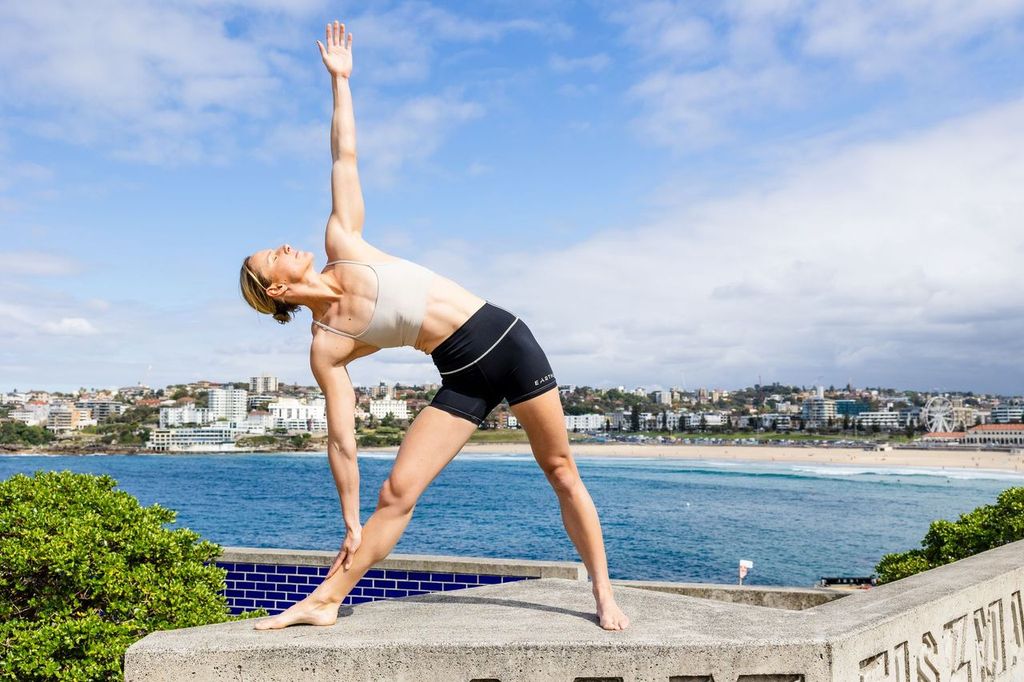
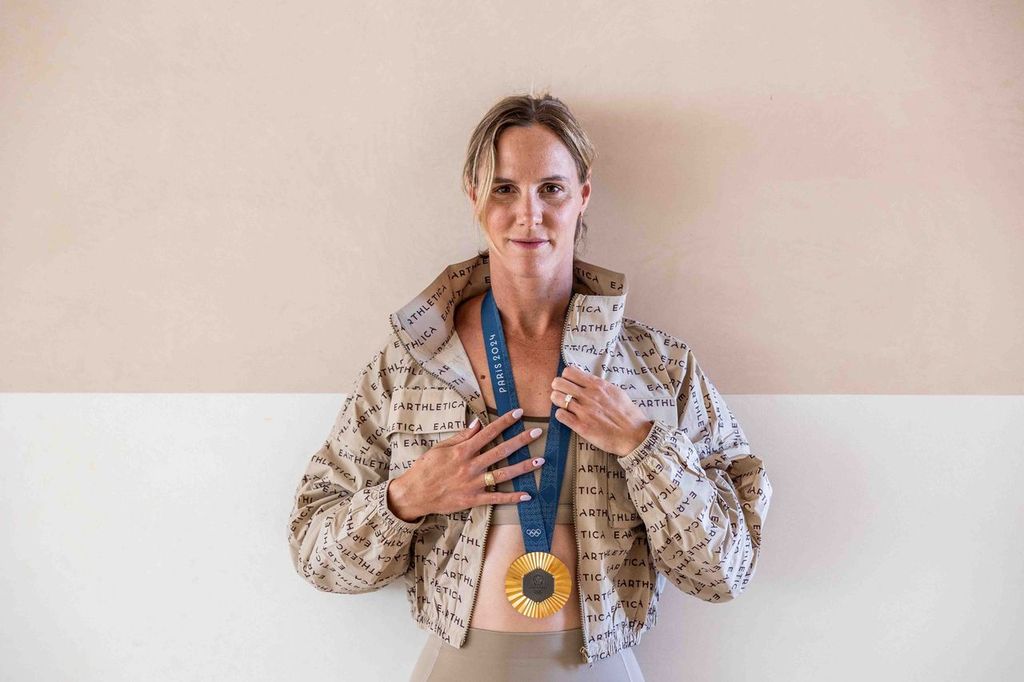
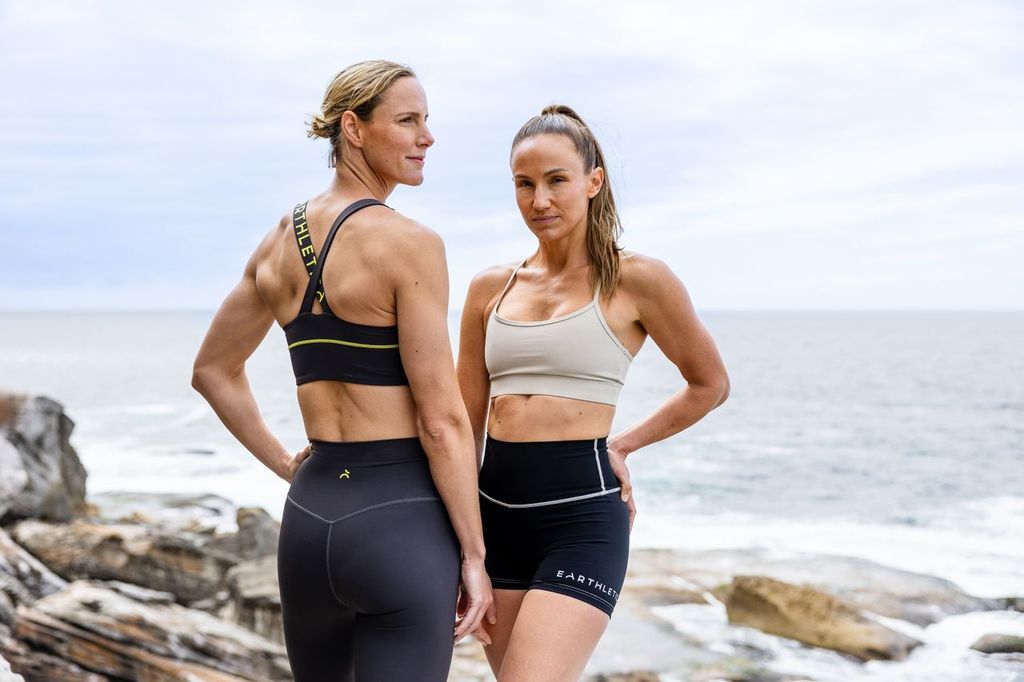
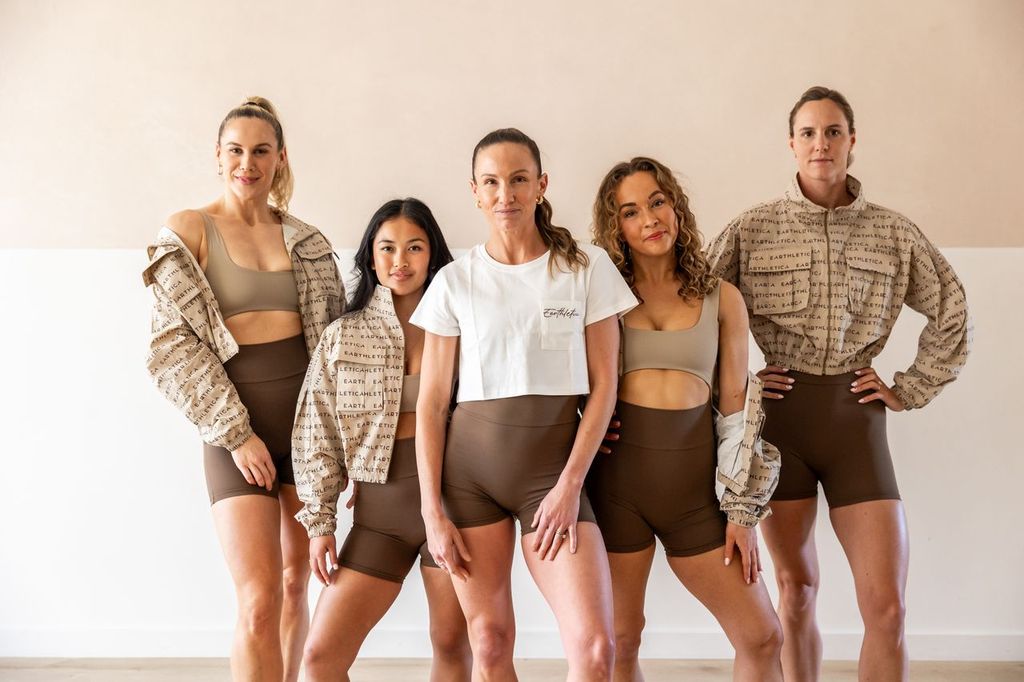
Bronte Campbell: You get 2 million minutes and you get 1 minute to convert it. If we never found those people, we wouldn't even be alive anymore. We would have just had to stop. If you make a product that doesn't perform and nobody wears it and they throw it away, that's also a terrible idea. Hi, I'm Bronte from Earthletica, and in this episode of Add to Cart, I talk about disrupting the activewear space, bringing sustainability to the forefront, and all the lessons you can take from the swimming pool to ecom.
Nathan Bush: In more than 600 episodes of Add to Cart, we've had a dentist selling
Nathan Bush: $5,000 gold grills, an avalanche scientist who ended up making breastfeeding products, and enough recovering lawyers to fill a courtroom or a bar room. Whatever, you take your pick. But we've never had an Olympic gold medalist. And when we finally got one on, we didn't settle for a single gold medalist. We got someone who's won three gold medals. Bronte Campbell won three Olympic golds in the pool and now she's taking on a $600 billion industry instead. She is the co founder and the CEO of Earthletica.
Nathan Bush: Earthletica is a sustainable activewear brand and
Nathan Bush: she built it while she was still racing for Australia. If you've ever been told that doing things sustainably means killing your margin, this one is going to change your mind. In this episode, we get into how she holds her price within 10% of Lululemon and still makes the margin work. She tells us how they used limited drops and scarcity to test product before scaling. And she tells us what she's learned in her first couple of months of meta ads, chasing that gap between a big pile of Add to carts and an actual sale.
Nathan Bush: Just a quick one. Before we get into today's episode, I
Nathan Bush: want to say a big, big thank you to our partners at Shopify and Klaviyo for making Add to Cart possible. We really do appreciate their support. And between you and I, we will pull Bronte's biggest lessons into this week's Monday newsletter so you don't miss them. Every week we send a cheat sheet with our main episodes.
Nathan Bush: Head on over to adtocart.com to sign
Nathan Bush: up for that one. We send it out every Monday and the occasional Wednesday. So without further ado, here is co founder and CEO and just quietly, four time Olympian Bronte Campbell from Earthletica.
Nathan Bush: Bronte, welcome to Add to cart.
Bronte Campbell: Hello. Thanks for having me.
Nathan Bush: Well, this is a special treat for us. First time that we've had an Olympic Athlete, Olympic gold medalist on Add to Cart.
Bronte Campbell: Thanks. It's my first time being on Add to Cart, so it's a special.
Nathan Bush: Don't try and make it as special as it is for you as it is for us. It so funny when we were going back and forth, we were kindly introduced from Anthony at Thread together and we were going back on email and I signed off Bushy. And you're like, oh, it's a bit weird because my husband's called Bushy or nickname Bushy.
Bronte Campbell: Yeah. And for you it actually makes sense because it's part of your name. Like it's not part of his name. I'm actually too scared to ask why his nickname is Bushy. But I'm glad your husband has a nickname.
Nathan Bush: You don't even know how he got it.
Bronte Campbell: I've got one version of how he got it. I feel like there's another version that I'm not being told that's not.
Nathan Bush: Well, we won't go there. We won't make it weird for you to call me Bushy. But you've got the most fascinating story and you've recently launched your brand called Earthletica, which we'll get into today. But I want to unpack the journey to get there, obviously. Four time Olympic athlete. I'm not going to list all your achievements. Three gold medals, just phenomenal. And then you did a stint at ey, as I understand.
Bronte Campbell: Yeah.
Nathan Bush: Are you crazy to be an E Commerce founder now? You had a cushy life set up. Why didn't you just coast from there?
Bronte Campbell: A lot of people have asked me this, like, why would you go from something as uncertain as sport? Get into like a really, like a really structured job where there was a lot of learning for me in that job, but there's also a lot of guardrails and it's really, really good play area to learn. I learned a lot being in there. Like, why would you go from the stability of that to then going into founder life like that is even more uncertain than sports sometimes. And I think I just really, I get really excited by impact and how much impact I can have on outcome. And coming from a sporting world where it ultimately is down to you, the outcome is down to you and the work that you put in on Monday morning four years prior will result in a gold medal in four years time. I don't know, there's just something in that that I really love. I love getting up and doing something that is quote unquote, a hard thing in a day that like gets me excited. To get out of bed. And I mean, to be honest, when I was at ey, there was definitely things I was doing that were very hard because I ended up doing some consulting in tech, which I was not experienced in at all. So you're like, frantically scrambling and trying to understand tech stacks. And I really enjoyed the challenge of that and working in a team. But I don't know, there's just something about coloring outside the lines that really appeals to me as well. And if I've got the opportunity and the willingness to do it, like, why not? Why not give it a shot?
Nathan Bush: Is it hard after the career that you've had? Because I could not even imagine a swimmer's lifestyle, the discipline that it takes, the early mornings, everything that you do, to do what you do to be the best in the world at it. Is there a part of you that after you finish a career in swimming, which I believe you hung up the swimmers this year, Is there a part of you, though, that just goes, I just want to sit on the couch for a bit.
Bronte Campbell: There is a part of me that really wants to do that and have a break. And I'll feel that and I'll sit down on the couch for like a day or two. And I feel like it's like when all your energy's out in the world, you sit still, it'll, like, comes slowly, like, creeping back to you. You know, you throw a piece of goo at the wall, it splats out and then slowly reforms. That's what it feels like. And after like a day or two, like, okay, I'm ready, I'm ready to go, and let's go do something fun and interesting and challenging. But yes, I mean, I also need breaks like anybody else. I think recovery is such an important part of performance in sport, and it's just as important in business. When you talk about founder, lifestyle and startup world, there's a lot of, like, hustle culture that to me is a little bit. A little bit dangerous when not paired with recovery. So I know the spaces and times when I need to push, and I know when to listen to pull back. And scheduling in recovery is just as important as scheduling in times to push really hard. And I don't think that I can be a creative founder or an effective founder or a good leader if I don't also schedule in those times. So the start of this year has been particularly hectic.
Nathan Bush: So.
Bronte Campbell: But I'm sort of scheduling in my time now, when I'm obviously still operating, but in a little bit of recovery mode. Before retail season like, kicks back into gear in the next few months.
Nathan Bush: You're scheduling it now before you're found a burnt out.
Bronte Campbell: Yes, exactly. I mean, it's, I mean, and there's burnout that stops you from working and then there's just the burnout that stops you from being effective. It's like that, the underlying load that just stops you from operating, like at your actual peak. And obviously we're all going to get tired, but if we can figure out a way to keep ourselves in a better mindset for longer, I think it really helps.
Nathan Bush: Well, that's exactly what we want to unpack today. Because in our pre chat we were talking and you were like, look, I just had a look through all the guests that you've had on and I'm not an E commerce expert yet. And you actually said this and I don't know if it was just a play on or just in your head and you were like, I'm splashing in the shallow end of the E commerce pool at the moment. But obviously your experience and your mindset will give you a different approach to building Earthletica than we've had from other founders on the show. And I really want to unpack that. But before we do, tell us what was the crux of the idea behind Earthletica? What made you go, there's a gap in the market and I think I'm the right person to help fill that.
Bronte Campbell: It was just this moment of understanding that most of the stuff I was putting on my body every single day, activewear is made from new virgin plastics and treated with really harsh chemicals. And we're actually seeing a lot of press about this now, but only found this out three, four years ago. And then I started looking for other options. I mean, it wasn't my first thought, oh, I can't find this immediately. I'll just go start a company. It's like, let me go look for other options. And there's, there's the natural fiber roots, which is like looking at hemp and bamboo. And I, I tried particularly bamboo, which has a few chemical problems, but tried it and it didn't stand up to being able to do an Olympic level workout. So I couldn't wear it. And then I couldn't find anyone else that was doing sustainable activewear from the ground up. Like there might be like one collection or one item. Like Adidas does this a lot. They'll do like their recycled ocean plastic shoe. And it's one sku, which is great. You can go buy that one. Sku, but, like, no company was really doing it from the ground up across their entire range. And, I mean, there's. There's so many reasons for that. There's so many business reasons why it's so difficult to pivot an entire supply chain around to sustainability. It's really, really difficult to retrofit it onto a company. And at the same time as I was coming to this realization around virgin plastics and chemicals and activewear, I was also working at EY and I was looking at sustainability for really large businesses and how they could literally retrofit sustainability into their practices. And it was such a difficult problem for them. There were these really long timelines for them to start meeting even basic reporting targets. It was just so complex. And to, like, unscramble that egg is really difficult. So then I met up with Libby and Chris, my other two co founders, and they'd already been looking at manufacturers for over two years. They'd been looking at this problem for over two years. And they actually approached me and said, hey, we're thinking of, like, we've launched two products so far. Would you want to be involved in this? I was like, oh, this is. This is like head and heart alignment. It's something I care about. And also, I can see that it's going to be a really big advantage if we can build these practices from the start and scale from that, as opposed to trying to turn this big, unwieldy supply chain around. And, like, when I say other businesses aren't doing it, those big businesses aren't doing, I'm not necessarily having a crack at them. Like, they might care about it, some of them definitely don't, but some of them do care about it. It's just very difficult for them to
Nathan Bush: do and to integrate it into everything that they're doing. And it's not just product, is it? It's the way you operate. It's. It's everything I'm keen to understand. Obviously, you saw this problem in market. Is it a common concern, especially around the swimming community, of what people are wearing every day and the chemicals and the impact that it's having on bodies?
Nathan Bush: Is it something that is talked about?
Bronte Campbell: If we cared too much about chemicals, we'd probably all freak out because we spend all our lives in chlorine. Like, I can't imagine that's very good for us, but in general, yes. Like, your body is your instrument to perform when you're trying to go compete at the Olympics, whether in swimming or any discipline. And the margins for error are so tiny, it's 01 of a second and when you blink, that's 0.1 of a second. So it's like a tenth of a blink of an eye and that's the postage stamp you have to try land on every four years. So yes, everything that can make your body perform better is top of mind for athletes because you're doing so much, so much work. So anything you can do to amplify that work or at least not detract from that work is really useful and
Nathan Bush: really interesting that you had two co founders approach you. There is a link for us in that Libby is also involved. I think she's a co founder of Chief Nutrition and we had Justin on the show earlier this year as well. That's a amazing business as well.
Bronte Campbell: Yeah, it's incredible. And you know what, like, Justin is incredible. They're a powerhouse, both of them. They've started multiple businesses. Libby was co founder of chief at the the beginning and we access Justin all the time. I'm like, hey, Justin, based on your experience in chief, what about this? And it is so. It is so useful to have someone who's gone through this and by the way, like what they're doing in food, very, very difficult, like to work in consumables, like so, so difficult versus, like our product management is sometimes a little bit easier than theirs where like, their margins are really small and they're working on these really tight timelines to get their product out the door. So it's been really interesting learning from him and I'm very often texting him like, hey, jb, what about this?
Nathan Bush: But there's a common thread there between the two business. Well, there's a few common threads, but the one that I pick up on already is that they're doing what was seen traditionally as impossible of creating products that can go on supermarket shelves that don't have nasties in them. And everyone's like, it's too cross prohibitive. You'll be squeezed by margins. It just won't happen. And Justin's proved that there's a market for those willing to pay for that. And it seems like that's a very similar philosophy with Athletica, that if you build it from the ground on up with that philosophy in mind, we're building everything to be sustainable and clean. We can make the business model around it. Does that still stack up? Is it still true that it's hard or more expensive or less profitable to build a business that is grounded in sustainability?
Bronte Campbell: I mean, it's definitely more difficult. I'll say that it's more difficult. But the secret sauce is not necessarily just in the fact that the fabric exists. It's finding the right suppliers and the right manufacturers that can produce it at the right quality. So we make using recycled fibers and then for our outerwear, organic cotton. If you were to go on Alibaba right now and try, like, white label something, you could do that, and it would be a lot cheaper, obviously. But if you wanted something that was a really premium product, that would also be a difficult thing to go out and source and find. It's just even more difficult to find something that's premium, premium and recycled. However, the cost is not that much more that we don't get to have a good margin and then not have to pass that on to consumers in, like, a giant way. So our pricing reflects where we sit in the market in terms of performance. Like, we're not a $10 pair of tides. Our tides are $139, which is within 10% of most of Lulu's range. So in that performance sphere, it sits below where aloe price. At the moment, though, now that they're moving into Australia, they might price a little bit differently. But yes, so we want to reflect, like, the quality of the garment, but it's no longer so cost prohibitive because this technology, especially recycled technology, has been around for quite a long time. It's not necessarily new and groundbreaking, but that's also part of what we want to do is build a supply chain that can handle innovation. And we proved that with the Bronte jacket, which was the first, first jacket of its kind in the world. And it really, it did take us or took Chris and maybe two years, and then I joined and then like probably another two and a half. So it took four and a half years to find suppliers that we could work with, that could work to that level of quality and sustainability and then have scope for innovation. And so, yeah, there were higher costs up front, and those higher costs were in sampling and finding manufacturers and going back and forth like that takes time and it's more difficult and there is cost in that. But now that we've found that network and those people, it's actually very doable as a business, which if it wasn't, we wouldn't be doing it. It wouldn't make sense to continue. If we never found those people, we wouldn't even be alive anymore. We would have just had to stop.
Nathan Bush: Well, how did you find those people? Because I could imagine it's not Simply send out 20 emails to potential factories that you found around the globe through directories and then barter over moqs. I could imagine that you would have had to have told the story and sold the vision of what you're trying to create. Is that the case?
Bronte Campbell: Yes. And find the right people to talk to. So actually Chris, my co founder, is very good at this. He went over to mit, he studied over there as part of his mba, made a lot of connections over there, found the people who were really leading the way in sustainability, knocked on their door, got connected with them, made relationships with them through them. We found our product lab over in the US that has helped us produce some innovation and that's not quite ready for market yet, but we're working on it and you go to the right people and then the answer's not necessarily no anymore. Because for us, coming in with tiny moqs like the suppliers that we're working with would have just, they wouldn't even have opened our email. Like they wouldn't even have looked at us. So it's really been finding the right people that also believe in the vision and it's a really tight knit community because as people have been working in the space for so many years, for their whole lives, they've been trying to make garments more sustainable and not necessarily always an activewear, but across the board trying to make fabric more sustainable and it's their life's work. So if you come along and you're like, I'm a business that cares about this and I'm going to start using these products, then you're aligned and you end up working together. So it's actually really surprising to me that it's been so relationships based rather than contract based. I thought the contracts would be quite a lot heavier, but basically if the right person introduces you, they're like, great, we'll work with you. We don't even, we don't need to draw up anything, we're good to go. What would you do if you had
Nathan Bush: 80% of your time back?
Nathan Bush: Sleep, obviously.
Nathan Bush: Well, that's roughly what Pillow Talk's marketing team got back. The Aussie betting institution, with 73 stores and nearly 50 years of history was burning hours every single week just building segments and reports. It was a job that took multiple people across disconnected tools, nightmare stuff. So they moved everything into Klaviyo. Suddenly, task that took an hour and three people takes a few minutes in a single person. That's an 80% cut in time spent on segmentation and reporting, freeing the team up to actually build relationships instead of Wrestling spreadsheets. And the results are anything but dozy. With Klaviyo attributed revenue up 120% year on year last quarter. For a betting brand, those results, they
Nathan Bush: give you a decent night's sleep.
Nathan Bush: Head to klaviyo.com au and see how brands like Pillow Talk are doing it right.
Nathan Bush: Amazing. And where are you getting manufactured?
Bronte Campbell: We're overseas, so we're mainly in China, Taiwan, Vietnam.
Nathan Bush: Beautiful. Okay, and tell me about, because I've got no idea on any of this stuff. And you mentioned the Bronte jacket and I'm keen to understand more around what that is and how that came about. Tell us around that. As your first product launch, how did you decide that it was good enough to go out there as your first product? Like, what was the point where you like, yo, press the go button, let's get it out there.
Bronte Campbell: Well, the Bronte jacket was our first, like big piece of innovation, but we'd released some activewear before that. So like the tights, shorts and crops are like that base layer, which is actually our core product. And we were really, we were working with some really interesting people who had brought out new innovation and sustainability. One of them was ykk, which is, I mean, I think we've all heard of this company. If you haven't look at your zip, it's probably on there. Because zipper company in the world, they just brought out new innovation. It's called an airy string zipper. It's a zipper that has no tape on either side of it. It's sewn directly into the fabric. So you eliminate this like hard plastic that sits on either side of your zip normally. And then the zip itself is made from recycled plastic. And no one, no one else in the world had ever brought this to market. So there is this sort of gap as well where companies that care about sustainability are investing in developing more sustainable products. But it just takes larger companies a really long time to adopt it. It's a little bit more risky for them. Whereas for us it's like, of course we'll do that. Of course we'll put the Aries string in our jacket. Like, let's be the first people in the world to do that. And we were. North Face ended up doing it as well. They did it 18 months after us, so we beat them by 18 months to.
Nathan Bush: It's good that North Face are already following you, you know.
Bronte Campbell: Yeah, nice to be the leader in that respect. And then the other one was like the plant based waterproof membrane. So waterproof membranes are normally plastic or pfas, which is a forever chemical. Patagonia talks about this a lot. It's really difficult for them as a sustainable company to have waterproofing. You actually have to. You have to put these chemicals on. But that's not always the case. There's other options out there, and we went and found one, and we're the first people in the world to bring that to market, too. So there was some very cool things about being world first, and then I was wearing it out behind the blocks at the 2024 Olympic trials. And so there's something about, like, wearing two world firsts and then walking out, trying to qualify for my fourth Olympics, which it's not a world first, but it's not super common. And we just had a really hard deadline. We came up with this. We got it all together in January, and then I had to walk out on. I think it's like the 24th of June. That was the date. Like, that wasn't moving it. We just had to make it happen. It's an insanely tight turnaround, and our suppliers and our partners just did a beautiful job of bringing it together. It was really down to the wire.
Nathan Bush: So you're walking out, like, this massive moment in your career, and you're like, I've got to get ready for this race. I've got to be on. I've only got like, how long is it? It's not even 30 seconds, is it?
Bronte Campbell: Oh, it was 100. So it was 153 seconds.
Nathan Bush: So you've got to be on. You've got to be on. And then you're like, does my jacket look good? Am I showing this off? That's awesome. When you launched it, obviously you're nerding out around all the innovations in what you've created and, you know, the intricate details of all the different elements and the world first in the products that you're creating. When your customers get in their hand, it sounds like they are attracted by the vision and what you're standing for. Do they fully comprehend or value all the little details that you go to in those products to make it sustainable and friendly?
Bronte Campbell: No. Not everyone's going to care about that. That's, like, very, very obvious to me that there are people that are going to nerd out over that and they're people that really care about it and they want to. They want to click down full levels and understand exactly what everything means. There's that person, then there's the person that. They just want to know that it's sorted and if you have just one thing telling them that it's sorted, then they're fine. But where most people fall is they really need the product to look good, to make them feel good and to perform well. And if it can't do those three things, the sustainability piece no longer matters. My example here is paper straws, which nobody wants plastic straws in the ocean, right? We've all seen videos of it up the nose of the turtle. Nobody wants that. We equally hate paper straws. If they weren't regulated, we wouldn't use them because the performance is inferior. I'm really, really strong believer that we can't make a more sustainable product that performs inferior. It has to perform as good, if not better than the products that already exist in the market. So a lot of our work goes into tailoring and making sure that the fit is really good and really like when someone puts it on, it's like they're putting on their superhero outfit and they are ready to go. They're ready to go and do their workout. Because we know that our customer, like their workout is often, it's often the only space they have to themselves in a day. Think about like, you're really busy professionals, you're really busy parents, like, they just want to go to like the gym, they want to go for a run, they want to go do their thing and it's like their self care space. And so like we want to feel as like so empowered and so good. And if it's not comfortable and it doesn't fit properly, then you're just not going to care about the fact that it's made from recycled fibers. So the performance really has to, it has to come first in these products because otherwise you get people buying once for the story and then they're not a repeat customer. Because it's also not sustainable. If you make a product that doesn't perform and nobody wears it and they throw it away. That's also a terrible idea.
Nathan Bush: Yeah. Oh, I so hear you. I so hear you. That's almost. It's your personal space. It's so important to you. It just reminded me this week I went for a run. I was like, I just got to get out and do my run. And then I went for my run like it was like proper dad work meltdown moment. I was like, no, I'm going outside, I'm going for the run. And then I get 10 minutes down the road and I've got my headphones in. I'm like cruising along to music and then my music just stops. And I can see that my daughter has taken the Spotify account and is playing it in her room, and I can't get it back. And it just frustrated me so much because it was that moment. So you just reminded me of that. Thank you.
Bronte Campbell: That's, like, the worst when you go out and your headphones die or something. You're like, this is my magic space. Like, it's ruined.
Nathan Bush: But I love your point around. How do you make sure that, yes, we can care about all of this, and we have values and we have ethics that we want to deliver in our business and our products, but it's actually got to mean something to the customer, and they've still got their standards that they expect. That's why I love the marketing that you've got so far. And one of the taglines that really hit me on your website was your cleanest sweat yet. It just cuts through. It's, like, such a nice line because it's not something that a lot of people might think about. It triggers a problem, but it also connects it back to the individual. Like, you're not saying, we have the most innovative tech or we're delivering better for the planet, because that's about you. You've actually turned everything you're doing into a benefit for the consumer. How hard was that to do?
Bronte Campbell: Oh, we did not start there. We started with Athletica. This is better for the Earth, and there are people that care about that. But it was only when we took a step closer, and we're like, hey, we test for over a thousand harmful chemicals. This is free from those. You can wear it close to your body, and you can sweat, and you can know that you're not absorbing those chemicals. Like, that's you and your health. And you're right. Like, it. It did actually. It took us, like, a year of playing around with, like, where are your values? And all of these sort of taglines of, wouldn't it be greater? You're showing your values because you're wearing Athletica. It's like, people care about that, but they care a little bit about that. Most people care about themselves and the health a lot more than they care about what values they're showing to the world or even the fact that they value sustainability is something that some people care about. But again, it's not a big enough market for us to continually go after. So we really wanted to take a step closer to what it actually means to our customers. And that came from obviously talking to them.
Nathan Bush: Surprise concept. It'll never take off.
Bronte Campbell: Oh, yeah, yeah. No one should do that. I don't think it'll work. Yeah. I mean, we just use the language that they're using and there's this idea of being actually quite proud of sweating, being proud of the work that entails, and then giving to them a cleaner version of that is really our goal there.
Nathan Bush: I literally did that the other day. I'm working with company, who is very scientific, but I basically went, using my friend Claude, go and have a look at their website, go have a look at the language and then go deep in the reviews and some of our customer feedback, and then take the customer's language, learn the customer's language exactly the way they talk, and then rewrite our headlines in the way they talk. And it was an amazing activity because all of a sudden it's the same benefit in the same messages, but written in a way that consumers go, oh, I understand it, because that's the way I speak.
Bronte Campbell: Yeah. Language is so important and the customers know a lot. They're the people we're trying to reach. Why wouldn't we speak like them? We get a lot of face time with them. A lot of them come through Libby's gym, which he still runs. So we obviously do other discovery work, but we get feedback very quickly and very honestly, which is how we made a product that people want to come back to again and again. Was really through that on the ground, like almost daily interaction with the customers.
Nathan Bush: Yeah. And I love even other taglines and I've got a few of them here, but the one that stands out is no sagging leggings. And I love that because it would have been easy for you to stay away from that because a lot of people might be able to say it, and whether they say it truly or not, but you actually. This is a really important part of wearing leggings. Like, they can't sag as well as everything else.
Bronte Campbell: Yeah, they can't. They have to do the job that they're made for. And, yeah, I talked to Tim Brown, who's the founder of Allbirds, at the very beginning of this journey, and he had a very similar thing for me. He was like, yes, we were more sustainable. Yes, people knew and cared about that. But it wasn't until we started going, this is your most comfortable shoe yet. This is about you. It wasn't until we did that that it took off and now it's an AI company, so you never know where it's going to go.
Nathan Bush: But he didn't try and talk you out of making a sustainable product, did He.
Bronte Campbell: No, not at all. No, he didn't. It's like you can make the sustainable product. Just know that that's not going to always be the most important thing to your customer.
Nathan Bush: Yeah, makes sense. And obviously customers are resonating with it because just looking through your website, a lot of your range is already sold out. Is that out of demand or is that out of you being able to keep up the supply chain?
Bronte Campbell: Yeah, so that was designed from the start and we're kind of, you'll see that things are sold out because we're like in a bit of a transition at the moment where we started out testing product by selling in drops, so doing limited drops, selling them one time, Scarcity by design and seeing how long it would take for those to sell out. We're now like taking our data from that and our bestsellers from that and properly developing out like a more traditional ecom where you have like your quirky highlight, you know, the brand, product architecture, all of that. So we're kind of in the middle of a, of a transitional phase. But most of the stuff you'll see on there, that's, that's sold out. That's all by design. It was like, here's your one off drop. We had people signing up to the wait list for it and then like here it is, our best everyone, which maybe you never know might be brought back. It sold out in 10 days. So that was our idea. Behind that is keeping our inventory really small again when we go Back to sustainability, 30% of all clothes are thrown into landfill without even being sold. That's from businesses just being like, oh well we over ordered on this, let's just get rid of it. It's just easier. And I know our friends at Thread together look to solve a lot of this problem, but we could build it into our business design and also learn along the way and also not burn cash along the way, which, let's be honest, as a startup you don't have a lot. So.
Nathan Bush: And speaking of that, it sounds like you've well and truly proven the concept now you've got a customer base. Did I read that 50% repeat rate at the moment from your initial customers? That's a pretty good sign.
Bronte Campbell: Yeah, that's a very strong core community who we, we love so much and we're actually hosting a lot more events this year for them and growing that community because we can, we're on the ground, that's our advantage. And people want to be part of a community that's out there and moving and all the other benefits that you get, like activewear enables you to go and do these things. It's not just about the putting it on. And then you don't just like stay at home and look in the mirror, you go out and you like meet other people and you have connection, you move your body and you change how you feel. And bringing more of that to our community. But really the, the core community have been such a, a key part of why we still exist because they were the first people to try it, the first people to give us feedback and they love it and they keep coming back. And if they didn't, we would have had to change something. We would have to change something in product. We would have had to change how we were talking about it. We would have known that something was, was not right there. So it was a really good indicator for us that we were on the right track. And that was over like a six month period. So that's like not.
Nathan Bush: That's amazing.
Bronte Campbell: So like within. Yeah, it's incredible. Again, like a really good kudos to Libby who is head of product, who has just done such an incredible job of, I mean she's been in Fitness for 17 years. She knows what people want, she knows how to talk to them about it. And then we've learned how to deliver it in fashion, which, and none of us had experience in fashion before. So there's the things you know and then there's the stuff you have to learn along the way.
Nathan Bush: Expanding into new markets isn't just about selling more, it's about selling smarter. Every region has its own rules, currencies and customer preferences. But with Shopify, global expansion is simple. Localize storefronts, tailor experiences and build trust all from one unified platform. Shopify removes complexity so that you can focus on growth and deliver tailored shopping experiences for every market in store and online. Accept over 100 currencies with Shopify payments for fast familiar checkouts and use built in analytics to identify your most profitable markets. One platform built for global adaptability so you can scale without growing pains. Visit Shopify for enterprise to learn more and start selling worldwide.
Nathan Bush: I'm keen to understand as you then go to scale this business and we're going to talk about the investment soon. But as you go to scale and you go to reach more markets, it would be very easy for you to go out and say, hey, we're a niche product. We are people who are elite in what they do. Really high performance, they really, really care about the environment. They might have a high net worth. It'd be easy to niche down. It sounds like your vision is much bigger than that. You know, you dropped in before comparing them to Lulu's tights. How do you approach the market as you look to expand? Do you try and make it for everyone or do you stay really close to that core community?
Bronte Campbell: Well, obviously, if you're for everyone, you're for no one. So there's. You can't be for everyone. But our girl is Izzy. Her name's Isabelle. Normally, when she's in her professional environment and then her alter ego is Izzy, and that's when she goes to the gym and she puts on her outfit and she's like, there, and she's doing her. Her thing in the gym. That's who we are. We just need to find more Izzies for now. And then there's different versions of Izzy's. Like, demographically wise, she's 30 to 45. She's a professional woman. Sydney, Melbourne, Brisbane as starting points. But there's different life versions of her. There's. There's Izzy as she's moving into having children. There's Izzy who doesn't have children. There's Izzy who's in a career transition. There's Izzy who is really looking to achieve a certain goal, maybe something like Hyrox. So there's. There's different Izzies, you know, so we stay close to our core Izzy and then we. We move out into those other ones and find those other people. And for us, like me and Libby both live in Bondi. It's being outdoors in your activewear is basically part of our personality. It's part of Bondi's personality. So it makes sense to stay really close to that at the start. But I think what you were picking up on before is that that person is a lot of people we didn't niche down on. Like, the person that really cares about sustainability will also like us. That is also a version of Izzy. But we weren't going after such a tiny, tiny part of the market. Like, that's a really big part of the market already.
Nathan Bush: Is it hard?
Nathan Bush: Because you're obviously a very public figure and Libby has a huge social following as well. When you're thinking about your go to market strategy, especially around content and what you're known for, have you had that conversation around? Well, how much do we want to be faces of it verse it be a little bit removed from us to allow it to grow?
Bronte Campbell: Yeah, I think, like, brands that are built around one person, it's a little bit of a risk. And it also tends to hit a bit of a ceiling. So it has to mean something beyond both of us. I think what Libby Brands is like this signal of professionalism and expertise in the fitness area. And I think I bring sort of an association with excellence and performance. So you've got those associations there. But how do we build it into the brand beyond us? Because it's not just about us. It shouldn't ever be just about us. We are quite present in the brands currently and we do quite a lot of founder storytelling. But that actually works really well for us. It works really well in our ads. One of our biggest ads is just Libby just blathering away to the camera. She's so infectious and got so much energy that it just. It just works. She didn't even want to do it. We thought it wouldn't work. She sent it through. She was like, this is like a word vomit. And our highest performing ad. So you just never know when it comes to. To those sort of things landing. But we're very, very conscious that it's. It has to be more than just us. It is also a great. It's a great launching point for us to have, say, my socials and Libby's socials and be able to weave Athletica storytelling through that in a really. In a really sort of organic. Such an awful overused word, but in a really subtle way. That's still. Because it is part of our stories, it's part of our personal stories, is that we are doing this and we can be quite raw and honest in those. Probably more so than what you would expect from a typical brand page.
Nathan Bush: Because I could imagine you've got to be careful to make sure there's a lot of substance behind what you're saying and putting forward. Because we're going through an era where every celebrity and every influencer can launch a product. And there might be a bit of skepticism in market. Obviously you've got a point of difference and you've got new tech and you've got innovation behind it that you probably need to help lead with some of that. Not just you guys are standing behind it going, this is fantastic.
Bronte Campbell: Yeah. And there's. I mean, there's been a lot of athletes in particular come out as like co founders of brands where they're basically ambassadors who have taken a cut and they're using their face, which I'm not knocking that. That's the way that athletes want to go and they would like. That's the way they want to get involved with companies and make money. That's brilliant. But we do have to say, like, why does this exist? Like, I shouldn't just be posting a photo of me wearing athletica and being like, buy this shirt. Like, that just doesn't. It doesn't really work. Like, tell the story of why I'm doing this and the fact that it's. It's not just my face or Libby's face or our names out there. It's like, it's us behind the work, doing the work. It's. It's me in the budget spreadsheet every Monday, which. That's pretty boring content. But there is a way to package it. And to be honest, like, I'm not very good at content, so I'm learning along the way as well.
Nathan Bush: Well, you've been great at explaining it today, so it's fantastic to. To get the insight there. I'm keen to understand around the initial investment because obviously, three co founders with different skill sets is a great foundation. But you've also gone through techstars and have raised through Virtual. We had Kirsten, the CEO of Virtual, on last year as well. So it's a fantastic platform to help engage your community and raise that. What have you learned out of that initial raising in terms of securing that initial investment? What really cut through for your investors? I can imagine that just going out and saying, we're creating a product that's friendly for the environment doesn't always do the job.
Bronte Campbell: No, it doesn't always do the job. And I actually wasn't sure how the Virtual raise would go. And I sort of had in my head that 600 was my floor of, like, I would be unhappy if we didn't reach that 800. I would be. I'd be like, we did a really good job. And then we raised one point. One. And for me, that was just another. It was just another moment of people really care about this. So you're starting a business. It's like, it was a pain point for me. The next question is, is it a pain point for anybody else? And if the answer is no to that question, then you don't have a business. So this was, again, sort of like. And our first customers were saying, oh, it's a pain point for us too. Like, we want to shop more sustainably. We want something that's better for us, better to wear on our bodies and better for the environment. Then going out broader when we were doing our CSF was again, like, I thought maybe, maybe we might get 200 people that put some money into this. And it was over 400. So people care a lot about it. They want to see it exist in the world. And that's really what like for me, when I invest through virtual and invest in crowdsource fundraisers. And for me it's like, do I want this business to exist in the world and do I think this team can do it? Those are like pretty much my only two questions. And so for me, it was just like another vote of confidence of these people want this to exist. And now it's my job to make sure it keeps existing and does well for them.
Nathan Bush: No pressure.
Bronte Campbell: Yeah, no pressure. I like pressure. Don't worry about it.
Nathan Bush: Yeah, you eat pressure for breakfast. What has that allowed you to do then? So if you've raised over a million dollars with virtual, that's obviously you're not new. You would you say four years in what has that allowed you to take
Bronte Campbell: a step towards properly investing in marketing? I think you could tell from our backgrounds, like none of us are professional marketers. So we need some help in this area. We always knew that we did. If you think about a business as like, build great stuff, tell people about it. We spent a lot of time in the build great stuff portion. We spent a lot of time on supply chain. We spent a lot of time making sure that that could scale and scale with quality. Now it's like, okay, tell the people, not just your core community, really expand that. Like, we've been an E Comm brand from the start. So what does that look like for us moving forward? Or does it look like when we look at other distribution channels and really step that out into the next two to three years, that the amount that we raised gives us the time to have Runway where we. We're not having to just think about constantly raising because raising is its own, it's its own business, basically. Like now we can really get to running the business. And we really have. We grew through word of mouth and we only started advertising the last two
Nathan Bush: months and you're already seeing success in that, in that two month investment.
Bronte Campbell: Yeah, it's been really interesting and it's so fascinating. I love experimenting in the ad space. You just throw ideas out there. You're like, is this too crazy? I don't know. As long as it's brand aligned. And we're like, will Izzy find this interesting? Will Izzy watch this? That's sort of the only filter we put it through. And then we just go for it and make things that are honestly sometimes a bit demented. And what's the most demented thing Oh, I don't know. We just started doing some community workouts. So we give our community a 10 minute workout at the end of the week. Every Friday we drop these. Just a little bit of extra value for our members. Just like, you know, like Friday feel a bit flat. Sometimes it's like 10 minutes just to like get you going to finish up your week. And some of the outtakes from that we take putting together into an ad right now because they end up being the gold part of the content. Just Libby trying to direct me and I'm not a land creature so I'm so uncoordinated and there's a piece of being quite humble there as well. So that's getting clipped together currently and it's really quite, it's quite a side.
Nathan Bush: At least you're having fun with it. Yeah, that's brilliant. And you're talking mainly Meta.
Bronte Campbell: Yes, so we're mainly on Meta. We do a little bit in Google. We're about to start in TikTok which we hadn't been doing before. I think TikTok will be a really great space for us and yeah, mainly in Meta. We obviously have some help there now because I was finding Meta a difficult platform. Who knew?
Nathan Bush: Yeah, yeah, yeah. It looks fun on the outside, doesn't it?
Bronte Campbell: It does look fun on the outside. And like I was doing, I was running some ad tests through Meta before we raised just to check like if we advertise will this actually work. And I was running them at really low budget, putting them through and testing and we were getting really good returns on them. Some of them were like 3.1 ROAS which was like for a $10 a day spends was like that's such a small thing to be testing. It's such a small volume to be testing the like now as you scale it becomes a little bit of a different game and I really love digging into the, the metrics there and seeing we see a really interesting pattern of as we're a new brand there's like this a high volume of add to carts, like really, really high. And then I focus on those people like how can convert these people? What do we need to do to convert them? What are the events that they're going to be looking for that are going to help them convert. So that's like, that's been my focus for the last sort of two months is understanding that person who's they've seen us for the first time. Like what's the extra evidence that they need to see to go from oh, this is the first time I'm seeing it. I obviously like it enough to get quite far down. My consideration to actually pulling the trigger,
Nathan Bush: I think that's one of the biggest challenges, isn't it? It's the meta stats can look really great in terms of views, obviously, but also click throughs. And it's that gap between the experience on say Instagram, as you're going through reels and then landing on a product page or a category page. It's like, how do you bridge that gap? So it's not as jarring that you kind of get that flow on effect. Because obviously meta is great at traffic generation, but the drop off once you get on site and like, how do you continue that story without it feeling like a totally different experience?
Bronte Campbell: Yeah. And that's honestly something we're working on at the moment. Like, I. I don't want to say I hate our website, but.
Nathan Bush: Too young to hate your website.
Bronte Campbell: Everybody hates their website. I found out. Do you know this? Everybody does. Everyone wants it to be better. And I think that's like, that's actually a big ethos behind our brand is like better never rests. We worked really hard on the website. We got it to a really good point where it was converting. It has all the information there now. How do we infuse the imagery more, make better change? Like, it's so much easier now that you can vibe code things and be able to make things a little bit more custom, a little bit easier because I'm not a technical person. So it's nice to have that a little bit easier now.
Nathan Bush: Are you going and doing your own vibe coding? Are you in there and changing stuff and fucking things up?
Bronte Campbell: I'm not allowed to touch the website until someone's like overseen it because I genuinely go in and mess everything up. And Libby's like, why is this not working anymore? So I'm allowed to go and play in my sandbox and then then I have to have to get approval.
Nathan Bush: That's fun. I love that you mentioned the better never rests. Because we got a question from our community. Question without notice. And it's from Sam Penny and he's been in E commerce for a while. He actually swum the English Channel too. Little bit of a link, but not much of a link. But his question is, being an athlete, it's all about relentless reputation. Reps under boredom, reps under fatigue, reps under doubt. How has your past shaped up? How you turn up every day even when you don't want to.
Bronte Campbell: Yeah, that's a really good Question. And I think there's a piece around, like motivation. People think you have to feel motivated to do something, whereas I believe you have to do something to feel motivated. There's discipline. Like you can build a discipline. It's a noun. You can build it, you can choose to have it. It's not just something that happens to you. If I can build the structure that's right. Then I can just keep turning up to that structure and repeating it no matter what. And when I was training, I would train the olympics once every four years. So there's 2 million minutes in four years. And then I compete for one of those minutes. So you get 2 million minutes and you get 1 minute to convert it. Nothing else in the world is really like that, but building a brand is quite a lot like that. Sometimes you've got to keep going in the 2 million in order to get the 1. It's just a conversion of the 2. So if you can just put the right things, put your time and energy in the right spaces in those 2 million, you can get that conversion. But it all comes from discipline. That's the number one thing. And that's what's going to keep you going when you don't feel like it, because you don't feel like it a lot of the time.
Nathan Bush: That is wild.
Nathan Bush: A 2 million minutes to have one where it all counts. When it comes to discipline, as a founder of an E commerce business, what are some of the practices or routines or habits that you've built into your new life to make sure you stick to that discipline?
Bronte Campbell: Yeah, there's a few things. It's like there's obviously time blocked out for different things, but probably one of my best. And looking at metrics and staying on top of the numbers, there's all, all those sort of like weekly things that have to happen. But I was finding that I was getting so caught up in the doing that I wasn't spending enough time in the. In the thinking about the bigger picture. So I have a block of time, which is like my CEO time. And that's just like taking a step back out of the detail. And it's unstructured time. It's not. There's not a list of things to do within that time, but I take it every week. Taking a step back out of the detail, having a look at the bigger picture, having a look at, oh, what things have I just noticed in the last, like three weeks? Letting it be more of a feeling time than a hard fact time. And that creative space is something that I didn't have at the start and I lost it. And those are the times when you stop for long enough to let the thoughts come to you. That's a very different experience than in front of the computer. I don't do that time always in front of the computer. I do it with, like, my sketch pad next to me. So that's been a really interesting one that got recommended to me by another founder, and that's been my favorite one that I added in in the last year.
Nathan Bush: That's a great share. How many hours are you talking there for that?
Bronte Campbell: Every week I block out two hours for it.
Nathan Bush: Okay.
Bronte Campbell: I wish I could say I took it all, all the time. Sometimes I only take an hour, but I block two hours for it. And some of that time might just be going for a walk at the start of it to get in the right headspace for it.
Nathan Bush: Yeah, you kind of. Kind of break out of the mindset that you're in to get into that new creative mindset.
Bronte Campbell: Yeah, exactly.
Nathan Bush: Well, this has been amazing. I've loved this chat and I'm so glad that we got to have it at this part of the journey because I can imagine the chaos and the growth coming for you over the next few years if we cast our minds forward to the next 12 months. What are the priorities for you in growing Earthletica?
Bronte Campbell: Yeah, I mean, our priorities are really finding more Izzies, expanding that, expanding that community. That's where we need to spend our time. And we're growing through Ecom. We're D2C and like after the next 12 months, we'll start looking at diversifying that distribution. I want to avoid that sugar hit of big retail contracts where your cashflow ends up getting completely impacted, where you lose control of your brand. So building that really strong brand world and brand identity through our community and expanding our products, that's really the next chunk of work for the next 12 months.
Nathan Bush: How fun. And if people want to go and find the website that you hate or you doing outtakes on Friday afternoon exercise routines, what's the best place for people to check out Earthladica?
Bronte Campbell: You can go to athletica.com let's just say I don't hate the website. By the time I re release this, I'm going to have redone the whole thing. But athletica.com or athletica on Instagram is a great space to check us out.
Nathan Bush: Amazing. Bronte, thank you so much for joining us on Add to Cart Bushy.
Bronte Campbell: Thank you so much.
Nathan Bush: So, first time we've had a Triple gold medal athlete on add to cart
Nathan Bush: and I think think you'll agree with me. She's amazing.
Nathan Bush: If you've won four gold medals, applications are open, we will take you. But before we get to that person, I want to share the three things that stuck with me from that conversation with Bronte. Sustainability can't be the only leg that you stand on. We've all watched sustainable brands struggle the moment that things get tight for shoppers. Because when money is short, sustainable sustainability is often the first thing that people stop paying attention to or paying extra for. Bronte's answer is to build it into the core of her brand and her product so that it isn't the whole
Nathan Bush: pitch and it doesn't cost you the margin.
Nathan Bush: The most complicated part isn't the fabric. It's retrofitting the whole supply chain. And she watched big companies grind through exactly that in her time time at ey, it took them four and a half years to find suppliers who could do the quality, do it sustainably and still leave room to invent for them. The Bronte jacket was the proof. A tapeless zip and a plant based waterproof membrane. It was a world first and they beat north face by 18 months. But even with that, performance comes first. And I loved her paper straw rule. If the product looks worse, nobody cares, nobody comes back. The second lesson from Bronte is to talk to the customer's problem, not your values. Earthletica started life as better for the earth. It took them a year to move closer and to land on the lines that actually work. Your cleanest sweat yet, no saggy leggings. Both of those are brilliant lines that talk to the customer's problem, not the brain.
Nathan Bush: Brand's mission.
Nathan Bush: Even though they have a really strong mission, Tim Brown at Allbirds gave her the same lesson. As you all know, Allbirds took off when it became your most comfortable shoe yet. So here's an activity you can run this week to see if your values and your customers problem actually line up. Take your top taglines and your product copy, put them next to the words of your customers that they use in
Nathan Bush: reviews and in your DMs, see if they match.
Nathan Bush: If you're talking about the planet and they're talking about saggy leggings, you found your gap. And the third one, discipline is something you build, not something that you feel. Bronte's line is that you don't wait to feel motivated. You do the work and then the motivation follows. She trained 2 million minutes over four years to race for one minute, building a brand she reckons is the same. You can't keep turning up in the
Nathan Bush: 2 million to get the 1.
Nathan Bush: And discipline isn't only about pushing. Part of her discipline is about protecting her downtime. Two hours a week of unstructured CEO time. Sketchpad out away from the building out being active. She schedules recovery as deliberately as she schedules the hard stuff, because discipline that never switches off will just eventually burn you out. A big thank you to our partners at Shopify and at Klaviyo for making Add to Cart possible. We always love and appreciate your support. If you want more Olympic swimmers in your feed, follow or subscribe to the number one E Commerce swimming podcast, Add to Card. Until next time, See you on Add to Card.