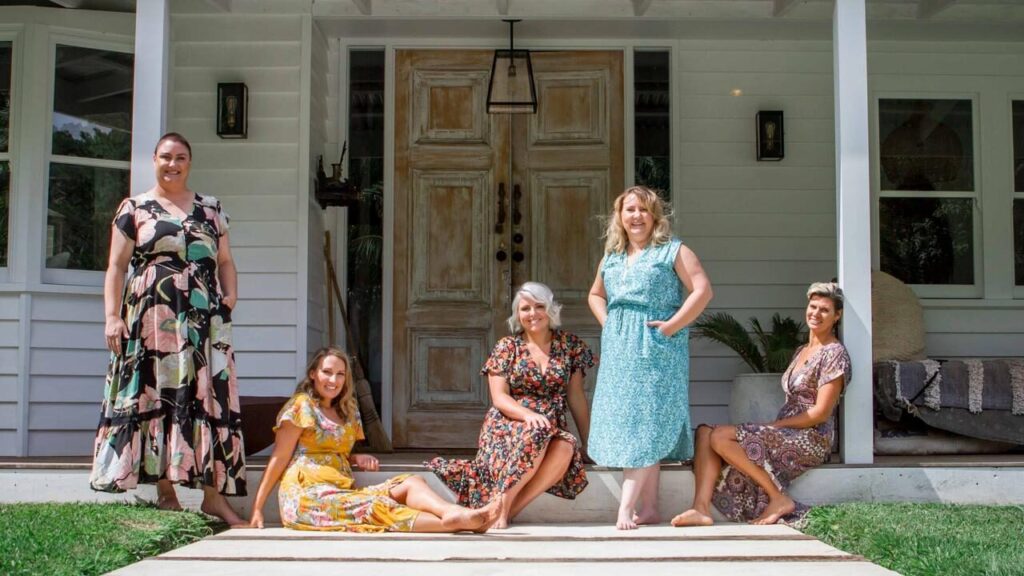
Tara McKeon: And I couldn't give a shit, you know, like, because life's too short to spend it worrying about people you don't even know, like, what they think about you. I want to look back and be proud, Poppy. I don't want to be shitty, Poppy. I've had someone message me before saying, you know, I know you're not an emergency nurse anymore, but I want to let you know that you've saved my life. Hi, I'm Tara McKeon, the founder of Proud Poppy Clothing. And in this episode of ADD to Cart, I share the highs and lows of business, the lessons that I've learned, and the exciting future for travel.
Nathan Bush: Hey, it's Nathan Bush or Bushy joining you from the land of the terrible people here in Brisbane, Australia. What happens when you are staring down the barrel of voluntary administration? You have a warehouse that's five times too big for what you need. You have no stock on the ground, and your international orders have just been cut off. You fly to China to fix the problem. That's the incredible story that we are hearing today. Tara McCairn is one of Australia's most compelling modern e commerce founders. She's built Proud Poppy from a maternity leave side hustle while working as an emergency room nurse and built it into a $20 million fashion brand which is redefining size, inclusivity for women and giving them lots of confidence while they're at it. In this episode, Tara is incredibly honest about the wins and the hard parts of building this size business scaling fast, nearly stalling when profitability lagged revenue, and the uncomfortable humility that's required when asking for help. She shares how community led growth, loyalty mechanics, real customer storytelling and disciplined operational changes helped Proud Poppy stabilize and refocus on quality over pure scale. It's an incredible story and Tara is an incredible breath of fresh air and I think everyone will get something out of this, especially if you're looking to activate your loyal followers. As always, thank you to Shopify and Klaviyo for sponsoring Add to Cart and bringing these stories to the e commerce community. Here's our conversation with Tara McKeon, founder of Proud Poppy. Tara, welcome to Add to Cart.
Tara McKeon: Thank you. Thanks for having me.
Nathan Bush: So good to have you here. I work with someone who dresses in your clothes every day and is one of your Proud Poppy just evangelists. And she is going to be super jealous that I'm having this conversation.
Tara McKeon: I love that.
Nathan Bush: Shout out to Sarah. We actually went to New York together last year and it was freezing cold. It was like Three degrees.
Tara McKeon: New York cold. Yeah.
Nathan Bush: Yeah. New York cold. And all she packed was Proud Poppy dresses. And I'm like, you're gonna need, like, something warmer. She's like, nah, I'll go over it and I'll go under it.
Tara McKeon: She knows.
Nathan Bush: Yeah.
Tara McKeon: Queen knows. Keep your core warm and layer with the pieces on the. On top.
Nathan Bush: Yeah. You've got some evangelists out there. They love you.
Tara McKeon: Oh, I love them.
Nathan Bush: Tell me how you built this business. So you were the first emergency nurse that we've had?
Tara McKeon: Yeah, I've done a lot.
Nathan Bush: Built an E commerce business. Where'd Proud Poppy come from?
Tara McKeon: Proud Poppy. It really started. I've always been a doer. I've always been busy. I've always been someone who's had to have a job. Like, I've never not had to have a job, which, you know, I'm grateful for. At the time when I was younger, I probably wasn't so grateful and I was a bit of a. You have that victim mentality, like, why me? When everyone else is living this cushy life. But now that I'm a little bit older and wiser, I'm really grateful for the hustle, the drive and the work ethic it's given me. And I think you would know, being an entrepreneur and especially in E commerce, like, you need that in your core to be able to survive in this industry. It never ends. But Proud Poppy came from. You know, I was on my maternity leave from nursing and I already knew that I didn't want to go back, but I still wanted to help people. I wanted to be more creative. I really, like emergency nursing was amazing, but it was also very traumatic. There's a lot of stuff that I dealt with that I'm still probably dealing with. I was assaulted when I was pregnant. I went to court, like, all yucky stuff. And then I had a child. And, you know, I've lost that adrenaline. Like, it's not this. If there's any nurses out there or cops or whatever, you'll get it. Like, that adrenaline of, like, what's going to happen today? Like, it was more like a, oh, what's going to happen today? So the tone had really changed, and I just didn't really want to go back to that environment, having a child at home, because it wasn't just my life that I was really thinking about anymore, and I just started thinking about things that I could do to be more creative. And I'd always loved fashion, always loved fashion. So I was thinking about, you know, being a travel blogger and I'm like, but I don't travel enough. Like, what can I do?
Nathan Bush: And then I was a newborn. Probably not the best time to be a travel blogger.
Tara McKeon: Right, Right. But, you know, I'd always loved fashion. And there's, there is a big story, a story about, you know, me watching women going in and out of a boutique and sitting across the road as a plus size person at that point in time, like a size 22, 24, watching people going in and out of this little clothing boutique and coming out with bags. But I couldn't shop there. They, it was the local store. I couldn't shop there. I'd say to my husband, oh, I wish I could shop there. He was like, one day. And then I lost weight, got down to like a size 18. I was like, one day I'm gonna go have a look in that shop. So I went in the shop and I got one dress. There was one dress that fit me and I bloody bought it. And it was shit and awful and just a big sack. But I was just so happy that I got, I could finally come out with the little bag. But then I got home and I put it on and I was like, why is this such a big deal? Like, I've seen people go in and out of that shop for so long and why could I only find one dress as a size 18? I'm not even a 22, 24 anymore. Like, only one dress. And it wasn't even because I loved it, it was because that was the only piece. And then I got a bit frustrated because, you know, it wasn't just that shop, it was the industry as a whole. And there was so many other women just like me. I knew it. And I got really frustrated and I said to my husband, I think I could do a really good job of this. I'm super passionate about it. Like, I've still got all my dresses from when I was 18, 19, 20. Like, I love dresses, I love fashion. And I just started from a tub of clothes and, you know, a few years later, that actual physical store is now proud poppy shop, which is something I'm really proud of.
Nathan Bush: So the one you sat outside of.
Tara McKeon: Yeah.
Nathan Bush: Now a proud puppy shop.
Tara McKeon: Yeah, Full circle.
Nathan Bush: That's phenomenal.
Tara McKeon: Now fully inclusive, size 6 to 30. We're actually taking the shop next door, which is bigger now. But, you know, a few years later, we turned the key and we turned it into a proud puppy. And, you know, so I guess where it came from was out of frustration, I suppose, but out of that real drive to want to make the industry better for women like myself. I think coming from nursing as well, like, I've seen and treated all people, all sorts of people. And as women, we all wanna look good, feel good, even on our worst days. So being able to have that really inclusive space beyond sizing, you know, like just where everybody and everybody is welcome,
Nathan Bush: that's really interesting to me because as I look through your site and your socials, it's not necessarily about size. Right. And I've heard you say this before, it's about we sell confidence.
Tara McKeon: Yeah.
Nathan Bush: How do you position Proud Poppy market? Because you've got a very distinctive design as well. Like if I think about, you can spot a proud poppy dress and that's proud Poppy. Like how do you describe your style and what you go to market with without being lumped into, oh, that's a plus size fashion brand.
Tara McKeon: Yeah, to be fair, we totally get that. I have no, like, there's no shame in that for me, but my vision is. And you know, like a lot of brands don't want to be associated with the plus size market. That's the whole issue. It's not, it's not their brand. They don't want to plus size people in their clothes. And it is what it is. Do I agree with it? No. Is it my brand? No. So that's why we decided to create something fully inclusive. We definitely just get put in that, oh, that's a plus size brand market. So like, you know, but I do think the more standard, smaller sizes, you know, they have more options available. Plus size market doesn't have options available. So when you're looking at who do cater for the plus size market, there's only a few brands out there. So proudpoppy of course comes to mind and I'm so grateful for that. But it is about being fully inclusive. Like I've been a size 10, I've been a size 24 and what I noticed was like, you know, my fashion sense and how I show up had to change depending on my size because it, it changed what stores and what brands and what designers or whatever were catering for my body shape. So as my body shape change went up, went down. And that happens for all sorts of reasons. You know, people with cancer lose weight, like vice versa or you might go on a health kick. Your identity has to change. There's no real brand that's consistent throughout. So Proud Poppy is a store for all people, for all stages of their life. You know, once they find their brand, they love it, their style. We provide Options. And, you know, we want to be able to look after everyone, no matter their size, their shape, their budget, all of those things.
Nathan Bush: I hadn't thought about it that way before, and I think that's an incredible framing of. Because often your style is an expression of your personality.
Tara McKeon: Totally.
Nathan Bush: If you are changing body sizes, body shapes, as you go through different stages in life, your personality doesn't change, but being forced to change.
Tara McKeon: Yeah.
Nathan Bush: Your outward personality, that's a big shift.
Tara McKeon: Yeah, it totally is. It totally is. And, like, I started chatting to some of my size 6 girlfriends, and they were, like, shopping in the children's section because there wasn't anything, you know, that was a little bit more mature that fit their body shape. So, you know, people didn't make dresses, like proud poppy dresses in those smaller sizes. So it was really important for me to be able to have one store that people could shop, you know, a size 26 and a size 6. Best friends could go in and shop together. There wasn't one person sitting there holding the bags, and then they're going to the next store. They're having an equal experience. And the same online, obviously, as well. But we do have that physical store aspect too. But just to be able to create that equal experience and share the joy.
Nathan Bush: Yeah. And from a brand perspective, there's obviously design principles around your style. Right. Like I said, you can pick a proud poppy dress. It's. From my perspective, it's bright, it's colorful. It's. Probably loud's the wrong word, but it isn't.
Tara McKeon: It's loud and proud, baby. It's not shrinking, to be fair. Like we have. There are standouts, because I think they stand out in the market as well. But we do offer a lot of neutrals, blacks, plain colors. Like, they are there, but they kind of get lost.
Nathan Bush: Yeah. They're not your heroes. Yeah.
Tara McKeon: The hero prints, the bold and the bright stand out because they've got a point of difference. But, you know, there's always time for. Every girl needs a little black dress. So we have plenty of those black jumpsuits, pants, chocolates. I'm into chocolate at the minute, which is weird for me, but I'm loving it. Not just in my belly, on my body.
Nathan Bush: It's just going past Christmas. We all are.
Tara McKeon: But, yeah, like, we do try and have options. I think the big thing is options.
Nathan Bush: Yeah. Great. So let's talk around where proud poppy is at the moment. I've seen that you're five years into the business. Five or six years into the business.
Tara McKeon: Six.
Nathan Bush: Now well done.
Tara McKeon: Thank you.
Nathan Bush: Doing $20 million approximately, from what I can see publicly. Like you said, you've got stores now, started online now have stores. I know that last year, you referenced last year being a really tough year for you, despite shit. All right, let's call it what it is. Let's call it a shit year. And I don't think you're alone there.
Tara McKeon: I know I'm not. Ye.
Nathan Bush: Despite growing the team, acquiring new customers, have a thriving community. It all looks great on the outside. What was so shit about it?
Tara McKeon: I think we. And this isn't the first time that I've done this, so, you know, we finished 2024 pretty strong and we were ready for growth. So we were seeing a lot of traction in international markets. And that was a bit of a plan because we are quite a summery brand. So I started the brand in Melbourne. So Melbourne winters are brutal, but, like, that's where most of our market sits in Melbourne, Victoria, New South Wales, the southern states. So we really were trying to push into the international markets, not just to see that growth, but more so to combat that seasonality. And there's not really anything out there that ticks all the boxes like Proud Poppy does. Like, they might have certain things, but they don't have the community aspect, or they might have the same styles, but they're not size inclusive or vice versa. So it seemed like a really natural progression and we were seeing a lot of traction there. So we were gearing up to have a massive year for 2025.
Nathan Bush: And when you talk about expansion, we focus on the us.
Tara McKeon: Yeah, predominantly the us. Like, it seems like at the time it was the next step, natural progression, the level of growth that was going to be available there. It just. It just made sense. But then, yes, come. Was it. When did the tariffs come to town? Was it. Was it May, March?
Nathan Bush: May, May, June? Yes.
Tara McKeon: Yeah. Yes. So no one really could have predicted what, that we just moved into a massive, like an 1800 square warehouse that we could easily do 100 million in revenue out of and beyond. And so the plan was to do it all here. We. I didn't have an interest in A3PL, so we'd signed this lease. We've moved, like, ready to scale and then all of a sudden the brakes were put on and, yeah, we weren't prepared. We just opened all these stores, so that was another thing. And then it obviously hurt cash flow because the sales that we were on track to getting just didn't come. And then Auspost stopped sending us or just A snowball effect. And then we, we pulled all our advertising out like we were getting a lot of return to senders because we didn't have the right tariff codes. And so it was just a bit of a nightmare and I guess just one thing after another and then not getting, staying on that projected revenue that hurt the business. So I think we are very lucky that we do have our incredible community and that I always move forward with that transparency, honesty and sharing the good, the bad and the ugly, not just of business, but my life. So our community really carried us and I think if we didn't have that, we probably wouldn't be here today.
Nathan Bush: Yeah.
Tara McKeon: So we're very, very lucky and super grateful.
Nathan Bush: What did you change in the second half of the year to turn it around?
Tara McKeon: To be honest, we had sat down with people to chat about what is voluntary administration? I don't know, I'm a nurse. Like what does that look like? What does that mean? We'd always had a little, a small level of debt. Like as a growing business, like it's okay to have some level of debt but it was manageable and we always had stock, like enough stock that if we were to 50% clearance we, you know, so it was always balanced. So the debt was still sitting in stock and we're keeping things moving. But then our supplier payments like we'd over ordered and just the cash flow, overheads, just everything snowballed, overheads went high, revenue dropped and supply chain suffered. So we had no stock. So I think at one point we were down to one or two weeks cover across online and stores, which is dire straight. So it was like we had all these stores and they were empty pretty much. It was just really, really hard. So we had the sit down discussion with people to say like, what does that look like? You know, our house is tied into the business. Are we going to lose our family, home, all those sorts of things, like what does this mean? And then I went back home that night with my husband. We went and had a wine first and we're like. And I said to him, I'm not doing this. Like the brand is strong, we just don't have stock. That's it. We don't have stock. We've made some bad decisions, but a lot of it was out of our hands. So I said to him, I'm going to China. And he said okay, when do you want to go? I'm like, I'm going to go tomorrow. And we've got two young kids. So that was like, okay, right. I've got this and I headed over to China by myself, met all of our suppliers, gave them all the logins. Again, transparent, nothing to hide. Like if they're going to be partners and support us with stock, like I wanted them to see, like the brand was strong, the demand was there, we just didn't have the stock. So I needed them to believe us and trust us.
Nathan Bush: How did you know which suppliers to go to?
Tara McKeon: I have pretty genuine relationships with most of our suppliers. I think it's really important. Like I've always been like this, you know, like business is very much based on relationships and having that, that quality, that honesty, that transparency. Like if you are wanting someone to back you with their money and their business, like it's in your favor to be honest and transparent because then they can assess the risks. They know me as a person, you know, so they know that I'm a good person that's probably just made some poor decisions. But they also know that I work really damn hard and I'm not a quitter.
Nathan Bush: So you went over there and just opened up the books to them, pitched.
Tara McKeon: I was like, I just need the stock and I will make it worth your while. And you know, I'll be loyal to you. Like it's not like I'm gonna then move. But if you help me now, when we grow, which we will grow, and we are growing, like you will have the business and it will be worth your while. So yeah, and we got it over the line.
Nathan Bush: And what changed in those meetings? Was it that they suddenly what took you a bit more seriously? They saw it was a safer bet?
Tara McKeon: Well, I think that the fact that I got on a plane and went over to China by myself and met with them and they're like in the reception area, like, who else are we waiting for? I was like, just me, let's go. Okay. And they're like, people don't do that. People don't make that effort. And I was like, well, this is really important to me. So I want you to know that I am taking it seriously. I know how big a deal, like I know what I'm asking you to do and the risk. So I want to be able to have that sit down, face to face discussion with you. Because it's make or break for my brand, but it also could be really beneficial for their business too. So yeah, we were just able to negotiate and chat about things and we got it over the line and now we have a warehouse full of stock. We're making sales, we're making profit. And you Know, we, we just hustled and got it done.
Nathan Bush: How long after that trip to China did it take for you to feel stable again in your business? I mean, that's a big shift. Going to talking about voluntary administration to jumping on a plane to China. How long until you went? I'm actually. All right.
Tara McKeon: Do you know what? Like, the voluntary administration, like, even lawyers and potential investors were on the table. And it really is the easy way out, I think, like, as if you don't have that ego of like, oh, what's everyone going to say about me? Like, I don't give a shit what people say about me. And I think we should talk about it more often because, you know, I think opening these conversations and having these chats, I know there'll be someone listening to this that will resonate, that hasn't felt like they could tell anyone. And that eats you up. And that's the most awful feeling, especially if you're a good person that doesn't want to owe people money and things. But there was that opportunity to basically wipe debts, like, you know, pay cents to the dollar, restructure, like, do, obviously legally, all those sorts of things. But I just. My line was, I want to look back and be proud, Poppy. I don't want to be shitty, Poppy. But, like. And that was what I said. I said, I don't want to do that. Like, it's easier in a way, but you've just got to work and keep working and never give up and back yourself and hustle.
Nathan Bush: And you mentioned there that your community played a huge role in helping you through that time. What was the way that you leaned on your customers and your community the most?
Tara McKeon: I think I just told them what our sales targets were. We need to hit this X amount. And by doing that, I'm not going to go buy myself a Lamborghini. We're going to pay our rent, we're going to do this, we're going to be able to invest in new collections. And I was just really transparent about it. And honestly, my personal Instagram DMs lit up with so many other smaller businesses, some bigger businesses, that shocked me that they ended in my DMs, but I was like, you know, I'm here for you. But just people saying they'd either been through it, were currently going through it, or felt like they were about to go through it, and they just, you know, even if they couldn't purchase, they were there and they could hear, they were with us, they supported us sharing our content, engaging, you know, so Just, again, being transparent. People. People know when you're bullshitting, so just be honest.
Nathan Bush: Is that hard? Because I felt like this. Black Friday especially, you would have seen it. Plenty of commentary on it that everyone was like. It was very. Either we're sorry emails or we fucked up emails or this is really important to us. We need this sale to work or we go bust. There was a lot of that out there, and not all of it was genuine. Obviously yours has a story behind it. Was it hard when all that was happening at the same time you genuinely had a message for your community?
Tara McKeon: I think with our community, they know that when I talk and when I tell a story, it's never just a marketing ploy, you know, that they mean more to me. I'm super grateful for every dollar that they spend, they choose to spend with proud Poppy. So I would never trick them into spending with us. I wanted them to think about if they wanted to spend with us. I didn't want them to put any pressure on shopping with us, but just, you know, again, engaging in the content, sharing the content, that sort of stuff. Like, it gets it out there. It helps us spend less on meta and, you know, there's all those sorts of things, but never putting pressure or making people feel guilty that they couldn't shop with us. But just if they could, if they wanted to have a look and shop, like, their purchase was beyond more. It was. It was going to have more of an effect on our business than just buying new cars or whatever. Like, it was actually make or break for our business. So, you know, is that because your
Nathan Bush: community feels, like, proud Poppy's part of them, too. So as much as they don't want to see you suffer or proud, probably not. Go ahead. It's like, actually, like, that's part of my identity as well.
Tara McKeon: Yeah, totally, totally. Like, we have changed lives. I know we've changed lives. I've had husbands burst into tears when they've met me and just hug me and say thank you for what I've done for their wife. And I've had someone message me before saying, you know, I know you're not an emergency nurse anymore, but I want to let you know that you've saved my life. So it's not just about the clothes. It's about that community, connection, confidence, and just. Just living your life and not giving a shit about what people think about you anymore. Like, there was a time in my life where I wouldn't go to Woolworths because I was so nervous about bumping into somebody who Might know me because of the way that I looked and how I felt and I was just so. Just didn't want to go to Woolies. Now I will get down my undies on a live feet and I couldn't give a shit, you know, like, because life's too short to spend it worrying about people you don't even know, like what they think about you.
Nathan Bush: Yeah, I love it. I love it. So when it comes to community, what are the more formal ways? Obviously you've got your Instagram where you are your own, let's call it a personality to get out there and your own profile. But how do you formalize that as a business? So you've got a private Facebook group, is that right?
Tara McKeon: Yeah. Yep. Proudpoppy VIP community.
Nathan Bush: Beautiful.
Tara McKeon: There's over 22,000 members in there, I think at the minute, which is awesome.
Nathan Bush: Okay, and then you've got your loyalty program as well.
Tara McKeon: Yes, loyalty that's about to have a bit of a revamp, which is super exciting.
Nathan Bush: Okay. With such a strong community and such a strong following, how do you divide your marketing efforts between retaining or engaging existing customers and fans versus going out to try and find new, proud poppy customers?
Tara McKeon: I think it's always important to try and find new customers to keep tipping them into that funnel and growing the business because as you bring someone in, someone might drop off, you know, like. But to be honest, like, once someone finds proud poppy, they've. They've got us. We've got them and they've got us. You know, it's literally like it's a. It's a friendship, it's a relationship. We have more return customers than what we do single purchases, which is really exciting, awesome. And something I'm really proud of too. So yeah, once they shop with us, they generally repeat pretty quickly. Yeah, yeah, they know our product, they understand the quality. We give a really high level of customer service. So we don't really have to spend much on retaining customers. What we spend is that organic, authentic connection and relationship building which just happens naturally.
Speaker C: Ever think that your phone is listening to you and kind of knows you better than anyone else? Well, that's the vibe that Arms of Eve is going for, but way less creepy. The Aussie jewelry brand started, like many, sending emails and hoping for the best. Then they found Klaviyo with hyper personalized flows, smart send times and Aussie based segmentation. They boosted their open rates, built loyalty and hit a 62 times ROI. As CEO Aaron Langer puts it, there's no one else out there that can do what Klaviyo does in such an easy, succinct and powerful way. I can also confirm he's not spying on you through your phone. If you are ready to send emails that know your customer intimately, head on over to klaviyo.com au and see how Arms of Eve scaled by knowing their customers.
Nathan Bush: How do you do that with your team as the business scales beyond you? Right, so you've got customer service, marketing, maybe people who are looking after the community as well. How do you kind of give them the, the Tara energy and the Tara vibes to make sure that it's one experience?
Tara McKeon: Yeah, to be fair, like that's something that we definitely struggled with last year as well because we did relocate the office and warehouse from Melbourne to the Gold Coast. So there was a lot of new faces to the brand. There was people working remotely. Like it was a bit of a, bit of a mess. And I think then me having to focus on driving sales, financial issues like that took all my time and energy. We lost a bit of that. But this year I'm really trying to get that back. Like have team onboarding sessions, spend more time onboarding new staff. Like rather than just go for it. I believe in you. I'm really setting people up for success one on ones with them. We just had a session yesterday with the team with our word for the year, our team goals, realigning on our values, making a team vision board for 2026 just so that like the vision is really clear and we always can circle back to our why and our values and then just have a bit more of a natural flow. But I think with any like it's a founder led business. I started it from a tub of clothes in my hallway. Like it's now, you know, close to 20 million. There's going to be things that I have to let go, but it's just about nurturing the staff so that they understand me and my why. But I can't possibly be everywhere all at once. But I think as well that comes down to hiring the right people as well.
Nathan Bush: Well, is there any tells that you look for when you're hiring? Because if you're having an interview with someone, how do you know they're a proud, poppy person?
Tara McKeon: I think it's important to distinguish whether they're just like a super fan of the brand of me or you know, but you know, retail and E commerce is hard. I think people underestimate how hard and how constant it is. It's literally 247 and a lot of people just see like the flexibility. And yes, there is a lot of that, but it is, you know, it's a lot of work. You've got to be agile, you've got to be able to pivot. Like you can have your structure and, you know, your skeleton, but you've got to be able to be somewhat reactive too for things that are happening. And people either thrive in that or they don't. I think probably my emergency nursing background has helped because I always plan for the worst and then work, knock out things as I go and I can multitask and do those sorts of things. But I think, you know, the big thing that we are looking at for any new hires and it's something that I've probably made, learned lessons, I don't like to say made mistakes, but I've learned lessons on in the past is, you know, the big CEOs and people that have come from massive corporate, huge brands. On paper they are a great fit and they could be really great people. But we need builders and we need people who have that energy. They're hungry, they want to show me what they've got. You know, like they're used to not working with massive budgets or they don't mind taking rubbish out. Like if no one's like, I'm the CEO but I'll empty the bins, I'll clean the bathroom. You know, there's no one's above anyone at Proud Poppy. And I think that sort of energy is something you can't teach, you can't make them have it. They've either got it or they don't. You need to have somewhat a level of understanding. But I think if you have that energy, initiative, passion and hunger, we can teach a lot of the rest. And you know, the only job I've ever been fired from was a women's clothing brand. So, you know, showed them. Yeah, suckers. No, but you know, like, as long as you have the right energy, like where you've come from and what you've done, E commerce is constantly evolving. It's. There's always something new, especially when you're throwing AI into the mix. Like you've just got to have that be the right personality. And most things we can teach what's
Nathan Bush: catching your eye in the new things in E commerce at the moment. It doesn't necessarily have to be AI. It can if you want. But when you're thinking about that customer experience online, where's your head at?
Tara McKeon: I think that real like making every experience more personal rather than just being Able to open a website and what I see is what you see and vice versa. Just being able to really personify that experience. So for women's fashion, it might be like, you know, there's everywhere you look on TikTok at the minute. I don't know where your algorithm is, but mine's like, what color are you? What season are you? Like, you color analysis. Like, imagine if you could. This is probably something that either exists or something we would love to invent. But being able to shop by your color, for example, and using that as a guide, because I also think wear whatever the hell you want. But if you're trying to step into fashion and find your confidence again, but you have no idea where to start, like, that could be a great way to start and. Or shop by your body shape if you want to. And like capsule wardrobes just make it
Nathan Bush: more personal, especially when you're selling confidence. I suppose if you get confidence straight away as soon as you're on the site, that's a big.
Tara McKeon: Yeah, like, beyond just filters of like, shop by color, like, shop by. You know, what feature of yours do you love? Like, upload a photo where you felt really incredible, you know, like, and then we'll find pieces around that are similar to that. You know, those sorts of things would be amazing. I don't know if they exist yet, but I feel like they're not far away.
Nathan Bush: Are you using any search merch or personalization tools at the moment?
Tara McKeon: Bits and bobs, to be honest, like every after last year, if it was a nice to have it got cut and if it was a need to have it stayed, there's definitely lots of bright, shiny programs out there that I would love and my team would love, but we are pretty manual at the minute. We stripped things back to basics and core. But looking to rebuild again this year.
Nathan Bush: I mean, it's not a bad time to rebuild if you had to stop and rebuild. I think 2026 is going to be pretty exciting because even the tools are so different. If you kind of look at what they were this time last year, what they're offering is a totally different experience.
Tara McKeon: It's constantly evolving. So I think that's the thing. You've got to be able to pivot and take it or leave it, you know, not everything is going to be for you either.
Nathan Bush: One of the features that I loved on your website was the Model for Us initiative.
Tara McKeon: Oh, yeah? Yeah.
Nathan Bush: Can you tell us about how that came about and how that works?
Tara McKeon: So we, I feel like, proud, poppy, really set the Standard and was one of the very first brands to do this. But then, you know, I've got a three year old that wouldn't take a bottle. So I was a breastfeeding mama and we've had a move, we've had all those things. So my time was very poor. But we never really used to use professional models. We just used our community and again, it was about having the everyday woman show up and you didn't need to be a professional model to look good, feel good in our clothes. But then obviously with those people turning up to our shoots to model comes that lack of confidence and just, you know, you're not a professional at it, so of course you're going to be nervous. So I felt really bad for me not being able to be at that shoot with them and to guide them and support them. So we scaled back, but we definitely want to bring that back again. I used to do a lot of the shoots myself to save money. Like basically we did two massive shoots with models, the whole shebang for the stuff because I had all the gear and no idea. And then I ran out of money. I had enough for a photographer and that was it. But I had a few items to shoot so I jumped in front of the camera myself and I found that, that when things started to resonate and you know, again I was like, people just want to see people that look like them. And there's nothing wrong with professional models. I think it's important to use a mixture of both. But you know, if people are wanting to shop with me and spend with me, I'd love them to be able to see themselves in our advertising as well. It's definitely something that we've dropped the ball on last year just with everything that was going on. But this is something that we want to pick up again.
Nathan Bush: Does that mean that you would always rule out AI models?
Tara McKeon: I think always ruling them out is a big statement. But I think, you know, like we would love to use work with more size 26, 28, 30 models. Agencies don't represent them. So when you go to book a plus size, like if you look on the right fit, which is a great website, but if you look models In Queensland, there's 700 and something models, female models on that website. It's not an agent, it's like a. Yeah, anyway, it's like a talent site. But if you type in curvy plus size beyond, there's seven.
Nathan Bush: Wow.
Tara McKeon: And I think you might have a size 20, 22.
Nathan Bush: Yeah, yeah, yeah.
Tara McKeon: So I think if you are going to utilize the AI feature. Like we are actually shooting with a beautiful girl from Perth next week. The size 30 is coming across and I was like, yes, Queen, I would love to have you as a model on a shoot. But again, I think women that don't see themselves think automatically. We're trained to think, oh, that's not for me. But it is. You're just not represented. So I think if you are utilizing AI, it's really important to use that diversity and not just create your version of what the perfect woman or body shape looks like. And being able to be diverse. Of course I'd love to use real people, but it's just, you know, Chrislyn, just coming over from Perth, I'd love to use.
Nathan Bush: Yeah, yeah, yeah, exactly. But it's still tying into your mission. It's not going away totally. And your values.
Speaker C: Ever dreamed of turning a weekend passion into a thriving business? Girls with Gems did exactly that. What started as a mother daughter duo hosting jewelry parties at home is now a bustling boutique and a booming online store. They've helped hundreds of women feel confident, stylish and part of the sisterhood to become, as they like to say, one of the girls. And with Shopify, things are moving faster than ever. In 2024, their online sales revenue grew by a jaw, dropping 107%. But it's not just about the sales. Things feel smoother behind the scenes too. Efficiencies have soared. Huge sales events are now prepped and scheduled ahead of time. And integrated automations mean that VR VIP customers are spotted instantly, triggering exclusive offers without anyone lifting a finger. Just smart tools, stylish growth, and one sparkling success story. To read more case studies like this, visit Shopify Case Studies Online.
Nathan Bush: I love the story that you had before around husbands coming up and saying how much you've changed and saved lives. With a community of would you say over 20,000 in your private VIP group? I can imagine that you get thrown ideas left, right and center around what they want to see. At Proud Poppy, has there ever been any idea that's come from your community that's been a real game changer for you?
Tara McKeon: I think yes and no. Like there's always golden nuggets in there. I think I was saying to someone yesterday, we're really lucky with our community. Like we don't have to spend thousands of dollars on market research. If I'm not sure about this, I'll jump on a live and be like, do you like this? No, no, no, no. I'm like, they hate it. Don't over, like, you know, or vice versa. Yes. Love. Would love it in this style, would love it in that. So it gives you more insight and we definitely listen. Like, there's good and there's bad in there too. Like, obviously there's. It's not all positive, but, you know, again, we try and be transparent with everything, but a lot of the things that they suggest or would like, they are happening in the background. So it's just not. They can't see it straight away. Things take time, but we definitely look at their comments. My design team's in there all the time. Like, they'll know what's going on in there before I do. Then they said, the ladies want this, the ladies want that. I'm like, great, let's do it.
Nathan Bush: That's an incredible resource. And I know you don't think of it as a resource, but it's an incredible resource to have there, to be able to get that instantaneous feedback. A lot of people would pay tens, if not hundreds of thousands of dollars to have.
Tara McKeon: Yeah.
Nathan Bush: A focus group available to them on demand.
Tara McKeon: Totally. I think the important thing is, and I'm very clear with the team, that I'm very controlling, strict. I'm not sure what the right word is, but I'm very conscious of which team members are allowed access to the vip, to post, to approve comments, to do all those sorts of things. Currently, it's mostly my two sisters, so. And some of the customer care, but I'm very protective of that group. It's very much a no hard sales group. Like, I might pop in there and say, hey, I've restocked this in case you missed the memo, but. Because I know that people would be waiting on it or it might be selling really fast and I don't want people to miss out. But it's never a hard sell group. It's very important to me that we don't lose that and it is still that authentic connection. If sales come from it, great. But it needs to be organic and never just turn into a marketing sales channel.
Nathan Bush: Yeah. When you've got a private community that's thriving and really strong and really vocal, is it hard for you when you see things outside of the community? So, for example, I was doing a little bit of research beforehand and Reddit pops up.
Tara McKeon: Yeah.
Nathan Bush: A lot for you. A lot of threads. Good, bad, indifferent. Is that hard when you go actually, like, if you just heard what these 20,000 people were talking about. None of this, to be honest.
Tara McKeon: It depends. Like, I struggle with my mental health so it really depends on where I'm sitting at the. Like, I will acknowledge today's not the day to go on the VIP page because I do take it to heart. We're not like a big board of, you know, people making decisions. Like, it is a founder led brand. Like, all the pieces that we create are pieces that I would love and if someone's telling me it's awful, like, you take that personally, it's yours. I'm like, I want a dress. I felt nice in that. But like, not everything's going to be for everyone. When I think of Reddit and I. What? There was a thread that went up there recently in regards to our Black Friday, like all of our marketing for Black Friday and we had Stephen Bradbury. And they're like, oh, this is AI. I'm like, it's bloody not. It's actually Braddles. Like, he wanted to back us. Like, really?
Nathan Bush: It was actually him. Because I saw the same thread and I wasn't sure.
Tara McKeon: Yeah, last man standing. He. It was like three grand or something for a video. And then after talking to us, he did it for nothing. So what a legend.
Nathan Bush: That's so good.
Tara McKeon: But yeah, and they're like, oh, I just know this was written by an LLM. I'm like, I wrote that. Like, I don't know. So I wasn't going to respond. But then I also thought, well, these people are just really tarring us with this brush and it's not true. Like, and you know, and I think given all of the marketing things that were coming out from the other brands, as sorry as we need this, like, we got thrown under that as well. But you know, it's a small minority of opinions and you just really have to focus on the positives. And when I said to the girls, like, we're not going to respond, and then a few days later I was like, I got on Reddit. Oh no.
Nathan Bush: Do you do it as you or do you do it as like Anonymous?
Tara McKeon: Me? No, me for sure. For sure. Like, if they want to fight with me, then here I am, let's go. But like, let's have a discussion.
Nathan Bush: You know, I could imagine that it would. Like you framed it perfectly. It's like it would depend on the day. Some days you'd look at and go, I don't give a fuck. Like, we've got all these people over here who love us. And then some days you're like, oh, that one comment, that one little thing, I can't, can't let that go.
Tara McKeon: Especially if you've worked really hard at something like, and I just think as well, online is a whole different world. But like, choose kindness and not everything's going to be for everyone. Not everyone's going to be for everyone. Not everyone's going to like me. I don't like everyone. But that's okay. I'm not going to go out and try and ruin their day. Like, you know, a lot of businesses I wouldn't shop at, but I'm not going to. I'm just going to keep scrolling, you know.
Nathan Bush: So it's just by their shop fronts a few years later.
Tara McKeon: Yeah, yeah. I think it's just about being kind but also holding people accountable too.
Nathan Bush: Yeah, agree. Speaking of your sales that you just brought up, one of the questions that I had for you. I was looking through your site over your Boxing Day sales and I noticed that you had 25% off storewide, but it wasn't automatically applied that you needed to use the coupon code.
Tara McKeon: Yeah.
Nathan Bush: Tell me about that decision and the reasoning behind it and did it work?
Tara McKeon: So we were actually chatting about this yesterday. But like, we do like to test a lot of things at Proud Poppy. So we like to see. We've just done Black Friday where there was no code, and then Boxing Day we wanted to try code. So a lot of our customers and I think Boxing Day shoppers are an older demographic as well. So I think if you're a little bit younger, a little bit more tech savvy, you're all across Black Friday. What that means you're knowing the sales are going to start earlier. But Boxing Day is a very traditional sale. So we found that our customers liked to be able to put the code in and to be able to see, oh, now that's what the price is. Yes. And it was just as successful, if not more for us than Black Friday, which was a surprise.
Nathan Bush: Did you still capture some full margin sales as well that didn't have code?
Tara McKeon: Yeah, probably. Yeah, definitely. But, you know, we ended December just as strong as November. So, like the test I guess worked. But, you know, it was just interesting to see it was a gamble. Boxing Day hasn't really hit for us for the last few years, but this year it hit. So, you know, it was worth a try. And I think it just separated it from just another sale. It was like, this is Boxing Day.
Nathan Bush: I thought it was going to be to do something around. You had very targeted marketing going out there and you didn't want to lose the full margin sales from people who weren't being acquired for the first time
Tara McKeon: through, we're not that strategic. I wish we were. That would have been very clever.
Nathan Bush: If December looks good, then December looks good. No one's complaining.
Tara McKeon: Yeah. And I guess like when it comes down to manpower and not being able to like double up on discount codes and loyalty programs and all those sorts of things, like it's easier for the team. Like at that time of year, everyone's a bit burnt out anyway. So it's about keeping things simple for the team too, not just the community and the shoppers.
Nathan Bush: Lovely Tara. Next 12 months. So we've talked. You've been so open and so transparent around the incredible business and community that you've built with proud Poppy. What's exciting you for the next 12 months? Where's your priorities?
Tara McKeon: Priorities. So my word for 2026, do you have a word?
Nathan Bush: No, I don't.
Tara McKeon: Okay. You need to think of your word rather than a resolution. We think of a word so I know all the teens word. We're putting it in frames. Every decision, everything that you do comes back to your work. Rather than a resolution, it's like a value but in one word. So my word for 2026 is clarity. So I want to be really clear on what I want from my business. I want to be really clear on what sparks joy and where I want to focus my attention and I want my team to be really clear on what the goal posts are. I think it's really important to have that even though, you know, you're constantly chasing growth and what's next, but like what does success mean to us and what will that look like in 12 months time? So really having those so that we can celebrate the win and you feel like you've reached that finish line rather than just a constant never ending marathon. But I think just being really clear on intentions, our values, why and what's important for me in 2026 rather than trying to do it all and just being stretched too thin. So I'm super excited about that. The team is all very much on board implementing structures and systems but not being tied down by red tape and just, just getting back out there to the community. Honestly, like we're just about to book in a pop up shop in Adelaide. They do really well for us. They're a great community event and last year I'd hardly got to go to any. This year my intention is to go to them all and just spend time back in the community because it is really cup filling and it reminds you why we do what we do and why we work so hard.
Nathan Bush: Incredible. Well, if you leave the year feeling that you've given to the community and that you're getting that back as well, I can imagine that that would be a hugely successful year.
Tara McKeon: Yeah, I hope so. It'll be successful for my soul, if not anything else.
Nathan Bush: Sounds like after last year and your emergency trips to China, you might need a successful for the sole year.
Tara McKeon: I feel like I've earned it. It's my time. Yeah.
Nathan Bush: After all, you didn't leave Ed to kind of be faced with these kind of emergencies, did you?
Tara McKeon: No. No.
Nathan Bush: Tara, thank you so much for sharing your story on ADD to cart. Loved hearing it, loved meeting you and the approach that you've got. And there's a certain calmness that you've got even when you're recapping last year, I'm sure it wasn't always calm, but the way that you're able to put it into perspective and keep customer and community at the forefront is so refreshing and I love hearing it. So thank you so much.
Tara McKeon: Thank you. Thanks for having me. It's been great having a little old yap with you.
Nathan Bush: What an incredible story that is. I love that chat with Tara. She is so refreshing, refreshingly honest and I think sometimes to the point where the story sounds worse than what it is because she is so honest. I think if we all judged in terms of the true story behind what happens in E commerce, there'd be more people that looks like Tara's experience than the bright, flashy, smooth ride that we often see in E commerce or hear about in E commerce at least. All right, as always, here are the three most important lessons that I think you can pull out of this and apply into your E commerce business. Number one, treat supplier trust as working capital. If you are treating your suppliers, especially your manufacturers, if you're in the fashion industry or any industry, but especially fashion, if you are just treating them as transactional, you are probably leaving yourself exposed. Tara's example of the power when you actually show up and you are very transparent around the relationship and what that relationship means for your business and how you can help the other party with their business showed the huge power of that relationship. If you are just treating as transactional, you are leaving a huge risk in your business. So work with your suppliers. If you haven't touched base with them for a while, work with your suppliers and your manufacturers to make sure that you're sharing forecasts and sell through data, to make sure you're on the same page page and that you're both set up to scale together, be transparent early when demand shifts and ask for support before you might miss any payments or deadlines. I think having that open relationship is something that actually saved Tara's business here. Number two, Keep community spaces non transactional. Tara has developed such an amazing community and huge trust in this community. We didn't quite get the secret sauce around what made that community so passionate. I think we can read between the lines there. But what we did get was how to maintain that community and keep their trust. One of the things that Tara said that really caught my attention was we're not in there to sell, especially that VIP group. And she's very protective around who gets access to talk to her audience. So if you do have a VIP group, especially one that's very, very committed and very enthusiastic about your product, make sure you protect it at all costs. Make sure you separate community engagement from promotional calendars. The two don't have to be linked. You can limit who can post and approve content and use community for feedback, support, belonging, maybe sneak peeks, maybe behind the scenes, but it's not for sales. And lastly, her point around hiring builders is not Big brand resumes is something that I bet a lot of founders can relate to. And it's not that people from big brands can't bring the experience that you sometimes need in your business. It's knowing what you need in that moment. I once heard a saying is that there is a lifespan on employees and team members. As your business grows, the team members that you need in three years time won't be the same team members you need today necessarily. You need to hire for what you need now. So if you're still in the building, scaling a little bit gritty, a little bit down and dirty stage, you probably do need builders as you need to find those 1% and you need to scale to areas that you've never gone to before. You probably need the big brand builders. So knowing what you need and hiring for adaptability and what you need right now is so important. Tara sounds like she's learned the lessons and knows exactly, exactly who she needs in her business to make proud Poppy grow and to achieve the vision that she's after. That's it for this week. As always, if you want to come in and discuss this week's episode, make sure you join the Add to CART community. Head on over to add to cart.com to join the community for free where you can interact with over 600 e commerce professionals. Ask questions, answer questions, throw up some random ideas, see what comes back at you It's a great place to share and to learn as always. And if you haven't already, hit that subscribe button Wherever you're listening, YouTube, Apple, Spotify, and we'll continue to bring you new e commerce stories, learning and expertise every week for free. See you next time.