[Ad]: Furniture and shipping as a competitive advantage. They rarely go together bulky, costly, fragile. But it can be done. Just ask Freedom furniture. Partnering with Shipit, they've saved a massive 20% on freight costs across Australia. And that's just the start. With ShipIt's API integration, freedom is easily managing multiple locations and saving big while doing it. They've automated fulfillment for over 50 stores and 100 dispatch points and streamline their operations. Add expanded carrier options across Australia and New Zealand and it's no wonder they've reduced cancellations and improved customer satisfaction. Want to optimise your fulfillment and delivery operations? Visit shipit.com to find out more and
Nathan Bush: turn delivery into your competitive advantage.
[Voiceover]: Welcome to the Checkout. We catch up with previous add to cart guests and ask them five quick questions to get to know them better and leave you with a little extra inspiration to get through your Friday. Here's your host, Bushy.
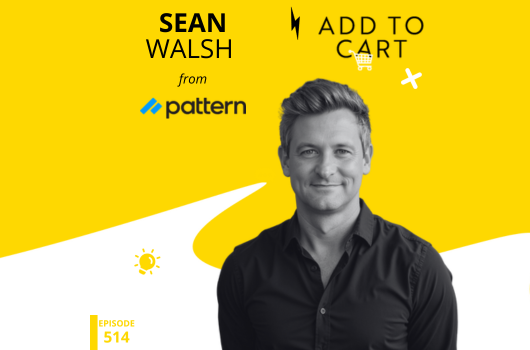
[Ad]: Today's checkout features Sean Walsh, director at Patent Australia, the Marketplace accelerator, quietly scaling some of the biggest brands in the world, including thank you, Evo and Coco and Eve. Sean shares the marketplace brands he's got on speed dial, what's inspiring him and
Nathan Bush: the impressive book list he's working through. Sean, welcome to the Checkout. Thank you for joining us. We had a brilliant conversation on our main episode about all things really around all things Australian e commerce and strategy. But we dove into the world of marketplaces, especially Amazon, and you gave us some great tips. When brands are looking to maybe venture into marketplaces, some of the strategic decisions they have to make to work out whether it is right for them and if it is, what model is right for them. And then we went into some things around search and product display, around how to make sure that you maximize your presence when you do go into there. So great chat. Go back to that if you haven't if you're interested in the marketplace decision. But we're here to learn a little bit more about you. I've got five quick questions. Number one, what's the weirdest thing that you've ever bought online?
Sean Walsh: So I'm not going to answer the weirdest, but I'll answer with the most controversial in my household.
Nathan Bush: All right.
Sean Walsh: Which was a battery operated pool skimmer. So we have a pool at home. We had a dolphin pool cleaner for a number of years. It died. So then we got ipa, which is battery operated. So you literally charge it, throw it in. It cleans the bottom of the pool. Then my wife said we need a pool skimmer for the top. So just to Call out that I am the one that cleans the pool at home. So she wasn't solving a problem for her. She thought she was solving a problem for me. I said no for quite expensive for a number of months. And then I went away for a work trip and I came back and there it was skimming the top of the pool. I am a convert though now. So it was. Oh, no. And now I'm like, yeah, that's a pretty good purchase. Well done.
Nathan Bush: Has the battery operated pool cleaner ever died at the bottom of the pool? And you have to jump in to actually get down.
Sean Walsh: It's got a pool hook, so it comes with a pool.
Nathan Bush: Makes sense.
Sean Walsh: Yeah, you grab that. But the skimmer actually is battery operated and it's got a solar panel on it.
Nathan Bush: Oh.
Sean Walsh: So, yeah, the charging is once every so often.
Nathan Bush: Might have to get your referral link for that.
Sean Walsh: Absolutely.
Nathan Bush: All right, number two, which retailer has most inspired you recently?
Sean Walsh: The one I probably call out the most is thank you. So we've done a lot of work with thank you co. They are a profit for purpose. So their mission and why they're selling products to consumers is around ending extreme poverty. So I think that's just a, like, it's a no brainer. It's so inspirational. I think they define someone living in extreme poverty as someone living on 2.15 or 2.30 a day.
Nathan Bush: Wow.
Sean Walsh: And it's around 700 million people. So they're really, really inspirational to work with. I think they've donated 20 million, almost 20 million in their time. So amazing product people as well. The products they deliver to the market are really, really great. But also there's a purpose to why they're doing it. It's not just some of the retailers that are doing retail for retail or products. Yeah, there's a really great purpose behind it.
Nathan Bush: And the version 2 launch of thank you was that last year? That was really cool. It looks beautiful.
Sean Walsh: Yeah. They have a lot of great ideas and they need to, obviously from a differentiation perspective, because they are in a category that has a large number of significantly sized brands. A great way of differentiating themselves from a marketplace perspective.
Nathan Bush: Are there any brands, well known brands that our audience might know that you think are just nailing it through marketplaces. So whether that be Amazon or whether that be local marketplaces.
Sean Walsh: Yeah, there are, there are a number of brands that sort of have built their own presence on marketplaces. One of the Australian brands that I think does content really, really well is Coco and Eve in the beauty category. So Australian business, I think they got an influx of about 100 million in capital last year. So they're doing some good things and doing things internationally as well. So from an Amazon perspective, their content is really great as well as obviously their product. I think Evo, which is an Australian brand in the hair care space out of Adelaide, they're doing some really cool stuff from an E Comm perspective as well as from a market perspective, they've expanded into the us, into the uk. If I think about some of the other brands that are doing good things internationally on marketplaces, Bellroy, Quadlock, some of those brands that are very much marketplace first products. Yeah, they've done a really great job.
Nathan Bush: Yeah, great examples. Oh, I'm going to go through all their Amazon pages now. Number three, name a piece of tech that you or your business couldn't live without.
Sean Walsh: I'm going to be biased here and say that it's the tech that we use. We are very much a build over buy business. Our CEO has been, that's sort of his line since the business started and we're very, very lucky to have quite a significant sized tech team that's building out this tech. So I think there's. Amazon tells you you're growing twice as fast as they are, you're doing something right from a tech perspective. What I like about it is the tech that we have access to, brands we partner with, they get access to it as well. So it's not this black box stuff, kind of like you get with advertising platforms now, where it's like this is what you need to spend but we're not going to tell you how it's going to work. Yeah, it's literally this is what you spent on. This is why it worked. This is why you need to think about your incrementality over here. It's very much an open ecosystem and
Nathan Bush: we were talking about some of the tools that you use to research opportunities. And how many data points did you say have you access to? It was like in the trillions.
Sean Walsh: Yeah, 39 trillion. So there's, there's a lot of storage there. Yeah, some of that's public. So if you wanted to look at what we call the digital shelf, which is where your brand shows up on Amazon against your competitive set, you can just go to the patent website, plug in digital shelf and put some of your products in there or your brand in there, it'll show you that information.
Nathan Bush: Oh, awesome. What a tool. We'll put a link to that in the show notes too. Number four, can you recommend a book or a podcast that our listeners should immediately get into.
Sean Walsh: I used to be so good at reading books. I used to have a staple of. I was going to read this amount every year. I've fallen off since I've had kids. I don't read as much as I used to. But so over Christmas, we had a little bit of time off, which was great. As anyone working in e commerce, getting time off at Christmas can be a challenge. But there's a guy I follow on LinkedIn called Ben Meer, so he's known as the systems guy. He talks a lot about systemizing things and operating processes and things like that. He posted Something around these 12 books are the equivalent of an MBA. So I don't have an MBA. He's got one from Cornell, so I'll trust his advice. Something that might be close to an mba. I might send a link to you so Breeze can. Can look at the list, but there's 0 to 1. Peter Thiel. There's Lean Startup, there's some financial books. There's. There's one around negotiating from a FBI.
Nathan Bush: Ah, yes. Never split the difference.
Sean Walsh: Yeah. So, yeah, there's a lot of, I guess, rounded knowledge that you might find in an MBA that he thinks is distilled in sort of this 12 list of books. So I'm getting through those audiobooks at the moment.
Nathan Bush: That's awesome. All right. Yeah, we'll definitely share that link. The one that I've got up there, and it's probably 15, 10, 15 years old now, is the mini MBA. Okay.
[Ad]: Have you seen that book?
Nathan Bush: No, I think it's. I'm going to get the name wrong. Maybe Josh Kaufman, but it's thick, but it kind of breaks down all the topics covered in an MBA at a good level. But it's not hard reading. It's easy reading. And you could obviously dive into. Further into those topics. But I love that one as well. But, yeah, there's so many ways. Look, we've all got MBAs now, don't we?
Sean Walsh: Right?
Nathan Bush: Yeah. Just give yourself a ChatGPT certificate and away you go. All right, number five, what is your biggest challenge today, Sean?
Sean Walsh: I wouldn't say there's one challenge. I would say this is it. This is the challenge we have. I think in the environment we're in now, the challenges today might be very different tomorrow. We've seen a number of businesses have some really challenging times. I think our biggest challenge, given our model, is dependent on our partner's biggest challenge. So if their biggest challenge is how do I get product to the US that becomes our biggest challenge for that partner. If theirs is, how do I get more contribution margin from this channel? That's our biggest challenge, I think. Yeah. Solving advertising inefficiencies, that seems to be quite a bit of a constant, especially when you are skewing towards the conversation being Amazon and they are taking more and more of the pie, especially in international markets. That becomes our main challenge to be able to solve because we only win when our brands do. Right. If our brands aren't profitable on marketplaces, they're not going to keep the channels running.
Nathan Bush: There you go. Doesn't sound hard. Easy, easy challenges. Sean, thank you so much for joining us on the checkout.
Sean Walsh: Thank you.
[Ad]: To hear more from Sean, head back into episode 514 when we unpack the real marketplace playbook, covering everything from cracking the buy box to deciding between 1p3p or potentially handing it all over to a third party like Patton to manage your marketplace presence. Plus, you'll hear how Patton became Australia's biggest third party seller globally and why the smartest brands are leaning in not opting out of marketplaces.