Danny Lattouf: High, high passion, high touch, high CX all the way through to, you know, expedience and utility and enablement. This is something that not many people know about me, but I actually spent a year in London writing and recording a music album. Apparently 30 minutes in one of these pods is equivalent to over three hours of deep sleep in terms of the what it gives you back. And I was blown away by this retail experience. It was phenomenal.
[Voiceover]: Welcome to Add to Cart, Australia's leading
Nathan Bush: e commerce podcast that Express delivers all
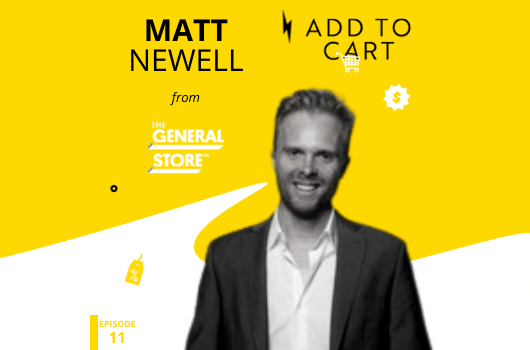
[Voiceover]: you need to know in the fast moving world of online retail. Here's your host, Bushi. Welcome to another episode of Add to Cart. I'm Bushy and I'm joining you from the land of the terrible people, otherwise known as Brisbane, Australia on Add to Cart. We welcome everyone to share and listen to e commerce stories. The more diverse the better. I want to especially welcome the traditional owners and the original storytellers of the land that we are on, our indigenous and Torres Strait Islander listeners to join us in our E commerce conversations and our community. I've been lucky enough to form some amazing professional relationships throughout my retail career so far and if anything, this podcast has helped me take that to the next level. A lot of the chats that you hear on this show are actually the start of friendships that we continue on through other chats and today's guest is a true friend of the show. He works with our very own co host, Joanne Huey Miller, who you have the pleasure of being in your ears hosting some chats last year. And we also had his business partner Matt Newell, who had a conversation with me back when Add to Cart was just a baby back on episode 11. So today I am very happy to have Danny Latouf join us. Join me on Add to Cart. Danny is a partner and Chief Strategy officer at the General Store and the General Store are a multidisciplinary. There we go. Got that. The first time creative agency and they help clients such as Freedom Rebel and Barbecues Galore. So that's a pretty top tier client list there. Now in this chat we really wanted to dive into the fundamentals of physical retail because there's so many retailers that I've been speaking to recently who are looking to move beyond D2C or E commerce and establish a physical presence. I really wanted to pick Danny's brains around what goes into making a successful physical store. He is kind enough to share some of the principles that they use when they're going through that design stage, but also take us behind the scenes of the Amazing redesign of Rebel's new flagship store at emporium Melbourne. Think 3,000 square meters of activations, including an open air basketball court. Pretty cool to go behind the scenes there. He also shares the most innovative technology he's come across lately from his travels around the world. He gets very specific there one for you sneaker freaks.
Nathan Bush: And he also shares some professional development
[Voiceover]: tips from his wide and varied career, including how he came to be launching the very first Xbox into the market. I just want to say a huge thank you to the retailers who got in touch in response to Thread Together's call out for any available stock that they can pass on to their communities in need, as we know they have a huge demand at the moment. If you want more information on what Thread Together do, feel free to to get in touch with me. I'm happy to connect you with Anthony and the team or answer any questions that you have. Let's get into today's episode thanks to our partners, Shopify. Plus here's our conversation with Danny Latouf, partner and Chief Strategy Officer at the general store.
Nathan Bush: Danny, welcome to ADD to Cart.
Danny Lattouf: Thank you. Great to be here.
Nathan Bush: We're finally here. Feels like we've rescheduled this a few times, so sorry.
Danny Lattouf: Yeah, I think this is our full shot and so far we're in.
Nathan Bush: Mate, you are a man of the world. I feel like every time we go to organize this, you're traveling somewhere around the world, seeing something really cool in retail. What's been the latest expedition for you?
Danny Lattouf: Oh, God, yeah, you're right, it does feel a bit like that. But the latest one would have probably been Europe in August last year. I'm a bit silly when it comes to these trips. I try and cram in way too much. You know, I get quite addicted to walking stores, so I forget to eat, uh, don't put in much time for sleeping, those kinds of silly things. But I think this one in particular, I probably went a bit too far. We did nine cities across five countries in six days.
Nathan Bush: Wow.
Danny Lattouf: We were researching in particular footwear technology for 3D scanning, that kind of thing, and then obviously a massive range of other things around that. But that was nuts. But I also. It's hard to deny that I do love it. There's not much I love more than being out there. So off to Bangkok and Singapore next week. So excited for that as well. There's, you know, those cities always give you something fresh and new to be inspired by, so that'll be fun as well.
Nathan Bush: What are you looking forward to over There.
Danny Lattouf: Well, we're fortunate to be opening our second store with Supersports in Thailand next week. So the grand opening of our second store that we've designed is happening next Thursday. So that's the main reason for the trip. But then again what we do is every, every time we've got to go somewhere for one thing we try and just packing as much as possible around it. One of the things we, we don't know what our next client will be in which category. So I just try and make sure that we're always looking at every category across every sector. If there's something interesting or new happening, we try and absorb it really.
Nathan Bush: And do you ever take clients with you or are you like actually you don't want to go on these trips with me because I'm head down, I don't eat, I don't sleep. You don't want. This isn't going to be fun for you.
Danny Lattouf: I'm not that fun, that's for sure. I've gone on trips with Matt before. We've gone to the US Matt needs a nice long tea in the morning. That's a nice sit down lunch. Whereas I, you know, in New York I grab a slice of pizza and just keep walking. Matt wants to have a nice sit down. So yeah, it's different. It's actually nice traveling with Matt because he forces you to slow down and then it actually adds more sit down restaurant experiential layers to your trip as well.
Nathan Bush: So he hasn't let the advertising agency side of him go, has he?
Danny Lattouf: Absolutely not. No way. No, he won't do that. But I did actually travel to Europe with our Supersports client from Thailand on this last trip to Europe. So that was great actually.
Nathan Bush: Great. I'd love to dive into that a little bit more. I want to pick up on what you said there around footwear tech for 3D scanning. That's pretty specific. I know that you're a bit of a sneaker freak from a presentation that I saw you do. It would have been almost goodness five years ago. Now about your Nike experience, I. Yeah, I do.
Danny Lattouf: I love my sneakers. So yeah, that's definitely one of my vices. But I don't have that many so that's okay. I handle the sneaker one. But yeah, this was for Rebel Sport in particular and for super sports in Thailand. I've been looking for great tech all around the world for a long time in this category and some is a little superficial where you know, for example, you might jump on the treadmill and Someone holds an iPad behind you and films you and says, watch how you run. And this is what I think, which is useful. It's just not from a tech perspective. It's not that advanced and you could go into an athlete's foot and get a scam and that's great. But Rebel's always been after something better, something scalable, something that also closes the loop on the transaction as well. And came across these amazing guys from Greece and the Netherlands called Safe Size and they operate in dozens of markets around the world. Thousands of stores just have never hit this region before. So met those guys a while ago and we jumped over to Europe to see how they've used it with different retailers in different settings across the region. And it's an incredibly robust platform. Really smart. You'd appreciate it actually. So they'll scan your foot but then what they do is they also scan the insole of every shoe on the planet so that they match the internal scan with your external scan and they show you what the best shoe for you is. That's amazing. So you qualify your use case and then the perfect fit matching happens on the back end. It sinks in with the retailers range but then also store based stock levels. It's quite awesome. But then it kind of goes up a notch when it comes to kids because what they do is they use their global data and then they essentially a pairing of machine and AI, learning to then know how big your child's foot will be in one month, in two months, in three months, in four months. And so when you buy a shoe you can see how many months it's going to fit for as well. So that's great.
Nathan Bush: You don't have to do the thumb test at the front of the shoe to kind of go, oh, that's about a year.
Danny Lattouf: So the thumb test is a problem, right? Even with my kids, if they really like the shoe, they'll squash in the big toe. Right? Because they want to buy them. So even if they're too small, they try and fool you on the spot. Right. So there's no fooling you with this tech. But then, you know, call it from a follow up sale perspective. You can then EDM that custom send an EDM to that customer in six months time and say, hey, that shoe you bought for your kid probably doesn't fit. It's time to come back in for a scan. Then you can connect that scan for especially for adults connected to loyalty platforms, shop online with confidence that you're getting the right size. There's really nice Layers and applications to it. So yeah, look, they well and truly passed the test in what we saw. We launched it at the Rebel Emporium store here in Sydney, in Melbourne I should say. And then this will be the second store next week in Thailand as well. So.
Nathan Bush: Amazing.
Danny Lattouf: Yeah. Great platform, great products.
Nathan Bush: Is it just a physical scan? Is there any virtual scan available?
Danny Lattouf: There is, there is virtual scanning as well that can be done remotely. I think they're still perfecting that. I don't think that that's quite there, but they do have it. Yeah.
[Voiceover]: I could imagine.
Nathan Bush: As you are going all over the world looking at new solutions and new ideas for retail, there must be exactly like you said there, service providers and technologies that haven't made it here yet. Do you ever have the conversations around partnering up to help them land and expand in Australia?
Danny Lattouf: This example for example, with SafeSize, we've technically partnered up with them to bring their offerings to these markets but there's no commercial deal in it. It's just that our clients benefit from this great product being in market. They also have global relationships with Decathlon and Hoka and Nike and a whole bunch of different brands. So we weren't the reason they're in Australia, but it's in our interest to give Rebel a great customer experience to have them come to this market and do great things so they're less commercial arrangements but more advantageous to our retailers and their customers.
Nathan Bush: It's a bit of a win win, isn't it? Is that if you can bring something brand new to your clients like Rebel, that isn't available for anyone else yet. And then also if you're coming here and your first client is Rebel, that's a pretty good starting point.
Danny Lattouf: Totally, yeah, totally. Yeah, it's a great starting point and I know now that they've landed here with Hoka and some pop ups and that'll just continue to grow.
[Voiceover]: Sorry, I'm interrupting this conversation because I have a message for any sales folk listening who are in e commerce services or tech. What if I told you that you could meet Australian e commerce decision makers in their car, follow them to the gym, even join some of them in the bathroom. Well, if you sponsor ADD to Cart, you might be able to do that legally. We have sponsorships available for 2024 right now. Come join our industry leading partners such as Shopify, Impact.com, convert Digital and Farsight in helping to bring amazing conversations, events and more to our e commerce community in 2024. Email me directly@nathanadecaart.com for the full 2024 prospectus. And in the meantime, don't get any ideas about bathrooms.
Nathan Bush: You mentioned the European Retail Study at the start of our conversation. I know that you did a little bit of a road show afterwards to help share your learnings from what you found there. What were some of the key takeaways that you took that you went, we really need to share this with retailers in Australia.
Danny Lattouf: Yeah, great question. I think I don't know about. I don't know how share worthy it is and how unknown it is, but I've got to say that I personally felt if I was to say a couple of things, first one would be that I feel like London really got its mojo back. London was a vibe. It was fantastic.
Nathan Bush: That's awesome. Because you see so many headlines about the death of the high street in London.
Danny Lattouf: Yeah, I live there, I've traveled there dozens of times. You know, you get worried because I visited New York last year and New York didn't feel like New York. It felt like it really taken a step backwards and I kind of worried for the Londons of the world in the same vein and. But I have to say, the energy and the vibrance and just the people on the streets, it was just fantastic. Really, really cool vibe. So I'd say London was a vibe. Would be one. Don't know how much we can do with that, but I'd say it's a vibe.
Nathan Bush: It might help people who are going, I need to get to London. This will help my boss approve it. So. Yeah, good, thank you.
Danny Lattouf: It's a vibe. The other aha moment, special moment I would have to say would be the House of Rituals flagship store in Amsterdam. Wow. What a retail experience. I mean, and what a retail experience. And what I'd say is what we're bringing back. What could be brought back is just the level of service integration into a retail environment. You know, the top two floors of the store were service centric. The top floor was a mind spa. The one beneath that was a beauty spa.
Nathan Bush: Did you say a mind spa?
Danny Lattouf: A mind spa. So this is what was my aha moment. And they had breathing pods, they had group meditation rooms, they had these incredible, incredible brain massages, which was essentially a pod that you go into which had a gravityless chair that had motion kind of worked into it. Specific audio units, digital integration, lighting integration, sound. Apparently 30 minutes in one of these pods is equivalent to over three hours of deep sleep in terms of what it gives you back. And actually jumped in after a 27, 30 hour trip. There and I was blown away by this retail experience. It was phenomenal. And I think as we hear about the Mecca flagship coming to Melbourne and that being, I think there's lots of discussion about it being. Almost half of the store is service centric. It makes sense and I think we'll see more and more of that. And this one store was genuinely awesome. It was really cool.
Nathan Bush: What do they actually sell?
Danny Lattouf: Beauty, cosmetics, skin health, homewares, a whole range of things. Their standalone stores that you'll see all through Europe called Rituals is mostly, I'd say, skincare, beauty centric. This five story building was on it. Just epic. Amazing restaurant in the ground floor. Services connected all the way through. Beautiful vm, incredible displays and execution. Just a really cool shop. Really cool shop.
Nathan Bush: Awesome. I hope they're like piping some subliminal messaging into those relaxing pods so that you get out of there and oh, all of a sudden I need this product, I need this product.
Danny Lattouf: There has to be something going on, right? It's happening. I mean, I'm still talking about it. It was six months ago. I'd say the last one would probably be Ms. Food, M and S Food. I was fortunate to have tour of the new Cardinal Play store in London. The team was exceptional. The store was only a month old. I think I'll get the numbers wrong, but it had grown so impressively on a reduced footprint and those guys just do it so well. It is, it is for me, as world class as retailing gets, from product to packaging to VM to assortment, adjacencies, lighting, service operations, they just on so many levels really nail it. And it's just beautiful to watch a top class, top notch retailer in action.
Nathan Bush: What a tour. To be able to go behind the scenes, not only see them, but go behind the scenes on retailers who are doing things a bit differently all around the world.
Danny Lattouf: Yeah, yeah, that was the highlight for sure.
Nathan Bush: So we might take a step back. There's a lot in there that I want to dive into, but we might take a step back. For those who haven't come across the General Store yet, you gave us a hint as to what you do there, but can you explain what the General Store is and what you guys do?
Danny Lattouf: Yes, yes I can. The General Store kind of started about 11 and a half years ago. Matt is our founder. We have three partners in total. Matt, Mattie and myself. I joined about four and a half years ago. We're essentially a business that's set up to help retailers bring to life their proposition across every consumer touch. Point. And we kind of anchor that in what we call words and deeds. Everything a brand says and everything a brand does, the general store really wraps itself around retail as a vertical versus disciplines like digital or advertising or architecture. So we're not an architectural practice, we're not an advertising agency, we're not a brand ID business, we're not a strategy consultancy, we're actually all of those things, but anchored around retail. And so it was all really born of Matt's view when he was in ad land, saying, well, I don't think the consultancy practices get creativity and I don't think creatives get retail. And problem solving, most problems are solved by an ad. And so the general store was formed to be a pairing of great strategic thinking, but also wonderful creative articulation of that. And so we have five key, call it traditional disciplines that sit on the one roof, which is strategy, brand id, advertising, design, digital and technology, and then architecture and interiors. And the best work we do is when an art director and an architect cross paths and pollinate great ideas and do interesting things. And that's where some of the magic happens. And we feel a little bit unique in that sense, that we can bring those things together and some clients will take all of those things and we'll do all of those things together. Other clients might just come to us and say, hey, we'd love you to focus over here. We're all good on this site, so depends on the client.
Nathan Bush: And you mentioned working with Breville. All of our listeners will know and we've got some shared history there.
Danny Lattouf: Yes.
Nathan Bush: Who else are you working with at the moment?
Danny Lattouf: Yeah, look, we're really fortunate to work with some pretty incredible brands. 2023, as a bit of a snapshot, Freedom Furniture, barbecues galore, Coles, Michael Hill Jewelers, bcf, Super cheap, Breville Salvo Stores, Mirvac, Vicinity, Endeavour, Groot, to name a few. Super sports in Thailand. But yeah, we're really fortunate to work with some great brands, some great people. And we, as a philosophy or an independent business, we have a very, very simple philosophy around talent in our business, in terms of kindness has to kind of rise to the very top in terms of the types of people we employ. But then that kind of extends to the people we work with client side too. And we're really fortunate because that culture is bred in a really great way. We work with really kind, wonderful humans that are also very talented retailers and marketers. So it's good, life's good. In terms of the relationships we have. I think the general store inserts itself very much deep into a retailer's business in that we really want to be there understanding the problems, empathizing with the things that are going on so that we can be a part of the solution. So I think that in itself means that we have great relationships and pair a couple of kind, smart people together and usually good things happen, which is nice.
Nathan Bush: I love how many times you've mentioned the word kind or kindness there. I think that's a really nice grounding philosophy across everything you do. And for most of our listeners, we'll have heard Joe as our special guest host over the last year and obviously from the General Store and can show that firsthand. So we definitely see that out in the world as well. If I was to ask you what project you're most proud of in your four years at the General Store so far, what do you put on a pedestal?
Danny Lattouf: That's tough. That's really tough. Probably a couple of. Am I allowed to do that? Can't have one favorite child.
Nathan Bush: You're going to do the children thing, isn't it? You can't have.
Danny Lattouf: Yeah, yeah, I do have a favorite child. No, I'm joking.
Nathan Bush: We all do. Don't worry about it.
Danny Lattouf: Look, it's. You have to put the latest Rebel Emporium store at the very top of the lists and almost pair that with the really beautiful Christmas campaign we just delivered for those guys. Or with those guys, I should say. So. Yes. That goes without saying. The Rebel Emporium project was of mammoth proportions, not just from an architecture and interiors perspective, but from a creative and strategic perspective as well. The general store actually was a client to both Vicinity and Rebel on this project.
Nathan Bush: Right.
Danny Lattouf: We worked with Vicinity. Reed Naku in our business, developed the master plan and brand direction for the Emporium shopping center and Rebel's role in it. And then Rebel, as a customer of Vicinities, signed that lease. And almost the three of us decided together what we thought would be a wonderful proposition for the mall and for Rebel.
Nathan Bush: Wow.
Danny Lattouf: So that was a really unique position for the General Store to be in. And we're fortunate to have great talent like Reed, whose X Center group did this for a living inside developer, Landlord business in the past. So that was one amazing aspect of it. But then we did almost a thousand square meters of finished artwork for this store with the brolga art that was developed for the store to kind of bring that Melbourne culture to life through this Melbourne flagship. So that was a massive, massive, massive body of work. Not to mention then taking that and digitizing it into 70 odd, different bespoke pieces of digital across all the touch points, developing games. You know, we developed two new games with the partner in Germany for the football experience area. We worked with the Curry brand and another artist, Rory, to develop this beautiful rooftop experience for basketball.
Nathan Bush: Talk us through that. Because I think not many people would have had the opportunity to design a store. Like, often if we're designing a store you're dealing with, we've got this and we've got, we've got this width by this length. That's, that's your space. Go deal with it. But when you're dealing with a blank canvas and trying to work around what was in the forefront of your mind, when you're like, this is Rebel's flagship store, we're going to take this to the next level. When you've already done a lot of work with Rebel over the previous years in taking that store experience to the new level, like basketball courts, all that sort of stuff that was new at the time, that was a few years ago. And now you're like, all right, we've got to take the game to the next level.
Danny Lattouf: Yeah.
Nathan Bush: What was in the front of your mind when designing that?
Danny Lattouf: Well, I think it probably has to start with credit to Rebel. Just their ambition to keep pushing forward and not rest on their laurels. Don't think one store has been a cut and paste yet of the 27 odd stores in the four years. So every store is innovating in one way or another. Even if innovation looks like cost saving, there's always something moving forward, which is a credit to Rebel and the leadership team there. We don't get to think differently about projects unless Rebel opened the door to that.
Nathan Bush: Yeah, brilliant.
Danny Lattouf: It's a massive credit to them. So I would say on this one, felt like it had to be different, it had to be elevated. And we have to also give huge credit to partners of Rebels, like Nike, for example, who said they believed it needed to be different and better. And so they engaged an amazing partner of theirs from Ohio, partner called wd, who works on Nike globally. And we worked in with WD to develop the women's and football experience at Emporium. And so, you know, you've got Rebel, you've got Nike saying, hey, we've got to push for bigger. And so that, that really kind of motivates our team, inspires our team to push for bigger everywhere.
Nathan Bush: No pressure when Nike says you got to push for bigger.
Danny Lattouf: No, no pressure at all. You know, we, we love that. It's Excellent. And so the standards are high and that's where we should be. Melbourne is going to be the biggest city in the country soon, and it deserves the best sporting retail experience. And so, yeah, and then we had Under Armour partner, you know, Reed, we call him Rooftop Reed because he loves a rooftop. So he blew open a hole in the building and put basketball court on the rooftop. And then that was a prime opportunity for us to embrace, you know, one of the greatest basketball players in history with Curry brand to do something really special up there. And it is, as a basketball person myself, it's pretty special.
Nathan Bush: Yeah.
Danny Lattouf: So, look, I think, you know, when you're talking 3,000 square meters plus, it's much more complex in that when we look at a Michael Hill boutique, you know, there's one or two great gestures that will develop a beautiful experience. When it comes to three and a half thousand square meters, it's dozens of gestures that have to be great. And there are dozens of customer journeys that have to be considered. You know, high passion, high touch, high CX all the way through to expedience and utility and enablement. And they're different for different customers. And there's lots of different expectations across the board. And so what are the triggers, what are the levers, what are the layers that reinforce the rebel proposition, but also celebrate these global brands? And there's a lot. It's a lot. So it was a big project. It was a really wonderful project. But I say that, and literally on Monday, we're flying down there and we're walking the whole store top to bottom. We've already critiqued the hell out of the 50 odd new fixtures that we put in there, and we'll be tearing it to bits on Monday and working out why or how it could be better. Before we go to the next store,
Nathan Bush: do you have, like a suitcase full of ideas that were left on the cutting room floor that you still want to get in there?
Danny Lattouf: Oh, there's. There's truckloads of those. But, you know, as appropriate, right for the right moment, for the right budget, for the right customer, we'll keep bringing those out as needed. Yeah, for sure.
Nathan Bush: It must be a real buzz to walk into a flagship store like that and see people enjoying the experience, playing on the basketball courts, interacting with the shoe fitters, all that sort of stuff. That must give you a real buzz.
Danny Lattouf: There's actually not much I like more than that. I didn't leave the store on opening day till 8pm Just couldn't leave. I just wanted to watch people just Wanted to see how they embraced it, what they noticed, what they didn't notice, how some of those new things landed for them. It was just one of those things. We were beyond exhausted, but I just couldn't leave. Just had to see it in action. Just had to see customers consuming all the things that we had tried to consider through the process.
Nathan Bush: Yeah, amazing. When you are designing a store experience like that, 3,000 square meters, you've got Nike, you've got Rebel, you've got Under Armour telling you to take it up a level. So you're thinking experiential, you're thinking engaging and like you said, you're also thinking efficiencies and making sure it's a great customer experience. How do you balance a space? Because traditionally retail is based around sales per square meter or sales per square foot. How do you balance the experiential with making sure product is converting?
Danny Lattouf: It's a great question. I think it's depending on the brand or the retailer. It could be just baby steps. You know, basketball court in doncaster was maybe 12 square meters. The basketball court in Parramatta was 35. They proved that you could get double digit growth out of a category by giving up 35 square meters of productive retailing. Yeah. And so that would have been met with resistance to start with. The numbers don't lie, the NPS scores don't lie. And so I think it's just prove, prove the model, invest in the model and then double down if you're seeing results. So doubling down is blasting open the rooftop, putting a cord on the roof as well as putting one inside the store. Initial sales performance of Emporium say that was a great worthwhile exercise. And so I think it really just comes down to you can't be irresponsible. You really got to consider productivity. That's what we're in this business for. We're not here to put basketball courts in stores, we're here to sell basketball merchandise and give customers a great experience. So I think you've got to be really responsible, you've got to make the right measured decisions as you go. And we'll get it wrong. There are some stores we walked into and said the football field was too small, there'll be others. We walked in and said that actually it could have been a bit smaller. So we'll, we'll get it wrong. And I think the important thing is to very swiftly acknowledge you got it wrong so that it doesn't become a 20 store legacy issue, it becomes a one off incident and you move forward. Because nobody can afford for it to be a problem that's broader than any one error.
Nathan Bush: Yeah, makes a lot of sense. So if you take that experience of designing that 3,000 square meter store for Rebel you talked about, it's very different. For designing a boutique experience, what are the main differences? What kind of experience have you had about designing in those smaller spaces?
Danny Lattouf: Yeah, I do think, like I was saying before, no favorite children. One of the other exciting projects that we've developed last year, it's not out in market yet, but it was a really special project. And working with Daniel Bracken and his team at Micro Hill Jewelers, we've designed their largest ever store, what will be their flagship store, but will also really enter into a new transformative era for their brand. They've been doing some incredible things over the last few years, but kind of what they've got in store next is just really exciting. So with the store and customer experience on every layer that we managed to partner with those guys on landing market within the next six months.
Nathan Bush: Okay, are you able to say where the store is?
Danny Lattouf: No, can't do that. Oh, you're a tease. No, I can't do that. But it is going to be a really different proposition for Michael Hill and a very warranted one for where the brand is going and all the great moves they're doing from not just a product perspective and brand perspective, marketing perspective, there's some really beautiful things coming out of that building and we're really proud. I'm really proud. I think this one experience in this very important space in Australia will be a good one, a really good one.
Nathan Bush: That's really exciting. I did some work with Daniel and Matt and the team a couple of years ago now and I was helping out get some of the tech in order from an omnichannel perspective. So it's really great that, you know, they've just opened their new office, I think it was about a year ago and now being able to, you know, that tech seems to be in a really. Matt and the team have put such an investment and focus on getting that tech stack to a point where yes, you can do the new office, you can do the new stores and that's not the barrier anymore. So we can focus on the customer experience and doing things that are a bit different.
Danny Lattouf: Yeah, that office is pretty remarkable. Yeah, it's incredible.
[Voiceover]: It's the calm before the storm. And unlike George Clooney in the Perfect Storm, spoiler alert. Shopify wants retailers to come out not just alive, but thriving because it's a big deal, especially especially here in Australia. Last year Australian merchants ranked third globally in Black Friday Cyber Monday sales volume. What an opportunity. So if you want to maximize your share of the peak sales this year, use this time before the storm to download and read Shopify's peak season playbook. They've got 10 experts including me to share their tips and on how to maximize sales at this time. So put on your life jacket and get your hands on Shopify's free peak season playbook. Download it at shopify.com/guides forward/peak sales season2023 or just follow the links in the episode show notes from the device you are on. Land ahoy.
Nathan Bush: Your background was really interesting. Can you tell us a little bit about Danny Pre general store?
Danny Lattouf: How far back do you want me to go?
Nathan Bush: Give us the interesting highlights.
Danny Lattouf: The interesting highlights. All right, let me start there.
Nathan Bush: What might most people not know about you?
Danny Lattouf: Yeah. Okay, well let's go 12 years old. Let's start there. Yeah. At 12, my mum worked at Australia Post and during school holidays I would go in and essentially optimize queuing lines for people who are coming in to do all the things you do at the post office. That gets really busy during Christmas and I actually get a bum bag with stamps and cash and I would actually go through the lines and take people out of the queue that were only there for stamps. And so I'd be doing these live transactions on the shop floor, thinning out the lines essentially. And I do hundreds of dollars a day in 40 cent stamps.
Nathan Bush: Wow.
Danny Lattouf: And just really take the pressure off the team at the counters. So I was doing that at 12, which was fun.
Nathan Bush: They could still use your help, mate.
Danny Lattouf: Maybe when the store wasn't busy, I was out the back, you know, you know, making boxes for parcels and all that fun stuff. Yeah. I then spent a couple of years at best and less sorting hangers in a small room for weekends and Thursday nights. And then I really found a love for retail when I started working in men's apparel. My uncles were senior retailers at the Oxford menswear brand, which back then was a wonderful brand. Australian made products, really premium stuff. It's changed a lot in the years since, but I found a real love for retail working there through Unidays. And that was, that was a really, really awesome time. And I met a guy called David McLean serving him in an Oxford store funnily enough. And we got chatting and he was just about to launch Xbox for Microsoft in Australia and he was a senior incredible executive at Microsoft. And I told him I was writing an essay on the future of gaming in my marketing degree, and he said, I'd love to read that essay. So I sent it to him. And I ended up working for an agency launching Xbox on the back of that engagement, which was so random.
Nathan Bush: Wow, the original Xbox.
Danny Lattouf: The original Xbox. Yeah, yeah, yeah. I think I was 20 years old. Wild ended up working in an agency, executing the sales and ambassador programs and merchandising programs for Xbox and kind of worked my way through that business. By the time I was 22, I was running a team of 160 people across Australia, New Zealand for Xbox and Microsoft, and then transitioned from there to run the Columbia TriStar Sony account for that same organization. And then I actually moved to London, spent a year in London. You might want to know this, this is something that not many people know about me, but I actually spent a year in London writing and recording a music album.
Nathan Bush: Did you?
Danny Lattouf: What kind of music? Yes, yes. Like pop, R B.
Nathan Bush: Okay.
Danny Lattouf: Like the extra cheesy kind.
Nathan Bush: Are we talking Craig David era here?
Danny Lattouf: Oh, gosh, yeah, maybe. I don't know, I can't even remember. But I did that and that was something I just needed to get out of my system. It wasn't really about making a career out of it or anything like that, but it was something I wanted to do, so. Awesome. So I took that, traveled Europe, recorded this album, came back.
Nathan Bush: Have your kids heard the album now?
Danny Lattouf: Yes, yes, they have. They have.
Nathan Bush: And what was their reaction?
Danny Lattouf: I mean, it's cringe stuff, you know, it's not good. So it's.
Nathan Bush: I want to hear it.
Danny Lattouf: No, it'll never happen. It doesn't exist anywhere. So. But I know I say that, but I'm very proud of the moment, the accomplishment. It was great. Yeah. Came back and actually went client side, went to Microsoft and spent a couple of years in sales, managing retail accounts like Harvey Norman, Dick Smith, Meyer, David Jones and the rest across all the Microsoft product groups. I then moved to Singapore for two years, worked with a great business there, managing the global Sony Ericsson business before the time of iPhone, crushing that business, that platform. So spent a few years working there. I had a team in Munich, in Singapore, in Miami and London. And that was an amazing two years. Lots of hard, hard work, but really cool stuff. Working across Southeast Asia and APAC and then globally for Sony. And then, yeah, came home and went back to Microsoft again, but in a marketing capacity. So ran the retail channel marketing function for Microsoft for a couple of years and then went agency side again. So I kind of bounced between agency and client side a few times. And this one was really interesting because I was actually briefing an agency for a project at Microsoft when they kind of turned around and said, oh, would you, would you be interested in joining us? And that was a really, just literally in JB hi fi Chatswood Shopping center, briefing them on a project. And this conversation came up and so that was exciting. That was to be the managing director of the ID Works business across Australia. I was there for five years. I worked across a very, very changing business over those five years. It became vmlyr. I took up a retail role across Anz, across the five offices that were operating. Got to do some really, really cool stuff with Myer and Countdown in New Zealand and Terry White, Kenmar, a whole bunch of really great brands. And then Matt Newell and I were in Melbourne at the same time. He was the emcee of an inside retail event. I was the keynote speaker. We'd never met before, we'd heard of each other. He reached out and said, why don't we grab dinner since we're in Melbourne together? And we did. Of course he suggested dinner, of course. Again, Matt was ex Idea Works, knew the business well. We both had lots of respect and admiration for the team and the business and the leadership group. And so yeah, we had a really nice dinner that turned into a lunch a couple weeks later, another lunch a couple weeks later, a coffee a few weeks later, and we started exploring what could this look like? Is there something there? And we really kind of stress tested it before kind of taking it any further. And funnily enough, I'll tell you a story if this is not getting too long. No, it's great. I was considering this could be really interesting. And I called John Batastich, who I'm sure won't mind me telling the story, but I called John. I have a lot of respect and admiration for John. I think he's one of the smartest guys in the country when it comes to retail especially. And. And I said, hey look, I'm not sure if you know Matt Newell, the general store thinking about this move. He said, I think it's a really good idea for these reasons, I think it'd be excellent, blah, blah, blah. Anyway, I go ahead, I make the decision. A few months later I find out that Matt, when thinking about making a move to bring on another senior partner in the business and keep growing the general store and make it a strategic decision like that, he had actually consulted John Batterstitch and John had sent him in my direction anyway, so it's a really interesting thing that kind of went full circle there. But yeah, look, we're four and a half years in the business has changed a lot since I joined. Obviously we've gone through a global pandemic and we've grown a lot, Changed a lot. We're in a new office space here in Surrey Hills, which is awesome. And yeah, so far so good.
Nathan Bush: Great, well done. That's an amazing journey. There was so much in there that I didn't know about you and I've done my research and known each other for a couple of years now, so that was great to hear. Can you give anyone advice? We have a lot of retailers listening who may be going. Yes, I'm in a retail business at the moment. Whether as a marketing manager, an E commerce manager, I've had the opportunity or I've considered going agency side. From your experience of being on both sides, what are the main pros and cons of each that people should have in the back of their head when considering are they an agency person or a retailer?
Danny Lattouf: Yeah, I mean, look, I'm a sucker for punishment in both directions. I've come and gone from both sides. And before I joined the General Store, I was genuinely. It could have gone in three directions because I thought my time at Idea works, it was time to move on and I was either going to go to an off scale Australian retailer consultancy firm to really lean into that side or to go to an independent agency coming from a big multinational, go to an independent. They were the three real choices for me and obviously the General Store was the choice that was made. But the question you just asked, I get asked a lot by clients who are thinking about next career steps and I get asked by team members who are considering do I go agency side. And my real simple view on this is when you're in agency side, the most rewarding, fun, interesting thing about being agency side is the variety. I could literally in the same day have a meeting about a baked good brand, a fine jeweler, a outdoors retailer, a sporting retailer, a new pet brand in development. It can really just. It's such a fantastic thing to be able to do, to really just have such a breadth. And I could go from an incredible Christmas TV commercial through to a shopping shop or pop up. So it's, it's the variety, it's wonderful. You go from loyalty to digital and it's great, that's fun. But what you don't have is ultimate control. Control in terms of the level of information and insight you can truly get your hands on not being in the retail business. The control in terms of decision making, how far or deep an idea can go, those kinds of things you have a limited level of control over and you have to really reconcile with that quickly on the other side and the client side. The variety is a challenge depending on the business you're in. But variety can be a challenge sometimes. But the control is excellent because you have full accountability. You live and die by your decisions. You manage your P L or you manage your specific set of KPIs and you can manage those and have ultimate autonomy and control over those to the degree of which you're essentially hired to do. And so I'd say variety and control and variety and control. That'd be the two probably biggest different things. I'd say absolutely.
Nathan Bush: I think really great points. I've done similar to you, probably not to the same scale, but I've gone agency, retailer, start my own agency back into retail now. But I remember the point of agency life where I left and I would have been about 30 and it was because I was sitting there late at night. It was one of those pitch weeks where it had just been night after night and cause I was in a strategic role. You were waiting on so many teams and usually it's the creative team that you're waiting on on those midnight nights before the pitch the next day. And I just remember that sitting there eating bad takeout at 11pm at night, waiting for creatives to finish work, last minute changes and I'm like, I'm too old for this. And I was 30 so I wasn't too old for it. But I'm like, give me control. To your point, I was like, I want control. And then I went client side and I was like, yes, I finally feel I'm in control. But it was a whole from a soft skill mindset. It was a totally different set of soft skills because agency land, you have your big moments, usually your big meetings or your big pictures or you've got to put it all out there. Whereas I feel if you're in a retail role and depending what the role is, you actually need to be much more paired back with your communication, but broader. You've got to learn to involve a lot more stakeholders, you've got to take people on the journey, you've probably got to be a little bit more patient because there's more moving parts to make it work. Even though you are in control, you're not as in control as probably what you think you are going to be when you move from agency to client.
Danny Lattouf: Absolutely. And that actually when I said one of the options I was considering was an Australian retailer, that was a very important part of it because my experience beforehand, say with a Microsoft was I had a local team, I had a regional team and a global team. I had stakeholders like you wouldn't imagine across several brands, several disciplines. And you want control. Sometimes you rub the wrong people the wrong way when you push too hard or do something too independent of the machine. And that is a little bit my style, so that's tough. So I thought if I work for an Australian brand, there is that level of control and autonomy and you can go in eyes wide open to say, well, I'm coming in to achieve or do a job and I'll need this level of autonomy to do that. Yeah, I think that's harder in a multinational where corporate is overseas.
Nathan Bush: Yeah. A lot more politics.
Danny Lattouf: Whereas, you know, you could work for a Breville in Australia and you've got local and global in the same building and that's amazing. Yeah. But not a common thing in our market in Australia.
Nathan Bush: Yeah, Great points. Thank you. I think that will help anyone who's kind of in between worlds at the moment or considering the other side of the fence.
Danny Lattouf: Can I say one more thing on that? Is that okay? Yeah, just as you, as you were talking then on the stakeholder management, I think the one thing I would say for anyone career wise is that working in a corporate business, a brand or retailer off sites and scale, teaches you so much around great business rigor that you don't traditionally get, especially in a small independent agency or even some of the larger agencies. Amazing HR policies and people care and learning and development programs. Great rigor when it comes to career planning and development. Great rigor when it comes to good business sense. Great reporting, great frequency of stakeholder engagement and management, even down to bloody email training on how you write emails to senior executives that don't have time. All the great nuanced things you learn in a business, say, like Microsoft, which I really loved, you take those things with you through your whole career and they're really powerful things. I think I would always invite someone to play both sides for certain times, you know, when certain things are important to you from a career perspective.
Nathan Bush: That's a really good point. And nuance is a perfect word for it, I think, because as an agency, usually, usually you're coming from a fairly specialized perspective, depending on your role and the type of agency. But in retail, you've actually got to consider all parts of the channel. So yes, we might run this ad. But hey, do we have stock? Do we need to let the stores know what's this going to do to our customer service team? What's it going to do to our warehouse? So everything that you do has this flow on impact that you need to know and just by knowing that impact you get a better view of how retail works end to end.
Danny Lattouf: Yeah. And it serves you well on both sides. You can empathize. Hard to empathize with a client. You only see this window into their world and very hard for a client to empathize with agency guys when you only see the Friday afternoon drinks side of their world, you know. So yeah, yeah, no, fantastic.
Nathan Bush: I love it. If we've got E commerce retailers who I know there's a lot of founders out there who are looking to expand beyond if they're a D2C brand just being online and maybe launch their first store, whether that be a pop up or a permanent store. Obviously they're not going to be dealing with 3,000 square meters and budgets like you've been dealing with. But what advice would you have for them as. As they look to establish their first physical presence if they've been trading online successfully for a number of years?
Danny Lattouf: I'd probably say two things there. I'd say one would just be to learn from those that have come before you and ideally as recently before you as possible. You could have a conversation with those guys. I'd be talking to Vince from Rolly Nation. I'd be talking to Ethan from July. They've done some beautiful work landing in a physical environment. Environment. And I'm sure there's plenty more examples. So I'd be saying have conversations, visit those stores, interrogate those experience. Mystery shop, the mystery shop all the time. I would say number two would probably be just really lean into the fact that you have no legacy. You don't have old IT infrastructure. You don't have large networks of stores that if you make a change in one, you've got to make it all roll it back through the whole network. I'd say just really identify the fact that you, you don't have those legacy issues. You don't have the things that hold you back that most of your competitors do have. Let's face it, that's probably the thing that holds back a traditional retailer from an E commerce entering into the space. Is that kind of beholden to this, this massive legacy that they're working with and I think so. Use that be flexible, be nimble, try things, do the things that otherwise would hold you back. That'd be the two things I'd say.
Nathan Bush: Great tips. I've got a question that's probably a bit more specific is what's your position on having stock on the floor? So obviously old school is stack it all up, let customers come in, grab it and go. Verse seems to be a bit of a trend around. You might have one or two of an item, but the rest of the stock is either out the back or available for shipping.
Danny Lattouf: Yeah, I think you've just got to really understand your customer. Your proposition needs to be really aligned to your product presentation. Can I tell you one interesting story from. So when I visited Europe last year, the safe size guy said, we've got to go to Poland, I've got to go to Warsaw. So really, am I really going to see something interesting in Warsaw? They said, you have to come and see this one retailer. I'm not going to pronounce them. Well, I've actually written it down in case I did want to talk about this one. It's called Eboe, I think.
Nathan Bush: Don't worry, we'll use AI to help overdub that and pronounce it right for you in your voice.
Danny Lattouf: Perfect. Now, these guys haven't got a single product on the floor. So I don't know if you. I mean, my time when I was in London, Argos, if you remember, Argos, was a store where you walk in, you look in a book and then you pay for something and they bring it out from the warehouse. Right now it's iPads. This is essentially something really similar. It's a footwear retailer in Poland and there's not a single shoe on display. And so you go into the store, you sit in these beautiful lounged areas the team commit to. If you choose a product on an iPad that you want brought to you, they'll have it to you within 60 seconds. So the majority of the store is essentially warehousing for footwear and they use the safe size scanner in there so that you can get the perfect fit. So when you're ordering stuff, you're kind of sending four or five pairs of shoes with confidence they're going to fit you. This retailer is going off. There are 53 stores now in the region. Performance is out of this world. Parent company that bought them is just started a trial doing it with apparel. I think that's going to be tougher, but they're giving it a shot. But yeah, 53 stores and growing Not a single product on display. That's cool.
Nathan Bush: That's very cool. And that then obviously not only from a visual or customer experience standpoint, it stems into profitability in terms of the stock that you've got to carry and the time spent by teams, organizing theft, all that sort of stuff. It has a flow on effect, right?
Danny Lattouf: Yeah, yeah, it's really interesting. So, yeah, look, I would say probably going circling back to your. Your question earlier was, you know, I don't have a favorite child. Even though Emporium was big. One of the other ones I'm really proud of is our first international project with Super Sports in Thailand. Yeah, we opened our first store with them late last year and one of the big transformational pieces for them was taking the heavy stock weight off the floor and just putting a respectable size range on fixtures versus the really, really heavy levels of stock that they had on the floor before, which for us is difficult to understand because their labor cost is so low. When you walk the stores, there's almost a team member at every second row of gondolas just standing there ready to serve you because affordable to do that. And so we didn't quite understand why you needed that much stock on the floor, but it's just the way it's been done before versus a highly conscious effort. So that I would say is one of the prouder projects of the last 2012 months. I'd say just landing in another market, really transforming a brand and working with such a prestigious company. The Supersports brand in Thailand is owned by Central Retail Group. And those guys are just a formidable, incredible retail business. They own such a significant number of department stores around the world. When you go to Thailand, you stay in a Central Group hotel. You. Yeah. Go to a Central Group shopping center. You go to a Central Group department store. They're a big, amazing business in Thailand. So to be partnering with a business like that for our first international client was an awesome accomplishment. That was pretty cool.
Nathan Bush: I suppose now you have to holiday at Central Group every three months. Just take the family on holidays.
Danny Lattouf: Yeah, yeah, absolutely. No doubt.
Nathan Bush: That's a really great example and I think testament to what you're doing. The relationships you've got, you've established here in Australia to be able to take that internationally. So you should hold that up very high. The execution that caught my eye as well was what you've done with Endeavour Group's workplace. So bit different. Still a retailer, Endeavor Group, you know, one of the largest retailers in Australia, if not the close to the largest beautiful images of what you've done to overhaul their team's spaces. Obviously, coming out of COVID there would be a lot of interest in this project, given the desire to bring teams back into the office. How did you approach that one?
Danny Lattouf: Yeah, look, I mean, we've been fortunate to work with the BWS brand on a strategy project two years ago and through some relationships and further engagement, we were meeting with Endeavour Group to talk about some other potential retail projects. We mainly on the design side. So we're meeting with their design team and when they came into the office here that we designed for ourselves, they were going to say they were really impressed with what we had done here and they had this upcoming project to deliver this brand new office in Richmond, in Melbourne, and refurb an Adelaide office as well. So our office essentially was the key reason why we ended up doing that project. And beautiful office. I think it's interesting because our office was designed to win patronage on the back of COVID and Matt's philosophy was that who does a better job of winning patronage than hospitality venues? And so we really lent into hospitality as a layer to the point where people sometimes walk into our office and think we might be a cafe or a restaurant. And the team picked up the brief and did just a tremendous job. Reid and Kurt, in our business is a remarkably experienced commercial office space designer. In the past life. Life did some amazing work in San Francisco and so we had a handful of great team members jump on that project and yeah, it's just an amazing office down there in Richmond for Endeavour.
Nathan Bush: And what was the things, what was the creative inspiration? Was there anything that you went in and you went, this is not necessarily a game changer, but this is something different that we can do in a workspace that will make the team either more productive or more happy.
Danny Lattouf: Yeah, I actually have to give a lot of credit to the Endeavour Group team there from a strategy perspective. They did an incredible job understanding their team, the different functions, the different roles, different essentially call it customer journeys as far as a work day is concerned, how much time they spend solo in meetings, needing down, you know, deep work versus collaborative work. They had so much wonderful, rich data for us that we could kind of call it plan the precincts within the office so that they could really cater to all of these different needs across different people and their different day paths. The brief was so strong and the data was so strong that we could really creatively do our jobs creatively by taking the data and turning it into a physical manifestation of it. So I just got to give the guys at Endeavor great credibility there.
Nathan Bush: Seems like it comes down to relationships.
Danny Lattouf: Again, it's important.
Nathan Bush: Yeah, Danny, there is so much we didn't even get to because like you said, General Store goes across five traditional pillars and brings it together in words and deeds. And I feel we've really gone into the physical spaces that you design. It's a fraction of what you do. We could keep going, but we do have time limit. Just one pressing question that I've got for you is how do you stay inspired? Obviously going out and seeing retail all over the world is one way, but you know, that's not every day. How do you stay inspired to keep raising the bar even higher and higher?
Danny Lattouf: I would say, I'd say probably three things. Again, one would be just being really curious, just asking lots and lots of questions. Talk again about walking stores. I think you can learn a lot about even what's happening online just by asking questions, asking questions of team members, literally. I sometimes ask customers questions in stores and they're not even the brands I work with. This must be really creepy. But I just think asking questions, being really curious, I think, what's the best
Nathan Bush: question that you've asked of a customer? Like, well, how do you get like some insight?
Danny Lattouf: I might be in polls and just ask and watch somebody trying to choose between peanut butters. And then when they pick one and they've taken actually a little bit longer than I thought was necessary, I might just pull them aside and say, hey, what made you choose that one? And they'll be like, why are you asking me? I'm just really curious. I noticed it took you 20 odd seconds. What? Was there something that jumped out at you? Was it the price? Was it the ticketing?
Nathan Bush: Yeah.
Danny Lattouf: Cool. I just, I just think it's interesting. I do a little thing when I go grocery shopping. If I see a product three times, I buy it, even if I don't need it.
Nathan Bush: What do you mean, see it three times?
Danny Lattouf: If I see something on a shop, through a grocer, if I see it three times, I'll just buy it to reward the retailer. Ah, yeah. And it's, it's kind of goes back to my, you know, when I said about in store merchandising days where I used to send reps into stores and they used to try and get off location displays and try and, you know, sweet talk their store managers to get extra shelf space or whatever that might be. And I actually did that role for a while myself. My first job was a VM. You know, I ran around Sydney, 50 odd stores that I had to visit once a week. And so I like rewarding that. If I see a Coke promotion three times on an end cap down an aisle and then in bay, I'll just buy it. Just for the sake of rewarding the retailer or the branch.
Nathan Bush: With all your mystery shopping and then rewarding retailers, you must have a warehouse at the back of your own house.
Danny Lattouf: Yeah, that's true. I'm buying a lot of stuff. But it manifests, right. We might go into a store and a team member might be good at what they do. And then on the way out, my 8 year old will say, dad, I think she did a really great job. You know, she asked you how you were, she asked you, she asked you all these questions. So they're kind of. The kids are absorbing the research we're doing on a, you know, every weekend.
Nathan Bush: Future employees.
Danny Lattouf: Yeah, yeah, yeah, absolutely.
Nathan Bush: So sorry. That was tip number one on how you stay inspired.
Danny Lattouf: Oh, God, yeah, tip number one. Tip number two, surround yourself with exceptional people. I think on every end of the spectrum, whether it's super passionate, seasoned veterans all the way through, new entrants into the workforce that are just, you know, have energy and ambition. I would just say one of the things I love most in the world is watching someone who's really good at their craft do their job. So it could be a cleaner on the street. It doesn't really matter if you're good at your craft. That stuff gets me going, you know. So I think surrounding yourself with people who are really good at what they do is a massive source of inspiration for me. Yeah, great. And I said three, didn't I? Three. I would just say I'm inspired by always being grateful, always remembering in the context of things. I'm an amazingly lucky individual, very fortunate. You know, my dad spent his entire life doing jobs that he hated to provide for our family. And so I'm inspired by the fact that I get to do a job that I love every day in a category I love. And so I think that just is an eternal sense of inspiration or motivation to just kind of just lean into it and enjoy it, not take it too seriously.
Nathan Bush: Is that the motivation behind being involved with the heart on my sleeve moment?
Danny Lattouf: Yeah, yeah, look, heart on my sleeve is, you know, such a rich source of goodness in my life. Mitch Wallace, who's the founder of that business actually worked for me, was a graduate when I was at Microsoft and we all saw Mitch, I think within one day and said, we'll work for this guy one day. He's special. He's a really special human. And I technically do now as vice chair of that business. So I did definitely make that happen. But yeah, Hard on My Sleeve is an incredible movement. I, for the longest time in my life didn't really understand mental health and mental ill health like most of us, I'd say, before this most recent era. But my wife had postnatal depression with our second child and as an incredibly courageous woman, she was very public about that. She helped many women through that process. And I, as a part of that experience with her and our children, learned so much about mental ill health and its impact. And so when Mitch came to me about what he was doing with Heart on My Sleeve and what I was going through, it felt like a really natural fit. It was authentic for me to be involved, not as an experiencer, but as a supporter. Heart on My Sleeve does incredible work, you know, makes a difference in this world and it's an amazing platform and venture that Mitch has established.
Nathan Bush: Good on you. And, you know, it's brilliant to hear. You know, you are your true retailer at heart. You love retail, you're in the detail of retail, but obviously you need to have broad interests and experiences beyond retail as well that you can bring in to be better at what you do.
Danny Lattouf: Yeah, yeah, it's a passion. Retail is a passion and a job. Yeah, yeah. There's a lot more to it for sure.
Nathan Bush: Awesome.
[Voiceover]: Danny, if people have listened to this
Nathan Bush: and they want to get in touch, maybe they've gone and experienced a bit of a Melbourne Rebel store and want to tell you about their experiences. I'm sure you'd love to hear what's the best way for them to get in touch.
Danny Lattouf: Oh, easy. I'd say LinkedIn would probably be the easy way otherwise. Yeah, drop me an email. Danny latoufgstore.com Danny, thank you so much
Nathan Bush: for joining us on Add to Cart. I've really enjoyed our conversation. It's been awesome.
Danny Lattouf: Yeah, thanks Nate. Appreciate it.
Nathan Bush: There we go.
[Voiceover]: I think from, from traveling the world in Europe to designing 3,000 square meter physical stores, Danny's perspective of retail is very different to what most of us
Nathan Bush: would experience on a day to day level.
[Voiceover]: So I loved getting that perspective. So many tips to come out of that. Most notably, hit up his business partner Matt Newell for a long lunch. He loves them. So if you're looking for an excuse, that's a great place to start. Here are the three takeaways that I took from the conversation with Danny. Number one, don't be afraid to mix it up career wise. Agency versus Retailer versus Consultant versus anything else. You don't have to be defined by being one or the other. There is no imaginary fence. Feel free to mix it up to gain a broader experience, further your understanding, and even gain empathy. I agree with Danny in that the best people I have worked with have had a variety variety of different roles that have built on each other. Number two Embrace the Beauty of no Legacy. We spent a lot of time breaking down physical retail setups and that was very deliberate given how many e commerce retailers right now are establishing a physical presence. Danny gave some great advice. Embrace the advantage, which isn't always an advantage, that you have no legacy. You have a blank canvas to create the experience experience that you as a customer would want to have. And number three, Kindness first. As a culture, I know it sounds a little bit airy fairy, but I can hand on heart say that Danny and the team at the general store live this not only in what they do at the agency, but in their personal pursuits and beliefs. Kindness is at the core, so I think it's a pretty good principle, one that I try to embrace. When in doubt, be kind thanks for joining us today on Add to Cart to listen to all our e commerce conversations. Now in the hundreds. You can head on over to add to cart.com there you can also join up to our free private Slack community to share e commerce ideas, tips and questions with other listeners. You can also subscribe to the Add to Cart website weekly newsletter and browse some of the video highlights from our chats. There is a lot there that's add to cart.com au and if I can ask you one thing before you go. If you enjoyed today's episode, make sure you share it with a friend or a colleague who could benefit or leave us a review. It really makes a difference. Thanks again for listening and until next time, keep those customers Adding to Cart.