Zoe Lowe: Invest in the relationship, especially if you start to see signs that it's going really well.
Speaker B: Brands can now have a much more holistic view across all of these channels and also the value of each partner or the partnership channel plays throughout the funnel.
Rainer Schmid: We have set series of rules. Does this person have this amount of followers? Are they influential in society? Do they have a lot of visibility?
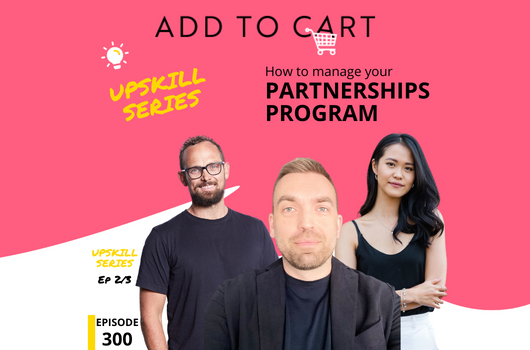
Zoe Lowe: Welcome to add to Cart Upskill, we have partnered with one of our industry friends to teach you a new set of skills. At the end of the Upskill series, we want you to walk away feeling smarter and ready to take on a new area of e commerce. Here's your host, Nathan Bush.
Nathan Bush: Hello, everyone. Bushy here once again for episode three, the very last in our Upskill series with impact.com I'm sad to bring it to a close, but excited for what we're going to get into today. This time we are focusing on how to optimize and grow your partnerships as usual. Before we join our special guest, it's an absolute pleasure to check in with July's global general manager, Zoe Lowe. Zoe, here we are, third and final episode of our Upskilling series on incorporating partnerships into your marketing mix. Welcome back.
Zoe Lowe: Nice to be back.
Nathan Bush: We are going to dive today into how to grow and optimize your partnerships. So we've got a partnership program in place. How do we take it to the next level? Something that you are really experienced with.
Speaker B: What have been your tips?
Nathan Bush: Like? If we were to ask you for one tip around how to keep your partners engaged and growing with you, what would be your tip?
Zoe Lowe: My biggest tip is to actually invest in the relationship, especially if you start to see signs that it's going really well. In fact, I'll give you a clear example. One of our best content partners, they run a really successful SEO blog. There are a couple, it's all done over email. I've called them. You know, I actually remember everything. Like, I remember when their trips are coming up and you kind of like chat to them continually and they in turn know that you're invested in their performance and they're also invested in your brand. You know, I invited them to the office, they've done a tour. Everyone has a different process. For us, what, what really works is having a proper relationship with each of them.
Nathan Bush: Amazing. And, and that's the theme we've seen already come through in the first two episodes around how important it is to have that real relationship. And I expect it to come through again. From our special guest today. Before we do, what about you? What Are you seeing in the future of partnerships? What are some. Some of the channels that are really exciting you?
Zoe Lowe: Right now we are really excited about kind of leveraging the affiliate aspect with all our influencer relationships, especially here in Australia. We are seeing quite a bit of traction with ltk like to know it, so especially with our products. So that's something that I'm really excited about. The influencer, the social commerce and influencer part of our business was. Was in one role which also encompassed social media management. And now that we've grown, we made the decision to kind of split that off into two roles. So now social commerce and influencer management is actually its own role handled by one person. So it's definitely a priority for us to continue to grow this channel because we're seeing such great movement from it.
Nathan Bush: I mean, with a product like yours, you must have influencers banging down your door hoping to be partners. Right?
Zoe Lowe: You know, we get our fair share. We get our fish in.
Nathan Bush: All right, let's dive into it. Let's explore how to optimize and scale your partnerships. And we have a special guest today, Rainer Schmid from bikesonline. He's going to share their growth strategy not only here in Australia, but beyond. Let's throw over to him and we'll see at the end of the episode. Rainer, thank you for joining us on Add to cart. Really excited to get into our third episode around partnerships.
Rainer Schmid: Thank you very much, Nathan. Looking forward to. Thanks with chat today.
Nathan Bush: Absolutely. Now, as an expert in partnerships, we are going to dive into how to optimize and scale partnerships. And I know you've got a lot of tips for our listeners on how to take them to the next level. But before we do, let's go back and give us a bit of background. You are the global director, Marketing Manager at bikesonline. We are lucky enough to have had Jonathan on before from bikesonline.
Rainer Schmid: That's right.
Nathan Bush: Amazing story. Tell us about your role in the organization and what you do.
Rainer Schmid: My role's a bit more on the marketing manager side. So it's kind of everything inbound to the website because we're strictly E commerce, pretty much the only way people find out about us is through the Internet or word mouth. And that kind of all falls under my realm of responsibility.
Nathan Bush: And global.
Rainer Schmid: Yeah, global. When we have a bit of a low season in Australia, it's high season in the U.S. i'm always busy. It's quite fun.
Nathan Bush: What's the seasonality on bikes?
Rainer Schmid: Seasonality. It picks up in spring. So as things start to warm up, that's when things pick up and then it runs all the way through to things start cooling down. When that cold front hit us about a week and a half, two weeks ago, that's when things start cooling down.
Nathan Bush: Gotcha. And the bike business, from an E commerce perspective, I can imagine there's some unique challenges and approaches you need to take.
Rainer Schmid: Oh yes, very much so, because so the nature of the product is. It's quite unique when you're spending up to $11,000 on a bike that you can't actually touch, you can't take for a ride before you buy it. There's a lot of research that goes into buying that product, but it's not. So all the products are not the same. So when we have a look at, say, parts and accessories, that's a little bit more of a consumable. So people will repurchase quite regularly. But yeah, when it comes to bikes, it's a once in 5, 10, maybe even 15 year purchase. So yeah, it's definitely more of a funnel than cycle bikes, but parts of accessories is definitely a cycle Gotcha.
Nathan Bush: And where does partnerships fit into the global marketing mix for you?
Rainer Schmid: It fits in everywhere, but it fits in a little bit more when it comes to bikes. And that's because of the nature of the product. If you're looking to buy something that expensive, you're going to look around, you're going to see who says what about the bike. If you trust the influencer or you trust that product reviewer, it's going to have a bigger weight in your mind. That's kind of where we try and reach those people.
Nathan Bush: And you mentioned influencers and product reviews there. Are they your main types of partnerships that you tend to steer towards?
Rainer Schmid: Yes, yes. So for bikes it tends to be that sort of partnership that we're looking for. But when it comes to parts and accessories, it's a little bit more of a people buy cheapest option. Or if they can buy more than one product together at the same time and get quick delivery, that's when they'll buy that from us. And in those situations, that's where coupon codes or cashback works really well. But otherwise it's all about getting to that product reviewer. Another really good one is partnerships with, say, schools, partnerships with bike shops. Some people just don't have all the stock they need, but they're still wanting to make a little bit of commission on that sale. So instead of completely losing the sale, they'll send that customer through to us and yeah, then they still earn a little bit of commission off the sale. Plus because they've really helped that customer out, that customer's more likely to go back to the bike shop. So it kind of, it works both ways for us cycling clubs is another big one because yeah, your cycling club tells you that it's worth buying the bike from here, it's a good quality product. You're more likely to buy the product from there. And you're also funding that club, giving them a little bit of cash back in return.
Nathan Bush: And I can imagine as bikes for most people are a passion or a hobby, there would be so many rich opportunities around partnerships to be able to create content and engage communities along the way. Not like normal FMCG products.
Rainer Schmid: Exactly. Yes. People are very passionate about cycling. They always want to talk about every little technical piece of information that nobody actually cares about most often. But yeah, you still get every, everybody who wants to know every single bit of detail. But yeah, a lot of it is just, it's, it's getting that passion, passion through.
Nathan Bush: Shout out to my father in law. He is one of those people, knows where every part of his bike is from. Probably one of the worst days of my life was he's got this bike. It's a Ferrari, it's an actual Ferrari bike, bicycle. And we went out on a ride one day. He lives near the beach and we went out on a ride and I crashed it right into the sand. You should have seen his face. He was mortified. So don't do that. All right. We've gone off on a tangent. From a partnership perspective. How long have bikesonline been building and managing the partnership program?
Rainer Schmid: I'd say probably around about three, three and a half years now. A little bit more actively in the last year and a half. But yeah, definitely in the last three years. That's kind of been most of the work being done there.
Nathan Bush: Gotcha. So reaching a stage of maturity now.
Rainer Schmid: Yes. So we've also learned a lot of lessons and the longer you're around, the more lessons you learn. Also you can then understand a few more strategies. The longer you're in any game, the better you understand it.
Nathan Bush: Absolutely. All right. We are here to dive into some of those lessons and to take your knowledge from you. So to kick off, I'm really interested in, in talking about partners because once you do get to a maturity in partnerships, I could imagine that you've got a good understanding of what a good partner looks like and you are working consistently with those good partners. What does the working relationship with partners look like once they are engaged and have a bit of a rhythm going on, how often should you be talking to and engaging your partners?
Rainer Schmid: That's sort of an interesting one. It's as often as you really need to. It's when you have new products, when you have new campaigns, whenever there's something new and interesting that that influencer or that partner would find beneficial, that's definitely a moment to engage. Other opportunities to engage is if you are looking for ideas on how to do something and how to run a campaign. Those people speak to a lot of other of your competitors. They have better understanding of what else is going on. So you can get get a bit of insight from them from there. And the more you engage with them, obviously, the more they keep you top of mind, more content they create for you.
Nathan Bush: So it's just a cycle that definitely came through in Michael's conversation earlier is not just about engaging partners. When you need something from them or you need to push something on them is to go to them and go, hey, what are you doing? What are your goals? How can we help you do that? Do you do a lot of that work as well?
Rainer Schmid: Yes, yes. We also pick up the phone and call some of them. So if there is anything that we feel they could benefit from. So if we launch a new program, we launch a new VIP commission rate, something like that, if we contemplating moving to a different partner program, all of that sort of stuff is. It's always good to chat them around, all those things.
Nathan Bush: And given it is such a passion category, do you ever do anything out of the ordinary to keep them engaged, whether that is tours or events or cycling events, to kind of go, come with us and experience it?
Rainer Schmid: Yes, yes, we do that. So there's actually a big event in the US Sea Otter, which is happening this coming weekend. And we have reached out to a number of our ambassadors across the states to come join us there, create a bit of content with us. And the nice thing is because we're all creating the content together, all of our ambassadors are sharing content with their networks. So each ambassador is getting a larger share of network because everybody else is sharing. The network just grows. We also do some fun things like every year when we have our birthday festival the month, we'll get them to record a little bit of an insert for it. We sent them freebies, so whenever they're doing product reviews for us, we'll quite often just let them keep the product. They've normally got so many bikes and things in their garage that they don't want Another one. So they give it away to their fan base. The fan base loves it. It gives us a little bit more visibility. It gives Van Bas a little bit more visibility. There's lots of fun little tweaks and things that you can do around that.
Nathan Bush: And if you do those things where you're going to a little bit more investment or effort, such as throwing events or inviting them along on tours or giving them product, does that come with any pre discussed or arranged obligations around the types of content that you want them to create or the messages that go out? Or is it literally your approach is come along to this, experience it and then you do your message out to your community?
Rainer Schmid: It kind of depends on the event. Sometimes we will specify, we will fund your travel to the event. We'll fund everything for you for the event. What we expect is X number or X amount of content. So three videos and a couple of posts on Instagram, whatever it happens to be, sometimes we'll just say, join us, let's have some fun, let's go for a ride. So it all depends on the event, but I do think they enjoy the let's go for a ride more than anything else.
Speaker B: Love it.
Nathan Bush: And what about disengaged partners? Have you had any moments where you have had where it was like you had an awesome relationship with a partner who was really pumping along and then all of a sudden you go, oh, that's gone a bit cold. Have you had that before?
Rainer Schmid: Yes, yes. It's just the nature of business. It always happens if you don't keep speaking to people, they forget about you when that sort of thing happens. So you just got to reach out to them, give them a quick call. That's where it comes down to having a relationship with your ambassadors, especially the valuable ones. You never want to lose the valuable ones, so you always need to maintain that relationship. It's that 8020 rule. 80% of your content comes from 20% of your partners. And if you ensure that that 20% is well looked after, you won't have to worry about losing them. But when it does come to losing the other ones, it always helps to have a little boost of a campaign. So you say, we're giving away bonus commissions for this month or for this product. Here's some content for you. Please reach out if you'd like to do a review on the bike or if you'd like to do a review on the product. But yeah, it's all about giving them a bit of an incentive. Money generally works quite well.
Nathan Bush: Can't all Be bike trips, Right?
Rainer Schmid: Exactly. As much as we want it to be, it's. Yeah, people still need money to buy food.
Nathan Bush: Exactly. And do you have any specific metrics that you look out for in terms of trying to keep across partners that might be soon to churn?
Rainer Schmid: Yes. So if we see that there has been high volume of clicks coming from a particular partner and when I do my quarter on quarter reviews and I see that a partner is kind of falling off, that's definitely a big signal that this partner needs to be reached out to again. That's probably the main one that I do, because the buying cycle of a bike is a long period. Three months at least, more often than not three months. So if you're doing it month by month, there's just not enough seasonality or pattern. But if you're doing quarter on quarter, you get a little bit more data to work with. You can see the pattern's a little bit easier. Even if there's a bit of seasonality in there, you can see everybody's kind of dipping down. So, yeah, it's a more efficient way
Nathan Bush: of managing it all makes sense. When you Talked about the 8020 rule for partners, do you actually have a clear tier structure for the different partners that you work with, like internally? You probably don't share it with them, but do you have a. Yes. These are our key partners that we've got to look after and they get this level of service versus these ones who are nice to have.
Rainer Schmid: We definitely have that. You always end up having favorites. One of my favorites is actually a website across the states called Two Wheeling Tots, was started by a pair of mothers just after they'd had kids and they loved cycling and just everything kids related. So they started a blog on it and now they're earning thousands of dollars from us each month just on reviewing bikes and just the sales that come from that. And we're only one of their partners, so they're raking it in.
Nathan Bush: Did you approach them or they approach you?
Rainer Schmid: I don't actually know. That was before my time. But I've got a feeling we approached them. The main guy who manages affiliates in my team, Phil, he used to actually be a filet himself. He used to do all the bike reviews and that's how we got him on board. And he's very well ingrained in the network and he knows everyone and everyone loves him. So yeah, he's a valuable asset to us.
Nathan Bush: I was about to say, in terms of people like Fil, I bet you don't come across Them too often that already, you know, amongst the community that when you bring them into their organization, they kind of link between the partners and the brands effortlessly.
Rainer Schmid: Yeah, that's also another thing with if you've got a mature relationship with partner, they actually will reach out to other people that they know who also reviewers in similar field and connect you to that other person that that also helps you grow your network. Word of mouth is very, very valuable.
Nathan Bush: Do you reward partners for connecting you to other partners?
Rainer Schmid: We do, yes. We just revamped that system as well so we will be doing better rewards in the coming months. But yeah, it's always strategy and growth strategy and learning. Yeah, that's. What about new learnings.
Nathan Bush: Yep. Makes sense. So if you've got this amazing network of partners on board and you're in a process, a mature process of working with them to create new content and new offers for their communities, how do you keep track of all the partner content that is out there in the world?
Rainer Schmid: That's a good one. That's quite a difficult one actually. So other than having impact to kind of manage all of that activity, we also have a list of valuable videos or valuable articles that have been written and we actually refer to those in our product pages. So some of our product reviews on videos on those product pages are actually content created by some of our affiliates. We tend to have external reviews, links to those external reviews like pinkbike or stuff like that flow mtv stuff like that. We will refer to those articles just as an additional set of quality of the product because the articles they do and the product reviews that they do, very objective. There's nothing that we can say that'll change their mind. It's always going to be this is what we personally think about the product and that's it.
Nathan Bush: Are partners always 100% honest? Like do you have partners who just throw down the gauntlet sometimes and you're like, oh, I wasn't expecting that kind of review or that kind of sentiment?
Rainer Schmid: Yes. How do you handle that? That's part of the agreement we have with them. We want the most honest review possible. So if you're going to say some bad things about the product, that's part of the deal. Obviously we prefer you to do more good things about the product. But yeah, if you are going to say some bad things, please tell us as well so that we can make sure we fix that. Because we actually have some good relationships with the bike manufacturers. So we send a lot of those hints and tips back to them and they use that in Future model production. So yeah, anything that they find negative, we will look to upgrade and change and fix the products. A recent one was actually with the Thock bikes. That's why we now have some tire inserts and some tubeless inserts and everything going with the bikes. That was a bit of advice from one of our reviewers. So yeah, we always take it on board and it's very helpful to have that sort of information.
Nathan Bush: I mean, it's a win all round if partners are feeling comfortable to be honest and transparent because they're giving exactly information back to their community that can be trusted. You're getting the feedback that you need to know from experts and customers who actually can stay in the loop and trusted with what they're saying. I liked what you were saying about bringing their content back into your channels. Whether it's the website or other channels. To sit alongside your content, do you need their permission to publish their reviews or to bring in their Instagram posts onto your website? Or is that just part of the agreement?
Rainer Schmid: Sometimes we need to purchase it from them. Sometimes it's just part of the agreement, sometimes they're just willing to have that extra bit of visibility. It's a partner by partner agreement. We find that most of the time people enjoy having links back to their product or their reviews from our site because it's small backlinks and some SEO juice, as you call it, all dependent on the different products and the reviewers.
Nathan Bush: It's a great tip to make the most of that content because like you said, both parties win. When you said that you keep track of the content within Impact, what does that look like? How does it store in Impact? And you know, how do you access that content within the platform?
Rainer Schmid: So the main way we do it is if there are articles that have been written, there's always a link back within the platform. So it'll tell you what URL that product click through came from that ended up in that purchase and we can actually pull that list of URLs. So that is one way of managing things. It's also a way of keeping an eye on your subfiliate networks because there are some less pleasant ones that sometimes end up in there. So just keeping a close eye on things like that, that's a very useful tip.
Nathan Bush: Yeah, nice keeping it organized. Obviously we've got a whole bunch of content that's out there being created that is independent of Bikes Online, but there would be some content in there as well that needs to carry your brand and your brand assets. What do you do if you find that a partner misrepresents your brand or uses your brand assets in the wrong
Rainer Schmid: way, well, we have a couple of rules and guidelines that kind of protect us, but we actually haven't had to deal with that issue yet. It's something that we've never had somebody who's really misrepresented the brand. We have had some instances where products were really portrayed in a negative light. Obviously we don't use that in our product reviews and stuff like that. But you can't help an honest reviewer. Maybe they were having a bad day because that was the only one out of eight that was bad. So just kind of got to take it as it comes. But we do kind of set guidelines around what we would like to see in the ads, what we'd like people to say in the ads. But we make sure they don't break counter because that's the main thing. We want them to remain in the character. That's who their audience loves. That's what the audience is subscribed to see. If we kind of force them to break that character, our message comes off as sounding insincere. Then the reviewer or anybody who sees that review would think that that's a paid placement. They're not going to sort of trust the article and that's counterproductive. So we kind of let people be who they are, but we kind of tell them where we would like them to kind of move, what sort of boundaries we'd like them to move within.
Nathan Bush: Yeah, okay, that makes sense. And from the perspective of wanting to optimize the content that is created through your partners, are there any special contractual terms needed when you are designing those partnership contracts that you need to keep in mind that you may not need to have in other marketing channels, which is more of just a push message?
Rainer Schmid: Yeah, there are a couple of special terms we need to always incorporate. And one of those is the definition of what content it is. So what what is defined as content? Is it a 5 second video? Is it an image in an Instagram feed? Is it a five minute product review? You need to define that information. Otherwise you're probably not going to get what you've paid for. You do get honest people who will just go to the ends of the earth and just do everything. But it just makes, makes it easier for everyone. Less chance of conflict. You have better relationship, better working relationship. Everybody is very transparent in what they expect and what they are willing to produce. That's how you kind of negotiate the agreement. Just be transparent, say exactly what you want and define things.
Nathan Bush: And as your partnership relationship becomes more mature, do you find that some of those partners go, yep, cool. I know we agreed on this real these stories that this review, but I've got this awesome idea for this bit of content that they want to pitch to you.
Rainer Schmid: Yes, yes, we have that a lot. Quite often we can just pull money out of the budget and give it to them for that because it's going to be a few extra pieces of content. But sometimes we will tell them, go ahead and create it. If you get X number of views, you'll get a bonus payout of X of cash. If you get this level of views, you'll get bonus part of this. So yeah, depends. If we know that it's going to be really valuable piece of content, we'll just pay up front and say, yes, please go ahead, just make all your resources that you need. Other times we'll say produce the content and let's see where it's going to go from there. Gotcha.
Nathan Bush: And have you had the instance of them going, yep, cool, there's content, but there's also other things that I do with our community, whether it be events, live streams, new launches, promotions that kind of get a bit messy and bit all over the place.
Rainer Schmid: It doesn't often get messy, but you do get a lot of requests. So we have one partner across in the US who works or has started to work a bit with schools and he's asked us for a big discount for one of the schools he was working with and it just kind of worked out that it was exactly the product category we had of supplier that he wanted to give to these kids. So yeah, it worked out for both of us. Kind of reduced our inventory level a little bit. And he got to give all these kids their new bikes, he built a new bike park with them, which they thoroughly enjoyed, gave them a whole bunch of new skills and he got a whole bunch of bonus content. We got a whole bunch of bonus visibility. It was just a win, win for everyone.
Nathan Bush: Amazing. So when you are having all these requests come through, assuming we've got a really mature partnership program, some great partners on board, I could imagine that there would be a number of requests or ideas coming through that would range from really small and one off things through to large partnership or big content, big partnership opportunities, how do you set up a process internally so that you can be responsive but not overwhelmed with all those options and get back to your partners?
Rainer Schmid: Well, we don't actually get too many. It's not an overwhelming amount that we get, we do get a lot, but we don't get an overwhelming amount. We get more. The highest volume of requests we get is actually for people wanting us to sponsor them as a cyclist. So whether it's a semi pro or just a novice rider or something like that, we get a lot of requests like that. Sometimes we'll hand those up to the bike brands and they will sponsor that affiliate. Otherwise we will do it internally and we have set series of rules. Does this person have this amount of followers? Are they influential in the society? Do they have a lot of visibility? Is there a lot of engagement? Is there a possibility of a long term relationship here? If there's good overlap with our audience, our target audience. This is a bunch of things we've, we've built a set of rules around. It's taken time to build the set of rules, but yeah, it just helps us. We just go back to that set of rules and we say, okay, well you've got less than 500 followers, which means you qualify for this. Let's trial it out like that. If it works, then we can continue. We do try and help them a little bit with content ideas where we have time. Otherwise we'll connect them up with some of our other affiliate partners, other content creators, if they have the time or if they're willing to do a collab. So yeah, it's just a bit of a win win for everyone. But yeah, you've got to have that set of rules otherwise you're going to be staring everyone that comes through and you're going to wonder whether it's worth it or not. And you're going to spend hours where you could be spending minutes. So have that set of rules.
Nathan Bush: I love that set of rules as a tip because obviously from a speed of decision making, but also being able to share the responsibility in the team or have fallback in the team, everyone knows how we make decisions and it can move forward.
Rainer Schmid: Yeah.
Nathan Bush: So let's put it in perspective of the overall marketing mix when it comes to things like paid social. We sort of know what a mature paid social strategy looks like. We kind of know what the ROI is. We have a content schedule, we have all of that humming and it becomes a bit of a process. Same as things like email. We know, you know, frequency and flows and everything like that. What does a mature partnership program look like?
Rainer Schmid: Oh, that's a good one. So mature partnership program is so when you look at your affiliate partner, your tech partner, like Impact, for instance, they'll understand your business, they'll understand who you are, the kind of people you're looking for. If anybody comes across their new partners or anything like that that they understand will be a good brand match for you, they will always send those through. We get good advice from Impact on that. We get constant lists of partners that have could be very good partners. Cool.
Nathan Bush: And is that hand picked or automated?
Rainer Schmid: A bit of both, yep. So they have a very good automated research tool, the discovery tool that does help a lot with finding new partners. But also our account manager that does send us lists, people that could be good matches and he helps us sort of nurture those partnerships into an actual contract then when it comes to the partnership side of things. So the individual partners I said earlier, you've got people who will bit of word of mouth and they'll say, I know somebody who's looking to do some videos on these products or they're looking to do a product comparison of bikes in this price range, stuff like that. That kind of network builds that a little bit more. And then each time you do that, provided you nurture those relationships and you're just nice to people, that goes a long way. They deal with a lot of frustrating brands with too much red tape. So if you can be that little bit of relief for them, that goes a long way as well. Yeah, brilliant.
Nathan Bush: And you mentioned rules before, setting rules that you can make quick decisions across the team. Are there any other lessons around processes internally, around managing and growing the partnership channel that you've come across in the last few years where you've like, oh, when we did this, when we added this into the process, this made our partnerships so much more automated or easy to manage and grow.
Rainer Schmid: Yes. One of the big ones for me was the Impact Optimize analytics platform. So we used to have a lot of coupon code partners in our program. But when we investigated sort of the trail and sales path of each of these transactions, we were seeing that quite a lot of partners, our content creators, who were spending a lot of time and effort to create these pieces of content and reaching all these new people later on down the line, we were struggling with a bit of the coupon codes that were then at the last second just grabbing that partner away and stealing the commission away. Stealing the commission way. They still did work for it, but in a different way. Yeah. So my learning there was to pull the coupon code affiliates out of that program, put them in a separate program with a separate commission structure, and if there was more than one sort of interaction with an affiliate partner, the coupon code does not or the coupon code site does not get the cash. The person who introduced us to that customer gets the cash. So we've actually got a bit of an affiliate attribution model set up for the commission payouts. So when somebody introduces us to a new customer, they get a payout. If somebody is the closer, they get a payout. And depending on the nature of that partner, if it's like a coupon code partner, if they also introduce us, they get a payout. If they don't. If there was somebody else who introduced us in that process, then yeah. But that's been a constant learning, trying to get my head around that one and eventually implementing it. But it was actually quite easy in the end to get that life.
Nathan Bush: Yeah. Most people are struggling with attribution itself, let alone attaching commercial attribution. Yeah.
Rainer Schmid: Then you start looking at all of the other channels and when you've got like 9, 10, 11 channels out in the market, everything is just in the system conversion. I wish there was one platform that can report on everything in one place at one time.
Nathan Bush: Don't be silly. One word that keeps popping into my head as you're talking around the bikes online partnership model seems to be fairness. It feels like you really go out of your way to make the partnership fair for all your partners. Would that be fair? Oh God, that's a bad question. Really badly worded question. Is fairness important to you?
Rainer Schmid: Fairness is definitely important, yeah. So it's part of building that relationship with your partners. With that comes and creates. Because they're so valuable to us, we make sure that they get their payouts and we make sure that we're as fair as possible to them. And yes, if they losing out their commission at the last stage, they will actually reach out to you and they'll say, hey, we've generated thousands of clicks, but we're not getting any revenue. What's going on here? And then when you look into the analytics and everything, you see there was other people that were involved or there was somebody else who was involved before you, there's a bigger answer to your question. So it's important to be fair.
Nathan Bush: Makes sense. You talked earlier about providing incentives for partners who may be dropping off or at risk of churning and to lure them back in and to engage them again. How do you keep existing beneficial partnerships growing? The ones that are really working and humming along? It might be easier to sit on them and say, yep, just keep doing what you're doing. But do you make any effort to go above and beyond to go, oh, this is really performing. Maybe we can take it to the next level. How do you do that?
Rainer Schmid: Oh, we definitely do that. We do lots of that. That's why we have VIP commission programs. And one of the really cool things about Impact is that you can set every affiliate on their own commission structure and you can set specific payouts for particular products. There's. There's so much you can do there. And that's why we have standard commission structure, which is what, what everyone will start on. And then when we see that somebody's really good performer, they're generating good revenue for us, good sales, we'll reach out to them and say, you're doing an amazing job. You've. You've reached one of our internal milestones and we, we would like to increase your commission. And more than often they're like, what? What do you mean, pay me more? Yes, please.
Nathan Bush: They don't know about the potential. Different tiers when they're first starting. They don't know that they're starting on a base level of commission.
Rainer Schmid: No. So we just have. It's a set standard for everyone. It's a default that everyone starts on. And as we see fit, or if we see the partner's very valuable relationship, we will actively sort of grow that. That's one of the key things. That's one of the best. It's back in that 80, 20 rule. If you look after that 20, then your 80 becomes bigger.
Nathan Bush: Great rule. And then in terms of. You mentioned that Impact do a lot of work around presenting new partnership opportunities to you. Are there any other creative ways that you've come across to find new. New partners or new opportunities for partners that may be a little bit of a surprise or outside of the box for you?
Rainer Schmid: Yeah, it kind of depends on what you consider the box to be. But yeah, we have a couple of things. So other than having sort of like school programs, we've got those coaching programs, so coaches that perform part of our affiliate commissions, we have different product reviewers, trail builders, cycling clubs, we have different athletes. Cycling shops also form part of our affiliate network. But each of these is just. It's a different way of approaching how you can reach people. One that I'm actually looking into is whether we convert our customers into affiliates. So we tell our customers. Tell everyone about your bike. Here's a link. You can earn cash.
Nathan Bush: I love that.
Rainer Schmid: Which also kind of works as a bonus for us because hopefully they spend that cash on our side. Yeah, so very smart. But yeah, that's. That's that's what new one that I'm going to be investigating soon.
Nathan Bush: That's great. I love that idea. What about then if you start bringing customers into it, I'm assuming then you've really got to think about partnerships in terms of your overall marketing channels and what you've shared today. I think you've established partnerships as something you need to really consider. Stay on top of, make sure it's fair, make sure you're nice like have that one on one really nice relationship with those partners which is different to how you would normally buy media, like how you would interact say with Facebook. How do you make sure that you integrate partnerships with all your other marketing channel activity?
Rainer Schmid: One of the ways we can do it is when we have our different campaigns that we're launching as a site. We can upload those campaigns into Impact and then our partners have access to that material so they can post it. We also have product feed running up into impact which means that if product review sites, we've got so many of them when prices change on our site live prices on their sites change as well, which means that our products look even more appealing when compared to competitors products. There's lots of little things like that we're trying to do. When you get to a certain level of partnerships, you've got so many of them, you actually need to start employing agencies to help you out with that as well. And those agencies can help you out with the rest of those partners. So the less valuable ones and you specify which partners you want to maintain that relationship with. So that's something we're in the process of implementing at the moment. Is getting an agency on board to help with that expansion of the channel
Nathan Bush: and are they partnership specific agencies or are they broader marketing agencies?
Rainer Schmid: They partner specific. So they specialize in managing affiliate partnerships. They know the strategy, they understand the strategy, they understand little nuances of the platform that I may not understand. And yeah, they can just, they give you a whole new window to the world because yeah, we get such good conversion rates from affiliates that it's one of those channels that we really need to nurture.
Nathan Bush: Yeah, you mentioned before around turning your customers into partners or advocates or affiliates. What are some other trends that you think might shape what the future of partnerships look like?
Rainer Schmid: Oh, interesting.
Nathan Bush: It's hard when I throw questions like that at you at the end of a conversation. You're like when I'm fresh.
Rainer Schmid: Future of where all of this is going. Yeah, I think the future of it is kind of leading towards where you can kind of Measure things a little bit better. Have better integrations between your different channels and with Google Analytics, or whichever platform you're using to measure everything so that you can understand what's happening. Something I'm really keen to see is post impression tracking on these partnership platforms. That'll be quite a valuable thing for me because then I can actually really see how these affiliate partners are helping influence these sales. But that's something that I don't believe is available yet, but it is something that I would be very keen in trialing out.
Nathan Bush: We'll make sure Impact. Listen to this conversation then.
Rainer Schmid: Oh, yeah, I've sent them that submission before, but yeah, so that's the one then. Just having a better understanding of the commission structures, product categories, where they would fit into the sales funnel.
Nathan Bush: Yep. That visibility along the whole journey.
Rainer Schmid: Exactly, yeah. Having that better visibility, that would be key for me.
Nathan Bush: I think that's a nice general statement, though, for most types of marketing. Would that be fair?
Rainer Schmid: Yes. Oh, yes.
Nathan Bush: What about you? Where do you get your inspiration from? What kind of brands do you look up to in the partnership space as who you think do it really well
Rainer Schmid: in terms of brands to look up to, It's a difficult one. There's not too many brands that do similar things to us. There are a couple of big bike manufacturers who nurture quite good relationships with their affiliates ambassadors. But I also like to just get a little bit out of the box and try what different bands out of the industry are doing. A good place to find that is podcasts or reading articles. I try to cycle to work once a week. It's about two hours each way, so it gives me a good bit of time to listen to podcasts and try and get it right in on the weekend. That's another two hours or so at least.
Nathan Bush: What bike are you riding? I think everyone wants to know that.
Rainer Schmid: I've got three bikes. I work for bikes. Of course, I get three bikes, but yeah, so a lot of that comes from things like that. I think that's probably the bigger ones.
Nathan Bush: Yeah, yeah.
Rainer Schmid: Going to networking events. That's another big one. It's always good fun chatting to people who have been doing things very differently to yourself. We've got some networks going, like on WhatsApp. We've got some chat groups and things like that. We'll post up little questions in there and then the network will respond and they'll say, oh, yeah, have you tried this or have you tried that? I've wanted to do this, but I just don't have means to do it. Tell me how it goes. That's a good source of inspiration as well.
Speaker B: Yeah.
Rainer Schmid: It's speaking to people. The industry is so new, it's progressing so quickly that there is no best practice. It's always, what can you try, what can you do, what can you test, what provides good results?
Nathan Bush: Yeah. And I think that's the one thing that I learned from diving into the partnership world, especially with Impact and. And the events that impact.com did last year. E Commerce in itself is an incredibly open industry and a generous sharing industry in Australia, but I think partnerships take it to the next level, like you said. And everyone loves talking and thinking about the different ways you can do it, because it's still relatively new. And I think that burst of creativity in it as well really helps people because it really is limitless to what you can do in partnerships.
Rainer Schmid: Oh, yes. Yes.
Nathan Bush: Raina, thank you so much for sharing your journey so far and all your tips and your lessons around how to optimize and grow your partnership program. Really appreciate it.
Rainer Schmid: It's a pleasure. It's been great chatting to you. I've been listening to this podcast for quite a while. It's great to finally be on it.
Nathan Bush: Thank you for writing two hours on the way to work and listening.
Rainer Schmid: It's been a pleasure.
Nathan Bush: You heard Rainer mention in our chat, Bikes Online's tech support in there, and Peter Bray is back. We can't keep him away, and why would we want to? He is back to help expand on the part that impact.com plays in terms of growth when it comes to partnerships. Pete, you're back. You promised you'd be back. The people asked for you to be back. And here we are, the final episode that's.
Speaker B: You know, it's almost like we're sponsoring this.
Nathan Bush: Oh, it's unbelievable. I'd have you on even if you weren't sponsoring it. You know that. Pete, one of the things Rainer said was around the 8020 rule that you mentioned back in episode two. I think he was listening in and stealing from you.
Speaker B: Hey, happy to. Happy to share. Maybe I stole it from him, but, you know, Rayna's a great talent, and he's got a lot of experience in this channel. The entire Box Online team do. And, you know, one of the things that I remember in the early conversations we had with him and his team, and they came from working with an affiliate, affiliate network, was the idea of diversification. They wanted to see if they can work with different types of partners, and what they've done is built something really Unique in that really deep in some ways, but also very niche world of mountain biking or road cycling. There's so many creators out there who are so happy to talk about different bits and pieces for their bikes. The Bikes Online team have done a great job of harnessing that, harnessing these niche content creators who have, you know, maybe not the hugest reach, but very engaged audiences and bringing them into their partnership platform. It's been. It's been amazing to watch them do that.
Nathan Bush: Absolutely. A really mature partnership model and a great person to speak around. Optimizing and scaling your partnerships. One of the things that Raina referenced was the Impact Optimize to help manage and reward partners. Can you share more around how this works?
Speaker B: Of course. And it's a fantastic tool, something unique to Impact that our customers do love. Essentially, Optimize gives brands the ability to measure the incremental value of any partners that they have working via Impact and also the partnership channel as a whole. One of the biggest bugbears from any marketer who has worked in affiliate is that they never know if a conversion from the affiliate channel was unique and incremental or if they're just paying for a more traditional affiliate for a sale that they were going to get anyway. It's been a real black cloud over the industry, well, forever now, what Optimize has done, it's been giving brands the ability to see where any of their partners who are contracted through Impact have played a role in the customer journey that could be top, middle, bottom of the funnel. This coupled with being able to bring other channels like paid search, social, organic display retargeting to the mix. Brands now have a mobile, much more holistic view across all channels of the value that each partner and also the entire partnership strategy plays throughout the customer journey and the broader funnel mix.
Nathan Bush: So getting rid of that black cloud.
Speaker B: Exactly.
Nathan Bush: So we've heard about some great tools and some great functionality from impact.com what's coming down the line. What kind of new developments are you seeing that are coming for impact.com yeah,
Speaker B: well, I think that Impact has largely defined and led what we call the partnership economy globally, and we'll continue to do this. A big part of our vision is to be the gold standard or the operating system for any type of partnership. And as part of that, we're taking a really big focus on the creator and influencer opportunity. Impact.com want to be the ones who really crack the influence opportunity in a meaningful way. Now, I won't say too much, but through acquisition, constant development and just Listening and learning with our customers. We see our upcoming creator offering being something really, really special.
Nathan Bush: Pete, the people, think of them, the people who are asking for you, you can't leave it there. You can't just leave us on a cliffhanger.
Rainer Schmid: Give us something more than that.
Speaker B: Okay. Okay. Well, think about any type of creator or influencer where a brand wants to find them. So discover them, engage with them, manage them, track them, remunerate them, and then report on the benefit that that creator is providing for the brand. Still be done in an automated and centralized way. It would be pretty cool. Now, other platforms exist, right? And they've been doing this, bits of it at least, but not at scale. And they've been heavily affected by the changes that meta's put up and a whole bunch of other stuff. But look, as a bit of a tease, you could search if you wanted to Walmart creator and just see what comes up that might give some indication.
Nathan Bush: You are such a teaser, Pete. I just want to leave it here. We've had an amazing three part series. I've learned so much around partnerships and we're so lucky to have so many experts in the field come and share their wisdom. I have to put you on the spot. What's a standout partnership program that you've been part of? What's your favorite baby?
Speaker B: Oh, look, I can't say just one, there's a lot. But I'll give you two examples. Zalora. I'm not sure if you've heard of them. They are the iconic sister company, one of Southeast Asia's biggest fashion marketplaces. Now they use impact to turn their own customers into micro influencers or what they call community influencers. Whereas Zalora reward their customers who those customers provide, provide customers back to Zalora, they reward them with cash back to spend at Zalora or cash cash to spend wherever those community influencers want. That's a really cool one of thinking about partnerships in a different way and in a totally automated way as well. And the other one I'm pretty sure you're across because you had the CEO and myself on this podcast. We talk about Xeroco and of course their CEO Mike Smith. They're a circular economy business based in Byron Bay with a mission to rid the world of single use plastics. And their partnership programs are just exceptional. And one of my favorite ones is the sustainable schools program. So what they do Xeroco work with schools and schools promote Xeroco to their, to the family members of their students. And if those family members Sign up, then Xeroco pays the schools a commission. So Xeroco are partnering with schools to turn them into an affiliate. By that, the schools are delivering an outcome for Xeroco and the schools are getting rewarded. That along with their sustainable stays program, Xeroco have really lent into this partnership opportunity and their growth numbers really, really say everything.
Nathan Bush: Great example. Two of those. Thanks, Pete. Now I think you've given everyone their Pete fix. Three episodes. Pete, it's been great to speak with you again.
Rainer Schmid: Thanks, Nathan.
Speaker B: Absolute pleasure. Thanks for giving us the opportunity.
Nathan Bush: Zoe, this is the third and final recap that we're going to do. I'm a bit sad about it actually, but we had a brilliant discussion there with Rayna around how to grow and optimize your partnership program. One of the things that I loved around what Raina mentioned was that they do at bikesonline is the special cycling trips that they do with their best partners. What do you do at July is do you go above and beyond? I know you mentioned at the start around bringing some of your partners into the office and showing them some love with phone calls and remembering things about them. Is there anything else that you do to keep your partners excited and engaged?
Zoe Lowe: I wish I could say that I take all the top partners. Just me. Me personally, I take them to Paris every year. I wish.
Nathan Bush: Private charter to Paris, private jet.
Zoe Lowe: No, we are just not at that level yet. I really would love to like, you know, there are brands internationally like Revolve who activate in events like Coachella. And we are starting to look at opportunities like that where we can, you know, win across multiple channels. But for now, we stick to the basics, which is to make sure that it is a win, win, win partnership and also just be very, very pleasant and easy to deal with. I guess if you don't have that budget, what you do have is the ability to make it really easy for the partners to do their job and really enjoyable for them to help you and to go above and beyond. So I would invest instead your time and effort, which is cost no money to make it really easy. So hand everything on a platter to them.
Nathan Bush: That's amazing because Rainer actually said in his episode that it's about being nice. And I wasn't expecting that out of a partnership upskilling series that to be one of the key themes about just being nice to your partners as a simple tip definitely makes sense. The other thing that Rayner said is that he makes sure that they naturally have tiers of partners. And he talked a lot about the 2080 rule where really, really make an effort to look after those top 20% of partnerships that are really valuable to them and show that they're invested. Do you have a similar, like tiered approach at July?
Zoe Lowe: Yes, we definitely, like, not so officially, but we definitely know the ones that continually and consistently perform and we do go out of their way. Out of our way, sorry. To ensure that they're always engaged. So that might be a simple one. Is we often tell a lot of the product reviewers, hey, this is what's coming up, this is what's in the pipeline. The stock will be here. Do you want to test or you know, if we've sent something recently. So just keeping up comms alone is probably the best way for us to keep the top 20% engaged.
Nathan Bush: Yeah. Fantastic. All right. Three weeks we've covered a hell of a lot in this upskill series. We've gone from assessing where the partnerships are right for our marketing mix through to how to get them up and running and manage them on a day to day level. And then now today, how to grow and optimize them. If we've got listeners going, cool, I think I'm, I think I'm ready to go. I'm across the world of partnerships. I'm ready to dive in and optimize and give it the best shot for my business. Can I ask you for your one bit of advice that you would give them as they take this journey on?
Zoe Lowe: Yes. We've recently, and you might have done this if you've invested any time and effort into building a brand. We recently did. Sorry for any technical brand people out there, but it's like a map. It's a map and basically you map out like two kind of qualities of the brand that mattered to you. And you put, we literally put like Instagram profiles, other brands like content creators, publications all along this map and we kind of picked the aspirational ones that we really, really wanted to target and we went straight for it. Now we are a four year old brand so it's time for us to really start like shooting for the stars and, and we have a lot of momentum behind us. If you are earlier in the stage, I would go in with, you know, start small and start from there and go for it essentially and don't be, don't be disheartened by any knockbacks and don't be scared to even approach because again, like in episode one we covered that. A lot of bigger brands see so much value in working with smaller businesses who literally can work faster and have niche audiences.
Nathan Bush: Zoe Amazing. Thank you for joining us again throughout this whole series. It's been amazing to have you join us on every episode to give your perspective before we dive into each topic. So thank you so much and it's always great to have you on Add to card.
Zoe Lowe: Thanks for having me.
Nathan Bush: Now the learning doesn't have to end here. For more learning resources and access to the Partnership Experience Academy where you can get a free online Partnerships accreditation or just to have a chat with the impact.com team, head on over over to get Impact. Com Add to Cartseries. We will make sure that that link is in the show notes as well if you want to go check it out later.