[Voiceover]: Every week we go through our top five pieces, best performing content and our worst five. The last meeting last week we had a cat hammock that you stick to your window was one of the top performing pieces of content. Three is a magic number. You get them past three, they get super sticky. You've still got to have your value proposition somewhere connected to the message because it's really easy, as you say, just to create cute pictures of dogs and cats. But you've got to try and find a meaning for that or a purpose for that. Not just impressions or not just shares. Welcome to Add to Cart, Australia's leading e commerce podcast that express delivers all you need to know in the fast moving world of online retail. Here's your host, Bushy.
Nathan Bush: Welcome to another episode of Add to Cart. I'm Bushie and I'm joining you from the land of the Turrbal people, otherwise known as Brisbane, Australia on Add to Cart. We welcome everyone to share and listen to e commerce stories. The more diverse the better. I want to especially welcome the traditional owners and the original storytellers of the land that we are on, our indigenous and Torres Strait Islander listeners to join us in our e commerce conversations and our community. Yes, here we are again and it is a Wednesday. We are really spoiling you with these bonus eps lately. This one coming up today was recorded live at the Mumbrella Retail Summit.
Nathan Bush: It was a fantastic day, filled with
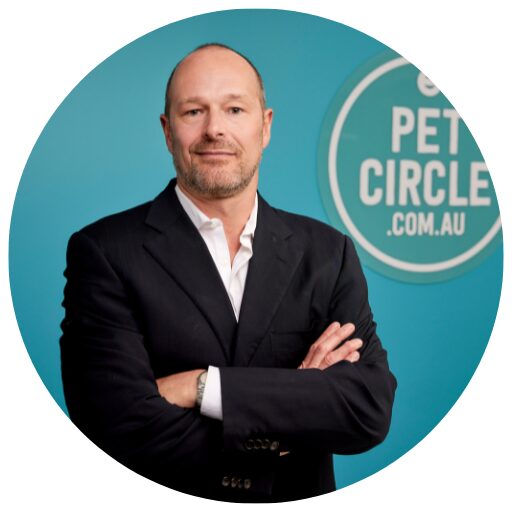
Nathan Bush: great speech and I was lucky enough to take the stage for a live podcast. And this podcast was about one of the most challenging relationships in my life. It's about pets. I've got a cat, his name's Tony. My wife got it and I got to name it so I called it Tony. And he lives in a dedicated bathroom in our house. He is definitely the most pampered and someone who knows a lot about pampered pets is today's guest. John Wild is the Chief Growth and marketing officer at Petcircle. Started in 2011, the company opened its E Commerce stores three years later and now lists 13,500 SKUs, the largest offering of online pet products in Australia. In this chat, John shares all the tips around successful content creation, how to get the stickiest customers, and the unique way millennials and zoomers parent their fur babies. Make sure you stay tuned because we do go off track a little bit, talking about everything from charcuterie boards for pets all the way through to Ozempic for pets. Don't ask me how we got there, but we did. Great chat, but also if you are the Parent to a very special pet. Make sure you stay right until the end because John has a very special offer for our listeners. Stay tuned until the end to get that. Let's get into it. Thanks to the Mumbrella Retail Marketing Summit. Here is our conversation with John Wild, chief growth and marketing officer at petcircle.
Nathan Bush: All right, John, we are here to talk all about driving performance outcomes. And I did a little bit of research before we had our chat today and I think it could be a very short chat because one of the things that I came across feels like you've just nailed this straight away. Barcuderie boards. Tell us about Barcudia boards.
[Voiceover]: Well, look, I mean, our category is about. Is a fun category, right? I mean, all of those know you have a pet, they just change the tone of the day. Change the tone. You know, when you, when you see your pet, your dog running around the park just makes you happy. And so we've got to find ways to actually try and create those happy moments to sort of reflect, refract our brand. Barcudia boards. We love a pun, so obviously, you know, when we get a pun, we get one in. But actually it's probably part of a deeper thought process for us in the sense that there's some research that came out from the Animal Bond institute in the US that says if you have a pet, you are 2/3 more likely to be happier than someone who doesn't. 50% calmer, 50% more connected to the community, and actually 9% healthier. That's diagnostically healthier. So pets have like a profound impact on our lives. So what then that says to us is we should spend more time with our pets. So a restaurant is a place where we think you should bring a pet. Similarly, Virgin came out the other day. If you didn't see it and said that, you can start. They're trying to petition to get pets on planes. We are big supporters of that. In fact, we think planes, trains, automobiles, restaurants, retail. We think pets should be part of our communities. So it's a fun way of connecting to what I think is a broader message that pets make our lives happier.
Nathan Bush: Are you putting your hand up to be the in flight meal service of pets?
[Voiceover]: Absolutely. What an opportunity. I would love to do that, but
Nathan Bush: I think this kind of thinking really sets your brand apart. And from what I've seen, you aren't a stranger to taking a path that other retailers are taking. This summer you did a campaign called get the F Out and it was plastered on buses and outdoor. It was everywhere.
Nathan Bush: It caught the eye.
[Voiceover]: Yeah, yeah, yeah. I mean, look. So we built our business largely on harvesting demand at the bottom of the funnel, which we'll talk about a bit later. But what we realized is you need to also build a brand that doesn't run forever. So we are now intentionally pushing money back up the funnel to try and create a brand, and then as a challenger, we need to be a bit disruptive. So. And again, we're probably still finding our voice and finding our tone, but within that GTFO felt like a really a call to action. You know, for us, it was obviously get the fur babies out, not the other meaning. And I'd spent a bit of time learning the vernacular of the zoomers and the millennials in the office. So get the fur babies out. And with our product or our D2C experience means you don't have to go to a retail store, your product comes to your door and you get to spend more time with your fur babies. So there's a bit of a play on that. And also, I guess the other piece is a large portion of the market is now millennials and zoomers, they're coming in and we need to find ways to sort of relate to them. Yeah, so it was a bit of a play on all those, all those sort of areas.
Nathan Bush: Marketers, your time is now. Amassys is on a mission to give power to the marketer. With Amasys, they want you to wield the ultimate marketing power. Amasys is an omnichannel customer engagement platform that connects more native channels than any other vendor in the market. Say farewell to one size fits all campaigns and Amasis empowers you with personalized data driven strategies that captivate your audience and boost your bottom line. Just ask Adore Beauty, Pet Circle, Total Tools and City Beach. They've experienced firsthand the game changing impact of Amarsys on their marketing efforts. Seize the reins of your marketing destiny today. Embrace Emasys and watch your business soar to new heights. Visit Amassys. That's E M A R s y s amasys.com now.
Nathan Bush: So you're bucking a few trends there because you're a DTC brand going after the younger audience. I'm assuming you've got a shed load of data sitting there. The obvious choice would be to go really personalized, really programmatic, data driven marketing. But instead you're plastering it up for the masses.
[Voiceover]: Yeah.
Nathan Bush: How do you, how do you validate that?
[Voiceover]: Yeah, well, as I said, we built the business on sort of the programmatic foundation. I want to sort of talk a little bit about that because you know, I think like marketing is a big cost line in a P and L. Like, you know, typically a DTC brand can be as high as 30, but you know, but most businesses are maybe between 5 and 10. It's a big line. And marketing did not done a good job of trying to try and explain the return on investment. Digital marketing sort of became in vogue and what it did is it created deterministic ways to get a return on investment of your return on investment. Now I believe that's flawed and I believe it created a flawed kind of perspective. But it was one that the cfo, for example, could put in a spreadsheet and create an outcome. You know, you spend this much, you acquire customers at this, you generate this much revenue. So albeit flaw truth, it was better than the vacuum the markets have created. So I think that is one of, it's a really interesting sort of bind that people are now trying to work through. And I use this example. Imagine waking up in the morning in the radio, hearing a Coke ad, going online, seeing a YouTube Coke ad, driving down the road, seeing an out of home ad, then going to a convenience store and there's a post mix Coke display. And that gets all the attribution or that gets all the credit. Well, digital marketing is sort of, that has done that. And so people have rushed or massively sort of pushed their investments into that area. What we're realizing is that the pond begins to get a little bit shallow. A few years ago I went over to the US to run marketing for Groupon. It's the first year that they'd had negative growth in customers. And we were spending 100 million on search, 100 million in meta and about 100 million on coupons. And yet our customer growth was negative. And this is sort of a feature of digital is that you start circling the bottom of the funnel, you start circling the same customers. You're not acquiring new customers, so you have to break that. And so what you need to do is you then need to start reaching new customers, you need to start exposing new customers to your brand and your message. And actually traditional mediums are often more successful in that than the digital mediums.
Nathan Bush: We heard the team from Ikea this morning. I'm not sure if you're in that conversation or not, but they were talking about being able to have a media mix model where they can basically plug in what they think they're going to invest and will spit out a rough return. And I Could imagine you would have had a similar model of that with your programmatic spend over all the years. How do you then go from having that kind of certainty to an outcome to then going above the line?
[Voiceover]: Yeah. And going to probabilistic models which don't give you a definitive answer. It says it gives you sort of a range to work within. In fact, that was how I got. Got Groupon to invest in traditional media is we went in with a media mix model, ran it against the attribution models that we were working, and then you got a rough sense of kind of, you've got to index them both. You know, one of the things that we saw immediately was search was 2/3 less incremental than what our attribution, digital attribution models were telling us. So we ran that for three months and that gave us the confidence to then start punting money up the funnel into reach. Literally just, it's three odd, you know, world cyclical, going back to basically incremental reach because we realized we had to expose more customers to our message.
Nathan Bush: Yeah. And I love that philosophy around going where the competition or the other players aren't. Are there other channels that you've got your eye on at the moment that you like? Oh, that's. I'd really like to explore that area because I think that's untapped at the moment.
[Voiceover]: Yeah, I mean, this is an interesting challenge for me. So I worked in traditional brands and then. And then really got to understand Google. But all of the sort of the social media networks and I'm going to talk about TikTok are over my head. You know, I don't TikTok, believe it or not. So. So. But I realize now that that that medium, I think, or that type of medium is going to be incredibly powerful. You know, if we look at our customers. So we're getting more and more millennials, more and more sort of zoomers coming into our populations. They don't go to the vet, they go to the vet less than once a year. So there is a dearth of information for those consumers. And we believe knowledge is a really important. Is something we want to bring to the market. When you provide knowledge to customers, they invest in nutrition, they invest in their pet welfare. And so, you know, I can see, in fact, we're exploring this at the moment where we try and create snackable pieces of content that are providing sort of advice through entertainment, sort of entertainment, if you like. And so I think that channel and maybe this idea of creating a spokesperson that helps educate these New consumers coming into our category on how to look after the pet. Things to watch for and providing advice, but obviously in a sort of entertaining fashion, I think is something really exciting. I could see it becoming a core way for us to translate. We have 30 vets on staff. A core way to translate their knowledge, but to the masses rather than one to one.
Nathan Bush: I could imagine that when you're dealing with cats and dogs and all sorts of cute things that creating content and content ideas wouldn't be overly difficult. And we heard Pippa this morning from the checkout saying that essentially there's lots of shit content out there. It's easy to create content, but it's hard to create good content. How do you then go, there's all this opportunity for us to create content without spinning up a team of 100 people creating content. How do you know where to focus?
[Voiceover]: I mean, I don't know. Anyone remember pets.com, they were great at creating content. They had so many impressions, but they couldn't translate it into revenue or business. So they fell by the wayside. So it's really interesting. The first thing we've done is we've built our own studio because I think content's trial and error. I think you got to iterate a lot, something will stick and then you learn a formula, you learn a template, and then you sort of move forward. So I think for us anyway, the immediate transition was let's take it out of an agency, take it in house, because I think there's a lot of iteration and cycling that you need to do to get to that right point. And even now we're still trying to check, we're trying to create that balance because between sort of this entertainment factor and things that then draw people into our brand and so they become consumers. An example like we look at, actually every week we go through our top five pieces, best performing content and our worst five. So the last meeting, last week, we had a. A cat hammock that you stick to your window was one of the top performing pieces of content. So, like, you've got. So you've got to. I think it's one of those things.
Nathan Bush: It's a bit.
[Voiceover]: You've got to play with it for a while and every now and again you'll get something that just seems to resonate. And so we're getting better at find. If you think about it, we were here, not good for a podcast. But if we were wide before, we're getting narrower and narrow and understanding what. What are the things that really get People to engage and then move into becoming a customer.
Nathan Bush: Looking to grow your business on TikTok? Introducing TikTok Ads with TikTok Ads Manager, the possibilities for your business are endless. Reach over 1 billion active users across the globe. Unleash your creativity with their range of advertising solutions and stay on top of your campaign's performance. Join the 8 and a half million Aussies who are on TikTok every month alongside over 300 150,000 Aussie businesses already thriving. Whether you want to increase brand awareness, drive sales or connect with your audience, TikTok Ads Manager has got you covered. Ready to take your business to the next level. Try TikTok Ads Manager today and watch your business grow on TikTok.
Nathan Bush: Are they common themes? Is it novelty? Is it eye catching?
[Voiceover]: Yeah, I think novelty products, definitely a stream that goes really well. Testimonials like people like hearing from other like minded pet parents. There's a few other areas that we sort of, we're starting to iterate with but it's important that what you can't do, and we're probably guilty of this in some forms, is you still got to have kind of your value proposition somewhere connected to the message because it's really easy, as you say, just to, you know, create cute pictures of dogs and cats. That's really, really easy. But you've got to try and find a meaning for that or a purpose for that. Not just impressions or not just shares, for example.
Nathan Bush: Yeah. And when you talk about your customer proposition, how do you define that?
[Voiceover]: I mean we define it across five dimensions and then we start playing around with our kind of investment profiles across those dimensions. You know, you've got price or value, service delivery and great products. So and then, and we, we're flexing across those. In fact we actually just spend a large part of time thinking about where are we investing, what resonates. You know, obviously got cost of living pressures, we've really lent into service at this stage of, in terms of the consumer profile, are they thinking about service or are they now really thinking about value? Do we need to shift some of those investments? But you know, I think part of that conversation is we see these as all brand investments. And so it's part of a broader envelope of investment that you then got to find ways to flex into the areas that you think you're going to get the most outcome or the best outcome for.
Nathan Bush: Seems to be paying off because I was having a look through the customer reviews on trustpilot as well as some other platforms and you genuinely have customers who are raving fans.
[Voiceover]: We get some stinkers too, because our parents are passionate, right? We're privileged to participate in this kind of unconditional bond of love that that pet parents and pets have. But when we mess it up, they let us know. We as a team go through every month a deep dive on CS and the customer insights or customer feedback they get. We spend a little bit of time on the best, tap ourselves on the back, but then we spend a lot of time on the worst. Go through each one in detail. Like say you get a bad delivery one, where was it? What's the driver? Why did it happen? And we try and go deep because I think the risk is we've got a lot of data, like more than you can imagine. And often it obfuscates the real truth. I'll give you an example. In a certain suburb, delivery, all our metrics was humming, so we had really efficient best drops, but we were getting bad feedback. And what was happening is drivers rolling through and chucking the parcels into the over the fence effectively.
Nathan Bush: Which is bad if the dog's in the yard as well.
[Voiceover]: Yeah, exactly. But in the metrics things look great, but customers we're telling is not so good. And so we find that feedback super rich typically honestly drives most of our investment profile as well. We'll look at that, we'll try and group it together and once we see a pattern, that will typically be where we invest.
Nathan Bush: And do you tie back those raving fans to customer lifetime value?
[Voiceover]: We do. So this is probably the metric that we obsess about the most most ltv and then paybacks is the sort of counter mark to that. So essentially how much value does a customer generate in two years and let's say I'm acquiring them, how fast does that payback occur? We do the same things on things like we're building a warehouse, we will look at the paybacks of that particular investment. So how long in terms of the incremental value it generates before it pays back in terms of the cost? And I like LTV as well because a lot of marketers in my space are focused on CACs and CPAs. That makes you think about transaction one and one only, whereas LTV makes you think about a relationship with the customer and actually makes you think more about transactions. 2, 3, 4. And it means then you've got to build great experiences because most of us can get a customer once, cheap price, whatever, like some gimmicky way. But to get them to come back two, three times is actually A lot more difficult. And for us, actually a lot of businesses I've worked in, it's one of those funny, three is a magic number. You get them past three, they get super sticky. Attrition goes from like, you know, like halves for us. As soon as you get them into that, into that fourth transaction, it's really important. And LTV helps you shape that thinking.
Nathan Bush: Are there any tactics you've put in place either at Pet Circle or other organizations to help go from that first shop to that third shop to kind of re. Engage?
[Voiceover]: Yeah, I mean, look, many, I mean everything from, you know, a basic, you know, $10 off your next order. So you just try and pull them through promotional. I don't love it, but it does work. Better to do that than spend your money on trying to. On trying to reacquire them sort of after, you know, eight or nine months when they've been lapsed. We try and use a lot of knowledge and education again. We believe we have a role beyond just an e commerce provider and that educating consumers is at the heart of trying to improving pets lives. So we have a service, we have 30 vets and staff, they're free to contact. So we will try and push that one quite heavily. Come talk to a vet. We have this thing called a vet pet plan which is sort of like a lifestyle guide for you and your pet. So talk about nutrition if you're at work a lot, you know, occupy toys when they're at home, that sort of stuff. So trying to fill in that space between clinical vet visits and that whole, you know, healthy, you know, health and wellbeing kind of space that is big in humans. And one thing we know is that pets will follow humans constantly like this. We're sort of like they're five or six years behind what's happening in the human world. Great example. We're discussing it, we're talking about this a lot is obesity is a big thing at pets at the moment. In fact, I was joking that, you know, we'll see Pet Ozempic before we know it. But, but it's a problem now. Like we're feeding them too much and it's literally a corollary of what's happening in the human space. I had another question but you've taken
Nathan Bush: me off a total another train of thought with Pet Ozempic. I'm going to pull us back to where I was going. Is it time critical? So if we get that first purchase in, there is often a sensitivity or even from a retailer's side, a Hesitation to kind of go, come back again. Let's go again. Is there a time sensitivity to re engaging?
[Voiceover]: Yeah, absolutely. It's a great question. So the first thing to mention, we've got sort of two sides to our business. You've got the consumable side and discretionary side. So consumable side is actually quite easy because if I buy a 2 kilo bag of food, we know when that's going to run out roughly based on dog size and things like that. So we'll have a replenishment campaign that will go out to prompt the next purchase. Or we have a product called Order Delivery which is even better, which they just set up and then it, it's like a magic porridge pot, keeps coming to the door every few weeks. So yes, we look at product and then they buy a 20 kilo bag. Then obviously that communication doesn't go out for another six weeks. So we try and help, we help the customer. Prompting about replenishment. Flea and worming is another one that's easy. On replenishment, you buy six months worth of flea and worming, we're going to talk to you five months out. Discretionary is a little harder. You buy a bed, doesn't really tell you as much but we will then what we'll lean into is things like food and advice to try and then get them into a nutrition or a food based solution.
Nathan Bush: So try and shift categories.
[Voiceover]: Yeah, so and again that's another indicator of ltv. If you get to three again it's weird. Three, three categories, super sticky. If I can get you buying I know a bed, food and flea and worming, super sticky customer high ltv.
Nathan Bush: Okay. And have you got automation set up for all of those that you mentioned?
[Voiceover]: Yeah, we invested in a stack about, I don't know, four years ago. It's all about the data at the back end and we're actually investing quite a lot in our own CDP and we see it as two things that we've got to fix. Right. So the first is getting customer pet data and it's an interesting thing. Is our customer the customer or the pet? It's an existential question we ask ourselves quite often.
Nathan Bush: What's the answer?
[Voiceover]: We think pet, believe it or not, but we think having the details of the pet's way more important than having the details of the customer, you know. So I'd much rather know you have a Jack Russell than you say live in Vaucluse for example. So that's super important to us. But then the other piece is Then tagging your product category, which is actually really interesting. So we're going through our vets and we're saying we're taking say. So let's say Jack Russell's have skin and sensitive stomach issues. We then go across all of our food and we say which across all of our nutritional products are good for sensitive stomachs or skin. And then you can sort of start seeing, okay. So when a customer comes on board, we've mapped our products and our customers pets to create a more personalized experience. We're organized now by products. This is sort of our future state. So we're organized in a way where most companies organize themselves. So it's almost like an outside in view, inside out view. So you know, we've got a food team, we've got a flea and worming team, we've got a toy team. And so lo and behold, that's how we organize our site. We think the way shoppers will shop in the future is around breed. So if I'm a Jack Russell, I've got a Jack Russell, if you haven't figured it out, or Foxy Terrier. But it's better for me to actually just go to a place where I've got all the stuff that's appropriate for Jack Russell. So occupy toys. A bed that actually has a cover because they like burrowing, so they like sleeping under a cover and all the food that's appropriate for them. Rather than me going in and going, I gotta go through food, get to the bottom of the checkout, come back to the top. What's the bed I gotta go back to? So if you like food and calories almost like a vertical and then you've gotta add these horizontal or orthogonal ways to kind of find the products you need. I think that when we get that right, I think that's gonna be really powerful way of engaging with our consumers. Increasing the number of calories they buy and all those sort of things that drive ltv.
Nathan Bush: Yeah. And do you think customers recognize that they're being personalized too? And do they value it enough that you can not be so price sensitive that they come back for that ease and convenience? They go, I know, I'll just get it done and I'll happy to pay a little bit more for that.
[Voiceover]: And again, you talk about these conversations. You want to be too spooky. You don't know. But I think yes you do, you do it. But I also think you just make it, you surface it in your navigation structures as well. So like that the customer can sort of you can either push that content to the customer or they can go select it and pull it. So I think you've got to work both ways. And then like an e commerce site, you have a bunch of widgets that once you know what the customer, once you've got the customer information then you can obviously publish content that's appropriate for them in those widgets.
Nathan Bush: You have to start collecting dog weights.
[Voiceover]: Now this discussion, not immediately, but I think eventually we do want to get weight because I think as ed we think this is going to be the next unfortunately the next sort of epidemic with pets is going to be obesity.
Nathan Bush: So pet circle amazing growth. And you mentioned that what you've got your eye on and some of the above the line experimentation, what else is on your radar for 2024 from a marketing perspective?
[Voiceover]: Phil BRAND so figuring out how to find that connection between this is the challenge actually between all those beautiful images and fun and actually the brand somewhere in their education needs to be, that needs to be the kind of connector. We're debating this at the moment around value. So like do we need to start thinking about reacting to the cost of living pressures? Although we do find that in our category that is super inelastic, people will compromise their own nutrition before they compromise their pets. So we do have that luxury. But we still want to, you know, there's still I think a responsibility in terms of perhaps reacting to some of the pressures out there and then probably range. Like we want to take all this data that we've got and in an ideal world we want to be able to present to a customer everything they need for their specific circumstances. So breed is core but there will be other things, your lifestyle, you at home or away that will dictate some of the kind of product selections and those sort of things. So I think really getting scouring, we have an advantage. We're at D2C, we don't have fixed spaces and planograms. So we should. We will scour the world and we're going to find the best solutions for each of those sort of little micro connection points. So you know, like Jack Russell in nutrition or greyhound coats for example, boots, that sort of thing. So we want to really connect those two things together in a really meaningful way.
Nathan Bush: Fascinating John that has absolutely flown. I love how we started up the top here talking about barcudiary boards for the masses and we've ended up with knowing individual dog weights. So everyone give it up for John.
[Voiceover]: Thank you.
Nathan Bush: Now, if you're keen to go check out some of those 13 and a half thousand SKUs across the range and get something that is personalized for your special pet. John has given listeners 20% off your first pet circle order. Simply enter the code ATC20. That's ATC20 at checkout offers valid until the 30th of June. Terms and conditions apply. Here's the three lessons that I got from our conversation with John Number one In House Content creation. John and his team have their own studio and this allows them for trial and error arrow. There is not a huge amount of pressure when they're briefing in creative to agencies or partners because they get one take it. By having their own studio they're able to take their time and work out what's happening and iterate. So if content is key for you, it is worth working out how you can bring that in house for some of that lo fi Always on content Number two three is the magic number. I was fascinated by this. John Pro puts customer lifetime value commencing at the third purchase. One is great for acquiring a new customer. Two shows intent, but three is when he knows he has them. I bet that's a number a lot of retailers don't know. How many of your customers are three plus times purchases. And number three Snackable Edutainment In a world of pets, John and his team could be posting about every everything all of the time. There is so much content when it comes to pets, but their guide around edutainment, it actually has to deliver the audience something of value in an entertaining way is a great guidepost for them. So make sure you've got those guideposts in play for your content strategy too. Thanks for joining us today on Add to Cart to listen to all our e commerce conversations now in the hundreds. You can head on over to Add to Cart. There you can also join up to our free private Slack community to share e commerce ideas, tips and questions with other listeners. You can also subscribe to the Add to Cart weekly newsletter and browse some of the video highlights from our chats. There is a lot there that's add to cart.com and if I can ask you one thing before you go. If you enjoyed today's episode, make sure you share it with a friend or a colleague who could benefit or leave us a review. It really makes a difference. Thanks again for listening and until next time, keep those customers adding to Cart.