Evan Montero: So we zigged when everyone zagged and we said, right, no, we want to offer the same quality as what would be offered in a showroom, but online. I just couldn't believe, yeah, I was gone smacked. We're able to create a solution and a product offering that's going to fit a broader market that represents a broader cohort because that's what we look like as an organization internally.
[Voiceover]: Welcome to add to cart, Australia's leading e commerce podcast that express delivers all you need to know in the fast moving world of online retail. Every week, Nathan Bush from E Suite and an e commerce industry expert will share the news, research and insights that you need to know to keep you at the top of your game and of course, keep your customers adding to cart.
Nathan Bush: Today's guest has had his fingerprints all through my house, even before I knew him, in every room from the lounge room to the kitchen and yes, even the bedroom. But I actually don't mind.
Nathan Bush: I'm quite impressed. But it's not just my house, it's thousands of homes all over Australia.
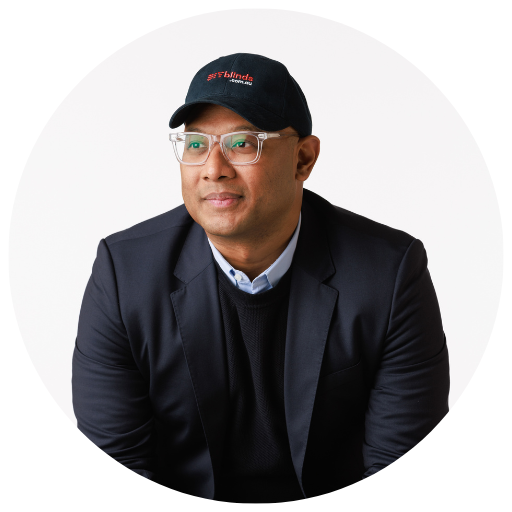
Nathan Bush: Evan Monteiro is the co founder and the CEO of DIY Blinds, Australia's fastest growing window furnishing retailer. Taking curtains and blinds out of the showroom without compromising on the experience. This unique business model which Evan and the team has turned on their head has disrupted the space. With the business now doing $46 million in revenue at a valuation of over $100 million and features with Grand Designs, Australian House and Garden and the Block Shop as well as hundreds of five star reviews. Our chat today goes far and wide and Evan shares some great insights on his commitment to Australian made. Yes, all the blinds are made here in Australia. He also gives us an insight into his upbringing and how that has led him to the point of hiring with Bias. And he tells us about one grand grand order that left him speechless. All right, let's get straight into it. Thanks to our partners Shopify plus and Paclio. Here's our conversation with Evan Montero, co founder and CEO of of DIY Blinds. Evan, welcome to ADD to cart.
Evan Montero: Thanks, Nathan. It's exciting to be here, exciting to
Nathan Bush: have you here and I just look behind you and I've got some old blinds here behind me which I'm actually a bit, bit embarrassed about sitting here in front of you.
Evan Montero: Don't be silly.
Nathan Bush: And you've got a lovely setting there behind you. Where are you?
Evan Montero: I'm currently in Loosler in Mosman filming our next home tour. Some of the amazing homes that we get to work with excited to kind of release that one, to be honest.
Nathan Bush: How good. And does a lot of your job involve going around to these display homes, these beautiful homes, and getting a bit of a house envy?
Evan Montero: Yeah, look, it really is. It's a work hazard I have to be careful about because we get to work on some of the most amazing homes that features in Grand Designs and some of these publications. And we being an online E comm, we need to go capture content so that we can create a virtual showroom and all that kind of stuff. And capturing content is one of the things that I enjoy the most because I get to see where our products get installed. But at the same time, you walk away and you go, wow, that house was amazing.
Nathan Bush: And is your own house up to scratch? Have you done the DIY jobs that you need to do?
Evan Montero: It's a work in progress, as my wife would probably say. We've been in our home now for four years and I've still got a few things on my to do list. It's right up there where to take the trash out and maybe do a few of the laundry baskets anyway. But she loves me and forgives me. That's the main thing.
Nathan Bush: All right, Evan, we are going to
Nathan Bush: dive into your story today and the story of DIY blinds, which is an amazing story. The more I researched, the more fascinating it was. The take that I'd love to get from you first is your own career path. I hope you're not offended, but it feels like you've moved from a career in superannuation to a career in window furnishings. Fair to say these are pretty complex and potentially for some dull categories. Are you a sucker for punishment?
Evan Montero: A little bit, Probably. Superannuation and blinds aren't exactly sexy industries, and I agree with you wholeheartedly. The way I think about it is it's the same way my wife chose me as a husband. I probably wasn't her first choice, but she's incredibly happy and we have an amazing life together. But on a serious note, the move from superannuation and finance and marketing to blinds. I don't go to family barbecues. When people ask me, what do you do? And say, I sell blinds, shutters, and curtains, I think of more as a digital disruption piece and changing an entire industry and challenging the old ways of doing things and thinking of new ways to do it and seeing if we can do it better.
Nathan Bush: Absolutely. And there is plenty of disruption that I can't wait to get into today. Can you tell me what was the moment that inspired you to Take that leap from the world of finance and go, this is a market that is ripe for disruption.
Evan Montero: So there's probably two key moments. One was my parents were buying blinds, simple blinds for their own home. Their existing blinds were tatted and a bit, you know, falling off in some areas. And it was a horrible process. You had to book for people to come in to do an in home consultation or you would go to a showroom and it'd be high pressure sales to buy a product. That probably isn't the perfect solution. So it was quite laborious and it's hands on because it's tactile. You got to go there and figure out the fabrics and there's a bit of an education process as to what's the right solution. And then when they did buy those long lead times, trades wouldn't show up when they said they would show up. And there's a lack of transparency around the pricing. And once you pay, the care factor just dropped. It'll be some contractor who finishes the job really. And that kind of said to me, there's an opportunity here. The other aspect is my business partner Liam, we both worked in superannuation at the time. Ideal scenario for our age and the time because we were paid a good salary, a lot of money and we weren't required to do a great deal. So we had a lot of spare time. Context there was that we were in a superannuation fund that was. We didn't know this, we know it now, but they were focused on M and A as opposed to organic growth. And we were in the BD side of the business so we didn't get much love. But the good thing is we had a lot of downtime and we were looking for opportunities to side hustle. And there was a couple of things we saw. One, because Liam had a good knowledge through his family connections or the window furnishings industry, was to do something online with that. The other one was, and where I came from in finance was a mortgage comparison website which are super popular and successful these days with Finder and Iselect and whatnot. But the one that really took off was the iblinds and the online and it was the same thing. We were wanting to do digital disruption, we were wanting to actually play in that space and it took off and those two things. My parents had horrible experience and I said this is crap, we can do it better. And meeting Liam and finding a partner to go on that journey.
Nathan Bush: So fast forward to today. You're sitting. If I've read the articles right, you're sitting at $46 million in revenue and recently received $100 million valuation. Congratulations. What do you think have been the biggest disruptions that you've done to lead the business to where it is today?
Evan Montero: I think it's because of the fact that we were obsessed with the problems relating to buying blind shutters and curtains. We didn't just create an E commerce store that's out of the box and say, all right, let's do this. We're thinking about ways to create value for the customer in the sense of getting better lead times, better prices, better quality products and whatnot. The kind of normal approach people would take is, all right, well how do we cut costs online? Because they weren't going to be price sensitive. It's a dropship model. You get sourced products from overseas. You know, that's the typical play with these type of things. So we zig when everyone zagged and we said, right, no, we want to offer the same quality as what would be offered in a showroom but online. Because we weren't the first to be online selling blind shutters and curtains. There was definitely other people who had that first mover advantage. But where we differentiated from them was that they were pushing down and skimping on products and quality so that they could achieve the best price point while maintaining a margin. And that's where I think a lot of our successes come from. By actually being brave enough to say, right, let's do this properly, let's try and create a solution, a product offering and a service offering that's going to really resonate with the customers so they can buy blind shutters and curtains a different way while saving a bit of money.
Nathan Bush: So one of the things that I
Nathan Bush: noticed on your website is that you are really proud and call out to the customer about being Australian made. Was that a decision that you made right at the start or did that evolve over time?
Evan Montero: Deciding to commit to Australia made it gave us two things, quality and amazing lead times. You'd argue that Australian craftsmanship custom made here in Australia, you get much better quality in regards to lead times. You know, you can ship things from overseas, but it's six to seven weeks turnaround. They've got to make it overseas because again, it's a custom made product. Then you've got to wait for it to bid on a boat to be shipped efficiently or for the logistics to be efficient. You put on a boat, right? These aren't things you can put on a plane like a T shirt and fly over. So that gave us Three times. And the way I look at it for the Australian made, and if I look at our business as to what's made us successful, I think about this model called gfc. It's got nothing to do with the global financial crisis, but it's good, fast and cheap. The metaphor applies really well if I give you an example, but it applies to all businesses. But the example I'll give you is a builder. You can have a builder who's good and fast, but they're not going to be very cheap. You can have a builder that's fast and cheap, but they're not going to be very good. So the ambition we had from day one was to find a service and product offering where what we were selling was amazing, was good. The quality Australian made done fast in terms of lead time, especially with E Comm and the way people buy, they don't really want to wait too long. We could achieve that with Australia, mate. So we make our plantation shutters in seven days. We get curtains made in seven days. Rollerblinds can be made in five days. To give you context, shutters is usually about seven weeks. So lead times, amazing, good, fast, and then on the cheap. If you replace the word cheap because we do sell designer quality window furnishings with value, we're able to do that because of our disruptive business model. We don't have the same expenses as your traditional brick and mortar stores. So we're able to do all three good, fast and cheap. And that's what we've built the brand on and that's what the Australian May has empowered us to do. And not only that, but we. I like to throw in a fourth dimension, which is actually delight and Apple thinking we're able to delight our customers and focus on the service to make sure that our customers are genuinely delighted that they've got value out of that exchange. When they purchase our products, they put, they install it, they put it up on their walls, it transforms their room and they go, yep, good value having that transaction.
Nathan Bush: Yeah. So you've gone from good, fast, cheap, you can pick any two of the three to going, actually, we'll give you good, fast value and delight.
Evan Montero: Have all four. Yeah, that was the ambition and I think we've achieved that, which is a big part of the Australia made. So we've ziggled when a lot of people's eggs and I don't mean to offend dropshippers, I think there's a. There's a place for drop shipping, but it's hard to do when it's a custom product.
Nathan Bush: Don't worry. We'll just send this to Temple and Webster and just throw it down.
Evan Montero: I have sort of a relationship with Mark Coulter and Mark Taylor, but you know. Yeah, good luck.
Nathan Bush: Be fine.
Evan Montero: Be fine.
Nathan Bush: One of the two limitations, or at least perceived limitations around Australian made is that one, it will cost a lot and a lot of companies are scared that if you start manufacturing here in Australia that there won't be enough margin to do everything else that you need to do in an e commerce business. And two, that we just don't have the resources, the manufacturing resources here in Australia to make a scalable model. Are these limitations that you came up against in creating the DIY blinds model?
Evan Montero: Absolutely. I think those limitations are real. Labor costs to our neighbors in the east is substantially lower than what labor costs are here in Australia. I think I'll talk through our strategy and our disruptive business model as to how we've actually solved those two problems around manufacturing costs. Inexpensive in Australia is expensive and the perception around it. We have a very disruptive, innovative business model. You know, traditionally you buy window furnishings from your brick and mortar stores and you'd have our competitors have 30 to 40 showrooms, etc. What we do is we remove all of those brick and mortar expenses and cost and do everything online. We send out free samples to our customers. They can book an online consultation with a design consultant, receive the same service and the expertise they would receive in home consultation or in a showroom. And that disruptive business model by being digital as opposed to having brick and mortar locations is a well known story. It allows us to have substantially lower operating costs than our competitors. And what that does is allows us to offer our customers substantially lower prices without compromising on quality or service. So disruptive business model people get that you have lower operating costs, the lower operating costs and then still being Australian made is actually one of the secret elements of our success. The fact that we don't have to have the same overheads because we sell things a new way, a new way to buy blinds, shutters and curtains. It's the reason why we're able to thrive. And I encourage people to do price comparisons. We are able to help customers save up to 50% on cost when comparing to your brick and mortar competitors simply because we don't have the same cost. And for them to compete with us, I imagine that they would have to hurt and either be selling at cost or below cost because we don't have the same overhead.
Nathan Bush: Yeah, makes a lot of sense. Is it something that you get challenged on by investors having a look at the business?
Evan Montero: Absolutely. I think it's just an education process to explain two things. One, window furnishings is an impulse purchase. It's a considered purchase. So you can't just throw performance marketing behind it, get attention and then drive behavior to buy this product. It's not an impulse purchase. You either have naked windows to furnish or you don't. You either own a home or you don't. And you only really buy window furnishings once every five years. I'm not sure how often people change homes or renovate, say every five years on average is our thinking. So it's becoming top of mind, tip of tongue, long term, when people do come to that decision or needing window furnishings where the option they come to, this is education. So that's the first one. The second one, I suppose is educating the investors as to what actually makes us different to just your typical E comm. We consider ourselves more as E services. So despite being ecom, we don't behave like a typical E comm. We don't add chatbots. We don't try and make things super efficient and lean. We do make things efficiently, but not to that degree. We want to provide. We know we sell a complex product. We want to provide solutions for the customers and remove a lot of the friction and demystify a lot of the jargon because it's a complex product. So what we have is over 40 design consultants who you can book a time with, chat through your floor plans, walk around your home on your phone and through video and FaceTime and talk through complex windows, find solutions. And then we also have an installation service. The irony is not lost to me that we're called DIY Blinds, but we offer a professional installation service because the truth is we have a lot of DIY content and I think it's relatively easy. But it depends on the customer's level of comfort around a power drill. If they've used one before, if they've got one, it's not hard. Watch our videos to figure out how hard or easy it is by just watching our simple videos online. However, if you don't have the time potentially, or you don't have the confidence to do it yourself, we can do it for you. So in that sense, we're more like an E services. We operate the same way as a retail store, retail stores in our industry, but we've just removed a lot of the overheads and all of the things that they do in person. We try and do it digitally to Save on cost.
Nathan Bush: Ever scrolled through an E Commerce packaging website for fun? Nah, me neither. Until today. Paclio is putting the joy into the packaging game. So let's play a game. I'll tell you the name of the Paclio product and you have to try and guess what kind of product they are. Fairy floss Compostable mailer. Queen Bee Honeycomb Padded mailer.
Nathan Bush: Here we go.
Nathan Bush: Gummy Shark water activated tape. Now if my jaded self thinks that this packaging is fun, imagine what your customers will think. Paclio is also eco friendly, Australian owned and operated with same day dispatch and 14 day returns. Now that's pure joy for everyone. Check out the Paclio range of E Commerce packaging options@paclio.com that's Paclio P A C K L E O paclio.com.
Nathan Bush: And that team of design consultants and installation team, are they employees of DIY blinds or do you contract that out?
Evan Montero: So something that's not really great in our industry is that not everyone, but a lot of people hire contractors for the sales component and then incentivize them via either no base salary and all commission or a very low base and saying, right, you're driven by commission. Having come from finance, I think commission heavy led sales roles leads to bad behaviors. It incentivizes bad behaviors. We've seen that with the Royal Banking Commission. So what we do is we hire our designers full time, we don't offer any commissions, we pay them above market rate so that they can focus on doing a good job in servicing our customers and achieving really, really good outcomes in terms of both aesthetics and taking the time to actually talk through functionality like light control and privacy and thermal installation and home automations. So they're not under pressure to just get X amount of sales out so they can meet target. Their main focus is on actually delivering really great outcomes for customers.
Nathan Bush: Amazing. And it was funny just having a play around on the site this week. All the options that I never even considered around blinds. Obviously you've got your color, your size, your material. But even down to things like do you want this to come with smart home technology as well, things like that. I was like, oh, I didn't even know that I'd be making this decision. Do you find that your design consultants come up against some customers who are just like almost like frozen from the paradox of choice with how many choices that they have to create their own look?
Evan Montero: Absolutely. And that's what we worked really hard to do, is to demystify some of those things. I think the industry, I think A lot of industries try to overcomplicate things, almost drive certain behaviors from customers. We've tried to simplify and we've tried to provide the education needed in a way that empowers the customer to make the best decisions for their, for their homes and we can walk them through it and we offer that solution. So it's really helped us differentiate in comparison to the overall market with the level of training and the level of expertise that we put into our design consultants and making sure they're incentivized not just to do sales but actually drive solutions that are going to be beneficial for the customer long term.
Nathan Bush: And you mentioned before that there is a fairly long lead time on blinds and home furnishings and obviously a lot of interaction and return visitation. Is there a point on the customer journey that you go as soon as a customer gets to this point? We're fairly confident that we'll convert them.
Evan Montero: Great question. I don't know if you've got insights my friend or if that was a genuine question, but I'll answer. We send out samples to our customers so you can jump on our website and order up to 24 free samples which we express post out at our cost. Once we send out a sample, our conversion rate is over 50%. It floats between 50, 57% the last since we've started the last five, six years. And I think that speaks volumes in ethos in terms of ensuring we are focused on solving customer problems when it comes to window furnishings obviously. And they're making sure those solutions speak for themselves. That layered with the fact that again historically we've only spent 3% on advertising to drive customer acquisition. I think speaks volumes as a startup, as a bootstrap startup. That's a great question. It's 50% plus on samples. So we think if we people are coming on our website ordering samples so we trust that we don't have to nurture that too much.
Nathan Bush: What does an average sample cost you to send out to a customer?
Evan Montero: The sample itself express post envelopes about the $7. It's fluctuated a little bit. But if you include performance marketing, our CAC when we did up the investor deck Sat at about $55. Average order value sat again when we did our investor deck at $1800 1,800.
Nathan Bush: It's a pretty good return.
Evan Montero: Yeah. And as we're it's actually increasing but it's obviously commercially sensitive to release more up to date figures. But let's just say those average order values are increasing. CAC has increased a little bit but we're looking to drive that down with some of the new initiatives, such as pushing out the fact that we've got design consultants and pushing the fact out that we've got installations as a service offering. Because if we can do more of those full homes and custom homes, AOV on some of these jobs that we're doing, which you might be surprised, but it's not uncommon for customers to spend $40,000 with us. Highest I've seen on a residential home through a mum and dad is $400,000 in too rac where they selected Hermes fabrics and whatnot. So.
Nathan Bush: Holy moly. Do you remember when you got that order?
Evan Montero: Yes, I do. It was a Travis Walton job. It was a phenomenal job done by design soldier Sebastian. And I just couldn't believe. Yeah, I was gonna smack. But that speaks volumes, right, in terms of the value that we're offering. And you asked before about the quality and the service, the fact that that market resonates with us, the fact that I'm sitting here in Noosa, like I was saying at the intro, you know, Sean Lockyer job done by Long Henwood. It's amazing.
Nathan Bush: Yeah. And it just shows that I think, to be honest, I was very surprised not knowing a hell of a lot other than what I know in the industry about your business. Going onto the website, and I'm thinking, oh, DIY blinds. It's for, you know, suburban mom and dads who are looking for, you know, quick fixes to their homes. But the amount of design and beauty around the product really surprised me and open up my eyes to all the possibilities.
Evan Montero: Yeah, me too. It's a little surprised to me seeing some of the homes that we get to work on.
Nathan Bush: One of the things that I really
Nathan Bush: liked about your site is that your phone number is actually available all through the site. You don't try and hide it at all. And you mentioned before that you haven't tried to overly automate things through chatbots. Is that a strategy that you've always had around being open with your phone number and being there to support people at all times?
Evan Montero: Absolutely. Absolutely. Even if you think about the overhead that we would have, having so many design consultants and having installers on the road in Queensland, Victoria, New South Wales and South Australia. It just goes to our commitment around service. And it's one of the things that I was referring to before. We're not your typical E Comm. We don't behave like a typical E Comm. We believe in providing the same experience and same outcomes. A customer would receive if they were to walk into a brick and mortar store or showroom.
Nathan Bush: Any plans to evolve the model into that brick and mortar or showrooms?
Evan Montero: No, no plans to be omnichannel. We are pure play online. I think the main plan going forward is to let people know about our service offering and to make sure that we educate the customers on the new way of buying blinds, shutters and curtains. Because there's a stigma that to get blind shutters and curtains you've got to go into a showroom. And I think that's our biggest challenge in the near future is challenging that and educating people that there's another alternative.
Nathan Bush: Yeah, makes sense. You mentioned the unique business model and the custom product. It all adds up to a pretty complicated tech stack in my mind. It doesn't feel like you could be going out and buying e commerce technology off the shelf. Is that correct?
Evan Montero: 100%. Again, our commitment to making sure that the customers receive the best experience meant that when we looked at the options, whether it's an out of the box solution or Magenta or a WordPress website, when we first started we realized that the investment to customize those out of the box solutions would have been not too dissimilar to the investment of doing things custom like a full custom tech stack, PHP all the way through to the servers and whatnot. So that's given us two things though. It allowed us to put the what the customer's needs are as a product priority and solve for that from a user experience perspective. And it also differentiates us. It's not hard to jump onto people's websites and especially for window furnishings, and realize which one's just the cookie cutter website. And it's frustrating. You get some friction points, especially if, you know, speaking to this particular audience who are e comm savvy or going to our website and realizing, okay, this is sold, that's sold, it's customizable. You know, I think we have over 10,000 SKUs because of the customizable, the way you're able to customize the products. So yeah, out of the box solution wasn't available for us efficiently. So we did everything custom and it's worked out well. And the other thing is it's attractive for investors as a point of differentiation. So retrospectively I think it's worked out really well.
Nathan Bush: And did you say that you started on WordPress and then moved away or was it custom from the start?
Evan Montero: Custom from the start. Sorry, let me clarify. We looked at what was available and then we realized that, you know, it's not that those out of the box solutions couldn't do it, but the effort, energy, time and money required to actually do that. It made sense to do it custom.
Nathan Bush: Is there any feature on the website, especially that you're most proud of, that you're like, oh, I've got this idea that wouldn't it be great if we could do this for our customers? And then that you were like, oh, we did it, we brought it to life. Is there anything, any moment like that that stands out for you?
Evan Montero: Not yet. There is, there's a lot that I'm proud of. But the thing that really comes to mind is what we're coming out with in the near future with Augmented Real. So customers can visualize window furnishings will look like in their space through augmented reality. The other thing that I'm really excited and proud of that we are going to be deploying and doing a much better job of is around our content and how that's pushed out. So we have like an online showroom where customers can go in select, all right, show me different bedrooms and show me what curtains would look like. And then they can visualize and look for a space that looks similar to their home and their circumstances and see what's actually available or what the end solution would look like. So they can visualize different solutions, whether it's a different type of product or a different type of fabric in color. I think that's really powerful because when you go into a showroom, you generally see a very small sample, whereas we can show you videos and high quality images of what other customers have achieved using our service and products. Yeah, beautiful.
Nathan Bush: Have you had any other businesses or categories approach you from a technology perspective, looking at what you've built all from the ground up and gone? Hey, any chance we can buy a piece of that technology off you to give our customers in a different industry or a different category a great experience?
Evan Montero: Yes. And some of those conversations are happening overseas because of our focus with Australia made and the complexity of our product. It's not like we can ship plantation shutters that are heavy and bulky or roll of lines and curtains overseas. We often get message, hey, I live in Singapore, can you do this for me? I live in Texas, can you do this for me? The reality is it doesn't make sense given the logistics. However, there are other verticals as well as window furnishing players out there that are very interested in learning more about our success in regards to how we've done things and the tech that goes behind it that I think will lead to very interesting conversations in the future. That I apologize, but can't really speak too much.
Nathan Bush: It makes total sense and I think you mentioned it, is that one of the benefits of custom tech is that yes, it takes a lot more resources and investment up front, but it can become an asset if you do it well, that it can be reused and potentially snapped up or sold to other non competing businesses.
Evan Montero: Yeah, absolutely.
Nathan Bush: One of the things that I was racking my brain on in terms of complications around your model was returns and refunds. I can imagine that with a custom product built from scratch, how do you approach returns and refunds with your customers?
Evan Montero: Fun fact. We actually have very few returns and refunds from customers. It's something that we were concerned with from the outset. Because it's custom made, we can't just take that product and resell it to someone else. Because it's measured to fit someone's specific windows, they've picked specific colors and textures to their liking. So it's not like a yeah, we couldn't just resell it. So we focused on making sure the education piece was important, especially for those who are DIYing and they had all of the information but at the same time they weren't. You know, it was made easy and fun. We didn't make it so overwhelming that they're like, no, I'm just getting a professional to come in here and do it for me. So that was a challenge. Early, early days. And I'm proud to say that our returns, I would say the last time I looked at it was lower than 4%. And I have a theory on this. I have a theory on this. It's that when customers diy, they are so invested. If you think about it's an emotional thing when you move into a home and you're furnishing it or you're trying to renovate or do it up. So they measure not only twice but 10 times to make sure it's correct. And they read through our instructions thoroughly or if they've got questions, they reach out to our design consultants. The other thing is they are also more engaged and involved so that they're also making all of the decisions not only on just installation part, but what they're actually installing. Because a lot of the times, if you read reviews of our competitors and the industry in general, main people's returns are often related to regret. It's either the wrong color or it doesn't solve functionality that they were wanting to solve. For example, it's a bedroom. They've installed sheet curtains, but it doesn't block out the light. Or even worse example is the sheet curtain, but it's a nursery and the little one can't sleep because it doesn't completely block out the light. So solving for aesthetics in this industry is important, but what's not talked about enough is actually solving for functionality as well.
Nathan Bush: Yeah, and that's where the design consultants play a big role, right?
Evan Montero: Absolutely. Yeah.
Nathan Bush: We know that customers are going to be more price conscious in 2023, but it doesn't mean that they've lost their soul. Shopify conducted a global survey to understand customer trends and found that Australian customers are actually the most passionate about buying locally to reduce their carbon footprint. And while price pressure won't go away, the research showed that the majority of Australian customers will wait longer for delivery and recommend a product that is sustainable at its core. We're such a good bunch here, aren't we? To view more resources to help with your 2023 planning and see how Shopify can take your e commerce business to the next level, visit shopify.com au today.
Nathan Bush: In the research in doing this came across a recent LinkedIn article that you wrote and I really loved it. And your background from from what I understand is that your family migrated from the Philippines to Melbourne when you were four years old. But the quote that I read that I was really interested in is you said now that I'm in a position where I make the decisions, I hire with bias. Not many founders or CEOs would publicly say that. What did you mean by hiring with bias?
Evan Montero: It's just values on my side. Where I had a difficult childhood, I'm not shy on saying that. You know, there was 11 of us in a two bedroom flat when we migrated from Philippines to footscray. My mom had to work menial jobs despite being a valued professional in Philippines. None of her qualifications or her resume and experiences resonated with anyone in Australia. So I've seen how difficult it can be for those people who don't have the at face value, the skills or the experience or the right cultural fit potentially. So they might have an accent, they might have. They're not fitting in culturally because they're wearing different clothes. Whatever it may be. When I say I hire with a buyer, it's on two fronts. One, I look for opportunities to hire people and give them an opportunity where they wouldn't normally get an opportunity. So it doesn't mean that I hire people just because of their backgrounds or their whatever the optics is, I hire people on the basis that if they can do the job, regardless of what school they went to, regardless of which company they've come from, if they can do the job, they've mastered their skill and they're going to add amazing value to the business, then I hire them. The other example is we want female executives, and we're hiring for a bias with female executives in our team because although our cohort is highly skewed towards females overall in the business, which is something I'm really proud of, I think it was 54 the last time I looked, executive roles also need to be spewing towards females and hiring with a bias in that spot. So that's, that's what I mean by hiring with a bias. It's giving opportunities and being conscious of the impediments that are sometimes put in front of people simply because they don't fit or the usual moral, the preconceptions of a person coming into that role. Let me give you a better example here. We look around in our business and say, right, do we have a good mixture of diversity when it comes to socioeconomic status, geography, cultural, gender? And this actually has really great commercial outcomes. We're able to put problems on the table and dissect it with multiple lenses and multiple experiences and come up with a solution that's not just going to fit for one particular cohort or one particular demographic. We're able to create a solution and a product offering that's going to fit a broader market, that represents a broader cohort, because that's what we look like as an organization internally. And that's something that I think I'd love to encourage other leaders to think about.
Nathan Bush: Beautiful. That's a pretty positive bias. I don't think anyone would say that's a bad thing.
Evan Montero: Thank you. It's challenging. I'll give you an example. Right now, I need a CMO desperately. So I'm hiring Shameless Plug. But I want a female. I want to female. But that's what it means is sometimes you have to just be patient and you've got to tell the recruiters, well, at the moment we're only looking for females. And that means that you're sometimes waiting a little bit longer or you're having to have a protracted process in the executive recruitment front. But I think it'll lead to better outcomes.
Nathan Bush: What do your parents think about what you've created so far? Obviously, they've sacrificed a lot and had their struggles to help you get to this point. What's their take on your journey so far?
Evan Montero: I had Asian parents who, especially my mom, in particular, my little sister, is probably the success story in our family because she's the anesthesist, she's the doctor, and I'm always a very competitive breed. We're less than a year apart, but. But I don't think they fully understand what I do or what we do as a business and the scale that we've gotten to. But that's okay with me. I think on a personal level, I feel a sense of achievement because I've achieved what I wanted to set out and what my goal was, which was to ensure that I honor the sacrifices my mom made so that I could have opportunities that she couldn't have when she was younger. That's what drove me to work hard and to have that level of resilience and grit to say, okay, I need to make sure that whatever I'm doing is meaningful and something that honors the sacrifices she makes.
Nathan Bush: Amazing. And I understand that you're a father now. What lessons are you taking from that time in your life and what your mum did for you? How are you taking that and implementing that in your family?
Evan Montero: It's actually quite hard. We put off having children so that we could focus on the business. My first child, the business. And now that the business got to a point where we had middle management, it became more stable. We're like, all right, let's have a child. And it's been amazing. His name is Ronnie. He's two years old and he has grounded me. So, you know, when you're a founder or you're really passionate about something, you get lost in time. You know, I'd be at work. I feel like I've only been there for five minutes, but next thing you know, it's already dark and it's 9pm and you're like, oh, where's the time gone? You get so obsessed about the work that you forget to have a balance. So the beautiful thing about having my 3 year old and the biggest impact that it's had on me personally is that I now rush home and I make sure that I'm home no later than seven so that I can be involved with bath time and putting him to sleep and I can make sure that I'm there for him. That's the biggest change that it's had on my life. And that balance means that I'm recharged, I'm full of energy and I'm able to serve my team better. The other thing that has changed for me around that hiring with a bias is that making sure that he knows that you can also be successful regardless of what you look like. And this is a big thing and sometimes it's hard for people to relate, but it is hard growing up not seeing people that look like you be successful and giving him that is something that I have tremendous pride in and it makes me emotional because that's something that I chat. I found it very difficult. I almost surrendered to the fact that okay, well I'm probably destined to be in a low level job and this is what I've got to do and whatnot where I never challenge myself to dream bigger and do more. Whereas I hope that he's able to do that. Seeing what I've accomplished.
Nathan Bush: I've got no doubt that he will speak about you with the admiration that you've got for your mother. Maybe we'll be interviewing him on Add to cart in 30 years time and him telling a similar story about you.
Evan Montero: That'd be amazing.
Nathan Bush: Evan, you've already given us so many insights on DIY Blinds and the exciting things that you're up to. But can you share with us what you're most excited about and got your focus on for yourself and the DIY blinds team in the next 12 months?
Evan Montero: 12 months is difficult. 12 months. I think it's the same as everyone else in terms of focusing on the core business. So we have paused a few exciting projects given the economic climate that we're in. So the focus is definitely on the core business. And I'll tell you, our strategy at the moment is to build a systems and processes in place and use this downturn as an opportunity to build all of the things that we're missing as a business to scale. And then as soon as you know, downturns is usually followed with upturn in the market. So you know, yeah, there's a downturn. There might be talks of recessions but eventually things will swing back around. And when it's when that happens, we want to be in a position to just eat up market share and grow exponentially. So a lot of our focus in the intermediaries is making sure that we have our house in order long term. It's Home Pro and DIY Blinds marketing DI Blinds to make sure more people know about us. But Home Pro is really exciting. So all the things that make us really successful and attractive to the mom and dad market, we have found that we're also very attractive to the commercial market, the B2B market. So discerning architects, designers and builders who are repeat purchases by the way, higher Cost to acquire, but lower costs in long term. That's where we're finding so much growth. We've got some amazing builders and designers who are utilizing DI Line services. So my thinking is now that we've got Home Pro and launching that commercial offering once it's relationship managed, they're calling in, not speaking to five different people every time they get special trade pricing because of the volume that they're putting through. That's a massive growth opportunity for us. And that's what really excites me.
Nathan Bush: Amazing. That is exciting. And I love that tip of not looking at this downturn in the market as kind of a, well, we've got to sit on our hands until it's over. It's like, no, this is an opportunity to get everything in order, ready to explode out of the blocks when the time's right.
Evan Montero: Someone said that it's easier to overtake cars during wet conditions than dry. Because of our business model and the strength of that business model, we are going to be able to see opportunity. I think there'll be some attrition in the market. I think some of the brick and mortar stores won't be able to survive. And those who do survive on the other side, they'll have some financial stress having gone through a recessionary period. Whereas we'll be able to just come out of the gates and start to market and advertise and communicate to customers why we're so attractive. And that's what excites me, too.
Nathan Bush: Brilliant. Bring on the wet track, Evan. If people are listening to this and want to get in touch, what's the best way for them to do so?
Evan Montero: Jump on our website, order your 24 free samples, look at our guides. But if you really want, book a time with one of our design consultants. It's free. You can chat through all of your questions and they can help you out. Yeah, that's the best way to get in touch with us. But we're keen to see for yourself what other customers are raving about. I'd say just give it a go. It is confronting to think, oh, yeah, how do I tackle this complex product that usually costs a lot and trust it online. But I encourage people to give it
Nathan Bush: a go and don't hesitate to spend up to $400,000 on your first order. Evan, thank you so much for joining
Evan Montero: us on Add to Cart. It's been a pleasure, so thanks so much. Thank you.
Nathan Bush: An incredible story so far and such a humble guy. I really enjoyed that chat with Evan and you can tell that Evan and the team are only getting started with such a strong focus on customer as the foundation. Here are the three lessons that I took from our chat. Number one no commission on customer sales. Some people would think this is great crazy. You would think with such a rapid rise to $46 million in annual revenue and $100 million valuation, Evan would have a team of hungry salespeople and partners ready to close deals and clip a commission. But Evan's sales don't work like that. He leads with customer service. His sales and customer support team are
Nathan Bush: paid well but paid flat.
Nathan Bush: He's a strong believer that commander commission leads to bad behaviors. So whether you have or don't have a commission approach, it's worth thinking about the rewards that you give to your team and your partners in your business and understand are they driving the right behaviors in the long term.
Nathan Bush: 2.
Nathan Bush: Hiring for buyers as someone who owns a recruitment business, there were a few red flags that went up when I heard that Evan prefers to hire with bias. But hearing him explain it, it makes sense. And it's much, much more than diversity. It's giving people a chance who are often overlooked. But it's not charity. Evan truly believes he will get more
Nathan Bush: out of people who value the opportunities
Nathan Bush: and come from a background with a strong work ethic. I love how Evan is thinking about recruitment differently. 3. Realistic but positive Evan brought up the
Nathan Bush: difficult market that we're operating in.
Nathan Bush: It feels like we've only just decided not to say the C word and now we're saying the R word. But he didn't put a spin on it. He's honest in that the current market conditions have slowed them down. It's shelved some of the plans that they had, but it has allowed him and the team to get things in order. Fine tune the efficiencies and the processes which have been neglected during times of big rapid growth. And it's a smart move. You know. As they say, never waste a good crisis. And are we in a crisis? Who knows?
Nathan Bush: We'll see.
Nathan Bush: To get the highlights of today's episode, head on over to addtocart.com and sign up for our free newsletter each Tuesday we will send Monday's episode summary links and discount codes codes for you to
Nathan Bush: go next level on.
Nathan Bush: And if you're looking to explore your next E Commerce opportunity, come and visit us at E Suite. We're a dedicated E commerce talent agency connecting the best e commerce talent with the fastest growing brands in Australia. Head on over to esweettalent.com where you can download the free E Commerce Salary Guide and sign up to our weekly E Commerce Job emails. Thanks for listening, listening. And until next time, keep those customers adding to card.