
Is Every Customer Worth the Retention Hype?
Retention is the sacred cow of ecommerce.
Everyone wants more of it. Dashboards celebrate it. Agencies optimise for it. Loyalty programs are built around it.
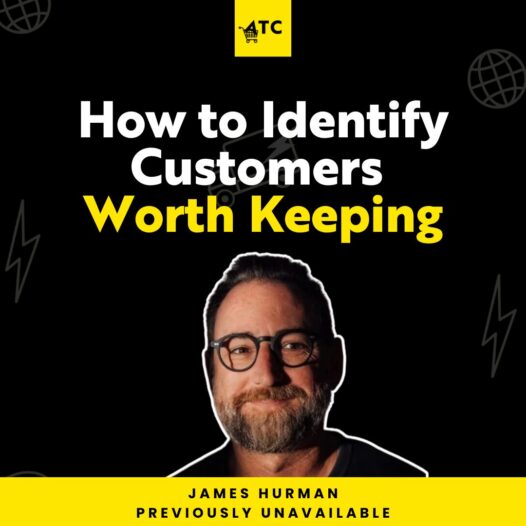
But here’s the awkward bit James Hurman surfaced on Add To Cart: the brands retaining the highest percentage of customers were often growing the slowest.
Let that sit for a second.
James Hurman, founder of Previously Unavailable and one of the sharpest marketing strategists in the region, analysed data across dozens of retail brands and billions of dollars in transactions. What he found flips the default ecommerce logic on its head. Growth didn’t come from retaining more customers. It came from retaining the customers who increased their spend over time.
That insight became the foundation for this Playbook.
But it’s not just theory. We’ve seen the same pattern play out in very different ways across the pod. Simon Beard at Culture Kings traced low-value customers back to specific “toxic” products. Adam Bouris at Who Is Elijah discovered that his entry-level sample packs were creating structurally worse buyers. And Justin Bausch at Ryderwear showed how careless discounting quietly erodes margin by rewarding the wrong people.
Different brands, same commercial lesson. Today’s Playbook isn’t about doing more retention. It’s about deciding who actually deserves your time, your incentives and your margin.
Retention Is a Choice, Not a Virtue
James stripped the morality out of retention.
Loyalty isn’t a badge of honour. Retention rate isn’t a trophy. And just because a customer comes back doesn’t mean they’re helping you grow.
In fact, the data showed that brands using loyalty programs retained more customers… but didn’t grow faster. Why? Because they were allocating time and budget toward holding onto people instead of expanding penetration and increasing the value of the right customers. So growth didn’t come from retaining more people. It came from retaining the ones who spent more over time.
If a customer only returns when you discount, if they need constant incentives, if they quietly erode your margin while your CRM dashboard cheers: they’re not a growth engine. They’re just busywork.
Your Products Decide Your Customers
Simon Beard didn’t start with retention strategy. He started with product data.
At Culture Kings, the team mapped lifetime value and repeat purchase behaviour back to the first product someone bought. What they found was brutal. Some products delivered incredible front-end performance. Strong ROAS. Big volume. Cheap acquisition. But the customers they attracted were one and done.
They’d spike revenue in the short term and then disappear. On paper, those campaigns looked like winners. In reality, they were filling the database with low-value customers.
So Simon didn’t optimise the ads harder. He turned spend off. Budget shifted toward products that attracted customers who actually came back and spent again.
Sometimes your retention “problem” isn’t in CRM. It’s in acquisition. If your hero product attracts bargain hunters who never return, you’re not scaling. You’re renting revenue.
Beware the Sample Size Fallacy
Low-cost entry products feel smart. Lower friction. Easier yes. Bigger funnel. Adam Bouris from Who Is Elijah tested that logic with data.
The brand’s Discovery Set, a bundle of fragrance samples, was designed as the gateway product. The assumption was simple: get them in cheap, upgrade them later. Except the numbers told a different story.
Discovery Set buyers had the lowest lifetime value across the entire customer base. Not slightly lower. Structurally worse. More price sensitive. Less loyal. Less likely to convert into meaningful repeat buyers. So Adam made the call most brands would have avoided: they stopped discounting the sample and shifted acquisition back to full-size products that required higher commitment.
Less friction. Worse customers.
More commitment. Better customers.
Ease of purchase doesn’t equal quality of customer. And if you don’t check the data, you’ll never know.
Don’t Discount The Faithful
This is where most ecommerce brands quietly leak margin.
Justin Bausch from Ryderwear shared how they segment customers based on likelihood to convert. And here’s the important part: high-propensity customers don’t get discounts.
But they do get early access, exclusives, first looks. Discounts are reserved for customers who actually need a nudge.
Think about how many brands blast 20 percent off to their entire database. Including the people who would have bought anyway. That’s not retention. That’s margin erosion. Selective incentives protect your best customers from being trained to wait for sales, while still giving lower-propensity customers a reason to convert. It’s retention with precision. Not just generosity.
Retention isn’t about keeping everyone: it’s about deciding who you want more of.
James showed that retention rates alone don’t drive growth. Simon showed that some products quietly attract the wrong customers. Adam showed that low-friction entry can create low-value cohorts. And Justin showed that indiscriminate discounting punishes your best buyers.
If you’re not intentionally choosing which customers to grow, your acquisition strategy, your hero products and your discount calendar are choosing for you.
In this Playbook:
- Why the brands retaining the most customers are often growing the slowest
- How to identify which retained customers actually increase lifetime value
- What Culture Kings learned about “toxic products” and one-and-done buyers
- Why Who Is Elijah stopped discounting its Discovery Set
- How Ryderwear protects margin by excluding high-propensity buyers from discounts
- The difference between retention volume and retention value
- How to rebalance loyalty and penetration for sustainable ecommerce growth
Join Us!
Come behind the scenes with Add To Cart Community: Join our crew of ecommerce operators chasing growth, sharing wins, and staying sharp with deep dives, live events and no-BS inspiration.