Joe Sharplin: Done a bunch of stuff for Drake, I think north and south hemisphere Harry styles so I'll hear about in hindsight. We're doing X amount of styles for this artist. Wow, that's amazing. So our staple tee, which is one of our top selling T shirts, has anywhere between kind of 70 and 80 plus even up to 90 colorways available. So when you start timesing those colorways by the sizes, you get up some pretty hefty numbers pretty quick. For us being an unbranded apparel brand, a blank apparel brand Bacnik label was super important. The only real identifier, visible kind of identifier on our shirts.
Nathan Bush: Hey, it's Nathan Bush or Bushy joining you from the land of the terrible people here in Brisbane, Australia. Today's guest has actually been in almost all of the 500 add to cart
Nathan Bush: episodes so far, featured in absolutely all of them. And it might not be obvious to you, but they are there on me every day as color. I am such a huge AS Color fanboy and have been for a long time and I'm stoked today to be able to bring to the show Joe Shaplin, who is the head of E Commerce at AS Color, to understand how the machine works.
Nathan Bush: For those who don't know as color
Nathan Bush: started in New Zealand 20 years ago and now has 26 retail stores, six distribution centers and has a presence across New Zealand where they started Australia, UK, US and Europe. They have six warehouses and five websites that they manage with around 650 styles with some products having over 90 color variants available. They are an absolutely incredible beast. Obviously a D2C powerhouse, but they're an absolute beast with both D2C and B2B functioning out of the same website. And what I love about them is that their B2B presence is digitally driven and they're just working with some cool people.
Nathan Bush: As you'll hear today, what started as
Nathan Bush: a T shirt brand for bands to print their logos on to sell at their gigs and has turned into this huge business and now supplies merchandising for artists such as Pink, Drake and Harry Styles and of course Princess shirts for Add to Cart that I wear every day. In this episode, Joe talks about the balance between B2B and D2C when designing E Commerce experiences on the same platform. You're going to hear a lot around their transition from Magento to Big Commerce and how we design this from the ground on up.
Nathan Bush: And what's really interesting here is that
Nathan Bush: Joe actually comes from a design and product design background and is relatively new to E commerce. So he brings a really fresh perspective into all of this fascinating chat. Let's get into it.
Nathan Bush: As always, this episode is brought to
Nathan Bush: you by our friends at Shopify and Klaviyo. Here's my chat with Joe Sharplin, head of E Commerce at As Color.
Nathan Bush: Joe, welcome to ADD to cart.
Joe Sharplin: Thank you, Nathan.
Nathan Bush: Pleasure to be here, mate. It is great to have you here. You said in our pre chat this is your first podcast.
Joe Sharplin: First one, yeah, first one. So I'm super excited, excited to have
Nathan Bush: the opportunity to speak with you. I've seen you on stage a couple of times and I always love hearing the as color story and what you're doing. You actually got me in a lot of trouble this weekend because I'm an as color junkie. And I don't know if it's just because I'm a simple person who wears the same T shirt every day, but my drawers got to a point. And this isn't a lie, this is an actual story from this weekend where my wife said, before you do anything else, you got to clean out those drawers and get rid of the shirts that you no longer need because it's overflowing. So that you cost me a couple of hours of my weekend clearing out my cupboards.
Joe Sharplin: Oh, well, sorry about that, mate. But yeah, great to hear you're a fan of the brand. Absolutely. I had a similar experience recently where I was clearing out some clothes and it was just black T shirt after black T shirt after black T shirt. And you know, they're different weights and there's, there's subtle differences that I don't think my partner understood. So I got in a little bit of trouble as well. Similar experience.
Nathan Bush: I know I was like, I was
Nathan Bush: going through them and I was like, most of the shirts that I wear a navy or white, and then I've got like weekend shirts and they're like beige or sand or different, like little variants. And my wife's like, they're all the same. I'm like, no, they're slightly different, but. But we're going to get onto that because you've got such an amazing range and you know, the way that you manage all of that from an online environment, I am so curious to understand. But can you give us the as color story? I understand that you are now 20 years old, based out of New Zealand. Tell us how it started and what you handful.
Joe Sharplin: Yeah, sure. So, yep, you're spot on. So we were started 20 years ago in New Zealand, you know, as a, as a very small blank apparel business at the Time started in Auckland, Auckland, New Zealand. And so yeah, this year we're celebrating our 20th year and we've got some kind of 20 year little activations online and stuff like that, which has been really cool. So yeah, 20 years ago, founded by Lawrence Railton, or Larry, as we call him.
Nathan Bush: And he's still in the business.
Joe Sharplin: Still in the business? Yeah, still in the business. Heavily involved, you know, obviously our founder. And he had a vision. Well, not even sure if it's a vision really. Basically he had more of like a use case where he had a friend in a band, a New Zealand band, who was looking for some blank apparel to do a little merch run basically for his, his band. They're called Alaminop, I don't know if you've heard of them. No, no. And they had a couple of, kind of, they had a couple of hits back in the day and they were just struggling to find a good T shirt to print some LMNOP merch on. And so Larry had this idea to start doing it himself and he, he started bringing in actually initially some other blank apparel T shirts, more like with our distribution rights. But that sparked the idea and that's, that's how as color initially came to life 20 years ago. Very, very kind of small and humble beginnings.
Nathan Bush: And now what? 26 stores did I read five warehouses, US, UK, Australia, New Zealand. Slightly different business.
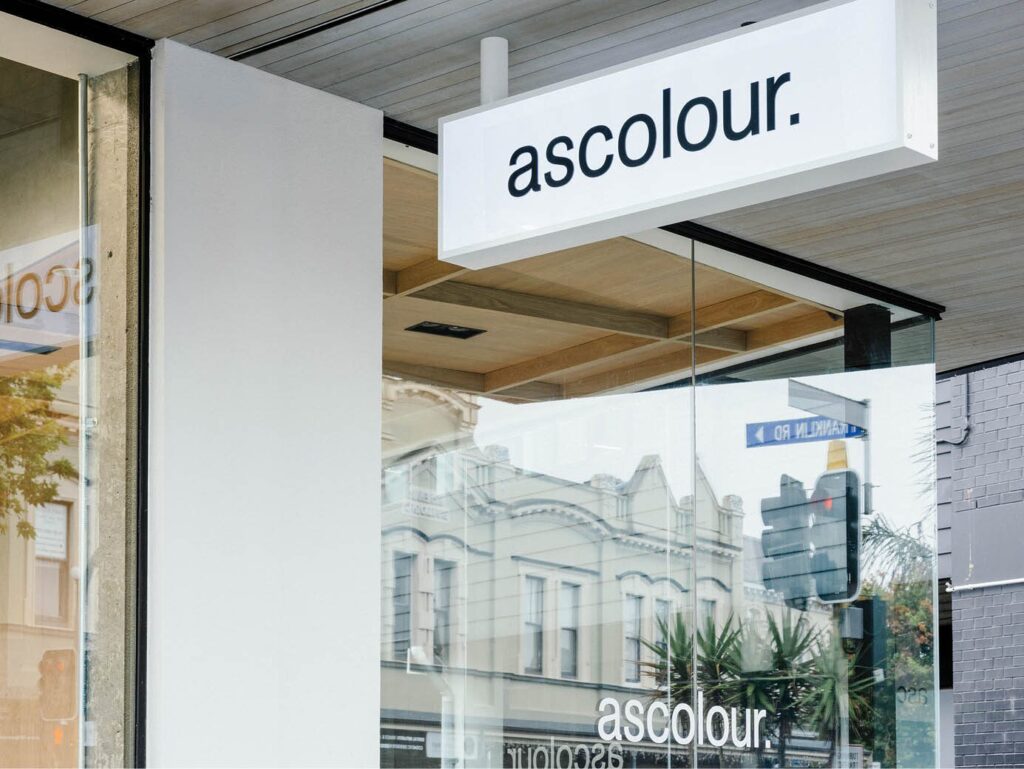
Joe Sharplin: Yeah, yeah, totally. So, yep, five global websites, NZ, AU, US, UK and EU. Six global distribution centers, all of those same countries. There's two in the US, in California and Charlotte. 26 retail stores, mostly across NZ and AU. We've got one up in the UK. Yeah. Quite a different look and feel now, 20 years in.
Nathan Bush: That's awesome. And I want to get into that because on the outside it seems like such an amazing business, but a complex business because we haven't even talked about B2B yet. But before we do, I was looking at your background and I think your background's fascinating in that you're in charge of this digital empire now, but your background is in design and product. Tell me how you went from that world into this world.
Joe Sharplin: Yeah, that's a crazy one. I still kind of pinch myself from time to time or kind of wonder myself how that all came to be. Yeah, so you're right. I started in, you know, at a university. I started in design. I studied graph design. I think my first job was actually with a sign writer doing kind of signage, stuff like that. Then I got into apparel sometime in my early 20s and did that for I don't know. I don't know what it is. 15 years or 12 to 15 years bad with maths, but you know, a long time. Always in apparel, but more in that design space, whether it was designing the actual graphics for garments or working on the products themselves. Product design and apparel design. So when I started with AS Color four years ago, I came on board as a product designer and then moved into a head of design role. And I was basically overseeing the product design for the business, working closely with, you know, the production team and our apparel designers. And Larry, the founder, who up until that point had basically done all the product design himself or overseen all the product design himself, obviously done an amazing job on building the brand and did that for a couple of years. We did a stack of new products in a very short amount of time. And then we kind of got to this point where we're almost at this kind of skew proliferation point where there was just so many styles, so many skus, where there wasn't really opportunity in the business to design anything new. It was more like we knew what was selling well, focus on the top sellers, the things that did well in B2B and D2C. So I guess I was ultimately staring down the barrel of like no job
Nathan Bush: in everything there is to create.
Joe Sharplin: Yeah. So I guess at around the same time we had a new CEO come on board, Clive Ormerod, who's our current CEO, who came from a background with Les Mills International and Nike and some awesome gigs. And him and Larry basically turned around and said, look, do you want to do some work in the E commerce space? At the time, our E commerce manager was also on mat leave. So there was a bit of an opportunity with work that needed to be done and a role that kind of needed to be filled. So took the opportunity, took the plunge and yeah, just started cutting my teeth on it, obviously incredibly hard. And it came during a year we were basically rebuilding the site. If you want to talk more about that, I'd be happy to talk more through that. But you know, we basically almost read it, the whole site, front to back, product page, PLP page checkout, launched EU site. So it was a real intense year in terms of learning.
Nathan Bush: Like I was just here to design T shirts and now you've got me building websites. What the hell.
Joe Sharplin: Yeah, yeah, yeah, pretty much. And then, you know, Laurie, our E commerce manager, came back from matlieave and she's an absolute legend. She's been with the business about 10 or 11 years and yeah, so that's Basically how the role came about. I think it's been about two plus years now working in E commerce and you know, so I'm, I'm obviously very new to the game but absolutely loving it. It's a, it's a great opportunity.
Nathan Bush: That's awesome. Do you think that your background in design and product has given you a different perspective when you are designing say product pages or the way that products are shown on site? Has it given you a different perspective, do you think, from other people who might come from more of a digital or marketing background?
Joe Sharplin: Yeah, I'd like to think so. I think, you know, when it comes to details matter in those things and like you say that the design of a page or you know, some of those things I think are always front of mind and then obviously that UX UI piece or more to use, you know, that front end kind of user experience piece is, you know, is something layered on top of that. And that's probably where I'd say someone who's more purely from an E commerce background would, you know, truly understand that side of it. But definitely from the design side of it, the kind of, the look and feel of the site side of it. Yeah, I'd like to think it has helped in that way for sure. And also I think when you understand the product that you're selling at an intricate level, it can help to, you know, as you'll know, there's a lot of information on the product pages and across the site specifically talking to the product. So that's been beneficial as well. Been across some of that stuff for sure.
Nathan Bush: And what you're dealing with I think is pretty complicated because it's not just a consumer site. You're a business that's founded in B2B but it's not just B2B because you've got this network where it's all about you providing the basics or the staples and then people putting their own designs on top of it. So whether it's bands or whether it's. I saw some great collaborations that you've got at the moment, allowing people to get creative with you providing those basics beneath it. But it seems like there's a fine balance between the B2B and the D2C world. How do you approach that in your head, especially as you're trying to design that online experience? How do you make sure both are looked after?
Joe Sharplin: Yeah, it's a great question. In some ways, you know, for us as a brand it's quite straightforward. But there is, there, there are definitely some intricacies built into that. So you know, I'd say from a, from a high level perspective, we do try to keep both the B2B and D2C kind of flow or user experience on the website very similar. So you know, everyone who comes to site initially is almost there as a DTC customer and it's until you log in as a B2B customer where you're going to see some subtle differences but nothing too major.
Nathan Bush: So it kind of felt that way because I was on there having a play around and I was like, this just feels like a D2C website because in all my research, you know a lot around the B2B side of the business in terms of what you're doing and how you're established. And I was like this just feels like a D2C site. And I've ordered through you before but never through the critical lens of like, like looking at it from an E commerce project perspective.
Nathan Bush: But I was like, this just feels
Nathan Bush: like a D2C website. Doesn't feel complicated. Like there's definitely more detail on the product page and even in the footer. It's not like there's huge call outs on trade or anything like that. It's not until you press that create an account button up in the top, right, if you're on desktop that you start going, ah, there's a wholesale channel through here.
Joe Sharplin: Right.
Nathan Bush: Steve's done a great job in creating a DTC experience.
Joe Sharplin: Yeah, yeah. And that's been quite intentional. And it's always been that way throughout the businesses 20 years where you know, when we talk about as color product as a business, you know, we kind of lean on some of those things around quality, premium, blank apparel, sustainability. So we want the websites themselves and the E commerce experience to, to kind of encapsulate some of those kind of core features of the product itself. You know, quality, premium experience, kind of timeless design. So we, we try to marry up the two which ultimately I think you're right lands, you're in this space where it looks and feels like a DDC site and then you have those little B2B kind of tricks tied into it which do become more apparent when you log in and you get a bit of a different view on the order grid. So you get a, you know, you're able to kind of add things to cart at scale quicker. You know, there's some little things we do like that we have a B2B loyalty program which you get access to where you can kind of track your spend throughout the financial year. See what you need to spend to get onto the next pricing tier, if that makes sense. You know, so there's, there are some subtle differences but ultimately you're right, it's still kind of skinned in this, in this kind of DTC experience, I guess. Yeah.
Nathan Bush: Tell me about your B2B customers because I know in the world of B2B it feels like there's definitely momentum and shift towards ordering online and managing your own account self service, but it's taken a while to get there. Are you finding that your customers are wanting digital as a non negotiable, you know what I mean? Are they pretty self reliant or are you still. Is it very manual?
Joe Sharplin: I'd say massively, massively self reliant. So we have a global sales team and we have a global customer service team who are based throughout the world in each region who are a massive support, support for the customers, but ultimately, yeah, a huge percentage and I wish I could tell you the percentage but it's massive, it's high. Is just self service. It's customers, you know, coming to site, adding to card at site and checking out and transacting through the website with ideally, you know, hopefully minimal to no contact with CS or sales, you know, because the stock is there, the inventory is there, the questions that might need to be answered already readily available in a secondary page or on the shipping page or wherever it needs to be. So yeah, again I wish I could get you that stat, but it is, it is pretty self service. Yeah, yeah, yeah.
Nathan Bush: Okay, let's get into that big project. So you were two and a half years into your digital life at AS Color and thrown into the deep end with this whole new RE platform. Give us the background on that. What triggered that moment where it was like, all right, we've got to go, we've, we've got to make that big change.
Joe Sharplin: Yeah, that this was ultimately driven by Larry, our founder, who, you know, moved to BigCommerce of our, I want to say about six years ago. Before that we're on Magento. So we basically got to a point where some of our styles have so many SKU variants across color and size that it was almost maxing the capability out of that, of that particular platform. So we were looking to move to something that could kind of handle our variant levels and our SKU levels, but also help us scale and grow. So we, we made the jump onto BigCommerce, designed a site which was nice and then I guess, yeah, what would that be? Three or four years in, you know, Larry had that idea just to basically reskin it, it, redo it, look at every touch point, look at every corner of the site. And that started with our PLP pages, our category pages. We teamed up with searchspring for search and Merch and looked at that. We looked at Homepage actually, sorry, started with Homepage, then moved on to category page, Product page, went as far as checkout and then re looked at all the secondary pages which are built in. Shogun Page Builder. So yeah, it was almost like full front to back. I think the whole thing probably took about a year and a half. And yeah, it was, it was pretty epic. So that, and that resulted and ended up in where we are today with the current look and feel of the site. So probably been in place for maybe two, two plus years now how it currently looks and feels.
Nathan Bush: So tell me why BigCommerce? Because what was it that was unique around as color that you felt BigCommerce could do? And obviously we love our friends at Shopify here, but it's important that we explore all options that are out there. What was it about BigCommerce that felt could do the right job for as color?
Joe Sharplin: Yeah, at the time BigCommerce were kind of almost ready out of the box and ready to roll with some things that were really important for the business around customer groups. Priceless. You know, some of those, some of those kind of B2B tropes that would be I guess very familiar for, for B2B businesses across the globe. But how as Color operates in its B2B spaces, customers have different price tiers depending on customer group that they might be in. All of those custom groups are tied to a price list. So you end up in a space where there's a lot of complexity in the back end around customer group and price list. BigCommerce could straightaway handle that for us and handle that use case for us. It was also set up and ready to roll with that kind of SKU invariant level that we needed with some of our styles.
Nathan Bush: So because how many SKUs are you talking?
Joe Sharplin: It's massively high. So for example, in Australia we have around about 650 unique styles. And then you know, obviously within each style you have, you know, 7, 8 size variance and then X amount of colorway variance.
Nathan Bush: So because some of those product pages you look at the colorways as variants and you're like, holy moly. It feels like there's about 50 or more on some of those pages.
Joe Sharplin: Yeah. So our staple tee, which is one of our top Selling T shirts has anywhere between kind of 70 and 80 plus, even up to 90 colorways available. So when you start timesing those colorways by the sizes, you get up some pretty hefty numbers pretty quick. So BigCommerce was ready to roll on some of that stuff, which at the time made it a pretty easy, easy decision from what I understand, to jump onto them. Some of BigCommerce's capabilities around, you know, being able to heavily customize the website, front end and all of that stuff too. So, yeah, they felt good out of the box. This is, you know, going back six plus years now.
Nathan Bush: And are you still seeing the rollout of new features, especially in that B2B area from Bigcom?
Joe Sharplin: Yeah, definitely. So recently we have jumped onto a feature they have called B2B edition, which has allowed us to roll out or start rolling out multi login for our customers. So, yeah, this has been one that has been requested from our B2B customers for years and years and years. And we had always largely been blocked on it for various reasons. And now with this B2B edition solution that BigCommerce have, we've been able to roll it out. So that's only happened in the last couple of months. And we're.
Nathan Bush: What does that allow your customers to do?
Joe Sharplin: So that'll allow. So prior to this, what B2B customers were having to do was basically share a single login to, you know, you might be a business in Australia with three or four offices around the country, and everyone was sharing one login, one email address, one password. And if you were logged in and one of your teammates happened to log in at the same time, you'd kick each other off, you'd lose your cart, you'd lose your order. So there was a lot of friction, a lot of pain, especially with bigger B2B businesses who we were partnering with. So what multilogin does is, yeah, it's pretty simple. It just gives everyone a unique login and you're not kicking each other off, which feels. Yeah, it's probably very, very 101. But yeah, we're stoked to have it live and be able to offer that to our customers now.
Nathan Bush: So that's awesome. When you talk about customer groups and unique pricing for those customer groups, you don't have to give me the exact number, but are you talking tens of customer groups? Hundreds of customer groups? Like, you know, are they set? Like, how does that work for you and your business?
Joe Sharplin: Yeah, no, that's it. And they're very consistent across the globe. So we have probably approximately 10 that are consistent across each region. We start with with Chrome, Gold, Platinum, you know, we call them these kind of names. You go up to diamond and then Diamond Plus. So depending on the pricing tier you're on, you're ultimately getting a better price on the products and it's dependent on the size of your spend, ultimately. So it's a great system because it allows us to work with big B2B customers and also startups and everyone in between. And we love that kind of onboarding process of starting to work with new businesses and helping them grow as well. So it's a great discussion point for our sales team and a great kind of talking point with customers. So, yeah, I'd say there's 10 that are pretty consistent across the board. And then when you get into regions like the U.S. for example, we have almost a variant of all of those, which are designed for customers who use their own UPS shipping rather than our shipping. So it'd basically be a Chrome UPS customer group that ultimately is seeing that Chrome pricing, but likes to ship on their own UPS account. So you'll get some slight regional variations, but. But they're pretty consistent across the board and each one is uniquely tied to a price list for that customer group, if that makes sense.
Nathan Bush: Okay. And in terms of, I thought it was fascinating that you talked about the loyalty program for B2B, because we don't hear that often. Right. And is that, in your view, your way of taking people up through these pricing tiers? Is there anything that you need to do that's unique for loyalty for B2B to drive customers through those different tiers
Nathan Bush: that you have to think about really
Nathan Bush: differently from a D2C perspective. If you were to do a D2C
Joe Sharplin: loyalty program, I'd say it's probably fundamentally quite quite similar outside of the fact that I guess Ultimately with B2B, your spend is higher. You know, really, that's what it's coming down to. But, you know, it's very, it's very similar. It's almost like an airpoints program where, you know, you can kind of see throughout the year how you're progressing. And okay, I've got a X amount to get to the next pricing tier. And when I get to that, I can see this is now going to be the price for this garment. It provides a lot of transparency for the customer on where they're currently at, where they can get to. So, yeah, it's an awesome tool.
Nathan Bush: Are you proactively, like, prompting B2B customers to go, hey, you're only X away from this, like, or get your orders in quickly so we can ship it to you on time so you can get you to this tier.
Joe Sharplin: Yeah, it definitely heats up towards the end of financial year. Yeah, you know, you're basically getting to the end of that points tracker or whatever you want to call it, you know, that, that pricing tier tracker. So it can definitely create some heat during those kind of final couple of months, which is great.
Nathan Bush: So at the end of the financial year, are you then locked into that tier and that carries over to the next year?
Joe Sharplin: Yeah, it depends. It's very kind of. I guess it's unique to each customer. If they meet that spend threshold, they'll jump onto the next one. But, you know, it's. There's a lot of good conversations that happen around that time. You know, I wouldn't say it's necessarily a hard and fast rule. You know, there'll be businesses that are pretty close to it who can have a good kind of direct conversation with their sales rep. And, you know, ultimately we're keen on helping people out and helping businesses grow. So, yeah, it provides a touch point for those conversations to be had.
Nathan Bush: I can imagine just from a customer, B2B customer's perspective, having all the data and the information on how much I've spent, where I've spent it, like having all that in a dashboard and available to me at any time is just so helpful, especially when we have those conversations so that it's all there. It's not like you're pulling different invoices or receipts together.
Joe Sharplin: Yeah, yeah, yeah, true. It must. Yeah, I hadn't actually thought of that. But it must be a good tool for a business's accounts team too, to get a bit of a summary of a yearly spend.
Nathan Bush: And did I read right that you've got a different checkout design for D2C versus B2B?
Joe Sharplin: It's. I would say it's heavily customized. So it's, it's customized depending on the customer group you in.
Nathan Bush: So.
Joe Sharplin: Yeah. Short answer. Yes. So totally. You know, you get to check out as a retail customer, one of the first things you're going to see is express payment methods like Apple Pay or Google Pay. We don't offer those for our B2B customers. Just given, you know, generally the order volume is higher and the use case just isn't there or isn't. Isn't required. So that's probably the first thing you see. And I can talk more to it if you'd like how that Kind of flows through checkout all the way. But yeah, there's a lot of customization and little tracks going on at checkout depending on if you're B2B or D2C for sure.
Nathan Bush: How do you manage UX across both customers? Are you running many tests to understand what's working for both? Because I could imagine when you're dealing with the volume and the revenue in B2B, any minor changes can have huge results. But then you don't want to make any crazy changes over here that could impact negatively your D2C. How do you manage that?
Joe Sharplin: I would say for us, how we usually manage it is we gather customer feedback over usually quite a long period of time. So let's say it's something like, I know multilog isn't a good example for checkout, but you know, when you hear about something enough from a customer, you go, okay, maybe this is something we need to look into. So I'd say we usually take that customer first stance with everything where we'll take that feedback. And then when we, when we're feeling like we're in a position where it is something that is needed by our customer base, we'll then look to implement it in terms of mitigating risk around implementing something new and testing it. What we like to do is launch it into one website first. So we, I guess we're in a bit of a lucky position with five separate websites where we can launch in one market, test hard and fast and either roll back or tweak if it's not quite right, then look to scale it out globally.
Nathan Bush: So which market's the unlucky test bed?
Joe Sharplin: Usually New Zealand.
Nathan Bush: Poor Kiwis.
Joe Sharplin: Yeah. Just because BHQ's here, you know, we're here, our development agencies here, so. Yeah. But no, you're right. A little bit unlucky in the fact that, that, you know, with deployments things can break and things can go wrong and all sorts of unexpected stuff can happen. So, yeah, poor New Zealand website is, you know, we see issues from time to time.
Nathan Bush: You can also take it as a
Nathan Bush: compliment that Kiwis are the best representation of the globe. You know what I mean? If it works there, it works anywhere.
Joe Sharplin: I love that. We'll take it. We'll take it.
Nathan Bush: Tell me about your product pages because they are unique and I can tell that there's so much effort that goes into them. And what'd you say you had? 600 different dish? Ish. So, you know, it's not a small amount and it made a Lot of sense when you said, look, we kind of designed all the range that we needed to design. So you're not like a cyclical, trend driven business. And I could imagine that some of your range has been there for almost 20 years and the ones that you've got there now are intended to stay there for some time, which I suppose makes developing product pages and the investment into the them a lot more justifiable than something that might be gone in three months. So your product pages are brilliant and I think I love them because you can tell there's so much design thought that's gone into it and UX thought that's gone into it. It's not a templated approach and you can see the smatterings of B2B in there. Like you even have the design files of the product available through a link that takes you to a Dropbox account. But most of it is D2C LED with not just flat layers but, but in situ and models and even having the model's name and their size, which I thought's a really great touch. So how do you approach your product pages in terms of designing something that's right for your customers?
Joe Sharplin: Great question. So my belief is when you come to a product page as a DTC customer, you, you want to quickly be served the information you're looking for almost right at the top. You wanna see a brief description of what it is, obviously some good imagery, a price, you know, price is obviously massively important. You know, you don't want to scroll too far to be seeing what colorways are available. And then ultimately, you know, that kind of add to cart button. So we try to squeeze as much as we can into that top part of the page, you know, keep everything above the fold as much as we can and then still have all that information available if you really want to dig into it, around product specs and product information and shipping and returns and all of that stuff further down on the page. But we hide it away in dropdown carousels and then we have some of those more kind of like you said, more kind of B2B focus touch points like the spec sheet downloads or you know, file downloads a little bit further down the page. So it's a balancing act. Yeah, kind of quickly serve DTC information hard and fast and if customers really want to dig into it, they definitely can further down the page. So probably a classic trick, but like you said, a ton of thought and ton of time and constant tweaks are always being made to that page to ensure it's optimized for both.
Nathan Bush: Is there any pressure to keep those PDPs fresh? Because you know you've got core ranges there that have been there for years and will be there for many more years. Do you have to continually think about updating them for customers who might be coming back so they look fresh even though it's the same product?
Joe Sharplin: Yeah, we definitely do some little tricks like we'll change out the thumbnail imagery or change out the hero kind of colorway flat lay imagery. We have a bit of a cadence to do that every X amount of days or weeks or months. We'll reschedule model shoots from time to time to change out that model imagery. Those are probably the main things we can do on a, on a product page, specifically on one. Like you said, for a style that's just always in the range, it's kind of those evergreen, evergreen styles that always, they've always been there, they always will be there. Yeah, keep them fresh in subtle ways. There's probably nothing overly massive you can do. But yeah, we have a bit of a cadence where we try to keep them fresh.
Speaker D: Ever feel like your emails and SMS have been dressed by two different fashion designers with wildly different different tastes? That was the problem for Chic, the iconic Aussie fashion label with over 50 stores in a growing E commerce channel. Their emails were powered by Klaviyo, but SMS was stuck on a separate platform. Reporting was inconsistent and they couldn't see the full customer journey.
Nathan Bush: So they brought it all together by
Speaker D: consolidating SMS and email under Klaviyo's roof. Geek got an 81% jump in SMS SMS subscribers, a 51% increase in click to order rates and a huge 113 ROI on the Klaviyo platform. If you're ready to get your email and SMS in order, head to klaviyo.com au to see how brands like Chic are creating consistent messaging.
Nathan Bush: And it's funny, isn't it? Because when you think basics, and I might be saying the wrong word here, but when you think basics you're like, that's pretty straightforward. There's not that much to describe or there's not that much intricacy in it, but I actually did a Reddit search and I often do this with guests to go, hey, what's, what are people on Reddit saying about this brand? And for you guys what came up is that quality remains fantastic. Like, you know what I mean? In this space you are known as the go to for quality Basics. But where people got confused was in fit because you do have so many different.
Nathan Bush: So even for a basic shirt, you've
Nathan Bush: got different lengths, different, different fits, wide boxies, different colors, different treatments, different GSMs. Because you have to, I suppose, for all your different types of customers. Is that a challenge for you? Especially for people who might be coming back and wanting to reorder the same shirt, not realizing that there's different lengths, there's all this different stuff.
Joe Sharplin: It can be a real challenge. Yeah, you know, I think we have around about 45 different t shirt styles. You know, unique different T shirt styles. And to your point, for a lot of people, T shirts, T shirts, which is completely understandable. And yeah, when you get to that T shirt PLP and you're scrolling down that page of T shirts, it can be a challenge. But we. So this is often front of mind and very front of mind for us. So we built some stuff into the website that has been specifically designed to help with this. So we have, we call them hero franchise filters at the top of our PLP pages which allow customers to quickly cut down on a T shirt franchise. We call them franchises. So whether it's our staple franchise, which is all 180gsm or our classic franchise, which is 220gsm, basically each franchise will have a different fit and weight. So we allow customers to filter, have a little bit of easily digestible information on fit and the fabric of that specific franchise and quickly view what we offer in that in that range. Search spring was a game changer in this area as well because we brought PLP filtering onto our sites, which we never had before. Improved search where you can, you can search for a way weight or a fit. So I think hopefully all of those things have helped and we have seen some good returns on implementing with some of those solutions.
Nathan Bush: Does searchspring help you from personalization or for a return customer helping to sort based on previous activity?
Joe Sharplin: Definitely. And I still think there's more we can do in that space as well with just, you know, a B testing and keeping our search and merch rules optimized. There's a whole bunch of stuff we can do in that space, but it's definitely helped in that sense. You just talked to with our B2B customers. Funnily enough, they offer know exactly what they're looking for when they get to our site. You know, they, they know the style and the color. They'll be looking for a black T shirt and the specific weight. You know, when we partner with a lot of printers around the world and they are very familiar with our, with our T shirt range. So I think when you get to that level of understanding, it gets a lot easier. But as a, like, if I had to put myself in the shoes of a new DSC customer coming to our site, you know, there's a lot of T shirts, there's. There's a lot of hoodies available. So I think, you know, we've made some moves in the last kind of year and a half to, to help that customer. I still think there's a lot more we can do, so we'll, we'll keep chipping away at it.
Nathan Bush: It's awesome. I gotta ask you, what's your favorite shirt franchise? What's your go to?
Joe Sharplin: A brand new one, actually. So we, yeah, we've brought out a style in the last couple of months called box. It's a box tee and It's a bit heavier, 240gsm. It's kind of got a bit of a, as you'd expect, a bit of a boxy cut. It's a little bit shorter than some of our other T shirts. So that's an awesome T shirt. But in terms of one of our OG sellers, I'd probably say our classic tees. Our classic tee is pretty, pretty awesome. It's a of sort solid, solid T shirt.
Nathan Bush: I love your shirts because they're longer. Because I've got a donkey body. I've got short legs, one torso. So, like, your shirts are the only ones that fit. So I'm like, I'm very specific about what I want, which is awesome.
Joe Sharplin: Oh, that's awesome.
Nathan Bush: Have you had any moments? And I'm the same. Like when I go to a concert and I'm like, at the merch stand, the first thing I always ask is like, can I see the tag? Like to make sure it's an as color. And I'm not just sucking up to here. It's a legit. Because I've had merch in the past that's as color and I've still got it, like from years and years ago and I've got others that just stretch and all that sort of stuff. Have you had any moments where you see what's coming out and I'm not sure how much visibility you've got over it? Be like, holy shit, this band or this person is now creating with us
Joe Sharplin: totally all the time. So, you know, I'll kind of hear about the stuff in hindsight. Like, our sales team obviously are the other ones in touch with, with the customers and the printers who are dealing with some of these artists. But in terms of merch, in the last couple of years we've been privileged enough to work with some amazing, amazing people to name a couple. I'm going to be name dropping here. You know, we helped Pink out with her merch run when she came down to AU and nz. Done a bunch of stuff for Drake, I think north and south hemisphere Harry styles. So I'll hear about it in hindsight. We're doing X amount of styles for this artist. Wow, that's amazing. Amazing. And yeah, that's, that's awesome to hear that you check the tags. I love that. I love that because you know, for us being an unbranded apparel, a blank apparel brand, Bacnik label is super important. That's the only real identifier, visible kind of identifier on our shirts. So that's great to hear. It's great.
Nathan Bush: And I think people are getting, are knowing that now. Like I've actually seen a couple of people check it as well. Like it's becoming a thing that people look for, you know, after 20 years too. I suppose that makes a lot of sense. I'm keen to understand from you. So, you know, we started talking about your journey from product and design into this massive project, which was what we talked about for the majority of the show. But in terms of you still being relatively new to the digital and E comm world, even though with a huge amount of experience now, how do you keep yourself up to speed and learning outside of the day to day?
Speaker D: The market is shifting, costs are climbing and the pressure to do more more
Nathan Bush: with less is very real.
Speaker D: But when resources are tight, you can rely on Shopify, the platform that's consistently
Nathan Bush: first with new capabilities.
Speaker D: Shopify invests significantly in R and D and drops more than 150 updates every year, evolving with you and absorbing complexity so that you can focus on what moves your business forward from AI powered insights to the world's best converting checkout. Shopify is designed for the next era of commerce, helping you sell more, scale faster and future proof your brand build for what is next with Shopify. Visit Shopify for Enterprise to learn more.
Joe Sharplin: God, I almost feel like in this role I can't avoid it. It's like I'd explain it like the information is just coming so hard and fast and it's, you know, It'll come via BigCommerce or our partnership with SearchSpring or a partnership with our development agency or people yourself, Nathan, or you know, the crew at imedia, you know who love AS colorbbing at their events. So, you know, I've been privileged enough to head along to online retailer and some of these ecom events that are happening around Australia and New Zealand. And I was over at Big Summit in Austin, Texas which was epic. So yeah, in terms of staying up to play and just learning about the ever changing landscape, it's. Yeah, I think you've got to get out there and get amongst it. It feels like things are changing really fast at the moment. I like this quote. There was a quote from a. That Australia post actually at online retailer, I believe it was, and he said something like E commerce is the biggest it's ever been but it will never be as small as it is right now. And I love that quote. It's like it's bigger than ever but it's just going to keep going, you know, to the right. So, you know, it's just, you know, AI obviously I'm sure you've heard of that term AI.
Nathan Bush: We didn't even touch on it today, did we?
Nathan Bush: We did.
Joe Sharplin: Well, no, but you know, at the last few, few events I've been to, it's all people are talking about, as I'm sure you're.
Nathan Bush: And, and so we should be.
Joe Sharplin: Yeah, yeah. And we AS Color is not doing really anything in that space yet. But you know, it definitely feels like something you obviously need to stay ahead of. Yeah.
Nathan Bush: But what I love about your approach and what I've seen from you out there, this is the first time we've actually met and had a proper conversation. But what I've seen from you, and it's similar to Heather from Nutrition Warehouse who we spoke to a couple of months ago, is that rather than try and get head down and learn and read and watch everything that you can, it's like, like actually you've got great partners, go out and work with them closely and absorb that information. You've got great networks, you've got these events, go out and talk to people and see what others are doing and that's how you kind of accelerate your learning rather than bunkering down and trying to read or watch everything.
Joe Sharplin: Totally. I mean I find that really hard to do, you know, just, just to find the time in the day to do that. So I think leaning on the expertise of your partners and your network is synthetic integral. Yeah, totally. Yeah, it's such a good point.
Nathan Bush: Awesome. Joe, next 12 months, what are the priorities for you and the as Color team?
Joe Sharplin: Oh, there's a bit going on. So we, we are changing our erp,
Nathan Bush: which Is a biggie, A bit going on, changing out. Good luck with that.
Joe Sharplin: Yeah, yeah. It's like open heart surgery, this stuff. Right. So we have had this kind of end of life, we've had this ERP for years, which is. Which has been great, but it's kind of interlifing now, so we're looking to move on to. To something that can continue to help us grow. So that's. That's a big one. Internally. We have down in nz, in our warehouse here, we have the stomatic shuttle, which is like an automated picking shuttle in our. In our warehouse. So that's a pretty epic logistics tool that helps us get orders out to customers fast and efficiently and accurately. We have just launched that in AU in our Melbourne warehouse. So that went live a few days ago.
Nathan Bush: Is that custom bill, as in, like proprietary to you or.
Joe Sharplin: Yeah, yeah. So the dramatic crew, basically, yeah. Make it to the business of specs. So, you know, that's a. That's a massive thing. What else is going on? Continuing to grow our EU business. So that website went live October, November last year, so it's pretty fresh.
Nathan Bush: Still might need to take a few family trips over there.
Joe Sharplin: Oh, I'd love that. Yeah, we'll try and get that signed off. But yeah, so that's a big focus. And then I'd probably say the other one is the American market, so. So earlier this year, the American market took over Australia as our biggest market. And, yeah, we're definitely keen to keep chucking fuel at that market. We see a lot of opportunity there. There are some massive B2B apparel brands in that space and, you know, if you can kind of do well alongside some of those, some of those brands, I think, you know, I think you'd be doing well. So. Awesome.
Nathan Bush: Well, we're out of time, but I have to ask you on that because obviously it's a funny year to have America now as your biggest market. Has the latest tariffs and the changes there slowed you down at all, or is it it been BAU for you?
Joe Sharplin: Yeah, I wouldn't say it's slowed us down, but it's been a challenge like I'm sure it has for everyone who, you know, operate in the us. We were, you know, and again, I think this comes down to our founders kind of foresight and listening to some of that election campaign stuff and listening to that word tariff coming up hundreds, hundreds of times and going, hey, this actually might happen. And on the back of that, pumping a whole bunch of stuff, stock into our US warehouses early in the piece before those tariffs came into place. So, you know, solid move by our founder, Larry, and that, that's kind of allowed us to have inventory in the US that has been exempt from tariffs for a set amount of time, which has been a real, you know, a real blessing and an epic kind of sales tool for us. But yeah, we are doing price increases like other people are. And yeah, it's definitely affected us in different ways.
Nathan Bush: Amazing foresight there.
Joe Sharplin: Yeah, amazing, amazing. Yeah. Lucky and fortunate. But yeah, it's put us in a, in a position where we can have some good chats with our customers over there and keep the ball moving.
Nathan Bush: So, mate, this is brilliant. Everything you say, I'm like, I've got a thousand more questions, but we have to get you out of here. Joe, thank you so much for joining us on Add to Cart. Absolute pleasure. Your first podcast, absolutely nailed it. We might have to do a diary of a CEO version of it, which is the three hour version another time. But thank you so much for sharing everything. Love everything that you and the team are doing. And I think you're a really great example of creating an E commerce experience for customers, whether they're D2C or B2B that is right for your brand and right for them. You do such an amazing job to deeply think about the E commerce experience that you're creating. So I think you should be super proud of that. Thank you very much.
Joe Sharplin: Thank you very much, Nathan. Appreciate it. It's been a real pleasure being here. Loved it.
Nathan Bush: There you go.
Nathan Bush: Just a little brand out of New Zealand. Right. And still using new Zeal Zealand as a test bed. How inconsiderate.
Nathan Bush: I had big expectations for that chat between you and I, but Joe lived up to absolutely all of them. And it feels like there is such a big business behind what is still a really personal and unique approach to E commerce. They haven't tried to overly systemize everything to do with as color. Even though they have products, products that never go out of fashion, they have customers all over the globe and they have a growing team and they have a pretty complicated setup now with stores B2B, D2C and warehouses all over the globe, it still feels really personal and that there's a lot of soul that goes into everything they do, which I love to see and of course with their customer at the heart of it, whether it is a D2C or a B2B customer. All right, there are three things that are. I took away from that conversation that have stuck with me. Number one, thinking about loyalty, A Little bit differently. I think it's the first time we've had anyone on add to cart mention a loyalty program for B2B customers. And it wasn't just the you reach this tier and all of a sudden you get a discount. It was that for each tier they make sure it's branded, that it has an identity, and that customers know exactly where they sit and how much they
Nathan Bush: need to spend to get to that next next tier.
Nathan Bush: But what was even more impressive is that, yes, while it is all self service and customers have a transparent view over how much they've spent, where they are on the tier, what discount levels they get, there's still that human element over the top of it where you heard Joe talk about sales managers and the conversations that they have. So while it is set up as
Nathan Bush: self service, there's still the human element
Nathan Bush: as well, which I felt was a nice compromise, especially from a B2B. So loyalty for B2B, if you haven't thought about that and you're a B2B business, think about how you create a loyalty program, especially if you can do more than just price discounts. The second one there was about merchandising with intent. Now, as color is a bit of a different fashion brand to a lot of other fashion brands out there in that they're not cyclical and that they don't go out of fashion very easily. But what Joe talked about was how do we make the product products really findable for people, especially when you've got such a large range of over 600 variants, potentially 90 colors for each product. How do we then make it really easy for people to find things and especially if they're coming back to find the same thing? Because we're talking staples here. People want the same things over and over again. So partnering with a merch specific platform like searchspring has helped them shortcut that way through and help customers find exactly what they want that's right for them. I think that was a really interesting piece there around making sure you're merchandising with intent. The third thing, and this was right at the end, and I kind of wish we got to this a little bit earlier, was around looking beyond the quarter and Joe shared how as color have avoided a lot of the panic that's out there at the moment around US Tariffs by picking up on the external signals and conversations at a macro level around what was going to change
Nathan Bush: in the tariffs and the global trade situation.
Nathan Bush: So their founder, as we heard, got ahead of the game when Trump came into office and knew there was going to be implications around tariffs and before anything was made clear, made sure that their US business was set up to
Nathan Bush: handle anything that might come down the line later.
Nathan Bush: At the moment, we're still in panic stages of people trying to re engineer their businesses based on what has been announced. However, if you wait until certainty like a specific date or a specific percent tariff, it may be too late. Sometimes you need to pick up on those macroeconomic signals and get ahead of the game and make those plays before it becomes clear exactly what's going on.
Nathan Bush: So that was a masterclass in getting
Nathan Bush: ahead of the game. So much in there and I feel like we genuinely could have had another couple of hours there with Joe. If there's anything in there that really piqued your interest or caused you to have more questions, you can continue the conversation over on the Add to Cart community, it's free to join and we have over 500 e commerce professionals in there discussing things every day. Whether it's to do with the episode or not.
Nathan Bush: Jump in, ask your questions and get
Nathan Bush: advice from other people who are doing
Nathan Bush: the same thing as you every day.
Nathan Bush: Day you can join at add to cart.com it is free to join.
Nathan Bush: We would love to see you in there.
Nathan Bush: Thanks again to our partners Shopify and Klaviyo who have supported Add to Cart all year and we really appreciate their support. And thanks to you. Thanks for tuning in. If you enjoyed what you heard today, make sure you hit that subscribe button whether you are on YouTube, whether you're listening in Spotify or on Apple. We would love to keep bringing you stories like Joe's and as colors until till next time. See you then.